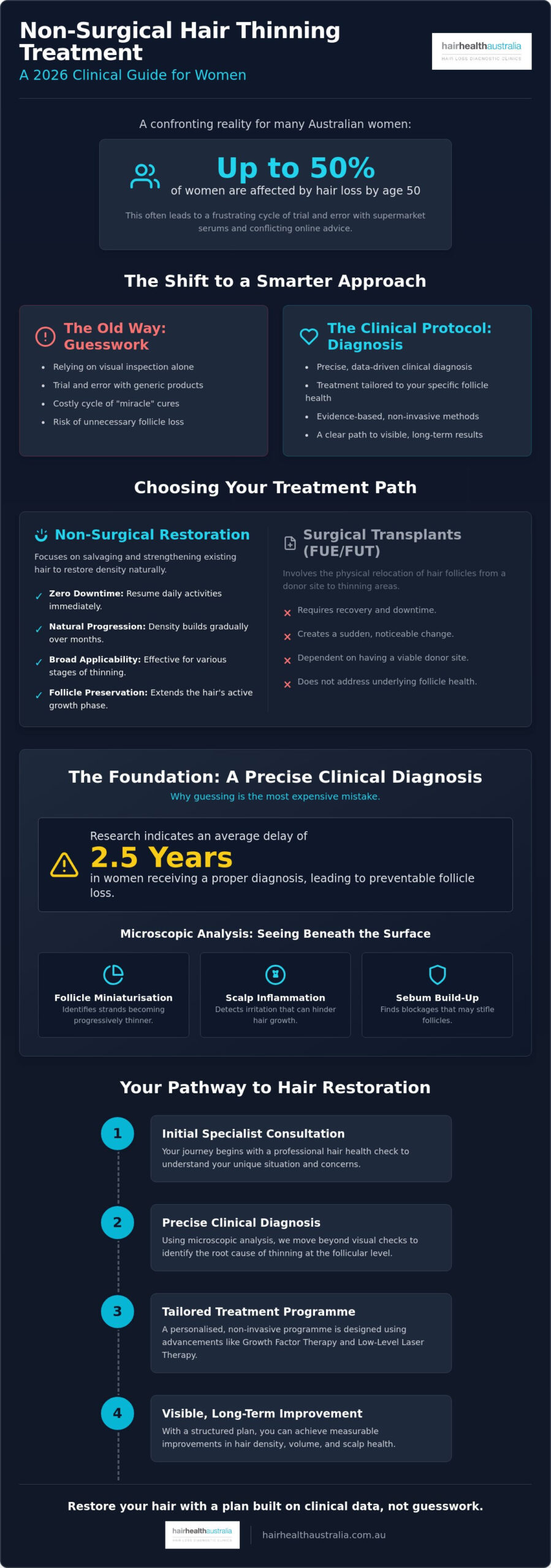
Nearly 40% of Australian women experience visible hair thinning during their menopausal transition, yet many are left feeling isolated and unheard. You’ve likely spent months trial-testing generic shampoos or following conflicting online advice, only to find your hairbrush more crowded while your confidence fades. It’s frustrating to be told that thinning is just a natural part of ageing when you’re looking for a scientific, manageable path to regrowth.
This guide provides the definitive 2026 roadmap for menopause hair loss treatment in Australia, moving beyond guesswork to evidence-based clinical protocols. We’ll explore how modern diagnostic breakthroughs, such as specialised microscopic scanning, can pinpoint the health of your follicles to create a personalised, non-surgical routine. You’ll learn about the latest multi-modal approaches combining TGA-regulated stimulants and scalp hygiene, ensuring your journey toward restored density is grounded in data rather than hope. From understanding new Medicare-funded health assessments to navigating Australian clinical standards, we’ll outline the exact steps to reclaim your hair health with clarity and professional certainty.
Key Takeaways
- Learn why microscopic hair analysis is the gold standard for identifying follicle miniaturisation and health before visible thinning becomes permanent.
- Discover the latest non-surgical protocols for menopause hair loss treatment Australia that focus on clinical regrowth without the downtime of invasive procedures.
- Understand the clinical differences between permanent conditions and temporary shedding to ensure your diagnostic path is accurate and science-based.
- Identify the essential criteria for choosing a specialist Sydney clinic, prioritising transparent, straight-talking consultations over high-pressure sales tactics.
- Shift from generic pharmacy solutions to a personalised, data-driven regrowth programme designed to restore visible hair density and confidence.
Understanding Ladies Hair Loss Treatment and Menopausal Thinning
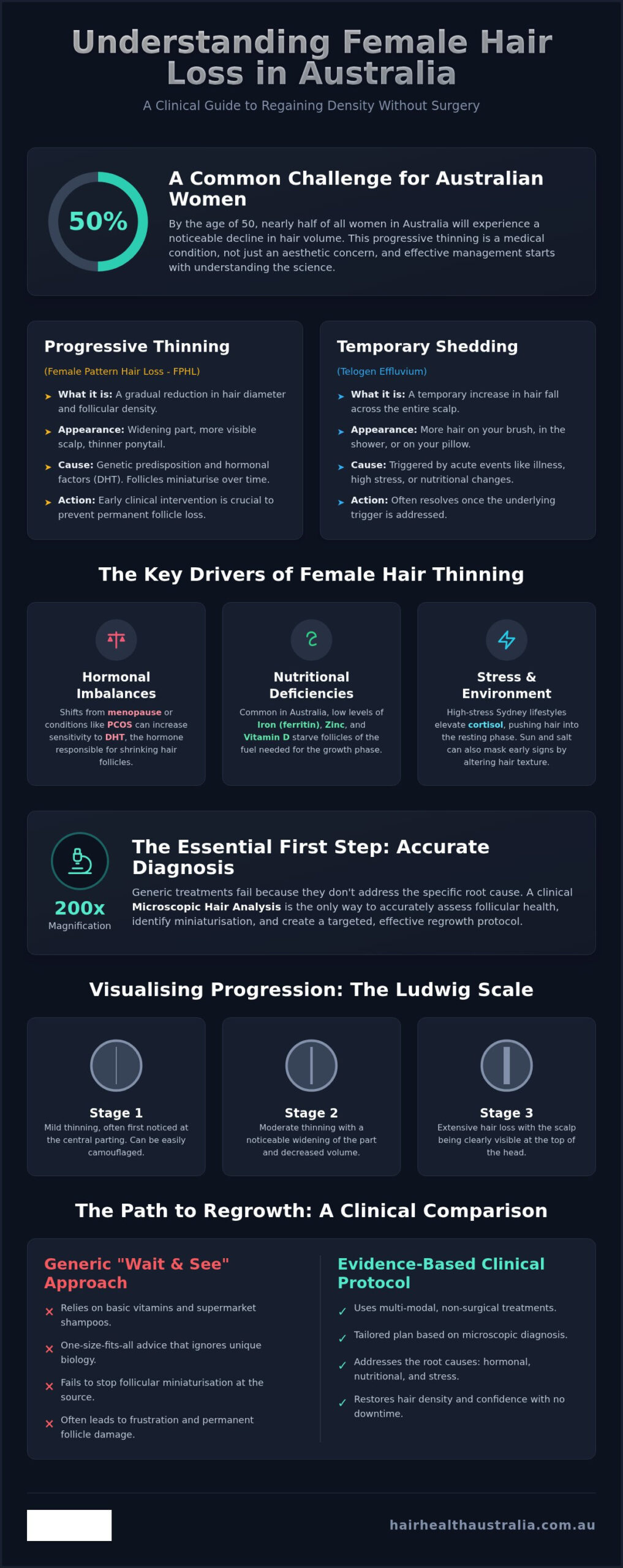
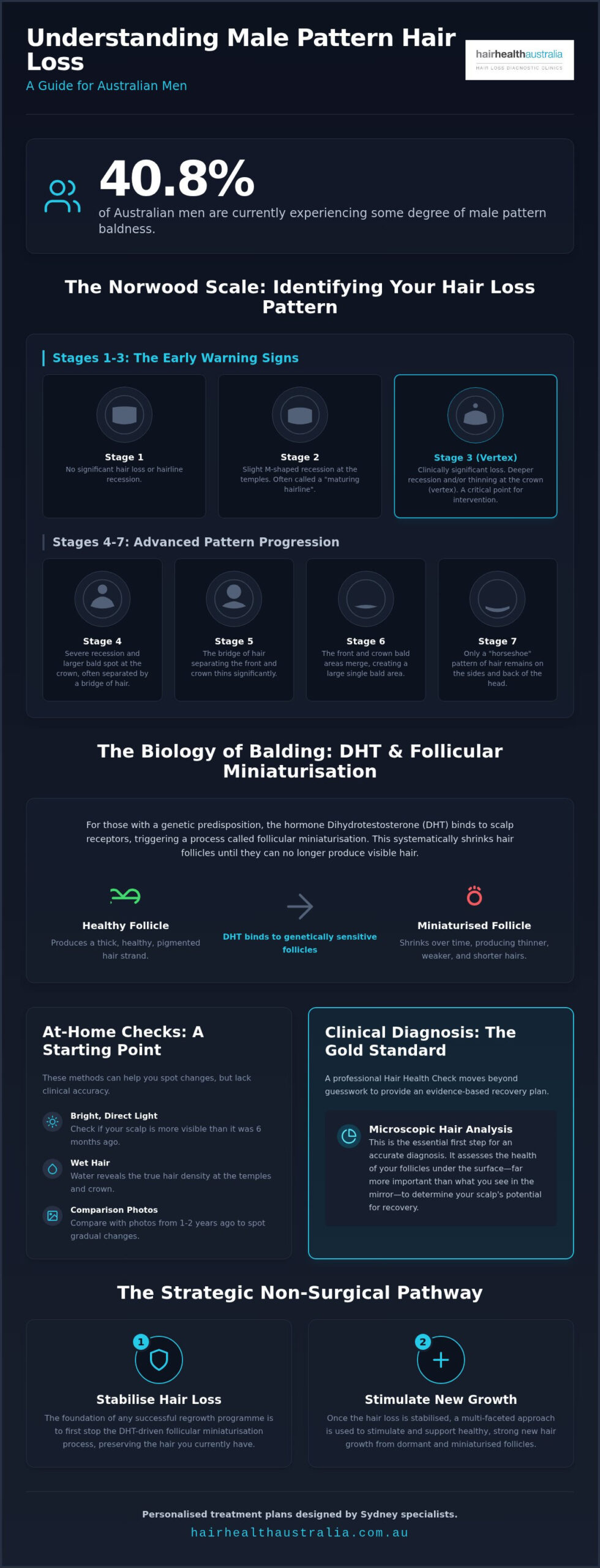
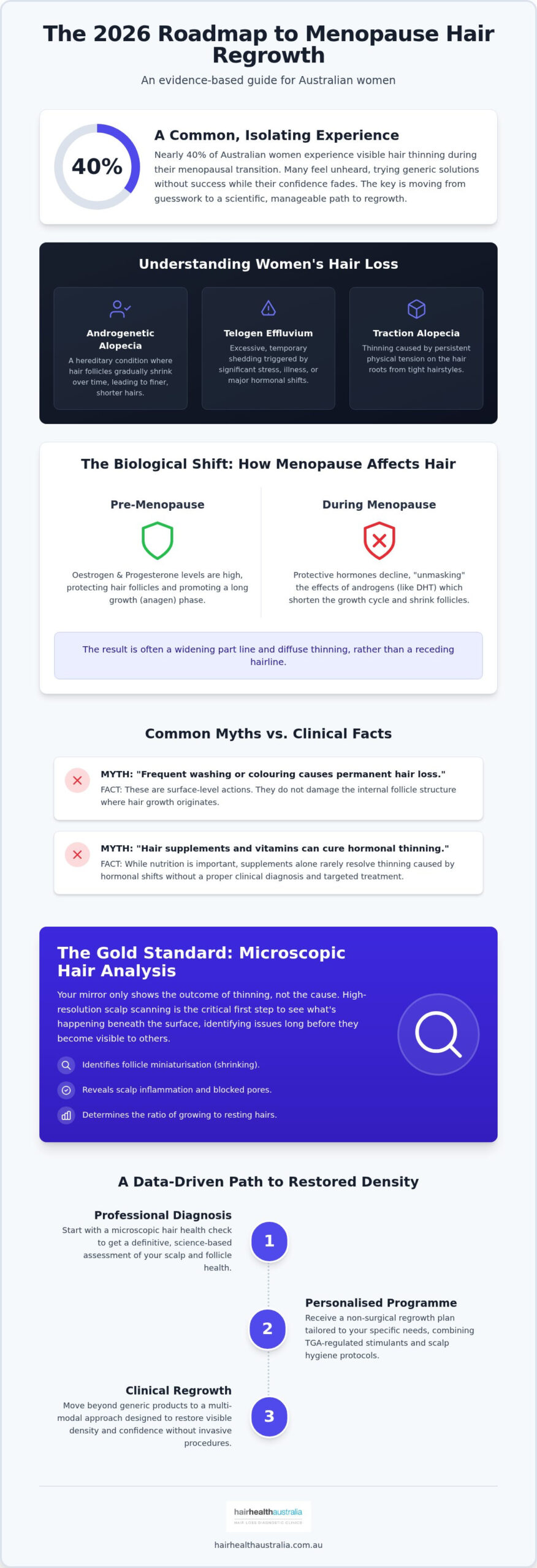
Ladies hair loss is a distinct clinical condition that requires a different diagnostic approach than male pattern baldness. While men typically experience receding hairlines or crown balding, female thinning is usually diffuse, affecting the overall volume of the hair. Understanding Ladies Hair Loss requires recognising that while men lose hair in specific zones, women often notice a general loss of density across the entire scalp. This makes the condition harder to spot in its early stages without professional assistance.
Clinicians categorise these concerns into three primary types:
- Androgenetic Alopecia: A hereditary condition where hair follicles gradually shrink.
- Telogen Effluvium: Excessive shedding triggered by significant stress, illness, or hormonal shifts.
- Traction Alopecia: Thinning caused by persistent physical tension on the hair roots.
It is normal to lose between 50 and 100 hairs daily as part of the natural growth cycle. However, when shedding exceeds 125 hairs per day, it signals clinical thinning that may lead to visible scalp exposure. Early intervention is the single most critical factor in successful regrowth. Once a follicle has been inactive for several years, the chance of revival diminishes, making a professional hair health check essential for anyone noticing a change in density.
The Biological Shift in Menopause
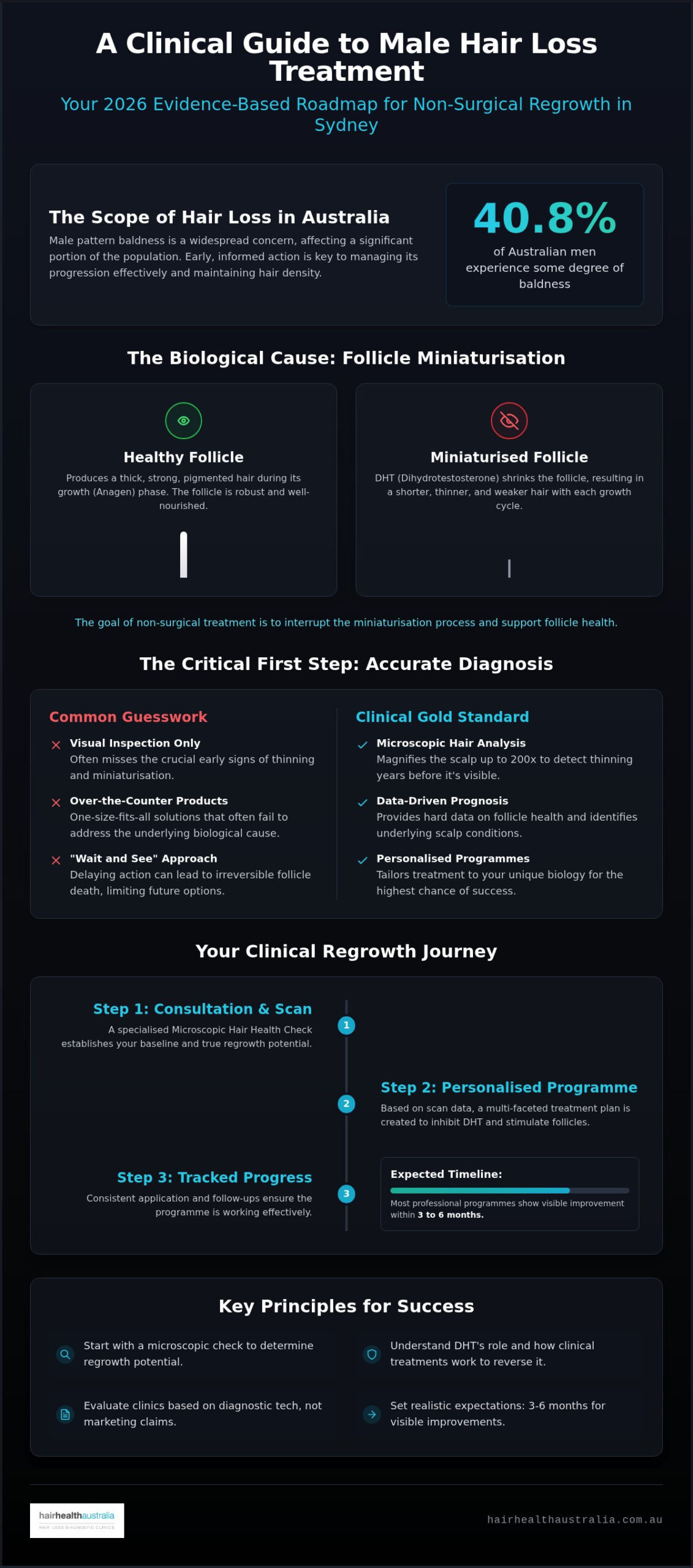
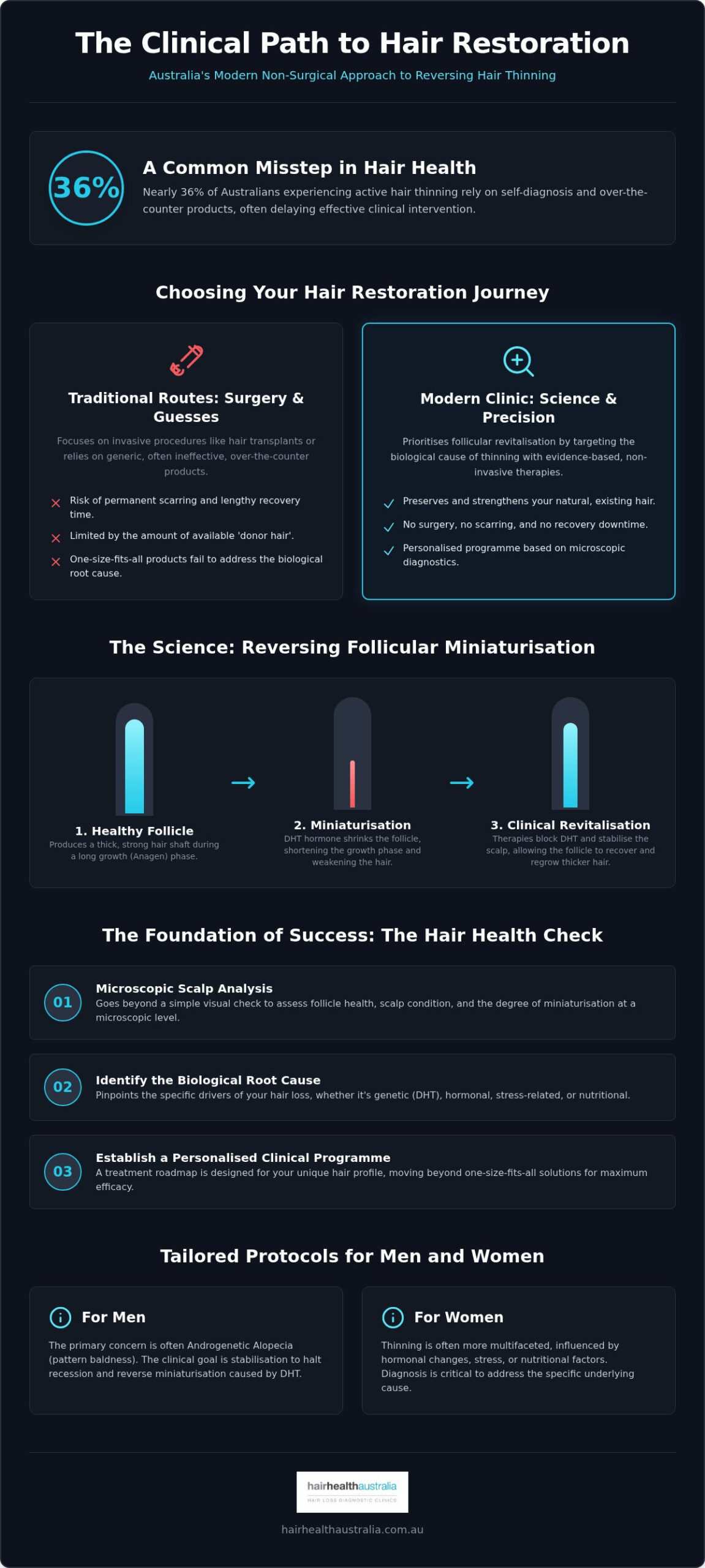
During the menopausal transition, the sharp decline in oestrogen and progesterone levels creates a significant hormonal imbalance. These hormones previously protected the hair follicles, but their absence “unmasks” the effects of androgens like dihydrotestosterone (DHT). This shift doesn’t usually cause a receding hairline; instead, it manifests as a widening part line and visible scalp through the hair. During menopause, the anagen phase of the hair cycle significantly shortens, leading to follicles that produce finer, shorter hairs before prematurely entering the resting stage. This biological change is why seeking a specialised menopause hair loss treatment australia is critical for managing the transition effectively.
Common Myths About Ladies Hair Treatments
Misinformation often delays effective treatment. Many women fear that frequent washing or professional colouring causes permanent loss, yet these are surface-level actions that don’t damage the internal follicle structure. Similarly, the Australian market is flooded with “miracle” vitamins that promise instant results. While nutrition is important, supplements rarely resolve hormonal thinning without a proper clinical diagnosis and a targeted plan. It is also a misconception that these issues only begin after the final period; perimenopausal fluctuations can trigger significant shedding years earlier. Accessing a tailored menopause hair loss treatment australia allows women to bypass these myths and focus on science-backed regrowth protocols that deliver measurable results.
The Critical Role of Microscopic Hair Analysis
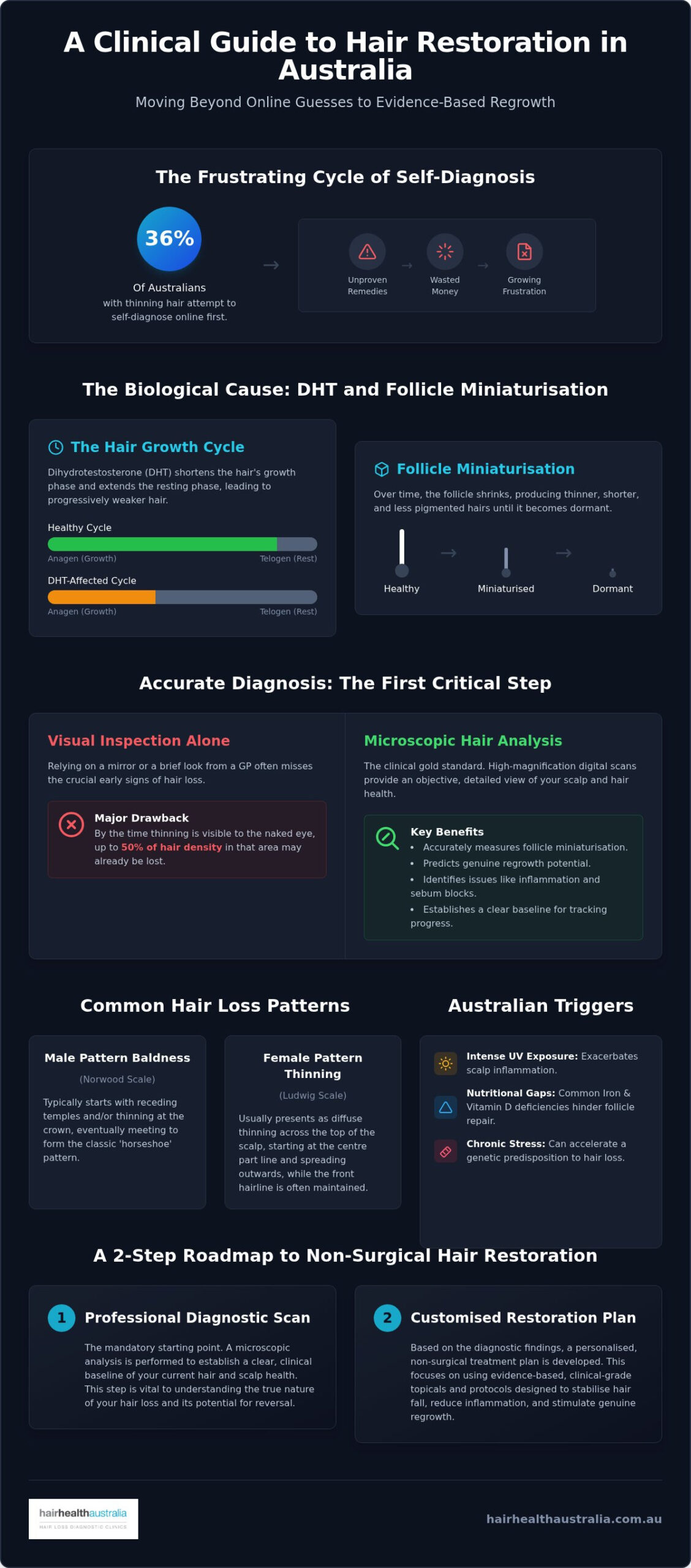
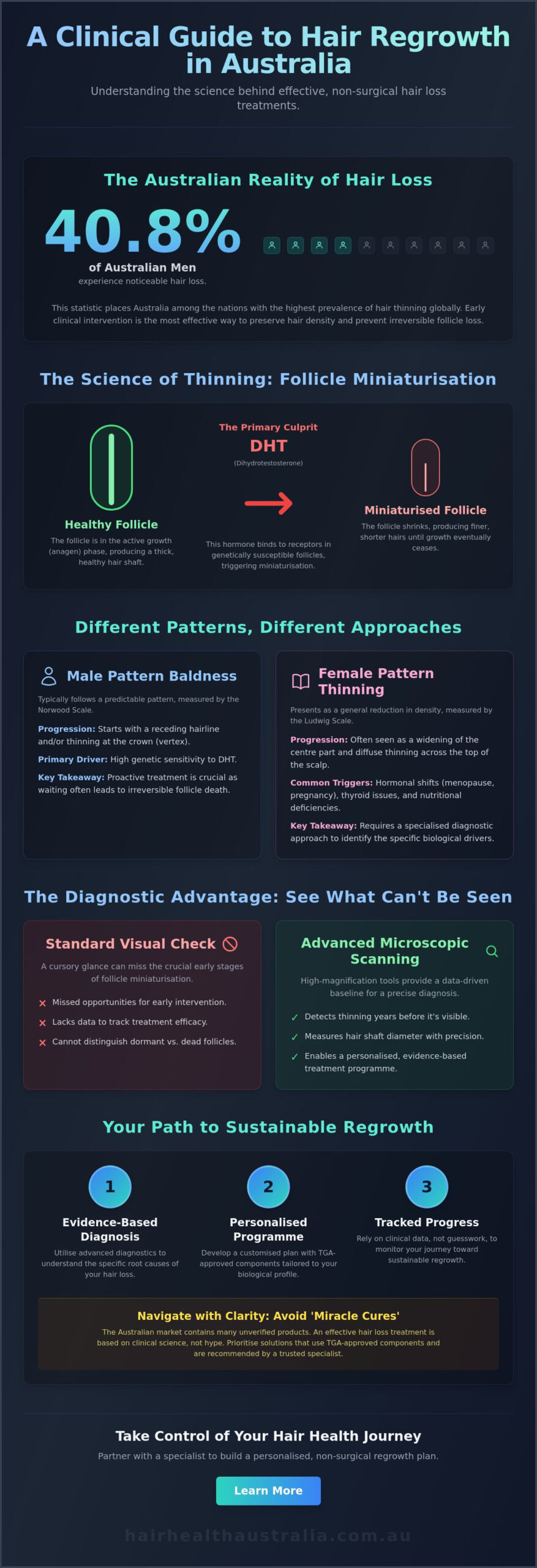
A standard mirror only shows the outcome of thinning, never the underlying cause. Microscopic analysis has emerged as the gold standard for modern, non-invasive diagnosis because it allows us to look beneath the surface. While your hair might look “fine” to the naked eye, a high-resolution scan can reveal follicle miniaturisation long before it becomes visible to others. When you’re seeking a menopause hair loss treatment australia, starting with a high-resolution scan is the only way to verify if follicles are still active or if they’ve begun to shut down permanently.
This diagnostic technology reveals the health of individual follicles, identifying issues like scalp inflammation and blocked pores that standard inspections miss. Recognising these subtle shifts is central to The Hair Health Australia Approach, as it ensures we address the hormonal reality of menopause alongside the physical state of the scalp. If you’re tired of guessing which products might work, you can book a professional hair health check to see your follicles up close and receive a definitive assessment of your regrowth potential.
What a Scalp Scan Reveals
Modern scanning provides a detailed data set that guides every clinical decision. We look specifically at the anagen-to-telogen ratio, which identifies how many hairs are actively growing versus those in the resting phase. A scan also detects sebum build-up or chronic scalp conditions that act as physical barriers to healthy growth. By measuring the hair shaft diameter across different zones of the scalp, we can track the progress of miniaturisation over time and adjust your programme for maximum density.
Why Visual Inspection Isn’t Enough
A standard GP check-up often relies on basic blood tests and a quick visual glance. While blood work is important, it frequently returns “normal” results even while a patient is experiencing significant shedding. Visual inspection alone cannot distinguish between temporary shedding and the early stages of androgenetic alopecia. Data-driven diagnostics lead to more personalised clinical treatment plans because they’re based on your specific biological markers rather than generic assumptions. Microscopic analysis acts as a vital preventative tool for Australian women, allowing for the detection of follicle decay long before permanent baldness occurs. This level of precision is exactly what’s required to build a successful routine. If you’re ready to stop the guesswork, a professional scalp analysis provides the clarity needed to move forward with confidence.
Non-Surgical Ladies Hair Loss Treatment Options
Many Australian women begin their journey at the local pharmacy, purchasing generic lotions or foams. While these products can be a useful starting point, they often lack the comprehensive support required for complex hormonal thinning. A professional, integrated clinical programme offers a systematic alternative. These non-surgical pathways are increasingly preferred because they prioritise follicle health without the risks associated with invasive procedures. Choosing a structured menopause hair loss treatment australia ensures that every stage of the process is backed by clinical data and professional oversight.
The benefits of opting for a non-surgical clinical route include:
- No Downtime: Clinical sessions are non-invasive, allowing you to return to your daily routine immediately.
- No Scarring: Unlike surgical interventions, these methods preserve the physical integrity of the scalp.
- Natural Results: Regrowth occurs gradually, ensuring the new density looks and feels authentic.
The success of this approach relies on the synergy between potent follicle stimulants and rigorous scalp hygiene. Without a clean, healthy scalp environment, even the most advanced stimulants struggle to penetrate the skin and reach the hair bulb. For a deeper look at the current clinical landscape, consult the Best Hair Regrowth Treatment Australia 2026: A Clinical Reference Guide.
Clinically-Backed Regrowth Programmes
Effective menopause hair loss treatment australia requires addressing both the internal hormonal triggers and the external follicle environment. Multi-step programmes are designed to stimulate dormant follicles while providing the necessary nutrients for thicker shaft development. Consistency is the foundation of these therapies. Unlike the “set and forget” nature of invasive and expensive hair transplant surgery, clinical programmes require ongoing supervision to monitor progress and adjust concentrations based on diagnostic data. This hands-on approach ensures the treatment evolves as your hair health improves.
Topical vs. Oral Treatments in Australia
Minoxidil remains the only TGA-approved topical treatment for female pattern thinning in Australia. It’s widely available, yet many women find it underwhelming when used in isolation. Topical treatments work most effectively when the scalp is professionally prepared through clinical cleansing protocols that remove sebum and debris. Supervision is also vital for managing potential side effects, such as scalp irritation or unwanted facial hair growth. By moving away from self-medication toward a supervised clinical routine, you ensure that every application is maximised for regrowth. If you’re unsure where your follicles currently stand, a professional hair health check is the logical first step before commencing any potent treatment.
Choosing a Specialist Hair Loss Clinic in Sydney
Selecting the right environment for your menopause hair loss treatment australia is as important as the treatment itself. In Sydney, the market ranges from high-pressure sales environments to clinical centres of excellence. You should prioritise clinics that lead with diagnostic technology and offer complete transparency regarding expected outcomes. A professional consultation should feel like a medical briefing, not a transaction. It’s about finding a partner who values results and precision over marketing hype.
Local Australian expertise is invaluable for long-term success. Hair regrowth isn’t an overnight event; it’s a physiological process that requires months of consistency. By choosing a local Sydney specialist, you gain the advantage of regular follow-up scans and face-to-face adjustments to your clinical routine. This proximity allows for a level of care that remote or generic providers simply cannot match. For a detailed breakdown of what to look for, refer to our guide on Choosing a Non-Surgical Hair Loss Clinic in Sydney.
Red Flags to Avoid
Be cautious of any provider promising “guaranteed” overnight results or “miracle” cures. Biological hair growth follows a specific cycle, and honest clinicians will always set realistic expectations based on your diagnostic data. Avoid clinics that push “one-size-fits-all” bundles without first performing a thorough microscopic scan. You should also be wary of centres that suggest hair transplant surgery is the only viable path for women. For most women experiencing menopausal thinning, non-surgical clinical programmes are not only sufficient but often more appropriate for treating diffuse loss across the scalp.
The Value of Personalised Care
A tailored programme is designed around your specific hair cycle, which is why ongoing monitoring is essential. As regrowth occurs, the concentration or frequency of your treatments may need to change to maintain progress. Visiting a local Sydney centre for regular hair health checks provides the reassurance that your plan is evolving with your results. This systematic approach replaces the uncertainty of home-based trials with clinical precision and professional accountability. If you’re ready to move away from generic advice and toward a data-driven solution, you can book a professional hair health check to begin your journey with an expert diagnostic assessment.
The Hair Health Australia Approach to Ladies Hair Loss
Hair Health Australia has provided specialised, non-surgical hair restoration since 2009. Our commitment is rooted in science, moving away from the “miracle” marketing often found online toward a methodical, clinical framework. We believe that effective menopause hair loss treatment australia must be as unique as the individual experiencing it. By integrating microscopic scanning technology with personalised care, we move beyond generic solutions to treat the follicle at its source. This systematic approach ensures that every programme is grounded in data, accuracy, and proven clinical standards.
The journey with us follows a deliberate progression to ensure the best possible outcomes:
- Diagnostic Phase: A comprehensive hair health check using microscopic scanning to establish your baseline.
- Individual Profiling: Creating a unique hair health profile that identifies specific triggers and follicle health.
- Active Regrowth: Implementing a non-surgical routine focused on follicle stimulation and scalp hygiene.
- Monitoring: Regular follow-up scans to track shaft diameter and density improvements.
Scalp health is the foundation for beautiful, thick hair. Without a healthy environment, follicles cannot sustain a robust growth cycle. For those seeking further information on selecting the right clinical path, see our comprehensive Hair Loss Treatment for Women: The 2026 Australian Clinical Buying Guide.
Your First Consultation in Sydney
Our Sydney clinic is designed to be a professional yet deeply reassuring environment. We understand the emotional impact of thinning, and our specialists provide an empathetic, authoritative guide through the diagnostic process. We use microscopic data to build a precise map of your scalp, identifying exactly where intervention is needed. You can expect a straight-talking, honest assessment regarding your potential results, ensuring you have a realistic understanding of your regrowth journey before any treatment begins.
Long-Term Support and Results
Success in treating menopausal thinning requires more than an initial prescription. We track your progress through meticulous follow-up scans and hair density measurements, allowing us to adjust your programme as your follicles respond. This commitment to long-term support is what helps Australian women regain their confidence and clarity. We don’t just provide a service; we act as a partner in your hair health journey, ensuring every step is backed by professional verification. If you’re ready to stop the uncertainty and start a science-based routine, organise your microscopic hair analysis today.
Taking the Next Step Toward Restored Density
Managing thinning hair during the menopausal transition doesn’t have to be a journey of guesswork and disappointment. The foundation of successful regrowth lies in a diagnostic-first approach. By using advanced microscopic scanning technology, we can identify exactly what your follicles need before permanent loss occurs. This data-driven method allows for a highly personalised routine that replaces generic products with clinical precision.
With over 15 years of specialised clinical experience, Hair Health Australia remains committed to providing effective menopause hair loss treatment australia through non-surgical protocols that involve no downtime. Whether you’re noticing a widening part or diffuse thinning, the right clinical support can restore both your density and your self-esteem. You don’t have to accept thinning as an inevitable part of ageing when science-based solutions are available right here in Sydney.
Your path to thicker, healthier hair begins with a definitive diagnosis. Take the first step toward clarity and Book Your Comprehensive Hair Health Check in Sydney today. We’re here to help you achieve visible results with professional, straight-talking care.
Frequently Asked Questions
Can ladies hair loss treatment actually regrow hair?
Yes, clinical treatments can successfully regrow hair if the follicles remain active and have not yet reached a stage of permanent decay. These programmes focus on stimulating dormant roots and extending the anagen phase of the hair cycle. By increasing blood flow and nutrient delivery to the scalp, non-surgical protocols help produce thicker, healthier hair shafts. Success depends heavily on a precise diagnosis and starting the programme before the follicles have completely miniaturised.
Is female pattern hair loss permanent if left untreated?
If left untreated, female pattern hair loss can lead to permanent follicle inactivity over several years. This condition causes hair follicles to shrink gradually until they can no longer produce a visible hair shaft. While the process is usually slow, once a follicle has been dormant for a long period, it may reach a state of permanent decay. Seeking a menopause hair loss treatment australia early is the most effective way to preserve your existing density.
How much does a clinical hair loss programme cost in Sydney?
The investment for a clinical programme in Sydney depends on the specific diagnostic findings and the required duration of care. While we don’t list our internal pricing here, specialist consultations for menopausal health in Australia typically range between A$150 and A$450 according to industry data. A comprehensive programme usually involves multiple stages, including diagnostic scans and active treatment sessions, tailored to the individual’s rate of hair miniaturisation and their specific regrowth potential.
What is the difference between a trichologist and a hair loss clinic?
A trichologist is a specialist who studies the hair and scalp as a discipline, while a hair loss clinic like ours provides a structured clinical environment for active treatment. We focus on delivering non-surgical regrowth programmes that utilise microscopic scanning technology to track progress. Our approach is results-oriented, moving beyond general advice to provide a data-driven path toward restored density and improved scalp health for our Sydney-based clients.
How long does it take to see results from a non-surgical treatment?
Most women notice a significant reduction in shedding within the first three months of a non-surgical routine. Visible improvements in hair density and coverage typically require six to twelve months of consistent clinical care. This duration is necessary because the hair growth cycle is a slow biological process. Follicles need time to transition from the resting stage back into a productive growth phase to produce new, thicker shafts that improve visible volume.
Can stress cause permanent hair loss in women during menopause?
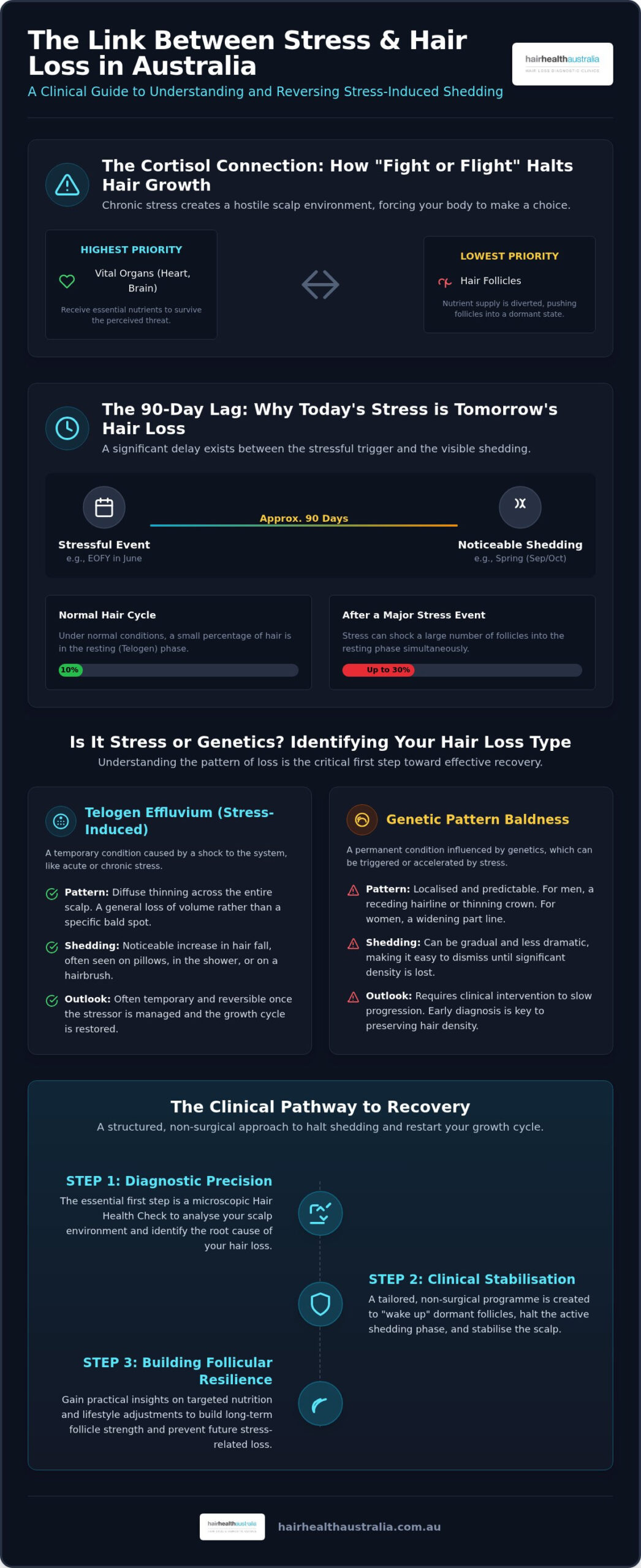
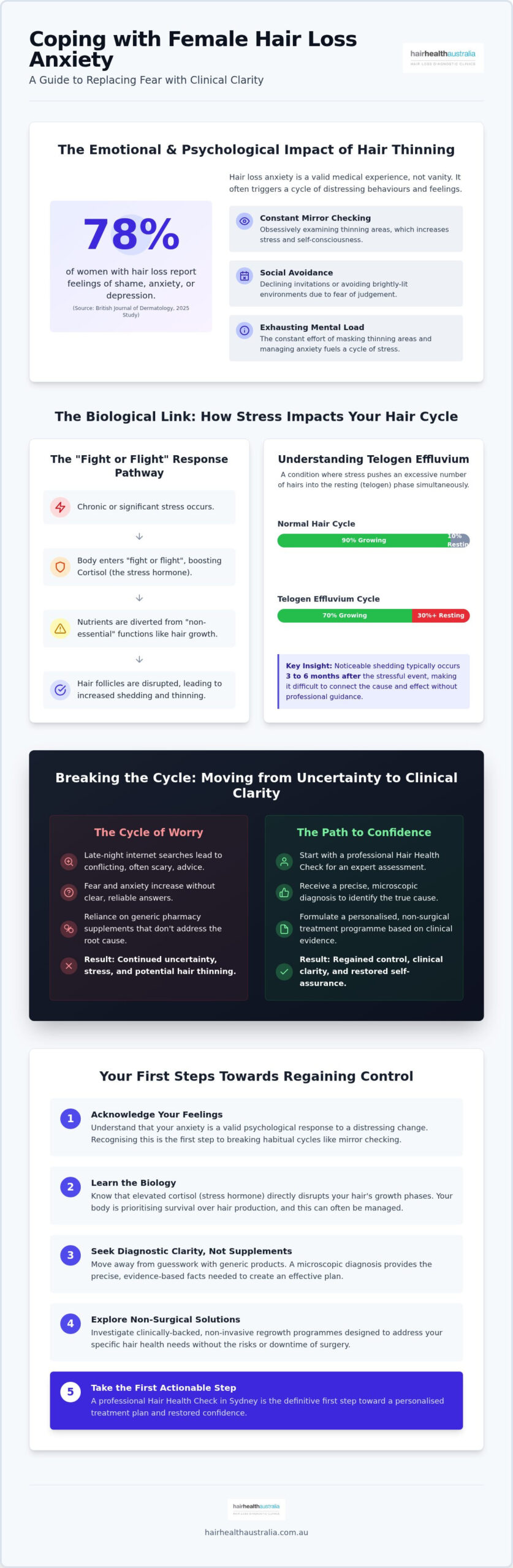
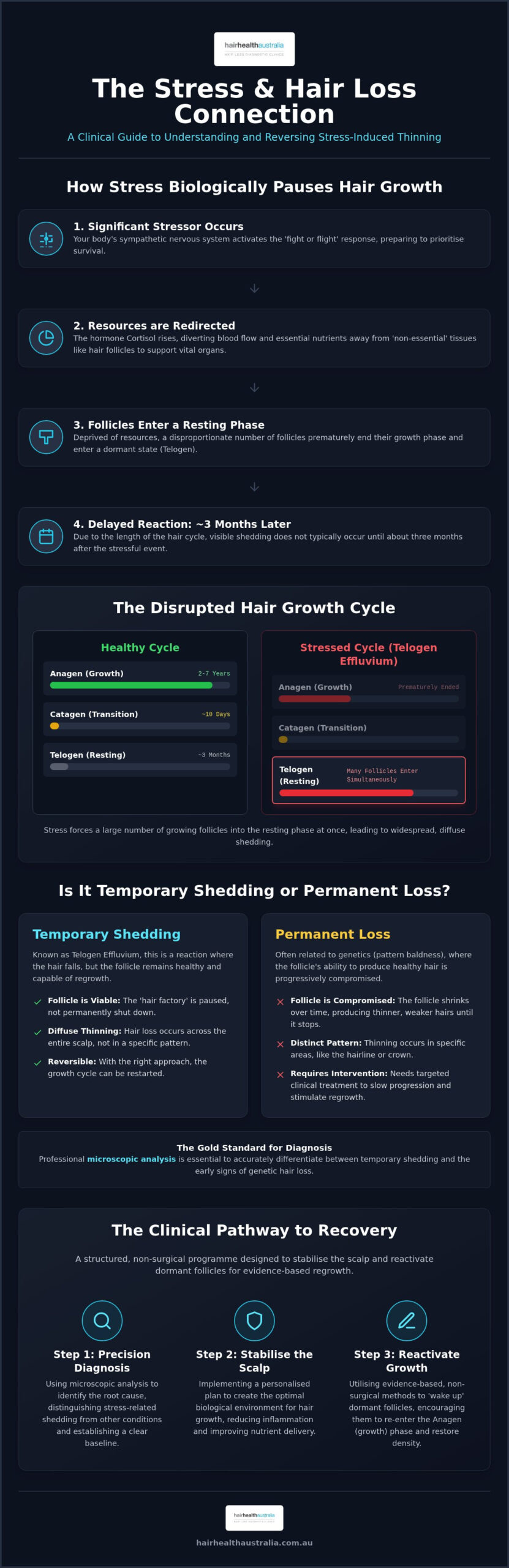
Stress usually triggers a temporary condition called telogen effluvium, which causes excessive shedding rather than permanent baldness. However, during menopause, the combination of hormonal shifts and high stress can accelerate the progression of underlying pattern thinning. If the shedding is prolonged, it may lead to a noticeable loss of volume that requires clinical intervention to reverse. A professional scalp scan is necessary to determine if the loss is temporary or permanent.
Are there any side effects to clinical hair regrowth programmes?
Clinical regrowth programmes are non-invasive and generally carry very few side effects compared to surgical options. Some clients might experience minor scalp dryness or temporary irritation when first using potent topical stimulants. These reactions are typically mild and resolve as the scalp adjusts to the routine. Professional clinical supervision ensures that any sensitivities are identified early and your programme is adjusted to maintain comfort while achieving the best possible results.
Is a hair health check necessary before starting any treatment?
A hair health check is essential because it provides the diagnostic data needed to build an effective plan. Starting a menopause hair loss treatment australia without a scan is often a waste of time, as you won’t know if your follicles are capable of regrowth. Microscopic analysis reveals the exact state of your scalp health and follicle activity, ensuring your clinical routine is targeted to your specific biological needs rather than generic assumptions.