
What if the hair you’re losing isn’t gone for good, but is simply stuck in a biological ‘pause’ triggered by your nervous system? It’s a common frustration to notice visible thinning and feel powerless as over-the-counter shampoos from the local chemist fail to deliver results. For many Australians, the connection between stress and hair loss is more than just a theory; it’s a physiological reality. This condition often leads to a cycle of anxiety that feels impossible to break, especially when you aren’t sure if you’re dealing with temporary shedding or permanent genetic balding.
We understand that you need clinical clarity rather than more guesswork. This guide explains the biological link between chronic pressure and thinning follicles, promising a clear path toward restoration without the need for invasive surgery. You’ll learn how to differentiate between various types of loss and discover a systematic, non-surgical recovery plan grounded in 2026 clinical standards. By focusing on evidence-based methods and microscopic analysis, we’ll help you move from uncertainty to a structured programme designed to restore your hair density and your confidence.
Key Takeaways
- Gain a clear understanding of how the body’s ‘fight or flight’ response redirects essential nutrients away from your scalp, causing follicles to enter a premature resting phase.
- Learn to distinguish between Telogen Effluvium and more complex conditions to better understand the specific relationship between stress and hair loss in your own circumstances.
- Discover why professional microscopic analysis is the gold standard for differentiating between temporary shedding and the early stages of genetic pattern baldness.
- Explore the clinical steps required to stabilise the scalp environment and effectively ‘wake up’ dormant follicles without the need for invasive surgical procedures.
- Understand the benefits of a personalised, Sydney-based clinical programme that focuses on evidence-based regrowth strategies tailored to your unique biological profile.
Understanding the Biological Link Between Stress and Hair Loss
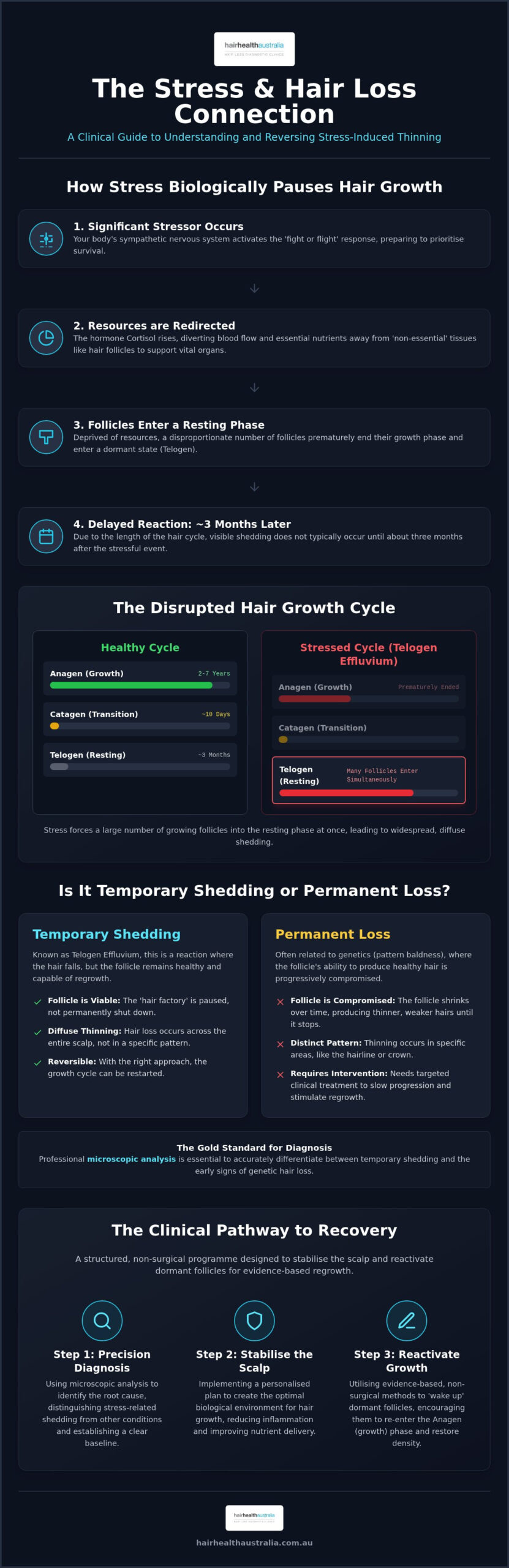
The biological connection between stress and hair loss is a complex interplay of hormones and cellular signals. When you experience a significant stressor, your body’s sympathetic nervous system activates the “fight or flight” response. This evolutionary mechanism prioritises the survival of vital organs, such as the heart and lungs, by redirecting blood flow and essential nutrients away from non-essential tissues. Your hair follicles are among the first to lose these resources because the body views hair as a luxury rather than a necessity for survival.
At a molecular level, the primary culprit is cortisol. This hormone acts as a chemical messenger that can inhibit the activity of follicle stem cells. When cortisol levels remain elevated, these stem cells are unable to transition back into the growth phase. This leads to a noticeable delay between the stressful event and the actual shedding. Most patients don’t see hair falling out until approximately three months after the initial period of pressure. This lag often makes it difficult to identify the root cause without professional assistance. For example, if the physiological strain is caused by ongoing legal concerns, securing expert guidance from SLKQ Lawyers can help manage the situation and mitigate the long-term impact on your health.
It’s vital to distinguish between “shedding” and “loss” when evaluating your scalp health. Shedding is often a temporary reaction where the hair falls out but the follicle remains viable. True loss involves a potential long-term thinning where the follicle’s ability to produce a healthy strand is compromised. Understanding this difference is the first step in a clinical recovery plan, as it determines whether the hair will return naturally or if it requires targeted intervention.
The Hair Growth Cycle: Anagen, Catagen, and Telogen
Every hair on your head is at a different stage of its lifecycle. The Anagen phase is the active growth period, which usually lasts several years. Stress prematurely terminates this phase, pushing follicles into Catagen, a brief transition where growth stops. Finally, the hair enters the Telogen phase, or the resting state. Telogen effluvium occurs when a disproportionate number of follicles enter this hibernation simultaneously, leading to diffuse thinning across the entire scalp. This isn’t permanent, but it requires a systematic approach to restart the growth cycle.
Chronic vs. Acute Stress: Different Impacts on Your Scalp
The nature of the stress dictates how the thinning manifests. Acute stress, like a sudden bereavement or surgery, typically causes a rapid shedding event where hair comes out in larger volumes during brushing. Chronic stress is more insidious. Long-term work or lifestyle pressures lead to a slow erosion of hair density over years. This persistent cortisol elevation keeps follicles in a weakened state, making them more susceptible to other forms of thinning. If you’ve noticed a change in volume, a professional hair health check can help determine if your symptoms are temporary shedding or a more permanent shift in density.
Identifying the Three Primary Types of Stress-Related Thinning
Stress doesn’t follow a single script. It manifests differently depending on your biological predisposition and the nature of the tension you’re facing. Recent research from the NIH on stress and hair loss highlights how cortisol specifically targets the follicle’s niche, disrupting the signals required for growth. In a clinical setting, we categorise these responses into three distinct presentations to ensure the treatment matches the cause.
Telogen Effluvium: The ‘Shock’ to Your System
This is the most prevalent form of thinning we see in our Sydney clinic. It presents as diffuse shedding across the whole scalp rather than specific patches. You might notice an alarming amount of hair in the shower drain or on your pillow. A key diagnostic feature is the “white bulb” at the root of fallen strands. This bulb indicates the hair has reached the end of its life cycle and was “pushed out” by the body’s reaction to stress. While unassisted recovery can occur over 6 to 9 months once the stressor is removed, many people find the process slow and frustrating without clinical support to restart the growth phase.
When Stress Triggers an Autoimmune Response
Severe emotional trauma can sometimes lead to Alopecia Areata. This occurs when the immune system mistakenly attacks the hair follicles, resulting in smooth, round patches of loss. Clinically, we look for “exclamation point” hairs. These are strands that are narrower at the base than the tip, which signal active, ongoing loss. Because this involves the immune system, professional monitoring is essential to manage flare-ups and prevent the patches from spreading. Understanding the specific category of stress and hair loss you’re facing is critical for choosing the right recovery path.
Beyond these physiological shifts, some individuals experience Trichotillomania. This is a psychological urge to pull out hair during periods of high tension, often leading to irregular patches of thinning. Stress also disrupts your scalp’s microbiome. This often leads to secondary issues like seborrheic dermatitis. In these cases, an overproduction of oil and inflammation creates an unhealthy environment for growth, which can exacerbate existing thinning. If you’re unsure which type of thinning you’re experiencing, a professional hair health check can provide the diagnostic precision needed to start the right treatment.
Diagnostic Precision: Is it Stress or Pattern Baldness?
Determining the exact cause of thinning is the most critical step in your recovery journey. Many people mistakenly assume their shedding is a temporary reaction to a difficult month at work, yet this self-diagnosis can be risky. If the underlying cause is actually genetic, delaying a specialised clinical intervention allows follicle miniaturisation to progress unchecked. While we’ve discussed the three types of stress-related thinning, it’s essential to understand that stress and hair loss are often intertwined with your genetic blueprint.
A comprehensive diagnostic approach includes ruling out other physiological factors. Low levels of iron (ferritin) or zinc, alongside thyroid imbalances, can trigger shedding that mimics stress-induced loss. By identifying these factors through blood work, we ensure your treatment plan addresses the actual biological deficit rather than just the symptoms. Understanding how stress and hair loss interact with your general health is vital for a successful recovery. Stress acts as a potent catalyst, often accelerating the visible signs of male or female pattern baldness in those already predisposed.
Microscopic Hair Analysis: Seeing What the Naked Eye Misses
In our Sydney clinic, we use microscopic hair analysis to gain a definitive view of your scalp’s health. This technology allows us to observe follicle miniaturisation, a hallmark of genetic thinning that isn’t visible to the naked eye. By measuring the precise ratio of anagen (growth) to telogen (resting) hairs, we can confirm if your system is in a state of ‘shock’ shedding or if a more permanent pattern is emerging. We also assess oil production and scalp inflammation under high magnification to ensure the environment is primed for regrowth.
Genetic vs. Environmental Triggers
Your family history provides a vital roadmap, but it isn’t the only factor at play. We map your recent stress timeline against your hair’s density changes to see where the two intersect. Stress doesn’t create genetic baldness, but it can unmask it earlier than expected. This ‘unmasking’ happens when the physiological strain of high cortisol levels pushes a predisposed follicle over its threshold. A professional consultation provides the clarity needed to determine if your follicles are capable of unassisted recovery or if they require a structured clinical programme to thrive again.
Clinical Pathways to Hair Regrowth and Scalp Recovery
Recovery isn’t a single event. It’s a systematic process that requires moving the follicle from a state of hibernation back into an active growth phase. Once we’ve used microscopic analysis to confirm your follicles are viable, we initiate a multi-stage clinical pathway. This structured approach is designed to address the specific physiological disruptions caused by stress and hair loss, ensuring that every intervention is timed to match your hair’s natural cycle.
The first priority is stabilising the scalp environment to minimise further shedding. We then focus on nutrient delivery using clinical-grade topical solutions. These aren’t the generic products you’ll find at a local chemist; they’re concentrated formulations designed to ‘wake up’ resting follicles. To enhance this, we often incorporate Low-Level Laser Therapy (LLLT). This non-invasive technology uses specific light wavelengths to stimulate cellular metabolism within the follicle, increasing ATP production and encouraging the transition back into the anagen phase. Finally, we provide ongoing monitoring to adjust your protocol based on how your scalp responds.
Non-Surgical Regrowth Programmes
A multi-therapeutic approach is far more effective than relying on a single product. For those dealing with stress-related thinning, non-surgical methods are often preferred because they don’t add the physical strain of surgery to an already taxed nervous system. Success in these programmes follows a predictable clinical timeline. At the 3-month mark, we generally look for a significant reduction in shedding. By 6 months, early regrowth is often visible under magnification, and by 12 months, we aim for a measurable increase in overall density. If you’re ready to start this journey, you can book a hair health check to establish your baseline.
Nutritional and Lifestyle Support for Follicular Health
Clinical treatments work best when supported by the right biological building blocks. We focus on the ‘Big Three’ for hair recovery: protein, iron, and biotin. These are essential for keratin production, which can be compromised when the body is under pressure. Managing the underlying stress and hair loss also requires addressing cortisol directly. We recommend evidence-based stress management techniques, such as breathwork or structured exercise, which have been shown to lower biological markers of tension. Maintaining strict scalp hygiene is also vital during this period to ensure that topical treatments can penetrate the skin effectively without being blocked by oil or debris.
Professional Hair Loss Solutions in Sydney: The Clinical Difference
While a general practitioner is an essential partner for your overall wellbeing, they often lack the specialised diagnostic tools required to monitor minute follicular changes over time. A dedicated hair loss clinic provides a level of precision that general medicine simply isn’t equipped to offer. In Sydney, we provide a clinical environment where advanced technology meets empathetic care. This ensures that your experience with stress and hair loss is managed with the specific attention required to restart a stalled growth cycle.
Moving beyond the pharmacy shelf is frequently the turning point for our patients. Most over-the-counter shampoos are designed for surface-level scalp hygiene rather than the complex hormonal disruptions caused by elevated cortisol. Clinical-strength protocols are systematic and data-driven. They deliver active ingredients directly to the follicle’s niche, providing the biological signals needed for regrowth. During your initial clinical assessment, we move past generic advice to establish a definitive baseline for your recovery journey.
Personalised Care at Hair Health Australia
Our commitment to evidence-based, non-surgical hair restoration means we don’t believe in one-size-fits-all solutions. We understand that your hair type and your specific stress profile are unique. By tailoring every programme to the individual, we can address the root causes of thinning rather than just the symptoms. Our focus remains on long-term scalp health and sustainable density. We provide realistic expectations based on your microscopic results, ensuring you feel confident and informed at every stage of the process.
Your Journey to Recovery in Sydney
Accessing professional care in Sydney offers a distinct advantage for those seeking consistent results. Our convenient clinical locations allow for regular progress checks, which are vital for maintaining momentum and adjusting treatments as your scalp health improves. Having a dedicated specialist to guide you through the recovery period helps alleviate the anxiety that often accompanies thinning. Seeing measurable improvement under a microscope provides the reassurance that your personalised plan is working. Take the first step toward reclaiming your hair density and your confidence. Book your Hair Health Check at our Sydney clinic today to discover the clinical difference for stress and hair loss recovery.
Restore Your Hair Density with Clinical Precision
Understanding the physiological link between stress and hair loss is the first step toward reclaiming your confidence. We’ve explored how cortisol disrupts the growth cycle and why a precise diagnosis is essential to differentiate between temporary shedding and permanent thinning. By moving beyond generic pharmacy products and embracing a structured, non-surgical clinical approach, you can provide your follicles with the specific environment they need to thrive once more.
With over 15 years of clinical experience in Sydney, our team specialises in evidence-based regrowth protocols tailored to your unique biological profile. Every assessment we conduct includes expert microscopic hair analysis, ensuring your recovery plan is grounded in diagnostic data rather than guesswork. You don’t have to accept thinning as an inevitable result of a high-pressure lifestyle; managing external stressors by ensuring your business and financial health are in order with KHT Accounting & Wealth can be an important part of a holistic approach to wellbeing.
Book Your Comprehensive Hair Health Check in Sydney today. Your journey toward restored density and a healthier scalp begins with a single, informed step.
Frequently Asked Questions
Can stress-related hair loss be reversed?
Yes, in the vast majority of cases. Stress typically causes follicles to enter a resting phase rather than causing them to die off completely. Once the physiological trigger is addressed and the scalp environment is stabilised through clinical intervention, regrowth is highly probable. It’s a matter of restarting the biological cycle and providing the follicles with the necessary nutrients to transition back into the active growth phase, ensuring long-term scalp health.
How long after a stressful event does hair start falling out?
There is usually a delay of approximately three months. This lag occurs because the follicle takes time to transition from the growth phase into the telogen (resting) phase before the strand actually sheds. Recognising this timeline is crucial for identifying the original stressor, whether it was a sudden shock or a prolonged period of pressure. Because the hair is already in the resting phase, shedding often continues for several weeks even after the stress has been managed.
How can I tell if my hair loss is from stress or genetics?
Stress-induced loss usually presents as diffuse thinning across the entire scalp, whereas genetic loss follows a specific pattern, such as a receding hairline or thinning at the crown. Microscopic analysis is the most accurate way to distinguish between the two by observing follicle miniaturisation. While stress can accelerate genetic thinning, a professional assessment identifies whether the follicles are merely resting or if they are permanently shrinking due to hereditary factors.
What is the best treatment for Telogen Effluvium in Australia?
A multi-therapeutic approach is considered the gold standard in Australia. This involves stabilising the scalp environment, providing clinical-grade topical nutrients, and using Low-Level Laser Therapy (LLLT) to stimulate cellular activity. These non-surgical methods effectively address the underlying causes of stress and hair loss by encouraging follicles to exit the resting phase. Unlike generic products from a chemist, these protocols are tailored to your specific scalp health and density requirements.
Do vitamins actually help with stress-induced hair thinning?
Vitamins only provide a benefit if a measurable deficiency exists. While nutrients like protein, iron, and biotin are essential for keratin production, they aren’t a universal solution for every patient. A clinical assessment can determine if your thinning is due to nutritional gaps exacerbated by high cortisol levels or if you require more direct follicular stimulation. We focus on evidence-based supplementation rather than the ‘one-size-fits-all’ approach found in over-the-counter gummies.
How long does it take for hair to grow back after stress is managed?
Visible regrowth usually takes between three and six months to manifest. Hair grows at an average rate of one centimetre per month, so while follicles might restart their cycle sooner, it takes time for new strands to gain enough length to be noticeable. Clinical treatments can often accelerate this timeline by optimising the scalp environment and ensuring that new growth is well-supported by essential nutrients and increased blood flow.
Is patchy hair loss always caused by stress?
No, patchy loss is often a sign of Alopecia Areata, which is an autoimmune condition. While severe emotional trauma can trigger flare-ups, the underlying cause is the immune system mistakenly attacking the hair follicles. It’s important to get a professional diagnosis to manage these specific patches correctly, as the treatment for an autoimmune response differs significantly from the protocols used for general diffuse thinning or pattern baldness.
Can a hair specialist in Sydney help me without surgery?
Absolutely. Most cases of stress and hair loss are successfully managed using non-surgical, evidence-based regrowth programmes. Specialists in Sydney use advanced diagnostic tools like microscopic analysis to create personalised care plans that focus on restoring density through topical solutions and light therapy rather than invasive transplants. These clinical pathways are designed to be gentle on your system while delivering consistent, measurable results over a twelve-month period.