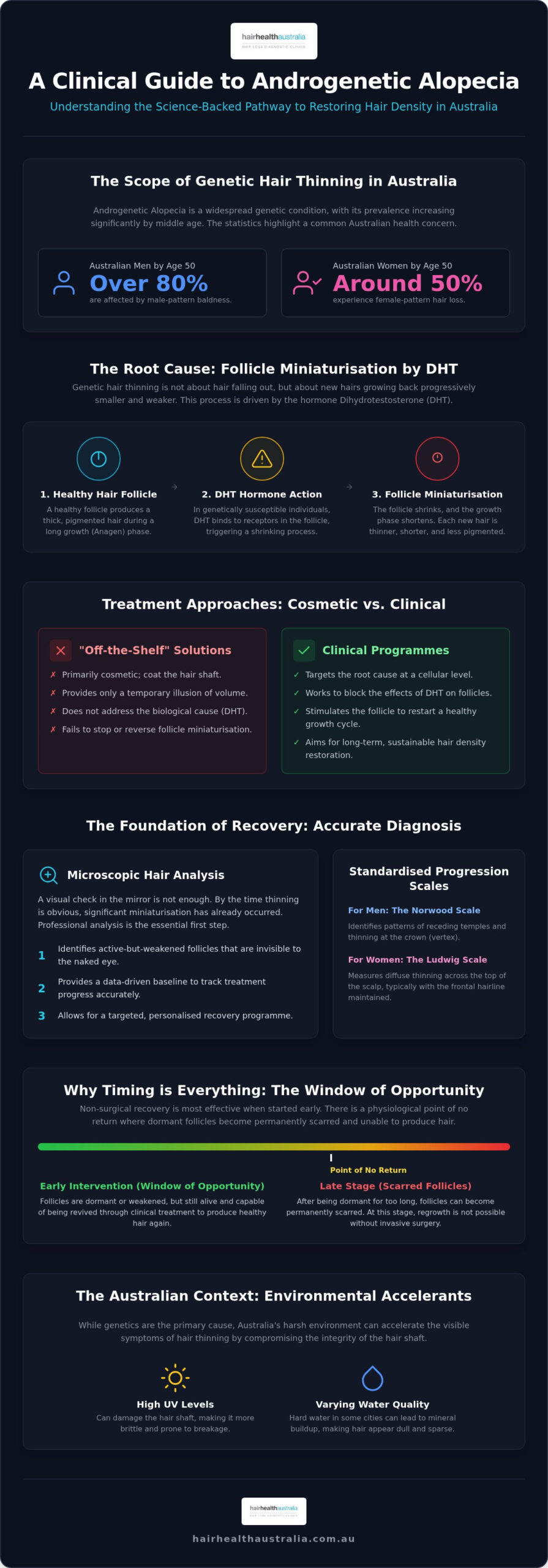
Did you know that by the age of 50, androgenetic alopecia affects over 80% of Australian men and 50% of women? Seeking an effective androgenetic alopecia treatment often leads to frustration with pharmacy shampoos that fail to deliver or confusion over conflicting medical advice. It’s understandable to fear that your hair loss is permanent, especially when you’re looking for a professional solution that avoids the risks and recovery time of invasive surgery.
This clinical guide provides a clear, science-backed pathway to recovery in 2026, designed specifically for the Australian lifestyle. You’ll learn how a data-driven diagnosis and a structured, non-surgical programme can restore visible hair density and long-term scalp health. We will explore the latest TGA-approved medical options, the precision of microscopic hair analysis, and how to establish a maintenance routine that fits into a busy Sydney schedule.
Key Takeaways
- Understand how the harsh Australian climate and local water quality can impact the progression of genetic thinning.
- Discover how a modern androgenetic alopecia treatment targets DHT to protect your follicle life cycle and restore hair density.
- Identify the clinical advantages of non-surgical regrowth programmes over invasive transplants for early to mid-stage hair loss.
- Learn why microscopic hair analysis is the essential diagnostic tool for identifying active follicles that a visual check might miss.
- Gain a realistic timeline for visible results and learn how a clinical recovery plan fits into a busy Sydney lifestyle.
Understanding Androgenetic Alopecia in the Australian Context
Many Australians mistakenly view thinning hair as an inevitable part of ageing or a temporary reaction to a stressful lifestyle. However, Pattern hair loss, or androgenetic alopecia, is a progressive genetic condition that requires a targeted clinical approach. While genetics provide the blueprint, the harsh Australian environment often accelerates the visible symptoms. High UV levels and varying water quality across our capital cities can compromise hair shaft integrity, making hair appear more brittle and sparse than it actually is. Because of these environmental factors, it’s common for patients in Sydney to misdiagnose their own condition, often waiting until they have lost significant density before seeking professional help. Modern Sydney clinics are now seeing a major shift toward non-surgical clinical restoration, allowing patients to bypass the risks of surgery through early, evidence-based androgenetic alopecia treatment.
Why “Off-the-Shelf” Solutions Often Fail
Walking into a local pharmacy, you’re met with dozens of shampoos promising “thicker” hair. These are almost exclusively cosmetic products that coat the hair shaft to provide temporary volume; they do nothing to address the biological cause of the loss. The real issue lies beneath the scalp with Dihydrotestosterone (DHT), a hormone that binds to hair follicles and causes them to shrink over time.
Androgenetic alopecia is the biological miniaturisation of the hair follicle.
Unlike supermarket brands, a clinical androgenetic alopecia treatment focuses on blocking these hormonal triggers and stimulating the follicle at a cellular level to restart the growth cycle. This systematic care ensures that the hair isn’t just looking better temporarily but is actually growing from a healthier, more robust follicle. For those interested in how systemic hormonal health impacts these biological processes, you can learn more about Alphagenix and their clinical approach to hormone optimisation.
The Importance of Early Clinical Intervention
Timing is the most critical factor in non-surgical recovery. There is a physiological “point of no return” where a follicle that has been dormant for too long becomes permanently scarred, making regrowth impossible without invasive surgery. Identifying thinning in the crown or along the hairline often requires more than a mirror. By the time you notice a wider part line, significant miniaturisation has already occurred. Taking a proactive approach through a professional Hair Health Check allows for a data-driven diagnosis. This provides the psychological relief of knowing exactly what’s happening to your hair and ensures you’re applying a solution that actually works, rather than guessing with ineffective home remedies. Restoring density is far more efficient when you still have a high percentage of active, albeit weakened, follicles to work with.
Identifying the Specific Mechanisms of Genetic Thinning
Every hair on your scalp follows a specific biological rhythm consisting of three distinct phases. The Anagen phase is the active growth period, which typically lasts several years in a healthy follicle. This is followed by the brief Catagen transition and the Telogen resting phase, where the hair eventually sheds to make room for new growth. In a healthy environment, the vast majority of your hair is in the growth stage at any given time. However, when genetic thinning takes hold, this cycle is disrupted. The growth phase is systematically shortened, meaning hairs do not have the time to reach their full length or thickness. Over time, the hair becomes increasingly fine until the follicle appears dormant.
Clinical specialists use standardised metrics to track this progression. For men, the Norwood scale identifies patterns of receding temples and thinning at the crown. Women typically experience a different progression measured by the Ludwig scale, which focuses on diffuse thinning across the top of the scalp while maintaining the frontal hairline. It is important to note that early signs of alopecia in women require different diagnostic attention, as the triggers and patterns can be more subtle than male-pattern loss.
The Role of Dihydrotestosterone (DHT)
The primary driver of this miniaturisation is Dihydrotestosterone (DHT), a potent androgen derived from testosterone. In individuals with a genetic predisposition, follicles on the top of the scalp are highly sensitive to this hormone. When DHT binds to receptors in the hair follicle, it triggers a shrinking process. Successive growth cycles produce hairs that are thinner, shorter, and less pigmented. This continues until the follicle can no longer produce a visible hair shaft. A comprehensive review of treatment options highlights that the most effective androgenetic alopecia treatment involves stabilising these hormonal interactions to protect the follicle from further miniaturisation.
Environmental and Lifestyle Triggers in Australia
While genetics provide the foundation for hair loss, the Australian lifestyle can act as an accelerant. High-stress environments, common in fast-paced cities like Sydney, lead to elevated cortisol levels. Chronic stress is a known contributor to scalp inflammation, which can hinder the delivery of nutrients to the hair bulb. Nutrition also plays a silent but significant role; deficiencies in iron, zinc, or vitamin D can compromise hair density even further. These factors are frequently overlooked in generic medical consultations but are essential components of a successful androgenetic alopecia treatment plan. Addressing the health of the scalp environment is just as vital as treating the genetic cause. To gain a clear understanding of your specific miniaturisation levels, a professional Hair Health Check provides the data needed to move forward with confidence.
Clinical Recovery vs. Surgical Hair Transplants
Many Australians considering an androgenetic alopecia treatment feel pressured to choose between a “quick fix” surgical procedure and a long-term clinical programme. While surgery is often marketed as a permanent solution, it’s important to understand the biological reality. A surgical transplant involves moving hair from the back of the head to the front; it does not address the hormonal drive that causes the remaining hair to thin. For those in the early to mid-stages of loss, a non-surgical approach is frequently the more effective pathway to restoring overall density and preserving existing hair health.
The Limitations of Hair Transplant Surgery
Surgery is inherently invasive. It requires significant downtime and carries the risk of visible scarring. One of the most distressing side effects is “shock loss,” where the trauma of the procedure causes existing, healthy hair surrounding the grafts to fall out. Beyond the immediate recovery, surgery is merely a rearrangement of existing follicles. It doesn’t cure the underlying condition. According to a clinical overview of androgenetic alopecia, the progressive nature of the disease means that without ongoing medical management, the hair around the transplanted grafts will continue to miniaturise. This often leads to an unnatural, patchy appearance years later. Invasive procedures are also high-cost and do not offer a “whole-of-scalp” solution.
Why Non-Surgical Programmes are the Modern Standard
Modern clinical recovery programmes offer a comprehensive solution rather than focusing on individual graft placement. By using clinical-grade stimulants and DHT blockers, these treatments work to thicken every existing hair. They also revive dormant follicles that haven’t yet reached the point of permanent scarring. This systematic approach is safer and more cost-effective. It avoids the “pluggy” look often associated with poor surgical outcomes. For many, this is considered the Best Hair Regrowth Treatment Australia 2026 provides, as it treats the scalp as a complete biological ecosystem. Clinical therapies stimulate follicles back into the growth phase, providing a natural restoration of density across the entire affected area.
Regardless of the chosen path, maintenance is non-negotiable. Even after a successful transplant, patients must continue a non-surgical androgenetic alopecia treatment to prevent the loss of their non-transplanted hair. Choosing a clinical programme from the outset allows you to maintain your natural hair distribution without the risks of surgery. It’s a proactive strategy that values the long-term health of your scalp over a temporary cosmetic fix. By focusing on preservation and thickening, you can achieve a result that looks natural and remains stable as you age.
The Diagnostic Foundation: Microscopic Hair Analysis
A standard visual inspection by a general practitioner is often the first step many take, yet it rarely provides the depth required for a successful androgenetic alopecia treatment. While a GP can identify that loss is occurring, they cannot quantify the rate of miniaturisation or the percentage of follicles currently in the telogen resting phase. Clinical microscopic scanning removes the guesswork by providing a high-resolution view of the scalp environment. This allows specialists to track specific metrics such as hair shaft diameter, sebum levels, and follicle activity. By basing a recovery plan on objective data rather than a cursory glance, the likelihood of achieving visible regrowth increases significantly.
What Happens During a Clinical Hair Health Check?
The first step toward recovery is establishing a baseline through a comprehensive hair health check. This process begins with high-magnification digital imaging of several target areas on the scalp. We capture baseline photos and precise microscopic measurements to compare against future results. Microscopic analysis identifies thinning up to five years before it is visible to the naked eye. This early detection is vital; it allows us to intervene while follicles are still capable of producing healthy, robust hair. By the time thinning is obvious in the mirror, you’ve likely already lost up to 50% of your hair density in that area.
Personalising Your Treatment Protocol
Data-driven diagnostics are the only way to ensure your androgenetic alopecia treatment is truly personalised. If the scan reveals high levels of sebum or scalp inflammation, these issues must be resolved first to ensure maximum absorption of clinical stimulants. The measurements also dictate the concentration of blockers needed to stabilise your specific rate of loss. One of the greatest benefits of this approach is the psychological boost it provides. Seeing microscopic evidence of new “baby” hairs appearing months before they’re long enough to change your hairstyle keeps you motivated. It transforms the recovery journey from a hopeful experiment into a systematic, verified clinical process.
To move beyond guesswork and secure a precise diagnosis of your follicle health, you can book a professional hair health check at our Sydney clinic today.
Navigating Your Treatment Journey in Sydney
Visiting a specialised clinic in Sydney marks the transition from uncertainty to a structured recovery plan. Unlike a standard medical practice, a dedicated hair clinic provides an environment focused entirely on follicle preservation. Your first visit is designed to be educational rather than transactional. You’ll move from a diagnostic phase where we assess your scalp health to a consultation where we discuss realistic outcomes based on your specific data. Consistency is the foundation of any successful androgenetic alopecia treatment. Because hair growth cycles are measured in months rather than weeks, professional monitoring ensures your protocol remains effective as your scalp environment evolves.
Visible results in clinical regrowth typically follow a biological timeline. During the first three months, the primary goal is stabilisation, where we aim to stop the excessive shedding. Between six and twelve months, patients often begin to see an increase in hair diameter and visible density as dormant follicles return to the anagen growth phase. Choosing a clinic that prioritises non-surgical honesty is essential. A reliable specialist will provide a clear maintenance plan that fits into a busy Sydney lifestyle, ensuring your results are sustainable for years to come.
The Hair Health Australia Approach
Since 2009, Hair Health Australia has focused exclusively on non-surgical, clinically-backed regrowth programmes for men and women. We don’t offer transplants; instead, we specialise in reviving and thickening the hair you still have. Our consultation style is straight-talking and honest. We believe in providing clear expectations based on your microscopic scan rather than marketing hype. It’s vital to choose a provider that values long-term follicle health over temporary cosmetic fixes. Before committing to any programme, we encourage you to review the Choosing a Non-Surgical Hair Loss Clinic in Sydney guide to ensure your chosen centre meets clinical standards.
Taking the First Step Toward Recovery
There is a profound emotional relief in finally having a professional, scientific plan in place. For many, the fear that hair loss is permanent is the heaviest burden. Once you understand that androgenetic alopecia is a manageable biological condition, that fear is replaced by a sense of confidence. The first step is booking a diagnostic scan at our Sydney centre. This hair health check provides the microscopic evidence needed to build your custom protocol. Recovery is a journey that requires patience, but with the right clinical support, density restoration is an achievable goal. You don’t have to accept thinning as an inevitable part of your future.
Securing Your Future Hair Density
Effective androgenetic alopecia treatment is no longer a matter of trial and error; it’s a systematic process rooted in clinical precision. By moving away from generic pharmacy products and embracing data-driven microscopic analysis, you can target follicle miniaturisation before the damage becomes irreversible. Our specialised programmes for men and women leverage over 15 years of clinical expertise in Sydney, focusing on non-surgical results that are verified by microscopic data. We understand the unique environmental challenges of the Australian climate and provide the straight-talking honesty you need to manage your hair health with confidence.
The first step toward visible regrowth and restored density is a precise diagnosis. You can Book Your Clinical Hair Health Check in Sydney Today to gain a clear understanding of your follicle activity and start a personalised recovery plan. Taking control of genetic hair loss is possible when you have the right scientific guidance and a commitment to consistency. It’s time to replace uncertainty with a proven clinical pathway and look forward to a future with thicker, healthier hair.
Frequently Asked Questions
Is there a permanent cure for androgenetic alopecia in 2026?
There is currently no permanent cure for genetic hair loss, but it’s a manageable condition through consistent clinical intervention. A successful androgenetic alopecia treatment focuses on blocking DHT and extending the growth phase of your follicles. While you can’t change your DNA, you can change how it’s expressed on your scalp. Modern clinical programmes in Sydney aim for long-term stabilisation and density restoration rather than a one-time fix that ignores the underlying biology.
How much does clinical hair loss treatment cost in Australia?
Costs for clinical care in Australia vary based on the specific protocols required for your level of thinning. General PBS-listed medications have become more affordable, with some co-payments reduced to A$25.00 in 2026. However, a comprehensive clinical programme includes professional monitoring and high-grade stimulants beyond basic pharmacy products. We provide a clear breakdown of your personalised plan during your initial consultation, ensuring you understand the investment required for sustainable results without hidden surgical fees.
Can I regrow hair on a completely bald crown without surgery?
Regrowth on a completely bald area depends entirely on whether the hair follicles are still active. If the scalp has become shiny and smooth, it often indicates the follicles have scarred over, making non-surgical recovery unlikely. However, many areas that appear bald actually contain thousands of miniaturised hairs invisible to the naked eye. Microscopic scanning is the only way to verify if these follicles can be revived through a targeted clinical programme.
What is the difference between a trichologist and a dermatologist for hair loss?
Dermatologists are medical doctors specialising in the skin, while trichologists and hair loss specialists focus specifically on the biology of the hair and scalp. In a Sydney clinical setting, the focus is on providing a dedicated, multi-modal approach to regrowth. Choosing a specialist clinic ensures you receive a high level of diagnostic precision, such as microscopic analysis, which is specifically designed to track the minute changes in follicle health over time.
Will I need to use clinical treatments forever to keep my hair?
Yes, maintaining your results requires ongoing care because the genetic predisposition to thinning remains present in your DNA. If you stop your androgenetic alopecia treatment, the DHT will eventually begin to miniaturise the follicles again. Most patients find that once they achieve their desired density, their routine shifts into a simplified maintenance phase. This fits easily into a daily schedule, much like any other aspect of professional grooming or long-term health care.
Are there any side effects to non-surgical alopecia treatments?
Most non-surgical clinical treatments are well-tolerated, especially when administered under professional supervision. Some patients might experience minor scalp irritation or temporary shedding when first starting a programme, which is often a sign that the follicles are resetting their growth cycle. We monitor your progress closely at our Sydney clinic to ensure your protocol is comfortable and effective. Using TGA-approved methods ensures that your recovery journey prioritises safety alongside visible results.
How long does it take to see the first signs of regrowth?
You should expect to see the first physiological changes within three to six months of starting your programme. The initial phase focuses on stabilising the loss and stopping excessive shedding. Visible improvements in hair density and thickness typically become apparent between the six and twelve-month marks. Patience is essential, as hair only grows about one centimetre per month. Consistent clinical monitoring helps you stay on track during these critical early stages of recovery.
Is microscopic hair analysis really necessary for a diagnosis?
Microscopic analysis is essential for an accurate diagnosis and a successful recovery plan. A visual check can’t determine the percentage of your follicles in the resting phase or identify miniaturisation before it’s visible to others. By quantifying your hair diameter and scalp health, we can tailor your protocol to your specific needs. This data-driven approach is why our Sydney clinic achieves higher success rates than those relying on guesswork or generic, over-the-counter solutions.