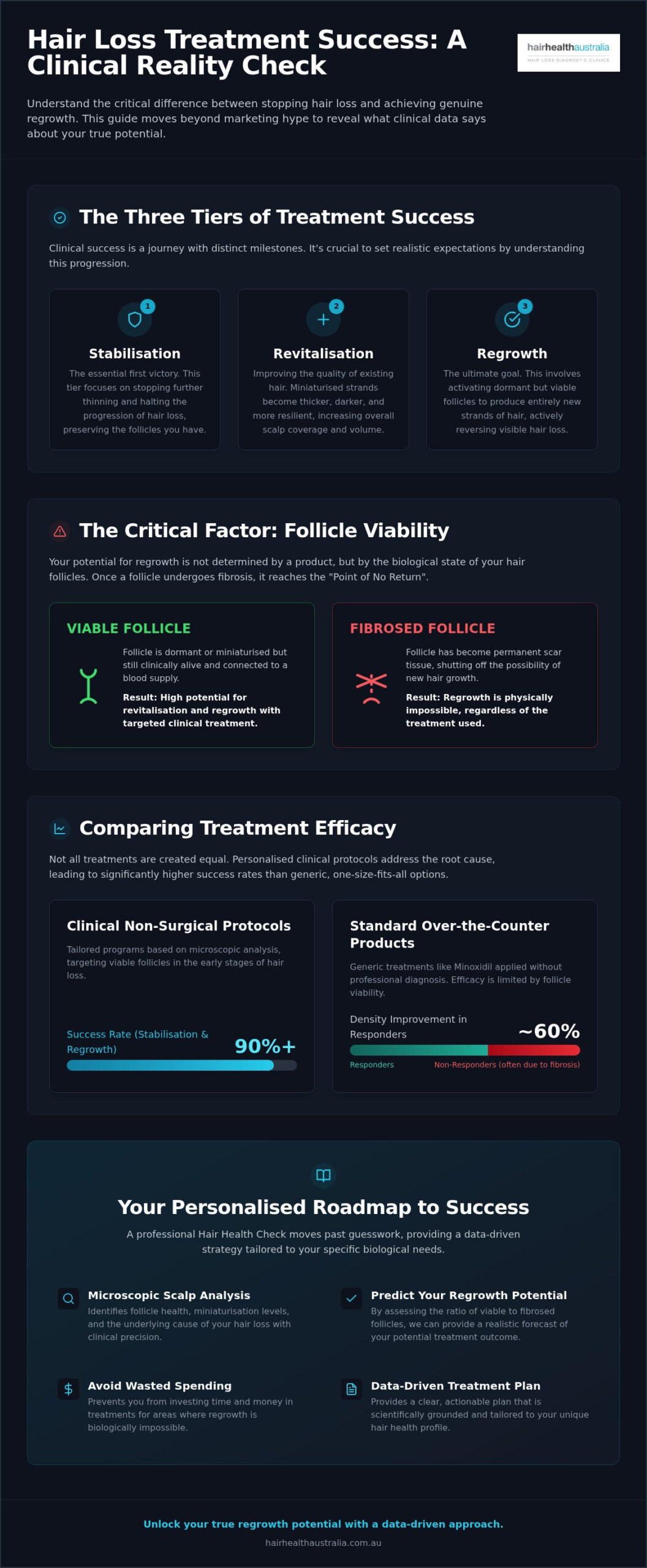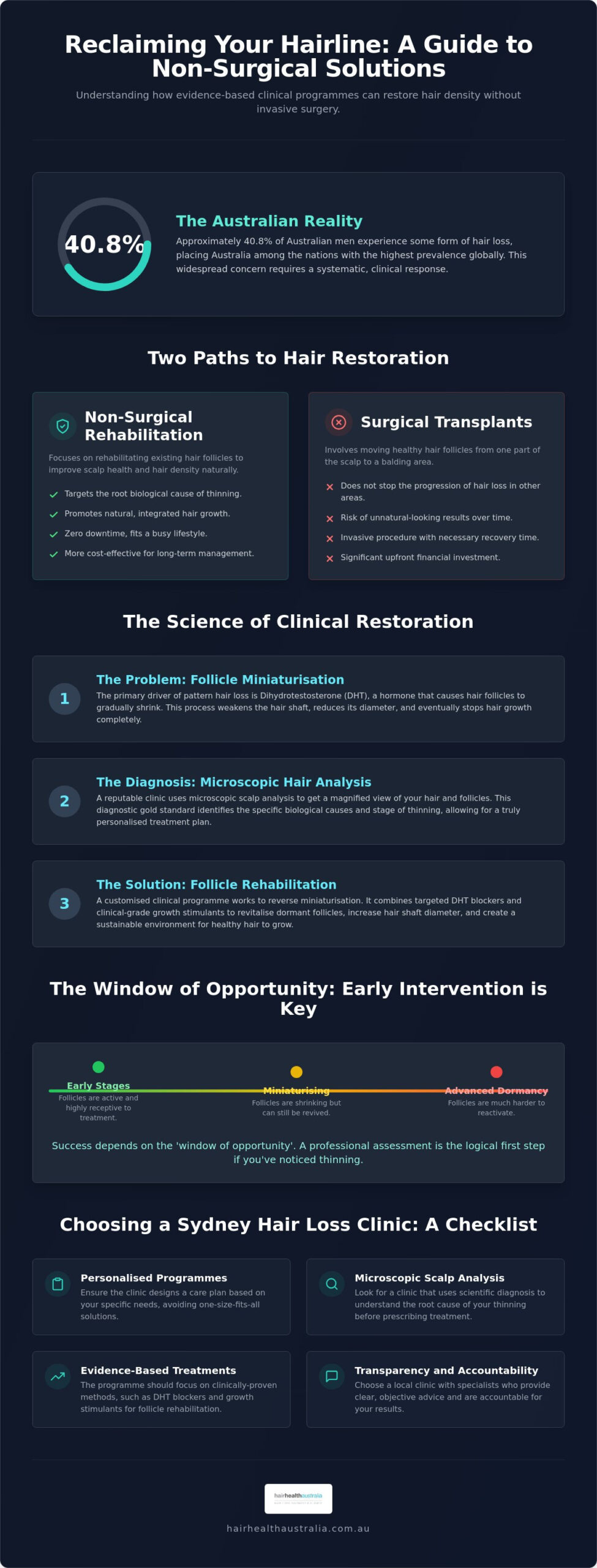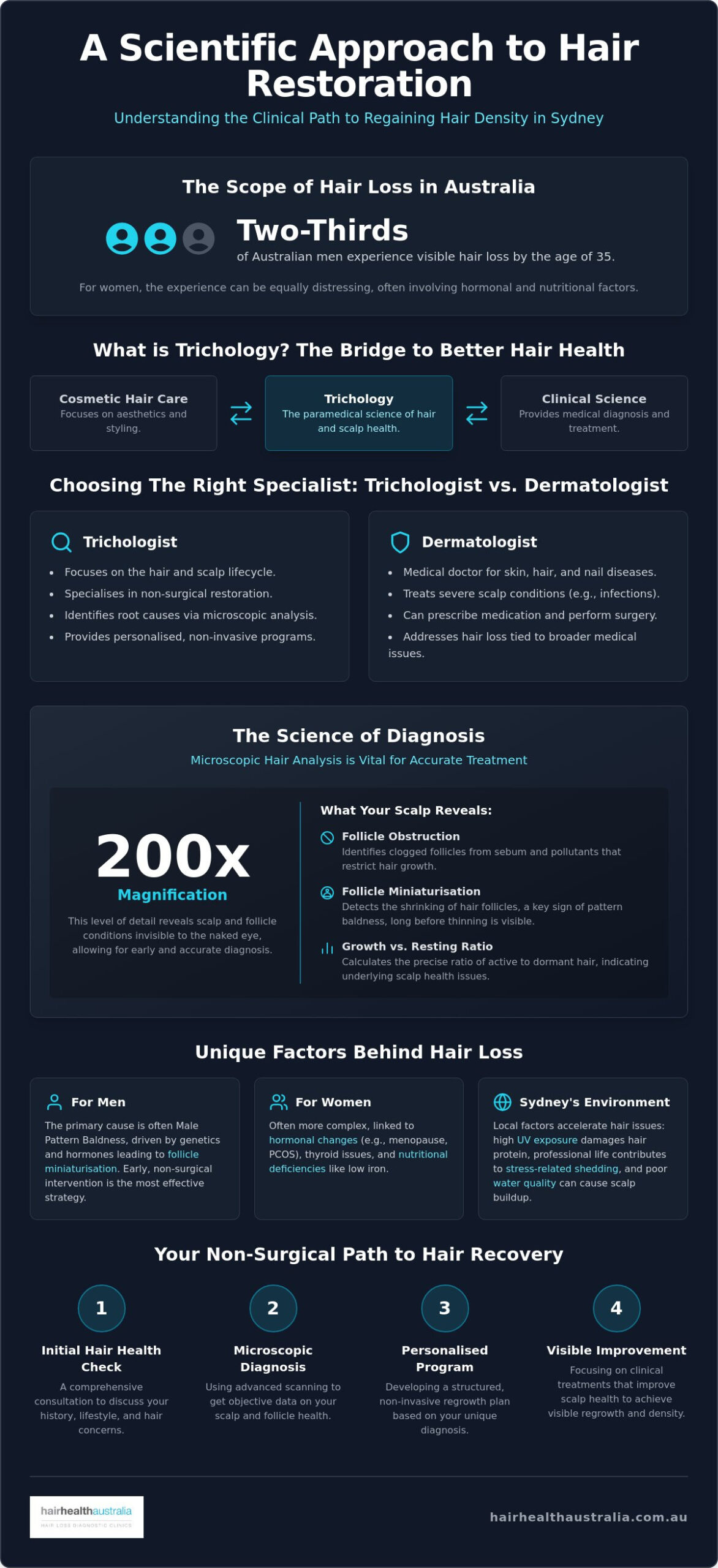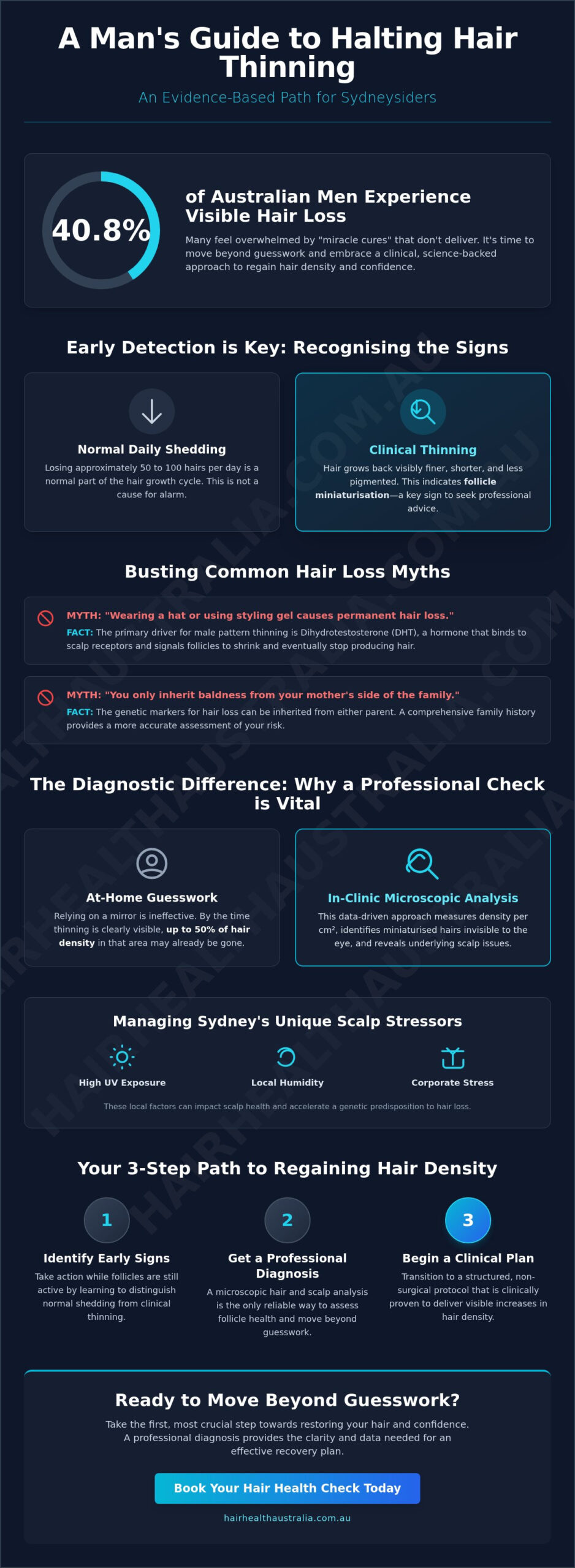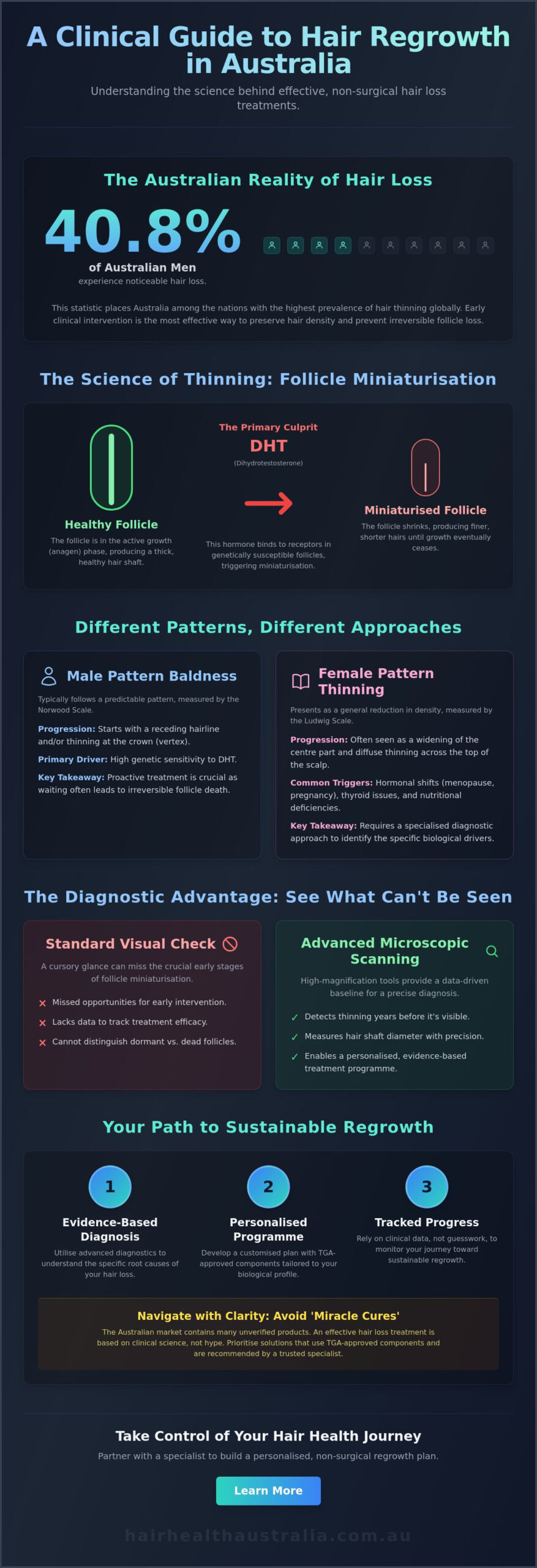
Approximately 40.8% of Australian men experience some form of hair loss, yet many spend years attempting to solve the issue with generic pharmacy foams before ever stepping into a professional hair regrowth clinic. It’s understandable to feel frustrated when you’ve invested significant time and money into over-the-counter products only to see more of your scalp in the mirror each morning. You might even worry that your thinning is permanent or that a costly, invasive transplant is your only remaining path.
Finding the right specialist shouldn’t feel like a gamble. We believe in straight-talking honesty regarding what’s possible for your hair and scalp health. This article will help you evaluate the Australian healthcare landscape to find a provider who prioritises a precise clinical diagnosis over surgical shortcuts. You’ll learn how microscopic analysis provides the data needed for a personalised, non-invasive regrowth plan, ensuring you receive professional guidance tailored to your specific hair loss type.
Key Takeaways
- Understand the distinction between general practitioners and specialised trichologists or dermatologists when seeking professional medical guidance for hair loss.
- Recognise early warning signs, such as excessive shedding or a widening part line, to ensure you seek a clinical diagnosis while follicles are still viable.
- Discover how microscopic hair analysis provides a definitive, data-driven roadmap by identifying miniaturised follicles before they are lost permanently.
- Identify a reputable hair regrowth clinic by prioritising Australian-based specialists who offer comprehensive diagnostic scans as the foundation of their care.
- Learn why modern, non-surgical protocols focusing on follicle health and DHT management are often the most effective first step in hair restoration.
What is a Hair Doctor and Who Should You See?
Searching for a hair loss specialist in Australia often leads to a confusing mix of results. You’ll find GPs, dermatologists, and trichologists, each offering a different perspective on your scalp health. Understanding where you fit in this hierarchy is the first step toward effective restoration. You need to know whether your issue requires a medical script for a disease or a clinical plan for regrowth.
The GP, the Dermatologist, and the Trichologist
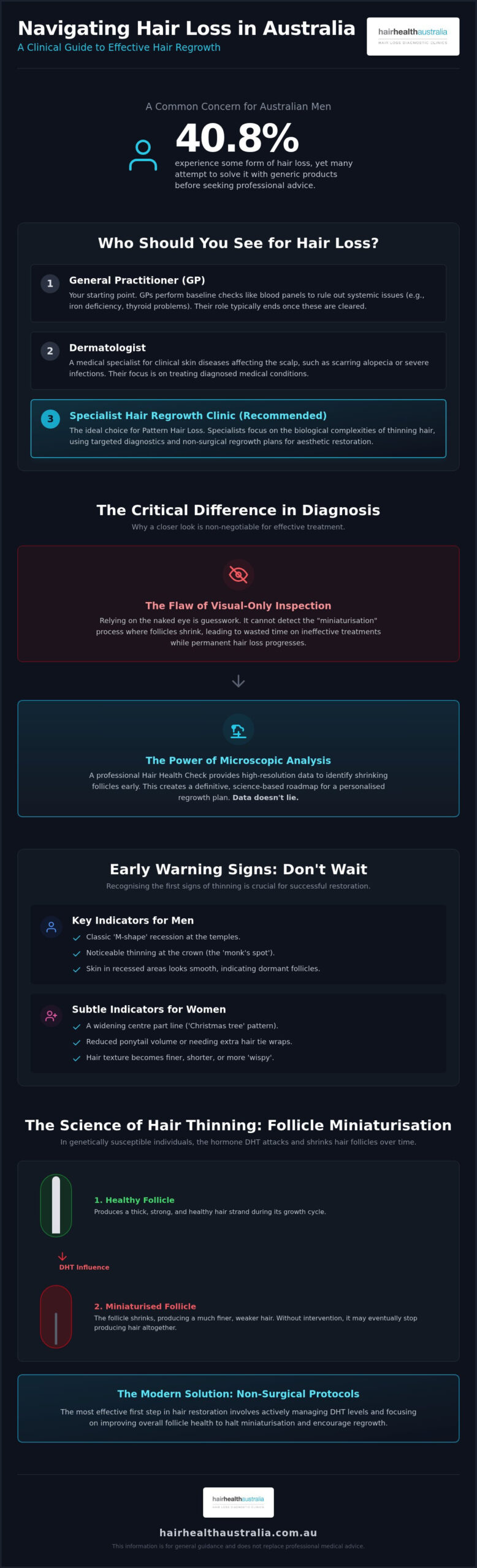
Your journey usually begins with your local GP. They perform vital baseline checks, such as blood panels to rule out iron deficiencies or thyroid dysfunction. However, once systemic medical issues are cleared, a GP’s role often ends. This is where a specialised hair regrowth clinic steps in. While a dermatologist treats clinical skin diseases like scarring alopecia or scalp infections, a specialist clinic focuses on the aesthetic and biological complexities of Pattern hair loss.
These facilities provide more targeted regrowth equipment and consistent monitoring than a general practice, which may only offer a quick prescription or generic advice. Matching your goals to the right level of professional care ensures you don’t waste time on treatments that aren’t suited to your specific condition. If your concern is primarily about volume, receding hairlines, and thinning rather than a medical rash, a clinical specialist is your best partner.
Why Visual Inspection Often Leads to Misdiagnosis
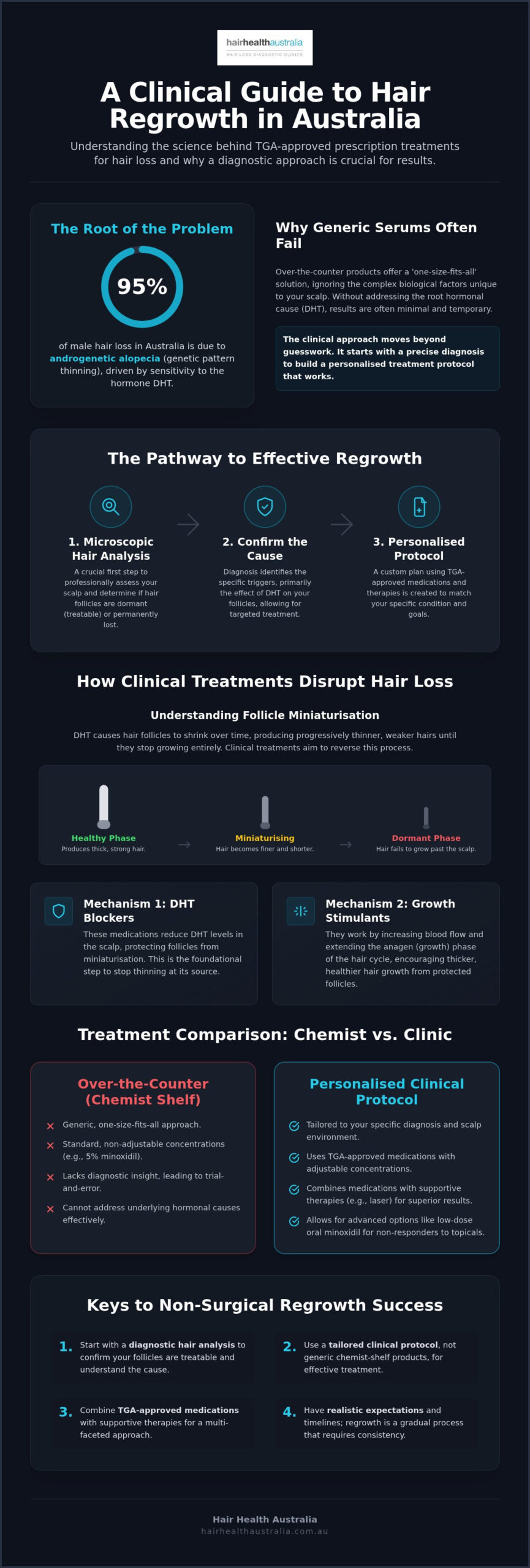
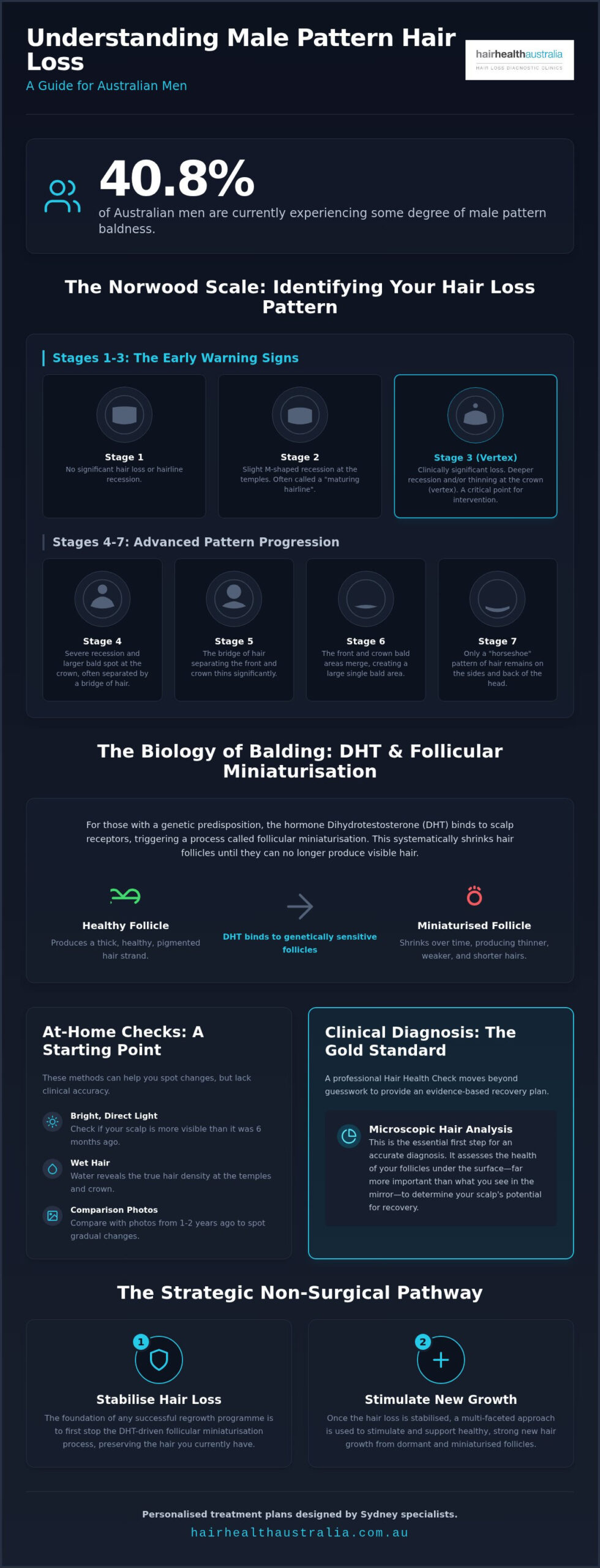
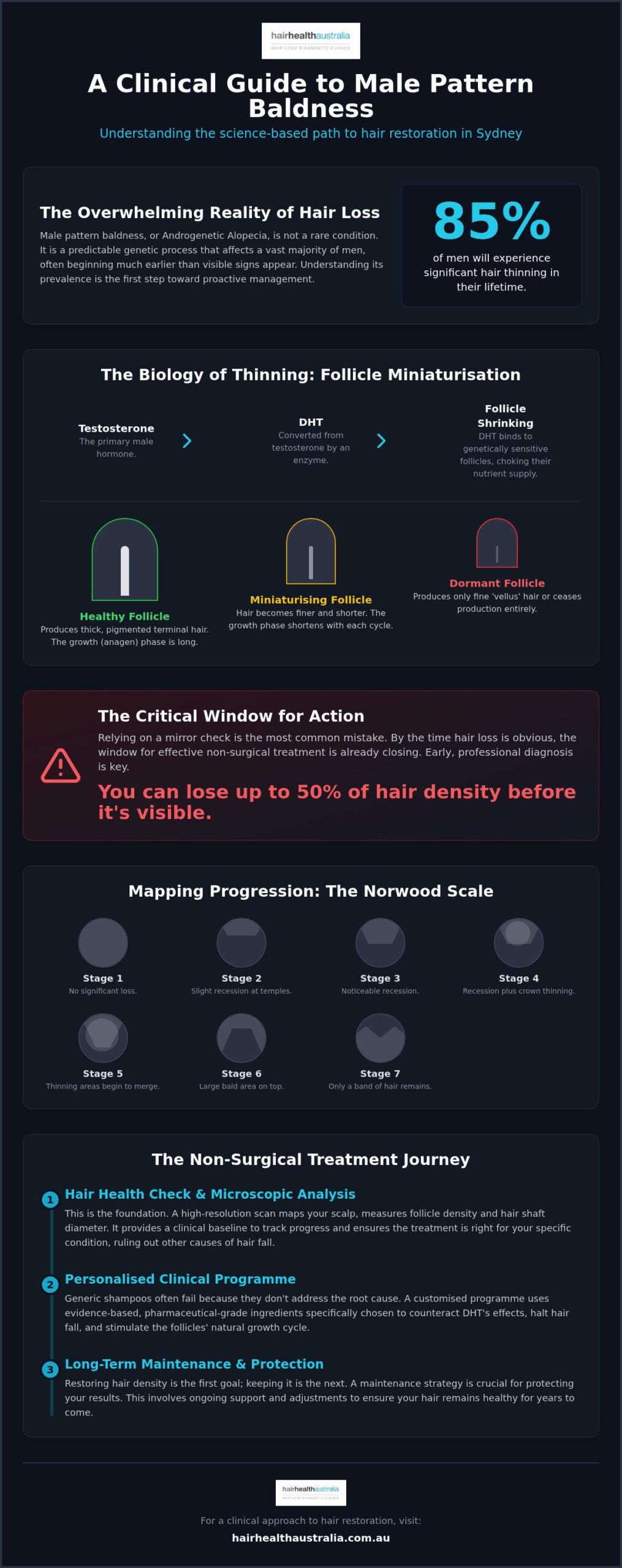
Relying on a standard visual inspection is a common mistake in early-stage hair loss management. A specialist simply looking at your scalp under standard office lights cannot see the “miniaturisation” process occurring beneath the surface. This process involves the gradual shrinking of follicles, which is the hallmark of genetic thinning. Without clinical data, it’s difficult to differentiate between temporary stress-induced shedding and permanent follicle decline.
Starting a treatment plan without a confirmed microscopic diagnosis often leads to wasted money and significant emotional frustration. This is why a comprehensive Hair Health Check is essential. It provides the high-resolution data needed to create a plan based on science rather than guesswork. Data doesn’t lie. Follicles don’t disappear overnight, but they do require early detection through specialised technology to remain viable. It’s about seeing what the naked eye misses before the hair is gone for good.
When to Organise a Professional Hair Consultation
Hair loss rarely happens overnight. It’s usually a gradual process that many Australians ignore until the scalp becomes visible under bright lights. Recognising the shift from normal daily shedding to active thinning is crucial for successful restoration. If you notice more hair than usual in the shower drain or scattered across your pillowcase, your follicles may be entering a premature resting phase. While losing 50 to 100 strands a day is typical, seeing consistent clumps indicates it’s time to visit a hair regrowth clinic for a professional assessment.
Beyond shedding, pay close attention to changes in hair texture. When strands become finer, shorter, or take on a “wispy” appearance, it’s a sign of miniaturisation. This occurs when the hair follicle shrinks, producing a weaker hair with each growth cycle. A receding hairline that has moved significantly from its original position or a widening part line are also definitive markers that the underlying biology of your scalp has changed. Early intervention is the most effective way to maintain your current density.
Early Warning Signs for Men
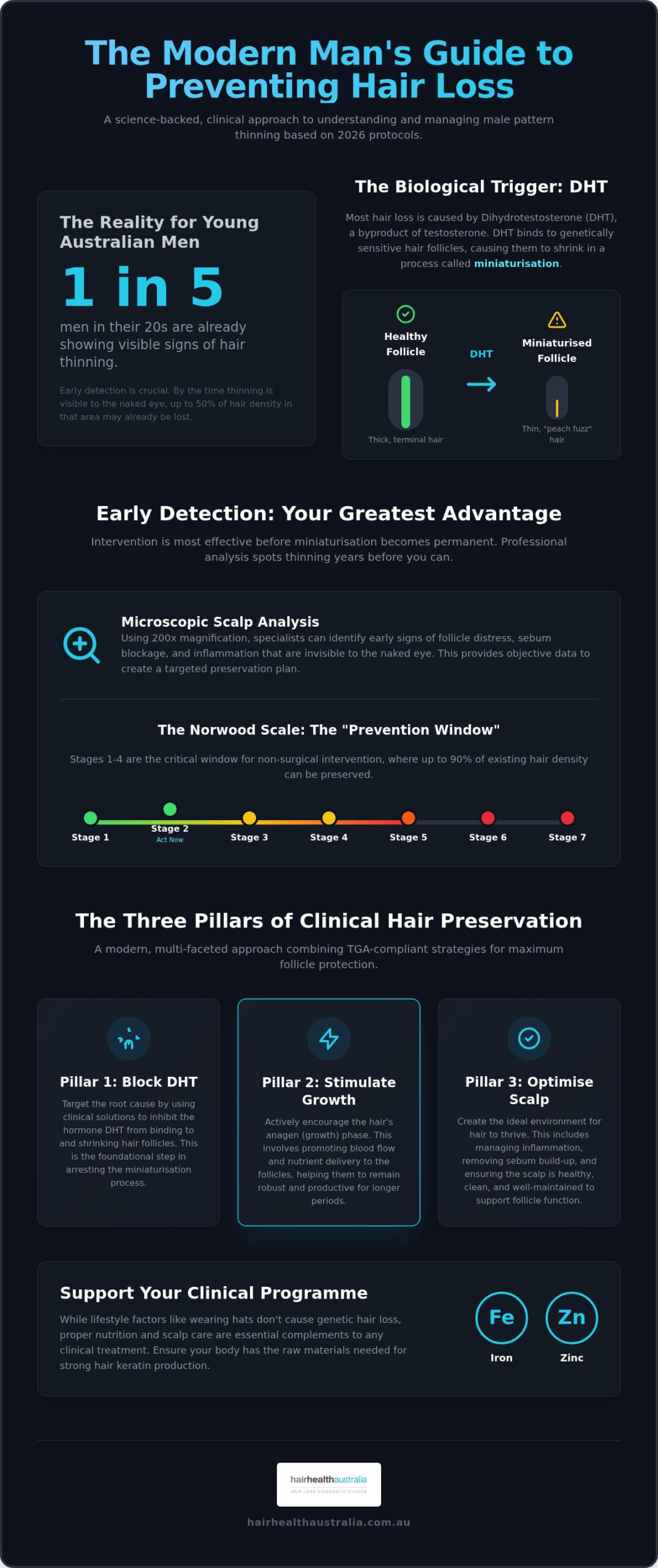
For men, the most common indicator is the classic “M-shape” recession at the temples, often accompanied by thinning at the crown, known as the “monk’s spot.” As of 2026 clinical standards, Dihydrotestosterone (DHT) is recognised as the primary androgen responsible for the progressive miniaturisation of hair follicles in genetically susceptible individuals. It’s important to distinguish between a “maturing” hairline, which is a natural adult shift, and active recession that continues to move backward. If the skin in the recessed areas looks smooth and shiny, the follicles may already be dormant.
Subtle Indicators for Women
Women often experience a different progression, frequently described as the “Christmas tree” pattern. This involves a widening of the centre part line that is most prominent at the front of the scalp. You might also notice a significant reduction in the volume or “swing” of your ponytail, or find that you need to wrap your hair tie an extra time to keep it secure. While many women experience temporary shedding after pregnancy, a hair regrowth clinic can help determine if this has transitioned into permanent Patterned hair loss. Organising a specialised hair health check can provide the clinical clarity needed to stop this progression before it becomes more difficult to manage.
The Clinical Edge: Microscopic Hair Analysis
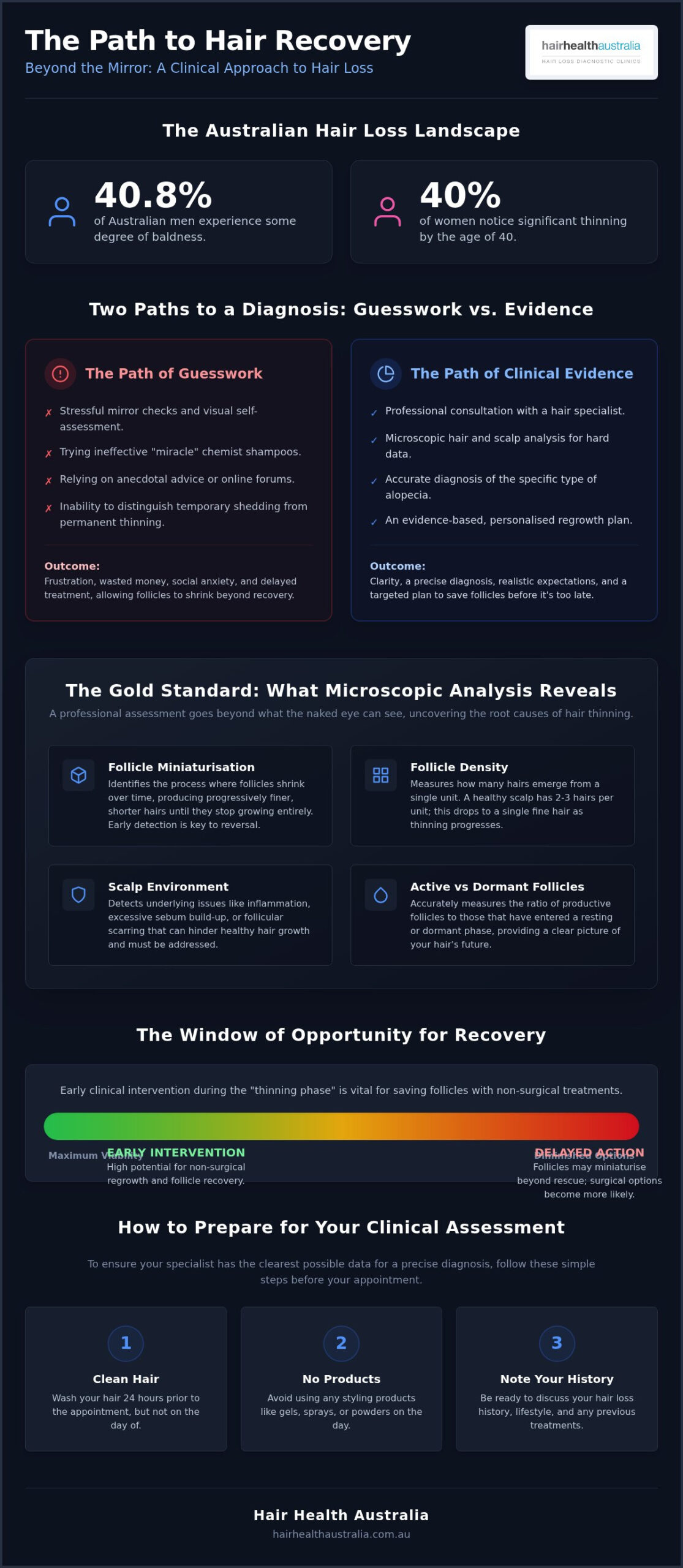
Visual guesswork is replaced by clinical precision when you visit a specialised hair regrowth clinic. While a standard consultation might rely on what is visible to the naked eye, microscopic hair analysis allows us to look deeper into the biological state of your scalp. This technology is the cornerstone of effective non-surgical treatment. It identifies miniaturised follicles long before they disappear entirely. By measuring follicle density in specific regions, we can predict the future progression of your hair loss with accuracy.
Establishing this baseline is the primary objective of a “Hair Health Check”. It moves the conversation away from vague concerns toward specific clinical metrics. Data replaces doubt. You can book a microscopic hair analysis to find your answer and begin a targeted recovery journey based on your unique scalp profile.
What Happens During a Professional Scalp Scan?
During a diagnostic session, we use high-magnification cameras to view the scalp at 50x to 200x zoom. This level of detail reveals issues that are invisible during a standard haircut or GP visit. We look for sebum blockages that can stifle growth, signs of scalp inflammation, and irregular follicle spacing. A critical part of this process involves comparing the “permanent zone” at the back of the head with the thinning areas. This zone is genetically resistant to pattern loss. This comparison provides a clear picture of your regrowth potential. Follicles don’t lie.
Using Data to Personalise Your Regrowth Plan
Generic pharmacy solutions often fail the individual. They adopt a one-size-fits-all approach to a highly complex biological problem. Your scalp chemistry and follicle health are unique. Your treatment protocol must be equally specific. By using digital tracking, your hair doctor can provide objective proof that regrowth is occurring. We measure the increase in hair diameter and follicle activity over time. There is significant psychological reassurance in seeing your active follicles on a screen. It transforms an uncertain process into a methodical, clinical progression where every step is verified.
Non-Surgical Paths to Hair Restoration
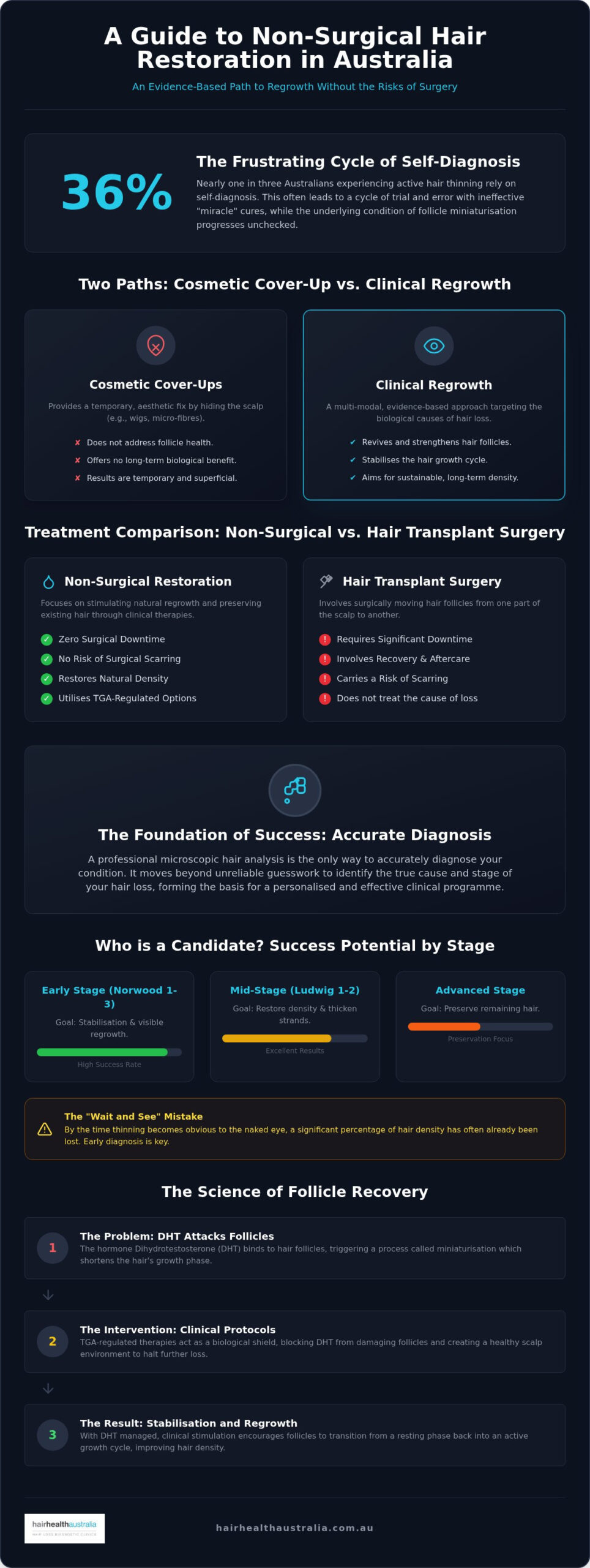
Recent years have seen a significant shift in Australian clinics toward non-surgical restoration protocols. While invasive surgery was once considered the primary answer for advanced thinning, many now prefer evidence-based clinical programs that avoid the risks and downtime of a surgical suite. These modern pathways focus on the two main drivers of follicle health: blocking Dihydrotestosterone (DHT) and stimulating local blood flow. By using a combination of targeted topical and oral therapies, a professional hair regrowth clinic can stabilise thinning and encourage new growth in areas where follicles remain active.
Maintaining a healthy scalp environment is the foundation of sustainable results. It’s not just about the hair itself; it’s about the biological “soil” the hair grows in. Clinical-grade low-level laser therapy (LLLT) plays a vital role here by using specific wavelengths of light to energise follicles at a cellular level. This process, known as photobiomodulation, increases ATP production, effectively “waking up” dormant follicles and extending the growth phase of the hair cycle. When combined with professional-grade scalp cleansers, this approach ensures that new growth isn’t stifled by sebum blockages or inflammation.
Clinically-Backed Regrowth Programs
Successful restoration rarely comes from a single miracle product found on a pharmacy shelf. Multi-therapy approaches consistently outperform single-product treatments because they address hair loss from multiple biological angles simultaneously. In Australia, it’s essential to look for programs that utilise TGA-listed ingredients and adhere to strict clinical standards. For a detailed look at the current landscape, you can refer to the Best Hair Regrowth Treatment Australia 2026. This clinical reference guide outlines why a structured, professional approach is superior to generic alternatives.
Managing Realistic Expectations for Growth
Patience is a requirement for any clinical restoration journey. Hair regrowth is a marathon, not a sprint. You should expect a 4 to 6 month window before visible changes in density occur. This timeline aligns with the natural biological cycles of your hair follicles. During the initial phase, the priority is often stabilising your current hair loss to prevent further thinning. Once the environment is optimised, the focus shifts to regrowing lost density through consistent treatment. Follicles must be alive to be revived via clinical means. If you’re ready to see what’s possible for your hair, the first step is to book a clinical diagnostic scan to assess your follicle viability.
Choosing a Hair Regrowth Clinic in Sydney
Selecting a provider in a competitive market like Sydney requires a discerning eye. You’ll find many options, but the right hair regrowth clinic should offer more than just products; it should offer a history of clinical success. Look for a clinic with a long-standing Australian reputation. Hair Health Australia, for instance, has been operating in the Sydney CBD since 2009. This longevity reflects a commitment to evidence-based care and consistent results within the local community. Longevity matters. It proves the clinic has successfully guided thousands of patients through the complexities of hair restoration.
Prioritise specialists who insist on a comprehensive diagnostic scan as the absolute first step. A clinic that suggests treatment before viewing your follicles at a microscopic level is relying on guesswork. If your goal is to avoid invasive surgery, ensure the facility specialises specifically in non-surgical restoration. This focus ensures their expertise is dedicated to the latest topical, oral, and light-based therapies rather than surgical turnover. To help you evaluate your options, check the Essential Checklist for Sydney Clinics.
The Hair Health Australia Approach
Our commitment to personalised, science-led restoration is at the core of our Sydney centre. We don’t believe in one-size-fits-all packages. Instead, we use our specialised microscopic diagnostic technology to build a program around your specific hair loss type. Our non-invasive programs are designed for both men and women, focusing on follicle revival without the need for surgical intervention. Our straight-talking clinical team is here to help you understand your recovery options clearly. We provide realistic expectations based on your data, not hyperbolic marketing claims. It’s a partnership focused on your long-term scalp health.
Your Next Steps to Recovery
Preparing for your first consultation is simple. Think about when you first noticed the thinning and what products you’ve already tried. You should ask your specialist about the specific zoom levels used in their scans and how they track your progress over time. Taking action while your follicles are still active is the most important factor in your success. Once a follicle has completely miniaturised and the scalp becomes smooth, non-surgical options are no longer viable. Don’t wait until the damage is permanent. You can Book your Hair Health Check in Sydney today to secure the future of your hair.
Secure the Future of Your Hair Health
Identifying the underlying cause of thinning is the most critical step in your restoration journey. By moving beyond generic pharmacy products and seeking a specialised hair regrowth clinic, you replace uncertainty with clinical data. We’ve explored how microscopic analysis identifies miniaturised follicles while they’re still viable, allowing for a personalised, non-surgical plan that avoids the risks of invasive surgery.
Since 2009, our Sydney CBD centre has utilised advanced microscopic diagnostic technology to provide straight-talking honesty to both men and women. We focus on evidence-based protocols that prioritise follicle health and long-term density. If you’re ready to stop the guesswork and start a science-led recovery, now is the time to act. You can Book Your Microscopic Hair Health Check in Sydney today and gain the clarity you need to move forward with confidence. You don’t have to navigate hair loss alone; professional guidance is available to help you maintain the hair you have and stimulate the growth you want.
Frequently Asked Questions
Is a hair doctor the same as a dermatologist in Australia?
No, they are distinct professions within the Australian health landscape. A dermatologist is a medical specialist who treats clinical diseases of the skin and scalp. In contrast, a specialist at a hair regrowth clinic focuses on the biology of non-scarring hair loss and thinning. While a dermatologist might treat a medical rash, a clinical hair specialist uses advanced tools to measure miniaturisation and design non-invasive restoration programs for both men and women.
Do I need a referral from my GP to see a hair loss specialist?
You don’t typically need a GP referral to visit a private specialist clinic in Australia. While seeing your local GP is a sensible first step to rule out systemic health issues like iron deficiency through blood tests, you can book a diagnostic scan directly with a specialist. This direct access allows you to begin a targeted analysis of your scalp health without the long waiting periods often associated with public dermatological referrals.
How much does a hair loss consultation typically cost in Sydney?
Consultation costs in Sydney vary based on the clinic’s location and the diagnostic technology included in the session. While some general practices may offer a basic visual check, a specialised hair regrowth clinic in the Sydney CBD typically provides a more in-depth assessment involving high-resolution microscopic analysis. It’s best to contact a reputable provider directly to confirm their current fees. This initial investment ensures you receive a data-driven roadmap tailored to your specific follicle health.
Can a hair doctor help with female pattern thinning?
Yes, specialised clinics offer dedicated programs designed specifically for female pattern thinning. This condition is biologically distinct from male hair loss and often presents as a widening part line or a reduction in hair volume. A specialist will use microscopic tools to measure the degree of miniaturisation and identify follicle spacing issues. They then create a non-invasive plan that addresses the specific hormonal and nutritional requirements necessary for healthy female hair regrowth.
What happens if my hair follicles have already died?
If a hair follicle has completely miniaturised and the scalp has become smooth and shiny, non-surgical revival is no longer possible. Clinical treatments rely on the presence of a viable, living follicle to stimulate growth. This is why early intervention is so critical for success. A professional diagnostic scan can determine which follicles are still active and which have reached a dormant state, ensuring you don’t waste time on ineffective treatments.
Are the treatments prescribed by a hair clinic permanent?
Most clinical treatments for genetic hair loss require ongoing maintenance to sustain your results. Because the underlying cause of pattern thinning is often genetic, stopping treatment will eventually lead to the follicles returning to their previous state of decline. Think of it as a long-term health routine for your scalp. Your specialist will help you develop a sustainable, non-invasive plan that maintains your hair density and fits easily into your daily lifestyle.
How long does it take to see results from a clinical regrowth program?
You should expect to see visible results from a clinical program within four to six months of consistent treatment. This timeline is dictated by the natural biological growth cycles of your hair follicles. Initially, the program focuses on stabilising shedding and improving the scalp environment. Over time, you’ll notice finer hairs becoming thicker and more pigmented. Progress is tracked through digital microscopic scans to provide objective proof of recovery during your journey.
Can a hair doctor help me avoid hair transplant surgery?
Many patients seek professional clinical guidance specifically to avoid invasive surgery. By using advanced microscopic analysis to identify thinning in its early stages, a specialist can often restore significant density through non-surgical means. If your follicles are still viable, a structured clinical program can produce impressive results, potentially removing the need for a transplant entirely. It’s about using science to maximise your natural hair potential while you still have the chance.