Male Pattern Baldness Treatment Sydney: The 2026 Clinical Guide to Non-Surgical Regrowth

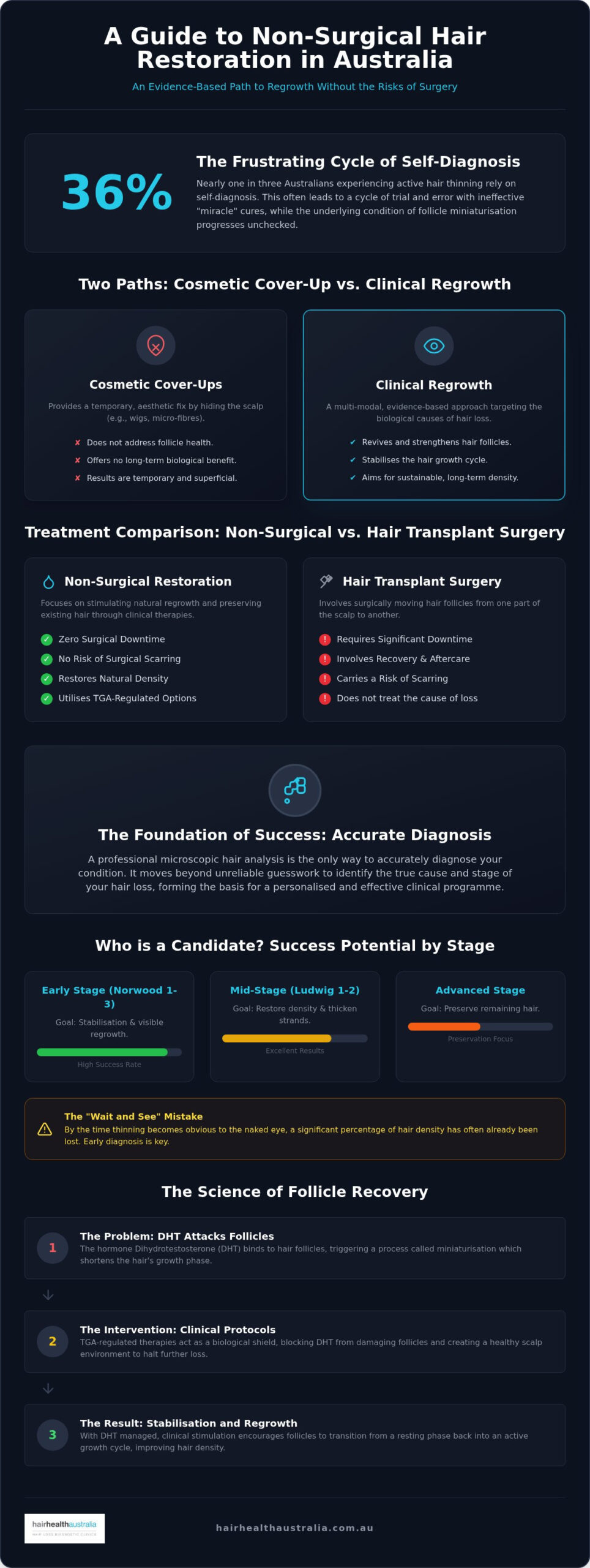
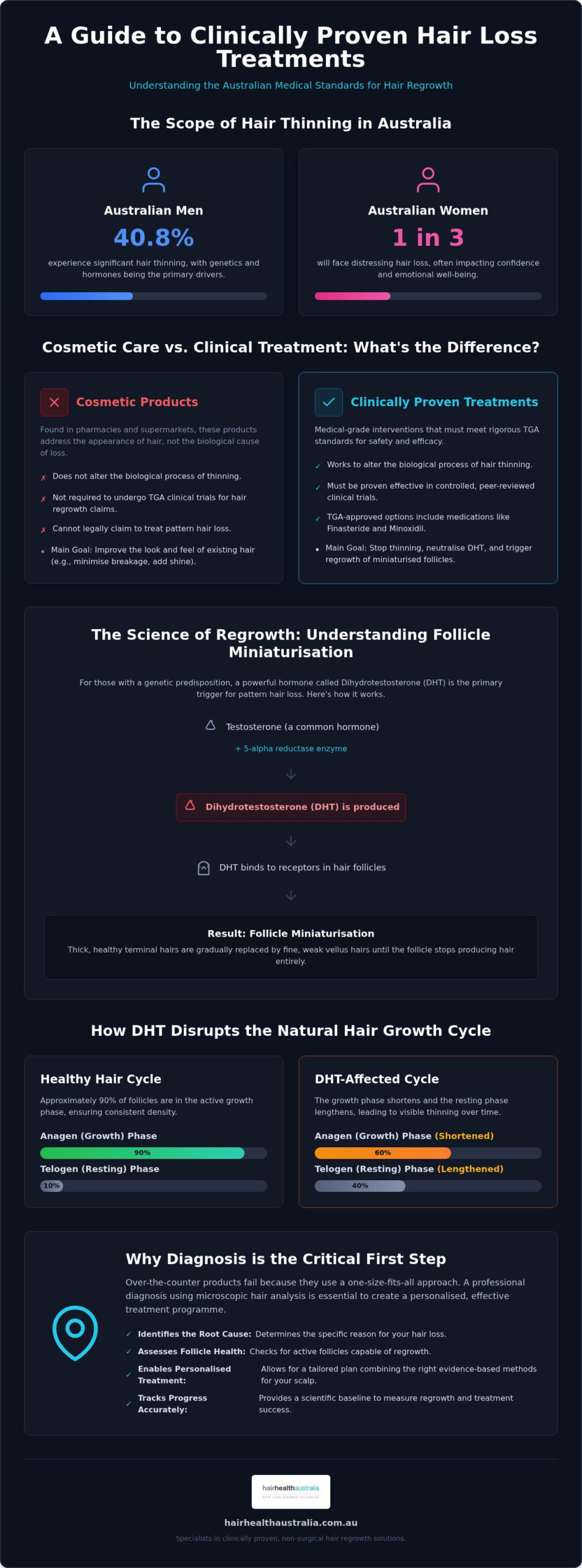
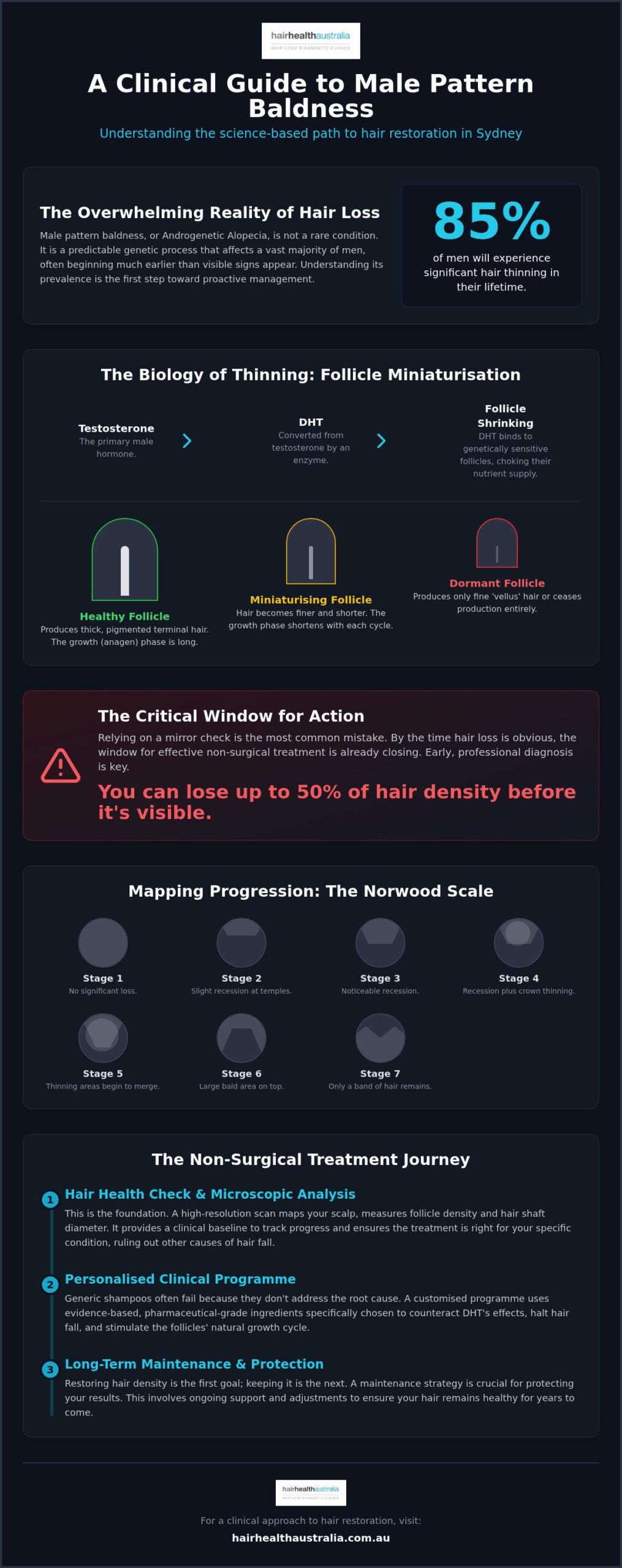
Did you know that up to 85% of men will experience significant hair loss in their lifetime, often starting long before thinning becomes obvious to the naked eye? It is common to feel overwhelmed by conflicting online advice or the fear that a painful, invasive hair transplant is the only way to restore your profile. You likely want a solution that is evidence-based and avoids the uncertainty of “miracle” cures that fail to deliver on their promises. This guide explains how professional male pattern baldness treatment Sydney can halt hair fall and restore density through a structured, non-surgical approach.

We’ll show you how advanced microscopic diagnostics identify the precise state of your follicles to create a personalised clinical programme tailored to your unique biological needs. This 2026 update covers everything from understanding the root cause of thinning to implementing modern, non-invasive protocols that prioritise natural-looking results. By the end of this article, you’ll have a clear, actionable path toward regaining your hair density and your confidence through proven clinical standards. It’s time to replace uncertainty with a methodical plan for your hair health.

Key Takeaways

  • Understand the biological process of follicle miniaturisation and why microscopic scanning is essential for an accurate diagnosis before starting any programme.
  • Explore how a customised male pattern baldness treatment Sydney uses evidence-based protocols to halt hair fall and stimulate regrowth without the need for surgery.
  • Learn why generic “miracle” shampoos often fail and how to identify the specific clinical ingredients that actually address DHT sensitivity.
  • Discover the importance of the initial Hair Health Check in mapping out a realistic timeline for restoring your hair density and confidence.
  • Gain insights into the long-term maintenance strategies required to protect your results and ensure sustainable hair health for years to come.

Understanding the Biology of Male Pattern Baldness (Androgenetic Alopecia)

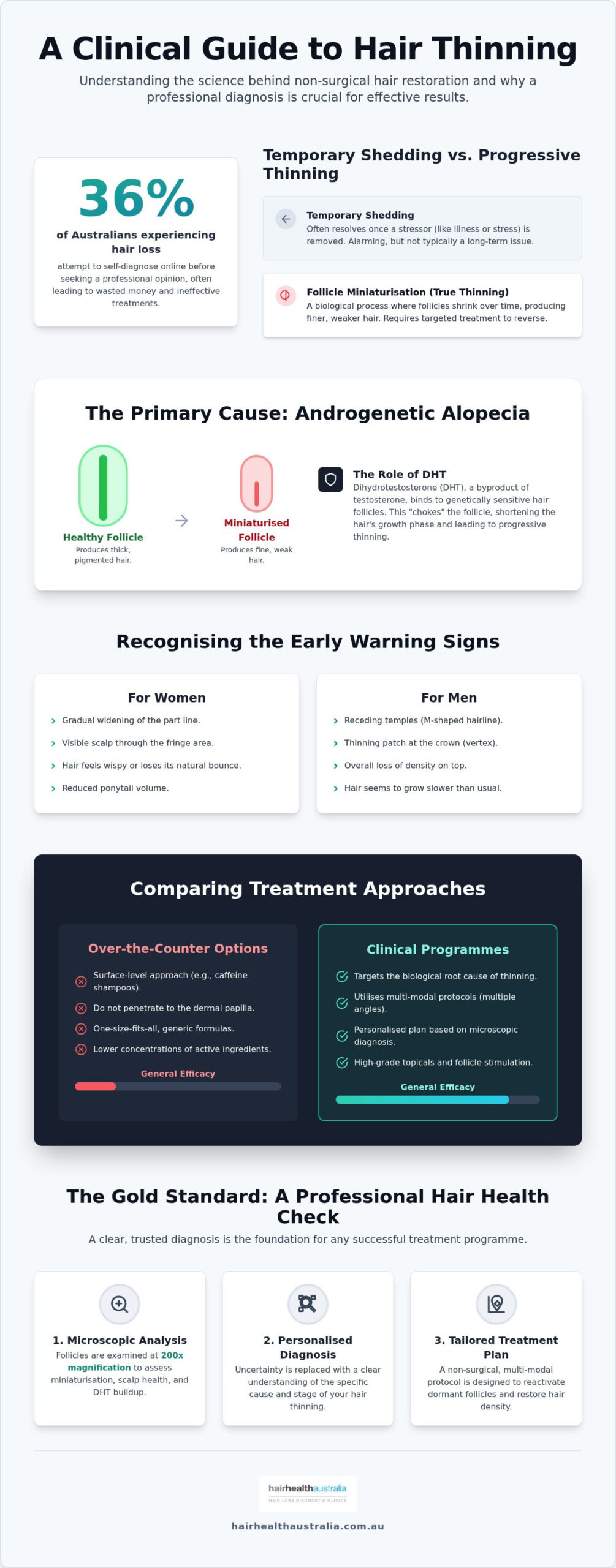
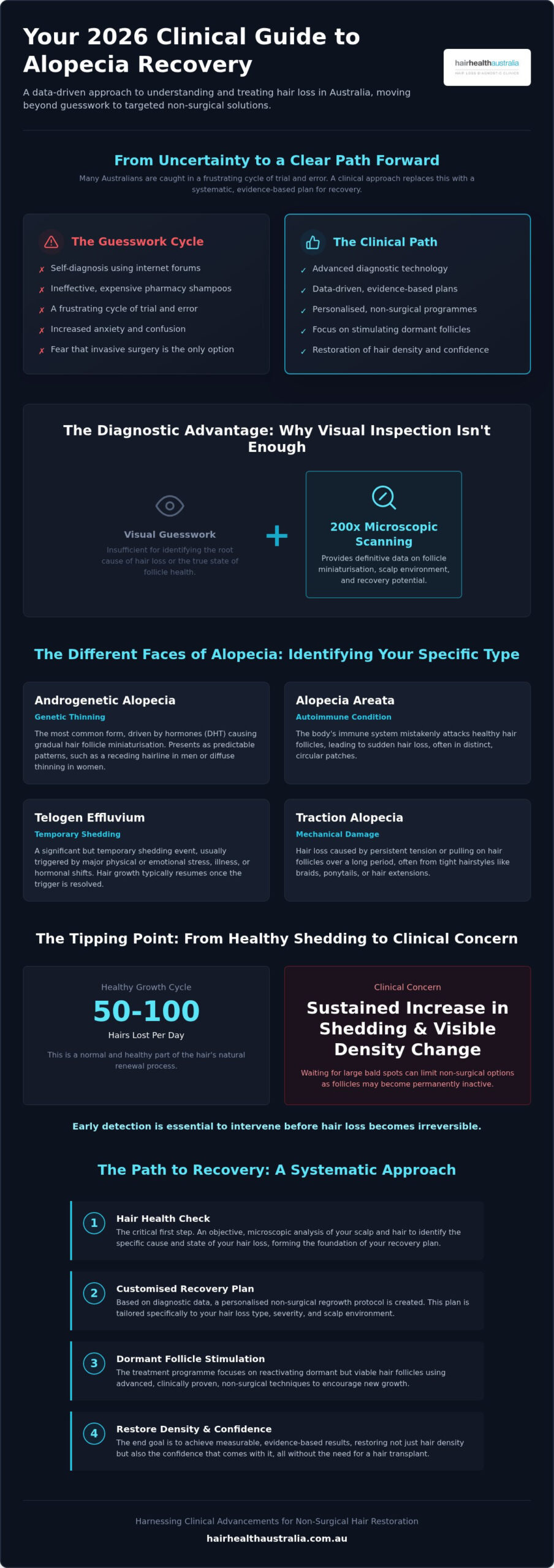
Male pattern baldness, known clinically as androgenetic alopecia, is not a simple case of hair falling out. It is a progressive, genetically determined condition driven by a sensitivity to dihydrotestosterone (DHT). For men seeking male pattern baldness treatment Sydney, understanding this biological foundation is the first step toward effective restoration. Understanding Androgenetic Alopecia involves recognising that the hair follicle itself is under attack, undergoing a process known as miniaturisation. This is not an overnight event but a slow decline that can span years before the scalp becomes visible.

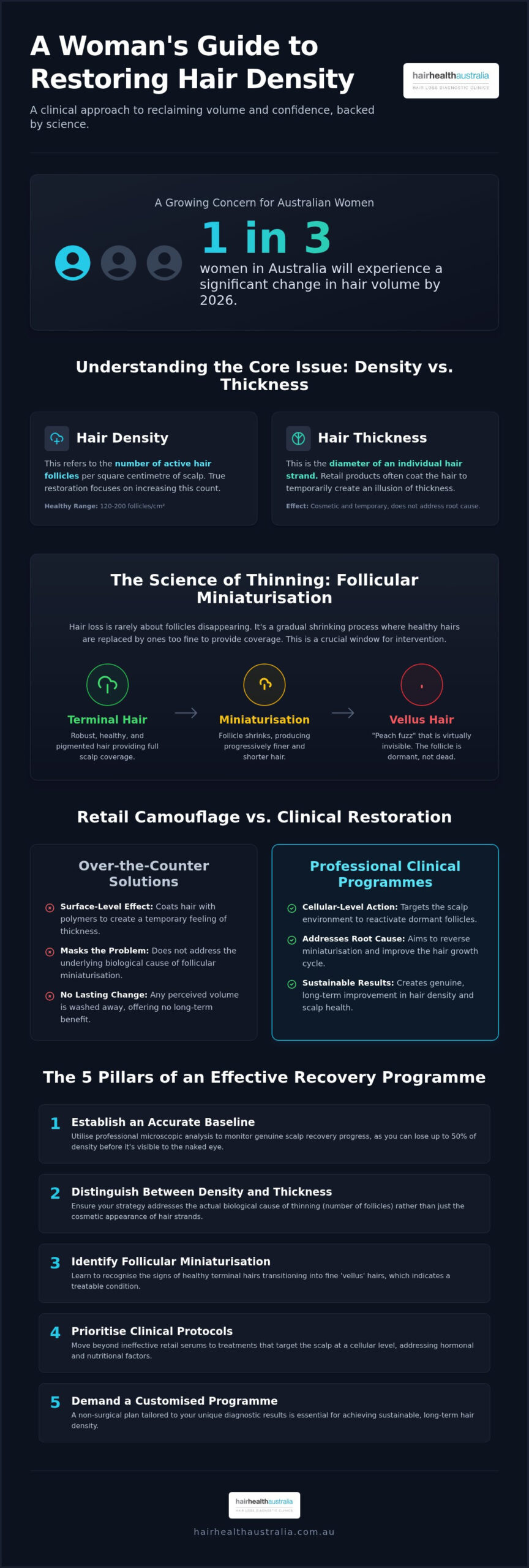
During miniaturisation, the follicle’s growth phase (anagen) shortens while the resting phase (telogen) lengthens. With each subsequent cycle, the hair produced is finer, shorter, and less pigmented. Eventually, the once-robust terminal hair transforms into peach-fuzz (vellus hair) before the follicle ceases production entirely. This is why early intervention is so critical. Once a follicle has reached a state of total dormancy or fibrosis, non-surgical clinical programmes can no longer stimulate regrowth. Identifying the shift from healthy density to fine, wispy strands is the key to preserving your natural profile.

The Role of DHT in Male Hair Thinning

DHT is an androgen produced as a byproduct of testosterone through the enzyme 5-alpha reductase. In genetically predisposed individuals, DHT binds to androgen receptors at the base of the hair follicle, effectively “choking” its ability to receive nutrients and oxygen. It’s vital to distinguish between temporary shedding, which is often triggered by stress or diet, and permanent genetic thinning. Clinically speaking, DHT-induced thinning follows a predictable, systematic reduction in the follicle’s diameter and lifespan that requires a targeted, pharmaceutical-grade response to disrupt.

Identifying the Stages of the Norwood Scale

The Norwood Scale is the clinical standard for measuring the progression of male hair loss across seven distinct stages. It typically begins with a slight recession at the temples (Stage 2) and progresses toward thinning at the crown (Stage 4) before the two areas eventually meet. However, many men experience “invisible thinning” where they lose up to 50% of their hair density before any change is visible in the bathroom mirror. Recognising these early shifts allows for more successful outcomes when implementing the Best Hair Regrowth Treatment Australia 2026. By the time a bald spot is obvious, the window for non-invasive male pattern baldness treatment Sydney is often closing. Proactive diagnostic checks remain the most effective way to catch miniaturisation in its reversible stages.

Microscopic Hair Analysis: The Foundation of Treatment in Sydney

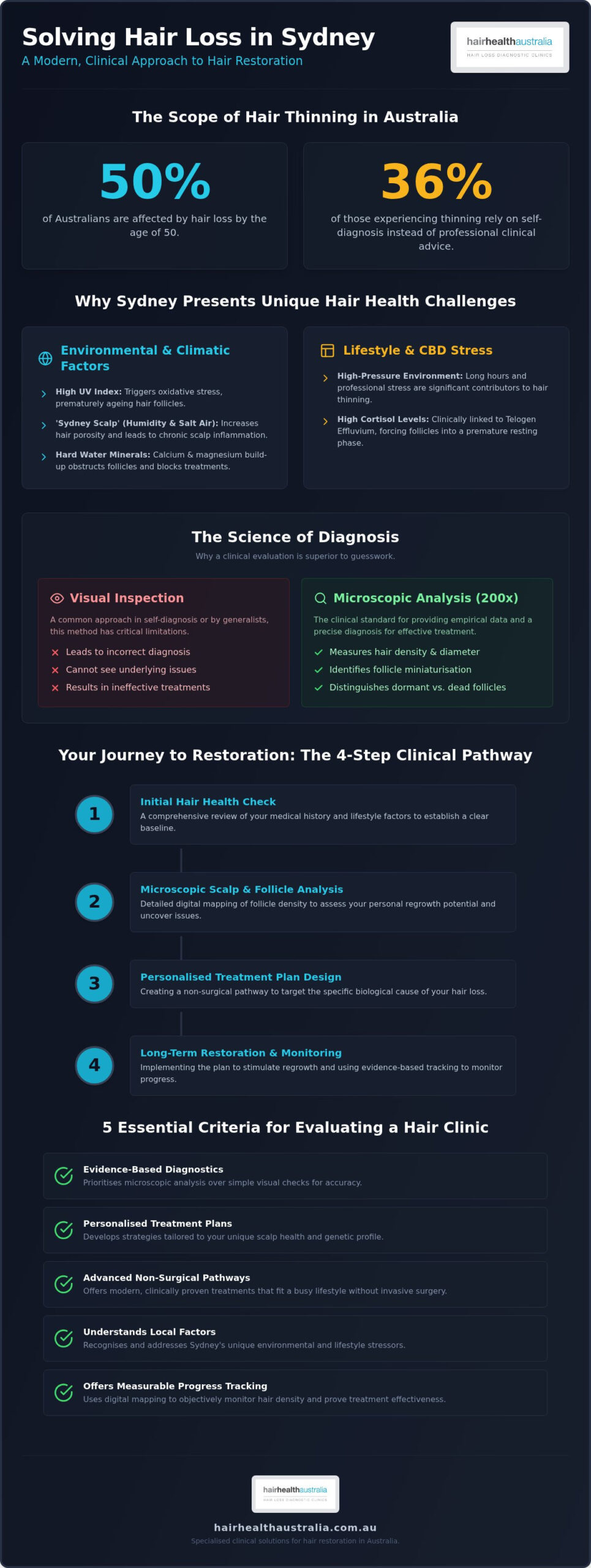
Most men begin their journey by scrutinising their reflection in a bathroom mirror. While visible thinning or a receding hairline are clear indicators that something is wrong, a visual inspection is fundamentally insufficient for a professional diagnosis. By the time you notice a change in the mirror, you may have already lost up to 50% of your hair density in that area. Effective male pattern baldness treatment Sydney must begin with a deeper look at the scalp’s surface to understand exactly what is happening beneath it. Relying on guesswork often leads to wasted time on ineffective over-the-counter products that do not address your specific biological needs.

Microscopic hair analysis utilises high-resolution scanning technology to provide a detailed map of your scalp health. This process allows specialists to measure follicle density and hair shaft diameter with clinical precision. It is also essential for differentiating between genetic thinning and other conditions, such as Alopecia Areata or telogen effluvium, which require entirely different clinical approaches. While medical treatments for male pattern baldness are well-documented, their success depends entirely on an accurate initial assessment. Establishing this clinical baseline is the only way to objectively track the success of your programme over time; it replaces subjective “feeling” with verifiable data.

What Happens During a Professional Hair Health Check?

A professional Hair Health Check is a non-invasive diagnostic session used in specialised Sydney clinics to assess the viability of your follicles. During the scan, we use polarised light and magnification to identify “dormant” follicles that still have the potential for regrowth versus “dead” follicles that have reached a state of permanent fibrosis. This distinction is vital because it determines the realistic outcomes of your treatment. If you are concerned about recent changes in your hair density, you can book a comprehensive Sydney Hair Health Check to get a clear, scientific understanding of your current status.

Analysing Scalp Health and Sebum Levels

A healthy scalp environment is the “soil” required for follicles to respond to any clinical stimulus. Our microscopic analysis looks closely at sebum (oil) levels and potential scalp inflammation that may be hindering hair regrowth. Excess sebum can crystallise around the hair bulb, while chronic inflammation can accelerate the miniaturisation process. Identifying these blockages allows us to prepare the scalp properly before introducing growth stimulants. Microscopic data is the foundation of any successful programme because it ensures we are treating the root cause rather than just the symptoms of male pattern baldness treatment Sydney.

Comparing Non-Surgical Treatment Pathways: What Actually Works?

Selecting the right male pattern baldness treatment Sydney requires a shift away from “miracle” marketing toward clinical reality. Most over-the-counter shampoos fail because they only clean the scalp surface without addressing the genetics of androgenetic alopecia. To achieve genuine regrowth, a “Big Three” approach is typically required: disrupting DHT production, stimulating the hair follicle’s blood supply, and providing clinical-grade cellular therapy. By combining these three pathways, we address the biological cause while simultaneously creating the optimal environment for new growth.

Modern hair restoration has moved toward multi-modal programmes that bridge the gap between simple home-use products and intensive in-clinic procedures. While surgical hair transplants in Australia can cost anywhere from $5,000 to over $25,000, they carry inherent risks of scarring and unnatural-looking results if the underlying thinning isn’t managed. Non-surgical clinical protocols offer a safer, more sustainable alternative that focuses on preserving your existing hair while thickening areas of visible recession. It’s a systematic process that prioritises long-term density over a quick, invasive fix.

Clinical Regrowth Programmes vs. Generic Pharmacy Meds

A “one-size-fits-all” pill from a local pharmacy often lacks the precision needed for complex cases. Every man’s sensitivity to DHT is different, which is why a tailored clinical protocol is superior to generic alternatives. Supervised treatment allows a specialist to monitor your progress through microscopic scans and adjust frequencies as your follicles respond. This level of oversight ensures you aren’t just taking a supplement, but following a Clinical Hair Treatment: A Professional Guide that evolves with your results. It’s about moving from guesswork to a controlled, clinical environment.

The Role of Low-Level Laser Therapy (LLLT)

Low-Level Laser Therapy is a cornerstone of modern non-surgical male pattern baldness treatment Sydney. It works by delivering specific wavelengths of light to the scalp, which stimulates mitochondria within the hair follicle cells to produce more energy. It’s vital to use medical-grade equipment rather than low-powered consumer laser combs, as the latter often lacks the necessary energy density to reach the follicle bulb. Clinical data shows that when supervised correctly, LLLT is a painless method to extend the hair’s growth phase and increase shaft diameter. It’s not a myth; it’s cellular biology in action.

Male Pattern Baldness Treatment Sydney: The 2026 Clinical Guide to Non-Surgical Regrowth

Your Journey at a Sydney Hair Loss Clinic: What to Expect

Entering a specialised clinic for male pattern baldness treatment Sydney is a significant step toward reclaiming your confidence. Unlike general dermatology practices that manage a broad range of skin conditions, a dedicated hair restoration centre provides a focused, clinical environment. This specialisation ensures you receive the latest evidence-based protocols without the long wait times often associated with general medical facilities. Our Redfern-based clinic operates on a model of transparency, where every stage of your progress is documented and verified through objective data.

Success in hair restoration is built on a structured timeline. We categorise this journey into three distinct phases: Stop, Stabilise, and Regrow. It is a methodical approach that respects the biological cycles of your hair follicles. You cannot expect immediate density if the underlying shedding hasn’t been addressed first. By setting realistic expectations from the outset, we replace the anxiety of “waiting for results” with the confidence of a supervised clinical process.

Phase 1: The Diagnostic Consultation

Your first visit is centred on data collection. We perform a microscopic scan to assess follicle viability and review your family and medical history to identify any complicating factors. This isn’t a sales pitch; it’s a diagnostic session designed to create a customised roadmap for your specific thinning pattern. We’ll determine if you’re a suitable candidate for non-surgical therapy or if your follicles have reached a stage where other options are necessary. For a deeper look at what to seek in a provider, explore our guide on Choosing a Non-Surgical Hair Loss Clinic in Sydney.

Phase 2 & 3: Stabilisation and Growth

The first three months of your programme are dedicated to stabilisation. During this phase, we focus on stopping active hair fall and revitalising the scalp’s ecosystem. While visible regrowth takes time, microscopic analysis during this period often reveals an increase in hair shaft diameter and a reduction in inflammation. It is the critical foundation for the density that follows.

Between months four and nine, you’ll begin to observe the emergence of new terminal hairs. This is when the cumulative effect of growth stimulants and clinical therapy becomes visible to the naked eye. Consistency is the most vital factor during these months. Follicles require a steady, uninterrupted signal to remain in the growth phase. To ensure you’re starting on the right path for male pattern baldness treatment Sydney, we recommend you book your initial Hair Health Check to establish your clinical baseline.

Maintaining Your Results: Long-Term Hair Health in Australia

Achieving visible regrowth is a significant milestone, but maintaining that density requires a shift in perspective. Successful male pattern baldness treatment Sydney is a marathon, not a sprint. Once the follicles have been revitalised, they still require a consistent environment to thrive and resist the ongoing pressure of DHT. This is why a clinical programme doesn’t simply end once you see results; it evolves into a maintenance phase that integrates clinical-grade hair care into your daily routine. Periodic “top-up” clinical checks at our Redfern centre allow us to monitor your progress microscopically, ensuring that any subtle changes in hair diameter are caught long before they become visible in the mirror again.

Your lifestyle also plays a supporting role in the longevity of your results. While genetics drive the primary process of thinning, factors such as nutrition, stress management, and sleep quality can influence the rate of hair fall. A diet rich in essential vitamins and minerals provides the building blocks for keratin production, while managing chronic stress helps maintain a healthy hair growth cycle. It’s about creating a holistic environment where your clinical treatments can perform at their peak.

Australian Environmental Factors and Hair Health

Sydney’s climate presents unique challenges that can affect the texture and health of your hair. High UV exposure can weaken the hair shaft’s protein structure, leading to brittleness and breakage that mimics thinning. Additionally, the mineral content in certain local water supplies may lead to scalp buildup, which can hinder the absorption of topical treatments. Choosing clinical-grade shampoos that maintain the scalp’s natural pH and sebum balance is essential for those undergoing male pattern baldness treatment Sydney. Protecting the scalp from the harsh Australian sun is vital to prevent inflammation that can trigger premature shedding.

Your Next Steps: Moving from Anxiety to Action

The transition from feeling anxious about thinning to taking control of your hair health begins with a professional assessment. It is easy to feel overwhelmed by conflicting online advice, but self-diagnosing often leads to wasted time and resources on the wrong treatment path. Preparing for your first visit is straightforward: gather your family hair loss history and any details regarding recent health changes or medications you are taking. This information helps us tailor your programme with clinical precision.

The most important thing to remember is that you don’t have to navigate this journey alone. As long as there is active follicle activity detected during a scan, it is rarely too late to save the hair you still have and improve your overall density. To begin your journey toward a fuller head of hair, you can book a comprehensive Hair Health Check today. Taking action now is the most effective way to ensure your hair health remains a priority for years to come.

Take Control of Your Hair Density Today

Reclaiming your profile is a journey that begins with clinical precision rather than guesswork. We have explored how microscopic diagnostics identify follicle viability and why a multi-modal, non-surgical approach provides a sustainable path to regrowth. By moving away from generic products and toward science-led protocols, you can address the root cause of thinning while preserving your natural appearance. This methodical approach replaces uncertainty with a clear, evidence-based strategy for long-term hair health.

With over 15 years of clinical excellence in Sydney, our team focuses on personalised programmes built on verifiable microscopic data. This systematic approach ensures that your male pattern baldness treatment Sydney is tailored to your specific biological needs and lifestyle goals. It’s time to replace the anxiety of thinning with a professional roadmap that prioritises results and transparency. You don’t have to navigate hair loss alone when a dedicated specialist can guide you through every stage of restoration.

Book Your Comprehensive Sydney Hair Health Check Today

It’s rarely too late to intervene, and the sooner you begin, the more density you can protect for the future. Take the first step toward a more confident you by securing a professional assessment of your hair health today.

Frequently Asked Questions

Is male hair loss treatment permanent, or do I have to continue the programme forever?

Treatment for male pattern baldness is an ongoing management strategy rather than a permanent cure. Because the genetic sensitivity to DHT remains throughout your life, stopping a programme usually results in the gradual return of thinning within six to twelve months. Most men move into a reduced maintenance phase once they reach their desired density. This ensures the follicles remain protected from miniaturisation without the intensity of the initial regrowth stage.

What is the most effective non-surgical treatment for a receding hairline in 2026?

The most effective non-surgical approach in 2026 is a multi-modal clinical programme. This combines pharmaceutical-grade DHT blockers with medical-grade growth stimulants and Low-Level Laser Therapy (LLLT). For a receding hairline, male pattern baldness treatment Sydney specialists often use targeted topical formulations that deliver higher concentrations of active ingredients directly to the temple area. This synergy addresses both the hormonal cause and the need for increased blood flow.

Can a Sydney hair clinic help if I am already significantly bald?

A clinical assessment is necessary to determine if treatment can still be effective. If your scalp has become completely smooth and shiny, it often indicates that the follicles have reached a state of permanent fibrosis. However, many men who appear “significantly bald” still have thousands of miniaturised vellus hairs that can be revitalised. A microscopic scan is the only way to verify if viable follicles remain before starting any programme.

Are there any side effects to clinical hair regrowth programmes?

Most clinical hair regrowth programmes are well-tolerated, though some individuals may experience minor scalp irritation or dryness. Because our programmes are clinically supervised, we can adjust the concentrations of active ingredients to suit your scalp’s sensitivity. It’s important to discuss your medical history during your initial consultation so we can tailor a protocol that minimises risks while maximising your regrowth potential.

How long does it take to see visible results from male hair loss treatment?

You should expect to see the first signs of stabilisation within the first three months of your programme. Visible regrowth typically becomes apparent between months four and six, as fine “baby” hairs begin to mature into thicker terminal strands. Significant improvements in overall density and coverage usually require twelve months of consistent treatment. This timeline respects the natural biological rhythm of the hair growth cycle.

Is microscopic hair analysis covered by Medicare in Australia?

Microscopic hair analysis and non-surgical hair loss treatments are generally not covered by Medicare in Australia. These are considered private clinical services. However, some patients find that the long-term cost of a successful non-surgical male pattern baldness treatment Sydney is more manageable than the significant upfront expense of a surgical hair transplant. We provide transparent costings during your initial Hair Health Check to help you plan accordingly.

How does a clinical programme differ from buying Minoxidil at the local chemist?

Clinical programmes provide personalised formulations and professional oversight that generic pharmacy products lack. While a chemist-bought lotion offers a standard concentration, a clinical protocol uses data from your microscopic scan to determine the precise strength your follicles require. Additionally, we integrate clinical-grade technology like LLLT and provide regular progress monitoring to ensure your treatment is actually working as intended.

Can stress cause male pattern baldness to accelerate in younger men?

While stress doesn’t cause genetic baldness, it can certainly accelerate the visible thinning process. High levels of cortisol can trigger telogen effluvium, a condition where more hairs enter the shedding phase simultaneously. In younger men already predisposed to androgenetic alopecia, this extra shedding makes the underlying pattern baldness appear much more aggressive. Managing stress is a vital component of a holistic hair health strategy.

How to Improve Hair Health: The 2026 Clinical Guide to Non-Surgical Restoration

Why does the solution to hair thinning always feel like a choice between invasive surgery or ineffective supermarket shampoos? It is exhausting to navigate the anxiety of a receding hairline while being bombarded by cosmetic “fixes” that do nothing for your actual biological health. You likely want more than a temporary cover-up; you want the confidence that comes with genuine hair density and a scalp that is fundamentally healthy.

The good news is that modern non surgical hair restoration has evolved significantly, offering a clinical bridge between basic grooming and surgical intervention. In this 2026 clinical guide, you’ll discover how to move past the confusion and implement a science-backed strategy to revitalise your hair. We’ll break down everything from the nutritional foundations of follicle health to the advanced diagnostic scanning available right here in Sydney. This ensures you have a clear, sustainable roadmap for your hair’s future, grounded in evidence rather than marketing hype.

Key Takeaways

  • Understand the biological phases of the hair growth cycle and why nutrients like Ferritin and Zinc are the non-negotiable building blocks for follicle strength.
  • Learn how to protect the hair shaft from unique Australian environmental stressors, including high UV radiation and the mineral buildup caused by Sydney’s hard water.
  • Discover why microscopic scalp analysis is the essential diagnostic foundation for a successful non surgical hair restoration programme.
  • Identify the “Clinical Ceiling” to recognise exactly when lifestyle changes and over-the-counter products are no longer sufficient to reverse thinning.
  • Master a “do no harm” maintenance routine that addresses wet hair vulnerability and ensures the long-term sustainability of your hair density.

Understanding the Biology of Hair Health and Growth

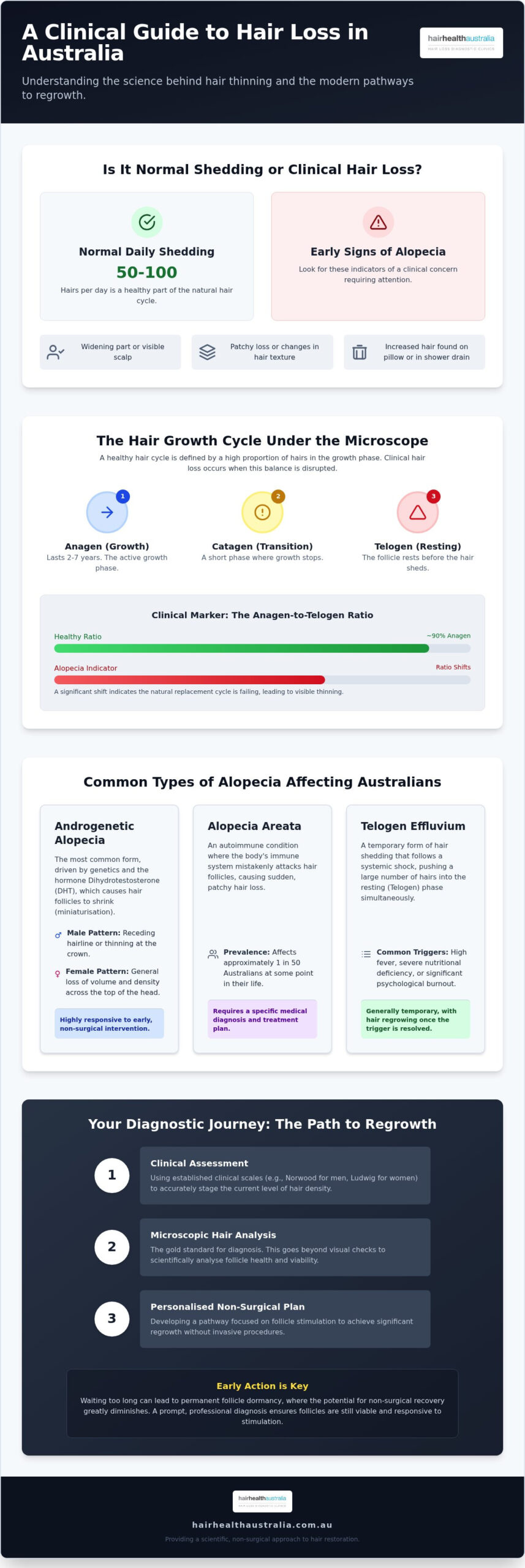
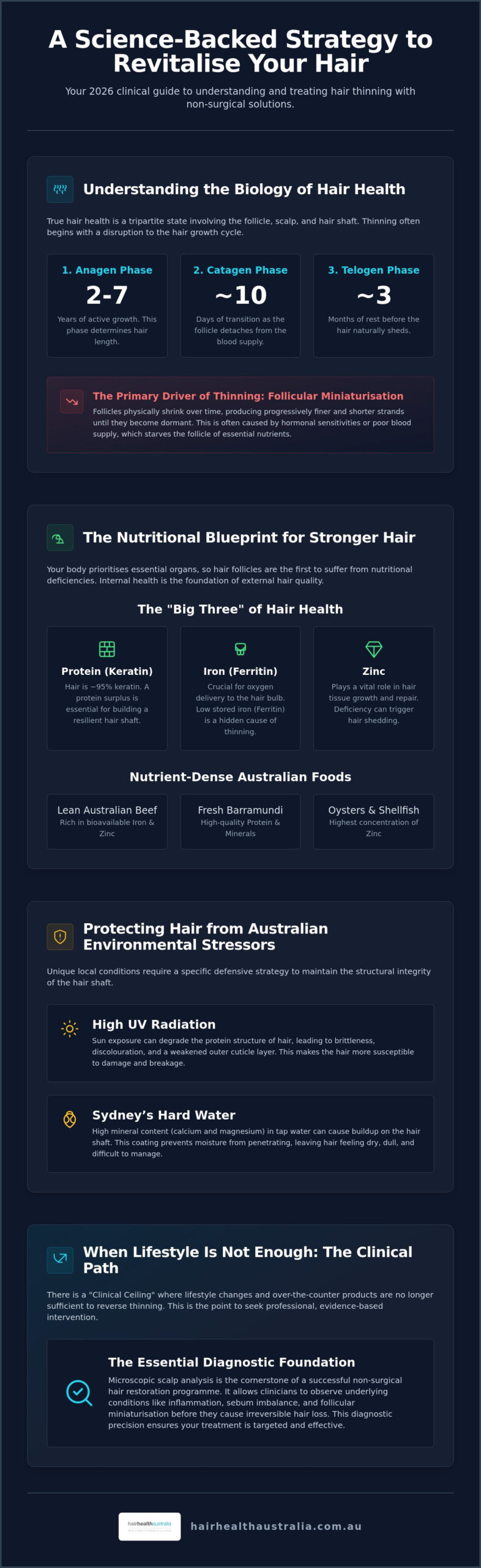
To understand why certain treatments fail while others succeed, we must first define what hair health actually entails. It isn’t merely the shine of the visible strand; true health is a tripartite state involving the follicle, the scalp environment, and the structural integrity of the hair shaft itself. When we discuss Understanding Hair Loss, we are often looking at a systemic disruption in the hair growth cycle. This cycle consists of three distinct phases: Anagen, the active growth phase that can last several years; Catagen, a short transitional stage; and Telogen, the resting phase where the hair eventually sheds.

Follicular miniaturisation is the primary driver of thinning, characterized by a process where hair follicles physically shrink over time and produce increasingly finer, shorter strands until the follicle eventually becomes dormant. This process is often driven by hormonal sensitivities or poor blood supply to the dermal papilla. The papilla is the control centre of the follicle, acting as a lifeline that delivers oxygen and nutrients from the blood. Without this supply, the process of keratinisation, where cells are hardened into the protein-rich hair shaft, begins to falter. This is why modern non surgical hair restoration focuses on revitalising the follicle from the inside out rather than just treating the hair you can see.

The Role of Keratin and Protein Synthesis

Hair is composed of approximately 95% keratin, a tough, fibrous protein. It’s vital to remember that the human body is a master of prioritisation; it will always direct protein and minerals to essential organs like the heart and liver before the hair follicles. If your internal stores are low, your hair is the first to suffer. While the outer cuticle layer acts as a protective shield for the cortex, external products cannot “feed” the hair in the same way internal protein synthesis does. True density depends on the body having a surplus of the correct amino acids to build a resilient shaft.

Why Scalp Health is the Foundation

Think of your scalp as the soil in which your hair grows. If the soil is depleted, congested, or inflamed, the crop will struggle to thrive. Sebum production must be perfectly balanced; an excess can lead to oxidative stress, while a deficiency leaves the emerging hair brittle. Maintaining a healthy scalp microbiome is also crucial for preventing the micro-inflammation that often precedes follicle shutdown. A comprehensive Hair Health Check allows us to observe these microscopic conditions before they manifest as visible thinning. This diagnostic precision is a cornerstone of effective non surgical hair restoration strategies in Australia.

The Nutritional Blueprint for Stronger, Fuller Hair

If the follicle is the engine of hair growth, nutrition is the high-performance fuel it requires to function. While many people focus on topical solutions, the internal environment dictates the quality of the hair shaft long before it emerges from the scalp. A successful approach to non surgical hair restoration always begins with a robust nutritional blueprint that prioritises the building blocks of keratin.

Protein, Iron, and Zinc form the “Big Three” of hair health. Because hair is a non-essential tissue, your body will divert these nutrients to vital organs first. If your intake is low, your follicles are the first to be rationed. Iron is particularly critical as it facilitates oxygen delivery to the hair bulb. For many women, Ferritin (stored iron) levels are the hidden culprit behind diffuse thinning. Even when standard blood tests appear “normal,” hair growth often requires Ferritin levels to be at a specific clinical threshold to maintain a healthy Anagen phase.

Biotin and a complex of B-vitamins support the keratin infrastructure, acting as the “scaffolding” for each strand. Meanwhile, Omega-3 fatty acids are essential for maintaining scalp lubrication and improving the elasticity of the hair cortex. Without these healthy fats, the hair shaft becomes brittle and prone to premature breakage.

Essential Micronutrients: Zinc and Iron

Zinc plays a vital role in hair tissue growth and repair. A significant deficiency can trigger Telogen Effluvium, a condition where hair is prematurely pushed into the shedding phase. To support your follicles, focus on nutrient-dense foods readily available in Australian markets:

  • Lean Australian beef: An excellent source of bioavailable iron and zinc.
  • Fresh Barramundi: Provides high-quality protein and essential minerals.
  • Oysters and shellfish: Some of the highest concentrations of zinc available.
  • Legumes and pumpkin seeds: Vital plant-based sources for mineral support.

It is tempting to reach for over-the-counter supplements, but clinical blood tests are a necessary first step. Self-supplementing can lead to mineral imbalances or toxicity, which may actually worsen hair loss. Understanding your specific biological needs is a key part of the Clinical Path to Recovery.

Hydration and the Hair Shaft

Water is the most overlooked nutrient in hair care. Chronic dehydration leads to a dry scalp environment and brittle strands. High water volume is required to maintain the rapid cellular turnover within the follicle. When you are properly hydrated, the hair cortex retains its natural elasticity, allowing the hair to withstand daily styling without snapping.

Dietary adjustments provide the foundation, but they are most effective when you know exactly what your body is lacking. A professional Hair Health Check can help identify if nutritional gaps are stalling your non surgical hair restoration progress, allowing for a more targeted and efficient regrowth strategy.

Daily Habits and Maintenance: The Do No Harm Approach

While internal health provides the essential foundation, your daily external habits determine how much of that growth you actually retain. Many people inadvertently sabotage their non surgical hair restoration progress through aggressive mechanical stress or improper cleansing routines. Establishing a clinical hair care routine is about balance; your wash frequency should be tailored to your specific scalp type. Oily scalps may require daily cleansing to remove sebum buildup, whereas drier types might only need attention twice a week to avoid stripping natural protective oils.

A critical concept to master is Wet Hair Vulnerability. When hair is saturated, the hydrogen bonds within the shaft temporary break, making the strand significantly more elastic and prone to snapping. This is why aggressive towel drying, specifically vigorous rubbing, is a leading cause of mid-shaft breakage. Instead, you should pat the hair dry or use a microfibre wrap to gently absorb moisture. This external “seal” complements the Nutritional Blueprint for Stronger Hair, ensuring that the resilient strands your body is producing are not lost to avoidable physical trauma.

Conditioning is not merely an aesthetic choice; it is a clinical necessity to seal the cuticle layer. A closed cuticle prevents moisture loss and protects the inner cortex from environmental pollutants. When applying conditioner, focus on the mid-lengths and ends, as the hair closest to the scalp is already naturally lubricated by sebum. By protecting the structural integrity of the hair you have, you ensure your non surgical hair restoration efforts yield visible results in density and volume.

Choosing the Right Products for Your Scalp Type

Supermarket shampoos often prioritise fragrance and high lather over biological compatibility. These products frequently rely on harsh detergents that can disrupt the scalp’s acid mantle. Clinical-grade formulations are engineered to maintain a specific pH balance, usually around 5.5, to support the scalp microbiome. It is a common misconception that “sulphate-free” is a universal requirement. For individuals with high sebum production, a gentle surfactant may be necessary to effectively clear the follicles of oils that can stifle growth. Incorporating a scalp exfoliant can further assist in removing dead skin cells and debris.

Heat Management and Thermal Protection

Thermal damage can lead to a condition known as ‘bubble hair’. This occurs when water trapped inside the hair shaft is heated so rapidly it turns to steam, causing the shaft to expand and physically burst. To maintain hair health, follow this safety protocol:

  • Maintain a distance of at least 15 centimetres between the hair dryer and your scalp.
  • Select a medium or low heat setting to prevent overheating the keratin structure.
  • Always apply a thermal protectant to create a defensive barrier on the cuticle.
  • Consider natural alternatives to chemical straighteners or harsh ammonia-based dyes which can permanently alter the hair’s disulphide bonds.

Managing these daily variables is a vital step before moving toward more advanced clinical interventions.

How to Improve Hair Health: The 2026 Clinical Guide to Non-Surgical Restoration

Protecting Your Hair from the Australian Environment

Living in Australia presents a unique set of challenges for maintaining hair density and structural integrity. While we are often diligent about skin cancer prevention, we frequently overlook the fact that our hair is the primary shield against extreme environmental stressors. For those pursuing non surgical hair restoration, protecting the hair you have is just as critical as the treatments used to grow more. High UV radiation, coastal salt air, and even the specific mineral composition of our local water supply can degrade the hair shaft and irritate the scalp environment.

Sydney residents living near the coastline must be particularly mindful of salt and chlorine. Salt is hygroscopic, which means it actively draws moisture out of the hair shaft, leaving it brittle and prone to snapping. Chlorine is even more aggressive; it strips the natural protective oils and oxidises the hair’s pigment. If you spend time in the surf or the pool, it is essential to rinse your hair with fresh water immediately afterward. This simple habit prevents these elements from crystallising on the cuticle and causing permanent damage.

UV Radiation and Keratin Degradation

The Australian sun acts as a natural bleaching agent, but the damage goes much deeper than a change in colour. UV rays physically break the disulphide bridges, which are the chemical bonds that hold keratin chains together. This structural degradation leads to increased porosity and a total loss of elasticity. Scalp sunburn is another significant concern that many ignore. It can trigger localised inflammation that disrupts the follicle’s growth cycle and potentially leads to premature shedding. Your scalp requires the same level of protection as your face, especially if you are noticing a receding hairline or thinning at the crown. Practical sun-smart habits, such as wearing a hat or using specialised UV hair sprays, are non-negotiable during peak exposure hours.

Managing Mineral Buildup from Sydney Water

While Sydney’s water is generally of high quality, mineral accumulation remains a common issue for many residents. Over time, calcium and magnesium can deposit on the hair shaft, creating a film that causes stiffness, brassiness, and a noticeable lack of lather during washing. This buildup creates a barrier that prevents moisture and clinical treatments from penetrating the cortex. If your hair feels “crunchy” or lacks shine, you might consider installing a shower filter or using a chelating shampoo once a month. A simple DIY clarifying rinse using one part apple cider vinegar to four parts filtered water can also help restore the scalp’s natural pH and remove stubborn mineral deposits.

Environmental damage often masks the biological progress of your regrowth efforts. To see exactly how these external factors are affecting your follicles, you should book a professional Hair Health Check. This diagnostic step is the most effective way to separate environmental wear-and-tear from genetic thinning, ensuring your non surgical hair restoration programme remains focused on the right priorities.

When Lifestyle Is Not Enough: The Clinical Path to Recovery

There is a point where even the most disciplined nutritional routine and sun-smart habits reach their limit. This is the “Clinical Ceiling”. When thinning is driven by genetic factors, such as androgenetic alopecia, the follicles require direct biological intervention to remain active. Visual guesswork often leads to wasted time and money on over-the-counter products that aren’t formulated for your specific biological profile. Early intervention is the most critical factor; it’s far easier to revitalise a struggling follicle than to wake one that has been dormant for years. Modern non surgical hair restoration provides a systematic, evidence-based way to address these underlying issues without the need for invasive surgery.

While a general practitioner can check your basic health markers, a specialist hair clinic provides a much deeper level of diagnostic insight. We don’t just look at the hair you’re losing; we look at the health of the follicles you still have. This shift from reactive “fixing” to proactive “restoring” is what separates clinical success from temporary cosmetic improvement. By moving beyond surface-level treatments, you can establish a sustainable routine that works with your body’s natural growth cycles.

Microscopic Hair Analysis: The Gold Standard

A standard consultation often relies on the naked eye, but true precision requires microscopic hair analysis. This technology identifies thinning up to five years before it becomes visible by measuring specific metrics across the scalp. We look at hair density per square centimetre, individual follicle diameter, and signs of scalp inflammation or sebum congestion. By understanding these data points, we can tailor a programme that targets the root cause of your specific loss pattern. For more technical details on how these interventions work, you can refer to our Clinical Hair Treatment Guide.

Personalised Regrowth Protocols

A one-size-fits-all approach fails because every scalp is unique. What works for male pattern baldness may not be appropriate for female thinning driven by iron deficiency or hormonal shifts. Effective non surgical hair restoration programmes combine clinical-grade topicals with targeted follicular stimulation to extend the Anagen growth phase. This multi-faceted approach ensures that the follicles are not just protected from external damage, but actively encouraged to produce thicker, more resilient strands. Establishing a scientific baseline is the first step toward long-term density. We encourage readers to book a Hair Health Check to gain a clear, objective understanding of their hair health profile and start their journey toward recovery.

Securing the Future of Your Hair Density

Achieving lasting hair health requires a shift from reactive cover-ups to a systematic, biological approach. We’ve explored how nutritional foundations, environmental protection against the harsh Australian sun, and proper maintenance routines form the essential base of follicle care. However, when lifestyle adjustments aren’t enough to overcome genetic thinning, the “Clinical Ceiling” necessitates professional intervention. By combining microscopic diagnostics with evidence-based non surgical hair restoration, you can move past the confusion of ineffective products and start a journey rooted in science.

This commitment to professional excellence and tailored results is something we value across all industries; if you are also looking for expert partnership in the Victorian property sector, discover Elite Agents & Partners for a similarly dedicated approach to real estate.

With over 15 years of clinical expertise in Sydney, we specialise in personalised regrowth programmes for both men and women. The most important step you can take is identifying the specific needs of your scalp before follicles become permanently dormant. Take control of your hair health journey and Book Your Comprehensive Hair Health Check in Sydney Today. Understanding your biological profile is the first step toward visible, sustainable density and renewed confidence in your appearance.

Frequently Asked Questions

How can I improve my hair health naturally at home?

You can improve your hair health naturally by optimising your intake of protein, iron, and zinc while maintaining a consistent scalp hygiene routine. Avoiding mechanical stress, such as aggressive towel drying or tight hairstyles, preserves the structural integrity of existing strands. While these habits support follicle health, they work best as a preventative measure rather than a cure for advanced genetic thinning.

Can thinning hair actually grow back thicker without surgery?

Thinning hair can often grow back thicker without surgery by extending the Anagen growth phase and reversing follicular miniaturisation. Through targeted non surgical hair restoration, dormant follicles are stimulated to produce terminal hairs rather than fine, wispy vellus hairs. This process relies on maintaining a healthy blood supply to the dermal papilla to ensure the hair shaft receives adequate nutrients for protein synthesis.

Which vitamins are best for hair growth in the Australian climate?

The best vitamins for hair growth in the Australian climate include Vitamin D, B-vitamins, and antioxidants like Vitamin C to combat UV-induced oxidative stress. Despite our high UV index, many Australians remain Vitamin D deficient, which is a known trigger for hair shedding. Ensuring your internal levels are clinically balanced helps protect the disulphide bridges in your hair from environmental degradation.

How often should I wash my hair to prevent hair loss?

Your wash frequency should be determined by your scalp’s sebum production rather than a fixed schedule. Oily scalps often require daily washing to prevent the buildup of DHT-laden oils and dead skin cells that can stifle the follicle. Conversely, if your scalp is dry, washing twice a week with a pH-balanced, clinical-grade cleanser is usually sufficient to maintain a healthy microbiome.

Is it possible to improve hair health after age 50?

It is absolutely possible to improve hair health after age 50 by addressing age-related hormonal shifts and nutritional malabsorption. While up to 50% of women experience thinning by this age, clinical treatments can still revitalise active follicles and improve overall density. Success at this stage depends on a personalised approach that accounts for changes in hair diameter and scalp elasticity.

What are the first signs that I need a clinical hair analysis?

The first signs you need a clinical hair analysis include seeing more hair than usual in the shower drain, a widening part line, or a noticeable loss of volume at the crown. Because microscopic changes occur years before thinning is visible to the naked eye, these early warning signs are your cue to seek a professional diagnostic baseline. Waiting until the scalp is clearly visible often makes the restoration process more complex.

Does stress really cause permanent hair loss?

Stress typically causes a temporary condition called Telogen Effluvium, where hair is prematurely pushed into the shedding phase, but it rarely causes permanent loss on its own. However, a significant stressful event can act as a catalyst that unmasks or accelerates underlying genetic thinning. Once the stressor is removed, most hair should grow back, provided the follicle environment remains healthy and supported.

How long does it take to see results from a non-surgical hair restoration regime?

You should expect to see visible results from a non surgical hair restoration regime within four to six months. This timeline is dictated by the natural biology of the hair growth cycle, as it takes time for revitalised follicles to produce new terminal strands. Consistency is vital during this period, as the initial phase focuses on stabilising shedding before moving into the regrowth stage.

Ladies’ Hair Loss Treatment in Sydney: The 2026 Clinical Recovery Guide

What if the answer to your thinning part line isn’t found in a viral “miracle” serum, but in a precise clinical diagnosis at a dedicated women’s hair loss clinic Sydney? It’s exhausting to watch your hair lose its density while trying to separate expensive marketing fluff from genuine medical science. You’ve likely felt the frustration of coastal humidity making thinning more obvious or worried that your only real option is invasive surgery. We understand that for many women, the reflection in the mirror feels like it’s changing faster than you can find answers.

This 2026 clinical recovery guide provides a clear, evidence-based path to hair restoration tailored specifically for the Australian lifestyle. You deserve a plan that addresses the root cause of thinning rather than just masking the symptoms. We’ll preview the most effective non-surgical protocols available today, including follicle-first scalp analysis and emerging AI-designed therapies, to help you regain both your hair density and your confidence through a manageable, professional plan.

Key Takeaways

  • Identify the biological drivers behind female pattern thinning and how to navigate the emotional challenges of hair loss with professional support, including specialised mental health services from the Gender Identity Center for gender-diverse individuals.
  • Understand why microscopic scalp analysis is a critical first step for a precise diagnosis, offering a deeper look at follicle health than a standard visual inspection.
  • Evaluate the significant results achievable through clinical-grade regrowth programmes compared to basic over-the-counter chemist alternatives.
  • Learn how to defend your hair against Sydney’s specific environmental stressors, such as intense UV exposure and coastal humidity.
  • Explore how a specialised women’s hair loss clinic Sydney can design a bespoke, non-surgical recovery plan tailored to your unique hair health goals.

Understanding Female Pattern Thinning and Hair Loss in Australia

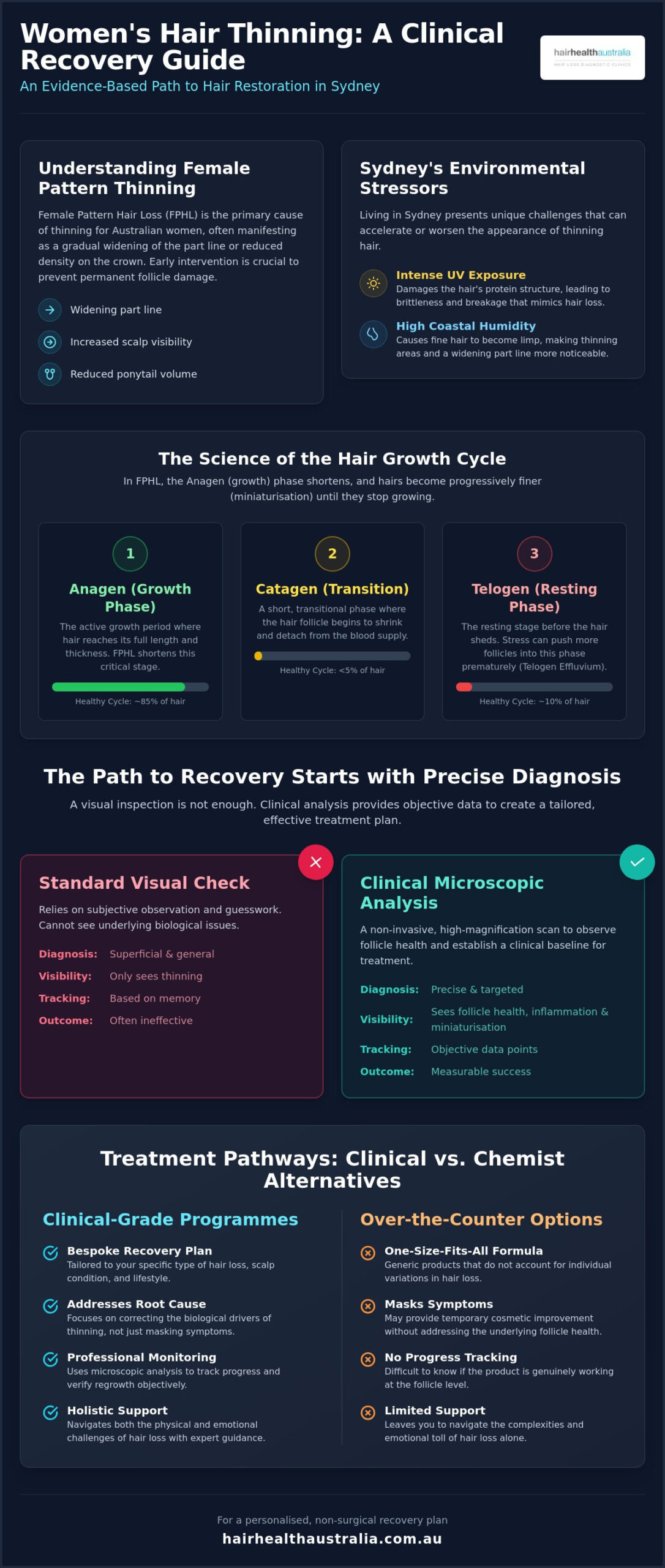
Female pattern hair loss (FPHL) remains the primary cause of thinning for women across Australia. While society often treats thinning as a predominantly male concern, the emotional impact on women is profound and frequently overlooked. Pattern hair loss typically manifests as a gradual widening of the part line or a noticeable loss of density across the crown. In 2026, clinical standards at a professional women’s hair loss clinic Sydney focus on early intervention. Identifying these changes early is the most effective way to prevent permanent follicle miniaturisation before the scalp becomes smooth and unresponsive to non-surgical treatment.

Living in Sydney introduces environmental challenges that can worsen the appearance of thinning hair. Intense UV levels during the summer months can damage the hair shaft’s protein structure, leading to brittleness and breakage that mimics true hair loss. High coastal humidity also plays a role. It causes finer hairs to go limp, making a widening part line more visible to the naked eye. Unlike male balding, which often results in a receding hairline, female thinning is usually more diffuse. Common visual indicators include:

  • A part line that appears wider than it was in previous years.
  • Increased scalp visibility when the hair is tied back or under bright light.
  • A reduction in “ponytail volume” or overall hair thickness.
  • Visible thinning at the temples or crown area.

The Science of the Hair Growth Cycle

Your hair follows a specific biological rhythm consisting of three main stages. The Anagen phase is the active growth period, Catagen is the short transition phase, and Telogen is the resting stage before the hair eventually sheds. In cases of FPHL, the Anagen phase becomes significantly shorter. This means the hair doesn’t have enough time to reach its full length or thickness. Miniaturisation is the process where hair becomes progressively finer until it stops growing.

Hormones, Stress, and the Sydney Lifestyle

Many women are surprised to find their blood tests return “normal” results despite visible thinning. This occurs because the follicles themselves are often hypersensitive to androgens, even when hormone levels are within a standard range. Additionally, Sydney’s high-pressure professional environment frequently triggers Telogen Effluvium. This is a form of temporary shedding where stress pushes a large percentage of follicles into the resting phase prematurely. For those over the age of 50, hormonal shifts during menopause mean that approximately two-thirds of women will experience some degree of density change. Visiting a women’s hair loss clinic Sydney provides the diagnostic clarity needed to separate these causes. You can begin this process with a professional hair health check to establish a clinical baseline and identify your specific triggers.

The Role of Microscopic Analysis in Modern Hair Diagnostics

A visual inspection by a GP or a quick check by your hair stylist is often insufficient for a long-term recovery plan. While they may notice your hair feels finer, they cannot see the biological markers occurring beneath the surface. At a specialised women’s hair loss clinic Sydney, we use high-magnification microscopic analysis to bridge this diagnostic gap. This non-invasive process allows us to observe follicle health in real-time, identifying issues like sebum blockages, scalp inflammation, or the early stages of miniaturisation that are invisible to the naked eye.

A clinical scan provides the data needed to remove the emotional guesswork from your recovery. It reveals the ratio of active follicles to dormant ones, allowing us to establish a precise clinical baseline. This baseline is essential for measuring the success of Female pattern hair loss treatments over the typical 6 to 12 month window required for visible regrowth. By documenting the starting point with microscopic precision, we can verify progress through objective data rather than relying on subjective memory.

What to Expect During a Clinical Hair Health Check

The Hair Health Check is a methodical, step-by-step process designed to give you total clarity. We use specialised lenses to map different zones of the scalp, identifying where thinning is most aggressive. This provides the straight-talking honesty you need. If a follicle has been dormant for too long and the scalp has become smooth, we’ll be transparent about that reality. Our focus is on identifying which areas are realistically regrowable so we can build an efficient, non-surgical plan.

Why Medical Diagnosis Trumps Chemist-Bought Guesswork

Many women spend months, and often hundreds of dollars, on chemist-bought serums that aren’t suited to their specific condition. The risk of self-treating is high. You might be using a product for generic thinning when you actually have a condition like Frontal Fibrosing Alopecia, which requires a completely different clinical approach. Professional diagnosis at a women’s hair loss clinic Sydney identifies these specific conditions early, preventing irreversible scarring. For a deeper understanding of these early markers, you can explore our guide on Early Signs of Alopecia in Women: A Clinical Guide to Detection and Recovery.

Clinical vs. Over-the-Counter: Evaluating Ladies’ Hair Loss Treatments

Choosing between a shelf-bought solution and a professional women’s hair loss clinic Sydney is often the difference between merely managing symptoms and treating the biological cause. Many women begin their recovery journey with a basic 2% minoxidil solution from a local chemist. While this remains a common entry point, using it in isolation frequently leads to underwhelming results because it fails to address the unique scalp environment or underlying hormonal triggers. A comprehensive clinical approach for the assessment of female hair loss ensures that all physiological factors are considered before a treatment pathway is finalised.

The market is also saturated with “miracle” organic oils and botanical serums. While these products can be excellent for conditioning the hair shaft or improving shine, they rarely possess the molecular weight required to penetrate the scalp and stimulate the hair follicle at a cellular level. It is vital to distinguish between scalp moisturisation and true follicle stimulation. Over several years, the cumulative cost of these failed DIY experiments often exceeds the investment in a structured clinical programme. In 2026, professional protocols prioritise a two-stage approach: first, we focus on stabilising active loss, and only then do we move into an intensive regrowth phase.

Non-Surgical Regrowth Protocols for 2026

Modern recovery plans rely on multi-modal therapy. This strategy combines high-strength topical stimulants with clinical treatments designed to improve scalp vascularity and cellular health. By waking up dormant follicles through multiple biological pathways, we can achieve significant density increases without the downtime or scarring associated with surgery. For a detailed breakdown of these methods, you can refer to our Best Hair Regrowth Treatment Australia 2026: A Clinical Reference Guide.

The Limits of Surgery for Women

Hair transplant surgery is often marketed as a definitive solution, yet it is frequently unsuitable for the diffuse thinning patterns seen in most ladies. Transplants require a dense “donor site” from which to move hair follicles, a resource many women with thinning parts simply don’t have. Stabilising the loss through clinical means is always the first priority to ensure you don’t continue to lose hair around the transplanted area. Non-surgical clinical care is the primary defence against further thinning. By visiting a specialised women’s hair loss clinic Sydney, you can access a recovery plan that focuses on preserving and revitalising your natural hair without the need for invasive procedures.

Ladies’ Hair Loss Treatment in Sydney: The 2026 Clinical Recovery Guide

Practical Steps for Managing Hair Fall and Scalp Health in Sydney

Managing hair loss in Sydney requires a strategy that accounts for the city’s unique environmental pressures. The combination of intense UV radiation and persistent coastal salt spray creates a challenging environment for a sensitive scalp. UV damage doesn’t just affect the skin. It degrades the hair’s cuticle and can cause oxidative stress at the follicle level. Similarly, salt water from the harbour and chlorine from local pools can strip the scalp of its essential lipid barrier. This leads to inflammation, which is a known contributor to increased hair fall. Establishing a clinical washing routine is the foundation of follicle health, ensuring environmental pollutants are removed before they can cause damage.

Maintaining follicle health also depends heavily on internal factors. In Australia, many women face deficiencies in Iron, Zinc, and Vitamin D. Iron is particularly critical for the hair growth cycle. Low ferritin levels often lead to diffuse thinning across the crown. While we live in a sun-drenched city, many Sydney-siders are Vitamin D deficient due to diligent sun-safe habits. Supplementation should always be guided by a professional diagnosis at a women’s hair loss clinic Sydney to ensure you’re addressing a genuine biological deficiency rather than guessing with generic vitamins.

Sydney’s active lifestyle introduces another specific risk: Traction Alopecia. High-impact gym sessions or coastal runs often mean hair is scraped back into tight top-knots or ponytails. Over time, this constant mechanical tension damages the follicles along the hairline. If you notice thinning around the temples or forehead, it’s time to switch to looser styles or silk scrunchies. Protecting the physical integrity of the hair is just as vital as the clinical treatments you apply.

Home Care Best Practices

A clinical washing routine requires a pH-balanced cleanser that removes excess sebum without irritating a thinning scalp. When you apply topical treatments, ensure the product makes direct contact with the skin rather than just the hair shaft. This ensures maximum follicle absorption. Avoid heavy silicones. These ingredients may provide temporary shine, but they often weigh down fine hair and can clog pores, which hinders the effectiveness of regrowth recovery serums.

Lifestyle Adjustments for Hair Retention

Managing the “stress-shed” is a priority for many busy Sydney professionals. Chronic stress can push follicles into a resting state prematurely, leading to significant shedding months after a stressful event. To protect your scalp during outdoor exercise, wear a breathable hat or stay in the shade during peak UV hours. If you observe persistent thinning despite these lifestyle changes, don’t wait for it to grow back on its own. Seeking a professional analysis at a women’s hair loss clinic Sydney is the most reliable way to identify the root cause. You can start this process by booking a comprehensive hair health check to get a clear diagnostic baseline and a manageable plan for recovery.

Personalised Non-Surgical Hair Regrowth at Hair Health Australia

At Hair Health Australia, we believe that effective recovery shouldn’t be a matter of guesswork or invasive surgery. Our philosophy is rooted in a science-led, non-surgical approach that prioritises the biological health of your follicles. While generic online subscriptions often send the same topical solution to every customer, our women’s hair loss clinic Sydney provides a bespoke experience. We understand that your hair loss is as individual as your DNA, requiring a plan that adapts to your specific diagnostic data. This tailored method ensures we’re treating the root cause of your thinning rather than just the surface symptoms.

Being a Sydney-based clinic allows us to provide a level of care that digital-only services cannot match. Our experts live and work in the same environment as you, meaning we possess a deep understanding of how local factors like the harsh Australian sun or coastal humidity influence your scalp health. We don’t just provide a product; we provide a clinical partnership. This includes ongoing monitoring and regular microscopic progress tracking to ensure your treatment remains effective as your hair cycles evolve. It’s about replacing uncertainty with the reassurance of objective, data-driven results.

Why Sydney Women Choose Our Clinical Approach

We focus on non-invasive follicle stimulation designed to revitalise existing hair rather than moving follicles via surgical grafts. This approach minimises risk and eliminates the need for recovery downtime, which is essential for busy professionals. Many of our local Sydney clients have achieved significant density improvements by following a structured, professional plan that respects the natural growth cycle. For a deeper look at these methodologies, read our Clinical Hair Treatment: A Professional Guide to Non-Surgical Restoration.

Booking Your Professional Analysis

Taking the first step means moving from searching for answers to implementing a proven solution. When you visit our Redfern clinic, we’ll conduct a thorough analysis to determine what is realistically achievable for your specific condition. We’re committed to transparent clinical outcomes and will never promise “miracle” results that science cannot back up. We provide honest, straight-talking advice based on what your scalp scan reveals. You can book your microscopic hair health check at our Sydney clinic today to begin your journey toward restored density and confidence with a professional women’s hair loss clinic Sydney.

Take the First Step Toward Clinical Hair Recovery

Restoring your hair density starts with moving beyond generic serums and embracing a diagnostic-led approach. We’ve explored how microscopic analysis identifies the biological root cause of thinning, allowing for a strategy that addresses follicle health directly. By combining advanced clinical technology with an understanding of the unique Sydney environment, it’s possible to achieve significant regrowth without the need for invasive surgery. You deserve a recovery plan that is as individual as your own biology.

Choosing a specialised women’s hair loss clinic Sydney ensures your journey is guided by experts who prioritise evidence-based results over marketing hype. Our non-surgical protocols are designed to stabilise active loss and stimulate dormant follicles through systematic, professional care. If you’re ready to replace uncertainty with a clear path forward, the next logical step is a professional assessment of your current scalp health.

Book Your Comprehensive Microscopic Hair Health Check today to gain total clarity on your follicle health. You don’t have to navigate thinning alone. With the right clinical support and a manageable regrowth plan, restoring your hair density and confidence is an achievable reality for 2026.

Frequently Asked Questions

Is ladies’ hair loss permanent, or can it be reversed?

Hair loss isn’t always permanent, but the possibility of reversal depends on the current health of your follicles. If thinning is caught in the early stages of miniaturisation, non-surgical treatments can often revitalise the follicle and restore density. However, once a follicle has been dormant for several years and the scalp becomes smooth, regrowth is no longer clinically possible. This is why early diagnostic scanning at a women’s hair loss clinic Sydney is vital for a successful recovery.

How much does professional ladies’ hair loss treatment cost in Sydney?

Professional treatment costs vary based on the severity of your thinning and the specific clinical protocols required for your recovery. While generic over-the-counter products are cheaper initially, they often lack the efficacy of a structured, multi-modal programme. Most clinical recovery plans are customised after a diagnostic scan, ensuring you only invest in the treatments your scalp actually requires. This targeted approach often proves more cost-effective than years of unsuccessful DIY attempts.

Can stress really cause my hair to fall out in clumps?

Severe physical or emotional stress can trigger a condition called Telogen Effluvium, which causes hair to shed in noticeable amounts. This occurs when stress pushes a large percentage of follicles into the resting phase simultaneously. While this type of shedding is usually temporary, it can often unmask underlying female pattern thinning that was previously unnoticed. A professional analysis helps distinguish between a temporary stress-shed and a long-term genetic condition that requires clinical intervention.

What is the difference between female pattern baldness and alopecia?

Alopecia is the general medical term for all types of hair loss, while female pattern baldness is a specific, genetic form of the condition. There are many other variants, such as Alopecia Areata, which is an autoimmune response resulting in patchy loss. Identifying the exact variant you have is the first step toward an effective recovery. A women’s hair loss clinic Sydney uses microscopic technology to determine which specific type of alopecia is affecting your hair density.

Does minoxidil work for all women, or are there better clinical options?

Minoxidil doesn’t work for every woman, as its effectiveness depends on the presence of specific enzymes in the scalp. Many women find that basic chemist-bought solutions provide limited results. Modern clinical options often involve high-strength, customised formulations combined with scalp health treatments that improve absorption. These multi-modal protocols target the follicle through several biological pathways, often succeeding where generic topical treatments have failed to produce visible regrowth.

How long does it take to see results from a non-surgical regrowth programme?

You should expect to see the first signs of clinical improvement within three to six months, with more significant density changes occurring at the 12-month mark. Hair grows in slow cycles, so patience is a necessary part of the recovery process. Initial success is often measured by a reduction in daily shedding, followed by the appearance of finer baby hairs that gradually thicken into mature terminal hairs over time.

Can my hairdresser tell if I have a medical hair loss condition?

Your hairdresser may be the first to notice changes in your hair density or texture, but they aren’t trained to provide a medical diagnosis. They see the hair shaft, whereas a clinical specialist looks at the follicle and scalp health beneath the surface. While a stylist can recommend better cutting techniques to mask thinning, a clinical professional is required to identify the biological drivers and prescribe a corrective treatment plan.

Is it safe to colour my hair while undergoing clinical treatment?

It’s generally safe to colour your hair during treatment, provided your scalp isn’t currently inflamed or irritated. We recommend choosing ammonia-free or gentle dyes to avoid further stressing the follicles. It’s also wise to inform your clinician about your colouring routine. They can adjust your topical application schedule to ensure your clinical treatments don’t interfere with your hair colour or vice versa, maintaining both hair health and aesthetic goals.

PCOS Hair Loss Treatment Sydney:

What if the “hormone balance” supplements you’ve been taking are only addressing half of your symptoms? While managing internal health is vital, finding an effective PCOS hair loss treatment Sydney specialists provide requires looking beyond generic advice and focusing on the clinical health of the hair follicle itself. It’s deeply frustrating to be told to “just wait” for your hormones to level out while you watch your part line widen or notice visible thinning at the crown. We recognise that the anxiety of hair loss is often the most distressing part of the PCOS journey, and you deserve more than a standard recommendation.

We understand the frustration of trying every supplement on the shelf without seeing a change in your hair density. This guide provides a clear clinical path to identify whether you’re experiencing temporary shedding or permanent follicle miniaturisation. You’ll discover how non-surgical, evidence-based protocols can be integrated into a busy Sydney lifestyle to stop thinning and encourage regrowth. We’ll move through the diagnostic process and into the specific treatments that help you regain visible thickness and long-term scalp health.

Key Takeaways

  • Identify the specific biological triggers, such as DHT, that cause hair follicle miniaturisation and shorten the natural growth cycle.
  • Learn why a microscopic hair analysis is the clinical gold standard for distinguishing between temporary shedding and permanent thinning.
  • Discover how a non-invasive PCOS hair loss treatment Sydney programme focuses on direct follicle rehabilitation to restore visible hair density.
  • Understand the benefits of a customised, medical-grade plan that integrates seamlessly into a busy lifestyle without the need for surgery.

Understanding PCOS Hair Loss in Sydney: Why Thinning Occurs

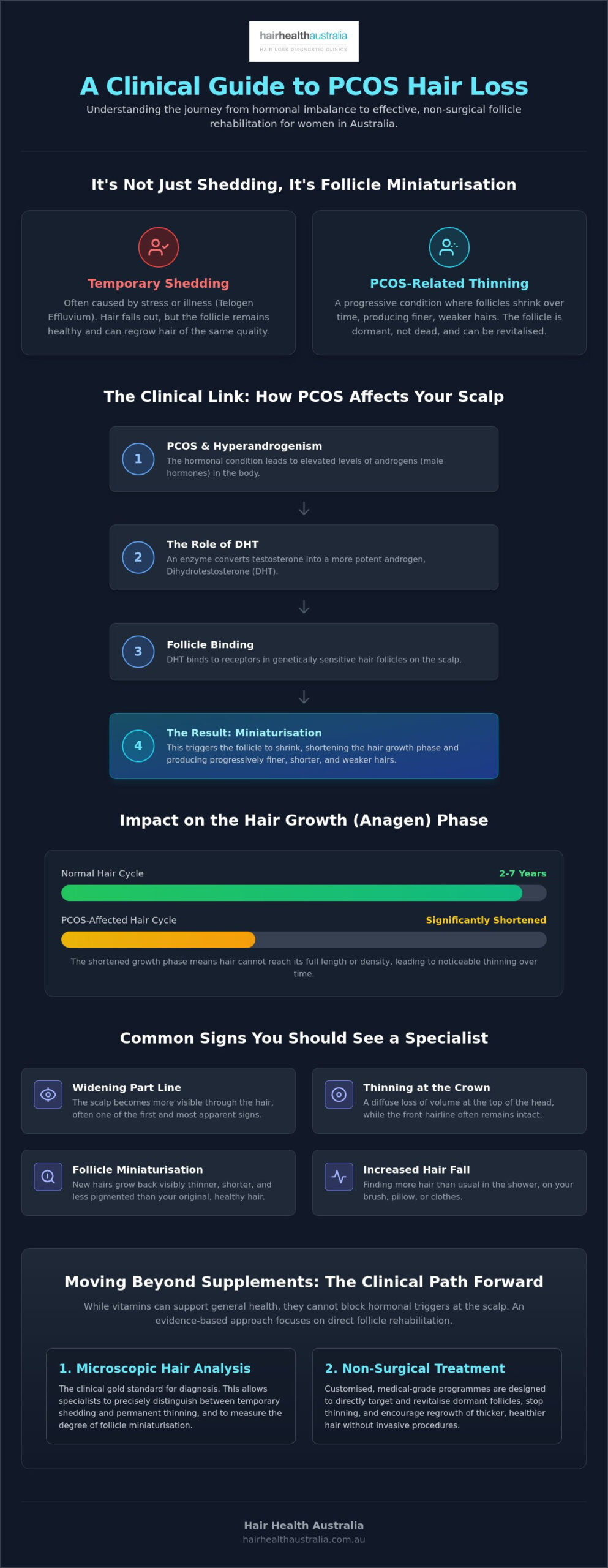
Polycystic Ovary Syndrome is a complex hormonal condition that affects many women across Australia. While symptoms like irregular cycles or acne are frequently discussed, the impact on hair density is often the most distressing. Clinically, this is referred to as female pattern hair loss or androgenetic alopecia. For those seeking a PCOS hair loss treatment Sydney clinic, it’s essential to understand that this isn’t a simple case of temporary shedding. Instead, it’s a progressive condition where elevated androgens, specifically dihydrotestosterone (DHT), cause hair follicles to gradually shrink.

Many women first notice an increase in “shedding”—the literal falling out of hair strands in the shower or on a hairbrush. While a certain amount of daily loss is normal, PCOS triggers a shift in the hair growth cycle. Unlike temporary telogen effluvium, which might follow a stressful event or illness, PCOS-related thinning is persistent. The good news for patients is that this form of hair loss is non-scarring. This means the hair follicles remain intact and alive; they’ve simply become dormant or produce much finer, “vellus” hairs. Because the follicles aren’t permanently damaged, they can often be revitalised with the right clinical intervention.

The Emotional Impact of PCOS Thinning

Understanding Polycystic Ovary Syndrome (PCOS) involves recognising that the physical symptoms carry a heavy emotional weight. Losing hair can feel like losing a part of your identity, often leading to a significant drop in self-confidence. We believe in normalising the conversation around female hormonal thinning. It’s not something you have to “just live with.” Early intervention at a specialised centre is vital because the sooner we address follicle miniaturisation, the more successful we are at restoring visible density and stopping the progression.

Common Signs You Should See a Specialist

Identifying the early markers of hormonal thinning allows for a more effective treatment plan. You should consider a professional assessment if you notice:

  • Widening of the part line: This is often the most visible early sign as the scalp becomes more apparent through the hair.
  • Thinning at the crown: While the front hairline usually stays intact, the top of the head may show a diffuse loss of volume.
  • Follicle Miniaturisation: You might notice that new hairs growing back are thinner, shorter, and lack the pigment of your original hair.
  • Increased hair fall: Finding more hair than usual on your clothes, pillow, or in the bathroom sink.

If these signs sound familiar, seeking a dedicated PCOS hair loss treatment Sydney specialist can provide the clarity you need to move forward with confidence.

The biological mechanism behind thinning in women with Polycystic Ovary Syndrome is primarily driven by hyperandrogenism. While high levels of circulating androgens are a hallmark of the condition, it’s the conversion of testosterone into dihydrotestosterone (DHT) that directly impacts the scalp. DHT binds to receptors in the hair follicles, triggering a process known as miniaturisation. In plain terms, the follicle begins to shrink. Each subsequent hair produced is finer, shorter, and less deeply rooted than the last. Eventually, the follicle becomes so small it produces only barely visible “peach fuzz” or stops producing hair altogether.

This process significantly disrupts the “anagen” or growth phase of the hair cycle. Normally, a hair grows for several years before resting and falling out. Under the influence of excess androgens, this growth window is drastically shortened. This is why many women seeking PCOS hair loss treatment Sydney specialists provide notice that their hair simply doesn’t seem to grow past a certain length anymore. If you’ve noticed your ponytail feels thinner or your scalp is becoming more visible, it’s likely that this cycle disruption is already underway.

Many patients initially try over-the-counter hair vitamins or general supplements. While these may support hair health if you have a deficiency, they lack the clinical strength to block the hormonal triggers at the scalp level. Managing the internal environment is only half the battle; the follicles themselves require direct, targeted intervention to reverse the effects of androgen sensitivity. A professional hair health check can help determine exactly how much miniaturisation has occurred and what steps are needed to stop it.

To complement clinical treatments by addressing internal health, you can find out more about ah! fertility nutrition and their approach to supporting the body through nutritional detox and hormonal support.

Androgenetic Alopecia vs. Telogen Effluvium

It’s vital to distinguish between permanent hormonal thinning and temporary shedding. Androgenetic alopecia is the progressive miniaturisation described above. However, the physical and emotional stress of managing Understanding PCOS and Hair Loss can often trigger telogen effluvium, which is a sudden, widespread shedding. PCOS often involves a combination of both, where hormonal triggers and systemic stress work against your hair density. You can read our guide on Telogen Effluvium for more on temporary loss.

Why a GP Diagnosis is Only the First Step

A GP is essential for diagnosing the underlying condition and managing systemic health, but their focus is rarely on the aesthetics of hair regrowth. While they manage your internal hormones, a specialist focusing on PCOS hair loss treatment Sydney provides manages the rehabilitation of the follicle itself. A multi-factored approach ensures you’re treating both the cause and the visible symptom—a strategy supported by health screening services like Bewell that offer diagnostic pathogen testing to monitor internal health. DHT miniaturisation is a slow process of follicle starvation, but as long as the follicle is still producing hair, it remains viable for clinical recovery.

Beyond Blood Tests: The Role of Microscopic Hair Analysis

While a GP’s blood panel is essential for confirming systemic hormonal levels, it doesn’t provide a direct visual of the physiological damage occurring at the scalp. A microscopic hair analysis is the clinical gold standard for women seeking PCOS hair loss treatment Sydney services, as it allows us to see what is happening beneath the surface. This diagnostic tool moves beyond guesswork, providing concrete data on the health of your follicles. It’s the difference between assuming your hair is thinning and knowing exactly how many follicles have been impacted by androgen sensitivity.

Unlike a standard visual inspection by a hair stylist, which relies on subjective observation, microscopic scanning uses high-magnification technology to measure follicle density and hair shaft diameter with mathematical precision. This data is critical because clinical research into PCOS and female pattern hair loss shows that intervention is most effective when we can identify miniaturisation before it becomes visible to the naked eye. The Hair Health Check serves as the foundation for any successful regrowth plan in our Sydney clinic, ensuring we address the specific needs of your scalp environment.

What We Look For During Your Sydney Consultation

During your analysis, we focus on identifying the percentage of follicles currently in the telogen (resting) phase. In a healthy scalp, about 10 to 15 percent of hair is resting; however, PCOS can push this number much higher. We also detect early signs of miniaturisation, where the hair bulb begins to produce thinner, weaker strands. Additionally, we assess the scalp for inflammation or sebum buildup, which are common secondary issues for women with hormonal imbalances that can further hinder healthy growth.

Predicting Your Regrowth Potential

One of the most reassuring aspects of a microscopic scan is its ability to reveal if a follicle is still active or has become dormant. If the follicle is still producing even a very fine hair, there is a high clinical probability that we can revitalise it. We believe in a straight-talking approach to results. By using clinical data rather than guesswork, we can set realistic expectations for what non-surgical treatment can achieve for your specific hair density. This evidence-based starting point ensures your personalised PCOS hair loss treatment Sydney plan is built on a foundation of transparency and scientific accuracy.

PCOS Hair Loss Treatment Sydney:

Non-Surgical PCOS Hair Loss Treatment Protocols

Once the microscopic analysis has mapped the current state of your scalp, the focus shifts to a structured, clinical intervention. The most effective PCOS hair loss treatment Sydney specialists provide involves a multimodal approach that targets the follicle from multiple angles. We don’t rely on a single miracle ingredient. Instead, we implement a regrowth programme that combines clinical-grade topical stimulants with precise follicle rehabilitation. This process is designed to block the local effects of DHT while providing the nutrients required for the hair bulb to produce a thicker, healthier shaft.

These programmes aren’t just about stopping the shed; they’re about actively waking up dormant hairs. When a follicle has been miniaturised by androgens, it often enters an extended resting phase. Clinical stimulation works to trigger the transition back into the anagen, or growth, phase. Consistency is the cornerstone of any successful regrowth programme. Because hair follicles operate on a multi-month cycle, clinical topicals must be applied with disciplined regularity to maintain the biochemical environment necessary for new growth. This methodical approach ensures that the improvements we see under the microscope eventually translate into visible density at the crown and part line.

Customised Clinical Solutions for Women

Retail products found in pharmacies or supermarkets rarely work for complex PCOS cases because they lack the concentration of active ingredients needed to bypass the scalp barrier. It’s also a reality that surgical options like hair transplants are often unsuitable for the diffuse thinning typical of hormonal loss. Our non-invasive therapies focus on restoring your natural hair density by improving both the quantity and quality of the hair. You’ll often notice an improvement in the texture and colour of the new growth as the follicles receive the support they’ve been lacking. If you’re ready to move beyond trial and error, you can book a clinical hair health check to begin your customised protocol.

Maintaining Your Results Long-Term

Sustaining your regrowth requires integrating hair health into your broader PCOS management routine. This isn’t a one and done fix, but rather a commitment to scalp health. Using professional shampoos that maintain a healthy pH balance and clear excess sebum is essential, as hormonal imbalances often lead to increased scalp oiliness. For a deeper look at the clinical options available, our Hair Loss Treatment for Women guide provides detailed insights into the latest evidence-based products. By combining professional clinic-based treatments with the right home-care routine, you can protect your results and enjoy lasting hair confidence.

Personalised Hair Regrowth for Women at Our Sydney Clinic

Our clinic in Redfern serves as a specialised centre for women navigating the complexities of hormonal thinning. We recognise that searching for an effective PCOS hair loss treatment Sydney provider can be an overwhelming process, especially when you’ve been met with generic advice in the past. Our commitment is rooted in providing non-surgical, clinically-backed regrowth protocols within a supportive and empathetic environment. We believe that every woman deserves a clear, scientific explanation for her hair loss, which is why our consultations focus on objective data rather than guesswork.

When you visit our Sydney clinic, you’re entering a space designed for clarity and confidence. We understand the unique challenges PCOS presents, from the metabolic shifts to the emotional toll of visible thinning. Our specialists act as dedicated guides, helping you understand the “why” behind your hair changes before moving into the “how” of your recovery. This methodical approach ensures that you feel fully informed at every stage of your journey. We maintain a high standard of transparency, providing realistic expectations based on the current health of your follicles as seen during your diagnostic scan.

Why Sydney Women Choose Hair Health Australia

Local women choose our Redfern clinic because we prioritise clinical precision and transparent results above all else. Our location is conveniently situated for regular check-ups, making it easy to integrate your hair health into a busy Sydney lifestyle. We’ve helped many women successfully manage the progression of PCOS-related thinning by focusing on follicle rehabilitation. Many of our patients report that finally having a professional, microscopic view of their scalp provided the peace of mind they couldn’t find through online research or general health consultations. Our “no-obligation” diagnostic scans mean you can access this clinical expertise without any immediate pressure, allowing you to make an informed decision about your care.

Your Path to Recovery Starts Here

The journey from noticing a wider part line to seeing visible regrowth is a structured process. It begins with a precise diagnosis to confirm the level of miniaturisation and ends with a customised protocol that fits your specific hormonal profile. While the biological triggers of PCOS are persistent, your hair loss doesn’t have to be. By taking a proactive, evidence-based approach, you can stop the cycle of thinning and begin the process of restoring your hair’s natural density. Taking the first step is often the hardest part, but it’s also the most vital for long-term follicle survival. We invite you to see the difference that a specialised, clinical perspective can make for your hair health.

Book your free Hair Health Check at our Sydney clinic today.

Take Control of Your Hair Health Today

Recognising that PCOS-related thinning is a manageable clinical condition rather than a permanent loss of follicles is the first step toward recovery. By utilising state-of-the-art microscopic diagnostic technology, we move beyond the uncertainty of generic advice to identify exactly how to rehabilitate your hair density. Our specialised PCOS hair loss treatment Sydney protocols are built on over 15 years of clinical experience in Sydney, focusing on non-surgical, evidence-based methods that target the follicle at its source. We prioritise transparency and clinical precision, ensuring you have a clear, data-driven understanding of your regrowth potential before you start any programme.

You don’t have to navigate the complexities of hormonal hair loss alone. With clinically-backed non-surgical regrowth protocols and a dedicated team of specialists, achieving visible improvement in hair density is a realistic outcome. We’re committed to providing a supportive environment where your concerns are addressed with medical authority and empathetic care. Taking action early is the most effective way to protect your follicles and encourage long-term scalp health.

Book Your Free PCOS Hair Health Check in Sydney

We look forward to helping you regain your confidence and restore your hair’s natural strength through systematic, professional care.

Frequently Asked Questions

Can hair lost due to PCOS grow back?

Yes, hair regrowth is often possible because PCOS-related thinning is typically non-scarring. This means the follicles are not dead; they have simply miniaturised and entered a dormant phase due to androgen sensitivity. By using a targeted PCOS hair loss treatment Sydney specialists provide, you can revitalise these follicles. Success depends on the stage of thinning, so identifying miniaturisation early through clinical scanning is vital for restoring visible density.

How is PCOS hair loss different from male pattern baldness?

The primary difference lies in the pattern and progression of the thinning. Men usually experience a receding hairline or a distinct bald spot at the crown. In contrast, women with PCOS typically notice diffuse thinning across the top of the scalp and a widening part line, while the front hairline often remains intact. Both conditions involve DHT, but the female experience is rarely total baldness, making it highly responsive to non-surgical intervention.

Do I need a referral from my Sydney GP to visit your clinic?

No, you do not require a referral from a GP or specialist to book a consultation at our Redfern centre. While we often coordinate with medical professionals to ensure your systemic hormones are managed, you can access our diagnostic tools and treatment protocols directly. We focus specifically on the health of the hair follicle, providing a specialised service that complements the general medical care provided by your regular doctor.

How long does it take to see results from PCOS hair treatment?

Most patients observe a stabilisation of hair shedding within the first three months of a consistent protocol. Visible regrowth and an increase in hair density typically take between six and twelve months to become apparent. This timeline is dictated by the natural hair growth cycle, as it takes time for revitalised follicles to produce new, thicker shafts that are long enough to contribute to your overall hair volume.

Are non-surgical treatments safe for women with PCOS?

Yes, our non-surgical regrowth protocols are safe and designed to work in harmony with your body. These treatments focus on topical follicle stimulation and improving the scalp environment rather than systemic hormonal manipulation. Because we customise every plan to the individual, we ensure your specific hair health requirements are met without interfering with any existing PCOS management strategies or medications you may be using for other symptoms.

Is the microscopic hair analysis painful or invasive?

The analysis is entirely painless and non-invasive. We use a specialised high-magnification lens that gently rests on the surface of your scalp to capture real-time images of your follicles. There are no needles or skin samples required. You’ll be able to see the live results on a monitor, allowing us to explain the health of your hair shafts and the status of your follicles with complete clinical transparency.

Can I treat PCOS hair loss if I am also taking hormonal medication?

Yes, our clinical protocols are frequently used alongside hormonal treatments such as the contraceptive pill or anti-androgens. While those medications work to balance your internal environment, our treatments focus on the local health of the hair follicle. Addressing the issue from both a systemic and a topical level often provides a more comprehensive solution for women seeking a PCOS hair loss treatment Sydney programme that delivers results.

What happens if I ignore the early signs of thinning?

Ignoring the early signs of thinning allows the process of follicle miniaturisation to continue unchecked. Over time, the follicles produce increasingly finer hairs until they eventually become dormant. While we can often revitalise dormant follicles, the process is more straightforward when intervention begins while the hair is still in the early stages of thinning. Early clinical action is the most effective way to protect your existing hair density.

Hair Regrowth Programs Sydney Reviews: The 2026 Clinical Buying Guide

With nearly 85% of Australian men facing significant hair thinning by age 50, the search for a reliable solution often starts with a frantic scroll through online feedback. It’s completely understandable to feel overwhelmed by the sheer volume of hair regrowth programs Sydney reviews, especially when you’re trying to avoid expensive mistakes or invasive surgeries. You deserve a clear, diagnostic answer that leads to a visible increase in hair density, rather than just another empty marketing promise.

This 2026 clinical guide will empower you to cut through the jargon and identify non-surgical regrowth programs backed by verifiable evidence. We’ll examine how to decode local clinic feedback by focusing on TGA-approved protocols and objective data. You’ll learn exactly what to look for in a professional consultation, ensuring your chosen path is grounded in science and tailored to your specific scalp health. By the end of this guide, you’ll have the clarity needed to choose a program that offers a professional, non-invasive experience with realistic, achievable outcomes.

Key Takeaways

  • Understand how to filter through hair regrowth programs Sydney reviews to separate genuine clinical success stories from superficial cosmetic marketing.
  • Learn the biological difference between temporary fixes and clinical treatments that target DHT and stimulate follicles for sustainable hair density.
  • Identify critical red flags during a consultation, such as aggressive sales tactics or vague pricing structures, before committing to a program.
  • Discover why a professional diagnostic scan is a non-negotiable first step in any effective, non-surgical hair restoration journey.
  • Recognise the value of a personalised, evidence-based approach that addresses the underlying causes of thinning rather than just masking the symptoms.

For most Aussie men and women noticing a wider part or a receding hairline, the journey begins with a search for hair regrowth programs Sydney reviews. It’s a logical starting point. We look for social proof to justify the investment and emotional energy required to address hair loss. However, while star ratings offer a glimpse into a clinic’s customer service, they rarely provide the technical data needed to evaluate clinical efficacy. A professional program should be defined by its diagnostic depth rather than its marketing budget.

Sydney’s coastal climate and high-stress professional lifestyle can uniquely impact scalp health. Access to specialists in the CBD or suburbs like Surry Hills is abundant, but the volume of options often creates a paradox of choice. A genuine clinical program differs from a cosmetic one by focusing on the physiological causes of thinning. It’s the difference between masking a problem and treating the biological source. We must distinguish between simply stopping hair fall and the more complex task of active follicle stimulation.

Why ‘Sydney Reviews’ Don’t Always Tell the Full Story

Online feedback can be misleading. Many marketing-heavy chains use paid testimonials that don’t reflect typical clinical outcomes. When you browse through hair regrowth programs Sydney reviews, you might see 5-star ratings that actually describe a pleasant reception experience rather than a successful regrowth journey. Clinical success is measured in hair density and follicle health, not just the quality of the coffee in the waiting room. Individual biology plays a massive role. A protocol that worked for one person might fail for another if the underlying cause of their hair loss is different.

Distinguishing Between Clinical Results and Cosmetic Fixes

It’s vital to separate physiological regrowth from cosmetic camouflaging. While hair fibres or specialised pieces offer an immediate visual change, they do nothing to address the biological reality of Pattern hair loss (androgenetic alopecia). Clinical programs prioritise the health of the follicle and the surrounding scalp environment to foster genuine growth.

The focus is on long-term sustainability over “quick fix” promises. This process usually begins with a thorough hair health check to identify the specific phase of your hair’s growth cycle. Stopping the “shed” is merely the defensive first phase. True restoration involves reviving dormant follicles through non-surgical, clinically backed interventions that respect your body’s natural processes.

Evaluating the Science: What Makes a Regrowth Program Effective?

An effective program isn’t just about applying a topical cream; it’s about understanding individual biology. When scrolling through hair regrowth programs Sydney reviews, the most successful outcomes usually come from tailored protocols rather than generic, off-the-shelf products. This is because hair loss is rarely a single-factor issue. As noted by Harvard Health on hair loss causes, triggers can include everything from genetics and hormonal shifts to specific medical conditions or medications. Without identifying your specific trigger, any treatment is essentially a shot in the dark.

In a clinical environment, we focus on the dual action of DHT blockers and follicle stimulants. Dihydrotestosterone (DHT) is the primary hormone responsible for follicle miniaturisation in pattern thinning. By inhibiting this hormone and simultaneously using stimulants to increase nutrient delivery, we can encourage hairs to spend more time in the active growth phase. Scalp health is the vital foundation here. Think of your scalp as the soil in a garden; if the environment is congested or lacks proper circulation, even the most advanced biological stimulants won’t produce results.

The Role of Microscopic Hair Analysis in Diagnosis

A simple visual check often isn’t enough to determine the best path forward. Using microscopic hair analysis Australia, we can see exactly what is happening at the follicle level. This technology identifies the ratio of growing hairs to resting hairs and detects early miniaturisation before it’s visible to the naked eye. It provides an objective baseline, allowing for a program that is built on data rather than guesswork. You can’t manage what you can’t measure, and this diagnostic step ensures your treatment is precisely targeted.

Non-Surgical Protocols vs. Invasive Hair Transplants

The choice between clinical therapy and surgery often comes down to long-term goals. While transplants are a permanent surgical option, they don’t prevent further thinning in non-transplanted areas. This is a common point of discussion in hair regrowth programs Sydney reviews, where many residents now prefer non-invasive routes because they involve zero downtime. Clinical therapy focuses on the health of your entire head of hair. It’s a more holistic approach that avoids the high costs and recovery periods associated with surgery, which can range from $11,000 to $30,000 in the Australian market.

If you’re ready to move beyond reviews and get a clear picture of your hair’s future, a professional hair health check can provide the data-driven answers you need to start your journey with confidence.

Common Red Flags in Sydney Hair Loss Clinic Reviews

When you begin your search for hair regrowth programs Sydney reviews, it’s easy to get swept up in the emotional promise of a full head of hair. However, a discerning eye is required to separate professional clinical care from high-pressure sales environments. One of the most significant red flags is the “hard sell” during an initial meeting. If a consultant pressures you to sign a contract on the spot or offers “today only” discounts, they are prioritising their sales targets over your biological needs. A professional clinic acts as a guide, providing you with the data and time necessary to make an informed decision about your health.

Vague pricing structures are another common complaint in local reviews. You should receive a clear, transparent breakdown of the total cost of your program before any treatment begins. Hidden fees for “maintenance kits” or “mandatory supplements” can quickly inflate the price of what seemed like a budget-friendly option. According to Australian government health advice on hair loss treatments, it’s vital to understand the difference between medical interventions and cosmetic procedures, as this clarity helps you evaluate whether the quoted price aligns with the clinical value provided.

Be wary of “guaranteed” results. Biology is complex, and no ethical specialist can promise 100% success for every individual. Instead, look for clinics that share “real” before-and-after photos from local Sydney clients who have similar hair loss patterns to your own. These images should be clear, consistent, and accompanied by a clinical explanation of the protocol used to achieve the result.

Identifying the ‘Hard Sell’ vs. Professional Consultation

A professional consultation is an educational experience. The specialist should spend the majority of the session explaining the results of your diagnostic check rather than discussing payment plans. A major red flag is a clinic that doesn’t use specialised diagnostic equipment, such as a microscopic camera, during your first visit. Without seeing what is happening beneath the scalp surface, any recommendation is merely a guess. You should always feel comfortable walking away from a consultation to consider your options without being hounded by follow-up sales calls.

Understanding Realistic Timelines for Visible Regrowth

Patience is a clinical necessity. Hair follicles operate on a specific biological cycle, and “overnight” results are a marketing myth designed to exploit anxiety. Generally, you can expect to see a reduction in hair fall within the first 3 months, followed by the appearance of fine “baby” hairs at the 6-month mark. Significant, visible increases in density typically take 12 months of consistent treatment. Treating balding without surgery is a journey that requires commitment to a steady, evidence-based protocol. If you’re ready to start with an objective baseline, a professional hair health check is the most reliable way to set realistic expectations for your specific situation.

Hair Regrowth Programs Sydney Reviews: The 2026 Clinical Buying Guide

Your Essential Checklist for Choosing a Sydney Hair Clinic

When filtering through hair regrowth programs Sydney reviews, it is helpful to have a structured framework to evaluate your options. The 2026 standard for hair restoration has moved beyond mere topical applications; it now demands a high level of diagnostic precision and clinical accountability. A reputable clinic should act as a dedicated partner, providing you with clear milestones and objective data at every stage of your journey. Before committing to any protocol, ensure the provider meets several non-negotiable criteria.

A physical presence in Sydney is essential for consistent monitoring. While some “mail-order” solutions exist, they lack the ability to perform regular, in-person scalp assessments. Seeing a specialist in a clinical setting allows for real-time adjustments to your program based on how your follicles are responding. This local context ensures you aren’t just another number in a database, but an individual receiving systematic, supervised care.

Diagnostic Capabilities and Clinical Equipment

The most critical part of any restoration journey is the initial assessment. You should ensure the clinic utilizes high-resolution microscopic scanning rather than just a basic visual inspection. This technology allows the specialist to measure hair diameter and follicle density with mathematical accuracy. A professional hair health check is the only way to establish a verifiable baseline. Without this data, it’s impossible to track whether your program is actually delivering a visible increase in density or if you are simply maintaining your current state.

Transparency in Pricing and Treatment Expectations

Financial clarity is a hallmark of a professional clinical experience. You should avoid “lock-in” contracts that don’t allow for program adjustments as your hair health improves or changes. A reputable provider will offer a clear breakdown of costs for each phase of the treatment, including any required follow-up scans. These follow-up appointments are vital; they provide the objective proof that the stimulation protocols are working. Transparency isn’t just about the final bill; it’s about being honest regarding what can realistically be achieved within your specific timeframe.

If you’re ready to move past the uncertainty of online feedback and get a professional opinion, you can book a comprehensive hair health check today to receive a clear, data-driven diagnosis of your current scalp condition.

Why Hair Health Australia is the Logical Choice for Sydney Residents

Choosing a provider for your hair restoration journey is a significant decision that requires more than just a glance at hair regrowth programs Sydney reviews. While large corporate chains often prioritise volume and standardized sales scripts, Hair Health Australia operates as a boutique clinical practice. We believe that clinical precision and “straight-talking” honesty are the foundations of trust. Our approach focuses on providing realistic expectations based on your unique biology rather than using hyperbolic marketing language to secure a quick sign-up. We act as your dedicated guide, ensuring you understand the science behind every recommendation we make.

Our methodologies are designed to meet and exceed the best hair regrowth treatment Australia standards for 2026. This means we don’t just treat the visible symptoms of thinning; we address the underlying physiological causes. By maintaining a boutique environment, we can offer a level of personalised care that is often lost in larger franchises. Every client receives a customised protocol that is systematically monitored and adjusted based on real-time diagnostic data, ensuring your path to increased hair density is both efficient and evidence-based.

The Hair Health Check: Our Diagnostic Difference

The first step in our process is a no-obligation microscopic scan, which we call the Hair Health Check. This diagnostic phase is where we separate ourselves from the generic advice found in many hair regrowth programs Sydney reviews. During this session, we use high-definition imaging to examine your scalp and follicles in detail. We determine your regrowth potential by identifying which follicles are active and which are dormant before you spend a cent on treatment. This transparency ensures that you only begin a program if there is a clear, clinically viable path to success. You leave the consultation with a professional diagnosis and a thorough understanding of your scalp health.

Personalised Clinical Programs with No-Obligation Advice

We provide specialised Male Hair Loss Treatment and Female Hair Loss Treatment protocols that recognise the distinct biological drivers behind different thinning patterns. Whether you are dealing with early-stage receding or more advanced diffuse thinning, your program is built specifically for you. We don’t believe in one-size-fits-all solutions. Our ongoing support involves regular monitoring and follow-up scans to ensure your follicles are responding as expected. This methodical approach has helped hundreds of Sydney-siders restore their confidence through non-invasive, non-surgical means. If you are looking for a professional partner who values results and precision above all else, we invite you to experience our clinical difference.

Take the first step toward clarity by booking a professional hair health check at our Sydney clinic, where data-driven answers replace uncertainty.

Your Path to Restored Hair Density Starts with Data

Finding a sustainable solution for thinning requires moving beyond the noise of digital marketing and focusing on verifiable clinical data. While hair regrowth programs Sydney reviews provide a helpful starting point for your initial research, they cannot replace a professional diagnostic assessment tailored to your unique biology. True restoration is achieved through systematic, clinically-backed non-surgical methods that prioritise follicle health and scalp vitality over temporary cosmetic fixes.

Since 2009, our specialised Sydney clinic has focused on providing “straight-talking” honesty and precision diagnostics. We utilise high-resolution microscopic diagnostic scans to identify the specific stage of your hair growth cycle, ensuring every recommendation is grounded in science. By choosing a partner that values transparency and objective monitoring, you can move forward with the confidence that your program is delivering measurable results.

If you’re ready to stop guessing and start growing, Book Your Free Hair Health Check in Sydney Today. Our team is here to help you navigate your options with professional authority and empathetic care, ensuring you achieve the visible increase in density you deserve.

Frequently Asked Questions

Are hair regrowth programs in Sydney actually effective?

Clinical hair regrowth programs are effective when they target the specific biological cause of your thinning. Success depends on the presence of active follicles and a systematic approach to stimulation. While results vary between individuals, programs grounded in TGA-approved medications and scalp health protocols offer a reliable, non-invasive alternative to surgery. Effectiveness is always higher when intervention begins at the first signs of hair loss.

How much do hair regrowth programs typically cost in Sydney?

The cost of hair restoration in Sydney varies depending on the complexity of your condition and the duration of the protocol. While surgical options can reach up to $30,000, non-surgical clinical programs are generally more accessible. It’s vital to ensure your quote includes all diagnostic scans and follow-up monitoring. Transparent clinics provide a full breakdown of costs upfront so you can manage your budget without hidden surprises.

What should I look for in Sydney hair loss clinic reviews?

When researching hair regrowth programs Sydney reviews, prioritise feedback that mentions diagnostic technology and clinical transparency. Look for clients who discuss the depth of their initial consultation and the visibility of their long-term results. Be cautious of reviews that focus solely on “miracle” outcomes or high-pressure sales tactics. Genuine clinical feedback often highlights the professional nature of the specialist and the clarity of the treatment plan provided.

Is a hair health check necessary before starting a program?

A professional hair health check is a necessity before beginning any treatment. This diagnostic step allows a specialist to use microscopic imaging to assess follicle miniaturisation and scalp health. Without this objective data, any treatment plan is based on guesswork rather than your specific biological needs. It ensures that you only invest in a program if there is a verifiable potential for successful regrowth.

Can women benefit from these hair regrowth programs as well?

Yes, women frequently achieve significant results through specialised clinical programs designed for female thinning patterns. Hair loss in women is often driven by different factors than in men, such as hormonal shifts or nutritional deficiencies. A customised approach ensures that the treatment addresses these specific triggers. Non-surgical protocols are particularly effective for restoring density and improving hair quality in a professional, empathetic environment.

What is the difference between a hair clinic and a hair transplant centre?

A hair clinic focuses on non-surgical, physiological treatments to stimulate your existing follicles and improve scalp health. In contrast, a hair transplant centre specialises in surgical procedures that move hair from one part of the scalp to another. While surgery provides a redistribution of hair, clinical programs aim to revive dormant follicles and stop the progression of thinning across the entire scalp without invasive measures or downtime.

How long does it take to see results from a non-surgical program?

Visible results from a non-surgical program follow the natural biological cycles of your hair follicles. Most clients notice a significant reduction in hair fall within the first 90 days. Fine, new growth usually becomes visible after 6 months; the full increase in hair density typically appears at the 12-month mark. Consistency is vital, as the treatment needs to support the hair through several growth phases to achieve lasting results.

Do I need a referral to visit a hair loss specialist in Sydney?

You do not need a GP referral to visit a hair loss specialist at a clinical facility in Sydney. You can book a diagnostic consultation directly to begin your assessment. This direct access allows you to start the diagnostic process immediately, which is crucial as early intervention often leads to better clinical outcomes. A specialist will guide you through the necessary steps based on your microscopic scan results.