
What matters most when choosing hair restoration may not be your hair texture, but whether a clinic takes the time to understand your hair and scalp. If you’re searching for hair restoration for women of color Sydney, it’s reasonable to ask whether general advice will suit your circumstances and how to distinguish a considered recommendation from a sales pitch.
Hair loss can have different causes. Sustained tension from some hairstyles may contribute, while scarring conditions need prompt assessment. The right next step depends on your history and what’s happening at your scalp, not assumptions based on identity or curl pattern. An individual assessment can help clarify what to ask and which options may be suitable.
This guide explains what to consider before choosing treatment, how to compare non-surgical approaches and what to look for in a Sydney clinic. Hair Health Australia offers tailored, non-surgical hair loss treatment programs for women. A hair health check may help you explore a possible next step.
Key Takeaways
- Hair restoration for women of color Sydney should start with an individual assessment, not assumptions about curl pattern or identity.
- Note when thinning began and record relevant health changes, medicines, family history and hair-care practices to discuss at an assessment.
- Compare non-surgical options by their suitability for the suspected cause, the reasoning behind the recommendation and the follow-up involved.
- Ask Sydney clinics how they consider different hair textures, styling practices and scalp concerns when discussing care.
- A hair health check may be a useful next step for exploring your concerns and whether a personalised treatment program could be appropriate.
Hair restoration for women of colour in Sydney starts with understanding the concern
Changes in your hair can affect more than your appearance. Thinning, shedding or a widening part may influence your confidence, identity and the styles you feel comfortable wearing. It’s understandable to want clear answers, particularly if advice seems not to account for your hair or scalp.
Women of colour don’t share one hair type or set of needs. Curl pattern, density, scalp characteristics and styling practices vary widely, including within families. Braids, weaves, extensions and other styles can be important to personal or cultural expression. Wearing them doesn’t, by itself, indicate a problem. What matters is your individual history and any changes you’ve noticed.
Here, hair restoration for women of color Sydney means exploring possible causes and discussing care that may suit your circumstances. It isn’t a promise of regrowth or a way to diagnose yourself. Similar changes can have different explanations, so use this guide to prepare for a considered conversation with a clinician in Sydney.
What does hair restoration mean for women with textured hair?
Clinical hair loss care differs from cosmetic styling or routine hairdressing. It focuses on understanding changes in the hair or scalp and considering suitable care, rather than simply changing how hair looks. Curls, coils and protective styles don’t establish a diagnosis. Recommendations should take your hair and scalp, health and styling history, and any symptoms into account.
Sustained pulling from some hairstyles can contribute to hair loss. The overview of traction alopecia explains this potential link, but a hairstyle alone can’t establish what’s causing a particular change. Tell the clinician how you usually style your hair so they can consider it alongside other factors.
Which changes are worth discussing with a clinician?
Discuss gradual thinning, patchy areas, increased shedding or scalp discomfort rather than waiting until you’re certain something is wrong. Note when you first noticed the change, where it appears and whether it seems to be progressing. If useful, keep a brief record over time. Avoid drawing conclusions from a single photograph or wash day.
Seek prompt medical assessment if hair loss is sudden or you notice pain, inflammation or visible scarring. These signs need professional attention, and this guide can’t determine their cause. Taking your observations to an assessment is a practical first step towards understanding what may be happening and what care, if any, is appropriate.
How causes and scalp assessment shape a suitable restoration plan
Thinning in one area can have more than one possible explanation. Changes in the hair-growth cycle, health or medication may be relevant. Repeated tension or an inflammatory scalp condition may also need consideration. These are possibilities to discuss, not conclusions to draw from appearance alone. Hair texture, ancestry or a particular hairstyle can’t diagnose the cause.
Some scarring conditions need medical attention. For example, Central centrifugal cicatricial alopecia (CCCA) is a condition described by the American Academy of Dermatology that can involve scarring hair loss. If you notice persistent scalp inflammation, tenderness or areas that look scarred, seek medical review rather than relying on cosmetic management. Assessment can help clarify whether referral or further investigation is needed.
How can styling practices and traction relate to hair loss?
Repeated tension is one factor a clinician may consider, particularly if thinning or breakage appears where hair is regularly pulled. Braids, extensions and other protective styles don’t inevitably cause hair loss. Comfort, fit and how often a style is worn can all be relevant. Describe your usual styles, how long you keep them in, whether they feel tight and whether you notice discomfort or breakage. These details help put the pattern into context without assigning blame.
What should an individual assessment consider?
Before an appointment, note when the change began, where it’s occurring and whether it’s progressing. Share any scalp symptoms, relevant family history, health changes and medicines or supplements you take. Be open about your hair-care practices, including styling changes or chemical treatments. This information may help a clinician decide what to examine and whether further investigation is appropriate.
Assessment methods depend on the clinician’s findings, so don’t assume in advance that one approach will be used. Ask what the assessment can establish, what remains uncertain and when referral to a doctor or dermatologist may be appropriate. A clear explanation should connect the findings to the options being discussed, rather than jump straight to a treatment recommendation.
If you’re exploring hair restoration for women of color Sydney, Hair Health Australia’s hair health check may help you consider a personalised next step. It doesn’t replace medical review when symptoms suggest inflammation or scarring. Any treatment should be discussed in light of your individual assessment.
Compare non-surgical hair restoration options by suitability, evidence and expectations
Non-surgical care isn’t one standard package. Start by asking what cause an option is intended to address, then consider the reasoning behind it, whether it may be suitable for you and what follow-up it involves. Hair texture or identity alone can’t determine the right treatment. A recommendation should make sense in light of your assessment, health history and goals.
It can help to distinguish between different kinds of support:
- Clinician-guided treatment: A plan may be selected to address an identified concern. Ask who oversees it, what it is intended to address and whether medical review is needed.
- Over-the-counter products and supplements: Broad product claims don’t establish that an option addresses your cause of hair loss. Ask about evidence, suitability, possible interactions and whether a supplement is warranted.
- Cosmetic approaches: Styling products and other appearance-focused options may change how thinning looks, but they don’t establish or treat its underlying cause.
Hair Health Australia offers personalised, non-surgical hair loss treatment programs for women. You can discuss whether a program may suit your circumstances, but suitability depends on individual assessment. No program should be presented as a guaranteed fit or outcome.
What questions help assess a treatment recommendation?
Before deciding, ask what cause the recommendation is intended to address and what supports that assessment. Clarify possible risks, limitations and alternatives, including the option of seeking another clinical opinion. Find out how progress will be reviewed, what signs might prompt a change and what follow-up is involved. Clear answers help you weigh a plan without relying on broad promises.
When might non-surgical care need medical review?
Sudden, persistent or unexplained hair loss warrants medical evaluation, particularly if you haven’t established a likely cause. Signs that may suggest scarring or scalp disease also need appropriate clinical attention. A cosmetic approach or general treatment program shouldn’t replace review by a GP or relevant specialist. If a provider recommends care before explaining whether medical assessment is needed, ask why.
For hair restoration for women of color Sydney, use the same careful criteria for every option: a clear rationale, an honest account of limitations and a plan for review. Hair Health Australia’s hair health check may help you explore a personalised next step. Concerns that need medical evaluation should be discussed with an appropriate health professional.
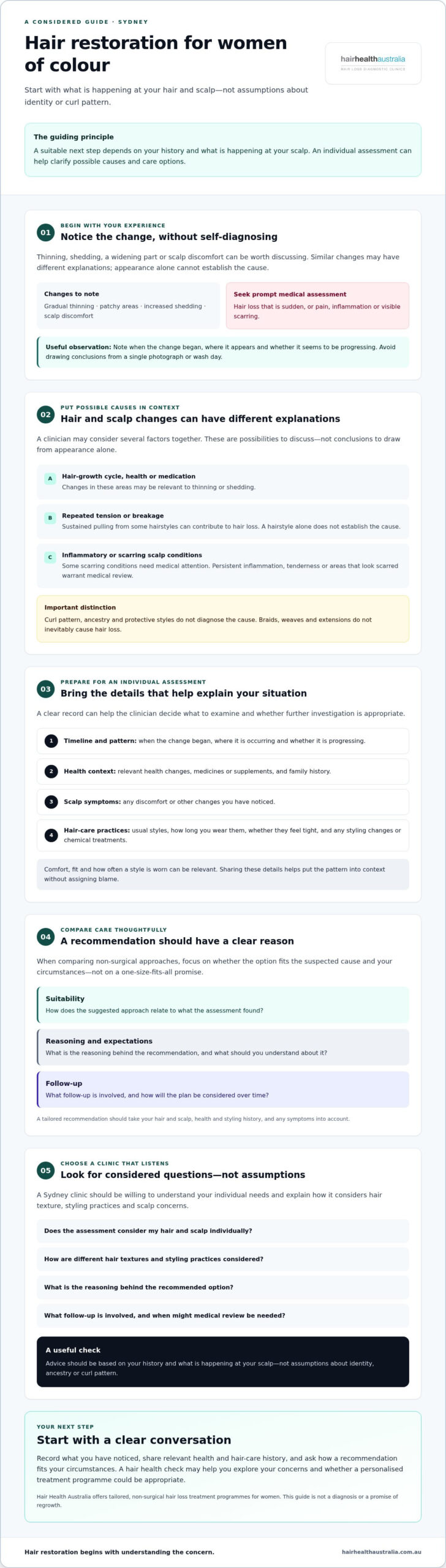
How to choose a Sydney hair restoration clinic that listens
A useful consultation should leave you better informed, not pressured to commit. When comparing Sydney providers for hair restoration for women of color Sydney, consider how carefully they listen, explain what they can and can’t establish, and tailor the discussion to your hair and scalp. Don’t assume a clinic has experience with your needs because it uses inclusive language. Ask directly about its experience with different curl patterns, styling practices and scalp presentations, and how that informs its approach.
Use this checklist when comparing Sydney providers:
- Assessment first: Ask how the provider will investigate possible causes before proposing a treatment plan.
- Relevant experience: Ask how they account for varied textures, regular styles and scalp symptoms, and whether they can explain their approach clearly.
- Transparent recommendations: Check that the provider discusses uncertainty, alternatives, limitations and potential risks, rather than presenting one option as right for everyone.
- Clear follow-up: Find out who provides care, what follow-up involves, how progress is reviewed and how to raise concerns.
- Referral pathways: Ask when medical review or referral to a GP or specialist may be appropriate.
What should you ask during a first consultation?
Be specific about what you want to understand. Ask what the provider will assess, how your hair-care practices and scalp symptoms will inform recommendations, and what remains uncertain. Clarify who is responsible for your care and what happens if your symptoms change or a plan isn’t suitable. You can take time to consider the information and seek another opinion.
How can you recognise realistic, respectful advice?
Good advice is individual. It shouldn’t assume the cause from your identity, curl pattern or hairstyle, and it should make space for your health history and preferences. Guaranteed regrowth claims, vague explanations or pressure to decide immediately are reasons to pause. A considered provider can explain the limits of what they know and discuss alternatives, including medical review where appropriate.
For more context, use a guide to choosing a non-surgical hair loss clinic in Sydney alongside these questions. Hair Health Australia offers personalised, non-surgical hair loss treatment programs for women, but suitability depends on individual circumstances. You can request a hair health check to explore a possible next step.
Your next steps for women’s hair restoration in Sydney
A useful next step doesn’t have to mean choosing a treatment straight away. Record what you’ve noticed, prepare questions, seek an appropriate assessment and take time to consider any options. For hair restoration for women of color Sydney, this approach keeps the focus on your circumstances rather than a quick promise or standard plan.
How to prepare for a hair health check
Before an appointment or health check, note when the changes began, which areas are affected and whether you’ve noticed discomfort or increased shedding. Include any recent health changes that may be relevant. A brief record can make it easier to explain what’s changed, even if you’re unsure of the cause.
Bring a list of current medicines and supplements, along with a description of your usual hair-care practices. You could also write down questions such as:
- What can this assessment establish, and what may remain uncertain?
- Could my health history, symptoms or hair practices affect the options discussed?
- What are the potential risks, limitations and follow-up commitments?
- Would medical review or referral be appropriate?
What to expect after discussing your options
Recommendations should follow an assessment. Depending on what’s found, further medical review may be appropriate. You may be offered options to consider or advised to seek another form of assessment before deciding. Either way, ask why an option may suit your situation and what it can’t address.
Suitability and progress vary. Before choosing, weigh potential benefits against limitations, risks and any ongoing commitments. You don’t need to proceed immediately if you want time to consider the information or seek another opinion. A clinical guide to hair loss treatment for women in Australia can also provide broader context as you compare approaches.
Hair Health Australia offers tailored, non-surgical hair loss treatment programs for women. Whether a program is appropriate depends on your circumstances, and it shouldn’t replace medical review when that’s needed. You can complete the hair health check to explore a possible next step.
Take your next step with confidence
The right path starts with understanding what may be causing the change, not choosing a treatment based on hair texture or broad claims. An individual assessment can help you ask informed questions, weigh non-surgical options realistically and decide whether medical review is needed.
As you compare hair restoration for women of color Sydney, look for a provider who listens to your history and hair-care practices, explains uncertainty and is clear about follow-up. Suitability and progress differ from person to person, so be cautious of guaranteed outcomes or pressure to commit.
Hair Health Australia offers women in Sydney tailored, non-surgical hair loss treatment programs focused on individual care. A program may be worth discussing after assessment, but it isn’t the right fit for everyone. To explore a possible next step, request a personalised hair health check.
With clear information and support suited to your circumstances, you can move forward at a pace that feels right for you.
Frequently Asked Questions
Can women of colour experience hair loss from tight hairstyles?
Yes, repeated tension from tight hairstyles can contribute to hair breakage or hair loss, but wearing braids, extensions or protective styles doesn’t automatically cause a problem. Notice whether a style feels painful or tight, or whether you see breakage around the hairline. Tell a clinician how often you wear the style and for how long. They can consider this alongside other possible causes rather than assuming styling is the sole explanation.
What causes hair thinning in women with curly or coily hair?
Curly or coily hair texture alone doesn’t explain thinning. Possible factors include repeated tension, inherited hair loss patterns, health changes, medicines and scalp conditions, but similar-looking changes can have different causes. A clinician can consider your symptoms, history and scalp rather than draw conclusions from texture or identity. Note when thinning began, where it appears and whether you’ve noticed shedding, breakage or scalp discomfort.
How do I choose a hair restoration clinic in Sydney?
Choose a Sydney provider who asks about your hair and health history before recommending care, and who explains uncertainty, alternatives, risks and follow-up clearly. Ask about experience with different curl patterns, styling practices and scalp presentations; don’t rely on marketing language alone. For hair restoration for women of color Sydney, look for an individual assessment rather than assumptions based on hair type, and pause if you feel pressured to decide immediately.
Is non-surgical hair restoration suitable for every woman?
No, non-surgical care isn’t suitable for every woman or every cause of hair loss. The right approach depends on individual assessment, symptoms and health circumstances. A tailored program may be worth discussing, but it shouldn’t be treated as a guaranteed fit or result. If hair loss is sudden, unexplained or accompanied by scalp symptoms, seek medical advice about whether further evaluation is needed before considering a treatment program.
Can a hair health check identify the cause of my hair loss?
A hair health check can be a starting point for exploring your concerns, but don’t assume it will establish the cause in every case. What can be assessed depends on the process and your circumstances, and some symptoms may require medical review or referral. Hair Health Australia offers a hair health check and personalised hair loss treatment programs for women. Ask what the check can establish and what next steps may be appropriate.
When should I see a doctor about hair loss or scalp symptoms?
Seek medical assessment for sudden or unexplained hair loss, or if you notice pain, inflammation or visible scarring on your scalp. These signs may need clinical attention rather than cosmetic management alone. It’s also sensible to arrange an assessment if thinning or shedding persists or progresses. Record when the change began and any symptoms you’ve noticed, then share this information with a GP or another appropriate health professional.
What should I ask a clinic before starting hair restoration treatment?
Ask what cause a recommendation is intended to address and what supports that assessment. Check who provides care, what risks and limitations apply, what alternatives are available, and how follow-up and progress reviews work. Ask whether your hair-care practices and scalp symptoms have been considered, and when medical referral may be needed. Take time to weigh the answers. Clear, individual explanations are more useful than broad promises of regrowth.