
Did you know that by the age of 49, more than 25% of Australian women are already affected by female pattern hair loss? It’s a confronting statistic that often leaves many feeling as though they’re losing a core part of their identity. If you’ve started noticing more strands in the drain or a widening part line, you’re likely looking for definitive answers on how to prevent female hair loss before the thinning becomes visible to the world. We understand how exhausting it is to waste money on glorified vitamins or feel overwhelmed by the sheer volume of conflicting advice found online.
You deserve a path forward that’s grounded in clinical science rather than marketing hype. This guide promises to equip you with the evidence-based strategies and diagnostic tools necessary to identify the root cause of your shedding with precision. We’ll explore the latest 2026 medical standards, from understanding the role of prescription-based treatments to the rise of regenerative therapies. By the end of this article, you’ll have a clear, systematic plan to stop active shedding and restore your hair density without the need for invasive surgical procedures.
Key Takeaways
- Learn to distinguish between healthy daily turnover and the clinical indicators of follicle miniaturisation using the 100-hair threshold.
- Discover the biological triggers behind thinning and the most effective clinical methods on how to prevent female hair loss through every hormonal milestone.
- Understand why professional scalp hygiene and specific nutrient foundations are the primary requirements for sustained follicle function.
- Explore why clinical-grade topicals provide a more reliable path to extending the growth phase compared to standard over-the-counter supplements.
- See how advanced microscopic analysis at 200x magnification identifies changes in hair diameter before they are visible in the mirror.
Understanding the Threshold: When Does Shedding Become Hair Loss?
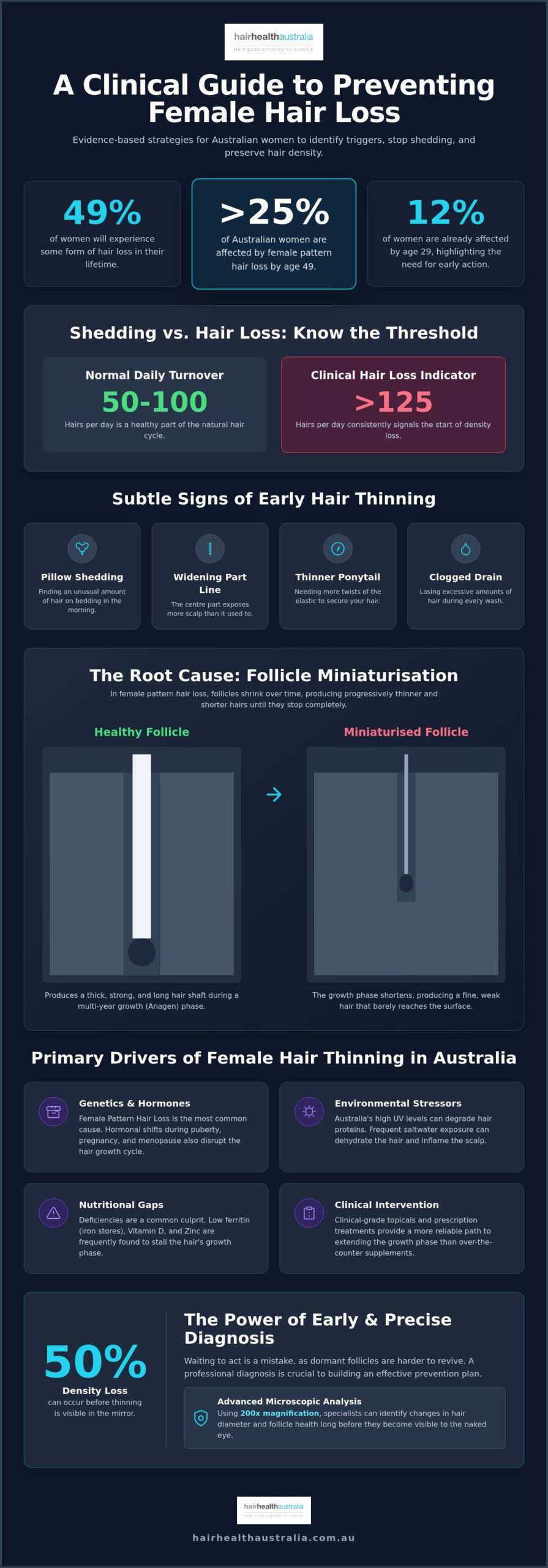
Distinguishing between normal turnover and clinical hair loss is the first step in any effective intervention. Every person has a biological baseline for healthy hair turnover. On average, you can expect to lose between 50 and 100 hairs daily. This is a natural part of the cycle. However, when you consistently lose more than 125 hairs per day, you’ve crossed a clinical threshold. This isn’t just a heavy shedding phase; it’s the beginning of density loss that requires a specific strategy on how to prevent female hair loss before the scalp becomes visible.
Early detection is notoriously difficult because you can lose up to 50% of your hair density before the change is obvious in the mirror. You should look for these specific indicators:
- “Pillow shedding” or finding an unusual amount of hair on your bedding in the morning.
- A widening part line that exposes more of the scalp than usual.
- A ponytail that feels significantly thinner when you wrap an elastic around it.
- Excessive hair clogging the shower drain after every wash.
Catching these subtle changes early is the most critical factor in successful hair preservation. Once a follicle has completely ceased production, the options for restoration become far more limited.
The Hair Growth Cycle: Anagen, Catagen, and Telogen
Hair grows in three distinct phases that dictate your overall density. Anagen is the active growing stage, which usually lasts several years. Catagen is a short transition phase where the follicle shrinks. Finally, Telogen is the resting phase where the hair eventually falls out so a new one can grow. In cases of Pattern hair loss, the Anagen phase becomes progressively shorter with every cycle. This means the hair doesn’t have enough time to reach its full length or diameter.
Follicle miniaturisation is the primary driver of long-term density loss.
When to Seek a Professional Hair Health Check
It’s easy to dismiss thinning as “seasonal” or “stress-related.” While temporary shedding from illness or lifestyle changes happens, chronic loss is a different biological process entirely. The emotional impact of watching your hair thin can be profound, often affecting your sense of femininity and confidence. Waiting to see what happens is a mistake because lost follicles are far harder to revive than those currently thinning. Establishing a diagnostic baseline with a Hair Health Check allows you to understand exactly what is happening at the scalp level. This professional assessment provides the clinical data needed to build a customised plan on how to prevent female hair loss.
Identifying the Primary Drivers of Female Hair Thinning in Australia
Understanding the “why” behind thinning is the foundation of learning how to prevent female hair loss effectively. While many people associate hair loss primarily with men, statistics show that around 49% of women will experience some form of hair loss in their lifetime. In Australia, this often manifests as Female Pattern Hair Loss (Androgenetic Alopecia), which affects approximately 12% of women by age 29 and over 25% by age 49. This condition is driven by genetics and follicle miniaturisation, a process where the hair shaft becomes progressively thinner until the follicle stops producing hair altogether.
Hormonal milestones also play a significant role in density changes. Puberty, pregnancy, and menopause create physiological shifts that can disrupt the hair growth cycle. Beyond biology, the Australian environment introduces unique stressors. High UV levels can degrade hair proteins, while frequent saltwater exposure from a Sydney-active lifestyle can dehydrate the hair shaft and lead to scalp inflammation. Additionally, clinical assessments often reveal nutritional gaps in Australian patients. Low ferritin (iron stores), Vitamin D deficiency, and Zinc imbalances are common culprits that stall the growth phase and prevent follicles from reaching their full potential. While some cases are purely environmental, many require the precision of dermatologist-diagnosed hair loss protocols to identify underlying androgenetic factors accurately.
Telogen Effluvium: The Stress-Hair Loss Connection
Telogen Effluvium is a form of temporary shedding triggered by a specific shock to the system, such as high fever, surgery, or intense psychological stress. It’s characterised by a “three-month delay,” meaning your hair may begin to fall out months after the stressful event has passed. This delay often causes confusion and distress, as the original trigger has frequently been forgotten. You can find more detail on this in our guide to Telogen Effluvium: Temporary Thinning Explained.
Traction Alopecia and Styling Damage
For many Australian women, “active” styling can lead to Traction Alopecia. This occurs when constant tension from tight ponytails or buns damages the follicle, eventually leading to permanent hairline recession. It’s also vital to distinguish between chemical damage and thinning. While over-processing with colour can cause hair to break, it doesn’t usually affect the follicle’s ability to grow hair. To preserve your density, we recommend “hair-friendly” styling, such as loose braids and avoiding high-heat tools on a daily basis. If you’re unsure whether your thinning is caused by styling or biology, a professional Female Hair Loss Treatment consultation can provide the clarity you need to stop the progression.
Practical Prevention: Daily Habits to Preserve Hair Density
Consistency in your daily routine is often the most overlooked aspect of how to prevent female hair loss. While clinical interventions are essential for active thinning, your everyday habits provide the environment in which your follicles must function. A proactive approach focuses on minimising external stressors while maximising internal support. This involves more than just buying the right products; it requires a systematic understanding of what your scalp needs to sustain healthy hair turnover.
One of the most effective ways of preventing female hair loss is maintaining rigorous scalp hygiene. A clean scalp is the primary requirement for healthy follicle function. Sebum, sweat, and environmental pollutants can accumulate, leading to inflammation that restricts the growth phase. Similarly, sun protection for the scalp is vital in the harsh Australian climate. UV-induced oxidative stress can damage the hair roots, causing premature shedding. Regarding “hair growth” shampoos, it’s vital to have realistic expectations. These products are excellent for improving the scalp environment and hair shaft quality, but they cannot address systemic or genetic thinning on their own.
Nutritional Support for Follicle Strength
Your follicles are some of the most metabolically active cells in your body. This means they are highly sensitive to fluctuations in blood sugar and insulin resistance. High-sugar diets can trigger inflammatory responses that disrupt the growth cycle. To support keratin production, focus on Australian superfoods like macadamia nuts for healthy fats and barramundi for high-quality protein. While biotin is often marketed as a miracle cure, you should consult a specialist before starting high-dose supplements. Excessive biotin can interfere with clinical blood tests and may not be necessary if your diet is already balanced.
To further explore the connection between your internal system and hair health, you can check out Synergy Health & Wellness for more information on hormone and metabolic optimisation.
Mechanical Prevention: Brushing and Washing Best Practices
The way you handle your hair physically can either preserve or deplete your density. Selecting the right tools is a simple yet effective preventative measure. Wide-tooth combs are essential for thinning hair as they reduce the tension placed on the roots during detangling. When cleansing, use the “Gentle Wash” technique by massaging the scalp with your fingertips rather than scrubbing with your nails. This reduces friction and minimises the risk of pulling out hairs that are in the resting phase.
Vigorous towel-drying is a leading cause of mid-shaft breakage because the intense friction compromises the hair’s protective cuticle layer while the strands are in their most vulnerable, wet state.
Clinical Prevention Strategies: Moving Beyond Over-the-Counter Fixes
Many women begin their journey by purchasing high-street vitamins or generic supplements. While these products might address minor nutritional gaps, they rarely provide a comprehensive solution for how to prevent female hair loss driven by genetic or hormonal factors. Clinical prevention requires a shift from “one-size-fits-all” products to a personalised protocol. This systematic approach combines follicle stimulation with advanced medical standards to extend the hair’s growth phase before miniaturisation becomes permanent.
Non-surgical regrowth programmes are designed to create a multi-faceted environment for hair preservation. This often involves combining low-level light therapy with clinical-grade stimulants. Light therapy works at a cellular level to increase blood flow to the scalp, while follicle stimulation ensures that the hair roots receive the necessary signals to remain in the Anagen (growth) phase. By addressing the biological triggers of thinning directly, these strategies offer a level of precision that over-the-counter fixes simply cannot match.
Evidence-Based Topical Treatments
Topical stimulants, such as Minoxidil, remain a cornerstone of clinical intervention. In Australia, specific formulations are used to target the unique patterns of female thinning. The success of these treatments relies entirely on consistency. Skipping applications disrupts the steady supply of growth signals to the follicle, which can stall progress or lead to renewed shedding. For a deeper look at the current medical standards, refer to our Best Hair Regrowth Treatment Australia 2026 reference guide.
The Clinical Advantage vs. Hair Transplant Surgery
Non-surgical restoration should always be your first line of defence. Surgical options like Follicular Unit Extraction (FUE) are invasive and carry a high price tag, often ranging from $11,000 to $30,000. These procedures are generally considered cosmetic and are not covered by Medicare or private health insurance. In contrast, clinical programmes are non-invasive, require no downtime, and focus on preserving your existing hair density. As a leader in non-invasive Sydney hair restoration, we prioritise evidence-based medical therapies that work with your natural growth cycles. If you’re ready to move beyond guesswork, a professional Female Hair Loss Treatment plan offers a structured path to maintaining your identity and hair health.
The Role of Microscopic Analysis in Early Prevention
Visual inspection is fundamentally reactive. By the time thinning is visible to the naked eye, you have likely already lost approximately 50% of your hair density in that area. This lag between biological onset and visual confirmation is why many women feel they are losing the battle. To understand how to prevent female hair loss effectively, we must look beneath the surface. Microscopic analysis allows us to identify follicle miniaturisation in its earliest stages, long before the scalp becomes visible in the bathroom mirror.
The science of microscopic scanning involves using specialised digital imaging at 200x magnification. This level of detail allows us to measure the precise diameter of individual hair shafts and assess the overall health of the scalp environment. We can distinguish between terminal hairs, which are healthy and thick, and vellus-like hairs, which have begun the miniaturisation process. This diagnostic clarity replaces guesswork with data, providing a baseline that allows us to track your progress with mathematical precision. When you can see the visual evidence of new growth and increasing shaft diameter, the anxiety of uncertainty begins to fade.
What to Expect During Your Sydney Hair Health Check
Your journey starts with a comprehensive diagnostic process at our Sydney clinic. We begin by reviewing your medical history and lifestyle factors before performing a detailed digital scan of your scalp. This information is then used to create a bespoke Female Hair Regrowth Treatment plan tailored to your specific needs. This roadmap transitions you from a state of constant worrying to one of informed action, giving you a clear path toward preserving your density.
Your Next Steps: Securing Your Hair’s Future
We recommend that women over the age of 30 incorporate an annual hair health audit into their regular wellness routine. Just as you would visit a dentist for a check-up, a regular clinical assessment ensures that any subtle changes in hair diameter are caught and addressed immediately. Female hair loss is a manageable condition, provided you have the right clinical partner and access to modern diagnostic tools. You don’t have to wait for the thinning to become obvious to take control of your hair’s future. Book your microscopic hair analysis at our Sydney clinic today.
Secure Your Hair’s Future with Clinical Precision
Understanding how to prevent female hair loss requires a shift from reactive habits to proactive clinical data. We’ve established that waiting for visible thinning often means you’ve already lost up to 50% of your hair density in the affected areas. By prioritising microscopic analysis and evidence-based topical treatments over generic high-street vitamins, you can effectively extend the growth phase of your follicles and maintain your natural volume before permanent miniaturisation occurs.
As non-surgical regrowth specialists, we provide the diagnostic clarity needed to stop active shedding and restore density. Our Australian-owned and operated clinic utilises clinically-backed microscopic analysis to create a protocol tailored specifically to your unique scalp health. You don’t have to navigate this journey alone or feel frustrated by conflicting online advice. Book Your Comprehensive Hair Health Check in Sydney today to establish your diagnostic baseline. Your hair health is manageable, and with the right clinical partner, you can move forward with absolute confidence and clarity.
Beyond hair restoration, maintaining your overall aesthetic often requires professional attention to your finest garments; you can explore High fashion, bridal, evening wear specialist cleaning to ensure your signature pieces remain in pristine condition.
Frequently Asked Questions
Can female hair loss be reversed without surgery?
Yes, many forms of thinning can be effectively managed or reversed through non-surgical clinical therapies. Treatments such as low-level light therapy and clinical-grade stimulants focus on reactivating dormant follicles and extending the growth phase. While surgery is an option for advanced cases, non-invasive protocols are the primary recommendation for those looking at how to prevent female hair loss before it becomes permanent.
What is the most common cause of sudden hair fall in women?
Telogen Effluvium is the most frequent cause of sudden, diffuse shedding across the scalp. This condition is usually triggered by a significant physiological shock, such as high fever, rapid weight loss, or childbirth. You’ll typically notice the increased shedding approximately three months after the initial event. While alarming, this type of loss is often temporary if the underlying trigger is addressed.
Does stress really cause permanent hair loss?
Stress typically causes temporary shedding rather than permanent follicle death. When your body undergoes intense psychological or physical stress, it can prematurely push hairs into the resting phase. While this results in noticeable shedding, the hair usually regrows once the stressor is managed. However, chronic stress can sometimes accelerate the progression of underlying genetic thinning if left unchecked for long periods.
How often should I wash my hair if I am worried about thinning?
You should continue to wash your hair regularly, typically two to three times a week, to maintain a healthy scalp environment. Many women avoid washing because they see hair in the drain, but these strands have already detached from the follicle. A clean scalp prevents the buildup of sebum and pollutants that can lead to inflammation and hinder healthy hair production.
Are hair growth vitamins actually effective for prevention?
Vitamins are only effective if your thinning is directly caused by a specific nutritional deficiency, such as low iron or zinc. For the majority of women, high-street supplements don’t address the hormonal or genetic drivers of miniaturisation. Clinical topicals and professional scalp treatments are generally a more reliable strategy for how to prevent female hair loss compared to generic over-the-counter vitamins.
What is the difference between hair shedding and hair thinning?
Shedding refers to the daily loss of hair from the root, whereas thinning involves the gradual reduction in the diameter of the hair shaft. Normal shedding consists of 50 to 100 hairs per day. Thinning, or miniaturisation, is a more concerning clinical sign where the hair becomes progressively finer and shorter over several growth cycles until the follicle eventually stops producing hair.
When should I see a specialist versus a general practitioner?
You should see a GP for initial blood tests to rule out systemic issues like thyroid dysfunction or iron deficiency. However, a hair loss specialist is required for a detailed microscopic scalp analysis. Specialists use advanced imaging to detect miniaturisation that a general physical exam cannot see, allowing for a much earlier and more accurate diagnosis of pattern-based loss.
Is female pattern baldness hereditary?
Yes, Female Pattern Hair Loss is a hereditary condition that can be inherited from either the maternal or paternal side of your family. It affects over 25% of Australian women by the age of 49. Because it’s a progressive genetic condition, early clinical intervention is the most effective way to preserve your existing density and prevent the condition from advancing.