How to Prevent Female Hair Loss: A Clinical Guide for 2026

Did you know that by the age of 49, more than 25% of Australian women are already affected by female pattern hair loss? It’s a confronting statistic that often leaves many feeling as though they’re losing a core part of their identity. If you’ve started noticing more strands in the drain or a widening part line, you’re likely looking for definitive answers on how to prevent female hair loss before the thinning becomes visible to the world. We understand how exhausting it is to waste money on glorified vitamins or feel overwhelmed by the sheer volume of conflicting advice found online.

You deserve a path forward that’s grounded in clinical science rather than marketing hype. This guide promises to equip you with the evidence-based strategies and diagnostic tools necessary to identify the root cause of your shedding with precision. We’ll explore the latest 2026 medical standards, from understanding the role of prescription-based treatments to the rise of regenerative therapies. By the end of this article, you’ll have a clear, systematic plan to stop active shedding and restore your hair density without the need for invasive surgical procedures.

Key Takeaways

  • Learn to distinguish between healthy daily turnover and the clinical indicators of follicle miniaturisation using the 100-hair threshold.
  • Discover the biological triggers behind thinning and the most effective clinical methods on how to prevent female hair loss through every hormonal milestone.
  • Understand why professional scalp hygiene and specific nutrient foundations are the primary requirements for sustained follicle function.
  • Explore why clinical-grade topicals provide a more reliable path to extending the growth phase compared to standard over-the-counter supplements.
  • See how advanced microscopic analysis at 200x magnification identifies changes in hair diameter before they are visible in the mirror.

Understanding the Threshold: When Does Shedding Become Hair Loss?

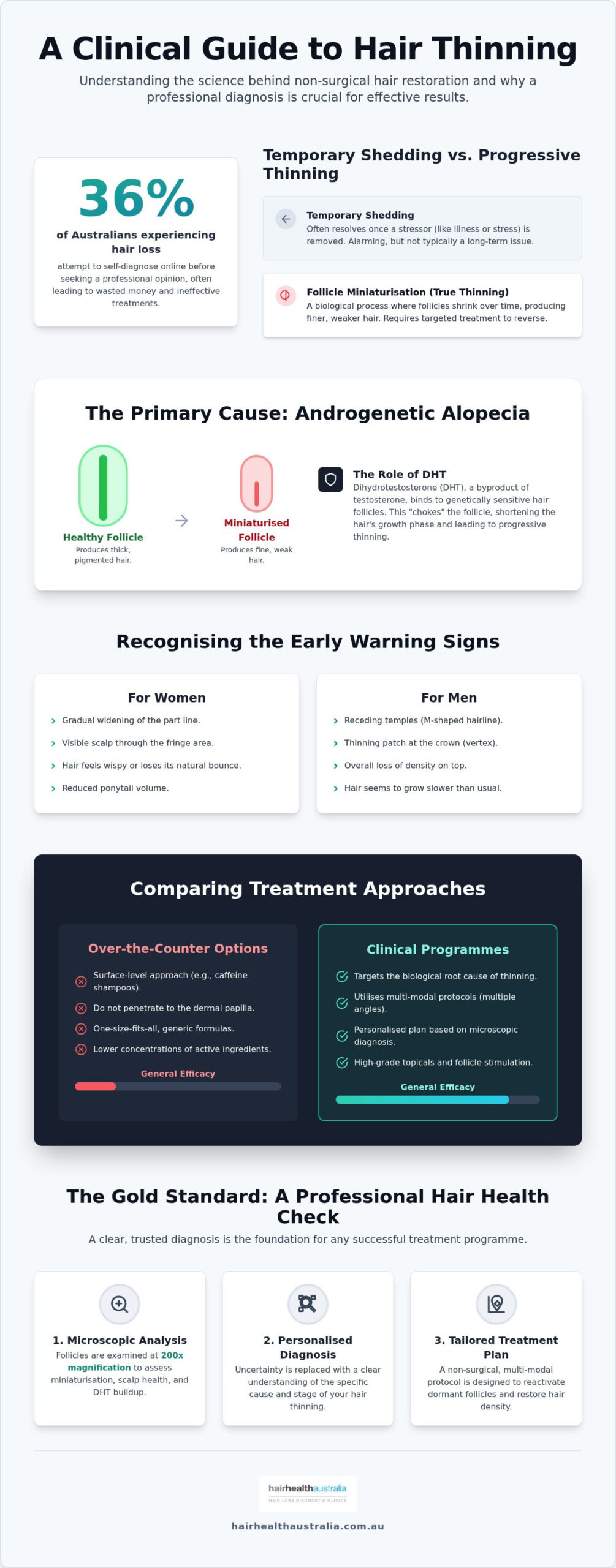
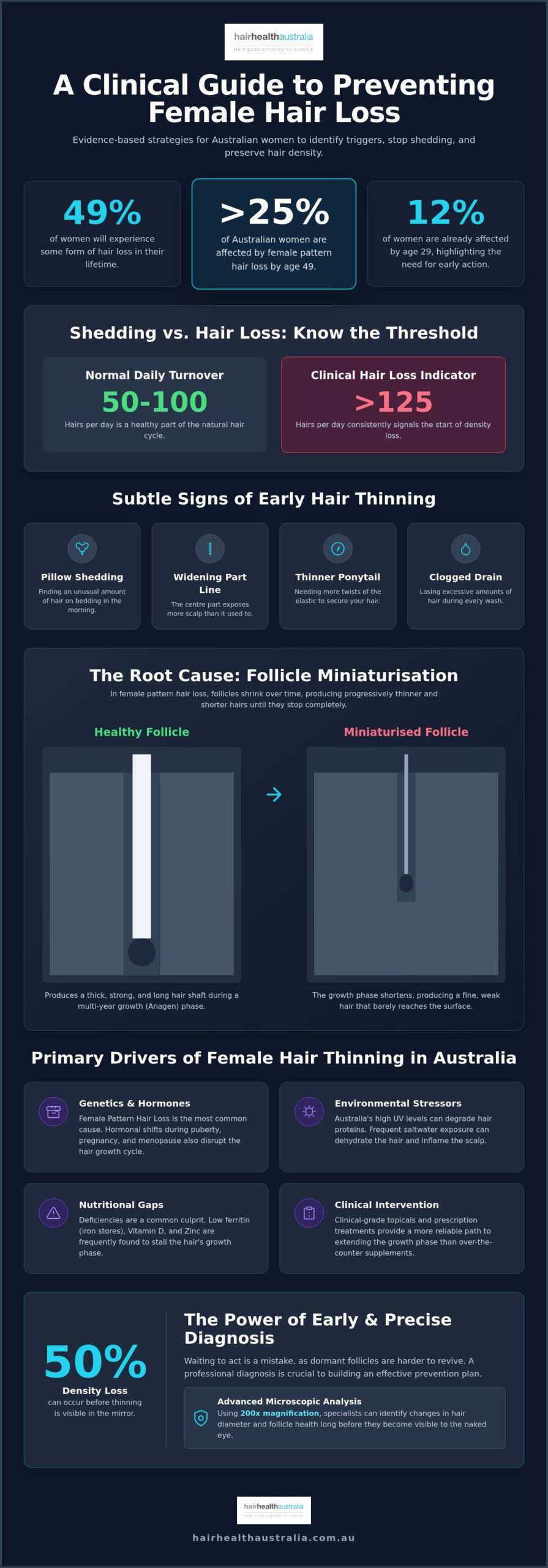
Distinguishing between normal turnover and clinical hair loss is the first step in any effective intervention. Every person has a biological baseline for healthy hair turnover. On average, you can expect to lose between 50 and 100 hairs daily. This is a natural part of the cycle. However, when you consistently lose more than 125 hairs per day, you’ve crossed a clinical threshold. This isn’t just a heavy shedding phase; it’s the beginning of density loss that requires a specific strategy on how to prevent female hair loss before the scalp becomes visible.

Early detection is notoriously difficult because you can lose up to 50% of your hair density before the change is obvious in the mirror. You should look for these specific indicators:

  • “Pillow shedding” or finding an unusual amount of hair on your bedding in the morning.
  • A widening part line that exposes more of the scalp than usual.
  • A ponytail that feels significantly thinner when you wrap an elastic around it.
  • Excessive hair clogging the shower drain after every wash.

Catching these subtle changes early is the most critical factor in successful hair preservation. Once a follicle has completely ceased production, the options for restoration become far more limited.

The Hair Growth Cycle: Anagen, Catagen, and Telogen

Hair grows in three distinct phases that dictate your overall density. Anagen is the active growing stage, which usually lasts several years. Catagen is a short transition phase where the follicle shrinks. Finally, Telogen is the resting phase where the hair eventually falls out so a new one can grow. In cases of Pattern hair loss, the Anagen phase becomes progressively shorter with every cycle. This means the hair doesn’t have enough time to reach its full length or diameter.

Follicle miniaturisation is the primary driver of long-term density loss.

When to Seek a Professional Hair Health Check

It’s easy to dismiss thinning as “seasonal” or “stress-related.” While temporary shedding from illness or lifestyle changes happens, chronic loss is a different biological process entirely. The emotional impact of watching your hair thin can be profound, often affecting your sense of femininity and confidence. Waiting to see what happens is a mistake because lost follicles are far harder to revive than those currently thinning. Establishing a diagnostic baseline with a Hair Health Check allows you to understand exactly what is happening at the scalp level. This professional assessment provides the clinical data needed to build a customised plan on how to prevent female hair loss.

Identifying the Primary Drivers of Female Hair Thinning in Australia

Understanding the “why” behind thinning is the foundation of learning how to prevent female hair loss effectively. While many people associate hair loss primarily with men, statistics show that around 49% of women will experience some form of hair loss in their lifetime. In Australia, this often manifests as Female Pattern Hair Loss (Androgenetic Alopecia), which affects approximately 12% of women by age 29 and over 25% by age 49. This condition is driven by genetics and follicle miniaturisation, a process where the hair shaft becomes progressively thinner until the follicle stops producing hair altogether.

Hormonal milestones also play a significant role in density changes. Puberty, pregnancy, and menopause create physiological shifts that can disrupt the hair growth cycle. Beyond biology, the Australian environment introduces unique stressors. High UV levels can degrade hair proteins, while frequent saltwater exposure from a Sydney-active lifestyle can dehydrate the hair shaft and lead to scalp inflammation. Additionally, clinical assessments often reveal nutritional gaps in Australian patients. Low ferritin (iron stores), Vitamin D deficiency, and Zinc imbalances are common culprits that stall the growth phase and prevent follicles from reaching their full potential. While some cases are purely environmental, many require the precision of dermatologist-diagnosed hair loss protocols to identify underlying androgenetic factors accurately.

Telogen Effluvium: The Stress-Hair Loss Connection

Telogen Effluvium is a form of temporary shedding triggered by a specific shock to the system, such as high fever, surgery, or intense psychological stress. It’s characterised by a “three-month delay,” meaning your hair may begin to fall out months after the stressful event has passed. This delay often causes confusion and distress, as the original trigger has frequently been forgotten. You can find more detail on this in our guide to Telogen Effluvium: Temporary Thinning Explained.

Traction Alopecia and Styling Damage

For many Australian women, “active” styling can lead to Traction Alopecia. This occurs when constant tension from tight ponytails or buns damages the follicle, eventually leading to permanent hairline recession. It’s also vital to distinguish between chemical damage and thinning. While over-processing with colour can cause hair to break, it doesn’t usually affect the follicle’s ability to grow hair. To preserve your density, we recommend “hair-friendly” styling, such as loose braids and avoiding high-heat tools on a daily basis. If you’re unsure whether your thinning is caused by styling or biology, a professional Female Hair Loss Treatment consultation can provide the clarity you need to stop the progression.

Practical Prevention: Daily Habits to Preserve Hair Density

Consistency in your daily routine is often the most overlooked aspect of how to prevent female hair loss. While clinical interventions are essential for active thinning, your everyday habits provide the environment in which your follicles must function. A proactive approach focuses on minimising external stressors while maximising internal support. This involves more than just buying the right products; it requires a systematic understanding of what your scalp needs to sustain healthy hair turnover.

One of the most effective ways of preventing female hair loss is maintaining rigorous scalp hygiene. A clean scalp is the primary requirement for healthy follicle function. Sebum, sweat, and environmental pollutants can accumulate, leading to inflammation that restricts the growth phase. Similarly, sun protection for the scalp is vital in the harsh Australian climate. UV-induced oxidative stress can damage the hair roots, causing premature shedding. Regarding “hair growth” shampoos, it’s vital to have realistic expectations. These products are excellent for improving the scalp environment and hair shaft quality, but they cannot address systemic or genetic thinning on their own.

Nutritional Support for Follicle Strength

Your follicles are some of the most metabolically active cells in your body. This means they are highly sensitive to fluctuations in blood sugar and insulin resistance. High-sugar diets can trigger inflammatory responses that disrupt the growth cycle. To support keratin production, focus on Australian superfoods like macadamia nuts for healthy fats and barramundi for high-quality protein. While biotin is often marketed as a miracle cure, you should consult a specialist before starting high-dose supplements. Excessive biotin can interfere with clinical blood tests and may not be necessary if your diet is already balanced.

To further explore the connection between your internal system and hair health, you can check out Synergy Health & Wellness for more information on hormone and metabolic optimisation.

Mechanical Prevention: Brushing and Washing Best Practices

The way you handle your hair physically can either preserve or deplete your density. Selecting the right tools is a simple yet effective preventative measure. Wide-tooth combs are essential for thinning hair as they reduce the tension placed on the roots during detangling. When cleansing, use the “Gentle Wash” technique by massaging the scalp with your fingertips rather than scrubbing with your nails. This reduces friction and minimises the risk of pulling out hairs that are in the resting phase.

Vigorous towel-drying is a leading cause of mid-shaft breakage because the intense friction compromises the hair’s protective cuticle layer while the strands are in their most vulnerable, wet state.

How to Prevent Female Hair Loss: A Clinical Guide for 2026

Clinical Prevention Strategies: Moving Beyond Over-the-Counter Fixes

Many women begin their journey by purchasing high-street vitamins or generic supplements. While these products might address minor nutritional gaps, they rarely provide a comprehensive solution for how to prevent female hair loss driven by genetic or hormonal factors. Clinical prevention requires a shift from “one-size-fits-all” products to a personalised protocol. This systematic approach combines follicle stimulation with advanced medical standards to extend the hair’s growth phase before miniaturisation becomes permanent.

Non-surgical regrowth programmes are designed to create a multi-faceted environment for hair preservation. This often involves combining low-level light therapy with clinical-grade stimulants. Light therapy works at a cellular level to increase blood flow to the scalp, while follicle stimulation ensures that the hair roots receive the necessary signals to remain in the Anagen (growth) phase. By addressing the biological triggers of thinning directly, these strategies offer a level of precision that over-the-counter fixes simply cannot match.

Evidence-Based Topical Treatments

Topical stimulants, such as Minoxidil, remain a cornerstone of clinical intervention. In Australia, specific formulations are used to target the unique patterns of female thinning. The success of these treatments relies entirely on consistency. Skipping applications disrupts the steady supply of growth signals to the follicle, which can stall progress or lead to renewed shedding. For a deeper look at the current medical standards, refer to our Best Hair Regrowth Treatment Australia 2026 reference guide.

The Clinical Advantage vs. Hair Transplant Surgery

Non-surgical restoration should always be your first line of defence. Surgical options like Follicular Unit Extraction (FUE) are invasive and carry a high price tag, often ranging from $11,000 to $30,000. These procedures are generally considered cosmetic and are not covered by Medicare or private health insurance. In contrast, clinical programmes are non-invasive, require no downtime, and focus on preserving your existing hair density. As a leader in non-invasive Sydney hair restoration, we prioritise evidence-based medical therapies that work with your natural growth cycles. If you’re ready to move beyond guesswork, a professional Female Hair Loss Treatment plan offers a structured path to maintaining your identity and hair health.

The Role of Microscopic Analysis in Early Prevention

Visual inspection is fundamentally reactive. By the time thinning is visible to the naked eye, you have likely already lost approximately 50% of your hair density in that area. This lag between biological onset and visual confirmation is why many women feel they are losing the battle. To understand how to prevent female hair loss effectively, we must look beneath the surface. Microscopic analysis allows us to identify follicle miniaturisation in its earliest stages, long before the scalp becomes visible in the bathroom mirror.

The science of microscopic scanning involves using specialised digital imaging at 200x magnification. This level of detail allows us to measure the precise diameter of individual hair shafts and assess the overall health of the scalp environment. We can distinguish between terminal hairs, which are healthy and thick, and vellus-like hairs, which have begun the miniaturisation process. This diagnostic clarity replaces guesswork with data, providing a baseline that allows us to track your progress with mathematical precision. When you can see the visual evidence of new growth and increasing shaft diameter, the anxiety of uncertainty begins to fade.

What to Expect During Your Sydney Hair Health Check

Your journey starts with a comprehensive diagnostic process at our Sydney clinic. We begin by reviewing your medical history and lifestyle factors before performing a detailed digital scan of your scalp. This information is then used to create a bespoke Female Hair Regrowth Treatment plan tailored to your specific needs. This roadmap transitions you from a state of constant worrying to one of informed action, giving you a clear path toward preserving your density.

Your Next Steps: Securing Your Hair’s Future

We recommend that women over the age of 30 incorporate an annual hair health audit into their regular wellness routine. Just as you would visit a dentist for a check-up, a regular clinical assessment ensures that any subtle changes in hair diameter are caught and addressed immediately. Female hair loss is a manageable condition, provided you have the right clinical partner and access to modern diagnostic tools. You don’t have to wait for the thinning to become obvious to take control of your hair’s future. Book your microscopic hair analysis at our Sydney clinic today.

Secure Your Hair’s Future with Clinical Precision

Understanding how to prevent female hair loss requires a shift from reactive habits to proactive clinical data. We’ve established that waiting for visible thinning often means you’ve already lost up to 50% of your hair density in the affected areas. By prioritising microscopic analysis and evidence-based topical treatments over generic high-street vitamins, you can effectively extend the growth phase of your follicles and maintain your natural volume before permanent miniaturisation occurs.

As non-surgical regrowth specialists, we provide the diagnostic clarity needed to stop active shedding and restore density. Our Australian-owned and operated clinic utilises clinically-backed microscopic analysis to create a protocol tailored specifically to your unique scalp health. You don’t have to navigate this journey alone or feel frustrated by conflicting online advice. Book Your Comprehensive Hair Health Check in Sydney today to establish your diagnostic baseline. Your hair health is manageable, and with the right clinical partner, you can move forward with absolute confidence and clarity.

Beyond hair restoration, maintaining your overall aesthetic often requires professional attention to your finest garments; you can explore High fashion, bridal, evening wear specialist cleaning to ensure your signature pieces remain in pristine condition.

Frequently Asked Questions

Can female hair loss be reversed without surgery?

Yes, many forms of thinning can be effectively managed or reversed through non-surgical clinical therapies. Treatments such as low-level light therapy and clinical-grade stimulants focus on reactivating dormant follicles and extending the growth phase. While surgery is an option for advanced cases, non-invasive protocols are the primary recommendation for those looking at how to prevent female hair loss before it becomes permanent.

What is the most common cause of sudden hair fall in women?

Telogen Effluvium is the most frequent cause of sudden, diffuse shedding across the scalp. This condition is usually triggered by a significant physiological shock, such as high fever, rapid weight loss, or childbirth. You’ll typically notice the increased shedding approximately three months after the initial event. While alarming, this type of loss is often temporary if the underlying trigger is addressed.

Does stress really cause permanent hair loss?

Stress typically causes temporary shedding rather than permanent follicle death. When your body undergoes intense psychological or physical stress, it can prematurely push hairs into the resting phase. While this results in noticeable shedding, the hair usually regrows once the stressor is managed. However, chronic stress can sometimes accelerate the progression of underlying genetic thinning if left unchecked for long periods.

How often should I wash my hair if I am worried about thinning?

You should continue to wash your hair regularly, typically two to three times a week, to maintain a healthy scalp environment. Many women avoid washing because they see hair in the drain, but these strands have already detached from the follicle. A clean scalp prevents the buildup of sebum and pollutants that can lead to inflammation and hinder healthy hair production.

Are hair growth vitamins actually effective for prevention?

Vitamins are only effective if your thinning is directly caused by a specific nutritional deficiency, such as low iron or zinc. For the majority of women, high-street supplements don’t address the hormonal or genetic drivers of miniaturisation. Clinical topicals and professional scalp treatments are generally a more reliable strategy for how to prevent female hair loss compared to generic over-the-counter vitamins.

What is the difference between hair shedding and hair thinning?

Shedding refers to the daily loss of hair from the root, whereas thinning involves the gradual reduction in the diameter of the hair shaft. Normal shedding consists of 50 to 100 hairs per day. Thinning, or miniaturisation, is a more concerning clinical sign where the hair becomes progressively finer and shorter over several growth cycles until the follicle eventually stops producing hair.

When should I see a specialist versus a general practitioner?

You should see a GP for initial blood tests to rule out systemic issues like thyroid dysfunction or iron deficiency. However, a hair loss specialist is required for a detailed microscopic scalp analysis. Specialists use advanced imaging to detect miniaturisation that a general physical exam cannot see, allowing for a much earlier and more accurate diagnosis of pattern-based loss.

Is female pattern baldness hereditary?

Yes, Female Pattern Hair Loss is a hereditary condition that can be inherited from either the maternal or paternal side of your family. It affects over 25% of Australian women by the age of 49. Because it’s a progressive genetic condition, early clinical intervention is the most effective way to preserve your existing density and prevent the condition from advancing.

Early Signs of Alopecia in Women: A Clinical Guide to Detection and Recovery

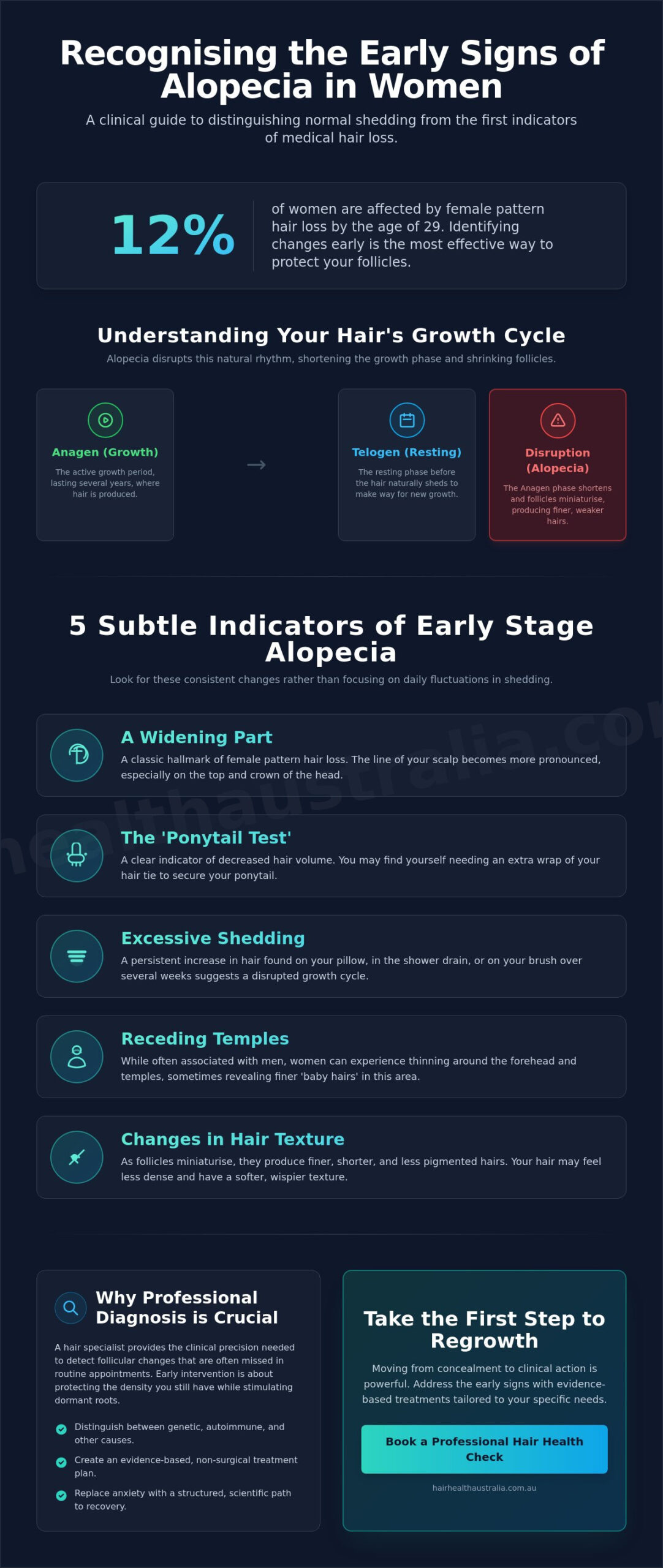
Did you know that approximately 12% of women are already affected by female pattern hair loss by the age of 29? It’s a confronting figure, particularly when you’re the one noticing more hair in the shower drain or feeling frustrated by generic vitamins that don’t deliver results. You’re likely looking for clinical clarity on whether your experience is just a temporary phase or the early signs of alopecia in women.

We understand that this uncertainty often leads to significant anxiety, but identifying these changes early is the most effective way to protect your follicles. In this guide, we’ll help you distinguish between normal shedding and medical hair loss through a scientific lens. We’ll explore the specific physical markers to look for and the professional diagnostic steps required to secure a clear path toward recovery and regrowth.

Key Takeaways

  • Understand that alopecia is a broad clinical term for hair loss rather than a single condition, requiring a nuanced approach to diagnosis and care.
  • Learn to identify the early signs of alopecia in women, such as increased scalp visibility along the part or a reduction in hair volume when using a hair tie.
  • Distinguish between genetic thinning and autoimmune-related conditions to help you and your specialist determine the most effective recovery strategy.
  • Discover why professional clinical assessments provide the precision needed to detect follicular changes that are often missed during routine appointments.
  • Explore evidence-based, non-surgical treatments that focus on re-engaging the hair’s natural growth phase to encourage sustainable regrowth.

What is Alopecia? Defining Female Hair Loss in a Clinical Context

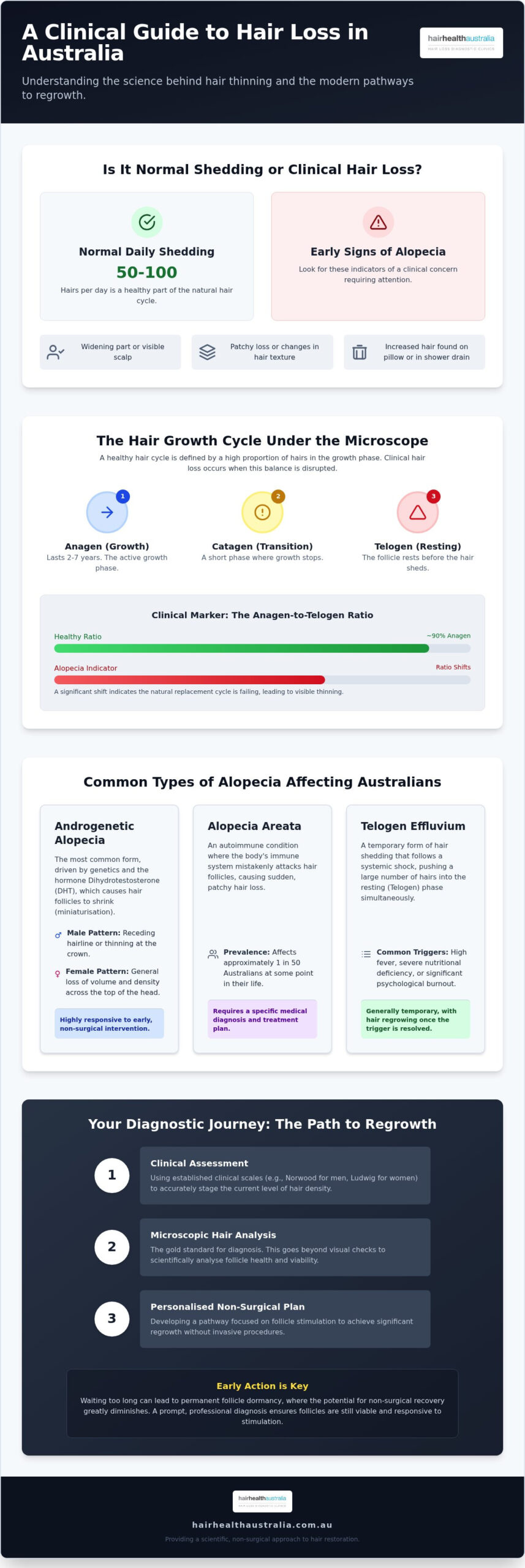
Alopecia is often misunderstood as a singular, frightening diagnosis. In reality, hair loss (alopecia) is simply the umbrella medical term used to describe any form of hair shedding or thinning. It isn’t a single disease but a clinical category that includes everything from temporary shedding due to iron deficiencies to permanent genetic patterns. While men typically experience receding hairlines or distinct bald patches, women often face a more diffuse thinning across the entire scalp. This subtle progression makes identifying the early signs of alopecia in women more challenging, as it doesn’t always result in immediate, obvious bare spots.

Our hair operates on a precise biological rhythm. The Anagen phase is the active growth period, which can last several years. This is followed by the brief Catagen transition and the Telogen resting phase, where the hair eventually sheds to make room for new growth. When alopecia begins, this cycle is disrupted. The Anagen phase shortens, and follicles undergo a process called miniaturisation. They produce finer, shorter hairs until they eventually stop producing altogether. Catching these changes while the follicles are still active is the most important factor in achieving successful regrowth through non-surgical protocols.

Normal Shedding vs. Clinical Thinning

Most people lose between 50 and 100 hairs a day as part of a healthy cycle. However, in Australia, factors like harsh UV exposure and varying water mineral content in our major cities can sometimes make it difficult to tell if you’re experiencing seasonal shedding or something more permanent. It’s vital to distinguish between hair breakage, which is caused by external damage like heat styling, and true follicle miniaturisation. If you notice your ponytail feels thinner or your scalp is becoming more visible in bright light, it’s time for a professional hair health check to assess the state of your follicles. Early intervention is about protecting the density you still have while stimulating dormant roots.

The Emotional Impact of Early Hair Loss

The psychological burden of thinning hair is significant and deserves clinical validation. Many women attempt to hide the problem with styling changes or expensive over-the-counter supplements, but this often delays necessary intervention. Stress itself can become a physiological trigger, potentially leading to conditions like Telogen Effluvium, which accelerates the shedding process. Moving from a mindset of concealment to one of clinical action is a powerful step. By addressing the early signs of alopecia in women with evidence-based treatments, you can replace the anxiety of the unknown with a structured, scientific plan for recovery. Seeking a specialist’s advice early ensures that your treatment is tailored to your specific type of hair loss rather than a one-size-fits-all approach.

5 Subtle Indicators: Identifying the Early Signs of Alopecia in Women

Identifying the early signs of alopecia in women requires a shift from casual observation to a more methodical assessment of your hair’s daily behaviour. Unlike the rapid loss seen in some medical treatments, clinical alopecia usually progresses through a series of subtle, almost imperceptible changes. By the time many women seek professional help, they have already lost a noticeable percentage of their hair density. Recognising these indicators early is the most effective way to preserve your existing follicles and maintain your natural volume.

  • The Widening Part: When you style your hair, you might notice that the line of scalp visible at your part is becoming more pronounced. This is a classic hallmark of female pattern baldness, where thinning occurs primarily on the top and crown of the scalp.
  • The ‘Ponytail Test’: For many women, the first real warning sign isn’t what they see, but what they feel. If you find yourself needing to wrap your hair tie around an extra time to secure your ponytail, it’s a clear indicator of decreased hair volume.
  • Excessive Shedding: Finding more hair than usual on your pillow or a significant increase in the amount of hair clogging the shower drain can be distressing. While some shedding is normal, a persistent increase over several weeks suggests a disruption in your growth cycle.
  • Receding Temples: While often associated with men, women can also experience thinning around the forehead and temples. You may notice “baby hairs” that never seem to grow longer, which often indicates follicle miniaturisation.
  • Texture Changes: Pay attention to how your hair responds to styling. If your hair feels limp, wispy, or lacks its usual “bounce” even after using your regular products, the underlying structure of the hair shafts may be weakening.

Scalp Health and Sensitivity

Your scalp’s physical condition often provides vital clues. Some women report a “tingling” or tender sensation, known as trichodynia, which can precede periods of active shedding. Persistent redness, inflammation, or an unusually oily scalp can also signal that the follicular environment is compromised. Monitoring these sensations can help you decide when to book a professional hair health check to rule out more complex conditions before they progress.

The ‘Christmas Tree’ Pattern

In the clinical world, we often refer to the “Christmas Tree” pattern of thinning. This describes a widening of the part that is most narrow at the back of the head and widest toward the front hairline. You can monitor this at home using a two-mirror check to view your vertex density from different angles. It’s particularly helpful to do this under bright, natural light. The harsh Australian sun often reveals thinning that might be masked by the softer, artificial lighting in your bathroom. Recognising these early signs of alopecia in women allows for targeted, non-surgical intervention while your follicles are still capable of producing healthy hair.

Differentiating the Spectrum: Common Types of Alopecia Affecting Women

Determining the specific cause of your hair loss is the first step toward effective clinical recovery. While the early signs of alopecia in women often appear similar on the surface, the underlying biological triggers vary significantly. A professional diagnosis ensures that your treatment plan addresses the root cause rather than just the symptoms, which is why we focus on a scientific differentiation of these conditions.

  • Androgenetic Alopecia (Female Pattern Hair Loss): This is the most common genetic cause of thinning. It typically manifests as a diffuse loss of density across the top of the scalp and a widening part line. Research indicates that the prevalence of this condition increases to over 25% by the age of 49.
  • Alopecia Areata: This autoimmune condition causes the body to attack its own hair follicles. It’s identified by sudden, “coin-sized” smooth bald patches that can appear anywhere on the scalp. Unlike pattern thinning, this type often has a very rapid onset and affects approximately 2% of the population.
  • Telogen Effluvium: This is a temporary form of thinning where a large number of hairs are pushed into the shedding phase simultaneously. It’s often triggered by significant physiological shocks, such as major surgery, childbirth, or extreme emotional stress.
  • Traction Alopecia: Common in active Australian lifestyles, this type is caused by persistent tension on the hair follicles. Tight ponytails, buns, or braids worn during sports or gym sessions can lead to thinning, particularly around the hairline and temples.

Hormonal Triggers in the Australian Context

Hormonal health is inextricably linked to hair density. Conditions such as Polycystic Ovary Syndrome (PCOS), thyroid imbalances, and the transition through menopause are frequent contributors to clinical thinning. Even in our sun-drenched environment, many Australian women present with Vitamin D or iron deficiencies, both of which are critical for healthy follicular function. Hormonal shifts, particularly the presence of dihydrotestosterone (DHT), cause the hair follicle to shrink over time, resulting in shorter and finer strands with every growth cycle.

Frontal Fibrosing Alopecia (FFA)

Frontal Fibrosing Alopecia is a specific condition that requires immediate attention, particularly in post-menopausal women. It presents as a “receding headband” pattern, where the hairline slowly moves backward. Because FFA can cause permanent scarring of the follicle, early clinical intervention is vital to stop the progression. Distinguishing between this and standard thinning is essential for long-term hair preservation. For a deeper look at these differences, you can book a hair health check to identify your specific pattern. Recognising the early signs of alopecia in women within this spectrum allows us to implement a targeted strategy before the loss becomes irreversible.

Early Signs of Alopecia in Women: A Clinical Guide to Detection and Recovery

The Importance of a Professional Hair Specialist for Early Diagnosis

A standard visual inspection by a general practitioner or your local hairdresser often fails to detect the early signs of alopecia in women. While these professionals are excellent for general health or aesthetic styling, they lack the specialised high-magnification tools required to see what is happening beneath the scalp surface. By the time hair loss is visible to the naked eye, a significant percentage of follicular density may already be compromised. A clinical specialist in Sydney serves as a vital bridge. We offer diagnostic precision that goes beyond cosmetic camouflage but remains focused on non-surgical preservation.

Moving from a state of hopeful guessing to a structured, evidence-based recovery plan is essential. Instead of trial-and-error with over-the-counter products, a clinical assessment provides a baseline of your current hair health. This methodical approach allows for the identification of specific patterns that distinguish temporary shedding from permanent thinning. It’s about taking control of the narrative through data and professional expertise. We focus on providing clarity so you can make informed decisions about your treatment path. When evaluating your options, understanding what to look for in a non-surgical hair loss clinic in Sydney can help you distinguish between genuine medical science and cosmetic cover-ups.

Microscopic Hair and Scalp Analysis

Digital trichoscopy is the cornerstone of a modern clinical assessment. High-magnification scans allow us to identify follicle miniaturisation long before the hair is actually gone. We measure the hair diameter and evaluate the ratio of hairs in the growth phase versus the shedding phase at the root level. This level of detail is impossible to achieve with a mirror or a simple physical exam. If you’re noticing changes in your density, you can book a hair health check to receive a definitive look at your follicular health.

Diagnostic Clues: Trichologist vs. General Practitioner

While a GP can order general blood tests, a hair specialist knows exactly which markers to look for in relation to hair density. We often recommend checking Ferritin, Zinc, and specific hormonal panels to identify underlying physiological triggers that contribute to the early signs of alopecia in women. These results are then used to tailor a customised regrowth programme that addresses your unique biological needs. Understanding the role of a hair specialist is key to finding the right clinical support for sustainable results. If you are ready to stop the cycle of uncertainty, reach out to our team to schedule your clinical consultation today.

Clinically-Backed Non-Surgical Treatments for Hair Regrowth in Sydney

The landscape of hair restoration has evolved significantly, moving away from invasive procedures toward sophisticated, non-surgical protocols. For many women, the goal is to avoid surgery while achieving visible, sustainable improvements in density. If you’ve identified the early signs of alopecia in women, the primary clinical objective is to re-engage the Anagen growth phase of your hair cycle. This isn’t about temporary cosmetic fixes. It’s about using evidence-based therapies to stimulate dormant follicles and reverse the miniaturisation process before it becomes permanent.

A personalised approach is vital because “off-the-shelf” solutions, such as generic hair vitamins or supermarket serums, often fail to address the specific biological cause of your thinning. Whether your hair loss is driven by hormonal shifts, nutritional deficiencies, or autoimmune responses, your treatment must be tailored to that underlying trigger. We focus on a systematic care plan that views hair health as a long-term commitment. Results aren’t achieved overnight, but through a methodical progression that supports the follicle at every stage of its cycle. Before committing to any programme, reviewing our essential checklist for choosing a non-surgical hair loss clinic in Sydney will help you ask the right questions and ensure your care is grounded in clinical evidence rather than marketing promises.

Sydney Clinical Standards for Women’s Regrowth

Adhering to established Australian standards is a fundamental part of providing professional services in Sydney. Whether it is the clinical precision required for hair regrowth or the technical specifications used by ML Traffic Engineers Australia for accessible infrastructure, compliance ensures the best outcomes; read more about the regulations for driveway grades and disabled access.

At Hair Health Australia, our approach to female thinning is built on clinical precision and multi-angled stimulation. We combine high-potency topical applications with targeted nutritional support and professional-grade stimulation techniques to maximise hair density. This multi-faceted strategy ensures that the follicular environment is optimised for growth. By integrating these different modalities, we can often achieve results that single-method treatments cannot match. You can explore our specific Alopecia Management Strategies to understand how a structured, professional plan provides the necessary support for follicular recovery.

Taking the First Step Toward Recovery

We recognise that booking your first consultation can be a source of anxiety. Our team is dedicated to replacing that uncertainty with a clear, science-based roadmap for your recovery. It’s important to set realistic expectations. Clinical regrowth is a biological process, and most women begin to see measurable improvements within a three to six month window. This timeframe allows the follicles to transition through the resting phase and back into active production. By addressing the early signs of alopecia in women now, you are taking the most proactive step possible to protect your future hair density. Start your journey with a professional Hair Health Check today to gain the clarity and confidence you deserve.

Secure Your Hair’s Future Through Early Clinical Action

Taking control of your hair health begins with moving beyond the anxiety of the unknown and into a space of clinical clarity. We have explored how identifying the early signs of alopecia in women is not merely about aesthetic preservation, but about intervening while your follicles are still biologically active. By distinguishing between temporary shedding and clinical thinning through specialised microscopic hair analysis, you can bypass the frustration of ineffective treatments and start a path grounded in science.

With over 15 years of experience in Sydney, our team is dedicated to providing personalised, non-surgical regrowth protocols that respect your unique physiology. You don’t have to navigate this journey alone or rely on guesswork. Our goal is to replace uncertainty with a methodical, evidence-based plan that prioritises long-term results and follicular health. If you’re ready to gain a definitive understanding of your hair density, we invite you to book your comprehensive Hair Health Check at our Sydney clinic. Your path toward recovery is a shared journey, and we’re here to guide you with professional expertise and empathetic care every step of the way.

Frequently Asked Questions

Can stress really cause alopecia in women?

Yes, significant emotional or physiological stress can trigger specific types of hair loss, most notably Telogen Effluvium. This condition forces a high percentage of follicles into the resting phase prematurely. While the shedding often happens three months after the stressful event, it’s usually temporary. However, chronic stress can exacerbate the early signs of alopecia in women by disrupting the natural growth cycle. Managing stress is a vital part of any clinical recovery plan.

Is hair loss from alopecia permanent for ladies?

Whether hair loss is permanent depends entirely on the specific diagnosis and how quickly you seek treatment. Non-scarring types, like female pattern thinning or Telogen Effluvium, are often treatable with clinical intervention. However, scarring alopecias can lead to permanent loss if the follicle is destroyed. This is why early detection is so critical. Identifying changes before the follicle becomes dormant ensures the best possible chance for successful, long-term regrowth and maintenance.

How do I tell the difference between normal ageing and alopecia?

While hair naturally thins slightly as we age, clinical alopecia involves more distinct and rapid changes. You might notice a widening part line, increased scalp visibility at the crown, or sudden patches of loss. Normal ageing shouldn’t result in significant density drops over a short period. If your ponytail feels noticeably thinner or your scalp is visible in natural light, these are likely the early signs of alopecia in women rather than standard ageing.

Are there non-surgical treatments available in Sydney for female hair loss?

Yes, there are several clinically-backed non-surgical treatments available in Sydney that offer effective results. These protocols focus on stimulating active follicles and re-engaging the growth phase without the need for invasive surgery. Treatments typically involve a combination of high-potency topical applications, nutritional optimisation, and clinical stimulation. Every programme is customised to the individual’s diagnostic results. This ensures that the therapy addresses the specific biological cause of the thinning for a successful outcome.

Does wearing my hair in a tight bun cause alopecia?

Yes, wearing your hair in tight buns, ponytails, or braids frequently can lead to Traction Alopecia. This occurs because the constant tension damages the hair follicles, particularly around the hairline and temples. If you notice thinning in these areas, it’s important to adopt looser styles immediately. While the hair can grow back, prolonged tension over several years can eventually lead to permanent follicle scarring and irreversible loss in those specific areas.

What vitamins should I take for early signs of thinning?

Effective supplementation must be based on your specific clinical needs rather than generic products. Iron, Zinc, and Vitamin D are the most common deficiencies linked to thinning in Australian women. Taking “hair growth” vitamins without a blood test often fails because you may not be addressing your actual deficiency. A professional assessment identifies exactly what your body requires. This targeted approach ensures your follicles have the necessary nutrients to support a healthy growth phase.

How long does it take to see results from a clinical regrowth programme?

You should expect to see measurable changes within a three to six month window. Hair grows in cycles, so it takes time for the follicles to transition from the resting phase back into active growth. Initial signs of success often include reduced shedding and the appearance of fine new hairs along the part or hairline. Consistency is key during this period. Following a structured clinical programme ensures that these early gains develop into sustainable density.

Will my hair grow back if I catch alopecia early?

Yes, catching alopecia in its early stages provides the highest probability of full recovery. When follicles are still active, they respond much more effectively to clinical stimulation and nutritional support. Early treatment stops the miniaturisation process before the follicle stops producing hair entirely. By acting when you first notice changes, you protect your existing density and create the best environment for new, healthy strands to emerge and thrive over the coming months.

Managing Alopecia: Clinical Approaches to Hair Loss

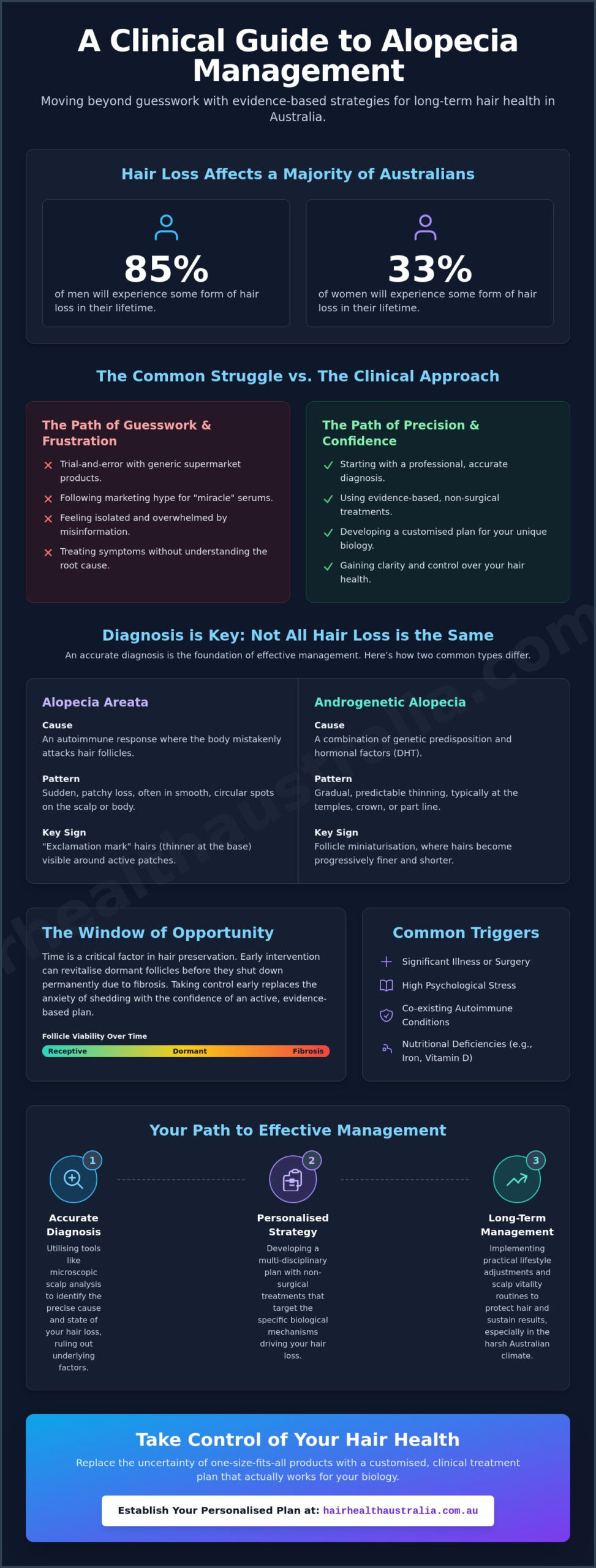
Approximately 85% of men and 33% of women will experience some form of hair loss in their lifetime. While these figures are high, the path to effective alopecia management often feels isolating and riddled with misinformation. You’ve likely spent months trial-and-erroring generic supermarket shampoos or “miracle” serums only to find your reflection remains unchanged. It’s frustrating to watch your hair thin while trying to decipher whether you’re dealing with androgenetic alopecia or an autoimmune condition.

We understand that the fear of permanent loss and the anxiety of visible patches can be overwhelming. This guide moves beyond the marketing hype to provide a clinical perspective on hair health. You’ll discover the latest evidence-based strategies and practical lifestyle adjustments tailored for the unique Australian climate. We’ll outline a clear diagnostic path and explore specialised non-surgical regrowth treatments, giving you the confidence to establish a personalised, long-term management plan that actually works for your biology.

Key Takeaways

  • Learn why professional diagnostic precision is essential to differentiate between conditions like alopecia areata and androgenetic thinning.
  • Understand how effective alopecia management involves a multi-disciplinary approach that targets the underlying biological mechanisms of hair loss.
  • Explore non-surgical regrowth treatments that focus on revitalising follicles; we prioritise clinical results over temporary cosmetic fixes.
  • Discover practical ways to maintain scalp vitality and protect your hair from the harsh effects of the Australian climate.
  • Gain clarity on how a customised, clinical treatment plan replaces the uncertainty of one-size-fits-all retail products.

Understanding Alopecia Management: More Than Just Hair Loss

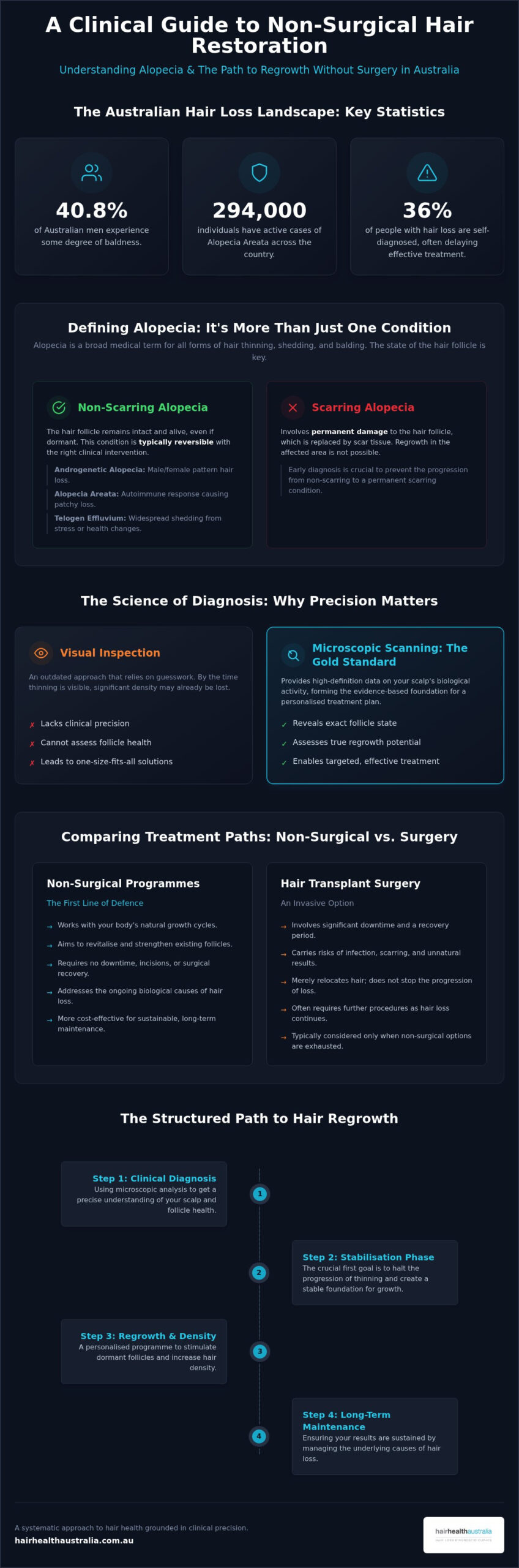
Effective alopecia management is far more than a reactive response to thinning hair; it’s a proactive, multi-disciplinary clinical strategy. Many people approach hair loss searching for a “cure,” but in the medical community, we focus on systematic management. While a permanent cure for many types of hair loss remains elusive, successful management is highly achievable through science-led protocols. It requires moving away from over-the-counter guesswork and toward a structured approach that addresses the biological root causes of shedding. A professional clinical assessment is the non-negotiable first step in this process. It establishes the specific baseline needed to track progress and allows us to adjust interventions based on your individual response.

The Autoimmune Connection and Common Triggers

At its core, many forms of hair loss are driven by an internal miscommunication within the body. For a deeper dive into the clinical classification and symptoms, Understanding Alopecia Areata provides a useful foundation for how the immune system mistakenly identifies hair follicles as foreign invaders. Specifically, specialised white blood cells known as T-cells gather around the follicle, causing it to prematurely enter a resting phase. In the Australian context, we often see this mechanism triggered by periods of high physiological or psychological stress, or following a significant illness. It’s also common for these hair concerns to co-exist with other autoimmune conditions, such as thyroid disease. This is why we take a holistic clinical view rather than just looking at the scalp in isolation.

Why Early Intervention Matters in Australia

Time is a critical factor in hair preservation. There’s a specific “window of opportunity” where dormant follicles can still be revitalised before they undergo permanent fibrosis. Once a follicle has completely ceased activity for an extended period, the efficacy of non-surgical regrowth treatments diminishes. Beyond the biology, taking control of the situation early provides a significant psychological boost. It replaces the anxiety of passive shedding with the confidence of an active, evidence-based plan. For those seeking a hair specialist in Sydney, a tailored plan is vital. We focus on individualised Male Hair Loss Treatment and Female Hair Loss Treatment protocols that respect the unique way your body responds to the local environment. By intervening before the shedding cycle becomes advanced, you’re not just saving hair; you’re preserving the foundation for long-term scalp health.

Diagnostic Precision: Identifying Your Specific Type of Alopecia

Successful alopecia management is built on the foundation of an accurate, clinical diagnosis. It’s a common mistake to assume all hair loss is the same, yet the biological drivers behind various conditions are vastly different. While some might rely on a cursory visual inspection, this often leads to an incomplete or even incorrect assessment. We must differentiate between the autoimmune nature of alopecia areata, the physical stress of traction alopecia, and the hormonal triggers of androgenetic thinning. Without this clarity, any subsequent treatment is likely to be ineffective. We also prioritise ruling out systemic factors; in the Australian population, deficiencies in Iron and Vitamin D are frequent contributors to shedding. A personalised diagnostic report is essential to ensure we’re treating the cause, not just the symptom.

Alopecia Areata vs. Androgenetic Alopecia

The patterns of loss tell a specific story. Alopecia areata is characterised by its “patchy” presentation, often appearing as smooth, circular bald spots that can emerge quite suddenly. In contrast, androgenetic thinning follows a gradual, predictable pattern across the crown or temples. During an active phase of areata, we look for “exclamation mark” hairs, which are thicker at the top and narrower at the base. Because hair thinning alopecia involves a slow miniaturisation of the follicle rather than an acute immune attack, the management strategies are fundamentally distinct. Acknowledging these differences is a vital part of the patient perspectives on treatments, ensuring that expectations align with the biological reality of the condition. For those experiencing sudden patchy loss specifically, understanding the full scope of alopecia areata treatment Sydney specialists provide can help clarify which evidence-based, non-surgical pathways are most appropriate for your presentation.

Microscopic Scalp Analysis: The Gold Standard

To achieve true precision, we employ high-magnification microscopic scanning. This technology allows us to identify follicle miniaturisation long before it becomes visible to the naked eye. By viewing “live” data of your scalp health during a consultation, we can distinguish between follicles that are dormant and those that are permanently scarred. This level of detail is crucial for tracking progress with clinical accuracy. Rather than relying on subjective mirror checks, we use these scans to measure increases in hair density and diameter over time. If you’re ready to see the data behind your hair health, a comprehensive Female Hair Loss Treatment assessment can provide the clarity you need to move forward with confidence.

Evidence-Based Clinical Interventions for Effective Management

Once a precise diagnosis is established, the focus shifts from observation to action. Many patients are historically told to “wait and see,” but this passive approach often allows follicle miniaturisation to progress unchecked. Active alopecia management prioritises the preservation of existing hair while stimulating dormant follicles back into a growth phase. It’s a common misconception that hair transplant surgery is the only permanent solution for hair loss. In reality, modern non-surgical interventions offer a robust, evidence-based path to maintaining density and promoting regrowth without the downtime or cost of invasive procedures. Success depends on a structured, clinical programme where consistency is the primary driver of long-term results. By intervening early with a dedicated plan, we can often arrest the shedding cycle and restore scalp vitality before permanent loss occurs.

Non-Surgical Regrowth Programmes and PRP

Clinical programmes often integrate Platelet-Rich Plasma (PRP) therapy to accelerate the body’s natural regenerative processes. This procedure involves using a concentrated portion of the patient’s own blood, which is rich in growth factors, to nourish the scalp environment. When these growth factors are introduced to the follicle, they signal a transition from the resting phase to an active growth cycle. We often combine this with Low-Level Laser Therapy (LLLT). Laser treatments work by increasing local blood flow and cellular energy production within the scalp. The synergy between these modalities is powerful; while PRP provides the biological “fuel” for growth, laser therapy ensures the “delivery system” is functioning at its peak. This multi-faceted approach is a cornerstone of both Male Hair Loss Treatment and female-specific protocols.

Topical and Oral Medical Management

Maintaining hair density often requires a daily commitment to medical management. We utilise clinically-backed topicals that have been rigorously tested for safety and efficacy. In Australia, it’s vital to use TGA-approved options that meet our national safety standards. These medications work by blocking the hormonal triggers of thinning or by physically dilating blood vessels to improve follicle access to nutrients. However, medical management isn’t a “set and forget” strategy. It must be overseen by a specialist who can monitor your scalp’s response and manage potential side effects. This professional oversight is a critical component of successful alopecia management, ensuring that your programme remains safe and effective as your hair health evolves. By combining these medical interventions with targeted clinical treatments, we create a comprehensive shield against further loss. If you’re ready to begin your journey, a tailored Female Hair Loss Treatment plan can provide the structure you need.

Managing Alopecia: Clinical Approaches to Hair Loss

Practical Daily Management and Scalp Vitality

Daily habits act as the silent partners to your clinical success. Effective alopecia management requires a conscious shift in how you interact with your scalp every day. During periods of active shedding, the follicles are often in a heightened state of sensitivity. This makes gentle handling a priority. We recommend a “less is more” approach to styling; avoid high-tension hairstyles like tight ponytails or buns that can lead to additional traction loss. Using a wide-tooth comb and avoiding excessive heat from blow-dryers will help preserve the integrity of the hair you have. These small adjustments, while seemingly minor, create the stable environment necessary for our clinical interventions to take hold.

The harsh Australian environment is another factor that cannot be ignored. Our climate is particularly demanding on a compromised scalp. High temperatures and humidity can lead to sweat accumulation and irritation, which may exacerbate inflammatory responses. Maintaining scalp hygiene with pH-balanced, clinical-grade cleansers is essential to keep the follicles clear of debris and excess sebum. If you’re ready to implement a professional care routine, exploring a structured Male Hair Loss Treatment programme can provide the specific products and guidance needed for your hair type.

Sun Protection and the Australian Climate

The intense UV radiation in Australia presents a unique challenge for those with visible thinning or patches. Sunburn on the scalp is not just painful; it causes significant inflammation that can further hinder the regrowth process. Protecting exposed areas is non-negotiable. While specialised, non-greasy scalp sunscreens are available, physical barriers remain the most effective choice. We suggest wearing hats made from breathable fabrics, such as cotton or linen, to allow for airflow while blocking UV rays. This is especially important in the Sydney heat, where trapped sweat under a heavy synthetic cap can lead to folliculitis or general scalp discomfort.

Psychological Support and Lifestyle Adjustments

Acknowledging the emotional weight of hair loss is a vital part of the recovery journey. Stress is a known physiological trigger that can prolong the shedding phase, so finding effective ways to manage it is a clinical necessity. Building resilience often involves connecting with others who understand the experience. Organisations like the Australia Alopecia Areata Foundation (AAAF) provide excellent resources and support networks for patients and their families. Learning how to communicate your condition to friends and colleagues can also alleviate the social anxiety that often accompanies visible patches. By combining clinical expertise with a strong support system, you move from a place of uncertainty to one of empowerment.

Personalised Alopecia Management at Hair Health Australia

At Hair Health Australia, we believe that successful alopecia management is built on a foundation of mutual trust and clinical precision. Our philosophy bridges the gap between medical authority and empathetic care; we acknowledge that hair loss is a deeply personal journey. We don’t believe in one-size-fits-all solutions because every biological profile is unique. Instead, we develop customised treatment plans that address the specific type and stage of your condition. This individual-centric approach ensures that you aren’t wasting time on generic retail products that fail to address the underlying causes of your shedding. Our goal is to replace the frustration of failed treatments with a systematic, evidence-based path forward.

Many of our patients come to us seeking an alternative to invasive hair transplant surgery. Our non-surgical methods are the preferred choice for those who want to revitalise their natural hair through biological stimulation rather than surgical graft relocation. By focusing on the health of the follicle itself, we provide a sustainable path to regrowth that respects your body’s natural cycles. This focus on preservation and revitalisation is what sets our clinical outcomes apart. Understanding what a qualified hair specialist can offer is key to making an informed decision about your treatment pathway.

Our Sydney-Based Clinical Approach

Our central Sydney clinic is dedicated to providing non-invasive, clinically-backed regrowth programmes. We differentiate ourselves by focusing on the “Hair Health” difference; we target the vitality of the follicle deep within the dermis rather than just the visible hair shaft. This systematic care involves monitoring cellular activity and the scalp environment to ensure optimal conditions for growth. Our commitment to effective alopecia management means we provide the tools and education you need to maintain results long after your initial sessions. Being locally based allows us to provide consistent, face-to-face support, ensuring your progress is tracked with professional accuracy at every milestone.

Transitioning from Uncertainty to a Managed Plan

Your journey begins with a comprehensive consultation where we perform a detailed microscopic scalp scan. This provides the “live” data mentioned earlier in this guide, allowing you to see the current state of your follicles alongside our specialists. We prioritise transparency, which means we set realistic expectations from day one. You’ll receive a clear roadmap with defined milestones for your hair regrowth, replacing the anxiety of the unknown with a structured, managed plan. Taking the first step can be daunting, but reclaiming your confidence starts with professional clarity and a data-driven approach. Whether you require a Male Hair Loss Treatment or a specialised Female Hair Loss Treatment, we’re here to guide you through every stage of the process with precision and care.

Take Control of Your Hair Health Today

Successful alopecia management relies on moving away from generic products and toward a data-driven, clinical partnership. We’ve explored how advanced microscopic diagnostic technology and specialised non-surgical regrowth programmes can stabilise shedding and revitalise dormant follicles. By combining clinical interventions with practical adjustments for the Australian climate, you can establish a sustainable path to recovery. It’s about replacing the anxiety of the unknown with a structured, professional roadmap.

With over 15 years of clinical experience in Sydney, our team is dedicated to providing the clarity and support needed to navigate your hair health journey. We focus on providing realistic expectations and measurable results through evidence-based science. Taking the first step is often the most significant part of the process; however, having a clear plan makes all the difference to your long-term confidence and scalp vitality.

Book Your Comprehensive Scalp Analysis at Our Sydney Clinic to begin your personalised programme. You don’t have to navigate these changes alone; professional expertise is ready when you are.

Frequently Asked Questions

Can alopecia be cured permanently?

There is currently no permanent medical cure for most forms of alopecia, but the condition can be successfully managed through clinical intervention. Effective alopecia management focuses on suppressing the overactive immune response and stimulating dormant follicles to return to a growth phase. While we can’t change the underlying genetic or autoimmune predisposition, we can often achieve significant regrowth and maintain hair density for the long term with consistent care.

How long does it take to see results from alopecia management?

Visible changes typically emerge within three to six months of starting a structured clinical programme. This timeline is dictated by the natural biological hair growth cycle, which cannot be rushed. The initial phase of treatment often focuses on stabilising shedding, followed by the gradual appearance of fine, new hairs. We use microscopic scanning at regular intervals to track these incremental improvements before they are visible to the naked eye.

Is alopecia management covered by Medicare in Australia?

Medicare generally doesn’t provide rebates for treatments conducted within private hair loss clinics, as these are often classified as elective services. However, you may be able to claim a portion of the costs for initial diagnostic blood tests or specialist consultations if you have a referral from your GP. It’s always best to check with your private health insurer to see if your specific extras cover includes any provisions for clinical hair loss therapies.

What is the difference between alopecia areata and universalis?

The primary difference lies in the extent of the hair loss across the body. Alopecia areata typically presents as small, circular patches on the scalp or beard area. Alopecia universalis is a more advanced stage of the same autoimmune condition, resulting in the total loss of all body hair, including eyebrows and eyelashes. Both conditions involve the same underlying immune mechanism, but they require different levels of clinical intensity for effective management.

Can stress really trigger an alopecia flare-up?

Yes, significant physiological or psychological stress is a well-documented trigger that can initiate or worsen an alopecia flare-up. High stress levels can disrupt the hair’s natural cycle, pushing a higher percentage of follicles into a resting phase simultaneously. In autoimmune cases, stress may also exacerbate the immune system’s tendency to attack the follicles. Managing lifestyle factors is therefore a critical component of any comprehensive hair health plan.

Are non-surgical treatments as effective as hair transplants?

Non-surgical treatments and transplants serve different clinical purposes and are not directly comparable. While surgery moves hair from one area to another, non-surgical programmes focus on revitalising your existing follicles and preventing further thinning across the entire scalp. For many patients, non-surgical alopecia management is the preferred first-line approach because it is non-invasive and addresses the biological health of the scalp rather than just the cosmetic symptoms.

How often should I visit a hair loss clinic for management?

Most patients attend our Sydney clinic once every four to six weeks during the active phase of their treatment programme. These regular visits allow us to administer clinical-grade therapies and monitor your scalp’s response to the current protocol. Once your condition has stabilised, the frequency of visits may decrease to quarterly maintenance check-ups. This ensures that any new signs of shedding are identified and addressed before significant loss occurs.

Is it safe to colour my hair if I have alopecia?

It’s generally safe to colour your hair, provided your scalp isn’t currently inflamed or experiencing an active, painful flare-up. We recommend using gentle, ammonia-free dyes and performing a patch test first to ensure you don’t have a secondary sensitivity. If you are undergoing active clinical treatments, it’s a good idea to wait at least 48 hours after a session before applying any chemical treatments to the hair to avoid unnecessary scalp irritation.

Hair Thinning vs. Alopecia: A Clinical Guide to Identifying Hair Loss

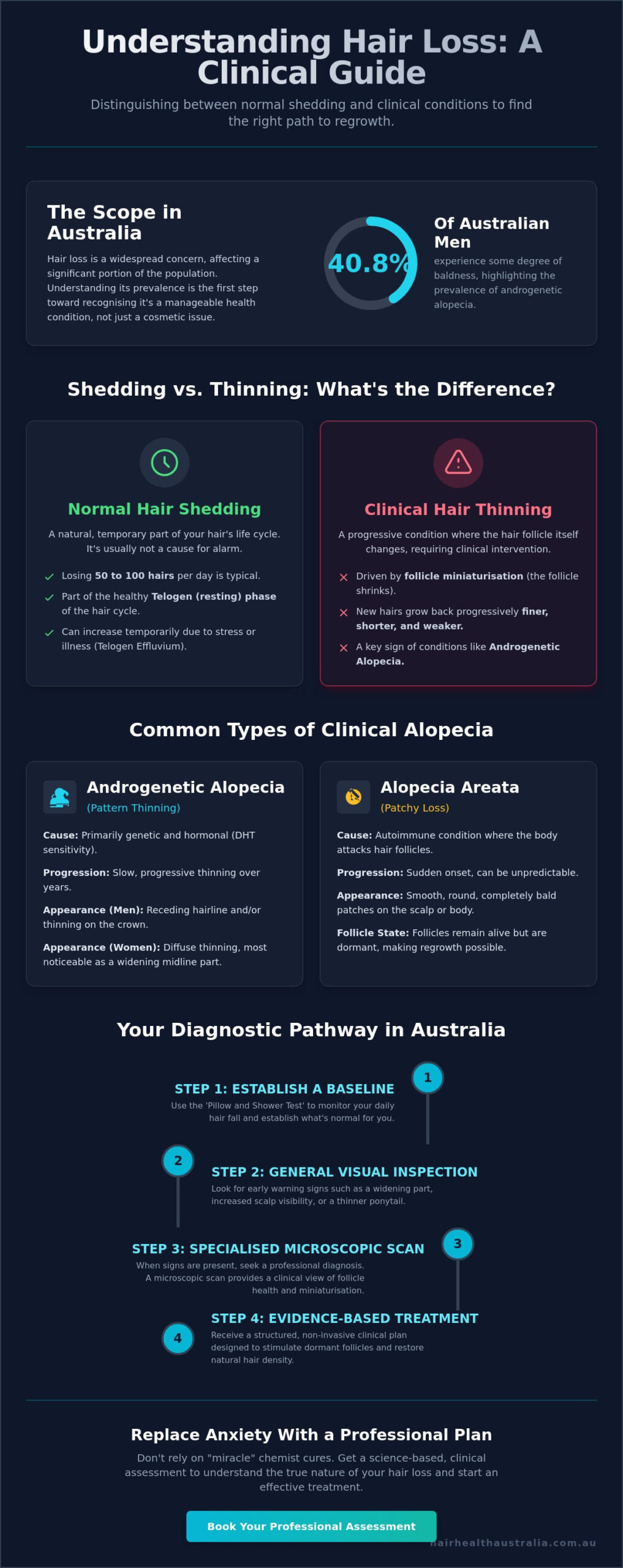
Is that extra hair in the shower drain a sign of natural ageing, or is it the start of a medical condition you haven’t identified yet? It’s incredibly stressful to watch your scalp become more visible, especially when “miracle” chemist cures fail to deliver on their lofty promises. You’ve likely felt the frustration of trying to distinguish between standard hair thinning alopecia and more complex clinical conditions. With roughly 40.8% of Australian men experiencing some degree of baldness, and many women facing similar challenges, the need for professional clarity has never been more urgent.

We understand that you want more than just a quick fix; you want a science-based path forward that respects the biology of your hair. This guide provides a clear clinical framework to help you identify the specific nature of your hair loss. We’ll break down the critical differences between general thinning and medical alopecia, ensuring you have the knowledge to choose the right clinical path. By exploring the non-surgical options for male and female hair loss treatment available in Sydney, we’ll help replace your anxiety with a structured, professional plan for regrowth.

Key Takeaways

  • Understand the biological distinction between temporary hair shedding and the progressive miniaturisation seen in clinical hair loss.
  • Learn to categorise your symptoms by identifying the specific traits of androgenetic hair thinning alopecia versus patchy autoimmune responses.
  • Utilise the ‘Pillow and Shower Test’ to establish a clear baseline for what constitutes normal hair loss in your daily routine.
  • Navigate the Australian healthcare pathway by understanding when to transition from a general visual inspection to a specialised microscopic diagnostic scan.
  • Gain clarity on how evidence-based, non-invasive clinical treatments can successfully stimulate dormant follicles to restore natural hair density.

Understanding Hair Thinning and Alopecia: More Than Just Shedding

Many people feel a surge of anxiety when they first hear the word alopecia. It sounds like a permanent, irreversible sentence. In reality, alopecia is simply the clinical umbrella term used to describe all types of hair loss. It doesn’t always mean total baldness. Understanding the spectrum of hair thinning alopecia is the first step toward regaining control over your scalp health. Whether you’re noticing a slightly wider part or more hairs on your pillow, these changes are biological signals that require a precise response rather than a panic-driven purchase from the chemist.

The primary challenge for most Australians is distinguishing between normal hair shedding and the early stages of a clinical condition. Everyone loses between 50 and 100 hairs a day as part of a healthy growth cycle. However, when the rate of loss exceeds the rate of regrowth, or when the new hairs emerge thinner and weaker, you’ve moved from shedding into the territory of thinning. Early intervention is vital. Once a hair follicle has completely miniaturised and become dormant for several years, it’s significantly more difficult to revive. Acting while the follicle is still active ensures a much higher success rate for clinical treatments.

The Difference Between Shedding and Thinning

Your hair follows a specific rhythm: the Anagen (growth) phase, the Catagen (transition) phase, and the Telogen (resting) phase. A condition called Telogen Effluvium often causes sudden, heavy shedding due to stress or illness. While alarming, this is usually temporary. True thinning is different. It’s driven by miniaturisation, a process where the follicle gradually shrinks. Over several cycles, the hair becomes finer, shorter, and less pigmented. This is the hallmark of androgenetic alopecia, and it requires a targeted clinical approach to reverse the shrinking process before the follicle ceases production entirely.

Why Terminology Matters for Your Treatment

Using the correct clinical terms shifts the focus from a cosmetic “flaw” to a manageable health condition. Many people waste hundreds of dollars on “thickening” shampoos that only coat the hair shaft without addressing the underlying biology. A stylist can help you hide the problem with a clever cut, but they can’t treat the follicle. Distinguishing between general thinning and specific conditions like Alopecia areata allows for a customised treatment plan. A professional diagnosis ensures you aren’t guessing with your health. It provides a clear, evidence-based roadmap that identifies exactly why your hair is changing and what can be done to stabilise and restore it.

The Different Faces of Alopecia: From Pattern Thinning to Patchy Loss

Identifying the specific cause of your hair loss is the cornerstone of effective treatment. While many people use the term “alopecia” to describe any form of balding, there are distinct Types of Hair Loss that require vastly different clinical approaches. Understanding whether you’re dealing with a genetic predisposition or an autoimmune response is essential for a successful recovery. It’s not just about the hair you lose; it’s about the biological mechanism behind the loss.

Androgenetic Alopecia: The “Pattern” of Thinning

This is the most prevalent form of hair thinning alopecia globally. In Australia, it affects roughly 40.8% of men and up to 56% of women over the age of 70. It’s primarily driven by a hormone called Dihydrotestosterone (DHT). This hormone binds to follicles, causing them to shrink and produce thinner, shorter hair over time. Men usually notice a receding hairline or a thinning crown. Women typically experience a general widening of the midline part, though the frontal hairline often remains intact. While it’s a progressive condition, it’s highly responsive to early clinical intervention and consistent management.

Alopecia Areata: When the Immune System Interferes

Unlike the slow progression of pattern loss, this type presents as sudden, smooth, circular patches. It’s an autoimmune condition where the body’s immune system mistakenly attacks the hair follicles. Triggers often include extreme stress, viral infections, or significant lifestyle changes. It’s a distressing experience, but there’s a silver lining: the follicles usually remain alive. They’re simply in a state of suspended animation. With the right clinical support, these follicles can be encouraged to re-enter the growth phase and produce healthy hair once again.

Beyond these common types, we also see Traction Alopecia, which is caused by repeated tension from tight hairstyles like braids or buns. If caught early, this is entirely reversible by changing styling habits. However, Scarring Alopecia (Cicatricial) is a more serious medical concern where inflammation destroys the follicle and replaces it with scar tissue. This type requires urgent medical attention to prevent permanent loss. Because the symptoms of these conditions can overlap, getting a professional assessment for male or female hair loss treatment is the only way to ensure you’re on the right path to regrowth.

Recognising the Early Warning Signs of Hair Loss

Catching the transition from healthy growth to active thinning requires more than a casual glance in the mirror. While we’ve established that losing some hair daily is normal, identifying the specific markers of hair thinning alopecia early can be the difference between successful restoration and permanent loss. Most people notice a change in how their hair “behaves” long before they see visible bald patches. Your hair might feel limp, struggle to hold its usual style, or seem unusually flyaway. These subtle shifts in texture often signal that the follicles are starting to miniaturise, producing weaker strands that lack their former vigour.

To determine if your shedding is cause for concern, you can perform a simple “Pillow and Shower Test” over the course of a week. While losing 50 to 100 hairs a day is biologically standard, finding large clumps on your pillowcase or a significantly clogged drain every single morning is a red flag. If you can consistently pull more than six strands away by gently running your fingers through a small section of hair, it’s time to move beyond chemist-bought shampoos and seek a clinical assessment. This persistent loss suggests that your growth cycle has been disrupted, moving too many hairs into the resting phase simultaneously.

Visual Indicators for Men and Women

The physical presentation of thinning varies significantly between the sexes, yet the underlying urgency remains the same. For men, the earliest sign is often a slight recession at the temples, creating a subtle “M-shape” hairline that gradually deepens. You might also notice the hair at the crown becoming sparser when viewed under bright bathroom lights. For women, the most reliable indicator is a widening midline part. If your scalp is becoming more visible when you style your hair, or if your ponytail feels noticeably lighter and requires an extra turn of the hair tie, these are clear symptoms of volume loss that warrant professional attention.

Scalp Health and Its Role in Alopecia

We often use the analogy that healthy hair is like healthy grass; it requires nutrient-rich “soil” to thrive. A scalp that is chronically oily, itchy, or prone to redness is often a scalp in distress. Excessive sebum production can sometimes accompany hormonal thinning, while persistent itching or scaling might indicate inflammation that actively hinders follicle function. Ignoring these surface-level symptoms can compromise follicle longevity. By addressing scalp health alongside targeted treatments, you create an optimal environment for regrowth. Identifying these warning signs early allows you to take decisive action before the follicles lose their capacity to produce hair entirely.

Hair Thinning vs. Alopecia: A Clinical Guide to Identifying Hair Loss

Most Australians start their journey by booking a standard appointment with their local GP. It’s a logical first step. A doctor will typically perform a visual inspection and may organise blood tests to rule out underlying physiological triggers. Common culprits include iron deficiency, particularly low ferritin levels, or thyroid imbalances. These systemic issues can mimic the symptoms of hair thinning alopecia, so clearing them from the diagnostic picture is essential. However, a standard GP consultation is often limited to what the naked eye can see, which may not be enough to identify the early stages of follicle miniaturisation.

The average cost of an initial dermatologist consultation in Australia is approximately $230.22, and while a GP referral can help you access a Medicare rebate, the wait times for specialists can be significant. This is why many people seeking faster clarity opt for a dedicated clinical hair health check. Unlike a general check-up, a specialised assessment focuses entirely on the scalp environment and follicle function. It moves beyond “wait and see” by using advanced diagnostic tools that provide a microscopic view of what’s happening beneath the surface. Understanding what to expect from this process is easier when you know what a qualified hair specialist does and how to find the right clinical support for regrowth.

The Power of Microscopic Hair Analysis

Digital trichoscopy is a non-invasive scanning technique that allows us to examine your scalp at high magnification. While a visual inspection might suggest your hair is simply “thinning,” microscopic analysis can identify the specific percentage of follicles that are shrinking or entering a dormant state. Microscopic analysis can detect hair loss up to 5 years before it becomes obvious to the naked eye. By measuring hair diameter and follicle density at a cellular level, we can establish a clinical baseline. This data is vital for tracking the progress of your treatment and ensuring the chosen path is actually working.

Questions to Ask Your Specialist

When you sit down for your assessment, it’s important to move beyond generalities. You should feel empowered to ask specific questions about your condition. Consider asking: Is my hair loss permanent or temporary? What percentage of my follicles are currently in the dormant phase? What are the non-surgical options available for my specific diagnosis? These answers provide the professional clarity needed to reduce anxiety and build a realistic expectation for regrowth. If you’re ready to stop guessing and start a science-based recovery, you can book a professional assessment for male or female hair loss treatment to get a definitive answer.

Modern Clinical Approaches to Managing Alopecia and Thinning

The era of simply accepting hair loss as an inevitable consequence of ageing or genetics has ended. We’ve seen a significant shift toward non-invasive, clinically-backed regrowth programmes that prioritises follicle health over temporary cosmetic fixes. The Australian hair loss treatment market was valued at USD 145.2 million in 2025, reflecting a growing demand for sophisticated, science-based interventions. This surge in interest is driven by a move away from the “miracle” cures sold at chemists and toward professional, individual-centric care. Managing hair thinning alopecia today is about precision; it’s about understanding the specific biological triggers of your condition and addressing them with systematic, evidence-based therapy. For a deeper understanding of how these strategies are applied in practice, our guide on alopecia management and clinical approaches to hair loss outlines the latest evidence-based treatments tailored to the Australian context.

At Hair Health Australia, we recognise that a one-size-fits-all approach rarely delivers the results patients deserve. A treatment that works for a receding hairline in a man may not be suitable for a woman experiencing diffuse thinning across the crown. Our Sydney-based specialists focus on creating a customised roadmap for every individual. By combining clinical expertise with modern technology, we aim to stabilise active loss and create the optimal environment for new growth. This professional clarity replaces the uncertainty of trial-and-error with a structured path toward restoration.

Non-Surgical Regrowth Science

The core objective of modern clinical therapy is the stimulation of dormant follicles. When follicles miniaturise due to androgenetic factors or environmental stress, they don’t disappear immediately; they simply stop producing robust hair. Our non-surgical programmes focus on waking up these dormant hairs through a combination of topical agents and clinical-grade scalp therapy. Consistency is the foundation of any successful clinical programme. By adhering to a methodical routine and participating in regular professional monitoring, patients can see a measurable increase in hair density without the need for invasive procedures. We focus on the long-term health of the scalp, ensuring the “soil” is nutrient-rich enough to support the “grass.”

Taking the First Step Toward Restoration

Reclaiming your hair health offers a profound psychological benefit. It moves you from a position of worry to one of empowerment. When you understand the clinical nature of your condition, the fear of permanent baldness begins to fade. You can Discover our Female Hair Loss Treatment options to see how we specifically address the unique patterns of thinning in women. If you’re ready to move beyond guesswork, the next step is a comprehensive diagnostic assessment at our Sydney clinic. Our specialists will provide the professional clarity you need to start your journey with confidence. Don’t wait for the loss to become obvious to everyone else. Book Your Professional Hair Assessment Today and take the first definitive step toward restoring your natural density.

Reclaiming Your Hair Health with Clinical Precision

Distinguishing between temporary shedding and the progressive nature of hair thinning alopecia is the most important step you can take for your scalp health. We’ve explored how identifying early warning signs and seeking a precise diagnosis can prevent the permanent loss of active follicles. Rather than relying on generic chemist solutions that often under-deliver, a clinical approach provides a roadmap tailored to your specific biological needs. It’s about moving from uncertainty to a structured, science-based plan for restoration.

With over 15 years of clinical experience in Sydney, our team utilises expert microscopic diagnostic technology to identify miniaturisation before it’s visible in the mirror. We specialise in non-surgical regrowth programmes designed to stimulate dormant follicles and restore natural density. If you’re ready to stop guessing about your hair loss and start a professional recovery journey, we’re here to guide you. Book a Clinical Hair Assessment at our Sydney Centre to secure a definitive diagnosis and a clear path forward. You don’t have to navigate this journey alone; professional clarity and evidence-based care are within reach.

Frequently Asked Questions

Is alopecia the same as permanent balding?

No, alopecia is the general medical term for all types of hair loss and does not always result in permanent baldness. Some forms, such as telogen effluvium, are temporary and reversible once the underlying cause is addressed. Other types, like androgenetic hair loss, are progressive but can be managed and stabilised with the right clinical intervention before the follicles become permanently dormant.

Can stress actually cause my hair to thin or fall out?

Yes, significant physical or emotional stress can trigger a condition called telogen effluvium. This causes a large number of follicles to enter the resting phase simultaneously, leading to noticeable shedding a few months after the stressful event. While this is different from the gradual miniaturisation seen in hair thinning alopecia, persistent stress can exacerbate existing genetic thinning if it isn’t managed effectively.

How do I know if my hair thinning is caused by hormones or genetics?

Genetic thinning typically follows a predictable pattern, such as a receding hairline in men or a widening part in women. Hormonal thinning, often linked to thyroid imbalances or pregnancy, tends to be more diffuse and affects the entire scalp. A clinical assessment using microscopic scanning is the only definitive way to identify whether DHT or systemic hormonal changes are driving your hair loss.

Does Medicare cover hair loss treatments in Australia?

Medicare provides rebates for dermatologist consultations if you have a valid referral from your GP. However, it does not typically cover the cost of the treatments themselves, such as medications or clinical regrowth programmes, as these are often classified as cosmetic. You should check with your private health insurer to see if your specific policy provides any coverage for medically diagnosed hair conditions.

Is it possible to regrow hair after an alopecia diagnosis?

Yes, regrowth is often possible if the hair follicles are still active and have not yet been replaced by scar tissue. Conditions like hair thinning alopecia and alopecia areata are particularly responsive to non-surgical clinical treatments. By using targeted stimulation to wake up dormant follicles, we can often restore density and improve the overall health of the hair shaft.

What is the difference between a hair specialist and a dermatologist for hair loss?

A dermatologist is a medical doctor who treats all conditions related to the skin, hair, and nails. A clinical hair specialist focuses exclusively on the biology of the scalp and the restoration of follicle function. While both can provide a diagnosis, a specialist centre often provides more intensive, non-surgical regrowth programmes and frequent monitoring to track the progress of your treatment over time.

How often should I wash my hair if I am noticing thinning?

You should maintain a regular washing routine, usually two to three times a week, to keep the scalp free from excess oil and debris. Many people stop washing their hair as frequently because they fear the shedding they see in the shower. In reality, a clean scalp environment is essential for follicle health and ensures that any topical clinical treatments can be absorbed effectively.

Can wearing hats or helmets cause traction alopecia?

No, wearing hats or helmets does not cause traction alopecia because they do not apply constant, pulling tension to the hair roots. Traction alopecia is caused by tight hairstyles like braids, extensions, or very high ponytails that physically pull the hair from the follicle. While a dirty hat might cause scalp irritation, it will not lead to the clinical miniaturisation associated with permanent hair loss.