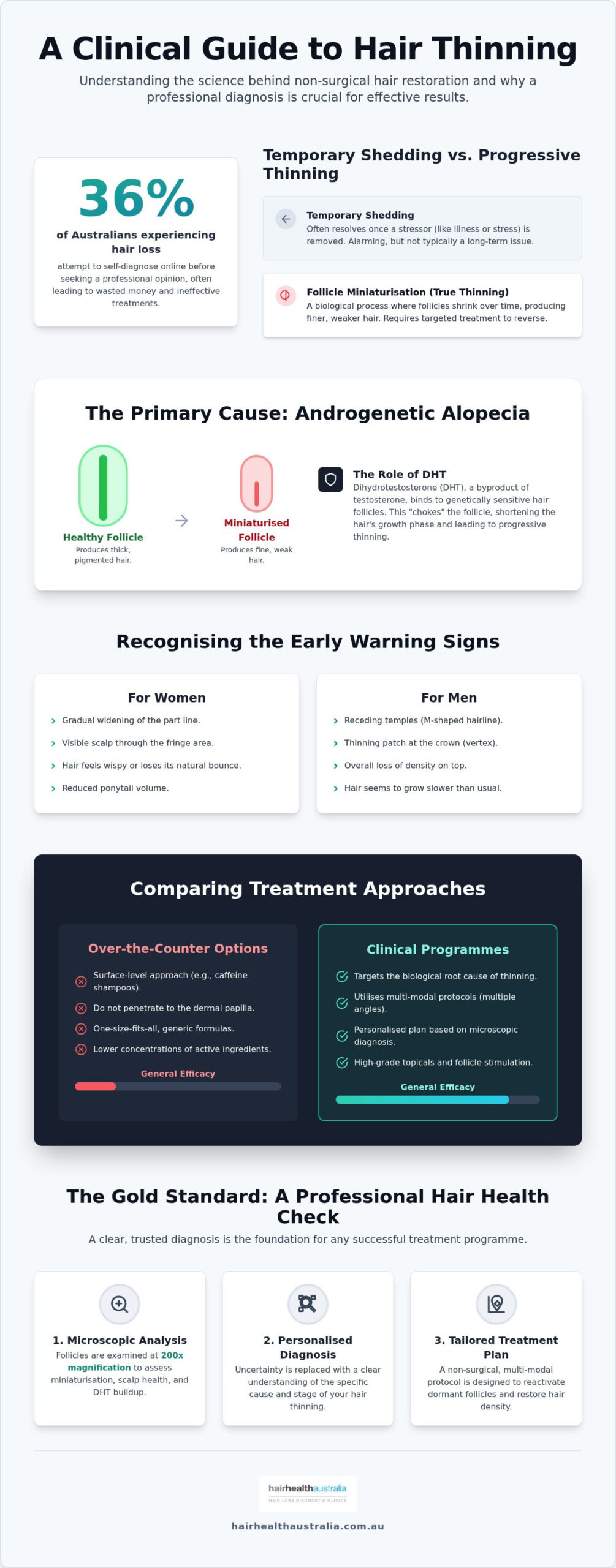
Approximately 36% of Australians experiencing hair loss attempt to self-diagnose through online reviews before seeking a professional opinion. It’s a statistic that reflects a common frustration; you’re likely tired of conflicting advice and the fear of wasting your money on ineffective products. Perhaps you’re also anxious about the risks and long recovery times associated with invasive surgery. Choosing the right hair thinning treatment shouldn’t feel like a leap of faith, especially when your confidence is at stake.
We understand that you want to stop the shedding immediately and see a visible improvement in your hair density. This 2026 clinical guide provides a clear path forward through non-surgical protocols that are grounded in science and TGA compliance. You’ll discover how a professional diagnosis, powered by microscopic follicle analysis, replaces uncertainty with a personalised plan. We’ll preview the latest combination therapies and bio-identical peptides that are setting new standards for hair restoration across Australia this year.
Key Takeaways
- Distinguish between follicle miniaturisation and temporary shedding to understand the actual biological cause of your hair loss.
- Discover how a professional hair thinning treatment utilises multi-modal protocols to reactivate dormant follicles and restore density.
- Recognise why a microscopic Hair Health Check at 200x magnification is the gold standard for a clear, trusted diagnosis.
- Compare the success rates of clinical programmes versus over-the-counter options to avoid wasting money on ineffective cures.
- Learn how a personalised, non-invasive approach provides a reliable alternative to surgical procedures for long-term results.
Understanding Hair Thinning: Why a Surface-Level Approach Fails
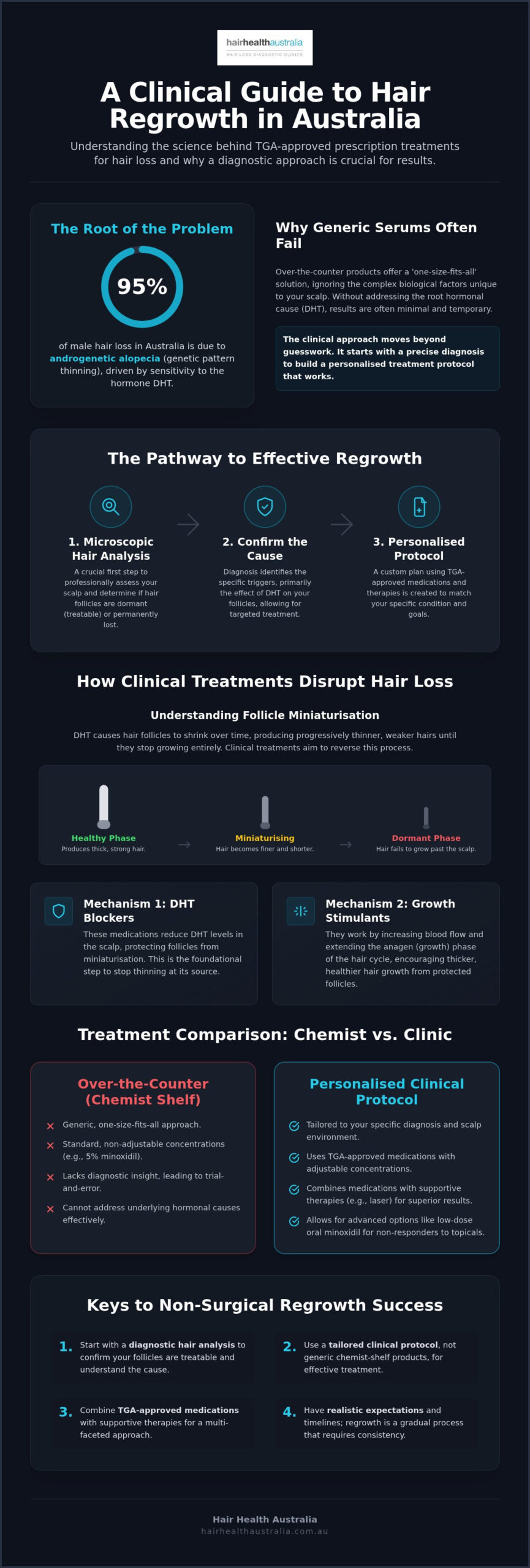
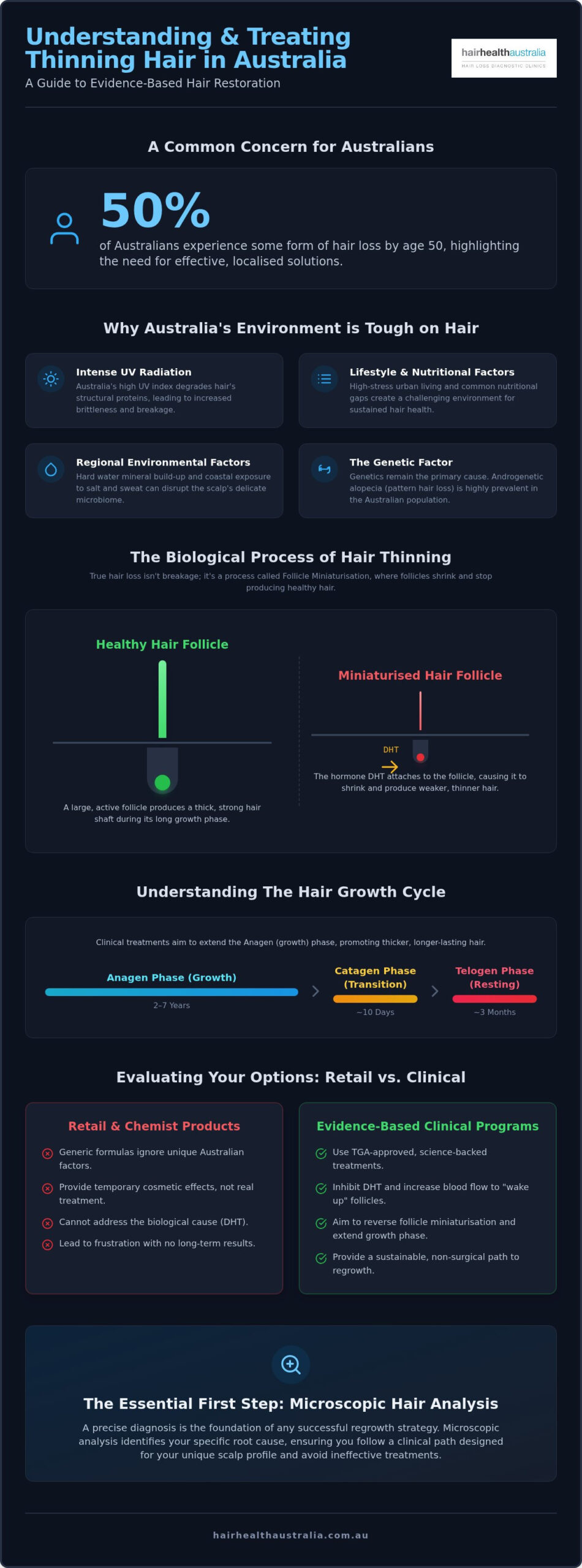
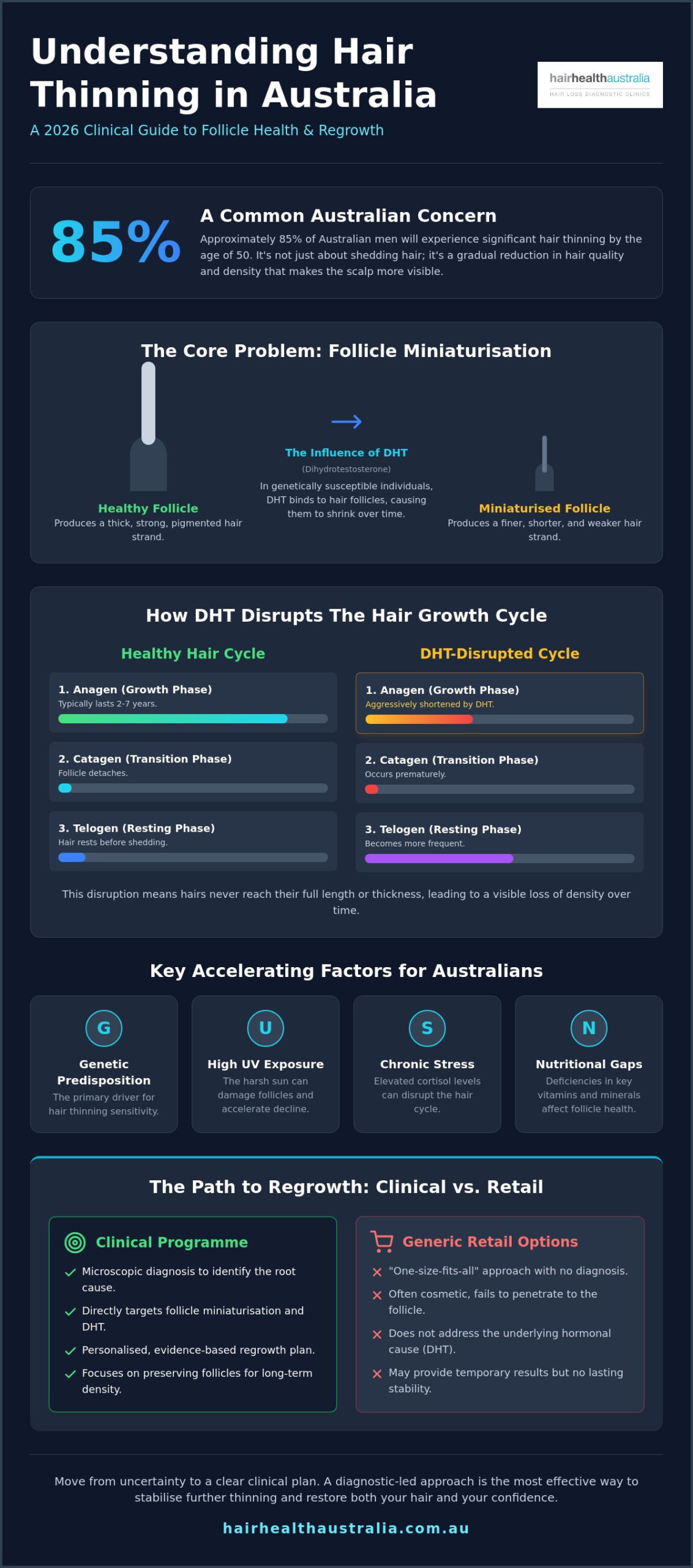
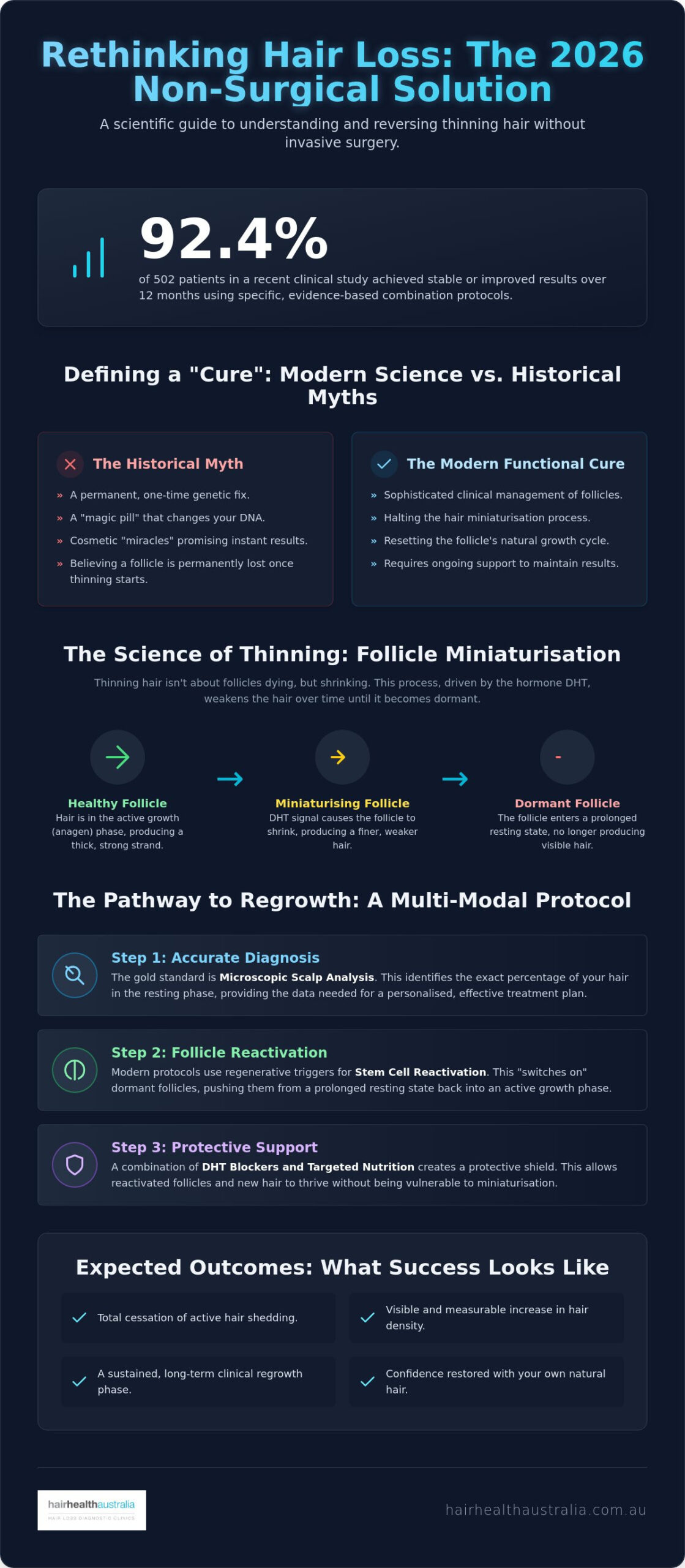
Many people confuse temporary hair shedding with progressive hair thinning. While seeing strands in the shower can be alarming, true thinning is a biological process called miniaturisation. This occurs when the hair follicle physically shrinks over time, producing progressively finer, shorter, and less pigmented strands. Eventually, the follicle may stop producing hair altogether. Unlike temporary shedding, which often resolves once a stressor is removed, progressive thinning requires a targeted hair thinning treatment to address the underlying physiological triggers.
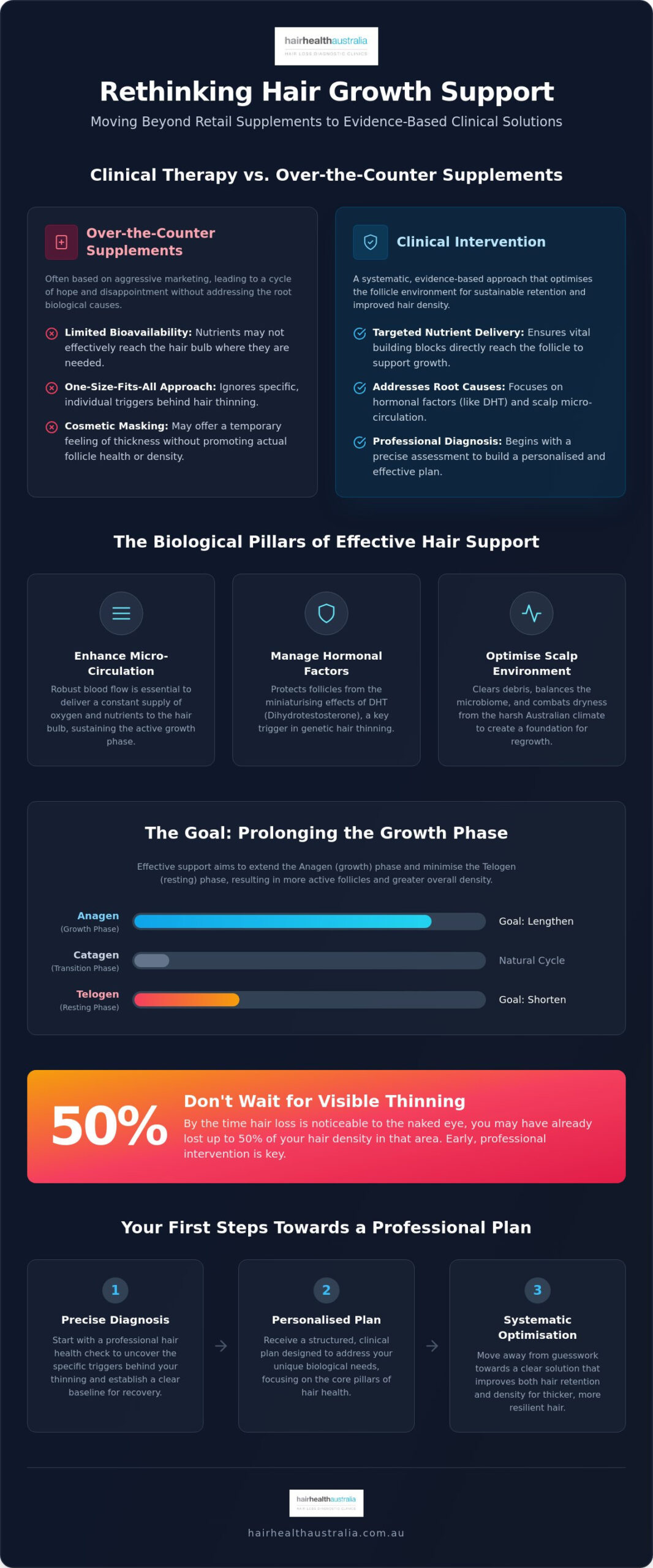
Relying on over-the-counter “quick fixes” like caffeine shampoos or generic vitamins rarely yields results because these products stay on the surface. They don’t reach the dermal papilla where the hair is formed. To stop the progression, you must address the root cause, which is usually found deep within the scalp’s hormonal and vascular environment.
The Role of Genetics and Hormones
Most cases of progressive thinning fall under the category of androgenetic alopecia. This condition is primarily driven by Dihydrotestosterone (DHT), a byproduct of testosterone that binds to receptors in the scalp follicles. For those with a genetic sensitivity, DHT effectively “chokes” the follicle, shortening the anagen (growth) phase of the hair cycle. Over several cycles, the hair becomes too weak to break the surface of the skin.
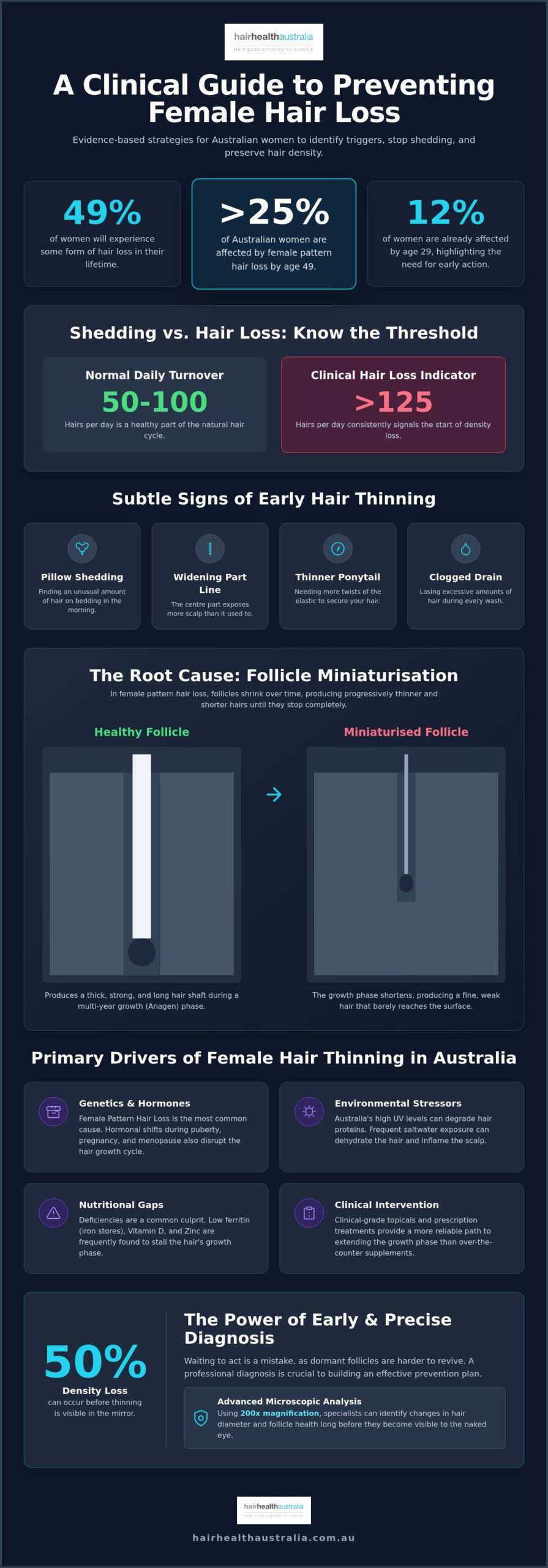
Women often experience this process differently. While DHT still plays a role, fluctuations in oestrogen, particularly during menopause or postpartum, can leave follicles more vulnerable to thinning. Additionally, elevated cortisol levels from chronic stress can lead to scalp inflammation, further disrupting the hair’s natural growth rhythm. A clinical approach focuses on stabilising these environments rather than just cleaning the hair shaft.
Identifying the Early Warning Signs
Recognising the shift early is the most effective way to protect your remaining density. For women, the most common sign isn’t a receding hairline but a gradual widening of the part line or a visible scalp through the fringe area. Men typically notice receding temples or a thinning patch at the crown. These changes happen slowly, often making them easy to miss until a significant amount of density is already lost.
Pay close attention to changes in hair texture and “manageability.” If your hair feels wispy, loses its natural bounce, or seems to grow slower than usual, it’s often a sign that miniaturisation is underway. A professional Hair Health Check allows for microscopic verification of these signs at 200x magnification. This diagnostic step is essential to ensure your hair thinning treatment is tailored to your specific stage of thinning, rather than a one-size-fits-all guess.
The Science of Non-Surgical Hair Regrowth Protocols
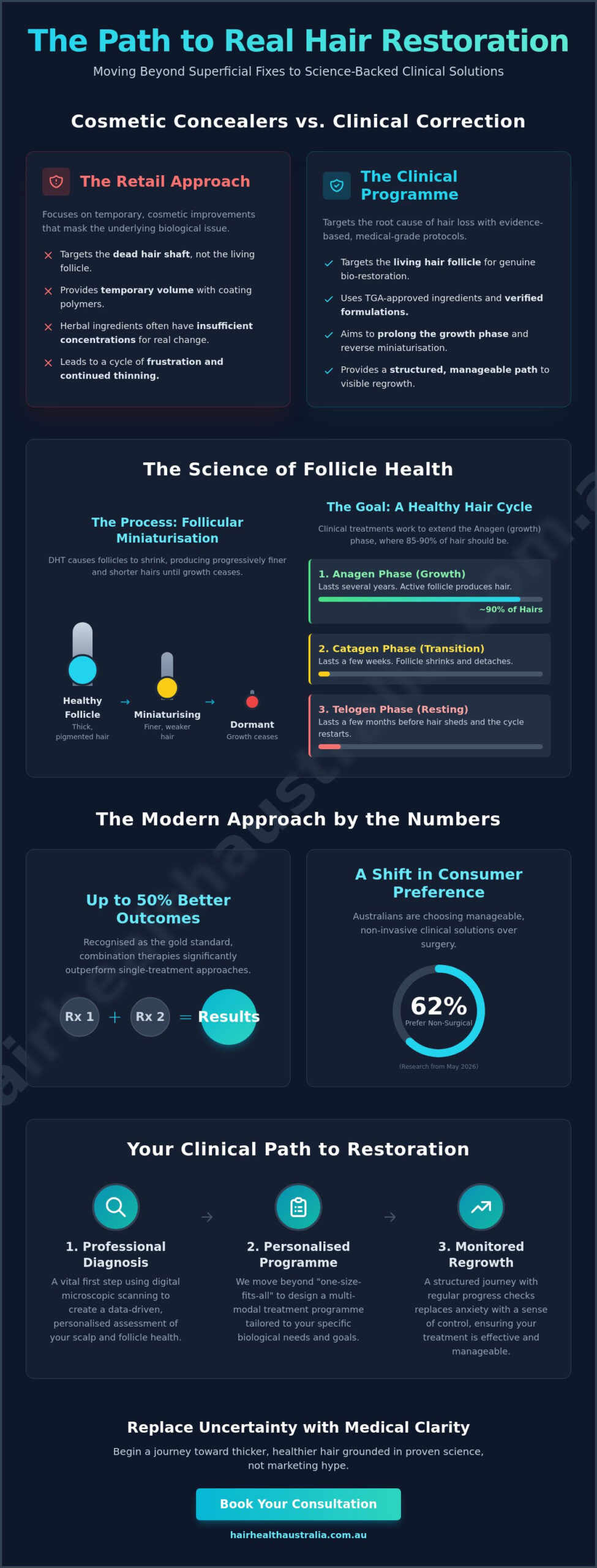
A successful hair thinning treatment is rarely built on a single ingredient. Instead, modern clinical protocols utilise a multi-modal approach that addresses the follicle from several biological angles simultaneously. This process begins with improving the scalp’s vascular health. By increasing blood flow to the dermal papilla, we ensure that essential nutrients and oxygen reach the hair at its source. Clinical-grade topical treatments are engineered with advanced delivery systems that penetrate the scalp barrier much more effectively than supermarket alternatives, which often contain lower concentrations of active ingredients and higher amounts of drying alcohols.
While many people are familiar with clinically-proven hair loss treatments, their efficacy increases significantly when combined with professional scalp-cleansing protocols. These procedures remove calcified sebum blockages and DHT buildup that can’t be cleared by standard shampoos. This creates a clean, receptive environment for nutrient delivery, allowing the follicle to transition from a miniaturised state back into a robust growth phase.
Follicle Stimulation and Scalp Health
Creating a healthy scalp environment is the foundation for sustainable regrowth. Techniques like low-level laser stimulation and motorised scalp therapy are used to wake up dormant follicles by triggering cellular metabolism. These non-invasive methods increase ATP (adenosine triphosphate) production within the cells, providing the energy required for hair synthesis. This stimulation helps extend the anagen phase, ensuring that new strands grow thicker and remain attached for longer periods. It’s about reviving the biological machinery that has slowed down due to age, stress, or genetics.
DHT Blockers and Internal Support
Professional protocols focus on neutralising the effects of DHT directly at the source. Unlike systemic medications that circulate through the entire body, targeted clinical applications allow for high-precision delivery to the affected follicles. This localised approach helps block DHT receptors without interfering with your body’s broader hormonal balance. In 2026, the anagen-to-telogen ratio serves as the primary clinical metric to determine if a hair thinning treatment is successfully shifting follicles from a resting state back into a productive growth phase. Understanding your specific ratio is a key component of a comprehensive diagnostic assessment.
Comparing Treatment Options: Clinical vs. Over-the-Counter
Selecting a hair thinning treatment from a pharmacy shelf often feels like a gamble. While over-the-counter (OTC) products are accessible, they lack the diagnostic precision required to address complex biological issues. Generic minoxidil, for example, is a vasodilator that improves blood flow, but it doesn’t address the hormonal triggers or scalp inflammation that may be driving your specific hair loss. Without clinical supervision, many individuals use these products incorrectly or for the wrong type of thinning. This leads to months of wasted effort and further density loss, which can be psychologically taxing.
Investing in a professional programme is often more cost-effective in the long run. By getting the right diagnosis first, you avoid the “trial and error” cycle of purchasing ineffective miracle cures. A clinical approach ensures that every component of your protocol is working toward a verified goal, backed by data rather than marketing claims. It’s about moving away from guesswork and toward a systematic restoration of your hair’s health.
Why Clinical Supervision Matters
The primary risk of a DIY approach is incorrect self-diagnosis. What looks like standard thinning might actually be a temporary condition or a more complex scalp issue. Professionals use digital analysis to monitor progress at the root level, allowing them to adjust your programme as your follicles respond. This consistent monitoring ensures you aren’t just maintaining your hair, but actively improving its health. A professional can identify subtle changes in hair diameter and growth cycles that are invisible to the naked eye. This provides the clarity you need to stay confident in your hair thinning treatment journey, knowing that your protocol is based on evidence rather than guesswork. You can begin this process with a professional Hair Health Check to establish a baseline for your recovery.
Non-Surgical vs. Surgical Restoration
There’s a common myth that surgery is the only “permanent” fix for hair loss. In reality, hair transplants are invasive, require significant downtime, and don’t stop the progression of thinning in the surrounding, non-transplanted hair. For approximately 90% of patients, non-surgical restoration is the preferred first step. It focuses on reviving your existing hair and stabilising the scalp environment without the risks of complications or scarring.
Choosing a Clinical Hair Treatment: A Professional Guide to non-surgical restoration allows you to achieve natural-looking density through biological reactivation. This approach preserves your natural hair and builds density systematically. It remains a reliable and less daunting alternative to the operating theatre, especially for those in the early to mid-stages of thinning who want to restore their hair without surgery.
What to Expect During a Professional Hair Health Check
A visual inspection by a general practitioner or hairdresser often misses the subtle indicators of early-stage miniaturisation. For a truly effective hair thinning treatment, you need a diagnostic approach that looks beneath the surface. The microscopic hair health check is considered the gold standard in 2026, providing a level of detail that a naked-eye examination simply cannot match. This process removes the guesswork, ensuring that your recovery is based on your actual biological needs rather than general assumptions.
Using digital scalp analysis at 200x magnification, we can observe the health of individual follicles and the condition of the scalp skin in real time. This technology allows for the precise measurement of follicle density and hair shaft diameter. By comparing the density at the back of the head with the thinning areas at the crown or temples, we can quantify the exact percentage of hair loss. This data is essential for Sydney residents who want a clear baseline before starting a Hair Health Check and beginning their restoration journey.
The Diagnostic Process Step-by-Step
Your journey begins with a comprehensive review of your medical history and lifestyle factors. This helps identify potential triggers like nutritional deficiencies, hormonal shifts, or high cortisol levels. We then perform a digital microscopic scan of the scalp and hair shafts. This scan identifies issues that often hinder regrowth, such as calcified sebum buildup around the follicle opening or chronic scalp inflammation. Seeing these images helps you understand exactly why previous surface-level attempts may have failed.
Your Personalised Regrowth Roadmap
The data collected during your scan forms the foundation of your treatment plan. Instead of a generic approach, your protocol is adjusted based on the specific health and stage of your follicles. While you might notice a reduction in shedding within the first few weeks, setting realistic expectations is vital. Most patients see significant, visible regrowth over a 6 to 12 month period as follicles transition through their natural growth cycles. Utilising microscopic data allows for a precision-based approach that effectively prevents the frustration of trial and error treatments.
If you’re ready to stop the uncertainty and receive a professional diagnosis you can trust, book your Hair Health Check today and take the first step toward restoring your hair density.
Customised Recovery: Why Sydney Chooses Hair Health Australia
Sydney residents seeking a reliable hair thinning treatment often find themselves overwhelmed by international marketing and generic advice. At Hair Health Australia, we’ve built our reputation on a non-invasive, personalised approach that prioritises your long-term scalp health. Being Australian owned and operated since 2009, we adhere to strict clinical standards that ensure every protocol is safe, effective, and tailored to the local environment. We don’t just provide a service; we act as your dedicated partner in the journey to restored density and confidence. This relationship doesn’t end once you see results. We provide ongoing support and maintenance plans to ensure your hair remains healthy and robust for years to come.
Proven Non-Surgical Results in Sydney
Our clinic has documented numerous success stories where clients achieved significant regrowth without the need for invasive procedures. These results are the product of a specialised local team that understands the specific lifestyle factors affecting Australians, from our harsh UV environment to local water quality. Choosing a local specialist means you have access to face-to-face monitoring as your hair responds to treatment. This allows us to make real-time adjustments to your programme for the best possible outcome. For those currently evaluating their options, Choosing a Non-Surgical Hair Loss Clinic in Sydney provides an essential framework for what to look for in a clinical provider.
Starting Your Hair Restoration Journey
The first step toward recovery is simple but critical. You can book your initial assessment through our Sydney clinic to gain a clear, professional diagnosis of your hair’s current state. For your first clinical appointment, it’s helpful to bring a list of any current medications or supplements you’re taking, as well as any previous products you’ve tried. This information allows our specialists to build a more accurate profile of your hair health and avoid repeating ineffective methods. We’ll walk you through the results of your microscopic scan so you leave with a complete understanding of your follicles’ condition.
Taking action early is the most effective way to prevent thinning from becoming permanent. Once a follicle has completely ceased activity for a prolonged period, restoration becomes significantly more challenging. By starting your hair thinning treatment now, you’re protecting your existing density and creating the best possible environment for new growth. We’re here to guide you through every stage, from that first scan to the long-term maintenance of your results. Book your Hair Health Check today and move forward with a plan you can trust.
Take Control of Your Hair Restoration Journey
Restoring your hair density starts with moving past the confusion of generic products and embracing a clinical methodology. You now understand that successful restoration isn’t about miracle cures; it’s about addressing follicle miniaturisation through evidence-based, non-surgical protocols. By prioritising a professional diagnosis over over-the-counter guesswork, you ensure that your hair thinning treatment is targeted to your specific biological needs and growth stage.
Hair Health Australia brings over 15 years of clinical experience in Sydney to your restoration journey. Our dedicated hair specialists provide personalised care, using microscopic analysis to replace uncertainty with a clear path forward. If you’re ready to stop the shedding and begin seeing visible results, the next step is a professional assessment. Book Your Comprehensive Hair Health Check in Sydney Today to secure your personalised regrowth roadmap. Taking action now is the most effective way to protect your follicles and reclaim your confidence. We’re here to guide you every step of the way.
Frequently Asked Questions
Is hair thinning treatment permanent or do I need it forever?
Most progressive hair loss requires ongoing maintenance to sustain results. Because conditions like androgenetic alopecia are driven by genetics and hormones, stopping your hair thinning treatment allows these biological triggers to return. Think of it like dental hygiene; consistent care is necessary to protect your follicles from further miniaturisation. Once you achieve your desired density, we typically transition you to a simplified maintenance protocol to keep the follicles active and healthy long-term.
How long does it take to see results from a clinical regrowth programme?
Visible improvements in density typically appear within six to twelve months of starting a clinical programme. This timeline follows the natural hair growth cycle. While reduced shedding often occurs in the first few weeks, it takes several months for new, thicker strands to gain noticeable length. We use microscopic analysis to track these subtle improvements at the root level well before they are visible to the naked eye, ensuring your recovery is on track.
Can women use the same hair thinning treatments as men?
While some clinical ingredients overlap, female protocols are specifically tailored to address different hormonal profiles. Women often experience thinning due to oestrogen fluctuations or nutritional factors, whereas male thinning is primarily driven by DHT sensitivity. Our Sydney clinic provides personalised programmes that account for these biological differences. Using a generic approach is often ineffective, which is why a professional diagnosis is essential to identify the specific triggers affecting your unique scalp environment and growth cycle.
What is the difference between hair shedding and hair thinning?
Hair shedding is the physical loss of hair strands, often triggered by temporary stress. Conversely, hair thinning refers to follicle miniaturisation, where the hair physically becomes finer and shorter over time. While shedding looks dramatic, thinning is a progressive biological change that reduces overall density. Understanding this distinction is vital for choosing the correct hair thinning treatment, as a protocol designed for temporary shedding won’t address the root cause of progressive, permanent miniaturisation of the follicle.
Are there any side effects to non-surgical hair loss treatments?
Clinical, non-surgical protocols are generally safe and well-tolerated because they avoid the risks associated with invasive surgery. Some individuals may experience minor scalp sensitivity or dryness when starting a new topical application, but these effects are typically temporary. Because our programmes are personalised and monitored by specialists in Sydney, we can adjust your protocol to minimise any discomfort. Our clinic prioritises TGA-compliant methods to ensure your restoration journey is as comfortable as it is effective for your hair health.
How much does a professional hair health check cost in Sydney?
Assessment costs vary depending on the depth of analysis required for your condition. A standard Hair Health Check at our Sydney clinic includes a medical history review and digital microscopic scanning at 200x magnification. This diagnostic step is a vital investment that prevents you from wasting money on ineffective, over-the-counter products. We focus on providing a clear, evidence-based diagnosis so you can move forward with a restoration plan that offers real value and clinical results.
Can stress really cause my hair to thin out permanently?
Stress typically causes a temporary condition called telogen effluvium, where hairs enter the resting phase simultaneously. While this shedding is alarming, the hair usually grows back once the stressor is managed. However, chronic stress can exacerbate genetic thinning by increasing scalp inflammation. If you’re concerned about permanent density loss, a professional scan can determine if your thinning is temporary or if it requires a targeted clinical intervention to protect the follicles from long-term miniaturisation.
Does wearing a hat contribute to hair thinning or baldness?
Wearing a hat does not cause pattern baldness or progressive thinning. This is a common myth; hair follicles receive oxygen and nutrients from the bloodstream, not from the air. The only exception is if a hat is worn so tightly that it causes physical tension or friction, potentially leading to traction alopecia. For the vast majority of Australians, wearing a hat is actually a safe and recommended way to protect the scalp from harsh UV damage and sunburn.</p