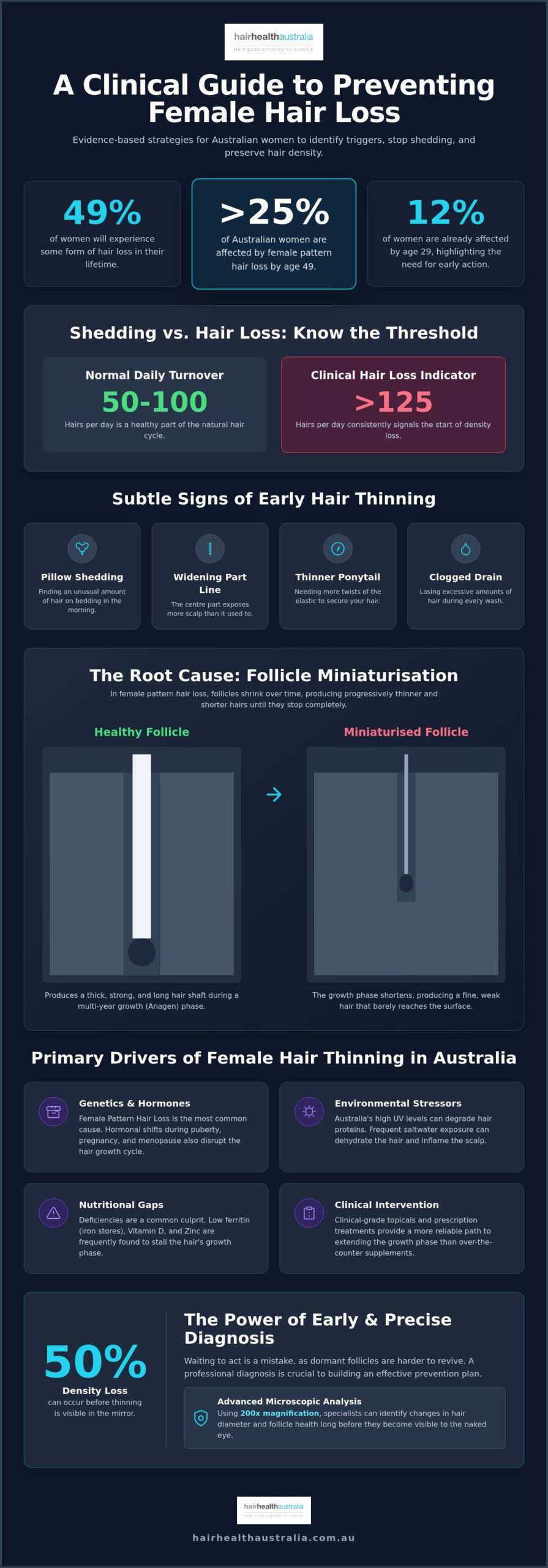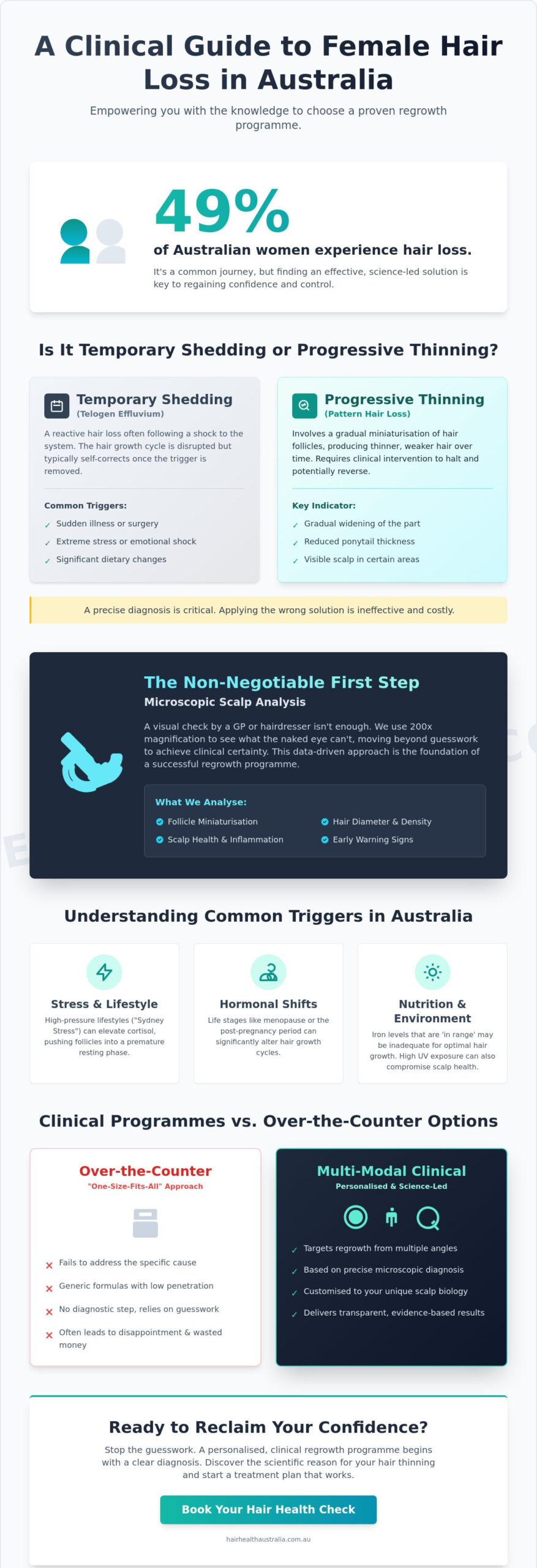
Did you know that by age 49, more than 25% of Australian women are already navigating the complexities of thinning hair? It’s a silent concern that often starts with a slightly wider part or a thinner ponytail, leading to a frantic search for solutions that actually work. You’ve likely felt the frustration of conflicting online advice or wasted money on “miracle” shampoos that deliver nothing but empty promises. We understand the deep anxiety that comes with watching your hair density change and the exhaustion of trying to fix it alone.
This clinical guide explains how to stop female hair loss from progressing by using evidence-based, non-surgical strategies to stabilise shedding and protect your remaining follicles. You’ll discover the essential steps to securing a professional diagnosis and a clear, actionable plan for 2026. We’ll explore how microscopic hair analysis and personalised protocols move you away from temporary fixes toward lasting hair health, ensuring you have the clarity and confidence to take control of your journey.
Key Takeaways
- Distinguish between temporary shedding and progressive thinning by recognising early indicators such as a widening part line or reduced ponytail volume.
- Understand the biological drivers of follicle miniaturisation, including hormonal shifts and thyroid health, to move beyond ineffective cosmetic remedies.
- Discover the clinical framework for how to stop female hair loss from progressing through professional microscopic scanning and addressing underlying nutritional deficiencies.
- Learn why volumising shampoos provide only a temporary illusion of thickness and how to transition to evidence-based, non-surgical recovery protocols.
- Gain a clear path toward stabilising your hair density with a personalised plan focused on follicle health and long-term scalp vitality.
Recognising the Signs: Is Your Hair Loss Progressing?
Many women feel a sense of panic when they see loose strands in the shower drain. However, noticing hair on your brush isn’t always a sign of permanent loss. To understand how to stop female hair loss from progressing, we must first distinguish between a temporary disruption in the growth cycle and a chronic decline in follicle health. While shedding is a visible event, true progression is often a silent process that occurs over several years.
The Difference Between Shedding and Thinning
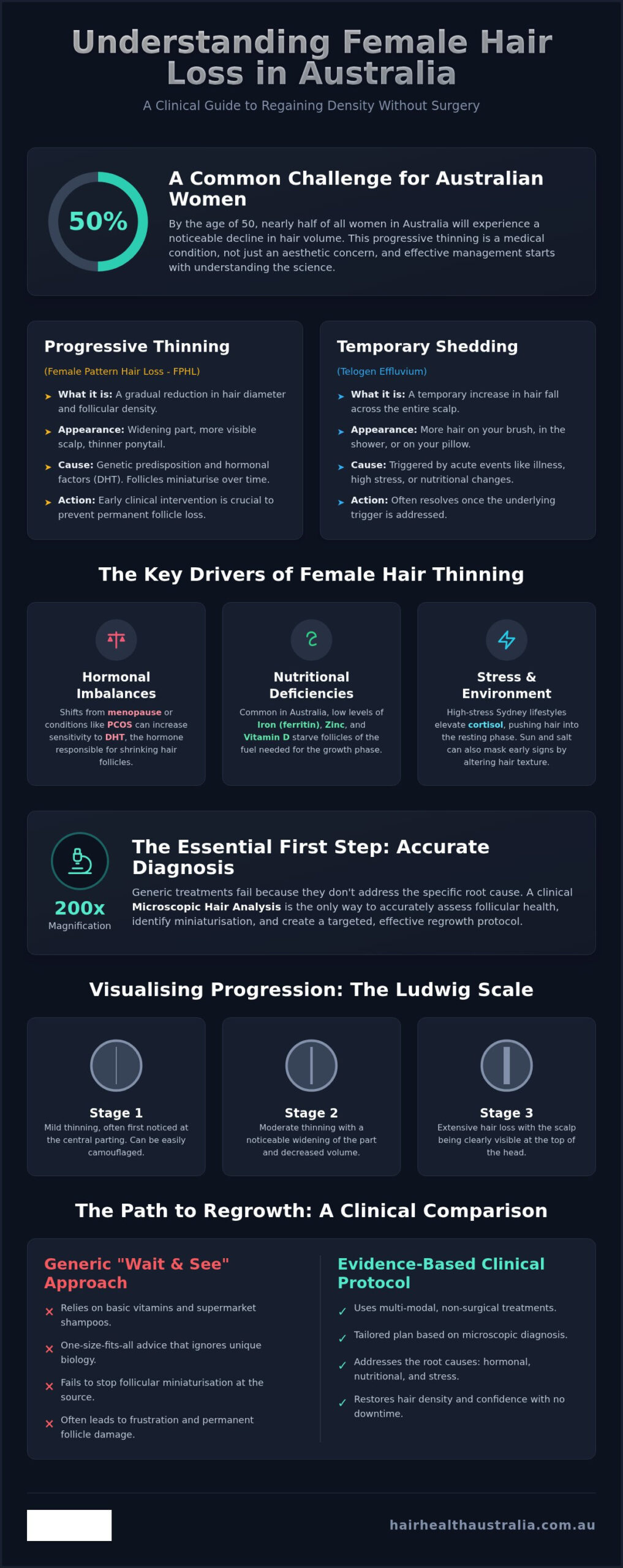
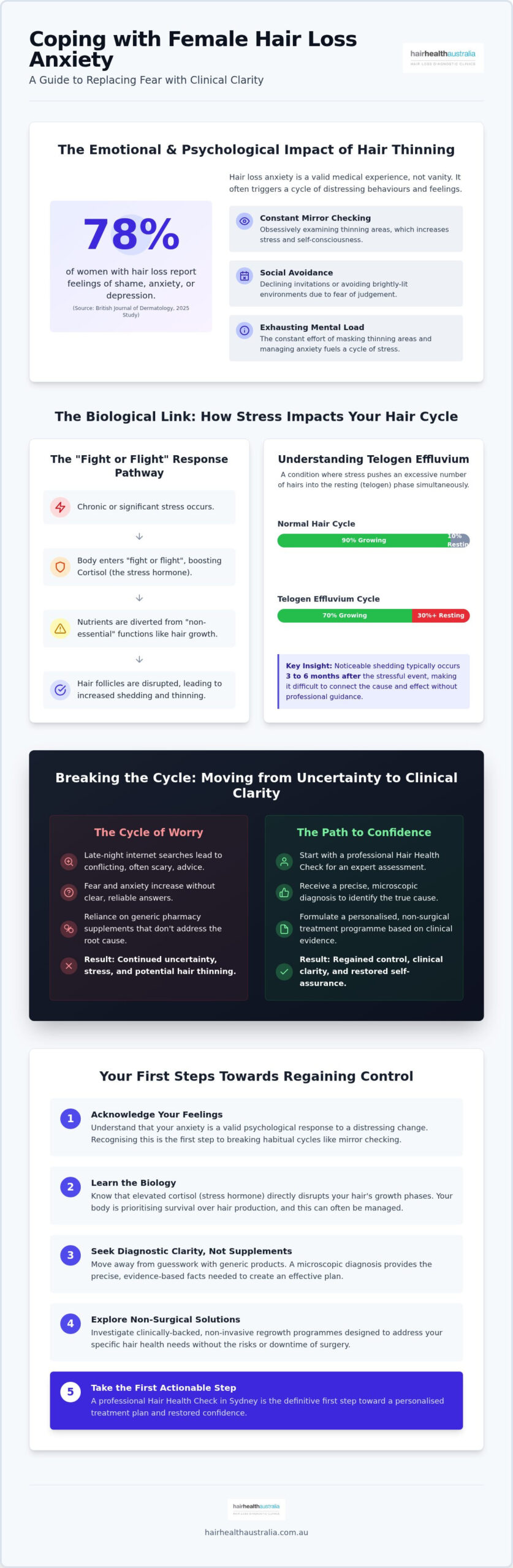
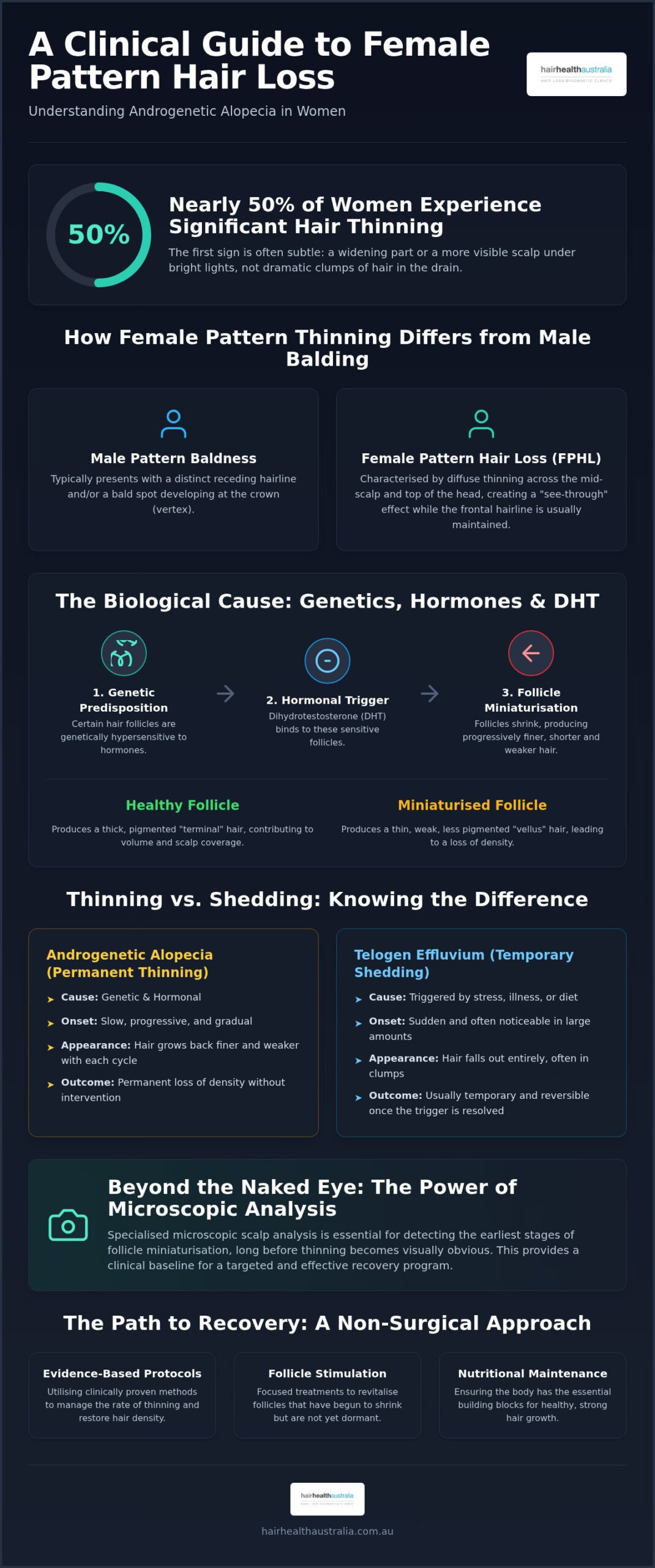
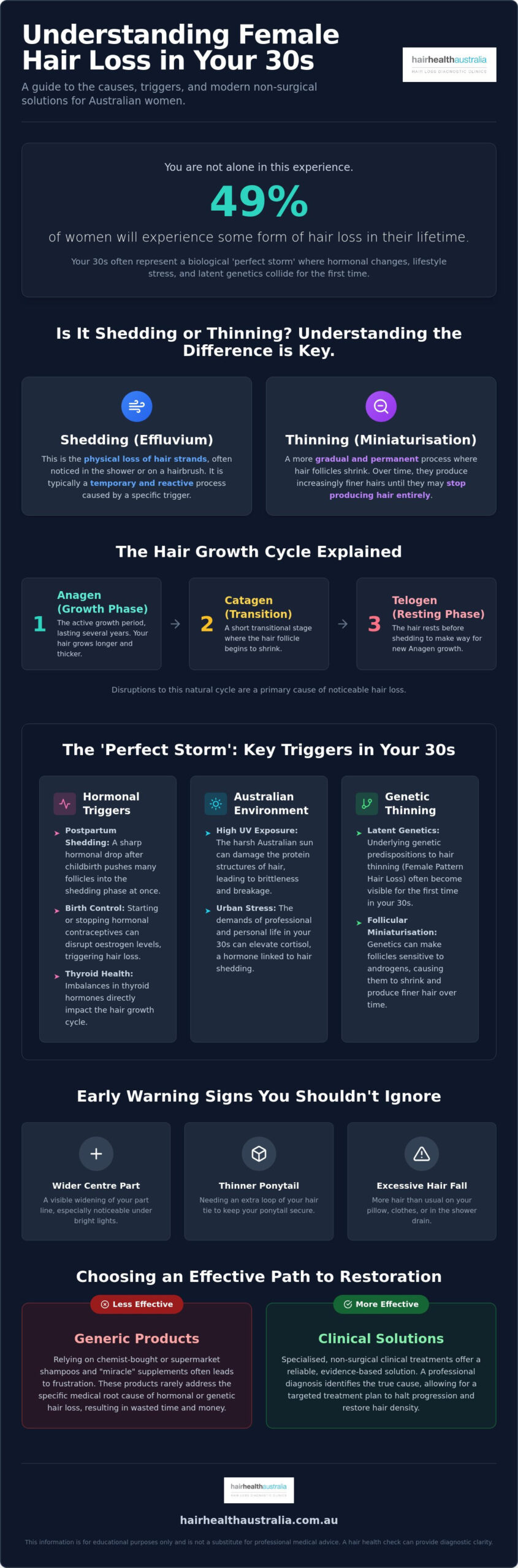
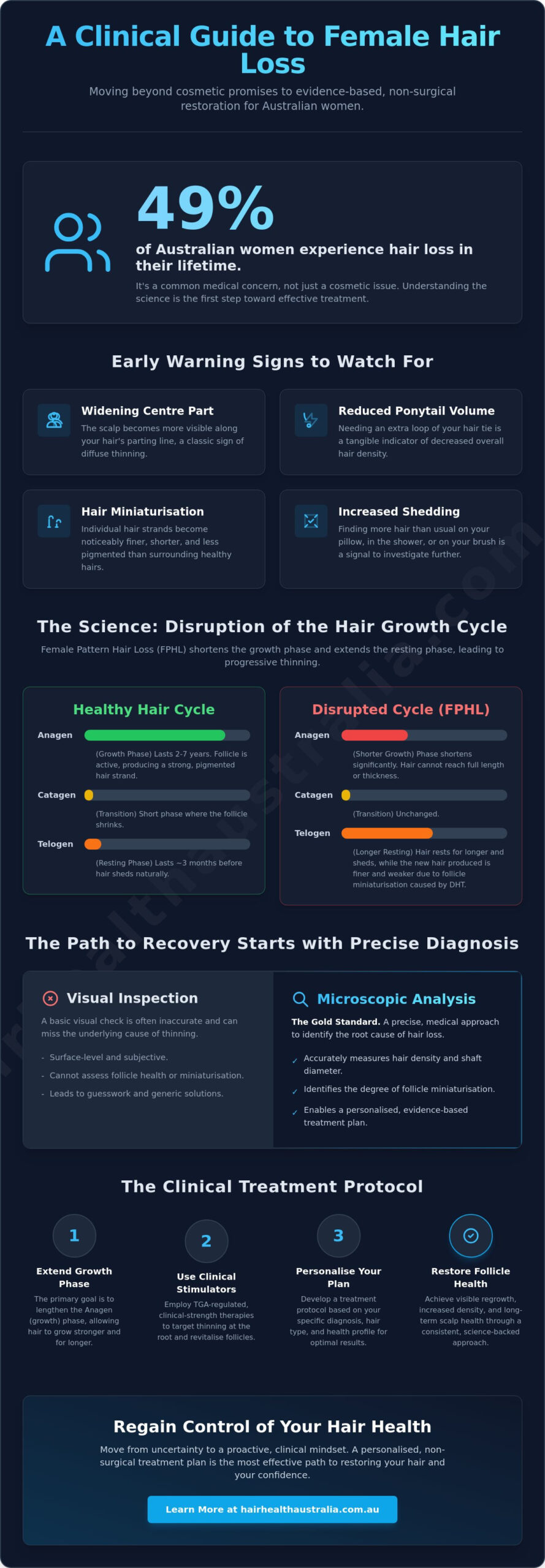
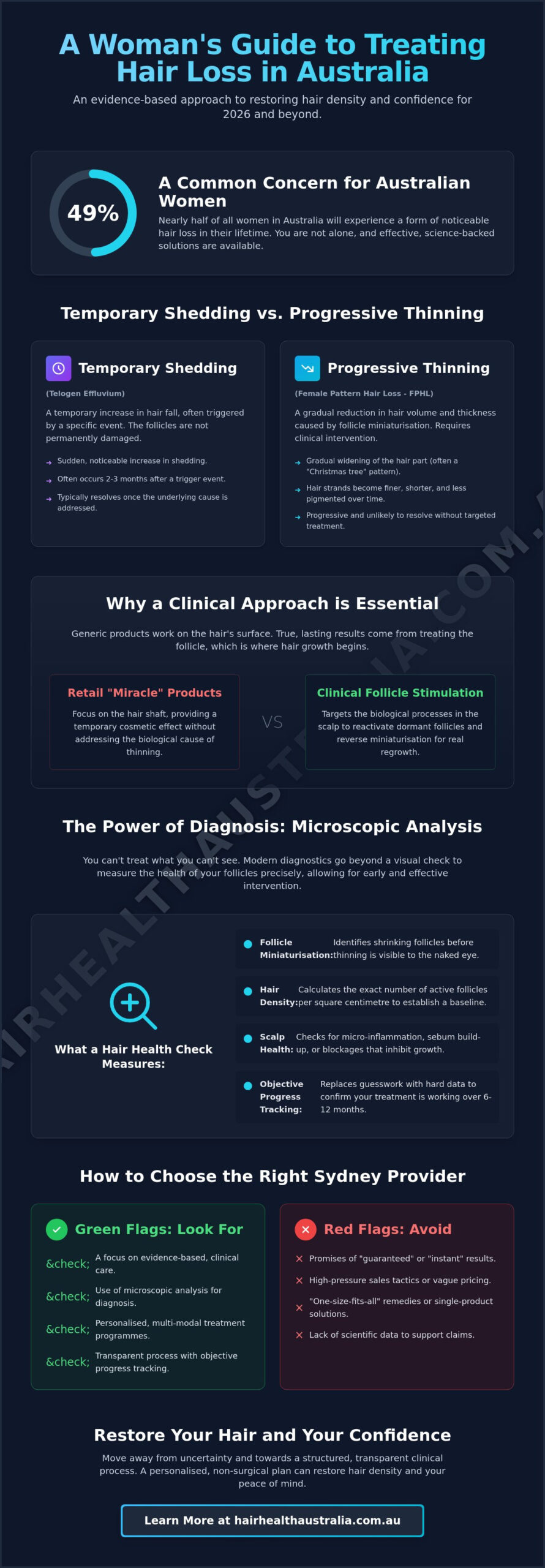
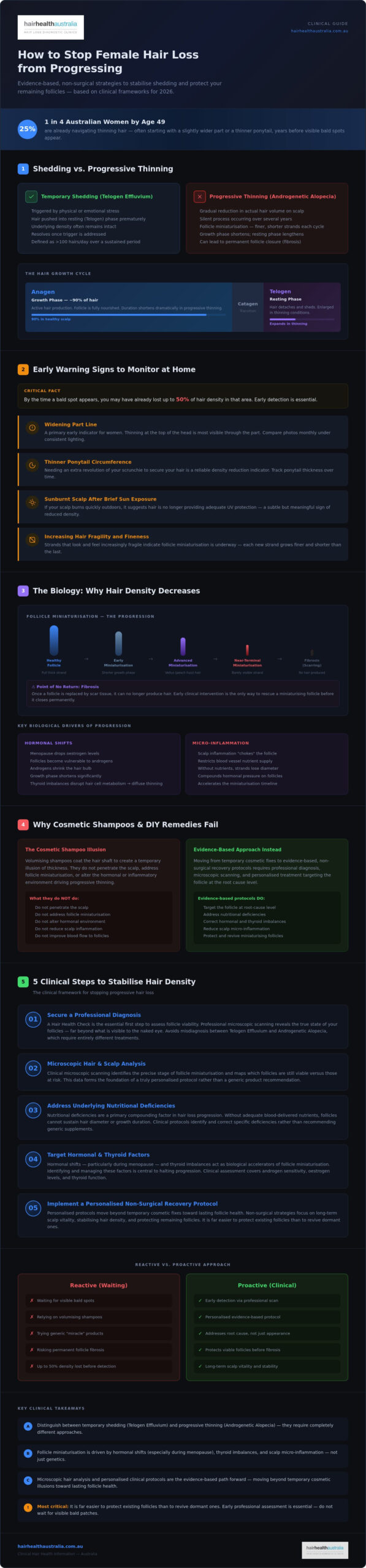
Hair growth follows a structured cycle consisting of the Anagen (growth), Catagen (transition), and Telogen (resting) phases. In a healthy scalp, approximately 90% of your hair is actively growing. Temporary shedding, or Telogen Effluvium, occurs when a physical or emotional stressor prematurely pushes more hairs into the resting phase. You might see a sudden increase in hair fall, but the underlying density often remains intact once the trigger is resolved. In an Australian clinical context, excessive shedding is generally defined as losing significantly more than 100 hairs per day over a sustained period. True progressive thinning is different; it involves a gradual reduction in the actual volume of hair present on the scalp.
Early Warning Signals to Monitor at Home
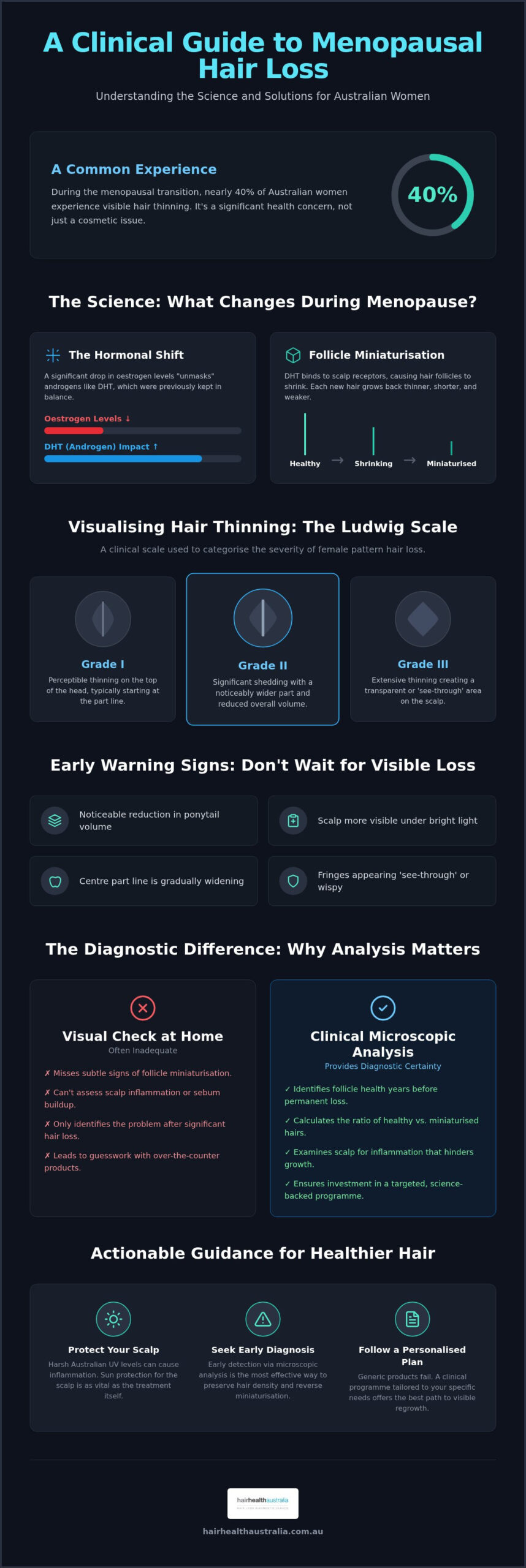
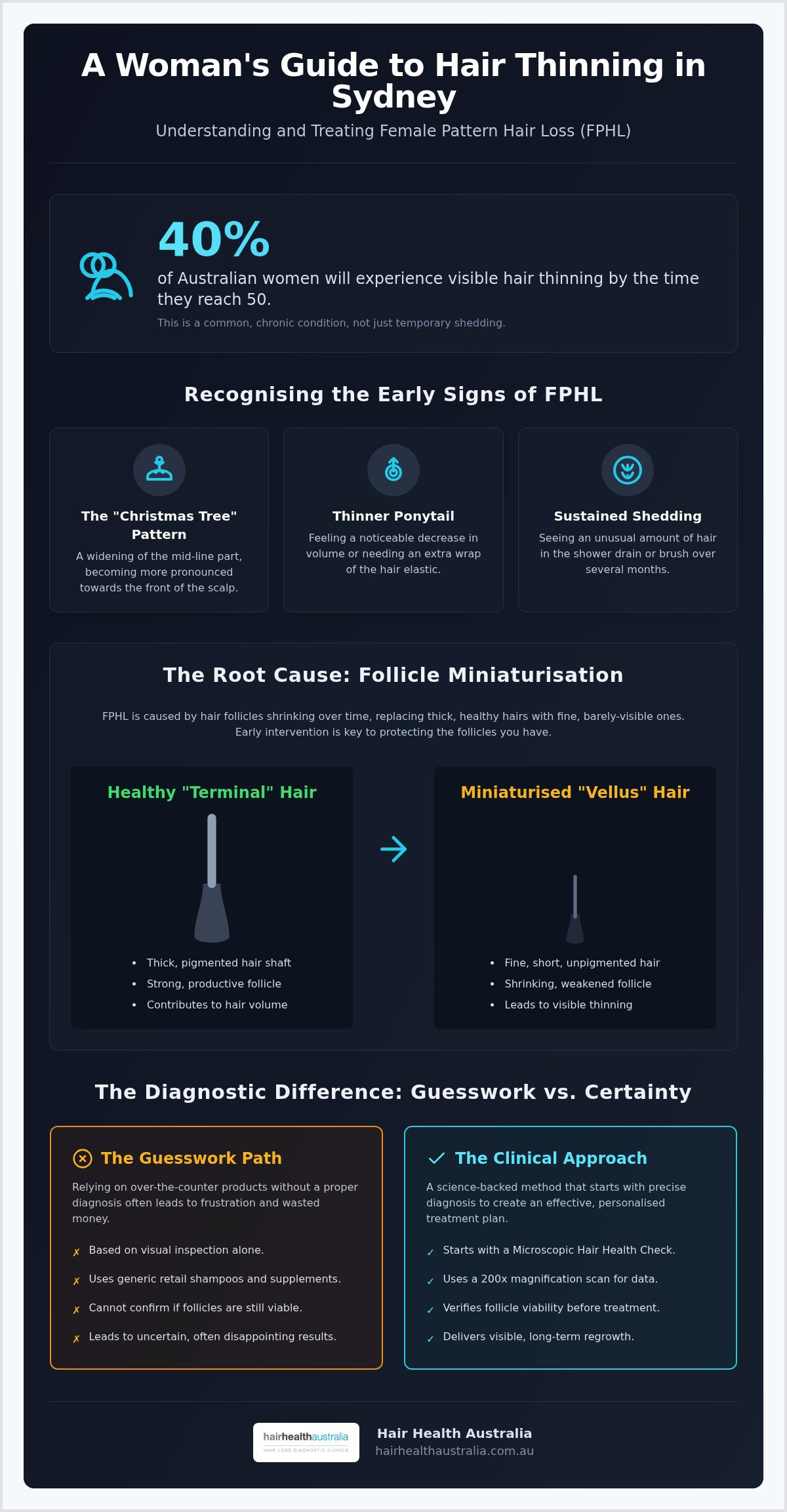
Progressive thinning often hides in plain sight during its early stages. One of the most reliable indicators is a change in your ponytail thickness. If you find yourself needing an extra revolution of your scrunchie to secure your hair, your density is likely decreasing. Another subtle sign is noticing a sunburnt scalp after a short time outdoors, which suggests the hair is no longer providing adequate UV protection. You may also notice a widening part line, which is a primary early indicator for women that the hair is thinning at the top of the head.
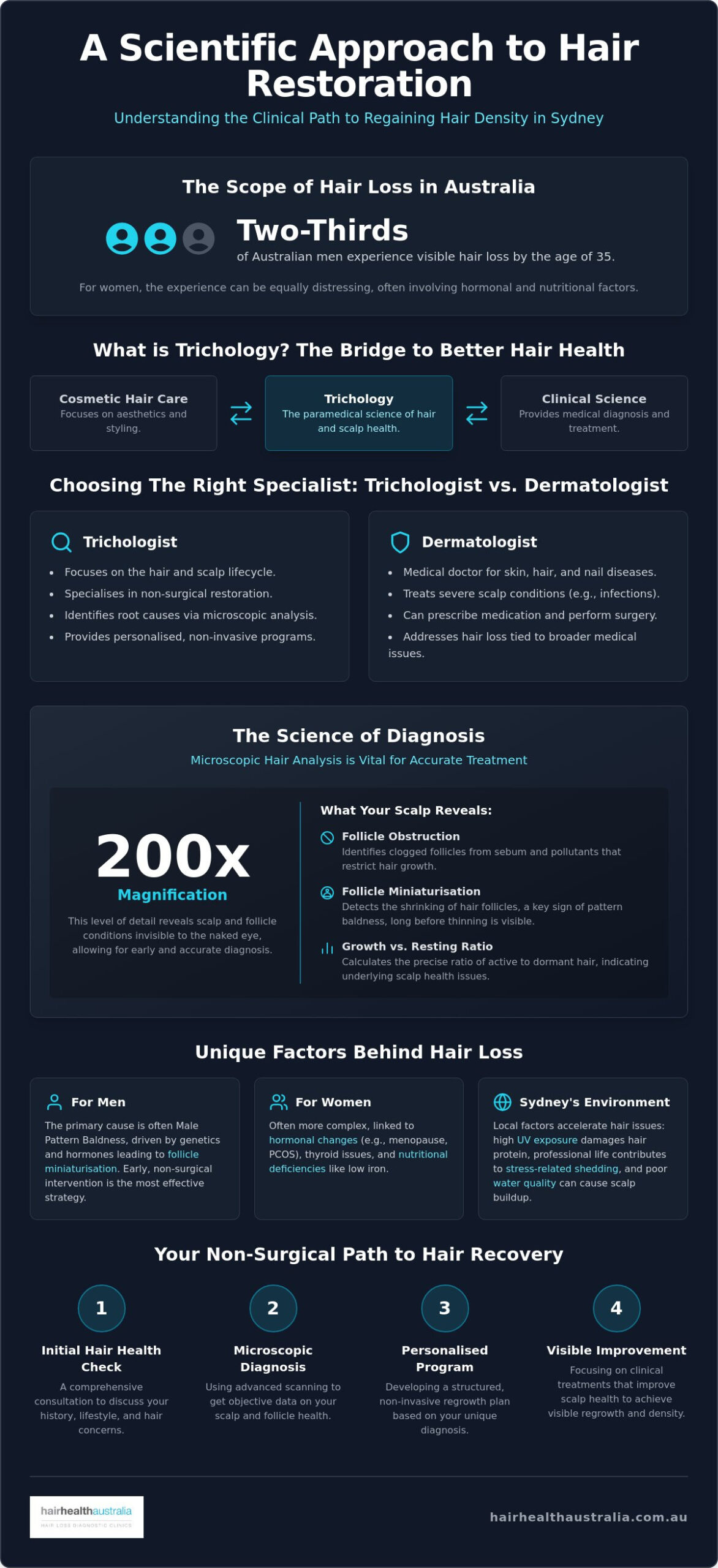
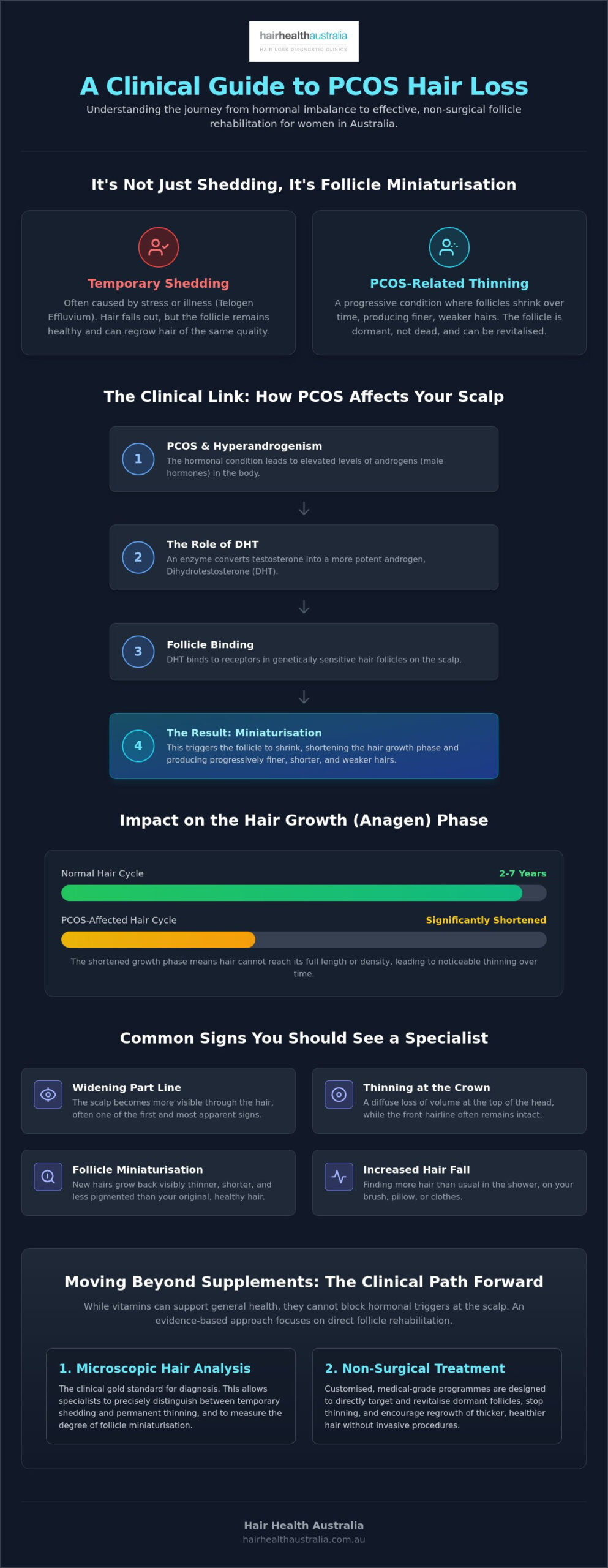
Follicular miniaturisation is the primary driver of progressive thinning, where each successive growth cycle produces a hair that is finer, shorter, and less capable of providing scalp coverage. This process is a hallmark of androgenetic alopecia, where the hair’s growth phase shortens until the follicle eventually stops producing a visible strand. Waiting for visible bald spots is a critical mistake in clinical stabilisation. By the time a “spot” appears, you may have already lost up to 50% of the hair density in that area. Early detection is vital because it’s far easier to protect existing follicles than to revive dormant ones. Securing a professional Hair Health Check is the essential first step to assess follicle viability before the condition advances further.
The Biology of Progression: Why Hair Density Decreases
Understanding how to stop female hair loss from progressing requires a look beneath the scalp’s surface. While many products focus on the hair shaft, the real biological battle occurs at the follicle level. Androgenetic Alopecia, or Female Pattern Hair Loss, is the most common cause of this decline. This condition involves follicles becoming increasingly sensitive to hormonal changes, which leads to a shorter growth phase and a significantly longer resting phase. When we discuss how to stop female hair loss from progressing, we’re essentially talking about protecting the follicle’s ability to receive life-sustaining blood flow and nutrients.
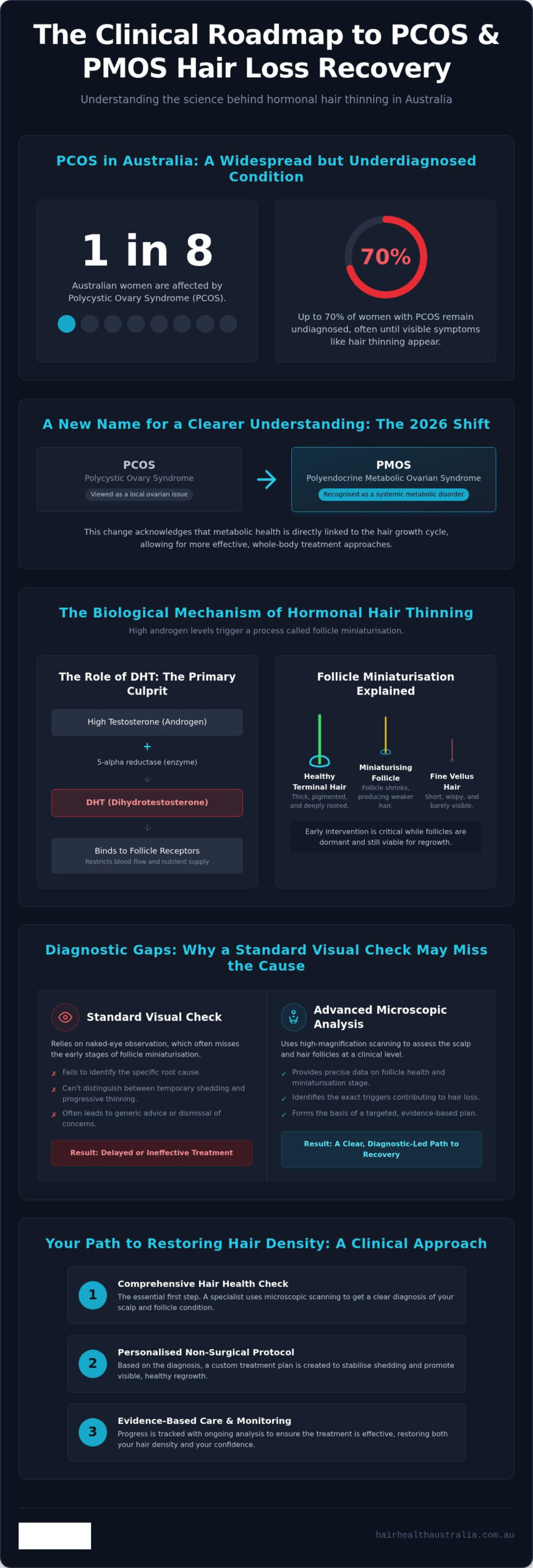
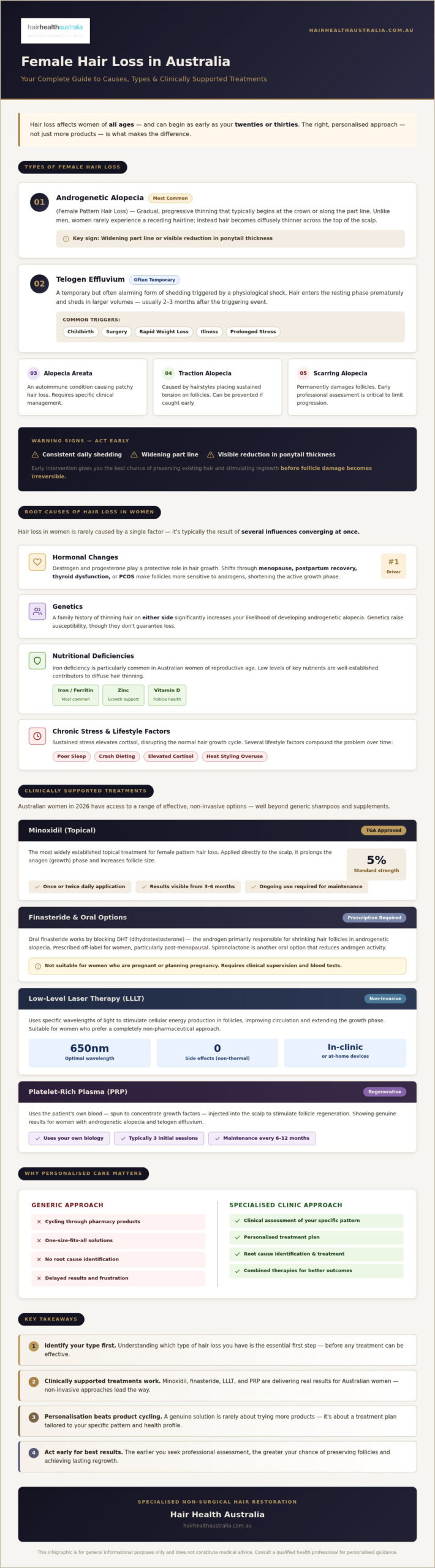
Hormonal shifts, particularly during menopause or due to thyroid imbalances, act as biological accelerators. During menopause, the drop in oestrogen can leave follicles vulnerable to the effects of androgens, which shrink the hair bulb. Thyroid issues can similarly disrupt the metabolic rate of hair cells, leading to diffuse thinning. This pressure is often compounded by micro-inflammation. When the scalp is inflamed, it effectively “chokes” the follicle, restricting the nutrient supply delivered via the blood vessels. Without this essential support, the hair cannot maintain its diameter, resulting in strands that look and feel increasingly fragile.
Follicle Miniaturisation Explained
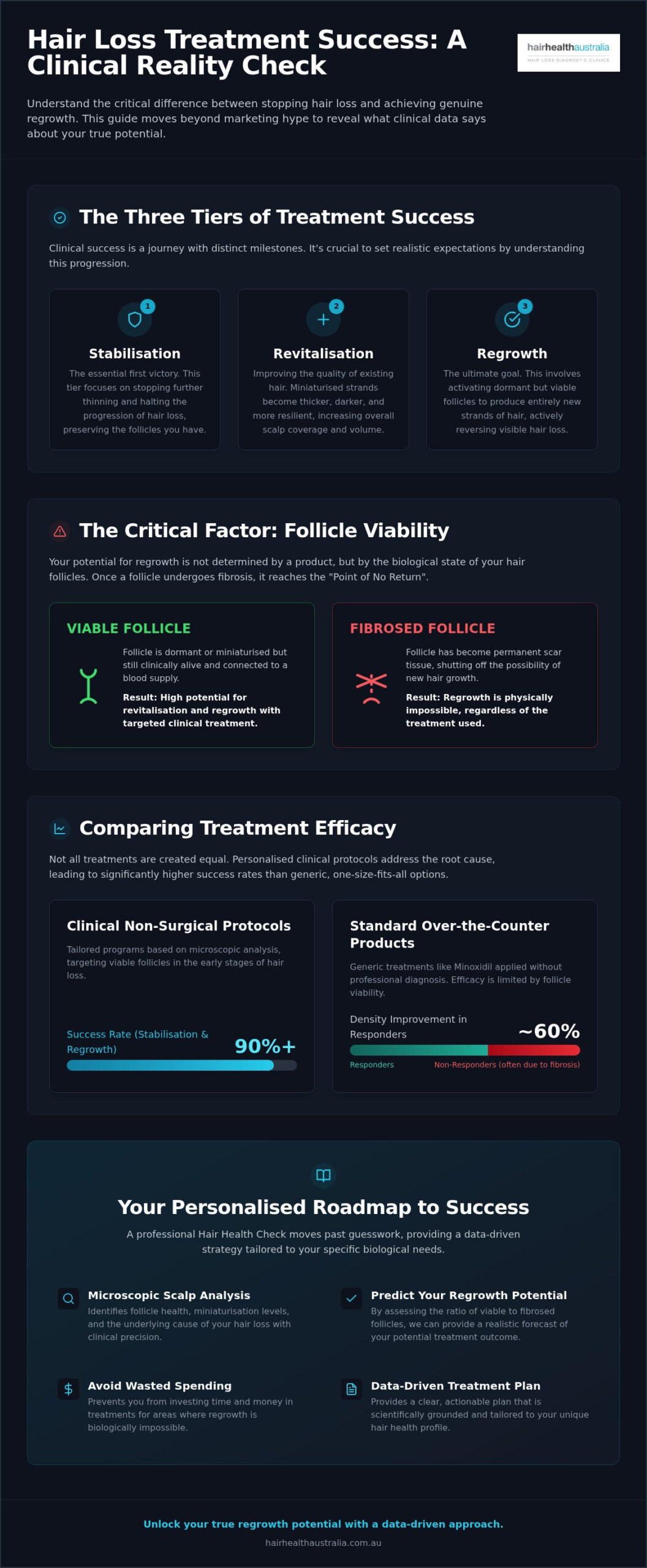
Miniaturisation is a progressive process where a healthy, robust follicle gradually produces a thinner, shorter strand known as “vellus” hair. This is often compared to peach fuzz. If this process isn’t interrupted, the follicle eventually reaches a point of no return called fibrosis. At this stage, the follicle is replaced by scar tissue and can no longer produce hair. Research into clinical treatments for hair loss emphasises that early intervention is the only way to rescue a miniaturising follicle before it closes permanently.
Hormonal and Environmental Triggers in Australia
Our environment in Sydney presents unique challenges to scalp health. High UV levels don’t just damage the skin; they can degrade hair proteins and cause oxidative stress on the scalp, further accelerating the thinning process. Additionally, chronic stress triggers cortisol spikes that can force follicles into a premature resting state. Recognising these early signs of alopecia in women is crucial for long-term stabilisation. If you’ve noticed your hair density changing, a professional microscopic hair analysis can identify exactly where your follicles sit on the miniaturisation scale.
Why Cosmetic Shampoos and DIY Remedies Fail to Stop Progression
Many women spend hundreds of dollars on “miracle” shampoos, hoping for a return to their previous density. However, there’s a fundamental difference between hair breakage and actual hair loss. Breakage is a cosmetic concern where the hair shaft snaps due to heat or chemical damage. In contrast, progressive hair loss is a biological event occurring at the follicle level. If you’re noticing signs of female hair loss like a widening part or a thinner ponytail, a shampoo that simply coats the hair shaft can’t provide a long-term solution.
Volumising shampoos rely on temporary polymers to swell the hair strand, creating an illusion of thickness that disappears with the next wash. They do nothing to address the underlying miniaturisation of the follicle. Similarly, the trend of using biotin supplements for genetic thinning is often a wasted effort. While biotin supports keratin production for nails, it doesn’t target the hormonal drivers of androgenetic alopecia. To understand how to stop female hair loss from progressing, we must acknowledge that the follicle bulb sits deep within the dermis. Most supermarket topicals simply lack the specialised delivery systems required to penetrate the scalp and reach the hair’s growth centre.
The Limitations of Over-the-Counter Solutions
Relying solely on supermarket products often creates a dangerous delay in seeking clinical intervention. While you experiment with rosemary oil or DIY masks, your follicles continue to miniaturise. As we’ve explored, once a follicle reaches the stage of fibrosis, regrowth is no longer possible. A natural approach can be a supportive element of your routine, but it must be paired with medical-grade protocols to be effective. Delaying professional help while waiting for a cosmetic product to work often leads to irreversible density loss.
Clinical vs. Cosmetic: What Your Scalp Actually Needs
Clinical-grade treatments differ from cosmetic ones by focusing on the DHT pathway and specialised scalp preparation. Effective stabilisation requires active ingredients that can inhibit the hormones responsible for follicle shrinkage. Clinical scalp preparation also involves removing the build-up of sebum and calcification that can block topical absorption. For those seeking the best hair regrowth treatment Australia 2026 has to offer, the focus must shift from simply “washing” the hair to “treating” the scalp environment. This professional approach ensures that active ingredients reach the follicle bulb where they can actually influence the growth cycle.
5 Clinical Steps to Stabilise and Protect Your Hair Density
Stopping the decline of hair density requires more than just hope; it demands a structured, medical-grade framework. While general advice often suggests a “wait and see” approach, clinical stabilisation focuses on proactive intervention. To understand how to stop female hair loss from progressing, you must move through a sequence of steps designed to identify the root cause and implement targeted recovery protocols. This systematic approach ensures that every action taken is based on your unique biological profile rather than guesswork.
Step 1: The Diagnostic Foundation
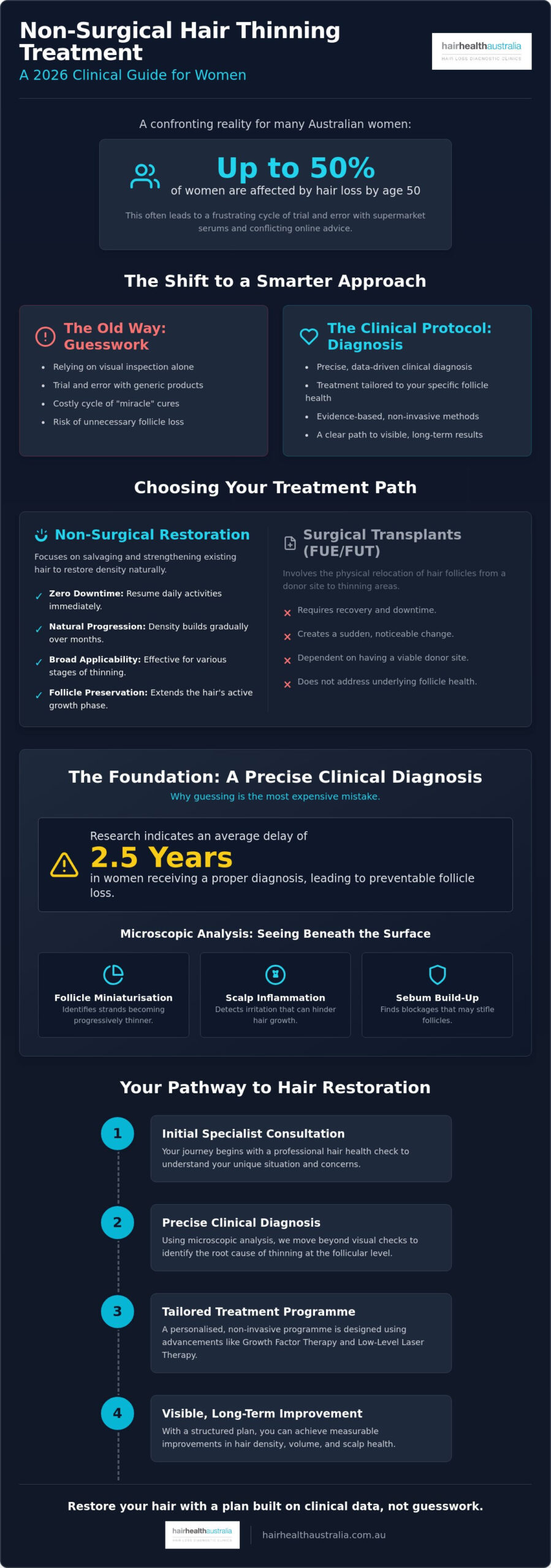
A visual inspection in a mirror is insufficient for a modern hair loss diagnosis. By the time thinning is visible to the naked eye, a significant percentage of hair density may already be compromised. A professional Hair Health Check in Sydney uses specialised microscopic scanning to assess the scalp at a cellular level. This analysis reveals the exact rate of follicle miniaturisation, the health of the scalp environment, and the percentage of hairs currently in the resting phase. This data is the essential first step, as it determines which follicles are still viable for recovery and which require intensive stabilisation.
Stabilisation and Growth Protocols
Once a diagnosis is established, the focus shifts to a multi-layered clinical programme. This involves four additional critical steps:
- Step 2: Address Internal Triggers: We identify and correct underlying nutritional or hormonal deficiencies, such as low ferritin or thyroid imbalances, that often accelerate hair fall.
- Step 3: Follicle Stimulation: We implement clinical-grade stimulators designed to prolong the Anagen (growth) phase, effectively “waking up” dormant follicles.
- Step 4: Scalp Optimisation: Professional cleansing and therapy sessions remove calcification and sebum build-up, ensuring the scalp is a healthy environment for new growth.
- Step 5: Systematic Monitoring: Regular follow-up scans track your progress, allowing us to adjust the protocol as your hair density improves.
Consistency is the most vital component of any recovery plan. Stopping a clinical treatment prematurely can lead to a renewal of the shedding cycle, as the follicles lose the support they need to maintain their diameter. By following a structured clinical path, you can learn how to stop female hair loss from progressing and begin the journey toward visible density recovery. If you’re ready to move beyond temporary fixes, we recommend booking a professional microscopic hair analysis to secure your personalised roadmap for 2026.
Personalised Non-Surgical Recovery at Our Sydney Clinic
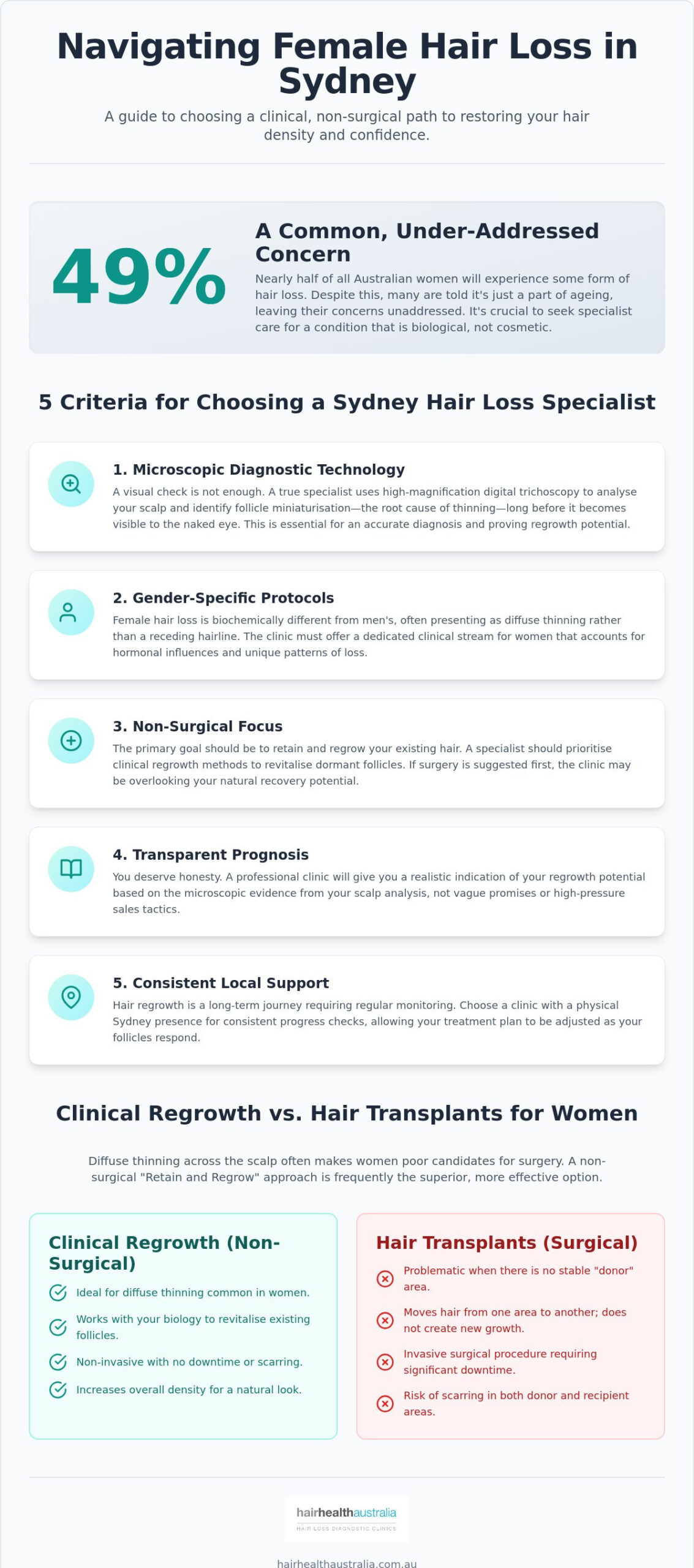
Hair Health Australia operates on a foundation of clinical precision and empathetic care. We understand that thinning hair is more than just a physical change; it’s a personal journey that requires a steady, expert hand. Generic “off-the-shelf” kits often offer a one-size-fits-all promise that fails to account for individual biology. Our approach is entirely bespoke. By focusing on the specific markers of your scalp, we provide a clear path for how to stop female hair loss from progressing without the need for invasive surgery. Our Sydney clinic specialises in non-surgical regrowth programs that prioritise long-term follicle health and visible density improvement.
Why Sydney Women Choose Clinical Restoration
Many of our clients come to us after years of frustration with conflicting advice. We provide a space for “straight-talking” clinical honesty, where expectations are managed with scientific accuracy. Having a dedicated specialist guide you through the process ensures that you aren’t just applying treatments, but understanding why they work for your specific condition. This level of professional oversight is a cornerstone of effective hair loss treatment for women. We move beyond guesswork to focus on verified results and systematic care, ensuring you feel supported at every stage of your recovery.
Next Steps: Your Journey to Thicker Hair
Your recovery begins with a comprehensive first visit to our Sydney centre. During this consultation, we conduct a Hair Health Check, which is the most critical step in assessing your current status. We use microscopic scanning to look deep into the scalp, identifying miniaturising follicles and assessing the overall health of the skin and hair bulbs. This diagnostic data is essential for anyone wondering how to stop female hair loss from progressing, as it provides the baseline for all future recovery. We then create a custom clinical protocol that addresses your specific needs, whether that involves follicle stimulators, scalp therapy, or nutritional support. We invite you to reclaim your confidence through a scientific hair restoration plan that is built on over 15 years of clinical experience.
Securing Your Hair’s Future with Clinical Precision
Stabilising hair density is a clinical process that requires both patience and precision. We’ve explored why cosmetic solutions often fail to reach the follicle bulb and how biological triggers like hormonal shifts accelerate thinning. Understanding how to stop female hair loss from progressing starts with moving away from superficial remedies and embracing a diagnostic-led approach. By identifying miniaturisation early through advanced microscopic scalp analysis, you can intervene before follicles reach a state of permanent fibrosis.
Our Sydney-based specialists bring over 15 years of clinical experience to every consultation, offering clinically-backed non-surgical protocols tailored to your unique needs. You don’t have to navigate this journey alone or rely on guesswork. Taking the first step today ensures you protect your remaining density and build a foundation for future hair health. Book Your Comprehensive Hair Health Check in Sydney Today and begin your recovery with confidence.
Frequently Asked Questions
Can female hair loss really be stopped once it starts?
Yes, it is entirely possible to stabilise thinning hair provided you intervene before the follicles reach the stage of permanent scarring. The clinical focus is on halting the miniaturisation process that leads to visible density loss. By identifying specific biological triggers and addressing them with non-surgical protocols, we can protect your remaining hair and encourage regrowth. This is why a professional diagnosis is the essential first step in your recovery journey.
How long does it take to see results from clinical hair loss treatments?
Most women begin to notice a stabilisation in shedding within the first three months of a clinical programme. Visible improvements in hair density usually take between six and nine months to appear on the scalp. This timeline is dictated by the natural hair growth cycle, which cannot be rushed. Consistency is required to ensure that each new growth phase produces a thicker and more robust hair strand than the previous cycle.
Is female pattern hair loss the same as what men experience?
While both conditions involve hormone sensitivity, the presentation is quite different for women. Men typically experience a receding hairline or a bald spot at the crown, whereas women usually see diffuse thinning across the top of the head. This often manifests as a widening part line rather than total baldness. Understanding these unique patterns is a core part of how to stop female hair loss from progressing through targeted, gender-specific clinical interventions.
Will my hair fall out again if I stop clinical treatment?
If the underlying cause of your thinning is genetic or hormonal, stopping treatment can lead to a gradual return of the shedding cycle. Follicles that rely on clinical stimulation to remain in the growth phase will eventually resume the miniaturisation process without ongoing support. We focus on creating sustainable long-term protection plans that maintain your results with minimal daily effort, ensuring your hair density remains stable well beyond the initial recovery phase.
Are there any side effects to non-surgical hair regrowth programs?
Our non-surgical protocols are designed to be minimally invasive and are tailored to your specific scalp sensitivity. While some individuals might experience mild scalp dryness or temporary irritation when starting a new topical regimen, these effects are generally rare and easily managed. Because we use personalised clinical-grade ingredients rather than generic supermarket products, we can adjust your protocol to ensure maximum efficacy without compromising your comfort or scalp health during the treatment process.
How does the Sydney climate affect female hair thinning?
The high UV index in Sydney can significantly impact hair protein health and increase oxidative stress on the scalp. Prolonged sun exposure can degrade the hair shaft and irritate the skin, which may accelerate the thinning process in vulnerable areas. Additionally, humidity and environmental pollutants in the city can lead to sebum build-up. We incorporate specific scalp-cleansing therapies into our Sydney-based programmes to counteract these environmental factors and maintain an optimal growth environment.
Can stress alone cause permanent hair loss in women?
Stress typically causes a temporary condition called telogen effluvium, where a sudden shock pushes follicles into a resting state. While this results in significant shedding, the hair usually grows back once the stressor is removed. However, chronic stress can sometimes trigger or accelerate an underlying genetic predisposition to permanent thinning. It is important to distinguish between these two events through a microscopic scan to ensure you are following the correct recovery path.
What is the most effective way to measure hair loss progression at home?
Monitoring your part line in consistent lighting is one of the most reliable ways to track changes at home. You can also pay attention to your ponytail thickness; needing more revolutions of a hair tie often indicates a loss of density. While these methods are helpful for general awareness, they cannot replace the accuracy of microscopic scanning. Learning how to stop female hair loss from progressing requires the precise data that only a professional diagnostic tool can provide.