Understanding the Hair Growth Cycle: A Clinical Guide to Restoration in 2026

Have you ever wondered if the handful of hair in your shower drain is a normal part of your biology or a warning sign of something more permanent? It’s incredibly unsettling to notice your part line widening or your crown thinning, especially when generic “miracle” shampoos fail to deliver anything but disappointment. You aren’t alone in this frustration, and it’s likely that what you’re seeing is a disruption in your natural hair growth cycle.

Understanding this biological rhythm is the essential first step in moving from uncertainty to a proven clinical strategy. This guide will help you master the science behind how your hair functions and explain how targeted clinical interventions can restart the growth phase to combat thinning effectively. We will examine the specific stages of hair loss and outline a professional, non-surgical path to restoring the density you deserve. By the end, you’ll have the clarity needed to take control of your hair health with confidence.

Key Takeaways

  • Learn why the hair growth cycle is the foundation of all restoration and how identifying its current phase determines your treatment success.
  • Discover the specific biological triggers, such as DHT or stress, that cause your hair follicles to enter a premature resting state.
  • Understand why a standard visual check isn’t enough and how microscopic analysis provides a precise map of your scalp health.
  • Explore how modern clinical therapies work to re-energise follicles and extend the active growth phase without the need for surgery.
  • Find out how a professional Hair Health Check in Sydney can move you from frustration to a personalised, evidence-based restoration plan.

The Four Phases of the Hair Growth Cycle Explained

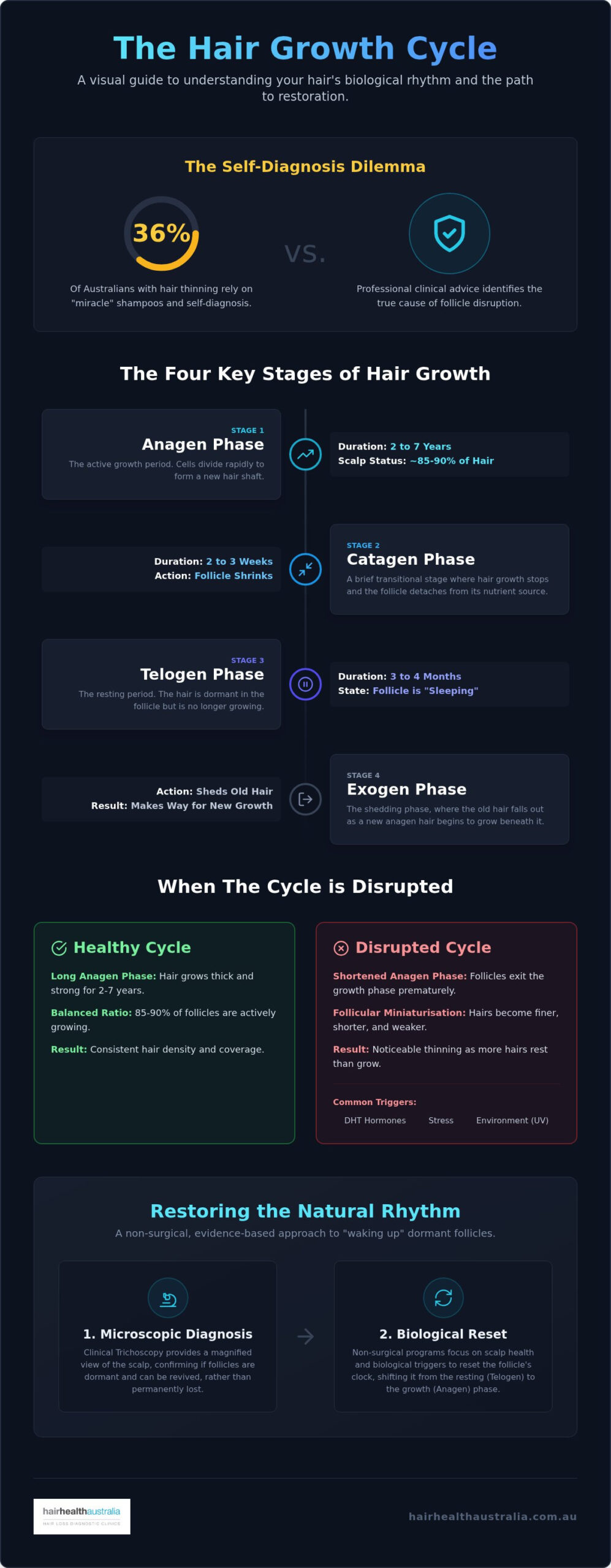
Your hair doesn’t grow in a continuous, endless stream. It operates on a sophisticated biological clock. Every individual follicle on your scalp functions independently, moving through a specific sequence that determines the length, strength, and density of your hair. Research confirms that the three stages of hair growth, consisting of the anagen, catagen, and telogen phases, along with the final exogen phase, create the foundation of your scalp’s health. Understanding this hair growth cycle is the first step in identifying why your hair might be thinning and how to fix it.

The cycle is broken down into four distinct stages:

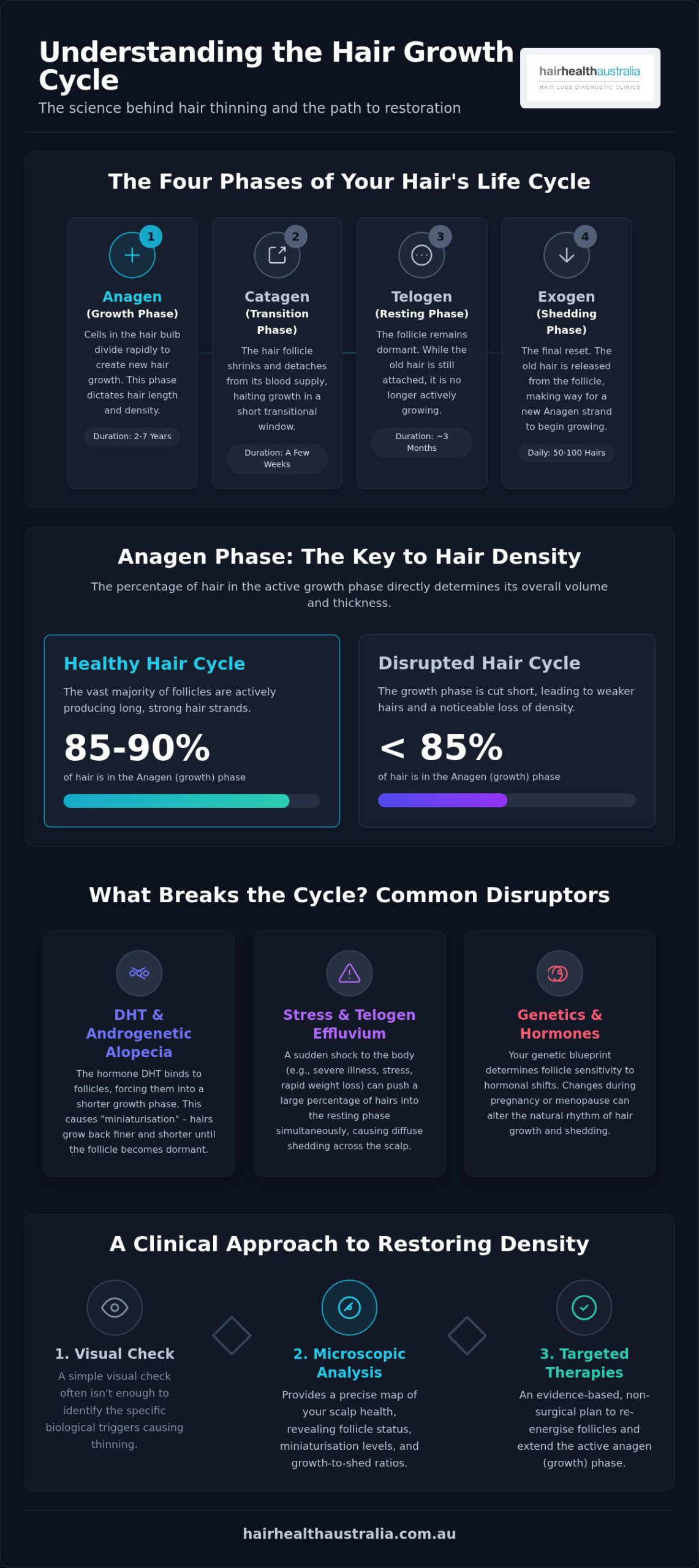
  • Anagen (The Growth Phase): This is the most critical stage for volume. Cells in the hair bulb divide rapidly, creating new hair growth. A healthy scalp should have the vast majority of its follicles in this phase at any given time.
  • Catagen (The Transition Phase): This short window lasts only a few weeks. The hair follicle shrinks and detaches from the dermal papilla, which is the blood supply that fuels growth.
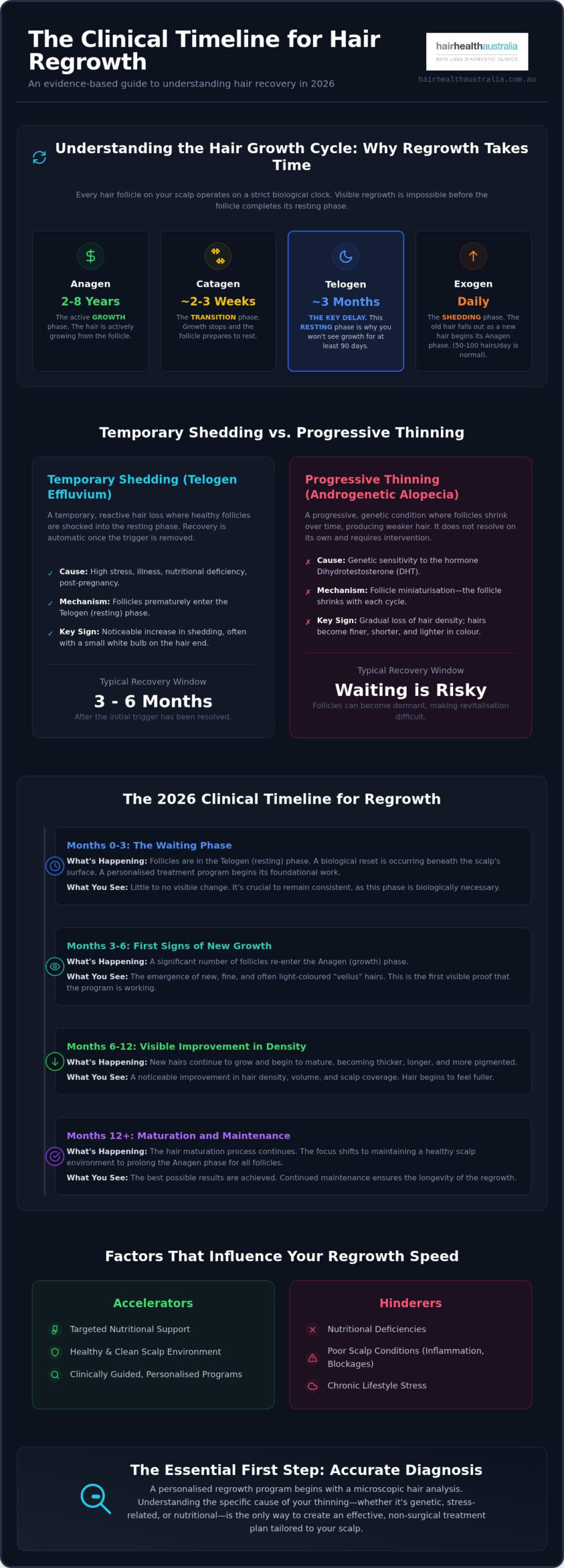
  • Telogen (The Resting Phase): The follicle remains dormant. While the hair stays attached, it is no longer actively growing. This phase typically lasts around three months.
  • Exogen (The Shedding Phase): This is the final reset. The old hair is released from the follicle to make way for a new anagen strand.

Why the Anagen Phase is the Key to Density

The duration of the anagen phase directly dictates how long and thick your hair can grow. For most people, this phase lasts between two and seven years. When your hair growth cycle is functioning optimally, roughly 85 to 90 per cent of your hair is in this active state. If this phase is cut short by genetics or health factors, the hair doesn’t have enough time to reach its full diameter. Over time, this leads to a noticeable loss of density as the “growing” population of hairs on your head begins to dwindle, leaving more follicles in the resting or shedding stages.

Normal Shedding vs. Clinical Hair Loss

It’s common to feel a sense of alarm when you see hair in the drain, but some loss is a sign of a healthy reset. The average Australian sheds between 50 and 100 hairs per day during the normal exogen phase. This is simply the body making room for new growth. Problems arise when the exogen phase occurs too rapidly or when the new hair pushing through is weaker than the one it replaced. This leads to miniaturisation; a process where the follicle physically shrinks, producing finer, shorter hair until it eventually stops producing a visible strand. If you suspect your shedding has moved beyond the norm, a professional Hair Health Check is the most reliable way to measure your current growth-to-shed ratio.

When the Cycle Breaks: Identifying Disruptions and Thinning

While the hair growth cycle is a robust biological system, it’s susceptible to specific disruptions that can trigger visible thinning. The most common culprit is Androgenetic Alopecia, which affects roughly 50 per cent of men by age 50 and up to 70 per cent of women post-menopause in Australia. This condition is driven by Dihydrotestosterone (DHT), a hormone that binds to follicles and forces them to spend less time in the anagen phase. As the growth phase shortens, the follicle undergoes miniaturisation. This is a physical process where the follicle produces hairs that are increasingly fine and short until it eventually becomes dormant.

Understanding the Physiology of Hair Growth reveals that even temporary disruptions, known as Telogen Effluvium, can cause significant distress. This occurs when a sudden shock to the body, such as severe illness, rapid weight loss, or chronic stress, pushes a large percentage of hairs into the resting phase simultaneously. Unlike pattern baldness, this usually results in diffuse shedding across the entire scalp rather than a receding line or thinning crown. Environmental factors also play a role; the harsh Australian sun and our outdoor lifestyle can lead to oxidative stress on the scalp, further compromising the health of the follicle bulb.

The Role of Genetics and Hormones

Your genetic blueprint determines how sensitive your hair follicles are to hormonal shifts. For women, the hair growth cycle is often influenced by fluctuations in oestrogen and progesterone, particularly during pregnancy or menopause. These changes can alter the rhythm of growth and shedding, making it difficult to distinguish between temporary thinning and permanent loss. Because these triggers are often internal, a visual inspection isn’t enough to determine the cause. Booking a professional hair health check is the most effective way to identify whether your thinning is driven by hormonal sensitivity or hereditary factors.

Lifestyle Factors Impacting Your Growth Rhythm

Living in Australia presents unique challenges for scalp health. Despite our climate, many Australians struggle with low Vitamin D levels, which is a critical component for follicle cycling. Iron deficiency is another common factor, especially for women, as iron is essential for carrying oxygen to the hair bulb to fuel cell division. Chronic stress also plays a role by keeping the body in a state of ‘fight or flight’, which deprioritises non-essential functions like hair production. It’s important to separate these clinical factors from common myths; wearing hats, frequent washing, or ‘clogged’ pores are rarely the true cause of thinning. If you’ve noticed unexplained shedding in the shower or a widening part, a thorough hair health check can provide the diagnostic data needed to plan a professional path forward.

Microscopic Hair Analysis: How Sydney Specialists Map Your Growth Cycle

While a quick glance in the mirror or a general GP visit might identify that thinning is occurring, it cannot tell you why. A visual inspection is often insufficient because it only identifies hair loss once it has reached a visible threshold. By the time you notice a widening part or a receding temple, you may have already lost up to 50 per cent of the hair density in that area. Microscopic hair analysis changes the diagnostic landscape by allowing specialists to see beneath the surface and map your hair growth cycle with mathematical precision.

This specialised scanning technology measures hair density per square centimetre and evaluates the diameter of individual strands. By calculating the exact ratio of hairs currently in the anagen phase versus those in the telogen phase, we can determine if your shedding is a temporary fluctuation or the start of permanent thinning. This data provides a clear clinical overview of the hair growth cycle as it pertains to your specific scalp, forming the essential foundation for any effective male hair loss treatment plan.

The Diagnostic Difference: Seeing Beneath the Surface

The primary advantage of microscopic analysis is the ability to detect follicular miniaturisation long before it becomes obvious to the naked eye. During a consultation at a specialised hair clinic, we examine the scalp environment for secondary issues like chronic inflammation or excessive sebum build-up. These factors can “choke” the follicle and disrupt the hair growth cycle, preventing new hairs from maturing. Identifying these obstacles early allows for a more targeted approach, ensuring that any subsequent restoration programme isn’t just a generic solution but one tailored to your scalp’s unique biological requirements.

Setting Realistic Expectations for Recovery

Data-driven diagnostics allow us to move away from guesswork and provide you with a straight-talking timeline for your results. It’s vital to understand that “instant” cures are a biological impossibility. Because the telogen (resting) phase typically lasts around three months, any clinical intervention designed to restart the anagen phase will require time to manifest physically. Most patients will begin to see a stabilisation of shedding within the first few months, with visible improvements in density following the natural rhythm of the follicle’s reset. At Hair Health Australia, we use the initial data from your Hair Health Check to track your progress objectively, ensuring your restoration journey is grounded in evidence rather than empty promises.

Understanding the Hair Growth Cycle: A Clinical Guide to Restoration in 2026

Clinical Strategies to Re-energise the Anagen (Growth) Phase

Many Australians rely on generic multivitamins to solve thinning, but clinical data suggests that nutrition alone cannot restart a stalled hair growth cycle. While general health is important, pattern baldness and chronic thinning are driven by complex hormonal and environmental factors that require targeted intervention. In Sydney, where high UV exposure and varied water mineral content can impact scalp health, a professional regrowth programme focuses on three essential pillars: inhibition, stimulation, and environment. Moving beyond surface-level solutions allows us to address the biological triggers that keep your hair stuck in the resting phase.

The Science of DHT Inhibition

Blocking Dihydrotestosterone (DHT) is the most effective way to protect the follicle from premature entry into the telogen phase. When DHT is allowed to bind to sensitive follicles, it forces them to shrink, effectively “switching off” the growth phase and leading to miniaturisation. Clinical strategies aim to inhibit this process, allowing the follicle to return to its natural rhythm. Early intervention is vital here. Once a follicle has spent years in a dormant state, it becomes significantly harder to reactivate. By acting while the follicle is still producing a visible strand, we can stabilise density and prevent further loss. For a deeper look at the specific protocols used to achieve this, see our best hair regrowth treatment Australia 2026 reference guide.

Advanced Clinical Growth Support

Restoring density also requires increasing the blood supply to the hair bulb. Non-surgical clinical therapies use biostimulation to deliver essential nutrients and oxygen directly to the source of growth. This is particularly effective for hair loss treatment for women, where hormonal shifts often cause a diffuse thinning that responds well to topical and light-based stimulation. Unlike invasive surgery, these programmes work with your body’s existing systems to strengthen the strands you still have while encouraging “sleeping” follicles to re-enter the anagen phase.

Optimising the scalp environment is also a priority. We address the damage caused by Australia’s harsh UV rays and provide professional-grade topical applications that clear away the oxidative stress and sebum build-up that generic shampoos miss. This comprehensive approach ensures that once the hair growth cycle is restarted, it has the ideal conditions to thrive long-term. If you’re ready to move beyond “miracle” products and start a science-based journey, the first step is booking your Hair Health Check to see which clinical path is right for your specific stage of thinning.

Restoring Your Hair Density with Hair Health Australia

Since our founding circa 2009, Hair Health Australia has focused on bridging the gap between scientific theory and visible results. We understand that every scalp is different, which is why our programmes are never one-size-fits-all. By using the data from your microscopic analysis, we can precisely target the stage where your hair growth cycle has stalled. This evidence-based approach ensures that you aren’t wasting time on generic solutions that ignore your specific biological needs.

Our commitment is to provide a modern, non-surgical alternative to invasive transplants. While some clinics suggest surgery as the only permanent option, we have found that many patients can achieve significant restoration through biostimulation and clinical management. It’s about restoring the health of the follicle itself rather than just moving hair from one place to another. This is particularly important in the Australian climate, where we must account for high UV indices and local water quality when designing your restoration plan.

Your First Step: The Professional Consultation

Moving from a state of anxiety to a position of control starts with accurate information. A Hair Health Check is more than just an appointment; it’s a diagnostic scan that provides a “straight-talking” assessment of your current density and growth potential. During this session at our Sydney centre, we’ll walk you through the results in real-time, explaining exactly what is happening beneath the surface. This clarity replaces the uncertainty of unexplained shedding with a clear, professional path forward. We believe in setting realistic expectations from day one, ensuring you understand the timeline and the science behind your recovery.

Long-Term Maintenance for Sustainable Results

Reclaiming your hair density is a journey that continues beyond the initial regrowth phase. Because the hair growth cycle is a dynamic process influenced by age, hormones, and environmental stressors, we prioritise ongoing monitoring. We track your progress through follow-up scans, adjusting your personalised programme as your follicles respond to treatment. This methodical approach ensures that the density you regain is maintained for the long term. Our team acts as your dedicated guide, combining clinical expertise with an empathetic understanding of the personal nature of hair loss. You don’t have to navigate this alone; a professional, science-rooted solution is ready when you are.

Take the Next Step Toward Lasting Hair Density

Understanding the hair growth cycle is the difference between falling for marketing hype and investing in a clinical solution that works. You’ve learned that thinning is often a result of a shortened growth phase and that microscopic analysis is the only way to detect these changes before they become permanent. By identifying the specific triggers behind your hair loss, you can move away from uncertainty and toward a personalised, science-backed recovery plan that prioritises your scalp’s long-term health.

At Hair Health Australia, our specialised Sydney-based hair loss experts have spent over 15 years perfecting clinically-backed non-surgical methods. We don’t believe in guesswork; we believe in data and dedicated care. Whether you’re dealing with early-stage thinning or more advanced loss, the right intervention can help restore your confidence. Don’t wait for more shedding to occur when a professional path is available right now.

Book Your Microscopic Hair Health Check in Sydney Today and discover exactly what your scalp needs to thrive. We look forward to guiding you through every stage of your restoration journey with clarity and expertise.

Frequently Asked Questions

How long does the typical hair growth cycle last?

The entire cycle for a single follicle typically spans between two and seven years. The vast majority of this time is spent in the anagen, or growth phase, which determines the maximum length of your hair. Once this phase concludes, the follicle moves through shorter transition and resting stages before shedding and resetting. Individual genetics and overall health play a major role in determining the specific duration of your personal cycle.

Can you actually restart a hair growth cycle that has stopped?

Yes, it is often possible to reactivate follicles that have become dormant, provided they haven’t reached a stage of complete scarring. Clinical interventions are specifically designed to re-energise follicles that are stuck in a prolonged resting state. By addressing hormonal triggers like DHT and increasing blood flow to the scalp, we can encourage these follicles to re-enter the active anagen phase and produce visible growth again.

Why is my hair shedding so much all of a sudden?

Sudden, heavy shedding is frequently a sign of Telogen Effluvium, a condition where a physical or emotional shock pushes a large percentage of follicles into the resting phase simultaneously. This can be triggered by severe illness, rapid weight loss, or significant hormonal shifts. While this type of shedding is often temporary, a diagnostic scan is necessary to ensure the hair growth cycle returns to its normal rhythm without intervention.

How many hairs is it normal to lose in a day in Australia?

It is perfectly normal for the average Australian to lose between 50 and 100 hairs per day. This daily shedding is simply the exogen phase of the hair growth cycle functioning as intended to make room for new, healthy strands. If you notice a consistent increase beyond this range, such as clumps in the shower or a widening part line, it may indicate an underlying disruption that requires professional assessment.

Does stress really affect the hair growth cycle?

Yes, chronic or acute stress can significantly disrupt your hair’s natural biological rhythm. High levels of cortisol can force follicles out of the active growth phase and into the resting phase prematurely. This disruption often results in diffuse thinning across the entire scalp. Because of the way the cycle works, this thinning usually becomes visible two to four months after the period of high stress has occurred.

What is the difference between thinning hair and a normal shedding phase?

Normal shedding involves losing older hairs that are immediately replaced by new strands of equal thickness. Thinning occurs when the replacement hair is finer, shorter, and less pigmented, a process known as miniaturisation. Unlike a normal shed, which is a healthy reset, thinning leads to a visible loss of scalp coverage and a reduction in overall volume that won’t resolve on its own without clinical support.

How long does it take for clinical treatments to show results?

Most patients begin to see a stabilisation of their hair loss within the first three to four months of a programme. Because the resting phase of the follicle lasts approximately 90 days, it takes time for newly stimulated hairs to emerge from the scalp. Significant improvements in hair density and quality are typically measured during follow-up scans at the six-to-twelve-month mark as the new growth matures.

Are non-surgical hair loss treatments permanent?

Non-surgical treatments require ongoing maintenance to sustain results, particularly when dealing with hereditary pattern baldness. Since the genetic triggers for thinning remain present in your DNA, stopping treatment allows those hormones to eventually resume their impact on the follicles. Consistency is the key to keeping your hair in the active growth phase and protecting your regained density from the progressive nature of hair loss.

How to Improve Hair Health: The 2026 Clinical Guide to Non-Surgical Restoration

Why does the solution to hair thinning always feel like a choice between invasive surgery or ineffective supermarket shampoos? It is exhausting to navigate the anxiety of a receding hairline while being bombarded by cosmetic “fixes” that do nothing for your actual biological health. You likely want more than a temporary cover-up; you want the confidence that comes with genuine hair density and a scalp that is fundamentally healthy.

The good news is that modern non surgical hair restoration has evolved significantly, offering a clinical bridge between basic grooming and surgical intervention. In this 2026 clinical guide, you’ll discover how to move past the confusion and implement a science-backed strategy to revitalise your hair. We’ll break down everything from the nutritional foundations of follicle health to the advanced diagnostic scanning available right here in Sydney. This ensures you have a clear, sustainable roadmap for your hair’s future, grounded in evidence rather than marketing hype.

Key Takeaways

  • Understand the biological phases of the hair growth cycle and why nutrients like Ferritin and Zinc are the non-negotiable building blocks for follicle strength.
  • Learn how to protect the hair shaft from unique Australian environmental stressors, including high UV radiation and the mineral buildup caused by Sydney’s hard water.
  • Discover why microscopic scalp analysis is the essential diagnostic foundation for a successful non surgical hair restoration programme.
  • Identify the “Clinical Ceiling” to recognise exactly when lifestyle changes and over-the-counter products are no longer sufficient to reverse thinning.
  • Master a “do no harm” maintenance routine that addresses wet hair vulnerability and ensures the long-term sustainability of your hair density.

Understanding the Biology of Hair Health and Growth

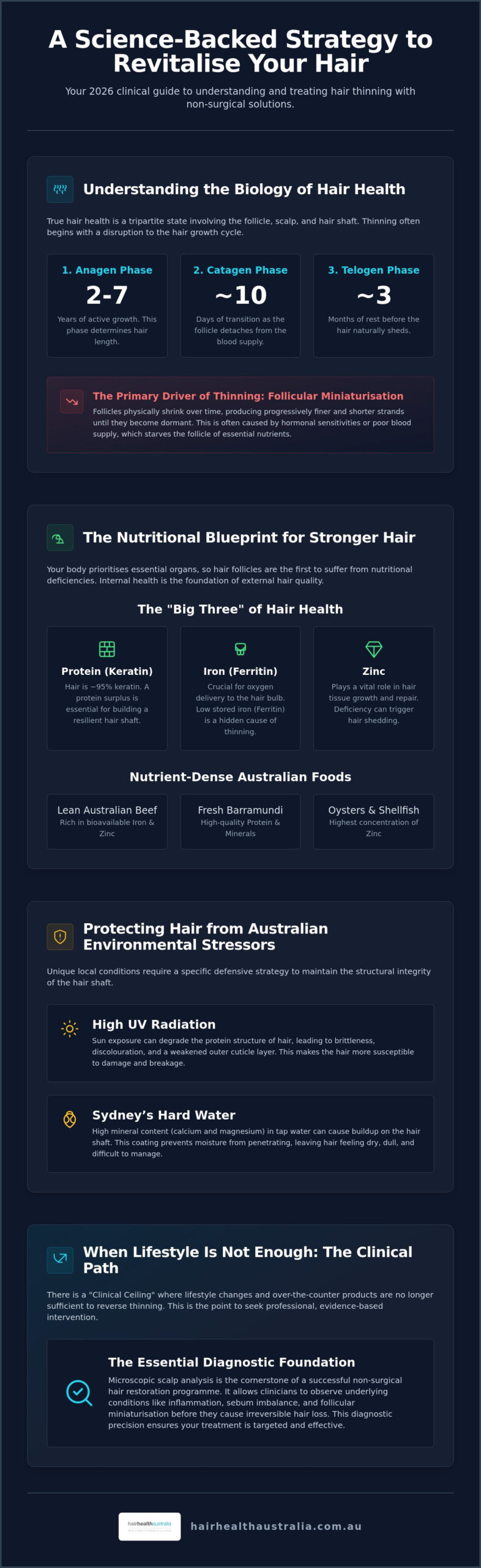
To understand why certain treatments fail while others succeed, we must first define what hair health actually entails. It isn’t merely the shine of the visible strand; true health is a tripartite state involving the follicle, the scalp environment, and the structural integrity of the hair shaft itself. When we discuss Understanding Hair Loss, we are often looking at a systemic disruption in the hair growth cycle. This cycle consists of three distinct phases: Anagen, the active growth phase that can last several years; Catagen, a short transitional stage; and Telogen, the resting phase where the hair eventually sheds.

Follicular miniaturisation is the primary driver of thinning, characterized by a process where hair follicles physically shrink over time and produce increasingly finer, shorter strands until the follicle eventually becomes dormant. This process is often driven by hormonal sensitivities or poor blood supply to the dermal papilla. The papilla is the control centre of the follicle, acting as a lifeline that delivers oxygen and nutrients from the blood. Without this supply, the process of keratinisation, where cells are hardened into the protein-rich hair shaft, begins to falter. This is why modern non surgical hair restoration focuses on revitalising the follicle from the inside out rather than just treating the hair you can see.

The Role of Keratin and Protein Synthesis

Hair is composed of approximately 95% keratin, a tough, fibrous protein. It’s vital to remember that the human body is a master of prioritisation; it will always direct protein and minerals to essential organs like the heart and liver before the hair follicles. If your internal stores are low, your hair is the first to suffer. While the outer cuticle layer acts as a protective shield for the cortex, external products cannot “feed” the hair in the same way internal protein synthesis does. True density depends on the body having a surplus of the correct amino acids to build a resilient shaft.

Why Scalp Health is the Foundation

Think of your scalp as the soil in which your hair grows. If the soil is depleted, congested, or inflamed, the crop will struggle to thrive. Sebum production must be perfectly balanced; an excess can lead to oxidative stress, while a deficiency leaves the emerging hair brittle. Maintaining a healthy scalp microbiome is also crucial for preventing the micro-inflammation that often precedes follicle shutdown. A comprehensive Hair Health Check allows us to observe these microscopic conditions before they manifest as visible thinning. This diagnostic precision is a cornerstone of effective non surgical hair restoration strategies in Australia.

The Nutritional Blueprint for Stronger, Fuller Hair

If the follicle is the engine of hair growth, nutrition is the high-performance fuel it requires to function. While many people focus on topical solutions, the internal environment dictates the quality of the hair shaft long before it emerges from the scalp. A successful approach to non surgical hair restoration always begins with a robust nutritional blueprint that prioritises the building blocks of keratin.

Protein, Iron, and Zinc form the “Big Three” of hair health. Because hair is a non-essential tissue, your body will divert these nutrients to vital organs first. If your intake is low, your follicles are the first to be rationed. Iron is particularly critical as it facilitates oxygen delivery to the hair bulb. For many women, Ferritin (stored iron) levels are the hidden culprit behind diffuse thinning. Even when standard blood tests appear “normal,” hair growth often requires Ferritin levels to be at a specific clinical threshold to maintain a healthy Anagen phase.

Biotin and a complex of B-vitamins support the keratin infrastructure, acting as the “scaffolding” for each strand. Meanwhile, Omega-3 fatty acids are essential for maintaining scalp lubrication and improving the elasticity of the hair cortex. Without these healthy fats, the hair shaft becomes brittle and prone to premature breakage.

Essential Micronutrients: Zinc and Iron

Zinc plays a vital role in hair tissue growth and repair. A significant deficiency can trigger Telogen Effluvium, a condition where hair is prematurely pushed into the shedding phase. To support your follicles, focus on nutrient-dense foods readily available in Australian markets:

  • Lean Australian beef: An excellent source of bioavailable iron and zinc.
  • Fresh Barramundi: Provides high-quality protein and essential minerals.
  • Oysters and shellfish: Some of the highest concentrations of zinc available.
  • Legumes and pumpkin seeds: Vital plant-based sources for mineral support.

It is tempting to reach for over-the-counter supplements, but clinical blood tests are a necessary first step. Self-supplementing can lead to mineral imbalances or toxicity, which may actually worsen hair loss. Understanding your specific biological needs is a key part of the Clinical Path to Recovery.

Hydration and the Hair Shaft

Water is the most overlooked nutrient in hair care. Chronic dehydration leads to a dry scalp environment and brittle strands. High water volume is required to maintain the rapid cellular turnover within the follicle. When you are properly hydrated, the hair cortex retains its natural elasticity, allowing the hair to withstand daily styling without snapping.

Dietary adjustments provide the foundation, but they are most effective when you know exactly what your body is lacking. A professional Hair Health Check can help identify if nutritional gaps are stalling your non surgical hair restoration progress, allowing for a more targeted and efficient regrowth strategy.

Daily Habits and Maintenance: The Do No Harm Approach

While internal health provides the essential foundation, your daily external habits determine how much of that growth you actually retain. Many people inadvertently sabotage their non surgical hair restoration progress through aggressive mechanical stress or improper cleansing routines. Establishing a clinical hair care routine is about balance; your wash frequency should be tailored to your specific scalp type. Oily scalps may require daily cleansing to remove sebum buildup, whereas drier types might only need attention twice a week to avoid stripping natural protective oils.

A critical concept to master is Wet Hair Vulnerability. When hair is saturated, the hydrogen bonds within the shaft temporary break, making the strand significantly more elastic and prone to snapping. This is why aggressive towel drying, specifically vigorous rubbing, is a leading cause of mid-shaft breakage. Instead, you should pat the hair dry or use a microfibre wrap to gently absorb moisture. This external “seal” complements the Nutritional Blueprint for Stronger Hair, ensuring that the resilient strands your body is producing are not lost to avoidable physical trauma.

Conditioning is not merely an aesthetic choice; it is a clinical necessity to seal the cuticle layer. A closed cuticle prevents moisture loss and protects the inner cortex from environmental pollutants. When applying conditioner, focus on the mid-lengths and ends, as the hair closest to the scalp is already naturally lubricated by sebum. By protecting the structural integrity of the hair you have, you ensure your non surgical hair restoration efforts yield visible results in density and volume.

Choosing the Right Products for Your Scalp Type

Supermarket shampoos often prioritise fragrance and high lather over biological compatibility. These products frequently rely on harsh detergents that can disrupt the scalp’s acid mantle. Clinical-grade formulations are engineered to maintain a specific pH balance, usually around 5.5, to support the scalp microbiome. It is a common misconception that “sulphate-free” is a universal requirement. For individuals with high sebum production, a gentle surfactant may be necessary to effectively clear the follicles of oils that can stifle growth. Incorporating a scalp exfoliant can further assist in removing dead skin cells and debris.

Heat Management and Thermal Protection

Thermal damage can lead to a condition known as ‘bubble hair’. This occurs when water trapped inside the hair shaft is heated so rapidly it turns to steam, causing the shaft to expand and physically burst. To maintain hair health, follow this safety protocol:

  • Maintain a distance of at least 15 centimetres between the hair dryer and your scalp.
  • Select a medium or low heat setting to prevent overheating the keratin structure.
  • Always apply a thermal protectant to create a defensive barrier on the cuticle.
  • Consider natural alternatives to chemical straighteners or harsh ammonia-based dyes which can permanently alter the hair’s disulphide bonds.

Managing these daily variables is a vital step before moving toward more advanced clinical interventions.

How to Improve Hair Health: The 2026 Clinical Guide to Non-Surgical Restoration

Protecting Your Hair from the Australian Environment

Living in Australia presents a unique set of challenges for maintaining hair density and structural integrity. While we are often diligent about skin cancer prevention, we frequently overlook the fact that our hair is the primary shield against extreme environmental stressors. For those pursuing non surgical hair restoration, protecting the hair you have is just as critical as the treatments used to grow more. High UV radiation, coastal salt air, and even the specific mineral composition of our local water supply can degrade the hair shaft and irritate the scalp environment.

Sydney residents living near the coastline must be particularly mindful of salt and chlorine. Salt is hygroscopic, which means it actively draws moisture out of the hair shaft, leaving it brittle and prone to snapping. Chlorine is even more aggressive; it strips the natural protective oils and oxidises the hair’s pigment. If you spend time in the surf or the pool, it is essential to rinse your hair with fresh water immediately afterward. This simple habit prevents these elements from crystallising on the cuticle and causing permanent damage.

UV Radiation and Keratin Degradation

The Australian sun acts as a natural bleaching agent, but the damage goes much deeper than a change in colour. UV rays physically break the disulphide bridges, which are the chemical bonds that hold keratin chains together. This structural degradation leads to increased porosity and a total loss of elasticity. Scalp sunburn is another significant concern that many ignore. It can trigger localised inflammation that disrupts the follicle’s growth cycle and potentially leads to premature shedding. Your scalp requires the same level of protection as your face, especially if you are noticing a receding hairline or thinning at the crown. Practical sun-smart habits, such as wearing a hat or using specialised UV hair sprays, are non-negotiable during peak exposure hours.

Managing Mineral Buildup from Sydney Water

While Sydney’s water is generally of high quality, mineral accumulation remains a common issue for many residents. Over time, calcium and magnesium can deposit on the hair shaft, creating a film that causes stiffness, brassiness, and a noticeable lack of lather during washing. This buildup creates a barrier that prevents moisture and clinical treatments from penetrating the cortex. If your hair feels “crunchy” or lacks shine, you might consider installing a shower filter or using a chelating shampoo once a month. A simple DIY clarifying rinse using one part apple cider vinegar to four parts filtered water can also help restore the scalp’s natural pH and remove stubborn mineral deposits.

Environmental damage often masks the biological progress of your regrowth efforts. To see exactly how these external factors are affecting your follicles, you should book a professional Hair Health Check. This diagnostic step is the most effective way to separate environmental wear-and-tear from genetic thinning, ensuring your non surgical hair restoration programme remains focused on the right priorities.

When Lifestyle Is Not Enough: The Clinical Path to Recovery

There is a point where even the most disciplined nutritional routine and sun-smart habits reach their limit. This is the “Clinical Ceiling”. When thinning is driven by genetic factors, such as androgenetic alopecia, the follicles require direct biological intervention to remain active. Visual guesswork often leads to wasted time and money on over-the-counter products that aren’t formulated for your specific biological profile. Early intervention is the most critical factor; it’s far easier to revitalise a struggling follicle than to wake one that has been dormant for years. Modern non surgical hair restoration provides a systematic, evidence-based way to address these underlying issues without the need for invasive surgery.

While a general practitioner can check your basic health markers, a specialist hair clinic provides a much deeper level of diagnostic insight. We don’t just look at the hair you’re losing; we look at the health of the follicles you still have. This shift from reactive “fixing” to proactive “restoring” is what separates clinical success from temporary cosmetic improvement. By moving beyond surface-level treatments, you can establish a sustainable routine that works with your body’s natural growth cycles.

Microscopic Hair Analysis: The Gold Standard

A standard consultation often relies on the naked eye, but true precision requires microscopic hair analysis. This technology identifies thinning up to five years before it becomes visible by measuring specific metrics across the scalp. We look at hair density per square centimetre, individual follicle diameter, and signs of scalp inflammation or sebum congestion. By understanding these data points, we can tailor a programme that targets the root cause of your specific loss pattern. For more technical details on how these interventions work, you can refer to our Clinical Hair Treatment Guide.

Personalised Regrowth Protocols

A one-size-fits-all approach fails because every scalp is unique. What works for male pattern baldness may not be appropriate for female thinning driven by iron deficiency or hormonal shifts. Effective non surgical hair restoration programmes combine clinical-grade topicals with targeted follicular stimulation to extend the Anagen growth phase. This multi-faceted approach ensures that the follicles are not just protected from external damage, but actively encouraged to produce thicker, more resilient strands. Establishing a scientific baseline is the first step toward long-term density. We encourage readers to book a Hair Health Check to gain a clear, objective understanding of their hair health profile and start their journey toward recovery.

Securing the Future of Your Hair Density

Achieving lasting hair health requires a shift from reactive cover-ups to a systematic, biological approach. We’ve explored how nutritional foundations, environmental protection against the harsh Australian sun, and proper maintenance routines form the essential base of follicle care. However, when lifestyle adjustments aren’t enough to overcome genetic thinning, the “Clinical Ceiling” necessitates professional intervention. By combining microscopic diagnostics with evidence-based non surgical hair restoration, you can move past the confusion of ineffective products and start a journey rooted in science.

This commitment to professional excellence and tailored results is something we value across all industries; if you are also looking for expert partnership in the Victorian property sector, discover Elite Agents & Partners for a similarly dedicated approach to real estate.

With over 15 years of clinical expertise in Sydney, we specialise in personalised regrowth programmes for both men and women. The most important step you can take is identifying the specific needs of your scalp before follicles become permanently dormant. Take control of your hair health journey and Book Your Comprehensive Hair Health Check in Sydney Today. Understanding your biological profile is the first step toward visible, sustainable density and renewed confidence in your appearance.

Frequently Asked Questions

How can I improve my hair health naturally at home?

You can improve your hair health naturally by optimising your intake of protein, iron, and zinc while maintaining a consistent scalp hygiene routine. Avoiding mechanical stress, such as aggressive towel drying or tight hairstyles, preserves the structural integrity of existing strands. While these habits support follicle health, they work best as a preventative measure rather than a cure for advanced genetic thinning.

Can thinning hair actually grow back thicker without surgery?

Thinning hair can often grow back thicker without surgery by extending the Anagen growth phase and reversing follicular miniaturisation. Through targeted non surgical hair restoration, dormant follicles are stimulated to produce terminal hairs rather than fine, wispy vellus hairs. This process relies on maintaining a healthy blood supply to the dermal papilla to ensure the hair shaft receives adequate nutrients for protein synthesis.

Which vitamins are best for hair growth in the Australian climate?

The best vitamins for hair growth in the Australian climate include Vitamin D, B-vitamins, and antioxidants like Vitamin C to combat UV-induced oxidative stress. Despite our high UV index, many Australians remain Vitamin D deficient, which is a known trigger for hair shedding. Ensuring your internal levels are clinically balanced helps protect the disulphide bridges in your hair from environmental degradation.

How often should I wash my hair to prevent hair loss?

Your wash frequency should be determined by your scalp’s sebum production rather than a fixed schedule. Oily scalps often require daily washing to prevent the buildup of DHT-laden oils and dead skin cells that can stifle the follicle. Conversely, if your scalp is dry, washing twice a week with a pH-balanced, clinical-grade cleanser is usually sufficient to maintain a healthy microbiome.

Is it possible to improve hair health after age 50?

It is absolutely possible to improve hair health after age 50 by addressing age-related hormonal shifts and nutritional malabsorption. While up to 50% of women experience thinning by this age, clinical treatments can still revitalise active follicles and improve overall density. Success at this stage depends on a personalised approach that accounts for changes in hair diameter and scalp elasticity.

What are the first signs that I need a clinical hair analysis?

The first signs you need a clinical hair analysis include seeing more hair than usual in the shower drain, a widening part line, or a noticeable loss of volume at the crown. Because microscopic changes occur years before thinning is visible to the naked eye, these early warning signs are your cue to seek a professional diagnostic baseline. Waiting until the scalp is clearly visible often makes the restoration process more complex.

Does stress really cause permanent hair loss?

Stress typically causes a temporary condition called Telogen Effluvium, where hair is prematurely pushed into the shedding phase, but it rarely causes permanent loss on its own. However, a significant stressful event can act as a catalyst that unmasks or accelerates underlying genetic thinning. Once the stressor is removed, most hair should grow back, provided the follicle environment remains healthy and supported.

How long does it take to see results from a non-surgical hair restoration regime?

You should expect to see visible results from a non surgical hair restoration regime within four to six months. This timeline is dictated by the natural biology of the hair growth cycle, as it takes time for revitalised follicles to produce new terminal strands. Consistency is vital during this period, as the initial phase focuses on stabilising shedding before moving into the regrowth stage.