You wake up, look in the mirror, and discover a smooth, coin-sized patch of scalp where your hair should be. It’s a moment of sudden, quiet panic that many Australians face without a clear map of what to do next. Finding effective alopecia areata treatment Australia wide often feels like a frustrating cycle of generic advice and temporary fixes that don’t address the underlying autoimmune response. You’re likely worried that these patches will spread or become permanent, but understanding the clinical reality of your condition is the first step toward reclaiming your profile.
We’ve designed this 2026 guide to replace that uncertainty with a methodical, science-based path to regrowth. You’ll learn how modern microscopic scanning provides a precise diagnosis of your follicle health, allowing for a customised strategy rather than a one-size-fits-all suggestion. We will also examine the latest non-surgical clinical protocols, from TGA-approved systemic treatments to advanced scalp stimulation. This guide ensures you have the clinical knowledge required to make an informed decision and connects you with the right specialist expertise in Sydney to begin your recovery journey with confidence.
Key Takeaways
- Identify the specific autoimmune triggers that cause the immune system to mistakenly attack healthy hair follicles, leading to sudden patchy loss.
- Understand why a professional diagnosis through microscopic hair analysis is the vital first step for accessing the most effective alopecia areata treatment Australia provides.
- Contrast common cosmetic cover-ups with clinical, non-surgical regrowth protocols designed to stimulate dormant follicles and support long-term scalp health.
- Learn the logical steps for navigating the Australian healthcare path, from initial GP consultations to specialised clinical analysis in Sydney.
- Discover how personalised, science-led recovery plans can help manage the condition through evidence-based methods without the need for invasive surgery.
Understanding Alopecia Areata in the Australian Context
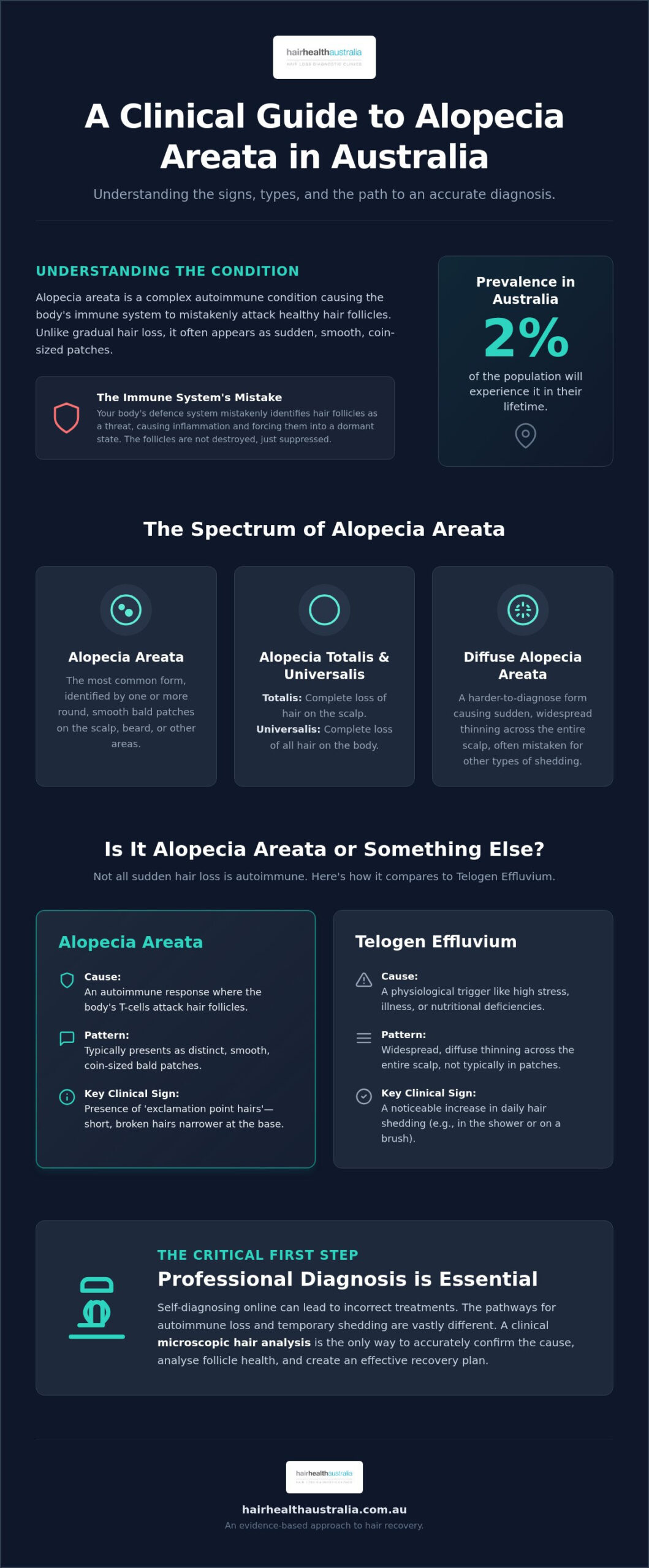
Alopecia areata is a complex autoimmune condition that causes the body’s immune system to mistakenly attack healthy hair follicles. Unlike the gradual recession seen in male pattern baldness, this condition often presents as sudden, smooth, coin-sized patches of hair loss. It can affect anyone regardless of age or gender, though it frequently first appears during childhood or the teenage years. In Australia, the prevalence of this condition mirrors global trends, affecting approximately two percent of the population at some point in their lives. This means thousands of Australians are currently seeking a reliable path toward recovery.
The emotional impact of discovering these patches shouldn’t be underestimated. For many, the transition from a full head of hair to visible bald spots happens over a matter of weeks, leading to significant anxiety and a loss of self-confidence. This is why finding the right alopecia areata treatment Australia offers is about more than just aesthetics; it’s about regaining a sense of control over your own body through clinical clarity and empathetic care.
The Different Forms of Alopecia Explained
While most people associate the term with small patches, the condition exists on a spectrum. Understanding where you sit on this scale is essential for determining the most effective clinical response.
- Alopecia Areata: The most common clinical presentation, characterised by one or more round, smooth patches on the scalp or beard.
- Alopecia Totalis and Universalis: These are more advanced progressions where the immune response leads to total loss of scalp hair (Totalis) or the complete loss of all body hair (Universalis).
- Diffuse Alopecia Areata: This form is often the most difficult to identify without professional help. Instead of distinct patches, it causes a sudden, widespread thinning across the entire scalp, which can be easily confused with other types of shedding.
Is it Alopecia Areata or Something Else?
It’s easy to assume the worst when you see hair in the shower drain, but not all sudden loss is autoimmune. Many Australians confuse the condition with telogen effluvium, a temporary thinning usually triggered by high-stress events, nutritional deficiencies, or illness. Environmental factors unique to the Australian lifestyle, such as extreme UV exposure or high-pressure work environments, can also exacerbate flare-ups or trigger temporary shedding.
Self-diagnosing through internet forums often leads to unnecessary fear. Because the treatment pathways for autoimmune loss and temporary shedding are vastly different, a professional Hair Health Check is required to confirm the cause. Finding a successful alopecia areata treatment Australia wide requires moving beyond guesswork and into a clinical environment where your follicles are analysed at a microscopic level. Accurate diagnosis ensures you don’t waste time on generic products that aren’t designed to address your specific biological needs.
The Science of Autoimmune Hair Loss: Why Your Body Attacks Its Follicles
To understand why specific alopecia areata treatment Australia pathways are effective, we must first look at the biological breakdown occurring beneath the scalp. Under normal conditions, hair follicles enjoy what is known as ‘immune privilege’. This is a protective barrier that keeps them invisible to the body’s natural defence systems. In cases of alopecia areata, this shield is breached. T-cells, which are designed to protect you from viruses and bacteria, mistakenly identify the hair follicle as a foreign threat and begin an inflammatory attack.
This immune response causes the follicle to prematurely exit its growth phase and enter a state of forced dormancy. It’s vital to remember that the follicle is not dead or permanently scarred; it is simply suppressed by inflammation. Short, broken hairs that are narrower at the base than at the top, known as ‘exclamation point hairs’, serve as a primary clinical marker of an active autoimmune flare-up. Recognising these signs early is the first step toward a successful recovery.
The Role of Microscopic Hair Analysis
A simple visual inspection with the naked eye is often insufficient for a professional hair health check. While a mirror shows the patch, microscopic scanning allows us to see the level of inflammation around the bulb and the percentage of hairs currently in the shedding versus resting phase. This data-driven approach removes the guesswork, allowing for a more accurate prediction of how the condition might progress. If you’ve noticed sudden shedding, a detailed analysis is the most reliable way to confirm the activity level of your follicles.
Genetic and Environmental Triggers
While the exact cause remains a subject of ongoing research, we know that genetics play a significant role. Many Australians with the condition have a family history of autoimmune issues, suggesting a hereditary predisposition. According to Australian government health advice on alopecia, the condition can be triggered by various external factors that tip the scales of an already sensitive immune system.
We often refer to the ‘leaky bucket’ theory in a clinical setting. Your genetics might fill the bucket halfway, but environmental factors like viral infections, extreme physiological stress, or even significant lifestyle changes act as the final drops that cause the bucket to overflow. By identifying these triggers alongside a clinical treatment plan, we can better manage the environment in which your hair grows, creating the best possible conditions for successful regrowth.
Evaluating Alopecia Areata Treatment Options: Clinical vs. Cosmetic
When you first notice a bald patch, the instinct is often to hide it with cosmetic powders or hair fibres. While these offer immediate relief from social anxiety, they do nothing to address the underlying follicular suppression. Effective alopecia areata treatment Australia requires a shift from masking the problem to actively managing the hair growth cycle. Traditional medical interventions, such as topical corticosteroids and contact immunotherapy, aim to dampen the immune response. You can explore a comprehensive list of these clinical Alopecia Areata treatment options through the Australia Alopecia Areata Foundation.
A common dilemma for many Australians is whether to wait for natural regrowth or pursue active intervention. While some mild cases resolve on their own, the “wait and see” approach carries risks. Without clinical support, the inflammation can persist, potentially leading to larger patches or a longer recovery time. Active clinical intervention focuses on maintaining an optimal scalp environment and providing the follicles with the stimulation they need to break out of their dormant state. This systematic care is often the difference between a quick recovery and a prolonged flare-up.
Non-Surgical Regrowth Protocols
For those who prefer to avoid invasive procedures or heavy pharmaceutical side effects, non-surgical protocols offer a science-led alternative. Low-level laser therapy (LLLT) is a cornerstone of this approach, using specific light wavelengths to increase blood flow and cellular energy within the follicle. This is often paired with specialised topical stimulants that help recalibrate the hair cycle. These methods are highly sought after as a form of hair restoration treatment because they work with the body’s natural biology rather than against it.
Managing Expectations and “Cures”
We believe in straight-talking honesty when it comes to autoimmune conditions. Currently, there is no permanent “cure” for alopecia areata, as the genetic predisposition remains. However, the management options available in 2026 are more sophisticated than ever. It’s important to understand the cyclical nature of the condition; relapses can happen, but having a proven clinical path makes them much easier to manage. Early intervention remains the most reliable way to achieve positive long-term outcomes, as it addresses inflammation before the follicle remains dormant for too long. By focusing on follicle health and consistent care, you can maintain a resilient head of hair even in the face of autoimmune challenges.
Navigating the Australian Healthcare Path for Hair Regrowth
Securing effective alopecia areata treatment Australia wide requires a methodical approach that moves beyond temporary fixes. Because this is an autoimmune condition, your journey should ideally follow a structured clinical pathway to ensure both your internal health and your hair follicles are properly supported. Following a logical progression helps eliminate the guesswork and ensures you aren’t wasting resources on solutions that don’t match your specific biological needs.
- Step 1: GP Consultation. Your first port of call should be your family doctor. They can order essential blood tests to rule out systemic issues like iron deficiencies or thyroid imbalances that often mimic or exacerbate autoimmune hair loss.
- Step 2: Specialist Analysis. Once systemic issues are cleared, seeking a specialised trichologist or hair loss clinic is vital. These professionals focus exclusively on the biology of the scalp and the hair growth cycle.
- Step 3: Microscopic Hair Scan. This diagnostic tool is the gold standard for identifying the current stage of your alopecia. It allows the specialist to see if the follicles are in a state of active inflammation or if they’ve moved into a resting phase.
- Step 4: Personalised Recovery Programme. Based on the scan results, a non-surgical plan is developed. This might include a combination of follicle stimulants and scalp health therapies designed to encourage the immune system to retreat.
- Step 5: Monitoring and Adjustment. Autoimmune conditions are dynamic. Regular clinical check-ups allow for the treatment plan to be refined as your hair begins to regrow, ensuring the new growth is resilient.
The Role of the Hair Specialist in Sydney
Choosing a non-surgical hair loss clinic in Sydney provides a distinct advantage over “off-the-shelf” pharmacy solutions. Generic products are designed for the average user, but autoimmune hair loss is highly individual. A local specialist provides face-to-face clinical monitoring, which is essential for tracking progress and adjusting protocols in real-time. This personal connection ensures you feel supported through the emotional ups and downs of the recovery process.
Medicare and Private Health Considerations
In the Australian healthcare system, Medicare typically covers your initial GP consultation and any necessary diagnostic blood tests. While trichological services are generally not covered by Medicare, some Australians find that their private health “extras” cover certain clinical therapies or consultations, depending on their specific policy and provider. Investing in a comprehensive diagnostic check early in your journey is often the most cost-effective path, as it prevents the ongoing expense of ineffective retail treatments. To begin your clinical journey with a precise diagnosis, we recommend booking a professional Hair Health Check as your primary first step.
Personalised Non-Surgical Recovery at Hair Health Australia
At Hair Health Australia, we understand that an alopecia diagnosis is more than a medical event; it’s a deeply personal challenge that requires a compassionate, expert response. Our philosophy is rooted in a science-led, non-invasive approach that prioritises both follicular recovery and patient empathy. We don’t believe in generic solutions because autoimmune responses vary significantly between individuals. Instead, we focus on providing the most effective alopecia areata treatment Australia can offer through a systematic, evidence-based framework that respects the delicate nature of the scalp.
Every journey at our clinic begins with a detailed Microscopic Hair Analysis. This is a vital diagnostic step that goes far beyond a simple visual check. We use advanced imaging technology to examine the follicle’s current activity, identifying signs of inflammation or dormant growth phases that aren’t visible to the naked eye. This data allows us to customise what many consider the best hair regrowth treatment Australia has available, ensuring the protocol matches the specific stage and severity of your condition.
Our Sydney Clinic Standards
Our Sydney clinic is designed to be a private, professional sanctuary for both men and women. We know that hair loss can be a sensitive subject, so we provide an environment where you can discuss your concerns with a specialist who understands the clinical and emotional nuances of the condition. Our programmes are strictly non-surgical, focusing on long-term follicle health and scalp vitality rather than quick cosmetic fixes that often fail to address the root cause. This focus on sustainable, biological recovery is why our clinic remains the preferred choice for Sydney residents seeking a professional alternative to invasive procedures.
Start Your Recovery Journey Today
You don’t have to manage the uncertainty of patchy hair loss alone. Taking early action is the most effective way to prevent patches from spreading and to jumpstart the regrowth process before follicles remain dormant for too long. We maintain a commitment to straight-talking honesty throughout your care. While the journey to recovery requires patience, our transparent approach ensures you understand every stage of the process, from the initial inflammatory dampening to the appearance of new terminal hair.
We invite you to visit our Sydney centre for a comprehensive Hair Health Check. Our team acts as your dedicated guide, using clinical precision to replace fear with a clear, actionable path forward. By choosing a specialised alopecia areata treatment Australia pathway, you are choosing a partner committed to your long-term confidence and hair health.
Take Control of Your Hair Recovery Journey
Managing sudden hair loss requires a transition from uncertainty to clinical action. The most successful alopecia areata treatment Australia offers begins with a precise understanding of your follicle health. By moving beyond cosmetic cover-ups and adopting science-led, non-surgical protocols, you can effectively address the autoimmune triggers that disrupt your hair growth cycle. Early intervention and consistent scalp care remain the most reliable methods for achieving resilient regrowth and long-term confidence.
At Hair Health Australia, we combine over 15 years of experience with advanced microscopic hair scanning technology to create a personalised path forward. Our clinically-backed programmes are designed to support your body’s natural biology without the need for invasive surgery. Don’t wait for patches to spread or become permanent. Book Your Comprehensive Hair Health Check in Sydney today to receive a clear, professional diagnosis. You don’t have to face this journey alone; expert help is available to guide you back to a full head of hair.
Frequently Asked Questions
Is alopecia areata permanent, or will my hair grow back?
In the vast majority of cases, the condition is not permanent because the hair follicles remain alive but in a dormant state. While the immune system’s attack causes the hair to fall out, the follicles themselves aren’t scarred or destroyed. This means that with the right clinical intervention, your hair can and often does grow back once the inflammatory response is successfully managed.
Can stress cause alopecia areata to flare up in Australians?
Physiological or emotional stress is a well-documented trigger for many Australians living with this condition. While stress doesn’t directly cause the autoimmune response, it can act as the “tipping point” that initiates a flare-up or prevents the hair from entering its growth phase. Managing lifestyle factors—including reducing financial stress by consulting with experts like Brown Hamilton Partners—alongside a clinical alopecia areata treatment Australia programme is essential for achieving long-term stability.
How is alopecia areata diagnosed in a clinical setting?
Diagnosis involves a combination of visual assessment and high-resolution microscopic analysis. Specialists look for distinct markers such as “exclamation point hairs” and specific patterns of follicle inflammation beneath the scalp surface. This detailed scanning allows us to differentiate autoimmune loss from other types of shedding, ensuring the recovery plan is based on clinical data rather than guesswork.
Are there any natural treatments for alopecia that actually work?
There is no evidence that natural remedies alone can “cure” an autoimmune condition, but supporting scalp health is a vital part of the recovery process. Focus on clinical protocols that use non-invasive stimulation and nutrient-dense topical support. These methods work with your body’s biology to create an environment where regrowth is more likely to be successful and sustainable over the long term.
Does Medicare cover alopecia areata treatment in Australia?
Medicare typically covers the cost of your initial GP consultation and any diagnostic blood tests required to rule out underlying health issues. However, specialised trichological consultations and non-surgical regrowth programmes are generally not subsidised by the government. Many patients utilise their private health insurance “extras” to help offset the costs of certain clinical therapies depending on their provider.
What is the difference between alopecia areata and female pattern hair loss?
The primary difference lies in the underlying cause and the physical pattern of the loss. Alopecia areata is an autoimmune response that results in sudden, distinct patches of baldness that can appear anywhere on the scalp. In contrast, female pattern hair loss is a genetic and hormonal condition that causes a gradual, diffuse thinning across the top and crown of the head.
Can children get alopecia areata, and is it treated differently?
Yes, this condition frequently first appears in children and teenagers. While the biological cause is the same as it is in adults, the clinical approach for younger patients is often more cautious and focuses on non-invasive, gentle stimulation. It’s also important to provide an empathetic environment for children to help them manage the significant emotional impact of sudden hair changes.
How long does it take to see results from clinical hair regrowth programmes?
Most patients begin to see visible changes within three to six months of starting a structured clinical programme. This timeline is dictated by the natural hair growth cycle, as it takes time for the follicles to move from a dormant state back into an active growth phase. Consistency and regular monitoring are the keys to seeing the best possible alopecia areata treatment Australia outcomes.