Early Signs of Alopecia Areata: A Clinical Guide to Identification and Recovery

A 2026 study revealed that 36% of Australians with potential hair loss are self-diagnosed rather than seen by a healthcare provider, leaving a significant gap in formal care. Discovering a small, smooth patch on your scalp while getting ready for the day is a jarring experience that often leads to social anxiety and a frantic search for answers. It’s easy to feel overwhelmed by generic advice when you’re trying to distinguish the early signs of alopecia areata from other types of thinning.

We understand that the uncertainty of an autoimmune condition is just as distressing as the physical hair loss itself. You deserve more than guesswork; you need clinical clarity. This guide will help you identify the subtle first indicators, from sensory changes to microscopic hair follicle shifts, and explain why a formal diagnosis is the essential first step to recovery. You’ll learn how a specialised clinical scan in Sydney can replace fear with a clear, evidence-based path toward a personalised regrowth programme.

Key Takeaways

  • Identify the early signs of alopecia areata, including smooth, coin-sized patches and ‘exclamation mark’ hairs that signify active follicle disruption.
  • Recognise the ‘alopecia tingle’ and nail pitting as critical sensory indicators that often appear before significant patches become visible.
  • Discover how microscopic analysis in a clinical setting provides the precision needed to distinguish autoimmune hair loss from general thinning.
  • Learn about the progression of the condition and why early intervention is the most effective way to manage the transition from patchy loss to more extensive stages.
  • Explore the benefits of a personalised, non-surgical regrowth programme designed specifically for your unique clinical profile.

Recognising the Initial Visual Indicators of Alopecia Areata

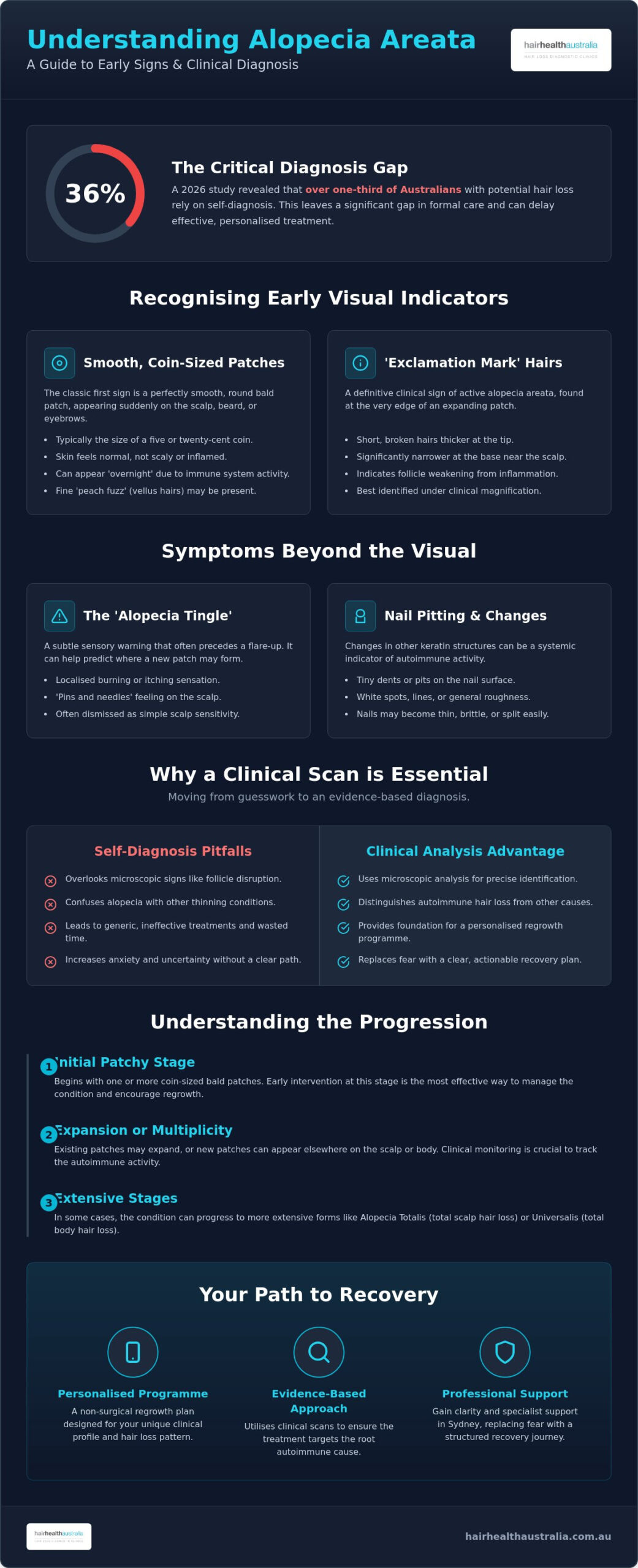
The sudden discovery of a smooth, round bald patch is often the first moment a person encounters the What is Alopecia Areata? condition. These patches typically appear without warning, sometimes seemingly overnight, and are often about the size of a five-cent or twenty-cent coin. While the scalp is the most common area for these early signs of alopecia areata to manifest, they can also appear in the beard or eyebrows. Unlike fungal infections that leave the skin scaly or inflamed, the skin within an alopecia patch usually feels completely smooth and normal to the touch. In some instances, you might notice a fine ‘peach fuzz’ or white vellus hairs within the patch; this is a sign that follicles are still active but struggling to produce mature, pigmented hair.

Physiological stress or a significant shock to the system often precedes these visual changes. While the hair loss feels instantaneous, it’s actually the result of a complex biological process where the immune system mistakenly targets the hair bulb. This disruption causes the hair to fall out in clusters rather than the gradual thinning associated with age-related hair loss.

The ‘Quarter-sized’ Patch: A Classic Sign

The scalp serves as the primary site for initial autoimmune activity because it has the highest density of hair follicles. When the immune system enters this overactive state, the hair enters the telogen (resting) phase prematurely, leading to rapid shedding in a localised area. It’s vital to distinguish these smooth patches from other conditions. For instance, a fungal infection often presents with redness and crusting, whereas alopecia areata leaves the scalp looking remarkably healthy despite the lack of hair. If you notice similar circular thinning in your beard or a sudden gap in your eyebrow, these are early secondary indicators that the condition is active. These patches can expand or remain stationary, making clinical monitoring essential to track the progression.

Exclamation Mark Hairs: The Clinical ‘Smoking Gun’

During a professional assessment, we look for “exclamation mark” hairs. These are short, broken hairs that are thicker at the top and significantly narrower at the base where they meet the scalp. They are a definitive sign of an active autoimmune attack, as the narrowing indicates the follicle was weakened by inflammation just before the hair was pushed out. You’ll usually find these hairs at the very edge of an expanding patch. Don’t pull at these hairs during self-inspection. Disrupting the area can cause further irritation; instead, these markers should be examined under clinical magnification to determine the current stage of the condition. Identifying these structures early is why we recommend a professional Hair Health Check as the most reliable first step toward recovery.

Sensory Symptoms and Nail Changes: The Often-Missed Signs

While smooth patches are the most recognisable early signs of alopecia areata, they aren’t always the first signals your body sends. Many people experience subtle sensory changes or physical alterations in other keratin-based structures, like the nails, well before a bald spot becomes visible. Recognising these indicators allows for a proactive approach rather than a reactive one. It’s not just about what you see in the mirror; it’s about what you feel and what your body’s systemic health is communicating through other channels.

Sudden shedding is a primary red flag that often precedes the formation of a distinct patch. While it’s normal to lose between 50 and 100 hairs a day, alopecia-related shedding feels fundamentally different. You might notice clumps of hair on your pillow or a significant increase in the amount of hair caught in the drain after washing. This shedding isn’t always confined to the scalp. A thinning of the eyelashes or a sudden decrease in nostril hairs can also serve as precursors to more extensive patches. These small changes are easy to overlook but are vital pieces of the diagnostic puzzle.

The Sensory Pre-Flare Phase

The ‘alopecia tingle’ is a distinct sensation reported by many patients just before a flare-up. It often feels like a localised burning, itching, or a ‘pins and needles’ effect on a specific area of the scalp. Because it’s so subtle, it’s frequently dismissed as simple scalp sensitivity or a reaction to a new hair product. However, tracking where these sensations occur can actually help predict where a new patch might form. If you’re noticing a persistent, localised itch that doesn’t correspond to dandruff or irritation, it’s worth monitoring the area closely for any changes in hair density.

Trachyonychia: What Your Nails Reveal

Your hair and nails are both composed of keratin, so it’s common for an autoimmune response to affect both simultaneously. Nail pitting, which looks like tiny dents or ‘stippling’ on the surface of the fingernail, is a major clinical clue. In some cases, the nails may develop vertical ridges or a rough, sandpaper-like texture known as trachyonychia. Specialists often look for these signs when Diagnosing and treating alopecia areata because they indicate a systemic process rather than a simple localised skin issue. During a professional consultation, a specialist will always check your hands to see if these indicators are present. If you’ve noticed these sensory shifts or changes to your nail texture, a professional Hair Health Check can provide the clinical clarity you need before visible patches expand.

Why Early Detection Requires Clinical Microscopic Analysis

Visual inspection alone often fails to capture the complexity of an autoimmune response. While a smooth patch is a clear indicator, it can easily be confused with telogen effluvium or other forms of temporary thinning. Identifying the early signs of alopecia areata with precision requires looking beneath the surface. At our Sydney clinic, we use specialised microscopic analysis to observe the hair follicle at 200x magnification. This level of detail allows us to identify follicle miniaturisation and specific inflammatory markers that the naked eye simply cannot detect. It’s the difference between guessing and knowing.

Seeing the scalp at this scale changes the entire treatment approach. It moves the conversation from surface-level observation to data-driven science. By observing the follicle’s current state, we can determine if the hair is in a resting phase or if the immune system is actively attacking the bulb. This distinction is critical for choosing the right recovery path and provides the reassurance that your programme is based on biological facts rather than general assumptions.

Trichoscopy vs. The Naked Eye

Clinical trichoscopy reveals markers such as ‘yellow dots’, which are follicular openings filled with sebum and keratin, and ‘black dots’, representing hairs destroyed at the scalp level. These indicators are invisible to the patient but provide essential clues about the activity of the condition. Trichoscopy is the gold standard for non-invasive hair loss diagnosis. Through this specialised lens, we can confirm whether a follicle is merely dormant and capable of regrowth or if permanent scarring has occurred. This verification ensures that your treatment plan is based on the actual biological state of your scalp, allowing for a more targeted and effective intervention.

Establishing a Clinical Recovery Baseline

A professional Hair Health Check does more than just diagnose; it establishes a vital baseline for your recovery journey. By documenting patch size and hair density with microscopic precision, we can accurately measure the success of your programme over time. This mapping is essential for tracking autoimmune flare-ups, which can be unpredictable. Understanding the starting point allows us to adjust protocols as your scalp health improves. For a deeper look at how we use these findings to build your plan, you can refer to our Clinical Hair Treatment Guide. Precision mapping ensures that every step toward regrowth is verified and systematic, giving you confidence in the results.
Early Signs of Alopecia Areata: A Clinical Guide to Identification and Recovery

The Progression of Alopecia: From Patchy to Extensive

Understanding how the condition evolves is just as important as recognising the early signs of alopecia areata. While many individuals only ever experience a single small patch, others may face a more progressive journey. Alopecia Totalis involves the loss of all hair on the scalp, while Alopecia Universalis represents the loss of all body hair, including eyelashes and eyebrows. Another specific variation is the ophiasis pattern, where hair loss occurs in a band-like shape along the back and sides of the head. This specific pattern is often more resistant to standard treatments due to the unique immunological environment of those scalp regions.

Intervention during the initial stages is the most effective way to manage these unpredictable ’bouts’. The immune system’s behaviour isn’t always linear; a flare-up can subside only to return months or years later. Clinical support provides a structured way to navigate these cycles, replacing uncertainty with a systematic monitoring plan that tracks changes before they become extensive.

Mapping the Path of Progression

Several factors influence how the condition might progress. Data indicates that the highest incidence of new cases occurs in the 19 to 34-year-old age group, though an earlier age of onset often correlates with a higher risk of more extensive loss. Sometimes, the condition presents as ‘diffuse’ alopecia areata, where thinning occurs across the entire scalp rather than in distinct patches. This is frequently mistaken for standard thinning or stress-related shedding, which often delays necessary autoimmune-focused care. The emotional weight of this progression is significant. Having a clinical partner helps manage the social anxiety that often accompanies visible changes.

Spontaneous Regrowth vs. Clinical Intervention

It is true that approximately 50% of patients with mild, patchy cases experience spontaneous regrowth within 12 months. However, waiting for ‘natural’ recovery carries risks. Prolonged inflammatory activity can lead to more stubborn patches and potential follicle miniaturisation over time. Clinical intervention aims to shorten the duration of the flare-up and stabilise the immune response before it expands. By taking action early, you are not just waiting for luck; you are actively protecting your follicles from further damage. If you are concerned about a new patch or a change in your hair’s density, the most reliable next step is to book a professional Hair Health Check to assess your current risk of progression.

Professional Recovery Paths and Clinical Support in Sydney

Identifying the early signs of alopecia areata is the first hurdle, but the subsequent steps you take determine the success of your recovery. While the unpredictable nature of autoimmune hair loss can feel overwhelming, the path to regrowth is structured and grounded in science. At Hair Health Australia, we focus on a non-surgical, clinically-backed approach that moves beyond temporary fixes. Our Sydney-based specialists provide a level of continuity that general practitioners often cannot offer; we don’t just diagnose a patch, we manage the entire biological cycle of the condition through precise monitoring and adaptive care.

Every recovery journey begins with a deep understanding of your scalp’s unique environment. Because alopecia areata is an individualised condition, a one-size-fits-all treatment rarely produces lasting results. We use the data gathered from your microscopic analysis to customise a programme that addresses your specific inflammatory markers and follicle health. This systematic care replaces the frustration of generic advice with a clear, actionable roadmap toward restoration.

Non-Surgical Regrowth Protocols

Our clinical therapies are designed to stimulate dormant follicles and calm the autoimmune response without the need for invasive surgery. We utilise a multi-faceted approach that combines advanced topical applications with nutritional support and clinical treatments to create the optimal environment for hair to return. These protocols aim to shorten the inflammatory ‘flare’ and encourage the transition of follicles back into the active growth phase. For those seeking more tailored information on how these symptoms manifest differently across genders, our guide on Early Signs of Alopecia in Women provides deeper clinical insights into female-specific recovery paths.

Your Journey at our Sydney Clinic

When you visit our Sydney centre, your experience begins with a comprehensive microscopic hair analysis. This isn’t a simple visual check; it’s a detailed diagnostic scan that allows us to see exactly what is happening at the follicular level. We believe in transparency and honesty, so we’ll provide you with realistic expectations and a clear timeline for your recovery based on your scan results. We’re here to act as your dedicated guide, empowering you with the knowledge needed to regain your confidence. Don’t wait for the patch to grow or for the condition to progress to more extensive stages; book your professional Hair Health Check today and take the first clinical step toward verified regrowth.

Moving from Uncertainty to Clinical Clarity

Identifying the early signs of alopecia areata is the essential first step in reclaiming your confidence. Whether you’ve noticed a single small patch, experienced the ‘alopecia tingle’, or seen subtle changes in your nail texture, these signals are your body’s way of requesting professional attention. Moving beyond home remedies and generic advice allows you to access a path grounded in clinical evidence and systematic care. We focus on replacing fear with a clear, actionable roadmap that prioritises the long-term health of your hair follicles.

Our compassionate Sydney-based clinical team is ready to help you navigate this journey with precision and empathy. By utilising expert microscopic diagnostic technology, we see exactly what your follicles require to re-enter a growth phase. We provide specialised non-surgical regrowth programmes designed for your specific biological profile, ensuring your treatment is as unique as your scalp health. You don’t have to face the uncertainty of hair loss alone.

Book Your Microscopic Hair Analysis in Sydney today to establish your clinical baseline. Taking action now is the most effective way to stabilise your condition and start your journey toward visible, lasting results.

Frequently Asked Questions

What are the very first signs of alopecia areata?

The most common first indicators are one or more smooth, round bald patches that appear suddenly on the scalp or body. These patches often feel completely normal to the touch, unlike fungal infections which can be scaly or inflamed. You might also notice the ‘alopecia tingle,’ a localised burning or itching sensation that occurs in the area just before the hair falls out.

Can stress actually cause alopecia areata to start?

Physiological stress and significant emotional shocks are recognised triggers that can initiate an autoimmune flare-up. While stress isn’t the underlying cause of the condition, it acts as a catalyst that prompts the immune system to mistakenly target hair follicles. Managing stress is a vital component of a holistic recovery plan, though clinical intervention is usually required to stabilise the hair loss once it begins.

Is the hair loss from alopecia areata permanent?

Hair loss from this condition is typically not permanent because the hair follicles remain alive but dormant. The immune system’s interference pushes the follicles into a resting phase, but they aren’t destroyed as they would be in scarring alopecia. With a structured, non-surgical clinical programme, these follicles can be encouraged to re-enter the active growth phase and produce healthy hair again.

Does alopecia areata always start with a single patch?

Most cases begin with a single, isolated patch, but it’s possible for multiple spots to appear simultaneously across different areas of the body. In some instances, the condition presents as diffuse thinning rather than distinct spots, which can make the early signs of alopecia areata harder to distinguish from standard shedding. A professional microscopic scan is the most effective way to identify the specific markers of an autoimmune response.

How can a clinic tell the difference between alopecia and normal thinning?

Clinical specialists use high-magnification trichoscopy to identify specific markers like ‘exclamation mark’ hairs and ‘yellow dots’ that are invisible to the naked eye. Normal thinning, such as androgenetic alopecia, involves a slow process of follicle miniaturisation over many years. In contrast, alopecia areata shows signs of an active, rapid immune attack, which we verify through specialised microscopic hair analysis in our Sydney clinic.

Can children get alopecia areata, and what are their early signs?

Children can certainly develop this condition, and it frequently appears for the first time before the age of 20. The early signs in children are similar to those in adults, primarily manifesting as smooth, circular bald patches or changes in nail texture, such as tiny pits or ridges. Because younger children might not articulate the sensory ‘tingle,’ parents should watch for sudden shedding or gaps in eyebrows and eyelashes.

What should I do the moment I find a bald spot on my head?

You should seek a professional clinical assessment immediately rather than attempting unverified home remedies or waiting for the hair to grow back on its own. Avoid pulling or tugging at the hairs around the edge of the patch, as this can further irritate the follicles. Booking a diagnostic scan allows for an accurate identification of the condition, ensuring you start a targeted recovery programme during the most responsive early stages.

Are there any dietary changes that help with early-stage alopecia?

While diet alone isn’t a cure for an autoimmune condition, an anti-inflammatory approach can support your clinical recovery. Consuming foods rich in antioxidants, omega-3 fatty acids, and essential vitamins like D and B12 helps maintain a healthy scalp environment. We integrate nutritional guidance into our personalised care plans to ensure your body has the building blocks required for successful and sustainable hair regrowth.
Alopecia Areata Treatment in Australia: A 2026 Clinical Guide to Hair Recovery

You wake up, look in the mirror, and discover a smooth, coin-sized patch of scalp where your hair should be. It’s a moment of sudden, quiet panic that many Australians face without a clear map of what to do next. Finding effective alopecia areata treatment Australia wide often feels like a frustrating cycle of generic advice and temporary fixes that don’t address the underlying autoimmune response. You’re likely worried that these patches will spread or become permanent, but understanding the clinical reality of your condition is the first step toward reclaiming your profile.

We’ve designed this 2026 guide to replace that uncertainty with a methodical, science-based path to regrowth. You’ll learn how modern microscopic scanning provides a precise diagnosis of your follicle health, allowing for a customised strategy rather than a one-size-fits-all suggestion. We will also examine the latest non-surgical clinical protocols, from TGA-approved systemic treatments to advanced scalp stimulation. This guide ensures you have the clinical knowledge required to make an informed decision and connects you with the right specialist expertise in Sydney to begin your recovery journey with confidence.

Key Takeaways

  • Identify the specific autoimmune triggers that cause the immune system to mistakenly attack healthy hair follicles, leading to sudden patchy loss.
  • Understand why a professional diagnosis through microscopic hair analysis is the vital first step for accessing the most effective alopecia areata treatment Australia provides.
  • Contrast common cosmetic cover-ups with clinical, non-surgical regrowth protocols designed to stimulate dormant follicles and support long-term scalp health.
  • Learn the logical steps for navigating the Australian healthcare path, from initial GP consultations to specialised clinical analysis in Sydney.
  • Discover how personalised, science-led recovery plans can help manage the condition through evidence-based methods without the need for invasive surgery.

Understanding Alopecia Areata in the Australian Context

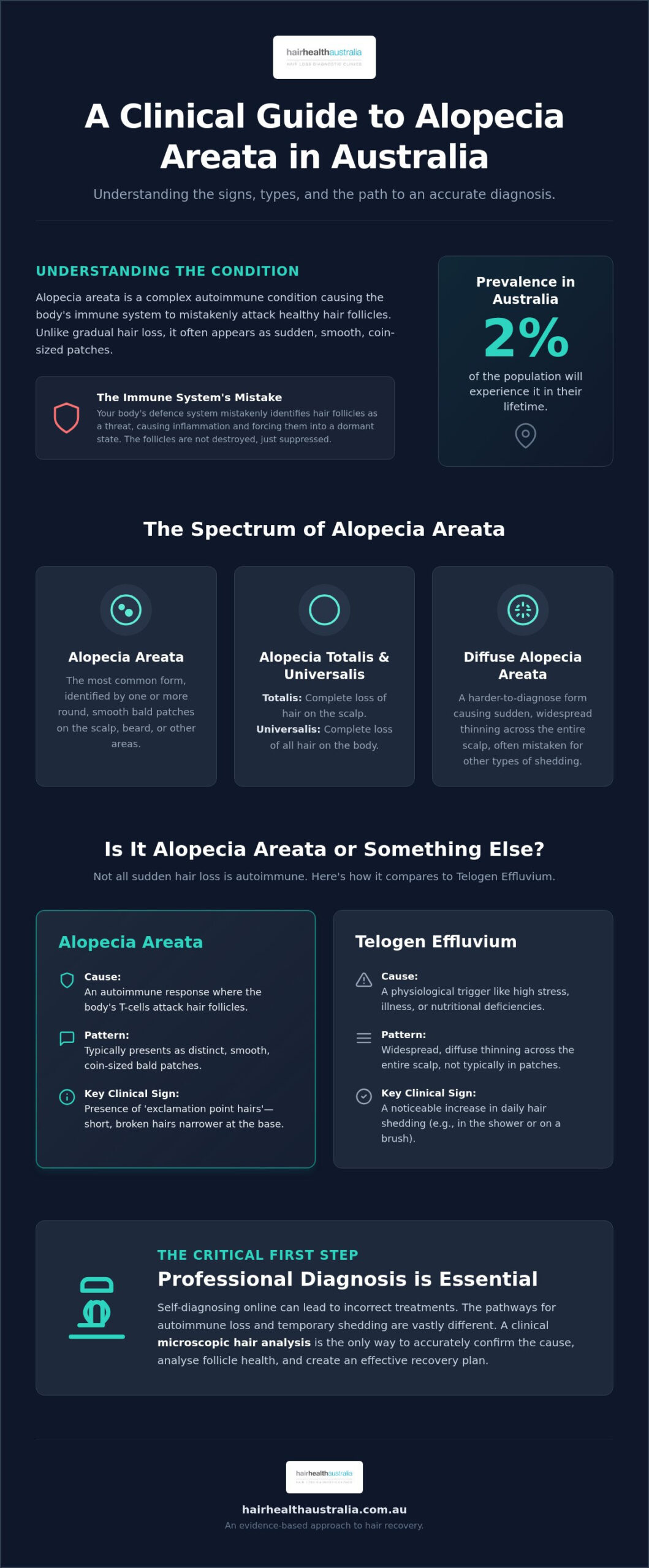
Alopecia areata is a complex autoimmune condition that causes the body’s immune system to mistakenly attack healthy hair follicles. Unlike the gradual recession seen in male pattern baldness, this condition often presents as sudden, smooth, coin-sized patches of hair loss. It can affect anyone regardless of age or gender, though it frequently first appears during childhood or the teenage years. In Australia, the prevalence of this condition mirrors global trends, affecting approximately two percent of the population at some point in their lives. This means thousands of Australians are currently seeking a reliable path toward recovery.

The emotional impact of discovering these patches shouldn’t be underestimated. For many, the transition from a full head of hair to visible bald spots happens over a matter of weeks, leading to significant anxiety and a loss of self-confidence. This is why finding the right alopecia areata treatment Australia offers is about more than just aesthetics; it’s about regaining a sense of control over your own body through clinical clarity and empathetic care.

The Different Forms of Alopecia Explained

While most people associate the term with small patches, the condition exists on a spectrum. Understanding where you sit on this scale is essential for determining the most effective clinical response.

  • Alopecia Areata: The most common clinical presentation, characterised by one or more round, smooth patches on the scalp or beard.
  • Alopecia Totalis and Universalis: These are more advanced progressions where the immune response leads to total loss of scalp hair (Totalis) or the complete loss of all body hair (Universalis).
  • Diffuse Alopecia Areata: This form is often the most difficult to identify without professional help. Instead of distinct patches, it causes a sudden, widespread thinning across the entire scalp, which can be easily confused with other types of shedding.

Is it Alopecia Areata or Something Else?

It’s easy to assume the worst when you see hair in the shower drain, but not all sudden loss is autoimmune. Many Australians confuse the condition with telogen effluvium, a temporary thinning usually triggered by high-stress events, nutritional deficiencies, or illness. Environmental factors unique to the Australian lifestyle, such as extreme UV exposure or high-pressure work environments, can also exacerbate flare-ups or trigger temporary shedding.

Self-diagnosing through internet forums often leads to unnecessary fear. Because the treatment pathways for autoimmune loss and temporary shedding are vastly different, a professional Hair Health Check is required to confirm the cause. Finding a successful alopecia areata treatment Australia wide requires moving beyond guesswork and into a clinical environment where your follicles are analysed at a microscopic level. Accurate diagnosis ensures you don’t waste time on generic products that aren’t designed to address your specific biological needs.

The Science of Autoimmune Hair Loss: Why Your Body Attacks Its Follicles

To understand why specific alopecia areata treatment Australia pathways are effective, we must first look at the biological breakdown occurring beneath the scalp. Under normal conditions, hair follicles enjoy what is known as ‘immune privilege’. This is a protective barrier that keeps them invisible to the body’s natural defence systems. In cases of alopecia areata, this shield is breached. T-cells, which are designed to protect you from viruses and bacteria, mistakenly identify the hair follicle as a foreign threat and begin an inflammatory attack.

This immune response causes the follicle to prematurely exit its growth phase and enter a state of forced dormancy. It’s vital to remember that the follicle is not dead or permanently scarred; it is simply suppressed by inflammation. Short, broken hairs that are narrower at the base than at the top, known as ‘exclamation point hairs’, serve as a primary clinical marker of an active autoimmune flare-up. Recognising these signs early is the first step toward a successful recovery.

The Role of Microscopic Hair Analysis

A simple visual inspection with the naked eye is often insufficient for a professional hair health check. While a mirror shows the patch, microscopic scanning allows us to see the level of inflammation around the bulb and the percentage of hairs currently in the shedding versus resting phase. This data-driven approach removes the guesswork, allowing for a more accurate prediction of how the condition might progress. If you’ve noticed sudden shedding, a detailed analysis is the most reliable way to confirm the activity level of your follicles.

Genetic and Environmental Triggers

While the exact cause remains a subject of ongoing research, we know that genetics play a significant role. Many Australians with the condition have a family history of autoimmune issues, suggesting a hereditary predisposition. According to Australian government health advice on alopecia, the condition can be triggered by various external factors that tip the scales of an already sensitive immune system.

We often refer to the ‘leaky bucket’ theory in a clinical setting. Your genetics might fill the bucket halfway, but environmental factors like viral infections, extreme physiological stress, or even significant lifestyle changes act as the final drops that cause the bucket to overflow. By identifying these triggers alongside a clinical treatment plan, we can better manage the environment in which your hair grows, creating the best possible conditions for successful regrowth.

Evaluating Alopecia Areata Treatment Options: Clinical vs. Cosmetic

When you first notice a bald patch, the instinct is often to hide it with cosmetic powders or hair fibres. While these offer immediate relief from social anxiety, they do nothing to address the underlying follicular suppression. Effective alopecia areata treatment Australia requires a shift from masking the problem to actively managing the hair growth cycle. Traditional medical interventions, such as topical corticosteroids and contact immunotherapy, aim to dampen the immune response. You can explore a comprehensive list of these clinical Alopecia Areata treatment options through the Australia Alopecia Areata Foundation.

A common dilemma for many Australians is whether to wait for natural regrowth or pursue active intervention. While some mild cases resolve on their own, the “wait and see” approach carries risks. Without clinical support, the inflammation can persist, potentially leading to larger patches or a longer recovery time. Active clinical intervention focuses on maintaining an optimal scalp environment and providing the follicles with the stimulation they need to break out of their dormant state. This systematic care is often the difference between a quick recovery and a prolonged flare-up.

Non-Surgical Regrowth Protocols

For those who prefer to avoid invasive procedures or heavy pharmaceutical side effects, non-surgical protocols offer a science-led alternative. Low-level laser therapy (LLLT) is a cornerstone of this approach, using specific light wavelengths to increase blood flow and cellular energy within the follicle. This is often paired with specialised topical stimulants that help recalibrate the hair cycle. These methods are highly sought after as a form of hair restoration treatment because they work with the body’s natural biology rather than against it.

Managing Expectations and “Cures”

We believe in straight-talking honesty when it comes to autoimmune conditions. Currently, there is no permanent “cure” for alopecia areata, as the genetic predisposition remains. However, the management options available in 2026 are more sophisticated than ever. It’s important to understand the cyclical nature of the condition; relapses can happen, but having a proven clinical path makes them much easier to manage. Early intervention remains the most reliable way to achieve positive long-term outcomes, as it addresses inflammation before the follicle remains dormant for too long. By focusing on follicle health and consistent care, you can maintain a resilient head of hair even in the face of autoimmune challenges.

Alopecia Areata Treatment in Australia: A 2026 Clinical Guide to Hair Recovery

Securing effective alopecia areata treatment Australia wide requires a methodical approach that moves beyond temporary fixes. Because this is an autoimmune condition, your journey should ideally follow a structured clinical pathway to ensure both your internal health and your hair follicles are properly supported. Following a logical progression helps eliminate the guesswork and ensures you aren’t wasting resources on solutions that don’t match your specific biological needs.

  • Step 1: GP Consultation. Your first port of call should be your family doctor. They can order essential blood tests to rule out systemic issues like iron deficiencies or thyroid imbalances that often mimic or exacerbate autoimmune hair loss.
  • Step 2: Specialist Analysis. Once systemic issues are cleared, seeking a specialised trichologist or hair loss clinic is vital. These professionals focus exclusively on the biology of the scalp and the hair growth cycle.
  • Step 3: Microscopic Hair Scan. This diagnostic tool is the gold standard for identifying the current stage of your alopecia. It allows the specialist to see if the follicles are in a state of active inflammation or if they’ve moved into a resting phase.
  • Step 4: Personalised Recovery Programme. Based on the scan results, a non-surgical plan is developed. This might include a combination of follicle stimulants and scalp health therapies designed to encourage the immune system to retreat.
  • Step 5: Monitoring and Adjustment. Autoimmune conditions are dynamic. Regular clinical check-ups allow for the treatment plan to be refined as your hair begins to regrow, ensuring the new growth is resilient.

The Role of the Hair Specialist in Sydney

Choosing a non-surgical hair loss clinic in Sydney provides a distinct advantage over “off-the-shelf” pharmacy solutions. Generic products are designed for the average user, but autoimmune hair loss is highly individual. A local specialist provides face-to-face clinical monitoring, which is essential for tracking progress and adjusting protocols in real-time. This personal connection ensures you feel supported through the emotional ups and downs of the recovery process.

Medicare and Private Health Considerations

In the Australian healthcare system, Medicare typically covers your initial GP consultation and any necessary diagnostic blood tests. While trichological services are generally not covered by Medicare, some Australians find that their private health “extras” cover certain clinical therapies or consultations, depending on their specific policy and provider. Investing in a comprehensive diagnostic check early in your journey is often the most cost-effective path, as it prevents the ongoing expense of ineffective retail treatments. To begin your clinical journey with a precise diagnosis, we recommend booking a professional Hair Health Check as your primary first step.

Personalised Non-Surgical Recovery at Hair Health Australia

At Hair Health Australia, we understand that an alopecia diagnosis is more than a medical event; it’s a deeply personal challenge that requires a compassionate, expert response. Our philosophy is rooted in a science-led, non-invasive approach that prioritises both follicular recovery and patient empathy. We don’t believe in generic solutions because autoimmune responses vary significantly between individuals. Instead, we focus on providing the most effective alopecia areata treatment Australia can offer through a systematic, evidence-based framework that respects the delicate nature of the scalp.

Every journey at our clinic begins with a detailed Microscopic Hair Analysis. This is a vital diagnostic step that goes far beyond a simple visual check. We use advanced imaging technology to examine the follicle’s current activity, identifying signs of inflammation or dormant growth phases that aren’t visible to the naked eye. This data allows us to customise what many consider the best hair regrowth treatment Australia has available, ensuring the protocol matches the specific stage and severity of your condition.

Our Sydney Clinic Standards

Our Sydney clinic is designed to be a private, professional sanctuary for both men and women. We know that hair loss can be a sensitive subject, so we provide an environment where you can discuss your concerns with a specialist who understands the clinical and emotional nuances of the condition. Our programmes are strictly non-surgical, focusing on long-term follicle health and scalp vitality rather than quick cosmetic fixes that often fail to address the root cause. This focus on sustainable, biological recovery is why our clinic remains the preferred choice for Sydney residents seeking a professional alternative to invasive procedures.

Start Your Recovery Journey Today

You don’t have to manage the uncertainty of patchy hair loss alone. Taking early action is the most effective way to prevent patches from spreading and to jumpstart the regrowth process before follicles remain dormant for too long. We maintain a commitment to straight-talking honesty throughout your care. While the journey to recovery requires patience, our transparent approach ensures you understand every stage of the process, from the initial inflammatory dampening to the appearance of new terminal hair.

We invite you to visit our Sydney centre for a comprehensive Hair Health Check. Our team acts as your dedicated guide, using clinical precision to replace fear with a clear, actionable path forward. By choosing a specialised alopecia areata treatment Australia pathway, you are choosing a partner committed to your long-term confidence and hair health.

Take Control of Your Hair Recovery Journey

Managing sudden hair loss requires a transition from uncertainty to clinical action. The most successful alopecia areata treatment Australia offers begins with a precise understanding of your follicle health. By moving beyond cosmetic cover-ups and adopting science-led, non-surgical protocols, you can effectively address the autoimmune triggers that disrupt your hair growth cycle. Early intervention and consistent scalp care remain the most reliable methods for achieving resilient regrowth and long-term confidence.

At Hair Health Australia, we combine over 15 years of experience with advanced microscopic hair scanning technology to create a personalised path forward. Our clinically-backed programmes are designed to support your body’s natural biology without the need for invasive surgery. Don’t wait for patches to spread or become permanent. Book Your Comprehensive Hair Health Check in Sydney today to receive a clear, professional diagnosis. You don’t have to face this journey alone; expert help is available to guide you back to a full head of hair.

Frequently Asked Questions

Is alopecia areata permanent, or will my hair grow back?

In the vast majority of cases, the condition is not permanent because the hair follicles remain alive but in a dormant state. While the immune system’s attack causes the hair to fall out, the follicles themselves aren’t scarred or destroyed. This means that with the right clinical intervention, your hair can and often does grow back once the inflammatory response is successfully managed.

Can stress cause alopecia areata to flare up in Australians?

Physiological or emotional stress is a well-documented trigger for many Australians living with this condition. While stress doesn’t directly cause the autoimmune response, it can act as the “tipping point” that initiates a flare-up or prevents the hair from entering its growth phase. Managing lifestyle factors—including reducing financial stress by consulting with experts like Brown Hamilton Partners—alongside a clinical alopecia areata treatment Australia programme is essential for achieving long-term stability.

How is alopecia areata diagnosed in a clinical setting?

Diagnosis involves a combination of visual assessment and high-resolution microscopic analysis. Specialists look for distinct markers such as “exclamation point hairs” and specific patterns of follicle inflammation beneath the scalp surface. This detailed scanning allows us to differentiate autoimmune loss from other types of shedding, ensuring the recovery plan is based on clinical data rather than guesswork.

Are there any natural treatments for alopecia that actually work?

There is no evidence that natural remedies alone can “cure” an autoimmune condition, but supporting scalp health is a vital part of the recovery process. Focus on clinical protocols that use non-invasive stimulation and nutrient-dense topical support. These methods work with your body’s biology to create an environment where regrowth is more likely to be successful and sustainable over the long term.

Does Medicare cover alopecia areata treatment in Australia?

Medicare typically covers the cost of your initial GP consultation and any diagnostic blood tests required to rule out underlying health issues. However, specialised trichological consultations and non-surgical regrowth programmes are generally not subsidised by the government. Many patients utilise their private health insurance “extras” to help offset the costs of certain clinical therapies depending on their provider.

What is the difference between alopecia areata and female pattern hair loss?

The primary difference lies in the underlying cause and the physical pattern of the loss. Alopecia areata is an autoimmune response that results in sudden, distinct patches of baldness that can appear anywhere on the scalp. In contrast, female pattern hair loss is a genetic and hormonal condition that causes a gradual, diffuse thinning across the top and crown of the head.

Can children get alopecia areata, and is it treated differently?

Yes, this condition frequently first appears in children and teenagers. While the biological cause is the same as it is in adults, the clinical approach for younger patients is often more cautious and focuses on non-invasive, gentle stimulation. It’s also important to provide an empathetic environment for children to help them manage the significant emotional impact of sudden hair changes.

How long does it take to see results from clinical hair regrowth programmes?

Most patients begin to see visible changes within three to six months of starting a structured clinical programme. This timeline is dictated by the natural hair growth cycle, as it takes time for the follicles to move from a dormant state back into an active growth phase. Consistency and regular monitoring are the keys to seeing the best possible alopecia areata treatment Australia outcomes.

Alopecia Areata Treatment Sydney: A Clinical Guide to Non-Surgical Recovery

Imagine the sudden shock of discovering a smooth, coin-sized patch of scalp while getting ready for work in the morning. It’s a moment that instantly shifts your focus from your daily routine to a deep sense of uncertainty about your health and appearance. Finding a reliable alopecia areata treatment Sydney residents can trust is the first step toward moving past the anxiety that comes with sudden, patchy hair loss.

We understand that the unpredictable nature of autoimmune hair loss feels overwhelming, especially when you’re trying to distinguish between different types of thinning. This article provides a clear clinical roadmap to managing your condition through evidence-based, non-surgical methods. You’ll discover how recent TGA-approved breakthroughs and professional diagnostic techniques can help stop the progression of bald patches and stimulate the follicles back into a growth phase. We will walk you through the latest medical pathways, from targeted topical therapies to advanced systemic options, ensuring you have the knowledge to pursue visible regrowth with confidence and clarity.

Key Takeaways

  • Understand that alopecia areata is a non-scarring autoimmune condition, meaning your hair follicles remain viable and capable of regrowth with the right clinical intervention.
  • Learn about the importance of a professional diagnostic process, including microscopic hair analysis, to accurately assess follicle health and hair shaft integrity.
  • Discover the difference between standard chemist products and a specialised alopecia areata treatment Sydney plan that utilises clinical-grade stimulants and scalp therapy.
  • Establish realistic expectations for your recovery journey, with most patients noticing the first signs of visible regrowth within a three-to-six-month window.
  • Identify why a personalised approach is necessary to manage the unpredictable nature of patches and provide a clinical safety net for long-term scalp health.

What is Alopecia Areata? Understanding Patchy Hair Loss

A sudden disruption in the hair growth cycle often marks the onset of an autoimmune response that can feel both confusing and distressing. Unlike gradual thinning, this condition involves the immune system mistakenly attacking healthy hair follicles, leading to the rapid appearance of circular bald patches. For those seeking an effective alopecia areata treatment Sydney clinics offer, understanding the underlying biology is the first step toward a successful recovery.

The most significant clinical distinction of this condition is that it’s non-scarring. While the immune response causes the hair to fall out, the follicles themselves remain alive beneath the surface of the skin. They’re essentially in a state of suspended animation. Because the follicles aren’t destroyed, understanding What is Alopecia Areata? involves recognising that there’s a genuine clinical possibility for regrowth once the autoimmune flare-up is managed. This differentiates the condition from other forms of hair loss where the follicle may eventually close or scar over permanently.

It’s also vital to distinguish this from androgenetic alopecia, or common pattern baldness. While pattern baldness follows a predictable, slow progression over years, alopecia areata is erratic and fast. It can affect anyone regardless of age or gender. While it primarily impacts the scalp, it can also result in thinning within the beard or eyebrows, requiring a nuanced approach to clinical care.

Common Symptoms and Early Warning Signs

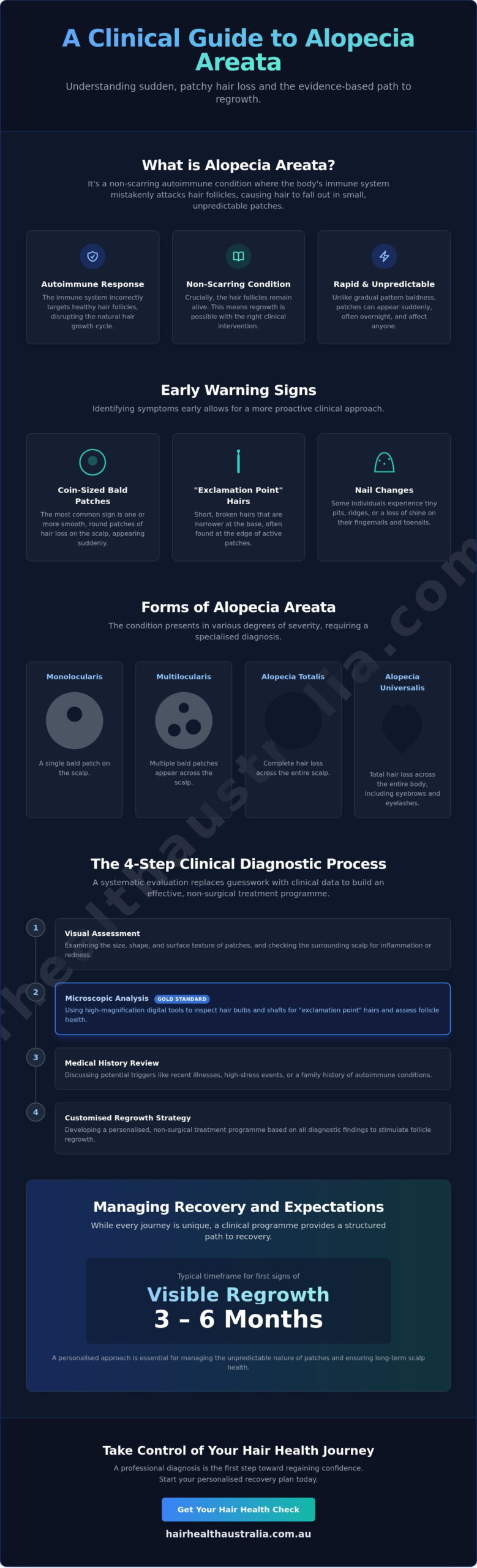
Identifying the condition early allows for a more proactive clinical path. The most frequent sign is the smooth, coin-sized bald spot that appears almost overnight. Upon closer inspection, you might notice “exclamation point hairs.” These are short, broken hairs that are thicker at the top and narrower at the base, indicating the follicle is under significant stress. Some individuals also experience changes in their fingernails or toenails, such as tiny pits, ridges, or a loss of natural shine, which can be a secondary indicator of systemic autoimmune activity. For female patients, recognising these changes alongside other early signs of alopecia in women is critical to securing timely clinical intervention before the condition progresses.

The Different Forms of Alopecia

The condition presents in various degrees of severity. It’s categorised as Monolocularis when only a single patch is present, or Multilocularis when multiple patches appear across the scalp. In more extensive cases, it may progress to Alopecia Totalis, involving the entire scalp, or Alopecia Universalis, which affects the entire body. Finding a specialised alopecia areata treatment Sydney provider ensures that the specific form of the condition is correctly identified before any programme begins. If you’re unsure of your symptoms, a professional hair health check can provide the diagnostic clarity needed to begin a targeted recovery plan.

The Diagnostic Process at a Sydney Hair Clinic

Seeking a professional alopecia areata treatment Sydney starts with a precise, multi-stage diagnostic approach. It’s not enough to simply identify a bald patch; we must understand the activity level of the immune response and the current state of your follicles. A systematic evaluation replaces guesswork with clinical data, ensuring your recovery plan is built on facts rather than assumptions. For many patients, understanding The Diagnostic Process is the first step toward regaining a sense of control over their hair health.

The clinical journey typically follows these four essential steps:

  • Step 1: Visual Assessment. We begin by examining the size, shape, and surface texture of the patches. We also check the surrounding scalp for signs of inflammation or redness that might indicate an active flare-up.
  • Step 2: Microscopic Analysis. Using high-magnification digital tools, we look closely at the hair bulbs and shafts. This allows us to see “exclamation point” hairs and other markers of autoimmune interference.
  • Step 3: Medical History Review. We discuss potential triggers, including recent illnesses, high-stress events, or family history of autoimmune conditions, to build a comprehensive patient profile.
  • Step 4: Customised Strategy. Based on these findings, we develop a non-surgical regrowth programme tailored to your specific needs and the severity of the condition.

Why Microscopic Hair Analysis is the Gold Standard

While a visual check can confirm the presence of alopecia, microscopic hair analysis reveals what’s happening beneath the surface. These scans allow us to distinguish between dormant follicles that are ready to be stimulated and those that are still under active immune attack. We also track miniaturisation in the hair surrounding the patches, which helps us predict if the condition might spread. To get an accurate baseline of your scalp health, you should book a professional Hair Health Check as soon as you notice changes.

When to See a Hair Specialist in Sydney

Many people wait months hoping the hair will grow back on its own, but early intervention is often the key to stopping the progression of new patches. It’s important to recognise the difference between a general GP and a specialised hair specialist. While a GP can provide a basic referral, a specialist has the specific diagnostic equipment and experience required to manage complex autoimmune hair loss. When preparing for your consultation, it’s helpful to note down when the patches first appeared and if you’ve noticed any changes in your nail texture. This level of detail helps us refine your alopecia areata treatment Sydney plan for the best possible outcome.

Clinical vs. Home Treatments: A Comparison Reference

When you first notice a bald patch, the temptation to reach for an over-the-counter solution from the local chemist is understandable. However, standard products like generic minoxidil are often formulated for age-related thinning rather than the complex autoimmune response seen in alopecia areata. Choosing a professional alopecia areata treatment Sydney programme ensures you’re moving beyond basic vasodilators to clinical-grade stimulants and supervised therapies that actually address the underlying cause of the hair loss.

Home remedies and “natural” DIY oils frequently fail because they cannot modulate the immune system’s attack on the hair follicle. While some supplements might support general hair health, they don’t possess the clinical strength required to halt an active autoimmune flare. In contrast, supervised clinical programmes provide a systematic approach. They combine high-potency stimulants with professional scalp hygiene to create an environment where regrowth is not just possible but sustainable. This methodical oversight also allows for adjustments based on how your scalp reacts, providing a safety net that home-based trial and error simply cannot offer.

Non-Surgical Growth Stimulants

Clinical-strength formulas differ from generic options through their concentration and delivery systems, which are designed to penetrate deeper into the affected patches. These targeted applications focus specifically on the areas where the immune system has forced the hair into a resting state. Non-surgical growth stimulators function by extending the anagen phase of the hair cycle, effectively prompting dormant follicles to resume active production. By maintaining this stimulation under professional guidance, we can often see a reversal of the “miniaturisation” process before the patches have a chance to expand.

Laser Therapy and Scalp Health

Low-level laser therapy (LLLT) has become a cornerstone of modern non-surgical recovery. This technology uses specific wavelengths of light to increase blood flow to the follicles, delivering essential nutrients and oxygen directly to the site of the autoimmune attack. Beyond just stimulation, maintaining a balanced scalp environment is critical for the survival of new, fragile hairs. Living in a coastal city means dealing with humidity and salt air, which can affect the efficacy of topical applications; our programmes account for the specific impact of the Sydney climate on scalp health to ensure maximum absorption and follicle protection. This integrated approach is why a specialised alopecia areata treatment Sydney provides a higher degree of reliability than self-managed care.

Alopecia Areata Treatment Sydney: A Clinical Guide to Non-Surgical Recovery

Managing Recovery and Expectations in Sydney

Recovery from autoimmune hair loss is a marathon rather than a sprint. For patients embarking on an alopecia areata treatment Sydney programme, understanding the biological timeline is essential for maintaining a positive outlook. Unlike standard hair thinning, where results might be seen through improved density, alopecia recovery involves a specific sequence of follicle reactivation that requires patience and clinical oversight.

Clinical data indicates that visible regrowth typically occurs within a three-to-six-month window. This period is necessary for the follicles to transition from their forced resting state back into an active growth phase. It is important to remember that alopecia is notoriously erratic. While one patch may be filling in successfully, a new flare-up could potentially occur elsewhere on the scalp. Having a clinical partner provides a safety net during these times; we can adjust your programme in real-time to address new patches before they expand, ensuring your progress remains on track.

Living in a high-UV environment like New South Wales adds an extra layer of responsibility to your recovery. Exposed patches of scalp are highly vulnerable to sunburn, which can cause inflammation and further stress the follicles. We recommend using a high-SPF scalp sunscreen or wearing a breathable hat when spending time outdoors, whether you’re at the beach or walking through the CBD. Additionally, while stress is not the primary cause of the condition, it is a well-documented trigger for autoimmune flares. Incorporating stress-reduction techniques into your daily routine can help stabilise your immune response and support your clinical treatment.

The Journey to Regrowth

The first sign of success is often the appearance of “peach fuzz” or vellus hair. These fine, light-coloured hairs indicate that the follicle has successfully resumed production. Over time, these hairs will gain pigment and thickness as they mature. Consistency with your alopecia management plan is the most critical factor during this stage. If a new patch appears, do not feel discouraged. It simply means the immune system is still active and requires continued regulation to maintain long-term stability.

Psychological Support and Confidence

The social impact of sudden, patchy hair loss cannot be understated. In professional and social Sydney circles, the anxiety associated with appearance can be taxing. A professional clinical diagnosis replaces uncertainty with a structured, evidence-based plan. This clarity often provides a significant boost to self-esteem, as you are no longer “waiting and seeing” but taking active steps toward recovery. To begin your journey with a clear diagnostic baseline, book a professional Hair Health Check today and gain the clinical support you need to move forward with confidence.

Why Hair Health Australia is the Preferred Sydney Choice

Selecting a clinical partner for your recovery is a decision that affects both your physical results and your peace of mind. While many general dermatologists manage a wide array of skin and nail conditions, Hair Health Australia focuses specifically on the science of non-surgical hair restoration. This specialisation allows us to provide a level of expertise and diagnostic precision that is essential for managing the complexities of an alopecia areata treatment Sydney programme. We don’t believe in a one-size-fits-all approach. Instead, we use the clinical data gathered from your initial scans to build a strategy that respects your individual autoimmune profile.

Our clinic is dedicated to providing both male hair loss treatment and female hair loss treatment through evidence-based, non-invasive pathways. We focus on long-term hair density and the biological health of the scalp, moving away from temporary cover-ups or aggressive surgical options. Our central Sydney location is designed to facilitate the regular progress checks and microscopic scans required to track your regrowth accurately. This proximity ensures that if your condition shifts or a new flare-up occurs, we can adjust your clinical plan immediately to maintain your progress.

Our Commitment to Realistic Results

We believe that trust is built through transparency and straight-talking honesty. During your consultation, we provide a clear, objective assessment of your condition and what can be achieved through non-surgical intervention. We won’t use hyperbolic marketing language or promise overnight transformations. Our Sydney clinic prioritises follicle health through systematic, non-invasive care. This methodical approach ensures that every step of your recovery is grounded in proven clinical standards, providing you with a reliable and predictable path toward regaining your hair density.

Book Your Sydney Consultation Today

Taking the first step toward recovery begins with moving past the uncertainty of “waiting and seeing.” When you visit our Sydney centre, you’ll undergo a comprehensive hair analysis that looks far beyond the surface of your scalp. We examine the integrity of the hair shafts and the activity levels of your follicles to ensure your diagnosis is 100% accurate. This clinical clarity is the foundation of every successful alopecia areata treatment Sydney residents undertake with us. You can take the first step toward recovery with a Hair Health Check today. Our team is ready to act as your dedicated guide, providing the professional support and clinical expertise you need to stimulate visible, lasting regrowth.

Take the First Step Toward Clinical Recovery

Managing autoimmune hair loss requires a move away from uncertainty toward a structured, clinical framework. We’ve explored how identifying the specific activity of your follicles through advanced microscopic technology allows for a targeted, non-surgical approach. Remember that because alopecia areata is non-scarring, your follicles remain capable of producing new hair once the immune response is stabilised. This viability is the foundation of our specialised regrowth protocols.

With over 15 years of experience, our Sydney specialists provide the diagnostic clarity and systematic care needed to navigate this unpredictable journey. Finding an effective alopecia areata treatment Sydney patients can rely on means choosing a partner committed to evidence-based care and transparent, realistic outcomes. We focus on the long-term health of your scalp to ensure that any regrowth is supported by a stable and healthy environment.

You don’t have to manage this condition alone. Book Your Comprehensive Hair Health Check in Sydney to gain a professional assessment of your scalp health and start your personalised recovery plan. Clinical support is the most reliable way to turn the tide on patchy hair loss and reclaim your confidence.

Frequently Asked Questions

Is alopecia areata permanent or will my hair grow back?

Alopecia areata is typically a non-scarring condition, which means your hair follicles remain alive and capable of regrowth even after significant loss. While the timeline varies for everyone, the majority of people experience some degree of recovery once the underlying autoimmune flare is managed. Clinical intervention focuses on stimulating these dormant follicles back into the anagen growth phase to restart the natural cycle.

What is the most effective treatment for alopecia areata in Australia?

The most effective alopecia areata treatment Sydney patients can access depends entirely on the severity of their condition. For mild to moderate cases, clinical-grade topical stimulants and professional scalp therapy are the standard approach. For severe cases, the TGA approved Janus kinase (JAK) inhibitors like Baricitinib in 2023 and Ritlecitinib in 2024, providing new medical pathways for those with extensive or persistent patches.

Can stress actually trigger alopecia areata patches?

Stress is a well-documented trigger that can exacerbate the autoimmune response, though it isn’t the primary cause of the condition. High-stress events often precede a flare-up by several weeks or months as the body’s immune system becomes overactive. Managing lifestyle stress alongside a clinical programme helps stabilise the immune system and may reduce the frequency or size of new patches appearing.

How much does alopecia treatment in Sydney typically cost?

Costs for professional care in Sydney vary based on the provider and the complexity of your recovery plan. A private dermatologist consultation in Australia generally ranges between $250 and $400, with Medicare rebates available for those with a valid GP referral. Ongoing clinical programmes for non-surgical recovery are customised to the individual, so a diagnostic assessment is the only way to determine a specific investment for your care.

Are there any natural ways to cure alopecia areata?

There is no scientifically proven “natural cure” that can resolve the underlying autoimmune cause of the condition. While a balanced diet and good scalp hygiene support general hair health, they don’t have the potency to stop the immune system from attacking your follicles. Clinical treatments are necessary to modulate the immune response and provide enough stimulation to restart the growth cycle in dormant areas.

What is the difference between a dermatologist and a hair specialist for alopecia?

A dermatologist is a medical doctor who treats all conditions related to the skin, hair, and nails, often using systemic medications or injections. A hair specialist focuses specifically on the diagnostic analysis and non-surgical restoration of hair density. Both play vital roles, but a hair specialist often provides more frequent monitoring and specialised scalp therapies designed for long-term follicle health and maintenance.

Can I still dye or style my hair if I have alopecia patches?

You can usually continue to style your hair, but you must avoid harsh chemical treatments or tight hairstyles that put physical tension on the follicles. If you use hair dye, ensure the scalp isn’t currently inflamed, red, or sensitive. Using gentle, sulphate-free products helps maintain a healthy scalp environment while you are undergoing an alopecia areata treatment Sydney protocol.

How long does it take to see results from clinical alopecia therapy?

Most patients begin to see the first signs of visible regrowth within a three-to-six-month window of starting a consistent clinical programme. This timeline accounts for the biological time needed for the follicles to transition out of their resting phase. Initial growth often appears as fine, light-coloured vellus hair before eventually regaining its natural pigment and thickness as the hair matures.