Waking up to find a cluster of strands on your pillow or noticing your scalp clearly visible under the bathroom downlights for the first time is a moment of profound uncertainty. You might find yourself questioning whether this is a temporary reaction to stress or the start of something more permanent. Understanding the early signs of alopecia Australia patients often experience is the first step in moving from a place of worry to one of clinical clarity. It’s a common concern, but that doesn’t make the impact on your confidence any less significant.
We understand that you want more than just a temporary fix; you need a definitive diagnosis and a realistic path forward. This guide provides a deep dive into the biological causes of hair thinning and the modern, non-surgical recovery options available to you in 2026. We will explore how a structured clinical approach can differentiate between various hair loss types and help you implement a personalised plan for regrowth. By the end of this article, you’ll have the knowledge required to seek professional microscopic analysis and begin the journey toward restoring your hair density.
Key Takeaways
- Differentiate between shaft thinning and medical alopecia to understand the specific biological cause of your hair loss.
- Identify the early signs of alopecia Australia residents frequently miss, including patchy loss and subtle changes in hair texture.
- Use established clinical scales, such as the Norwood and Ludwig frameworks, to accurately assess the current stage of your hair density.
- See why microscopic hair analysis is the gold standard for diagnosing follicle health compared to a basic visual inspection.
- Discover non-surgical pathways that focus on follicle stimulation to achieve significant regrowth without invasive procedures.
Understanding the Difference Between Hair Thinning and Alopecia
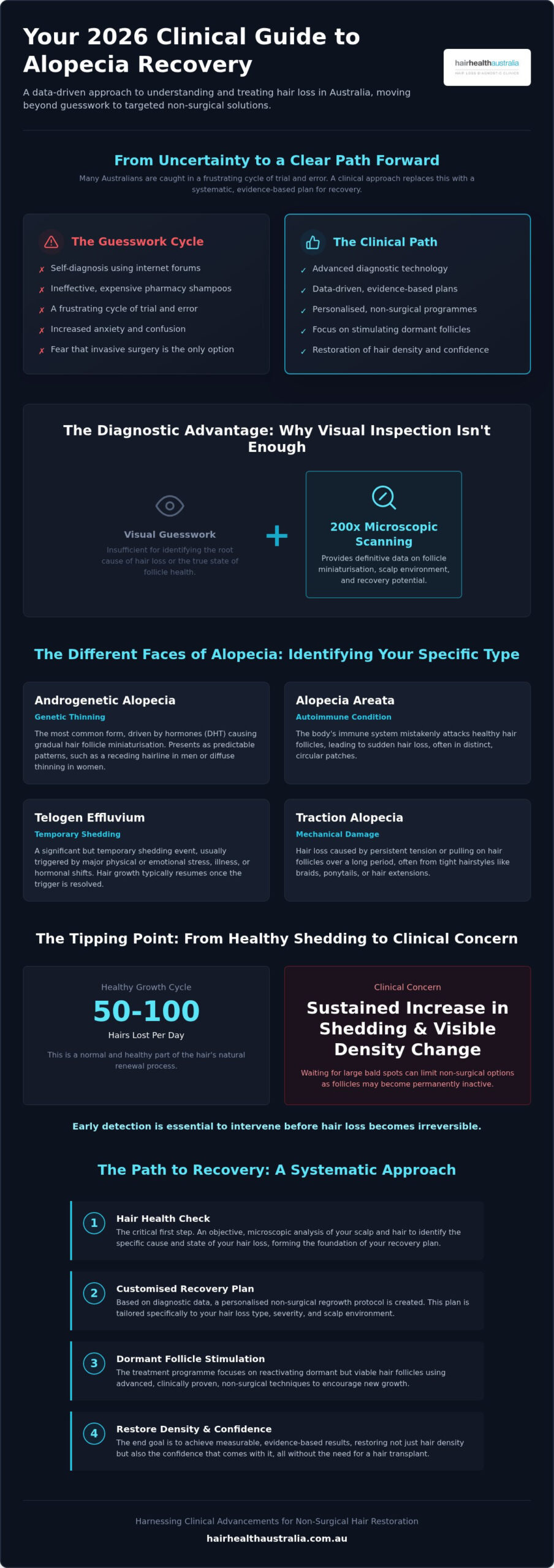
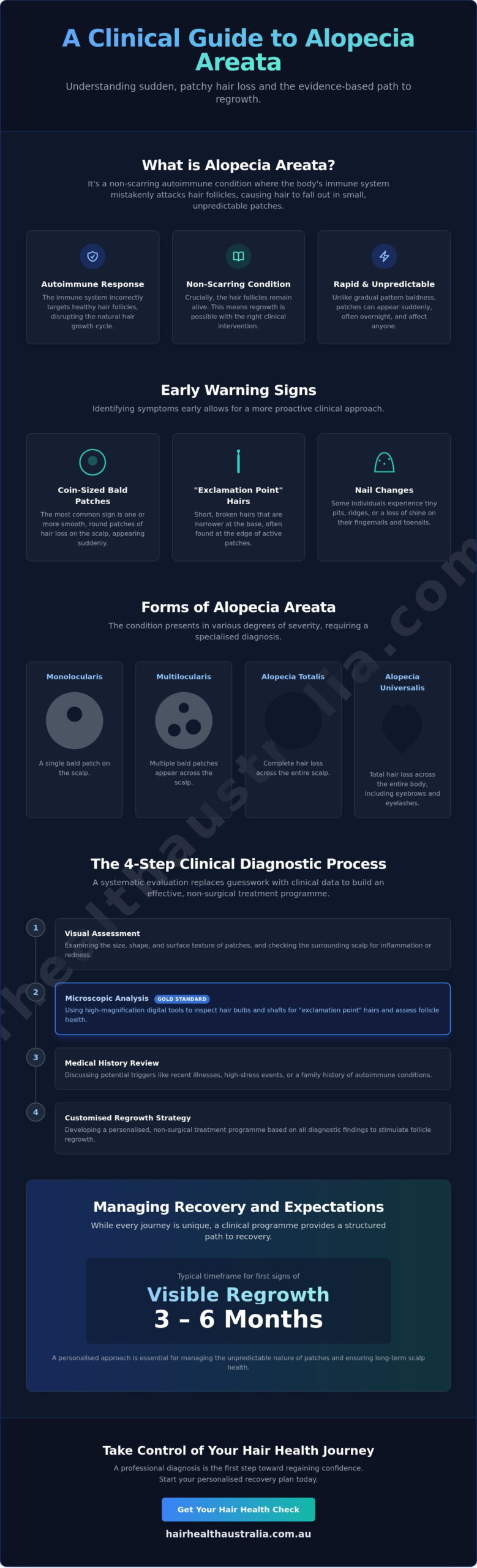
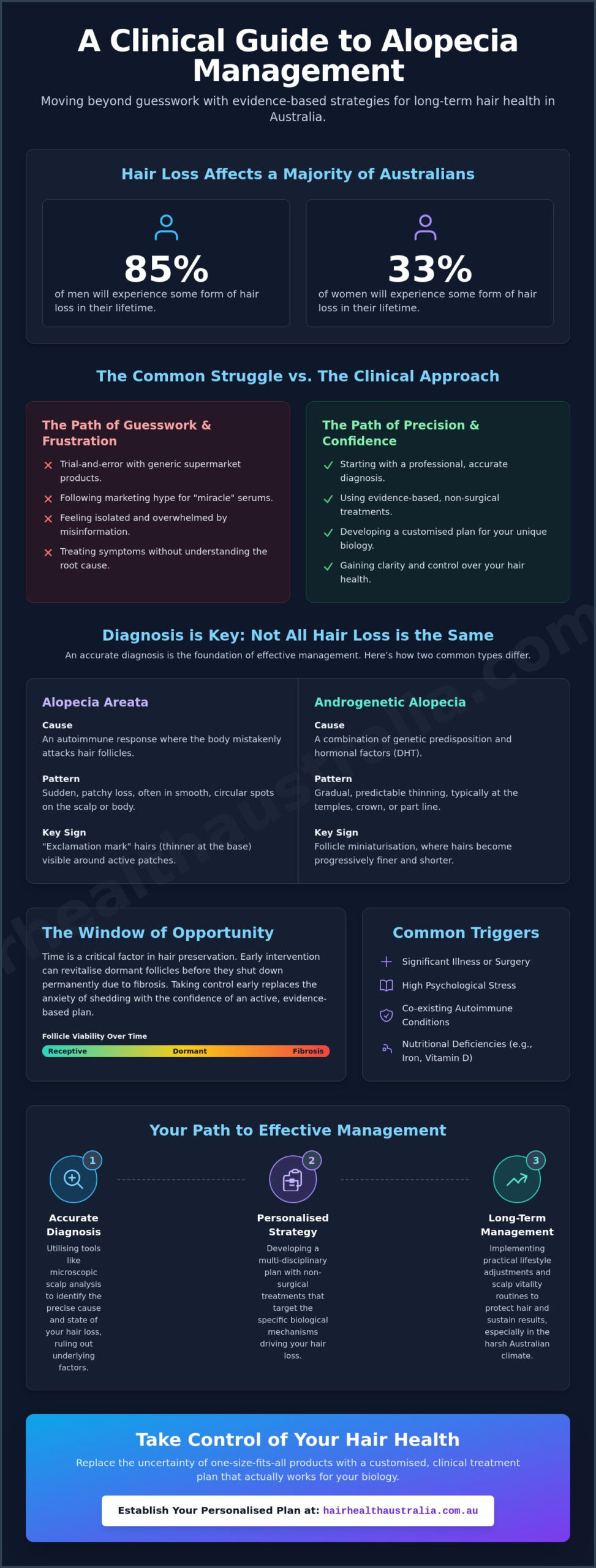
Distinguishing between general thinning and clinical alopecia is essential for effective treatment. Hair thinning refers specifically to a reduction in the diameter and density of hair shafts, often making the hair feel less voluminous or “flat.” Conversely, hair loss, also known as alopecia, serves as the overarching medical term for any type of loss, whether it’s patchy, total, or gradual. Recognising the early signs of alopecia Australia residents often notice, such as a receding hairline or a wider part, allows for a more proactive approach. The emotional impact of these changes shouldn’t be underestimated; it’s a deeply personal experience that warrants professional reassurance and a scientific diagnosis rather than guesswork.
The Normal Hair Cycle vs. Clinical Loss
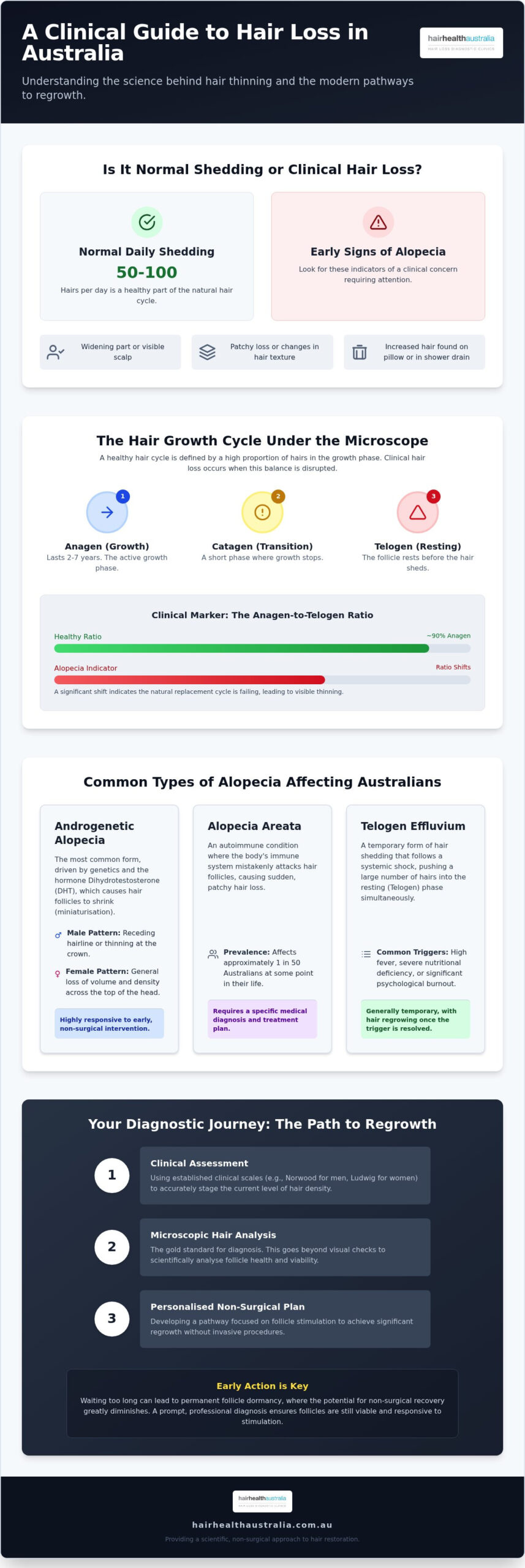
Your hair is constantly moving through a biological cycle consisting of three distinct stages. The Anagen phase is the growth stage, which can last for several years. This is followed by the Catagen transition and finally the Telogen resting phase before the hair naturally falls out. While losing 50 to 100 hairs per day is considered normal, a clinical red flag appears when those hairs fail to regrow or return significantly finer. The Anagen-to-Telogen ratio serves as a primary marker of alopecia by measuring the proportion of hairs actively growing versus those in the resting phase. If this ratio shifts significantly, it indicates that the hair’s natural replacement cycle is failing, often leading to visible scalp exposure.
When Thinning Becomes a Medical Concern
Thinning transitions from a cosmetic annoyance to a medical priority when you notice physical changes like a widened part or a visible scalp under bright bathroom lights. You might also see miniaturised hairs, which are shorter, thinner, and lack the pigment of your usual strands. While genetics often dictate the timeline, external triggers like high stress levels, nutritional deficiencies, or the harsh Australian climate can accelerate the process. Identifying these early signs of alopecia Australia wide is critical because waiting too long often leads to permanent follicle dormancy. When follicles remain inactive for extended periods, the potential for non-surgical recovery diminishes. Seeking a Hair Health Check early ensures you can implement a non-invasive programme while the follicles are still viable and responsive to stimulation.
Common Types of Alopecia Affecting Australians in 2026
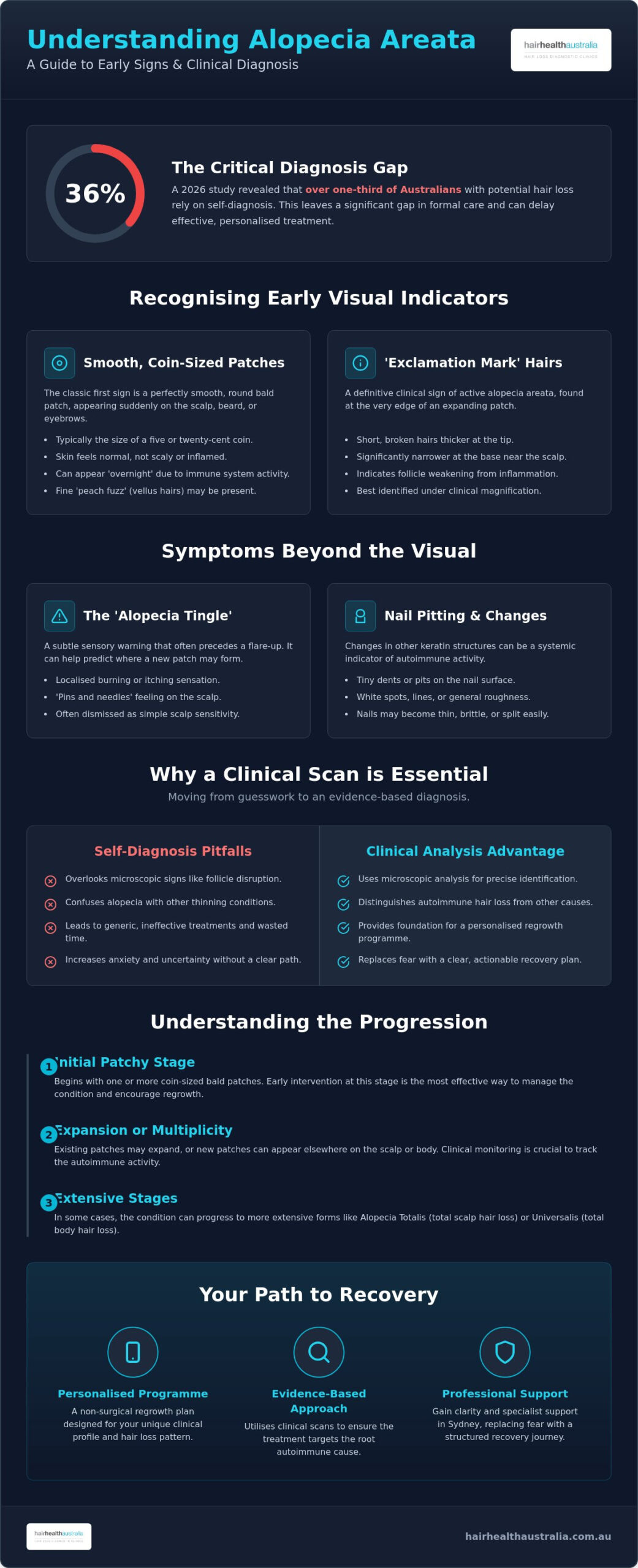
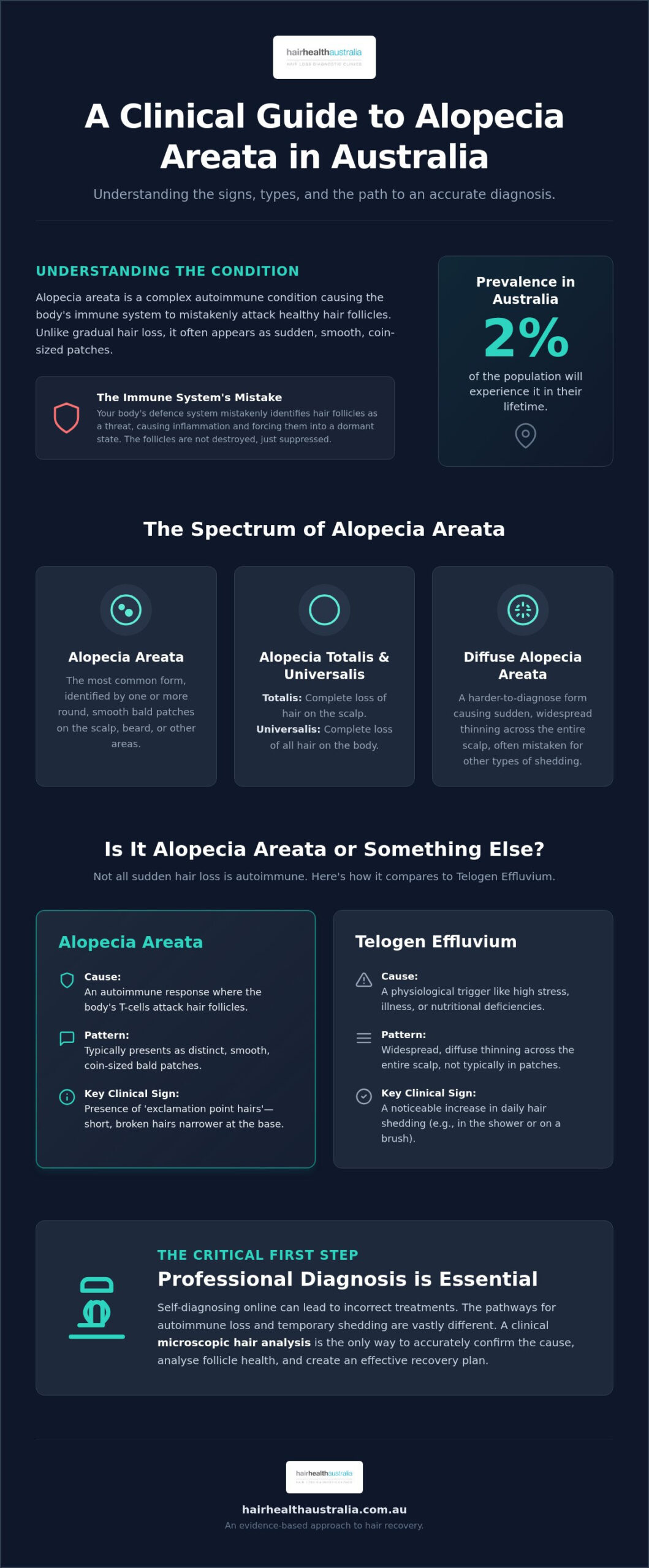
Identifying the specific pathology behind your hair loss is the primary step toward recovery. In Australia, approximately 1 in 50 people will experience alopecia areata at some point, yet many more struggle with progressive thinning that is often misidentified. Recognising the early signs of alopecia Australia patients present with requires a nuanced understanding of how different conditions manifest. Whether it’s the sudden appearance of smooth patches or the increasing prevalence of Frontal Fibrosing Alopecia, which causes scarring at the hairline, a clinical diagnosis for hair loss is essential to ensure you’re following the correct treatment pathway.
Androgenetic Alopecia: The Genetic Factor
This is the most common form of hair loss, driven by genetics and the hormone Dihydrotestosterone (DHT). In susceptible individuals, DHT binds to receptors in the scalp, causing hair follicles to shrink in a process known as miniaturisation. For men, this typically presents as a receding hairline or thinning at the crown. In women, it often manifests as a general loss of volume across the top of the head. It’s a progressive condition, but it’s also highly responsive to clinical intervention. If you address the issue while the follicles are still active, non-surgical programmes can effectively counteract the effects of DHT before the follicles reach a point of permanent dormancy.
While genetic loss is common, autoimmune-driven loss like alopecia areata requires a different approach. The clinical landscape in Australia has evolved, with the TGA approving JAK inhibitors such as Baricitinib and Ritlecitinib (Litfulo) for severe cases. These medical advancements highlight why a precise diagnosis is required to determine if your loss is hormonal, autoimmune, or environmental.
Stress-Induced Shedding and Temporary Thinning
Telogen Effluvium is a temporary form of hair loss that often follows a systemic shock, such as high fever, severe nutritional deficiency, or modern psychological burnout. Unlike genetic thinning, this condition pushes a large number of hairs into the resting phase simultaneously. You’ll typically notice excessive shedding about three months after the triggering event. Distinguishing this from progressive genetic loss is vital; while Telogen Effluvium often resolves once the underlying trigger is managed, genetic loss requires active clinical management. A professional assessment can help stabilise the scalp environment, ensuring that temporary shedding doesn’t mask a more persistent issue. If you’re unsure which pattern you’re seeing, booking a specialised hair health check can provide the clarity you need to move forward with confidence.
Identifying Your Pattern: Male vs. Female Hair Thinning
Understanding how hair loss progresses is a matter of clinical mapping. Clinicians use standardised frameworks to categorise the severity and trajectory of loss, ensuring that the treatment matches the specific stage of thinning. For men, the Norwood Scale tracks the recession from the temples and crown. For women, the Ludwig Scale measures the widening of the central part and general density reduction across the mid-scalp. Recognising the early signs of alopecia Australia residents encounter, such as a subtle shift in the hairline or a loss of volume at the crown, allows for a more targeted intervention. These scales provide a common language for specialists to assess your hair health and predict future patterns.
Male Pattern Thinning: Beyond the Receding Hairline
The temples and crown are the most vulnerable areas for men because the hair follicles there often possess a higher sensitivity to hormonal triggers. This sensitivity causes the follicles to miniaturise over time, leading to a visible receding hairline or a thinning “patch” at the back of the head. For many Sydney men in high-pressure professional environments, this change can feel like an overnight shift, but it’s usually a gradual progression. Moving from a slight recession to slick baldness isn’t inevitable. You can halt this progression through Male Hair Loss Treatment Programs in Sydney that focus on revitalising dormant follicles before they reach the point of no return. Acting while the follicles are still producing fine, vellus hair is the most effective way to restore density non-surgically.
Female Pattern Loss: Protecting Your Density
Women typically experience loss as a diffuse thinning across the top of the head rather than a distinct receding hairline. This pattern makes the scalp more visible under bright lights or when the hair is tied back. Hormonal shifts, particularly during menopause or post-pregnancy, play a significant role in Australian women’s hair health. Additionally, iron deficiency and thyroid imbalances are frequent clinical contributors to reduced density. Having patterned hair loss explained by a specialist helps identify these underlying triggers. To navigate these complexities, consult the Hair Loss Treatment for Women: The 2026 Australian Clinical Buying Guide for evidence-based recovery strategies. Early detection of these signs is the most effective way to preserve existing density and stimulate new growth. A personalised approach ensures that we address the root cause, whether it’s hormonal, nutritional, or genetic.
The Diagnostic Journey: Why a Hair Health Check is Essential
A standard visual check by a general practitioner can identify advanced hair loss, but it often misses the subtle early signs of alopecia Australia patients need to catch for non-surgical success. By the time thinning becomes obvious to the naked eye, you might have already lost up to 50% of your hair density in that specific region. This is why a clinical diagnostic approach is vital. We don’t just look at the surface; we investigate the biological health of the follicles themselves. This process moves beyond guesswork, providing a data-driven foundation for a successful recovery plan.
Microscopic Scanning vs. Visual Inspection
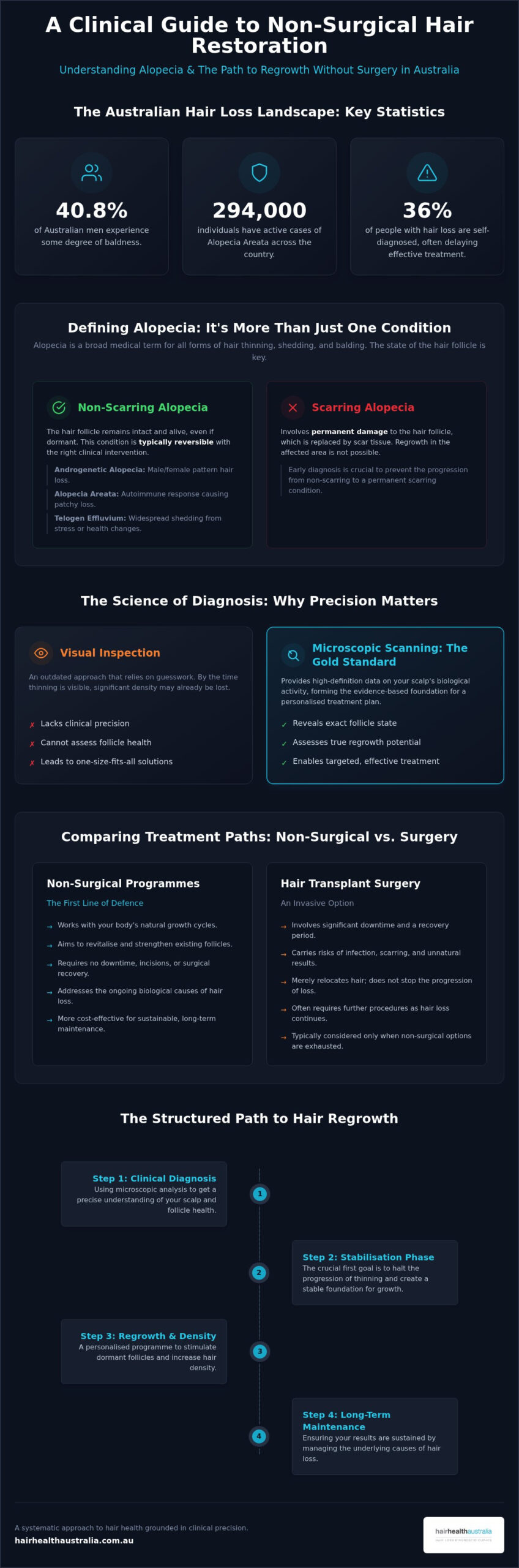
Microscopic scanning serves as the definitive tool for assessing follicle health. While a visual inspection only shows the hair shaft above the skin, microscopic scans allow clinicians to see activity beneath the scalp surface. We use this technology to identify the difference between dormant follicles, which can be revitalised, and dead follicles, where regrowth is no longer possible. A minimum of 200x magnification is required to accurately track follicle diameter changes and identify miniaturisation before it becomes permanent. This level of detail allows us to predict your potential for regrowth with high precision, ensuring you don’t waste time on ineffective treatments.
Following the scan, we produce a customised clinical report. This document isn’t a generic brochure; it’s a systematic breakdown of your scalp health, hair density, and follicle viability. It establishes a baseline that we use to measure the success of your non-surgical programme. Without this verified data, you’re simply trying products without knowing if they’re actually working at the cellular level. Identifying the early signs of alopecia Australia wide requires this level of clinical scrutiny to ensure the best possible outcome.
What to Expect During Your Sydney Consultation
Your journey begins with a comprehensive assessment that bridges the gap between noticing a problem and implementing a solution. During the consultation, we conduct a thorough history review to identify potential triggers such as stress, diet, or local environmental factors. We then perform a scalp scan, focusing on both the thinning areas and the “donor area” at the back of the head. By comparing these two zones, we establish a baseline of your natural hair density and determine the extent of the miniaturisation.
The process is methodical and transparent. You’ll see the live images of your follicles, allowing you to understand the clinical reality of your hair health. Based on these findings, we provide a personalised prognosis and a structured path forward. If you’re ready to move past the uncertainty, booking a Hair Health Check is the most effective way to secure a professional diagnosis and start your recovery journey with confidence.
Non-Surgical Recovery: Clinical Paths to Regrowth in Sydney
Recovery from hair loss is a systematic process rather than a quick fix. For many, the assumption is that surgery represents the only viable path to restoring significant density. However, modern non-surgical regrowth programmes offer a clinically-backed alternative that focuses on revitalising the follicles you already have. By acting on the early signs of alopecia Australia residents often notice, we can implement protocols designed to wake up dormant follicles before they reach the point of permanent closure. This non-invasive approach prioritises the biological health of your scalp to achieve sustainable, natural-looking results.
A multi-faceted strategy is essential for success. We combine clinical-strength topical applications with nutritional guidance and professional scalp management to address hair loss from every angle. This comprehensive method ensures that the follicles are not only stimulated to grow but are also supported by the necessary nutrients and a healthy environment to thrive. It’s vital to maintain realistic expectations regarding the timeline. Hair growth follows a strict biological cycle, meaning most patients will observe stabilisation within the first three months, with visible density improvements typically appearing between the 6 and 12-month marks.
Clinically-Backed Follicle Stimulation
The efficacy of a regrowth programme depends heavily on the quality and concentration of the active ingredients used. Clinical-strength treatments differ significantly from over-the-counter supermarket options, which often lack the potency required to penetrate the scalp effectively. Medical-grade topicals are formulated to deliver high-performance stimulants directly to the follicle base. For a deeper understanding of these protocols, you can consult the Best Hair Regrowth Treatment Australia 2026 reference guide. Correct application methods are just as vital as the ingredients themselves, ensuring the scalp absorbs the treatment without irritation.
Maintaining Scalp Health for Long-Term Results
A healthy scalp environment is the foundation of any successful recovery. Chronic inflammation and excessive sebum buildup can create a hostile environment for hair follicles, effectively “choking” them and hindering new growth. Our programmes include specific steps to clear these obstructions and balance the scalp’s natural ecosystem. By reducing micro-inflammation, we allow the follicles to function at their peak capacity. Long-term results require consistent care and professional monitoring to ensure the scalp remains receptive to treatment. Taking the first step towards a fuller head of hair starts with professional validation. If you’ve noticed the early signs of alopecia Australia clinics are equipped to help; a specialised check will provide the clinical roadmap you need to begin your restoration journey.
Securing the Future of Your Hair Health
Navigating hair loss requires moving from uncertainty to evidence-based action. We’ve explored how identifying the early signs of alopecia Australia residents often notice can be the difference between permanent loss and successful non-surgical restoration. By utilising advanced microscopic diagnostic technology, we can look beyond the surface to verify follicle viability and create a structured recovery path before dormancy becomes permanent. This methodical approach ensures you’re treating the correct condition with clinical precision.
Since 2009, we’ve served as non-surgical specialists, providing an empathetic, clinical environment in the heart of Sydney for those seeking clarity. You don’t have to guess about your treatment or wait for thinning to become obvious under bright lights. A precise diagnosis ensures your programme is tailored to your specific biological needs, whether you’re managing genetic thinning or an autoimmune response. Take the first step toward restoring your hair density and confidence today.
Book Your Comprehensive Hair Health Check in Sydney and begin your journey with a trusted specialist. Your path to regrowth is rooted in clinical precision and systematic care.
Frequently Asked Questions
What is the most common cause of hair thinning in Australia?
Androgenetic alopecia, commonly known as male or female pattern baldness, is the most frequent cause of thinning in Australia. This genetic condition involves follicles being sensitive to Dihydrotestosterone (DHT), which causes them to miniaturise over time. While factors like stress or diet contribute, hereditary factors remain the primary driver for most patients. Recognising the early signs of alopecia Australia patients present with, such as a receding hairline, is the first step toward effective intervention.
Can hair lost due to alopecia actually grow back without surgery?
Yes, hair can often grow back without surgery if the follicles are dormant rather than dead. Our non-surgical regrowth programmes focus on stimulating these inactive follicles using clinically-backed methods. By improving scalp health and using targeted stimulants, we can encourage natural regrowth. The success of these non-invasive treatments depends on starting before the follicles have reached a point of permanent atrophy, which is why a professional diagnostic scan is essential.
How do I know if my hair loss is permanent or just temporary shedding?
You can’t always tell the difference through a visual check alone. Temporary shedding, such as Telogen Effluvium, usually involves hair falling out from the root but eventually regrowing once the trigger is removed. Permanent loss involves miniaturisation, where the hair becomes thinner with each cycle. Identifying the early signs of alopecia Australia residents experience requires microscopic scanning to determine if your follicles are shrinking or simply resting, providing you with a definitive clinical prognosis.
Is there a difference between male and female alopecia treatments?
Clinical treatments are highly customised because the underlying causes often differ between genders. Male treatments frequently focus on blocking the effects of DHT at the follicle, while female programmes may address hormonal shifts, iron levels, or thyroid health. Since women often experience diffuse thinning and men see receding patterns, the application methods and clinical strengths of topicals are adjusted to suit the specific needs of the patient’s scalp and hair type.
How long does it take to see results from a non-surgical hair programme?
Most patients begin to see stabilisation of their hair loss within the first three months of a programme. Visible regrowth and improved density typically take between 6 and 12 months to manifest, as this aligns with the natural hair growth cycle. Consistency is the most important factor during this period. We monitor your progress with follow-up scans to ensure the follicles are responding correctly to the clinical stimulation and nutritional support provided.
Does wearing a hat or using styling products cause alopecia?
No, wearing hats or using standard styling products does not cause alopecia. While very tight headwear or hairstyles can lead to traction alopecia, normal hat use is harmless. Similarly, styling products only affect the hair shaft, not the follicle beneath the skin. However, excessive buildup of products can lead to scalp inflammation, which might hinder healthy growth. Maintaining a clean, balanced scalp environment is far more important for long-term hair density than avoiding hats.
What should I do if I notice a sudden bald patch on my scalp?
If you notice a sudden, smooth bald patch, you should seek a professional hair health check immediately. This is often a characteristic sign of alopecia areata, an autoimmune condition where the body attacks its own hair follicles. Early diagnosis is vital because specific clinical treatments, such as TGA-approved JAK inhibitors or topical stimulants, can help manage the condition. A specialist can confirm if the loss is autoimmune or related to other systemic triggers.
Are clinical hair treatments in Sydney covered by private health insurance?
Clinical hair loss treatments in Sydney are generally considered elective or cosmetic and are not typically covered by Medicare or most private health insurance extras. However, it’s always worth checking with your specific provider, as some policies may offer rebates if the loss is linked to a diagnosed medical condition. We provide detailed receipts for all our programmes, which you can use to enquire about potential claims or tax offsets related to medical expenses.