Non-Surgical Hair Replacement Australia: The 2026 Clinical Buying Guide

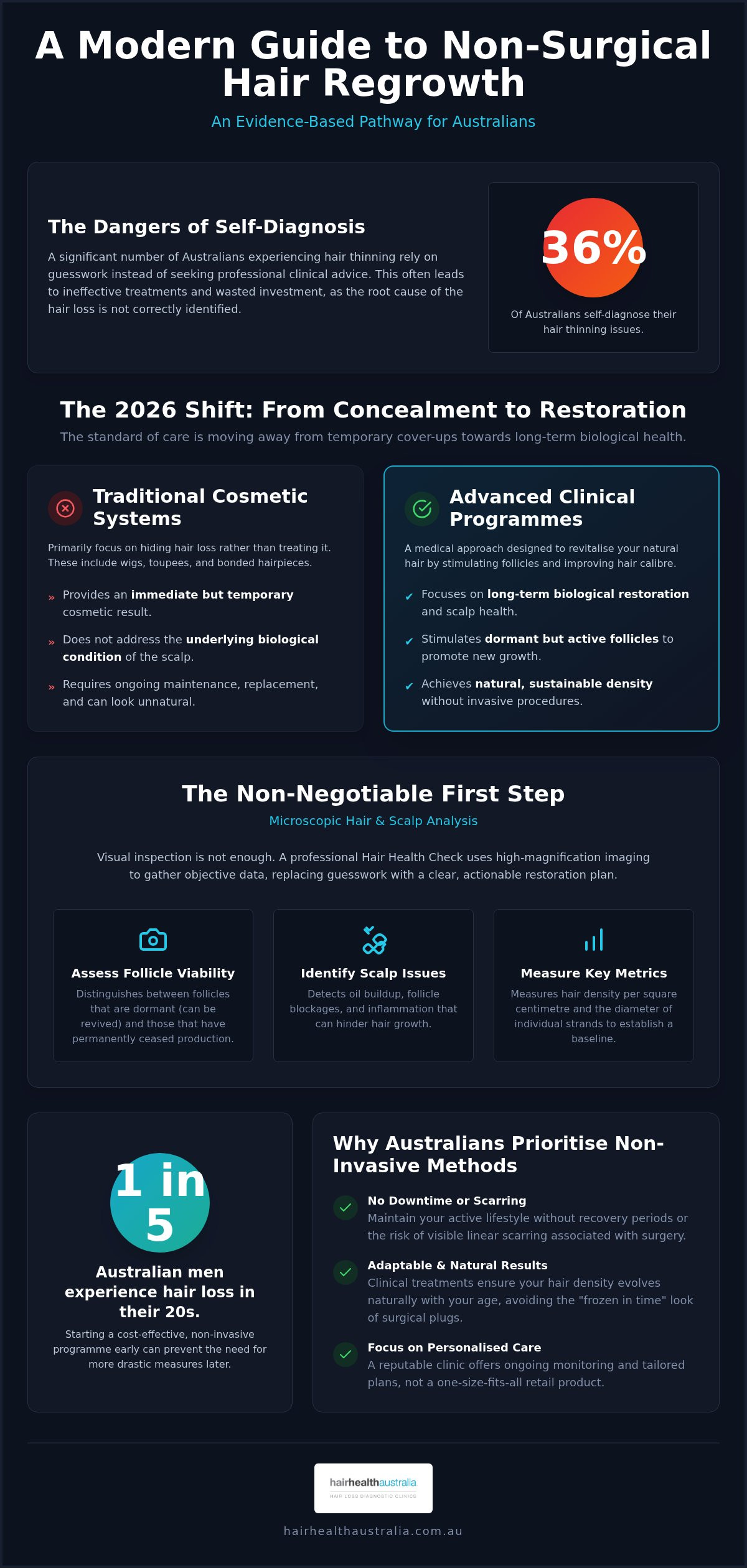
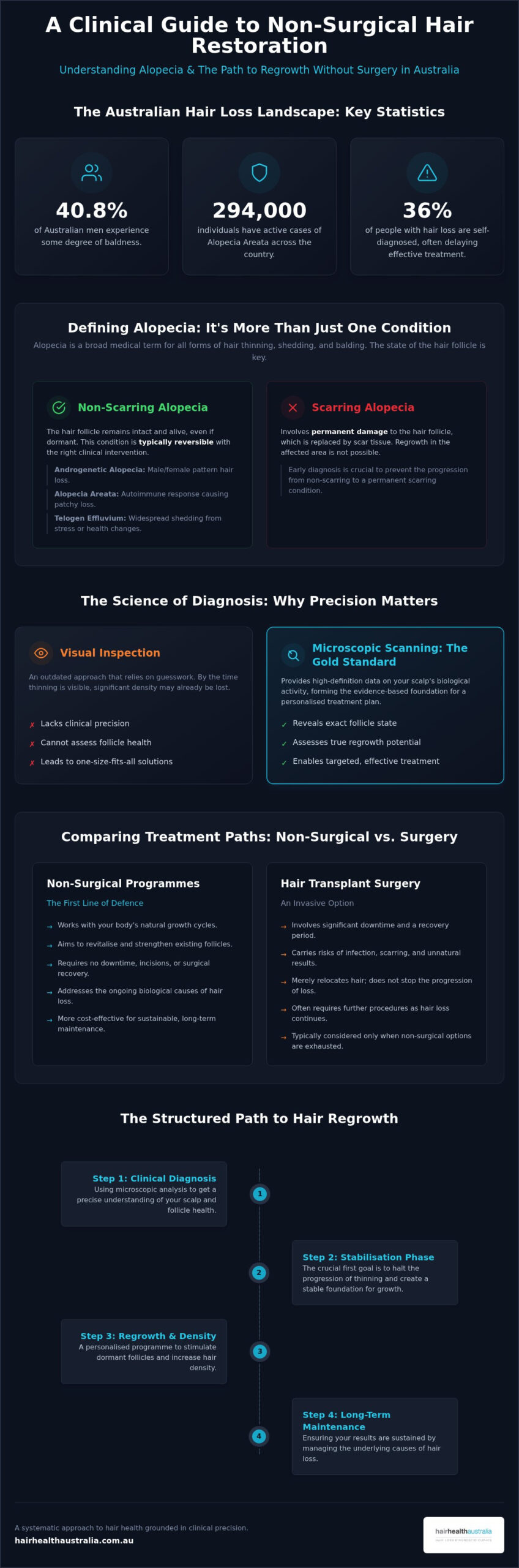
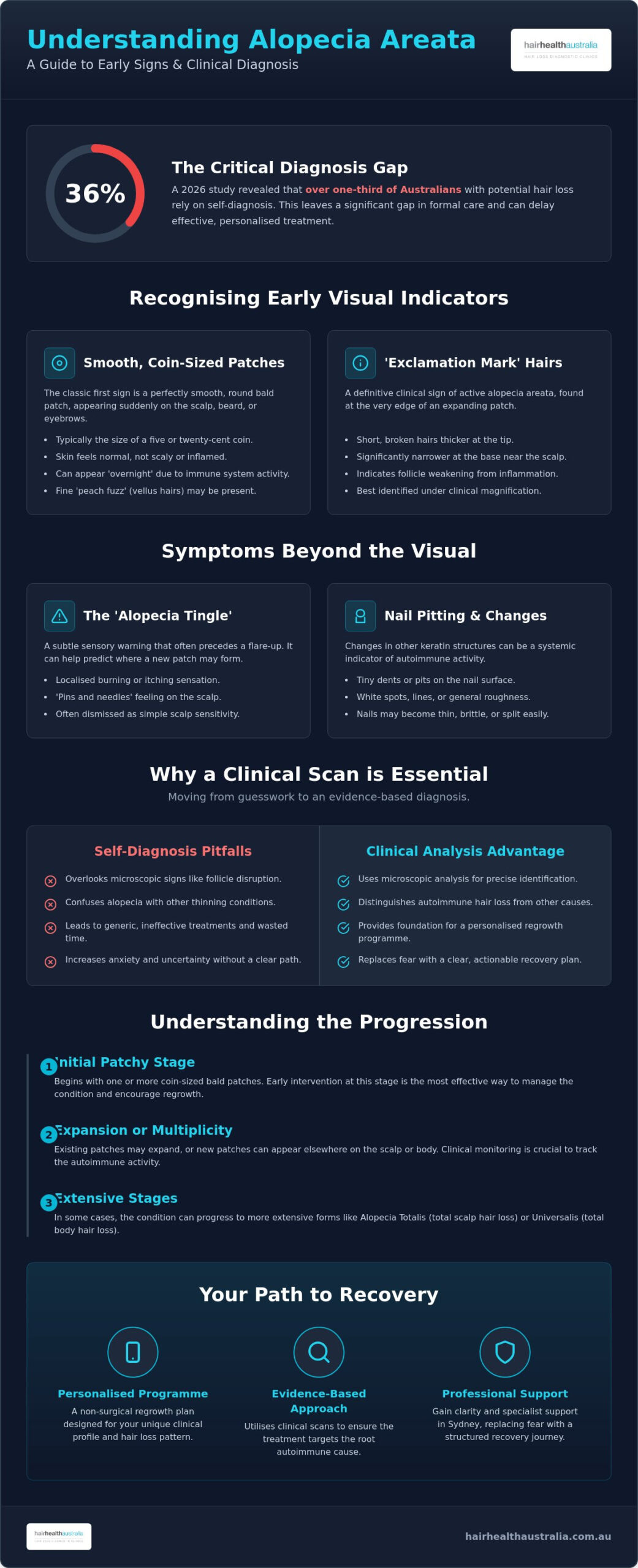
Did you know that nearly 36% of Australians experiencing hair thinning rely on self-diagnosis rather than seeking professional clinical advice? It’s a staggering figure that highlights just how much uncertainty surrounds the industry. If you’ve spent late nights staring at a receding hairline or a thinning crown, you aren’t alone. The search for non surgical hair regrowth australia often leads to a confusing crossroads between temporary cosmetic hairpieces and genuine clinical restoration. You deserve a solution that doesn’t just mask the problem but addresses the underlying biology of your scalp.

We understand the anxiety of losing your hair and the fear of ending up with an unnatural result. This guide provides a clear, evidence-based pathway to restoring your hair density using protocols specifically designed for the Australian climate and lifestyle. You’ll discover how advanced microscopic hair analysis and tailored clinical plans help you achieve natural results without the scarring or downtime of a transplant. We’ll walk you through the 2026 standards for follicle stimulation and the exact steps to reclaim your confidence through a structured, medical approach.

Key Takeaways

  • Learn why microscopic hair analysis is the essential first step to accurately identify active follicles and move beyond the limitations of visual self-diagnosis.
  • Understand the 2026 shift from traditional cosmetic hairpieces to advanced clinical protocols that prioritise biological restoration and long-term scalp health.
  • Discover how non surgical hair regrowth australia has evolved into a scientific discipline that focuses on achieving natural density without the need for invasive procedures.
  • Identify the critical criteria for selecting a Sydney-based specialist who offers ongoing clinical monitoring and personalised care rather than a one-size-fits-all retail approach.
  • Find out why a professional ‘Hair Health Check’ is the non-negotiable starting point for establishing realistic expectations and a clear pathway to hair restoration.

What is Non-Surgical Hair Replacement in Australia?

Non-surgical hair replacement in Australia is no longer just a euphemism for a toupee or a simple wig. By 2026, this field has matured into a sophisticated clinical discipline that balances immediate cosmetic needs with long-term biological restoration. It acts as a broad umbrella category, covering everything from high-end hair systems to medical-grade follicle stimulation. For many Australians, the goal has shifted from merely hiding a problem to actively restoring hair density through science-backed protocols.

Understanding the clinical management of hair loss is the first step toward making an informed decision about your scalp health. While traditional methods often focused on concealing the scalp with heavy, unnatural pieces, modern non surgical hair regrowth australia protocols prioritise the vitality of the hair follicle itself. This evolution reflects a growing demand for treatments that are sustainable, discreet, and grounded in verified diagnostic data. It is about moving beyond the “cover-up” and focusing on a systematic plan for hair health.

The Distinction Between Cosmetic and Clinical Solutions

The choice between cosmetic and clinical paths depends largely on the current stage of your thinning and your personal goals. Cosmetic systems involve external additions, such as high-grade lace pieces or bonded hair systems, which provide an immediate transformation. These are excellent for those with advanced loss who require an instant result, though they do not change the underlying biological condition of the scalp.

Clinical programmes focus on revitalising your natural hair. These non-invasive treatments are designed to stimulate dormant follicles and improve the calibre of existing hair strands. If your hair loss is in the early to mid-stages, clinical intervention is often the superior route because it maintains your biological hair. The most effective way to determine which path is right for you is through a professional Hair Health Check, which uses microscopic scanning to assess follicle viability.

Why Sydney Residents Prioritise Non-Invasive Methods

Sydney’s active, outdoor lifestyle makes traditional surgical options less appealing for many professionals. Surgery often involves significant downtime and the risk of visible linear scarring, which can be difficult to manage in a social or professional setting. Non-invasive methods allow you to maintain your daily routine without the need for bandages or recovery periods.

Clinical regrowth programmes also offer a more adaptable aesthetic. As you age, your hair naturally changes in colour and texture; clinical treatments ensure that your hair density evolves with you, avoiding the “frozen in time” look associated with surgical plugs. Given that 1 in 5 Australian men experience hair loss in their 20s, starting a non-invasive, cost-effective programme early can often prevent the need for more drastic measures later in life.

The Essential First Step: Microscopic Hair Analysis

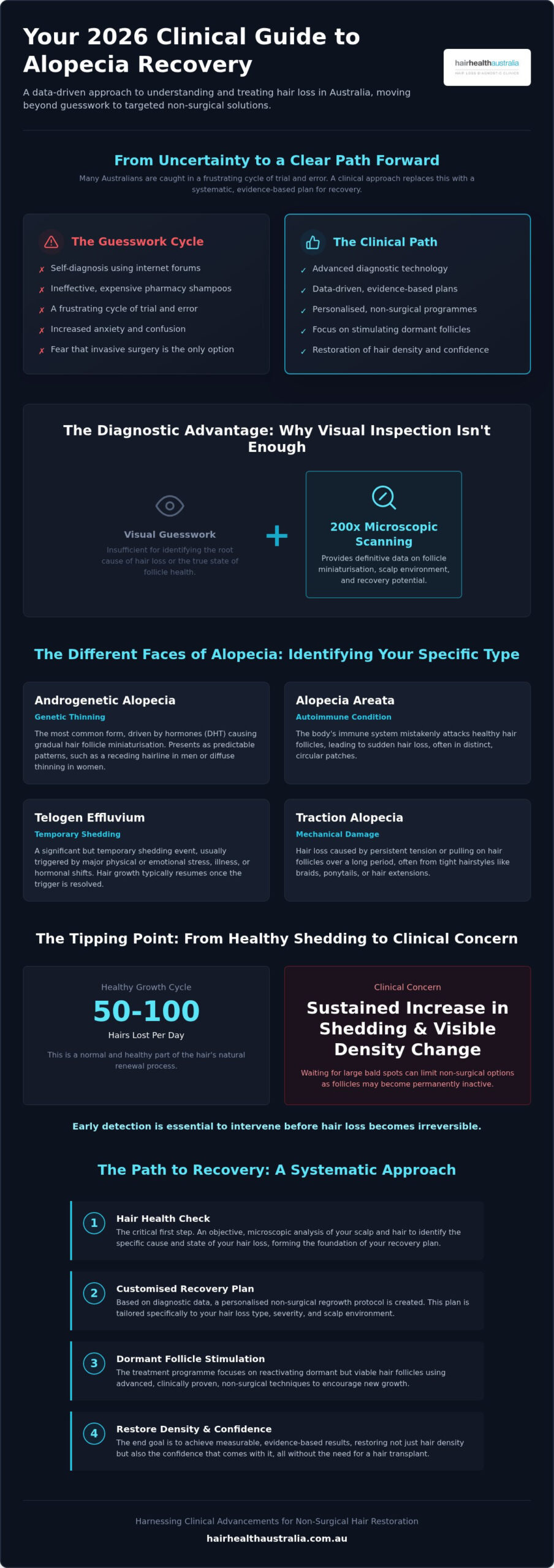
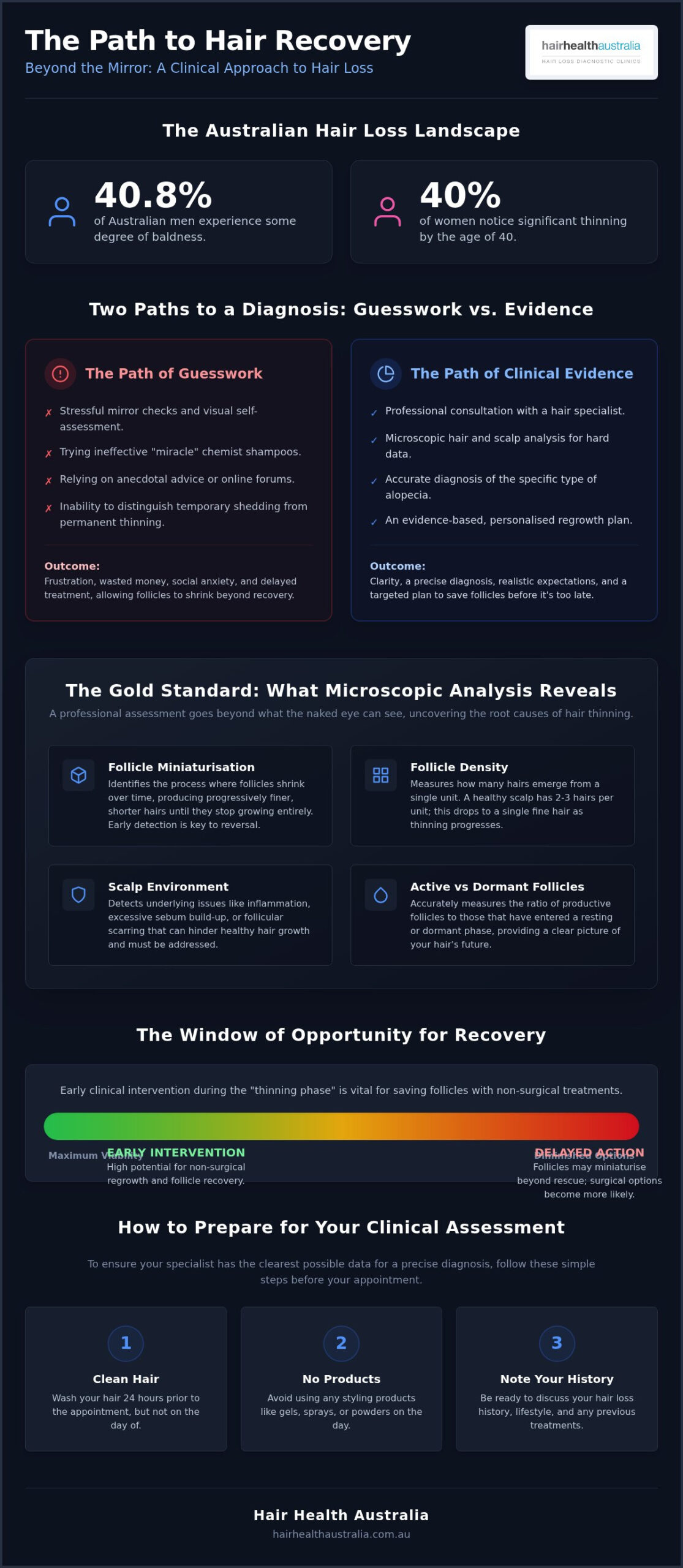
Visual inspection of your hairline in the bathroom mirror is often the first sign of trouble, but it’s an insufficient basis for a professional diagnosis. While you might see thinning, a mirror cannot reveal the biological health of the follicle beneath the scalp surface. Successful non surgical hair regrowth australia begins with microscopic hair analysis. This diagnostic tool allows a specialist to distinguish between hair that is temporarily dormant and follicles that have permanently ceased production. Understanding this distinction is the difference between a successful restoration and a wasted investment.

The success of any restoration programme depends heavily on the environment of your scalp. Microscopic scanning identifies oil buildup, follicle blockages, or subtle inflammation that might be hindering your growth. By identifying the specific Patterned hair loss you are experiencing, we can tailor a clinical response that addresses the root cause rather than just the visible symptoms. This objective data replaces the anxiety of the unknown with a clear, actionable plan.

What Happens During a Professional Hair Health Check?

During this assessment, we use high-magnification imaging to inspect the hair shaft and the openings of the follicles. We measure hair density per square centimetre and the diameter of individual strands across different zones of the scalp. This level of detail is vital for tracking progress over time, as it reveals changes long before they are visible to the naked eye. If you are ready to move beyond guesswork and see what is actually happening at the root, you can book a comprehensive Hair Health Check in Sydney to gain total clarity on your situation.

Using Data to Predict Your Regrowth Potential

Diagnostic data is your best defence against investing in ineffective treatments. It allows us to identify follicle miniaturisation; a process where hair strands become progressively thinner, shorter, and less pigmented until the follicle eventually closes. If we catch this biological shift early, the process is frequently reversible through targeted clinical stimulation. Establishing a scientific baseline means we don’t have to guess if a treatment is working. We can compare high-resolution images from month one to month six to see real, measurable changes in hair calibre. This data-driven approach ensures your time and resources are focused solely on methods with the highest probability of success for your unique scalp profile. It provides the straight-talking honesty you need before starting any clinical journey.

Clinical Regrowth vs. Cosmetic Hair Systems

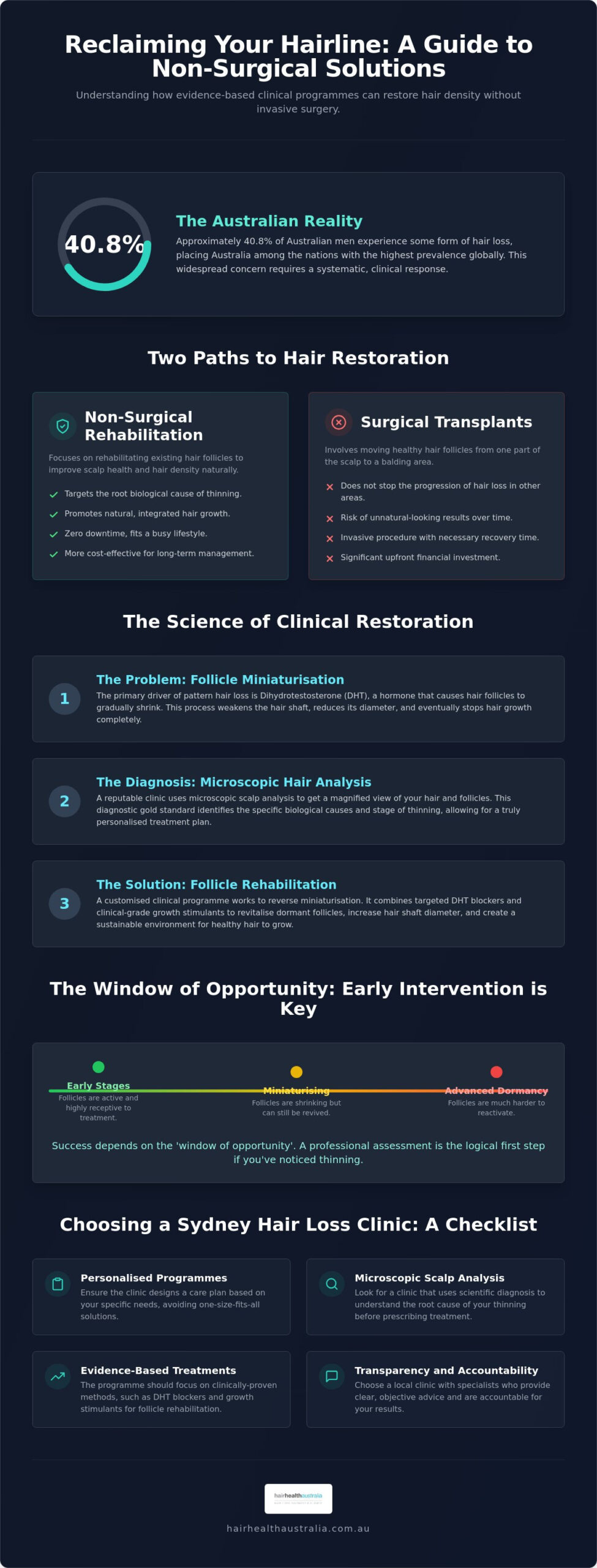
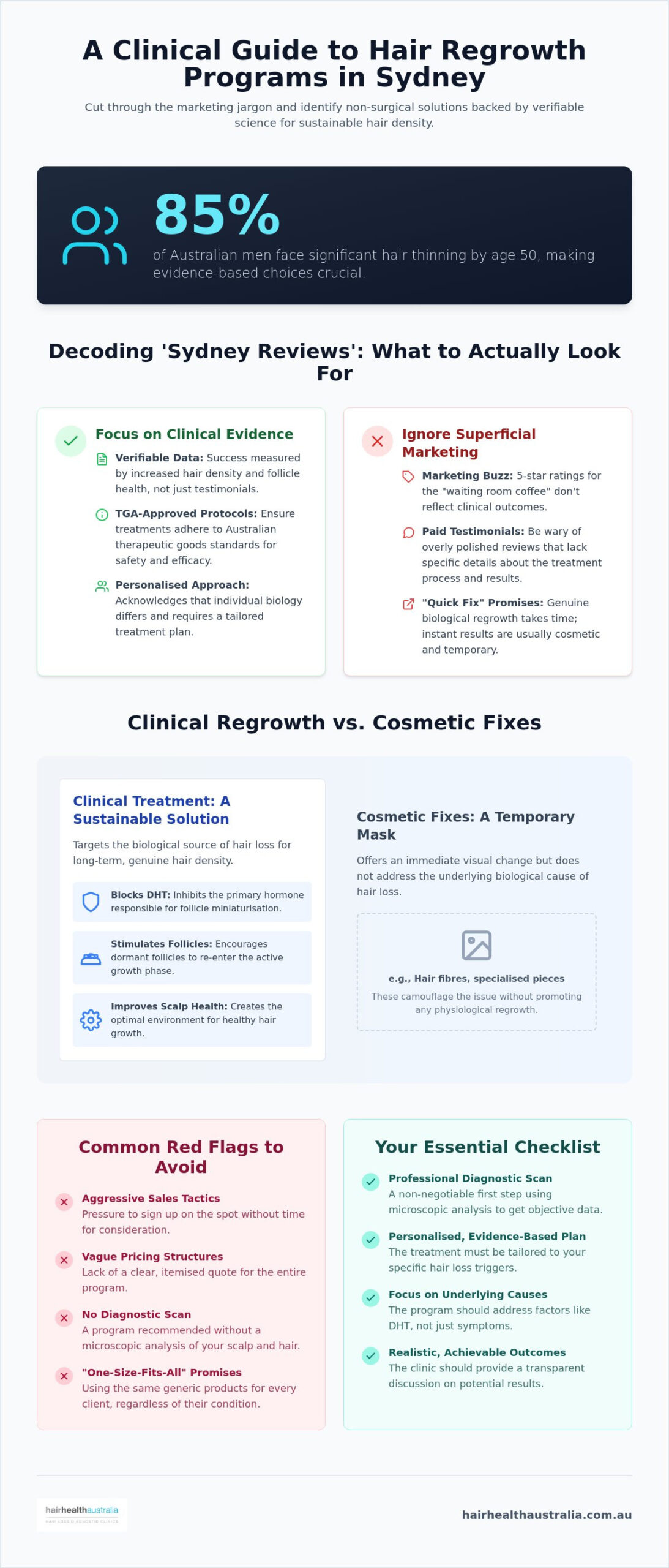
When searching for non surgical hair regrowth australia, many people are confronted with two vastly different paths. The first is biological restoration, which focuses on rehabilitating your existing follicles to grow thicker, healthier hair. The second involves cosmetic hair systems, which are high-quality external pieces bonded to the scalp. While both fall under the non-surgical umbrella, they offer different outcomes, maintenance requirements, and psychological impacts. Understanding which approach aligns with your lifestyle is a critical part of the clinical journey.

The primary difference lies in sustainability versus immediacy. A cosmetic system provides a full head of hair in a single afternoon, but it does not address the underlying biological causes of thinning. Conversely, clinical regrowth takes time but results in hair that is naturally yours. Choosing between these options requires a clear-eyed look at the stage of your hair loss and your long-term goals for scalp health.

Biological Restoration: Stimulating Your Own Follicles

Biological restoration is the preferred route for those in the early to mid-stages of thinning. These programmes typically involve a combination of follicle stimulants and DHT blockers to halt the miniaturisation process. According to established medical perspectives on Hair loss diagnosis and treatment, consistency is the foundation of success. It’s not a quick fix; you’ll generally need four to six months of disciplined treatment before visible changes in density occur.

The advantage of this path is that the results are completely natural and evolve with you. There are no bonds to manage or pieces to service. To determine if your follicles are still active enough for this approach, a professional Hair Health Check is necessary to map out your regrowth potential.

Cosmetic Systems: When to Consider a Hairpiece

If hair loss has progressed to the point where the follicles have permanently closed, cosmetic systems become a viable alternative. These modern systems use a fine membrane that mimics the appearance of the scalp, with individual hairs knotted into the base to create a realistic look. They are often bonded with medical-grade adhesives that allow you to swim, shower, and exercise with confidence.

However, no one should enter into a bonded system without understanding the maintenance. These pieces require professional re-servicing every four to six weeks as your natural hair grows underneath. There’s also a psychological adjustment to consider. While a piece provides immediate density, many Australians find that the long-term satisfaction of regrowing their own biological hair provides a deeper sense of confidence. If you still have viable follicles, prioritising your natural hair is almost always the more sustainable and cost-effective choice.

Non-Surgical Hair Replacement Australia: The 2026 Clinical Buying Guide

Choosing a Non-Surgical Hair Loss Clinic in Sydney

Selecting the right partner for your hair restoration journey is as critical as the treatment itself. In a market saturated with quick fixes and retail-heavy franchises, you must distinguish between a sales-driven environment and a clinical one. A professional clinic prioritises diagnostics over transactions. They won’t pressure you into a long-term contract during your first visit. Instead, they focus on establishing a clear, evidence-based baseline for your scalp health through objective testing.

When evaluating options for non surgical hair regrowth australia, look for transparency in their records. Authentic testimonials should reflect realistic timelines rather than overnight miracles. Be wary of any provider that promises identical success for every client; biology is individual and results vary. A reputable Sydney clinic will be honest about what can be achieved based on your specific level of follicle miniaturisation. This straight-talking approach builds the trust necessary for a long-term clinical relationship.

The Value of a Personalised Clinical Protocol

Generic, off-the-shelf products often fail because they ignore the unique variables of your scalp. A one-size-fits-all kit purchased online cannot account for your specific hormonal profile or scalp sensitivity. Clinical success requires a protocol that is adjusted as you progress. Your specialist should monitor how your skin and follicles react to stimulants, making precise calibrations to ensure both safety and efficacy. For a deeper look at what to verify before your first appointment, review our guide on Choosing a Non-Surgical Hair Loss Clinic in Sydney: The 2026 Essential Checklist.

Local Sydney Expertise and Environmental Factors

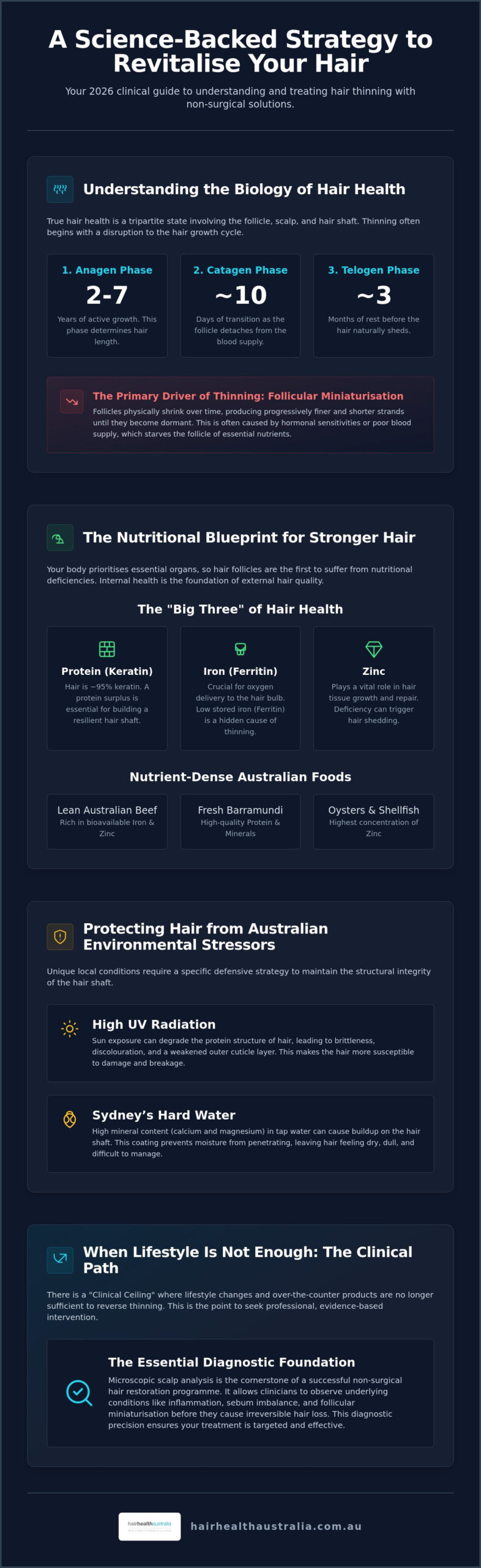
The Australian climate presents unique challenges for hair health. High UV levels and fluctuating humidity in Sydney can impact scalp hydration and the effectiveness of certain topical treatments. A local specialist understands these environmental stressors and ensures your programme complies with Australian health regulations and standards. Additionally, the convenience of a Sydney-based clinic allows for regular, face-to-face monitoring. This ongoing support is vital for maintaining the momentum of your programme and catching any issues before they stall your progress. Professional oversight ensures you aren’t just applying products, but following a systematic path to restoration.

If you are tired of generic advice and want a plan tailored to your specific needs, the best way forward is to speak with a professional. You can start your journey with a professional diagnostic assessment to see which clinical options are most suitable for your scalp profile.

The Hair Health Australia Approach to Non-Surgical Restoration

At Hair Health Australia, our methodology is built on the principle that effective restoration requires more than just a topical solution. It demands a systematic, evidence-based approach that prioritises the long-term health of your scalp. We don’t believe in one-size-fits-all packages or aggressive sales tactics. Instead, we act as your dedicated guide, providing a professional environment where medical authority meets empathetic understanding. Our goal is to replace the uncertainty of hair loss with the clarity of a proven clinical plan.

The foundation of our success is the straight-talking consultation. We take the time to explain the biological factors contributing to your thinning and set realistic expectations for your journey. By integrating advanced diagnostics with targeted follicle stimulation and comprehensive scalp care, we create a synergistic effect that maximises your results. This integrated protocol ensures that every action we take is informed by the specific data gathered during your initial assessment. We empower you through education, ensuring you understand the “why” behind every step of your non surgical hair regrowth australia programme.

Customised Treatment Programmes for Men and Women

Biology differs between the sexes, and so should the clinical response. While male hair loss is frequently driven by genetic predispositions, female thinning often involves a complex interplay of hormones, nutritional deficiencies, and stress. We tailor the strength and composition of our clinical treatments to address these specific drivers. For women, this means a nuanced approach that supports scalp vitality while accounting for systemic health factors. If you are seeking more detailed information on female-centric protocols, our Hair Loss Treatment for Women: The 2026 Australian Clinical Buying Guide provides a comprehensive breakdown of these specialised options.

Your Path to Confidence: What to Expect Next

Your journey begins with a transition from the diagnostic phase to your first active clinical session. This isn’t a process that happens overnight. We monitor your progress meticulously using microscopic imaging over a 6 to 12 month period. These regular check-ins allow us to verify that your follicles are responding as expected and to make any necessary adjustments to your protocol. Seeing the measurable increase in hair diameter and density on screen provides the reassurance you need to stay committed to the process.

Restoring your hair is a journey that requires patience, precision, and professional oversight. If you are ready to move away from temporary fixes and toward a permanent clinical solution, we are here to help. Take the first step toward restoration; enquire with our Sydney specialists today to book your diagnostic Hair Health Check and reclaim your confidence with a plan that actually works.

Reclaiming Your Confidence Through Clinical Restoration

Choosing the right path for your scalp health requires moving beyond temporary cosmetic fixes and embracing a scientific approach. By prioritising microscopic hair analysis, you ensure that every step of your journey is based on objective diagnostic data rather than guesswork. Whether you are dealing with early thinning or a receding hairline, the most effective results come from a personalised plan that addresses your unique biological needs. This is the cornerstone of modern non surgical hair regrowth australia; it’s about restoring what is naturally yours through disciplined, evidence-based care.

As Sydney leading non-surgical clinical specialists, we provide the precision diagnostics and ongoing support necessary to achieve sustainable density. Our personalised programmes for men and women are designed to work with your lifestyle while delivering natural results you can trust. Don’t let uncertainty delay your progress any longer. The first step toward a fuller head of hair is a professional assessment of your follicle viability. Book Your Clinical Hair Health Check in Sydney today to establish your baseline and begin your restoration journey. We are ready to help you rediscover your confidence with a plan grounded in clinical excellence.

Frequently Asked Questions

Is non-surgical hair replacement permanent?

Non-surgical solutions are not a one-time permanent fix like surgery, but they offer sustainable, long-term results through consistent care. Clinical regrowth programmes focus on maintaining the health of your existing follicles, which requires ongoing stimulation to prevent the return of miniaturisation. If you stop treatment, the biological factors driving hair loss may resume. For cosmetic systems, the hair itself is permanent, but the bond requires professional servicing every four to six weeks.

Can I swim and exercise with a non-surgical hair replacement system?

You can absolutely maintain an active lifestyle, including swimming and high-intensity exercise, with a modern hair replacement system. These units are secured using medical-grade adhesives that are resistant to water, sweat, and humidity. While you don’t need to restrict your movements, we recommend waiting 24 to 48 hours after a fresh bonding session before submerging your head in water. This ensures the adhesive has fully cured for maximum security during your Sydney coastal activities.

How much does non-surgical hair replacement cost in Australia?

The cost of non-surgical hair restoration in Australia varies based on the technology used and the extent of your thinning. Industry data from 2026 indicates that monthly treatment plans can start from approximately A$24, while more intensive growth factor therapies or high-end cosmetic systems involve higher initial investments. Since every scalp is unique, we recommend a diagnostic assessment to determine the most cost-effective clinical pathway for your specific stage of hair loss.

What is the difference between a hair system and a clinical regrowth programme?

A hair system is a cosmetic solution where a fine membrane of hair is bonded to your scalp for immediate density. In contrast, a clinical regrowth programme focuses on biological restoration, using stimulants to revitalise your natural follicles. While a system provides an instant transformation, non surgical hair regrowth australia protocols aim for a sustainable result that uses your own hair. The right choice depends on whether your follicles are still active or have permanently closed.

How long does it take to see results from a clinical hair restoration programme?

Patience is essential when undertaking a biological restoration journey. Most clients begin to see measurable changes in hair calibre and density within four to six months of consistent treatment. This timeline aligns with the natural growth cycle of the hair follicle. We use microscopic imaging during regular check-ins at our Sydney clinic to track these subtle improvements long before they are visible to the naked eye, ensuring your programme remains on the right track.

Will people be able to tell I have had a hair replacement treatment?

Modern clinical treatments and cosmetic systems are designed to be completely undetectable. Clinical regrowth uses your own natural hair, so the increase in density appears gradual and authentic. For those choosing cosmetic systems, high-quality lace and skin membranes mimic the scalp perfectly, while professional styling ensures a seamless blend with your existing hair. You can feel confident that your results will look natural under the bright Australian sun and in close-up social interactions.

Is non-surgical hair replacement suitable for women with thinning hair?

Yes, non-surgical protocols are highly effective for women experiencing thinning or patterned loss. Female hair loss often requires a nuanced approach that considers hormonal fluctuations and nutritional health. Our clinical programmes are specifically tailored to address these factors, focusing on improving hair diameter and scalp health without invasive surgery. Nearly 40% of Australian women experience visible thinning during menopause, making these non-invasive, clinical interventions a vital resource for restoring hair volume and self-esteem.

Do I need a referral from a GP to visit a hair loss clinic in Sydney?

You do not need a referral from a General Practitioner to visit our Sydney clinic. We operate as a specialised private facility where you can book a diagnostic Hair Health Check directly. This initial assessment serves as your professional gateway to treatment, allowing us to perform the necessary microscopic analysis and scalp evaluation. While a referral isn’t required, we always encourage open communication with your regular doctor regarding any clinical programmes you choose to undertake for your hair health.

Is There a Permanent Cure for Thinning Hair in Females? 2026 Australian Clinical Guide

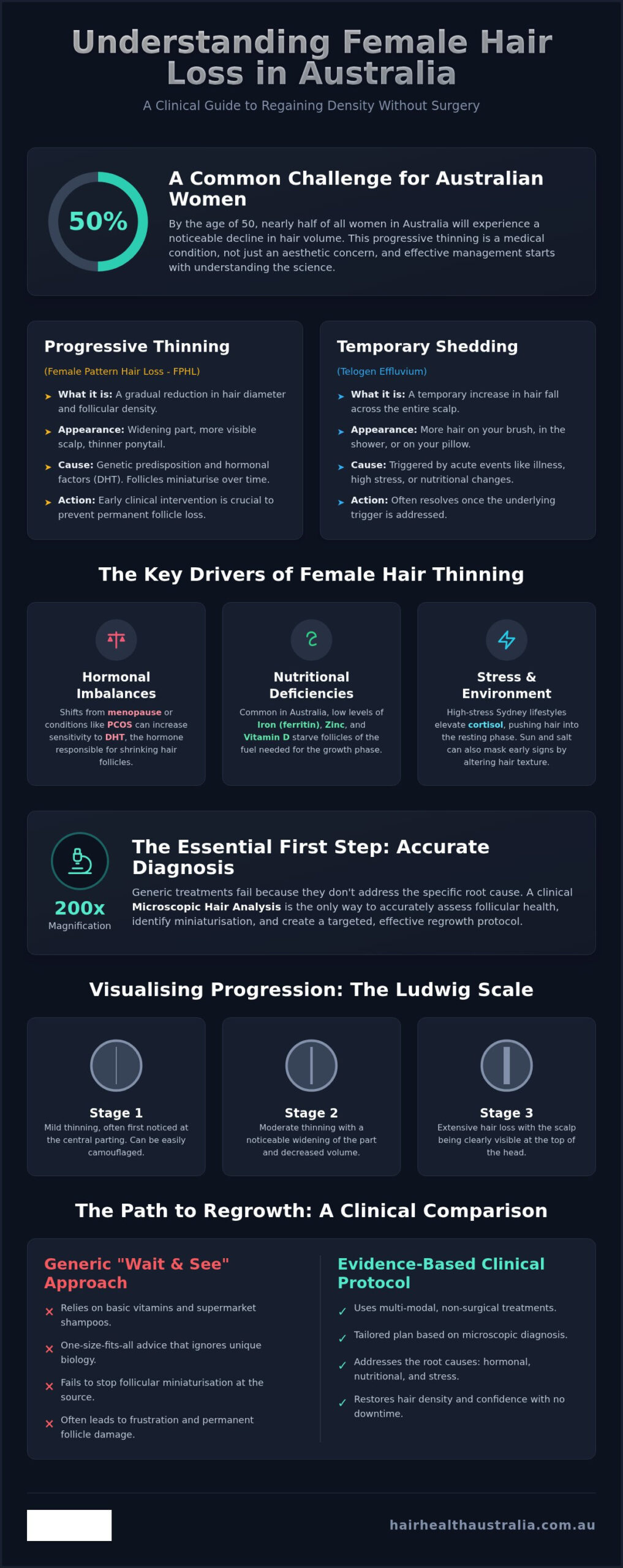
Did you know that by the age of 50, nearly half of all Australian women will experience a noticeable decline in hair volume? It’s a deeply personal challenge that often leaves you feeling less like yourself, especially when you’re faced with a sea of conflicting advice ranging from basic vitamins to complex hormonal therapies. If you’ve felt the frustration of thinning patches or a widening part, you aren’t alone in wanting a clear, scientific path forward that doesn’t involve the risks of invasive surgery. Finding an effective female pattern baldness treatment in Australia starts with moving past the myths and focusing on clinical data.

In this 2026 clinical guide, we’ll clarify the reality behind hair restoration and show you how to regain density without the need for a transplant. You’ll discover why a precise microscopic diagnosis is the only way to uncover the root cause of your thinning. We will also outline the non-surgical protocols that are currently helping women across the country achieve visible regrowth. By the end of this article, you’ll have a transparent, evidence-based plan tailored for a modern Sydney lifestyle, allowing you to reclaim your confidence with certainty and ease.

Key Takeaways

  • Understand why clinical management and targeted regrowth are more realistic and effective goals than searching for a mythical permanent “cure”.
  • Identify the specific roles that DHT, menopause, and PCOS play in follicular miniaturisation and hair thinning for Australian women.
  • Learn why microscopic hair analysis at 200x magnification is the essential first step for a successful female pattern baldness treatment Australia.
  • Discover how multi-modal, non-surgical protocols outperform generic vitamins by addressing the unique biological root causes of hair loss.
  • Explore the benefits of a Sydney-based clinical approach that restores hair density and confidence with no downtime or invasive surgery.

Understanding the Search for a Cure for Thinning Hair in Females

Female hair thinning is clinically defined as a progressive reduction in both the diameter of individual hair shafts and the overall follicular density across the scalp. While many women search for a permanent “cure”, it’s more accurate to discuss clinical management and regrowth protocols. Unlike a common cold that disappears entirely; hair thinning is often a chronic condition that requires ongoing care to maintain results. Female Pattern Hair Loss (FPHL) is the most common genetic cause of hair density loss among women in Australia.

The psychological impact of this condition shouldn’t be underestimated. For many Australian women, hair is naturally linked to femininity and self-esteem. Research suggests that women often experience more profound distress and a greater sense of loss than men when noticing visible scalp. This makes finding a reliable female pattern baldness treatment Australia a priority for both emotional and physical health. Seeking a solution isn’t just about aesthetics; it’s about restoring a sense of self.

Thinning vs. Shedding: Recognising the Difference

It’s vital to distinguish between Telogen Effluvium, which is temporary shedding often caused by acute stress or illness, and Pattern hair loss, which is progressive. You might notice a widening part, a ponytail that feels significantly thinner, or more visible scalp at the crown. These signs indicate that follicles are miniaturising. If you choose a “wait and see” approach, you risk permanent damage. Once a follicle has completely ceased production, the potential for regrowth diminishes significantly, making early intervention essential for long-term density.

The Social Reality for Australian Women

Sydney’s fast-paced lifestyle, combined with the harsh coastal climate, creates a unique set of challenges for hair health. High stress levels often exacerbate underlying genetic predispositions, while salt and sun exposure can mask the early signs of thinning by affecting hair texture. Rather than relying on generic supermarket shampoos or advice from a stylist, seeking a professional clinical diagnosis is the first step toward restoration. A comprehensive Hair Health Check allows for a scientific assessment of your scalp health before you invest in any long-term programme. You can find more detailed information on choosing the right path in our Hair Loss Treatment for Women: The 2026 Australian Clinical Buying Guide.

Why Women Lose Hair: Hormones, Stress, and Genetics

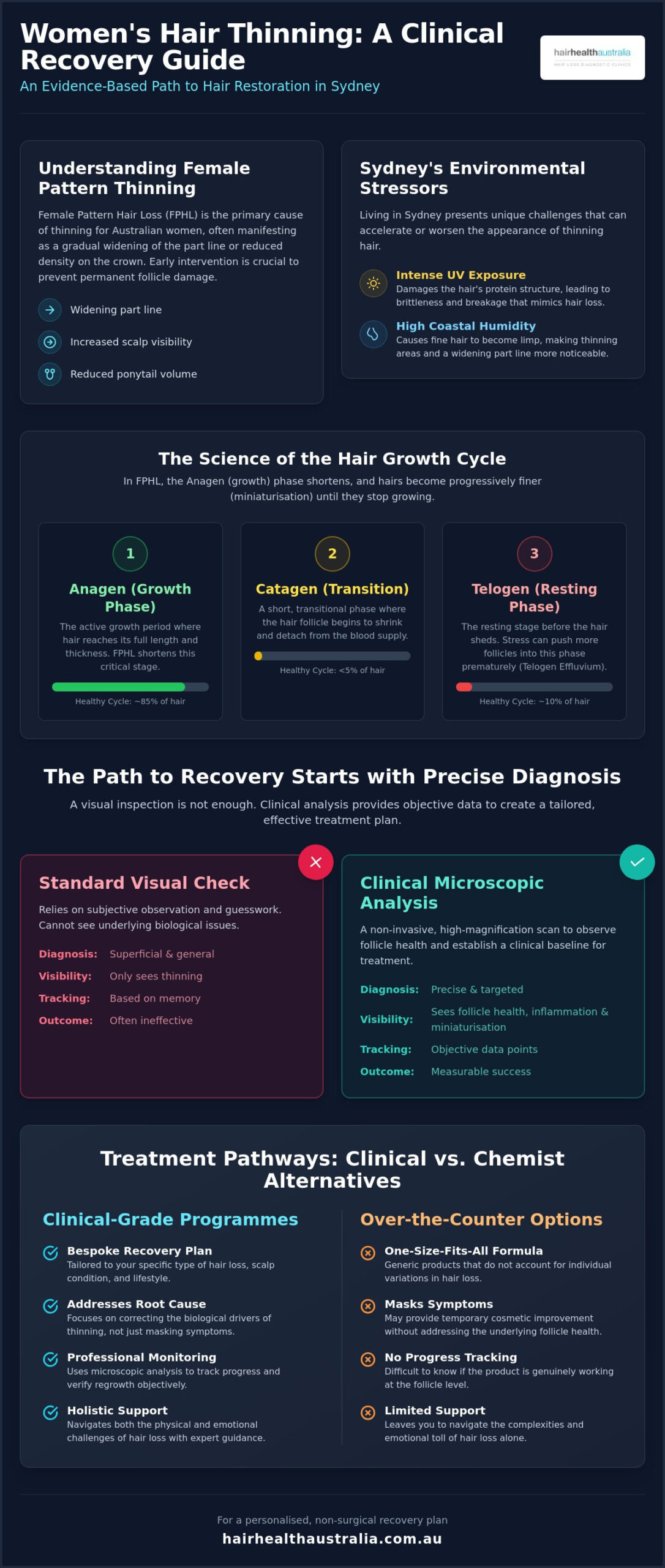
The biological drivers of hair loss in women are often multi-faceted. Dihydrotestosterone (DHT), a derivative of testosterone, plays a central role in follicular miniaturisation. When DHT binds to receptors in the hair follicles, it causes them to shrink, shortening the growth phase and resulting in finer, shorter hairs. This process is a hallmark of Female pattern hair loss. Significant hormonal shifts, such as those experienced during menopause, pregnancy, or with conditions like PCOS, can trigger or accelerate this thinning by altering the delicate balance of androgens in the body.

Nutritional health is another critical pillar often overlooked in generic advice. In Australia, deficiencies in Iron (specifically ferritin levels), Zinc, and Vitamin D are frequently observed in clinical settings. These nutrients are essential for robust hair production; without them, the hair cycle lacks the fuel required for the anagen (growth) phase. Additionally, the “Stress-Thinning Cycle” is a reality for many in a professional Sydney environment. Elevated cortisol levels can prematurely push hair follicles into the resting phase, leading to noticeable volume loss. Understanding these unique triggers is vital when seeking an effective female pattern baldness treatment Australia.

Genetics and the Ludwig Scale

Hereditary thinning in women typically presents as diffuse thinning across the top of the scalp, rather than the receding hairline common in men. Clinicians use the Ludwig Scale to categorise this progression. Stage 1 involves mild thinning that might be easily camouflaged, while Stage 3 represents extensive loss where the scalp is clearly visible. Your maternal and paternal hair history provides essential clues, as the genetic predisposition can be inherited from either side of the family. Identifying where you sit on this scale helps in tailoring a specific clinical response.

Environmental and Lifestyle Factors in Sydney

Sydney’s environment introduces specific stressors that can impact hair health. Harsh UV exposure can degrade hair shaft integrity, while hard water in certain urban areas may contribute to scalp irritation and mineral build-up. Many women also find that frequent chemical treatments or heat styling in local salons can mask early miniaturisation until the loss becomes significant. Modern lifestyle stress in Australia is also contributing to “premature” thinning in younger demographics who might not otherwise expect it. Because the causes are so varied, a professional assessment of your scalp health is the most reliable way to identify your specific triggers and start a targeted recovery plan.

Diagnostic Accuracy: Why Your Current Routine Might Fail

Most Australian women start their journey at a local chemist or supermarket, purchasing generic “hair growth” vitamins or thickening shampoos. While these products might improve hair texture, they often fail because they don’t address the complex biological root cause within the follicle. Without a scientific diagnosis, you’re essentially guessing at a solution. To secure a successful female pattern baldness treatment Australia, you must move beyond surface-level treatments. The “naked eye” diagnosis used by many GPs or hairdressers is simply too limited. It cannot detect the early stages of miniaturisation or accurately distinguish between follicles that are currently active, those that are struggling, and those that have become dormant.

Microscopic Hair Analysis: The Clinical Standard

During a microscopic scan, we examine the scalp at 200x magnification to reveal what the mirror cannot show. We analyse the hair bulb’s health, measure sebum levels that can block follicles, and assess the overall scalp environment. This allows us to identify miniaturisation, the process where hair shafts become thinner and shorter, long before it becomes visible to you or your hairdresser. This clinical precision is what allows for a personalised regrowth programme. Every woman’s scalp is different, and data-driven diagnostics ensure your protocol is tailored to your specific needs. Gaining this level of insight is fundamental to managing Hair loss in women effectively.

Blood Tests and Medical Co-factors

Diagnostic accuracy also requires looking at internal medical co-factors. Checking ferritin (iron stores) and thyroid function is a non-negotiable part of a holistic check. A common frustration for women in Sydney is being told a blood test is “normal” by a GP, while their hair continues to thin. In the world of hair science, a “normal” range is frequently sub-optimal for regrowth. For instance, a ferritin level that is technically within the lab’s healthy range might still be too low to support a vigorous anagen growth phase. A specialist clinician will work with you to rule out underlying medical conditions that mimic pattern baldness, ensuring your female pattern baldness treatment Australia is built on a foundation of medical fact.

If you’re tired of conflicting advice and want a definitive scientific answer, the next step is clear. Booking a Hair Health Check provides the microscopic evidence needed to stop the guesswork and start a treatment plan that actually works.

Is There a Permanent Cure for Thinning Hair in Females? 2026 Australian Clinical Guide

Evidence-Based Clinical Treatments for Hair Regrowth

Transitioning from a precise diagnosis to an active recovery phase requires a shift in perspective. Successful hair restoration is rarely the result of a single “magic pill”; it’s a multi-modal process that addresses hair health from several angles simultaneously. Non-surgical regrowth programmes outperform single-drug treatments because they create a synergistic environment where follicles can thrive over the long term. While the desire for immediate results is natural, clinical patience is essential. Because of the natural hair growth cycle, most women begin to see measurable improvements in density and hair shaft diameter after 4 to 6 months of consistent adherence to their protocol.

Finding the right balance between topical and oral protocols is a key part of modern clinical management. Every woman’s physiology and lifestyle are different, and a female pattern baldness treatment Australia must be tailored to fit into a busy daily routine. Oral options can provide systemic support, while topical stimulants offer direct follicular action. The goal of any clinical intervention is to awaken dormant hairs and prolong the anagen (growth) phase, effectively reversing the miniaturisation process that leads to visible thinning.

Growth Stimulants and DHT Management

Clinical-grade topicals are often a cornerstone of non-surgical restoration. These formulations differ significantly from over-the-counter options found in local chemists, primarily in their concentration and the inclusion of advanced delivery systems that ensure superior scalp absorption. Effective DHT management is about more than just blocking a hormone; it’s about ensuring the scalp environment is receptive to stimulation. For women seeking natural-looking results without the risks or downtime associated with invasive procedures, these non-invasive stimulants offer a safe and scientifically proven alternative.

Low-Level Laser Therapy (LLLT) and Scalp Hygiene

Modern clinical protocols frequently incorporate Low-Level Laser Therapy (LLLT). This technology uses specific wavelengths of light to increase cellular energy, known as ATP, within the hair follicle. By boosting this energy, LLLT helps prolong the growth phase and can improve the quality of the hair being produced. However, light therapy is most effective when the scalp is properly prepared. A clinical-grade scalp cleansing routine is vital to remove excess sebum and DHT build-up that can physically block follicles. When these therapies are combined, they create a powerful regrowth effect. You can find a deeper breakdown of these combined methods in our guide on the Best Hair Regrowth Treatment Australia 2026.

Every successful restoration journey begins with a clear understanding of your unique scalp needs. To determine which of these evidence-based treatments is right for your specific condition, book your professional Hair Health Check today.

Restoring Confidence with Sydney’s Leading Non-Surgical Experts

Hair Health Australia has been a dedicated specialist in the Sydney community since 2009, providing a sanctuary for women navigating the emotional weight of thinning hair. Finding a reliable partner in this journey is essential for long-term success. We move away from the generic chemist approach, offering a tailored clinical journey that respects your individual biology and lifestyle. Choosing a professional female pattern baldness treatment Australia means opting for a path that prioritises sustained scalp health and natural density over temporary, surface-level fixes.

Our non-surgical approach is designed specifically for the modern woman who requires results without disruption. There is no downtime and no scarring. The results look entirely natural because we focus on stimulating your own biological growth. This allows you to maintain your professional and social commitments in Sydney without the recovery period or clinical risks associated with more invasive methods. By focusing on follicular health, we help you reclaim your hair density with a protocol that fits seamlessly into your life.

The Hair Health Australia Difference

We focus on clinically-backed methods that provide realistic, honest expectations for every client. We don’t use hyperbolic marketing language; instead, we provide a supportive, empathetic environment where your concerns are heard and scientifically addressed. Our clinicians have proven success in treating various stages of female thinning, from early-stage miniaturisation to more advanced alopecia. We understand that every woman’s experience is unique, and we are committed to providing the education and care needed to navigate this transition with confidence.

Book Your Hair Health Check in Sydney

The first step toward restoration is to stop the guesswork and start a scientific recovery path. During your initial consultation, we conduct a comprehensive microscopic scan to establish a clear baseline for your recovery. It’s helpful to come prepared to discuss your medical history, current hair care routine, and your specific goals. This is your opportunity to ask your clinician detailed questions about the underlying causes of your thinning and the realistic timeline for your regrowth results. By choosing a data-driven approach, you take the first definitive step toward restoring both your hair and your self-esteem.

If you’re ready to move past the confusion of conflicting advice, our team is here to guide you through a proven, clinical process. Book your non-surgical hair loss consultation today and discover the clinical reality behind your hair health.

Your Path to Restored Hair Density

Establishing a clear, clinical path for hair restoration is about moving from uncertainty to evidence-based action. While a singular “cure” remains a medical myth, managing thinning through targeted, non-surgical protocols is a proven reality for women across the country. Success relies on identifying the specific biological triggers unique to your scalp through advanced microscopic analysis at 200x magnification. This scientific foundation ensures your chosen female pattern baldness treatment Australia is tailored to your needs rather than a generic guess.

With over 15 years of specialised clinical experience in Sydney, Hair Health Australia provides the expertise needed to awaken dormant follicles and restore visible density. Patience and consistency are your greatest allies during this transition. By focusing on non-invasive restoration today, you can reclaim your confidence and achieve natural-looking results that last. Book Your Comprehensive Hair Health Check in Sydney to receive a definitive diagnosis and start your personalised journey toward thicker, healthier hair. Expert guidance is ready when you are.

Frequently Asked Questions

Is there a permanent cure for female pattern hair loss?

There is currently no permanent, one-time cure for female pattern hair loss, as the condition is often linked to ongoing genetic and hormonal factors. Instead, clinical focus remains on effective management and sustainable regrowth through non-surgical protocols. By identifying the root cause early, you can stabilise thinning and stimulate follicles to produce denser hair. While the underlying predisposition remains, consistent clinical care allows you to maintain a healthy, full head of hair indefinitely.

Can thinning hair ever grow back thick again?

Thinning hair can often return to its former density if the underlying follicles are still active and have not yet become dormant. When you start a professional female pattern baldness treatment Australia, the goal is to reverse the miniaturisation process that causes hair shafts to become finer over time. Using targeted stimulants and scalp hygiene, we can help follicles produce thicker, more robust hair strands, significantly improving your overall volume and scalp coverage.

How long does it take to see results from clinical hair treatments?

Most women begin to notice a visible change in hair density and quality within four to six months of starting a clinical programme. This timeline aligns with the natural biological rhythm of the hair growth cycle, which requires time to move from the resting phase back into the active growth phase. While early signs of improved scalp health may appear sooner, measurable regrowth requires consistent adherence to your personalised protocol over several months to achieve stability.

Will I need to use treatments forever to maintain my hair?

Maintenance is typically required for genetic or hormonal thinning because the biological triggers for loss remain present in your system. If you don’t continue with your protocol, the follicles may eventually return to their previous state of miniaturisation, leading to a recurrence of thinning. However, many women find they can move to a less intensive maintenance phase once they achieve their desired density. This ensures your results remain stable without the need for the initial high-intensity schedule.

What is the most effective non-surgical treatment for women?

The most effective approach is a multi-modal programme that combines several clinically proven therapies tailored to your specific diagnostic data. This often forms the core of a successful female pattern baldness treatment Australia. It typically includes a combination of clinical-grade topicals, Low-Level Laser Therapy (LLLT), and a professional scalp cleansing routine. Rather than relying on a single product, this synergistic method addresses follicular health, hormonal triggers, and cellular energy simultaneously to produce the most sustainable results.

Can stress-related thinning be reversed with clinical help?

Stress-related thinning, known as Telogen Effluvium, is generally reversible because it involves a temporary disruption of the hair cycle rather than permanent follicular damage. Clinical intervention helps by soothing the scalp environment and providing the nutrients required to push follicles back into the growth phase more quickly. By addressing the physiological impact of cortisol and ensuring optimal scalp health, we can help you recover your original hair density and stop the cycle of excessive shedding.

Does menopause always cause permanent hair loss?

Menopause doesn’t always lead to permanent hair loss, though the drop in oestrogen can trigger significant thinning by allowing androgens to impact the follicles more heavily. While this shift can accelerate genetic predispositions, it is a condition that responds well to non-surgical clinical management. By stabilising the scalp environment and using targeted stimulants, many women successfully maintain their hair volume throughout and after the menopausal transition, preventing the loss from becoming permanent or extensive.

How much does a professional hair loss consultation in Sydney cost?

Consultation fees in Sydney vary depending on the depth of the diagnostic technology used and the expertise of the clinician. A professional assessment at a specialist clinic typically includes a detailed medical history review and a microscopic scan at 200x magnification to establish a baseline for your hair health. While costs for these sessions are standard within the industry, the primary value lies in receiving a scientific diagnosis that prevents you from wasting money on ineffective, generic products.

Hair Loss & Baldness: 2026 Clinical Guide for Australians

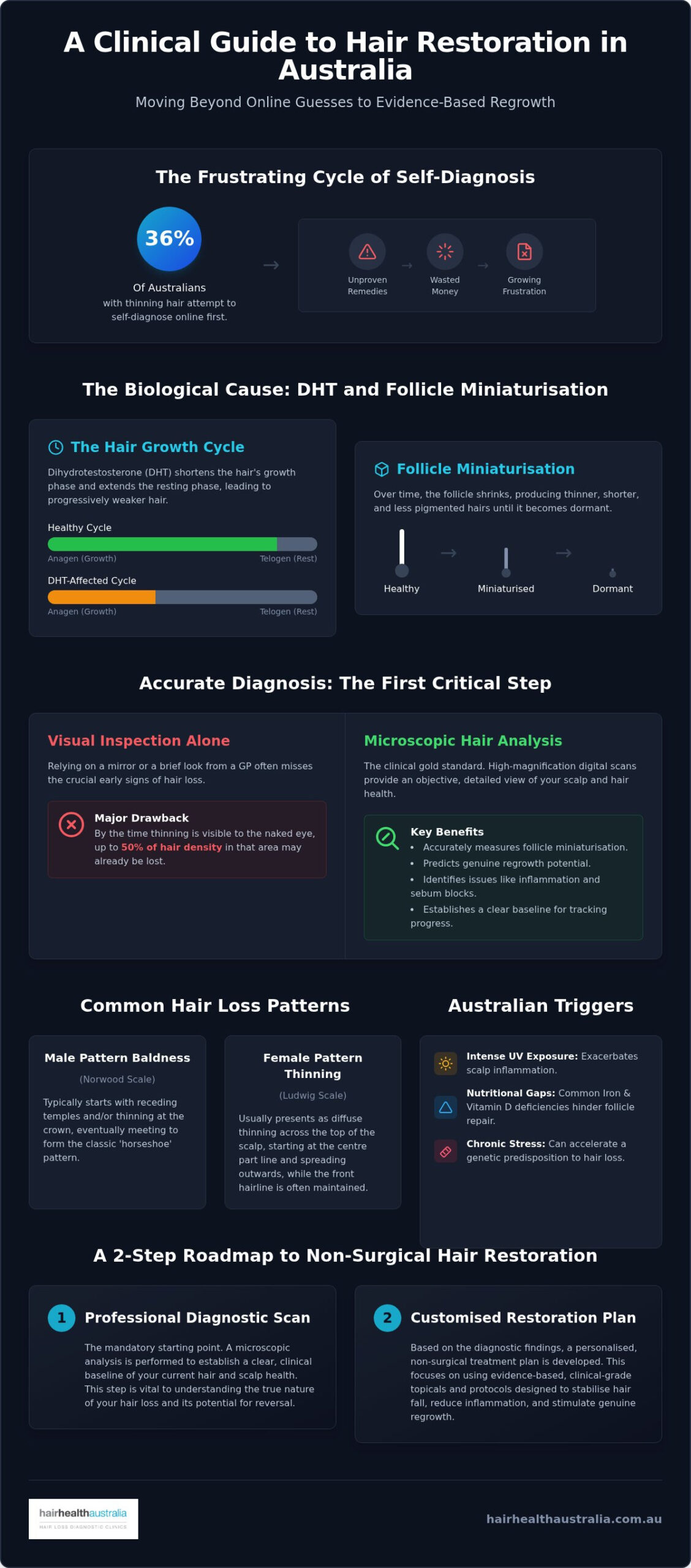
Did you know that roughly 36% of Australians struggling with thinning hair attempt to self-diagnose using online reviews before ever speaking to a professional? It’s a frustrating cycle that often leads to wasted money on unproven remedies and a growing fear that your hair loss might be permanent. If you’ve felt overwhelmed by the sheer volume of conflicting advice, you aren’t alone. Finding an effective hair loss treatment Australia requires moving past the marketing hype and focusing on the biological health of your individual follicles.

This 2026 clinical guide provides the clarity you need to stop thinning and begin a genuine journey toward regrowth. We’ll outline the latest evidence-based treatments and diagnostic techniques that offer a medical-grade alternative to invasive surgery. You’ll discover how a structured restoration plan, supported by a Sydney specialist, can transform your hair density and restore your self-confidence. We’ll examine the most effective non-surgical protocols currently available, ensuring you have the knowledge to make an informed, clinical decision for your long-term hair health.

Key Takeaways

  • Learn why microscopic analysis is the only way to accurately assess follicle health and predict your hair’s genuine regrowth potential.
  • Understand how DHT affects your growth cycle and why a customised hair loss treatment Australia plan is more effective than generic pharmacy options.
  • Discover the critical differences between over-the-counter solutions and clinical-grade topicals designed to stabilise hair fall and reduce inflammation.
  • Identify the two essential steps of a non-surgical restoration roadmap, beginning with a professional diagnostic scan to establish a clear baseline.
  • Recognise the red flags when selecting a Sydney specialist and why transparent, evidence-based care is vital for achieving realistic, long-term results.

Understanding the Biological Mechanisms of Hair Loss and Baldness

The primary driver of thinning for the majority of Australians is Pattern hair loss (androgenetic alopecia). This condition isn’t an overnight occurrence but a progressive biological shift. It’s driven largely by Dihydrotestosterone (DHT), a byproduct of testosterone that binds to receptors in the scalp. When DHT interacts with susceptible follicles, it shortens the growth (anagen) phase and lengthens the resting (telogen) phase. Over time, the follicle undergoes miniaturisation. It produces thinner, shorter, and less pigmented hair until the follicle eventually stops producing visible hair altogether. This process is the core reason why most people eventually seek a professional hair loss treatment Australia.

It’s vital to distinguish this genetic process from temporary shedding, known as Telogen Effluvium. While temporary shedding can look alarming, it’s often a reaction to a specific trigger like illness, extreme weight loss, or surgery. Conversely, permanent thinning requires a structured clinical approach. Many people assume baldness means the follicle is dead. In reality, most cases involve follicles that are dormant or severely miniaturised. This means there is still a window for intervention before the scalp becomes completely smooth and the follicle reaches a point of no return.

Male Pattern Baldness vs. Female Thinning

Men and women experience thinning in distinct ways, often classified by specific medical scales. For men, we use the Norwood Scale to track receding temples and thinning at the crown. Women typically follow the Ludwig Scale, which describes diffuse thinning that begins at the centre part line and spreads outwards while maintaining the front hairline. Regardless of the pattern, early intervention is the most effective way to preserve existing density. To determine where you sit on these scales, a Hair Health Check is the definitive starting point for establishing a clinical baseline. Once a follicle has been inactive for several years, the chance of significant regrowth diminishes.

Environmental and Lifestyle Triggers in Australia

The Australian climate introduces unique challenges for scalp health. Intense UV exposure can damage the scalp’s protective barrier and exacerbate inflammation, which accelerates the thinning process. During clinical consultations in Sydney, we also frequently identify nutritional gaps that hinder hair health. Deficiencies in iron and Vitamin D are common and can prevent the follicle from repairing itself efficiently. Additionally, chronic stress acts as a catalyst. It doesn’t cause genetic hair loss on its own, but it can certainly speed up your genetic predisposition. Addressing these external factors is a cornerstone of any comprehensive hair loss treatment Australia program.

Microscopic Hair Analysis: Why Clinical Diagnosis is Essential

Many Australians begin their journey with a simple visual check in the bathroom mirror. However, by the time thinning is visible to the naked eye, you may have already lost up to 50% of your hair density in that area. Microscopic hair analysis is the gold standard for non-invasive hair loss diagnosis. This diagnostic approach uses high-magnification digital scans to examine the scalp at a level of detail that is impossible to achieve during a standard physical exam. By measuring follicle diameter and hair shaft health, we can accurately predict your genuine regrowth potential before you invest in any specific program.

This level of precision is also critical for identifying secondary issues like sebum crystallisation and scalp inflammation. While there are many common causes of hair loss, these local scalp conditions often act as physical barriers, hindering the absorption of topical clinical solutions. If these barriers aren’t addressed first, even the most advanced hair loss treatment Australia may fail to deliver the expected results. A clinical diagnosis ensures we’re treating the root cause rather than just the symptoms.

Visual Inspection vs. Digital Scanning

A standard GP visit often relies on a brief visual inspection, which can easily miss the early signs of miniaturisation. Digital scanning allows us to compare the thinning areas with your “donor area” at the back of the head, where follicles are typically more resilient. This comparison provides a clear baseline of what your healthy hair density should look like. Because these scans are saved digitally, they allow for objective tracking of your progress over months and years, replacing guesswork with hard data.

The Hair Health Check Process

During a professional Hair Health Check in our Sydney clinic, we perform a comprehensive analysis of your scalp’s current state. We calculate the exact percentage of hairs in the growth (anagen) phase versus the resting (telogen) phase. A healthy scalp usually has about 85% to 90% of hairs in the growth phase. If your data shows a significant shift toward the resting phase, it indicates that your follicles are under stress or DHT influence. This data is then used to create a customised hair loss treatment Australia roadmap for every client. If you’re ready to move past the confusion of online reviews, a professional Hair Health Check is the most reliable way to begin your restoration journey.

Comparing Clinical Hair Loss Treatments vs. Pharmacy Solutions

Many Australians begin their restoration journey at the local chemist, reaching for over-the-counter (OTC) minoxidil. While this is a recognised starting point, using it without professional clinical supervision often leads to disappointing results. Generic pharmacy solutions are frequently mass-produced to a standard concentration. They don’t account for individual scalp sensitivity or the specific stage of your condition. Clinical-grade topicals and DHT blockers, however, are often formulated with advanced penetration enhancers and higher concentrations of active ingredients, allowing them to significantly outperform generic brands.

A comprehensive hair loss treatment Australia relies on more than just a single medication. Clinical programs typically integrate Low-Level Laser Therapy (LLLT) to stimulate cellular repair at the mitochondrial level. LLLT increases the production of adenosine triphosphate (ATP), which provides the energy needed for follicles to transition from the resting phase back into the active growth phase. By combining multiple growth signals, such as LLLT, medical-grade topicals, and nutritional support, clinical programs create a synergistic effect that generic DIY solutions cannot replicate. This is the difference in a professional hair loss treatment Australia.

The Problem with DIY Hair Restoration

The most common reason DIY attempts fail is a lack of scalp preparation. If the scalp is covered in sebum buildup or inflammation, topical treatments cannot reach the follicle effectively. Many Australians also fall into the “shedding phase trap.” This occurs when the treatment begins to work, pushing out old, weak hairs to make room for new, stronger ones. Without clinical guidance, many people interpret this temporary shedding as a sign of failure and quit their program too early. As noted in the MedlinePlus guide to alopecia, understanding the specific type of thinning you are experiencing is vital before starting any regimen. A one-size-fits-all approach inevitably fails to address the unique hormonal profiles and lifestyle triggers that drive individual hair loss.

Non-Surgical Clinical Programs: The Evidence-Based Alternative

Personalised regrowth programs differ significantly from standard medication-only approaches by focusing on the entire follicle environment. This includes professional scalp hygiene treatments designed to remove crystallised sebum and improve the absorption of clinical topicals. These programs are not just about applying a product; they are about a systematic, data-driven restoration journey. For a deeper dive into the latest clinical standards, you may find the Best Hair Regrowth Treatment Australia 2026: A Clinical Reference Guide helpful. By choosing a structured clinical path, you replace the uncertainty of pharmacy trials with a clear, medical-grade plan tailored to your specific needs.

Hair Loss & Baldness: 2026 Clinical Guide for Australians

A Roadmap to Non-Surgical Hair Restoration

Success in hair restoration isn’t accidental. It’s the result of a deliberate, phased approach that addresses the biological environment of the scalp before attempting to force new growth. A professional hair loss treatment Australia follows a logical progression to ensure that every clinical intervention has the highest chance of success. By moving through these stages, we replace the uncertainty of unproven cures with a predictable, medical-grade framework.

  • Step 1: Diagnostic Baseline. We use a high-magnification scan to establish a baseline of follicle health, identifying exactly how many follicles are active, miniaturised, or dormant.
  • Step 2: Stabilisation Phase. The primary goal here is to stop further hair fall. We focus on reducing scalp inflammation and neutralising the impact of DHT on the follicle.
  • Step 3: Stimulation Phase. Once the scalp environment is stable, we re-activate dormant follicles. This involves clinical protocols like LLLT and medical-grade topicals to restart the growth cycle.
  • Step 4: Maintenance and Monitoring. Hair health is dynamic. We adjust your programme based on microscopic progress, ensuring your results are maintained for the long term.

Managing Expectations: The Regrowth Timeline

Understanding the biological timeline of hair growth is essential for staying committed to your programme. During months 1 to 3, the focus is entirely on stabilisation. You might notice a decrease in daily hair fall and a reduction in scalp oiliness or irritation. Between months 4 and 6, the first signs of visible density improvement typically appear as miniaturised hairs begin to thicken. Long-term results depend on consistency. Because hair grows in cycles, maintaining your new density requires ongoing care and periodic clinical reviews to ensure the follicles remain in the active growth phase.

Scalp Health: The Foundation of Growth

An unhealthy scalp environment is one of the most common barriers to effective treatment. Issues like dandruff, excessive oiliness, or seborrheic dermatitis create a physical layer that blocks clinical topicals from reaching the follicle. This is why we emphasise the use of clinical-grade cleansers and exfoliants as part of your daily routine. For a deeper understanding of these protocols, refer to our guide on Clinical Hair Treatment: A Professional Guide to Non-Surgical Restoration. If you’re ready to stop the guesswork and start a structured journey, the best first step is to book your initial Hair Health Check to establish your clinical baseline.

Choosing the Right Hair Loss Clinic in Sydney

Selecting a provider is the most significant decision you’ll make on your restoration journey. In a market often saturated with bold marketing claims, you should prioritise clinics that offer clinical experience and transparent pricing. A reliable hair loss treatment Australia should be grounded in science, not high-pressure sales. Hair Health Australia has been operating in Sydney since 2009, providing over 15 years of specialised non-surgical expertise. This longevity is a testament to our commitment to evidence-based care and realistic outcomes for our clients.

Be wary of clinics that offer “guaranteed” results. Biological responses vary, and an ethical specialist will always manage your expectations based on your specific clinical data. Another red flag is a provider that pushes invasive surgery as the only viable path. For many Australians, a non-surgical approach is more than sufficient to restore density if the follicles are still active. Having a local Sydney clinic allows for regular, face-to-face progress checks. These visits are vital for maintaining treatment compliance and adjusting your plan as your scalp health evolves over time.

The Importance of Personalised Care

Your restoration programme must be as unique as your DNA. It should be tailored specifically to your microscopic scan results, addressing the exact levels of DHT sensitivity and inflammation identified during your diagnosis. Ongoing support plays a critical role in your success. Our specialists act as partners in your journey, helping you navigate the initial stabilisation phase and the transition to visible regrowth. For a comprehensive list of what to evaluate when picking a provider, see our guide on Choosing a Non-Surgical Hair Loss Clinic in Sydney: The 2026 Essential Checklist.

Your Next Steps to Thicker Hair

Taking the first step can feel daunting, but it’s the only way to replace uncertainty with a clear medical-grade plan. When you book your initial consultation at our Sydney centre, you don’t need to bring anything other than a history of any previous treatments you’ve tried. We’ll perform your first digital scalp scan to establish your baseline and identify your regrowth potential. This data-driven approach ensures your hair loss treatment Australia starts on a foundation of accuracy. If you’re ready to regain control of your hair density and identity, book your Hair Health Check at our Sydney clinic today.

Secure Your Hair Restoration Future Today

Regaining your hair density isn’t a matter of luck or miracle cures. It’s the result of a systematic, clinical approach that prioritises the biological health of your follicles. By moving away from over-the-counter guesswork and embracing advanced digital microscopic analysis, you can finally establish a clear path toward regrowth. We’ve explored how identifying the root cause of thinning and following a structured, non-surgical roadmap can deliver visible results without the need for invasive procedures.

A successful hair loss treatment Australia journey requires both precision and patience. With over 15 years of clinical experience in Sydney, our team is dedicated to providing the specialised non-surgical regrowth protocols you need to restore your confidence. Don’t let another day pass in uncertainty while your follicles remain in a dormant state. Your restoration begins with data, not promises. It’s time to take control of your hair health and identity with a plan built specifically for you.

Book Your Comprehensive Hair Health Check in Sydney to start your clinical restoration journey today.

Frequently Asked Questions

Is hair loss treatment permanent, or do I have to continue it forever?

Genetic hair loss requires ongoing maintenance to preserve your results. Because conditions like androgenetic alopecia are driven by your biology, stopping a hair loss treatment Australia program usually means the follicles will return to their previous state of miniaturisation. Think of it like dental hygiene; you must continue the routine to maintain the health of your hair. Once you reach your density goals, we often transition you to a simplified maintenance phase to keep your results stable.

Can I regrow hair on a completely bald patch without surgery?

Regrowth depends entirely on the viability of the underlying follicles. If a patch is completely smooth with no visible downy hair, the follicles may have reached a stage of total inactivity where surgery is the only restorative option. However, many areas that appear bald to the naked eye actually contain miniaturised follicles. Clinical microscopic analysis can determine if these follicles are still alive and capable of responding to non-surgical stimulation protocols before you commit to a plan.

How much does a typical clinical hair loss treatment programme cost in Sydney?

The investment for a clinical program varies based on the complexity of your condition and the specific technologies required for restoration. While pharmacy-based medications can range from $10 to $100 per month, comprehensive clinical programs involving professional diagnostics and advanced therapies are structured differently. At our Sydney clinic, we focus on providing a transparent breakdown of your roadmap during the initial consultation, ensuring you understand the clinical steps and value involved before commencing any program.

Are there any side effects to non-surgical hair restoration methods?

Most non-surgical methods carry a very low risk of side effects compared to invasive procedures. Topical clinical solutions may occasionally cause mild scalp irritation or dryness in individuals with sensitive skin. During your program, we monitor your scalp health closely to adjust concentrations if necessary. Low-Level Laser Therapy is non-invasive and has no reported side effects, making it a safe option for the majority of Australians seeking to improve their hair density without systemic medication concerns.

How is male pattern baldness different from alopecia areata?

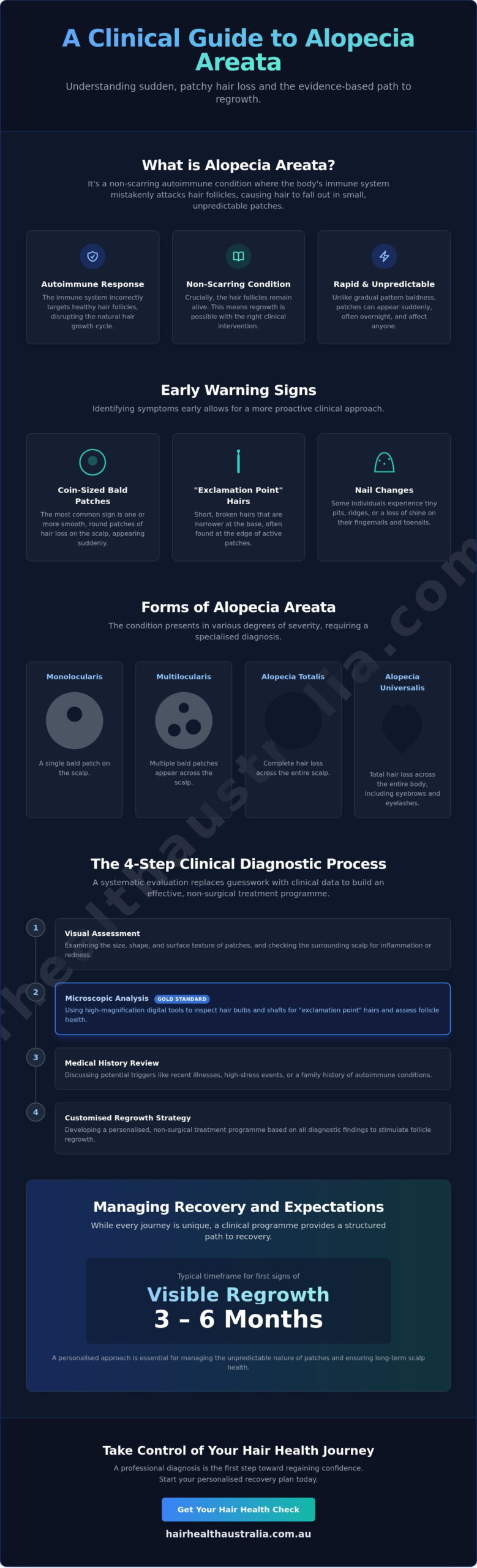
Male pattern baldness is a genetic, progressive thinning caused by DHT sensitivity, typically following a predictable pattern on the Norwood Scale. Alopecia areata is an autoimmune condition where the body’s immune system attacks healthy follicles, usually causing sudden, circular patches of total hair loss. While pattern thinning is predictable and permanent without intervention, alopecia areata can be unpredictable. Each condition requires a distinct clinical approach, which is why a professional microscopic diagnosis is the essential first step.

Does wearing a hat or using hair gel cause baldness?

No, wearing a hat or using hair gel does not cause genetic baldness. This is a common myth that often causes unnecessary concern. However, extremely tight headwear or hairstyles can lead to traction alopecia, which is hair loss caused by physical tension. Similarly, while gel doesn’t cause thinning, poor scalp hygiene and product buildup can lead to inflammation. Maintaining a clean scalp environment is vital for ensuring your hair loss treatment Australia remains effective and your follicles stay healthy.

Can stress-related hair loss be reversed with clinical treatment?

Stress-related hair loss, or Telogen Effluvium, is often reversible once the underlying trigger is addressed. Unlike genetic thinning, this type of shedding is usually temporary. Clinical treatments can help accelerate the recovery process by providing the follicles with the necessary growth signals and nutrients to return to the anagen phase sooner. If stress is accelerating a genetic predisposition, a combined approach is often required to stabilise the hair fall and restore lost density through a structured clinical roadmap.

How do I know if my hair follicles are still active or if they are dead?

You cannot determine follicle viability with the naked eye. Follicles that appear dead may simply be in a state of advanced miniaturisation, producing hairs too fine to see without high magnification. We use digital microscopic analysis to examine the scalp at a cellular level. This allows us to identify active follicles, measure their diameter, and establish whether they have the potential to respond to stimulation or if they have reached a point of permanent inactivity.

Men Hair Loss Pattern: Identifying Genetic Thinning and Clinical Recovery

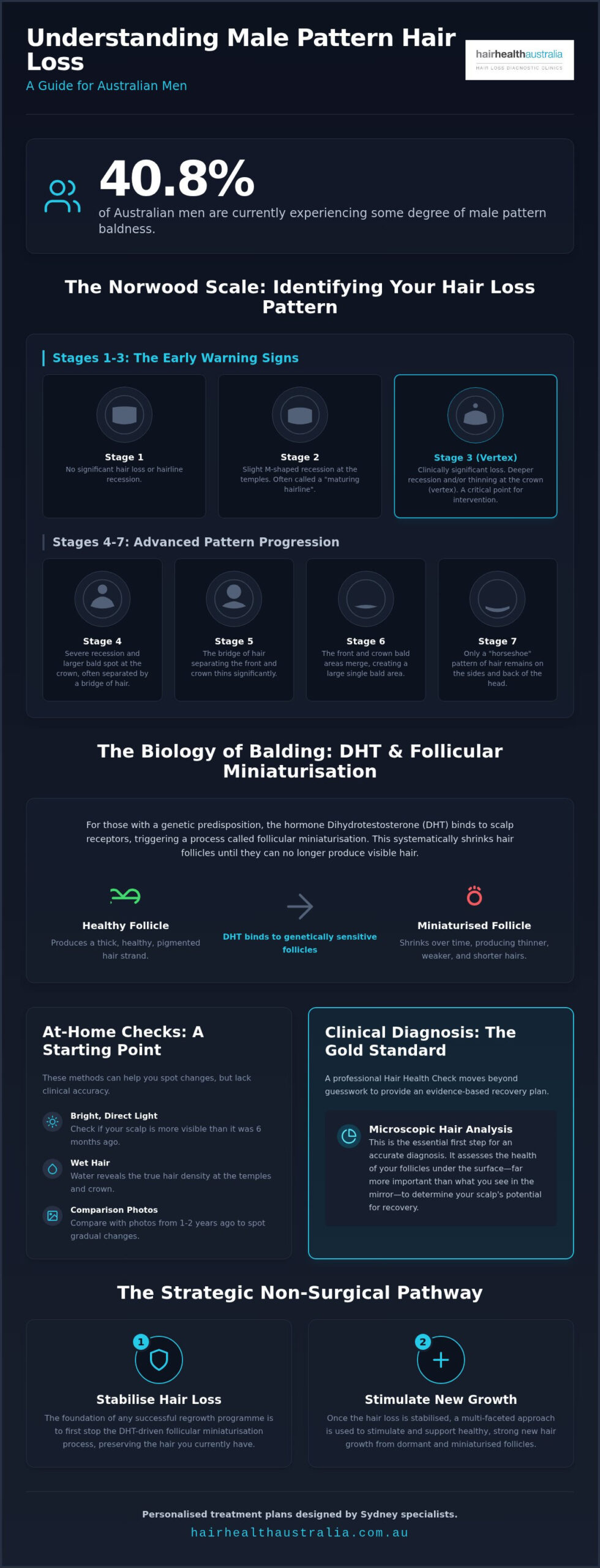
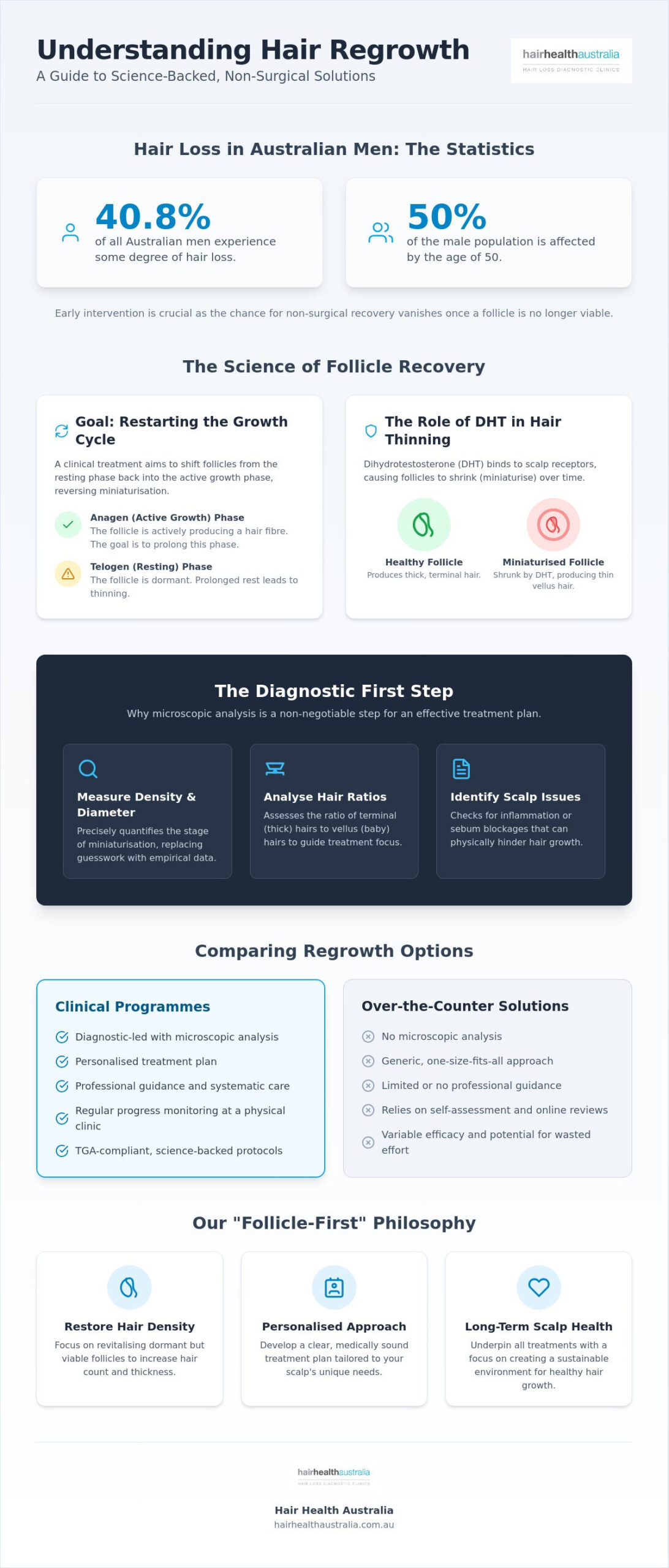
Did you know that approximately 40.8% of Australian men are currently experiencing some degree of male pattern baldness? It usually begins with a subtle shift in the mirror, perhaps a slightly higher forehead or a crown that feels less dense than it did a year ago. Identifying your specific men hair loss pattern is the first step toward regaining control over your appearance. It’s completely natural to feel a sense of anxiety about these changes, especially when conflicting online advice makes the path forward feel more like a maze than a medical process.

We understand that you want clarity without the fear of side effects or the necessity of invasive surgery. This article will help you recognise the early signs of genetic thinning and explain the clinical, non-surgical pathways available to restore your hair density. We’ll explore the biological drivers of thinning, the diagnostic importance of the Norwood Scale, and how a professional assessment at a Sydney clinic can replace uncertainty with a structured, evidence-based recovery plan.

Key Takeaways

  • Identify your specific men hair loss pattern using the Norwood Scale to understand which clinical interventions are most suitable for your current stage.
  • Understand the role of DHT in follicular miniaturisation and why stopping this process is the foundation of any successful regrowth programme.
  • Learn why microscopic hair analysis is the essential first step for an accurate diagnosis, moving beyond the limitations of a simple bathroom mirror check.
  • Discover the benefits of a multi-faceted, non-surgical approach that prioritises stabilising hair loss before stimulating healthy new growth.
  • Recognise the value of a personalised treatment plan designed by Sydney specialists to address your individual hair health goals.

Understanding the Norwood Scale: Identifying Your Men’s Hair Loss Pattern

The Norwood Scale is the universal clinical standard used by specialists to categorise the progression of Androgenetic Alopecia. By providing a clear visual framework, it allows us to identify your specific men hair loss pattern with clinical accuracy. Recognising where you sit on this scale isn’t just about naming the problem; it’s about determining the window of opportunity for non-surgical intervention. While every man’s rate of progression is unique, the patterns themselves are remarkably predictable. Early detection is often the difference between simple hair maintenance and more complex restoration efforts later on.

Psychologically, seeing a defined pattern develop can be confronting and often leads to a sense of inevitability. However, moving from vague anxiety to a clinical diagnosis is incredibly empowering. It replaces uncertainty with a clear, actionable roadmap. Clinical reassurance helps you understand that while your genetics might set the stage, modern treatments can significantly alter the script. The focus here is on replacing fear with evidence-based clarity.

Stages 1 to 3: The Early Warning Signs

Many men struggle to distinguish between a “maturing hairline” and the start of Stage 2 recession. A maturing hairline is a natural shift that occurs in most men as they leave their teens, usually resulting in a slightly higher but still even line. In contrast, Stage 2 involves a deeper, M-shaped recession at the temples. Stage 3 is the critical tipping point where thinning becomes clinically significant. This stage also introduces the “Vertex” variant, where you might notice a small bald patch at the crown even if your hairline looks relatively stable. This is often the best time to start a non-surgical programme.

To check your status at home, observe your hair under these specific conditions:

  • Bright, direct light: Check if the scalp is more visible through the hair than it was six months ago.
  • Wet hair: Water clumps hair together, making it easier to see the true density at the temples and crown.
  • Comparison photos: Look at photos from two years ago to spot subtle shifts in your forehead height or temple depth.

Stages 4 to 7: Advanced Pattern Progression

As the men hair loss pattern moves into Stage 4 and beyond, the recession at the front and the thinning at the crown begin to converge. A distinct bridge of hair often remains between these two areas in Stage 4, but this bridge eventually thins out as you move toward Stage 5. By the time a man reaches Stage 6 or 7, the classic “horseshoe” pattern appears. This leaves only the hair on the sides and back of the head, which is genetically programmed to be more resistant to thinning.

Even at these advanced stages, clinical intervention remains valuable for many. The goal often shifts toward preserving the remaining active follicles and improving the health of the existing hair to maintain as much coverage as possible. Regardless of your current stage, booking a Hair Health Check is the most reliable way to get a professional microscopic assessment of your scalp’s potential for recovery. Identifying the health of your follicles under the surface is far more important than what you see in the mirror alone.

The Biology of Balding: DHT and the Miniaturisation Process

While many factors can influence hair density, the primary driver behind the vast majority of genetic hair loss cases is Dihydrotestosterone (DHT). This hormone is a derivative of testosterone and plays a critical role of genetics and DHT in hair loss by binding to receptors in your scalp. For those with a genetic predisposition, this interaction triggers a systematic decline in hair quality known as follicular miniaturisation. It is important to distinguish this from Telogen Effluvium, which is a temporary shedding phase often caused by sudden stress or illness. In contrast, a permanent men hair loss pattern involves a progressive change in the follicle’s physical structure. Miniaturisation is the slow shrinking of hair follicles until they can no longer produce visible hair.

How Genetics Dictate Your Scalp’s Sensitivity

There is a persistent myth that hair loss is only inherited from the mother’s side of the family. Scientific evidence shows that the genetic blueprint for balding is polygenic, meaning it can be passed down from either or both parents. Your DNA determines how sensitive the androgen receptors in your scalp are to circulating DHT. This sensitivity isn’t uniform across the entire head. Follicles at the temples and crown typically have the highest concentration of these receptors, while the hair at the back and sides is naturally more resistant. This biological variance is why even advanced thinning usually leaves a “horseshoe” of hair intact.

The Hair Growth Cycle: Why Patterns Take Years to Form

Every hair on your head follows a three-stage cycle: Anagen (growth), Catagen (transition), and Telogen (resting). In a healthy scalp, the Anagen phase lasts between two and six years. DHT disrupts this rhythm by progressively shortening the growth phase. With each subsequent cycle, the hair produced is finer, shorter, and loses its pigment. This explains why your hair might feel “wispy” or less manageable long before you see a distinct bald patch.

One of the most encouraging aspects of modern clinical recovery is the understanding of dormancy. A follicle is not necessarily “dead” the moment it stops producing a visible hair. In many cases, the follicle is simply dormant and miniaturised. If you intervene while the follicles are still active, there is a much higher chance of success. Understanding the current state of your scalp is the only way to move forward with confidence. A professional Hair Health Check provides the microscopic detail needed to see exactly which follicles are capable of being revitalised through a targeted regrowth programme.

Clinical Diagnosis vs. Visual Guesswork: The Value of a Hair Health Check

Relying on a bathroom mirror to track your hair’s health is a bit like checking a car’s engine by looking at the paintwork. While you might notice a receding hairline or a thinning crown eventually, the mirror only shows the results of a biological process that has been underway for years. A professional clinical diagnosis and treatment for hair loss is the only way to move beyond guesswork and understand the specific state of your follicles. At our Sydney clinic, we use advanced technology to look beneath the surface. The naked eye cannot see these subtle changes.

Establishing a baseline through digital tracking is essential. It allows for an objective measurement of your treatment’s progress over several months. Without these metrics, it’s easy to become discouraged or confused by normal daily fluctuations in how your hair looks. We encourage every man noticing a change to book a professional Hair Health Check to get a definitive answer about their scalp health. Precision is the foundation of any successful recovery.

What Microscopic Scanning Reveals

High-magnification scans are a cornerstone of our diagnostic process. These scans allow us to identify the exact percentage of miniaturised hairs in a specific area, which is a key indicator of a developing men hair loss pattern. By measuring hair density, specifically the number of hairs per square centimetre, we can create a precise map of your scalp’s current condition. This process also reveals underlying scalp health factors such as sebum build-up or localised inflammation. These issues often exacerbate genetic thinning and must be addressed to create the best possible environment for regrowth.

The Limitations of Self-Diagnosis

Many men fall into the trap of counting hairs in the shower drain as a way to measure their loss. This is an unreliable metric because it’s normal to lose between 50 and 100 hairs a day. Pattern baldness is not about how many hairs fall out, but about the quality of the hairs that grow back in their place. Additionally, different hairstyles or longer lengths can easily mask the true extent of thinning for a long time. The greatest danger of self-diagnosis is the temptation to use generic over-the-counter products. Without understanding your specific men hair loss pattern, you risk wasting time and money on treatments that may not be appropriate for your level of follicular miniaturisation.

Men Hair Loss Pattern: Identifying Genetic Thinning and Clinical Recovery

Strategic Non-Surgical Management for Pattern Thinning

Managing a men hair loss pattern effectively requires more than a reactive purchase of a generic shampoo. Our clinical philosophy centres on a two-stage process: first, we must stabilise the existing loss, and second, we work to stimulate regrowth in dormant follicles. This multi-faceted approach is far more effective than relying on a single “magic” ingredient because it addresses the problem from multiple biological angles simultaneously. These programmes are meticulously designed to align with the body’s natural hair growth cycles. This ensures that treatments are introduced at the optimal time for maximum absorption and efficacy. For a deeper understanding of these protocols, you can read our Clinical Hair Treatment guide.

Follicle Stimulation and Scalp Nutrition

Clinical-grade topicals are significantly more potent than standard supermarket shampoos. The latter often lack the necessary concentration of active ingredients to penetrate the scalp effectively. A primary goal of these treatments is to increase localised blood flow. By enhancing circulation, we “feed” the follicles with essential nutrients and oxygen required for healthy hair production. We often supplement this with non-invasive stimulation techniques, such as low-level light therapies. These methods energise the cells within the follicle to extend the growth phase without the need for surgery. This synergistic approach ensures the scalp environment is optimised for hair density.

DHT Blockers and Hormonal Balance

To halt the progression of a men hair loss pattern, we must address the hormonal root cause. This involves inhibiting the enzyme known as 5-alpha-reductase, which converts testosterone into DHT. By lowering DHT levels in the scalp, we reduce the pressure on sensitive follicles and stop the miniaturisation process. We understand that many men have concerns about side effects. From a clinical perspective, these risks are often manageable through personalised dosing and professional oversight. Stabilising your current hair is just as vital as growing new hair. Without a stable foundation, any new growth will eventually be subject to the same genetic thinning. This is why a consistent, long-term strategy is essential for lasting results.

If you’re ready to move beyond generic solutions and want a plan tailored to your specific needs, the best way to start is by booking your Hair Health Check today.

Why Sydney Men Choose Hair Health Australia for Regrowth

Sydney men are increasingly seeking specialists who understand the nuances of a men hair loss pattern rather than relying on generic, over-the-counter solutions. Since 2009, Hair Health Australia has provided a dedicated professional environment for those looking to address thinning without resorting to invasive procedures. Every Male Hair Loss Treatment we provide is personalised to the individual. We don’t believe in “one-size-fits-all” kits because your scalp’s biology is as unique as your thumbprint. Being treated in a professional clinical centre offers a level of reassurance and accountability that simply cannot be matched by buying unregulated products online.

Our commitment to non-surgical methods is central to our philosophy. Many of our clients wish to avoid the significant costs and potential recovery risks associated with hair transplant surgery. By focusing on clinically-backed regrowth programmes, we provide a pathway that works with your body’s natural systems. This approach prioritises the long-term health of your existing hair while systematically revitalising dormant follicles. It’s about achieving a natural-looking restoration through precise, evidence-based care and professional oversight.

The Journey: What to Expect in Your First Six Months

Patience is a fundamental component of any successful restoration journey. Real regrowth takes time. You should expect a minimum of three to six months before visible changes become apparent in the mirror. During the early stages, some men experience what’s known as a “shedding phase”. This is actually a positive clinical sign. It indicates that healthier, stronger hairs are beginning to grow and are pushing out the old, miniaturised hairs that were stuck in a weakened state. We don’t ask you to take our word for it. We use regular digital microscopic scans to provide objective proof of your progress, allowing you to see the increase in density at a cellular level long before it’s obvious to the naked eye.

Taking the First Step Toward Restoration

The link between early detection and successful outcomes is undeniable. Identifying a men hair loss pattern in its initial stages allows for much more effective stabilisation and a higher chance of significant regrowth. We invite you to a confidential consultation where we can discuss your specific concerns with “straight-talking” clinical honesty. We won’t over-promise or use hyperbolic marketing language. Instead, we’ll provide a realistic assessment of what can be achieved based on your current follicular health. Taking that first step is often the hardest part, but it’s the only way to replace anxiety with a structured, professional plan. You can begin this process by booking a Hair Health Check at our Sydney clinic today.

Take Control of Your Hair Restoration Journey

Recognising a developing men hair loss pattern is the most significant step toward preserving your hair density. We’ve explored how the Norwood Scale provides a clinical roadmap and why understanding the biological role of DHT is essential for effective treatment. Moving beyond the limitations of the bathroom mirror allows you to replace anxiety with a structured, evidence-based plan. Since 2009, our team of non-surgical specialists has helped men navigate this process using advanced microscopic diagnostic technology and personalised clinical programmes.

The key to successful restoration is early intervention. By identifying follicular miniaturisation while it’s still manageable, you can stabilise existing growth and stimulate dormant follicles before they become inactive. Our Sydney clinic is dedicated to providing the clarity and professional guidance you need to make informed decisions about your hair health. Don’t leave your appearance to chance when clinical, non-surgical solutions are within reach.

Book Your Comprehensive Hair Health Check in Sydney Today and start your journey toward clinical recovery with confidence. You don’t have to face hair loss alone; expert support is ready to help you restore your hair density and your confidence.

Frequently Asked Questions

How can I tell if my hairline is receding or just maturing?

A maturing hairline is a natural shift that occurs in most men, usually resulting in an even hairline about one centimetre above the juvenile line. In contrast, a receding hairline, which signals a developing men hair loss pattern, involves uneven “M-shaped” thinning at the temples. To be certain, a microscopic scan is required to check for follicular miniaturisation. This clinical diagnostic step is the only way to distinguish normal ageing from active genetic thinning accurately.

Is male pattern hair loss reversible without surgery?

While “reversing” loss suggests returning to a juvenile state, modern clinical treatments can significantly restore density and stabilise thinning without surgery. Non-surgical programmes focus on revitalising dormant follicles and halting the miniaturisation process. Your success depends on the current stage of your men hair loss pattern; if your follicles are still active but weakened, significant regrowth is achievable through targeted clinical protocols that work with your natural growth cycles.

What is the most common hair loss pattern in men?

The most common pattern is Androgenetic Alopecia, which follows the predictable stages of the Norwood Scale. It typically begins with recession at the temples or thinning at the vertex, which is the crown area. Over time, these two thinning zones often meet, leaving a “horseshoe” of hair around the back and sides. This specific pattern is responsible for approximately 95% of hair loss cases in Australian men and requires a clinical approach.

Can stress cause a permanent hair loss pattern?

Stress typically causes Telogen Effluvium, which is a temporary shedding phase rather than a permanent pattern. However, significant physiological stress can sometimes accelerate the onset of genetic thinning in those already predisposed. While the stress-induced shed itself may eventually recover, any underlying genetic loss revealed during that time will require clinical management to maintain your density. We recommend a professional assessment to determine if your shedding is temporary or part of a broader pattern.

How long does it take to see results from a clinical regrowth programme?

You should expect to see measurable clinical results within three to six months of starting a regrowth programme. The initial months focus on stabilising the loss and improving scalp health to create a better growth environment. Visible density improvements follow as the hair growth cycle resets. We use digital microscopic scanning at regular intervals to track these changes at a cellular level, providing objective proof of progress before the changes are obvious in the mirror.

Do I need a referral from a GP to visit a hair loss clinic in Sydney?

No, you don’t need a referral from a GP to visit our Sydney clinic for a Hair Health Check. You can book a consultation directly with our specialists to begin your diagnostic process. While we always encourage you to discuss your general health with your doctor, our services are specialised for hair and scalp analysis. We focus on non-surgical restoration pathways that are easily accessible to any man noticing the early signs of thinning.

Are the results of non-surgical hair treatment permanent?

Results from non-surgical treatments require ongoing maintenance because the underlying genetic driver, DHT, remains present in your system. If you stop the treatment, the miniaturisation process will eventually resume its natural course. Think of it like dental hygiene or physical fitness; consistent care is necessary to maintain the density achieved during your programme. We provide structured long-term plans to ensure your results stay stable and your hair health is prioritised over time.

What is the difference between a trichologist and a hair loss consultant?

A trichologist is a specialist in the science of the hair and scalp, focusing on the biological causes of various disorders. A hair loss consultant often works within a clinical setting to guide you through specific treatment pathways and programme options. At Hair Health Australia, our team combines clinical expertise with advanced diagnostic technology. This ensures you receive a comprehensive assessment and a personalised programme tailored to your specific needs and hair restoration goals.

Alopecia Areata Treatment: 2026 Recovery Guide Australia

What if those sudden, smooth patches on your scalp aren’t just a sign of temporary stress, but a specific signal from your immune system that requires a clinical response rather than a generic pharmacy shampoo? It’s deeply distressing to discover visible gaps in your hair, particularly when you’re caught between the confusion of genetic thinning and the unpredictability of an autoimmune condition. Finding effective alopecia areata treatment Australia wide often feels like a cycle of trial and error that leaves you more anxious than when you started. You’ve likely felt the frustration of products that promise the world but deliver very little, alongside a genuine fear that invasive surgery might be your only remaining option.

We understand that you’re looking for more than a quick fix; you need a definitive clinical path forward. This 2026 recovery guide provides that clarity by combining expert insights with the latest non-surgical regrowth programmes available in Sydney. We’ll show you how advanced diagnostic technology, including microscopic scanning at 200x magnification, replaces visual guesswork with data-driven evidence. By the end of this guide, you’ll understand how a personalised, systematic approach can help manage your condition and restore both your hair density and your confidence without the need for a transplant.

Key Takeaways

  • Learn why visual inspection alone is insufficient and how 200x microscopic scanning identifies the true state of your follicle health.
  • Understand the critical differences between genetic thinning and autoimmune conditions to ensure you receive the correct clinical path forward.
  • Discover how personalised, non-surgical regrowth protocols provide a modern approach to alopecia areata treatment Australia wide, focusing on dormant follicle stimulation.
  • Identify the essential role of the Hair Health Check in creating a customised recovery plan tailored to your specific hair loss type and scalp environment.
  • Gain clarity on how clinical advancements in 2026 are helping Australians restore hair density and confidence through evidence-based, non-surgical care.

Understanding Alopecia: More Than Just a Medical Term

Alopecia is a word that carries significant weight, yet many Australians don’t realise it’s actually a broad medical umbrella term rather than a specific condition. It simply translates to hair loss. Whether you’re noticing a receding hairline, general thinning, or distinct circular patches, these all fall under the category of alopecia. In Australia, where an active, outdoor lifestyle is central to our identity, the sudden loss of hair can feel like a direct hit to your confidence and social ease. It’s about more than just aesthetics; it’s about how you feel when you step out into the sun or meet friends at a local café.

Too often, individuals attempt to self-diagnose using internet forums or social media. This usually leads to a cycle of purchasing expensive, ineffective pharmacy shampoos that only address surface-level symptoms. Clinical success relies on identifying the root cause. Is it a temporary shedding event, or is it the beginning of permanent follicle miniaturisation? Without a professional assessment, you’re essentially guessing with your health and your wallet. Accuracy in diagnosis is the only way to move from uncertainty to a clear path of recovery.

The Clinical Difference Between Alopecia Types

It’s vital to distinguish between androgenetic alopecia (genetic thinning) and Understanding Alopecia Areata, which is an autoimmune condition. While the former is a gradual process, the latter involves the immune system mistakenly attacking healthy hair follicles, often resulting in sudden, patchy loss. Australian specialists categorise these conditions by their underlying biological triggers and severity. Moving past the stigma of hair loss is a clinical necessity. The sooner you identify the specific type, the more effective your alopecia areata treatment Australia protocol will be.

When Your Hair Loss Becomes a Clinical Concern

Most people lose between 50 and 100 hairs a day as part of a healthy growth cycle. The tipping point occurs when you notice a sustained increase in shedding or visible changes to your scalp’s density. Waiting for large, visible bald spots to appear can limit your non-surgical recovery options, as dormant follicles eventually lose the ability to be reactivated. A specialised hair clinic provides the early detection needed to intervene before the loss becomes irreversible. Starting with a Hair Health Check allows for a clear, objective analysis of your scalp environment, ensuring your alopecia areata treatment Australia plan is based on data, not hope.

The Different Faces of Alopecia: Identifying Your Specific Type

Identifying the specific mechanism behind your hair loss is the most critical step in securing a successful recovery. While the term ‘alopecia’ is broad, the conditions it describes are diverse and require distinct clinical approaches. For many Australians, the journey begins with distinguishing between gradual thinning and sudden, patchy loss. Understanding these nuances ensures that your alopecia areata treatment Australia plan is accurately targeted to your biological needs.

The four most common types encountered in a clinical setting include:

  • Androgenetic Alopecia: The most prevalent form of genetic thinning, affecting both men and women through a process of follicle miniaturisation.
  • Alopecia Areata: An autoimmune condition where the body’s immune system mistakenly attacks healthy hair follicles, often resulting in distinct, circular patches.
  • Telogen Effluvium: A temporary but significant shedding event usually triggered by physical or emotional stress, illness, or hormonal shifts.
  • Traction Alopecia: Damage caused by persistent tension on the hair follicle, often from tight hairstyles or extensions.

Pattern Thinning in Men and Women

Androgenetic alopecia presents differently depending on your biology. In men, it typically follows a predictable pattern of a receding hairline or thinning at the crown. For women, it often manifests as a general diffuse thinning across the top of the scalp, while the front hairline remains intact. The primary driver here is Dihydrotestosterone (DHT), a hormone that causes follicles to shrink over time. Without intervention, these follicles eventually stop producing visible hair. Early detection is vital. Once a follicle has completely miniaturised, non-surgical recovery becomes significantly more challenging. Determining your current stage of thinning through a professional Hair Health Check is the most effective way to protect your existing density.

Autoimmune and Inflammatory Conditions

When the immune system becomes overactive, it can disrupt the hair’s natural growth cycle. In the case of alopecia areata, white blood cells surround and attack the bulb of the hair follicle, causing the hair to fall out prematurely. For those seeking support and community resources, the Australia Alopecia Areata Foundation provides invaluable assistance for patients navigating this unpredictable condition. We are also seeing a rise in Frontal Fibrosing Alopecia among post-menopausal Australian women. This is an inflammatory condition that causes a slow recession of the hairline and can lead to permanent scarring if left untreated. Distinguishing between reversible loss and scarring is a clinical priority, as it dictates the potential for successful alopecia areata treatment Australia and long-term regrowth.

The Diagnostic Advantage: Why Microscopic Scanning is Essential

Visual inspection is the traditional starting point for most hair loss consultations, but it remains fundamentally subjective. While Australian Government Information on Alopecia provides a solid foundation for understanding general symptoms, a naked-eye examination cannot reveal what’s happening beneath the surface of the scalp. Relying solely on what a practitioner can see during a standard check-up often leads to a delayed diagnosis. By the time thinning is visible to the naked eye, you may have already lost up to 50% of your hair density in that specific area. This is why a shift toward objective, data-driven analysis is vital for anyone seeking effective alopecia areata treatment Australia.

Microscopic analysis allows us to evaluate the scalp environment and individual follicle health with clinical precision. We focus on the ratio between terminal hairs, which are thick and healthy, and miniaturised hairs, which are fine, wispy, and struggling to grow. Identifying this ratio is the only way to provide an accurate prognosis. It tells us whether a follicle is simply dormant and capable of being reactivated, or if it has reached a stage of permanent miniaturisation. This level of detail ensures your recovery programme is built on biological facts rather than optimistic guesswork.

What to Expect During a Microscopic Hair Health Check

At our Sydney centre, the diagnostic process is entirely non-invasive and highly educational. We utilise specialised microscopic scanning technology to visualise your scalp at 200x magnification. This allows you to see ‘invisible’ thinning and early signs of inflammation that aren’t apparent in a mirror. During the session, we examine the hair bulb, the scalp’s oil production levels, and the presence of any follicular blockages. It’s a transparent process where you see the same data as the specialist. If you’re ready to move beyond visual guesswork, you can organise your microscopic hair analysis in Sydney to establish a clear baseline for your recovery.

Developing a Data-Driven Recovery Plan

Once we have gathered microscopic evidence, we can predict future loss patterns with a high degree of accuracy. This data allows us to set realistic expectations for your alopecia areata treatment Australia journey. We don’t believe in ‘one-size-fits-all’ pharmacy treatments because they don’t account for your unique scalp biology. Clinical evidence proves that a targeted approach, which addresses the specific needs of your follicles, delivers far more consistent results than generic topical solutions. By understanding exactly which follicles are viable, we can design a personalised regrowth programme that focuses your efforts where they will have the most significant impact on your hair density.

Alopecia Areata Treatment: 2026 Recovery Guide Australia

Non-Surgical Clinical Strategies for Alopecia Recovery

The approach to hair restoration in Australia is shifting. We’ve observed a significant movement toward clinical regrowth protocols, as more individuals seek to avoid the risks and downtime associated with invasive surgery. For many, the goal is to work with the body’s natural biology rather than resorting to a transplant. These non-surgical strategies focus on biological reactivation. By improving localised blood flow and enhancing nutrient delivery, we can effectively stimulate dormant follicles to re-enter the anagen, or growth, phase of the hair cycle. This multimodal approach is a cornerstone of effective alopecia areata treatment Australia wide, ensuring that the scalp environment is fully optimised for recovery.

Success in hair recovery is rarely the result of a single product. It requires a systematic combination of clinical therapy and disciplined home care. Maintaining these results over the long term involves a commitment to scalp health. Think of it as a fitness programme for your hair; consistency is what prevents future regression and keeps follicles productive. By addressing both the internal triggers and the external environment, we create a sustainable path toward restored hair density.

Stimulating Regrowth Without Invasive Procedures

The science of follicle stimulation centres on increasing cellular energy within the hair bulb. When follicles receive the correct signals and resources, they can overcome the miniaturisation process discussed earlier. Clinical-grade topicals are fundamentally different from standard over-the-counter options found in a local chemist. They often contain higher concentrations of active ingredients and are designed for superior scalp penetration. To understand how these protocols are structured, you can read our Clinical Hair Treatment: A Professional Guide to Non-Surgical Restoration.

Lifestyle and Nutritional Support for Hair Health

Your internal health directly influences the success of any clinical intervention. In the Australian climate, we often see a link between hair health and deficiencies in iron or Vitamin D. Despite our abundance of sunlight, Vitamin D deficiency is surprisingly common and can disrupt the hair growth cycle. Managing stress is also a clinical priority. High cortisol levels can trigger telogen effluvium flare-ups, which may complicate an existing autoimmune condition. Choosing specialised hair care products that support your clinical results is the final piece of the puzzle. The first step toward a multimodal recovery is a comprehensive clinical assessment to identify your specific nutritional and biological needs.

Restoring Your Confidence: The Hair Health Australia Approach in Sydney

At Hair Health Australia, we believe that effective recovery begins with a partner who values precision over marketing hype. Our philosophy is rooted in evidence-based, non-surgical care that prioritises the biological health of your follicles. Since 2009, our Sydney clinic has provided a stable, clinical environment where men and women can access specialised alopecia areata treatment Australia protocols. We don’t offer generic solutions. Instead, we organise every programme around the specific data gathered from your scalp during a 200x magnification scan. This transparency builds trust. It ensures your journey toward visible regrowth is both realistic and sustainable, replacing anxiety with a clear, clinical path forward.

Tailored Programmes for Diverse Hair Loss Needs

Men and women experience hair loss through very different biological lenses. While male pattern baldness is often a direct result of genetic sensitivity to DHT, female hair loss can involve a complex interplay of hormones, nutrition, and environmental stress. You can explore these nuances further in our guide on the Early Signs of Alopecia in Women: A Clinical Guide. Our Sydney specialists focus on the long game. We avoid the “quick fix” trap of temporary cosmetic concealers or ineffective pharmacy products. We aim for genuine, structural hair recovery that lasts. By addressing the unique hormonal and genetic factors at play, we create a customised environment where your hair has the best possible chance to thrive.

Taking the First Step Toward Hair Recovery

Your first consultation at our Sydney centre is a methodical investigation into the current state of your hair health. We use microscopic scanning to document your baseline density and follicle viability. This isn’t a one-off event. We track your progress with follow-up scans, allowing us to adjust your protocol based on actual results. This data-driven approach ensures you’re never left wondering if your treatment is working. Having local Sydney expertise means you have ongoing clinical support throughout your recovery. Our specialists provide the “straight-talking” honesty you need to make informed decisions about your health. If you’re ready to move from uncertainty to action, you can book your professional hair health check in Sydney today. It’s the most effective way to secure a definitive clinical assessment and begin your personalised alopecia areata treatment Australia programme.

Securing Your Clinical Path to Hair Recovery

The journey toward restored hair density doesn’t have to be defined by uncertainty or ineffective pharmacy trials. By moving from visual guesswork to data-driven microscopic analysis, you can finally understand the biological reality of your scalp. We’ve explored how identifying your specific type of hair loss and utilising advanced 200x magnification scanning are the essential first steps for any successful alopecia areata treatment Australia protocol. Since 2009, our Sydney specialists have focused on these non-surgical, clinically-backed methods to help Australians regain their confidence without the need for invasive surgery.

Your recovery depends on a personalised approach that addresses your unique hormonal and genetic profile. Whether you’re dealing with sudden patches or gradual thinning, a systematic regrowth plan offers a modern, evidence-based solution. The most effective way to begin this process is to establish a clear baseline of your follicle health. You can Book Your Professional Hair Health Check in Sydney today to receive a definitive assessment. We’re here to guide you through every stage of your restoration with honesty and clinical precision. You don’t have to face hair loss alone; a clear path back to thicker, healthier hair is within your reach.

Frequently Asked Questions

Is hair loss from alopecia permanent?

Hair loss isn’t always permanent; it depends entirely on the condition of your hair follicles. In cases of alopecia areata, the follicles often remain alive and capable of producing hair if the autoimmune trigger is managed. However, if androgenetic thinning is left untreated for years, follicles can eventually miniaturise and lose their functional capacity. Early intervention is the most effective way to ensure that your recovery remains a non-surgical possibility.

How is alopecia diagnosed in a Sydney hair clinic?

Diagnosis at our Sydney centre involves a sophisticated microscopic analysis at 200x magnification. Unlike a standard visual check from a GP, this technology allows us to see the exact state of your scalp health and follicle viability. We measure the ratio of healthy terminal hairs against thinning miniaturised hairs. This data-driven approach is essential for selecting the most effective alopecia areata treatment Australia protocol for your specific biological needs.

Can stress cause different types of alopecia in Australians?

Stress is a well-documented trigger for several hair loss conditions. It most commonly leads to Telogen Effluvium, where a sudden shock to the system pushes a large percentage of hairs into the shedding phase. For those with a predisposition to autoimmune issues, high cortisol levels can also spark or worsen patches of alopecia areata. Managing your internal environment is just as important as topical clinical care when seeking a long-term recovery.

What is the difference between alopecia areata and androgenetic alopecia?

The primary difference lies in the underlying cause. Alopecia areata is an autoimmune condition where the body’s immune system mistakenly attacks the hair bulb, leading to sudden patches of loss. Androgenetic alopecia is a genetic and hormonal process where follicles slowly shrink over time due to DHT sensitivity. Because the biological mechanisms are so different, they require distinct clinical strategies to reactivate the follicles and restore hair density successfully.

Are there non-surgical treatments for alopecia that actually work?

Yes, non-surgical treatments are highly effective when they are clinical-grade and personalised to the individual. These programmes work by stimulating blood flow, reducing scalp inflammation, and providing dormant follicles with the cellular energy they need to grow. While pharmacy-brand shampoos often provide only superficial benefits, a multimodal alopecia areata treatment Australia plan uses concentrated active ingredients and advanced technology to achieve measurable regrowth without the need for invasive transplant surgery.

How long does it take to see results from a clinical regrowth programme?

You should generally expect to see initial changes within three to six months of starting a clinical programme. Hair growth is a slow physiological process; a single strand only grows about one centimetre per month. The first signs of success usually include a significant reduction in daily shedding and an improvement in overall scalp health. Visible increases in density follow as dormant follicles transition back into the active anagen growth phase.

Does wearing hats or helmets cause traction alopecia?

Wearing hats or helmets doesn’t typically cause traction alopecia unless they are so tight that they pull consistently on the hair roots. Traction alopecia is primarily caused by physical tension from tight braids, ponytails, or hair extensions. However, dirty headwear can lead to scalp irritation or fungal issues, which may impact your overall hair health. It’s best to ensure any protective gear fits correctly and is kept clean to avoid secondary scalp complications.

Can diet and vitamins help with hair loss from alopecia?

Diet and vitamins play a vital supportive role in hair recovery but aren’t usually a standalone cure. Follicles require specific nutrients like Iron, Zinc, and Vitamin D to produce strong hair shafts. In the Australian climate, many individuals are surprisingly deficient in Vitamin D, which can disrupt the hair growth cycle. Addressing these nutritional gaps ensures your body has the raw materials needed to support the results of your specialised clinical treatments.

Non-Surgical Alopecia Treatment Sydney: The 2026 Clinical Guide to Hair Regrowth

Did you know that approximately 40.8% of Australian men experience some degree of baldness, while hundreds of thousands of Australians are currently navigating the complexities of active alopecia areata? It’s common to feel a sense of anxiety when you notice your hair thinning, especially when off-the-shelf products fail to deliver on their promises. You’ve likely spent far too much time and money on shampoos that simply don’t work. Seeking a non-surgical alopecia treatment Sydney shouldn’t feel like a gamble or a choice between permanent loss and invasive surgery.

This guide provides a clear, evidence-based path to restoring your hair density using the latest clinical protocols available in 2026. We’ll explore how microscopic scanning and personalised, non-invasive plans can replace uncertainty with a visible, healthy transformation. You’ll learn how to identify your specific hair loss type and discover exactly which medical-grade strategies are proven to stabilise the scalp and stimulate regrowth without a single incision or day of downtime. By moving beyond visual guesswork, you can finally access a systematic approach to hair health grounded in clinical precision.

Key Takeaways

  • Understand that alopecia is a broad medical term and learn how to distinguish between reversible non-scarring loss and permanent scarring conditions.
  • Discover why microscopic hair analysis is the clinical gold standard for diagnosis, offering insights into follicle health that a simple visual inspection cannot provide.
  • Compare the benefits of a non-surgical alopecia treatment Sydney against invasive surgery to understand how revitalising existing follicles can often be the most effective first step.
  • Learn about the structured phases of a personalised regrowth programme, including the essential stabilisation phase designed to halt thinning before focusing on density.
  • Gain clarity on how a specialised, non-surgical clinical environment ensures your recovery plan is based on objective data rather than a one-size-fits-all approach.

Defining Alopecia: Why Non-Surgical Paths are the First Line of Defence

Many people assume that ‘alopecia’ refers exclusively to the autoimmune condition that causes sudden, circular patches of hair loss. In reality, Hair loss (alopecia) is a broad medical category encompassing every form of thinning, shedding, and balding. Understanding this distinction is the first step toward effective recovery. For the vast majority of Australians, hair loss is a progressive biological process rather than a sudden event. Statistics from 2026 indicate that approximately 40.8% of Australian men experience some degree of baldness, while active cases of alopecia areata affect up to 294,000 individuals across the country.

When you begin noticing changes in your hair density, the biological state of your follicles determines the path forward. Clinicians categorise hair loss into two main groups: non-scarring and scarring alopecia. Non-scarring alopecia is typically reversible because the hair follicle remains intact and alive, even if it’s currently dormant or miniaturised. Scarring alopecia involves permanent damage to the follicle. Identifying the difference early is vital. Choosing a non-surgical alopecia treatment Sydney allows for a targeted approach that focuses on revitalising these living follicles before they reach a stage of permanent inactivity.

Early intervention is the most significant factor in successful regrowth. Research suggests that 36% of people with hair loss conditions are currently self-diagnosed, often wasting valuable time on ineffective over-the-counter products. By identifying the underlying cause through a comprehensive Hair Health Check, we can determine if your follicles are still viable for restoration. This proactive approach stops the progression of thinning and creates a stable foundation for new growth.

Common Types of Alopecia Seen in Sydney Clinics

  • Androgenetic Alopecia: Often called male or female pattern hair loss, this is a genetic sensitivity to hormones that causes follicles to shrink over time.
  • Alopecia Areata: An autoimmune response where the body’s immune system mistakenly attacks the hair follicles, resulting in patchy loss.
  • Telogen Effluvium: A temporary form of widespread shedding often triggered by high stress, nutritional deficiencies, or significant health changes.

The Benefits of a Non-Invasive Approach

Opting for clinical, non-invasive protocols offers a level of safety and flexibility that surgery cannot match. Surgical procedures involve significant downtime and carry risks such as scarring or infection. In contrast, non-surgical programmes work in harmony with your body’s natural growth cycles to strengthen existing hair. This methodical approach is often more cost-effective for long-term maintenance, as it addresses the ongoing biological causes of hair loss rather than simply moving hair from one area to another. It’s a sustainable way to manage scalp health without the anxiety of a surgical recovery period.

The Science of Diagnosis: Why Microscopic Scanning Beats Visual Inspection

Visual inspection is the most common way people notice hair loss, yet by the time thinning is visible in the mirror, you may have already lost a significant percentage of your original hair density. Relying on “eye-balling” the scalp is an outdated approach that lacks the precision required for modern clinical care. Professional diagnosing hair loss requires a deeper look into the biological activity occurring beneath the surface. Without high-definition data, any treatment plan is based on guesswork rather than evidence.

Microscopic hair analysis serves as the essential foundation for any successful non-surgical alopecia treatment Sydney. This technology allows us to examine the exact state of your follicles in high definition, moving beyond what the naked eye can perceive. We aren’t just looking for the presence of hair; we’re assessing the potential for regrowth. This diagnostic phase identifies whether follicles are merely dormant or if they’ve progressed to a stage of miniaturisation where recovery requires immediate, specialised intervention.

What We Look for Under the Microscope

  • Follicle Density: We calculate the exact number of active hairs per square centimetre. This provides a quantifiable metric to compare against healthy averages for your specific age and hair type.
  • Hair Shaft Diameter: We identify the miniaturisation process. This occurs when hairs become progressively thinner and shorter with each growth cycle, which is a key indicator of genetic thinning.
  • Scalp Health: Our scans reveal underlying inflammation, excessive sebum buildup, or environmental damage. These factors often hinder the efficacy of clinical protocols if they aren’t addressed first.

The Importance of a Personalised Baseline

A data-driven baseline is essential because hair loss is never a uniform experience. Your treatment plan must be tailored to the specific stage of your follicles to be effective. Without this initial data, tracking your progress becomes subjective and often unreliable. We use these microscopic images to prove that regrowth is occurring at the root level long before the results are visible to you or those around you. This objective verification replaces anxiety with the confidence that your programme is working as intended.

If you’re concerned about thinning but don’t want to rely on trial and error, booking a Hair Health Check is the most reliable way to establish an accurate baseline. Microscopic analysis is the cornerstone of ethical hair restoration, ensuring every recommendation is based on verified biological evidence.

Non-Surgical Clinical Protocols vs. Hair Transplant Surgery

Choosing between clinical restoration and surgery is a pivotal decision in any hair recovery journey. The fundamental difference lies in the mechanism of action. Hair transplant surgery is a redistribution process; it moves existing follicles from a donor site, usually the back of the head, to thinning areas. It doesn’t address the underlying biological causes of loss. In contrast, a non-surgical alopecia treatment Sydney focuses on revitalising the follicles you already have, extending their growth phase and reversing the miniaturisation process before the hair is lost permanently.

The clinical landscape has evolved significantly. A recent review of non-surgical alopecia treatments confirms that protocols involving topical stimulants, DHT blockers, and Low-Level Laser Therapy (LLLT) are highly effective at stabilising the scalp environment. For many, these non-invasive paths are the most logical first step because they carry zero surgical risk and require no recovery time. While surgery can provide a cosmetic “quick fix,” it often fails to provide long-term density if the native hair around the grafts continues to thin due to unmanaged alopecia.

When to Choose Clinical Restoration Over Surgery

Surgery is rarely recommended for individuals in the early stages of thinning or those with active alopecia areata. If the scalp is in an inflammatory or autoimmune state, the body may simply attack the newly transplanted follicles, leading to a failed procedure. There’s also the risk of “shock loss,” where the trauma of surgery triggers the shedding of existing healthy hair in the surrounding area. For women, who typically experience diffuse thinning across the entire scalp rather than a receding hairline, clinical protocols are often the superior choice. They provide a holistic improvement in density that surgery cannot replicate in a diffuse thinning pattern.

Clinical Protocols: A Multi-Faceted Approach

Successful regrowth isn’t the result of a single “miracle product.” It requires a structured, multi-faceted programme that targets the hair growth cycle from several angles simultaneously. In our Sydney clinic, we combine medical-grade topicals with advanced clinical tools like laser therapy to stimulate cellular activity within the follicle. This integrated approach ensures that we aren’t just masking the problem but are actively improving scalp health and follicle function. For a deeper look at current clinical standards, you can refer to our guide on the Best Hair Regrowth Treatment Australia 2026. By following a disciplined, data-backed programme, you can achieve visible restoration while maintaining the natural integrity of your hair.

Non-Surgical Alopecia Treatment Sydney: The 2026 Clinical Guide to Hair Regrowth

Personalising Your Regrowth Programme: Clinical Strategies for Sydney Residents

Regaining hair density is a methodical process that requires patience and clinical oversight. While many seek an overnight fix, a successful non-surgical alopecia treatment Sydney residents can rely on typically unfolds over a 6 to 12-month period. This timeline aligns with the natural hair growth cycle, ensuring that every intervention is timed to maximise biological response. It’s about working with your body’s rhythm, not against it.

The first milestone is the Stabilisation Phase. Its primary objective is to halt the progression of thinning immediately. By addressing the hormonal or environmental triggers of loss, we “lock in” your existing hair density. You can’t restore what you haven’t first protected. Once stabilisation is achieved, we transition to the Regrowth Phase. During this stage, clinical protocols focus on stimulating dormant follicles, encouraging them to exit the resting phase and re-enter the active anagen stage. This transition is essential for restoring visible volume and scalp coverage.

Step-by-Step: The First 90 Days of Treatment

The initial three months are vital for setting the foundation of your recovery. During Month 1, the focus is on establishing a consistent clinical routine and calming any underlying scalp inflammation. By Month 2, most individuals notice a significant reduction in daily shedding, which is a clear sign that the stabilisation phase is taking effect. By the end of Month 3, while visible changes might still be subtle to the naked eye, microscopic scans often reveal the first signs of follicle revitalisation and improved hair shaft diameter.

Lifestyle Factors for Sydney Locals

Living in Sydney presents unique challenges for hair health. The intense Australian sun is a major factor; a thinning scalp has less natural protection against UV radiation, which can lead to oxidative stress and damage the follicle’s DNA. Factors like salt water exposure and urban pollutants in the CBD can also affect the scalp’s pH balance and hinder growth. Understanding these local variables is why choosing a non-surgical hair loss clinic in Sydney that understands our specific climate is so important. To ensure your plan accounts for these environmental stressors, we recommend starting with a comprehensive Hair Health Check to map out your personalised path to recovery.

Restoring Density with Hair Health Australia’s Professional Care

At Hair Health Australia, we believe that effective hair restoration begins with a partnership built on clinical expertise and empathetic understanding. Since establishing our clinic circa 2009, we’ve focused exclusively on non-invasive regrowth programmes for both men and women. Unlike clinics that offer both surgery and clinical care, we maintain a strict focus as a non-surgical specialist. This means our recommendations are never influenced by a desire to book surgical theatre time. We’re unbiased advocates for your hair health, dedicated to finding the most effective non-surgical alopecia treatment Sydney can provide for your specific biological profile.

Our Sydney clinic provides a supportive, professional environment where you can discuss your concerns with a specialist who understands the complexities of hair biology. We recognise that thinning hair is rarely just a cosmetic issue; it often carries a significant psychosocial impact that affects your daily confidence and social interactions. By combining advanced technology with a compassionate, objective approach, we aim to replace the anxiety of visual guesswork with the clarity of medical-grade data. Whether you’re navigating early-stage thinning or more advanced alopecia, our goal is to provide a clear, actionable path forward.

Why Our Sydney Clinic is Different

Transparency is the cornerstone of our clinical practice. we don’t believe in hyperbolic marketing or making promises that the biology cannot support. Instead, we provide realistic expectations based on the objective findings of your unique microscopic scan. Our team takes the time to explain the underlying causes of your hair loss, ensuring you understand exactly why a specific protocol has been recommended for your scalp. We invite you to regain your confidence and take control of your hair’s future through a proven, evidence-based clinical path that prioritises your long-term health.

Your Next Steps to Hair Recovery

Taking the first step toward restoration is a straightforward, methodical process. When preparing for your initial consultation, it’s helpful to note any recent lifestyle changes and a brief history of when you first noticed changes in your hair density. During this diagnostic appointment, we’ll perform a comprehensive scan to establish your baseline and identify viable follicles. Our commitment to your recovery continues throughout your entire programme, with regular monitoring and support to ensure your scalp health remains optimal. Book your clinical consultation at Hair Health Australia today and begin the process of restoring your hair density with precision, care, and clinical expertise.

Secure Your Path to Visible Hair Restoration

Understanding your specific type of hair loss is the critical first step toward effective recovery. By moving beyond visual guesswork and utilising advanced microscopic diagnostic technology, you can identify exactly which follicles are capable of revitalisation. This clinical approach ensures that your recovery plan is based on objective data rather than trial and error. With over 15 years of specialised clinical experience, our dedicated non-surgical Sydney clinic focuses on treating the underlying biology of thinning without the risks associated with invasive surgery.

Choosing a non-surgical alopecia treatment Sydney residents trust means committing to a structured, personalised programme that prioritises scalp health and follicle function. Whether you’re in the initial stabilisation phase or ready to stimulate new growth, professional oversight ensures your journey is methodical and transparent. You don’t have to navigate hair loss alone or settle for temporary over-the-counter solutions that fail to address the root cause.

Book Your Comprehensive Hair Health Check in Sydney today to establish your clinical baseline and receive a clear, evidence-based diagnosis. It’s time to replace uncertainty with a proven, scientific strategy and regain the confidence that comes with a healthy, dense head of hair.

Frequently Asked Questions

Is non-surgical alopecia treatment permanent?

Non-surgical treatments are designed to manage hair loss as a progressive biological condition rather than provide a one-off permanent fix. Because the underlying triggers, such as hormonal sensitivity or autoimmune responses, remain present in your system, long-term maintenance is required to sustain your results. Once you achieve your desired density, we transition you to a simplified maintenance protocol. This ensures your follicles remain in the active growth phase and don’t revert to miniaturisation.

Can I regrow hair if my follicles are already dormant?

Yes, regrowth is entirely possible if your follicles are dormant but still biologically viable. Dormant follicles are those that have entered an extended resting phase but haven’t yet reached a stage of permanent scarring or inactivity. Our microscopic analysis identifies these viable follicles by looking for specific signs of life beneath the scalp surface. If the follicle is still alive, we implement clinical protocols to stimulate it back into the active anagen stage.

How long does it take to see results from a non-surgical programme in Sydney?

Most patients begin to see the first measurable signs of improvement within three to six months of starting a non-surgical alopecia treatment Sydney programme. Initial results often appear as a significant reduction in excessive shedding followed by the emergence of finer, new hairs. Full restoration of density typically takes 12 months. This timeframe allows enough time for the hair to move through several complete growth cycles and gain significant shaft diameter and strength.

Are there any side effects to clinical hair loss treatments?

Clinical hair loss treatments are generally non-invasive and carry a very low risk of side effects compared to surgical options. Some individuals might experience mild, temporary scalp irritation or dryness when first introducing medical-grade topical stimulants. During your initial consultation, we review your medical history and scalp health to ensure the recommended protocol is suitable for your specific skin sensitivity. We prioritise a safe, comfortable recovery journey that doesn’t disrupt your daily life.

Is non-surgical treatment suitable for all types of alopecia?

Non-surgical protocols are highly effective for non-scarring types of hair loss, including androgenetic alopecia, alopecia areata, and telogen effluvium. These conditions involve follicles that are dormant or miniaturised rather than permanently destroyed. However, if you have advanced scarring alopecia where the follicle has been replaced by scar tissue, non-surgical methods may not be effective. A diagnostic scan is the only way to determine your specific suitability for clinical restoration before you begin a programme.

How much does a non-surgical hair loss programme cost in Sydney?

The cost of a clinical hair loss programme varies based on the complexity of your condition and the specific protocols required to achieve your goals. Because every scalp is unique, we don’t offer one-size-fits-all pricing or generic bundles. Instead, we provide a detailed, transparent cost breakdown following your initial diagnostic appointment. This ensures you only pay for the specific clinical strategies needed to address your unique pattern of thinning and your individual follicle health requirements.

Can I use clinical treatments alongside my current hair care routine?

You can usually integrate clinical treatments into your existing hair care routine, provided your current products don’t contain ingredients that hinder the absorption of topical stimulants. We often recommend specific medical-grade cleansers that optimise the scalp environment for our protocols. During your consultation, we’ll review your current products and advise on any minor adjustments needed. This ensures your daily routine supports, rather than obstructs, your personalised regrowth journey and overall scalp health.

Do I need a referral to visit your Sydney hair loss clinic?

No, you don’t need a referral from a GP or dermatologist to visit our Sydney clinic. We operate as a specialised direct-access facility for those seeking non-surgical solutions for thinning and hair loss. You can book a diagnostic appointment directly with our team to begin your initial Hair Health Check. This allows you to bypass long waiting lists and start your personalised clinical programme as soon as you’re ready to address your hair health concerns.

Hair Loss Consultation Near Me: What to Expect from a Clinical Assessment in Sydney

Approximately 40.8% of Australian men experience some degree of baldness, while 40% of women notice significant thinning by the age of 40. If you’ve spent hours searching for a hair loss consultation near me, you likely feel the weight of these statistics alongside the frustration of conflicting online advice. It’s exhausting to waste money on “miracle” chemist shampoos that deliver nothing, especially when social anxiety regarding your thinning hair starts to impact your daily life.

You deserve a path forward rooted in science rather than guesswork. We promise to show you exactly how a professional clinical assessment works and how a precise diagnosis can save your follicles before it’s too late. We’ll explore the role of microscopic hair analysis and explain how a personalised, non-surgical regrowth plan provides the clarity you need to move forward with absolute confidence.

Key Takeaways

  • Identify the critical differences between temporary hair shedding and permanent genetic thinning that a standard mirror check cannot reveal.
  • Understand how a professional hair loss consultation near me utilises microscopic hair analysis to accurately measure active versus dormant follicles.
  • Discover the “window of opportunity” for non-surgical recovery and why early clinical intervention is vital for saving your follicles.
  • Learn exactly how to prepare for your Sydney clinical assessment to ensure your specialist has the data needed for a precise diagnosis.
  • Recognise why a straight-talking, evidence-based approach is essential for establishing realistic expectations and a personalised regrowth plan.

The Importance of a Professional Hair Loss Consultation: Beyond a Visual Check

Looking in the bathroom mirror every morning to check your hairline is a stressful ritual that rarely provides objective answers. While a trusted hairstylist might notice your hair feels thinner, they cannot assess what is happening beneath the scalp’s surface. Hair loss, also known as alopecia, is a complex biological process that requires a scientific lens to understand. Relying on visual guesswork often leads to delayed treatment, allowing follicles to miniaturise beyond the point of rescue. When you book a hair loss consultation near me, you move past anecdotal observations and into the territory of clinical evidence.

A professional assessment is essential for distinguishing between temporary shedding, known as telogen effluvium, and permanent genetic thinning. Telogen effluvium is often triggered by stress or illness and may resolve on its own. In contrast, androgenic alopecia is progressive and requires targeted intervention to halt. Identifying these differences early during the “thinning phase” is the most effective way to maintain your natural hair and avoid invasive surgical procedures in the future.

Why Your GP Might Miss the Finer Details

Most people start their journey at a local medical centre. While general practitioners are excellent for overall health, they often lack the specialised microscopic equipment required for a detailed hair analysis. A standard blood test can rule out iron deficiencies or thyroid issues, but it rarely explains the hormonal sensitivities that drive pattern baldness. Seeking a hair loss consultation near me at a dedicated clinic provides a targeted environment where the focus is solely on follicle health and scalp pathology.

The Clinical Difference: Diagnosis vs. Guesswork

Choosing a professional Hair Health Check replaces uncertainty with a structured roadmap. Clinical diagnostics involve more than just looking at patches of loss; they involve identifying the specific stage of the hair growth cycle your follicles are currently in. This precision allows a specialist to identify rare forms of alopecia that might otherwise go unnoticed. Most importantly, a clinical diagnosis sets realistic expectations. We provide a “straight-talking” assessment of what can be achieved with non-surgical treatments, ensuring you don’t waste time or money on protocols that aren’t suited to your specific condition.

The psychological relief of having a clear plan cannot be overstated. Moving from a state of constant worry to a managed clinical program restores a sense of control. You stop being a passive observer of your thinning hair and become an active participant in your recovery journey.

Advanced Diagnostics: Why Microscopic Hair Analysis is the Gold Standard

Most people think they know their scalp, but the naked eye only tells half the story. When you search for a hair loss consultation near me, you aren’t just looking for a conversation; you’re looking for clinical data. Microscopic hair analysis is the cornerstone of this data-driven approach. It allows us to distinguish between healthy growth and the early signs of miniaturisation. Miniaturisation is the biological process where follicles gradually shrink, producing hairs that are increasingly fine and short until they eventually stop growing altogether. Identifying this process early is the key to successful non-surgical intervention.

Clinical specialists use advanced diagnostic tests for hair loss to determine the exact cause of thinning. This process isn’t just about identifying loss; it’s about assessing the environment in which your hair grows. We look for signs of inflammation, excessive sebum build-up, or follicular scarring that could be hindering your progress. Measuring follicle density is also vital. It tells us how many hairs are emerging from a single follicular unit. In a healthy scalp, you typically see groups of two or three hairs, but as thinning progresses, these units often drop to a single, fine hair. By identifying these issues during your initial hair loss consultation near me, we ensure your recovery plan is built on a healthy foundation.

Visualising Your Hair’s Future

Digital magnification brings your scalp to life on a high-definition screen. You can see your own follicles in real-time, which helps bridge the gap between what you feel and what is actually happening. We also perform a critical check of the “donor area” at the back of the head. Even for those pursuing non-surgical treatments, this area provides a vital baseline for your overall follicle health. Microscopic hair analysis is a non-invasive diagnostic tool that provides immediate, high-resolution insights into scalp pathology.

The Science of Follicle Mapping

We don’t just look; we map. By measuring the ratio of active to dormant follicles, we create a precise baseline for your recovery. This mapping is essential for tailoring a treatment protocol that addresses your specific needs. It allows us to track your progress with mathematical accuracy over months and years. This systematic approach ensures that every step of your journey is backed by evidence rather than guesswork. If you want to see exactly where your hair health stands, you can learn more about our Hair Health Check.

Non-Surgical Recovery vs. Transplants: Finding the Right Path for Your Scalp

Deciding how to address thinning hair often comes down to a choice between clinical management and surgical intervention. When you attend a hair loss consultation near me, the primary goal is to determine if your follicles are still viable for non-invasive recovery. There is a specific “window of opportunity” where clinical programs are most effective. If the hair is merely thinning or the follicle is dormant but alive, non-surgical methods can often revitalise the area. However, if the scalp has become completely smooth or “slick bald,” the follicles may have reached a stage of permanent fibrosis where only a transplant can restore coverage.

The differences in lifestyle impact are significant. Clinical programs allow you to maintain your daily routine without downtime, whereas surgery involves a medical procedure, local anaesthesia, and a recovery period. While a transplant offers a one-time relocation of hair, it does not stop the underlying progression of genetic thinning in the surrounding areas. This is why understanding how dermatologists diagnose hair loss is so important; a proper assessment ensures you aren’t choosing a temporary fix for a progressive condition. Choosing a non-surgical path often represents a more sustainable long-term strategy for those who still have active follicle density.

The Case for Non-Surgical Clinical Programs

Non-invasive treatments focus on the biological environment of the scalp. By blocking Dihydrotestosterone (DHT) naturally and stimulating blood flow to the follicular bulb, these programs aim to reverse the miniaturisation process we discussed earlier. The objective is to keep the hair you have while encouraging dormant follicles to return to the growth phase. This approach is generally more cost-effective over time, as it avoids the high upfront capital investment required for surgical grafts. For a comprehensive look at the latest protocols, refer to our Best Hair Regrowth Treatment Australia 2026 guide.

When is Surgery Actually Necessary?

Surgery is generally reserved for those who have already lost significant hair density where the follicles are no longer present. It is a restorative measure rather than a preventative one. It’s also worth noting that many transplant patients still require non-surgical clinical support to protect their newly grafted hair and prevent further loss of the original hair. If you are weighing up these options, our guide on Hair Replacement vs Surgery provides a detailed breakdown of the long-term commitments involved with each path. Ultimately, your hair loss consultation near me will clarify which stage you are at and which path offers the most realistic chance of success.

Hair Loss Consultation Near Me: What to Expect from a Clinical Assessment in Sydney

Preparing for Your Visit: How to Get the Most from Your Specialist Appointment

A clinical assessment is a collaborative process. While our specialised equipment provides the data, your personal history provides the context. To ensure you get the most out of your hair loss consultation near me, it helps to arrive organised. A clear understanding of your health background allows us to rule out external triggers and focus on the biological root of the issue. We recommend gathering specific details regarding your family history of thinning, your current medication list, and any recent changes to your diet or stress levels. These factors often play a secondary but significant role in how your body responds to treatment.

On the day of your appointment, we ask that you arrive with clean hair that is free from heavy styling products, fibres, or concealers. This is essential because products can coat the hair shaft and scalp, making it difficult for the microscopic lens to capture an accurate reading of your follicle density and scalp health. You don’t need a referral from a GP, but if you have recent blood test results, bringing a copy can be highly beneficial for our specialists.

Your Hair History Checklist

Before you step into the clinic, take a moment to document the timeline of your hair changes. This doesn’t need to be a formal report, but having these details ready ensures nothing is missed during the session:

  • The Timeline: When did you first notice the thinning? Was it a sudden shed or a gradual recession over several years?
  • Lifestyle Stressors: Have you experienced significant illness, surgery, or high-stress events in the last six months?
  • Previous Attempts: List any over-the-counter shampoos, vitamins, or “miracle” cures you’ve tried. Knowing what hasn’t worked is just as important as knowing what might.

Questions for Your Specialist

We encourage a “straight-talking” dialogue. You should leave your session feeling empowered and informed. During your hair loss consultation near me, consider asking the following questions to gain total clarity on your situation:

  • What is the specific, clinical cause of my hair loss?
  • What are the realistic expectations for regrowth or maintenance in my specific case?
  • How will we measure and track our success throughout the programme?

Preparation turns a simple appointment into a comprehensive diagnostic session. By providing us with a complete picture of your hair health journey, you enable us to build a more precise and effective recovery plan. If you are ready to move from uncertainty to action, you can book your Hair Health Check today and begin the process of saving your follicles.

Choosing Hair Health Australia for Your Sydney Hair Restoration Journey

Selecting the right provider for a hair loss consultation near me is a decision that impacts your confidence and your financial investment. At Hair Health Australia, we’ve spent over 15 years specialising exclusively in non-surgical hair loss treatments for men and women. Our Sydney clinic operates on a foundation of clinical precision and “straight-talking” honesty. We believe a consultation should be a diagnostic session rather than a sales pitch. If our microscopic analysis indicates that your follicles are no longer viable for regrowth, we’ll tell you directly. This transparency builds the trust necessary for a successful long-term partnership.

A one-size-fits-all approach rarely succeeds because hair loss is driven by a unique combination of genetics, hormones, and lifestyle factors. We develop personalised regrowth plans that target your specific stage of thinning. By adhering to the latest clinical standards in the Australian market, we ensure our protocols remain at the forefront of non-invasive hair restoration. You aren’t just buying a product; you’re engaging a systematic process designed to preserve and revitalise your natural hair.

Expertise Rooted in Science

Our presence in Sydney since 2009 has allowed us to refine our programs to suit the local community. We understand how the Australian lifestyle, including our harsh climate and outdoor culture, can affect scalp health and treatment adherence. This local expertise is vital for ensuring your plan is practical and effective. If you are still researching your options, our guide on Choosing a Non-Surgical Hair Loss Clinic in Sydney offers a comprehensive checklist to help you make an informed decision.

Your Next Steps to Confidence

The journey doesn’t end when you leave the consultation room. Once we’ve established your clinical roadmap during your hair loss consultation near me, we transition you into a structured regrowth program. Our support system includes regular monitoring sessions where we use follow-up microscopic scans to track your progress. This data-driven approach allows us to adjust your protocol as your hair health improves, ensuring you remain on the most efficient path to recovery. You don’t have to navigate thinning hair alone. Book your professional hair loss consultation at Hair Health Australia today.

Take Control of Your Hair Health Journey

Transitioning from uncertainty to a structured clinical plan is the most significant step you can take for your future confidence. A professional assessment provides a level of precision that visual checks simply cannot match, particularly through the use of high-magnification microscopic analysis. By identifying follicle miniaturisation in its early stages, you can utilise clinically-backed non-surgical methods to protect your hair before permanent loss occurs. This proactive approach is essential for anyone wanting to avoid invasive surgical procedures later in life.

Finding a reputable hair loss consultation near me means choosing a partner dedicated to science-based results rather than marketed cures. Since 2009, our Sydney-owned and operated clinic has focused on delivering personalised microscopic diagnostic scans. This ensures every patient receives a roadmap tailored specifically to their unique scalp pathology and hair growth cycle.

Book your professional Hair Health Check in Sydney today to gain total clarity on your condition. You don’t have to accept thinning as inevitable. With the right expert guidance and a clear clinical path, you can move forward with absolute confidence in your results.

Frequently Asked Questions

Is a hair loss consultation near me covered by Medicare?

Medicare generally does not cover consultations at private hair loss clinics as these services are often categorised as elective or cosmetic. While a visit to a medical dermatologist might attract a rebate if you have a valid GP referral, most specialised clinical assessments are private. It’s best to check with your provider directly when booking to understand their specific billing structure.

How much does a professional hair loss consultation cost in Sydney?

Initial consultation fees in Sydney typically range from a $50 gap fee to $99 depending on the diagnostic technology utilised. Some providers may offer complimentary assessments to determine if you are a suitable candidate for treatment. Because we focus on a detailed clinical approach, we recommend confirming any associated fees before your appointment to ensure total transparency.

Do I need a GP referral to visit a hair loss clinic?

No, you don’t require a GP referral to book a hair loss consultation near me at a private clinical centre. You can book an appointment directly with a specialist to begin your diagnostic process. This direct access allows you to address thinning hair immediately, which is vital for achieving the best possible results from non-surgical treatments.

What is the difference between a trichologist and a dermatologist?

A dermatologist is a medical doctor specialising in conditions of the skin, hair, and nails, often treating medical pathologies. A trichologist is a specialist focused specifically on the biology and health of the hair and scalp. Both professionals provide valuable insights, but a clinical hair specialist often focuses more on non-surgical regrowth protocols and detailed microscopic follicle mapping.

Can a consultation help if I have already lost a lot of hair?

An assessment is highly valuable even if you have experienced significant hair loss. The primary goal is to determine if your follicles are dormant and capable of being revitalised or if they have reached a state of permanent fibrosis. This clinical clarity prevents you from wasting money on treatments that may no longer be viable for your specific condition.

How long does a typical hair loss assessment take?

A comprehensive clinical assessment usually takes between 30 and 45 minutes to complete. This duration ensures there is enough time to review your hair history, perform a high-magnification microscopic scan, and discuss your personalised regrowth options. It’s a methodical process that ensures we build a roadmap based on accurate data rather than guesswork.

Will I get a treatment plan on the same day as my consultation?

Yes, you will typically receive a clear, actionable treatment plan immediately following your diagnostic session. Once the specialist has mapped your follicle density and identified the cause of your thinning, they can outline a specific non-surgical programme. This allows you to move from uncertainty to active recovery on the same day.

Is the microscopic hair analysis painful or invasive?

Microscopic hair analysis is entirely painless and non-invasive. The process involves a specialised digital lens that rests gently on the scalp’s surface to capture high-resolution images of your follicles. There’s no plucking, pulling, or discomfort involved; it’s simply a sophisticated way to visualise your hair’s health in real-time on a digital screen.

Non-Surgical vs Surgical Hair Restoration: The 2026 Sydney Clinical Guide

The most expensive hair restoration isn’t always the most effective, and for many Australians, the assumption that a scalpel is the only answer is often a costly mistake. When weighing up non surgical vs surgical hair restoration, it’s easy to feel overwhelmed by marketing hype and conflicting advice. You’ve likely felt the frustration of wasting money on unproven serums, or perhaps you’re stalling because the idea of surgical shock loss and weeks of recovery feels too risky. It’s a common concern that stems from a lack of clear, clinical information.

We understand that you want more than just a temporary aesthetic fix; you want a biological diagnosis that explains why your hair is thinning in the first place. This 2026 Sydney clinical guide compares non-invasive regrowth programmes with surgical transplants to find the most effective, science-backed path for your hair health. We’ll look at the latest data on follicular viability and provide a clear roadmap for restoring your hair density without the need for invasive procedures. By the end of this guide, you’ll have the clarity needed to choose a treatment plan grounded in clinical evidence rather than empty promises.

Key Takeaways

  • Learn why microscopic follicular analysis is the essential first step to determine if your hair follicles are active or dormant before committing to any treatment.
  • Understand the critical differences between non surgical vs surgical hair restoration, including the long-term financial investment and the clinical efficacy of modern non-invasive technologies.
  • Discover how biological drivers like DHT in men and complex hormonal shifts in women require customised clinical strategies rather than generic, over-the-counter products.
  • Identify the key trust signals for selecting a Sydney clinic, focusing on clinical longevity and a verified history of achieving real regrowth without the need for surgery.
  • Gain a clear, data-driven roadmap for your hair health by understanding how to transition from aesthetic styling to a clinical biological diagnosis.

What is a Hair Specialist and When Should You See One?

Understanding the choice between non surgical vs surgical hair restoration begins with knowing who to talk to. A traditional hairdresser focuses on the aesthetic outcome of the hair shaft, but a clinical hair specialist investigates the biological health of the follicle itself. Since 2009, we’ve seen many clients in our Sydney clinic who spent years trying cosmetic fixes before realising their thinning required a clinical approach. Trichology-informed care looks beneath the surface to identify scalp health issues that a standard salon visit will likely miss. It’s the difference between styling a problem and solving it.

Styling vs Scalp Health: Knowing the Difference

Many “thickening” shampoos on the market simply coat the hair in polymers to create an illusion of volume. This masks the problem without treating the underlying cause. In a clinical setting, we distinguish between hair density, which is the number of active follicles per square centimetre, and hair diameter, the actual thickness of each individual strand. A specialist uses microscopic tools to detect follicular miniaturisation. This is a process where hair follicles shrink over time until they eventually stop producing hair altogether. Identifying this early is the gold standard for saving dormant follicles before they reach a point where surgery becomes the only viable option.

When to Book a Clinical Consultation

You’ve probably heard that losing 100 hairs a day is normal, but this statistic can be misleading. While shedding is a natural part of the hair cycle, thinning is a change in the quality and density of the hair that replaces what falls out. If you notice your scalp becoming more visible under bright lights or a widening part line, you’re likely experiencing Pattern hair loss. Sydney’s high UV index and local water conditions can also impact scalp health, making local expertise vital for an accurate assessment.

There are specific signs that indicate it’s time to move beyond the pharmacy aisle. Consider these red flags:

  • Your hair feels “flatter” or less manageable despite using the same products.
  • A visible change in the receding hairline or crown area.
  • Excessive scalp itchiness or inflammation that persists.
  • A family history of thinning that is starting to manifest in your own hair.

If you’re currently debating the merits of non surgical vs surgical hair restoration, the smartest first step is a Hair Health Check. This provides a definitive biological diagnosis so you don’t waste more money on unproven miracle serums. Early intervention is always more effective than trying to recover lost ground years later.

The Science of Diagnosis: Microscopic Hair Analysis

Visual inspection is often where the journey begins, but it’s rarely where the answer lies. A GP or stylist might see thinning, but they can’t see the biological status of your follicles. Deciding between non surgical vs surgical hair restoration requires more than just a mirror; it requires data. Digital microscopic scanning allows us to peer into the scalp environment with high-definition clarity, identifying active, dormant, and dead follicles. Without this level of detail, any treatment plan is essentially a guess.

By measuring the percentage of hairs in the Anagen (growth) phase, we establish a scientific baseline for your hair health. This data-driven approach removes the guesswork often found in the Diagnosis and treatment of hair loss. It ensures that any programme we design is based on your specific biological reality rather than a one-size-fits-all solution. If your follicles are miniaturising but still active, non-surgical intervention can often yield significant results.

What Happens During a Hair Health Check?

The process is methodical and transparent. We use a digital follicular scan to examine the scalp at high magnification. This reveals issues like scalp inflammation or excessive sebum build-up that can physically block healthy growth. This scan provides the evidence needed to distinguish between temporary shedding and permanent loss. It’s a vital step to book a professional Hair Health Check to gain clinical clarity before investing in any treatment.

Your Follicular Profile: The Roadmap to Recovery

Your diagnostic report acts as a personalised roadmap. We use this data to predict future thinning patterns and identify the exact points where clinical intervention will be most effective. We pride ourselves on a straight-talking approach; if the scanning shows that follicles have permanently scarred over, we’ll be honest about the limitations of non-surgical options. This is why the choice of non surgical vs surgical hair restoration must be made after, not before, a clinical scan. For many, the scan reveals a significant number of dormant follicles that are prime candidates for regrowth. This profile informs every aspect of your clinical programme, ensuring your path to restored density is both realistic and science-backed.

Non-Surgical vs Surgical Restoration: A Clinical Comparison

The landscape of hair recovery has undergone a significant shift. By 2026, the “no-scalpel” revolution has matured, offering clinical technologies that were once considered futuristic. When evaluating non surgical vs surgical hair restoration, the choice often rests on whether you want to move existing hair around or regrow what you’ve lost. Surgery is a major undertaking. In Sydney, a Follicular Unit Extraction (FUE) procedure can cost anywhere from $5,000 to over $25,000, depending on the complexity and graft count. While surgery provides an immediate change in the hairline, non-surgical clinical programmes focus on restoring your biological hair density gradually, which often results in a more natural, undetectable transition.

A common objection we hear is whether non-surgical treatment can actually work for advanced stages of loss. The answer lies in the data we gathered during your microscopic scan. If the follicles are miniaturised but still viable, clinical stimulation can be incredibly effective. However, if a follicle has completely scarred over, no amount of stimulation will bring it back. This is why we prioritise honesty over marketing; we’ll tell you exactly what’s possible for your specific stage of thinning before you spend a cent on treatment.

The Risks of Premature Hair Surgery

Rushing into a transplant can lead to “shock loss,” a condition where the trauma of the surgery causes existing healthy hairs to enter a resting phase and fall out. This can actually make your thinning look worse in the short term. It’s essential to stabilise your hair loss before considering any invasive procedure. If the underlying cause of your thinning isn’t addressed, you’ll continue to lose the non-transplanted hair around the new grafts, leading to an unnatural, patchy appearance. For a deeper look at these risks, read our Sydney Clinic Guide to treating balding without surgery.

The Clinical Regrowth Protocol

Effective regrowth isn’t about a single “miracle” product. It’s a structured synergy between follicular stimulation and meticulous scalp health maintenance. We don’t believe in a “set and forget” strategy. As your hair responds to treatment, we adjust your clinical programme based on microscopic progress reports. This iterative process ensures that we’re always targeting the follicles at the right stage of their growth cycle. Maintaining your results requires a commitment to this clinical roadmap, but the reward is restored density without the downtime or scarring associated with the operating theatre.

Specialist Strategies for Male and Female Thinning

Hair loss is a biological event that requires a biological response. While the choice of non surgical vs surgical hair restoration is often framed as a matter of aesthetic preference, it’s actually a decision that should be dictated by your specific hormonal and physical profile. Men and women experience thinning through entirely different mechanisms. A protocol that works for a receding hairline in a man will likely be ineffective for a woman experiencing diffuse thinning across the crown. We take an empathetic, clinical approach to these differences, ensuring that every programme is as unique as the individual’s scalp health.

For men, the primary driver is almost always Dihydrotestosterone (DHT). This hormone binds to follicles, causing them to miniaturise and eventually fail. In a clinical setting, we focus on blocking this process while simultaneously stimulating the follicle to return to a healthy growth phase. This two-pronged approach is why many Sydney men now choose non-surgical paths. They avoid the risks of surgery while achieving density that looks and feels natural because it is their own hair, not a graft moved from elsewhere.

Male Hair Loss: Beyond the Receding Hairline

Clinical protocols for men must distinguish between a receding hairline and crown thinning. The skin on the hairline is often more resistant to stimulation than the crown, requiring a more intensive diagnostic approach. By using clinical stimulators in tandem with DHT blockers, we can often halt the progression of Male Pattern Baldness (MPB) without the need for invasive grafts. You can explore these specific protocols in our guide to the Best Hair Regrowth Treatment Australia 2026. This data-driven strategy ensures that we’re targeting the right follicles at the right time.

Female Thinning: Restoring Density and Confidence

Female thinning requires a more complex diagnostic lens. It’s rarely just about genetics. Factors like iron deficiency, thyroid function, and significant stress can all trigger a thinning response. Because female loss is often diffuse, surgical transplants are frequently unsuitable as there isn’t always a “stable” donor area to work with. Our focus is on restoring density by improving the overall scalp environment and follicular health. For a comprehensive look at these options, read the 2026 Australian Clinical Buying Guide for women. Sustainable regrowth for women depends on this meticulous, scalp-first approach.

The emotional impact of thinning shouldn’t be underestimated. It affects confidence and self-image in profound ways. Whether you’re dealing with a widening part or receding temples, the first step is always a clinical diagnosis. You don’t have to guess which products might work. Start your journey with a professional Hair Health Check to get the straight-talking clinical honesty you deserve.

Choosing a Sydney Clinic: What to Look For in 2026

Selecting a clinic is a critical decision that influences your long-term hair health. In a market where new providers often appear overnight, clinical longevity serves as a powerful trust signal. Since 2009, our Sydney clinic has focused on evidence-based regrowth, helping clients navigate the complexities of non surgical vs surgical hair restoration. A provider with a long-standing history in the local community offers more than just experience; they offer a track record of verified results grounded in clinical standards rather than passing trends.

When you evaluate “before and after” results, look for evidence of real clinical regrowth. This means looking beyond clever styling or lighting to see actual improvements in hair density and scalp health. A reputable specialist will use microscopic data to demonstrate progress. Local Sydney expertise is also vital for ongoing support. Regular follow-ups allow your specialist to monitor your progress and adjust your programme based on how your follicles are responding to treatment. This level of personalised care is difficult to achieve with online-only providers or generic pharmaceutical platforms.

Red Flags in the Hair Loss Industry

The hair restoration industry is more regulated than ever. The Therapeutic Goods Administration (TGA) has implemented strict compliance principles for 2026-2027, focusing on transparency in advertising for cosmetic and therapeutic procedures. You should be cautious of any clinic that “guarantees” results. Biology is complex, and no reputable specialist can promise a specific outcome without first conducting a thorough diagnosis. Avoid any facility that doesn’t offer microscopic analysis as the basis for their recommendations. For a detailed guide on what to avoid, use our 2026 Essential Checklist for choosing a Sydney clinic.

The Hair Health Australia Approach

Our commitment to science-based, non-invasive restoration has remained unchanged since 2009. We believe that a “straight-talking” consultation should feel like a professional medical assessment, not a sales pitch. We provide a clear, data-driven roadmap that identifies exactly what’s happening at a follicular level. By acting as a clinical partner in your journey, we ensure you have the knowledge and support needed to achieve sustainable results. If you’re ready to move past the confusion and find a science-backed path for your hair, we’re here to help. Book your Hair Health Check at our Sydney clinic today.

Secure Your Path to Restored Hair Density

Choosing the right approach to recovery requires moving past marketing promises and looking at the clinical data. The decision between non surgical vs surgical hair restoration should always be dictated by the biological state of your follicles. By identifying active growth through microscopic analysis, you can avoid the risks of invasive surgery and focus on a roadmap that actually works for your specific thinning pattern. It’s about replacing uncertainty with a clear, evidence-based plan.

Hair Health Australia has been a trusted clinical partner in Sydney since 2009. We are Australian owned and operated, specialising in non-surgical clinical regrowth that prioritises the health of your scalp. We don’t believe in one-size-fits-all solutions. Instead, we create personalised programmes based on your unique microscopic follicular data to ensure the best possible outcome for your hair health.

You don’t have to navigate this journey alone. Our straight-talking specialists are ready to provide the clarity you need to move forward with confidence. Book Your Microscopic Hair Health Check in Sydney today and take the first step toward regrowing your own hair with a team that values your results as much as you do.

Frequently Asked Questions

What is the difference between a trichologist and a hair specialist?

A trichologist is a professional trained in the paramedical study of the hair and scalp. A clinical hair specialist uses these trichology principles alongside advanced diagnostic technology to implement specific regrowth programmes. While both focus on the biological health of the follicle, a clinical specialist provides the structured roadmap and ongoing monitoring required to transition from a diagnosis to measurable results.

Can a hair specialist help if I’m already completely bald?

If the scalp is smooth and shiny, it usually indicates that the follicles have completely scarred over and can no longer produce hair. In these cases, non-surgical stimulation is not effective. Our microscopic analysis is essential here; it identifies whether any viable, dormant follicles remain. If there’s no follicular activity, we’ll be straight-talking and honest about the limitations of clinical treatment.

How much does a consultation with a hair specialist cost in Sydney?

Fees for a professional assessment in Sydney vary depending on the depth of the diagnostic tools used, such as digital microscopic scanning. While we don’t list specific costs here, a thorough consultation should provide you with a definitive biological diagnosis and a clear treatment roadmap. We suggest choosing a clinic that prioritises data-driven evidence over high-pressure sales tactics or vague visual inspections.

Are the results from non-surgical hair restoration permanent?

Sustaining your results usually requires ongoing care, particularly if you’re managing genetic pattern thinning. Because the underlying biological drivers of hair loss don’t disappear, the follicles need continued support to stay in the growth phase. When evaluating non surgical vs surgical hair restoration, it’s vital to view clinical programmes as a long-term management strategy for your hair health rather than a one-time fix.

Will I need to take medication for the rest of my life for regrowth?

Many clinical programmes involve long-term use of stimulants or DHT blockers to maintain density. However, these protocols aren’t static. As your hair health improves and stabilises, we often adjust the frequency or intensity of the treatments. The goal is to find the minimum effective dose that keeps your hair in the growth phase while fitting naturally into your daily lifestyle.

How long does it take to see results from a clinical hair programme?

You should expect to see visible improvements in hair density and quality within three to six months of starting a clinical programme. Because hair grows in natural cycles, it takes time for the follicles to respond to stimulation and produce thicker strands. When comparing non surgical vs surgical hair restoration, it’s important to remember that clinical regrowth is a gradual biological process.

Can a hair specialist help with scalp conditions like dandruff or psoriasis?

Yes, a healthy scalp environment is the foundation for hair growth. Conditions like dandruff, psoriasis, or excessive sebum build-up can cause inflammation that hinders follicular function. We use microscopic scanning to identify these issues early. Addressing scalp health is often the first phase of our treatment, ensuring your follicles have the best possible environment to thrive and produce healthy hair.

Is hair loss treatment covered by Medicare or private health insurance in Australia?

Generally, hair loss treatments are considered elective cosmetic procedures and don’t qualify for Medicare rebates in Australia. Private health insurance coverage is also rare, though some top-tier extras covers might provide small rebates for consultations with recognised specialists. We always recommend contacting your health fund directly to see if your specific policy includes any provisions for scalp health services or clinical consultations.

Non-Surgical Hair Loss for Women: 2026 Sydney Guide

Did you know that approximately one in three Australian women will experience hair loss at some point in their lives? For many in Sydney, this reality often brings a distressing loss of confidence in professional and social settings, coupled with the nagging fear that the thinning is permanent. If you’ve felt overwhelmed by conflicting advice from hairdressers and general practitioners, you aren’t alone. It’s difficult to find clarity when you’re simply looking for a reliable non surgical hair loss treatment for women that offers more than just empty promises.

We understand that you want visible results without the risks or recovery time of invasive surgery. This 2026 guide is designed to replace uncertainty with evidence-based clinical protocols. You’ll discover how a diagnostic-first approach, powered by specialised microscopic scalp analysis, can identify the root cause of your thinning. We will outline the latest TGA-approved options and emerging therapies that integrate seamlessly into your daily life. By the end of this article, you’ll have a clear, medically-backed path toward restoring both your hair density and your self-assurance.

Key Takeaways

  • Learn how to differentiate between standard thinning and female pattern hair loss while understanding the unique impact of the Australian climate on your scalp health.
  • Understand why a structured clinical protocol outperforms the “scattergun” approach of DIY fixes by focusing on biological follicle biostimulation.
  • Discover how microscopic scanning serves as the gold standard for non surgical hair loss treatment for women, detecting miniaturisation before it is visible to the naked eye.
  • Explore the mechanisms of non-invasive therapies like PRP and Low-Level Laser Therapy to see how they work at a cellular level to restore hair density.
  • Gain a clear 90-day roadmap for your restoration journey and a practical checklist to evaluate the credentials and technology of any Sydney-based clinic.

Understanding the Spectrum of Female Hair Thinning in Australia

Hair loss in women rarely follows the predictable receding hairline seen in men. Instead, most Australian women experience a diffuse thinning across the mid-scalp and crown, a condition often referred to as Pattern hair loss. A 2025 study involving 7,100 participants revealed that 23% of women report hair thinning, a figure that actually exceeds the 18% reported by men in the same period. This highlights a significant clinical concern that often goes unaddressed because women’s thinning is frequently more subtle in its early stages.

The Sydney environment presents unique challenges for scalp health. High UV exposure can lead to oxidative stress on the hair follicles, while the combination of coastal humidity and urban pollutants can cause mineral buildup on the scalp. This environmental load often exacerbates underlying issues, making it difficult to distinguish between temporary shedding, known as Telogen Effluvium, and progressive genetic thinning. Choosing a non surgical hair loss treatment for women requires a clinical understanding of these different pathways. While Telogen Effluvium is usually a reactive process to a specific stressor, genetic thinning is a chronic, progressive miniaturisation of the hair follicle that requires a structured intervention.

For many Australian women in 2026, the psychological impact is profound. The loss of hair density often leads to a diminished sense of self in both professional and social circles. Because society often views hair as a symbol of health and vitality, the fear that this thinning is permanent can be paralysing. Replacing this uncertainty with a clear, medically-backed diagnosis is the first step toward reclaiming confidence.

Common Triggers for Women in Sydney

Hormonal fluctuations remain the primary driver of hair density changes, particularly during menopause or the postpartum period. In the high-pressure environment of urban Sydney, lifestyle stress and nutritional deficiencies, such as low iron or Vitamin D, often act as catalysts for faster progression. Androgenetic Alopecia is the most common form of progressive thinning, typically beginning in the 20s or 30s and becoming more clinically evident as women approach their 40s or 50s.

Why OTC Chemist Solutions Often Fail

Many women spend years on ineffective “hair growth” gummies or generic vitamins before seeking a professional non surgical hair loss treatment for women that actually targets the follicle. These over-the-counter products rarely address the biological root cause of follicle miniaturisation. Similarly, standard thickening shampoos are cosmetic in nature; they coat the hair shaft to provide temporary volume but do not penetrate the scalp barrier to stimulate growth. To see real improvement, protocols must involve TGA-approved ingredients and clinical technologies that work at a cellular level. To identify which specific triggers are affecting your density, a comprehensive Hair Health Check is the most logical starting point for any restoration journey.

The Clinical Advantage: Why Non-Surgical Protocols Outperform DIY Fixes

Choosing a non surgical hair loss treatment for women often begins with a trip to the local chemist. While it’s tempting to try over-the-counter vitamins or thickening shampoos, these options typically lack the potency required to alter the biological state of your scalp. Clinical protocols differ significantly because they’re built on a foundation of follicle biostimulation rather than superficial hair care. Instead of just coating the hair shaft to create an illusion of thickness, we target the root to revitalise the growth cycle through medical-grade concentrations and advanced delivery systems.

A multi-modal approach is the current gold standard in 2026. This means we don’t rely on a single product; we combine different clinical therapies to address the problem from multiple angles. For instance, pairing clinical topicals with cellular stimulation ensures that the scalp environment is optimal for regrowth. Research from Harvard Medical School on Treating female pattern hair loss suggests that a structured, diagnostic-led path is far more effective than a trial-and-error strategy. This systematic care ensures that every factor contributing to your hair loss is addressed simultaneously.

The Mechanism of Follicle Recovery

Successful restoration hinges on reversing the process of follicle miniaturisation. In many cases of thinning, the hair follicle gradually shrinks, producing finer and shorter hairs until they eventually stop emerging. Clinical intervention works by extending the anagen, or growth phase, of the hair cycle. By providing the necessary biological signals directly to the follicle, we can encourage these dormant roots to produce healthier, more robust strands. When you choose a professional non surgical hair loss treatment for women, you’re ensuring that the active ingredients actually reach the target follicles at the correct depth.

Safety and Efficacy of Non-Invasive Methods

One of the greatest benefits of modern clinical protocols is the lack of downtime. Unlike surgical transplants, which involve significant recovery and potential scarring, these non-invasive methods allow you to return to your daily Sydney routine immediately. The risk profile for light therapies and clinical topicals is exceptionally low when managed by specialists. For those seeking a deeper technical understanding of these processes, our Clinical Hair Treatment: A Professional Guide to Non-Surgical Restoration provides an exhaustive breakdown. Before starting any programme, it’s essential to confirm the status of your follicles through a professional Hair Health Check.

The Diagnostic Difference: Microscopic Hair and Scalp Analysis

While a standard consultation might involve a physical examination, the gold standard for identifying the root cause of thinning is specialised microscopic scanning technology. Relying on the naked eye to assess hair health is often insufficient because the earliest signs of trouble happen beneath the surface. By using high-magnification imaging, we can identify follicle miniaturisation long before it becomes visible in your bathroom mirror. This level of precision is essential when selecting a non surgical hair loss treatment for women, as it ensures the chosen protocol aligns with your specific biological needs.

A professional analysis also examines the scalp environment in detail. We look for signs of chronic inflammation, excessive sebum production, or follicular clogging that might be hindering your regrowth. Understanding these factors is vital because a healthy scalp is the foundation for any successful restoration. As noted in the medical literature regarding the Diagnosis and treatment of hair loss, a precise clinical evaluation prevents the common mistake of applying generic solutions to complex, individual problems. Without this data, you risk wasting time and money on treatments that aren’t designed for your specific type of loss.

What Happens During a Professional Hair Health Check?

The Hair Health Check is a methodical process designed to provide total clarity. First, we use a digital microscopic probe to capture high-resolution images of various zones on your scalp. These images allow us to count active hairs per square centimetre and measure the diameter of individual strands. Our specialists then interpret these results to create a personalised roadmap. This digital tracking is crucial because it provides an objective baseline, allowing us to measure your progress and adjust your non surgical hair loss treatment for women based on real-time data rather than guesswork.

Identifying Dormant vs. Dead Follicles

One of the most important outcomes of a microscopic scan is determining the viability of your hair follicles. There is a critical window for intervention; once a follicle has completely ceased activity and become permanently scarred, regrowth is no longer possible through non-invasive means. However, many follicles that appear “dead” are actually just dormant or producing hairs so fine they are invisible without magnification. It’s a sobering clinical reality that a 50% reduction in hair density often occurs before thinning is even noticeable to the naked eye. By identifying these struggling follicles early, we can set realistic expectations and implement a routine that focuses on revitalisation before the window of opportunity closes.

Restoring hair density is a biological challenge that requires a sophisticated response. In 2026, the most effective non surgical hair loss treatment for women involves a multi-modal protocol. This approach recognises that hair thinning is often caused by a combination of factors, such as hormonal shifts, nutrient delivery issues, and follicle miniaturisation. By combining different clinical therapies, we can address these variables simultaneously. This creates a synergistic effect that a single “miracle” product simply cannot achieve.

The evolution of clinical-strength topicals has also changed the landscape for Australian women. We have moved far beyond generic pharmacy shelf options. Modern protocols often utilise customised DHT blockers and vasodilators specifically formulated for the female hormonal profile. These medical-grade concentrations are designed to penetrate the scalp barrier more effectively than standard shampoos, ensuring the active ingredients reach the target follicles.

The Role of PRP in Female Regrowth

Platelet-Rich Plasma (PRP) therapy has become a cornerstone of clinical regrowth programmes in Sydney. The process involves isolating growth factors from your own blood and delivering them directly to the follicular level. This provides a concentrated biological signal to dormant roots, encouraging them to return to the active growth phase. Unlike home-use rollers, which only reach the superficial layers of the skin, professional PRP application ensures the plasma reaches the precise depth where the hair bulb resides. Most patients report only mild discomfort, similar to a series of tiny pinches, and the procedure requires no downtime. A typical timeline involves a series of sessions spaced several weeks apart, with initial improvements in hair texture and density usually becoming visible within three to four months.

Advanced Light Therapy and Scalp Health

Low-Level Laser Therapy (LLLT) is another vital component of modern restoration. This technology relies on cellular photobiomodulation, a process where specific wavelengths of light energy are absorbed by the hair cells. This absorption stimulates ATP production and increases local blood flow, ensuring that follicles receive the oxygen and nutrients they need to thrive. Clinical-grade laser protocols are far more potent than consumer-level caps, providing the energy density required to trigger a biological response. For a comprehensive look at how these technologies compare, you can refer to our Best Hair Regrowth Treatment Australia 2026: A Clinical Reference Guide.

The success of these non-invasive therapies depends entirely on the current state of your hair follicles. To determine which combination of PRP, light therapy, or clinical topicals is appropriate for your specific condition, the most logical first step is to book a professional Hair Health Check.

Commencing Your Hair Restoration Journey at a Sydney Clinic

Embarking on a non surgical hair loss treatment for women is a commitment to your long-term biological health. It’s helpful to view the first 90 days as a period of stabilisation and preparation. During the first month, the primary goal is often to arrest excessive shedding and balance the scalp environment. By the second month, clinical interventions begin to influence the hair cycle at a cellular level. By the end of the third month, while visible regrowth may still be in its infancy, microscopic scans typically reveal a measurable improvement in follicle activity and hair shaft diameter.

Patience is essential because hair growth is a marathon, not a sprint. Your hair follicles operate on a slow biological clock, and it takes time for revitalised roots to produce enough length to be seen by the naked eye. This is why consistent clinical monitoring is so valuable; it provides the objective proof that your programme is working even before you see the change in your bathroom mirror.

Choosing the Right Clinic in Sydney

Selecting a provider in a busy metropolitan area requires careful scrutiny. You should seek out a clinic that prioritises diagnostic transparency and non-surgical outcomes. It’s also practical to consider a location that’s convenient for your schedule, whether that’s in the Sydney CBD or a surrounding suburb, as regular clinical sessions are often key to maintaining momentum. When evaluating your options, use the following criteria:

  • Does the clinic use specialised microscopic scanning technology to provide a clear diagnosis?
  • Are the practitioners focused on evidence-based, non-invasive protocols?
  • Can they show objective data or case studies that align with your specific type of thinning?

For a more comprehensive guide on what to look for, refer to our resource on Choosing a Non-Surgical Hair Loss Clinic in Sydney: The 2026 Essential Checklist.

Your First Consultation: What to Prepare

Your initial consultation is a collaborative diagnostic session. To ensure the specialist has a complete picture of your health, bring a list of any current medications and a summary of previous hair treatments you’ve tried. It’s also important to be open about lifestyle factors such as recent stress levels, sleep patterns, and nutritional habits. Clearly articulating your goals, whether you’re seeking to restore density at the crown or improve overall hair volume, allows the specialist to tailor the non surgical hair loss treatment for women to your specific needs. Taking the first step with a professional Hair Health Check is the most reliable way to replace uncertainty with a structured, clinical plan for restoration.

Take the First Step Toward Renewed Confidence

Restoring your hair density is a journey that begins with a single, medically-backed decision. We’ve explored how moving away from generic DIY fixes toward a diagnostic-led clinical protocol can fundamentally change your results. By combining advanced microscopic diagnostics with a multi-modal approach, you can address the root causes of thinning rather than just the symptoms.

Our Sydney clinic brings over 15 years of expertise to every consultation, focusing on a non surgical hair loss treatment for women that involves no downtime and prioritises your comfort. We utilise advanced microscopic technology to provide a level of clarity that simply isn’t possible with the naked eye. This systematic care ensures that your restoration programme is as unique as your own biology.

The path to thicker, healthier hair is a marathon, but you don’t have to navigate it without a guide. To move beyond uncertainty and start your personalised restoration plan, Book Your Comprehensive Hair Health Check in Sydney Today. We’re here to help you reclaim your confidence with science-backed solutions that work.

Frequently Asked Questions

Is non-surgical hair loss treatment for women permanent?

No, non-surgical treatments are designed to manage and reverse thinning by addressing active biological processes. If the underlying cause is genetic, such as androgenetic alopecia, the treatment works by counteracting the miniaturisation of follicles. While results are long-lasting with proper care, they aren’t a one-time permanent fix like a surgical transplant, which carries its own set of risks and recovery requirements.

How long does it take to see results from a clinical regrowth program?

Visible results typically appear within three to six months of starting a structured programme. This timeline is dictated by the natural hair growth cycle, as it takes time for revitalised follicles to produce enough length to be noticeable. Initial microscopic improvements, such as reduced inflammation and increased hair shaft diameter, are often detectable much earlier during your clinical follow-up scans.

Are there any side effects to non-invasive hair restoration?

Side effects are generally minimal and far less severe than those associated with surgical options. Some women may experience temporary scalp sensitivity or a brief period of increased shedding, often called a “dread shed,” as older, weak hairs make way for new growth. These reactions are typically mild and subside quickly as your scalp adjusts to the clinical topicals or light therapy.

Can I still colour my hair while undergoing clinical treatment?

Yes, you can continue to colour your hair, though we recommend a strategic approach to avoid unnecessary scalp irritation. It’s best to wait at least 48 hours after a clinical session before applying chemical dyes. Choosing ammonia-free options and ensuring your hair colourist is aware of your scalp restoration journey will help protect your new growth.

Is microscopic hair analysis covered by Medicare or private health insurance?

Microscopic hair analysis is generally considered a cosmetic or elective procedure and is not covered by Medicare. However, some private health insurance providers may offer rebates depending on your specific “extras” cover and the clinic’s provider status. It’s best to check directly with your insurer to see if clinical hair restoration services are included in your policy.

Will I need to continue treatment forever to keep my results?

Maintenance is often required for progressive conditions like female pattern thinning. Once you achieve your desired density, the focus shifts from intensive restoration to a manageable maintenance routine. This prevents the follicles from returning to a state of miniaturisation. Your specialist will design a tapered plan to ensure your results remain stable with minimal daily effort.

Can non-surgical treatments help with hair loss after menopause?

Yes, non surgical hair loss treatment for women is particularly effective for addressing the hormonal thinning that occurs during and after menopause. As oestrogen levels drop, the influence of androgens on hair follicles can increase. Our protocols are designed to counteract these hormonal shifts, revitalising dormant follicles and restoring the density lost during this transitional phase.

What is the difference between a trichologist and a hair loss specialist?

A trichologist focuses on the health of the hair and scalp, often from a holistic or para-medical perspective. A hair loss specialist in a clinical setting typically integrates advanced diagnostic technology and medical-grade protocols to treat the biological causes of thinning. Both aim to improve hair health, but a clinical specialist focuses on evidence-based regrowth through structured, non-invasive interventions.

Choosing a Non-Surgical Hair Loss Clinic: The Sydney Specialist Guide

Did you know that approximately 40.8% of Australian men experience some degree of baldness, ranking our nation among the highest globally for hair loss prevalence? It’s a confronting reality that often leads to a frantic search for solutions; yet the prospect of invasive surgery or the high cost of transplants can feel just as daunting as the thinning itself. You’ve likely felt the frustration of sorting through confusing marketing claims, wondering which treatments actually work and which are simply expensive placebos.

This guide will show you how a specialised non-surgical hair loss clinic can help you reclaim visible hair density and scalp health through evidence-based, personalised clinical programmes. We’ll explore how modern microscopic analysis identifies the root cause of your thinning and why a customised, non-invasive approach is often the most effective way to rehabilitate your follicles. By the end of this article, you’ll understand the specific steps involved in a clinical regrowth plan designed to deliver scientifically verified results without the risks of surgery.

Key Takeaways

  • Learn why targeting follicle rehabilitation rather than surgical relocation is often the most effective first step for achieving sustainable, natural-looking hair density.
  • Discover how a reputable non-surgical hair loss clinic uses microscopic scalp analysis to identify the specific biological causes of thinning before designing your programme.
  • Understand the precise roles of DHT blockers and clinical-grade growth stimulants in reversing the process of follicle miniaturisation.
  • Find out how to evaluate Sydney clinics for transparency and local accountability to ensure you receive a personalised, evidence-based care plan rather than a one-size-fits-all solution.
  • Gain insights into maintaining your results long-term while managing the unique impacts of the Sydney climate, such as sun exposure and humidity, on your scalp health.

Why a Specialist Non-Surgical Hair Loss Clinic is Often the Best First Step

For many Australians, the first instinct when noticing a thinning crown or a receding hairline is to look for a quick fix. However, a specialised non-surgical hair loss clinic offers a fundamentally different approach to modern trichology. Rather than simply masking the problem or resorting to invasive procedures, these clinics focus on the underlying biological health of your existing follicles. By prioritising follicle rehabilitation, you address the root cause of the issue, which is essential for long-term hair retention. This is particularly relevant given that approximately 40.8% of Australian men experience some degree of baldness, making it a widespread concern that requires a systematic, clinical response.

In Sydney, where the outdoor lifestyle and professional demands are high, the “Specialist Advantage” lies in clinical precision. Clinics dedicated solely to non-surgical methods must succeed by making your natural hair grow, not by relocating it. This requires a deep understanding of the science of pattern hair loss and how hormonal or environmental factors contribute to thinning. With over 15 years of experience in the local market, clinical specialists understand that maintaining what you have is often more valuable than trying to replace what’s gone. This approach is not only more cost-effective than surgery but also ensures that the results look natural and integrate seamlessly with your existing hair.

Non-Surgical vs. Surgical: The Reality for 2026

It’s a common misconception that surgery is a “cure”. In reality, hair transplants don’t stop the progression of androgenetic alopecia; they merely move healthy follicles to a different location. Without a clinical programme to support the surrounding hair, you may continue to lose native density, which can lead to unnatural-looking results over time. For busy Sydney professionals, a non-surgical hair loss clinic provides protocols with zero downtime. You can maintain your daily routine and social commitments while systematically improving your scalp health through non-invasive means.

Who is a Candidate for Clinical Regrowth?

Success depends heavily on the “window of opportunity”. Follicles that have been dormant for years are significantly harder to revive than those in the early stages of miniaturisation. This is why early intervention at a specialised non-surgical hair loss clinic is critical for achieving the best possible outcome. If you’ve noticed more hair in the shower drain or a change in your hair’s texture, a professional assessment is the logical next step. A clinical environment provides a supportive, objective space to discuss these concerns, far removed from the high-pressure sales tactics often found in retail settings. To begin this process, many patients start with a comprehensive hair health check to establish a scientific baseline for their treatment.

The Science of Restoration: How Non-Surgical Programs Work

Understanding the biological shift from healthy growth to thinning is the first step in effective restoration. Most pattern hair loss occurs through a process called miniaturisation, where the hair follicle gradually shrinks due to the influence of dihydrotestosterone (DHT). A professional non-surgical hair loss clinic works to disrupt this cycle by addressing the follicle’s health at a cellular level. Follicle rehabilitation is the process of increasing hair shaft diameter through clinical stimulation. By using targeted growth stimulants and DHT blockers in a controlled clinical setting, it’s possible to revitalise these follicles before they reach a stage of permanent dormancy.

Personalised clinical protocols differ significantly from over-the-counter “one-size-fits-all” solutions found in pharmacies. While retail products often rely on a single active ingredient, a clinical programme integrates multiple modalities to ensure the follicle receives everything it needs to thrive. This systematic approach is grounded in research into advanced medical treatments, which suggests that combining different therapies leads to superior results in hair density and scalp health. It’s about creating a sustainable environment for hair to grow, rather than relying on a temporary cosmetic fix.

Microscopic Hair Analysis: The Diagnostic Gold Standard

Visual inspection with the naked eye often leads to incorrect diagnoses because it cannot detect the early stages of miniaturisation. This is why microscopic hair analysis Australia has become the diagnostic benchmark for specialists. By viewing the scalp and follicles at 200x magnification, clinicians can identify which follicles are active, which are thinning, and which are dormant. Seeing your own scalp health in such high definition removes the guesswork, allowing for a treatment plan based on hard data rather than assumptions.

Clinical Modalities for Hair Density

Restoring hair density requires a multi-faceted approach to the scalp environment. Clinical modalities focus on increasing blood flow to the follicle and ensuring the scalp is free from obstructions.

  • Scalp Hygiene: Removing deep-seated sebum blockages that can stifle follicle growth.
  • Clinical-Grade Products: Utilising formulations with higher concentrations of active ingredients than standard retail shampoos.
  • Stimulation Therapies: Using non-invasive methods to trigger the hair’s natural growth phase.

These steps ensure that the scalp is primed for regrowth. To see exactly how these factors are affecting your own hair, a comprehensive hair health check is the most reliable way to establish a scientific baseline for your journey.

Comparing Sydney Hair Loss Clinics: What to Look For

Selecting the right clinical partner is a decision that requires both logic and caution. When you begin your search for a non-surgical hair loss clinic in Sydney, your primary focus should be on transparency. A reputable provider will never promise a “cure” for genetic hair loss. Instead, they will offer realistic, evidence-based expectations for regrowth and density improvement. Clinical transparency means being honest about what can be achieved based on your current stage of thinning. If a clinic glosses over the biological limitations of your specific condition, it is a sign they may be prioritising sales over your long-term results.

It is also essential to determine if a clinic is “surgery-biased” during your initial consultation. Many high-volume centres in Sydney offer non-surgical treatments primarily as a secondary option for patients who aren’t yet ready for a transplant. In these environments, the focus is often on moving hair from one place to another rather than rehabilitating the hair you still have. A boutique non-surgical hair loss clinic, however, views follicle health as the primary goal. Their success depends entirely on making your natural hair grow thicker and healthier. While global organisations discuss various non-invasive treatment options, your choice of provider determines how those tools are applied to your unique scalp chemistry.

Red Flags in the Hair Loss Industry

The Australian hair restoration market is unfortunately home to “hair cowboys” who use aggressive sales tactics to pressure vulnerable individuals. Be wary of any provider offering “guaranteed” results; in a clinical setting, biological responses can vary, making a 100% guarantee a scientific impossibility. You should also distinguish between a medical hair specialist and a general hair stylist. While a stylist can manage the appearance of your hair, a clinical specialist uses diagnostic tools to manage the health of the follicle itself. If a consultant seems more interested in your credit card than your medical history, it is time to look elsewhere.

The Value of Experience: Hair Health Australia’s 15-Year Legacy

Longevity in the Sydney market is a strong indicator of clinical reliability. Since being founded in 2009, our team has gathered over 15 years of longitudinal data on patient success, allowing us to refine our protocols with extreme precision. We understand the specific environmental hair stressors facing Sydney residents, from the harsh UV levels that impact scalp health to the effects of salt water and humidity. This local expertise ensures your programme is adapted to your lifestyle. Before committing to any long-term plan, performing a comprehensive hair health check is the most effective way to ensure the clinic prioritises your specific needs and provides the accountability you deserve as an Australian patient.

Choosing a Non-Surgical Hair Loss Clinic: The Sydney Specialist Guide

Your First Visit to a Sydney Hair Clinic: Step-by-Step

While the convenience of telehealth has grown in popularity, a physical visit to a specialised non-surgical hair loss clinic remains the only way to obtain a truly accurate diagnosis. You simply cannot assess follicle viability or scalp inflammation through a webcam. However, digital technology continues to improve the patient experience; for instance, you can visit Chatterbots to see how AI-driven chatbots are helping businesses manage enquiries more efficiently. A professional clinical assessment then follows a structured progression, designed to replace guesswork with scientific data. This methodical approach ensures that every factor affecting your hair density is identified before any treatment begins.

  • Step 1: Clinical Consultation: We begin with a comprehensive review of your medical history, lifestyle factors, and family patterns. This helps us identify potential triggers such as stress, nutritional deficiencies, or hormonal shifts that may be accelerating thinning.
  • Step 2: Microscopic Scalp Check: Using high-resolution digital imaging, we examine the scalp environment at a cellular level. We look for signs of inflammation, sebum blockages, and the specific condition of the hair bulb.
  • Step 3: Density Mapping: We analyse follicle growth patterns across different zones of the scalp. This allows us to distinguish between active growth and follicles that are currently in a miniaturisation phase.
  • Step 4: Programme Design: Based on the microscopic data, we develop a tailored 6-to-12-month regrowth programme. This specific timeframe is chosen to align with the natural biological cycles of hair growth.
  • Step 5: Milestone Setting: We establish a rigorous schedule for photographic and microscopic progress tracking. These milestones provide the scientific proof of regrowth that patients need to feel confident in their journey.

Preparing for Your Hair Health Check

To ensure we gather the most accurate data during your scan, we recommend washing your hair approximately 24 hours before your appointment. It is vital to avoid using hair fibres, concealers, or heavy styling waxes on the day, as these substances can obscure the follicle openings under the microscope. It’s also helpful to bring a list of any current medications or recent blood test results you may have. For those wanting to understand the broader context of these protocols, our professional guide to non-surgical restoration offers deeper insights into modern clinical standards.

Understanding Your Results

The data from your hair density scan provides a clear, objective baseline. We’ll walk you through the imagery, showing you exactly where follicles are thriving and where they require clinical intervention. It’s important to maintain realistic expectations; while scalp health often improves within weeks, visible regrowth typically requires 3 to 6 months of consistent treatment. This patience is essential for achieving sustainable, natural-looking results. If you’re ready to stop wondering about the cause of your thinning, you can book your comprehensive hair health check today to see your scalp health in high definition.

Sustainable Regrowth: Life After the Initial Treatment

Achieving visible regrowth is a significant victory; yet, the true mark of success is maintaining those results over the long term. Consistency is the secret ingredient in any successful programme at a non-surgical hair loss clinic. Because hair growth is a biological process rather than a one-off event, your follicles require ongoing support to remain in the active growth phase. Transitioning from an intensive rehabilitation phase to a maintenance protocol ensures that the density you’ve regained doesn’t slowly revert to its previous state.

Living in Sydney presents unique environmental challenges that can impact your scalp health. Whether you’re spending weekends in the surf at Bondi or navigating the high humidity of a local summer, salt water and UV exposure can strip the hair of moisture and irritate the scalp. Managing these factors is essential. We often advise patients on specific rinsing techniques and protective measures to ensure their clinical progress isn’t undermined by the elements. Supporting these efforts with proper nutrition and stress management provides the internal foundation your follicles need to thrive. A diet rich in specific micronutrients, combined with a balanced lifestyle, creates the optimal biological environment for sustained hair health.

The Importance of Follow-Up Scans

Regular microscopic checks are the only way to objectively verify that your maintenance protocol is working. These follow-up sessions allow us to track your “anagen to telogen” ratio, which is the balance between hairs in the active growth phase and those in the resting phase. If we notice a shift in this ratio, we can adjust your protocol immediately rather than waiting for visible thinning to reoccur. For a deeper look at the latest clinical standards, you may find our Best Hair Regrowth Treatment Australia 2026: A Clinical Reference Guide helpful for understanding long-term expectations.

Taking the Next Step Toward Confidence

The journey from noticing hair loss to taking action often feels like the most difficult part. However, moving from “searching” to “acting” is the only way to stop the progression of thinning. Choosing a non-surgical hair loss clinic offers a safe, evidence-based path to restoration without the risks associated with invasive surgery. By following a structured, clinical plan, you replace uncertainty with a clear path forward. If you’re ready to take control of your hair health, book your comprehensive Hair Health Check at our Sydney clinic today and begin your journey toward lasting confidence.

Empowering Your Journey Toward Lasting Hair Health

Identifying the biological drivers of thinning is the essential first step toward reversing its progression. By prioritising advanced microscopic diagnostic technology over surface-level assumptions, you can pinpoint exactly which follicles are capable of rehabilitation. This systematic approach ensures that your plan is tailored to your unique scalp chemistry rather than a generic retail solution. With over 15 years of Sydney clinical experience, our team has documented how consistency and professional guidance lead to measurable increases in hair density and self-assurance.

Choosing a non-surgical hair loss clinic means committing to a path that respects your natural biology. Our clinically-backed regrowth protocols are designed to deliver visible results without the downtime or risks associated with invasive surgery. It’s time to move past the frustration of conflicting marketing claims and embrace a structured, scientific programme that puts your follicle health first. You don’t have to navigate these changes alone; expert support is available to help you maintain your results in our unique Australian climate.

If you’re ready to see your scalp health in high definition, restore your hair density with a specialised Hair Health Check in Sydney. We look forward to partnering with you on your restoration journey.

Frequently Asked Questions

Is a non-surgical hair loss clinic as effective as a hair transplant?

Effectiveness depends on your specific goals and the current stage of your hair loss. While a transplant relocates hair from one area to another, it doesn’t stop the underlying thinning of your native follicles. A non-surgical hair loss clinic focuses on rehabilitating existing hair to increase density and prevent further loss. For many Australians, this approach is more effective for maintaining a natural appearance over the long term without the risks and downtime of surgery.

How long does it take to see results from a non-surgical treatment program?

Visible results typically appear between three and six months after beginning a clinical programme. This timeline aligns with the natural biological cycles of hair growth and follicle recovery. While some patients notice improvements in scalp health and hair texture within the first few weeks, significant increases in density require consistent treatment over several growth cycles to become apparent.

Are the results from a non-surgical hair clinic permanent?

Results require ongoing maintenance to be sustained because genetic hair loss is a progressive condition. If you stop treatment entirely, the biological factors that caused the initial thinning will eventually resume their impact on the follicles. Transitioning to a long-term maintenance plan after your initial intensive phase ensures that the density and scalp health you’ve regained are preserved for years to come.

Does health insurance in Australia cover non-surgical hair loss treatments?

Private health insurance and Medicare do not typically cover the costs of hair loss treatments in Australia as they are classified as cosmetic. However, if your hair loss is a symptom of a specifically diagnosed medical condition, you may be eligible for some rebates on specialist referrals or pathology tests. It is always best to check with your individual provider regarding your specific level of cover for clinical consultations.

What is the difference between a trichologist and a hair loss clinic?

A trichologist is a specialist who focuses on the science of the hair and scalp, while a non-surgical hair loss clinic is the facility where these specialist assessments and clinical treatments take place. Many reputable clinics employ clinical specialists to perform microscopic analysis and design personalised protocols. The clinic provides the diagnostic technology and medical-grade products necessary to implement the specialist’s recommendations effectively.

Can women receive treatment at a non-surgical hair loss clinic?

Women are frequent candidates for clinical regrowth programmes, as up to 50% of women experience significant hair loss by the age of 50. Female pattern thinning often requires a different diagnostic approach than male baldness, focusing on diffuse thinning rather than a receding hairline. A specialised clinic uses microscopic scanning to identify the specific causes of female hair loss and creates protocols tailored to these unique biological needs.

Are there any side effects to clinical hair regrowth programs?

Clinical regrowth programmes are non-invasive and generally carry a very low risk of side effects compared to surgical options. Some patients may experience minor scalp sensitivity or dryness when first introducing new clinical-grade products, but these effects are typically temporary. Because these protocols are personalised and monitored by specialists, any reactions can be quickly identified and the treatment adjusted to ensure your comfort.

How much does a consultation at a Sydney hair loss clinic typically cost?

The cost of an initial consultation varies depending on the depth of the diagnostic technology used, such as high-resolution microscopic scanning. You should look for a clinic that offers a comprehensive assessment of your scalp health and a clear, written treatment plan based on those findings. This initial investment ensures you receive an accurate diagnosis before committing to a long-term programme, which is essential for achieving the best possible results.

How to Improve Hair Health: The 2026 Clinical Guide to Non-Surgical Restoration

Why does the solution to hair thinning always feel like a choice between invasive surgery or ineffective supermarket shampoos? It is exhausting to navigate the anxiety of a receding hairline while being bombarded by cosmetic “fixes” that do nothing for your actual biological health. You likely want more than a temporary cover-up; you want the confidence that comes with genuine hair density and a scalp that is fundamentally healthy.

The good news is that modern non surgical hair restoration has evolved significantly, offering a clinical bridge between basic grooming and surgical intervention. In this 2026 clinical guide, you’ll discover how to move past the confusion and implement a science-backed strategy to revitalise your hair. We’ll break down everything from the nutritional foundations of follicle health to the advanced diagnostic scanning available right here in Sydney. This ensures you have a clear, sustainable roadmap for your hair’s future, grounded in evidence rather than marketing hype.

Key Takeaways

  • Understand the biological phases of the hair growth cycle and why nutrients like Ferritin and Zinc are the non-negotiable building blocks for follicle strength.
  • Learn how to protect the hair shaft from unique Australian environmental stressors, including high UV radiation and the mineral buildup caused by Sydney’s hard water.
  • Discover why microscopic scalp analysis is the essential diagnostic foundation for a successful non surgical hair restoration programme.
  • Identify the “Clinical Ceiling” to recognise exactly when lifestyle changes and over-the-counter products are no longer sufficient to reverse thinning.
  • Master a “do no harm” maintenance routine that addresses wet hair vulnerability and ensures the long-term sustainability of your hair density.

Understanding the Biology of Hair Health and Growth

To understand why certain treatments fail while others succeed, we must first define what hair health actually entails. It isn’t merely the shine of the visible strand; true health is a tripartite state involving the follicle, the scalp environment, and the structural integrity of the hair shaft itself. When we discuss Understanding Hair Loss, we are often looking at a systemic disruption in the hair growth cycle. This cycle consists of three distinct phases: Anagen, the active growth phase that can last several years; Catagen, a short transitional stage; and Telogen, the resting phase where the hair eventually sheds.

Follicular miniaturisation is the primary driver of thinning, characterized by a process where hair follicles physically shrink over time and produce increasingly finer, shorter strands until the follicle eventually becomes dormant. This process is often driven by hormonal sensitivities or poor blood supply to the dermal papilla. The papilla is the control centre of the follicle, acting as a lifeline that delivers oxygen and nutrients from the blood. Without this supply, the process of keratinisation, where cells are hardened into the protein-rich hair shaft, begins to falter. This is why modern non surgical hair restoration focuses on revitalising the follicle from the inside out rather than just treating the hair you can see.

The Role of Keratin and Protein Synthesis

Hair is composed of approximately 95% keratin, a tough, fibrous protein. It’s vital to remember that the human body is a master of prioritisation; it will always direct protein and minerals to essential organs like the heart and liver before the hair follicles. If your internal stores are low, your hair is the first to suffer. While the outer cuticle layer acts as a protective shield for the cortex, external products cannot “feed” the hair in the same way internal protein synthesis does. True density depends on the body having a surplus of the correct amino acids to build a resilient shaft.

Why Scalp Health is the Foundation

Think of your scalp as the soil in which your hair grows. If the soil is depleted, congested, or inflamed, the crop will struggle to thrive. Sebum production must be perfectly balanced; an excess can lead to oxidative stress, while a deficiency leaves the emerging hair brittle. Maintaining a healthy scalp microbiome is also crucial for preventing the micro-inflammation that often precedes follicle shutdown. A comprehensive Hair Health Check allows us to observe these microscopic conditions before they manifest as visible thinning. This diagnostic precision is a cornerstone of effective non surgical hair restoration strategies in Australia.

The Nutritional Blueprint for Stronger, Fuller Hair

If the follicle is the engine of hair growth, nutrition is the high-performance fuel it requires to function. While many people focus on topical solutions, the internal environment dictates the quality of the hair shaft long before it emerges from the scalp. A successful approach to non surgical hair restoration always begins with a robust nutritional blueprint that prioritises the building blocks of keratin.

Protein, Iron, and Zinc form the “Big Three” of hair health. Because hair is a non-essential tissue, your body will divert these nutrients to vital organs first. If your intake is low, your follicles are the first to be rationed. Iron is particularly critical as it facilitates oxygen delivery to the hair bulb. For many women, Ferritin (stored iron) levels are the hidden culprit behind diffuse thinning. Even when standard blood tests appear “normal,” hair growth often requires Ferritin levels to be at a specific clinical threshold to maintain a healthy Anagen phase.

Biotin and a complex of B-vitamins support the keratin infrastructure, acting as the “scaffolding” for each strand. Meanwhile, Omega-3 fatty acids are essential for maintaining scalp lubrication and improving the elasticity of the hair cortex. Without these healthy fats, the hair shaft becomes brittle and prone to premature breakage.

Essential Micronutrients: Zinc and Iron

Zinc plays a vital role in hair tissue growth and repair. A significant deficiency can trigger Telogen Effluvium, a condition where hair is prematurely pushed into the shedding phase. To support your follicles, focus on nutrient-dense foods readily available in Australian markets:

  • Lean Australian beef: An excellent source of bioavailable iron and zinc.
  • Fresh Barramundi: Provides high-quality protein and essential minerals.
  • Oysters and shellfish: Some of the highest concentrations of zinc available.
  • Legumes and pumpkin seeds: Vital plant-based sources for mineral support.

It is tempting to reach for over-the-counter supplements, but clinical blood tests are a necessary first step. Self-supplementing can lead to mineral imbalances or toxicity, which may actually worsen hair loss. Understanding your specific biological needs is a key part of the Clinical Path to Recovery.

Hydration and the Hair Shaft

Water is the most overlooked nutrient in hair care. Chronic dehydration leads to a dry scalp environment and brittle strands. High water volume is required to maintain the rapid cellular turnover within the follicle. When you are properly hydrated, the hair cortex retains its natural elasticity, allowing the hair to withstand daily styling without snapping.

Dietary adjustments provide the foundation, but they are most effective when you know exactly what your body is lacking. A professional Hair Health Check can help identify if nutritional gaps are stalling your non surgical hair restoration progress, allowing for a more targeted and efficient regrowth strategy.

Daily Habits and Maintenance: The Do No Harm Approach

While internal health provides the essential foundation, your daily external habits determine how much of that growth you actually retain. Many people inadvertently sabotage their non surgical hair restoration progress through aggressive mechanical stress or improper cleansing routines. Establishing a clinical hair care routine is about balance; your wash frequency should be tailored to your specific scalp type. Oily scalps may require daily cleansing to remove sebum buildup, whereas drier types might only need attention twice a week to avoid stripping natural protective oils.

A critical concept to master is Wet Hair Vulnerability. When hair is saturated, the hydrogen bonds within the shaft temporary break, making the strand significantly more elastic and prone to snapping. This is why aggressive towel drying, specifically vigorous rubbing, is a leading cause of mid-shaft breakage. Instead, you should pat the hair dry or use a microfibre wrap to gently absorb moisture. This external “seal” complements the Nutritional Blueprint for Stronger Hair, ensuring that the resilient strands your body is producing are not lost to avoidable physical trauma.

Conditioning is not merely an aesthetic choice; it is a clinical necessity to seal the cuticle layer. A closed cuticle prevents moisture loss and protects the inner cortex from environmental pollutants. When applying conditioner, focus on the mid-lengths and ends, as the hair closest to the scalp is already naturally lubricated by sebum. By protecting the structural integrity of the hair you have, you ensure your non surgical hair restoration efforts yield visible results in density and volume.

Choosing the Right Products for Your Scalp Type

Supermarket shampoos often prioritise fragrance and high lather over biological compatibility. These products frequently rely on harsh detergents that can disrupt the scalp’s acid mantle. Clinical-grade formulations are engineered to maintain a specific pH balance, usually around 5.5, to support the scalp microbiome. It is a common misconception that “sulphate-free” is a universal requirement. For individuals with high sebum production, a gentle surfactant may be necessary to effectively clear the follicles of oils that can stifle growth. Incorporating a scalp exfoliant can further assist in removing dead skin cells and debris.

Heat Management and Thermal Protection

Thermal damage can lead to a condition known as ‘bubble hair’. This occurs when water trapped inside the hair shaft is heated so rapidly it turns to steam, causing the shaft to expand and physically burst. To maintain hair health, follow this safety protocol:

  • Maintain a distance of at least 15 centimetres between the hair dryer and your scalp.
  • Select a medium or low heat setting to prevent overheating the keratin structure.
  • Always apply a thermal protectant to create a defensive barrier on the cuticle.
  • Consider natural alternatives to chemical straighteners or harsh ammonia-based dyes which can permanently alter the hair’s disulphide bonds.

Managing these daily variables is a vital step before moving toward more advanced clinical interventions.

How to Improve Hair Health: The 2026 Clinical Guide to Non-Surgical Restoration

Protecting Your Hair from the Australian Environment

Living in Australia presents a unique set of challenges for maintaining hair density and structural integrity. While we are often diligent about skin cancer prevention, we frequently overlook the fact that our hair is the primary shield against extreme environmental stressors. For those pursuing non surgical hair restoration, protecting the hair you have is just as critical as the treatments used to grow more. High UV radiation, coastal salt air, and even the specific mineral composition of our local water supply can degrade the hair shaft and irritate the scalp environment.

Sydney residents living near the coastline must be particularly mindful of salt and chlorine. Salt is hygroscopic, which means it actively draws moisture out of the hair shaft, leaving it brittle and prone to snapping. Chlorine is even more aggressive; it strips the natural protective oils and oxidises the hair’s pigment. If you spend time in the surf or the pool, it is essential to rinse your hair with fresh water immediately afterward. This simple habit prevents these elements from crystallising on the cuticle and causing permanent damage.

UV Radiation and Keratin Degradation

The Australian sun acts as a natural bleaching agent, but the damage goes much deeper than a change in colour. UV rays physically break the disulphide bridges, which are the chemical bonds that hold keratin chains together. This structural degradation leads to increased porosity and a total loss of elasticity. Scalp sunburn is another significant concern that many ignore. It can trigger localised inflammation that disrupts the follicle’s growth cycle and potentially leads to premature shedding. Your scalp requires the same level of protection as your face, especially if you are noticing a receding hairline or thinning at the crown. Practical sun-smart habits, such as wearing a hat or using specialised UV hair sprays, are non-negotiable during peak exposure hours.

Managing Mineral Buildup from Sydney Water

While Sydney’s water is generally of high quality, mineral accumulation remains a common issue for many residents. Over time, calcium and magnesium can deposit on the hair shaft, creating a film that causes stiffness, brassiness, and a noticeable lack of lather during washing. This buildup creates a barrier that prevents moisture and clinical treatments from penetrating the cortex. If your hair feels “crunchy” or lacks shine, you might consider installing a shower filter or using a chelating shampoo once a month. A simple DIY clarifying rinse using one part apple cider vinegar to four parts filtered water can also help restore the scalp’s natural pH and remove stubborn mineral deposits.

Environmental damage often masks the biological progress of your regrowth efforts. To see exactly how these external factors are affecting your follicles, you should book a professional Hair Health Check. This diagnostic step is the most effective way to separate environmental wear-and-tear from genetic thinning, ensuring your non surgical hair restoration programme remains focused on the right priorities.

When Lifestyle Is Not Enough: The Clinical Path to Recovery

There is a point where even the most disciplined nutritional routine and sun-smart habits reach their limit. This is the “Clinical Ceiling”. When thinning is driven by genetic factors, such as androgenetic alopecia, the follicles require direct biological intervention to remain active. Visual guesswork often leads to wasted time and money on over-the-counter products that aren’t formulated for your specific biological profile. Early intervention is the most critical factor; it’s far easier to revitalise a struggling follicle than to wake one that has been dormant for years. Modern non surgical hair restoration provides a systematic, evidence-based way to address these underlying issues without the need for invasive surgery.

While a general practitioner can check your basic health markers, a specialist hair clinic provides a much deeper level of diagnostic insight. We don’t just look at the hair you’re losing; we look at the health of the follicles you still have. This shift from reactive “fixing” to proactive “restoring” is what separates clinical success from temporary cosmetic improvement. By moving beyond surface-level treatments, you can establish a sustainable routine that works with your body’s natural growth cycles.

Microscopic Hair Analysis: The Gold Standard

A standard consultation often relies on the naked eye, but true precision requires microscopic hair analysis. This technology identifies thinning up to five years before it becomes visible by measuring specific metrics across the scalp. We look at hair density per square centimetre, individual follicle diameter, and signs of scalp inflammation or sebum congestion. By understanding these data points, we can tailor a programme that targets the root cause of your specific loss pattern. For more technical details on how these interventions work, you can refer to our Clinical Hair Treatment Guide.

Personalised Regrowth Protocols

A one-size-fits-all approach fails because every scalp is unique. What works for male pattern baldness may not be appropriate for female thinning driven by iron deficiency or hormonal shifts. Effective non surgical hair restoration programmes combine clinical-grade topicals with targeted follicular stimulation to extend the Anagen growth phase. This multi-faceted approach ensures that the follicles are not just protected from external damage, but actively encouraged to produce thicker, more resilient strands. Establishing a scientific baseline is the first step toward long-term density. We encourage readers to book a Hair Health Check to gain a clear, objective understanding of their hair health profile and start their journey toward recovery.

Securing the Future of Your Hair Density

Achieving lasting hair health requires a shift from reactive cover-ups to a systematic, biological approach. We’ve explored how nutritional foundations, environmental protection against the harsh Australian sun, and proper maintenance routines form the essential base of follicle care. However, when lifestyle adjustments aren’t enough to overcome genetic thinning, the “Clinical Ceiling” necessitates professional intervention. By combining microscopic diagnostics with evidence-based non surgical hair restoration, you can move past the confusion of ineffective products and start a journey rooted in science.

This commitment to professional excellence and tailored results is something we value across all industries; if you are also looking for expert partnership in the Victorian property sector, discover Elite Agents & Partners for a similarly dedicated approach to real estate.

With over 15 years of clinical expertise in Sydney, we specialise in personalised regrowth programmes for both men and women. The most important step you can take is identifying the specific needs of your scalp before follicles become permanently dormant. Take control of your hair health journey and Book Your Comprehensive Hair Health Check in Sydney Today. Understanding your biological profile is the first step toward visible, sustainable density and renewed confidence in your appearance.

Frequently Asked Questions

How can I improve my hair health naturally at home?

You can improve your hair health naturally by optimising your intake of protein, iron, and zinc while maintaining a consistent scalp hygiene routine. Avoiding mechanical stress, such as aggressive towel drying or tight hairstyles, preserves the structural integrity of existing strands. While these habits support follicle health, they work best as a preventative measure rather than a cure for advanced genetic thinning.

Can thinning hair actually grow back thicker without surgery?

Thinning hair can often grow back thicker without surgery by extending the Anagen growth phase and reversing follicular miniaturisation. Through targeted non surgical hair restoration, dormant follicles are stimulated to produce terminal hairs rather than fine, wispy vellus hairs. This process relies on maintaining a healthy blood supply to the dermal papilla to ensure the hair shaft receives adequate nutrients for protein synthesis.

Which vitamins are best for hair growth in the Australian climate?

The best vitamins for hair growth in the Australian climate include Vitamin D, B-vitamins, and antioxidants like Vitamin C to combat UV-induced oxidative stress. Despite our high UV index, many Australians remain Vitamin D deficient, which is a known trigger for hair shedding. Ensuring your internal levels are clinically balanced helps protect the disulphide bridges in your hair from environmental degradation.

How often should I wash my hair to prevent hair loss?

Your wash frequency should be determined by your scalp’s sebum production rather than a fixed schedule. Oily scalps often require daily washing to prevent the buildup of DHT-laden oils and dead skin cells that can stifle the follicle. Conversely, if your scalp is dry, washing twice a week with a pH-balanced, clinical-grade cleanser is usually sufficient to maintain a healthy microbiome.

Is it possible to improve hair health after age 50?

It is absolutely possible to improve hair health after age 50 by addressing age-related hormonal shifts and nutritional malabsorption. While up to 50% of women experience thinning by this age, clinical treatments can still revitalise active follicles and improve overall density. Success at this stage depends on a personalised approach that accounts for changes in hair diameter and scalp elasticity.

What are the first signs that I need a clinical hair analysis?

The first signs you need a clinical hair analysis include seeing more hair than usual in the shower drain, a widening part line, or a noticeable loss of volume at the crown. Because microscopic changes occur years before thinning is visible to the naked eye, these early warning signs are your cue to seek a professional diagnostic baseline. Waiting until the scalp is clearly visible often makes the restoration process more complex.

Does stress really cause permanent hair loss?

Stress typically causes a temporary condition called Telogen Effluvium, where hair is prematurely pushed into the shedding phase, but it rarely causes permanent loss on its own. However, a significant stressful event can act as a catalyst that unmasks or accelerates underlying genetic thinning. Once the stressor is removed, most hair should grow back, provided the follicle environment remains healthy and supported.

How long does it take to see results from a non-surgical hair restoration regime?

You should expect to see visible results from a non surgical hair restoration regime within four to six months. This timeline is dictated by the natural biology of the hair growth cycle, as it takes time for revitalised follicles to produce new terminal strands. Consistency is vital during this period, as the initial phase focuses on stabilising shedding before moving into the regrowth stage.

Early Signs of Alopecia Areata: A Clinical Guide to Identification and Recovery

A 2026 study revealed that 36% of Australians with potential hair loss are self-diagnosed rather than seen by a healthcare provider, leaving a significant gap in formal care. Discovering a small, smooth patch on your scalp while getting ready for the day is a jarring experience that often leads to social anxiety and a frantic search for answers. It’s easy to feel overwhelmed by generic advice when you’re trying to distinguish the early signs of alopecia areata from other types of thinning.

We understand that the uncertainty of an autoimmune condition is just as distressing as the physical hair loss itself. You deserve more than guesswork; you need clinical clarity. This guide will help you identify the subtle first indicators, from sensory changes to microscopic hair follicle shifts, and explain why a formal diagnosis is the essential first step to recovery. You’ll learn how a specialised clinical scan in Sydney can replace fear with a clear, evidence-based path toward a personalised regrowth programme.

Key Takeaways

  • Identify the early signs of alopecia areata, including smooth, coin-sized patches and ‘exclamation mark’ hairs that signify active follicle disruption.
  • Recognise the ‘alopecia tingle’ and nail pitting as critical sensory indicators that often appear before significant patches become visible.
  • Discover how microscopic analysis in a clinical setting provides the precision needed to distinguish autoimmune hair loss from general thinning.
  • Learn about the progression of the condition and why early intervention is the most effective way to manage the transition from patchy loss to more extensive stages.
  • Explore the benefits of a personalised, non-surgical regrowth programme designed specifically for your unique clinical profile.

Recognising the Initial Visual Indicators of Alopecia Areata

The sudden discovery of a smooth, round bald patch is often the first moment a person encounters the What is Alopecia Areata? condition. These patches typically appear without warning, sometimes seemingly overnight, and are often about the size of a five-cent or twenty-cent coin. While the scalp is the most common area for these early signs of alopecia areata to manifest, they can also appear in the beard or eyebrows. Unlike fungal infections that leave the skin scaly or inflamed, the skin within an alopecia patch usually feels completely smooth and normal to the touch. In some instances, you might notice a fine ‘peach fuzz’ or white vellus hairs within the patch; this is a sign that follicles are still active but struggling to produce mature, pigmented hair.

Physiological stress or a significant shock to the system often precedes these visual changes. While the hair loss feels instantaneous, it’s actually the result of a complex biological process where the immune system mistakenly targets the hair bulb. This disruption causes the hair to fall out in clusters rather than the gradual thinning associated with age-related hair loss.

The ‘Quarter-sized’ Patch: A Classic Sign

The scalp serves as the primary site for initial autoimmune activity because it has the highest density of hair follicles. When the immune system enters this overactive state, the hair enters the telogen (resting) phase prematurely, leading to rapid shedding in a localised area. It’s vital to distinguish these smooth patches from other conditions. For instance, a fungal infection often presents with redness and crusting, whereas alopecia areata leaves the scalp looking remarkably healthy despite the lack of hair. If you notice similar circular thinning in your beard or a sudden gap in your eyebrow, these are early secondary indicators that the condition is active. These patches can expand or remain stationary, making clinical monitoring essential to track the progression.

Exclamation Mark Hairs: The Clinical ‘Smoking Gun’

During a professional assessment, we look for “exclamation mark” hairs. These are short, broken hairs that are thicker at the top and significantly narrower at the base where they meet the scalp. They are a definitive sign of an active autoimmune attack, as the narrowing indicates the follicle was weakened by inflammation just before the hair was pushed out. You’ll usually find these hairs at the very edge of an expanding patch. Don’t pull at these hairs during self-inspection. Disrupting the area can cause further irritation; instead, these markers should be examined under clinical magnification to determine the current stage of the condition. Identifying these structures early is why we recommend a professional Hair Health Check as the most reliable first step toward recovery.

Sensory Symptoms and Nail Changes: The Often-Missed Signs

While smooth patches are the most recognisable early signs of alopecia areata, they aren’t always the first signals your body sends. Many people experience subtle sensory changes or physical alterations in other keratin-based structures, like the nails, well before a bald spot becomes visible. Recognising these indicators allows for a proactive approach rather than a reactive one. It’s not just about what you see in the mirror; it’s about what you feel and what your body’s systemic health is communicating through other channels.

Sudden shedding is a primary red flag that often precedes the formation of a distinct patch. While it’s normal to lose between 50 and 100 hairs a day, alopecia-related shedding feels fundamentally different. You might notice clumps of hair on your pillow or a significant increase in the amount of hair caught in the drain after washing. This shedding isn’t always confined to the scalp. A thinning of the eyelashes or a sudden decrease in nostril hairs can also serve as precursors to more extensive patches. These small changes are easy to overlook but are vital pieces of the diagnostic puzzle.

The Sensory Pre-Flare Phase

The ‘alopecia tingle’ is a distinct sensation reported by many patients just before a flare-up. It often feels like a localised burning, itching, or a ‘pins and needles’ effect on a specific area of the scalp. Because it’s so subtle, it’s frequently dismissed as simple scalp sensitivity or a reaction to a new hair product. However, tracking where these sensations occur can actually help predict where a new patch might form. If you’re noticing a persistent, localised itch that doesn’t correspond to dandruff or irritation, it’s worth monitoring the area closely for any changes in hair density.

Trachyonychia: What Your Nails Reveal

Your hair and nails are both composed of keratin, so it’s common for an autoimmune response to affect both simultaneously. Nail pitting, which looks like tiny dents or ‘stippling’ on the surface of the fingernail, is a major clinical clue. In some cases, the nails may develop vertical ridges or a rough, sandpaper-like texture known as trachyonychia. Specialists often look for these signs when Diagnosing and treating alopecia areata because they indicate a systemic process rather than a simple localised skin issue. During a professional consultation, a specialist will always check your hands to see if these indicators are present. If you’ve noticed these sensory shifts or changes to your nail texture, a professional Hair Health Check can provide the clinical clarity you need before visible patches expand.

Why Early Detection Requires Clinical Microscopic Analysis

Visual inspection alone often fails to capture the complexity of an autoimmune response. While a smooth patch is a clear indicator, it can easily be confused with telogen effluvium or other forms of temporary thinning. Identifying the early signs of alopecia areata with precision requires looking beneath the surface. At our Sydney clinic, we use specialised microscopic analysis to observe the hair follicle at 200x magnification. This level of detail allows us to identify follicle miniaturisation and specific inflammatory markers that the naked eye simply cannot detect. It’s the difference between guessing and knowing.

Seeing the scalp at this scale changes the entire treatment approach. It moves the conversation from surface-level observation to data-driven science. By observing the follicle’s current state, we can determine if the hair is in a resting phase or if the immune system is actively attacking the bulb. This distinction is critical for choosing the right recovery path and provides the reassurance that your programme is based on biological facts rather than general assumptions.

Trichoscopy vs. The Naked Eye

Clinical trichoscopy reveals markers such as ‘yellow dots’, which are follicular openings filled with sebum and keratin, and ‘black dots’, representing hairs destroyed at the scalp level. These indicators are invisible to the patient but provide essential clues about the activity of the condition. Trichoscopy is the gold standard for non-invasive hair loss diagnosis. Through this specialised lens, we can confirm whether a follicle is merely dormant and capable of regrowth or if permanent scarring has occurred. This verification ensures that your treatment plan is based on the actual biological state of your scalp, allowing for a more targeted and effective intervention.

Establishing a Clinical Recovery Baseline

A professional Hair Health Check does more than just diagnose; it establishes a vital baseline for your recovery journey. By documenting patch size and hair density with microscopic precision, we can accurately measure the success of your programme over time. This mapping is essential for tracking autoimmune flare-ups, which can be unpredictable. Understanding the starting point allows us to adjust protocols as your scalp health improves. For a deeper look at how we use these findings to build your plan, you can refer to our Clinical Hair Treatment Guide. Precision mapping ensures that every step toward regrowth is verified and systematic, giving you confidence in the results.

Early Signs of Alopecia Areata: A Clinical Guide to Identification and Recovery

The Progression of Alopecia: From Patchy to Extensive

Understanding how the condition evolves is just as important as recognising the early signs of alopecia areata. While many individuals only ever experience a single small patch, others may face a more progressive journey. Alopecia Totalis involves the loss of all hair on the scalp, while Alopecia Universalis represents the loss of all body hair, including eyelashes and eyebrows. Another specific variation is the ophiasis pattern, where hair loss occurs in a band-like shape along the back and sides of the head. This specific pattern is often more resistant to standard treatments due to the unique immunological environment of those scalp regions.

Intervention during the initial stages is the most effective way to manage these unpredictable ’bouts’. The immune system’s behaviour isn’t always linear; a flare-up can subside only to return months or years later. Clinical support provides a structured way to navigate these cycles, replacing uncertainty with a systematic monitoring plan that tracks changes before they become extensive.

Mapping the Path of Progression

Several factors influence how the condition might progress. Data indicates that the highest incidence of new cases occurs in the 19 to 34-year-old age group, though an earlier age of onset often correlates with a higher risk of more extensive loss. Sometimes, the condition presents as ‘diffuse’ alopecia areata, where thinning occurs across the entire scalp rather than in distinct patches. This is frequently mistaken for standard thinning or stress-related shedding, which often delays necessary autoimmune-focused care. The emotional weight of this progression is significant. Having a clinical partner helps manage the social anxiety that often accompanies visible changes.

Spontaneous Regrowth vs. Clinical Intervention

It is true that approximately 50% of patients with mild, patchy cases experience spontaneous regrowth within 12 months. However, waiting for ‘natural’ recovery carries risks. Prolonged inflammatory activity can lead to more stubborn patches and potential follicle miniaturisation over time. Clinical intervention aims to shorten the duration of the flare-up and stabilise the immune response before it expands. By taking action early, you are not just waiting for luck; you are actively protecting your follicles from further damage. If you are concerned about a new patch or a change in your hair’s density, the most reliable next step is to book a professional Hair Health Check to assess your current risk of progression.

Professional Recovery Paths and Clinical Support in Sydney

Identifying the early signs of alopecia areata is the first hurdle, but the subsequent steps you take determine the success of your recovery. While the unpredictable nature of autoimmune hair loss can feel overwhelming, the path to regrowth is structured and grounded in science. At Hair Health Australia, we focus on a non-surgical, clinically-backed approach that moves beyond temporary fixes. Our Sydney-based specialists provide a level of continuity that general practitioners often cannot offer; we don’t just diagnose a patch, we manage the entire biological cycle of the condition through precise monitoring and adaptive care.

Every recovery journey begins with a deep understanding of your scalp’s unique environment. Because alopecia areata is an individualised condition, a one-size-fits-all treatment rarely produces lasting results. We use the data gathered from your microscopic analysis to customise a programme that addresses your specific inflammatory markers and follicle health. This systematic care replaces the frustration of generic advice with a clear, actionable roadmap toward restoration.

Non-Surgical Regrowth Protocols

Our clinical therapies are designed to stimulate dormant follicles and calm the autoimmune response without the need for invasive surgery. We utilise a multi-faceted approach that combines advanced topical applications with nutritional support and clinical treatments to create the optimal environment for hair to return. These protocols aim to shorten the inflammatory ‘flare’ and encourage the transition of follicles back into the active growth phase. For those seeking more tailored information on how these symptoms manifest differently across genders, our guide on Early Signs of Alopecia in Women provides deeper clinical insights into female-specific recovery paths.

Your Journey at our Sydney Clinic

When you visit our Sydney centre, your experience begins with a comprehensive microscopic hair analysis. This isn’t a simple visual check; it’s a detailed diagnostic scan that allows us to see exactly what is happening at the follicular level. We believe in transparency and honesty, so we’ll provide you with realistic expectations and a clear timeline for your recovery based on your scan results. We’re here to act as your dedicated guide, empowering you with the knowledge needed to regain your confidence. Don’t wait for the patch to grow or for the condition to progress to more extensive stages; book your professional Hair Health Check today and take the first clinical step toward verified regrowth.

Moving from Uncertainty to Clinical Clarity

Identifying the early signs of alopecia areata is the essential first step in reclaiming your confidence. Whether you’ve noticed a single small patch, experienced the ‘alopecia tingle’, or seen subtle changes in your nail texture, these signals are your body’s way of requesting professional attention. Moving beyond home remedies and generic advice allows you to access a path grounded in clinical evidence and systematic care. We focus on replacing fear with a clear, actionable roadmap that prioritises the long-term health of your hair follicles.

Our compassionate Sydney-based clinical team is ready to help you navigate this journey with precision and empathy. By utilising expert microscopic diagnostic technology, we see exactly what your follicles require to re-enter a growth phase. We provide specialised non-surgical regrowth programmes designed for your specific biological profile, ensuring your treatment is as unique as your scalp health. You don’t have to face the uncertainty of hair loss alone.

Book Your Microscopic Hair Analysis in Sydney today to establish your clinical baseline. Taking action now is the most effective way to stabilise your condition and start your journey toward visible, lasting results.

Frequently Asked Questions

What are the very first signs of alopecia areata?

The most common first indicators are one or more smooth, round bald patches that appear suddenly on the scalp or body. These patches often feel completely normal to the touch, unlike fungal infections which can be scaly or inflamed. You might also notice the ‘alopecia tingle,’ a localised burning or itching sensation that occurs in the area just before the hair falls out.

Can stress actually cause alopecia areata to start?

Physiological stress and significant emotional shocks are recognised triggers that can initiate an autoimmune flare-up. While stress isn’t the underlying cause of the condition, it acts as a catalyst that prompts the immune system to mistakenly target hair follicles. Managing stress is a vital component of a holistic recovery plan, though clinical intervention is usually required to stabilise the hair loss once it begins.

Is the hair loss from alopecia areata permanent?

Hair loss from this condition is typically not permanent because the hair follicles remain alive but dormant. The immune system’s interference pushes the follicles into a resting phase, but they aren’t destroyed as they would be in scarring alopecia. With a structured, non-surgical clinical programme, these follicles can be encouraged to re-enter the active growth phase and produce healthy hair again.

Does alopecia areata always start with a single patch?

Most cases begin with a single, isolated patch, but it’s possible for multiple spots to appear simultaneously across different areas of the body. In some instances, the condition presents as diffuse thinning rather than distinct spots, which can make the early signs of alopecia areata harder to distinguish from standard shedding. A professional microscopic scan is the most effective way to identify the specific markers of an autoimmune response.

How can a clinic tell the difference between alopecia and normal thinning?

Clinical specialists use high-magnification trichoscopy to identify specific markers like ‘exclamation mark’ hairs and ‘yellow dots’ that are invisible to the naked eye. Normal thinning, such as androgenetic alopecia, involves a slow process of follicle miniaturisation over many years. In contrast, alopecia areata shows signs of an active, rapid immune attack, which we verify through specialised microscopic hair analysis in our Sydney clinic.

Can children get alopecia areata, and what are their early signs?

Children can certainly develop this condition, and it frequently appears for the first time before the age of 20. The early signs in children are similar to those in adults, primarily manifesting as smooth, circular bald patches or changes in nail texture, such as tiny pits or ridges. Because younger children might not articulate the sensory ‘tingle,’ parents should watch for sudden shedding or gaps in eyebrows and eyelashes.

What should I do the moment I find a bald spot on my head?

You should seek a professional clinical assessment immediately rather than attempting unverified home remedies or waiting for the hair to grow back on its own. Avoid pulling or tugging at the hairs around the edge of the patch, as this can further irritate the follicles. Booking a diagnostic scan allows for an accurate identification of the condition, ensuring you start a targeted recovery programme during the most responsive early stages.

Are there any dietary changes that help with early-stage alopecia?

While diet alone isn’t a cure for an autoimmune condition, an anti-inflammatory approach can support your clinical recovery. Consuming foods rich in antioxidants, omega-3 fatty acids, and essential vitamins like D and B12 helps maintain a healthy scalp environment. We integrate nutritional guidance into our personalised care plans to ensure your body has the building blocks required for successful and sustainable hair regrowth.

Ladies’ Hair Loss Treatment in Sydney: The 2026 Clinical Recovery Guide

What if the answer to your thinning part line isn’t found in a viral “miracle” serum, but in a precise clinical diagnosis at a dedicated women’s hair loss clinic Sydney? It’s exhausting to watch your hair lose its density while trying to separate expensive marketing fluff from genuine medical science. You’ve likely felt the frustration of coastal humidity making thinning more obvious or worried that your only real option is invasive surgery. We understand that for many women, the reflection in the mirror feels like it’s changing faster than you can find answers.

This 2026 clinical recovery guide provides a clear, evidence-based path to hair restoration tailored specifically for the Australian lifestyle. You deserve a plan that addresses the root cause of thinning rather than just masking the symptoms. We’ll preview the most effective non-surgical protocols available today, including follicle-first scalp analysis and emerging AI-designed therapies, to help you regain both your hair density and your confidence through a manageable, professional plan.

Key Takeaways

  • Identify the biological drivers behind female pattern thinning and how to navigate the emotional challenges of hair loss with professional support, including specialised mental health services from the Gender Identity Center for gender-diverse individuals.
  • Understand why microscopic scalp analysis is a critical first step for a precise diagnosis, offering a deeper look at follicle health than a standard visual inspection.
  • Evaluate the significant results achievable through clinical-grade regrowth programmes compared to basic over-the-counter chemist alternatives.
  • Learn how to defend your hair against Sydney’s specific environmental stressors, such as intense UV exposure and coastal humidity.
  • Explore how a specialised women’s hair loss clinic Sydney can design a bespoke, non-surgical recovery plan tailored to your unique hair health goals.

Understanding Female Pattern Thinning and Hair Loss in Australia

Female pattern hair loss (FPHL) remains the primary cause of thinning for women across Australia. While society often treats thinning as a predominantly male concern, the emotional impact on women is profound and frequently overlooked. Pattern hair loss typically manifests as a gradual widening of the part line or a noticeable loss of density across the crown. In 2026, clinical standards at a professional women’s hair loss clinic Sydney focus on early intervention. Identifying these changes early is the most effective way to prevent permanent follicle miniaturisation before the scalp becomes smooth and unresponsive to non-surgical treatment.

Living in Sydney introduces environmental challenges that can worsen the appearance of thinning hair. Intense UV levels during the summer months can damage the hair shaft’s protein structure, leading to brittleness and breakage that mimics true hair loss. High coastal humidity also plays a role. It causes finer hairs to go limp, making a widening part line more visible to the naked eye. Unlike male balding, which often results in a receding hairline, female thinning is usually more diffuse. Common visual indicators include:

  • A part line that appears wider than it was in previous years.
  • Increased scalp visibility when the hair is tied back or under bright light.
  • A reduction in “ponytail volume” or overall hair thickness.
  • Visible thinning at the temples or crown area.

The Science of the Hair Growth Cycle

Your hair follows a specific biological rhythm consisting of three main stages. The Anagen phase is the active growth period, Catagen is the short transition phase, and Telogen is the resting stage before the hair eventually sheds. In cases of FPHL, the Anagen phase becomes significantly shorter. This means the hair doesn’t have enough time to reach its full length or thickness. Miniaturisation is the process where hair becomes progressively finer until it stops growing.

Hormones, Stress, and the Sydney Lifestyle

Many women are surprised to find their blood tests return “normal” results despite visible thinning. This occurs because the follicles themselves are often hypersensitive to androgens, even when hormone levels are within a standard range. Additionally, Sydney’s high-pressure professional environment frequently triggers Telogen Effluvium. This is a form of temporary shedding where stress pushes a large percentage of follicles into the resting phase prematurely. For those over the age of 50, hormonal shifts during menopause mean that approximately two-thirds of women will experience some degree of density change. Visiting a women’s hair loss clinic Sydney provides the diagnostic clarity needed to separate these causes. You can begin this process with a professional hair health check to establish a clinical baseline and identify your specific triggers.

The Role of Microscopic Analysis in Modern Hair Diagnostics

A visual inspection by a GP or a quick check by your hair stylist is often insufficient for a long-term recovery plan. While they may notice your hair feels finer, they cannot see the biological markers occurring beneath the surface. At a specialised women’s hair loss clinic Sydney, we use high-magnification microscopic analysis to bridge this diagnostic gap. This non-invasive process allows us to observe follicle health in real-time, identifying issues like sebum blockages, scalp inflammation, or the early stages of miniaturisation that are invisible to the naked eye.

A clinical scan provides the data needed to remove the emotional guesswork from your recovery. It reveals the ratio of active follicles to dormant ones, allowing us to establish a precise clinical baseline. This baseline is essential for measuring the success of Female pattern hair loss treatments over the typical 6 to 12 month window required for visible regrowth. By documenting the starting point with microscopic precision, we can verify progress through objective data rather than relying on subjective memory.

What to Expect During a Clinical Hair Health Check

The Hair Health Check is a methodical, step-by-step process designed to give you total clarity. We use specialised lenses to map different zones of the scalp, identifying where thinning is most aggressive. This provides the straight-talking honesty you need. If a follicle has been dormant for too long and the scalp has become smooth, we’ll be transparent about that reality. Our focus is on identifying which areas are realistically regrowable so we can build an efficient, non-surgical plan.

Why Medical Diagnosis Trumps Chemist-Bought Guesswork

Many women spend months, and often hundreds of dollars, on chemist-bought serums that aren’t suited to their specific condition. The risk of self-treating is high. You might be using a product for generic thinning when you actually have a condition like Frontal Fibrosing Alopecia, which requires a completely different clinical approach. Professional diagnosis at a women’s hair loss clinic Sydney identifies these specific conditions early, preventing irreversible scarring. For a deeper understanding of these early markers, you can explore our guide on Early Signs of Alopecia in Women: A Clinical Guide to Detection and Recovery.

Clinical vs. Over-the-Counter: Evaluating Ladies’ Hair Loss Treatments

Choosing between a shelf-bought solution and a professional women’s hair loss clinic Sydney is often the difference between merely managing symptoms and treating the biological cause. Many women begin their recovery journey with a basic 2% minoxidil solution from a local chemist. While this remains a common entry point, using it in isolation frequently leads to underwhelming results because it fails to address the unique scalp environment or underlying hormonal triggers. A comprehensive clinical approach for the assessment of female hair loss ensures that all physiological factors are considered before a treatment pathway is finalised.

The market is also saturated with “miracle” organic oils and botanical serums. While these products can be excellent for conditioning the hair shaft or improving shine, they rarely possess the molecular weight required to penetrate the scalp and stimulate the hair follicle at a cellular level. It is vital to distinguish between scalp moisturisation and true follicle stimulation. Over several years, the cumulative cost of these failed DIY experiments often exceeds the investment in a structured clinical programme. In 2026, professional protocols prioritise a two-stage approach: first, we focus on stabilising active loss, and only then do we move into an intensive regrowth phase.

Non-Surgical Regrowth Protocols for 2026

Modern recovery plans rely on multi-modal therapy. This strategy combines high-strength topical stimulants with clinical treatments designed to improve scalp vascularity and cellular health. By waking up dormant follicles through multiple biological pathways, we can achieve significant density increases without the downtime or scarring associated with surgery. For a detailed breakdown of these methods, you can refer to our Best Hair Regrowth Treatment Australia 2026: A Clinical Reference Guide.

The Limits of Surgery for Women

Hair transplant surgery is often marketed as a definitive solution, yet it is frequently unsuitable for the diffuse thinning patterns seen in most ladies. Transplants require a dense “donor site” from which to move hair follicles, a resource many women with thinning parts simply don’t have. Stabilising the loss through clinical means is always the first priority to ensure you don’t continue to lose hair around the transplanted area. Non-surgical clinical care is the primary defence against further thinning. By visiting a specialised women’s hair loss clinic Sydney, you can access a recovery plan that focuses on preserving and revitalising your natural hair without the need for invasive procedures.

Ladies’ Hair Loss Treatment in Sydney: The 2026 Clinical Recovery Guide

Practical Steps for Managing Hair Fall and Scalp Health in Sydney

Managing hair loss in Sydney requires a strategy that accounts for the city’s unique environmental pressures. The combination of intense UV radiation and persistent coastal salt spray creates a challenging environment for a sensitive scalp. UV damage doesn’t just affect the skin. It degrades the hair’s cuticle and can cause oxidative stress at the follicle level. Similarly, salt water from the harbour and chlorine from local pools can strip the scalp of its essential lipid barrier. This leads to inflammation, which is a known contributor to increased hair fall. Establishing a clinical washing routine is the foundation of follicle health, ensuring environmental pollutants are removed before they can cause damage.

Maintaining follicle health also depends heavily on internal factors. In Australia, many women face deficiencies in Iron, Zinc, and Vitamin D. Iron is particularly critical for the hair growth cycle. Low ferritin levels often lead to diffuse thinning across the crown. While we live in a sun-drenched city, many Sydney-siders are Vitamin D deficient due to diligent sun-safe habits. Supplementation should always be guided by a professional diagnosis at a women’s hair loss clinic Sydney to ensure you’re addressing a genuine biological deficiency rather than guessing with generic vitamins.

Sydney’s active lifestyle introduces another specific risk: Traction Alopecia. High-impact gym sessions or coastal runs often mean hair is scraped back into tight top-knots or ponytails. Over time, this constant mechanical tension damages the follicles along the hairline. If you notice thinning around the temples or forehead, it’s time to switch to looser styles or silk scrunchies. Protecting the physical integrity of the hair is just as vital as the clinical treatments you apply.

Home Care Best Practices

A clinical washing routine requires a pH-balanced cleanser that removes excess sebum without irritating a thinning scalp. When you apply topical treatments, ensure the product makes direct contact with the skin rather than just the hair shaft. This ensures maximum follicle absorption. Avoid heavy silicones. These ingredients may provide temporary shine, but they often weigh down fine hair and can clog pores, which hinders the effectiveness of regrowth recovery serums.

Lifestyle Adjustments for Hair Retention

Managing the “stress-shed” is a priority for many busy Sydney professionals. Chronic stress can push follicles into a resting state prematurely, leading to significant shedding months after a stressful event. To protect your scalp during outdoor exercise, wear a breathable hat or stay in the shade during peak UV hours. If you observe persistent thinning despite these lifestyle changes, don’t wait for it to grow back on its own. Seeking a professional analysis at a women’s hair loss clinic Sydney is the most reliable way to identify the root cause. You can start this process by booking a comprehensive hair health check to get a clear diagnostic baseline and a manageable plan for recovery.

Personalised Non-Surgical Hair Regrowth at Hair Health Australia

At Hair Health Australia, we believe that effective recovery shouldn’t be a matter of guesswork or invasive surgery. Our philosophy is rooted in a science-led, non-surgical approach that prioritises the biological health of your follicles. While generic online subscriptions often send the same topical solution to every customer, our women’s hair loss clinic Sydney provides a bespoke experience. We understand that your hair loss is as individual as your DNA, requiring a plan that adapts to your specific diagnostic data. This tailored method ensures we’re treating the root cause of your thinning rather than just the surface symptoms.

Being a Sydney-based clinic allows us to provide a level of care that digital-only services cannot match. Our experts live and work in the same environment as you, meaning we possess a deep understanding of how local factors like the harsh Australian sun or coastal humidity influence your scalp health. We don’t just provide a product; we provide a clinical partnership. This includes ongoing monitoring and regular microscopic progress tracking to ensure your treatment remains effective as your hair cycles evolve. It’s about replacing uncertainty with the reassurance of objective, data-driven results.

Why Sydney Women Choose Our Clinical Approach

We focus on non-invasive follicle stimulation designed to revitalise existing hair rather than moving follicles via surgical grafts. This approach minimises risk and eliminates the need for recovery downtime, which is essential for busy professionals. Many of our local Sydney clients have achieved significant density improvements by following a structured, professional plan that respects the natural growth cycle. For a deeper look at these methodologies, read our Clinical Hair Treatment: A Professional Guide to Non-Surgical Restoration.

Booking Your Professional Analysis

Taking the first step means moving from searching for answers to implementing a proven solution. When you visit our Redfern clinic, we’ll conduct a thorough analysis to determine what is realistically achievable for your specific condition. We’re committed to transparent clinical outcomes and will never promise “miracle” results that science cannot back up. We provide honest, straight-talking advice based on what your scalp scan reveals. You can book your microscopic hair health check at our Sydney clinic today to begin your journey toward restored density and confidence with a professional women’s hair loss clinic Sydney.

Take the First Step Toward Clinical Hair Recovery

Restoring your hair density starts with moving beyond generic serums and embracing a diagnostic-led approach. We’ve explored how microscopic analysis identifies the biological root cause of thinning, allowing for a strategy that addresses follicle health directly. By combining advanced clinical technology with an understanding of the unique Sydney environment, it’s possible to achieve significant regrowth without the need for invasive surgery. You deserve a recovery plan that is as individual as your own biology.

Choosing a specialised women’s hair loss clinic Sydney ensures your journey is guided by experts who prioritise evidence-based results over marketing hype. Our non-surgical protocols are designed to stabilise active loss and stimulate dormant follicles through systematic, professional care. If you’re ready to replace uncertainty with a clear path forward, the next logical step is a professional assessment of your current scalp health.

Book Your Comprehensive Microscopic Hair Health Check today to gain total clarity on your follicle health. You don’t have to navigate thinning alone. With the right clinical support and a manageable regrowth plan, restoring your hair density and confidence is an achievable reality for 2026.

Frequently Asked Questions

Is ladies’ hair loss permanent, or can it be reversed?

Hair loss isn’t always permanent, but the possibility of reversal depends on the current health of your follicles. If thinning is caught in the early stages of miniaturisation, non-surgical treatments can often revitalise the follicle and restore density. However, once a follicle has been dormant for several years and the scalp becomes smooth, regrowth is no longer clinically possible. This is why early diagnostic scanning at a women’s hair loss clinic Sydney is vital for a successful recovery.

How much does professional ladies’ hair loss treatment cost in Sydney?

Professional treatment costs vary based on the severity of your thinning and the specific clinical protocols required for your recovery. While generic over-the-counter products are cheaper initially, they often lack the efficacy of a structured, multi-modal programme. Most clinical recovery plans are customised after a diagnostic scan, ensuring you only invest in the treatments your scalp actually requires. This targeted approach often proves more cost-effective than years of unsuccessful DIY attempts.

Can stress really cause my hair to fall out in clumps?

Severe physical or emotional stress can trigger a condition called Telogen Effluvium, which causes hair to shed in noticeable amounts. This occurs when stress pushes a large percentage of follicles into the resting phase simultaneously. While this type of shedding is usually temporary, it can often unmask underlying female pattern thinning that was previously unnoticed. A professional analysis helps distinguish between a temporary stress-shed and a long-term genetic condition that requires clinical intervention.

What is the difference between female pattern baldness and alopecia?

Alopecia is the general medical term for all types of hair loss, while female pattern baldness is a specific, genetic form of the condition. There are many other variants, such as Alopecia Areata, which is an autoimmune response resulting in patchy loss. Identifying the exact variant you have is the first step toward an effective recovery. A women’s hair loss clinic Sydney uses microscopic technology to determine which specific type of alopecia is affecting your hair density.

Does minoxidil work for all women, or are there better clinical options?

Minoxidil doesn’t work for every woman, as its effectiveness depends on the presence of specific enzymes in the scalp. Many women find that basic chemist-bought solutions provide limited results. Modern clinical options often involve high-strength, customised formulations combined with scalp health treatments that improve absorption. These multi-modal protocols target the follicle through several biological pathways, often succeeding where generic topical treatments have failed to produce visible regrowth.

How long does it take to see results from a non-surgical regrowth programme?

You should expect to see the first signs of clinical improvement within three to six months, with more significant density changes occurring at the 12-month mark. Hair grows in slow cycles, so patience is a necessary part of the recovery process. Initial success is often measured by a reduction in daily shedding, followed by the appearance of finer baby hairs that gradually thicken into mature terminal hairs over time.

Can my hairdresser tell if I have a medical hair loss condition?

Your hairdresser may be the first to notice changes in your hair density or texture, but they aren’t trained to provide a medical diagnosis. They see the hair shaft, whereas a clinical specialist looks at the follicle and scalp health beneath the surface. While a stylist can recommend better cutting techniques to mask thinning, a clinical professional is required to identify the biological drivers and prescribe a corrective treatment plan.

Is it safe to colour my hair while undergoing clinical treatment?

It’s generally safe to colour your hair during treatment, provided your scalp isn’t currently inflamed or irritated. We recommend choosing ammonia-free or gentle dyes to avoid further stressing the follicles. It’s also wise to inform your clinician about your colouring routine. They can adjust your topical application schedule to ensure your clinical treatments don’t interfere with your hair colour or vice versa, maintaining both hair health and aesthetic goals.

Hair Regrowth Treatment in Australia: The 2026 Clinical Guide to Non-Surgical Results

Did you know that approximately 40.8% of Australian men experience some degree of hair loss, a figure that climbs to half the population by the age of 50? For many, the first sign of thinning brings a wave of social self-consciousness and the nagging fear that it’s already too late for a hair regrowth treatment to be effective. It’s easy to feel lost among conflicting online reviews and the pressure to find a solution that actually delivers on its promises.

We recognise these challenges and are here to provide clarity grounded in clinical evidence. This guide details the science-backed, non-surgical protocols used by leading Sydney clinics to restore hair density and follicle health without the need for invasive surgery. You’ll learn how a diagnostic-led approach can replace uncertainty with a clear, medically sound treatment plan tailored to your scalp’s unique requirements. We will preview the latest TGA-compliant innovations and professional support pathways available across Australia to help you regain both your hair and your confidence.

Key Takeaways

  • Understand the biological transition of follicles from the resting phase back to active growth to effectively reverse miniaturisation.
  • Learn why microscopic scalp analysis is a non-negotiable diagnostic step for developing a precise, science-backed hair regrowth treatment plan.
  • Compare the efficacy of generic over-the-counter solutions against comprehensive clinical programmes that provide professional guidance and systematic care.
  • Identify how to select a legitimate Sydney clinic by prioritising physical locations for regular progress monitoring.
  • Discover the Hair Health Australia “follicle-first” philosophy that underpins a personalised approach to restoring hair density and long-term scalp health.

What is Hair Regrowth Treatment? Understanding the Science of Follicle Recovery

A clinical hair regrowth treatment is far more than a simple cosmetic fix; it’s a systematic protocol designed to reverse the biological process of follicle miniaturisation. At its core, the goal is to shift hair follicles from the telogen (resting) phase back into a prolonged anagen (active growth) phase. While temporary thinning can occur due to stress or nutritional gaps, Pattern hair loss is a progressive condition that requires a targeted medical approach. Adopting a “wait and see” mindset is often a mistake. Once a follicle has completely ceased production and the scalp has become smooth, the chance for non-surgical recovery vanishes.

The Role of DHT in Hair Thinning

Dihydrotestosterone (DHT) is a hormone that binds to receptors in the scalp, causing hair follicles to shrink over time. This process, known as miniaturisation, results in hairs that are progressively thinner, shorter, and less pigmented until they eventually stop breaking the surface altogether. In both men and women, this hormonal sensitivity dictates the speed of loss. DHT blockers function by inhibiting the conversion of testosterone or preventing the hormone from attaching to the follicle root, effectively shielding the hair from further damage.

Regrowth vs. Maintenance: Setting Realistic Expectations

It’s vital to distinguish between keeping the hair you have and growing back what you’ve lost. Maintenance focuses on stabilising existing density, whereas a true hair regrowth treatment aims to revitalise dormant follicles that are still viable. Clinical success depends heavily on early intervention. If you’ve noticed your scalp becoming more visible under bright lights, a professional Hair Health Check can determine if your follicles are still active. While some treatments only halt the progression of thinning, others can successfully restore lost density by nourishing the follicle and improving local blood circulation. Results are typically measured over months, as the biological cycle of hair takes time to respond to clinical stimulation.

The Diagnostic First Step: Why Microscopic Analysis is Non-Negotiable

While it is tempting to rely on a quick glance in the bathroom mirror or a brief online questionnaire, these methods only scratch the surface of a complex biological issue. Visual inspection alone is insufficient because it cannot distinguish between a follicle that is permanently scarred and one that is simply resting. It only shows the end result of thinning, not the specific stage of miniaturisation occurring beneath the scalp. A professional hair regrowth treatment plan must be built on empirical data, not guesswork.

Professional diagnostics utilise high-definition microscopic technology to peer beneath the scalp’s surface. This allows a specialist to measure hair density and hair shaft diameter with mathematical precision. Recent Harvard research on hair follicle recovery highlights the potential for re-activating follicles that have entered a dormant state, provided the underlying cause is correctly identified. Without this level of detail, you risk wasting time and money on solutions that aren’t suited to your specific condition. This is why we advocate for the necessity of an Initial Hair Health Check before commencing any programme.

What a Professional Hair Specialist Looks For

During a clinical assessment, we analyse the ratio of terminal hairs to vellus (baby) hairs. A high percentage of vellus hairs in a thinning area indicates that the hair regrowth treatment should focus on strengthening existing growth. We also look for signs of scalp inflammation or sebum blockage, as these environmental factors can physically hinder a hair’s ability to emerge from the pore. Most importantly, we identify empty follicles to determine their potential for re-activation before they reach a stage of irreversible dormancy.

Steps of a Clinical Hair Health Check

Our diagnostic process is methodical and thorough, ensuring every patient receives a clear path forward. The process follows these essential steps:

  • Step 1: Digital microscopic scanning of the thinning areas to establish a baseline.
  • Step 2: Comparison with healthy “donor” zones at the back of the head to determine your natural hair potential.
  • Step 3: Analysis of the hair growth cycle stage to calculate your specific Anagen to Telogen ratio.
  • Step 4: Creation of a personalised, non-surgical recovery roadmap based on your unique scalp data.

This methodical approach ensures that your treatment is not just a generic suggestion but a targeted clinical response. If you are concerned about thinning, the most effective way to start is by booking a professional Initial Hair Health Check to see what is really happening at the root level.

Comparing Regrowth Options: Clinical Programmes vs Over-the-Counter Solutions

Many Australians begin their journey toward hair restoration at the local chemist, reaching for generic sprays or foams. While these products are accessible, they often represent a singular, unmonitored approach to a complex biological issue. A comprehensive hair regrowth treatment in a clinical setting differs significantly by combining multiple therapeutic layers. Unlike a chemist-bought bottle, a clinical programme is adjusted based on how your scalp responds, ensuring you don’t hit the common “plateau” where progress simply stalls after a few months.

One of the most significant hurdles for those using DIY treatments is the “Minoxidil shed.” This temporary increase in hair fall occurs as resting follicles transition into the growth phase, yet without professional guidance, many patients panic and stop the treatment prematurely. Within a clinical framework, a specialist provides the necessary reassurance and monitoring to help you stay the course. Relying solely on a “pill-only” model also has its drawbacks. These medications often ignore the scalp environment; if the scalp is inflamed or has poor circulation, even the best internal medication will struggle to produce visible density.

The Limitations of One-Size-Fits-All Chemist Products

Generic concentrations found in over-the-counter products aren’t suitable for every scalp. Some individuals require higher potencies, while others experience irritation from standard delivery agents like propylene glycol. Professional clinical formulations often use more sophisticated delivery systems to ensure active ingredients actually reach the follicle root rather than just coating the hair shaft. Because Patterned hair loss treatments require consistency and precision, having a specialist monitor your progress prevents the wasted time and expense of an ineffective DIY routine.

Why Non-Surgical Clinical Therapy is Replacing Surgery

For many, non-surgical clinical programmes are the ideal middle ground between basic sprays and invasive hair transplant surgery. There’s no downtime, no scarring, and no surgical risk involved. It’s a far more cost-effective strategy for long-term maintenance, especially since surgery doesn’t actually stop the underlying thinning process in the surrounding non-transplanted hair. A structured Clinical Hair Treatment focuses on preparing the scalp environment and revitalising existing follicles to achieve maximum natural regrowth. This “follicle-first” approach ensures that the hair you still have is strengthened while dormant areas are encouraged to produce new growth.

Hair Regrowth Treatment in Australia: The 2026 Clinical Guide to Non-Surgical Results

How to Identify a Legitimate Hair Regrowth Clinic in Sydney

While the convenience of online subscription models is often marketed as the ultimate benefit, a successful hair regrowth treatment requires more than a generic box arriving in the mail. Identifying a legitimate clinic in Sydney means looking for face-to-face accountability. A physical location allows for regular progress checks and microscopic adjustments to your protocol, which is something an online-only model simply cannot provide. This hands-on approach ensures that your treatment is actually working and that any side effects or plateaus are managed by a specialist in real time.

Choosing an Australian-owned and operated business also provides a level of local accountability that global platforms lack. In 2026 and 2027, the TGA has significantly increased its scrutiny of advertising for therapeutic goods used in cosmetic procedures. Much like the rigorous AML compliance for real estate Australia required in other professional sectors, a reputable clinic will welcome transparency, offering “straight-talking” honesty regarding what can and cannot be achieved. They won’t hide behind hyperbolic marketing; instead, they’ll focus on clinical data and realistic timelines based on your specific follicle health.

Red Flags in the Hair Loss Industry

The journey to restoring your hair should be built on trust, not high-pressure sales tactics. Be wary of any provider that guarantees 100% results without performing a physical examination of your scalp. “Miracle” herbal cures with no clinical backing are another common warning sign. A professional clinic will always provide transparent pricing and explain that results vary between individuals, typically requiring three to twelve months of consistent effort to see significant change.

The Sydney Standard: What to Expect from a Top-Tier Clinic

A top-tier Sydney clinic offers personalised consultations that take your lifestyle, medical history, and specific hair loss triggers into account. You should have access to high-potency, clinically backed formulations that aren’t available over the counter at a chemist. These programmes are designed to be comprehensive, offering both Male Hair Loss Treatment and specialised solutions for women that address the unique hormonal factors involved in female thinning.

If you’re ready to move beyond generic solutions and want a plan tailored to your needs, the best way to start is by booking a thorough Hair Health Check at a professional Sydney clinic.

The Hair Health Australia Approach to Personalised Regrowth

At Hair Health Australia, we understand that hair loss is a deeply personal experience that requires more than a one-size-fits-all response. Our clinical commitment is built on a “follicle-first” philosophy, where every hair regrowth treatment is customised based on the specific biological state of your scalp. We move beyond generic, unmonitored solutions to provide evidence-based, non-surgical programmes that target the root cause of thinning. Our specialists prioritise follicle health and long-term density, ensuring that every patient has a clear, medically sound roadmap to follow.

The value of this approach lies in its precision. By starting with a professional microscopic analysis at our Sydney centre, we eliminate the guesswork that often leads to frustration and wasted investment. We don’t just look at where hair is thinning; we investigate why it is happening at a cellular level. This diagnostic clarity allows us to provide the ongoing support and methodical monitoring necessary to ensure you achieve your specific density goals. Our role is to act as your dedicated guide, replacing uncertainty with a steady, clinical progression toward restoration.

Evidence-Based Non-Surgical Protocols

Our protocols are designed to be thorough and highly effective. We combine medical-grade inhibitors to block the miniaturising effects of DHT with potent growth stimulants that revitalise dormant follicles. This dual-action approach is further enhanced by scalp health optimisers, which ensure the scalp environment remains fertile and free from inflammation. With over 15 years of experience in the Australian market, our clinic has refined these systematic processes to deliver results that are both visible and sustainable.

Your Journey to Restored Confidence

The path to restoration is a steady progression that mirrors the natural biological cycle of your hair. It begins with your initial scan, which serves as a baseline for measuring every subsequent improvement. Within the first few months, patients typically notice a reduction in excessive shedding, followed by the appearance of fine “vellus” hairs in previously thinning areas. Over time, these hairs mature and thicken, contributing to a visible increase in overall density. We integrate these treatments into simple daily routines that fit your lifestyle, ensuring that maintaining your results is straightforward and manageable.

If you’re ready to stop the cycle of thinning and start a professional recovery plan, the first step is to gain an accurate diagnosis. Book your Microscopic Hair Analysis at our Sydney centre today and take control of your hair’s future.

Take Control of Your Hair’s Future

Identifying the underlying cause of thinning is the most critical step in reclaiming your hair density. While over-the-counter options offer convenience, they often lack the diagnostic precision required for long-term success. By utilising specialised digital microscopic diagnostic technology, you can move beyond guesswork and understand the exact state of your follicles. A structured, non-surgical hair regrowth treatment provides a clear path forward, ensuring you’re using the right concentrations and protocols for your unique scalp environment.

With 15+ years of clinical experience in Australia, we’ve refined our evidence-based regrowth protocols to help patients restore their confidence without the need for surgery. The most effective results come from early intervention and professional accountability. Don’t let uncertainty or conflicting reviews hold you back from the results you deserve. Book Your Professional Hair Health Check Today at our Sydney centre and begin your journey toward lasting hair health. It’s never too late to start a plan that is grounded in science and tailored specifically to you.

Frequently Asked Questions

Does hair regrowth treatment actually work for everyone?

Success depends entirely on the current state of your hair follicles and the underlying cause of your thinning. While non-surgical protocols are highly effective for individuals experiencing active miniaturisation, they cannot revive follicles that have already reached a stage of permanent scarring or death. This is why a professional diagnostic assessment is essential to determine if you’re a suitable candidate before you invest in a programme.

How long does it take to see visible results from a regrowth programme?

Most patients begin to observe a significant reduction in hair fall within the first three months of starting a consistent hair regrowth treatment. Visible improvements in hair density and the emergence of new, fine vellus hairs typically occur between six and twelve months. Because hair grows in slow, specific cycles, patience and strict adherence to the clinical protocol are necessary to achieve a measurable change.

Is hair regrowth treatment safe for women as well as men?

Yes, clinical treatments are safe and effective for both men and women, though the specific formulations and concentrations often differ. Female hair loss is frequently driven by different hormonal and nutritional factors than male pattern baldness. Specialists customise the active ingredients to ensure they’re appropriate for the individual’s gender and specific diagnostic profile, ensuring both safety and efficacy.

What happens if I stop my hair regrowth treatment?

If you stop a treatment designed to manage genetic thinning, your hair will eventually return to its natural pattern of loss. The protocols work by managing the biological factors that cause follicles to shrink; once that clinical support is removed, the miniaturisation process resumes. Many patients transition to a simplified, less frequent maintenance routine once they’ve reached their desired density to preserve their results long-term.

Can I regrow hair on a completely bald patch?

Regrowth is generally not possible on areas where the scalp is completely smooth and the follicles have been lost. Non-surgical clinical therapies rely on the presence of viable, albeit dormant, follicles. If a thinning area still contains fine, downy hairs, there’s a chance for revitalisation through clinical stimulation. However, once the skin has scarred over and no follicles remain, surgical options are usually the only remaining path.

How much does a clinical hair regrowth programme cost in Sydney?

The cost of a clinical hair regrowth treatment in Sydney varies based on the complexity of your condition and the specific therapies required. Rather than a one-size-fits-all price, a legitimate clinic provides a customised quote after a thorough microscopic diagnostic assessment. This ensures you only pay for the specific growth stimulants, scalp optimisers, and professional monitoring necessary to address your unique follicle health.

Is there a difference between hair loss medication and clinical treatment?

Yes, clinical treatment is a multi-faceted approach that goes beyond simple medication. While standard chemist-bought pills or sprays focus on a single mechanism, a clinical programme combines growth stimulants, scalp health optimisers, and professional monitoring. This systematic care ensures that all factors affecting hair growth, including local circulation and scalp inflammation, are addressed simultaneously to achieve superior results compared to DIY methods.

Do I need a referral from a GP to visit a hair loss clinic?

You don’t need a referral from a GP to visit a specialised hair loss clinic in Australia. Most centres operate as private practices where you can book an initial consultation or diagnostic scan directly. This allows for immediate access to specialised microscopic technology and professional advice without the wait times often associated with the broader public healthcare system.

Scalp Health for Hair Growth: The Clinical Guide to Follicle Reactivation

Did you know that 87% of Australians experiencing persistent dandruff report a significant decline in their daily confidence? It’s a common frustration to find your bathroom cabinet full of specialised shampoos while you still notice visible thinning at the crown or hairline. The reality is that scalp health for hair growth is far more complex than just keeping your hair clean. If you’ve been struggling with chronic oiliness or the anxiety of scalp ageing, you aren’t just dealing with a surface-level cosmetic issue. You’re likely facing a disruption in the biological environment your follicles need to thrive.

We understand that the uncertainty of hair loss can be overwhelming, especially when you’ve tried every retail solution available. In this guide, we’ll explain the clinical link between your scalp’s microbiome and your hair’s density. You’ll learn how precise diagnostics can identify the specific physiological blocks preventing new growth. We also provide a clear path toward non-surgical clinical solutions in Sydney that focus on long-term follicle reactivation rather than temporary fixes. By moving beyond guesswork and into evidence-based care, you can finally unlock the path to sustainable regrowth.

Key Takeaways

  • Understand why your scalp is the biological “soil” that determines hair density and how a balanced microbiome supports follicle longevity.
  • Identify how chronic inflammation and restricted blood flow signal your follicles to stop growing and enter a premature resting phase.
  • Discover the unique impact of the Australian environment, including how UV exposure and coastal humidity can dehydrate the scalp and damage follicle DNA.
  • Learn practical methods to prioritise scalp health for hair growth, including establishing a clinical cleansing frequency tailored to your specific skin type.
  • Recognise the “tipping point” where visual thinning requires professional diagnostic analysis to identify underlying issues that a mirror cannot reveal.

Understanding Scalp Health: Why the ‘Soil’ Matters for Your Hair

Most people treat their scalp as an afterthought, yet it’s essentially a specialised extension of the skin on your face. To understand the structure of the human scalp is to recognise it as a complex organ with five distinct layers, each playing a role in supporting your hair. Scalp health is the optimal physiological state for follicle productivity. When this environment is balanced, your hair has the best possible chance to grow thick and strong.

We often use the “garden and soil” metaphor in a clinical setting because it’s biologically accurate. Your hair follicles function like seeds; if the soil is depleted of nutrients, overly acidic, or congested with debris, the seed cannot sustain healthy growth. When we discuss scalp health for hair growth, we’re focusing on the preservation of this vital biological foundation. Without healthy “soil,” even the most expensive topical treatments will fail to produce results because the follicle remains suppressed by its surroundings.

A healthy scalp environment ensures that hair remains in the anagen, or growth, phase for its full intended duration. When the environment is compromised, follicles often receive chemical signals to enter the telogen (resting) phase prematurely. This shift results in increased shedding and a noticeable loss of density. Maintaining a stable environment is therefore the first step in any successful hair restoration journey.

The Scalp Microbiome and pH Balance

The scalp hosts a delicate balance of bacteria and fungi known as the microbiome. For this ecosystem to remain stable, the skin must maintain a slightly acidic pH of approximately 5.5. In many Australian regions, high water hardness can shift this balance toward an alkaline state. An alkaline pH above 5.5 can cause the hair cuticle to lift and lead to chronic moisture loss. This disruption often creates a scalp environment that’s vulnerable to irritation, which directly impacts scalp health for hair growth by stressing the follicles.

Signs of an Unhealthy Scalp Environment

Identifying a struggling scalp requires more than a quick look in the mirror. “Silent” inflammation is a condition where the skin appears normal to the naked eye, yet the underlying tissue is under stress, effectively restricting the follicle’s access to nutrients. While simple dandruff is often just temporary dry skin, seborrheic dermatitis is a persistent inflammatory response that requires clinical attention. Without intervention, excessive sebum can crystallise around the hair bulb, physically obstructing the emergence of new strands. If you’ve noticed persistent oiliness or thinning at the crown, a professional hair health check can help determine if your scalp environment is blocking your progress.

Chronic inflammation acts as a biological distress signal that directly interrupts the hair’s natural development. While surface-level irritation might cause temporary redness, deep-tissue follicular stress is a more significant concern for long-term density. When the scalp remains in a state of constant immune response, it signals the follicles to exit the anagen growth phase and enter the telogen resting phase prematurely. This biological shift is a primary driver of diffuse thinning and increased shedding. Understanding the role of scalp health for hair growth requires looking beneath the surface to see how these inflammatory markers suppress follicle activity, often necessitating internal support from providers like Relieve Therapeutics to help manage the body’s inflammatory response through targeted dietary supplements.

Physical factors like scalp tension also play a critical role in nutrient delivery. When the skin and underlying connective tissues are tight, blood flow to the capillaries feeding the hair bulb is restricted. Without a consistent supply of oxygen and essential nutrients, the follicle cannot sustain the energy-intensive process of hair production. A compromised scalp barrier further complicates this by allowing environmental pollutants and toxins to penetrate deeper into the dermis. These external stressors trigger a cascade of free radical damage, creating a hostile environment for even the most resilient follicles.

Follicular Miniaturisation vs. Scalp Conditions

Genetic predispositions, such as the common men hair loss pattern, are frequently accelerated by poor scalp conditions. Scientific research regarding scalp condition and oxidative stress confirms that an unhealthy environment leads to premature follicle shrinking. This process, known as miniaturisation, turns thick terminal hairs into fine vellus hairs over time. Because of this, any effective hair regrowth treatment Australia must first stabilise the scalp environment to prevent environmental factors from worsening genetic thinning. If you’re unsure whether your thinning is genetic or environmental, a professional hair health check can provide the clarity you need.

How Sebum Build-up Inhibits Growth

Sebum is essential for skin hydration, but when it overproduces and oxidises, it creates a physical “clogging” effect. This hardened oil can form a literal barrier around the follicular opening, making it difficult for new, fine hairs to emerge. This congestion also serves as a breeding ground for Malassezia, a yeast-like fungus that thrives on scalp oils. The presence of this fungus triggers further cycle-disrupting inflammation, creating a self-sustaining loop of poor scalp health for hair growth. Clinical deep cleansing is often necessary to remove these stubborn deposits and reset the growth environment.

Common Scalp Issues Affecting Australians in 2026

Australia’s unique climate presents a set of environmental stressors that are often overlooked in global hair care discussions. While many focus on the hair shaft, the impact of the harsh Australian sun on scalp DNA and collagen is profound. UV radiation doesn’t just burn the surface; it degrades the structural integrity of the skin, leading to a phenomenon known as “scalp ageing.” Sydney residents face a particularly complex scenario, where high urban pollution levels combine with intense UV exposure to create a “double hit” of oxidative stress that compromises the follicle’s ability to function. This environment requires a more sophisticated approach to maintenance than standard hair care routines provide.

Research indicates the scalp can lose elasticity even faster than facial skin, partly because it’s often left unprotected. This loss of elasticity can constrict the follicles, making it harder to maintain optimal scalp health for hair growth. For those living in coastal areas, salt spray acts as an osmotic dehydrator, pulling moisture from the scalp, while high humidity creates a breeding ground for micro-inflammation at the root. This results in hair that feels “frizzy” at the very base, a sign that the scalp barrier is struggling to regulate its own moisture levels.

UV Damage and Scalp Vitality

The link between sun-exposed skin and reduced hair density is backed by growing scientific evidence linking scalp condition to hair growth. The part line is the most vulnerable area, often bearing the brunt of direct UV rays. This constant exposure causes solar elastosis, where the skin becomes thickened and less receptive to nutrient delivery. For Australians who enjoy an active outdoor lifestyle, implementing protective clinical strategies is essential to prevent permanent follicle dormancy. Protecting the scalp’s vitality is just as important as using SPF on your face, yet it remains one of the most neglected aspects of hair preservation.

Product Build-up and Chemical Stress

Beyond the environment, lifestyle choices often introduce chemical stressors. The rise of dry shampoo usage has led to a surge in “follicle suffocation,” where heavy starches and silicones congest the scalp. In many Australian regions, “hard water” containing high mineral content leads to calcification on the scalp surface. This mineral layer acts like a barrier, preventing topical treatments from reaching their target. Additionally, many retail-grade hair dyes contain harsh sensitisers that trigger contact dermatitis, further disrupting the scalp health for hair growth. Identifying these triggers through a hair health check is the first step in restoring a healthy growth cycle.

Scalp Health for Hair Growth: The Clinical Guide to Follicle Reactivation

Practical Steps to Optimise Your Scalp for Maximum Regrowth

Achieving optimal scalp health for hair growth requires a shift from general hygiene to targeted clinical maintenance. While popular advice often suggests washing less to preserve natural oils, this can be counterproductive for those with overactive sebaceous glands. A customised cleansing frequency, determined by your specific skin type, ensures that debris is removed before it can crystallise and obstruct the follicle. This methodical approach transforms your daily routine into a functional treatment programme.

Clinical scalp massage is another vital tool for stimulating microcirculation. By applying gentle, rhythmic pressure, you encourage blood flow to the capillaries that nourish the hair bulb. For exfoliation, we recommend chemical exfoliants such as Salicylic Acid (BHA) or Lactic Acid (AHA) over traditional physical scrubs. These specialised ingredients dissolve the cellular “glue” and oxidised oils within the follicular opening without causing the micro-tears often associated with gritty supermarket products. Choosing medical-grade topicals ensures that the ingredients are bioavailable and pH-balanced to support, rather than strip, your skin’s natural defences.

Establishing a Clinical Scalp Care Routine

A professional-standard routine often begins with a double cleanse. The first wash removes surface pollutants and product residue, while the second wash allows active ingredients to penetrate the skin. Following this with a pH-balancing tonic helps re-establish the microbiome after water exposure. It is also critical to dry the scalp thoroughly using a cool or medium heat setting. Leaving the scalp damp for extended periods creates a humid microclimate that encourages the overgrowth of fungi like Malassezia, which we previously identified as a trigger for inflammation.

Nutritional and Lifestyle Factors for Scalp Vitality

Internal support is just as important as topical care. Omega-3 fatty acids and Zinc are essential for maintaining a robust lipid barrier, which prevents dehydration and irritation. High stress levels can also cause cortisol spikes that directly increase sebum production, leading to the congestion issues discussed in earlier sections. Consistent water intake remains the simplest and most effective way to prevent a dry, tight scalp environment. If you want to move beyond generic advice and develop a strategy tailored to your biology, we recommend booking a professional hair health check to assess your current scalp condition.

Beyond the Bathroom Cabinet: When to Seek Professional Scalp Analysis

Visual inspection in a bathroom mirror is often the first step people take when they notice changes, yet it remains fundamentally insufficient for a complete diagnosis. You might see thinning or redness, but you cannot see the biological state of the follicle itself. Identifying the “tipping point” is essential; if you’ve been consistent with high-quality home care for three to six months without improvement, your issues likely reside deeper than surface-level products can reach. At this stage, professional intervention becomes necessary to protect your remaining density. A professional hair health check provides a data-driven roadmap for recovery, moving you away from the cycle of trial and error.

Non-surgical clinical protocols offer a pathway to address thinning at the source by stabilising the environment before permanent follicle loss occurs. By moving beyond the bathroom cabinet, you gain access to medical-grade ingredients and technologies that are unavailable in the retail market. This clinical focus on scalp health for hair growth ensures that every action taken is based on your specific physiological needs rather than a “one-size-fits-all” marketing promise. Our role is to provide the clarity and expertise required to reactivate dormant follicles and restore your confidence through proven science.

The Role of Microscopic Hair and Scalp Scanning

Clinical diagnostics utilise specialised technology to see what the naked eye misses. Using 200x magnification reveals exactly how much oxidised sebum is obstructing the follicular opening and whether “silent” inflammation is present in the surrounding tissue. This level of detail allows us to measure hair density and diameter with precision, which is vital for tracking female hair regrowth treatment progress over time. When we can see the ratio of thick terminal hairs to fine vellus hairs, we can adjust your protocol based on hard data. This microscopic evidence is the foundation of a successful strategy for scalp health for hair growth.

Personalised Non-Surgical Treatment Plans in Sydney

Hair Health Australia’s clinical approach focuses on evidence-based restoration that addresses your unique biological profile. Retail products often fail because they cannot address complex alopecia treatment needs that require specific concentrations of active ingredients. Our protocols are designed to work with your body’s natural growth cycles to achieve sustainable results without the need for surgery. If you are ready to stop the uncertainty of home remedies, taking the first step is a simple, structured process. Booking a consultation at our specialised non-surgical hair loss clinic Sydney centre allows you to partner with a specialist who is committed to your long-term hair health.

Take the Next Step Toward Restored Hair Density

Maintaining optimal scalp health for hair growth is a precise biological requirement rather than a matter of simple hygiene. We’ve explored how chronic inflammation, environmental UV stress, and microbiome imbalances can suppress even the most resilient follicles. While retail products often offer temporary relief, sustainable results depend on addressing the physiological foundation of the hair cycle. By identifying the specific barriers within your scalp, you can move away from the uncertainty of supermarket solutions and toward a verified clinical path.

At our trusted Sydney clinic, we combine over 15 years of expertise with specialised microscopic scanning to provide an accurate diagnosis of your follicle health. Our clinically-backed, non-surgical regrowth programmes are designed to reactivate dormant follicles by restoring the ideal growth environment. You don’t have to navigate the complexities of hair thinning alone. Taking a proactive approach today can prevent further miniaturisation and secure the future of your hair.

Book Your Comprehensive Microscopic Hair Health Check in Sydney Today

With the right diagnostic data and a customised care plan, achieving thicker, healthier hair is a realistic and attainable goal. We look forward to helping you restore both your hair density and your confidence.

Frequently Asked Questions

Can a dirty scalp actually cause hair loss?

Yes, a congested scalp can indirectly lead to hair loss by triggering persistent follicular inflammation. When sebum and environmental pollutants accumulate, they create a physical barrier and a breeding ground for bacteria. This environment often prompts an immune response that signals follicles to exit the growth phase prematurely. Maintaining proper scalp health for hair growth requires a clean foundation to ensure that the follicles remain unobstructed and free from chronic irritation.

How often should I wash my hair to maintain a healthy scalp for growth?

Washing frequency should be determined by your specific skin type rather than a generic rule. Those with oily scalps typically require daily or alternate-day cleansing to prevent sebum crystallisation, while drier types may only need washing two to three times a week. The goal is to remove debris without stripping the essential lipid barrier. Using a pH-balanced, medical-grade cleanser helps maintain this delicate equilibrium for long-term follicle health.

What are the symptoms of an unhealthy scalp microbiome?

Symptoms of a disrupted microbiome include persistent itching, tenderness, or unusual changes in oil production. You might also notice a distinct odour or the sudden appearance of flakes that don’t respond to standard retail shampoos. These signs indicate that the balance of bacteria and fungi has shifted, often leading to “silent” inflammation. If left unaddressed, this imbalance can compromise the stability of the hair’s natural growth cycle.

Is it possible to regrow hair by just improving scalp health?

Improving the scalp environment can reactivate dormant follicles if the thinning was caused by environmental stressors or inflammation. By removing physiological blocks like hardened oils or fungal overgrowth, you create the necessary conditions for hair to emerge. However, if the loss is primarily genetic, optimising scalp health for hair growth serves as a vital foundation that enhances the efficacy of other clinical treatments. It’s often the first step in a broader restoration plan.

Does scalp massage really help with hair thickness?

Scalp massage is a clinically recognised method for improving hair thickness by stimulating microcirculation. Regular, rhythmic pressure increases the delivery of oxygen and nutrients to the capillaries surrounding the hair bulb. This mechanical stimulation also helps to reduce scalp tension, which can otherwise restrict blood flow. While it isn’t a standalone cure for genetic thinning, it’s a valuable practice for maintaining the vitality of active follicles.

What is the difference between a dry scalp and dandruff?

A dry scalp is a lack of hydration or natural oils, whereas dandruff is an inflammatory response typically linked to an overgrowth of yeast. Dry scalp flakes are usually small and white, often accompanied by dry skin elsewhere on the body. Dandruff flakes are typically larger, yellowish, and oily. Distinguishing between the two is essential because the clinical treatments required to resolve them are fundamentally different.

Can the Australian sun damage my hair follicles permanently?

Prolonged exposure to high UV levels in Australia can cause permanent damage to follicle DNA and the scalp’s collagen structure. This “solar elastosis” thickens the skin and reduces its elasticity, making it harder for follicles to sustain healthy hair production. Over time, chronic sun damage can lead to permanent thinning, especially along the part line. Using physical protection or specialised clinical topicals is necessary to mitigate these long-term risks.

When should I see a professional for my scalp issues?

You should seek professional analysis if your scalp issues persist for more than three months despite consistent home care. Other “red flags” include sudden patches of hair loss, visible thinning at the crown, or a scalp that feels tender to the touch. A clinical assessment can identify underlying issues that aren’t visible in a mirror. Early intervention is the most effective way to prevent temporary thinning from becoming permanent.

Hair Regrowth Programs Sydney Reviews: The 2026 Clinical Buying Guide

With nearly 85% of Australian men facing significant hair thinning by age 50, the search for a reliable solution often starts with a frantic scroll through online feedback. It’s completely understandable to feel overwhelmed by the sheer volume of hair regrowth programs Sydney reviews, especially when you’re trying to avoid expensive mistakes or invasive surgeries. You deserve a clear, diagnostic answer that leads to a visible increase in hair density, rather than just another empty marketing promise.

This 2026 clinical guide will empower you to cut through the jargon and identify non-surgical regrowth programs backed by verifiable evidence. We’ll examine how to decode local clinic feedback by focusing on TGA-approved protocols and objective data. You’ll learn exactly what to look for in a professional consultation, ensuring your chosen path is grounded in science and tailored to your specific scalp health. By the end of this guide, you’ll have the clarity needed to choose a program that offers a professional, non-invasive experience with realistic, achievable outcomes.

Key Takeaways

  • Understand how to filter through hair regrowth programs Sydney reviews to separate genuine clinical success stories from superficial cosmetic marketing.
  • Learn the biological difference between temporary fixes and clinical treatments that target DHT and stimulate follicles for sustainable hair density.
  • Identify critical red flags during a consultation, such as aggressive sales tactics or vague pricing structures, before committing to a program.
  • Discover why a professional diagnostic scan is a non-negotiable first step in any effective, non-surgical hair restoration journey.
  • Recognise the value of a personalised, evidence-based approach that addresses the underlying causes of thinning rather than just masking the symptoms.

For most Aussie men and women noticing a wider part or a receding hairline, the journey begins with a search for hair regrowth programs Sydney reviews. It’s a logical starting point. We look for social proof to justify the investment and emotional energy required to address hair loss. However, while star ratings offer a glimpse into a clinic’s customer service, they rarely provide the technical data needed to evaluate clinical efficacy. A professional program should be defined by its diagnostic depth rather than its marketing budget.

Sydney’s coastal climate and high-stress professional lifestyle can uniquely impact scalp health. Access to specialists in the CBD or suburbs like Surry Hills is abundant, but the volume of options often creates a paradox of choice. A genuine clinical program differs from a cosmetic one by focusing on the physiological causes of thinning. It’s the difference between masking a problem and treating the biological source. We must distinguish between simply stopping hair fall and the more complex task of active follicle stimulation.

Why ‘Sydney Reviews’ Don’t Always Tell the Full Story

Online feedback can be misleading. Many marketing-heavy chains use paid testimonials that don’t reflect typical clinical outcomes. When you browse through hair regrowth programs Sydney reviews, you might see 5-star ratings that actually describe a pleasant reception experience rather than a successful regrowth journey. Clinical success is measured in hair density and follicle health, not just the quality of the coffee in the waiting room. Individual biology plays a massive role. A protocol that worked for one person might fail for another if the underlying cause of their hair loss is different.

Distinguishing Between Clinical Results and Cosmetic Fixes

It’s vital to separate physiological regrowth from cosmetic camouflaging. While hair fibres or specialised pieces offer an immediate visual change, they do nothing to address the biological reality of Pattern hair loss (androgenetic alopecia). Clinical programs prioritise the health of the follicle and the surrounding scalp environment to foster genuine growth.

The focus is on long-term sustainability over “quick fix” promises. This process usually begins with a thorough hair health check to identify the specific phase of your hair’s growth cycle. Stopping the “shed” is merely the defensive first phase. True restoration involves reviving dormant follicles through non-surgical, clinically backed interventions that respect your body’s natural processes.

Evaluating the Science: What Makes a Regrowth Program Effective?

An effective program isn’t just about applying a topical cream; it’s about understanding individual biology. When scrolling through hair regrowth programs Sydney reviews, the most successful outcomes usually come from tailored protocols rather than generic, off-the-shelf products. This is because hair loss is rarely a single-factor issue. As noted by Harvard Health on hair loss causes, triggers can include everything from genetics and hormonal shifts to specific medical conditions or medications. Without identifying your specific trigger, any treatment is essentially a shot in the dark.

In a clinical environment, we focus on the dual action of DHT blockers and follicle stimulants. Dihydrotestosterone (DHT) is the primary hormone responsible for follicle miniaturisation in pattern thinning. By inhibiting this hormone and simultaneously using stimulants to increase nutrient delivery, we can encourage hairs to spend more time in the active growth phase. Scalp health is the vital foundation here. Think of your scalp as the soil in a garden; if the environment is congested or lacks proper circulation, even the most advanced biological stimulants won’t produce results.

The Role of Microscopic Hair Analysis in Diagnosis

A simple visual check often isn’t enough to determine the best path forward. Using microscopic hair analysis Australia, we can see exactly what is happening at the follicle level. This technology identifies the ratio of growing hairs to resting hairs and detects early miniaturisation before it’s visible to the naked eye. It provides an objective baseline, allowing for a program that is built on data rather than guesswork. You can’t manage what you can’t measure, and this diagnostic step ensures your treatment is precisely targeted.

Non-Surgical Protocols vs. Invasive Hair Transplants

The choice between clinical therapy and surgery often comes down to long-term goals. While transplants are a permanent surgical option, they don’t prevent further thinning in non-transplanted areas. This is a common point of discussion in hair regrowth programs Sydney reviews, where many residents now prefer non-invasive routes because they involve zero downtime. Clinical therapy focuses on the health of your entire head of hair. It’s a more holistic approach that avoids the high costs and recovery periods associated with surgery, which can range from $11,000 to $30,000 in the Australian market.

If you’re ready to move beyond reviews and get a clear picture of your hair’s future, a professional hair health check can provide the data-driven answers you need to start your journey with confidence.

Common Red Flags in Sydney Hair Loss Clinic Reviews

When you begin your search for hair regrowth programs Sydney reviews, it’s easy to get swept up in the emotional promise of a full head of hair. However, a discerning eye is required to separate professional clinical care from high-pressure sales environments. One of the most significant red flags is the “hard sell” during an initial meeting. If a consultant pressures you to sign a contract on the spot or offers “today only” discounts, they are prioritising their sales targets over your biological needs. A professional clinic acts as a guide, providing you with the data and time necessary to make an informed decision about your health.

Vague pricing structures are another common complaint in local reviews. You should receive a clear, transparent breakdown of the total cost of your program before any treatment begins. Hidden fees for “maintenance kits” or “mandatory supplements” can quickly inflate the price of what seemed like a budget-friendly option. According to Australian government health advice on hair loss treatments, it’s vital to understand the difference between medical interventions and cosmetic procedures, as this clarity helps you evaluate whether the quoted price aligns with the clinical value provided.

Be wary of “guaranteed” results. Biology is complex, and no ethical specialist can promise 100% success for every individual. Instead, look for clinics that share “real” before-and-after photos from local Sydney clients who have similar hair loss patterns to your own. These images should be clear, consistent, and accompanied by a clinical explanation of the protocol used to achieve the result.

Identifying the ‘Hard Sell’ vs. Professional Consultation

A professional consultation is an educational experience. The specialist should spend the majority of the session explaining the results of your diagnostic check rather than discussing payment plans. A major red flag is a clinic that doesn’t use specialised diagnostic equipment, such as a microscopic camera, during your first visit. Without seeing what is happening beneath the scalp surface, any recommendation is merely a guess. You should always feel comfortable walking away from a consultation to consider your options without being hounded by follow-up sales calls.

Understanding Realistic Timelines for Visible Regrowth

Patience is a clinical necessity. Hair follicles operate on a specific biological cycle, and “overnight” results are a marketing myth designed to exploit anxiety. Generally, you can expect to see a reduction in hair fall within the first 3 months, followed by the appearance of fine “baby” hairs at the 6-month mark. Significant, visible increases in density typically take 12 months of consistent treatment. Treating balding without surgery is a journey that requires commitment to a steady, evidence-based protocol. If you’re ready to start with an objective baseline, a professional hair health check is the most reliable way to set realistic expectations for your specific situation.

Hair Regrowth Programs Sydney Reviews: The 2026 Clinical Buying Guide

Your Essential Checklist for Choosing a Sydney Hair Clinic

When filtering through hair regrowth programs Sydney reviews, it is helpful to have a structured framework to evaluate your options. The 2026 standard for hair restoration has moved beyond mere topical applications; it now demands a high level of diagnostic precision and clinical accountability. A reputable clinic should act as a dedicated partner, providing you with clear milestones and objective data at every stage of your journey. Before committing to any protocol, ensure the provider meets several non-negotiable criteria.

A physical presence in Sydney is essential for consistent monitoring. While some “mail-order” solutions exist, they lack the ability to perform regular, in-person scalp assessments. Seeing a specialist in a clinical setting allows for real-time adjustments to your program based on how your follicles are responding. This local context ensures you aren’t just another number in a database, but an individual receiving systematic, supervised care.

Diagnostic Capabilities and Clinical Equipment

The most critical part of any restoration journey is the initial assessment. You should ensure the clinic utilizes high-resolution microscopic scanning rather than just a basic visual inspection. This technology allows the specialist to measure hair diameter and follicle density with mathematical accuracy. A professional hair health check is the only way to establish a verifiable baseline. Without this data, it’s impossible to track whether your program is actually delivering a visible increase in density or if you are simply maintaining your current state.

Transparency in Pricing and Treatment Expectations

Financial clarity is a hallmark of a professional clinical experience. You should avoid “lock-in” contracts that don’t allow for program adjustments as your hair health improves or changes. A reputable provider will offer a clear breakdown of costs for each phase of the treatment, including any required follow-up scans. These follow-up appointments are vital; they provide the objective proof that the stimulation protocols are working. Transparency isn’t just about the final bill; it’s about being honest regarding what can realistically be achieved within your specific timeframe.

If you’re ready to move past the uncertainty of online feedback and get a professional opinion, you can book a comprehensive hair health check today to receive a clear, data-driven diagnosis of your current scalp condition.

Why Hair Health Australia is the Logical Choice for Sydney Residents

Choosing a provider for your hair restoration journey is a significant decision that requires more than just a glance at hair regrowth programs Sydney reviews. While large corporate chains often prioritise volume and standardized sales scripts, Hair Health Australia operates as a boutique clinical practice. We believe that clinical precision and “straight-talking” honesty are the foundations of trust. Our approach focuses on providing realistic expectations based on your unique biology rather than using hyperbolic marketing language to secure a quick sign-up. We act as your dedicated guide, ensuring you understand the science behind every recommendation we make.

Our methodologies are designed to meet and exceed the best hair regrowth treatment Australia standards for 2026. This means we don’t just treat the visible symptoms of thinning; we address the underlying physiological causes. By maintaining a boutique environment, we can offer a level of personalised care that is often lost in larger franchises. Every client receives a customised protocol that is systematically monitored and adjusted based on real-time diagnostic data, ensuring your path to increased hair density is both efficient and evidence-based.

The Hair Health Check: Our Diagnostic Difference

The first step in our process is a no-obligation microscopic scan, which we call the Hair Health Check. This diagnostic phase is where we separate ourselves from the generic advice found in many hair regrowth programs Sydney reviews. During this session, we use high-definition imaging to examine your scalp and follicles in detail. We determine your regrowth potential by identifying which follicles are active and which are dormant before you spend a cent on treatment. This transparency ensures that you only begin a program if there is a clear, clinically viable path to success. You leave the consultation with a professional diagnosis and a thorough understanding of your scalp health.

Personalised Clinical Programs with No-Obligation Advice

We provide specialised Male Hair Loss Treatment and Female Hair Loss Treatment protocols that recognise the distinct biological drivers behind different thinning patterns. Whether you are dealing with early-stage receding or more advanced diffuse thinning, your program is built specifically for you. We don’t believe in one-size-fits-all solutions. Our ongoing support involves regular monitoring and follow-up scans to ensure your follicles are responding as expected. This methodical approach has helped hundreds of Sydney-siders restore their confidence through non-invasive, non-surgical means. If you are looking for a professional partner who values results and precision above all else, we invite you to experience our clinical difference.

Take the first step toward clarity by booking a professional hair health check at our Sydney clinic, where data-driven answers replace uncertainty.

Your Path to Restored Hair Density Starts with Data

Finding a sustainable solution for thinning requires moving beyond the noise of digital marketing and focusing on verifiable clinical data. While hair regrowth programs Sydney reviews provide a helpful starting point for your initial research, they cannot replace a professional diagnostic assessment tailored to your unique biology. True restoration is achieved through systematic, clinically-backed non-surgical methods that prioritise follicle health and scalp vitality over temporary cosmetic fixes.

Since 2009, our specialised Sydney clinic has focused on providing “straight-talking” honesty and precision diagnostics. We utilise high-resolution microscopic diagnostic scans to identify the specific stage of your hair growth cycle, ensuring every recommendation is grounded in science. By choosing a partner that values transparency and objective monitoring, you can move forward with the confidence that your program is delivering measurable results.

If you’re ready to stop guessing and start growing, Book Your Free Hair Health Check in Sydney Today. Our team is here to help you navigate your options with professional authority and empathetic care, ensuring you achieve the visible increase in density you deserve.

Frequently Asked Questions

Are hair regrowth programs in Sydney actually effective?

Clinical hair regrowth programs are effective when they target the specific biological cause of your thinning. Success depends on the presence of active follicles and a systematic approach to stimulation. While results vary between individuals, programs grounded in TGA-approved medications and scalp health protocols offer a reliable, non-invasive alternative to surgery. Effectiveness is always higher when intervention begins at the first signs of hair loss.

How much do hair regrowth programs typically cost in Sydney?

The cost of hair restoration in Sydney varies depending on the complexity of your condition and the duration of the protocol. While surgical options can reach up to $30,000, non-surgical clinical programs are generally more accessible. It’s vital to ensure your quote includes all diagnostic scans and follow-up monitoring. Transparent clinics provide a full breakdown of costs upfront so you can manage your budget without hidden surprises.

What should I look for in Sydney hair loss clinic reviews?

When researching hair regrowth programs Sydney reviews, prioritise feedback that mentions diagnostic technology and clinical transparency. Look for clients who discuss the depth of their initial consultation and the visibility of their long-term results. Be cautious of reviews that focus solely on “miracle” outcomes or high-pressure sales tactics. Genuine clinical feedback often highlights the professional nature of the specialist and the clarity of the treatment plan provided.

Is a hair health check necessary before starting a program?

A professional hair health check is a necessity before beginning any treatment. This diagnostic step allows a specialist to use microscopic imaging to assess follicle miniaturisation and scalp health. Without this objective data, any treatment plan is based on guesswork rather than your specific biological needs. It ensures that you only invest in a program if there is a verifiable potential for successful regrowth.

Can women benefit from these hair regrowth programs as well?

Yes, women frequently achieve significant results through specialised clinical programs designed for female thinning patterns. Hair loss in women is often driven by different factors than in men, such as hormonal shifts or nutritional deficiencies. A customised approach ensures that the treatment addresses these specific triggers. Non-surgical protocols are particularly effective for restoring density and improving hair quality in a professional, empathetic environment.

What is the difference between a hair clinic and a hair transplant centre?

A hair clinic focuses on non-surgical, physiological treatments to stimulate your existing follicles and improve scalp health. In contrast, a hair transplant centre specialises in surgical procedures that move hair from one part of the scalp to another. While surgery provides a redistribution of hair, clinical programs aim to revive dormant follicles and stop the progression of thinning across the entire scalp without invasive measures or downtime.

How long does it take to see results from a non-surgical program?

Visible results from a non-surgical program follow the natural biological cycles of your hair follicles. Most clients notice a significant reduction in hair fall within the first 90 days. Fine, new growth usually becomes visible after 6 months; the full increase in hair density typically appears at the 12-month mark. Consistency is vital, as the treatment needs to support the hair through several growth phases to achieve lasting results.

Do I need a referral to visit a hair loss specialist in Sydney?

You do not need a GP referral to visit a hair loss specialist at a clinical facility in Sydney. You can book a diagnostic consultation directly to begin your assessment. This direct access allows you to start the diagnostic process immediately, which is crucial as early intervention often leads to better clinical outcomes. A specialist will guide you through the necessary steps based on your microscopic scan results.

Alopecia Areata Treatment Sydney: A Clinical Guide to Non-Surgical Recovery

Imagine the sudden shock of discovering a smooth, coin-sized patch of scalp while getting ready for work in the morning. It’s a moment that instantly shifts your focus from your daily routine to a deep sense of uncertainty about your health and appearance. Finding a reliable alopecia areata treatment Sydney residents can trust is the first step toward moving past the anxiety that comes with sudden, patchy hair loss.

We understand that the unpredictable nature of autoimmune hair loss feels overwhelming, especially when you’re trying to distinguish between different types of thinning. This article provides a clear clinical roadmap to managing your condition through evidence-based, non-surgical methods. You’ll discover how recent TGA-approved breakthroughs and professional diagnostic techniques can help stop the progression of bald patches and stimulate the follicles back into a growth phase. We will walk you through the latest medical pathways, from targeted topical therapies to advanced systemic options, ensuring you have the knowledge to pursue visible regrowth with confidence and clarity.

Key Takeaways

  • Understand that alopecia areata is a non-scarring autoimmune condition, meaning your hair follicles remain viable and capable of regrowth with the right clinical intervention.
  • Learn about the importance of a professional diagnostic process, including microscopic hair analysis, to accurately assess follicle health and hair shaft integrity.
  • Discover the difference between standard chemist products and a specialised alopecia areata treatment Sydney plan that utilises clinical-grade stimulants and scalp therapy.
  • Establish realistic expectations for your recovery journey, with most patients noticing the first signs of visible regrowth within a three-to-six-month window.
  • Identify why a personalised approach is necessary to manage the unpredictable nature of patches and provide a clinical safety net for long-term scalp health.

What is Alopecia Areata? Understanding Patchy Hair Loss

A sudden disruption in the hair growth cycle often marks the onset of an autoimmune response that can feel both confusing and distressing. Unlike gradual thinning, this condition involves the immune system mistakenly attacking healthy hair follicles, leading to the rapid appearance of circular bald patches. For those seeking an effective alopecia areata treatment Sydney clinics offer, understanding the underlying biology is the first step toward a successful recovery.

The most significant clinical distinction of this condition is that it’s non-scarring. While the immune response causes the hair to fall out, the follicles themselves remain alive beneath the surface of the skin. They’re essentially in a state of suspended animation. Because the follicles aren’t destroyed, understanding What is Alopecia Areata? involves recognising that there’s a genuine clinical possibility for regrowth once the autoimmune flare-up is managed. This differentiates the condition from other forms of hair loss where the follicle may eventually close or scar over permanently.

It’s also vital to distinguish this from androgenetic alopecia, or common pattern baldness. While pattern baldness follows a predictable, slow progression over years, alopecia areata is erratic and fast. It can affect anyone regardless of age or gender. While it primarily impacts the scalp, it can also result in thinning within the beard or eyebrows, requiring a nuanced approach to clinical care.

Common Symptoms and Early Warning Signs

Identifying the condition early allows for a more proactive clinical path. The most frequent sign is the smooth, coin-sized bald spot that appears almost overnight. Upon closer inspection, you might notice “exclamation point hairs.” These are short, broken hairs that are thicker at the top and narrower at the base, indicating the follicle is under significant stress. Some individuals also experience changes in their fingernails or toenails, such as tiny pits, ridges, or a loss of natural shine, which can be a secondary indicator of systemic autoimmune activity. For female patients, recognising these changes alongside other early signs of alopecia in women is critical to securing timely clinical intervention before the condition progresses.

The Different Forms of Alopecia

The condition presents in various degrees of severity. It’s categorised as Monolocularis when only a single patch is present, or Multilocularis when multiple patches appear across the scalp. In more extensive cases, it may progress to Alopecia Totalis, involving the entire scalp, or Alopecia Universalis, which affects the entire body. Finding a specialised alopecia areata treatment Sydney provider ensures that the specific form of the condition is correctly identified before any programme begins. If you’re unsure of your symptoms, a professional hair health check can provide the diagnostic clarity needed to begin a targeted recovery plan.

The Diagnostic Process at a Sydney Hair Clinic

Seeking a professional alopecia areata treatment Sydney starts with a precise, multi-stage diagnostic approach. It’s not enough to simply identify a bald patch; we must understand the activity level of the immune response and the current state of your follicles. A systematic evaluation replaces guesswork with clinical data, ensuring your recovery plan is built on facts rather than assumptions. For many patients, understanding The Diagnostic Process is the first step toward regaining a sense of control over their hair health.

The clinical journey typically follows these four essential steps:

  • Step 1: Visual Assessment. We begin by examining the size, shape, and surface texture of the patches. We also check the surrounding scalp for signs of inflammation or redness that might indicate an active flare-up.
  • Step 2: Microscopic Analysis. Using high-magnification digital tools, we look closely at the hair bulbs and shafts. This allows us to see “exclamation point” hairs and other markers of autoimmune interference.
  • Step 3: Medical History Review. We discuss potential triggers, including recent illnesses, high-stress events, or family history of autoimmune conditions, to build a comprehensive patient profile.
  • Step 4: Customised Strategy. Based on these findings, we develop a non-surgical regrowth programme tailored to your specific needs and the severity of the condition.

Why Microscopic Hair Analysis is the Gold Standard

While a visual check can confirm the presence of alopecia, microscopic hair analysis reveals what’s happening beneath the surface. These scans allow us to distinguish between dormant follicles that are ready to be stimulated and those that are still under active immune attack. We also track miniaturisation in the hair surrounding the patches, which helps us predict if the condition might spread. To get an accurate baseline of your scalp health, you should book a professional Hair Health Check as soon as you notice changes.

When to See a Hair Specialist in Sydney

Many people wait months hoping the hair will grow back on its own, but early intervention is often the key to stopping the progression of new patches. It’s important to recognise the difference between a general GP and a specialised hair specialist. While a GP can provide a basic referral, a specialist has the specific diagnostic equipment and experience required to manage complex autoimmune hair loss. When preparing for your consultation, it’s helpful to note down when the patches first appeared and if you’ve noticed any changes in your nail texture. This level of detail helps us refine your alopecia areata treatment Sydney plan for the best possible outcome.

Clinical vs. Home Treatments: A Comparison Reference

When you first notice a bald patch, the temptation to reach for an over-the-counter solution from the local chemist is understandable. However, standard products like generic minoxidil are often formulated for age-related thinning rather than the complex autoimmune response seen in alopecia areata. Choosing a professional alopecia areata treatment Sydney programme ensures you’re moving beyond basic vasodilators to clinical-grade stimulants and supervised therapies that actually address the underlying cause of the hair loss.

Home remedies and “natural” DIY oils frequently fail because they cannot modulate the immune system’s attack on the hair follicle. While some supplements might support general hair health, they don’t possess the clinical strength required to halt an active autoimmune flare. In contrast, supervised clinical programmes provide a systematic approach. They combine high-potency stimulants with professional scalp hygiene to create an environment where regrowth is not just possible but sustainable. This methodical oversight also allows for adjustments based on how your scalp reacts, providing a safety net that home-based trial and error simply cannot offer.

Non-Surgical Growth Stimulants

Clinical-strength formulas differ from generic options through their concentration and delivery systems, which are designed to penetrate deeper into the affected patches. These targeted applications focus specifically on the areas where the immune system has forced the hair into a resting state. Non-surgical growth stimulators function by extending the anagen phase of the hair cycle, effectively prompting dormant follicles to resume active production. By maintaining this stimulation under professional guidance, we can often see a reversal of the “miniaturisation” process before the patches have a chance to expand.

Laser Therapy and Scalp Health

Low-level laser therapy (LLLT) has become a cornerstone of modern non-surgical recovery. This technology uses specific wavelengths of light to increase blood flow to the follicles, delivering essential nutrients and oxygen directly to the site of the autoimmune attack. Beyond just stimulation, maintaining a balanced scalp environment is critical for the survival of new, fragile hairs. Living in a coastal city means dealing with humidity and salt air, which can affect the efficacy of topical applications; our programmes account for the specific impact of the Sydney climate on scalp health to ensure maximum absorption and follicle protection. This integrated approach is why a specialised alopecia areata treatment Sydney provides a higher degree of reliability than self-managed care.

Alopecia Areata Treatment Sydney: A Clinical Guide to Non-Surgical Recovery

Managing Recovery and Expectations in Sydney

Recovery from autoimmune hair loss is a marathon rather than a sprint. For patients embarking on an alopecia areata treatment Sydney programme, understanding the biological timeline is essential for maintaining a positive outlook. Unlike standard hair thinning, where results might be seen through improved density, alopecia recovery involves a specific sequence of follicle reactivation that requires patience and clinical oversight.

Clinical data indicates that visible regrowth typically occurs within a three-to-six-month window. This period is necessary for the follicles to transition from their forced resting state back into an active growth phase. It is important to remember that alopecia is notoriously erratic. While one patch may be filling in successfully, a new flare-up could potentially occur elsewhere on the scalp. Having a clinical partner provides a safety net during these times; we can adjust your programme in real-time to address new patches before they expand, ensuring your progress remains on track.

Living in a high-UV environment like New South Wales adds an extra layer of responsibility to your recovery. Exposed patches of scalp are highly vulnerable to sunburn, which can cause inflammation and further stress the follicles. We recommend using a high-SPF scalp sunscreen or wearing a breathable hat when spending time outdoors, whether you’re at the beach or walking through the CBD. Additionally, while stress is not the primary cause of the condition, it is a well-documented trigger for autoimmune flares. Incorporating stress-reduction techniques into your daily routine can help stabilise your immune response and support your clinical treatment.

The Journey to Regrowth

The first sign of success is often the appearance of “peach fuzz” or vellus hair. These fine, light-coloured hairs indicate that the follicle has successfully resumed production. Over time, these hairs will gain pigment and thickness as they mature. Consistency with your alopecia management plan is the most critical factor during this stage. If a new patch appears, do not feel discouraged. It simply means the immune system is still active and requires continued regulation to maintain long-term stability.

Psychological Support and Confidence

The social impact of sudden, patchy hair loss cannot be understated. In professional and social Sydney circles, the anxiety associated with appearance can be taxing. A professional clinical diagnosis replaces uncertainty with a structured, evidence-based plan. This clarity often provides a significant boost to self-esteem, as you are no longer “waiting and seeing” but taking active steps toward recovery. To begin your journey with a clear diagnostic baseline, book a professional Hair Health Check today and gain the clinical support you need to move forward with confidence.

Why Hair Health Australia is the Preferred Sydney Choice

Selecting a clinical partner for your recovery is a decision that affects both your physical results and your peace of mind. While many general dermatologists manage a wide array of skin and nail conditions, Hair Health Australia focuses specifically on the science of non-surgical hair restoration. This specialisation allows us to provide a level of expertise and diagnostic precision that is essential for managing the complexities of an alopecia areata treatment Sydney programme. We don’t believe in a one-size-fits-all approach. Instead, we use the clinical data gathered from your initial scans to build a strategy that respects your individual autoimmune profile.

Our clinic is dedicated to providing both male hair loss treatment and female hair loss treatment through evidence-based, non-invasive pathways. We focus on long-term hair density and the biological health of the scalp, moving away from temporary cover-ups or aggressive surgical options. Our central Sydney location is designed to facilitate the regular progress checks and microscopic scans required to track your regrowth accurately. This proximity ensures that if your condition shifts or a new flare-up occurs, we can adjust your clinical plan immediately to maintain your progress.

Our Commitment to Realistic Results

We believe that trust is built through transparency and straight-talking honesty. During your consultation, we provide a clear, objective assessment of your condition and what can be achieved through non-surgical intervention. We won’t use hyperbolic marketing language or promise overnight transformations. Our Sydney clinic prioritises follicle health through systematic, non-invasive care. This methodical approach ensures that every step of your recovery is grounded in proven clinical standards, providing you with a reliable and predictable path toward regaining your hair density.

Book Your Sydney Consultation Today

Taking the first step toward recovery begins with moving past the uncertainty of “waiting and seeing.” When you visit our Sydney centre, you’ll undergo a comprehensive hair analysis that looks far beyond the surface of your scalp. We examine the integrity of the hair shafts and the activity levels of your follicles to ensure your diagnosis is 100% accurate. This clinical clarity is the foundation of every successful alopecia areata treatment Sydney residents undertake with us. You can take the first step toward recovery with a Hair Health Check today. Our team is ready to act as your dedicated guide, providing the professional support and clinical expertise you need to stimulate visible, lasting regrowth.

Take the First Step Toward Clinical Recovery

Managing autoimmune hair loss requires a move away from uncertainty toward a structured, clinical framework. We’ve explored how identifying the specific activity of your follicles through advanced microscopic technology allows for a targeted, non-surgical approach. Remember that because alopecia areata is non-scarring, your follicles remain capable of producing new hair once the immune response is stabilised. This viability is the foundation of our specialised regrowth protocols.

With over 15 years of experience, our Sydney specialists provide the diagnostic clarity and systematic care needed to navigate this unpredictable journey. Finding an effective alopecia areata treatment Sydney patients can rely on means choosing a partner committed to evidence-based care and transparent, realistic outcomes. We focus on the long-term health of your scalp to ensure that any regrowth is supported by a stable and healthy environment.

You don’t have to manage this condition alone. Book Your Comprehensive Hair Health Check in Sydney to gain a professional assessment of your scalp health and start your personalised recovery plan. Clinical support is the most reliable way to turn the tide on patchy hair loss and reclaim your confidence.

Frequently Asked Questions

Is alopecia areata permanent or will my hair grow back?

Alopecia areata is typically a non-scarring condition, which means your hair follicles remain alive and capable of regrowth even after significant loss. While the timeline varies for everyone, the majority of people experience some degree of recovery once the underlying autoimmune flare is managed. Clinical intervention focuses on stimulating these dormant follicles back into the anagen growth phase to restart the natural cycle.

What is the most effective treatment for alopecia areata in Australia?

The most effective alopecia areata treatment Sydney patients can access depends entirely on the severity of their condition. For mild to moderate cases, clinical-grade topical stimulants and professional scalp therapy are the standard approach. For severe cases, the TGA approved Janus kinase (JAK) inhibitors like Baricitinib in 2023 and Ritlecitinib in 2024, providing new medical pathways for those with extensive or persistent patches.

Can stress actually trigger alopecia areata patches?

Stress is a well-documented trigger that can exacerbate the autoimmune response, though it isn’t the primary cause of the condition. High-stress events often precede a flare-up by several weeks or months as the body’s immune system becomes overactive. Managing lifestyle stress alongside a clinical programme helps stabilise the immune system and may reduce the frequency or size of new patches appearing.

How much does alopecia treatment in Sydney typically cost?

Costs for professional care in Sydney vary based on the provider and the complexity of your recovery plan. A private dermatologist consultation in Australia generally ranges between $250 and $400, with Medicare rebates available for those with a valid GP referral. Ongoing clinical programmes for non-surgical recovery are customised to the individual, so a diagnostic assessment is the only way to determine a specific investment for your care.

Are there any natural ways to cure alopecia areata?

There is no scientifically proven “natural cure” that can resolve the underlying autoimmune cause of the condition. While a balanced diet and good scalp hygiene support general hair health, they don’t have the potency to stop the immune system from attacking your follicles. Clinical treatments are necessary to modulate the immune response and provide enough stimulation to restart the growth cycle in dormant areas.

What is the difference between a dermatologist and a hair specialist for alopecia?

A dermatologist is a medical doctor who treats all conditions related to the skin, hair, and nails, often using systemic medications or injections. A hair specialist focuses specifically on the diagnostic analysis and non-surgical restoration of hair density. Both play vital roles, but a hair specialist often provides more frequent monitoring and specialised scalp therapies designed for long-term follicle health and maintenance.

Can I still dye or style my hair if I have alopecia patches?

You can usually continue to style your hair, but you must avoid harsh chemical treatments or tight hairstyles that put physical tension on the follicles. If you use hair dye, ensure the scalp isn’t currently inflamed, red, or sensitive. Using gentle, sulphate-free products helps maintain a healthy scalp environment while you are undergoing an alopecia areata treatment Sydney protocol.

How long does it take to see results from clinical alopecia therapy?

Most patients begin to see the first signs of visible regrowth within a three-to-six-month window of starting a consistent clinical programme. This timeline accounts for the biological time needed for the follicles to transition out of their resting phase. Initial growth often appears as fine, light-coloured vellus hair before eventually regaining its natural pigment and thickness as the hair matures.