Sudden Hair Loss in Women: Causes, Triggers and Clinical Solutions for 2026

Have you noticed an unusual amount of hair on your pillow lately, or perhaps your scalp has become visible in a way that feels alarmingly new? It’s a confronting moment when your reflection doesn’t match how you feel inside, especially when the change happens over just a few weeks. You aren’t alone in feeling a sense of urgency to identify the sudden hair loss in women causes that are impacting your daily life. It’s natural to worry about hormonal shifts or underlying health imbalances when your hair suddenly loses its vitality and volume.

We agree that this experience is deeply personal and deserves a clinical, evidence-based response rather than guesswork or temporary fixes. This article will help you discover why this rapid shedding occurs and how a precise clinical diagnosis can lead to effective, non-surgical regrowth. We will examine the most common biological triggers and explain how modern microscopic scanning provides the clarity needed to stop the loss and restore your natural hair density and confidence.

Key Takeaways

  • Learn to distinguish between temporary shedding, known as Telogen Effluvium, and permanent thinning to better understand your current scalp health.
  • Identify the primary sudden hair loss in women causes, ranging from iron and Vitamin D deficiencies to common hormonal shifts like menopause or thyroid imbalances.
  • Discover why a professional clinical diagnosis is essential for accurately identifying conditions like Alopecia Areata compared to diffuse hair fall.
  • Find out which specific blood tests to request from your GP to uncover internal triggers that a visual inspection alone might miss.
  • Explore non-surgical recovery pathways that use follicle stimulation and personalised programmes to wake up dormant hairs without the need for surgery.

Understanding Sudden Hair Loss: Shedding vs. Permanent Thinning

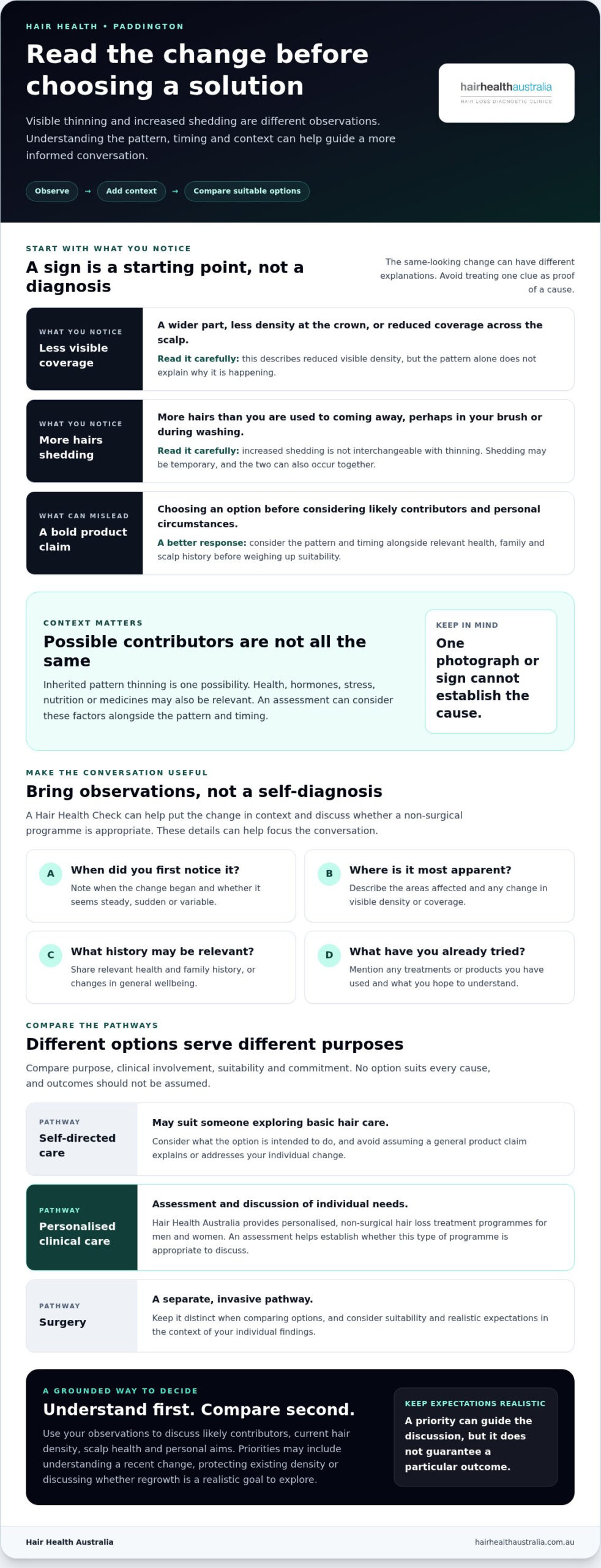
When you suddenly find clumps of hair in the shower or on your hairbrush, it is natural to feel a sense of panic. Understanding the specific sudden hair loss in women causes is the first step toward regaining control. Most rapid shedding is a condition called Acute Telogen Effluvium, which is a temporary disruption of the hair’s natural lifecycle. This is fundamentally different from Androgenetic Alopecia, which involves the gradual miniaturisation of follicles over a much longer period. Distinguishing between the two is vital for choosing the correct clinical path.

You can perform a simple pull test at home to gauge the severity of your shedding. Gently grasp about 40 to 60 hairs between your thumb and forefinger and tug firmly but gently from the base to the ends. If more than six hairs come away, it suggests you are experiencing active shedding rather than normal daily loss. While most people lose between 50 and 100 hairs a day as part of a healthy cycle, exceeding this limit significantly often points to an underlying trigger. This test provides a helpful baseline, but it cannot replace a professional Hair Health Check, where microscopic analysis can confirm the exact state of your follicles.

The Hair Growth Cycle Explained

Understanding why your hair is falling out requires a look at the three primary phases of the hair follicle. When sudden hair loss in women causes disrupt this rhythm, the results are visible within weeks.

  • Anagen (Growth): In a healthy scalp, approximately 85% to 90% of your hair is in this active phase, which typically lasts several years.
  • Telogen (Resting): This is a dormant phase lasting about three months. A sudden system shock, such as high fever, surgery, or extreme psychological stress, can prematurely force up to 30% of your hair into this phase.
  • Exogen (Shedding): This is the final stage where the hair detaches. When a large volume of hair enters Telogen at once, you see the alarming fallout roughly 90 days after the initial triggering event.

Shedding vs. Thinning: Key Indicators

Shedding, or Telogen Effluvium, is typically diffuse. This means you lose hair evenly across the entire scalp rather than in one specific spot. You’ll likely notice it most during washing or styling. Thinning is different; it usually manifests as a widening part line or a visible scalp at the crown, often without the dramatic daily hair fall associated with acute shedding.

Recognising that sudden loss is frequently a temporary reaction to a specific physiological event can provide significant peace of mind. Clinical reassurance is the first step toward stability. By identifying whether you are experiencing a temporary “shed” or the beginnings of “thinning,” we can organise a targeted plan to restore your hair’s natural density and health.

Common Triggers for Rapid Hair Fall in Women

Identifying the specific sudden hair loss in women causes requires looking back at your health timeline with clinical precision. Hair follicles are remarkably sensitive to physiological changes, yet they don’t always react immediately to a stressor. There is typically a three-month lag between a “shock” to the system and the moment the hair actually detaches from the scalp. This delay often makes it difficult for women to connect their current shedding to a past event, such as a high-fever illness, a period of intense emotional trauma, or a major surgery.

Hormonal Imbalances and Life Stages

Hormonal shifts are among the most frequent drivers of rapid thinning across different life stages. Post-partum shedding is a classic example of this biological timing. During pregnancy, high oestrogen levels keep hair in the growth phase, but the subsequent drop after birth can trigger a mass “shed” roughly twelve weeks later. Similarly, menopause and thyroid dysfunction, whether the gland is overactive or underactive, can significantly alter hair density. When androgen levels fluctuate, they can also impact the follicle’s ability to produce robust strands, leading to visible changes in volume.

Lifestyle and Nutritional Factors

Nutritional status is equally critical to maintaining a healthy growth cycle. In Australia, a significant number of women live with low ferritin (iron stores), zinc deficiencies, or insufficient Vitamin D levels, all of which are essential for follicle health. Crash dieting or rapid weight loss can starve the hair of necessary nutrients, causing the body to “switch off” non-essential functions like hair growth to preserve energy for vital organs. Chronic stress also plays a role, as elevated cortisol levels can disrupt the chemical signals that keep follicles in the active Anagen phase.

Recently, we’ve seen an increase in shedding related to high-fever illnesses and the lingering effects of “Long COVID.” The intense metabolic demand of fighting a significant infection often forces follicles into a premature resting state. If you’ve noticed a sudden change in your volume following an illness, it’s likely your body is still recovering from that internal stressor. If you’re unsure which trigger applies to you, a professional Hair Health Check can help pinpoint the exact cause through microscopic analysis.

Telogen Effluvium vs. Alopecia Areata: Spotting the Difference

While we’ve explored how internal triggers disrupt the hair cycle, the physical pattern of your hair fall is often the most reliable indicator of the underlying issue. Distinguishing between diffuse shedding and localised patches is essential, as the sudden hair loss in women causes vary significantly between these clinical presentations. Telogen Effluvium results in a general reduction of volume across the entire scalp, whereas Alopecia Areata presents as distinct, smooth, circular bald patches that can appear with alarming speed.

Other forms of loss are more mechanical or age-related. Traction Alopecia occurs when persistent tension, often from tight hairstyles or extensions, damages the follicle. We also see cases of Frontal Fibrosing Alopecia, particularly in post-menopausal women, where the hairline recedes and eyebrow hair begins to thin. Each of these conditions requires a different diagnostic approach to ensure the correct recovery path is chosen.

Identifying Autoimmune Hair Loss

Alopecia Areata is an autoimmune condition where the body’s natural defences mistakenly attack the hair follicles. This immune confusion forces follicles into a dormant state, resulting in the characteristic circular patches. The good news is that this is typically a non-scarring condition, meaning the follicles remain viable and capable of regrowth. Clinical treatments focus on stabilising the immune response and using specialised stimulation to encourage the hair to return to its active growth phase, which is far more effective than unverified home remedies.

Hairstyle and Chemical Damage

Modern styling can sometimes be a catalyst for rapid hair fall. High-tension ponytails, tight braids, and the weight of poorly applied hair extensions can lead to ‘hair extensions shock,’ where the natural hair is pulled from the root. Chemical ‘burns’ or severe scalp irritation from aggressive salon treatments can also lead to sudden shedding. Recognising the Early signs of alopecia in women is the first step in preventing long-term follicle damage. If you suspect your styling routine is the culprit, it’s vital to reduce tension immediately and seek a professional assessment to prevent permanent scarring.

The Importance of a Clinical Diagnosis in Sydney

A standard visual inspection is rarely enough to determine the complex range of sudden hair loss in women causes. While your GP is an essential first point of contact to rule out systemic illnesses, a surface-level glance cannot reveal what is happening beneath the scalp’s surface. Precision is the cornerstone of effective treatment. Without a detailed diagnostic process, you risk wasting time and money on over-the-counter products that may not address your specific biological trigger. Clinical clarity is the only way to replace anxiety with an actionable plan.

Your GP’s role is to investigate internal health through comprehensive blood tests. When you discuss your concerns, it is vital to ask for specific markers that directly impact the hair follicle. We recommend requesting tests for Ferritin (iron stores), TSH (thyroid-stimulating hormone), and Vitamin D levels. In many Australian women, these three factors are the hidden culprits behind rapid shedding. Once these systemic issues are identified or ruled out, we can focus on the health of the follicles themselves.

What is Microscopic Hair Analysis?

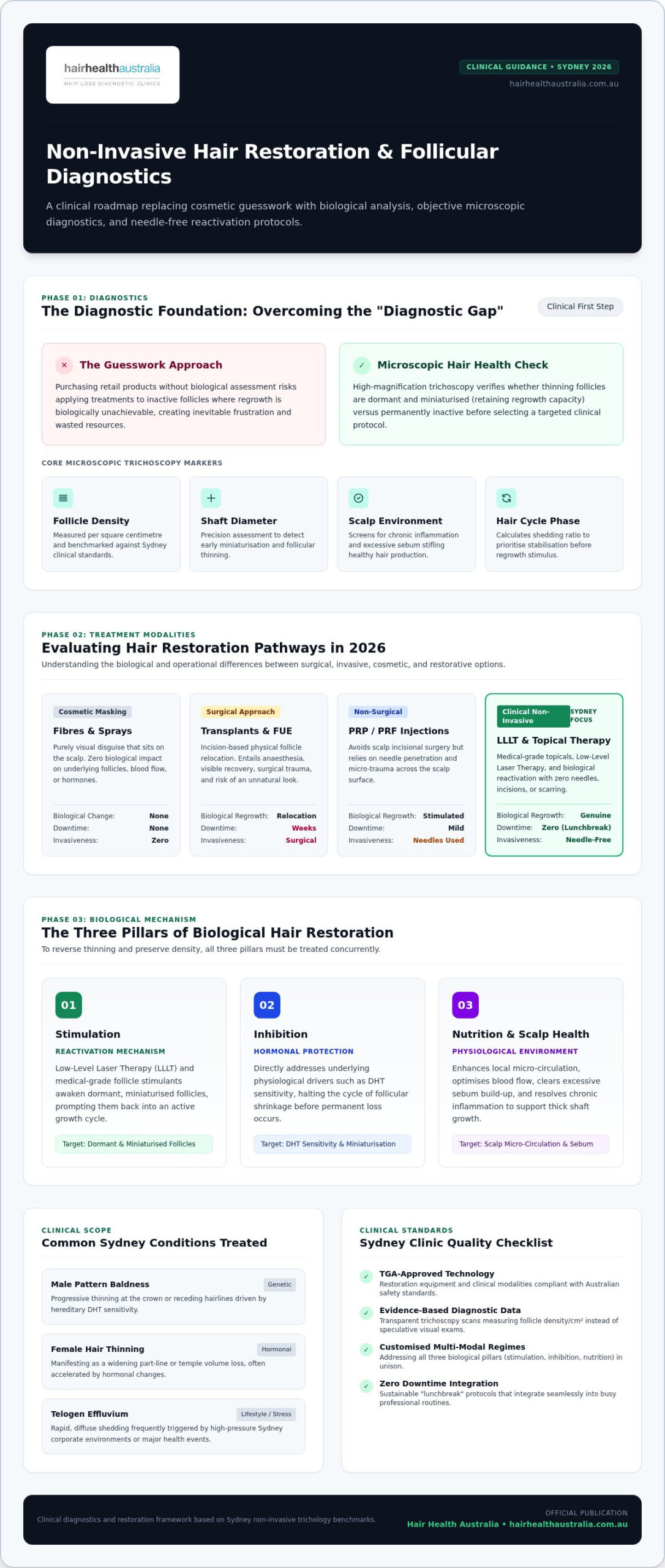
Microscopic Hair Analysis is a non-invasive diagnostic tool that allows us to evaluate follicle health with high magnification. Unlike invasive biopsies, this method provides a detailed view of the scalp environment without discomfort. We use this technology to evaluate several key factors:

  • Follicle Health: Determining if the follicle is active, dormant, or showing signs of inflammation.
  • Sebum Build-up: Identifying if excess oil is clogging the hair exit point and hindering growth.
  • Hair Shaft Diameter: Measuring the thickness of individual strands to detect early signs of miniaturisation.

Identifying miniaturisation is particularly important, as it is the primary hallmark of genetic thinning that might otherwise be masked by temporary shedding. This data-driven analysis allows us to create a personalised recovery roadmap that is unique to your scalp’s requirements.

Trichologist vs. GP: Who should you see?

The path to recovery often involves a collaborative approach. A GP is your best resource for managing systemic medical issues, such as thyroid dysfunction or severe nutritional deficiencies. However, a hair specialist is typically better equipped to handle the nuances of topical and follicular restoration. They understand the specific interaction between scalp chemistry and hair growth cycles.

To prepare for your consultation, we suggest tracking your loss patterns for at least two weeks. Note if the shedding is diffuse or concentrated in specific areas, and keep a record of any major lifestyle changes or illnesses you experienced three months prior. This timeline is invaluable for our specialists. Taking the first step toward recovery starts with professional clarity. To get a definitive answer about your situation, you can Book a Hair Health Check at our Sydney clinic.

Non-Surgical Recovery: Restoring Hair Density Without Surgery

Once you understand the specific sudden hair loss in women causes impacting your scalp, the focus shifts to a systematic restoration process. Many women first turn to supermarket shampoos or over-the-counter vitamins, but these generic products often lack the active concentrations required to penetrate the scalp and reach the follicle bulb. A clinical approach is fundamentally different. It prioritises the biological needs of your hair, using concentrated topical nutrients and non-invasive technologies to “wake up” dormant hairs that have been forced into the resting phase by physiological stress.

Effective regrowth relies on addressing both the internal and external environment of the scalp. This often involves the strategic use of DHT blockers and topical nutrients like biotin and specific amino acids, which provide the essential building blocks for new growth. Patience is a key component of any clinical programme. Because the hair growth cycle is a slow biological process, most women begin to see visible improvements in density and texture within a 3 to 6-month timeframe. This timeline aligns with the natural rhythm of the follicles as they transition from the resting phase back into active growth.

Clinical Protocols at Hair Health Australia

At Hair Health Australia, we utilise multi-therapy approaches that combine topical science with advanced scalp health techniques. These non-surgical options are particularly beneficial because they involve no downtime and no scarring, making them a safer, more accessible alternative to invasive procedures. By tailoring the protocol to your specific diagnostic results, we ensure that every step of your recovery is evidence-based and targeted. For a deeper look at the clinical options available this year, you can explore our Female hair loss treatment for women guide.

Maintaining Your Results Long-Term

Recovery doesn’t end when your hair density returns. Maintaining your results requires ongoing care to keep follicles active and resilient against future stressors. This includes making lifestyle adjustments to manage cortisol levels and ensuring your nutritional intake remains balanced to prevent future bouts of Telogen Effluvium. By addressing the root sudden hair loss in women causes and maintaining a consistent scalp health routine, you can protect your hair’s volume and health for years to come.

If you’re ready to move beyond guesswork and start a targeted recovery plan, the first step is a precise diagnostic assessment of your follicles. You can Start your journey to thicker hair with a professional scan at our Sydney clinic today.

Empowering Your Path to Hair Restoration

Identifying the specific sudden hair loss in women causes is more than a diagnostic hurdle; it’s the essential foundation for your recovery. We’ve explored how system shocks, nutritional gaps, and hormonal shifts can disrupt your hair’s natural rhythm. By moving beyond temporary fixes and investigating the biological state of your follicles, you can transition from uncertainty to a structured, evidence-based plan. Our Sydney hair loss experts provide personalised care through clinically-backed, non-surgical regrowth programs that focus on long-term scalp health.

Using specialised microscopic scanning technology, we examine your follicles at a level the naked eye can’t reach. This precise approach ensures your treatment is tailored specifically to your biological needs, avoiding the common pitfalls of generic products. You don’t have to navigate this journey alone. Book Your Comprehensive Hair Health Check in Sydney to gain the clinical clarity you deserve. Your hair’s vitality can be restored with the right professional guidance and a commitment to proven clinical standards.

Frequently Asked Questions

Can stress cause my hair to fall out suddenly?

Yes, acute psychological or physiological stress is a primary trigger for a condition called Telogen Effluvium. When the body experiences a significant shock, it can prematurely force a large percentage of follicles into the resting phase. This results in noticeable shedding roughly three months after the stressful event occurred. Managing cortisol levels through lifestyle adjustments is essential to stabilise the hair cycle and prevent recurring bouts of loss.

Will my hair grow back after sudden shedding?

In most cases of temporary shedding, the hair will grow back once the underlying trigger is addressed. Because the follicles aren’t permanently damaged in these scenarios, they remain capable of returning to the active growth phase. However, if the shedding is caused by chronic nutritional deficiencies or untreated hormonal imbalances, regrowth may be limited until those specific issues are clinically managed through a targeted recovery programme.

What is the best treatment for sudden hair loss in females?

The most effective approach involves a combination of identifying the root sudden hair loss in women causes and using clinical-grade follicle stimulation. Rather than relying on generic supermarket products, a personalised protocol using topical nutrients and non-invasive technologies provides the most reliable results. This systematic method ensures the scalp environment is optimised for recovery while directly addressing the biological reasons for the initial cycle disruption.

Is sudden hair loss a sign of a serious illness?

While often related to temporary triggers like stress or diet, rapid hair fall can sometimes signal underlying medical issues such as thyroid dysfunction or autoimmune conditions. It’s important to consult a professional if the loss is accompanied by other symptoms like fatigue or skin changes. A clinical assessment helps rule out systemic illnesses and ensures your hair restoration plan is safe and appropriate for your health profile.

How much hair loss is considered normal for women?

It is normal for women to lose between 50 and 100 hairs per day as part of a healthy growth cycle. This shedding occurs as old hairs make way for new growth in a continuous, natural process. If you notice significantly more hair on your brush or in the shower, or if your scalp becomes visible suddenly, it indicates an abnormality that requires a professional hair health check to identify the cause.

Can menopause cause sudden hair thinning?

Yes, the significant drop in oestrogen and progesterone during menopause can lead to a relative increase in androgens, which often triggers hair thinning. This hormonal shift can cause follicles to miniaturise, resulting in finer strands and reduced overall density. Early clinical intervention is vital during this life stage to support follicle health and maintain as much natural hair volume as possible through non-surgical treatments.

What vitamins should I take for sudden hair fall?

Iron (specifically ferritin), Vitamin D, and Zinc are the most critical nutrients for maintaining a robust hair cycle. Deficiencies in these areas are common sudden hair loss in women causes in Australia and can lead to prolonged shedding. However, it’s essential to have your levels checked via blood tests before starting supplements. Taking excessive amounts of certain vitamins can sometimes be counterproductive to your overall hair health.

How does a microscopic hair analysis help with diagnosis?

Microscopic analysis allows a specialist to view the scalp and follicles at high magnification to identify issues invisible to the naked eye. This technology helps detect sebum build-up, scalp inflammation, and the early stages of follicle miniaturisation. By gathering this specific data, we can differentiate between temporary shedding and permanent thinning, allowing for the creation of a precise and effective recovery roadmap tailored to your needs.

Thyroid and Hair Loss Specialist Sydney: Clinical Solutions for Hormonal Thinning

Why is your hair still thinning when your GP says your thyroid levels are finally “within range”? It’s incredibly disheartening to see your hair density diminish across your entire scalp while being told your pathology results look fine. You aren’t alone in this frustration. With over 1 million Australians diagnosed with thyroid conditions, and women being ten times more likely to be affected, the link between hormonal health and follicular vitality is a significant clinical concern. Finding a dedicated thyroid and hair loss specialist Sydney can provide the clarity that a standard five-minute consultation simply cannot offer.

We understand that “normal” blood tests don’t always tell the full story of why your hair is shedding. This article explains how thyroid imbalances specifically disrupt your hair growth cycle and how our clinical, non-surgical methods help you restore the density you’ve lost. We’ll examine the science behind hormonal shedding and the systematic diagnostic approach used to stop the hair fall and re-energise your follicles. You will learn how to move beyond the anxiety of permanent loss and start a clear, evidence-based path toward recovery.

Key Takeaways

  • Understand how T3 and T4 hormones regulate your hair’s cellular metabolism and why an imbalance can push your follicles into a premature resting phase.
  • Recognise the specific differences between hypothyroid-related brittleness and hyperthyroid-related global thinning to identify your unique hair profile.
  • Learn why stabilised blood tests don’t always stop shedding and how a thyroid and hair loss specialist Sydney identifies secondary triggers, such as Telogen Effluvium.
  • Discover how microscopic hair analysis provides a definitive diagnosis by measuring follicle miniaturisation and active shedding levels with clinical precision.
  • Explore non-surgical restoration methods that use clinical-grade follicle stimulators to bypass systemic hormonal issues and support hair density.

The Connection Between Thyroid Health and Hair Loss in Sydney

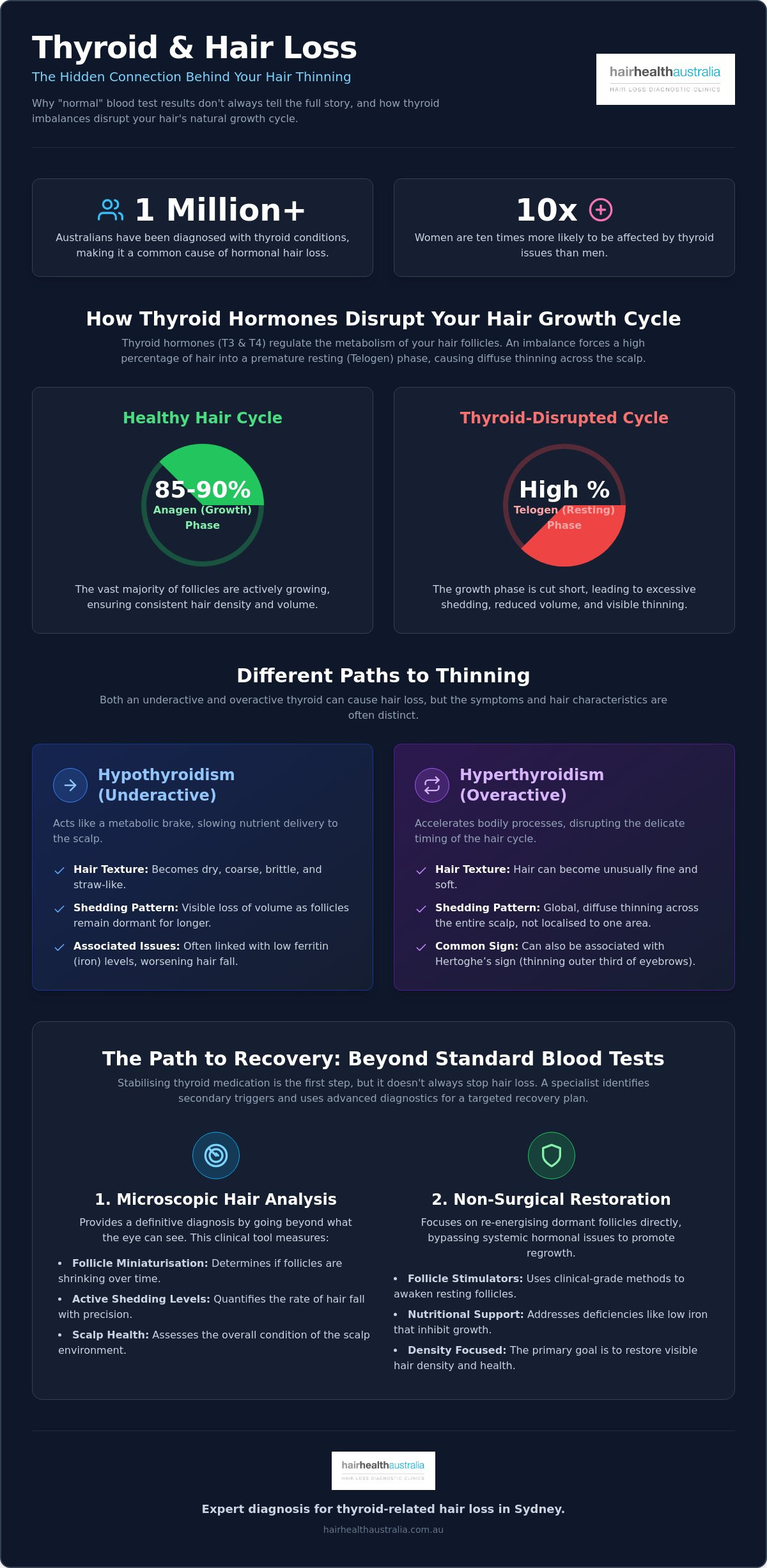
Your thyroid gland produces triiodothyronine (T3) and thyroxine (T4), which act as a metabolic thermostat for almost every cell in your body. This includes the rapidly dividing cells within your hair follicles. When these hormone levels fluctuate, the cellular metabolism of the follicle slows down, often leading to The Connection Between Thyroid Health and Hair Loss. In the Sydney metropolitan area, where over 1 million Australians manage diagnosed thyroid conditions, this hormonal disruption is a frequent cause of diffuse thinning. Finding a thyroid and hair loss specialist Sydney is often the first step for those who see their hair health declining despite medical management. Unlike genetic balding, thyroid-related loss often involves a high percentage of hair shifting into the telogen (resting) phase. This results in a noticeable reduction in volume across the entire scalp rather than just at the temples or crown.

How Hormones Control Your Hair Growth Cycle

Every hair on your head follows a specific three-phase cycle: anagen (growth), catagen (transition), and telogen (resting). Under normal conditions, about 85 to 90 percent of your hair is in the growth phase at any given time. However, thyroid imbalances disrupt this delicate timing. If your T3 and T4 levels aren’t optimal, your body may prematurely terminate the growth phase. This triggers a condition known as diffuse hair loss, where the hair becomes thin and sparse. It’s a physiological response where your system prioritises essential metabolic functions over non-essential processes like hair production. Without the right hormonal signals, follicles remain in the resting phase for too long, preventing new strands from replacing those that have naturally shed.

When to See a Specialist in Sydney

Identifying the early signs of hormonal thinning is vital for successful restoration. You might notice a widening part line, an excessive amount of hair in the shower drain, or a change in the texture of your strands. In many cases, the hair becomes brittle, dry, or unusually fine. While a GP focuses on whether your hormone levels are within a safe clinical range, they may not address the specific follicular impact. This is where a dedicated thyroid and hair loss specialist Sydney becomes essential. We look beyond the standard pathology to assess the health of the scalp and the rate of active shedding. If you’ve noticed these changes, booking a hair health check is the first step toward understanding the difference between temporary shedding and chronic miniaturisation. Early intervention allows us to implement clinical solutions before the follicle loses its ability to produce healthy hair.

Hypothyroidism vs Hyperthyroidism: Different Paths to Thinning

While both conditions involve the thyroid gland, they manifest in the hair and scalp in distinct ways. Consulting a thyroid and hair loss specialist Sydney allows for a precise identification of these symptoms, which are often overlooked in a standard medical check-up. One significant clinical indicator we look for is Hertoghe’s sign, which is the thinning or loss of the outer third of the eyebrows. While both an overactive and underactive thyroid lead to a disrupted growth cycle, the physical characteristics of the hair itself can tell us a great deal about the underlying hormonal state.

The Impact of an Underactive Thyroid (Hypothyroidism)

Hypothyroidism acts like a metabolic brake on your body. When the thyroid is underactive, the delivery of oxygen and essential nutrients to the scalp slows down significantly. This lack of “fuel” causes the hair to become dry, coarse, and brittle. Many of our Sydney patients describe their hair as feeling straw-like or prone to snapping mid-strand. Because the metabolism is sluggish, the hair follicles remain in the resting phase for extended periods, leading to a visible loss of volume. In many cases, we also find a strong association with low ferritin (iron) levels, which further complicates the shedding. This explains Why Thyroid Medication Doesn’t Always Stop Hair Loss immediately; the follicles require time and specific nutritional support to re-enter the growth phase. If you’ve noticed these specific texture changes, a professional hair health check can determine the extent of the disruption.

The Impact of an Overactive Thyroid (Hyperthyroidism)

Hyperthyroidism is the metabolic opposite, acting like an engine running too hot. The accelerated metabolism can actually “burn through” the hair growth phase too quickly. Instead of the hair growing for several years, the cycle is cut short, forcing the hair into the shedding phase prematurely. The texture change here is often sudden. Patients frequently report that their hair has become baby-fine almost overnight. This global thinning isn’t confined to one area but occurs across the entire scalp. Managing the hair fall associated with hyperthyroidism also involves addressing the systemic stress response that an overactive thyroid creates. Our role as a thyroid and hair loss specialist Sydney is to bridge the gap between your endocrine management and your follicular recovery, ensuring that as your hormones stabilise, your hair density is actively supported through clinical intervention.

Why Thyroid Medication Doesn’t Always Stop Hair Loss

“My TSH is normal, so why is my hair still falling out?” This is the single most frequent frustration we encounter. While your GP focuses on your systemic hormonal balance, the hair follicles operate on a significantly delayed timeline. It isn’t uncommon for shedding to persist even after your pathology results indicate you’re back in the optimal range. This discrepancy occurs because the hair growth cycle is sensitive to any physiological shift. Even a positive change, like starting treatment, can be perceived as a stressor by the body.

As a thyroid and hair loss specialist Sydney, we work with many patients who feel let down by their medication. The British Thyroid Foundation explains thyroid-related hair loss as a process that can sometimes appear to start or worsen after treatment begins. This is largely due to the “dormancy factor.” If a follicle has been starved of metabolic energy for too long, it doesn’t simply switch back on the moment T3 and T4 levels stabilise. It can take six to nine months for the follicles to recalibrate. In some cases, they remain stuck in the resting phase indefinitely until they receive targeted, clinical stimulation.

The Medication Trigger: Levothyroxine and Initial Shedding

When you start a medication like Levothyroxine, your body undergoes a systemic shift. This can trigger a temporary “shock” shed known as Telogen Effluvium. It’s important to distinguish this from ongoing thinning. A medication-induced shed is usually a sign that your system is recalibrating to the new hormone levels. While it’s alarming to see more hair in the brush, it’s often a precursor to eventual recovery. However, if the shedding continues beyond three months, it’s a signal that other factors are at play. It’s vital to stay the course with your prescribed treatment while seeking specialised hair support.

Nutritional Gaps: The Ferritin and Zinc Connection

Thyroid disorders often go hand-in-hand with nutritional deficiencies that are critical for hair health. Many Sydney patients present with low ferritin (iron stores), even if their haemoglobin is normal. Without adequate ferritin, your follicles cannot sustain a healthy growth phase. Similarly, the Australian diet can be low in iodine, selenium, and zinc, all of which are essential for thyroid conversion and hair production. Taking a basic supplement rarely fixes the problem. Because the body prioritises vital organs, these nutrients often don’t reach the scalp in high enough concentrations. This is why a professional hair health check is necessary to identify these gaps and implement direct follicular support.

To bridge these nutritional gaps effectively, Zenutri Personalised Vitamins provides tailored supplement plans that focus on metabolic wellness, ensuring your body receives the specific nutrients needed to support follicular recovery.

Thyroid and Hair Loss Specialist Sydney: Clinical Solutions for Hormonal Thinning

Clinical Diagnosis: Microscopic Hair Analysis in Sydney

Visual inspection alone is rarely sufficient to diagnose the complexities of hormonal thinning. While a GP might observe a general loss of volume, they often lack the specialised equipment required to see what is happening at a cellular level. Microscopic hair analysis is the gold standard for non-surgical diagnosis, providing a clear window into the health of your follicles. As a thyroid and hair loss specialist Sydney, we use this technology to move beyond guesswork and identify the exact stage of your hair growth cycle. This allows us to distinguish between active shedding caused by a thyroid flare and the long-term miniaturisation that suggests a secondary issue like Female Pattern Hair Loss (FPHL).

What Happens During Your Sydney Hair Scan?

The diagnostic process begins with high-magnification digital imaging of your scalp and hair bulbs. We examine the diameter of individual strands across different zones of the head to identify patterns of thinning. By calculating your Anagen to Telogen ratio, we determine exactly what percentage of your hair is currently in the resting phase. This data is vital for thyroid patients. It confirms whether your hormone replacement therapy is effectively supporting hair production or if the follicles remain stuck in a dormant state. Finally, we assess the scalp environment for inflammation or sebum blockages that may be hindering new growth.

Creating a Targeted Recovery Protocol

Once we have gathered your scan data, we develop a customised restoration plan. This is not a one-size-fits-all approach. We use the results to set realistic expectations for your regrowth, which often depends on how long the follicles have been inactive. Because thyroid-related thinning can overlap with genetic patterns, this analysis ensures we are treating the correct underlying cause. We track your progress with follow-up scans every three to four months. This allows us to adjust the protocol as your hair density improves and your system recalibrates.

If you are tired of being told your hair looks “normal” when you know it is losing density, it is time for a professional hair health check at our Sydney clinic. Our clinical team provides the detailed analysis you need to stop the shedding and begin the recovery process with confidence.

Non-Surgical Hair Restoration for Thyroid Patients

Restoring hair density while managing a thyroid condition requires a targeted, multi-therapeutic approach. While your medical practitioner focuses on balancing your systemic hormone levels, our role as a thyroid and hair loss specialist Sydney is to address the local environment of the hair follicle. We specialise in clinical, non-invasive programs that re-energise dormant follicles without adding further stress to your endocrine system. By positioning Hair Health Australia as a leading non-surgical hair loss clinic Sydney, we provide patients with evidence-based alternatives to surgery or aggressive chemical treatments that may not be suitable for those with hormonal sensitivities.

Our clinical-grade follicle stimulators are designed to work directly at the root, bypassing the systemic metabolic hurdles caused by thyroid fluctuations. We often incorporate low-level laser therapy (LLLT) into our recovery protocols. This technology uses specific wavelengths of light to boost mitochondrial activity within the hair cells. By increasing the energy production (ATP) at a cellular level, we can effectively “wake up” follicles that have been stuck in the resting phase due to a sluggish metabolism. This systematic approach ensures that every strand has the best possible chance of reaching its full growth potential.

Stimulating Dormant Follicles

The primary challenge for thyroid patients is the “kickstarting” of follicles that have remained inactive for months or even years. Over-the-counter products often lack the concentration or delivery mechanisms required to penetrate deep enough into the scalp to make a clinical difference. Our professional protocols are customised to your specific hair health check results, ensuring the treatment is appropriate for your level of thinning. We prioritise non-invasive methods because they don’t interfere with your thyroid medication or cause systemic side effects. This allows you to focus on your internal health while we work on restoring your external confidence.

Maintaining Scalp Health for Long-Term Growth

Thyroid imbalances frequently manifest as scalp issues, including extreme dryness, itchiness, or persistent dandruff. These conditions create a poor environment for hair growth. Think of your scalp as the soil; if the soil is dry and depleted, the seed cannot thrive. We address these concerns through specialised scalp treatments that restore the natural pH balance and clear away sebum blockages. A personalised home-care routine is then established to support your in-clinic sessions. This ensures your scalp remains healthy and receptive to stimulation, providing a stable foundation for long-term hair density and preventing future shedding episodes.

Taking the first step toward recovery is often the most difficult part of the journey. If you are ready to move beyond the frustration of hormonal thinning, a consultation with a thyroid and hair loss specialist Sydney can provide the clinical path forward you’ve been looking for.

Restore Your Hair Density with Clinical Precision

Managing a thyroid condition is a complex journey, but your hair health doesn’t have to be left to chance. We’ve explored how hormonal imbalances disrupt the metabolic thermostat of your follicles and why standard medication isn’t always enough to restart the growth cycle. Achieving results requires a dual approach that combines internal medical management with external clinical stimulation. By choosing a thyroid and hair loss specialist Sydney, you gain access to the diagnostic tools and evidence-based treatments necessary to move beyond diffuse thinning.

Our team brings over 15 years of clinical experience in Sydney to help you navigate this process with clarity. We use specialised microscopic diagnostic technology to verify the state of your follicles, ensuring your recovery program is tailored to your specific needs. These non-surgical, evidence-based regrowth programs provide a systematic path toward restoration without the need for invasive procedures. It’s time to stop feeling frustrated by blood tests that don’t reflect your reality and start focusing on visible results.

Book Your Microscopic Hair Analysis in Sydney Today

Regaining your hair density is a gradual process, but with the right clinical support, it is entirely possible. We look forward to helping you restore your confidence and your hair health.

Frequently Asked Questions

Can thyroid hair loss be reversed?

Yes, thyroid-related hair loss is generally reversible once the underlying hormonal trigger is managed and the growth cycle is re-established. Success depends on the duration of the imbalance and the current health of your follicles. Seeking a thyroid and hair loss specialist Sydney ensures you receive the targeted clinical stimulation needed to move follicles out of the resting phase and back into active growth.

How long does it take for hair to grow back after thyroid levels are normal?

You can typically expect to see initial regrowth within six to nine months after your hormone levels have stabilised. This delay occurs because hair follicles require a significant period to recalibrate their metabolic activity after a disruption. It’s common to experience a “lag phase” where blood tests appear normal but hair density hasn’t yet improved, requiring clinical patience and consistent scalp support.

Is it my thyroid or just ageing causing my hair to thin?

Thyroid-related loss is typically diffuse, affecting the entire scalp globally, whereas ageing or genetic thinning usually follows a specific pattern like a receding hairline or thinning crown. Microscopic analysis is the most accurate way to distinguish between these causes. A specialist can measure the diameter of your strands to determine if you’re experiencing hormonal shedding or age-related miniaturisation.

Does Levothyroxine cause hair loss or help it?

Levothyroxine is designed to restore your metabolism, which ultimately supports hair growth, but starting the medication can trigger a temporary “shock” shed. This is a form of Telogen Effluvium that usually resolves as your body adjusts to the new hormone levels. It’s vital to continue your prescribed dosage while using clinical scalp treatments to manage this transition and protect your existing density.

What is the best shampoo for thyroid hair loss in Australia?

There is no shampoo that can fix an internal hormonal imbalance, but you should use pH-balanced, sulfate-free formulas that support a healthy scalp environment. In Australia, clinical-grade cleansers that remove sebum blockages without stripping natural oils are preferred. These products prepare the scalp for the application of active follicle stimulators, which are the primary drivers of actual regrowth.

Should I see a trichologist or an endocrinologist for my hair loss?

You should ideally see both for a comprehensive recovery plan. An endocrinologist is essential for managing your thyroid gland and systemic blood chemistry, while a hair specialist focuses on the physical recovery of the follicles and scalp. This collaborative care ensures that your internal health and external hair density are addressed simultaneously for the best possible outcome.

For those interested in a broader perspective on functional medicine and longevity, learn more about Emagene Life and their specialised approach to biological healthspan.

Can biotin help with thyroid-related hair thinning?

Biotin may support hair strength if you have a pre-existing deficiency, but it won’t correct the underlying hormonal cause of thyroid thinning. Crucially, high doses of biotin can interfere with the accuracy of your thyroid blood tests, potentially leading to incorrect medication adjustments. Always disclose your supplement intake to your thyroid and hair loss specialist Sydney before undergoing any pathology work.

Why is my hair texture changing along with the thinning?

Your hair texture changes because thyroid hormones directly influence the production of keratin, the protein that forms each strand. An underactive thyroid often results in dry, brittle strands that feel like straw, while an overactive thyroid can make hair feel unusually fine and soft. These structural changes are often the first clinical signs that your cellular metabolism is fluctuating and requires attention.

Choosing a Non-Surgical Hair Loss Clinic in Sydney: The 2026 Essential Checklist

In 2026, the most effective non-surgical hair loss clinic in Sydney isn’t necessarily the one with the flashiest marketing, but the one that prioritises precise microscopic diagnostics over a polished sales pitch. With over 50% of Australian men and nearly half of all women experiencing thinning, the search for a solution often feels like a gamble between genuine medical science and expensive “snake oil” treatments. You’re likely looking for a professional environment where your concerns are met with clinical expertise rather than high-pressure retail tactics.

It’s understandable to feel cautious about where you place your trust, especially when the line between cosmetic cover-ups and restorative therapy feels increasingly thin. We’ve developed this essential checklist to help you navigate the local clinical landscape with absolute confidence. You’ll learn how to identify evidence-based treatment plans that focus on long-term hair density and scalp health, ensuring your investment leads to visible results.

This guide provides a structured overview of the rigorous standards you should expect from a modern practitioner, from TGA-compliant regenerative therapies to the necessity of a real-time consultation. We will explore how to verify clinical credentials and what a truly customised regrowth plan looks like in a professional Sydney setting.

Key Takeaways

  • Understand the critical distinction between cosmetic hair replacement systems and clinical programs designed to stimulate natural hair regrowth.
  • Discover why a reputable non-surgical hair loss clinic in Sydney must utilise microscopic scalp analysis to accurately diagnose your condition before starting any therapy.
  • Learn how multi-modal treatment protocols and DHT blockers work together to stabilise thinning and improve overall hair density.
  • Identify the essential standards for clinical privacy and location accessibility that ensure your treatment fits seamlessly into your lifestyle.
  • Equip yourself with a professional checklist to filter out ineffective options and choose a specialist grounded in evidence-based medical science.

Defining the Clinical Non-Surgical Path in Sydney

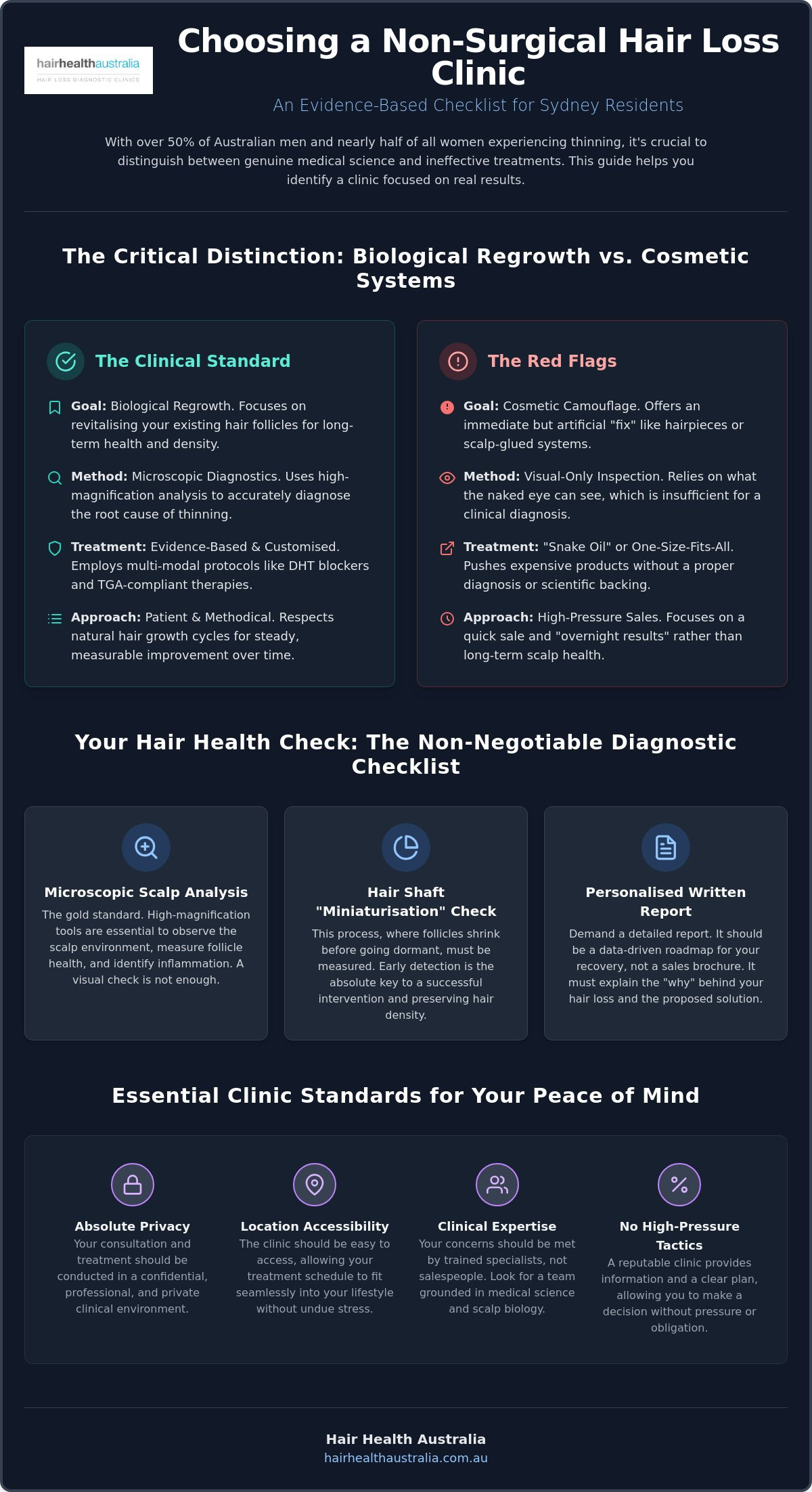
The term “non-surgical” is frequently used as a broad catch-all in the hair restoration industry, leading to significant confusion for those seeking help. In a crowded market like Sydney, it’s vital to distinguish between cosmetic camouflage and biological restoration. While some providers use the term to describe hairpieces or “systems” that are glued to the scalp, a true clinical non-surgical hair loss clinic Sydney focuses on the physiological health of your existing follicles. In 2026, the standard of care has shifted toward data-driven protocols that prioritise the preservation of your natural hair.

Choosing a clinical path means opting for science over aesthetics. It requires a patient, methodical approach that respects the natural growth cycles of human hair. You shouldn’t expect overnight results; instead, you should look for a steady, measurable improvement in hair shaft diameter and overall scalp coverage. This focus on biological reality is what builds lasting confidence and avoids the “snake oil” traps that often plague the industry. Finding a reputable non-surgical hair loss clinic Sydney requires looking beyond surface-level marketing to see if a provider understands the complex biology of the scalp.

Biological Regrowth vs. Cosmetic Systems

Clinical regrowth programs aim to revitalise the follicles you still have. This approach addresses the underlying causes of Pattern hair loss by using evidence-based triggers to move follicles from a resting phase back into an active growth phase. Unlike cosmetic systems, which offer an immediate but artificial “fix,” biological treatments maintain your natural hair texture, colour, and movement. It’s a long-term investment in your scalp’s health, ensuring you aren’t just covering up the problem.

The Shift Away from Hair Transplant Surgery

Many Sydney residents are increasingly moving away from invasive surgical procedures. While transplants can be effective, they often involve significant downtime, potential scarring, and the risk that the non-transplanted hair will continue to thin around the new grafts. Clinical non-surgical options serve as a critical first line of defence. By starting a professional protocol early, you can stabilise thinning and improve density before follicles become permanently dormant. This proactive approach is why a thorough hair health check is the essential first step for anyone noticing the early signs of recession or thinning.

For those who may not be candidates for surgery or who prefer a non-invasive way to simulate the appearance of a full head of hair, you can learn more about Scalp Micropigmentation Treatments and Training as a versatile solution for various stages of hair loss.

The Diagnostic Checklist: What Your Sydney Hair Health Check Must Include

A visual inspection by a barber or hairstylist is often the first time someone hears they are thinning, but this is entirely insufficient for a clinical diagnosis. A reputable non-surgical hair loss clinic Sydney must go beyond what the naked eye can see. While a stylist identifies a receding hairline, a specialist identifies the physiological “why” behind it. This distinction is vital because several conditions can mimic Patterned hair loss, including nutritional deficiencies or scalp-specific inflammation. Without a clinical assessment, you risk spending money on a treatment that doesn’t target the actual cause of your shedding.

Every patient should receive a personalised report. This document shouldn’t just be a brochure; it should be a roadmap detailing your specific recovery path based on hard data. If a clinic cannot show you the current state of your follicles and explain the specific triggers they intend to use, they aren’t providing a medical-grade service. Taking the time to undergo a proper diagnostic assessment ensures your treatment plan is built on facts rather than guesswork.

Microscopic Hair and Scalp Analysis

The gold standard in 2026 is microscopic scanning. By using high-magnification tools, we can observe the scalp environment at a granular level. This allows us to measure hair shaft diameter accurately, identifying “miniaturisation”, the process where follicles shrink before they stop producing hair altogether. Detecting this early is the key to successful intervention. If you want to see exactly what is happening beneath the surface, a professional hair health check is the only way to get a definitive baseline for your treatment.

Professional Consultation Standards

Your specialist’s qualifications matter. You should be speaking with a qualified trichologist or a hair health expert, not a salesperson. A professional consultation provides a straight-talking assessment of your regrowth potential, even if that means telling you that a certain treatment won’t work for your specific stage of loss. Understanding the difference between a Trichologist vs Dermatologist for Hair Loss can help you decide which path is right for your needs. A dedicated non-surgical hair loss clinic Sydney will always prioritise this educational, diagnostic phase over a quick sale.

To ensure you are heading in the right direction, consider scheduling a comprehensive hair health check before committing to any long-term program.

Evaluating Treatment Protocols: A Clinical Framework

A successful clinical framework relies on a multi-modal approach. Relying on a single treatment, such as a basic lotion or an isolated supplement, rarely addresses the complex biological triggers of thinning. A professional non-surgical hair loss clinic Sydney should offer integrated programs that combine different regrowth triggers simultaneously. This might include clinical-grade topicals, targeted nutritional support, and advanced scalp therapies designed to work in synergy. This layered strategy ensures that while one component stabilises loss, another actively stimulates the follicle, leading to more robust results than any standalone product could achieve.

The quality of these components is equally significant. There is a vast difference between over-the-counter kits found in a local chemist and the clinical-grade formulations used in a specialist setting. Medical-grade topicals often feature higher concentrations of active ingredients and advanced delivery systems that allow for better penetration into the scalp. Without this level of precision, the treatment may never reach the depth required to influence the hair bulb. Consistency and regular in-clinic monitoring are the final pieces of the puzzle, ensuring that your progress is tracked and your protocol is adjusted as your scalp health improves. For a detailed breakdown of which bio-active ingredients and TGA-listed therapies are clinically validated, the best hair regrowth treatment Australia 2026 clinical reference guide provides an evidence-based overview of current Australian standards.

The Role of DHT Management

Managing dihydrotestosterone (DHT) is the cornerstone of most successful recovery plans. Clinical programs focus on neutralising this hormone’s impact to prevent further follicle degradation. While topical blockers are effective, they are most powerful when paired with internal health strategies that support the body’s natural balance. By 2026, clinical research confirms that dihydrotestosterone (DHT) binds to susceptible androgen receptors in the scalp, causing the progressive miniaturisation of hair follicles and shortening the anagen growth phase. Understanding these Patterned hair loss treatments is essential for anyone serious about long-term hair preservation.

Personalised Regrowth Programs

Generic “one-size-fits-all” kits are often ineffective because they ignore the unique biology of your scalp. A bespoke program is dynamic; it evolves based on your microscopic progress. If your follicle density improves or your scalp health changes, your protocol should be adjusted accordingly. This level of customisation is only possible through regular in-clinic monitoring, which allows a specialist to track your progress and fine-tune your treatment for maximum efficacy. You can learn more about these Clinical Approaches to Restoring Hair Health to see how a structured program differs from a retail-based solution. Consistent oversight at a non-surgical hair loss clinic Sydney ensures you stay on the right path and provides the accountability needed for biological regrowth to occur.

Choosing a Non-Surgical Hair Loss Clinic in Sydney: The 2026 Essential Checklist

Sydney Clinic Standards: Privacy, Location, and Care

The choice of a non-surgical hair loss clinic Sydney involves more than just evaluating treatment protocols. The physical environment and the operational standards of the facility play a significant role in your long-term success. Hair restoration is a journey that requires regular visits, making the location and the level of professional care paramount. Whether you choose a clinic in the Sydney CBD or an accessible suburban centre, the facility should facilitate a seamless integration of treatment into your weekly routine. High-quality care means you never feel like just another number in a high-volume retail chain.

Accountability is another critical factor to consider. Local, Australian-owned clinics often provide a higher standard of personalised care compared to large international franchises. In a local setting, your specialist is directly accountable for your results and is more likely to provide a stable, long-term relationship. This continuity is essential for tracking progress over months and years. It ensures your history is well-documented and your protocol is managed by someone who truly understands your specific hair profile and previous responses to therapy.

Discretion and Professionalism

Privacy is a primary concern for many individuals seeking hair restoration. A professional clinic should offer private waiting areas and individual treatment rooms to ensure your journey remains confidential. Beyond physical walls, professionalism extends to how your data is handled. Ensure the clinic uses medical-grade security for your progress photos and personal records. A calm, empathetic environment allows you to discuss your concerns openly, which is a vital part of the therapeutic process. You should feel comfortable and respected from the moment you walk through the door.

Ongoing Monitoring and Support

Successful biological regrowth depends on more than just the initial prescription. It requires active, ongoing monitoring. Your chosen non-surgical hair loss clinic Sydney should offer regular follow-up scans to track changes in follicle density and hair shaft diameter. These sessions allow for the objective measurement of your progress, replacing subjective “looking in the mirror” assessments with hard data. Having a dedicated specialist who knows your history makes it easier to stay compliant with your program, as they can provide the necessary adjustments and encouragement at every stage of your recovery.

To experience this level of professional care firsthand, you can book a comprehensive hair health check at our specialised Sydney facility.

Making the Decision: Why Hair Health Australia is the Logical Choice

Deciding on a treatment path is a significant step toward reclaiming your confidence. At Hair Health Australia, we’ve designed our Sydney clinic to be the definitive answer for those seeking medical-grade restoration without the risks of surgery. Our commitment to non-surgical excellence means every protocol we develop is rooted in the latest clinical data. By choosing a dedicated non-surgical hair loss clinic Sydney, you’re ensuring that your treatment is managed by specialists who focus exclusively on biological regrowth and follicle preservation.

Our methodology avoids the “one-size-fits-all” approach that often leads to disappointment. We integrate advanced microscopic diagnostics with bespoke therapy, ensuring that your program is as unique as your DNA. This 100% non-invasive focus means you can achieve restored hair density without the downtime, scarring, or significant financial outlay associated with hair transplant surgery. It’s a systematic, evidence-based journey that prioritises the long-term health of your scalp over temporary cosmetic fixes.

Our Boutique Clinical Approach

With over 15 years of experience in the Australian market, we understand the specific concerns and environmental factors that affect Sydney residents. We don’t rely on hyperbolic marketing; instead, we rely on measurable results. We prioritise transparency by providing realistic, science-backed expectations based on the current biological state of your hair follicles. This “straight-talking” honesty is the foundation of the trust we build with every patient, ensuring you feel empowered and informed at every stage of your treatment.

Ready to Restore Your Confidence?

The first step toward thicker, healthier hair is an accurate diagnosis. Preparing for your visit is simple; we recommend coming in with your hair in its natural state and a clear list of any previous treatments you’ve tried. During your initial consultation at our Sydney centre, you’ll undergo a professional scan that reveals the hidden health of your scalp. It’s time to replace uncertainty with a clear, actionable plan. You can take that first step today by booking your comprehensive hair health check and starting your personalised journey toward regrowth.

Secure Your Hair’s Future with Clinical Precision

Navigating the restoration landscape requires moving past marketing hype and focusing on verifiable scalp health. By prioritising microscopic diagnostics and multi-modal protocols, you ensure your treatment is grounded in biological reality rather than cosmetic guesswork. Finding a reliable non-surgical hair loss clinic Sydney means choosing a partner who values transparency and provides a clear roadmap for your specific condition. This approach replaces uncertainty with a structured, data-driven path toward restoration.

Since 2009, Hair Health Australia has maintained a specialised non-surgical focus, helping Australians stabilise thinning and restore density through evidence-based care. Our assessments include Advanced Microscopic Hair Analysis to identify the exact state of your follicles, allowing us to build personalised programs designed specifically for Australian conditions. You don’t have to navigate this journey alone; professional, science-backed help is ready to guide you back to confidence with a plan tailored to your unique needs.

Book Your Comprehensive Hair Health Check in Sydney Today and take a proactive step toward a denser, healthier head of hair.

Frequently Asked Questions

Is a non-surgical hair loss clinic as effective as a hair transplant?

Non-surgical treatments are often more effective for stabilisation and early-stage thinning than surgery. While a transplant relocates hair to a new area, it doesn’t address the underlying biological triggers that cause your remaining hair to thin. A professional non-surgical hair loss clinic Sydney focuses on revitalising your natural follicles, which is an essential step even if you eventually consider invasive procedures.

How long does it take to see results from a non-surgical program in Sydney?

Patience is required because hair grows in slow, methodical cycles. You’ll typically see a reduction in excessive shedding within the first three months of a clinical program. Visible improvements in hair density and shaft diameter generally become apparent between six and twelve months, provided you remain consistent with your prescribed protocol.

What happens during a Microscopic Hair Analysis at a Sydney clinic?

A Microscopic Hair Analysis involves using a high-definition digital lens to examine your scalp at up to 200x magnification. This allows the specialist to identify miniaturised follicles that aren’t visible to the naked eye during a standard consultation. You’ll receive a clear baseline of your current follicle density and scalp health to track your progress with clinical accuracy.

Are non-surgical treatments for hair loss permanent?

Results are generally maintained as long as the treatment triggers remain active. Because conditions like androgenetic alopecia are progressive, stopping a clinical program may allow the natural thinning process to resume over time. Long-term success usually involves a transition to a simplified maintenance phase once your initial regrowth goals have been achieved.

Can women receive treatment at a non-surgical hair loss clinic in Sydney?

Yes, female hair loss treatment is a specialised area of focus at our centre. Women often experience different thinning patterns and hormonal triggers than men, which requires a more nuanced diagnostic approach. Our clinical programs are tailored to address these specific biological needs, focusing on restoring volume and improving overall hair quality.

Do I need a referral from a GP to visit a hair loss specialist?

You don’t need a GP referral to book an assessment at our non-surgical hair loss clinic Sydney. You can schedule a consultation directly with our specialists to begin your diagnostic process. If our analysis suggests an underlying medical issue, we will recommend you consult with your doctor for further blood tests or systemic investigation.

Are the treatments used at Hair Health Australia TGA-approved or clinically backed?

All protocols at Hair Health Australia are grounded in proven clinical standards and utilise evidence-based methodologies. We ensure that any therapeutic devices or active ingredients used in our clinic comply with relevant Australian regulatory standards. Our focus remains on delivering safe, objective results through a systematic and professional approach to care. For a comprehensive overview of which hair regrowth treatment Australia options meet current TGA regulatory standards, our 2026 clinical reference guide outlines the key distinctions between cosmetic products and evidence-backed therapeutic goods.

What is the cost difference between surgery and a clinical regrowth program?

Clinical regrowth programs typically offer a more accessible entry point compared to the high upfront costs of surgical transplants. While surgery involves a significant one-off expense and potential costs for follow-up procedures, non-surgical therapy is structured as a manageable, ongoing investment in your biological hair health and follicle preservation.