Choosing a Hair Restoration Clinic: The 2026 Australian Guide to Clinical Regrowth

What if the secret to restoring your hair density isn’t found on a chemist shelf, but under a microscope? For many Australians, the journey toward a fuller head of hair is often paved with expensive, ineffective topical treatments and the looming anxiety of invasive surgery. It’s exhausting to invest your hope and hard-earned A$ into generic products that fail to deliver visible results. When you visit a professional hair regrowth clinic, the focus shifts from marketing hype to clinical precision, replacing uncertainty with a grounded, scientific approach.

You deserve a clear, evidence-based roadmap that addresses your specific scalp biology rather than a one-size-fits-all solution. This guide explores how to identify a reputable hair restoration clinic that prioritises non-surgical, diagnostic-led care. We’ll examine why microscopic analysis is the essential first step in reversing thinning and how a personalised treatment plan can help you regain your self-esteem without the risk of scarring or “pluggy” surgical outcomes. By the end of this article, you’ll understand exactly how to navigate the 2026 clinical landscape to achieve lasting hair density and professional scalp health.

Key Takeaways

  • Learn why microscopic scalp analysis is the non-negotiable first step to identifying the biological cause of thinning before committing to any treatment.
  • Discover how to vet a reputable hair regrowth clinic by evaluating their diagnostic technology and their focus on evidence-based, non-invasive therapies.
  • Understand the practical differences between surgical transplants and non-surgical programmes, including the realities of recovery, potential scarring, and long-term maintenance.
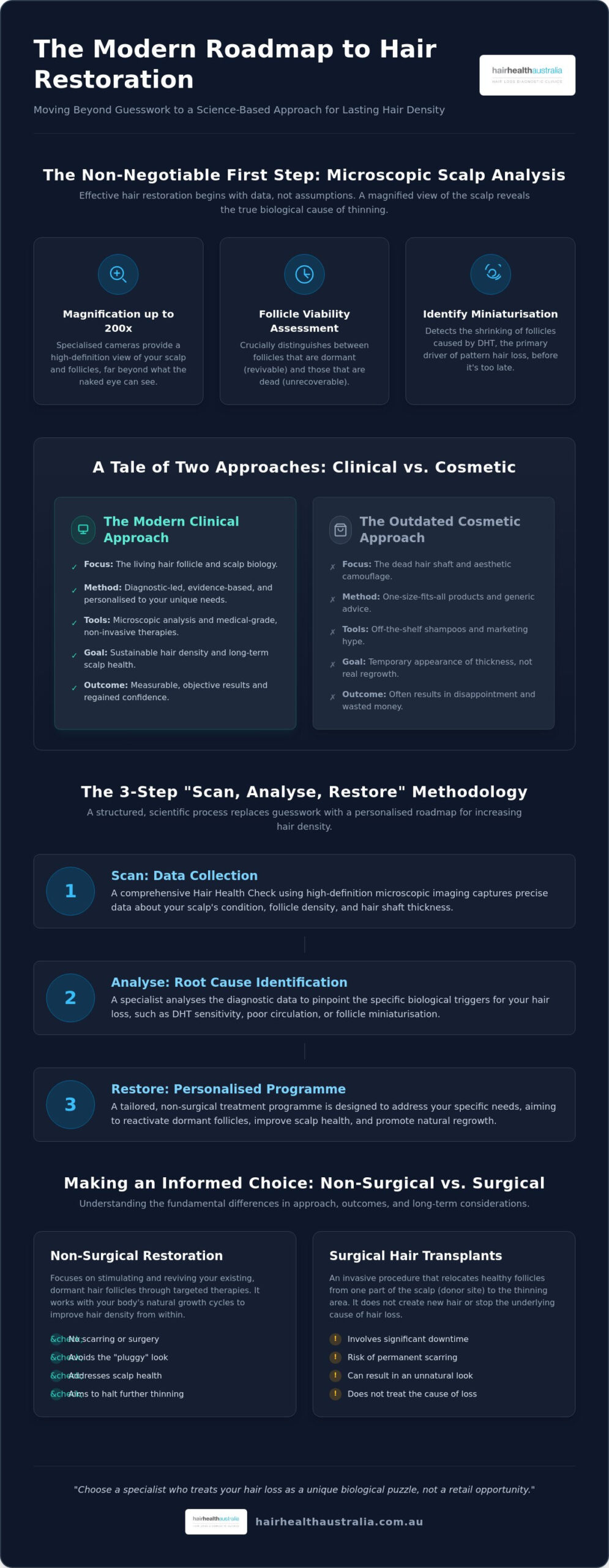
  • Explore the 3-step “Scan, Analyse, Restore” methodology that replaces guesswork with a personalised roadmap for increasing hair density.
  • Identify the criteria for choosing a specialist who offers straight-talking clinical honesty rather than generic, over-the-counter products.

What Defines a Leading Hair Restoration Clinic in 2026?

In 2026, the standard for a professional hair regrowth clinic has shifted from simple aesthetic camouflage to rigorous biological intervention. It is no longer enough to offer a “thickening” shampoo and hope for the best. Modern clinics operate as clinical disciplines, focusing entirely on the long-term health of the hair follicle. Leading Australian centres now prioritise non-invasive, regenerative therapies that work with your body’s natural growth cycles. This evolution ensures that patients can achieve lasting density without the downtime or risks associated with traditional surgery.

A general hair salon focuses on the hair shaft, which is essentially dead tissue. A specialised restoration clinic focuses on the scalp and the living follicle beneath the surface. Reputable clinics use high-definition microscopic scanning to see what the naked eye cannot. This removes the guesswork. It allows specialists to see exactly how many follicles are dormant and which ones can be revived through targeted stimulation. Choosing a reputable hair regrowth clinic means looking for a facility that treats your hair loss as a unique biological puzzle rather than a retail opportunity. This level of professional scrutiny is similar to how you would approach other major life decisions; for instance, when managing your home loan, working with experts like Quantum Brokers ensures you receive a tailored strategy rather than a generic bank product.

The Clinical vs. Cosmetic Approach

The difference lies in the tools and the data. Medical-grade equipment allows for precise tracking of hair density changes over time, providing objective proof of progress. When discussing the management of hair loss, it is clear that a multi-faceted protocol is far more effective than a single-product approach. Australian standards for these clinics are high, ensuring that every patient receives care that is both safe and verified by clinical outcomes. You should expect a treatment plan that evolves as your scalp health improves.

Why One-Size-Fits-All Solutions Fail

Pattern baldness and hormonal thinning are biologically complex. Genetic factors mean that what works for one person may do nothing for another. This is why generic, off-the-shelf treatments often lead to disappointment and wasted A$. Achieving sustainable hair density requires a personalised roadmap. The first step in this journey is always a professional Hair Health Check. This diagnostic process provides the microscopic data needed to tailor a treatment plan to your specific biology, ensuring you don’t waste time on ineffective solutions that weren’t designed for your scalp.

The Science of Regrowth: Why Microscopic Analysis is the First Step

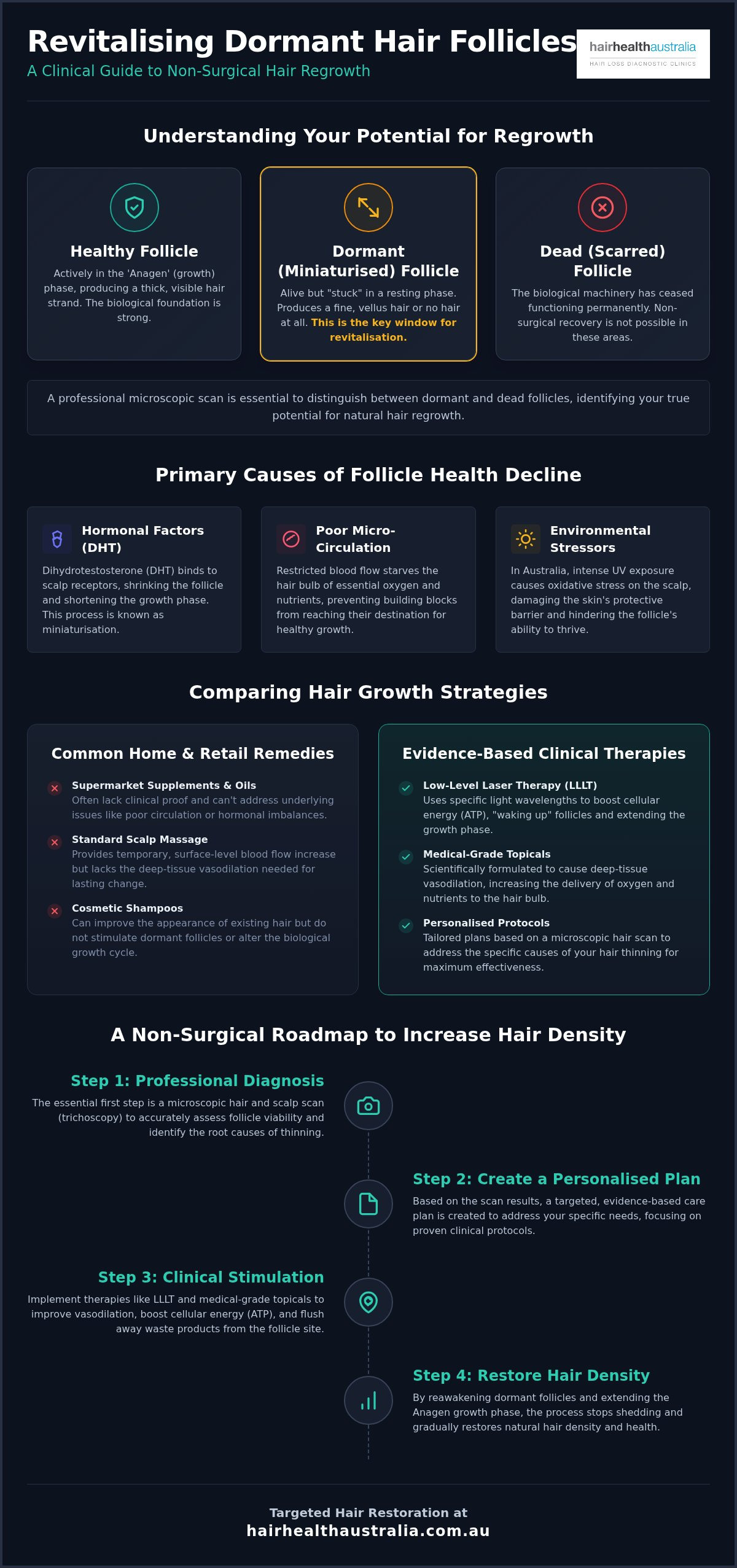
Effective restoration begins with data, not assumptions. While a mirror shows you the extent of thinning, it cannot reveal the underlying biological state of your follicles. This is why a reputable hair regrowth clinic prioritises microscopic analysis during your initial consultation. By magnifying the scalp up to 200 times, specialists can distinguish between dead follicles, which have been replaced by scar tissue, and dormant follicles that still possess the capacity for regrowth. This distinction is vital. It determines whether a non-surgical programme is viable or if the hair loss has progressed beyond the point of clinical stimulation.

The health of your hair is directly linked to the efficiency of your scalp micro-circulation. Blood flow delivers the essential nutrients and oxygen required for the protein synthesis that builds the hair shaft. When circulation is compromised, follicles receive less support, leading to a weakened growth phase. Identifying these circulatory issues early allows for a more targeted treatment plan. If you are concerned about visible thinning, booking a professional hair health check is the only way to gain a definitive understanding of your scalp’s regenerative potential.

Detecting DHT Sensitivity and Follicle Miniaturisation

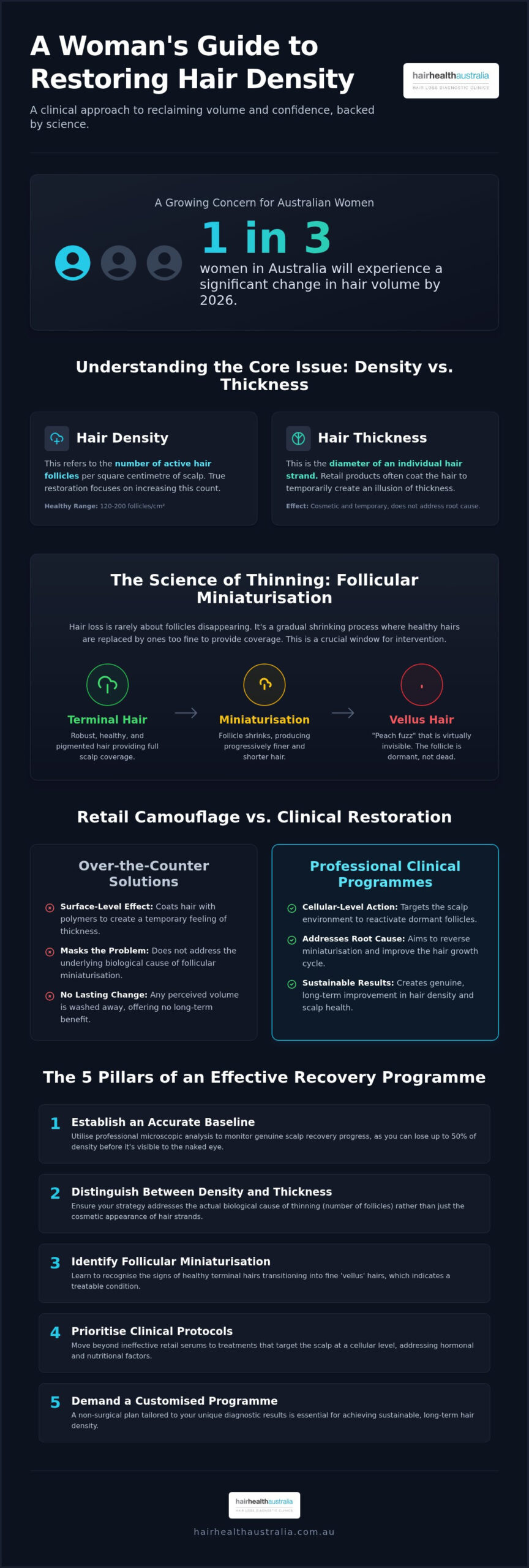
Dihydrotestosterone (DHT) is the primary hormone responsible for pattern hair loss in both genders. It binds to receptors in the follicles, causing them to shrink in a process known as miniaturisation. Over time, the hair produced becomes finer, shorter, and less pigmented until the follicle eventually stops producing hair altogether. Patterned hair loss treatments focus on blocking this hormonal impact to protect vulnerable follicles from further damage. By identifying miniaturisation through microscopic scans, a hair regrowth clinic can intervene before the follicle becomes permanently inactive.

The Role of the Scalp Micro-Environment

A successful restoration programme requires more than just follicle stimulation; it requires a healthy foundation. Chronic scalp inflammation and excessive sebum build-up can create a hostile environment that stifles growth. Sebum can crystallise within the follicle opening, physically obstructing the hair and contributing to further thinning. Managing these environmental factors through clinical-grade topicals ensures that the scalp is primed for recovery. When you address both the internal hormonal triggers and the external scalp environment, you create the optimal conditions for lasting hair density. Understanding these biological nuances is a key part of our comprehensive hair health check, which provides the clarity you need to move forward with confidence.

Non-Surgical Restoration vs. Hair Transplants: Making an Informed Choice

Many Australians assume that a hair transplant is the only definitive way to address thinning. This is a significant misconception. While surgery can be effective for advanced stages where follicles are completely dead, it carries substantial clinical and lifestyle implications. Surgical procedures involve harvesting follicles from a donor site, which often leaves visible scarring and requires a recovery period that can disrupt your daily routine for weeks. In contrast, a professional hair regrowth clinic focuses on preserving and revitalising your existing hair, offering a path that is both non-invasive and biologically sustainable.

The maintenance requirements of these two paths also differ. Surgery is an invasive procedure that doesn’t stop the underlying biological process of hair loss in the surrounding, non-transplanted areas. This means you may still require clinical support to prevent further thinning around the new grafts. When diagnosing and treating hair loss, specialists often recommend clinical programmes as the first line of defence. This is particularly true for early-to-mid stage thinning where the follicles are dormant rather than dead, as it allows for a more comprehensive approach to scalp health.

The Benefits of Non-Invasive Clinical Programmes

Clinical regrowth protocols offer a distinct advantage: there is no downtime. You don’t have to take time off work or manage surgical wounds. Instead of being limited by the amount of hair available in a donor area, these programmes treat the entire scalp simultaneously. By using targeted biological stimulation, you achieve results that look entirely natural. This is because the density comes from your own regrown hair, rather than relocated grafts that can sometimes appear “pluggy” or out of place if the surrounding hair continues to thin.

When to Consider a Sydney Hair Restoration Clinic

If you’ve noticed an increasing amount of hair in the drain or visible thinning through your crown, it’s time to seek professional advice. Early intervention is the single most important factor in the success of non-surgical restoration. Once a follicle has ceased activity for several years and the scalp has become smooth, the chances of revival diminish. Reviewing our guide on Choosing a Non-Surgical Hair Loss Clinic in Sydney will help you understand what to look for in a provider and how to avoid wasting A$ on ineffective home remedies that fail to address the root cause of your hair loss.

Choosing a Hair Restoration Clinic: The 2026 Australian Guide to Clinical Regrowth

Evaluating Sydney Hair Loss Clinics: A Patient’s Essential Vetting Checklist

Choosing a hair regrowth clinic is a significant decision that requires more than a cursory glance at online reviews. The Australian hair loss industry is diverse, ranging from retail-focused salons to high-precision clinical centres. To ensure you receive effective care, you must verify that the clinic specialises specifically in non-surgical hair restoration. A dedicated specialist will have a deep understanding of follicular biology and the latest regenerative protocols. They should be able to provide clear case studies and patient testimonials that demonstrate visible increases in density achieved through clinical means rather than surgical intervention. Just as clinics must adhere to strict professional standards, Australian business owners in other sectors must also manage complex regulatory requirements; for those needing help with compliance, you can check out Trancher for expert AML/CTF programme management.

Your initial consultation serves as the most important indicator of a clinic’s quality. A reputable provider will never recommend a treatment plan based on a simple visual inspection. They must utilise high-definition diagnostic technology to assess your scalp health. This data-driven approach ensures that the proposed roadmap is based on your actual biological needs. If you’re ready to move beyond guesswork, you can book a comprehensive hair health check to receive a professional microscopic diagnosis of your scalp.

Crucial Questions for Your Specialist

When you meet with a consultant, ask specific questions to gauge their clinical rigour. Inquire exactly how they measure your progress over the course of the programme. Leading clinics use standardised microscopic photography to track follicle diameter and hair count at regular intervals. You should also ask about the specific clinical ingredients or technologies included in their protocols. A transparent specialist will be happy to explain how their treatments are tailored to your specific type of thinning, whether it’s androgenetic alopecia or telogen effluvium.

Red Flags in the Australian Hair Loss Industry

Be wary of any clinic that uses high-pressure sales tactics or guarantees “instant” results. Hair regrowth is a biological process that takes time, often requiring several months before visible changes occur. Another major red flag is a lack of clear diagnostic scanning before a plan is recommended. Generic, one-size-fits-all programmes that do not account for your medical history or individual scalp environment are rarely effective. Finally, ensure the clinic has a local Sydney presence where you can receive ongoing clinical support and face-to-face follow-ups, as consistent monitoring is vital for long-term success.

The Hair Health Australia Methodology: Diagnostic Precision and Personalised Recovery

Hair Health Australia (est. 2009) has spent over 15 years refining a methodology that prioritises biological evidence over marketing promises. As a specialised hair regrowth clinic, we understand that successful restoration depends on the precision of the initial diagnosis. Our “Scan, Analyse, Restore” process ensures that every patient receives a treatment plan grounded in their unique scalp chemistry. By integrating advanced imaging technology with a patient-centred approach, we provide Sydney residents with a reliable path to lasting hair density without the need for invasive surgery.

The first phase, “Scan,” involves a high-definition microscopic examination of your scalp. This allows our specialists to “Analyse” the data, identifying specific patterns of thinning and the health of individual follicles. Finally, we “Restore” your hair density using clinically-backed, non-surgical protocols. This methodical progression replaces the uncertainty of home remedies with a structured, professional roadmap. It is this commitment to clinical rigour that has made us a trusted partner for thousands of Australians seeking a permanent solution to thinning.

Tailored Protocols for Men and Women

Male and female thinning often stem from different biological triggers. While male pattern baldness is typically driven by genetic DHT sensitivity, hair loss treatment for women often requires a more nuanced focus on hormonal shifts, nutritional status, and scalp inflammation. Our protocols are never static; they are adjusted based on your microscopic scan results. This ensures that the stimulation provided is exactly what your follicles need at each stage of the recovery journey, ensuring you don’t waste time or A$ on generic solutions that fail to address your specific needs.

Starting Your Journey with a Hair Health Check

Your recovery begins with a mandatory Hair Health Check at our Sydney clinic. During this session, you’ll receive a detailed microscopic diagnostic report that clearly illustrates your current scalp health and regrowth potential. This isn’t a high-pressure sales pitch, but a clinical consultation designed to empower you with knowledge. You’ll leave with a clear understanding of why your hair is thinning and exactly what can be done to reverse it. To understand the full scope of our non-invasive options, you can review our Clinical Hair Treatment: A Professional Guide. This resource outlines how we combine science and empathy to help you regain both your hair and your confidence.

Take the First Step Toward Lasting Hair Density

Restoring your hair is a journey that requires clinical precision rather than guesswork. By prioritising a diagnostic-led approach, you shift the focus from temporary camouflage to long-term follicular health. A professional hair regrowth clinic provides the tools necessary to identify dormant follicles and implement a non-surgical, pain-free recovery plan tailored to your unique biology. Whether you’re managing early thinning or seeking to stabilise your density, the success of your treatment depends on an accurate microscopic assessment of your scalp environment.

With over 15 years of clinical experience in Sydney, Hair Health Australia specialises in providing the clarity and evidence-based care you deserve. We provide every patient with detailed microscopic diagnostic reports to ensure transparency at every stage of the process. Don’t let uncertainty delay your progress. You can Book Your Comprehensive Hair Health Check in Sydney Today to receive a personalised roadmap for your hair recovery. Reclaiming your confidence starts with understanding your scalp’s true potential, and we’re here to guide you through every step of that discovery.

Frequently Asked Questions

How do I choose the best hair restoration clinic in Sydney?

Choosing the best hair restoration clinic in Sydney requires verifying their clinical specialisation and diagnostic technology. You should prioritise facilities that offer microscopic analysis rather than just visual assessments. Look for a clinic with established local experience, such as over 15 years in the Sydney market, and ensure they provide detailed reports. A reputable provider will focus on evidence-based, non-invasive protocols rather than high-pressure sales tactics or surgical-only solutions.

Is non-surgical hair restoration as effective as a hair transplant?

Non-surgical restoration is highly effective for early-to-mid stage thinning where follicles are dormant but still viable. While a transplant relocates hair to specific gaps, clinical programmes treat the entire scalp to increase overall density. This approach avoids surgical risks, scarring, and downtime. For many patients, stimulating their own natural hair growth provides a more seamless and sustainable result than invasive surgery, especially when the goal is to preserve existing hair.

How much does a consultation at a hair restoration clinic cost?

Consultation fees vary across Australian clinics depending on the depth of the diagnostic process. A standard session at a professional hair regrowth clinic usually includes a comprehensive microscopic scalp scan and a personalised treatment roadmap. It’s best to contact your chosen provider directly to confirm their current rates. Investing in a thorough clinical assessment ensures you receive an accurate diagnosis before spending money on potentially ineffective over-the-counter products.

Can a hair restoration clinic help with advanced balding?

Clinical programmes are most successful when there are still active or dormant follicles present. If the scalp has become completely smooth and scarred, the capacity for non-surgical regrowth is significantly reduced. However, a professional hair regrowth clinic can still provide a definitive diagnosis through microscopic scanning. This analysis determines if any viable follicles remain. If the hair loss is too advanced for clinical stimulation, your specialist will provide honest, straight-talking advice regarding your options.

What happens during a microscopic hair analysis?

During a microscopic hair analysis, a specialist uses a high-definition camera to magnify your scalp up to 200 times. This allows for a detailed inspection of follicle health, sebum levels, and any signs of miniaturisation caused by DHT. The process is entirely non-invasive and pain-free. You’ll be able to see the live images on a screen, providing a clear biological explanation for your thinning and a baseline for measuring future progress.

How long does it take to see results from a clinical regrowth programme?

Visible results typically emerge within three to six months of starting a clinical programme. This timeline aligns with the natural biological hair growth cycle. Initial improvements often include a reduction in excessive shedding and an improvement in scalp health, followed by a gradual increase in hair diameter and density. Consistency is essential for success. Your specialist will monitor your progress at regular intervals using microscopic photography to ensure the treatment is tracking correctly.

Are hair restoration treatments safe for people with sensitive scalps?

Non-surgical restoration treatments are generally designed to be gentle and are safe for individuals with sensitive scalps. Clinical protocols focus on non-invasive stimulation and medical-grade topicals that prioritise scalp health. Because these programmes don’t involve surgical incisions or harsh chemicals found in some generic products, the risk of irritation is minimal. Your specialist will assess your scalp’s condition during the initial scan to ensure the prescribed treatment is appropriate for your skin type.

Do I need a referral from a GP to visit a hair restoration clinic?

You don’t need a referral from a GP to visit a specialised hair restoration centre in Australia. Most clinics operate as private facilities where you can book an appointment directly. While hair loss can sometimes be linked to underlying medical conditions, a clinical specialist will focus on the follicular and scalp-related aspects of your recovery. If they identify a concern that requires medical intervention beyond their scope, they’ll advise you to consult with your doctor.

How to Improve Hair Density: The 2026 Clinical Checklist for Thicker Hair

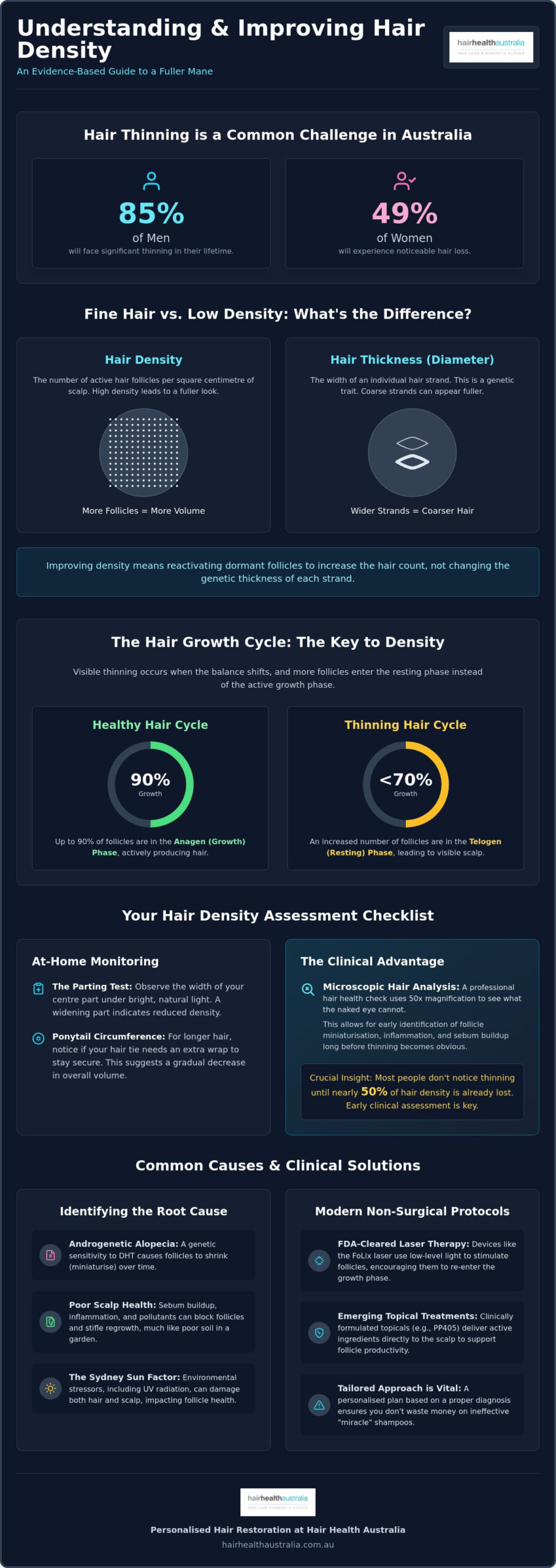
You’re standing under the harsh, bright lights of your bathroom mirror, and for the first time, you can see the distinct outline of your scalp through what used to be a thick fringe. It’s a confronting moment that often leads to a cycle of expensive miracle shampoos and the nagging fear that surgery is your only remaining option. We understand that seeing more scalp than hair can feel like losing a part of your identity. If you’ve been wondering how to improve hair density without resorting to a costly transplant, you aren’t alone. In fact, approximately 49% of Australian women and 85% of men will face this exact challenge in their lifetime.

This guide moves past the marketing hype to provide a clear, evidence-based roadmap for transitioning from thinning patches to a fuller mane. You’ll discover how the latest 2026 clinical diagnostics and non-surgical protocols, such as the FDA-cleared FoLix laser and emerging topical treatments like PP405, are changing the landscape of hair restoration. We’ll walk you through a systematic checklist to help you identify your specific root cause and implement a professional, actionable plan for visible regrowth.

Key Takeaways

  • Learn the clinical difference between fine hair and low density to better understand why your hair’s volume depends on the number of active follicles per square centimetre.
  • Adopt objective measurement tools, such as the Parting Test, to accurately monitor your progress and reduce the visibility of your scalp.
  • Discover the clinical science behind how to improve hair density by shifting follicles from the resting phase into active growth without the need for invasive surgery.
  • Recognise the impact of the Sydney Sun Factor and learn how specific amino acids provide the essential building blocks for a healthier mane.
  • Find out why a tailored approach is vital for success and how clinical programmes ensure you don’t waste money on ineffective “miracle” shampoos.

Understanding Hair Density: Clinical Definition vs. Cosmetic Perception

Clinical hair density is defined as the number of active follicles per square centimetre of your scalp. While many people use the terms “thick” and “dense” interchangeably, they represent two distinct biological realities. Understanding how to improve hair density begins with recognising that your hair’s appearance is a combination of follicle count and individual strand thickness. You might have thousands of follicles, but if each strand is fine in diameter, your hair may still lack volume. Conversely, someone with lower density but very coarse strands might appear to have a fuller mane.

The distinction between fine hair and thinning hair is vital for a correct diagnosis. Fine hair is a genetic trait relating to the small diameter of the hair shaft itself. Thinning hair, however, is a clinical reduction in density where follicles either produce shorter, weaker hairs or stop producing them altogether. This density is not uniform across the head. It is naturally highest at the vertex and crown, while the hairline and temples often show the first signs of depletion. Perceived density also depends heavily on the growth cycle. At any given time, about 85 to 90 percent of your hair should be in the Anagen (growth) phase. When this ratio shifts, more follicles enter the resting phase, leading to visible scalp show-through even if the follicles are still present. Gaining a deeper understanding of hair follicle anatomy reveals that these complex organs require specific conditions to remain in that active growth state.

The Role of Genetics and Age in Australian Populations

Hereditary patterns, specifically Androgenetic Alopecia, are the most common reason Australians seek advice on how to improve hair density. This condition causes follicles to slowly miniaturise over time under the influence of dihydrotestosterone (DHT). As we age, some follicles may enter a state of prolonged dormancy rather than permanent loss. A follicle can remain biologically viable and capable of revival even if it has ceased to produce a visible hair shaft for a period of time. Identifying this dormancy early is the key to successful non-surgical restoration.

Why Your Scalp Health Dictates Your Density

Think of your scalp as the fertile soil for a garden. If the soil is congested with sebum buildup or plagued by inflammation, the “crops” cannot thrive. Excess oil and environmental pollutants can block follicle openings, effectively stifling regrowth and contributing to further thinning. You can read more about identifying these environmental triggers in our guide on Scalp Health and Hair Loss: What You Need to Know. A compromised scalp environment often presents as persistent redness, itching, or sudden changes in oil production, all of which signal that the foundation for hair density is under threat.

The Hair Density Assessment Checklist: How to Measure Your Progress

Monitoring your progress is essential when learning how to improve hair density. While mirrors provide a daily snapshot, they often lack the precision required to track subtle biological shifts. You can start with the Parting Test. By separating your hair down the centre under natural light, you can observe the width of the exposed scalp. A widening part is a clear indicator of reduced follicle activity. For women, the Ponytail Circumference is a practical metric. If your usual hair tie requires an extra wrap to stay secure, it suggests a long-term shift in overall density. Photographic tracking is another useful tool, provided you maintain consistent lighting and angles to ensure your “before and after” shots are objective. However, visual inspection has its limits. Most people don’t notice thinning until they’ve lost nearly 50 percent of their hair density, meaning the naked eye is often too late to catch early-stage miniaturisation.

The Clinical Advantage: Microscopic Hair Analysis

To get ahead of the curve, a professional hair health check is the most reliable diagnostic tool. At Hair Health Australia in Sydney, we utilise 50x magnification to examine the scalp environment in detail. This allows us to identify miniaturisation, the process where follicles shrink and produce progressively thinner strands, long before the hair actually falls out. High-resolution scanning can also reveal “dormant” follicles that are still alive but currently in the resting phase. By identifying these viable follicles early, we can implement clinically-proven hair loss treatments that stimulate regrowth before the follicle loses its capacity to function. If you’re concerned about visible scalp, scheduling a diagnostic scan is the first step toward clarity.

Identifying the “Why” Behind Your Thinning

Successful restoration requires a clear understanding of the underlying cause. Your checklist should begin with ruling out common physiological triggers. Nutritional deficiencies, particularly low levels of Iron (ferritin), Zinc, and Vitamin D, are frequent culprits in Australian populations. These elements are essential for the metabolic processes within the hair bulb. Additionally, you should monitor your recent health history. High stress or significant illness can trigger Telogen Effluvium, a condition where a large percentage of follicles prematurely enter the shedding phase. For a deeper dive into these triggers, consult our clinical guide to hair loss causes. By ticking off these variables, you can determine if your thinning is a temporary reaction or a progressive condition requiring targeted intervention.

Clinical Strategies to Boost Follicle Productivity Non-Surgically

Gaining a clear understanding of how to improve hair density requires a shift in focus from the hair shaft to the follicle itself. The primary goal of any clinical restoration programme is to transition follicles from the resting (Telogen) phase back into the active growth (Anagen) phase. In Australian clinics, non-surgical regrowth is the preferred first line of defence. It focuses on preserving and revitalising your natural hair before the condition progresses to a stage where surgery becomes the only viable option. It’s a proactive approach that works in harmony with your body’s biological rhythms.

Patience and consistency are the cornerstones of this process. Unlike cosmetic fillers or temporary hairpieces, biological regrowth doesn’t happen overnight. Most medically-reviewed hair loss treatments require a committed period of three to six months before visible changes in density become apparent. This timeline aligns with the natural hair growth cycle. A common concern we hear is, “Is it too late for me?” The answer usually depends on follicle viability. As long as the follicle hasn’t been replaced by permanent scar tissue, there is a clinical opportunity to stimulate productivity and restore volume. Understanding the biological mechanisms behind hair growth support and clinical intervention can help you distinguish between evidence-based treatments and over-the-counter products that fall short of delivering real results.

Low-Level Laser Therapy (LLLT) and Photobiomodulation

LLLT is a sophisticated, non-invasive technology that uses specific wavelengths of light to energise cellular mitochondria within the hair follicle. This process, known as photobiomodulation, increases the production of adenosine triphosphate (ATP), which provides the energy needed for rapid hair cell division. By improving local blood flow, the treatment ensures that the hair bulb receives a constant supply of oxygen and essential nutrients. LLLT acts as a biological catalyst that energises cellular processes to wake up dormant follicles and return them to the active growth phase.

Clinical Topical Formulations and Growth Factors

While many people start their journey with supermarket brands, professional-grade topicals offer a significantly higher level of efficacy. These clinical formulations often combine potent growth factors with targeted DHT blockers to address the chemical triggers of thinning at the source. The delivery systems in these professional products are engineered to penetrate the scalp barrier more effectively, ensuring the active ingredients reach the follicle’s base. Understanding which bio-active ingredients are clinically validated is essential; our guide to the best hair regrowth treatment Australia clinics recommend in 2026 provides a detailed breakdown of TGA-listed therapeutics versus cosmetic-grade products. For those ready to move beyond generic solutions, a comprehensive hair health check provides the diagnostic foundation for a professional, non-surgical restoration protocol.

How to Improve Hair Density: The 2026 Clinical Checklist for Thicker Hair

The Lifestyle Foundation: Supporting Density from the Inside Out

Clinical protocols are only as effective as the biological environment they support. While advanced therapies address follicle productivity directly, your daily habits and environment provide the essential raw materials for regrowth. Understanding how to improve hair density requires looking beyond topical solutions to the internal and environmental factors that govern follicle health. Protein and amino acids are the primary building blocks of keratin production. Without an adequate supply of these nutrients, even the most advanced clinical stimulation will struggle to produce a robust hair shaft. This internal support system acts as the foundation for every other restoration effort you undertake.

Living in Australia introduces unique challenges, particularly the “Sydney Sun Factor”. High UV radiation doesn’t just age your skin; it triggers oxidative stress on the scalp. This process damages hair proteins and can lead to “inflammageing”, which is chronic, low-grade inflammation that gradually reduces density by shortening the growth phase of the follicle. While scalp massage is often touted as a miracle cure, its real value lies in supporting microcirculation. It’s a useful supplementary tool that ensures nutrients reach the hair bulb, but it must be paired with a comprehensive clinical plan to be effective. If you’ve been relying on retail supplements for hair growth support without seeing results, understanding the science behind clinical-grade interventions can help you make more informed choices.

The “Hair-Healthy” Diet Checklist

In Australian clinics, we frequently find that nutritional gaps are a silent driver of thinning. Iron and Ferritin levels are the most critical metrics to monitor. Low iron stores are the primary cause of density loss in many Australian women, as iron is essential for the oxygenation of hair cells. To support your restoration journey, focus on these key elements:

  • Iron and Ferritin: Essential for cellular energy and hair bulb metabolism.
  • Omega-3 Fatty Acids: Found in oily fish, these help reduce scalp inflammation for better follicle function.
  • Biotin and Zinc: These support the structural integrity of the hair shaft and help prevent premature breakage.

Environmental Protection for Your Scalp

Protection is just as vital as nourishment. Wearing a hat in the Australian sun is a strategic density preservation move, as it shields the scalp from UV-induced protein degradation. Additionally, be mindful of water quality. Frequent exposure to the chlorine in swimming pools or the mineral buildup from hard water can cause significant hair breakage. This breakage reduces your perceived density, making the hair look thinner than it actually is. Choosing clinical-grade shampoos that maintain the scalp’s natural pH balance will help preserve the protective barrier of your skin. If you’re ready to identify which environmental or internal factors are affecting your hair, book a hair health check today to receive a personalised diagnostic assessment.

Personalised Hair Restoration at Hair Health Australia

Determining exactly how to improve hair density for your specific scalp profile requires more than a generic serum or a supermarket shampoo. A “one-size-fits-all” approach fails because it ignores the unique biological triggers behind your thinning, whether they are hormonal, nutritional, or environmental. At Hair Health Australia, we specialise in non-surgical, clinically-backed regrowth programmes that are tailored to the individual. Our methodology moves beyond guesswork, using precise data to target the follicles that have the highest potential for recovery. By focusing on medical-grade protocols rather than cosmetic cover-ups, we help you achieve a fuller mane that is sustainably maintained.

From Diagnosis to Regrowth: Your 12-Month Roadmap

Restoring density is a biological process that follows a specific timeline. We guide our patients through a structured 12-month roadmap to ensure every phase of the growth cycle is utilised effectively:

  • Phase 1: Stabilisation. The first priority is to stop active shedding and stabilise your current hair count. We focus on deep-cleansing the scalp environment to remove DHT buildup and environmental pollutants that stifle growth.
  • Phase 2: Stimulation. Once the foundation is clear, we move into the intensive regrowth phase. This involves using clinical-grade stimulants and light therapies to wake up dormant follicles and increase the diameter of existing hair shafts.
  • Phase 3: Maintenance. After achieving visible density gains, we transition to a long-term maintenance protocol. This ensures your new growth remains healthy and resistant to future thinning triggers.

Start Your Journey Today

Taking the first step toward restoration can feel daunting, especially if you’ve spent years trying products that didn’t deliver. Our clinic provides an empathetic, “straight-talking” environment where we prioritise honest expectations and clinical results. We believe that empowerment comes through education, and we’re committed to helping you understand the “why” behind your hair loss before we begin the “how” of your treatment. If you’re ready to stop guessing and start growing, Book your Hair Health Check at our Sydney clinic today.

Empower Your Hair Restoration Journey

Transitioning from thinning hair to a fuller mane is a journey rooted in clinical science rather than cosmetic guesswork. You now understand that hair density is a precise biological metric; identifying the root cause of thinning via microscopic analysis is the most critical step in your restoration plan. By combining advanced non-surgical protocols with a supportive lifestyle foundation, you can effectively address the environmental and physiological factors that reduce follicle productivity. Learning how to improve hair density requires moving away from supermarket solutions and toward evidence-based, diagnostic-led care.

With over 15 years of clinical experience in Sydney, Hair Health Australia uses advanced microscopic diagnostic technology to create specialised non-surgical regrowth protocols tailored to your unique profile. You don’t have to accept thinning as a permanent reality or resort to invasive surgery. Take the first step toward thicker hair, book your Hair Health Check today.

The path to a thicker, healthier mane starts with clarity and professional guidance. We’re here to help you regain your confidence with a plan that is grounded in results and tailored specifically for you.

Frequently Asked Questions

Can I really increase the number of hair follicles I have?

You cannot increase the total number of hair follicles you were born with, but you can certainly increase the number of active ones. Clinical restoration focuses on waking up dormant follicles that have stopped producing visible shafts. By returning these follicles to the growth phase, you achieve a visible improvement in density without needing to create new biological structures.

How long does it take to see a visible change in hair density?

Visible changes in hair density generally require a commitment of three to six months. This duration is dictated by the natural hair growth cycle, as follicles need time to transition from resting to active production. While some patients notice scalp health improvements sooner, the physical thickening of the mane is a gradual biological process.

Does stress permanently reduce my hair density?

Stress-related thinning, known as Telogen Effluvium, is typically temporary and reversible once the trigger is managed. However, prolonged periods of high cortisol can exacerbate existing hereditary patterns. If you don’t address the underlying stress, the follicles may remain in a resting state for longer than usual, leading to a persistent reduction in density.

What is the best clinical treatment for thinning hair without surgery?

The most effective non-surgical approach is a multi-modal clinical programme that combines Low-Level Laser Therapy (LLLT) with professional-grade topicals. These treatments work synergistically to energise the hair bulb and block DHT. Because every scalp is different, the best results come from a protocol customised after a microscopic diagnostic assessment. For a comprehensive overview of clinically validated options, our reference guide on hair regrowth treatment Australia clinics use in 2026 outlines the key differences between TGA-listed therapeutics and cosmetic-grade products.

Can certain hairstyles make my hair look denser while I wait for regrowth?

Yes, certain cosmetic techniques can provide an immediate boost in appearance while your clinical treatment takes effect. Blunt cuts and shorter, layered styles often make the hair look fuller by removing weight that pulls strands flat. Additionally, professional styling and colour transformations from experts like Shampoo Avenue can create depth and dimension, making the hair appear thicker while you wait for long-term clinical results. However, you should avoid tight braids or high ponytails, as the constant tension can lead to traction loss and further thinning.

Is hair density loss always genetic, or can it be cured?

Hair density loss is not always genetic; it can be triggered by nutritional deficiencies, medication, or environmental stress. While genetic patterns like Androgenetic Alopecia cannot be “cured” in the traditional sense, they can be managed very effectively with consistent clinical care. Identifying the specific cause is the only way to determine if the loss is reversible.

How often should I have a professional hair health check?

We suggest a professional hair health check every six to twelve months to monitor your progress objectively. These regular scans allow us to use 50x magnification to detect miniaturisation before it becomes visible to the naked eye. Consistent tracking ensures your treatment remains aligned with your scalp’s changing needs.

Will improving my diet actually help my hair density?

A balanced diet is essential for providing the amino acids and minerals required for hair synthesis. Correcting a ferritin or zinc deficiency is a foundational step in how to improve hair density, as these nutrients fuel the metabolic activity in the hair bulb. Without this internal support, follicles cannot produce the strong, thick shafts needed for a dense appearance.

Clinical Approaches to Restoring Hair Health

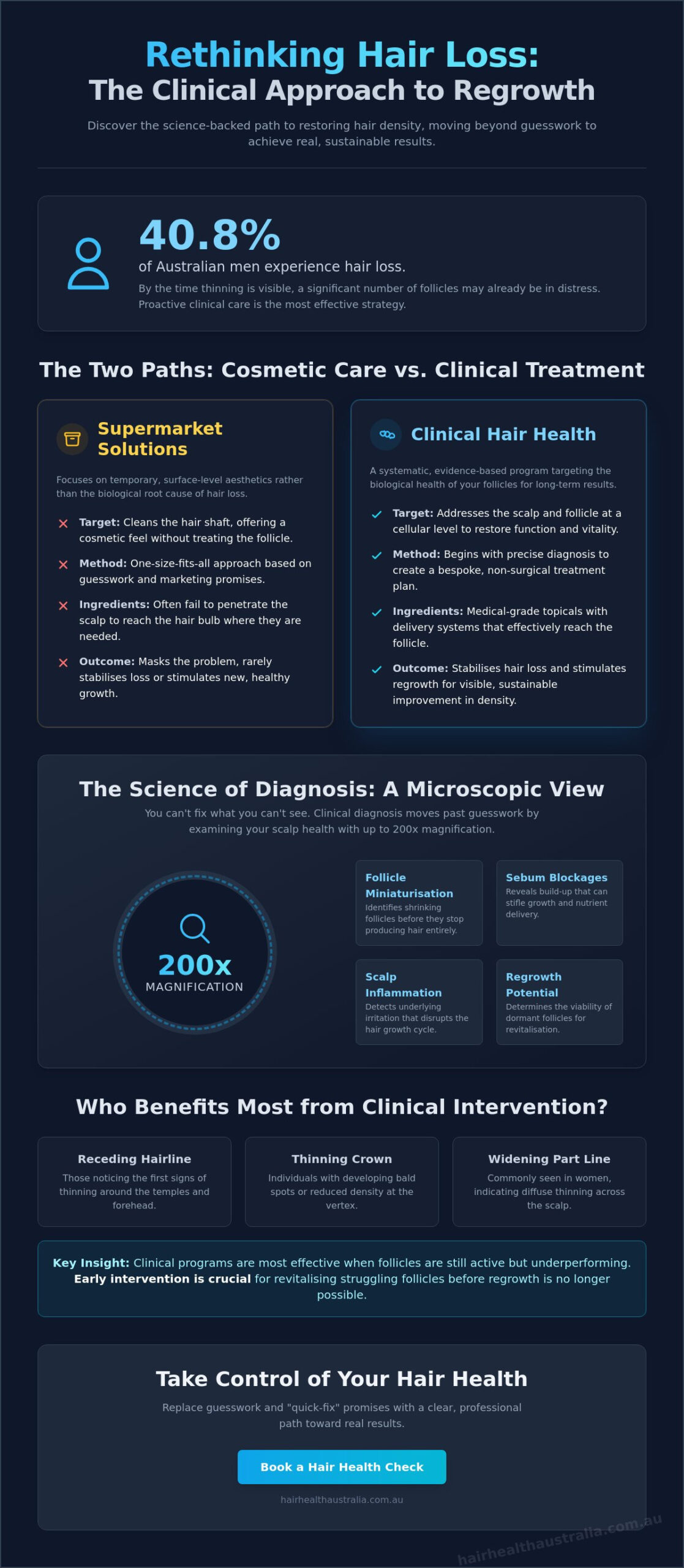
Did you know that approximately 40.8% of men in Australia experience hair loss? When you notice your hair thinning, it’s easy to feel as though your confidence is slipping away along with it. You might find yourself overwhelmed by conflicting online advice or worried that it’s simply too late to save your follicles. We understand that this uncertainty is taxing, especially when you’re looking for a professional hair health treatment that actually delivers on its promises without the need for invasive surgery.

The good news is that restoring density doesn’t always require a trip to the operating theatre. This article explores the science-backed clinical methods designed to stabilise and revitalise your scalp health. You’ll discover how microscopic diagnostic scans provide the clarity you need to move forward with a personalised plan. We’ll also outline sustainable, non-invasive maintenance routines that help you achieve visible improvements in hair density. By focusing on evidence-based care, you can replace guesswork with a clear, professional path toward results.

Key Takeaways

  • Learn the critical distinction between standard cosmetic care and a medical-grade hair health treatment that targets the biological health of your follicles.
  • Discover why microscopic analysis is the only way to accurately diagnose the root cause of thinning and establish a scientific baseline for recovery.
  • Compare the long-term benefits and cost-effectiveness of non-surgical clinical programmes against invasive surgical procedures.
  • Understand how to implement a bespoke maintenance routine using evidence-based therapies to sustain visible improvements in hair density.
  • Gain clarity on why realistic expectations and professional data are more effective than the “quick-fix” promises often found online.

What is Clinical Hair Health Treatment?

A clinical hair health treatment is a systematic, evidence-based approach to restoring follicle function and scalp vitality. Unlike standard cosmetic products that focus on the hair’s surface, a clinical programme targets the biological structures beneath the skin. It involves a combination of diagnostic data, medical-grade topicals, and therapeutic interventions designed to stabilise loss and stimulate new growth. This multi-faceted methodology ensures that we aren’t just masking a problem but addressing the underlying causes of thinning at a cellular level.

The most common mistake many Sydney-siders make is adopting a “wait and see” attitude. They often hope that a change in diet or a new supermarket shampoo will reverse the trend. However, by the time thinning becomes visible to the naked eye, a significant percentage of follicles may have already entered a state of miniaturisation. Transitioning from reactive “hair care” to proactive clinical health is the most sustainable way to protect your density over the long term. It is about moving away from temporary fixes and toward a permanent, non-surgical solution.

Moving Beyond Supermarket Solutions

Retail shampoos and vitamins are often marketed with broad promises, yet they frequently fail because they don’t penetrate the scalp effectively. Most over-the-counter options are designed to clean the hair shaft or provide basic nourishment, which rarely addresses the hormonal or genetic drivers of loss. Clinical-grade ingredients are different. They are formulated with specific delivery systems that allow active compounds to reach the hair bulb where they are needed most. To determine which ingredients will work for your specific profile, a professional Hair Health Check is essential. This assessment moves past guesswork, establishing a baseline of your current scalp health and follicle activity through high-resolution data.

Who Benefits Most from Clinical Intervention?

Clinical programmes are most effective when follicles are still active but underperforming. This is particularly relevant for those experiencing Pattern hair loss, which is the most common cause of thinning in both men and women. Early intervention is key. If you notice a receding hairline, a thinning crown, or a widening part, your follicles are likely in a state of distress. Specialist clinical treatments are designed to revitalise these struggling follicles before they reach a stage where regrowth is no longer biologically possible. Whether you are dealing with male pattern thinning or female diffuse loss, a structured clinical approach provides a clear, reliable path toward density restoration.

The Science of Diagnosis: Why Microscopic Analysis Matters

A mirror can tell you that your hair is thinning, but it cannot explain why. Relying solely on visual inspection is a significant hurdle in finding an effective hair health treatment. By the time you notice a change in your reflection, you’ve likely already lost a considerable amount of hair density. To understand the true state of your scalp, we must look deeper than the surface. Professional hair loss diagnosis and treatment relies on objective data rather than subjective observation.

This is where microscopic analysis becomes vital. During a clinical assessment, high-resolution imaging allows us to examine the scalp at up to 200 times magnification. This process reveals the health of individual follicles, the presence of sebum blockages, and the level of scalp inflammation. Most importantly, it provides a baseline. Without this initial data, tracking the success of your regrowth programme becomes a matter of guesswork. Seeing your follicles up close provides the clarity needed to commit to a long-term solution with confidence.

What Your Scalp is Telling You

High magnification exposes details that remain invisible during a standard consultation. We look for sebum build-up that can stifle growth, signs of inflammation, and follicles that have entered a dormant phase. This level of detail allows us to determine your ‘regrowth potential’ before you invest time or money into a programme. Follicle miniaturisation is the biological process where hair follicles progressively shrink over time, producing increasingly thinner and shorter strands until they eventually cease production entirely. Identifying this early is the key to successful intervention. If you want to understand your own scalp health, you can book a free Hair Health Check to see your follicles up close.

Clinical Markers vs. Aesthetic Concerns

It’s crucial to distinguish between temporary shedding and permanent thinning. Many people mistake telogen effluvium, which is often stress-related and temporary, for the onset of permanent pattern loss. Diagnostic data allows us to identify specific clinical markers that separate these conditions. Instead of a generic one-size-fits-all approach, this information informs a bespoke hair health treatment plan tailored to your biological needs. By focusing on the data, we ensure that every therapeutic step is necessary and targeted. If you’re concerned about changes in your hair density, a professional scan is the first step toward a definitive answer.

Non-Surgical vs. Surgical: Comparing Your Treatment Options

Choosing between a non-surgical hair health treatment and a surgical hair transplant requires a clear understanding of your long-term goals. While surgery moves hair from one area to another, it does not stop the biological process of thinning in the surrounding follicles. This is the “maintenance reality” that many patients overlook. Without a dedicated clinical programme, the non-transplanted hair will continue to miniaturise, often leaving unnatural-looking results over time. Professional dermatologist-led hair loss treatment typically prioritises stabilising the scalp before considering invasive measures. Many Australians are also unsure whether to seek a clinical hair specialist or a medical skin doctor first, and understanding the distinction between a trichologist vs dermatologist for hair loss can help you make a more informed decision about your care pathway.

Clinical regrowth programmes are significantly more cost-effective than surgery, particularly when you factor in the lack of downtime. Invasive procedures like Follicular Unit Extraction (FUE) carry inherent risks, including scarring, infection, and the potential for a “patchy” appearance if the donor site is over-harvested. In contrast, non-surgical pathways focus on revitalising your existing hair density without a single incision. This approach allows you to maintain a professional schedule while systematically improving your scalp health.

The Non-Surgical Advantage

Non-invasive programmes work by stimulating the follicles you already have. This is a major advantage for Sydney professionals who cannot afford the weeks of recovery time required for surgical healing. By using targeted therapies to improve blood flow and nutrient delivery, we can often achieve impressive density improvements. It’s about protecting the hair you still have while encouraging struggling follicles to return to a healthy growth cycle. If you aren’t sure where your density stands, a Hair Health Check is the best way to assess your current status.

When is Surgery Actually Necessary?

Surgery is generally reserved for cases of total follicle death, where the scalp has become smooth and shiny, indicating that the follicles are no longer biologically active. However, early clinical intervention can often prevent you from ever reaching this stage. For those who do eventually require a transplant, a clinical hair health treatment plan is still essential. It prepares the scalp environment for the new grafts and ensures the remaining natural hair stays strong. Treating the scalp as a living ecosystem rather than a patch of skin to be “filled” is the key to a sustainable, natural look.

Clinical Approaches to Restoring Hair Health

Building a Bespoke Hair Health Treatment Plan

Developing a successful hair health treatment requires a methodical, multi-stage approach. We don’t believe in generic kits. Instead, we follow a structured progression that ensures every action is backed by your specific biological data. This systematic care moves beyond surface-level aesthetics to address the physiological needs of your follicles at the root.

Step 1: The Diagnostic Phase. As discussed previously, we begin by establishing a clear baseline. Using microscopic data, we identify the current state of your follicles and scalp environment. This allows us to set realistic expectations and track your journey with precision.

Step 2: Stimulating the Follicle. Once we understand the level of miniaturisation, we introduce clinically backed topicals and growth stimulants. These are designed to wake up dormant follicles and extend the growth phase of the hair cycle, encouraging thicker strands to emerge.

Step 3: Scalp Optimisation. We view the scalp as the soil for your hair. If the environment is congested with sebum or inflammation, growth will be stunted. We use clinical modalities to clear these barriers and improve the absorption of active ingredients.

Step 4: Monitoring and Adjusting. Your body’s response to treatment is unique. Regular check-ups allow us to refine your programme, ensuring you continue to see progress over the months and years. This iterative process is what separates a professional clinic from a retail product.

Clinically-Backed Components

A coordinated hair health treatment often incorporates DHT blockers to prevent further follicle shrinkage and growth stimulants to increase density. We also utilise low-level laser therapy to support cellular health and improve blood circulation to the hair bulb. Once you achieve your desired results, we transition you into a ‘Retain’ programme. This phase is critical because hair health is not a one-time fix; it requires sustainable maintenance to keep your results for the long term.

Lifestyle Factors in the Sydney Climate

Living in Sydney presents unique challenges for your scalp. High UV exposure can damage the hair protein, keratin, while frequent swimming in salt water can lead to scalp dehydration and irritation. We also consider the impact of a high-pressure urban lifestyle. Chronic stress is a known trigger for shedding, so managing your biological response to the Sydney pace is part of a holistic approach. We may suggest dietary adjustments to ensure you have the necessary building blocks, such as specific vitamins and minerals, to support keratin production. To start building your personalised plan, you can arrange your microscopic analysis today.

The Hair Health Australia Difference: Sydney’s Specialist Clinic

At our Redfern-based clinic, we’ve built a reputation for non-surgical excellence by prioritising biological facts over marketing hype. We understand that the journey to restoring your hair is personal and often fraught with uncertainty. That’s why our hair health treatment philosophy is rooted in a “straight-talking” approach. We provide you with realistic expectations based on the data from your microscopic scan, ensuring you have a clear understanding of what is achievable for your specific condition.

Unlike high-volume franchises that often rely on a one-size-fits-all model, we offer a level of personalised care that feels like a consultation with a trusted specialist. We take the time to listen to your concerns and explain the science behind our recommendations. This empathetic, clinical environment is designed to replace your anxiety with a systematic plan for recovery. Taking the first step shouldn’t feel like a high-pressure sales pitch; it should feel like the beginning of a professional partnership.

Expert Guidance from Sydney Specialists

Choosing Hair Health Australia means you have a dedicated partner to monitor your progress at every stage. Our specialists are experienced in treating both male and female hair loss patterns, utilising dedicated protocols that respect the unique hormonal and genetic drivers of each case. We recognise that Sydney life is fast-paced, so we organise your hair health treatment to fit seamlessly into your existing routine. High compliance is essential for results, and we work with you to ensure your maintenance steps are sustainable and effective.

Your Path to Restored Confidence

Seeing visible regrowth after years of thinning is a powerful emotional experience. It isn’t just about the hair; it’s about the confidence that returns when you no longer have to worry about your appearance in social or professional settings. Our clients value the discreet, professional experience we provide in our Redfern clinic, where your privacy is always a priority. We invite you to move beyond the confusion of conflicting online advice and discover what the science says about your scalp health. You can start your journey today with a free Hair Health Check.

Take the First Step Toward Lasting Density

Restoring your hair density is a journey that begins with accurate data rather than visual guesswork. By prioritising a science-backed hair health treatment, you’re choosing a path that addresses follicle miniaturisation at its biological source. We’ve explored how microscopic analysis provides the essential baseline for any successful regrowth programme, allowing for a bespoke approach that fits your specific needs and lifestyle. This methodical progression ensures that every therapeutic step is necessary, targeted, and effective.

At our Sydney-owned and operated clinic, we bring over 15 years of clinical experience to every consultation. Our specialised non-surgical regrowth programs focus on achieving visible results without the downtime or inherent risks associated with invasive surgical procedures. We’re committed to providing the “straight-talking” honesty you need to make informed decisions about your scalp health. You don’t have to navigate the confusion of conflicting advice alone. Book Your Free Microscopic Hair Health Check in Sydney to gain the clarity you deserve. It’s never too late to revitalise your follicles and reclaim your confidence with a plan rooted in clinical precision.

Frequently Asked Questions

How long does it take to see results from hair health treatment?

Visible results typically emerge between three and six months after commencing a programme. This timeline reflects the natural biological cycles of the hair follicle, which requires time to transition from a dormant phase to an active growth phase. You’ll usually notice a significant reduction in daily shedding first, followed by a gradual improvement in hair diameter and overall scalp coverage as the new growth matures.

Is hair health treatment permanent, or do I need to continue it forever?

Most clinical programmes require an ongoing maintenance phase to sustain your results. Because conditions such as androgenetic alopecia are progressive, stopping treatment entirely may allow the underlying biological drivers of thinning to resume. We focus on transitioning clients into sustainable, low-effort routines that protect their new density and ensure long-term scalp health without the need for intensive daily clinical visits.

Can women undergo the same hair loss treatments as men?

Women can certainly benefit from a professional hair health treatment, though the specific protocols are tailored to female physiology. While the core principles of follicle stimulation and scalp optimisation remain the same, we adjust the concentrations of active ingredients and therapeutic modalities. This ensures the programme remains safe and effective for female-specific thinning patterns and hormonal profiles.

Are there any side effects to clinical hair regrowth programs?

Non-surgical clinical programmes generally have a high safety profile with very few side effects. Some individuals might experience minor scalp irritation or redness when first introducing medical-grade topicals to their routine. A small number of patients also report temporary shedding during the first few weeks, which is a normal sign that the follicles are resetting to begin a stronger growth cycle.

How much does a professional hair health treatment cost in Sydney?

The cost of a hair health treatment in Sydney is determined by the specific combination of therapies required for your unique condition. Because we believe in a bespoke approach rather than a one-size-fits-all kit, we provide a detailed, personalised quote after your initial diagnostic assessment. This ensures your investment is focused entirely on the clinical components that will yield the best results for your scalp.

What happens during a microscopic Hair Health Check?

During this 30-minute diagnostic session, a specialist uses high-resolution imaging to scan your scalp at up to 200 times magnification. This process allows us to identify follicle miniaturisation, sebum blockages, and scalp inflammation that are invisible to the naked eye. You’ll be able to see these images in real-time, providing a clear and honest look at your current regrowth potential.

Is it possible to regrow hair on a completely bald patch?

Regrowth on a bald patch is possible if the follicles are dormant rather than dead. If microscopic analysis reveals that miniaturised follicles are still present beneath the surface, clinical intervention can often revitalise them. However, if the scalp is completely smooth and the follicles have ceased to function entirely, we will provide a “straight-talking” assessment of what is realistically achievable through non-surgical means.

Do I need a referral from a GP to visit a hair health clinic?

No, you don’t need a referral from a GP to book a consultation at our Redfern-based clinic. As a private specialist provider, we accept direct bookings from anyone concerned about thinning or scalp health. This allows you to take immediate action and access professional diagnostic technology without the need for multiple appointments or long waiting periods.