What if the secret to restoring your hair density isn’t found on a chemist shelf, but under a microscope? For many Australians, the journey toward a fuller head of hair is often paved with expensive, ineffective topical treatments and the looming anxiety of invasive surgery. It’s exhausting to invest your hope and hard-earned A$ into generic products that fail to deliver visible results. When you visit a professional hair regrowth clinic, the focus shifts from marketing hype to clinical precision, replacing uncertainty with a grounded, scientific approach.
You deserve a clear, evidence-based roadmap that addresses your specific scalp biology rather than a one-size-fits-all solution. This guide explores how to identify a reputable hair restoration clinic that prioritises non-surgical, diagnostic-led care. We’ll examine why microscopic analysis is the essential first step in reversing thinning and how a personalised treatment plan can help you regain your self-esteem without the risk of scarring or “pluggy” surgical outcomes. By the end of this article, you’ll understand exactly how to navigate the 2026 clinical landscape to achieve lasting hair density and professional scalp health.
Key Takeaways
- Learn why microscopic scalp analysis is the non-negotiable first step to identifying the biological cause of thinning before committing to any treatment.
- Discover how to vet a reputable hair regrowth clinic by evaluating their diagnostic technology and their focus on evidence-based, non-invasive therapies.
- Understand the practical differences between surgical transplants and non-surgical programmes, including the realities of recovery, potential scarring, and long-term maintenance.
- Explore the 3-step “Scan, Analyse, Restore” methodology that replaces guesswork with a personalised roadmap for increasing hair density.
- Identify the criteria for choosing a specialist who offers straight-talking clinical honesty rather than generic, over-the-counter products.
What Defines a Leading Hair Restoration Clinic in 2026?
In 2026, the standard for a professional hair regrowth clinic has shifted from simple aesthetic camouflage to rigorous biological intervention. It is no longer enough to offer a “thickening” shampoo and hope for the best. Modern clinics operate as clinical disciplines, focusing entirely on the long-term health of the hair follicle. Leading Australian centres now prioritise non-invasive, regenerative therapies that work with your body’s natural growth cycles. This evolution ensures that patients can achieve lasting density without the downtime or risks associated with traditional surgery.
A general hair salon focuses on the hair shaft, which is essentially dead tissue. A specialised restoration clinic focuses on the scalp and the living follicle beneath the surface. Reputable clinics use high-definition microscopic scanning to see what the naked eye cannot. This removes the guesswork. It allows specialists to see exactly how many follicles are dormant and which ones can be revived through targeted stimulation. Choosing a reputable hair regrowth clinic means looking for a facility that treats your hair loss as a unique biological puzzle rather than a retail opportunity. This level of professional scrutiny is similar to how you would approach other major life decisions; for instance, when managing your home loan, working with experts like Quantum Brokers ensures you receive a tailored strategy rather than a generic bank product.
The Clinical vs. Cosmetic Approach
The difference lies in the tools and the data. Medical-grade equipment allows for precise tracking of hair density changes over time, providing objective proof of progress. When discussing the management of hair loss, it is clear that a multi-faceted protocol is far more effective than a single-product approach. Australian standards for these clinics are high, ensuring that every patient receives care that is both safe and verified by clinical outcomes. You should expect a treatment plan that evolves as your scalp health improves.
Why One-Size-Fits-All Solutions Fail
Pattern baldness and hormonal thinning are biologically complex. Genetic factors mean that what works for one person may do nothing for another. This is why generic, off-the-shelf treatments often lead to disappointment and wasted A$. Achieving sustainable hair density requires a personalised roadmap. The first step in this journey is always a professional Hair Health Check. This diagnostic process provides the microscopic data needed to tailor a treatment plan to your specific biology, ensuring you don’t waste time on ineffective solutions that weren’t designed for your scalp.
The Science of Regrowth: Why Microscopic Analysis is the First Step
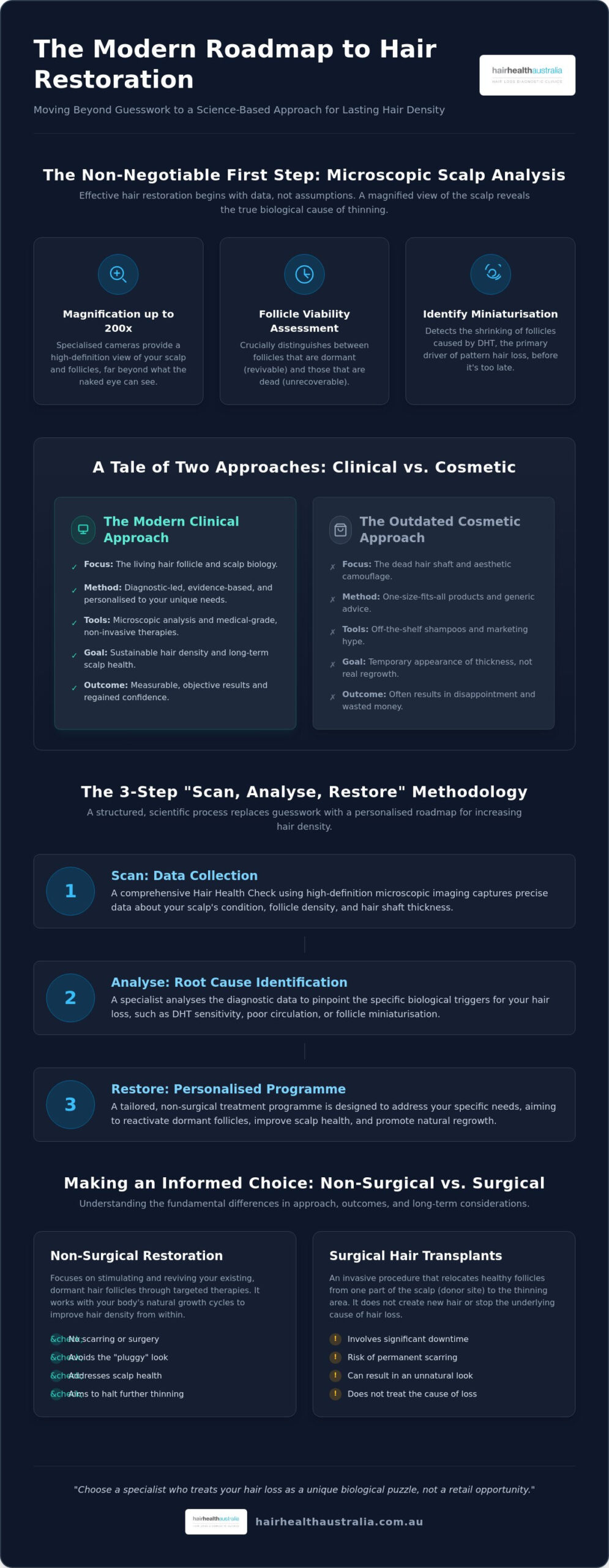
Effective restoration begins with data, not assumptions. While a mirror shows you the extent of thinning, it cannot reveal the underlying biological state of your follicles. This is why a reputable hair regrowth clinic prioritises microscopic analysis during your initial consultation. By magnifying the scalp up to 200 times, specialists can distinguish between dead follicles, which have been replaced by scar tissue, and dormant follicles that still possess the capacity for regrowth. This distinction is vital. It determines whether a non-surgical programme is viable or if the hair loss has progressed beyond the point of clinical stimulation.
The health of your hair is directly linked to the efficiency of your scalp micro-circulation. Blood flow delivers the essential nutrients and oxygen required for the protein synthesis that builds the hair shaft. When circulation is compromised, follicles receive less support, leading to a weakened growth phase. Identifying these circulatory issues early allows for a more targeted treatment plan. If you are concerned about visible thinning, booking a professional hair health check is the only way to gain a definitive understanding of your scalp’s regenerative potential.
Detecting DHT Sensitivity and Follicle Miniaturisation
Dihydrotestosterone (DHT) is the primary hormone responsible for pattern hair loss in both genders. It binds to receptors in the follicles, causing them to shrink in a process known as miniaturisation. Over time, the hair produced becomes finer, shorter, and less pigmented until the follicle eventually stops producing hair altogether. Patterned hair loss treatments focus on blocking this hormonal impact to protect vulnerable follicles from further damage. By identifying miniaturisation through microscopic scans, a hair regrowth clinic can intervene before the follicle becomes permanently inactive.
The Role of the Scalp Micro-Environment
A successful restoration programme requires more than just follicle stimulation; it requires a healthy foundation. Chronic scalp inflammation and excessive sebum build-up can create a hostile environment that stifles growth. Sebum can crystallise within the follicle opening, physically obstructing the hair and contributing to further thinning. Managing these environmental factors through clinical-grade topicals ensures that the scalp is primed for recovery. When you address both the internal hormonal triggers and the external scalp environment, you create the optimal conditions for lasting hair density. Understanding these biological nuances is a key part of our comprehensive hair health check, which provides the clarity you need to move forward with confidence.
Non-Surgical Restoration vs. Hair Transplants: Making an Informed Choice
Many Australians assume that a hair transplant is the only definitive way to address thinning. This is a significant misconception. While surgery can be effective for advanced stages where follicles are completely dead, it carries substantial clinical and lifestyle implications. Surgical procedures involve harvesting follicles from a donor site, which often leaves visible scarring and requires a recovery period that can disrupt your daily routine for weeks. In contrast, a professional hair regrowth clinic focuses on preserving and revitalising your existing hair, offering a path that is both non-invasive and biologically sustainable.
The maintenance requirements of these two paths also differ. Surgery is an invasive procedure that doesn’t stop the underlying biological process of hair loss in the surrounding, non-transplanted areas. This means you may still require clinical support to prevent further thinning around the new grafts. When diagnosing and treating hair loss, specialists often recommend clinical programmes as the first line of defence. This is particularly true for early-to-mid stage thinning where the follicles are dormant rather than dead, as it allows for a more comprehensive approach to scalp health.
The Benefits of Non-Invasive Clinical Programmes
Clinical regrowth protocols offer a distinct advantage: there is no downtime. You don’t have to take time off work or manage surgical wounds. Instead of being limited by the amount of hair available in a donor area, these programmes treat the entire scalp simultaneously. By using targeted biological stimulation, you achieve results that look entirely natural. This is because the density comes from your own regrown hair, rather than relocated grafts that can sometimes appear “pluggy” or out of place if the surrounding hair continues to thin.
When to Consider a Sydney Hair Restoration Clinic
If you’ve noticed an increasing amount of hair in the drain or visible thinning through your crown, it’s time to seek professional advice. Early intervention is the single most important factor in the success of non-surgical restoration. Once a follicle has ceased activity for several years and the scalp has become smooth, the chances of revival diminish. Reviewing our guide on Choosing a Non-Surgical Hair Loss Clinic in Sydney will help you understand what to look for in a provider and how to avoid wasting A$ on ineffective home remedies that fail to address the root cause of your hair loss.
Evaluating Sydney Hair Loss Clinics: A Patient’s Essential Vetting Checklist
Choosing a hair regrowth clinic is a significant decision that requires more than a cursory glance at online reviews. The Australian hair loss industry is diverse, ranging from retail-focused salons to high-precision clinical centres. To ensure you receive effective care, you must verify that the clinic specialises specifically in non-surgical hair restoration. A dedicated specialist will have a deep understanding of follicular biology and the latest regenerative protocols. They should be able to provide clear case studies and patient testimonials that demonstrate visible increases in density achieved through clinical means rather than surgical intervention. Just as clinics must adhere to strict professional standards, Australian business owners in other sectors must also manage complex regulatory requirements; for those needing help with compliance, you can check out Trancher for expert AML/CTF programme management.
Your initial consultation serves as the most important indicator of a clinic’s quality. A reputable provider will never recommend a treatment plan based on a simple visual inspection. They must utilise high-definition diagnostic technology to assess your scalp health. This data-driven approach ensures that the proposed roadmap is based on your actual biological needs. If you’re ready to move beyond guesswork, you can book a comprehensive hair health check to receive a professional microscopic diagnosis of your scalp.
Crucial Questions for Your Specialist
When you meet with a consultant, ask specific questions to gauge their clinical rigour. Inquire exactly how they measure your progress over the course of the programme. Leading clinics use standardised microscopic photography to track follicle diameter and hair count at regular intervals. You should also ask about the specific clinical ingredients or technologies included in their protocols. A transparent specialist will be happy to explain how their treatments are tailored to your specific type of thinning, whether it’s androgenetic alopecia or telogen effluvium.
Red Flags in the Australian Hair Loss Industry
Be wary of any clinic that uses high-pressure sales tactics or guarantees “instant” results. Hair regrowth is a biological process that takes time, often requiring several months before visible changes occur. Another major red flag is a lack of clear diagnostic scanning before a plan is recommended. Generic, one-size-fits-all programmes that do not account for your medical history or individual scalp environment are rarely effective. Finally, ensure the clinic has a local Sydney presence where you can receive ongoing clinical support and face-to-face follow-ups, as consistent monitoring is vital for long-term success.
The Hair Health Australia Methodology: Diagnostic Precision and Personalised Recovery
Hair Health Australia (est. 2009) has spent over 15 years refining a methodology that prioritises biological evidence over marketing promises. As a specialised hair regrowth clinic, we understand that successful restoration depends on the precision of the initial diagnosis. Our “Scan, Analyse, Restore” process ensures that every patient receives a treatment plan grounded in their unique scalp chemistry. By integrating advanced imaging technology with a patient-centred approach, we provide Sydney residents with a reliable path to lasting hair density without the need for invasive surgery.
The first phase, “Scan,” involves a high-definition microscopic examination of your scalp. This allows our specialists to “Analyse” the data, identifying specific patterns of thinning and the health of individual follicles. Finally, we “Restore” your hair density using clinically-backed, non-surgical protocols. This methodical progression replaces the uncertainty of home remedies with a structured, professional roadmap. It is this commitment to clinical rigour that has made us a trusted partner for thousands of Australians seeking a permanent solution to thinning.
Tailored Protocols for Men and Women
Male and female thinning often stem from different biological triggers. While male pattern baldness is typically driven by genetic DHT sensitivity, hair loss treatment for women often requires a more nuanced focus on hormonal shifts, nutritional status, and scalp inflammation. Our protocols are never static; they are adjusted based on your microscopic scan results. This ensures that the stimulation provided is exactly what your follicles need at each stage of the recovery journey, ensuring you don’t waste time or A$ on generic solutions that fail to address your specific needs.
Starting Your Journey with a Hair Health Check
Your recovery begins with a mandatory Hair Health Check at our Sydney clinic. During this session, you’ll receive a detailed microscopic diagnostic report that clearly illustrates your current scalp health and regrowth potential. This isn’t a high-pressure sales pitch, but a clinical consultation designed to empower you with knowledge. You’ll leave with a clear understanding of why your hair is thinning and exactly what can be done to reverse it. To understand the full scope of our non-invasive options, you can review our Clinical Hair Treatment: A Professional Guide. This resource outlines how we combine science and empathy to help you regain both your hair and your confidence.
Take the First Step Toward Lasting Hair Density
Restoring your hair is a journey that requires clinical precision rather than guesswork. By prioritising a diagnostic-led approach, you shift the focus from temporary camouflage to long-term follicular health. A professional hair regrowth clinic provides the tools necessary to identify dormant follicles and implement a non-surgical, pain-free recovery plan tailored to your unique biology. Whether you’re managing early thinning or seeking to stabilise your density, the success of your treatment depends on an accurate microscopic assessment of your scalp environment.
With over 15 years of clinical experience in Sydney, Hair Health Australia specialises in providing the clarity and evidence-based care you deserve. We provide every patient with detailed microscopic diagnostic reports to ensure transparency at every stage of the process. Don’t let uncertainty delay your progress. You can Book Your Comprehensive Hair Health Check in Sydney Today to receive a personalised roadmap for your hair recovery. Reclaiming your confidence starts with understanding your scalp’s true potential, and we’re here to guide you through every step of that discovery.
Frequently Asked Questions
How do I choose the best hair restoration clinic in Sydney?
Choosing the best hair restoration clinic in Sydney requires verifying their clinical specialisation and diagnostic technology. You should prioritise facilities that offer microscopic analysis rather than just visual assessments. Look for a clinic with established local experience, such as over 15 years in the Sydney market, and ensure they provide detailed reports. A reputable provider will focus on evidence-based, non-invasive protocols rather than high-pressure sales tactics or surgical-only solutions.
Is non-surgical hair restoration as effective as a hair transplant?
Non-surgical restoration is highly effective for early-to-mid stage thinning where follicles are dormant but still viable. While a transplant relocates hair to specific gaps, clinical programmes treat the entire scalp to increase overall density. This approach avoids surgical risks, scarring, and downtime. For many patients, stimulating their own natural hair growth provides a more seamless and sustainable result than invasive surgery, especially when the goal is to preserve existing hair.
How much does a consultation at a hair restoration clinic cost?
Consultation fees vary across Australian clinics depending on the depth of the diagnostic process. A standard session at a professional hair regrowth clinic usually includes a comprehensive microscopic scalp scan and a personalised treatment roadmap. It’s best to contact your chosen provider directly to confirm their current rates. Investing in a thorough clinical assessment ensures you receive an accurate diagnosis before spending money on potentially ineffective over-the-counter products.
Can a hair restoration clinic help with advanced balding?
Clinical programmes are most successful when there are still active or dormant follicles present. If the scalp has become completely smooth and scarred, the capacity for non-surgical regrowth is significantly reduced. However, a professional hair regrowth clinic can still provide a definitive diagnosis through microscopic scanning. This analysis determines if any viable follicles remain. If the hair loss is too advanced for clinical stimulation, your specialist will provide honest, straight-talking advice regarding your options.
What happens during a microscopic hair analysis?
During a microscopic hair analysis, a specialist uses a high-definition camera to magnify your scalp up to 200 times. This allows for a detailed inspection of follicle health, sebum levels, and any signs of miniaturisation caused by DHT. The process is entirely non-invasive and pain-free. You’ll be able to see the live images on a screen, providing a clear biological explanation for your thinning and a baseline for measuring future progress.
How long does it take to see results from a clinical regrowth programme?
Visible results typically emerge within three to six months of starting a clinical programme. This timeline aligns with the natural biological hair growth cycle. Initial improvements often include a reduction in excessive shedding and an improvement in scalp health, followed by a gradual increase in hair diameter and density. Consistency is essential for success. Your specialist will monitor your progress at regular intervals using microscopic photography to ensure the treatment is tracking correctly.
Are hair restoration treatments safe for people with sensitive scalps?
Non-surgical restoration treatments are generally designed to be gentle and are safe for individuals with sensitive scalps. Clinical protocols focus on non-invasive stimulation and medical-grade topicals that prioritise scalp health. Because these programmes don’t involve surgical incisions or harsh chemicals found in some generic products, the risk of irritation is minimal. Your specialist will assess your scalp’s condition during the initial scan to ensure the prescribed treatment is appropriate for your skin type.
Do I need a referral from a GP to visit a hair restoration clinic?
You don’t need a referral from a GP to visit a specialised hair restoration centre in Australia. Most clinics operate as private facilities where you can book an appointment directly. While hair loss can sometimes be linked to underlying medical conditions, a clinical specialist will focus on the follicular and scalp-related aspects of your recovery. If they identify a concern that requires medical intervention beyond their scope, they’ll advise you to consult with your doctor.