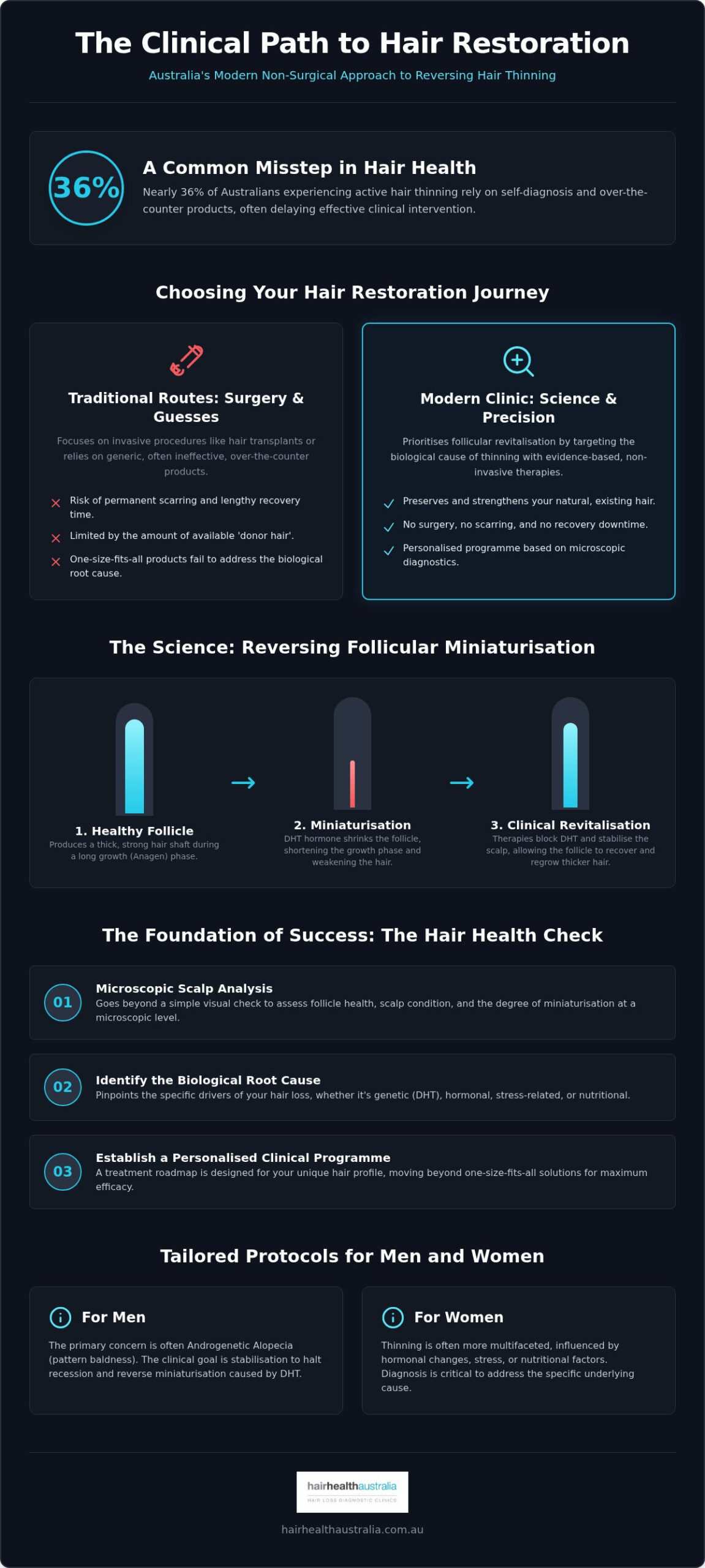
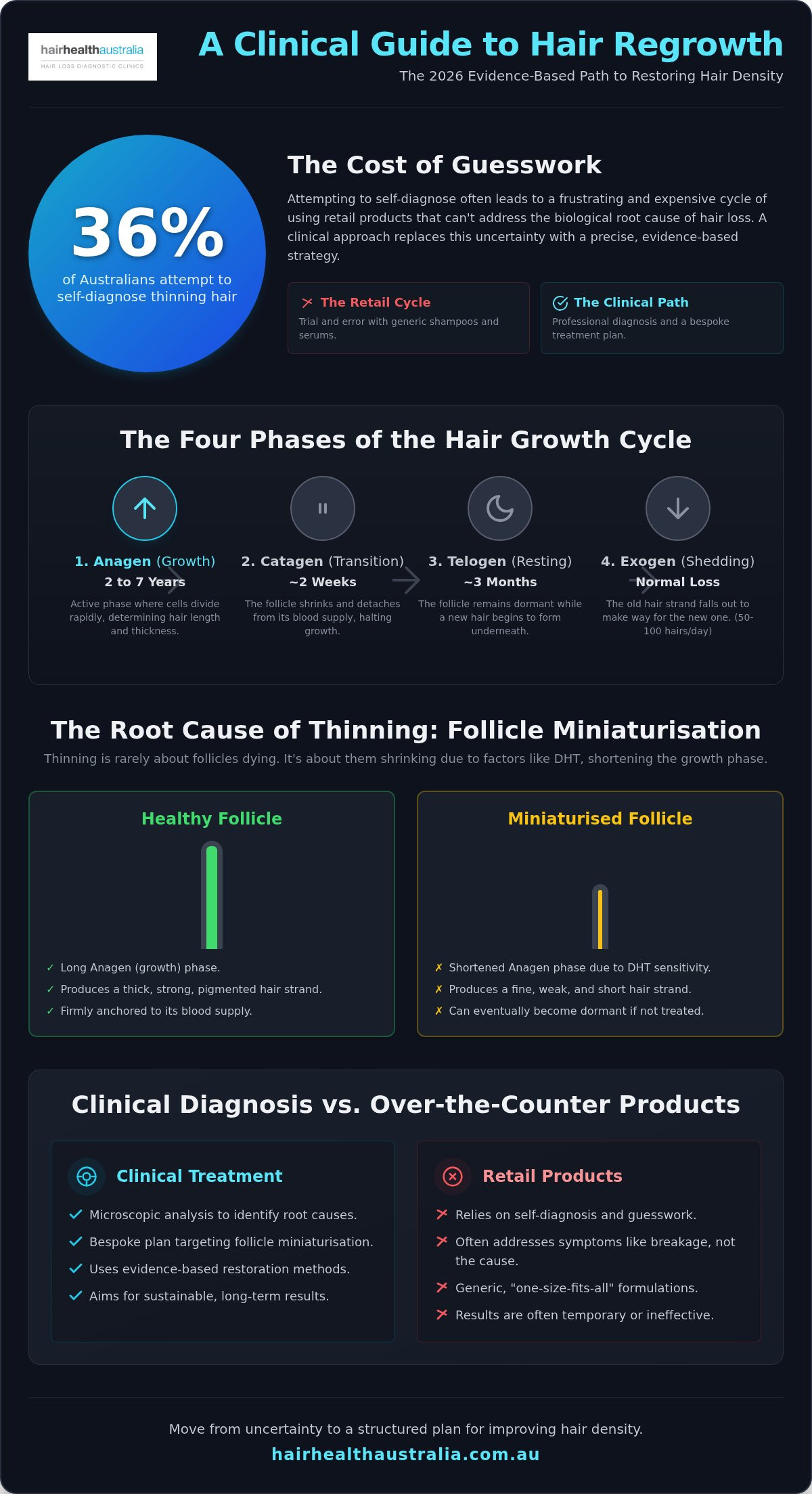
Did you know that roughly 36% of Australians experiencing thinning hair attempt to self-diagnose their condition before seeking professional help? This often leads to a frustrating cycle of trial and error, where you might spend hundreds of dollars on “miracle” shampoos and retail serums that simply can’t address the underlying biological causes of follicle miniaturisation. It’s understandable to feel anxious when you notice a receding hairline or a more visible scalp, especially when conflicting advice online makes the path forward feel cluttered and confusing.
Finding an effective hair regrowth treatment isn’t about luck or the most expensive bottle on a chemist shelf. It’s about clinical precision. In this 2026 guide, we’ll strip away the marketing hype to explore the biological mechanics of how your hair actually grows. You’ll discover why a diagnostic, clinical approach outperforms retail products for sustainable results. We’ll outline a clear, non-surgical path to restoring hair density, helping you move from uncertainty to a grounded, evidence-based strategy for thicker, healthier hair.
Key Takeaways
- Learn how the anagen phase determines hair thickness and why supporting the biological growth cycle is essential for lasting results.
- Distinguish between temporary hair breakage and clinical thinning through professional microscopic analysis to avoid wasting time on ineffective remedies.
- Understand why a bespoke hair regrowth treatment is more effective than generic retail products for addressing deep-seated follicle miniaturisation.
- Explore a clear, non-surgical progression from clinical diagnosis to active recovery using evidence-based restoration methods.
- Discover how a personalised, Sydney-based consultation replaces online guesswork with a structured plan for improving hair density and scalp health.
The Biological Blueprint: How Hair Growth Actually Works
Hair growth isn’t a simple, continuous process. It is a sophisticated biological cycle occurring within the follicle, a tiny organ located in the dermal layer of your skin. Each follicle operates independently, moving through specific stages of activity and rest. While many people assume hair loss is a permanent “death” of the follicle, it’s often a sign that the cycle has been disrupted or stalled. Understanding The Hair Growth Cycle is the first step in identifying how a clinical hair regrowth treatment can intervene to restore density.
While the often-cited average growth rate is about 1.25cm per month, this figure varies significantly between individuals. Factors such as genetics, age, and metabolic health dictate how quickly your hair grows and how long it remains in the active phase. The anagen phase is the primary target for all clinical regrowth therapies.
The Four Phases of the Hair Growth Cycle
To manage hair health effectively, we must look at the four distinct stages of follicle activity. Each phase plays a critical role in maintaining a full head of hair:
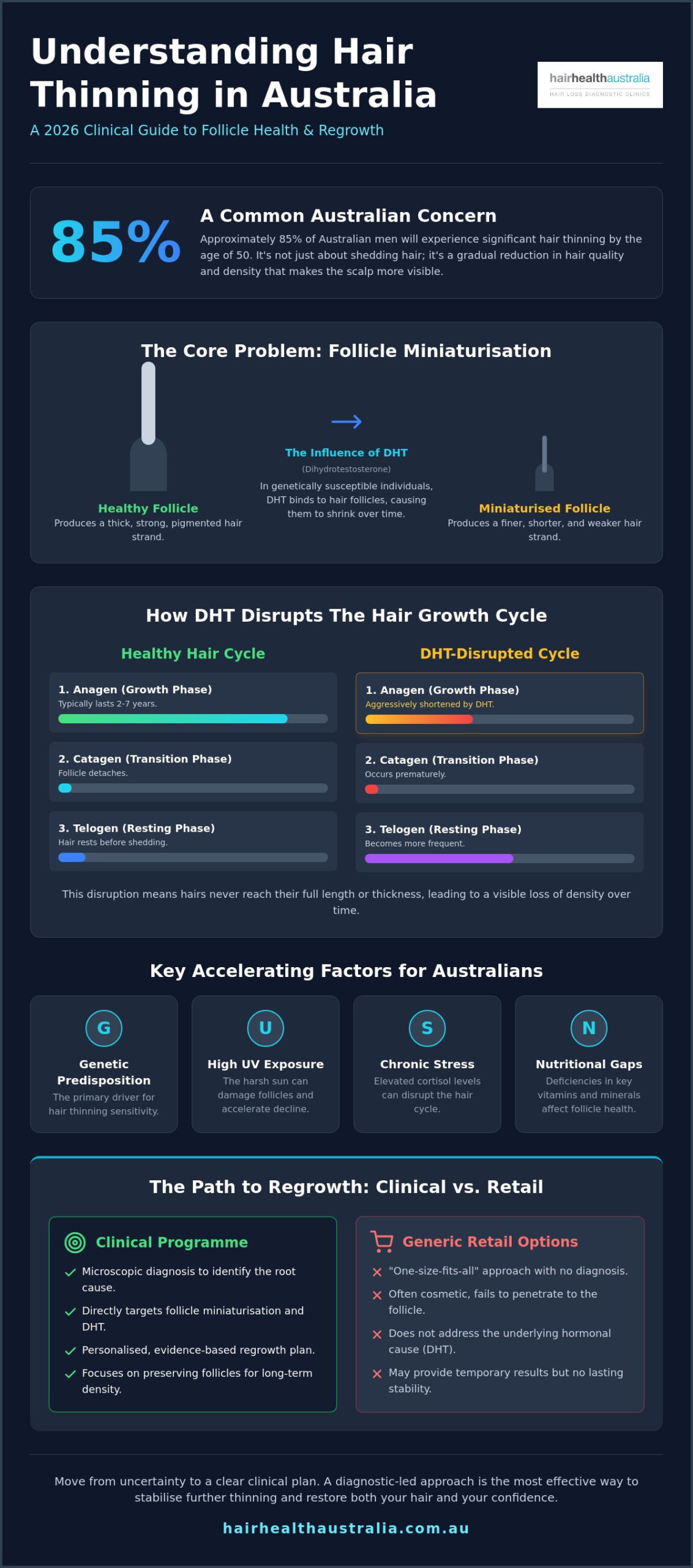
- Anagen (Growth): This is the active stage where cells in the root divide rapidly. It can last anywhere from two to seven years, and its duration determines the ultimate length and thickness of the hair strand.
- Catagen (Transition): A short, two-week phase where the hair follicle shrinks and detaches from the dermal papilla, which provides its blood supply.
- Telogen (Resting): The follicle remains dormant for about three months. While the old hair stays in place, a new hair begins to form beneath it.
- Exogen (Shedding): This is the final stage where the old hair falls away. It’s normal to lose 50 to 100 hairs a day during this phase.
Visible thinning occurs when these phases are knocked out of balance. If a higher percentage of follicles enter the telogen phase prematurely, you’ll notice increased shedding and a loss of overall volume. Follicles are rarely lost immediately; instead, they often become miniaturised or dormant, waiting for the right stimulus to return to the anagen stage.
Why Your Hair Growth Might Have Stalled
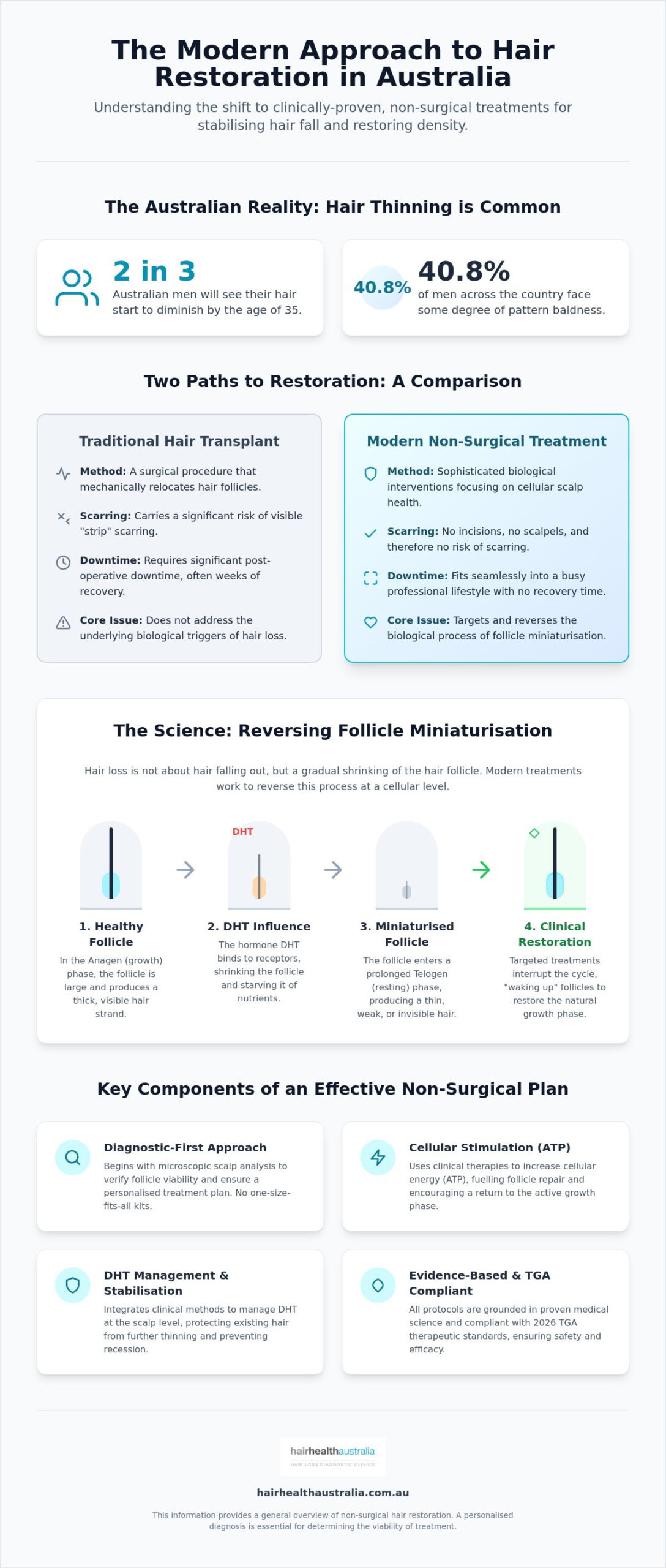
When hair growth stalls, it’s usually due to follicle miniaturisation. This biological process is often driven by hormonal shifts or sensitivity to Dihydrotestosterone (DHT), which causes the follicle to shrink over time. As the follicle constricts, the anagen phase shortens. The resulting hair is finer, shorter, and lacks the pigment of healthy hair. Eventually, these follicles may stop producing visible hair entirely, though they remain present beneath the scalp.
Identifying the difference between active and dormant follicles is a key diagnostic factor in any successful restoration plan. If a follicle is still active but producing thin, weak hair, it can often be revitalised. This is why a professional hair health check is essential. It allows for a precise analysis of your scalp to determine which follicles are viable for recovery and which require a more intensive clinical approach to stimulate regrowth.
Factors Influencing Hair Density and Scalp Health
Many Australians confuse hair breakage with actual clinical hair loss. While breakage involves the hair shaft snapping due to external damage, clinical loss occurs at the follicle level. Think of your scalp as the “soil” for your hair. If the environment is compromised, even the most advanced hair regrowth treatment will struggle to produce results. In Australia, our follicles face unique environmental challenges. The intense UV radiation can degrade hair proteins and weaken the cuticle, while mineral-heavy water in some regions creates buildup that can irritate the scalp and hinder healthy growth.
A professional hair health check can help you distinguish between environmental damage and internal follicle issues, ensuring you aren’t wasting money on the wrong solutions.
Genetic Predispositions and Hormonal Triggers
Hormonal shifts often dictate the success of a hair regrowth treatment. Dihydrotestosterone (DHT) is a primary trigger in both men and women, causing follicles to shrink and eventually stop producing visible hair. You can find more specific details on these genetic insights in our guide to Men Hair Loss Pattern. Beyond genetics, systemic factors like low iron levels or thyroid dysfunction can significantly impact hair density. Understanding these internal triggers is vital, as Clinically-Proven Hair Loss Treatments often require addressing these underlying health issues alongside clinical therapies to be truly effective.
The Role of Nutrition and Lifestyle
Nutrition serves as the raw material for hair synthesis. Since hair is primarily composed of a protein called keratin, adequate protein intake is non-negotiable for maintaining density. Essential micronutrients like Biotin and Zinc act as catalysts for this process. When you undergo restrictive dieting, the body often redirects nutrients away from “non-essential” functions like hair production. This frequently leads to temporary shedding known as Telogen Effluvium.
Stress management is equally critical for a healthy growth cycle. High cortisol levels can prematurely push follicles into the resting phase, halting your progress and leading to visible thinning. Maintaining a balanced lifestyle ensures your follicles have the biological support they need to remain in the active anagen phase for as long as possible.
Clinical Diagnosis vs. Over-the-Counter Products
Walk into any Australian chemist and you’ll find shelves overflowing with “thickening” shampoos and “miracle” serums. It’s easy to get caught up in the marketing, but retail shopping is essentially a process of guesswork. Without a professional diagnosis, you’re treating the symptoms rather than the root cause. A clinical approach replaces this uncertainty with objective data. By identifying the specific biological triggers behind your thinning, we can implement a hair regrowth treatment that’s tailored to your unique scalp profile. Getting a correct diagnosis early is far more cost-efficient than years of trial and error with generic products that don’t address your specific needs. Stopping the cycle of wasted spend starts with understanding that your scalp requires a medical-grade strategy, not a cosmetic one.
Why Microscopic Hair Analysis is Essential
Visual inspection has its limits. By the time you notice visible thinning in the mirror, you might’ve already lost a significant portion of your hair density in that specific area. Microscopic scanning is the clinical gold standard because it allows us to see what’s happening below the skin surface. These high-resolution scans identify follicle health, sebum blockage, and the ratio of active to dormant follicles. This precise data forms the foundation of a personalised hair restoration plan. If we detect miniaturisation early, we can intervene before the follicle becomes completely inactive.
The Limitations of Retail Growth Shampoos
Most retail shampoos are designed to clean the hair or provide temporary cosmetic volume by coating the hair shaft. They rarely contain the active ingredients or the delivery systems required to reach the follicle bulb, which sits several millimetres deep in the scalp. There’s also a significant difference between “anti-breakage” claims and genuine “pro-growth” results. A retail product might make your existing hair feel slightly stronger, but it won’t stop the genetic miniaturisation caused by hormones like DHT. One-size-fits-all solutions simply cannot address the complex biological factors that dictate your growth cycle. Relying on these products often delays the start of effective clinical therapy, allowing thinning to progress further than necessary. A professional hair regrowth treatment focuses on the biological health of the follicle itself, ensuring that new growth is sustainable and dense.
Proven Strategies for Stimulating Follicle Recovery
Transitioning from a diagnosis to an active recovery phase marks the shift from guesswork to a structured clinical protocol. A successful hair regrowth treatment isn’t an overnight fix; it’s a commitment to a biological timeline. You should expect a window of three to six months before visible changes in density occur. This timeframe allows the follicles to complete their resting phase and re-enter the active growth stage. Consistency is your most powerful tool during this period. Skipping applications or missing clinical sessions disrupts the therapeutic levels required to sustain follicle stimulation.
Non-Surgical Clinical Treatments
Clinical-grade therapies work by targeting the follicle’s environment at a cellular level. These methods focus on increasing vasodilation, which ensures a steady supply of oxygen and nutrient-rich blood reaches the hair root. By providing this intensive stimulus, we can “wake up” follicles that have drifted into a prolonged dormant state. This process effectively extends the anagen phase, allowing hairs to grow thicker and remain in the scalp for longer. For a deep dive into the specific methodologies we utilise, you can refer to our guide on the Best Hair Regrowth Treatment Australia 2026.
Topical Interventions and Scalp Maintenance
The science behind clinical-strength topicals differs significantly from standard chemist-grade options. While over-the-counter serums often sit on the surface, professional interventions use advanced delivery systems to penetrate the scalp and reach the follicle bulb. However, even the most potent ingredients won’t work if the scalp environment is compromised. Sebaceous buildup, dead skin cells, and environmental pollutants can create a physical barrier that hinders new hair emergence. Maintaining a clear, healthy environment is a non-negotiable part of your recovery. To support your clinical results, we recommend a disciplined at-home maintenance routine:
- Use prescribed clinical cleansers to remove sebum and mineral buildup without stripping natural oils.
- Apply topical stimulants precisely to the thinning areas identified during your microscopic scan.
- Avoid harsh chemical styling products that can cause inflammation or scalp irritation.
- Protect your scalp from the intense Australian sun to prevent UV-induced follicle stress.
If you’re ready to move past generic solutions and start a plan backed by data, your first step is a professional hair health check to establish your baseline.
Personalised Hair Restoration at our Sydney Clinic
Choosing a path for hair restoration shouldn’t feel like a gamble. At our Sydney-based clinic, we’ve spent over 15 years refining a professional environment where clinical data takes precedence over marketing claims. We provide an evidence-based alternative to the “miracle cures” often found in retail aisles. Our focus remains solely on non-surgical hair regrowth treatment options that are grounded in biological science. When you visit us in the heart of Sydney, you aren’t just a customer; you’re a patient seeking clarity. We replace the anxiety of thinning with a structured, systematic approach to follicle recovery.
The Hair Health Australia Approach
Our methodology is built on transparency. We believe in “straight-talking” honesty regarding what non-surgical treatments can realistically achieve for your specific hair type and loss stage. Our specialised consultants strike a balance between medical authority and empathetic understanding. We don’t offer one-size-fits-all bundles. Instead, we use the results of your diagnostic analysis to curate a programme that targets your unique hormonal or environmental triggers. This individual-centric focus ensures that every step of your hair regrowth treatment is purposeful and verified through clinical observation.
Starting Your Regrowth Journey in Sydney
The transition from concern to action begins with a comprehensive Hair Health Check. This isn’t a simple visual inspection. During this diagnostic session, we use high-definition microscopic scanning to map your scalp. We look for follicle miniaturisation, sebum blockages, and signs of dormancy that aren’t visible to the naked eye. This data allows us to determine the viability of your follicles and predict the likely success of various restoration strategies.
Early intervention is the absolute key to success. The sooner we identify the biological shift in your growth cycle, the more existing hair we can preserve. Waiting until thinning is highly visible often means the follicles have progressed further into a dormant state, making recovery more complex. By booking a consultation today, you’re taking a proactive step toward restoring your hair density in a supportive, clinical setting. We’ll guide you through the results of your scan and outline a clear, non-surgical path forward that values precision and sustainable results above all else.
Empower Your Restoration Journey with Clinical Precision
Understanding the biological mechanics of your hair is the foundation of effective restoration. We’ve explored why generic retail products often fail to reach the follicle bulb and how a diagnostic approach identifies the exact stage of your growth cycle. By prioritising clinical precision over chemist-shelf guesswork, you can move toward sustainable results with confidence.
At Hair Health Australia, our Sydney-based specialists bring over 15 years of specialised clinical expertise to every consultation. We utilise advanced microscopic diagnostic technology to provide a clear, objective view of your scalp health. This data-driven method ensures your hair regrowth treatment is tailored specifically to your needs rather than a one-size-fits-all programme.
The most effective results always stem from early intervention. Don’t let uncertainty delay your progress toward thicker, healthier hair density. Book your comprehensive Hair Health Check at our Sydney clinic today and gain the clarity you need to move forward. You don’t have to navigate thinning hair alone; expert guidance is ready to help you restore your confidence.
Frequently Asked Questions
Can hair growth be permanently restored without surgery?
Hair growth can be effectively restored and maintained through non-surgical clinical programmes, provided the follicles remain viable. While surgery physically moves hair, clinical therapies focus on revitalising existing follicles and extending the anagen growth phase. For conditions like androgenetic alopecia, ongoing maintenance is usually required to counteract genetic triggers. Success depends on early intervention and a personalised plan that addresses the root cause rather than just masking surface symptoms.
How long does it take to see results from clinical hair growth treatments?
You should expect to see initial visible changes within three to six months of starting a consistent programme. This timeline is dictated by the biological hair growth cycle, as it takes time for follicles to transition from the resting phase back into the active growth stage. While some patients report improved scalp health and reduced shedding earlier, significant improvements in density require patience and adherence to the prescribed clinical protocol.
Will a growth shampoo from the chemist actually work for thinning hair?
Retail shampoos found in a local chemist are generally designed for surface cleaning or adding temporary cosmetic volume. They rarely contain the clinical-strength active ingredients or the penetration technology needed to reach the follicle bulb. While they might improve the appearance of existing hair, they cannot stop the genetic process of follicle miniaturisation. A professional hair regrowth treatment is necessary to address the deep-seated biological triggers that cause visible thinning.
Does stress really stop my hair from growing?
Elevated stress levels can lead to a condition called Telogen Effluvium, where a high percentage of follicles are prematurely pushed into the resting phase. This results in sudden, diffuse shedding across the entire scalp. While this type of loss is often temporary, chronic stress can prolong the cycle and hinder the recovery of healthy density. Managing cortisol levels alongside a structured clinical programme is essential for returning your follicles to a normal growth rhythm.
What is the most effective hair regrowth treatment in Australia for 2026?
The most effective hair regrowth treatment in Australia for 2026 is a personalised, multi-faceted clinical programme based on objective diagnostic data. There is no one-size-fits-all solution; success relies on combining microscopic follicle mapping with targeted non-surgical therapies. By identifying specific triggers such as DHT sensitivity or nutritional deficiencies, we can apply the precise stimulus required to restore density and ensure long-term follicle health in a professional, clinical environment.
Is microscopic hair analysis necessary for a diagnosis?
Microscopic hair analysis is the clinical gold standard for an accurate diagnosis because it reveals what visual inspection cannot. It allows us to measure follicle diameter, identify sebum blockages, and assess the ratio of active to dormant follicles. This level of detail is critical for distinguishing between temporary shedding and permanent thinning. Without this data, any restoration plan is based on guesswork rather than the specific biological needs of your scalp.
Can dormant hair follicles be reactivated?
Dormant follicles can often be reactivated if they have not yet progressed to a stage of complete atrophy or scarring. These follicles are essentially in a prolonged resting phase and require a specific clinical stimulus to re-enter the anagen stage. Through targeted therapies that increase blood flow and deliver essential nutrients to the root, we can encourage these follicles to produce visible hair again. Success depends largely on how early the reactivation process begins.
How often should I wash my hair to encourage growth?
For most individuals, washing your hair two to three times a week is ideal for maintaining a healthy scalp environment. Over-washing can strip essential oils and irritate the skin; however, under-washing allows sebum and pollutants to build up and potentially block follicles. Using a clinical cleanser that removes buildup without causing inflammation is vital. A clear, healthy scalp acts as the necessary soil for new hair to emerge and thrive.