
Best Female Pattern Hair Loss Treatment Sydney: 2026 Guide

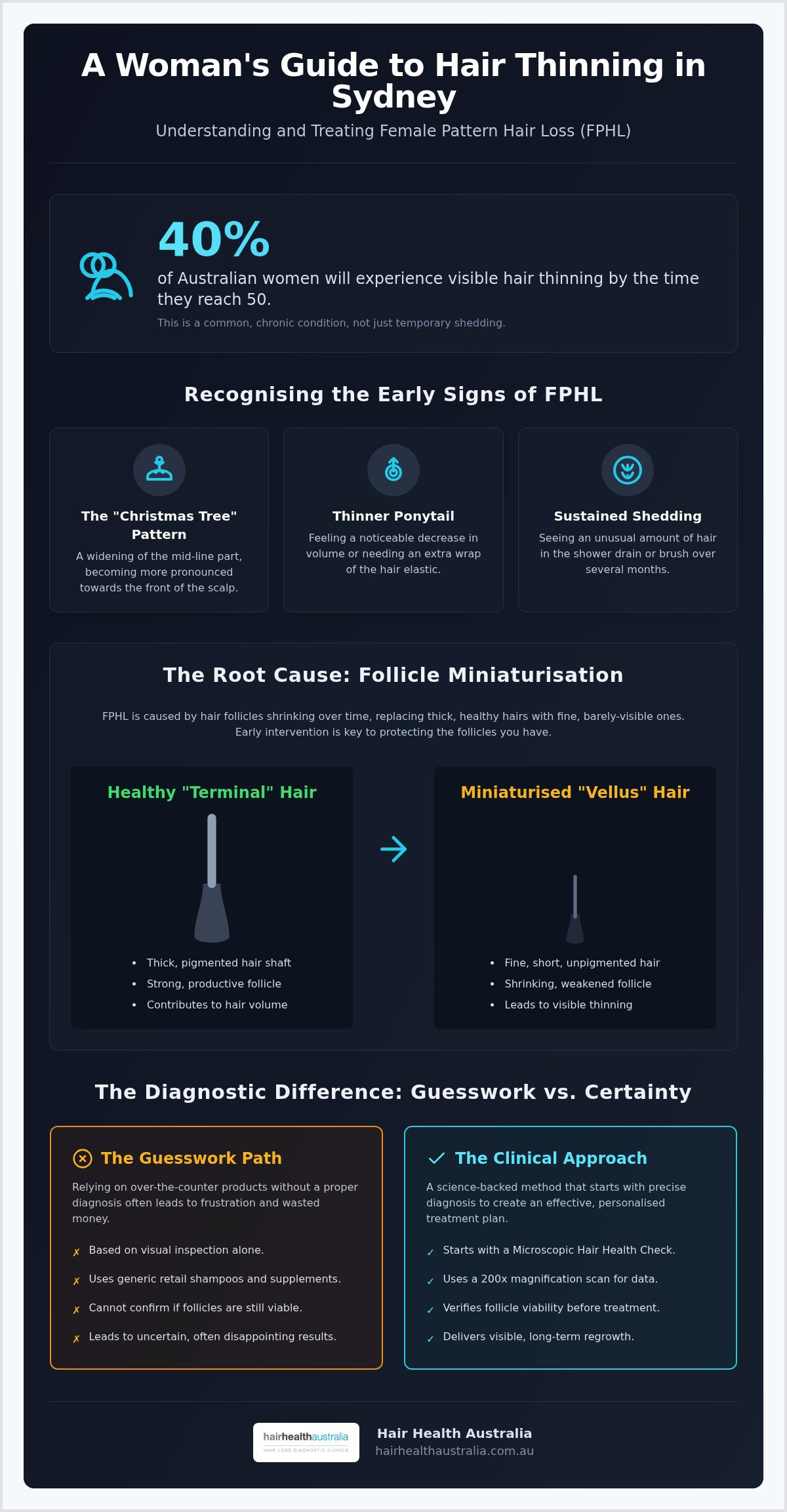
Did you know that approximately 40% of Australian women will experience visible hair thinning by the time they reach 50? For many women across NSW, the first sign of a problem isn’t a handful of hair in the shower, but a widening part that slowly transforms into a “Christmas tree” pattern. It’s a distressing transition that makes styling difficult and leaves you wondering if what you’re seeing is temporary shedding or permanent loss. Finding the best treatment for female pattern baldness Sydney has to offer starts with moving past the guesswork and into clinical certainty.

We understand that your hair is a vital part of your identity, and watching its density fade can feel overwhelming. This 2026 guide is designed to replace that uncertainty with a clear, science-backed roadmap to restoration. You’ll discover the most effective non-surgical clinical treatments available today that focus on stopping thinning and revitalising your natural hair volume. We will preview the diagnostic power of a specialised Hair Health Check at our Redfern clinic and outline a sustainable maintenance plan that moves beyond temporary fixes to deliver visible, long-term regrowth.

Key Takeaways

  • Learn to recognise the specific “Christmas tree” thinning pattern of Female Pattern Hair Loss and why early clinical intervention is vital for Sydney women.
  • Discover why a microscopic assessment is the foundation for finding the best treatment for female pattern baldness Sydney clinics provide, moving beyond retail guesswork.
  • Understand the clinical difference between generic over-the-counter products and personalised regrowth programs that utilise targeted growth stimulants.
  • Identify the essential credentials and “straight-talking” professional standards you should expect from a specialised hair loss centre in Sydney.
  • Explore how a non-invasive, evidence-based approach can restore your hair density and provide a sustainable plan for long-term maintenance.

Understanding Female Pattern Baldness (FPHL) in Sydney

Female Pattern Hair Loss (FPHL), clinically known as androgenetic alopecia, is the most common cause of hair thinning among women in Australia. While it is often associated with ageing, many women in Sydney begin noticing changes as early as their 20s or 30s. This condition isn’t a temporary shedding phase; it’s a chronic progression that requires a targeted clinical strategy. Identifying the Pattern hair loss early is the first step toward finding the best treatment for female pattern baldness Sydney has available.

For many, the first sign is the “Christmas tree” pattern. This involves a widening of the mid-line part that becomes more pronounced toward the front of the scalp, resembling the shape of an evergreen tree. Unlike male baldness, which often results in a receding hairline or a smooth crown, FPHL typically presents as diffuse thinning across the top of the head while the front hairline remains relatively intact. This makes the loss subtle at first, but the cumulative effect on hair volume is significant.

It’s essential to distinguish FPHL from Telogen Effluvium. The latter is a temporary reaction to stress, illness, or hormonal shifts like pregnancy, usually resulting in sudden, heavy shedding. FPHL, by contrast, is a genetic predisposition where the hair gradually loses its volume over years. This slow change can be emotionally taxing. We see many women who feel a loss of confidence or find it increasingly difficult to style their hair as their scalp becomes more visible. Acknowledging this impact is a core part of our clinical approach.

The Science of Follicle Miniaturisation

At the heart of FPHL is a biological process where hair follicles become increasingly sensitive to hormonal changes. Over several growth cycles, the follicles begin to shrink. This results in “terminal” hairs, the thick, pigmented ones we want, being replaced by “vellus” hairs, which are short, fine, and lack pigment. Miniaturisation is the fundamental mechanism where healthy hair follicles progressively dwindle in size until they can no longer produce visible hair. Once a follicle has completely miniaturised, it’s much harder to revive, which is why clinical intervention focuses on protecting the follicles you still have.

Identifying the Early Signs of Thinning

Early detection is your greatest advantage. If you can catch the thinning in its early stages, particularly in your 30s or 40s, the potential for regrowth and density maintenance is significantly higher. You don’t need to wait for visible patches to take action. Keep an eye on these common indicators:

  • A part line that looks wider in the bathroom mirror than it did a year ago.
  • A ponytail that feels noticeably thinner or requires an extra wrap of the elastic.
  • An unusual amount of hair left in the shower drain or hairbrush over a sustained period.

If these signs feel familiar, the next logical step is a professional diagnosis. A Hair Health Check provides the microscopic evidence needed to confirm if miniaturisation is occurring. This clarity is essential before committing to the best treatment for female pattern baldness Sydney specialists recommend for your specific hair profile.

The Diagnostic Difference: Why a Microscopic Hair Health Check is Essential

Many women begin their restoration journey by purchasing retail shampoos or supplements after a quick glance in the mirror. While this is a common first step, visual inspection alone cannot identify the underlying biological state of your scalp. To secure the best treatment for female pattern baldness Sydney clinics provide, you must move beyond guesswork. A clinical diagnosis ensures that the program you choose is actually capable of addressing your specific stage of thinning.

The Hair Health Check is the clinical gold standard for this process. By utilising a 200x magnification scan, we can see beneath the surface of the hair to examine the health of the follicles and the scalp environment. While Australian government health advice outlines the general symptoms of thinning, a microscopic assessment provides the data required for a professional treatment plan. It allows us to verify follicle viability before you invest time or money into a regrowth program.

What Your Scalp Reveals Under the Microscope

The microscope reveals details that are invisible to the naked eye, such as sebum crystallisation or scalp inflammation. These conditions can physically hinder hair growth, regardless of how many supplements you take. We also perform a precise count of active follicles per square centimetre. This data point is vital for predicting your regrowth potential and managing expectations.

Critically, the scan helps us distinguish between dormant follicles and those that are permanently lost. If a follicle is merely dormant, it can often be revitalised with the right clinical stimulants. However, if the follicle has been replaced by scar tissue, no amount of topical treatment will bring it back. This “straight-talking” honesty is what sets a clinical approach apart from a retail one.

Your Clinical Consultation in Sydney

When you visit our Sydney clinic in Redfern for a diagnostic scan, the process is thorough and educational. We don’t just show you the images; we explain what they mean for your future hair density. We use this microscopic evidence to create a personalised hair restoration roadmap tailored to your biology. You can learn more about how these diagnostics fit into a broader strategy in our reference guide on the Best Hair Regrowth Treatment Australia 2026. If you’re ready to stop the uncertainty, a professional Hair Health Check is the most reliable place to start.

Comparing the Best Treatments for Female Pattern Baldness

Many Sydney women find themselves overwhelmed by the sheer volume of “miracle” cures available online or at the local chemist. However, the best treatment for female pattern baldness Sydney offers isn’t a single product, but a coordinated clinical strategy. While retail solutions offer convenience, they often lack the potency and professional oversight required to reverse miniaturisation effectively. A clinical approach focuses on evidence, not just marketing claims.

Clinical programmes focus on a multi-pronged approach. This often includes female-specific doses of DHT blockers and growth stimulants that are far more sophisticated than standard over-the-counter options. As noted by Harvard Medical School on treatments, addressing the hormonal and vascular aspects of hair loss simultaneously yields the most consistent results. By combining these with Low-Level Laser Therapy (LLLT), we can stimulate cellular activity within the follicle, encouraging a return to the “terminal” growth phase where hair is thicker and more pigmented.

While surgical hair transplants are a common topic in hair restoration, they are rarely the first choice for women with diffuse thinning. Because female pattern loss typically affects the entire top of the scalp, finding a stable “donor” site is difficult. Non-surgical clinical protocols are generally superior for restoring overall density without the risks and high costs associated with invasive surgery.

Clinical Regrowth Programmes vs. Chemist Shop Solutions

Generic minoxidil from a chemist shop often fails because it’s used in isolation. Without a clean scalp environment or the addition of complementary stimulants, the active ingredients struggle to penetrate the follicle effectively. A professional clinical programme uses multi-modal therapy. This means we combine topical applications with oral support and light therapy, all monitored by a specialist. These professional-grade formulations are designed to be more stable and effective than mass-produced retail versions.

The Non-Surgical Advantage for Women

For the busy Sydney professional, the non-surgical route offers a significant lifestyle benefit: zero downtime. You can maintain your treatment schedule without taking time off for recovery or dealing with post-operative bandaging. This approach provides several key advantages:

  • Natural Integration: Density is restored gradually across the entire scalp, avoiding the “pluggy” appearance of older surgical techniques.
  • Sustainability: Clinical programmes focus on the long-term health of your existing hair, rather than just moving follicles from one spot to another.
  • Safety: By avoiding invasive procedures, you eliminate the risk of surgical scarring, infections, or long recovery periods.

This methodical, non-invasive approach ensures that your restoration journey is as discreet as it is effective, allowing you to regain your confidence without interrupting your daily life.
Best Female Pattern Hair Loss Treatment Sydney: 2026 Guide

Choosing a Hair Loss Clinic in Sydney: A Locals Guide

Selecting the right clinic is a decision that impacts both your confidence and your long-term results. The best treatment for female pattern baldness Sydney offers is one that balances advanced technology with a personalised, human touch. Your chosen specialist should act as a dedicated guide, providing the clinical data you need to make an informed choice about your hair’s future. It’s important to look for a provider with a long-standing reputation, such as those with over 15 years of experience in the Australian market, to ensure they understand the local clinical landscape.

A “straight-talking” approach is essential for building trust. A reputable specialist won’t hesitate to tell you if your follicles have reached a stage where non-surgical intervention may have limited efficacy. This level of honesty is vital because it saves you from investing in programs that won’t deliver the density you expect. For a more detailed breakdown of what to look for in a provider, refer to our Choosing a Non-Surgical Hair Loss Clinic in Sydney guide. Accessibility is also a practical factor; choosing a clinic in a central location like Redfern makes it easier to attend the regular check-ins required to monitor your progress.

Questions to Ask Your Sydney Specialist

During your initial consultation, the quality of the answers you receive is just as important as the technology being used. Don’t be afraid to ask direct questions to gauge the clinic’s expertise:

  • Can you show me microscopic evidence of my hair follicle health? A visual scan at 200x magnification should be the starting point for any clinical discussion.
  • What are the realistic expectations for regrowth in my specific case? Results vary based on the stage of loss, so you need a prognosis tailored to you, not a generic success rate.
  • Is the treatment program customised to my hormonal profile? FPHL is often driven by hormonal sensitivity, so the protocol must reflect your individual biology.

Environmental Factors for Sydney Hair Health

Sydney’s unique climate plays a significant role in your scalp’s health. High humidity levels during the summer months can increase sebum production, which may lead to scalp inflammation if not managed correctly. Additionally, our intense UV levels don’t just damage the skin; they can degrade the protein structure of your hair, making it brittle and more prone to breakage. Protecting your treated hair with appropriate scalp care and avoiding excessive sun exposure is vital for maintaining clinical results. Local water quality, specifically the chlorine levels in Sydney’s supply, can also irritate a sensitive scalp, making a professional-grade cleansing routine even more important for those undergoing treatment.

If you’re ready to move forward with a specialist who values precision and clinical honesty, you can book your Hair Health Check at our Sydney clinic today.

The Hair Health Australia Approach to Female Regrowth

At Hair Health Australia, we’ve refined a methodology that bridges the gap between over-the-counter guesswork and invasive surgery. Our Hair Loss Treatment for Women is built on over 15 years of clinical observation and success within the Australian market. We recognise that for a program to be effective, it must address the biological reality of your scalp, not just the visible symptoms. This commitment to evidence-based care is why we’re consistently recognised for providing the best treatment for female pattern baldness Sydney women can access to restore their natural density.

Our protocols are entirely non-invasive and clinically backed. We focus on revitalising the follicle from within, using multi-modal therapies that respect the delicate hormonal balance of the female body. By prioritising patient education, we ensure you understand the science behind every step of your restoration. This fosters a partnership that supports long-term scalp health rather than a quick, unsustainable fix. We don’t just aim for a temporary boost in volume; we work toward a sustainable maintenance plan that keeps your hair looking its best for years to come.

Personalised Restoration Protocols

No two scalps are identical, which is why we never offer a one-size-fits-all solution. Every program we design is a direct response to the data gathered during your microscopic scan. We utilise high-potency, clinical-grade stimulants that are specifically formulated to maximise density in areas where miniaturisation has been detected. Unlike generic products, these formulations are applied under clinical supervision, ensuring the scalp environment is optimised for maximum absorption. At our Redfern clinic, we provide ongoing support and progress monitoring, allowing us to adjust your protocol as your hair responds to the treatment.

Starting Your Journey Today

The most difficult part of addressing hair loss is often the decision to stop waiting and start acting. We believe that clarity is the best antidote to the stress of thinning. By booking a no-obligation scan at our Sydney centre, you’re gaining a professional insight into your hair’s future. Our team is dedicated to providing a steady, composed environment where your concerns are met with scientific precision and empathetic care. If you’re ready to reclaim your hair density and move toward a more confident version of yourself, the path forward is straightforward and supported by experts. Book your free Hair Health Check at our Sydney clinic today.

Take Control of Your Hair Restoration Journey

Restoring your hair density is a methodical process that begins with clinical evidence rather than retail guesswork. As we have explored, the most effective results come from a combination of professional microscopic diagnosis and non-surgical, evidence-based protocols. Finding the best treatment for female pattern baldness Sydney offers means partnering with a specialist who provides a transparent prognosis and a personalised roadmap tailored to your specific biology.

Our Redfern clinic combines over 15 years of Australian experience with advanced microscopic analysis to ensure your restoration plan is grounded in science. By identifying the state of your follicles early, you can implement a sustainable maintenance strategy that protects your existing density while encouraging new growth. You don’t have to manage this transition alone or rely on products that don’t address the underlying miniaturisation of your hair.

We invite you to Book Your Free Sydney Hair Health Check today. This no-obligation consultation is the first step toward reclaiming your confidence and achieving the hair volume you deserve. With the right clinical support and a dedicated guide, a fuller and healthier future for your hair is well within reach.

Frequently Asked Questions

Is female pattern baldness reversible with clinical treatment?

Clinical treatment can revitalise miniaturised follicles that are still active, but it cannot regrow hair once a follicle has completely scarred over. Success depends on how early you begin your program. By using the best treatment for female pattern baldness Sydney specialists provide, you can often restore significant density and stop the progression of thinning. It is about restoring what is dormant rather than creating new follicles.

How much does female hair loss treatment cost in Sydney?

The cost of a hair restoration program in Sydney varies based on the severity of your thinning and the specific technologies required for your case. Clinical programs are typically structured as a series of sessions or a long-term maintenance plan rather than a one-off fee. We recommend a Hair Health Check to receive an accurate, individualised quote based on your microscopic hair density and follicle health.

When planning for the cost of these clinical programs, some individuals choose to liquidate unused assets to fund their treatments; for example, selling unwanted jewellery to a reputable service like Silver Buyers Sydney can provide immediate financial flexibility for your personal care goals.

Will I need to use these treatments forever to keep my hair?

You will likely need a sustainable maintenance plan to keep the results you achieve during the initial regrowth phase. Because female pattern thinning is a progressive genetic condition, stopping treatment entirely allows the miniaturisation process to resume. Most women transition to a less intensive maintenance schedule once they’ve reached their desired hair density, ensuring their results stay stable over the long term.

Can stress cause female pattern baldness to accelerate?

High levels of stress can trigger a temporary shedding condition called Telogen Effluvium, which often makes underlying pattern thinning appear much worse. While stress isn’t the primary cause of genetic hair loss, it can certainly accelerate the visible loss of volume. Managing your overall health and stress levels is a vital component of any clinical hair restoration strategy to ensure your follicles remain in the growth phase.

Are there any side effects to non-surgical hair regrowth programs?

Non-surgical clinical programs are generally well tolerated with very few reported side effects. Some women might experience minor scalp irritation or dryness depending on the specific topical stimulants used in their personalised protocol. Because these programs avoid invasive surgery, you don’t have to worry about the risks of infection, anaesthesia, or scarring associated with transplant procedures. We monitor your scalp health closely throughout your journey.

How long does it take to see results from a clinical hair program?

Most women begin to see visible improvements in hair texture and density within three to six months of starting a clinical program. Hair grows in cycles, so it takes time for revitalised follicles to produce new, terminal strands that reach the surface of the scalp. We use regular microscopic scans to track these changes at the follicle level before they become obvious in the mirror.

Does Medicare cover hair loss treatments in Australia?

Medicare generally does not cover hair loss treatments in Australia as they are classified as cosmetic procedures. However, if your hair loss is caused by an underlying medical condition, some diagnostic blood tests ordered by your GP might be bulk billed. It’s always best to check with your private health insurer to see if your specific policy offers any rebates for clinical hair programs or consultations.

Can I treat thinning hair if I am going through menopause?

You can certainly treat thinning hair during menopause, and many women find this is the most effective time to start a program. The drop in oestrogen during this period often makes the follicles more sensitive to DHT, leading to faster thinning. A specialised program for the best treatment for female pattern baldness Sydney clinics offer can help counter these hormonal shifts and preserve your natural hair density.
2026 Australian Clinical Guide: Hair Density for Women

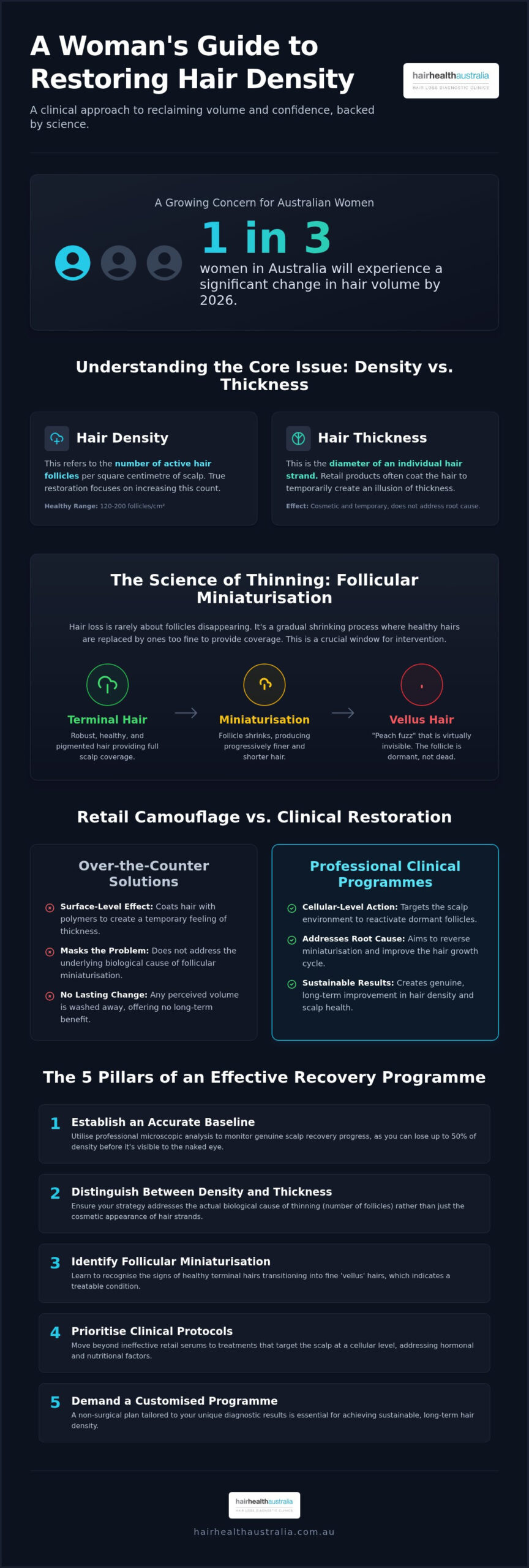
Did you know that as of 2026, approximately one in three Australian women will experience a significant change in hair volume at some point in their lives? If you’re currently searching for how to increase hair density for women, you’ve likely encountered the frustration of spending money on retail products that offer nothing more than temporary, surface-level volume. It’s a deeply personal concern to feel self-conscious about a visible scalp or to find yourself confused by the difference between seasonal shedding and genuine thinning. We understand that this uncertainty is exhausting, and you deserve a strategy rooted in clinical evidence rather than marketing hype.

The path to lasting restoration lies in reactivating the follicles themselves through a structured, professional approach. This guide moves beyond cosmetic camouflage to provide a scientifically-backed, non-surgical roadmap for recovery. We’ll explore the biological causes of follicular miniaturisation and outline the precise protocols used to achieve a visible reduction in scalp show-through. By the end of this article, you’ll have a clear understanding of your specific hair loss type and the systematic steps required to regain both your density and your confidence.

Key Takeaways

  • Distinguish between individual hair thickness and follicular density to ensure your restoration strategy addresses the actual biological cause of thinning.
  • Identify the signs of follicular miniaturisation, where healthy terminal hairs transition into fine vellus “peach fuzz” before the follicle becomes inactive.
  • Learn the clinical protocols for how to increase hair density for women that move beyond ineffective retail serums to target the scalp at a cellular level.
  • Utilise professional microscopic analysis rather than a mirror to establish an accurate baseline and monitor your scalp’s genuine recovery progress.
  • Understand why a customised, non-surgical programme tailored to your unique diagnostic results is essential for achieving sustainable, long-term results.

Understanding Hair Density vs. Hair Thickness: Why Your Approach Matters

When you start noticing more of your scalp in the mirror, your first instinct might be to reach for a “thickening” shampoo. However, there’s a vital clinical distinction between the diameter of an individual hair strand and the actual number of hairs growing on your head. Hair thickness refers to the width of the hair shaft itself, whereas hair density is defined as the number of active follicles per square centimetre of scalp. If your goal is to learn how to increase hair density for women, you must shift your focus from the hair you can see to the follicles you can’t.

Retail thickening products work by coating the hair with polymers or proteins to temporarily increase the diameter of each strand. While this provides an immediate boost in volume, it does absolutely nothing to address the underlying cause of a sparse scalp. True density restoration requires reactivating dormant follicles and ensuring each one is producing a healthy hair. Clinically, a healthy follicular density for women is generally considered to range between 120 and 200 hairs per square centimetre, depending on age and individual genetic factors.

The Clinical Definition of Follicular Density

Maintaining a high follicular count is a complex biological process influenced by genetics and natural ageing cycles. It’s a common misconception that you can accurately judge your hair health by sight alone. In reality, a woman can lose nearly 50% of her natural density before the thinning becomes obvious to the naked eye. This is why professional diagnostics, such as a Hair Health Check, are essential. They allow us to see beyond the surface and identify follicles that are still active but producing hair so fine it’s practically invisible to the mirror.

Common Causes of Low Hair Density in Australian Women

Living in Australia presents unique challenges for scalp health. Prolonged exposure to high UV levels can cause oxidative stress on the scalp, potentially damaging the delicate follicular environment. Beyond environmental factors, many women experience density drops due to Pattern hair loss, which is often triggered or accelerated by hormonal shifts during menopause or the postpartum period. Additionally, modern Australian lifestyles can sometimes lead to subtle nutritional deficiencies in iron or Vitamin D, both of which are critical for maintaining a robust hair growth cycle. Addressing how to increase hair density for women effectively requires a holistic view that considers these regional and biological factors alongside targeted clinical treatments.

The Science of Follicular Miniaturisation: Why Hair Appears Sparse

To understand how to increase hair density for women, we must first look at the biological process occurring beneath the scalp surface. Sparse hair is rarely the result of follicles simply vanishing. Instead, it is usually caused by a process called follicular miniaturisation. This occurs when the hair follicle gradually shrinks over successive growth cycles. As the follicle diminishes in size, it produces a hair that is shorter, finer, and less pigmented than its predecessor.

The transition typically moves from ‘terminal hair’, which is the robust, healthy hair we are accustomed to, to ‘vellus hair’, often described as peach fuzz. When a follicle reaches the vellus stage, it provides very little visual coverage, leading to the appearance of a thinning scalp. However, it is vital to recognise that a follicle in this state is often ‘dormant’ rather than ‘dead’. While it may appear inactive, the biological machinery remains intact, offering a window of opportunity for clinical intervention.

A primary driver of this process is Dihydrotestosterone (DHT). While often associated with male hair loss, DHT also affects the female scalp, albeit in a different pattern. In women, the sensitivity to androgens typically leads to a diffuse thinning rather than a receding hairline. Research into current perspectives on therapeutic options highlights that addressing this hormonal sensitivity is a cornerstone of modern treatment.

Androgenetic Alopecia and the Female Thinning Pattern

In Australian clinics, we frequently see women concerned about a ‘widening part’ or a general loss of volume across the crown. This is the classic presentation of female androgenetic alopecia. Unlike men, women rarely experience total baldness; instead, they suffer from a significant drop in overall density. Recognising the Early Signs of Alopecia in Women is the first step toward reversing this trend before the follicles become permanently inactive.

The Role of Scalp Micro-circulation

Healthy hair growth depends on a consistent supply of oxygen and nutrients delivered via the blood to the hair bulb. When scalp micro-circulation is compromised, either through inflammation or chronic tension, the follicle begins to starve. This lack of nourishment accelerates the miniaturisation cycle. Clinical treatments focus on restoring this vital blood flow to ‘wake up’ dormant follicles. If you are unsure where your follicles sit in this cycle, a professional microscopic scalp analysis can reveal the true state of your hair health and provide a clear path on how to increase hair density for women through targeted stimulation.

Clinical Treatments vs. Over-the-Counter Solutions: What Delivers Results?

Many women start their search for how to increase hair density for women in the beauty aisle of a local chemist. It’s an understandable starting point, but retail “growth” shampoos and serums rarely deliver on their promises. The fundamental issue is one of contact time and penetration. A shampoo is on the scalp for mere minutes before being rinsed away, which is insufficient for active ingredients to reach the hair bulb and reverse miniaturisation. To achieve genuine results, we must look at a hierarchy of hair restoration that moves from basic cosmetic camouflage to clinical intervention.

While surgical transplants are an option for some, they are often unnecessary and prohibitively expensive for diffuse thinning. Non-surgical clinical programmes represent the “goldilocks” zone for most women. These protocols combine medical-grade topicals with advanced stimulation technologies to revive dormant follicles without the downtime of surgery. A common objection we hear is the desire for “natural” remedies like rosemary oil or basic vitamins. While scalp health is influenced by nutrition, these DIY approaches often fail to address the hormonal and genetic drivers of thinning, leaving the underlying cause of Female pattern baldness completely untreated.

Why Volumising Products Are a Temporary Illusion

Volumising products rely on chemistry rather than biology. They typically use synthetic polymers that wrap around the hair shaft to create a “faux-density” by increasing the diameter of existing hairs. While this helps with styling, it doesn’t help you grow more hair. In fact, if these products aren’t properly clarified, they can leave heavy residues on the scalp. This buildup can lead to inflammation or clogged follicles, which actually stifles the environment needed for healthy growth. There’s a profound difference between looking thick for a day and growing dense for a lifetime.

Evidence-Based Non-Surgical Clinical Therapies

Clinical therapies focus on cellular reactivation. Low-level laser therapy (LLLT), for instance, uses specific wavelengths of light to stimulate ATP production within the hair follicles. This boost in cellular energy can extend the growth phase and encourage miniaturised follicles to produce thicker, more robust terminal hairs. When combined with customised topical formulations that move beyond standard, one-size-fits-all Minoxidil, these treatments offer a systematic path to recovery. For a deeper look at the most effective options available today, refer to our guide on the Best Hair Regrowth Treatment Australia 2026. Achieving medical-grade results requires a shift from surface-level care to follicular-level science.

2026 Australian Clinical Guide: Hair Density for Women

How to Measure and Monitor Your Hair Density Progress

Relying on your bathroom mirror to track hair regrowth is often a recipe for unnecessary stress. Because hair only grows about one centimetre per month, visual changes occur far too slowly for the naked eye to register on a daily basis. When investigating how to increase hair density for women, the ability to track micro-changes is just as important as the treatment itself. Establishing a baseline through a professional Hair Health Check allows you to move away from guesswork and toward data-driven results.

In the first 90 days of a clinical programme, you shouldn’t expect a full mane of new hair. Instead, look for secondary indicators of success, such as a noticeable reduction in daily shedding or an improvement in scalp comfort and oil balance. Microscopic scans reveal vellus hair growth before it’s visible to the eye. This early detection is vital for maintaining motivation during the initial months of treatment, as it confirms that the follicles are responding to the stimulation protocols long before the results become obvious in photos.

The Professional Microscopic Hair Analysis

High-magnification digital scans are the gold standard for monitoring density. These scans allow us to identify sebum blockages that may be stifling growth and, more importantly, measure the ratio of terminal to vellus hairs in specific areas of the scalp. By tracking this ratio over time, we can verify that miniaturised hairs are successfully transitioning back into thick, healthy terminal hairs. Online scanning tools or apps simply cannot provide the resolution required for this level of diagnostic accuracy. To get an accurate picture of your current follicular state, you can Book a Microscopic Hair Analysis with our Sydney team.

At-Home Indicators and When to Seek Specialist Help

While professional scans are essential for precision, there are reliable ways to monitor your progress at home. The “pony-tail test” is a practical method for women with longer hair; a shrinking circumference when you gather your hair often indicates a drop in density long before you see a widening part. Similarly, monitoring the “see-through” effect under harsh, overhead bathroom lighting can help you identify diffuse thinning. However, the most important indicator is your own psychological threshold. When hair worry starts impacting your daily life or dictates how you style your hair to hide your scalp, it’s time to seek a specialist’s opinion. Understanding how to increase hair density for women starts with acknowledging that early intervention is the most effective way to protect your remaining follicles. Schedule your Hair Health Check today to establish your clinical baseline and begin your recovery journey.

Restoring Density with Hair Health Australia’s Sydney Protocols

At Hair Health Australia, our non-surgical philosophy is built on the premise that every scalp requires a unique biological roadmap. While many women search for how to increase hair density for women through generic online subscriptions or local chemists, these solutions lack the diagnostic precision required to address the root cause of thinning. Our Sydney-based clinic provides a specialised alternative to the general GP experience. Rather than a standard “wait and see” approach, we use microscopic scanning to provide immediate clarity on your follicular health. Within your first 30 minutes at our centre, you’ll move from uncertainty to a clear, data-driven understanding of your hair’s recovery potential.

We’ve been providing clinical expertise in Sydney since 2009, focusing on medical-grade results without the need for invasive surgery. Our team acts as a dedicated guide, replacing hyperbolic marketing with transparency and evidence-based care. We understand that your hair is a significant part of your identity. Because of this, we treat every consultation as a partnership, ensuring you feel fully informed at every stage of the diagnostic process.

Personalised Non-Surgical Regrowth Programmes

We believe in a hybrid approach that combines intensive clinical therapy with structured at-home maintenance. This ensures your follicles receive 24/7 support, which is essential for reversing the miniaturisation cycle effectively. Our programmes focus on sustainability rather than temporary fixes. We aim to create a scalp environment where hair can thrive for years, not just weeks. For a comprehensive breakdown of the latest clinical options, you can explore our Female Hair Loss Treatment Guide. It is about moving beyond surface-level volume to achieve genuine, lasting density.

Starting Your Journey: The Hair Health Check

Your recovery begins with our signature 3-step process. First, we perform a high-magnification scan to assess your current terminal-to-vellus hair ratio. Second, our specialists provide a definitive diagnosis of your specific hair loss type. Finally, we design a customised treatment plan tailored to your unique microscopic results. This methodical approach removes the guesswork and provides a clear roadmap for how to increase hair density for women. It is never too late to intervene. Even if you have struggled with thinning for years, many follicles remain in a dormant state, waiting for the right clinical stimulation to return to a healthy growth cycle. Schedule your Hair Health Check at our Sydney centre and take the first step toward reclaiming your confidence.

Reclaiming Your Confidence Through Clinical Precision

Reversing the visible effects of thinning requires a transition from trial-and-error retail products to a structured clinical protocol. We’ve explored how understanding the difference between strand thickness and follicular density is the first step toward genuine restoration. By identifying the early stages of miniaturisation through professional diagnostics, you can intervene before follicles become permanently inactive. This scientific approach is the most reliable way to understand how to increase hair density for women while avoiding the high costs and risks of surgery.

Since 2009, our Australian owned and operated clinic has provided specialised non-surgical regrowth programmes rooted in precision. We replace uncertainty with clarity through a personalised microscopic diagnosis that reveals exactly what’s happening beneath the scalp surface. You don’t have to navigate this journey alone or settle for temporary illusions of volume. Take the first step toward a fuller future by choosing a partner dedicated to evidence-based recovery. Book your Clinical Hair Health Check in Sydney today to establish your baseline and begin your restoration journey. We’re here to help you move forward with confidence.

Frequently Asked Questions

Is it possible to increase hair density naturally without medication?

Natural methods can improve the quality of your existing hair, but they rarely reactivate dormant follicles on their own. Optimising your scalp hygiene and using gentle massage can increase local blood flow. However, for those looking for how to increase hair density for women after significant thinning, natural efforts are best used as a secondary support to clinical stimulation protocols that address the biological causes of miniaturisation.

How long does it take to see a visible increase in hair density?

You should expect to see the first visible signs of improvement within four to six months of consistent treatment. This timeline is dictated by the natural hair growth cycle. While microscopic changes are detectable within the first 90 days, the new terminal hairs must grow long enough to provide visual coverage. Patience is essential; the biological transition from vellus to terminal hair is a gradual process.

Can menopause cause a permanent drop in hair density for women?

Menopause triggers hormonal shifts that can lead to permanent density loss if the follicles are allowed to miniaturise completely. The drop in oestrogen often allows androgens to have a greater impact on the scalp. While the change is significant, it is not necessarily irreversible in the early stages. Early clinical intervention can often protect these follicles and maintain density before they become permanently inactive.

What is the difference between hair thinning and hair shedding?

Hair shedding, known as telogen effluvium, is the temporary loss of hair from the follicle, often triggered by stress or illness. Hair thinning refers to a reduction in density where the follicles themselves shrink and produce finer hairs. While shedding looks dramatic in the hairbrush, thinning is often more concerning. It indicates a change in the scalp’s long-term ability to produce robust hair.

Are there specific foods that help increase follicular density?

Nutrition provides the building blocks for hair, but it cannot override genetic or hormonal thinning. Ensuring adequate intake of iron, zinc, and high-quality proteins supports the hair bulb’s metabolic needs. In the Australian context, Vitamin D levels are also vital for follicle cycling. While a balanced diet is a necessary foundation, it is rarely a standalone solution for restoring lost density once miniaturisation has begun. Beyond nutrition, maintaining general health through holistic practices can further support the body’s natural systems; for those seeking professional guidance in this area, Dr.Vaishali Nore’s Homeopathy & Wellness Clinic provides natural treatment plans that focus on long-term wellness and internal balance.

Is hair density loss reversible if it’s genetic?

Genetic hair loss is a chronic condition that requires ongoing management rather than a one-time cure. However, the loss of density is often reversible if the follicles are still in the miniaturisation phase. By using targeted clinical therapies, we can often “reboot” these follicles to produce thicker hair again. The goal is to maintain and restore density for as long as the treatment is consistently applied.

What does a clinical hair regrowth programme in Sydney typically involve?

A specialised programme in Sydney involves a structured combination of in-clinic stimulation and prescribed at-home care. It begins with a microscopic analysis to map your scalp’s specific needs. From there, you’ll typically follow a routine of low-level laser therapy and customised topical formulations. Regular clinical reviews ensure the programme is adjusted based on your scalp’s response, providing a systematic path for how to increase hair density for women.

Does stress immediately impact my hair density?

Stress does not impact your hair density immediately. There is typically a three-month delay between a stressful event and the onset of increased shedding or density changes. This is because stress can push a large percentage of follicles into the resting phase prematurely. Once the event passes, the hair usually returns; however, chronic stress can exacerbate underlying thinning patterns if not managed alongside clinical treatments.

Hair Thinning Solutions for Women in Sydney: The 2026 Clinical Guide

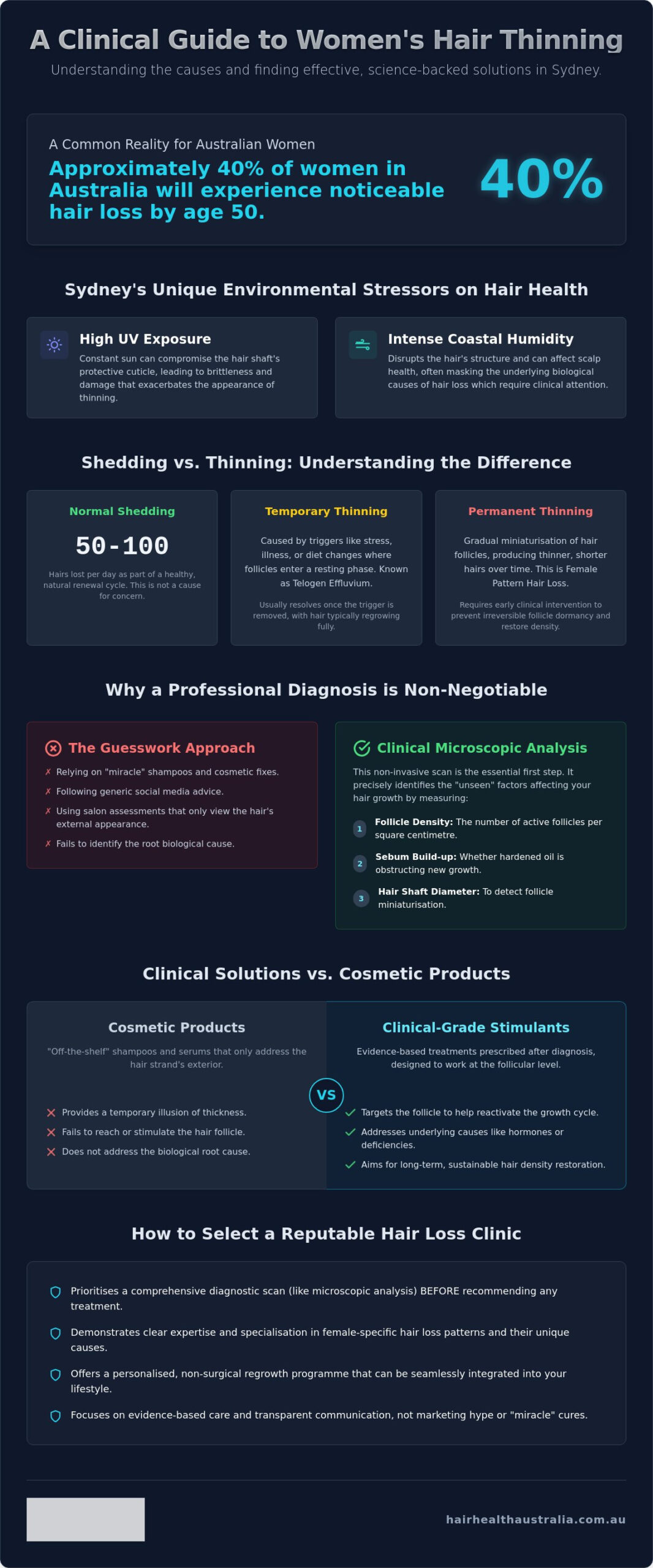
Did you know that approximately 40% of Australian women will experience some form of hair loss by the age of 50? While it is a common biological reality, finding effective hair thinning solutions for women Sydney locals can truly rely on often feels like a confusing maze of “miracle” shampoos and conflicting social media advice. You might find yourself checking the bathroom mirror every morning, feeling a pang of self-consciousness as you notice a widening part line or wondering if your hair will ever regain its former density. It is natural to feel anxious about the long-term progression of hair loss, but you don’t have to navigate this journey without a map.

This clinical guide is designed to replace that uncertainty with scientific clarity and a sense of professional support. You will learn how to move beyond generic shelf products by identifying the specific root cause of your thinning through a dedicated diagnostic process. We will explore the most advanced non-surgical treatments available in 2026, providing you with a clear, manageable plan to restore your hair density and reclaim your confidence. By focusing on evidence-based care rather than marketing hype, you can finally take the first step toward a lasting solution.

Key Takeaways

  • Identify the difference between standard shedding and clinical thinning by understanding how Sydney’s coastal humidity and UV levels impact hair shaft integrity.
  • Discover why microscopic hair analysis is a non-negotiable diagnostic tool for accurately assessing follicle density and scalp health before starting any treatment.
  • Evaluate the most effective hair thinning solutions for women Sydney specialists provide, focusing on clinical-grade stimulants rather than temporary cosmetic products.
  • Learn how to select a reputable clinic by prioritising those that offer comprehensive diagnostic scans and demonstrate expertise in female-specific hair loss.
  • Understand how a personalised, non-surgical regrowth programme can be seamlessly integrated into your lifestyle to achieve restored hair density and confidence.

Understanding Female Hair Thinning in the Sydney Climate

Sydney’s unique environmental conditions play a surprising role in the health of your scalp. While the coastal lifestyle is a drawcard, the combination of high UV exposure and intense humidity can compromise the hair shaft’s protective cuticle. This environmental stress, coupled with urban lifestyle pressures, often masks the underlying biological causes of hair loss. Identifying effective hair thinning solutions for women Sydney based requires a shift from superficial fixes to clinical diagnostics. Many women reach for “off-the-shelf” shampoos at the local chemist, but these products typically only address the hair strand’s exterior. They fail to reach the follicle, which is where the actual growth cycle is regulated.

It’s vital to distinguish between normal daily shedding and clinical thinning. Every woman loses between 50 and 100 hairs a day as part of a healthy renewal cycle. However, when you notice a decrease in overall volume or a change in the texture of your hair, it may indicate a disruption in the growth phase. Triggers such as iron deficiencies, hormonal shifts during menopause, or the chronic stress of a busy professional life in the CBD can all accelerate this process. Most chronic cases are a form of Pattern hair loss, which follows a predictable progression if left unaddressed.

Common Patterns: Widening Parts and Receding Temples

Many women first notice changes during a routine hair appointment. Your stylist might mention that your part line seems a little more prominent than usual. In female pattern hair loss, we often see a “Christmas Tree” pattern. This involves a widening of the centre part that is most noticeable at the front of the hairline. Unlike men, women rarely go completely bald; instead, they experience a diffuse thinning across the crown. This visual change can be deeply unsettling, often leading to a loss of confidence in social or professional settings. A professional hair health check can determine if these changes are part of a standard ageing process or a condition requiring clinical intervention.

Temporary vs. Permanent Thinning: Knowing the Difference

Determining whether your hair loss is temporary or permanent is the first step toward a solution. Telogen Effluvium is a common form of temporary shedding often triggered by a significant life event, such as illness, extreme stress, or rapid weight loss. In these instances, the hair follicles enter a resting phase prematurely. If the trigger is resolved, the hair usually regrows. Permanent thinning, however, involves the gradual miniaturisation of the follicle. Over time, the follicle produces thinner, shorter hairs until it eventually becomes dormant. Early intervention is the most critical factor here. Once a follicle has completely closed, it’s much harder to stimulate regrowth, making a timely diagnosis essential for maintaining your natural density.

The Diagnostic Essential: Why Microscopic Hair Analysis Matters

Many women begin their search for hair thinning solutions for women Sydney by browsing pharmacy shelves or asking their hairdresser for product recommendations. While these are common starting points, they often skip the most critical step: a clinical diagnosis. Microscopic hair analysis is a non-invasive diagnostic tool that allows a specialist to look beneath the surface of the scalp. By using high-magnification scanning technology, we can assess the actual health of the follicle rather than just the appearance of the hair strand. This process is essential because it identifies whether your thinning is caused by temporary shedding or a more permanent shift in your hair’s biology.

A clinical diagnosis differs significantly from a standard hair salon assessment. While a stylist focuses on the aesthetic quality of the hair you currently have, a clinical scan focuses on the hair you are losing and the environment it grows in. The scan reveals three primary metrics: follicle density, sebum build-up, and hair shaft diameter. Seeing these “unseen” factors is vital. For instance, a scalp may look healthy to the naked eye, but a microscopic view might reveal a layer of hardened sebum that is obstructing new growth. Understanding these micro-details ensures that any subsequent treatment is targeted at the actual problem rather than a perceived one.

What to Expect During a Hair Health Check in Sydney

The diagnostic process is methodical and transparent. During a consultation, a specialist uses a handheld microscopic camera to scan various areas of your scalp, including the crown, temples, and nape. You can view the live imagery on a screen in real-time, which often provides a powerful “aha” moment as you see the difference between healthy areas and thinning zones. Alongside the visual scan, you’ll discuss your medical history, nutritional habits, and stress levels. This holistic approach ensures that lifestyle factors are weighed against the biological data captured by the camera. If you are ready to see what is happening at the follicle level, you can book a comprehensive hair health check to begin your recovery journey.

Moving Beyond Visual Inspection

Visual checks often miss the early stages of follicle miniaturisation, a process where the hair follicle physically shrinks over time. According to Australian government health advice, this miniaturisation is a hallmark of female pattern hair loss and can begin long before you notice a significant change in the mirror. By the time thinning is visible to the naked eye, you may have already lost up to 50% of your hair density in that area. Accurate data allows for a personalised clinical hair loss diagnosis that catches these changes early while the follicles are still active. Data-driven scans remove the guesswork from hair recovery by replacing vague observations with measurable biological facts.

Comparing Hair Thinning Solutions for Women: Clinical vs. Cosmetic

When investigating the most effective hair thinning solutions for women Sydney residents often find themselves at a crossroads between masking the problem and treating the underlying cause. Cosmetic interventions, such as hair thickening fibres or specialised volumising styling, offer an immediate boost to your confidence. These are excellent tools for social events, but they function solely as a disguise. They do not alter the biological progression of thinning. Clinical solutions, by contrast, focus on the health of the follicle itself. While “natural” remedies like rosemary oil or biotin vitamins have gained popularity on social media, they are best viewed as supplementary support. They lack the concentrated potency required to reverse established follicle miniaturisation on their own.

Clinical-grade topicals and follicle stimulants are the foundation of a professional regrowth strategy. Unlike standard supermarket products, these formulations are designed to penetrate the scalp barrier and interact directly with the hair’s growth cycle. By extending the “anagen” or growth phase, these treatments help to maintain existing density while encouraging dormant follicles to produce stronger, thicker strands. This systematic approach ensures that you are not just managing the appearance of your hair, but actively protecting its future.

Non-Surgical Regrowth vs. Hair Transplant Surgery

For many women in Sydney, the decision between non-surgical therapy and hair transplant surgery comes down to the nature of their hair loss. Surgery is often less effective for women because female thinning tends to be diffuse across the entire scalp, rather than concentrated in one donor area. Non-surgical clinical programmes are often the preferred path because they require zero downtime. You can continue with your professional and social life in the city without the recovery period associated with invasive procedures. Furthermore, Female pattern baldness treatments that are non-invasive focus on preserving your natural hair, which is a more sustainable long-term strategy for maintaining overall volume.

The Science of Follicle Stimulation

The primary objective of a clinical programme is to “wake up” follicles that have become sluggish or dormant. This is achieved through a combination of scalp hygiene and targeted stimulation. A healthy, clear scalp environment is essential; if the pores are blocked by sebum or environmental pollutants, even the best stimulants cannot work effectively. It’s important to have realistic expectations regarding the timeline of your recovery. Because hair grows in cycles, you won’t see a dramatic change overnight. It typically takes several months of consistent care to see visible regrowth. If you are unsure where your follicles currently sit in this cycle, a professional hair health check can provide the data needed to choose the right stimulants for your specific needs.

Hair Thinning Solutions for Women in Sydney: The 2026 Clinical Guide

How to Choose the Right Hair Loss Clinic in Sydney

Selecting the right provider for hair thinning solutions for women Sydney can be the difference between a successful regrowth journey and a frustrating cycle of trial and error. Because female hair loss is biologically distinct from male pattern baldness, it requires a clinic with specific expertise in women’s hormonal, environmental, and nutritional triggers. You should prioritise clinics that lead with data rather than sales targets. A reputable specialist will never suggest a treatment plan without first performing a microscopic scan to verify the state of your follicles. This diagnostic-first approach ensures that you aren’t paying for solutions that your scalp isn’t biologically ready to receive.

Transparency is the hallmark of a professional clinical environment. When evaluating local Sydney clinics, look for those that provide clear, non-surgical treatment protocols and set realistic expectations from the outset. Regrowth is a methodical biological process that takes time, so be wary of any provider promising overnight results. It is also helpful to assess the clinic’s reputation by reviewing local case studies and patient feedback. Look for evidence of long-term maintenance plans, as managing hair thinning is often an ongoing commitment rather than a one-time fix. A dedicated partner in your hair health will focus on sustaining your results well after the initial regrowth phase.

Red Flags to Watch For in the Industry

The hair restoration industry can sometimes be clouded by hyperbolic marketing. One of the most significant red flags is a “guaranteed” result. In a clinical setting, every patient responds differently, and no honest specialist can guarantee a specific percentage of regrowth without first seeing how your scalp reacts to therapy. You should also be cautious of clinics that push expensive product bundles or “miracle” cures before they have even looked at your scalp under a microscope. A “one-size-fits-all” approach rarely works for the complexities of female thinning, which often requires a personalised combination of stimulants, scalp hygiene, and lifestyle adjustments.

The Value of a Personalised Consultation

Your initial visit should feel like a comprehensive educational session rather than a high-pressure sales pitch. This is your opportunity to understand the “why” behind your thinning and to see the evidence for yourself. It is helpful to prepare a list of questions regarding the specialist’s experience and the specific technologies they use. Before you attend a non-surgical hair loss clinic in Sydney, ensure they are willing to discuss the science behind their methods openly. The ideal consultation experience empowers the patient by providing a clear diagnosis, a transparent view of their follicles on screen, and a logical path forward that respects their individual goals. If you are ready to move from uncertainty to clinical action, you can book your professional hair health check today to receive a definitive assessment of your scalp health.

The Hair Health Australia Approach to Women’s Regrowth

At Hair Health Australia, we understand that living in a fast-paced city like Sydney requires a hair restoration strategy that is both effective and efficient. Our Redfern clinic acts as a dedicated centre for women who are seeking expert care without the invasive nature of surgical procedures. We bridge the gap between generic hair care and clinical medicine by offering non-surgical regrowth programmes that are specifically tailored to the local environment and urban lifestyle. By combining diagnostic precision with a supportive, empathetic environment, we help you transition from the anxiety of hair loss to the confidence of a clear, science-based recovery plan.

Real progress is measured in stages, and we believe in setting realistic expectations from your first visit. While every woman’s biology is unique, our clinical data shows a predictable timeline for those following our hair thinning solutions for women Sydney programmes. After three months of consistent care, most patients notice a significant reduction in daily shedding as the hair cycle begins to stabilise. By the six-month mark, the increased diameter of the hair shafts often leads to visible improvements in density and coverage. At 12 months, the full benefits of our follicle stimulation become apparent, resulting in a noticeably fuller part line and restored volume across the crown.

Our Signature Diagnostic Process

Our approach begins with a complimentary microscopic analysis, a step we believe is essential for any successful treatment. This scan allows our specialists to show you exactly what is happening on your scalp, from sebum levels to follicle health, in real-time on a high-definition screen. We use these objective findings to build your bespoke regrowth plan, ensuring every stimulant and topical we recommend is necessary for your specific condition. We prioritise education and transparency at every stage, so you always understand the biology behind your treatment rather than just following a list of instructions.

Clinically-Backed, Non-Invasive Solutions

We focus on sustainable regrowth that works with your body’s natural processes. Because we don’t rely on surgery, there is no downtime, recovery period, or scarring to manage. Instead, we use regular follow-up scans to monitor your progress and fine-tune your programme as your scalp health improves. This ongoing verification ensures your treatment remains effective and aligned with your goals as you progress through different stages of regrowth. Ready to regain your confidence? Book your free Hair Health Check today.

Taking the First Step Toward Hair Restoration

Navigating the various hair thinning solutions for women Sydney offers doesn’t have to be an overwhelming experience. By prioritising a professional microscopic diagnosis over generic pharmacy products, you can identify the specific biological triggers affecting your scalp. You’ve learned that effective regrowth relies on treating the follicle rather than simply masking the thinning with cosmetic disguises. Whether you’re dealing with seasonal shedding or long-term pattern loss, the key is clarity. A structured, evidence-based clinical plan replaces guesswork with results.

Our Sydney-based specialists bring over 15 years of experience to every consultation, ensuring your journey is guided by expertise and realistic expectations. We’re committed to providing clinically-backed non-surgical regrowth programmes that fit seamlessly into your daily life. If you’re ready to replace anxiety with a clear path forward, it’s time to see what’s happening beneath the surface.

Book Your Free Microscopic Hair Health Check in Sydney

Reclaiming your hair density is a journey that starts with a single, informed decision. We’re here to support you every step of the way as you restore both your hair and your confidence.

Frequently Asked Questions

What is the most effective hair thinning solution for women in Sydney?

The most effective approach is a personalised clinical programme that begins with a professional microscopic diagnosis. Because every woman’s hair loss is driven by different factors, such as hormones, stress, or nutrition, there is no single product that works for everyone. Non-surgical hair thinning solutions for women Sydney specialists provide focus on waking up dormant follicles and extending the growth phase through targeted stimulants and scalp hygiene.

Can thinning hair actually grow back if the follicles are still alive?

Yes, regrowth is possible as long as the hair follicle has not become completely dormant or replaced by scar tissue. The process of follicle miniaturisation means the hair becomes finer and shorter over time, but it can often be reversed with the right clinical intervention. Early diagnosis is the most important factor in successfully restoring your natural hair density before the follicle closes permanently.

How much does a typical female hair loss treatment programme cost in Sydney?

The cost of a treatment programme depends on several factors, including the underlying cause of your thinning and the specific therapies required to address it. Most clinical paths involve an initial diagnostic phase followed by a structured period of active treatment and ongoing maintenance. While prices vary across the industry based on technology and expertise, investing in a data-driven plan ensures you aren’t wasting money on generic products that don’t work.

Is female pattern hair loss the same as male pattern baldness?

While both conditions are often linked to genetics and the hormone DHT, they manifest very differently in women. Men typically experience a receding hairline or a bald spot at the crown, whereas women usually see diffuse thinning across the entire top of the head. This often results in a widening part line, which is why specialised hair thinning solutions for women Sydney based clinics offer are so important for targeted results.

What should I expect during my first visit to a Sydney hair loss clinic?

Your first visit should be a comprehensive diagnostic session rather than a simple sales meeting. A specialist will use a microscopic camera to perform a detailed scalp scan, allowing you to see your follicles and scalp health on a screen in real-time. You will also discuss your medical history, lifestyle, and any recent stressors to ensure the resulting treatment plan addresses the actual root cause of your thinning.

Are there any side effects to non-surgical hair regrowth treatments?

Non-surgical clinical treatments are generally very well-tolerated and designed to be non-invasive. Because these programmes focus on topical stimulants and scalp health rather than systemic medications or surgery, the risk of side effects is minimal. Some women with highly sensitive skin might experience minor scalp redness or tingling, but your specialist will monitor your progress closely to ensure the programme is comfortable for you.

How long does it take to see visible results from clinical hair therapy?

Hair grows in specific biological cycles, so patience is a necessary part of the recovery process. Most women begin to notice a reduction in excessive shedding within the first three months of a clinical programme. Visible regrowth and improved density typically become apparent between six and twelve months, as new, thicker hairs reach a length where they contribute to your overall volume.

Do I need a GP referral to visit Hair Health Australia?

No, you don’t need a referral from a GP to visit our clinic or book a hair health check. Many women choose to come to us directly when they first notice changes in their hair density or part line. While we always encourage you to discuss your health with your regular doctor, our specialists are available to provide immediate expert analysis and a clear path forward for your hair restoration.