
Hair loss isn’t always permanent; regrowth depends on the cause. Patchy hair loss caused by alopecia areata may regrow without treatment within a year, according to Mayo Clinic, while repeated pulling from tight hairstyles can lead to permanent loss. A hair loss prevention routine can reduce avoidable damage, but it can’t prevent every cause of thinning.
Seeing more hair in your brush or noticing a widening part can be unsettling. Shedding doesn’t always mean permanent hair loss, but persistent or sudden changes are worth taking seriously. Start by considering what may be causing the change, rather than relying on a single product or home remedy.
This guide explains how gentle washing, careful styling and everyday habits may help protect fragile hair, when to seek medical advice, and how minoxidil may support thinning hair. You’ll also learn why treatment depends on the cause and can take time, so you can make informed decisions about your next steps.
Key Takeaways
- Hair loss may be temporary or permanent, depending on its cause. Identifying the pattern and any recent changes can help guide your next step.
- Gentle washing, careful detangling and limiting tight hairstyles and heat styling can reduce avoidable hair damage.
- Support hair health with a balanced diet, and speak with a healthcare professional before starting supplements.
- Seek medical advice for sudden or severe hair loss, unusual thinning or scalp irritation so the cause can be assessed.
- Minoxidil may help slow further thinning and support regrowth when used consistently, but results can take several months.
1. What about a hair care routine for men?
An evidence-informed hair loss prevention routine focuses on gentle care, reducing breakage and monitoring changes. Wash your scalp regularly with a mild shampoo suited to your hair, condition after shampooing, and detangle gently with a wide-tooth comb. Massage the scalp if comfortable, but treat it as supportive care, not a guaranteed way to regrow hair.
Choose products suited to your scalp and hair type, and adjust washing if your scalp feels dry or oily. Over-washing and harsh chemicals can strip natural oils or weaken fragile strands. Conditioner coats the hair shaft and can reduce breakage and split ends. A leave-in conditioner or detangler may also help prevent tangles after washing.
Handle wet hair carefully. Pat it dry rather than rubbing vigorously, and limit blow-dryers, straighteners and curling irons. If you use a blow-dryer, choose the lowest heat setting and let your hair dry naturally when practical. Avoid tight hairstyles that pull at the roots, as well as frequent bleaching or harsh chemical treatments. These habits can damage hair without addressing the underlying cause of thinning.
Check your scalp and hair in consistent lighting, such as the same bathroom mirror each week. Note changes in your part, temples, crown, scalp comfort or the amount of shedding during washing. Normal shedding is about 50-100 strands per day, but counting every strand is difficult and can cause unnecessary worry. Record visible changes instead, and note when they began.
Scalp massage may help stimulate blood flow, but evidence remains limited. In a small study involving nine people, participants saw results after four minutes of massage per day for 24 weeks. Use gentle fingertip pressure rather than scratching with nails. Stop if your scalp becomes sore or irritated. Yoga, meditation or deep breathing can help manage stress, which may contribute to hair loss, although it isn’t usually the primary cause.
Essential oils are sometimes diluted in a carrier oil and applied to the scalp for 10 minutes before washing. This is a hair-care practice, not established proof of hair growth. Avoid applying concentrated oils directly, and stop if irritation develops. A couple of tablespoons of olive oil left on the hair for 30 minutes before washing is another suggested conditioning practice. Skip hot-oil treatments, which can further damage fragile hair.
Keep your routine simple: gentle cleansing, conditioning, careful detangling and less heat. Vitamins support normal body functions, but changing shampoo or adding oils won’t address every cause of thinning. If you notice sudden shedding, persistent scalp irritation or a clear change in density, record the pattern and discuss it with a medical professional.
2. Is hair loss permanent?
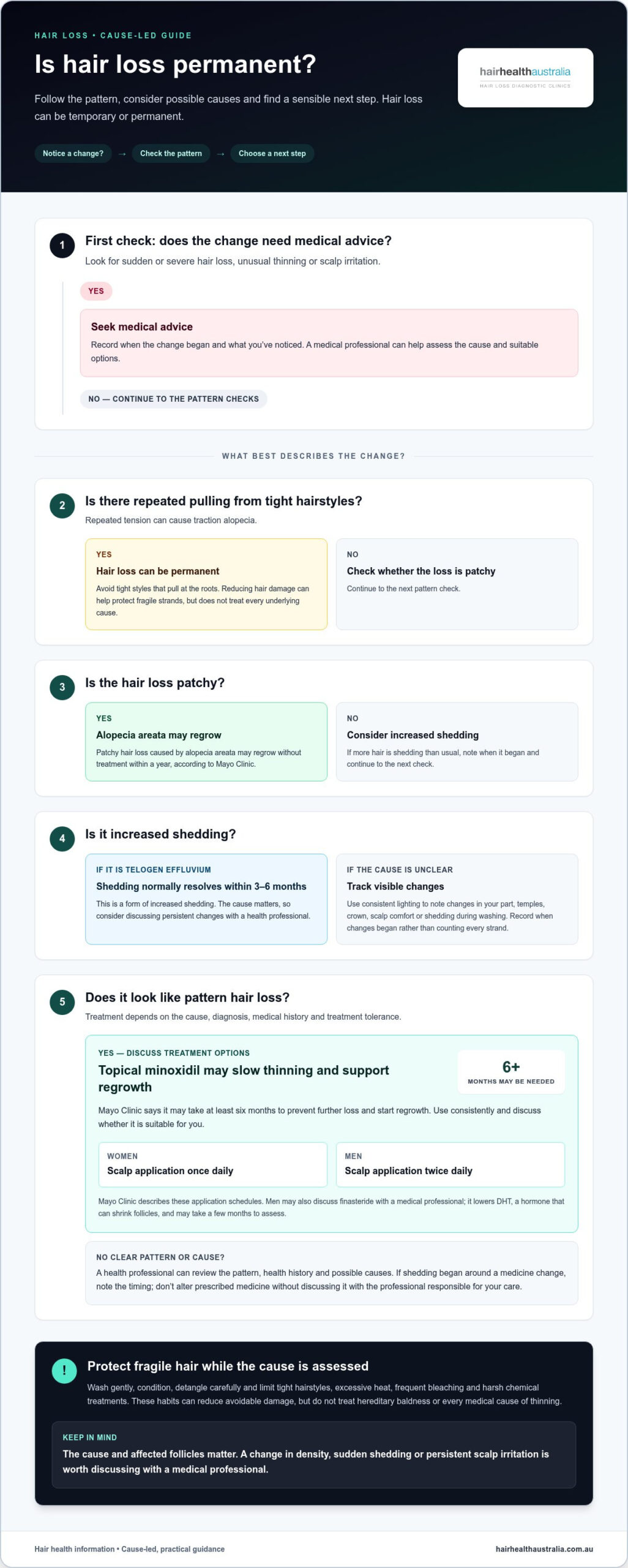
Hair loss can be temporary or permanent; the cause and affected follicles matter. Telogen effluvium, a form of increased shedding, normally resolves within 3-6 months. Patchy hair loss from alopecia areata may regrow without treatment within a year, according to Mayo Clinic. By contrast, repeated tension from tight hairstyles can cause traction alopecia and permanent loss.
Medication-related shedding also calls for a cause-focused approach. Note when shedding began and which medicines changed around that time. A health professional can review the timing, your health history and treatment options. Don’t alter a prescribed medicine without discussing it with the professional responsible for your care. Addressing an underlying condition may be more useful than treating shedding alone.
Reduce damage while the cause is assessed. Frequent bleaching, harsh chemical treatments and excessive heat can weaken hair strands. Limit curling irons, flat irons and hot combs; use the lowest blow-dryer setting or let your hair dry naturally. These steps protect fragile hair but don’t treat hereditary baldness or other medical causes.
For pattern hair loss, topical minoxidil can help slow further thinning and support regrowth. Mayo Clinic describes scalp application once daily for women and twice daily for men. It may take at least six months to prevent further loss and start regrowth, according to Mayo Clinic. Men may also discuss finasteride with a medical professional; it lowers DHT, a hormone that can shrink follicles. Mayo Clinic says it may take a few months to tell whether finasteride is working.
Hair transplantation is a surgical option, not a cure for hereditary hair loss. Each transplant patch contains one to several hairs, and Mayo Clinic notes that achieving the desired effect may require more than one procedure. Hereditary hair loss can still progress after surgery, according to Mayo Clinic. Low-level laser devices are another treatment option; Mayo Clinic states they have FDA approval for hereditary hair loss in men and women. Suitability depends on the cause and pattern.
Which treatments can work for men and women? Minoxidil may support pattern hair loss in both, with different application schedules; men may also discuss finasteride. The right option depends on diagnosis, medical history and treatment tolerance, not sex alone.
How much do hair loss treatments and dermatologist visits cost in Australia? Costs depend on the consultation, cause, treatment type and any required sessions; the price depends on the case and is given after a quote request.
Starting assessment when thinning first appears can help identify suitable treatment before further progression. For a structured starting point, use this hair health check to consider your hair and scalp changes.
3. Diet, supplements and lifestyle habits
A balanced eating pattern supports healthy hair, but won’t address every cause of thinning. Hair needs protein, iron and other nutrients to grow, and not getting enough iron or protein can contribute to hair loss. If your meals regularly lack foods such as eggs, beans, fish or leafy vegetables, review your overall diet rather than relying on a hair supplement alone.
Build meals from varied food groups: include lean protein, fruit, vegetables, whole grains and healthy fats. Foods containing iron, zinc and vitamins A, B, C, D and E can contribute to a balanced nutrient intake. For example, pair a protein source with vegetables and whole grains at a main meal. This supports general nutrition; it doesn’t establish that a particular food will reverse hair loss.
Some deficiencies can contribute to diffuse thinning. Low iron, vitamin B12, folate or vitamin D may play a role, particularly alongside increased stress. A blood test can show whether you’re getting enough of certain vitamins or minerals. Discuss testing with a healthcare professional if thinning continues, rather than guessing which nutrient to add.
Be cautious with supplements. Taking too much selenium, vitamin A or vitamin E has been linked to hair loss, so more isn’t automatically better. Before starting supplements, speak with a healthcare professional about your diet, symptoms and any medicines. A test can help identify a deficiency and guide whether supplementation is appropriate.
Dietary patterns matter more than a single “hair-growth” ingredient. A Mediterranean-style diet rich in raw vegetables and fresh herbs was associated with a lower risk of androgenic alopecia when eaten more than three days per week. That association doesn’t prove the diet prevents hair loss, but it offers a practical template: add vegetables and herbs to meals regularly, alongside protein and whole grains.
Daily habits also influence overall health. Regular exercise and stress-management practices, such as yoga, meditation or deep breathing, can support wellbeing when life feels demanding. Stress can contribute to hair loss, although it’s not usually the primary cause. Note major changes in stress, sleep or eating alongside changes in shedding, then discuss the pattern during a health appointment.
Avoid crash dieting or eating too few calories, which can contribute to significant hair loss. Keep a simple food and symptom record if your appetite or weight has changed. Continue gentle shampooing and low-tension styling, but treat these as damage-reduction measures, not substitutes for checking nutritional causes. A healthy routine combines varied meals, appropriate testing and sensible supplement use.
4. Getting a dermatologist’s help to identify the cause
Thinning can follow different patterns, and the pattern helps narrow its cause. One in two Australian men over 40 experience male pattern baldness. Gradual thinning at the temples or crown may point towards pattern loss, while sudden, diffuse shedding can have different triggers. A dermatologist can assess the scalp and hair, then consider your health history, symptoms and timing before discussing treatment.
Some causes affect the follicles; others break or pull on strands. Tight braids and other hairstyles that repeatedly pull at the roots can cause traction alopecia. Ongoing tension may lead to permanent loss in affected areas. Harsh brushing can also damage hair, but persistent thinning shouldn’t automatically be blamed on grooming. A dermatologist can distinguish hair breakage from shedding at the root.
Arrange a professional assessment for sudden or severe hair loss, unusual thinning or scalp irritation. These changes may signal a cause that needs attention, rather than a problem solved by changing shampoo. Note when the shedding began, which areas changed first and whether your scalp feels itchy, sore or inflamed. Bring that timeline to your appointment.
During an assessment, a doctor may examine your scalp and gently pull several dozen hairs in a pull test. This can help assess the stage of shedding. The dermatologist may also ask about recent illness, stress, medicines, diet and family history. Each detail helps distinguish temporary shedding from pattern baldness or another underlying condition.
Include lifestyle changes in your history. Stress can contribute to hair loss, although it’s not usually the primary cause. Smoking causes inflammation throughout the body, which can worsen hair loss. Eating too few calories every day can also cause significant hair loss. These factors don’t establish a diagnosis on their own, but give a dermatologist useful context.
Before your appointment, take clear photos of thinning areas in consistent lighting. Record changes in medicines, health and daily habits, and list questions about likely causes and treatment options. The dermatologist considers how quickly your hair changed, whether loss is patchy or widespread, and whether the scalp shows irritation. These findings guide next steps and help avoid treating the wrong cause.
Earlier assessment can improve the chance of achieving desired results, because regrowth depends on the cause, how far thinning has progressed and how early treatment begins. If the dermatologist identifies a medical or medication-related trigger, addressing it may be central to the plan. For gradual pattern thinning, the discussion may instead focus on treatments that slow progression and support regrowth.
5. Minoxidil use and possible side effects
Topical minoxidil can stimulate hair growth and slow further thinning in pattern hair loss. It works best when started early and used consistently. Mayo Clinic describes applying it to the scalp once daily for women and twice daily for men. Follow the directions for your specific product, as formulations and instructions can differ.
Give treatment time to work. Mayo Clinic advises that minoxidil may need at least six months to help prevent further loss and start regrowth. Hair loss treatments generally need ongoing use to maintain their effect. Stopping can mean losing the benefit, so consider the longer-term commitment before starting and discuss changes with a health professional.
In Australia, topical minoxidil is an over-the-counter hair-loss treatment. A dermatologist may prescribe oral minoxidil, including when someone struggles to tolerate topical treatment or use it consistently. Finasteride is another medicine discussed for pattern hair loss, particularly in men; a medical professional can assess whether it suits the person and their health history.
Minoxidil and finasteride have different risks, and suitability depends on the medicine, route and individual circumstances. A dermatologist or doctor can explain potential side effects and what changes require review before treatment begins. For finasteride, Mayo Clinic notes that it may take a few months to tell whether it is working. Don’t change a prescribed medicine without medical advice.
Pregnancy and breastfeeding require particular care with medicines. Don’t start minoxidil or finasteride during pregnancy or breastfeeding without first discussing medication safety with a doctor. Hair thinning during these periods can have different causes, so identifying the pattern and timing helps guide appropriate advice rather than self-treating.
Formulated hair-loss products may combine different ingredients, so assess the active treatment rather than relying on broad claims. Hair regrowth may occur in up to 40% of cases using formulated hair-loss products. That figure doesn’t predict an individual result or show that every product works the same way. Check the ingredients and follow the product directions.
Minoxidil targets follicles, not breakage along the hair shaft. If strands snap during brushing or styling, changing treatment alone won’t address that damage. A clinician can help distinguish breakage from shedding and pattern alopecia, then match the approach to the cause. This matters because the wrong treatment may delay care for another condition.
Before your appointment, note when thinning began, where it appears and which products or medicines you use. Bring questions about application, expected timelines, side effects and continued use. Start with a hair health check to organise your observations and discuss suitable next steps.
Risks vary by medicine, route and individual circumstances, so a doctor or dermatologist should review potential side effects and changes that need attention before treatment. Don’t start either medicine during pregnancy or breastfeeding without discussing medication safety with a doctor. Ongoing use may be needed to maintain benefits, and stopping can mean losing them.
Hair Health Australia: Male Hair Loss Treatment
Hair Health Australia provides Male Hair Loss Treatment for men experiencing thinning or pattern baldness. Its non-surgical regrowth programs use clinically backed approaches to support hair density and scalp health. Female Hair Loss Treatment is also available for women concerned about thinning.
Consider a personalised treatment approach if changes persist, become more noticeable or affect your confidence, particularly after you’ve considered possible causes and discussed them with a health professional. Treatment options depend on the pattern and cause of hair loss, so a routine alone may not address every concern.
To learn more about treatment options, contact Hair Health Australia or visit hairhealthaustralia.com.au.
Make your next step manageable
A hair loss prevention routine is easier to sustain when it fits your everyday life. Choose a clear starting point, keep the approach simple, and avoid changing several products or habits at once. That makes it easier to notice what feels comfortable and discuss any changes with a health professional.
There’s no need to solve every concern in one day. Focus on making an informed next decision, whether that means arranging an assessment or clarifying which options suit your situation. Hair Health Australia’s free Hair Health Check in Sydney offers a clear starting point: a microscopic scan and clinical diagnosis, with no obligation.
Start your hair health check and take a clearer view of your options. A steady, informed approach can help you move forward with greater confidence.
Frequently Asked Questions
Is hair loss permanent?
Some hair loss is temporary, while other forms can be lasting. For example, telogen effluvium normally resolves within 3-6 months, and patchy hair loss from alopecia areata may regrow without treatment within a year, according to Mayo Clinic. Repeated pulling from tight hairstyles can cause traction alopecia and permanent loss. The pattern, timing and suspected trigger help distinguish these possibilities and guide what to do next.
What causes your hair to fall out?
Hair can fall out because of hereditary pattern loss, stress, medication, hormonal changes or nutrient deficiencies. Timing can offer clues: shedding after a health or medication change may have a different trigger from gradual changes around the temples or crown. These clues don’t confirm the cause on their own. Note what changed and when, then share that timeline with a health professional.
Why is my hair thinning?
Thinning may reflect gradual pattern hair loss, diffuse shedding or breakage, and each points to a different issue. A slowly widening part or changing hairline differs from hair snapping along the strands after chemical treatments or styling. Compare photos taken in similar lighting and note whether changes affect one area or the whole scalp. A dermatologist can use that pattern, your history and scalp findings to assess likely causes.
What about a hair care routine for men?
For men, keep the routine gentle and consistent rather than adding several products at once. Choose a mild shampoo that suits your scalp, condition after washing, and use a wide-tooth comb to detangle without force. If you use dry shampoo, wet-wash your hair 1-2 days later. Notice whether irritation, dryness or increased breakage follows a particular product, and adjust your routine accordingly.
What can you do to preserve your hair?
Start by reducing avoidable strain: loosen tight hairstyles, handle wet hair gently, and limit frequent heat or chemical styling. Keep meals varied and avoid starting several supplements without knowing whether you need them. If you’re tracking changes, take occasional photos in consistent lighting rather than counting every strand. These steps can reduce damage and help you spot a change worth discussing with a health professional.
Why is my hair falling out?
A sudden increase in shedding can follow a temporary trigger, while gradual loss may take a different course. Think back to changes in health, stress, eating habits or medicines, and record when shedding began. A clinician can assess whether the pattern suggests a temporary process, hereditary thinning or another cause. Sudden, severe loss or an irritated scalp deserves prompt medical attention rather than a change of shampoo alone.
How should topical minoxidil be used, and how long does it take to work?
Apply topical minoxidil to the scalp according to the directions for your specific formulation. Mayo Clinic describes once-daily application for women and twice-daily application for men with pattern hair loss. It may take at least six months to help prevent further loss and start regrowth, according to Mayo Clinic. Consistency matters, so discuss application problems or treatment changes with a health professional before stopping.
Can diet, supplements, or correcting nutrient deficiencies prevent hair loss?
Correcting a genuine nutrient deficiency may address one contributor to thinning, but supplements aren’t a universal prevention method. Inadequate iron or protein can contribute to hair loss, while taking too much selenium, vitamin A or vitamin E has also been linked to hair loss. A blood test can assess certain nutrient levels. Discuss results and supplements with a health professional before adding them to your routine.