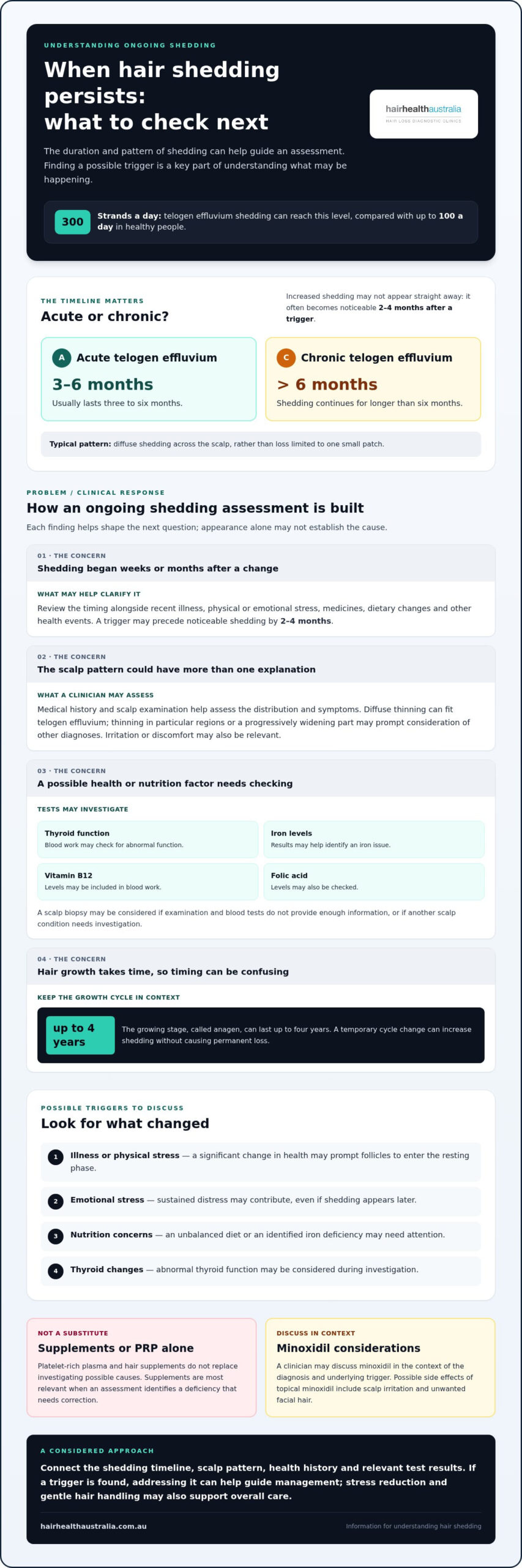
Telogen effluvium can cause hair shedding of up to 300 strands a day, but the timeline helps distinguish a short-term episode from a persistent one. Acute telogen effluvium usually lasts three to six months, while chronic telogen effluvium lasts longer than six months. Effective chronic telogen effluvium solutions begin by identifying possible triggers and checking whether another cause of hair loss needs attention.
Seeing more hair than usual in the shower or on your brush can be unsettling, especially when shedding continues. The pattern and duration matter: telogen effluvium often follows a physical or emotional change, and increased shedding may become noticeable two to four months after the trigger.
This guide explains what telogen effluvium is and how acute and chronic shedding differ. You’ll learn how clinicians investigate ongoing hair loss through medical history, scalp examination and relevant tests, and how a nutrition review may identify deficiencies that need attention. The aim is to make the process clearer, so you can understand what findings may mean and what support could be appropriate.
Key Takeaways
- Use how long shedding continues and its pattern to understand the difference between acute and chronic telogen effluvium.
- A clinical assessment may combine your medical history, scalp examination and pull test with blood work or a scalp biopsy.
- Review possible triggers, including nutritional deficiencies, and discuss abnormal thyroid function or iron, vitamin B12 and folic acid levels with a healthcare professional.
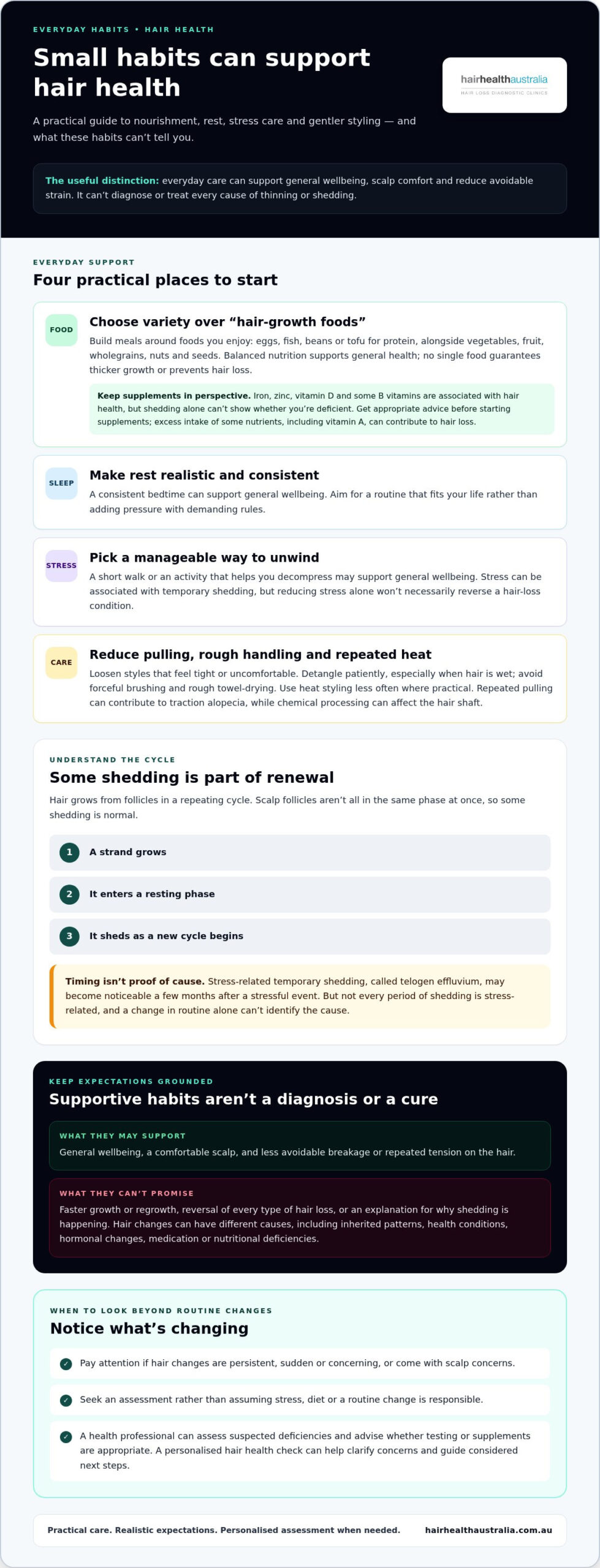
- Prioritise a nutritious diet with protein, fruit and vegetables; supplements are most relevant when an identified deficiency needs correction.
- Understanding the likely trigger can guide the next steps, while stress reduction and gentle hair handling may support overall management.
What is telogen effluvium?
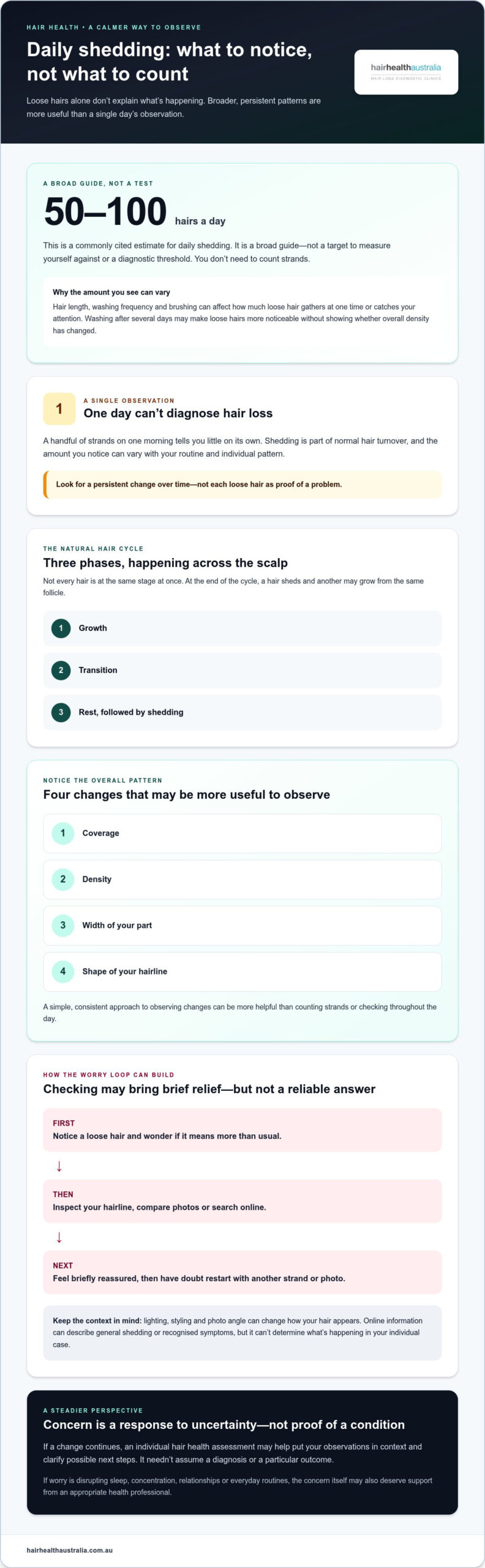
Telogen effluvium is increased shedding after more hair follicles than usual enter their resting phase. In a normal scalp, around 85-90% of follicles are actively growing, while about 5% of hairs are shedding. Healthy people may lose up to 100 strands daily. With telogen effluvium, shedding can reach 300 strands a day. The change is often diffuse, rather than limited to one small patch.
Hair passes through a growth phase before entering a resting phase. A physical or emotional stressor can shift growing follicles into that phase earlier than expected. Increased shedding usually becomes noticeable 2 to 4 months after the trigger, not immediately. This delay can make it difficult to connect hair loss with an earlier illness, major stress or change in health.
Diet, iron deficiency, stress and thyroid problems may all matter because they can disrupt normal hair cycling. Nutritional deficiencies, including abnormal iron levels, and abnormal thyroid function are potential factors for clinicians to investigate. Stress may act as a trigger, while ongoing worry about shedding can add emotional strain. A clinical assessment helps distinguish a possible contributor from a confirmed cause.
Common triggers of hair shedding include changes that affect the body or its nutritional balance. Examples to discuss during an assessment include:
- Illness or physical stress: a significant change in health can prompt follicles to shift into the resting phase.
- Emotional stress: sustained distress may contribute to a trigger, even when shedding appears months later.
- Nutrition concerns: an unbalanced diet or identified iron deficiency may need attention.
- Thyroid changes: abnormal thyroid function can be considered during investigation.
Addressing a trigger starts with identifying what changed, then treating an underlying issue if one is found. For example, a clinician may review your health history alongside relevant blood results before considering whether thyroid function or iron needs attention. Chronic telogen effluvium solutions therefore focus on possible causes rather than treating every case alike. Even if no clear trigger emerges, investigation can clarify the pattern and guide follow-up.
Psychological support can help people manage the distress of persistent shedding. Keeping a record of changes in health, diet and stress can make a clinical discussion more focused, while stress-reduction strategies may form part of management. Support does not replace investigating physical causes. Telogen effluvium resolves on its own in many cases, but it can recur if its underlying trigger returns. A considered assessment connects the timeline, symptoms and possible triggers before treatment decisions are made.
Blood tests and biopsies to investigate hair loss
Investigating persistent hair loss starts with the pattern, symptoms and health history. Chronic telogen effluvium often causes diffuse thinning across the scalp, rather than loss confined to one area. Other conditions can look different: patterned hair loss tends to affect particular scalp regions, while scalp inflammation may cause visible irritation or discomfort. These clues guide clinical assessment, but appearance alone may not establish the cause.
A clinician may review recent illnesses, medicines, dietary changes and other health events, then examine the scalp. Blood work can look for underlying factors, including abnormal thyroid function and iron, vitamin B12 or folic acid levels. Results help determine whether an identified issue needs treatment. A scalp biopsy may be considered when examination and blood tests don’t provide enough information or another scalp condition needs investigation.
Hair growth also provides useful context. Follicles move through growing, resting and shedding phases; the growing stage, anagen, can last up to four years. A temporary change in the cycle can increase shedding without causing permanent loss. By contrast, a progressively widening part or distinct pattern of thinning may lead a clinician to consider other diagnoses. The timing of shedding and distribution of thinning help shape the next steps.
Platelet-rich plasma (PRP) and hair supplements are sometimes discussed alongside hair-loss treatments. They are not a substitute for investigating possible causes of telogen effluvium. Supplements are most relevant when an assessment identifies a deficiency that needs correction. Management may focus on addressing possible underlying health or nutritional factors, while hair growth follows its own cycle.
A clinician may discuss minoxidil as a treatment option in the context of the diagnosis and underlying trigger. For telogen effluvium, its role should be considered alongside the diagnosis and underlying trigger. Possible side effects of topical minoxidil include scalp irritation and unwanted facial hair. A clinician can weigh these risks against the reasons for considering treatment.
In Australia, consultation and treatment costs vary with the clinician, investigations and treatment plan. Medicare benefits depend on the service and eligibility, so there isn’t one universal cost or coverage answer. For a clearer starting point, a hair health check can help organise concerns about thinning and shedding before considering suitable support. These chronic telogen effluvium solutions work best when decisions follow a careful assessment of the hair-loss pattern and possible causes.
Nutrition and supplement considerations
A nutrition review looks for correctable factors that may contribute to shedding. It complements, rather than replaces, assessment of other possible causes.
Diet and nutritional deficiencies
A nutritional deficiency is an inadequate level of a nutrient that may affect normal hair cycling. For telogen effluvium, clinicians consider abnormal iron, vitamin B12 and folic acid levels, alongside thyroid function. Identifying and addressing a deficiency can be part of investigating a trigger, rather than assuming every episode of shedding has the same cause.
Diet is one part of that review. A nutritious eating pattern with plenty of protein, fruit and vegetables supports general hair health. The amount and variety of food you eat can help frame questions about dietary changes or possible nutrient gaps. Blood test results give clinicians more specific information than shedding alone, helping distinguish a suspected deficiency from one that has been identified.
Nutrition is not the only possible explanation for thinning. For example, a widening part or gradual pattern hair loss may prompt consideration of female pattern hair loss, while diffuse shedding may suggest a different picture. Hair follicles move through anagen, the growing phase, and a resting phase; changes in the cycle can affect shedding. A nutrition review should form part of a broader assessment, not become a stand-alone diagnosis.
Nutritional interventions and supplements
Nutritional interventions aim to address an identified deficiency and support a balanced diet. For telogen effluvium, recommendations include correcting abnormal iron, vitamin B12 and folic acid levels, as well as abnormal thyroid function. This makes testing relevant: it can help direct attention to a specific issue instead of relying on a supplement chosen without a clear reason.
A practical starting point is to review your usual meals and note recent changes. That figure is a general recommendation, not a personalised prescription. Individual needs and dietary circumstances influence what an appropriate plan looks like.
Consider supplements in the context of test findings and your overall diet. Taking a vitamin or iron supplement does not establish that a deficiency caused shedding, nor does it address every possible trigger. A clinician can interpret results and determine whether a nutritional intervention is relevant. This can be especially useful when thyroid findings, iron levels or other blood results need attention alongside ongoing hair loss.
Nutrition also needs to be considered alongside the hair-loss pattern and timeline. Persistent shedding can occur alongside another form of thinning, so a balanced diet alone may not explain every symptom. For those interested in exploring whole-body factors, clinics like Westridge Holistic medicine highlight how evaluating nutrition alongside stress and lifestyle can support root-cause healing. A structured review connects food habits, test results and clinical findings, then focuses intervention on identified issues rather than treating supplements as a universal solution.
Dermatological diagnosis and testing
A clinical assessment brings together the shedding pattern, examination and relevant tests. These findings help distinguish telogen effluvium from other causes of hair loss.
Differential diagnosis
Differential diagnosis means comparing symptoms and test findings with other possible causes. This matters because diffuse shedding can overlap with other forms of thinning, including pattern hair loss. A clinician considers the scalp’s appearance, the timeline and the distribution of hair loss together. They may also investigate underlying scalp disorders or hormonal problems, which need attention if identified.
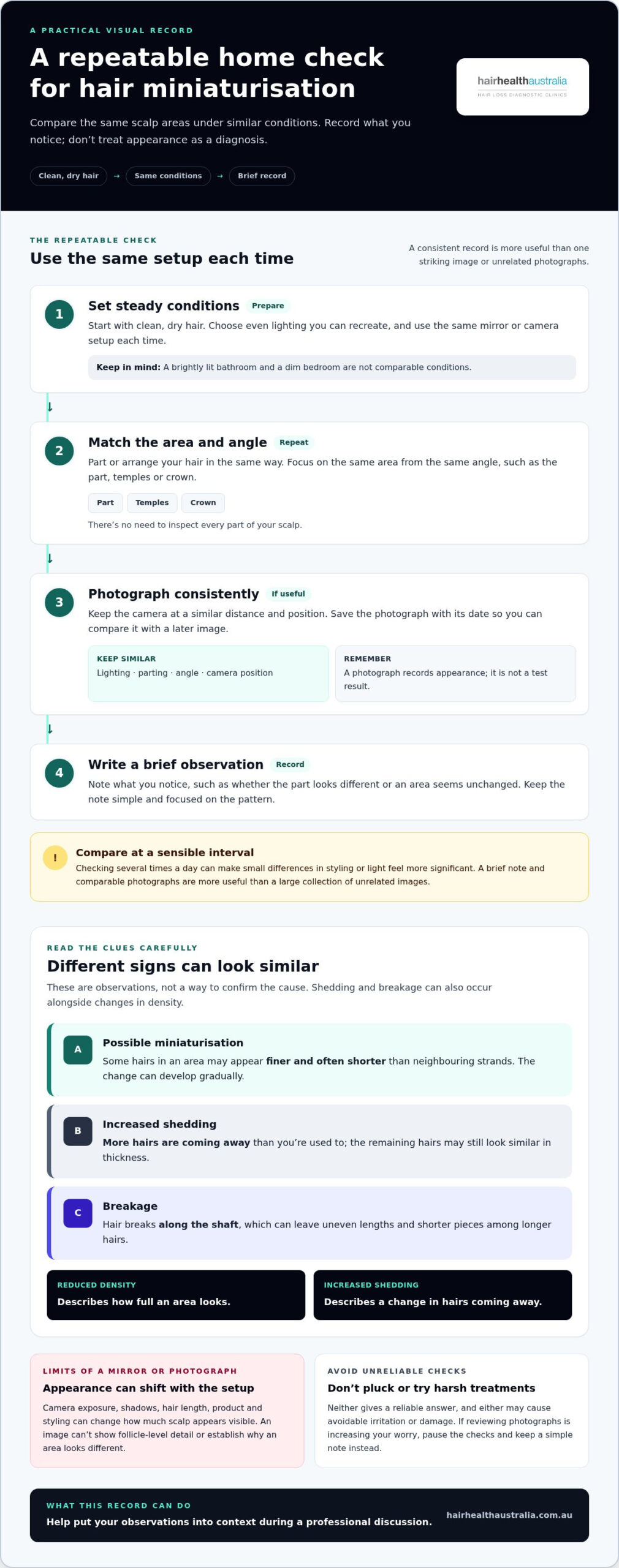
Tell the clinician when shedding began and whether it is continuous or intermittent. Include recent stress, changes in nutrition and current medicines in your health history. These details provide context for the examination, but do not establish a cause on their own. It is also worth discussing the psychological strain of ongoing shedding, especially if it affects your daily wellbeing.
When to seek professional advice
Arrange an assessment with a GP or dermatologist when shedding persists beyond six months, the threshold used to describe chronic telogen effluvium. An earlier assessment can help investigate possible triggers and distinguish this condition from other hair-loss patterns. Bring a clear timeline of shedding and a list of relevant health changes, including medicines and nutrition concerns.
Seek an assessment if ongoing hair loss concerns you or its pattern changes. A clinician can examine your scalp and decide whether blood work or further investigation is appropriate. This is particularly useful when thyroid function, iron levels or another underlying condition may need attention, an approach routinely taken by private healthcare providers such as Kingsford Medical Services to investigate systemic triggers through detailed GP consultations and blood panels.
A typical evaluation brings together several steps. Medical history establishes the timeline and possible triggers. Scalp examination checks the distribution of thinning and the scalp’s condition. A pull test may support the assessment: a clinician gently pulls a clump of 40 to 60 hairs between their fingers. In telogen effluvium, at least four to six hairs with white bulbs may come away; under typical conditions, the test may remove two to three hairs.
Test results add context, rather than replacing examination. Blood work can investigate possible contributors such as thyroid function and iron, vitamin B12 or folic acid levels. If the assessment still needs clarification, a scalp biopsy may be considered. A trichogram can also help assess the hair-cycle pattern: more than 25% telogen hairs strongly suggests telogen effluvium.
These findings help guide the next clinical steps. An identified scalp disorder or hormonal problem should be treated, while nutrition-related abnormalities can be addressed specifically. History, examination and tests need to be considered together because one result alone may not explain persistent shedding. A structured review also helps clinicians assess whether the pattern fits telogen effluvium or points to another condition.
Acute versus chronic telogen effluvium
Acute telogen effluvium usually lasts three to six months; chronic telogen effluvium lasts longer than six months. Chronic shedding may continue intermittently or continuously for months or even years. Regrowth is often expected within six to nine months, while original thickness may take about 9 to12 months to return.
The distinction is mainly about duration and pattern, not simply how much hair appears in the brush. Acute telogen effluvium can affect up to 50% of scalp hair, yet it resolves in 95% of cases. Most cases resolve without treatment within six to eight months after the cause is addressed. These timelines describe different stages, so ongoing regrowth can take longer than the shedding episode.
Chronic telogen effluvium may cause uniform thinning across the scalp, with shedding that comes and goes or continues. It can persist for years, even when the initial trigger has passed. Without a detectable cause, it is more likely to affect women between 30 and 60 years of age. This pattern is different from some forms of alopecia, where thinning follows a more defined distribution.
Recovery depends partly on whether an underlying trigger remains active or returns. Nutritional deficiencies, abnormal thyroid function and other identified health issues may need attention as part of management. If a trigger recurs, telogen effluvium can recur too. Tracking changes in your health and shedding can help clarify the timeline during clinical assessment.
Hair growth is gradual after shedding settles. Scalp hair normally grows about 1 cm per month, so visible density can take time to recover. New growth may appear before the scalp looks as full as before. That difference helps explain why reduced shedding and restored thickness do not necessarily happen together.
No medical treatment hastens hair growth in telogen effluvium itself. Management instead focuses on addressing an identified underlying cause, with nutritional interventions, stress reduction or treatment for a medical condition where relevant. This is why distinguishing acute from chronic shedding is useful: persistent shedding calls for a closer look at its pattern and possible triggers, rather than assuming it will follow an acute timeline.
The practical takeaway is to consider both duration and change over time. Shedding beyond six months fits the chronic definition, while a gradual return of density may take longer. The most useful chronic telogen effluvium solutions start with understanding the timeline and addressing relevant causes. If ongoing thinning concerns you, book a hair health check to discuss your hair-loss pattern and suitable next steps.
Hair Health Australia: Male Hair Loss Treatment
Hair Health Australia offers Male Hair Loss Treatment and Female Hair Loss Treatment for people seeking support with thinning hair or pattern baldness. These non-surgical regrowth programmes focus on hair density and scalp health. They may be relevant when persistent shedding occurs alongside a broader pattern of hair loss, but telogen effluvium calls for assessment of possible triggers and underlying causes. Identifying the type of hair loss helps clarify which support is appropriate.
If ongoing thinning is affecting your confidence, consider discussing suitable hair-loss treatment after investigating possible causes with a health professional. Contact Hair Health Australia through hairhealthaustralia.com.au to discuss your next step.
Make your next step a considered one
Persistent shedding can make it tempting to try several changes at once. A more useful next step is to keep a clear record of what you notice, including changes in your hair pattern and any updates to your health or nutrition. This gives future discussions a practical starting point and helps you focus on the questions that matter to you.
Chronic telogen effluvium solutions should reflect the cause of shedding and the type of hair loss involved. Hair Health Australia offers Male Hair Loss Treatment and Female Hair Loss Treatment for people seeking support with thinning hair. A hair health check can help you explore whether its treatment options align with your concerns.
Arrange a hair health check to take a considered next step. Clear information can help you approach your hair concerns with greater confidence.
Frequently Asked Questions
What is chronic telogen effluvium and how is it diagnosed?
Chronic telogen effluvium is excessive shedding that continues for more than six months. Diagnosis draws on the shedding timeline, scalp examination and medical history, with tests added when useful. For example, a pull test may show several hairs with white bulbs, while blood work can help identify possible contributing health issues. A scalp biopsy may be considered if examination and other investigations do not clarify the diagnosis.
What are the common causes and triggers of chronic telogen effluvium?
Possible triggers include physical or emotional stress, nutritional deficiencies and changes in health that disrupt the hair growth cycle. Thyroid problems and abnormal iron, vitamin B12 or folic acid levels are among the factors clinicians may investigate. Shedding can appear months after a trigger, so consider health or diet changes that occurred before hair loss became noticeable. Identifying a trigger can help guide management.
Which blood tests are recommended for chronic hair shedding in Australia?
Blood tests are selected according to a person’s history and clinical findings, rather than used as an identical panel for everyone. Investigations may include thyroid function and levels of iron, vitamin B12 and folic acid. These results can identify abnormalities that need attention. A clinician may also consider other investigations based on symptoms and scalp examination; blood tests alone don’t establish every cause of persistent shedding.
How can chronic telogen effluvium be distinguished from female or male pattern hair loss?
Telogen effluvium typically causes diffuse shedding across the scalp, while female or male pattern hair loss tends to follow a recognisable distribution. A widening part or gradual changes in particular areas may suggest pattern hair loss, whereas increased shedding across the scalp can point towards telogen effluvium. These patterns can overlap, so clinicians consider the scalp examination, timeline and medical history together before identifying the likely cause.
What treatments or supplements for telogen effluvium lack evidence or may be harmful?
No medical treatment is known to hasten hair growth in telogen effluvium itself. Supplements are most relevant when an assessment identifies a deficiency, rather than as a universal remedy for shedding. Topical minoxidil can cause scalp irritation or unwanted facial hair. Discuss supplements and treatment options with a health professional, particularly if you take medicines or have an underlying condition that may affect your choices.