
Sleeping on one side alone is unlikely to explain noticeable hair loss on that side of your head. If you’re wondering why you are losing hair on one side of your head, possible causes include tight hairstyles, scalp irritation or a distinct patch of hair loss. The pattern and any scalp changes can offer clues about the cause.
It’s understandable to wonder whether pressure from your pillow is affecting your hair. But a change on one side deserves more than a guess: the cause may be local to the scalp or part of a broader pattern of thinning.
This article explains whether sleeping position can contribute, what else may cause uneven hair loss, and when to seek medical advice. You’ll also learn why treatment depends on the underlying cause, so you can take a clearer, more informed next step.
Key Takeaways
- Sleeping on one side alone is unlikely to explain hair loss; look at the pattern and any changes to the scalp for clues.
- Round, smooth patches can be a sign of alopecia areata, an immune condition that affects hair follicles.
- Sudden or patchy hair loss, scalp irritation, or other unexplained symptoms are reasons to seek medical advice.
- Treatment depends on the cause, so identifying what is driving the hair loss is an important first step.
- For ongoing pattern thinning, Hair Health Australia offers male and female hair loss treatment options.
Can sleeping on one side of your head cause hair loss?
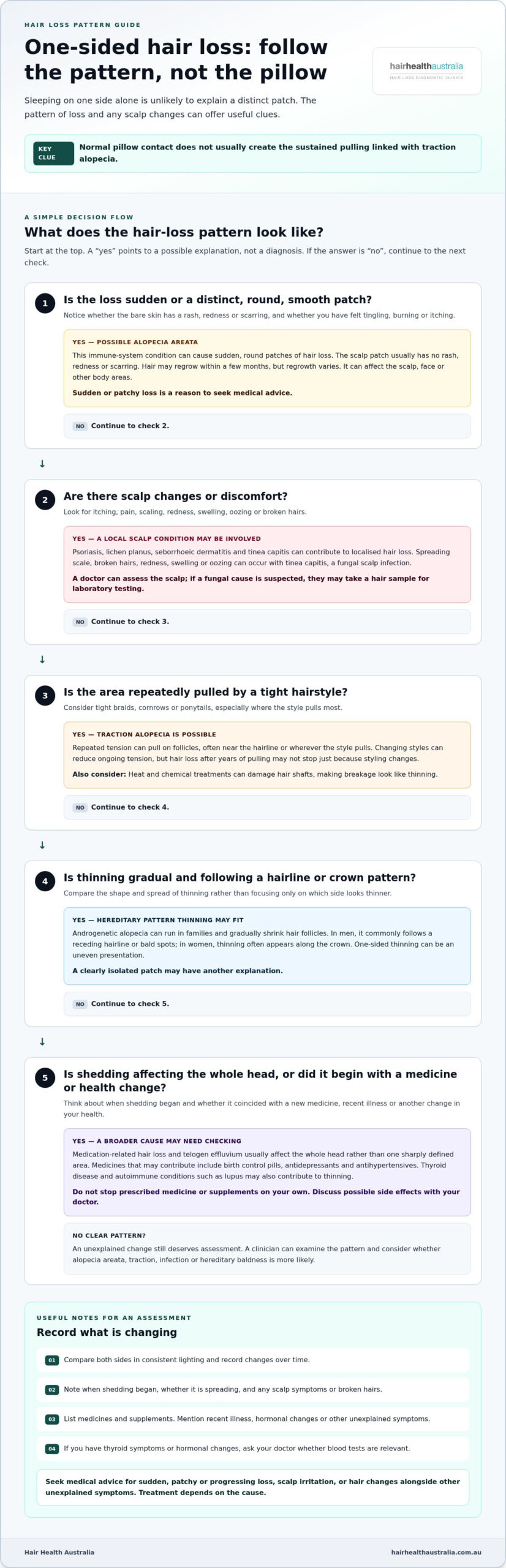
Sleeping on your left or right side alone is unlikely to cause a distinct patch of hair loss. Normal pillow contact doesn’t usually create the sustained pulling associated with traction alopecia. If thinning follows the hairline or crown, the pattern may point to hereditary hair loss rather than sleeping position. Notice whether the change is a smooth patch, broken hairs or gradual thinning, and whether the scalp looks irritated.
Alopecia areata is an immune-system condition that can cause sudden, round patches of hair loss. A patch may be about the size of a US quarter, with bare skin that usually has no rash, redness or scarring. Hair may regrow within a few months, but regrowth varies. The condition can affect the scalp, face or other body areas. Some people notice tingling, burning or itching before hair falls out, while others feel otherwise well.
One-sided thinning can also be an uneven presentation of androgenetic alopecia, or pattern baldness. In men, hereditary hair loss commonly follows a receding hairline or bald spots; in women, thinning often appears along the crown. Androgenetic alopecia can run in families and gradually shrink hair follicles. Visible male pattern baldness is unlikely before Norwood stage 3, so a clearly isolated patch may have another explanation.
Repeated tension is different from pillow pressure. Tight braids, cornrows or ponytails can pull on follicles and cause traction alopecia, often near the hairline or wherever the style pulls most. Heat and chemical hair treatments can also damage hair shafts, making breakage look like thinning. Changing styles can reduce ongoing tension, but hair loss after years of pulling may not stop just because you change your styling.
Scalp conditions can also cause localised hair loss. Psoriasis, lichen planus, seborrhoeic dermatitis and tinea capitis may affect particular areas. Spreading scale, broken hairs, redness, swelling or oozing can occur with a fungal infection such as ringworm. Thyroid disease, including hypothyroidism or hyperthyroidism, and autoimmune conditions such as lupus may also contribute to thinning. These causes need different assessment and treatment, so the scalp’s appearance matters.
Some medicines can contribute to shedding or thinning, including birth control pills, antidepressants and antihypertensives. Medication-related hair loss and telogen effluvium usually affect the whole head rather than one sharply defined area. Don’t stop a prescribed medicine or supplement on your own. Note when shedding began, list the medicines and supplements you take, and discuss possible side effects with your doctor.
If you’re wondering why hair loss is appearing on one side, compare both sides in consistent lighting and record changes over time. Sudden patches, scalp symptoms or unexplained changes alongside hair loss warrant medical advice. A dermatologist can examine the pattern and assess whether alopecia areata, traction, infection or hereditary baldness is more likely.
When to seek medical advice
Seek medical advice for sudden or patchy loss, or shedding that’s noticeably heavier during washing or combing. A new scalp change or another unexplained symptom can also help determine how promptly the cause should be assessed.
Changes that warrant medical advice
Seek advice if hair loss is sudden, patchy, progressing or accompanied by symptoms you can’t explain. These changes matter because the pattern may point to a scalp condition, a medication effect or a broader health issue, each of which calls for a different response.
Look for changes such as pain, itching, scaling, redness or broken hairs, and note when they began. Hormonal shifts related to pregnancy, childbirth or menopause can affect hair, as can thyroid problems. Tell your doctor if hair loss began alongside a new medicine, a recent illness or another change in your health.
Scalp irritation and medical conditions
Scalp irritation includes symptoms such as scaling, redness, swelling or discomfort alongside hair changes. It matters because conditions including psoriasis, lichen planus, seborrhoeic dermatitis and tinea capitis can contribute to localised thinning.
Spreading scale, broken hairs, redness, swelling or oozing can occur with tinea capitis, a fungal scalp infection. If a fungal cause is suspected, a doctor may take a hair sample for laboratory testing. Thyroid disease and autoimmune conditions can also contribute to hair loss, so describe any other symptoms rather than focusing only on the affected patch.
Assessment, blood tests and treatments
A medical assessment uses your history and the visible pattern of hair loss to guide next steps. Explain when shedding started, whether it is spreading, and list the medicines and supplements you take. If you also have thyroid symptoms or hormonal changes, ask whether blood tests are relevant to investigating a possible underlying cause.
Don’t stop prescribed medication without medical advice. Some medicines used for cancer, arthritis, depression, heart problems, gout and high blood pressure can cause hair loss. Treatment depends on the suspected cause: a clinician may consider topical minoxidil for localised thinning, while finasteride is used for male pattern hair loss and may not suit one-sided loss.
Scalp conditions may need treatment directed at the condition itself, rather than a general hair-loss therapy. Early treatment of frontal fibrosing alopecia may help avoid significant permanent baldness. For ongoing thinning, a hair health check can help you understand treatment options, alongside medical advice when scalp symptoms or other health changes need assessment.
Alopecia areata and immune-system attacks on hair follicles
Alopecia areata occurs when the immune system mistakenly attacks hair follicles, disrupting normal hair growth. It can begin at any age, but Healthdirect Australia says it most often starts during the teens, twenties or thirties. The condition may appear as one patch or several separate patches, sometimes on the scalp, face or other body areas. The location and spread of hair loss can change over time, so note new areas as they appear.
Patchy alopecia areata differs from alopecia totalis and alopecia universalis. Totalis involves losing all or nearly all scalp hair. Universalis is rare and causes complete or nearly complete hair loss across the scalp, face and body. These terms describe how extensive hair loss becomes, rather than identifying different triggers. Some people with alopecia areata also develop nail pitting, which appears as tiny dents in the nail surface.
Researchers believe genetic and environmental factors both contribute to alopecia areata, though the immune attack is not fully understood. Emotional stress or illness may trigger it in someone at risk, but most cases have no obvious trigger. Psoriasis, thyroid disease and vitiligo are associated with a greater likelihood of alopecia areata. These links don’t mean that someone with one of these conditions will necessarily develop hair loss.
Traction alopecia has a different cause: repeated pulling on follicles from tight hairstyles. Pigtails, braids and cornrows can create tension, especially along the hairline or where extensions are attached. Reduce the strain by choosing looser styles and changing how you secure your hair. Hair loss after years of pulling may continue even after you change the hairstyle, so persistent thinning deserves assessment.
Scarring alopecia also needs to be distinguished from alopecia areata and traction. Frontal fibrosing alopecia is one scarring condition; early treatment might help avoid significant permanent baldness. Scarring can damage follicles, making timely recognition important for protecting remaining hair. A smooth patch, a receding frontal hairline or thinning around the temples can have different explanations. A clinician considers the pattern, scalp appearance and history of tight styling before identifying the likely cause.
Keep a simple record of when each area appeared, whether it is expanding, and any changes to your nails or scalp. Include recent illness, stress, hairstyles and known conditions such as thyroid disease. This information can help distinguish an immune-related pattern from traction or scarring alopecia and support a more appropriate assessment and treatment plan.
Prevention and treatment options
In Australia, treatment for one-sided hair loss may include topical minoxidil for localised thinning or treatment directed at a scalp infection. Options such as finasteride, platelet-rich plasma (PRP) and low-level laser therapy suit different causes and patterns.
The starting point is identifying what’s affecting the follicles. A genetic pattern at the hairline calls for a different approach from hair loss linked to tinea capitis, tight hairstyles or an autoimmune condition. Addressing the cause can matter more than trying a general hair-growth product.
For localised thinning, topical minoxidil can be applied directly to the affected area. Finasteride is a prescription medicine used for male pattern hair loss by blocking DHT, but it may not suit one-sided loss. A clinician considers the hair-loss pattern and likely cause when weighing these options. Don’t start or stop medication without medical advice, especially if other medicines may contribute to shedding.
Platelet-rich plasma therapy uses a person’s own blood components and typically involves multiple sessions. Noticeable improvements may take several months. Low-level laser therapy is non-invasive and uses low-powered lasers to stimulate cell activity and increase blood flow to hair follicles. These approaches differ from treating an infection or addressing ongoing tension from hairstyles.
Scalp micropigmentation can create the appearance of fuller hair, but it doesn’t restore hair growth and may need periodic touch-ups. A hair transplant moves healthy hair from areas with thicker growth to thinning or balding areas. The choice between treatments depends on whether follicles are still producing hair, where thinning appears and the underlying diagnosis.
Some practical changes can reduce preventable damage. Mayo Clinic advises gentle hair care, limiting tension from hairstyles, protecting hair from ultraviolet light, and asking a doctor about medicines or supplements that might contribute to loss. Avoid hot curling irons and repeated tight braids, which can damage hair or place ongoing strain on follicles.
- Reduce tension: choose looser styles instead of tight braids or ponytails.
- Limit heat damage: avoid hot curling irons and handle wet hair gently.
- Review medicines: discuss possible side effects with your doctor before changing treatment.
A healthy diet, adequate protein and omega-3 fatty acids support general nutrition, while stress management may help reduce some preventable shedding. Scalp massage may increase circulation, but it can’t diagnose or treat conditions such as alopecia areata, thyroid disease or infection. If hair loss is sudden, patchy or accompanied by scalp changes, seek medical advice before relying on self-care alone.
Possible causes of one-sided thinning
Hair thinning can look uneven even when the underlying cause affects the whole scalp. Compare the hairline, crown and sides, then note whether loss is gradual, sudden or concentrated in patches. The pattern can help distinguish genetic baldness from a local scalp problem, although appearance alone cannot confirm a diagnosis. If you’re asking, “Why am I losing hair on one side of my head?”, start by recording where the change is most visible.
Androgenetic alopecia, also called hereditary pattern baldness, may cause uneven recession along the hairline. In men, it often develops as a receding hairline or bald spots; women more commonly notice thinning around the crown. Follicles gradually shrink, and one side may become more noticeable first. A family history offers context, but it doesn’t explain every localised patch. Compare older photos to see whether your hairline has changed gradually.
Some causes begin in one defined area. Alopecia areata can produce smooth patches when the immune system attacks follicles. Tinea capitis, a fungal infection, may cause scaling and broken hairs, sometimes with redness, swelling or oozing. Scalp irritation from conditions such as psoriasis or seborrhoeic dermatitis can also affect particular areas. Patch shape, skin changes and broken hairs are useful details to record and describe during an assessment.
Repeated pulling is another possible cause. Tight braids, cornrows, extensions or ponytails can place tension on follicles near the hairline or attachment points. Trichotillomania, a condition involving repeated hair pulling, can also create irregular thinning. You may notice hairs of different lengths or patches that don’t follow a typical hereditary pattern. Note whether a hairstyle pulls more strongly on one side.
Health changes can contribute to hair loss, even if thinning appears more obvious on one side. Thyroid disease, including hypothyroidism or hyperthyroidism, and systemic lupus are among the possible causes. Diabetes, significant weight loss, poor nutrition, stress and high-fever infections can also affect hair. Telogen effluvium related to illness, trauma or stress usually causes shedding across the scalp rather than a single distinct patch.
Medication effects also matter. Medicines used for cancer, arthritis, depression, heart problems, gout and high blood pressure may contribute to hair loss. Medication-related shedding commonly affects the whole head, so isolated patches or scalp symptoms need separate consideration. Don’t stop a prescribed medicine without discussing the timing and possible side effects with your doctor. Bring a list of medicines and supplements to help explain when the change began.
The question “Why am I losing hair on one side of my head?” can’t be answered from location alone. Photograph the hairline and affected area in consistent lighting, note when thinning began, and record recent illness, medicines and hairstyle changes. If you’re unsure what the pattern suggests, book a hair health check to discuss the visible changes and possible next steps.
Hair Health Australia: Male Hair Loss Treatment
Hair Health Australia offers Male Hair Loss Treatment through non-surgical regrowth programmes focused on thinning hair and pattern baldness. If you’re experiencing ongoing male pattern thinning and want to explore treatment options, this may be a relevant next step after considering possible causes. Hair Health Australia also offers Female Hair Loss Treatment for women experiencing thinning.
The programmes use clinically proven methods and are customised to each individual based on diagnostic results. Sudden patches or scalp irritation call for medical advice to assess the underlying cause before focusing on pattern hair-loss treatment.
To discuss hair loss treatment options, contact Hair Health Australia or visit hairhealthaustralia.com.au.
Take the next step with clarity
If you’re still wondering why you’re losing hair on one side of your head, focus on getting a clear explanation before choosing what to do next. A visible change can affect how you feel about your appearance, but you don’t need to try every product or treatment you come across. Take time to make a considered decision based on what’s happening, rather than feeling pressured by the first explanation you find.
For ongoing hair concerns, a conversation about treatment options can help you decide what feels appropriate for your situation. Hair Health Australia offers a place to take that next step and discuss your concerns.
Arrange a hair health check with Hair Health Australia to explore your options. A clear next step can make the way forward feel more manageable.
Frequently Asked Questions
What Is Hair Thinning?
Hair thinning is a gradual reduction in hair density when shedding exceeds regrowth. You may notice a wider part, more visible scalp under bright light or less volume when tying your hair back. These changes can develop across the scalp or appear more noticeable in one area. Compare photographs taken in similar lighting to track changes in density, rather than relying on a single mirror check.
How to Avoid Hair Loss and How to Handle It?
You can reduce some preventable damage, but not every cause of hair loss can be avoided. Use gentle grooming, limit repeated tension from hairstyles, and discuss possible medicine or supplement side effects with your doctor before making changes. If thinning begins, note when you first noticed it and whether it is spreading. That record can help distinguish an ongoing change from a temporary variation in how your hair sits.
Is losing hair on one side of the head a sign of male pattern baldness?
It can be, but hair loss on one side alone doesn’t establish male pattern baldness. Look for gradual recession at the hairline or thinning at the crown, rather than judging one isolated area. A family history can provide context, but it isn’t a diagnosis. If the change is sudden or sharply defined, describe its timing and shape during a medical assessment.
What causes hair loss on one side of the head?
Possible causes include a local scalp problem, repeated pulling, immune-related hair loss, hereditary pattern changes, or a health or medication effect. A one-sided pattern can also look more noticeable on one side even when shedding affects a broader area. Note whether the skin looks different, hairs are breaking or loss is gradually progressing. These details can help narrow down what needs assessment.
Can sleeping on one side or friction cause one-sided hair loss?
Sleeping on one side by itself is unlikely to cause noticeable hair loss. Ordinary contact with a pillow differs from repeated tension that pulls on follicles over time. If you suspect rubbing, note whether there is a consistent area of broken hair or scalp irritation, and whether the change continues outside sleep. A distinct patch or ongoing loss needs assessment rather than an assumption that your sleeping position is responsible.
Can tight hairstyles or hair extensions cause hair loss on one side?
Yes. Tight hairstyles and extensions can cause traction alopecia where they repeatedly pull on the hair, including along one hairline or around an attachment point. Look for thinning that follows the direction of tension, short broken hairs or discomfort while wearing the style. Loosening or changing the style reduces ongoing pulling, but persistent loss should be assessed, especially if the area continues to change.
Could one-sided hair loss be caused by alopecia areata or a scalp infection?
Yes. Alopecia areata and scalp infections can both cause localised loss, but they may look different. A smooth bare area can fit an alopecia areata pattern, while infection may involve visible scalp changes or broken hairs. Appearance alone can’t confirm the cause. If a doctor suspects a fungal infection, they may take a hair sample for laboratory testing to help guide treatment.
What symptoms of one-sided hair loss need urgent medical attention?
Seek medical advice promptly if hair loss appears suddenly, forms patches, increases noticeably during washing or combing, or comes with unexplained symptoms. Scalp changes such as spreading scale, redness, swelling or oozing also need assessment. These signs don’t identify a cause on their own, but they help determine what needs investigating. Describe when the change began and whether it is getting worse.