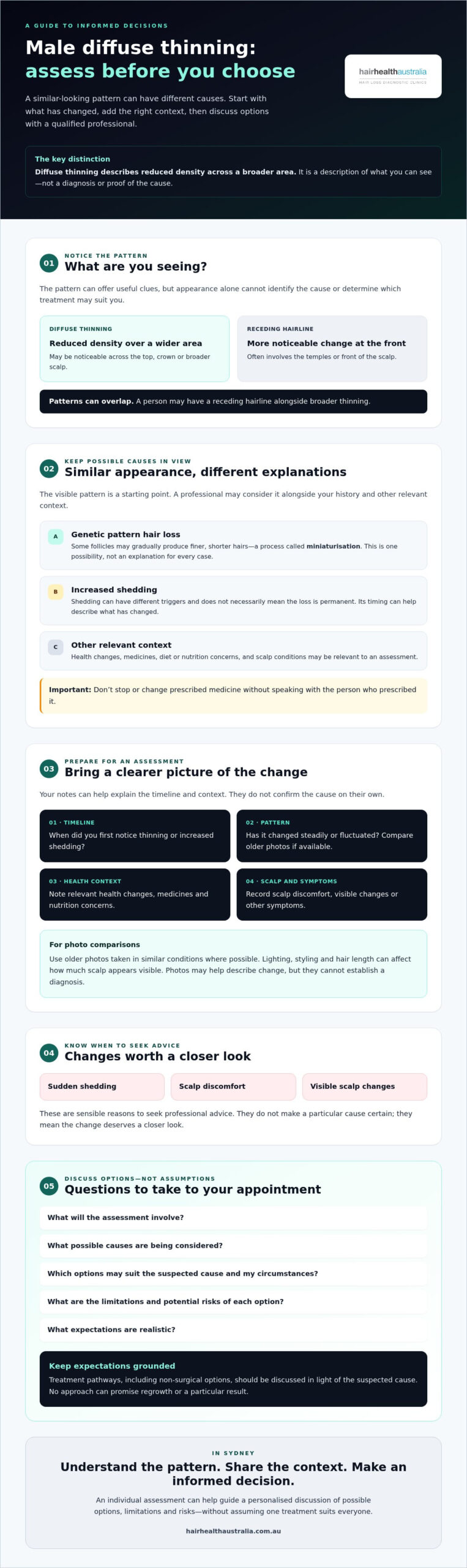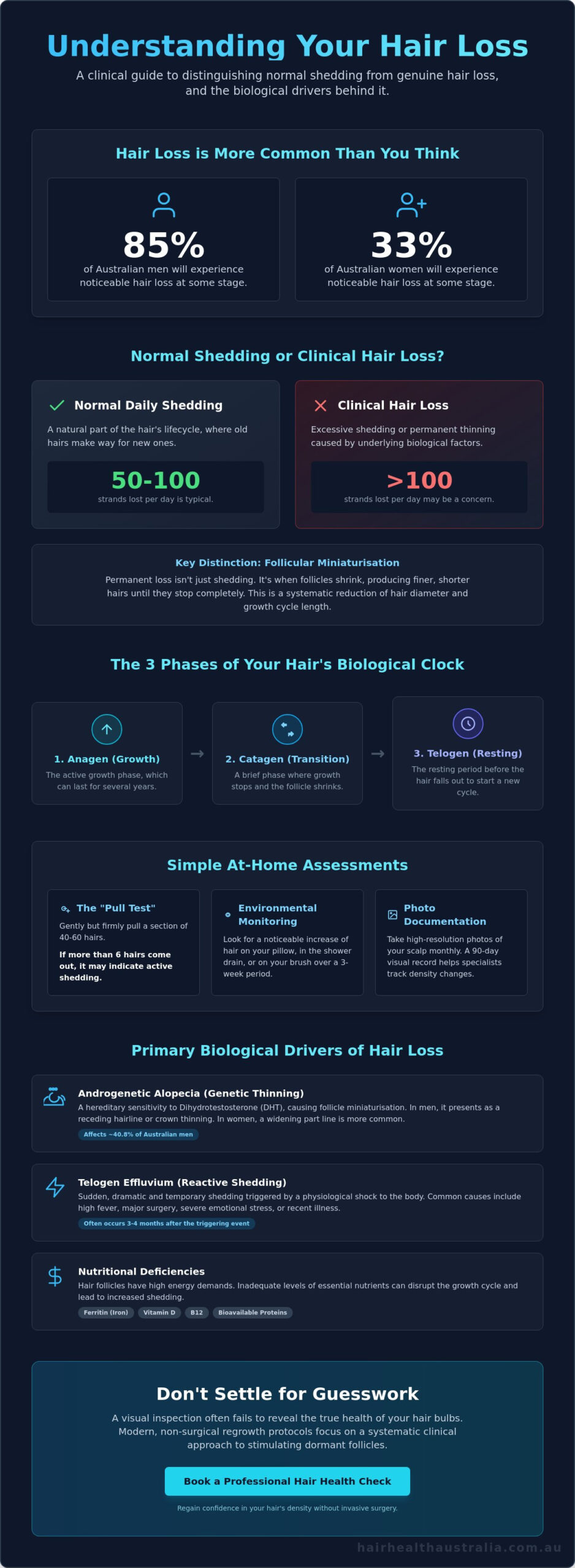
Could poor sleep be affecting your hair without being the whole explanation? If you’ve noticed more shedding after a stretch of disrupted nights, it’s understandable to wonder about the impact of sleep on hair health. Sleep, stress and the hair growth cycle may be connected, but online claims can make that relationship sound more certain than the evidence allows.
Sleep supports important processes throughout the body, and ongoing sleep disruption may influence stress responses relevant to hair. But poor sleep isn’t necessarily the cause of every hair change, and better sleep alone may not stop persistent shedding. Hair loss can have several causes, each of which may call for a different approach.
This article explains the plausible links between sleep, stress and the hair growth cycle, what research can and can’t confirm, and practical sleep habits that may support general wellbeing. It also covers when ongoing shedding or thinning warrants professional assessment, so you can consider possible causes beyond sleep and choose a sensible next step.
Key Takeaways
- Sleep and hair changes can happen at the same time, but that alone doesn’t prove one caused the other.
- Stress responses and general wellbeing may help explain the impact of sleep on hair health, but the current evidence has limits.
- Sleep-related shedding, pattern hair loss and other possible contributors can look different, and identifying the cause matters.
- Realistic, consistent sleep habits can support your wellbeing, but they can’t guarantee hair regrowth.
- If hair changes persist, worsen, appear in patches or cause distress, seek professional assessment to explore possible causes beyond sleep.
How sleep may affect hair health: the connection in context
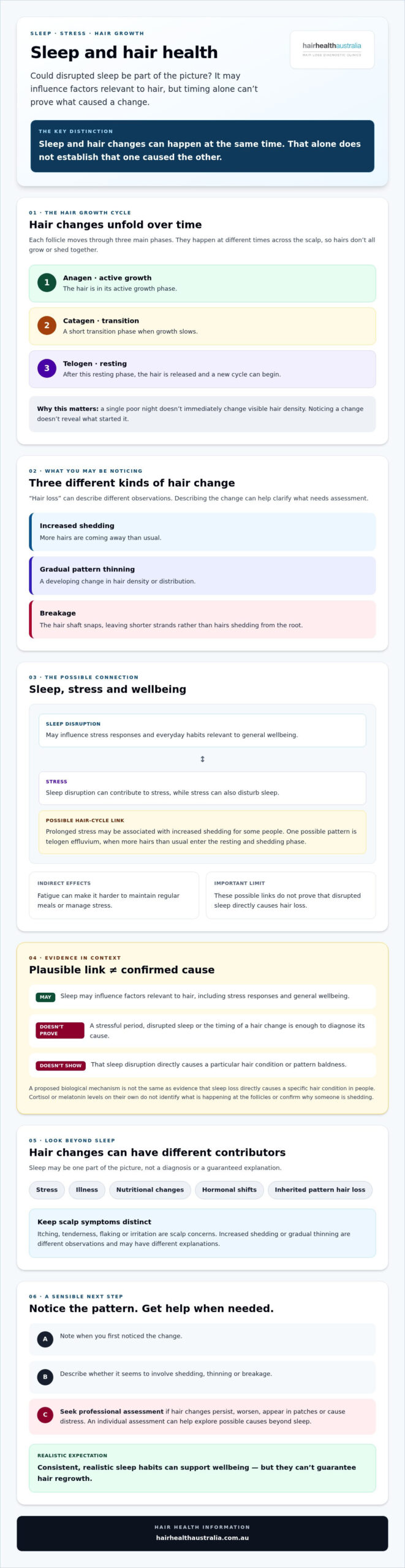
Changes in sleep and hair can occur around the same time, but that doesn’t establish that one caused the other. The impact of sleep on hair health is best understood as a possible influence within a broader picture, not a simple explanation for every change.
Hair health includes more than how much hair you see. It can refer to growth, shedding, density, scalp condition and the strength of the hair shaft. These features vary between people, and changes can have different causes. A hair follicle is the skin structure that produces a hair, and its activity follows a repeating growth cycle.
In brief: sleep may influence factors relevant to hair, but a change in sleep alone can’t confirm the cause of shedding or thinning.
How the hair growth cycle works
Each follicle moves through three main phases. Anagen is the active growth phase. Catagen is a short transition when growth slows, and telogen is a resting phase. After telogen, the hair is released and a new cycle can begin. The phases happen at different times across the scalp, so hairs don’t all grow or shed together.
This staggered cycle helps explain why a single poor night doesn’t immediately change visible hair density. Hair changes reflect processes unfolding over time, and noticing a change doesn’t reveal what started it. For a basic overview of the anatomy, see this explanation of the hair follicle.
What people mean by sleep-related hair changes
“Hair loss” can describe different things. Increased shedding means more hairs are coming away than usual. Gradual pattern thinning typically appears as a developing change in density or distribution. Breakage is different: the hair shaft snaps, leaving shorter strands rather than hairs shedding from the root.
Someone may notice a change after a period of disrupted sleep, but timing alone can’t show that sleep caused it. Other factors, including stress, illness, nutritional changes, hormonal shifts or inherited pattern hair loss, may also be relevant. Sleep could be one part of the picture, not a diagnosis or a guaranteed explanation.
To describe the change clearly, note when you first noticed it and whether it seems to involve shedding, thinning or breakage. If it persists, worsens or concerns you, an individual assessment can help explore possible causes beyond sleep.
What happens in the body when sleep is disrupted?
Sleep loss can affect how you feel and function during the day, and may influence stress responses and everyday habits. For example, fatigue can make it harder to maintain regular meals or manage stress. These indirect effects may matter to overall wellbeing, but they don’t prove that disrupted sleep directly causes hair loss.
Sleep has distinct stages and supports a range of processes in the body. The National Institute of Neurological Disorders and Stroke explains how sleep works, including the differences between REM and non-REM sleep. This background helps explain why sleep matters to health generally, but it doesn’t establish a direct pathway from a poor night’s sleep to visible hair changes.
Stress, sleep, and the hair cycle
Prolonged stress may be associated with increased shedding for some people. One possible pattern is telogen effluvium, in which more hairs than usual enter the resting and shedding phase. Sleep disruption can contribute to stress, while stress can also disturb sleep, so the relationship may run in both directions. Neither the timing nor the presence of a stressful period is enough to diagnose the cause.
Research into the impact of sleep on hair health includes plausible biological explanations, but a proposed mechanism isn’t the same as evidence that sleep loss directly causes a particular hair condition in people. It also doesn’t show that sleep disruption causes pattern baldness, which has other recognised influences.
Sleep quality, hormones, and scalp health
The body’s daily rhythms help regulate sleep and other functions. Hormones also vary with these rhythms, but cortisol or melatonin shouldn’t be treated as standalone explanations for hair loss. A change in hormone levels, on its own, doesn’t identify what is happening at the follicles or confirm why someone is shedding.
It’s useful to distinguish scalp symptoms from changes in growth or density. Itching, tenderness, flaking or irritation are scalp concerns. Increased shedding or gradual thinning are different observations and may have different explanations. A scalp symptom may need attention in its own right, but it doesn’t automatically explain a change in hair growth.
Hair changes can reflect several overlapping contributors, and sleep may be one part of the picture rather than the full explanation. If shedding or thinning continues, an individual assessment can help explore causes beyond sleep. A clinical hair health check may be a relevant next step for persistent changes.
Can poor sleep cause hair loss? Evidence, limits, and other explanations
Disrupted sleep may be relevant to hair changes, but current evidence doesn’t support treating it as the sole cause. Studies may find that sleep problems and hair-loss conditions occur together, but association doesn’t prove that one caused the other. Findings can also vary because studies use different methods and include different groups of people. A review titled The Intersection of Sleep and Hair Loss discusses proposed links and the limits of the available evidence.
That distinction matters in practice. Improving sleep may support general wellbeing, but it can’t be relied on to reverse established hair loss, particularly if another cause is involved. The patterns below can help explain why an assessment may be useful, but they aren’t a way to diagnose yourself.
| Possible factor or pattern | What it may involve | What to keep in mind |
|---|---|---|
| Sleep disruption | A possible influence on stress and everyday routines that support overall health. | By itself, it doesn’t confirm the cause of shedding or thinning. |
| Stress-related shedding | Some people may experience increased shedding associated with prolonged stress, sometimes described as telogen effluvium. | Other causes can look similar, so the pattern needs clinical context. |
| Pattern hair loss | Androgenetic alopecia often involves gradual thinning in a recognisable distribution. | It has different contributing factors from temporary shedding; better sleep alone may not address it. |
| Other contributors | Illness, nutritional issues, medicines, hormonal changes or scalp conditions may be considered. | A clinician can assess which possibilities are relevant to an individual. |
Sleep-related shedding versus pattern hair loss
Increased shedding and gradual patterned thinning aren’t interchangeable descriptions. You may notice more loose hairs, or you may see density change over time in particular areas. These observations can help guide a conversation, but they can’t establish whether sleep, stress, androgenetic alopecia or another factor is responsible. If the pattern is unclear, persists or progresses, seek clinical assessment.
Other factors a clinician may consider
Hair changes can have overlapping contributors. A clinician may ask about recent illness, nutrition, medicines, hormonal changes and scalp symptoms, alongside sleep and stress. This isn’t a checklist for identifying the cause independently: individual history and examination matter. Readers concerned about changes in women’s hair can also look for an article on the early signs of alopecia in women, if available on the site.
If shedding or thinning continues, a clinical hair health check may help explore explanations beyond sleep.
How to support sleep and hair health with realistic daily steps
Regular sleep habits can support your general wellbeing, even though they can’t guarantee thicker hair or treat an underlying hair-loss condition. For most adults, Australian sleep guidance commonly recommends aiming for around seven to nine hours a night. Individual needs vary, so focus on whether your routine leaves you feeling rested and able to function during the day.
Use these steps as a practical starting point, not a hair-regrowth plan:
- Keep a steady sleep and wake time. Choose times you can maintain most days, including weekends where practical. A consistent rhythm may be more achievable than trying to compensate for disrupted nights with a very different schedule.
- Create a simple wind-down routine. Set aside time for a quiet, relaxing activity before bed, and reduce stimulating tasks if they make it harder to settle. Keep the routine manageable so it’s easier to repeat.
- Notice what affects your rest. Briefly record recurring disruptions, such as shift changes, stress or a noisy environment. If poor sleep persists or affects your daytime functioning, speak with a health professional about appropriate support.
- Track hair changes at a useful pace. Note roughly when you first noticed a change, whether it seems to be progressing, and any recent illness, stressors or routine changes. If photographs help, take them occasionally under similar lighting and from the same angles. Daily checking can make normal variation feel alarming.
Supportive sleep habits can benefit wellbeing, but they aren’t a substitute for assessing or treating hair loss. Don’t start supplements or sleep medicines as hair treatments without discussing whether they’re appropriate for you with a health professional.
Use the information to guide your next step
A brief record can give a GP or hair-loss professional clearer context than trying to recall every detail during an appointment. It may help show whether the change followed a particular event or is continuing, but it can’t establish the cause on its own. The possible impact of sleep on hair health is only one part of that assessment.
If shedding or thinning persists despite attention to general wellbeing, consider arranging a clinical hair health check to explore possible causes beyond sleep.
When to seek a hair health assessment in Australia
Consider professional assessment if shedding or thinning persists, worsens, appears in patches or causes distress. Don’t wait to improve your sleep first if you’re concerned. Sudden hair loss, scalp pain, marked inflammation or other worrying symptoms warrant prompt medical review, starting with a GP who can advise on appropriate next steps.
Sleep tracking can help you notice patterns, but it can’t identify the cause of hair changes. A health professional can consider your individual history and whether further assessment is appropriate. The impact of sleep on hair health is only one possible part of the picture.
What information to bring to an appointment
Before your appointment, jot down when you first noticed the change, how it has progressed and whether it seems patchy, general or concentrated in particular areas. Include recent health changes, medicines you take and any relevant family history. You can also ask what assessment methods may be considered, what possible causes are being explored and which options are realistic for your situation.
This context can support a more informed discussion, but one appointment can’t guarantee a diagnosis or a particular treatment outcome. If you’re in Sydney, a GP is a practical starting point for prompt medical concerns. They can advise whether another type of professional assessment may be suitable.
How a personalised hair health check may help
A hair health check can provide a pathway to explore persistent shedding or thinning beyond sleep alone. The exact process and assessments can vary, so check what is included before booking. An assessment is a step towards understanding your options, not a promise that one cause will be found or that a particular result will follow.
If ongoing hair changes are concerning you, you can arrange a hair health check to discuss possible next steps.
Take a considered next step for your hair health
The impact of sleep on hair health is best viewed as one possible influence, not a complete explanation for shedding or thinning. Consistent sleep habits can support general wellbeing, but they can’t confirm the cause of hair changes or guarantee hair regrowth. If changes persist, worsen or concern you, professional assessment can help explore factors beyond sleep.
Hair Health Australia offers tailored hair-loss treatment programmes for men and women, with a focus on non-surgical, clinically informed care. A personalised hair health check may help you discuss your concerns and consider appropriate next steps, without assuming sleep is the only factor.
If you’re in Sydney and ready to explore persistent hair changes, arrange a personalised hair health check. A clear, individual assessment can be a helpful place to begin.
Frequently Asked Questions
Can lack of sleep cause hair loss?
Lack of sleep may be relevant to hair changes, but it hasn’t been established as a sole cause of hair loss. Sleep disruption can overlap with stress and changes in general wellbeing, while shedding or thinning can have other causes. The impact of sleep on hair health is an area of ongoing research, and an association doesn’t prove that poor sleep caused your hair changes. Persistent or worsening loss deserves professional assessment.
Can improving sleep help my hair grow back?
Improving sleep can support your overall wellbeing, but it can’t be relied on to regrow hair or reverse established hair loss. The outcome depends on what’s causing the change. If disrupted sleep is part of a wider period of stress, healthier routines may be helpful, but they won’t address every possible contributor. If shedding or thinning continues, seek advice from a health professional rather than relying on sleep changes alone.
How many hours of sleep do adults need for healthy hair?
Adults are generally advised to aim for around seven to nine hours of sleep each night, though individual needs vary. This is general guidance for health, not a specific requirement proven to prevent hair loss or promote regrowth. A regular sleep and wake routine may help support better rest. If you’re often tired during the day or struggling to sleep, discuss it with a health professional.
What happens to hair when you are stressed and not sleeping?
Stress and disrupted sleep may occur together, and prolonged stress is associated with increased shedding for some people. One possible pattern is telogen effluvium, where more hairs enter a resting and shedding phase, but only a professional can assess whether that fits your situation. The timing of shedding alone doesn’t confirm the cause. Illness, medicines, hormonal changes and other factors may also be relevant.
Is hair loss from poor sleep permanent?
There’s no single answer because poor sleep alone can’t confirm why hair is falling out. Some forms of shedding may improve when the underlying trigger is addressed, while pattern hair loss can have different causes and may need a different approach. Don’t assume that sleep changes will resolve it, or that hair loss is permanent. If the change persists or progresses, a professional assessment can help clarify possible causes.
Can sleeping with wet hair cause hair loss?
Sleeping with wet hair isn’t known to cause hair loss from the follicle. However, wet hair can be more vulnerable to damage, and friction against a pillow may contribute to breakage, which is different from hairs shedding from the root. If you notice shorter snapped strands, consider handling wet hair gently and avoiding rough towel-drying. Ongoing thinning or increased shedding should be assessed rather than attributed to bedtime habits alone.
When should I see someone about hair shedding?
Seek professional advice if shedding persists, worsens, appears in patches or causes distress. Arrange prompt medical review for sudden hair loss, scalp pain, marked inflammation or other concerning symptoms. A GP can help consider whether further assessment is needed. In Sydney, Hair Health Australia offers a clinical hair health check as a pathway for exploring persistent changes and possible causes beyond sleep.