Did you know that up to 85% of men and nearly half of all women will experience significant hair thinning at some stage in their lives? It’s a common biological reality, yet when it’s your own reflection changing, the experience feels deeply personal and isolating. You might worry that your partner will find you less attractive or feel anxious about being judged for being vain. Explaining hair loss to your partner doesn’t have to be a source of relationship strain. Instead, it can be a moment of shared vulnerability that actually strengthens your connection.
We understand that the emotional weight of thinning hair is often compounded by clinical confusion. In this guide, we’ll show you how to navigate these sensitive discussions to build mutual understanding and a clear path forward. You’ll learn how to frame hair health as a manageable medical matter, organise a shared plan for seeking a professional diagnosis, and maintain your self-esteem within the relationship. By replacing uncertainty with evidence-based clarity, you can move forward with a systematic approach that prioritises both your hair health and your partnership.
Key Takeaways
- Understand that hair thinning is a clinical medical condition rather than a personal failure, helping to remove the stigma and emotional weight from your relationship.
- Use a structured approach when explaining hair loss to your partner to shift the focus from aesthetic anxiety to a proactive, health-based solution.
- Identify the difference between anecdotal myths and scientifically-backed clinical regrowth programs to ensure your partner understands the path forward.
- Start the conversation in a neutral, private environment using “I” statements to foster empathy and maintain a strong emotional connection.
- Recognise why a non-surgical microscopic hair analysis in Sydney is the most effective first step to build a shared, objective plan for the future.
The Emotional Weight of Hair Loss in a Relationship
Admitting to a physical change that feels like a “flaw” is one of the most vulnerable things you can do in a long-term partnership. In Australia, a thick head of hair is frequently tied to notions of virility, youth, and professional success. When you notice your hair is thinning, it’s common to feel as though a piece of your identity is slipping away. Hair loss, also known as alopecia, isn’t merely a cosmetic shift; it’s a clinical condition that can significantly alter your self-image. It impacts how you move through the world and how you perceive your value within your relationship.
Validating this anxiety is essential. It isn’t “just hair” when it affects how you carry yourself or how you interact with your loved one. Many people fear that their partner will see them differently or that the “spark” might fade as their appearance changes. This fear is often internal, yet it projects outward. It creates a barrier of silence that can be more damaging to the relationship than the hair thinning itself. Recognising that your feelings are grounded in a real sense of loss is the first step toward a productive conversation.
Why We Wait: The Fear of Judgment
The delay in explaining hair loss to your partner usually stems from a fear of being perceived as vain or obsessive. You might catch yourself wondering, “Will they still find me attractive if I lose my hair?” This internal dialogue often leads to subtle changes in behaviour. You might stop going to the beach, avoid standing under harsh bathroom lights, or pull away from physical touch to hide your scalp. Without an explanation, your partner might misinterpret this withdrawal as emotional coldness or a lack of interest in them. This silence creates unnecessary tension that honesty could easily resolve.
The Power of Early Vulnerability
Choosing to be transparent about your concerns early on is an act of strength. It prevents your partner from filling the silence with their own incorrect assumptions. When you share your insecurities, you invite your partner to support you rather than just observe your stress. This honesty transforms a private struggle into a collaborative health goal. By framing the conversation around clinical facts rather than personal failure, you can decide on a logical next step together. Booking a Hair Health Check is a practical way to move from emotional anxiety to a clear, evidence-based plan for restoration.
Understanding the Clinical Reality: Why it Happens
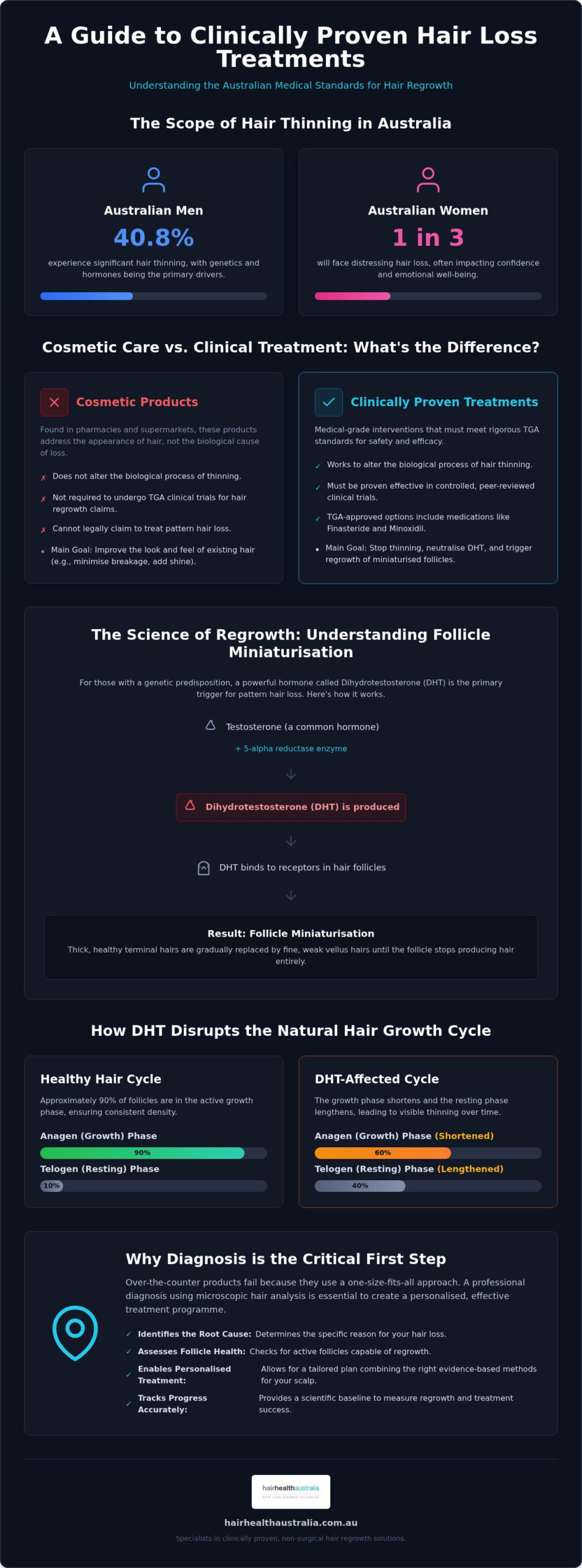
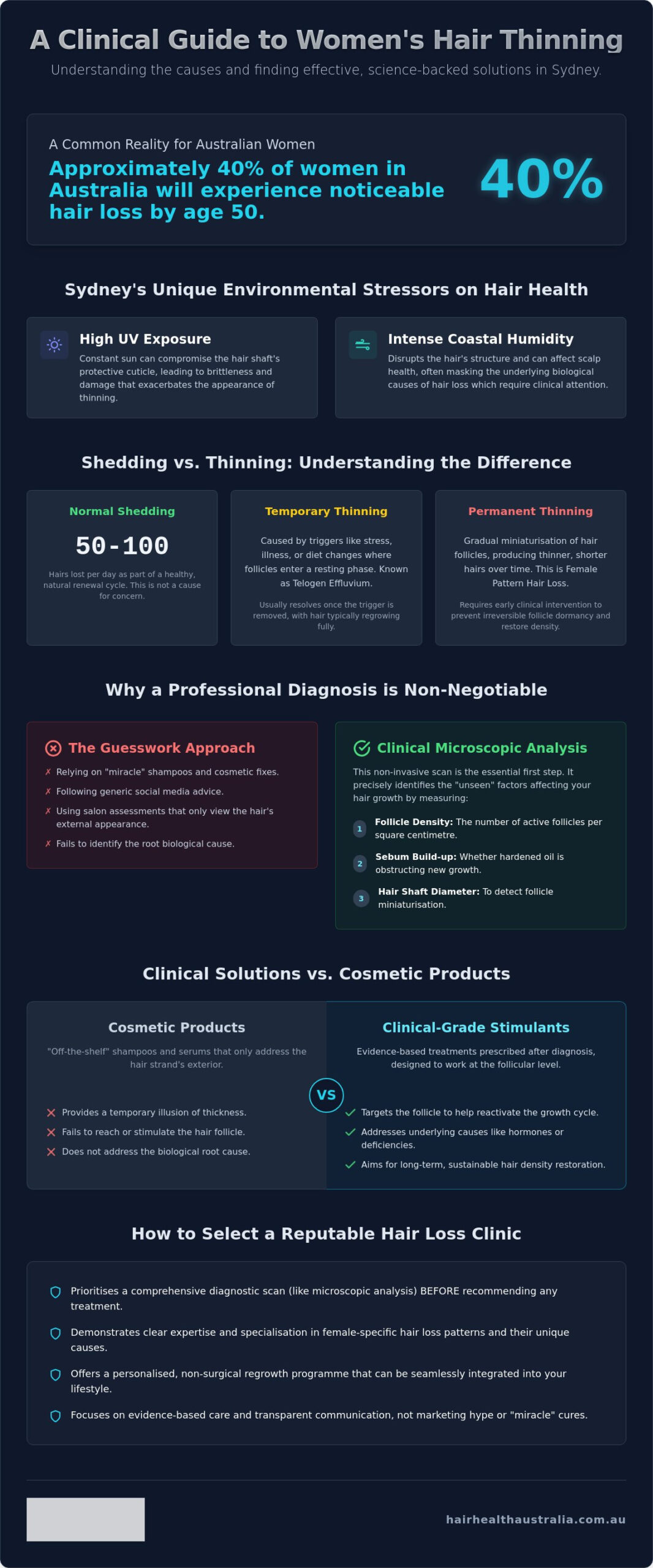
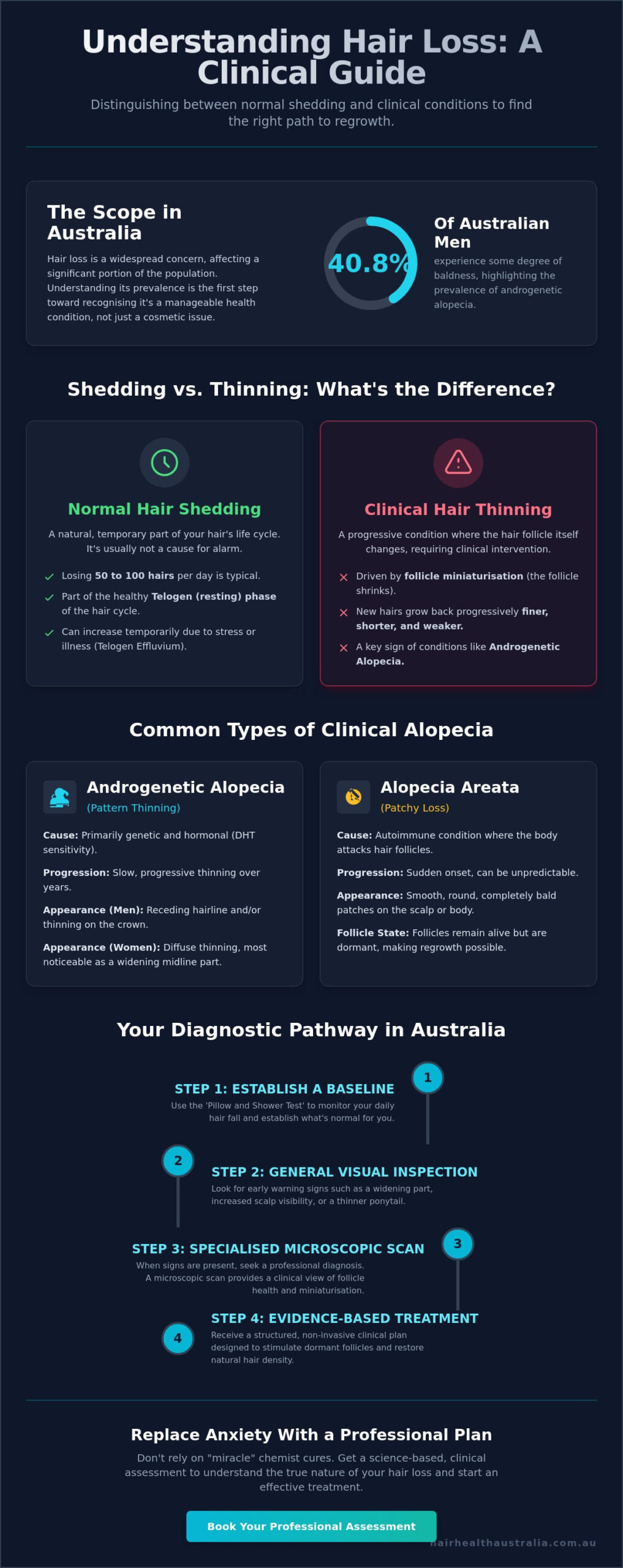
Shifting the conversation from emotional distress to clinical facts is a powerful way of explaining hair loss to your partner. It removes the element of personal blame and reframes the situation as a health matter that requires a professional diagnosis. Most people experiencing thinning are dealing with Androgenetic Alopecia, which is a genetic medical condition rather than a lifestyle choice or a result of poor hygiene. For men, this process is largely driven by Dihydrotestosterone (DHT); a hormone that attaches to hair follicles and causes them to weaken over time. This hormone doesn’t just cause hair to fall out; it fundamentally changes the biology of the scalp.
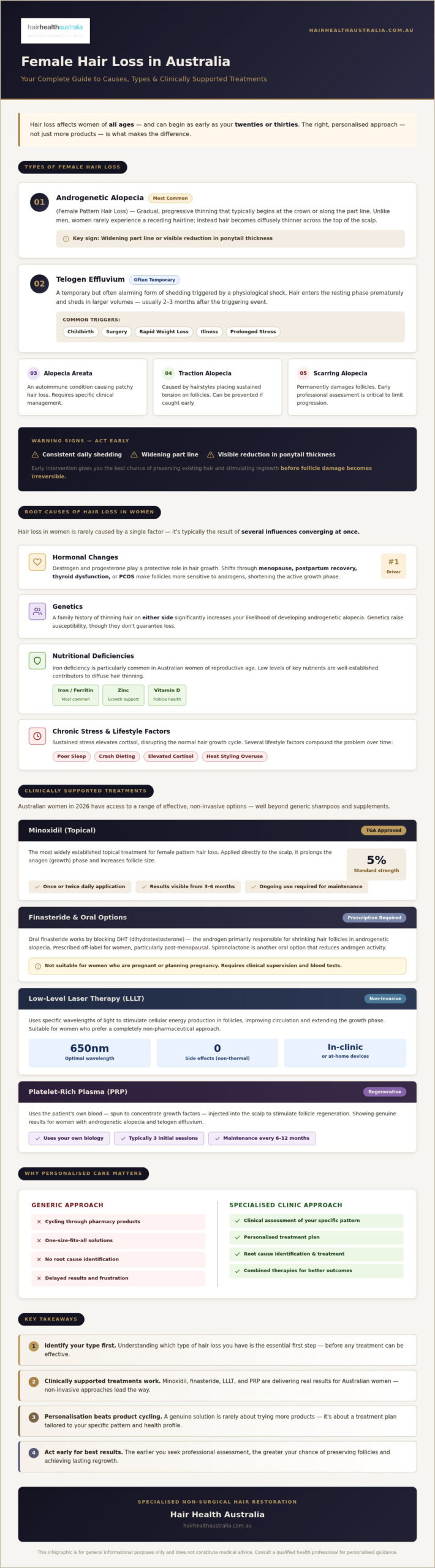
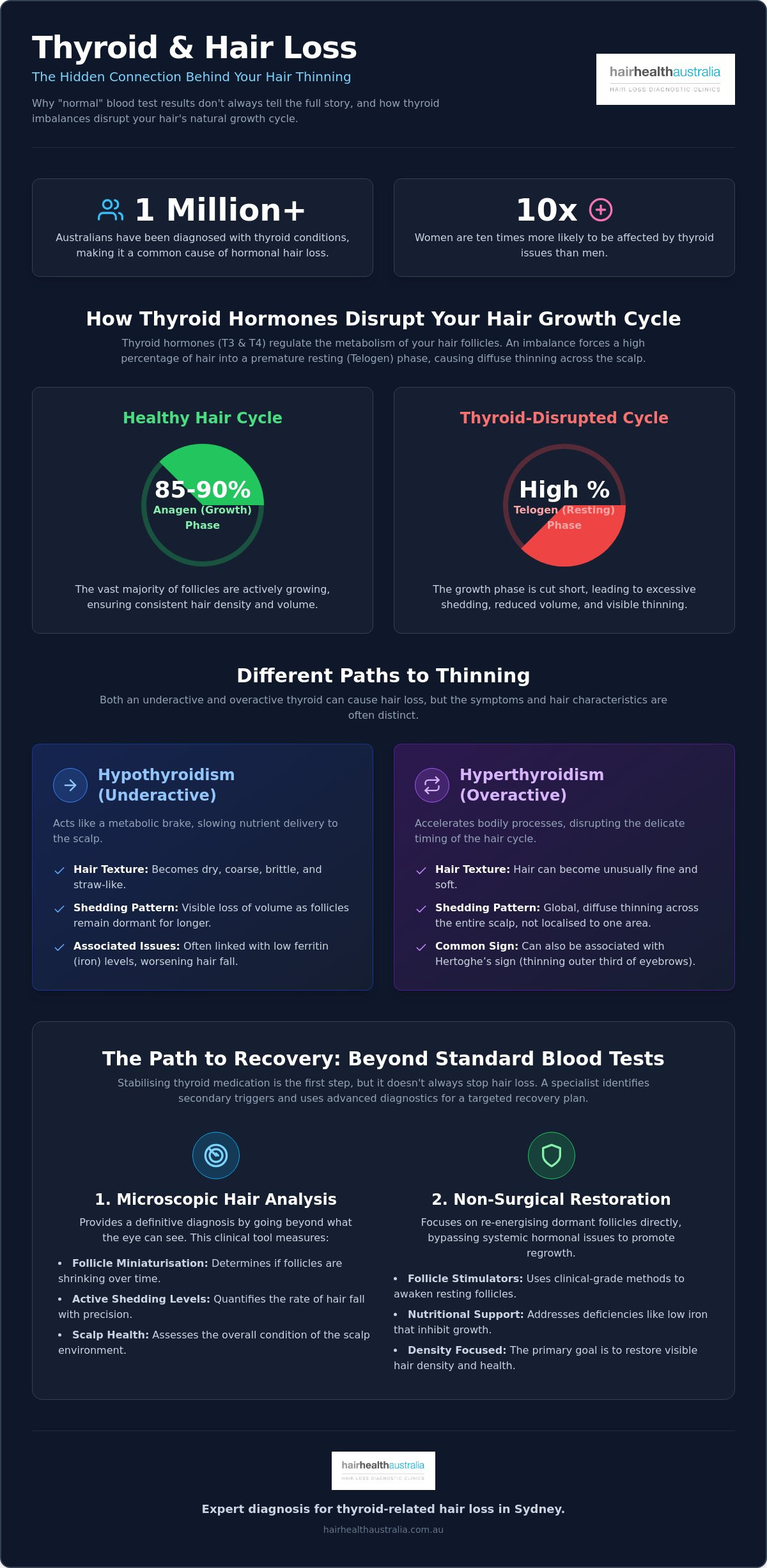
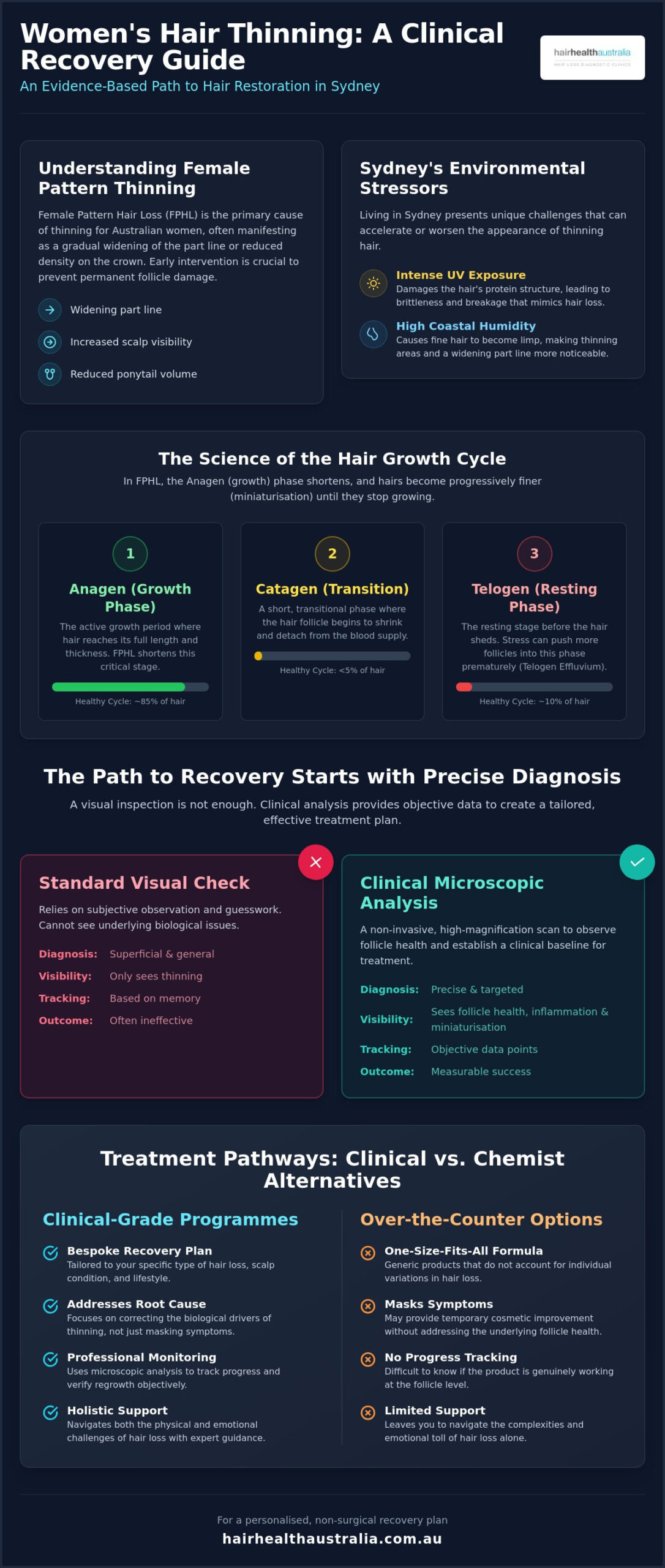
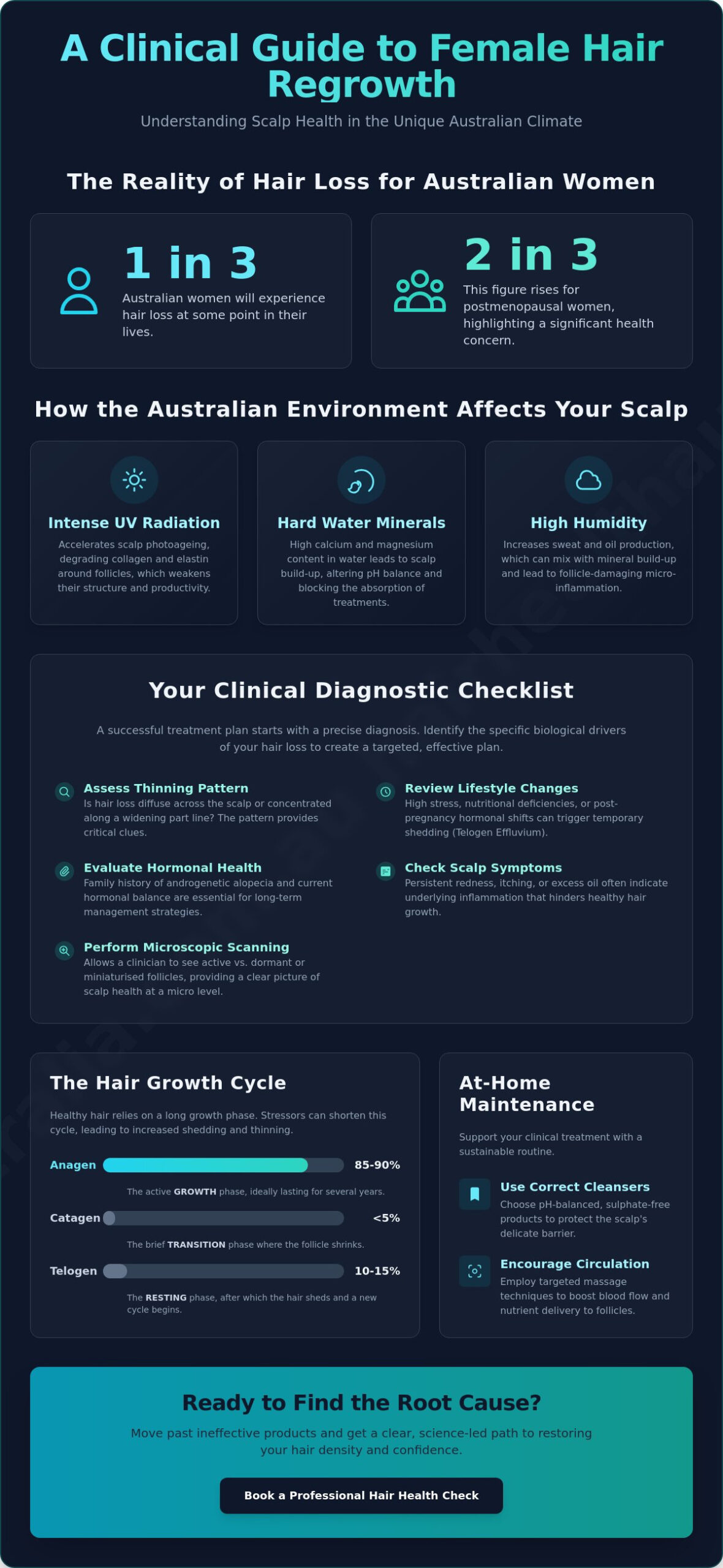
For women, the clinical picture is often more complex. Hormonal shifts, such as those occurring during menopause or after pregnancy, can trigger significant changes in hair density. Stress is another major driver that can disrupt the natural growth cycle. Understanding these Causes of hair loss helps both partners see that the issue is biological. Simply ‘shaving it off’ might change your appearance, but it ignores the underlying scalp health issues that continue even without visible hair.
Genetic Patterns vs. Lifestyle Factors
Many people in Sydney find that environmental factors like high UV exposure or the salt and chlorine from our coastal lifestyle can affect hair texture. However, these external elements are usually secondary to your genetic profile. You cannot simply ‘fix’ a genetic predisposition by changing your diet or switching to a different brand of supermarket conditioner. Androgenetic Alopecia is a progressive clinical condition that requires targeted intervention to manage effectively. Identifying these triggers early prevents the condition from advancing to a point where non-surgical options are less effective.
The Science of Follicle Miniaturisation
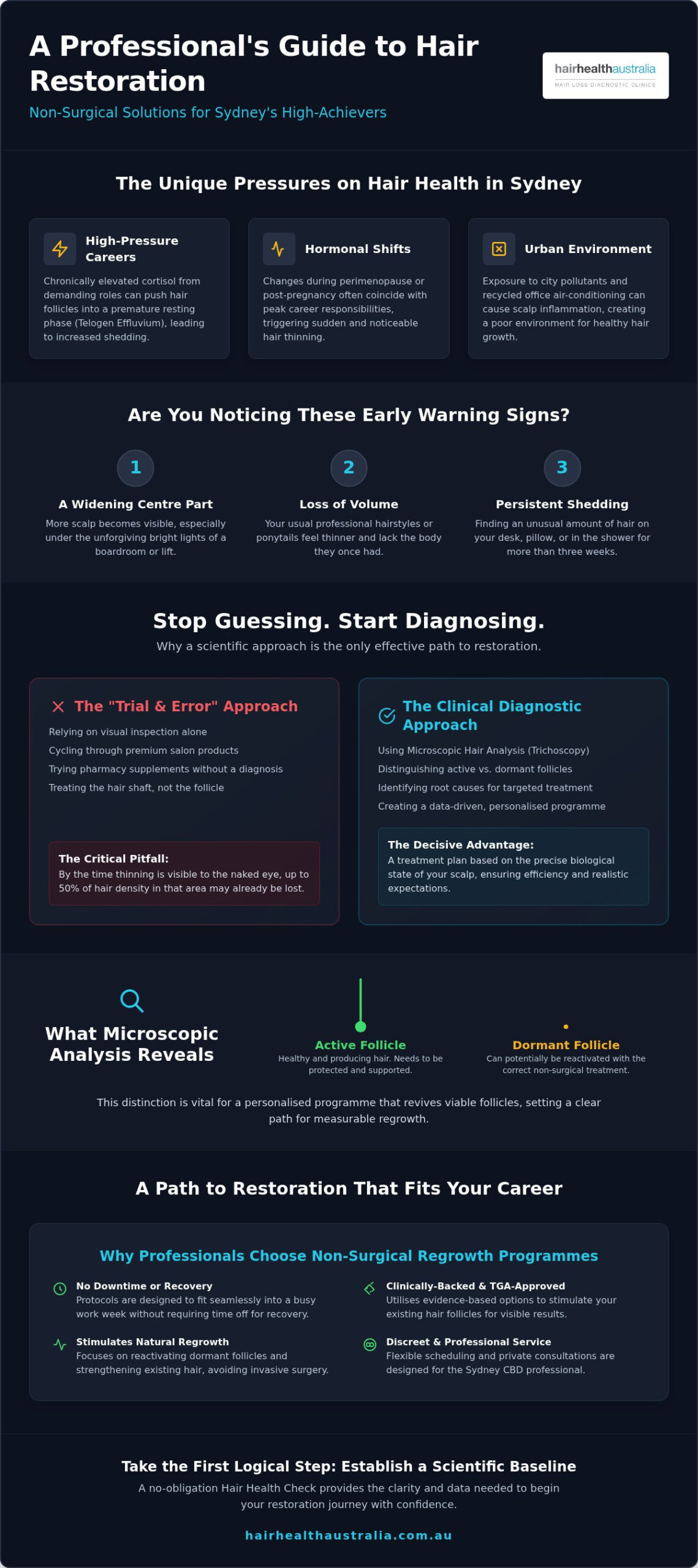
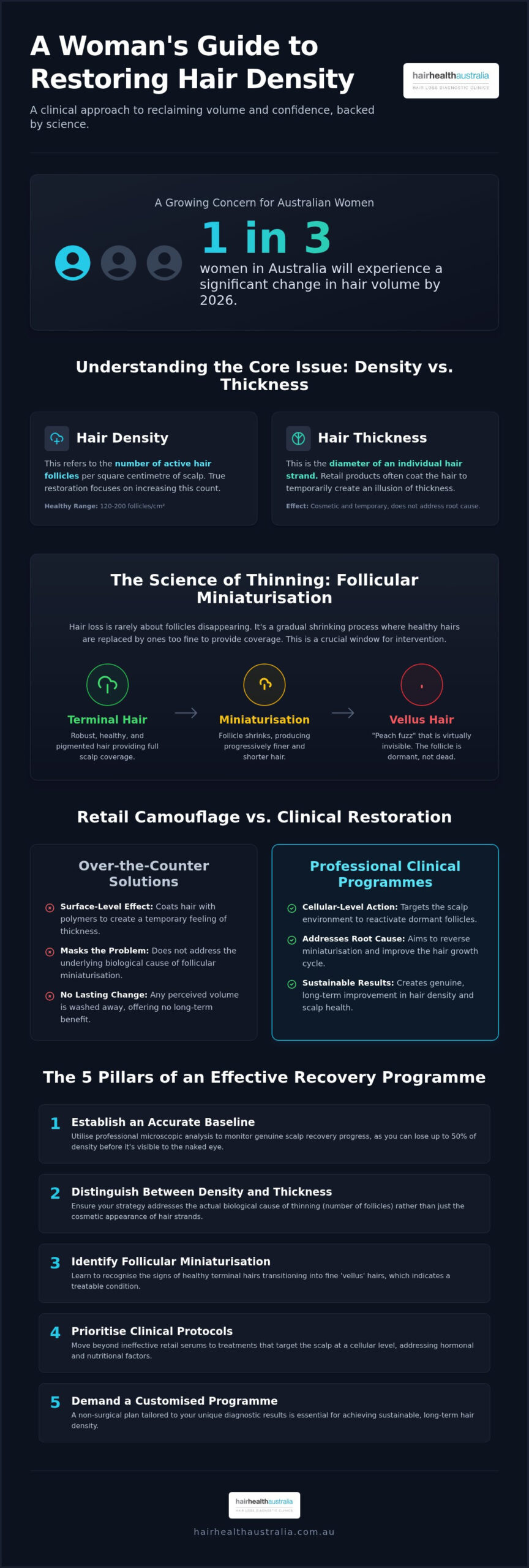
Follicles don’t usually just disappear overnight. Instead, they undergo a process called miniaturisation, where the follicle shrinks and produces increasingly fragile strands. This transition happens slowly, which is why you might not notice the change until you’ve already lost a significant percentage of your original density. Early detection is the gold standard for non-surgical regrowth success. By focusing on scalp health and follicle vitality, it’s possible to intervene before the follicle becomes dormant. If you aren’t sure where your hair health stands, an objective Hair Health Check can provide the microscopic data needed to make an informed decision together.
Addressing Common Objections and Misconceptions
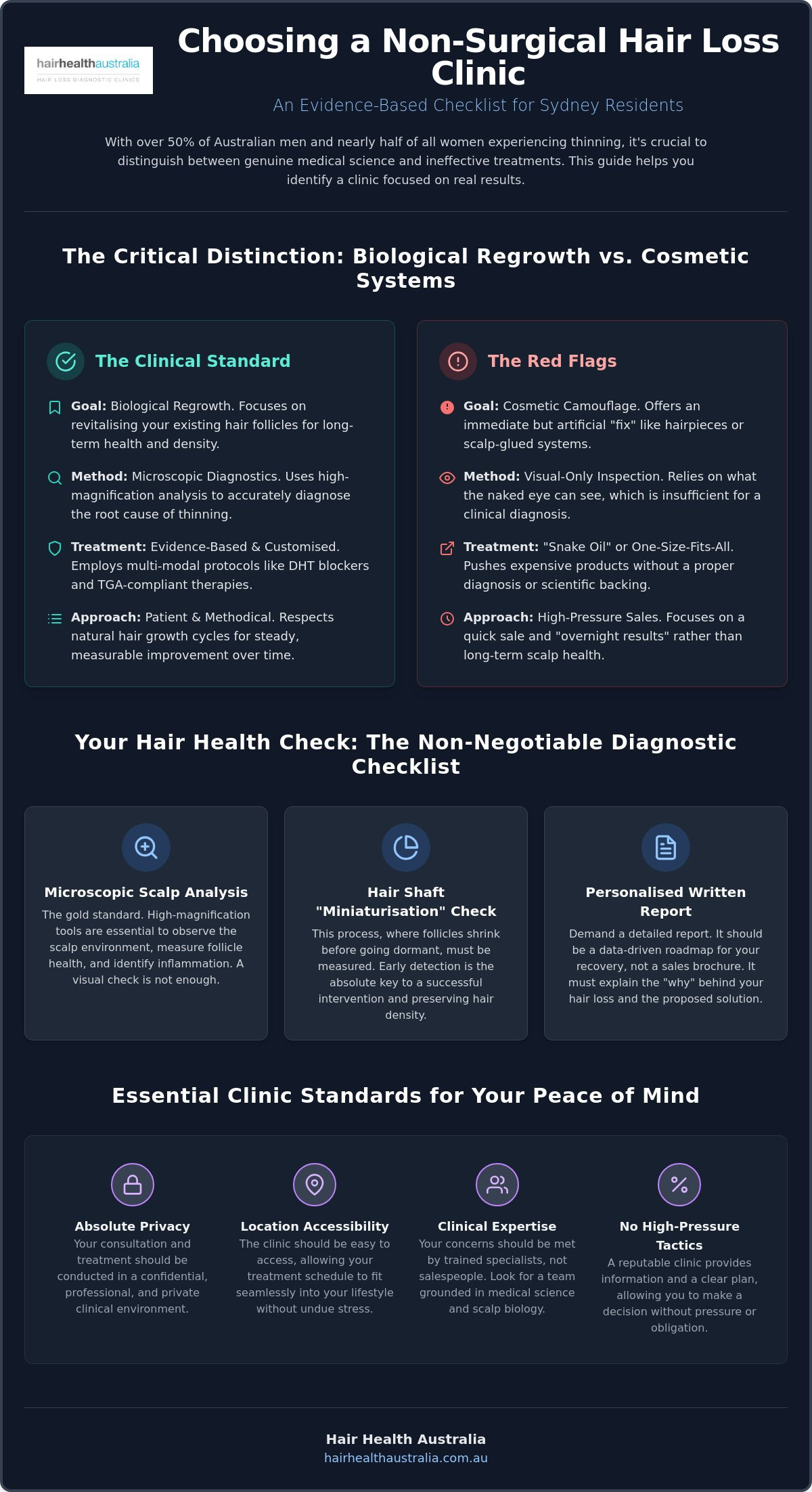
When you are explaining hair loss to your partner, you might encounter a wall of skepticism. This reaction is often a protective mechanism against the “snake oil” reputation that has shadowed the hair restoration industry for decades. Your partner might worry you’re being taken for a ride by hyperbolic marketing or unproven home remedies. It’s vital to clarify that modern clinical regrowth programmes are distinct from cosmetic cover-ups like fibres or sprays. While cosmetic products hide the problem, clinical treatments address the biological health of the follicle itself. This distinction is crucial for building trust in the process.
A common hurdle is the “it’s just natural ageing” argument. While thinning is indeed more common as we age, dismissing it as inevitable ignores the fact that it is a manageable health condition. For many Sydney professionals, the preference for non-surgical options is growing. These methods offer a way to maintain a professional image without the downtime or invasive nature of surgical procedures. It isn’t about fighting nature; it’s about maintaining your scalp health with the same rigour you apply to your fitness or dental care. Reframing hair health as a standard part of your self-care routine helps normalise the topic.
The Attraction Gap: Will You Still Fancy Me?
Physical attraction is a complex mix of features and energy. Often, the anxiety of losing hair does more damage to your “spark” than the thinning itself. When you pull away or hide, you lose the confidence that your partner found attractive in the first place. Taking proactive steps to manage your health restores that sense of self-assurance. Remind your partner that you are the same person; you are simply taking charge of a biological change rather than letting it dictate your mood or intimacy.
Clinical Evidence vs. Marketing Hype
To move past skepticism, show your partner that your path is rooted in science. In Australia, the gold standard involves using TGA-listed or clinically-proven ingredients that have undergone rigorous verification. A professional clinic provides a level of security that over-the-counter supermarket fixes simply cannot match. By starting with a Hair Health Check, you base your decisions on microscopic data rather than social media ads. This evidence-based approach transforms the conversation from a gamble into a systematic health plan that both of you can feel confident in.
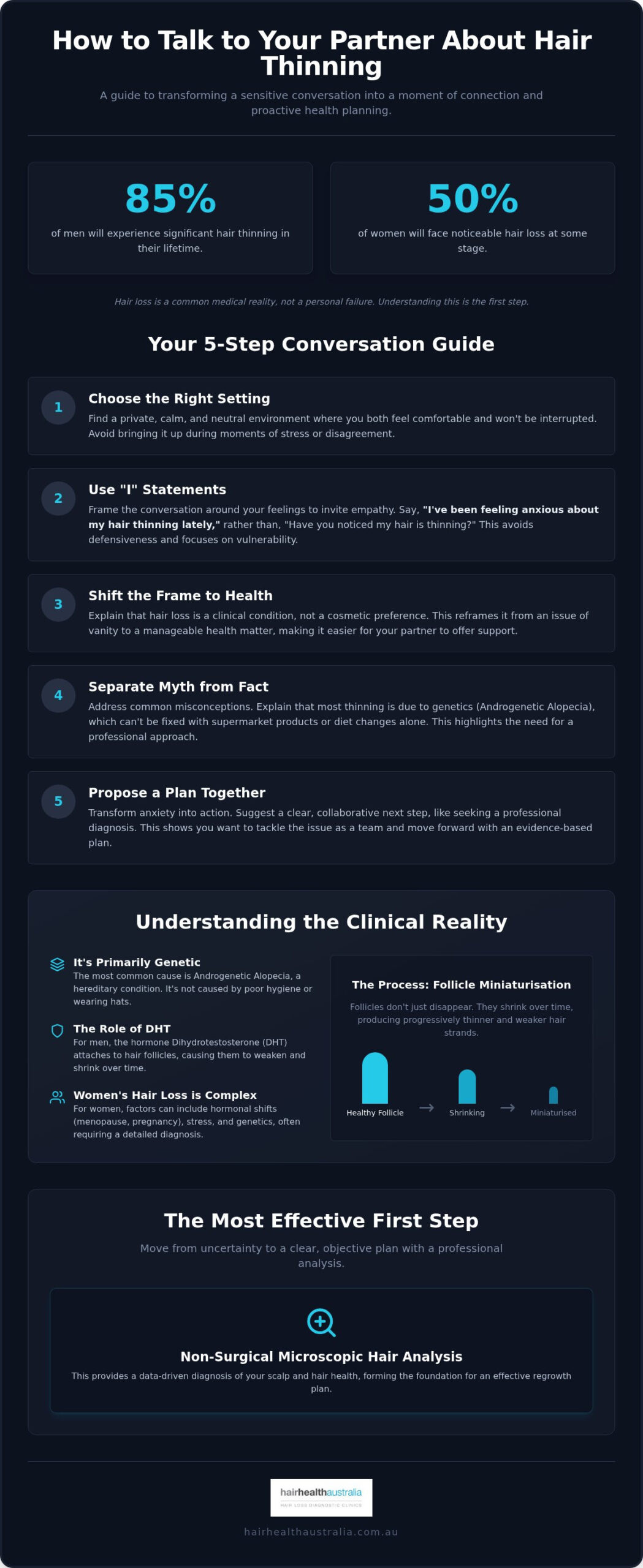
The Conversation Guide: How to Start the Chat
Approaching a conversation about your appearance requires a structured method to ensure you feel heard and supported. Rather than making a sudden announcement during a stressful moment, it’s better to treat the discussion with the same care you’d give to any other health update. Explaining hair loss to your partner is most effective when you move away from a defensive posture and toward a collaborative tone. By following a clear set of steps, you can transform a source of anxiety into a shared project that strengthens your relationship.
- Step 1: Choose the right environment. Pick a neutral, private setting where you won’t be interrupted. Avoid bringing it up while rushing to work or during a heated argument; instead, choose a quiet evening at home.
- Step 2: Lead with “I” statements. Focus on your internal experience rather than how you think they perceive you. This prevents your partner from feeling like they’ve done something wrong or missed a cue.
- Step 3: Frame it as a health goal. Present the thinning as a biological change you want to organise a clinical solution for. This shifts the focus from vanity to proactive health management.
- Step 4: Invite collaboration. Ask for their perspective or help in researching options. This makes them a partner in the journey rather than just a spectator to your stress.
Scripting the Conversation
Sometimes, having a starting point for your words can lower the barrier to entry. You might say, “I’ve noticed my hair is thinning, and it’s been weighing on my mind lately.” This is honest and direct. To explain the clinical side, you could follow up with: “It’s a genetic thing called pattern thinning, and I want to look into professional options to manage it properly.” Finally, ask for their support by saying, “I’d love your help in finding the right clinic to get a proper diagnosis so we can decide on a plan together.” These phrases keep the dialogue open and solution-focused.
Using Objective Data to Ease the Talk
Emotional topics often become easier to manage when you introduce objective facts. Showing your partner photos of your hair from a few years ago compared to now can help them understand the progression you’re seeing. This moves the conversation from “am I imagining this?” to “here is the evidence.” Mentioning a Hair Health Check is an excellent way to introduce the idea of diagnostic verification. By getting “the numbers” on your hair density and follicle health, you replace subjective worry with clinical data. This approach ensures that any decision you make is based on a professional microscopic analysis rather than marketing hype or personal insecurity. If you’re ready to move from talk to action, booking an assessment together is a logical first step.
Taking the Next Step Together in Sydney
Once the initial hurdle of explaining hair loss to your partner is behind you, the focus naturally shifts from conversation to clinical action. In Sydney, many individuals find that bringing their partner along to the clinic helps demystify the process and provides a second set of ears during the diagnostic phase. This transition moves the situation from a private worry to a shared health project. Hair Health Australia specialises in this transition, offering a professional environment where both of you can see the clinical reality of your scalp health. Shared clarity ensures that both partners are on the same page regarding the path forward and the expected outcomes.
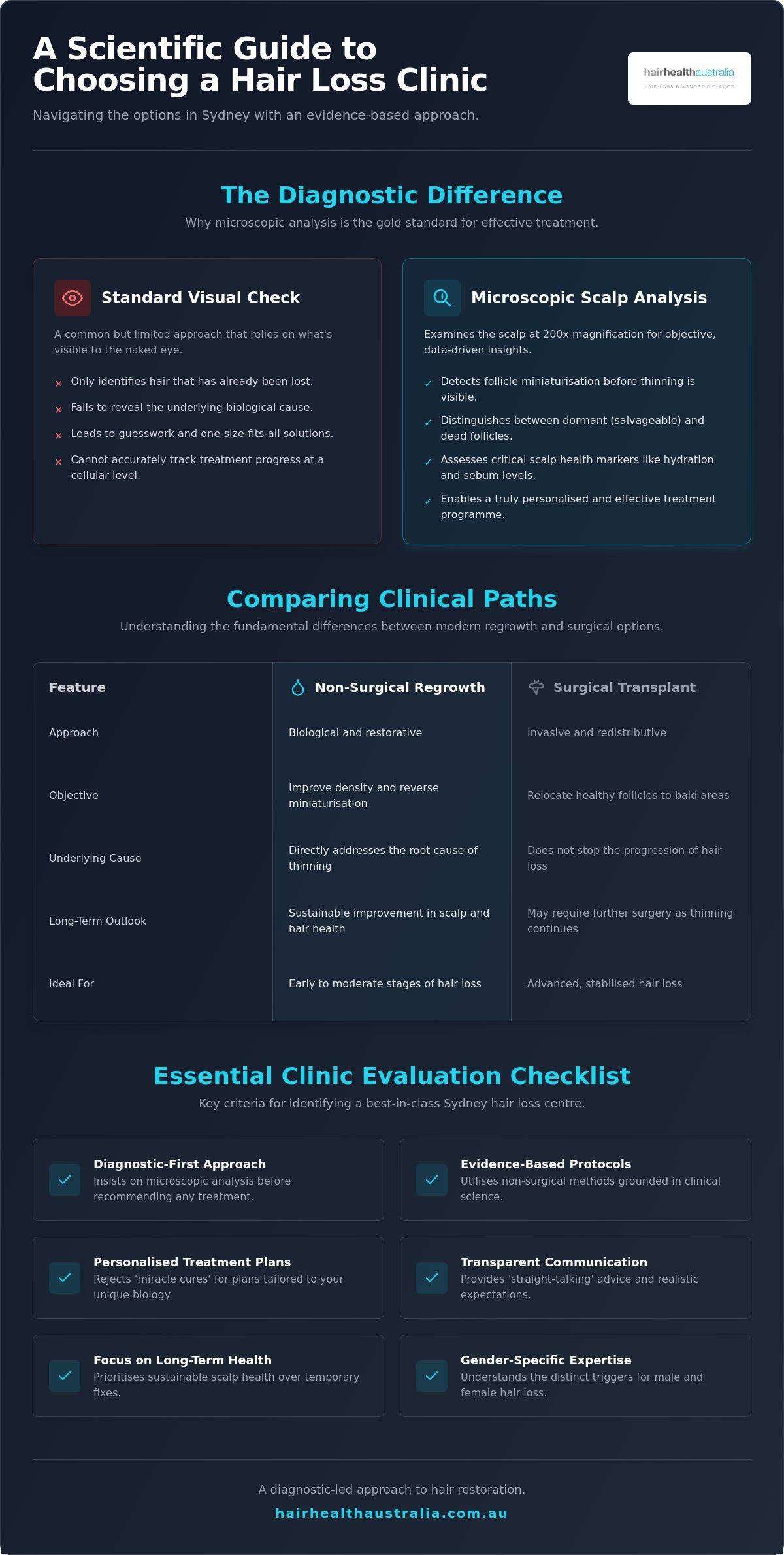
The naked eye is a limited diagnostic tool. By the time thinning becomes apparent to your partner or friends, you may have already lost a significant percentage of your original density. This is why microscopic analysis is the gold standard for a precise diagnosis. It allows us to see the exact state of the follicles and identify the specific markers of miniaturisation. This objective data removes the guesswork and the emotional weight of the unknown, replacing it with a systematic plan based on your unique biology.
What Happens During a Professional Hair Health Check?
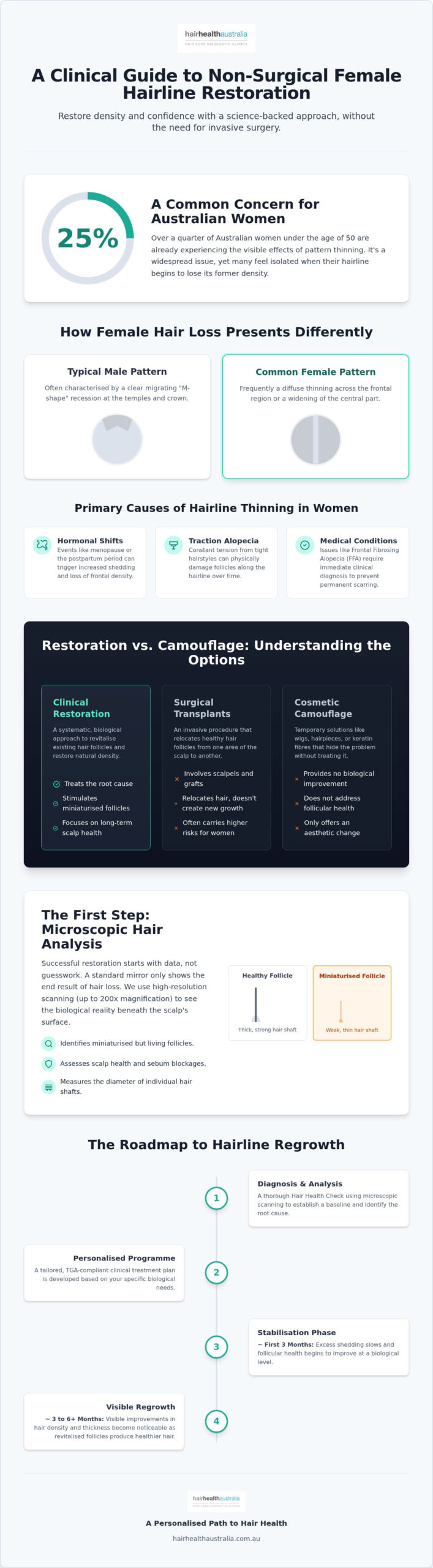
During a professional Hair Health Check, we utilise high-definition microscopic scanning technology to see what the naked eye misses. This scan allows us to identify active versus dormant follicles, which is essential for setting realistic expectations for regrowth. We examine the scalp environment for signs of inflammation or DHT-related damage. Based on these findings, we create a customised regrowth plan that is specifically tailored to your scalp biology. This individual-centric approach ensures that you aren’t wasting time on generic solutions that don’t address your specific needs.
Why Choose a Non-Surgical Path?
Non-surgical restoration offers significant advantages for those with a busy Sydney lifestyle. These programmes focus on achieving density and scalp health without the need for invasive surgery, scarring, or downtime. Results look natural because they are your own hair regrowing in a healthier environment. Clinical programmes fit seamlessly into your daily routine, allowing you to maintain your professional and social commitments while proactively managing your hair health. If you are ready to move from uncertainty to a clear, evidence-based strategy, it is time to get the facts. Book your professional Hair Health Check at our Sydney clinic today.
Moving Forward with Confidence and Clarity
Navigating a change in your appearance is simpler when you stop viewing it as a private struggle and start treating it as a shared health goal. By explaining hair loss to your partner through a clinical lens, you replace subjective anxiety with objective, actionable steps. Understanding the biological drivers, such as DHT or hormonal shifts, allows both of you to focus on restoration rather than embarrassment. This shift in perspective transforms a difficult conversation into a collaborative plan for the future.
At Hair Health Australia, we bring over 15 years of clinical experience in Sydney to every consultation. Our specialised microscopic hair analysis provides a 100% accurate diagnosis by seeing exactly what the naked eye misses. We prioritise non-invasive, non-surgical regrowth protocols that fit into your lifestyle without the need for surgery or downtime. You don’t have to manage these changes alone. Taking the first step together can turn this moment into a positive turning point for your confidence and your relationship.
Book Your Comprehensive Hair Health Check in Sydney
Frequently Asked Questions
Is it normal to feel embarrassed about discussing hair loss with my partner?
It is entirely normal to feel a sense of vulnerability when discussing physical changes with a loved one. Many Australians associate hair with youth and identity, making the topic feel sensitive. However, keeping these concerns private often leads to more anxiety than the conversation itself. Opening up allows your partner to provide support and ensures they don’t misinterpret your withdrawal or stress as a relationship issue.
What if my partner tells me to “just shave it off” but I want to keep my hair?
While shaving is a choice for some, it doesn’t address the underlying health of the scalp or the biological causes of thinning. If you prefer to maintain your hair, explain that you view this as a manageable health matter rather than just a cosmetic preference. Emphasise that non-surgical clinical programmes can restore density and that you’d like to explore these professional avenues before making any permanent aesthetic changes.
How do I explain that hair loss is a clinical condition and not just vanity?
Shifting the focus from aesthetics to biology is the best way of explaining hair loss to your partner. You can define the condition as Androgenetic Alopecia; a progressive medical issue driven by genetics and hormones like DHT. By using clinical terminology, you move the discussion away from “vanity” and toward “diagnostic verification.” This helps your partner understand that you are seeking a medical solution for a biological process.
Can my partner come with me to a hair loss consultation in Sydney?
We highly encourage partners to attend the initial consultation at our Sydney clinic. Having your partner present ensures mutual clarity and allows both of you to see the results of the microscopic hair analysis. This shared experience helps remove the mystery surrounding the condition and ensures you both understand the customised regrowth plan. It turns a personal concern into a collaborative health goal for your future together.
What is the most effective way to show my partner that treatment works?
The most effective way to demonstrate progress is through objective data rather than subjective visual checks. Microscopic scanning technology allows us to track follicle miniaturisation and regrowth at a level the naked eye cannot see. By showing your partner these clinical scans, you provide evidence-based proof of improvement. This systematic approach builds confidence in the treatment and replaces marketing hype with verified, visible results over time.
How do I bring up the cost of hair loss treatment with my partner?
Frame the discussion around the value of your self-esteem and long-term well-being rather than just the expenditure. Compare the cost of a clinical programme to other standard health investments Australians make, such as dental care or gym memberships. By presenting it as a planned investment in your health and identity, it becomes a logical part of your personal care budget rather than a frivolous or impulsive expense.
What happens if we wait too long to talk about treatment options?
Delaying the conversation can limit your clinical options because hair loss is a progressive condition. Over time, follicles undergo miniaturisation until they eventually become dormant. Once a follicle has ceased production entirely, non-surgical regrowth becomes significantly more challenging. Addressing the issue early ensures that you have the highest chance of success with non-invasive methods, preserving as much of your natural density as possible before follicles close.
Does Australian private health insurance cover non-surgical hair loss treatments?
In Australia, hair loss treatments are generally classified as cosmetic and are not covered by Medicare or private health insurance. While this means the investment is out-of-pocket, it also means you have full control over your choice of clinic and treatment path. We focus on providing transparent, evidence-based care in Sydney so you can make an informed decision about the value and realistic expectations of your regrowth programme.