Non-Surgical Hair Replacement Australia: The 2026 Clinical Buying Guide

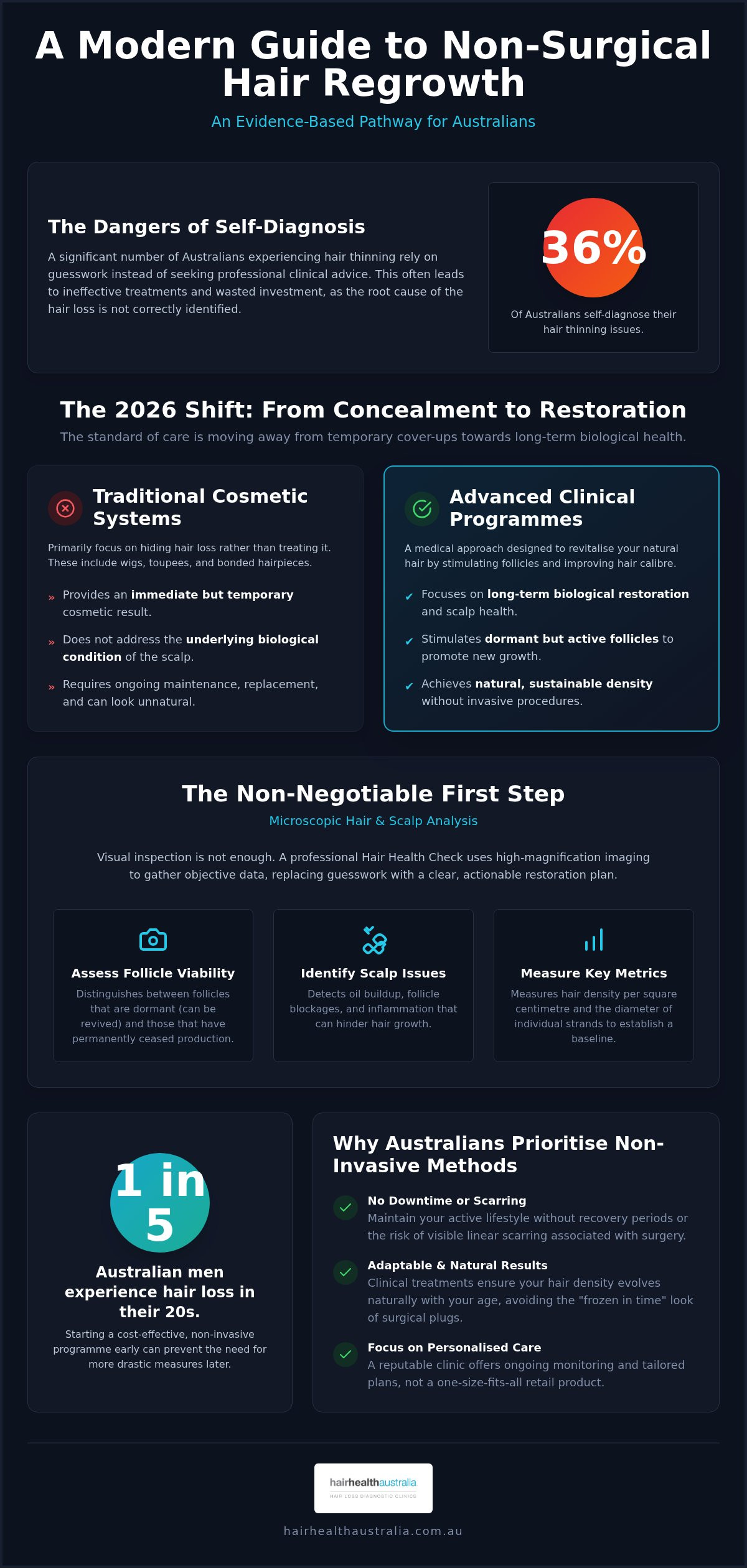
Did you know that nearly 36% of Australians experiencing hair thinning rely on self-diagnosis rather than seeking professional clinical advice? It’s a staggering figure that highlights just how much uncertainty surrounds the industry. If you’ve spent late nights staring at a receding hairline or a thinning crown, you aren’t alone. The search for non surgical hair regrowth australia often leads to a confusing crossroads between temporary cosmetic hairpieces and genuine clinical restoration. You deserve a solution that doesn’t just mask the problem but addresses the underlying biology of your scalp.

We understand the anxiety of losing your hair and the fear of ending up with an unnatural result. This guide provides a clear, evidence-based pathway to restoring your hair density using protocols specifically designed for the Australian climate and lifestyle. You’ll discover how advanced microscopic hair analysis and tailored clinical plans help you achieve natural results without the scarring or downtime of a transplant. We’ll walk you through the 2026 standards for follicle stimulation and the exact steps to reclaim your confidence through a structured, medical approach.

Key Takeaways

  • Learn why microscopic hair analysis is the essential first step to accurately identify active follicles and move beyond the limitations of visual self-diagnosis.
  • Understand the 2026 shift from traditional cosmetic hairpieces to advanced clinical protocols that prioritise biological restoration and long-term scalp health.
  • Discover how non surgical hair regrowth australia has evolved into a scientific discipline that focuses on achieving natural density without the need for invasive procedures.
  • Identify the critical criteria for selecting a Sydney-based specialist who offers ongoing clinical monitoring and personalised care rather than a one-size-fits-all retail approach.
  • Find out why a professional ‘Hair Health Check’ is the non-negotiable starting point for establishing realistic expectations and a clear pathway to hair restoration.

What is Non-Surgical Hair Replacement in Australia?

Non-surgical hair replacement in Australia is no longer just a euphemism for a toupee or a simple wig. By 2026, this field has matured into a sophisticated clinical discipline that balances immediate cosmetic needs with long-term biological restoration. It acts as a broad umbrella category, covering everything from high-end hair systems to medical-grade follicle stimulation. For many Australians, the goal has shifted from merely hiding a problem to actively restoring hair density through science-backed protocols.

Understanding the clinical management of hair loss is the first step toward making an informed decision about your scalp health. While traditional methods often focused on concealing the scalp with heavy, unnatural pieces, modern non surgical hair regrowth australia protocols prioritise the vitality of the hair follicle itself. This evolution reflects a growing demand for treatments that are sustainable, discreet, and grounded in verified diagnostic data. It is about moving beyond the “cover-up” and focusing on a systematic plan for hair health.

The Distinction Between Cosmetic and Clinical Solutions

The choice between cosmetic and clinical paths depends largely on the current stage of your thinning and your personal goals. Cosmetic systems involve external additions, such as high-grade lace pieces or bonded hair systems, which provide an immediate transformation. These are excellent for those with advanced loss who require an instant result, though they do not change the underlying biological condition of the scalp.

Clinical programmes focus on revitalising your natural hair. These non-invasive treatments are designed to stimulate dormant follicles and improve the calibre of existing hair strands. If your hair loss is in the early to mid-stages, clinical intervention is often the superior route because it maintains your biological hair. The most effective way to determine which path is right for you is through a professional Hair Health Check, which uses microscopic scanning to assess follicle viability.

Why Sydney Residents Prioritise Non-Invasive Methods

Sydney’s active, outdoor lifestyle makes traditional surgical options less appealing for many professionals. Surgery often involves significant downtime and the risk of visible linear scarring, which can be difficult to manage in a social or professional setting. Non-invasive methods allow you to maintain your daily routine without the need for bandages or recovery periods.

Clinical regrowth programmes also offer a more adaptable aesthetic. As you age, your hair naturally changes in colour and texture; clinical treatments ensure that your hair density evolves with you, avoiding the “frozen in time” look associated with surgical plugs. Given that 1 in 5 Australian men experience hair loss in their 20s, starting a non-invasive, cost-effective programme early can often prevent the need for more drastic measures later in life.

The Essential First Step: Microscopic Hair Analysis

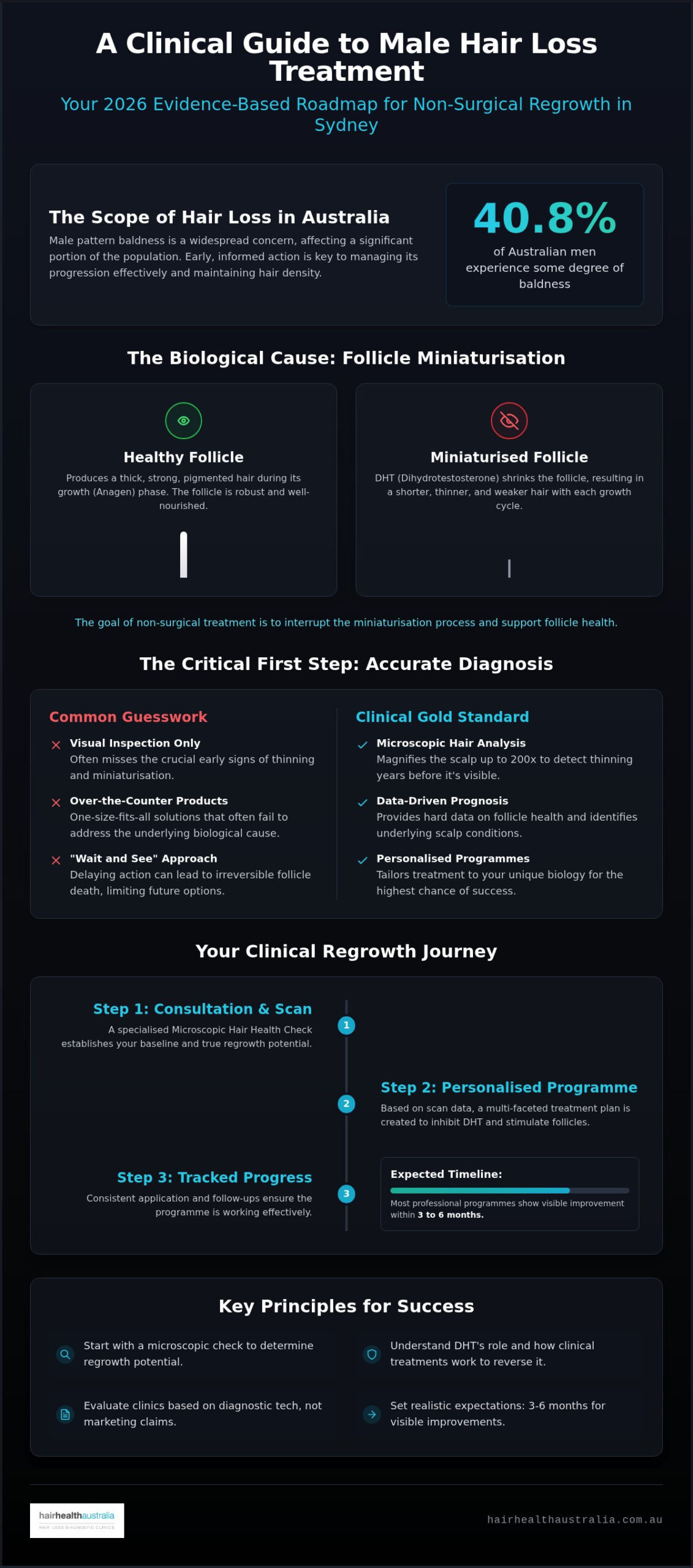
Visual inspection of your hairline in the bathroom mirror is often the first sign of trouble, but it’s an insufficient basis for a professional diagnosis. While you might see thinning, a mirror cannot reveal the biological health of the follicle beneath the scalp surface. Successful non surgical hair regrowth australia begins with microscopic hair analysis. This diagnostic tool allows a specialist to distinguish between hair that is temporarily dormant and follicles that have permanently ceased production. Understanding this distinction is the difference between a successful restoration and a wasted investment.

The success of any restoration programme depends heavily on the environment of your scalp. Microscopic scanning identifies oil buildup, follicle blockages, or subtle inflammation that might be hindering your growth. By identifying the specific Patterned hair loss you are experiencing, we can tailor a clinical response that addresses the root cause rather than just the visible symptoms. This objective data replaces the anxiety of the unknown with a clear, actionable plan.

What Happens During a Professional Hair Health Check?

During this assessment, we use high-magnification imaging to inspect the hair shaft and the openings of the follicles. We measure hair density per square centimetre and the diameter of individual strands across different zones of the scalp. This level of detail is vital for tracking progress over time, as it reveals changes long before they are visible to the naked eye. If you are ready to move beyond guesswork and see what is actually happening at the root, you can book a comprehensive Hair Health Check in Sydney to gain total clarity on your situation.

Using Data to Predict Your Regrowth Potential

Diagnostic data is your best defence against investing in ineffective treatments. It allows us to identify follicle miniaturisation; a process where hair strands become progressively thinner, shorter, and less pigmented until the follicle eventually closes. If we catch this biological shift early, the process is frequently reversible through targeted clinical stimulation. Establishing a scientific baseline means we don’t have to guess if a treatment is working. We can compare high-resolution images from month one to month six to see real, measurable changes in hair calibre. This data-driven approach ensures your time and resources are focused solely on methods with the highest probability of success for your unique scalp profile. It provides the straight-talking honesty you need before starting any clinical journey.

Clinical Regrowth vs. Cosmetic Hair Systems

When searching for non surgical hair regrowth australia, many people are confronted with two vastly different paths. The first is biological restoration, which focuses on rehabilitating your existing follicles to grow thicker, healthier hair. The second involves cosmetic hair systems, which are high-quality external pieces bonded to the scalp. While both fall under the non-surgical umbrella, they offer different outcomes, maintenance requirements, and psychological impacts. Understanding which approach aligns with your lifestyle is a critical part of the clinical journey.

The primary difference lies in sustainability versus immediacy. A cosmetic system provides a full head of hair in a single afternoon, but it does not address the underlying biological causes of thinning. Conversely, clinical regrowth takes time but results in hair that is naturally yours. Choosing between these options requires a clear-eyed look at the stage of your hair loss and your long-term goals for scalp health.

Biological Restoration: Stimulating Your Own Follicles

Biological restoration is the preferred route for those in the early to mid-stages of thinning. These programmes typically involve a combination of follicle stimulants and DHT blockers to halt the miniaturisation process. According to established medical perspectives on Hair loss diagnosis and treatment, consistency is the foundation of success. It’s not a quick fix; you’ll generally need four to six months of disciplined treatment before visible changes in density occur.

The advantage of this path is that the results are completely natural and evolve with you. There are no bonds to manage or pieces to service. To determine if your follicles are still active enough for this approach, a professional Hair Health Check is necessary to map out your regrowth potential.

Cosmetic Systems: When to Consider a Hairpiece

If hair loss has progressed to the point where the follicles have permanently closed, cosmetic systems become a viable alternative. These modern systems use a fine membrane that mimics the appearance of the scalp, with individual hairs knotted into the base to create a realistic look. They are often bonded with medical-grade adhesives that allow you to swim, shower, and exercise with confidence.

However, no one should enter into a bonded system without understanding the maintenance. These pieces require professional re-servicing every four to six weeks as your natural hair grows underneath. There’s also a psychological adjustment to consider. While a piece provides immediate density, many Australians find that the long-term satisfaction of regrowing their own biological hair provides a deeper sense of confidence. If you still have viable follicles, prioritising your natural hair is almost always the more sustainable and cost-effective choice.

Non-Surgical Hair Replacement Australia: The 2026 Clinical Buying Guide

Choosing a Non-Surgical Hair Loss Clinic in Sydney

Selecting the right partner for your hair restoration journey is as critical as the treatment itself. In a market saturated with quick fixes and retail-heavy franchises, you must distinguish between a sales-driven environment and a clinical one. A professional clinic prioritises diagnostics over transactions. They won’t pressure you into a long-term contract during your first visit. Instead, they focus on establishing a clear, evidence-based baseline for your scalp health through objective testing.

When evaluating options for non surgical hair regrowth australia, look for transparency in their records. Authentic testimonials should reflect realistic timelines rather than overnight miracles. Be wary of any provider that promises identical success for every client; biology is individual and results vary. A reputable Sydney clinic will be honest about what can be achieved based on your specific level of follicle miniaturisation. This straight-talking approach builds the trust necessary for a long-term clinical relationship.

The Value of a Personalised Clinical Protocol

Generic, off-the-shelf products often fail because they ignore the unique variables of your scalp. A one-size-fits-all kit purchased online cannot account for your specific hormonal profile or scalp sensitivity. Clinical success requires a protocol that is adjusted as you progress. Your specialist should monitor how your skin and follicles react to stimulants, making precise calibrations to ensure both safety and efficacy. For a deeper look at what to verify before your first appointment, review our guide on Choosing a Non-Surgical Hair Loss Clinic in Sydney: The 2026 Essential Checklist.

Local Sydney Expertise and Environmental Factors

The Australian climate presents unique challenges for hair health. High UV levels and fluctuating humidity in Sydney can impact scalp hydration and the effectiveness of certain topical treatments. A local specialist understands these environmental stressors and ensures your programme complies with Australian health regulations and standards. Additionally, the convenience of a Sydney-based clinic allows for regular, face-to-face monitoring. This ongoing support is vital for maintaining the momentum of your programme and catching any issues before they stall your progress. Professional oversight ensures you aren’t just applying products, but following a systematic path to restoration.

If you are tired of generic advice and want a plan tailored to your specific needs, the best way forward is to speak with a professional. You can start your journey with a professional diagnostic assessment to see which clinical options are most suitable for your scalp profile.

The Hair Health Australia Approach to Non-Surgical Restoration

At Hair Health Australia, our methodology is built on the principle that effective restoration requires more than just a topical solution. It demands a systematic, evidence-based approach that prioritises the long-term health of your scalp. We don’t believe in one-size-fits-all packages or aggressive sales tactics. Instead, we act as your dedicated guide, providing a professional environment where medical authority meets empathetic understanding. Our goal is to replace the uncertainty of hair loss with the clarity of a proven clinical plan.

The foundation of our success is the straight-talking consultation. We take the time to explain the biological factors contributing to your thinning and set realistic expectations for your journey. By integrating advanced diagnostics with targeted follicle stimulation and comprehensive scalp care, we create a synergistic effect that maximises your results. This integrated protocol ensures that every action we take is informed by the specific data gathered during your initial assessment. We empower you through education, ensuring you understand the “why” behind every step of your non surgical hair regrowth australia programme.

Customised Treatment Programmes for Men and Women

Biology differs between the sexes, and so should the clinical response. While male hair loss is frequently driven by genetic predispositions, female thinning often involves a complex interplay of hormones, nutritional deficiencies, and stress. We tailor the strength and composition of our clinical treatments to address these specific drivers. For women, this means a nuanced approach that supports scalp vitality while accounting for systemic health factors. If you are seeking more detailed information on female-centric protocols, our Hair Loss Treatment for Women: The 2026 Australian Clinical Buying Guide provides a comprehensive breakdown of these specialised options.

Your Path to Confidence: What to Expect Next

Your journey begins with a transition from the diagnostic phase to your first active clinical session. This isn’t a process that happens overnight. We monitor your progress meticulously using microscopic imaging over a 6 to 12 month period. These regular check-ins allow us to verify that your follicles are responding as expected and to make any necessary adjustments to your protocol. Seeing the measurable increase in hair diameter and density on screen provides the reassurance you need to stay committed to the process.

Restoring your hair is a journey that requires patience, precision, and professional oversight. If you are ready to move away from temporary fixes and toward a permanent clinical solution, we are here to help. Take the first step toward restoration; enquire with our Sydney specialists today to book your diagnostic Hair Health Check and reclaim your confidence with a plan that actually works.

Reclaiming Your Confidence Through Clinical Restoration

Choosing the right path for your scalp health requires moving beyond temporary cosmetic fixes and embracing a scientific approach. By prioritising microscopic hair analysis, you ensure that every step of your journey is based on objective diagnostic data rather than guesswork. Whether you are dealing with early thinning or a receding hairline, the most effective results come from a personalised plan that addresses your unique biological needs. This is the cornerstone of modern non surgical hair regrowth australia; it’s about restoring what is naturally yours through disciplined, evidence-based care.

As Sydney leading non-surgical clinical specialists, we provide the precision diagnostics and ongoing support necessary to achieve sustainable density. Our personalised programmes for men and women are designed to work with your lifestyle while delivering natural results you can trust. Don’t let uncertainty delay your progress any longer. The first step toward a fuller head of hair is a professional assessment of your follicle viability. Book Your Clinical Hair Health Check in Sydney today to establish your baseline and begin your restoration journey. We are ready to help you rediscover your confidence with a plan grounded in clinical excellence.

Frequently Asked Questions

Is non-surgical hair replacement permanent?

Non-surgical solutions are not a one-time permanent fix like surgery, but they offer sustainable, long-term results through consistent care. Clinical regrowth programmes focus on maintaining the health of your existing follicles, which requires ongoing stimulation to prevent the return of miniaturisation. If you stop treatment, the biological factors driving hair loss may resume. For cosmetic systems, the hair itself is permanent, but the bond requires professional servicing every four to six weeks.

Can I swim and exercise with a non-surgical hair replacement system?

You can absolutely maintain an active lifestyle, including swimming and high-intensity exercise, with a modern hair replacement system. These units are secured using medical-grade adhesives that are resistant to water, sweat, and humidity. While you don’t need to restrict your movements, we recommend waiting 24 to 48 hours after a fresh bonding session before submerging your head in water. This ensures the adhesive has fully cured for maximum security during your Sydney coastal activities.

How much does non-surgical hair replacement cost in Australia?

The cost of non-surgical hair restoration in Australia varies based on the technology used and the extent of your thinning. Industry data from 2026 indicates that monthly treatment plans can start from approximately A$24, while more intensive growth factor therapies or high-end cosmetic systems involve higher initial investments. Since every scalp is unique, we recommend a diagnostic assessment to determine the most cost-effective clinical pathway for your specific stage of hair loss.

What is the difference between a hair system and a clinical regrowth programme?

A hair system is a cosmetic solution where a fine membrane of hair is bonded to your scalp for immediate density. In contrast, a clinical regrowth programme focuses on biological restoration, using stimulants to revitalise your natural follicles. While a system provides an instant transformation, non surgical hair regrowth australia protocols aim for a sustainable result that uses your own hair. The right choice depends on whether your follicles are still active or have permanently closed.

How long does it take to see results from a clinical hair restoration programme?

Patience is essential when undertaking a biological restoration journey. Most clients begin to see measurable changes in hair calibre and density within four to six months of consistent treatment. This timeline aligns with the natural growth cycle of the hair follicle. We use microscopic imaging during regular check-ins at our Sydney clinic to track these subtle improvements long before they are visible to the naked eye, ensuring your programme remains on the right track.

Will people be able to tell I have had a hair replacement treatment?

Modern clinical treatments and cosmetic systems are designed to be completely undetectable. Clinical regrowth uses your own natural hair, so the increase in density appears gradual and authentic. For those choosing cosmetic systems, high-quality lace and skin membranes mimic the scalp perfectly, while professional styling ensures a seamless blend with your existing hair. You can feel confident that your results will look natural under the bright Australian sun and in close-up social interactions.

Is non-surgical hair replacement suitable for women with thinning hair?

Yes, non-surgical protocols are highly effective for women experiencing thinning or patterned loss. Female hair loss often requires a nuanced approach that considers hormonal fluctuations and nutritional health. Our clinical programmes are specifically tailored to address these factors, focusing on improving hair diameter and scalp health without invasive surgery. Nearly 40% of Australian women experience visible thinning during menopause, making these non-invasive, clinical interventions a vital resource for restoring hair volume and self-esteem.

Do I need a referral from a GP to visit a hair loss clinic in Sydney?

You do not need a referral from a General Practitioner to visit our Sydney clinic. We operate as a specialised private facility where you can book a diagnostic Hair Health Check directly. This initial assessment serves as your professional gateway to treatment, allowing us to perform the necessary microscopic analysis and scalp evaluation. While a referral isn’t required, we always encourage open communication with your regular doctor regarding any clinical programmes you choose to undertake for your hair health.

Hair Loss & Baldness: 2026 Clinical Guide for Australians

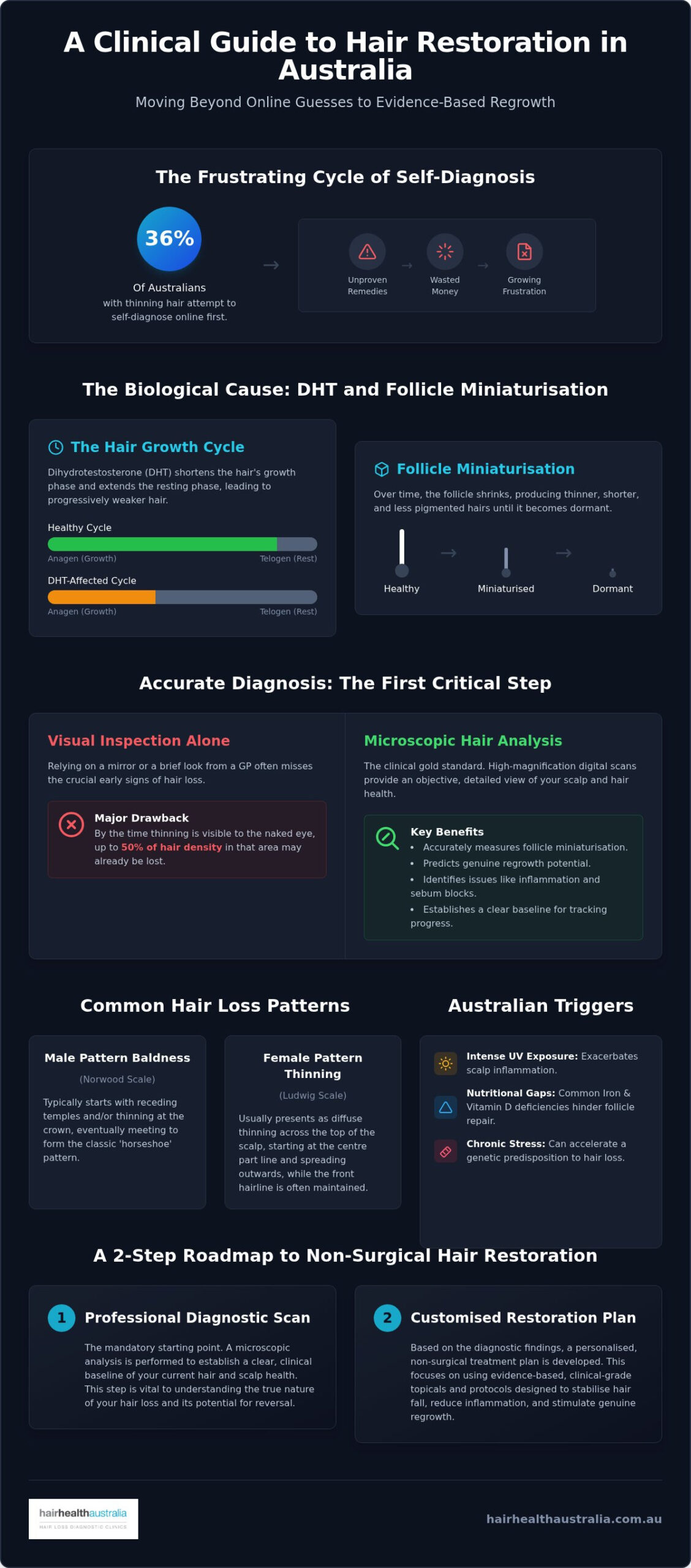
Did you know that roughly 36% of Australians struggling with thinning hair attempt to self-diagnose using online reviews before ever speaking to a professional? It’s a frustrating cycle that often leads to wasted money on unproven remedies and a growing fear that your hair loss might be permanent. If you’ve felt overwhelmed by the sheer volume of conflicting advice, you aren’t alone. Finding an effective hair loss treatment Australia requires moving past the marketing hype and focusing on the biological health of your individual follicles.

This 2026 clinical guide provides the clarity you need to stop thinning and begin a genuine journey toward regrowth. We’ll outline the latest evidence-based treatments and diagnostic techniques that offer a medical-grade alternative to invasive surgery. You’ll discover how a structured restoration plan, supported by a Sydney specialist, can transform your hair density and restore your self-confidence. We’ll examine the most effective non-surgical protocols currently available, ensuring you have the knowledge to make an informed, clinical decision for your long-term hair health.

Key Takeaways

  • Learn why microscopic analysis is the only way to accurately assess follicle health and predict your hair’s genuine regrowth potential.
  • Understand how DHT affects your growth cycle and why a customised hair loss treatment Australia plan is more effective than generic pharmacy options.
  • Discover the critical differences between over-the-counter solutions and clinical-grade topicals designed to stabilise hair fall and reduce inflammation.
  • Identify the two essential steps of a non-surgical restoration roadmap, beginning with a professional diagnostic scan to establish a clear baseline.
  • Recognise the red flags when selecting a Sydney specialist and why transparent, evidence-based care is vital for achieving realistic, long-term results.

Understanding the Biological Mechanisms of Hair Loss and Baldness

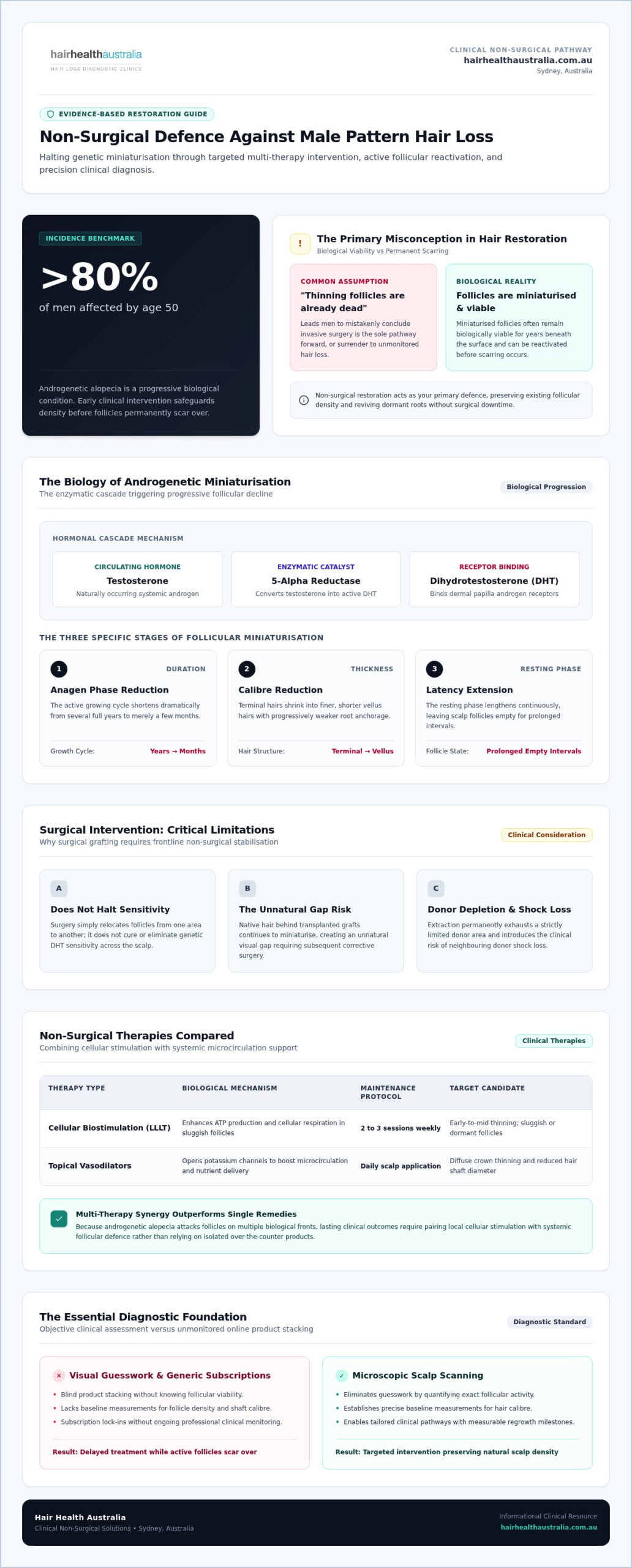
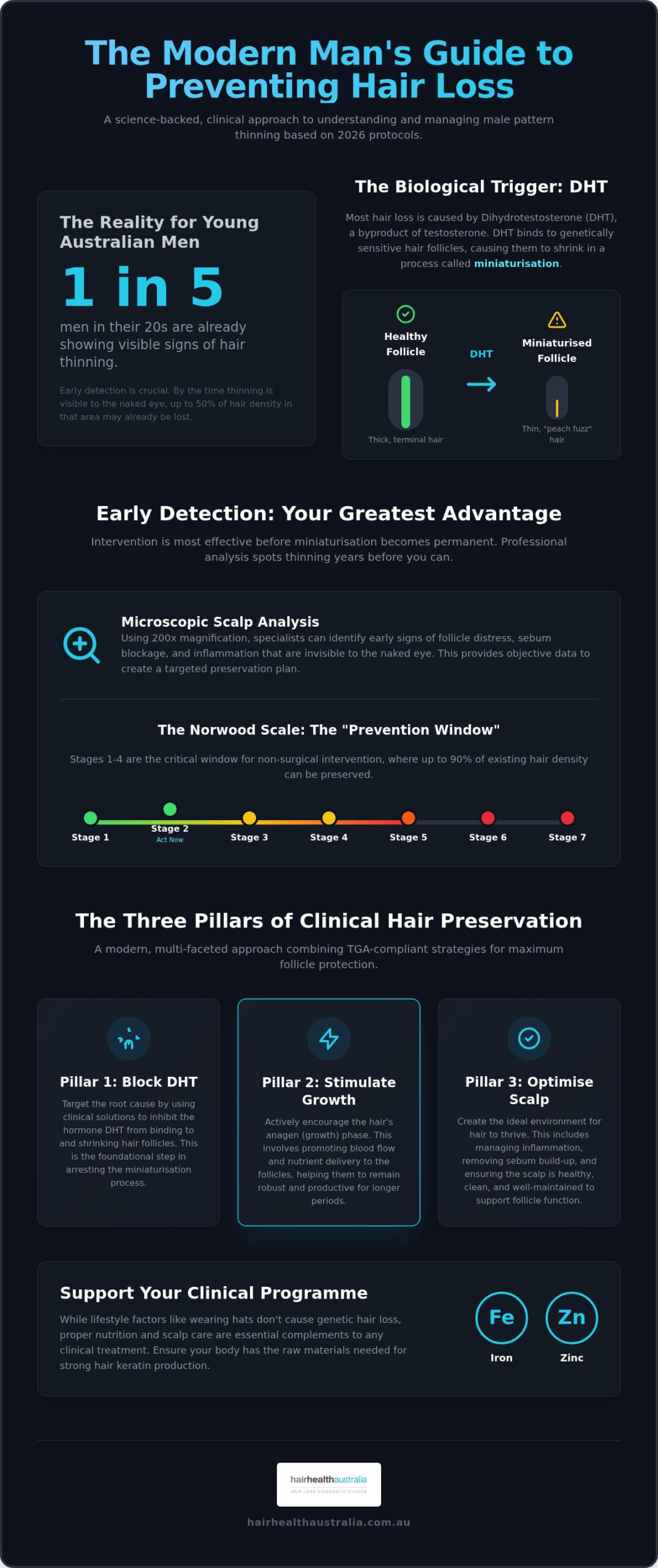
The primary driver of thinning for the majority of Australians is Pattern hair loss (androgenetic alopecia). This condition isn’t an overnight occurrence but a progressive biological shift. It’s driven largely by Dihydrotestosterone (DHT), a byproduct of testosterone that binds to receptors in the scalp. When DHT interacts with susceptible follicles, it shortens the growth (anagen) phase and lengthens the resting (telogen) phase. Over time, the follicle undergoes miniaturisation. It produces thinner, shorter, and less pigmented hair until the follicle eventually stops producing visible hair altogether. This process is the core reason why most people eventually seek a professional hair loss treatment Australia.

It’s vital to distinguish this genetic process from temporary shedding, known as Telogen Effluvium. While temporary shedding can look alarming, it’s often a reaction to a specific trigger like illness, extreme weight loss, or surgery. Conversely, permanent thinning requires a structured clinical approach. Many people assume baldness means the follicle is dead. In reality, most cases involve follicles that are dormant or severely miniaturised. This means there is still a window for intervention before the scalp becomes completely smooth and the follicle reaches a point of no return.

Male Pattern Baldness vs. Female Thinning

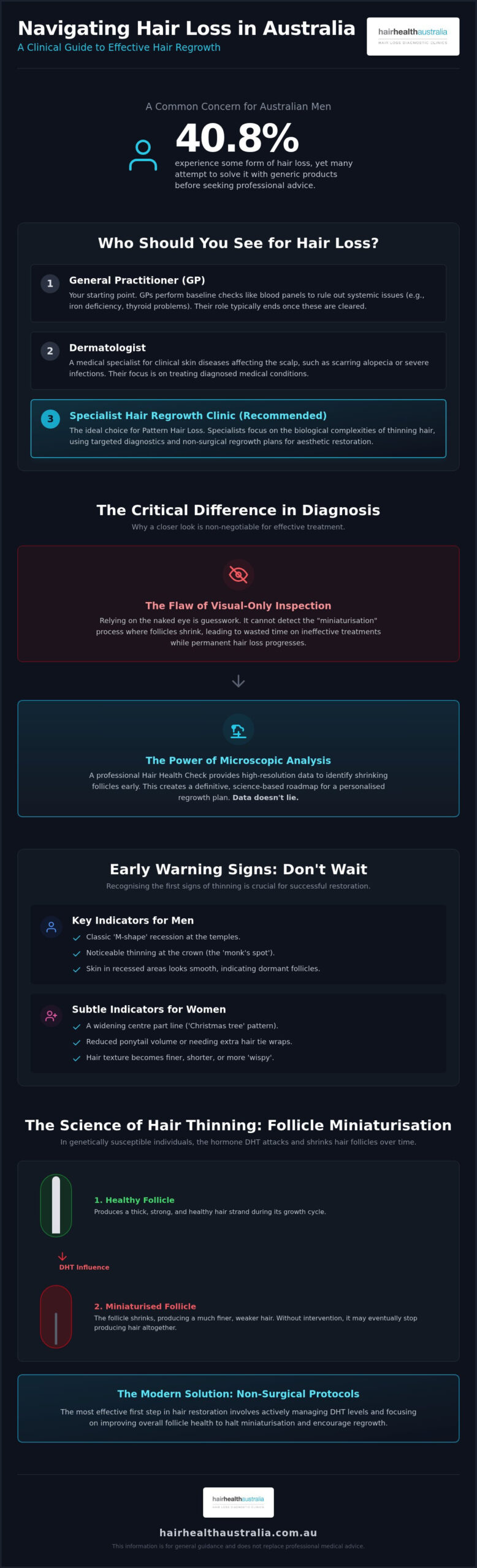
Men and women experience thinning in distinct ways, often classified by specific medical scales. For men, we use the Norwood Scale to track receding temples and thinning at the crown. Women typically follow the Ludwig Scale, which describes diffuse thinning that begins at the centre part line and spreads outwards while maintaining the front hairline. Regardless of the pattern, early intervention is the most effective way to preserve existing density. To determine where you sit on these scales, a Hair Health Check is the definitive starting point for establishing a clinical baseline. Once a follicle has been inactive for several years, the chance of significant regrowth diminishes.

Environmental and Lifestyle Triggers in Australia

The Australian climate introduces unique challenges for scalp health. Intense UV exposure can damage the scalp’s protective barrier and exacerbate inflammation, which accelerates the thinning process. During clinical consultations in Sydney, we also frequently identify nutritional gaps that hinder hair health. Deficiencies in iron and Vitamin D are common and can prevent the follicle from repairing itself efficiently. Additionally, chronic stress acts as a catalyst. It doesn’t cause genetic hair loss on its own, but it can certainly speed up your genetic predisposition. Addressing these external factors is a cornerstone of any comprehensive hair loss treatment Australia program.

Microscopic Hair Analysis: Why Clinical Diagnosis is Essential

Many Australians begin their journey with a simple visual check in the bathroom mirror. However, by the time thinning is visible to the naked eye, you may have already lost up to 50% of your hair density in that area. Microscopic hair analysis is the gold standard for non-invasive hair loss diagnosis. This diagnostic approach uses high-magnification digital scans to examine the scalp at a level of detail that is impossible to achieve during a standard physical exam. By measuring follicle diameter and hair shaft health, we can accurately predict your genuine regrowth potential before you invest in any specific program.

This level of precision is also critical for identifying secondary issues like sebum crystallisation and scalp inflammation. While there are many common causes of hair loss, these local scalp conditions often act as physical barriers, hindering the absorption of topical clinical solutions. If these barriers aren’t addressed first, even the most advanced hair loss treatment Australia may fail to deliver the expected results. A clinical diagnosis ensures we’re treating the root cause rather than just the symptoms.

Visual Inspection vs. Digital Scanning

A standard GP visit often relies on a brief visual inspection, which can easily miss the early signs of miniaturisation. Digital scanning allows us to compare the thinning areas with your “donor area” at the back of the head, where follicles are typically more resilient. This comparison provides a clear baseline of what your healthy hair density should look like. Because these scans are saved digitally, they allow for objective tracking of your progress over months and years, replacing guesswork with hard data.

The Hair Health Check Process

During a professional Hair Health Check in our Sydney clinic, we perform a comprehensive analysis of your scalp’s current state. We calculate the exact percentage of hairs in the growth (anagen) phase versus the resting (telogen) phase. A healthy scalp usually has about 85% to 90% of hairs in the growth phase. If your data shows a significant shift toward the resting phase, it indicates that your follicles are under stress or DHT influence. This data is then used to create a customised hair loss treatment Australia roadmap for every client. If you’re ready to move past the confusion of online reviews, a professional Hair Health Check is the most reliable way to begin your restoration journey.

Comparing Clinical Hair Loss Treatments vs. Pharmacy Solutions

Many Australians begin their restoration journey at the local chemist, reaching for over-the-counter (OTC) minoxidil. While this is a recognised starting point, using it without professional clinical supervision often leads to disappointing results. Generic pharmacy solutions are frequently mass-produced to a standard concentration. They don’t account for individual scalp sensitivity or the specific stage of your condition. Clinical-grade topicals and DHT blockers, however, are often formulated with advanced penetration enhancers and higher concentrations of active ingredients, allowing them to significantly outperform generic brands.

A comprehensive hair loss treatment Australia relies on more than just a single medication. Clinical programs typically integrate Low-Level Laser Therapy (LLLT) to stimulate cellular repair at the mitochondrial level. LLLT increases the production of adenosine triphosphate (ATP), which provides the energy needed for follicles to transition from the resting phase back into the active growth phase. By combining multiple growth signals, such as LLLT, medical-grade topicals, and nutritional support, clinical programs create a synergistic effect that generic DIY solutions cannot replicate. This is the difference in a professional hair loss treatment Australia.

The Problem with DIY Hair Restoration

The most common reason DIY attempts fail is a lack of scalp preparation. If the scalp is covered in sebum buildup or inflammation, topical treatments cannot reach the follicle effectively. Many Australians also fall into the “shedding phase trap.” This occurs when the treatment begins to work, pushing out old, weak hairs to make room for new, stronger ones. Without clinical guidance, many people interpret this temporary shedding as a sign of failure and quit their program too early. As noted in the MedlinePlus guide to alopecia, understanding the specific type of thinning you are experiencing is vital before starting any regimen. A one-size-fits-all approach inevitably fails to address the unique hormonal profiles and lifestyle triggers that drive individual hair loss.

Non-Surgical Clinical Programs: The Evidence-Based Alternative

Personalised regrowth programs differ significantly from standard medication-only approaches by focusing on the entire follicle environment. This includes professional scalp hygiene treatments designed to remove crystallised sebum and improve the absorption of clinical topicals. These programs are not just about applying a product; they are about a systematic, data-driven restoration journey. For a deeper dive into the latest clinical standards, you may find the Best Hair Regrowth Treatment Australia 2026: A Clinical Reference Guide helpful. By choosing a structured clinical path, you replace the uncertainty of pharmacy trials with a clear, medical-grade plan tailored to your specific needs.

Hair Loss & Baldness: 2026 Clinical Guide for Australians

A Roadmap to Non-Surgical Hair Restoration

Success in hair restoration isn’t accidental. It’s the result of a deliberate, phased approach that addresses the biological environment of the scalp before attempting to force new growth. A professional hair loss treatment Australia follows a logical progression to ensure that every clinical intervention has the highest chance of success. By moving through these stages, we replace the uncertainty of unproven cures with a predictable, medical-grade framework.

  • Step 1: Diagnostic Baseline. We use a high-magnification scan to establish a baseline of follicle health, identifying exactly how many follicles are active, miniaturised, or dormant.
  • Step 2: Stabilisation Phase. The primary goal here is to stop further hair fall. We focus on reducing scalp inflammation and neutralising the impact of DHT on the follicle.
  • Step 3: Stimulation Phase. Once the scalp environment is stable, we re-activate dormant follicles. This involves clinical protocols like LLLT and medical-grade topicals to restart the growth cycle.
  • Step 4: Maintenance and Monitoring. Hair health is dynamic. We adjust your programme based on microscopic progress, ensuring your results are maintained for the long term.

Managing Expectations: The Regrowth Timeline

Understanding the biological timeline of hair growth is essential for staying committed to your programme. During months 1 to 3, the focus is entirely on stabilisation. You might notice a decrease in daily hair fall and a reduction in scalp oiliness or irritation. Between months 4 and 6, the first signs of visible density improvement typically appear as miniaturised hairs begin to thicken. Long-term results depend on consistency. Because hair grows in cycles, maintaining your new density requires ongoing care and periodic clinical reviews to ensure the follicles remain in the active growth phase.

Scalp Health: The Foundation of Growth

An unhealthy scalp environment is one of the most common barriers to effective treatment. Issues like dandruff, excessive oiliness, or seborrheic dermatitis create a physical layer that blocks clinical topicals from reaching the follicle. This is why we emphasise the use of clinical-grade cleansers and exfoliants as part of your daily routine. For a deeper understanding of these protocols, refer to our guide on Clinical Hair Treatment: A Professional Guide to Non-Surgical Restoration. If you’re ready to stop the guesswork and start a structured journey, the best first step is to book your initial Hair Health Check to establish your clinical baseline.

Choosing the Right Hair Loss Clinic in Sydney

Selecting a provider is the most significant decision you’ll make on your restoration journey. In a market often saturated with bold marketing claims, you should prioritise clinics that offer clinical experience and transparent pricing. A reliable hair loss treatment Australia should be grounded in science, not high-pressure sales. Hair Health Australia has been operating in Sydney since 2009, providing over 15 years of specialised non-surgical expertise. This longevity is a testament to our commitment to evidence-based care and realistic outcomes for our clients.

Be wary of clinics that offer “guaranteed” results. Biological responses vary, and an ethical specialist will always manage your expectations based on your specific clinical data. Another red flag is a provider that pushes invasive surgery as the only viable path. For many Australians, a non-surgical approach is more than sufficient to restore density if the follicles are still active. Having a local Sydney clinic allows for regular, face-to-face progress checks. These visits are vital for maintaining treatment compliance and adjusting your plan as your scalp health evolves over time.

The Importance of Personalised Care

Your restoration programme must be as unique as your DNA. It should be tailored specifically to your microscopic scan results, addressing the exact levels of DHT sensitivity and inflammation identified during your diagnosis. Ongoing support plays a critical role in your success. Our specialists act as partners in your journey, helping you navigate the initial stabilisation phase and the transition to visible regrowth. For a comprehensive list of what to evaluate when picking a provider, see our guide on Choosing a Non-Surgical Hair Loss Clinic in Sydney: The 2026 Essential Checklist.

Your Next Steps to Thicker Hair

Taking the first step can feel daunting, but it’s the only way to replace uncertainty with a clear medical-grade plan. When you book your initial consultation at our Sydney centre, you don’t need to bring anything other than a history of any previous treatments you’ve tried. We’ll perform your first digital scalp scan to establish your baseline and identify your regrowth potential. This data-driven approach ensures your hair loss treatment Australia starts on a foundation of accuracy. If you’re ready to regain control of your hair density and identity, book your Hair Health Check at our Sydney clinic today.

Secure Your Hair Restoration Future Today

Regaining your hair density isn’t a matter of luck or miracle cures. It’s the result of a systematic, clinical approach that prioritises the biological health of your follicles. By moving away from over-the-counter guesswork and embracing advanced digital microscopic analysis, you can finally establish a clear path toward regrowth. We’ve explored how identifying the root cause of thinning and following a structured, non-surgical roadmap can deliver visible results without the need for invasive procedures.

A successful hair loss treatment Australia journey requires both precision and patience. With over 15 years of clinical experience in Sydney, our team is dedicated to providing the specialised non-surgical regrowth protocols you need to restore your confidence. Don’t let another day pass in uncertainty while your follicles remain in a dormant state. Your restoration begins with data, not promises. It’s time to take control of your hair health and identity with a plan built specifically for you.

Book Your Comprehensive Hair Health Check in Sydney to start your clinical restoration journey today.

Frequently Asked Questions

Is hair loss treatment permanent, or do I have to continue it forever?

Genetic hair loss requires ongoing maintenance to preserve your results. Because conditions like androgenetic alopecia are driven by your biology, stopping a hair loss treatment Australia program usually means the follicles will return to their previous state of miniaturisation. Think of it like dental hygiene; you must continue the routine to maintain the health of your hair. Once you reach your density goals, we often transition you to a simplified maintenance phase to keep your results stable.

Can I regrow hair on a completely bald patch without surgery?

Regrowth depends entirely on the viability of the underlying follicles. If a patch is completely smooth with no visible downy hair, the follicles may have reached a stage of total inactivity where surgery is the only restorative option. However, many areas that appear bald to the naked eye actually contain miniaturised follicles. Clinical microscopic analysis can determine if these follicles are still alive and capable of responding to non-surgical stimulation protocols before you commit to a plan.

How much does a typical clinical hair loss treatment programme cost in Sydney?

The investment for a clinical program varies based on the complexity of your condition and the specific technologies required for restoration. While pharmacy-based medications can range from $10 to $100 per month, comprehensive clinical programs involving professional diagnostics and advanced therapies are structured differently. At our Sydney clinic, we focus on providing a transparent breakdown of your roadmap during the initial consultation, ensuring you understand the clinical steps and value involved before commencing any program.

Are there any side effects to non-surgical hair restoration methods?

Most non-surgical methods carry a very low risk of side effects compared to invasive procedures. Topical clinical solutions may occasionally cause mild scalp irritation or dryness in individuals with sensitive skin. During your program, we monitor your scalp health closely to adjust concentrations if necessary. Low-Level Laser Therapy is non-invasive and has no reported side effects, making it a safe option for the majority of Australians seeking to improve their hair density without systemic medication concerns.

How is male pattern baldness different from alopecia areata?

Male pattern baldness is a genetic, progressive thinning caused by DHT sensitivity, typically following a predictable pattern on the Norwood Scale. Alopecia areata is an autoimmune condition where the body’s immune system attacks healthy follicles, usually causing sudden, circular patches of total hair loss. While pattern thinning is predictable and permanent without intervention, alopecia areata can be unpredictable. Each condition requires a distinct clinical approach, which is why a professional microscopic diagnosis is the essential first step.

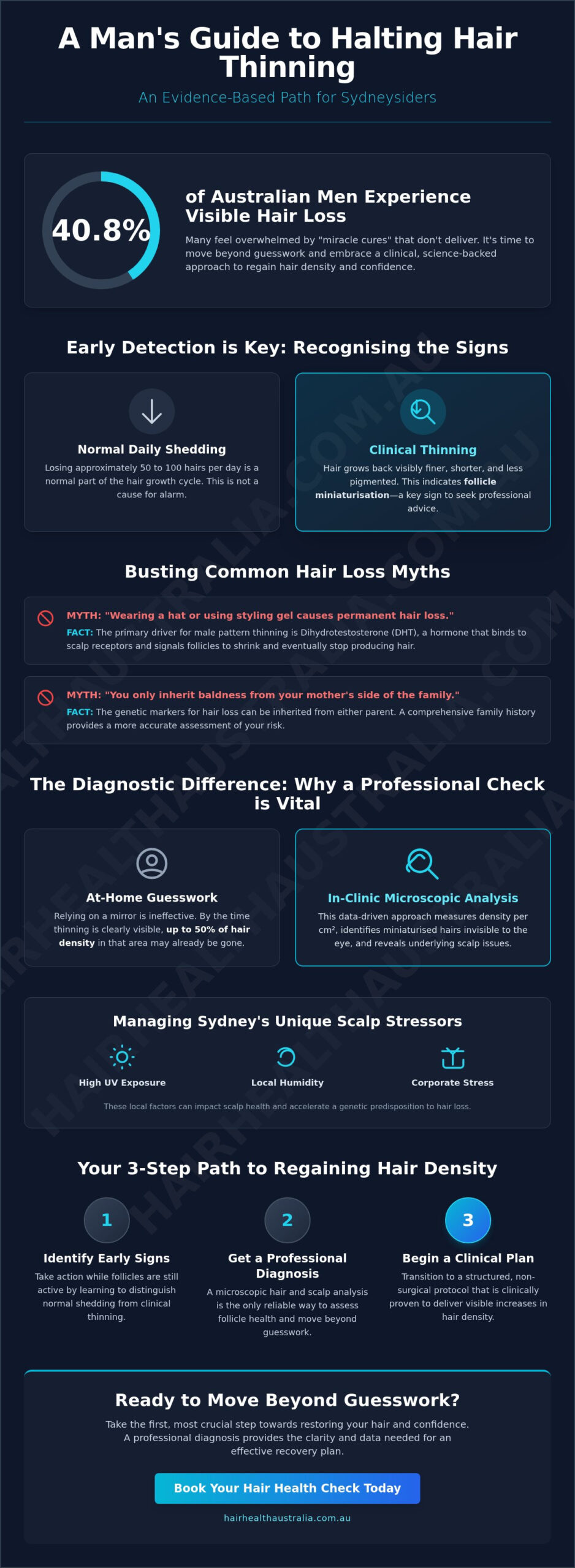
Does wearing a hat or using hair gel cause baldness?

No, wearing a hat or using hair gel does not cause genetic baldness. This is a common myth that often causes unnecessary concern. However, extremely tight headwear or hairstyles can lead to traction alopecia, which is hair loss caused by physical tension. Similarly, while gel doesn’t cause thinning, poor scalp hygiene and product buildup can lead to inflammation. Maintaining a clean scalp environment is vital for ensuring your hair loss treatment Australia remains effective and your follicles stay healthy.

Can stress-related hair loss be reversed with clinical treatment?

Stress-related hair loss, or Telogen Effluvium, is often reversible once the underlying trigger is addressed. Unlike genetic thinning, this type of shedding is usually temporary. Clinical treatments can help accelerate the recovery process by providing the follicles with the necessary growth signals and nutrients to return to the anagen phase sooner. If stress is accelerating a genetic predisposition, a combined approach is often required to stabilise the hair fall and restore lost density through a structured clinical roadmap.

How do I know if my hair follicles are still active or if they are dead?

You cannot determine follicle viability with the naked eye. Follicles that appear dead may simply be in a state of advanced miniaturisation, producing hairs too fine to see without high magnification. We use digital microscopic analysis to examine the scalp at a cellular level. This allows us to identify active follicles, measure their diameter, and establish whether they have the potential to respond to stimulation or if they have reached a point of permanent inactivity.

Men Hair Loss Pattern: Identifying Genetic Thinning and Clinical Recovery

Did you know that approximately 40.8% of Australian men are currently experiencing some degree of male pattern baldness? It usually begins with a subtle shift in the mirror, perhaps a slightly higher forehead or a crown that feels less dense than it did a year ago. Identifying your specific men hair loss pattern is the first step toward regaining control over your appearance. It’s completely natural to feel a sense of anxiety about these changes, especially when conflicting online advice makes the path forward feel more like a maze than a medical process.

We understand that you want clarity without the fear of side effects or the necessity of invasive surgery. This article will help you recognise the early signs of genetic thinning and explain the clinical, non-surgical pathways available to restore your hair density. We’ll explore the biological drivers of thinning, the diagnostic importance of the Norwood Scale, and how a professional assessment at a Sydney clinic can replace uncertainty with a structured, evidence-based recovery plan.

Key Takeaways

  • Identify your specific men hair loss pattern using the Norwood Scale to understand which clinical interventions are most suitable for your current stage.
  • Understand the role of DHT in follicular miniaturisation and why stopping this process is the foundation of any successful regrowth programme.
  • Learn why microscopic hair analysis is the essential first step for an accurate diagnosis, moving beyond the limitations of a simple bathroom mirror check.
  • Discover the benefits of a multi-faceted, non-surgical approach that prioritises stabilising hair loss before stimulating healthy new growth.
  • Recognise the value of a personalised treatment plan designed by Sydney specialists to address your individual hair health goals.

Understanding the Norwood Scale: Identifying Your Men’s Hair Loss Pattern

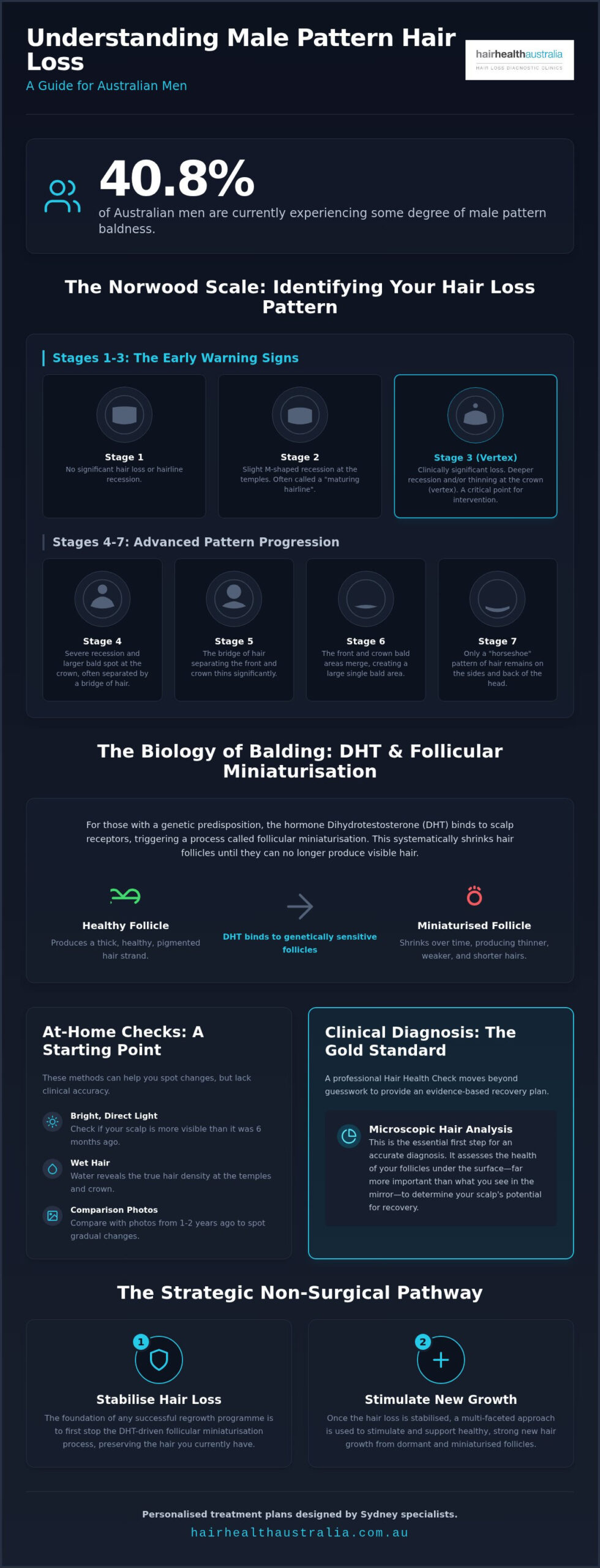
The Norwood Scale is the universal clinical standard used by specialists to categorise the progression of Androgenetic Alopecia. By providing a clear visual framework, it allows us to identify your specific men hair loss pattern with clinical accuracy. Recognising where you sit on this scale isn’t just about naming the problem; it’s about determining the window of opportunity for non-surgical intervention. While every man’s rate of progression is unique, the patterns themselves are remarkably predictable. Early detection is often the difference between simple hair maintenance and more complex restoration efforts later on.

Psychologically, seeing a defined pattern develop can be confronting and often leads to a sense of inevitability. However, moving from vague anxiety to a clinical diagnosis is incredibly empowering. It replaces uncertainty with a clear, actionable roadmap. Clinical reassurance helps you understand that while your genetics might set the stage, modern treatments can significantly alter the script. The focus here is on replacing fear with evidence-based clarity.

Stages 1 to 3: The Early Warning Signs

Many men struggle to distinguish between a “maturing hairline” and the start of Stage 2 recession. A maturing hairline is a natural shift that occurs in most men as they leave their teens, usually resulting in a slightly higher but still even line. In contrast, Stage 2 involves a deeper, M-shaped recession at the temples. Stage 3 is the critical tipping point where thinning becomes clinically significant. This stage also introduces the “Vertex” variant, where you might notice a small bald patch at the crown even if your hairline looks relatively stable. This is often the best time to start a non-surgical programme.

To check your status at home, observe your hair under these specific conditions:

  • Bright, direct light: Check if the scalp is more visible through the hair than it was six months ago.
  • Wet hair: Water clumps hair together, making it easier to see the true density at the temples and crown.
  • Comparison photos: Look at photos from two years ago to spot subtle shifts in your forehead height or temple depth.

Stages 4 to 7: Advanced Pattern Progression

As the men hair loss pattern moves into Stage 4 and beyond, the recession at the front and the thinning at the crown begin to converge. A distinct bridge of hair often remains between these two areas in Stage 4, but this bridge eventually thins out as you move toward Stage 5. By the time a man reaches Stage 6 or 7, the classic “horseshoe” pattern appears. This leaves only the hair on the sides and back of the head, which is genetically programmed to be more resistant to thinning.

Even at these advanced stages, clinical intervention remains valuable for many. The goal often shifts toward preserving the remaining active follicles and improving the health of the existing hair to maintain as much coverage as possible. Regardless of your current stage, booking a Hair Health Check is the most reliable way to get a professional microscopic assessment of your scalp’s potential for recovery. Identifying the health of your follicles under the surface is far more important than what you see in the mirror alone.

The Biology of Balding: DHT and the Miniaturisation Process

While many factors can influence hair density, the primary driver behind the vast majority of genetic hair loss cases is Dihydrotestosterone (DHT). This hormone is a derivative of testosterone and plays a critical role of genetics and DHT in hair loss by binding to receptors in your scalp. For those with a genetic predisposition, this interaction triggers a systematic decline in hair quality known as follicular miniaturisation. It is important to distinguish this from Telogen Effluvium, which is a temporary shedding phase often caused by sudden stress or illness. In contrast, a permanent men hair loss pattern involves a progressive change in the follicle’s physical structure. Miniaturisation is the slow shrinking of hair follicles until they can no longer produce visible hair.

How Genetics Dictate Your Scalp’s Sensitivity

There is a persistent myth that hair loss is only inherited from the mother’s side of the family. Scientific evidence shows that the genetic blueprint for balding is polygenic, meaning it can be passed down from either or both parents. Your DNA determines how sensitive the androgen receptors in your scalp are to circulating DHT. This sensitivity isn’t uniform across the entire head. Follicles at the temples and crown typically have the highest concentration of these receptors, while the hair at the back and sides is naturally more resistant. This biological variance is why even advanced thinning usually leaves a “horseshoe” of hair intact.

The Hair Growth Cycle: Why Patterns Take Years to Form

Every hair on your head follows a three-stage cycle: Anagen (growth), Catagen (transition), and Telogen (resting). In a healthy scalp, the Anagen phase lasts between two and six years. DHT disrupts this rhythm by progressively shortening the growth phase. With each subsequent cycle, the hair produced is finer, shorter, and loses its pigment. This explains why your hair might feel “wispy” or less manageable long before you see a distinct bald patch.

One of the most encouraging aspects of modern clinical recovery is the understanding of dormancy. A follicle is not necessarily “dead” the moment it stops producing a visible hair. In many cases, the follicle is simply dormant and miniaturised. If you intervene while the follicles are still active, there is a much higher chance of success. Understanding the current state of your scalp is the only way to move forward with confidence. A professional Hair Health Check provides the microscopic detail needed to see exactly which follicles are capable of being revitalised through a targeted regrowth programme.

Clinical Diagnosis vs. Visual Guesswork: The Value of a Hair Health Check

Relying on a bathroom mirror to track your hair’s health is a bit like checking a car’s engine by looking at the paintwork. While you might notice a receding hairline or a thinning crown eventually, the mirror only shows the results of a biological process that has been underway for years. A professional clinical diagnosis and treatment for hair loss is the only way to move beyond guesswork and understand the specific state of your follicles. At our Sydney clinic, we use advanced technology to look beneath the surface. The naked eye cannot see these subtle changes.

Establishing a baseline through digital tracking is essential. It allows for an objective measurement of your treatment’s progress over several months. Without these metrics, it’s easy to become discouraged or confused by normal daily fluctuations in how your hair looks. We encourage every man noticing a change to book a professional Hair Health Check to get a definitive answer about their scalp health. Precision is the foundation of any successful recovery.

What Microscopic Scanning Reveals

High-magnification scans are a cornerstone of our diagnostic process. These scans allow us to identify the exact percentage of miniaturised hairs in a specific area, which is a key indicator of a developing men hair loss pattern. By measuring hair density, specifically the number of hairs per square centimetre, we can create a precise map of your scalp’s current condition. This process also reveals underlying scalp health factors such as sebum build-up or localised inflammation. These issues often exacerbate genetic thinning and must be addressed to create the best possible environment for regrowth.

The Limitations of Self-Diagnosis

Many men fall into the trap of counting hairs in the shower drain as a way to measure their loss. This is an unreliable metric because it’s normal to lose between 50 and 100 hairs a day. Pattern baldness is not about how many hairs fall out, but about the quality of the hairs that grow back in their place. Additionally, different hairstyles or longer lengths can easily mask the true extent of thinning for a long time. The greatest danger of self-diagnosis is the temptation to use generic over-the-counter products. Without understanding your specific men hair loss pattern, you risk wasting time and money on treatments that may not be appropriate for your level of follicular miniaturisation.

Men Hair Loss Pattern: Identifying Genetic Thinning and Clinical Recovery

Strategic Non-Surgical Management for Pattern Thinning

Managing a men hair loss pattern effectively requires more than a reactive purchase of a generic shampoo. Our clinical philosophy centres on a two-stage process: first, we must stabilise the existing loss, and second, we work to stimulate regrowth in dormant follicles. This multi-faceted approach is far more effective than relying on a single “magic” ingredient because it addresses the problem from multiple biological angles simultaneously. These programmes are meticulously designed to align with the body’s natural hair growth cycles. This ensures that treatments are introduced at the optimal time for maximum absorption and efficacy. For a deeper understanding of these protocols, you can read our Clinical Hair Treatment guide.

Follicle Stimulation and Scalp Nutrition

Clinical-grade topicals are significantly more potent than standard supermarket shampoos. The latter often lack the necessary concentration of active ingredients to penetrate the scalp effectively. A primary goal of these treatments is to increase localised blood flow. By enhancing circulation, we “feed” the follicles with essential nutrients and oxygen required for healthy hair production. We often supplement this with non-invasive stimulation techniques, such as low-level light therapies. These methods energise the cells within the follicle to extend the growth phase without the need for surgery. This synergistic approach ensures the scalp environment is optimised for hair density.

DHT Blockers and Hormonal Balance

To halt the progression of a men hair loss pattern, we must address the hormonal root cause. This involves inhibiting the enzyme known as 5-alpha-reductase, which converts testosterone into DHT. By lowering DHT levels in the scalp, we reduce the pressure on sensitive follicles and stop the miniaturisation process. We understand that many men have concerns about side effects. From a clinical perspective, these risks are often manageable through personalised dosing and professional oversight. Stabilising your current hair is just as vital as growing new hair. Without a stable foundation, any new growth will eventually be subject to the same genetic thinning. This is why a consistent, long-term strategy is essential for lasting results.

If you’re ready to move beyond generic solutions and want a plan tailored to your specific needs, the best way to start is by booking your Hair Health Check today.

Why Sydney Men Choose Hair Health Australia for Regrowth

Sydney men are increasingly seeking specialists who understand the nuances of a men hair loss pattern rather than relying on generic, over-the-counter solutions. Since 2009, Hair Health Australia has provided a dedicated professional environment for those looking to address thinning without resorting to invasive procedures. Every Male Hair Loss Treatment we provide is personalised to the individual. We don’t believe in “one-size-fits-all” kits because your scalp’s biology is as unique as your thumbprint. Being treated in a professional clinical centre offers a level of reassurance and accountability that simply cannot be matched by buying unregulated products online.

Our commitment to non-surgical methods is central to our philosophy. Many of our clients wish to avoid the significant costs and potential recovery risks associated with hair transplant surgery. By focusing on clinically-backed regrowth programmes, we provide a pathway that works with your body’s natural systems. This approach prioritises the long-term health of your existing hair while systematically revitalising dormant follicles. It’s about achieving a natural-looking restoration through precise, evidence-based care and professional oversight.

The Journey: What to Expect in Your First Six Months

Patience is a fundamental component of any successful restoration journey. Real regrowth takes time. You should expect a minimum of three to six months before visible changes become apparent in the mirror. During the early stages, some men experience what’s known as a “shedding phase”. This is actually a positive clinical sign. It indicates that healthier, stronger hairs are beginning to grow and are pushing out the old, miniaturised hairs that were stuck in a weakened state. We don’t ask you to take our word for it. We use regular digital microscopic scans to provide objective proof of your progress, allowing you to see the increase in density at a cellular level long before it’s obvious to the naked eye.

Taking the First Step Toward Restoration

The link between early detection and successful outcomes is undeniable. Identifying a men hair loss pattern in its initial stages allows for much more effective stabilisation and a higher chance of significant regrowth. We invite you to a confidential consultation where we can discuss your specific concerns with “straight-talking” clinical honesty. We won’t over-promise or use hyperbolic marketing language. Instead, we’ll provide a realistic assessment of what can be achieved based on your current follicular health. Taking that first step is often the hardest part, but it’s the only way to replace anxiety with a structured, professional plan. You can begin this process by booking a Hair Health Check at our Sydney clinic today.

Take Control of Your Hair Restoration Journey

Recognising a developing men hair loss pattern is the most significant step toward preserving your hair density. We’ve explored how the Norwood Scale provides a clinical roadmap and why understanding the biological role of DHT is essential for effective treatment. Moving beyond the limitations of the bathroom mirror allows you to replace anxiety with a structured, evidence-based plan. Since 2009, our team of non-surgical specialists has helped men navigate this process using advanced microscopic diagnostic technology and personalised clinical programmes.

The key to successful restoration is early intervention. By identifying follicular miniaturisation while it’s still manageable, you can stabilise existing growth and stimulate dormant follicles before they become inactive. Our Sydney clinic is dedicated to providing the clarity and professional guidance you need to make informed decisions about your hair health. Don’t leave your appearance to chance when clinical, non-surgical solutions are within reach.

Book Your Comprehensive Hair Health Check in Sydney Today and start your journey toward clinical recovery with confidence. You don’t have to face hair loss alone; expert support is ready to help you restore your hair density and your confidence.

Frequently Asked Questions

How can I tell if my hairline is receding or just maturing?

A maturing hairline is a natural shift that occurs in most men, usually resulting in an even hairline about one centimetre above the juvenile line. In contrast, a receding hairline, which signals a developing men hair loss pattern, involves uneven “M-shaped” thinning at the temples. To be certain, a microscopic scan is required to check for follicular miniaturisation. This clinical diagnostic step is the only way to distinguish normal ageing from active genetic thinning accurately.

Is male pattern hair loss reversible without surgery?

While “reversing” loss suggests returning to a juvenile state, modern clinical treatments can significantly restore density and stabilise thinning without surgery. Non-surgical programmes focus on revitalising dormant follicles and halting the miniaturisation process. Your success depends on the current stage of your men hair loss pattern; if your follicles are still active but weakened, significant regrowth is achievable through targeted clinical protocols that work with your natural growth cycles.

What is the most common hair loss pattern in men?

The most common pattern is Androgenetic Alopecia, which follows the predictable stages of the Norwood Scale. It typically begins with recession at the temples or thinning at the vertex, which is the crown area. Over time, these two thinning zones often meet, leaving a “horseshoe” of hair around the back and sides. This specific pattern is responsible for approximately 95% of hair loss cases in Australian men and requires a clinical approach.

Can stress cause a permanent hair loss pattern?

Stress typically causes Telogen Effluvium, which is a temporary shedding phase rather than a permanent pattern. However, significant physiological stress can sometimes accelerate the onset of genetic thinning in those already predisposed. While the stress-induced shed itself may eventually recover, any underlying genetic loss revealed during that time will require clinical management to maintain your density. We recommend a professional assessment to determine if your shedding is temporary or part of a broader pattern.

How long does it take to see results from a clinical regrowth programme?

You should expect to see measurable clinical results within three to six months of starting a regrowth programme. The initial months focus on stabilising the loss and improving scalp health to create a better growth environment. Visible density improvements follow as the hair growth cycle resets. We use digital microscopic scanning at regular intervals to track these changes at a cellular level, providing objective proof of progress before the changes are obvious in the mirror.

Do I need a referral from a GP to visit a hair loss clinic in Sydney?

No, you don’t need a referral from a GP to visit our Sydney clinic for a Hair Health Check. You can book a consultation directly with our specialists to begin your diagnostic process. While we always encourage you to discuss your general health with your doctor, our services are specialised for hair and scalp analysis. We focus on non-surgical restoration pathways that are easily accessible to any man noticing the early signs of thinning.

Are the results of non-surgical hair treatment permanent?

Results from non-surgical treatments require ongoing maintenance because the underlying genetic driver, DHT, remains present in your system. If you stop the treatment, the miniaturisation process will eventually resume its natural course. Think of it like dental hygiene or physical fitness; consistent care is necessary to maintain the density achieved during your programme. We provide structured long-term plans to ensure your results stay stable and your hair health is prioritised over time.

What is the difference between a trichologist and a hair loss consultant?

A trichologist is a specialist in the science of the hair and scalp, focusing on the biological causes of various disorders. A hair loss consultant often works within a clinical setting to guide you through specific treatment pathways and programme options. At Hair Health Australia, our team combines clinical expertise with advanced diagnostic technology. This ensures you receive a comprehensive assessment and a personalised programme tailored to your specific needs and hair restoration goals.

Male Hair Loss Treatment Sydney: The 2026 Clinical Buying Guide

Statistics show that approximately 40.8% of Australian men experience some degree of baldness, making our nation one of the most affected in the world. If you’ve spent your mornings checking the mirror for a receding hairline, you’re likely searching for a male hair loss treatment Sydney that offers more than just empty promises. It’s completely normal to feel a sense of anxiety about your professional image or social confidence as your hair thins. You might even feel trapped between the high costs of surgery and the confusion of conflicting online advice.

We understand that you want a solution that’s both effective and grounded in reality. This 2026 clinical guide is designed to replace your uncertainty with a clear, scientifically-backed roadmap for non-surgical hair restoration. You’ll discover how personalised regrowth programmes, starting with precise microscopic diagnostics, can stabilise your current density and foster visible results. We’ll explore the latest evidence-based pathways available in Sydney today, giving you the tools to take control of your hair health with total clarity.

Key Takeaways

  • Learn why a specialised microscopic hair health check is the critical first step to determine your true regrowth potential before starting any programme.
  • Understand the biological role of DHT in follicle miniaturisation and how modern male hair loss treatment Sydney works to stabilise and reverse this process.
  • Discover how to evaluate local clinics based on their diagnostic technology and clinical expertise rather than one-size-fits-all marketing claims.
  • Set realistic expectations for your restoration journey, with most professional non-surgical programmes showing visible improvement within three to six months.
  • Identify the benefits of a personalised, evidence-based approach that prioritises clinical honesty and long-term hair density.

A clinical hair loss diagnosis is the systematic identification of follicle health through objective data. It isn’t just a guess about where your hair is going; it’s a precise assessment of what’s happening beneath the surface of your scalp. For anyone seeking a male hair loss treatment Sydney, starting with a clear picture of your scalp’s current state is vital. Microscopic Hair Analysis is the gold standard for non-surgical planning, providing the data needed to create a tailored programme based on your unique biology.

The success of any restoration journey depends on the presence of active follicles. These are follicles that, while producing thinner or shorter hairs, haven’t yet reached a state of total dormancy. Once a follicle dies and the scalp becomes smooth, non-surgical options can’t revive it. This is why we focus on identifying regrowth potential before recommending any specific therapy. Understanding your baseline allows for a straight-talking conversation about what’s achievable.

Visual Inspection vs. Microscopic Hair Analysis

A visual check by a GP or stylist can identify advanced androgenetic alopecia, but it often misses the early signs of miniaturisation. Microscopic scans reveal hairs that are invisible to the naked eye by magnifying the scalp up to 200 times. This technology allows us to:

  • Detect follicle thinning years before it becomes visible in the mirror.
  • Identify underlying scalp conditions, such as inflammation or oil blockages, that may be hindering follicle productivity.
  • Provide a realistic prognosis for hair density restoration based on hard data.

Without this level of detail, you’re essentially guessing which treatments might work. Clinical diagnostics replace that uncertainty with a clear, measurable baseline that tracks your progress over time.

Why Sydney Men Delay Seeking Professional Help

Many men fall into the “wait and see” trap. They hope the thinning will stop on its own or wait until the loss is undeniable before acting. This delay often leads to permanent follicle death, which significantly limits your future options. The psychological impact of thinning hair is significant, often causing a loss of self-confidence in professional and social settings across Sydney.

Early clinical intervention is the most effective way to stabilise your current density and protect your appearance. Transitioning from the frustration of over-the-counter products to clinical clarity gives you a sense of control over your image. If you’re unsure where your hair health stands, a specialised microscopic hair health check provides the answers you need without the guesswork. Taking this first step ensures your male hair loss treatment Sydney is built on a foundation of scientific fact rather than marketing promises.

The Science of Non-Surgical Regrowth: Beyond Over-the-Counter Solutions

Androgenetic Alopecia, or male pattern baldness, isn’t just a matter of “bad luck” or aging; it’s a specific biological process driven by genetics and hormones. The primary culprit is Dihydrotestosterone (DHT), a derivative of testosterone. For men with a genetic predisposition, DHT binds to receptors in the scalp follicles, causing them to shrink. This process, known as miniaturisation, results in hair that grows back thinner, shorter, and less pigmented with every cycle. Eventually, the follicle may stop producing visible hair altogether. A professional male hair loss treatment Sydney focuses on disrupting this hormonal cycle rather than just washing the scalp with generic ingredients.

Clinical-grade therapies differ significantly from supermarket shampoos or basic supplements. Most retail products only address the hair shaft’s surface, providing a temporary illusion of thickness. In contrast, clinical protocols are designed to penetrate the scalp and reach the follicle bulb. A multi-faceted approach is essential because no single “miracle” solution can address every aspect of hair loss. By combining DHT inhibition with growth stimulants and scalp health optimisation, we create an environment where hair can actually thrive again.

Follicle Dormancy vs. Follicle Death

There’s a critical window of opportunity for hair regrowth. During the natural hair growth cycle, follicles move through the Anagen (growth), Catagen (transition), and Telogen (resting) phases. In a balding scalp, the Anagen phase becomes progressively shorter. This leads to follicle dormancy, where the follicle is still alive but inactive. However, if the follicle is left untreated for years, it can undergo fibrosis, or scarring, which leads to permanent follicle death. Clinical treatments are designed to “wake up” dormant follicles and shift them back into a healthy Anagen phase before permanent scarring occurs.

Clinically-Backed Non-Surgical Protocols

Modern restoration relies on a combination of clinically proven hair loss treatments that have been rigorously tested for efficacy. These may include topical solutions that increase blood flow or systemic treatments that manage DHT levels. The most important word in any successful programme is “personalised.” Because your pattern of loss is unique, your treatment must be tailored to your specific follicle health and lifestyle. Medical supervision is vital during this process to monitor your progress and adjust dosages for maximum results.

Moving away from the frustration of trial-and-error with retail products is a major step toward clinical clarity. To understand exactly which stage your follicles are in, you can organise a specialised hair health check to receive a straight-talking assessment of your regrowth potential.

Comparing Sydney Hair Loss Clinics: A 2026 Evaluation Framework

Selecting the right provider for male hair loss treatment Sydney involves looking beyond marketing gloss to find a clinical partner who prioritises data over sales targets. A reliable evaluation framework should focus on three pillars: the precision of their diagnostic technology, the depth of their specialist expertise, and the breadth of their non-surgical treatment range. In 2026, the industry has split into two distinct models that every man should understand before booking a consultation.

High-volume clinics often operate on a “one-size-fits-all” approach, pushing standardised kits to as many people as possible. These environments can feel like factories where the focus is on turnover rather than individual outcomes. In contrast, a personalised clinical model treats every scalp as a unique biological case. This distinction is vital because hair loss isn’t a uniform condition. Having a local Sydney presence, such as a Redfern-based clinic, ensures you receive ongoing monitoring and support from specialists who understand your history and can adjust your programme as your hair responds.

Non-Surgical Therapy vs. Hair Transplant Surgery

It’s important to distinguish between the “maintenance and regrowth” path and the “invasive” surgical path. Surgery involves relocating follicles from the back of the head to the thinning areas, but it doesn’t stop the underlying process of hair loss. Non-surgical therapy is often a prerequisite even for those considering surgery. You can’t successfully transplant hair into a scalp where the surrounding native hair is still actively thinning. A clinical programme stabilises your current density first, providing a more cost-effective and sustainable result without the downtime of a surgical procedure.

Red Flags to Watch for in Sydney Hair Clinics

Be wary of any clinic offering “guaranteed” results before they’ve even looked at your scalp under a microscope. Without a specialised hair health check, any promise of regrowth is purely speculative and medically unsound. High-pressure sales tactics are another significant warning sign. A professional specialist acts as an educator, providing straight-talking advice and evidence-based options rather than pushing for an immediate contract. If a clinic lacks transparent case studies or refuses to explain the clinical science behind their protocols, it’s best to look elsewhere for your male hair loss treatment Sydney. Trust is built on clinical honesty and realistic expectations, not on hyperbolic marketing claims.

Male Hair Loss Treatment Sydney: The 2026 Clinical Buying Guide

Your Clinical Journey: From Microscopic Scan to Sustainable Regrowth

A professional restoration programme is a methodical process, not a quick fix. When you begin a male hair loss treatment Sydney, you’re entering a structured clinical journey designed to reset your hair growth cycle. This path requires patience, precision, and regular monitoring to ensure the biological changes occurring beneath your scalp are on the right track. The vital starting point for this entire process is a Hair Health Check, which provides the baseline data needed to build your customised plan. You should expect a timeline of three to six months before visible regrowth becomes apparent, as the follicles need time to transition back into the active growth phase.

Phase 1: The Diagnostic Consultation

The journey starts with a deep dive into your scalp’s current condition. During the microscopic scan and digital scalp analysis, we magnify your follicles to see exactly what the naked eye misses. We assess your medical history and lifestyle factors to identify potential triggers for thinning. This data allows us to define your individual potential for regrowth. We don’t guess. We use these findings to tell you exactly which follicles are dormant and which are still capable of producing thicker hair.

Phase 2: Implementation and Active Regrowth

Phase 2 is about action. It involves starting your customised treatment plan and establishing a daily routine that fits your lifestyle. Many men feel anxious during the initial weeks because of a “shedding” phase. It’s vital to understand this as a sign of progress. Your follicles are pushing out old, weak hairs to make room for new, stronger terminal hairs. You aren’t doing this alone. Regular check-ups with your specialist ensure the programme is effective and allow for real-time adjustments based on your progress.

Phase 3: Maintenance and Density Management

Once you’ve achieved visible regrowth, the focus shifts to long-term hair health maintenance. This phase ensures your results are sustainable. You’ll likely transition to a maintenance routine that includes clinical-grade shampoos and scalp health products designed to keep the scalp environment optimal. For a deeper look at these protocols, you can consult our Clinical Hair Treatment Guide. Consistency is the key to protecting your new hair density for years to come.

If you’re ready to stop the guesswork and start a scientifically-backed journey, the first step is clarity. You can book your specialised microscopic hair health check today to discover your true regrowth potential.

Personalised Hair Restoration at Hair Health Australia

Hair Health Australia stands as a dedicated specialist for non-surgical solutions in the heart of Sydney. Since our founding circa 2009, we’ve provided a clinical alternative to invasive procedures, focusing on what actually works for the modern man. Our Redfern clinic is specifically positioned to be accessible for Sydney professionals who require efficient, effective care without the noise of high-volume marketing. We prioritise clinical honesty, ensuring you receive a realistic assessment of your regrowth potential based on objective data rather than sales targets.

Choosing a male hair loss treatment Sydney shouldn’t feel like a gamble. We act as your partner in this journey, replacing uncertainty with a clear, scientifically-backed plan. Our team combines medical authority with an empathetic understanding of how hair loss affects your self-confidence in both professional and social settings. By focusing on evidence-based results, we ensure that every step of your programme is designed to stabilise your density and foster visible regrowth.

The Hair Health Australia Difference

With over 15 years of experience in the Sydney hair loss market, we’ve refined our approach to focus on what delivers the most sustainable outcomes. We remain committed to non-invasive, clinically-proven regrowth protocols that respect your body’s natural biology. Our “straight-talking” persona is a core part of our service; we prioritise patient education over sales. We believe that an informed patient is a successful one, which is why we take the time to explain the microscopic findings of your scalp in plain English. You won’t find hyperbolic promises here, only a commitment to precision and systematic care.

Booking Your Sydney Consultation

The first step toward regaining your confidence is a no-obligation consultation. To prepare for your specialised hair health check, it’s helpful to gather a few details beforehand. We recommend bringing a list of any current medications and a brief history of any previous treatments you’ve tried, whether they were over-the-counter or prescribed. This information helps us tailor your programme with greater accuracy.

During your visit, we’ll use digital microscopic imaging to provide a clear view of your follicle health, identifying exactly where the potential for regrowth remains. This diagnostic-first approach ensures that you only invest in a programme that is biologically viable for you. Book your free Hair Health Check in Sydney today and take the first step toward a clearer, more confident future with a plan that’s built for your unique needs.

Taking Control of Your Hair Health Journey

The path to restoration begins with moving away from the uncertainty of generic products and toward a structured, data-driven approach. By prioritising a specialised microscopic diagnostic check, you gain the clinical clarity needed to identify active follicles before they reach permanent dormancy. This evidence-based strategy ensures your male hair loss treatment Sydney is built on your specific biological needs rather than high-pressure marketing promises.

With over 15 years of clinical experience in Sydney, we’ve seen that the most sustainable results come from personalised, non-surgical programmes that address the root causes of thinning hair. You don’t have to navigate the confusion of hair loss alone or feel forced into invasive surgical options. Instead, you can choose a clinical partner who values transparency, systematic care, and realistic outcomes through proven technology.

Ready to discover your true regrowth potential? Book Your Free Sydney Hair Health Check Today and start your journey toward visible hair density with total confidence. Taking action now is the most effective way to protect your appearance and restore your self-assurance for years to come.

Frequently Asked Questions

Is male hair loss treatment in Sydney covered by Medicare?

Medicare and private health insurance in Australia generally don’t cover hair loss consultations or treatments because they’re classified as elective cosmetic procedures. This means you’re responsible for the full cost of your clinical programme. However, we focus on providing a transparent, non-surgical path that remains significantly more accessible than high-cost surgical interventions. This ensures you receive professional care without the hidden fees often associated with hospital-based surgical procedures.

How long does it take to see results from non-surgical hair loss treatment?

You should expect to see visible results within three to six months of starting a professional male hair loss treatment Sydney. This timeline is dictated by the natural hair growth cycle, as follicles require time to transition from a dormant state back into the active growth phase. While initial stabilisation of hair density often occurs sooner, the production of thicker terminal hairs is a gradual biological process that requires consistent adherence to your personalised programme.

Can a microscopic hair health check tell me if I will go bald?

A microscopic hair health check provides a clear indication of your current follicle health and identifies patterns of miniaturisation that suggest future loss. While it can’t predict the exact day you might lose your hair, it reveals how many follicles are currently active versus dormant. This data allows us to provide a straight-talking assessment of your risk level and helps us intervene early to protect your existing hair density before permanent follicle death occurs.

Are the results of clinical hair regrowth programmes permanent?

Results from clinical hair regrowth programmes aren’t permanent in the sense that they require ongoing maintenance to counteract the genetic influence of DHT. If you stop a successful treatment, the biological process of follicle miniaturisation will eventually resume. We focus on transitioning patients into a sustainable maintenance phase after the initial regrowth period, using clinical-grade scalp products to ensure your restored hair density remains stable and healthy for the long term.

What is the difference between a trichologist and a hair loss specialist in Sydney?

A trichologist is a specialist focusing specifically on the scalp and hair health, while a “hair loss specialist” in Sydney is a broader term often used by clinicians who manage restoration programmes. At our clinic, we combine clinical expertise with advanced diagnostic technology to provide a comprehensive approach. The main difference lies in the specific focus on non-surgical, evidence-based protocols that go beyond general hair care to address the hormonal and biological drivers of pattern baldness.

Can I treat a receding hairline without getting a hair transplant?

Yes, you can effectively treat a receding hairline without undergoing a hair transplant, provided the follicles in the affected area are still active. Clinical treatments focus on blocking DHT and stimulating blood flow to “wake up” dormant follicles along the hairline. By starting a non-surgical male hair loss treatment Sydney early, you can often restore density and stop the recession from advancing, making invasive and expensive surgical procedures unnecessary for many men.

Are there any side effects to clinical male hair loss treatments?

Most clinical-grade non-surgical treatments have a high safety profile, but like any medical-grade protocol, some individuals may experience minor side effects. These can include temporary scalp irritation or changes in hair texture during the initial phases. Because our programmes are professionally supervised, we monitor your progress closely and can adjust your customised routine to mitigate any discomfort. Our goal is to ensure your restoration journey is both effective and comfortable through every stage.

How often do I need to visit the Sydney clinic for treatment?

Following your initial diagnostic consultation in our Redfern clinic, follow-up visits are typically scheduled every three to four months. These regular check-ups are essential for tracking your progress through digital scans and ensuring your programme is delivering the desired results. Between these visits, you’ll follow a straightforward daily routine at home. This structured approach allows us to provide professional support and make necessary adjustments to your programme without requiring a significant time commitment from you.

Preventing Baldness in Males: The 2026 Clinical Guide to Hair Preservation

Did you know that one in five Australian men in their 20s are already showing visible signs of hair thinning? It’s a confronting moment when you first spot a receding hairline in the bathroom mirror, and it’s easy to feel overwhelmed by the sheer volume of products that don’t actually work. If you’re focused on preventing baldness in males, you’ve probably realised that supermarket shampoos aren’t the answer, yet the thought of invasive surgery feels just as daunting.

This guide offers a science-backed alternative. We’ll outline the 2026 clinical protocols designed to arrest male pattern thinning before it leads to permanent loss. You’ll learn about the latest TGA-compliant strategies, the role of microscopic scalp analysis, and how combination therapies are setting a new clinical standard for follicle preservation. This systematic approach replaces uncertainty with clarity, giving you a clear path to protect your hair with confidence.

Key Takeaways

  • Understand how Dihydrotestosterone (DHT) triggers follicle miniaturisation, which is the critical biological mechanism to address when preventing baldness in males.
  • Learn why professional microscopic scalp analysis is essential for detecting thinning in its earliest stages, long before a bald spot becomes visible in the mirror.
  • Discover the “Three Pillars” of clinical hair preservation: blocking DHT, stimulating active growth, and optimising the scalp environment for long-term health.
  • Identify the specific nutritional building blocks, including iron and zinc, required to support your clinical treatment and maintain hair keratin levels.
  • Recognise the importance of a personalised roadmap and expert monitoring to ensure your hair preservation programme remains effective and grounded in science.

Understanding the Biology: Why Do Males Lose Hair?

To succeed in preventing baldness in males, you must first understand the invisible biological process occurring beneath the surface of your scalp. Most hair loss is driven by Pattern hair loss, scientifically known as Androgenetic Alopecia. This condition is primarily triggered by Dihydrotestosterone (DHT), a potent byproduct of testosterone. When your follicles are genetically predisposed to be sensitive to DHT, the hormone binds to receptors in the scalp, causing the follicles to shrink over time.

This process is called miniaturisation. Over several growth cycles, a thick, healthy terminal hair gradually transforms into a thin, wispy strand often referred to as peach fuzz. Eventually, the follicle becomes so small that it stops producing visible hair altogether. This isn’t an overnight event. It’s a slow transition where the active growth phase, or anagen phase, gets shorter and shorter. Understanding this timeline is vital because clinical intervention is far more effective while the follicle is still active.

While your family history provides significant clues, genetics are a predictor rather than a definitive guarantee. You inherit a complex mix of genes from both parents, meaning your path may differ from your father’s. It’s also important to distinguish this permanent genetic thinning from temporary shedding, known as Telogen Effluvium. Temporary loss often follows major surgery, severe illness, or extreme stress, and usually resolves itself once the body recovers. Genetic thinning, however, requires a proactive strategy to manage.

The Role of DHT and Follicle Sensitivity

DHT doesn’t affect the entire scalp equally. Follicles at the temples and crown typically possess a higher density of androgen receptors, making them far more vulnerable than the hair at the back or sides of the head. This explains the classic horseshoe pattern of male thinning. Identifying this sensitivity early through a professional Hair Health Check allows for targeted intervention before the miniaturisation becomes irreversible. When you catch the process early, you have a much higher chance of preserving your natural density.

Genetics vs. Lifestyle: What Can You Control?

Your DNA provides the blueprint, but your lifestyle can influence the speed of the process. Chronic stress and poor scalp health can lead to inflammation, which may accelerate follicle damage. However, it’s time to retire the common myths. Wearing hats doesn’t suffocate your hair, and using styling gel won’t cause your follicles to die. These external factors don’t influence the internal DHT mechanism. Focus instead on clinical factors you can actually change to support the longevity of your hair follicles.

Early Detection: The Key to Preventing Baldness

Prevention is fundamentally a race against time. Many men wait until they can clearly see skin through their hair before seeking help, but the biological process of miniaturisation begins long before a bald spot appears. By the time thinning is visible to the naked eye, you may have already lost up to 50% of the hair density in that specific area. This is why self-diagnosis in the bathroom mirror is often unreliable; it only reveals the damage after it has become significant. Effectively preventing baldness in males requires identifying the subtle shifts in hair diameter that occur years before the follicle expires.

Relying on a professional clinical evaluation rather than guesswork is the only way to establish a baseline for your hair health. While understanding the various causes of hair loss is helpful for context, clinical data provides the certainty needed to act. A comprehensive hair health check serves as this essential first step. It moves the conversation from “I think I’m thinning” to “I know exactly what is happening to my follicles.” This objective data allows for a targeted preservation strategy rather than a reactive one.

The Norwood Scale: Where Do You Sit?

The Norwood Scale is the industry standard for categorising the stages of male pattern thinning. Stages 1 through 4 represent the “prevention window,” where the follicles are still active but under threat from DHT. Stage 2, which involves a slight recession at the temples, is the most critical time to consult a specialist. At this point, the process is manageable and highly responsive to non-surgical protocols. Early intervention during these initial stages can successfully preserve up to 90% of your existing hair density.

Microscopic Scalp Analysis: Seeing the Unseen

A clinical diagnosis goes beyond what the eye can see by utilising 200x magnification. This technology allows a specialist to examine individual follicles to identify sebum blockage, scalp inflammation, and varying hair diameters. We measure the exact hair density per square centimetre to track progress with mathematical precision. Utilising microscopic hair analysis Australia wide ensures that your treatment is based on your unique biological profile rather than a one-size-fits-all approach. If you’ve noticed more hair in the drain lately, booking a hair health check is the most effective way to gain clarity and take control of your future look.

Clinical Strategies for Preventing Hair Loss

Effective strategies for preventing baldness in males rely on a systematic, multi-faceted approach. We categorise these into the Three Pillars of preservation: blocking DHT, stimulating active growth, and optimising the scalp environment. Unlike invasive surgical options, non-surgical restoration aims to save the hair you still have while reviving follicles that are currently in the miniaturisation phase. This is a long-term commitment. You should view hair preservation as a marathon rather than a sprint; consistency is the only way to maintain your results over time.

When investigating your options, it’s vital to distinguish between marketing hype and medical reality. The most successful programmes incorporate FDA-approved treatments for male-pattern baldness that have been rigorously tested for efficacy. While over-the-counter solutions are available at any local chemist, they often lack the potency and personalisation required to address the specific biological drivers of your hair loss. A clinical approach ensures that every component of your treatment is working in synergy to protect your follicles.

Non-Surgical Regrowth Protocols

Modern clinical programmes utilise advanced technology to target the follicle at a cellular level. Low-level laser therapy (LLLT) is a key component, using specific light wavelengths to stimulate cellular activity and improve energy production within the hair bulb. We also employ topical vasodilators to increase blood flow, ensuring a steady delivery of oxygen and nutrients to the root. Additionally, specialised scalp cleansers are used to remove DHT-laden sebum and environmental pollutants. This creates a clean, healthy environment that allows other treatments to penetrate more effectively.

The Problem with ‘Miracle’ Cures

The hair loss industry is unfortunately saturated with unverified “miracle” oils and expensive supplements that lack any clinical backing. While natural ingredients might improve the hair’s surface texture, they cannot alter the genetic miniaturisation process occurring deep within the scalp. One-size-fits-all kits from the chemist often lead to disappointment because they don’t account for individual scalp health or the specific stage of thinning. Success requires a clinical hair treatment tailored to your unique diagnostic data. This personalised roadmap ensures you are using the right tools at the right time for your specific needs.

Preventing Baldness in Males: The 2026 Clinical Guide to Hair Preservation

Lifestyle and Scalp Health: Supporting Your Treatment

Clinical intervention is the foundation of any preservation strategy, but your daily habits create the environment where those treatments either thrive or struggle. It’s helpful to think of your scalp as the soil and your hair as the plant. Even the most advanced clinical protocols won’t reach their full potential if the soil is depleted or inflamed. When you’re focused on preventing baldness in males, you must address the external factors that can sabotage your biological progress.

Scalp inflammation, such as seborrhoeic dermatitis, is a common but overlooked accelerant of hair loss. This condition creates micro-inflammation around the follicle, which can exacerbate genetic thinning and hinder the absorption of topical treatments. Similarly, lifestyle choices like smoking significantly impact your results. Smoking constricts blood vessels and reduces the delivery of oxygen and nutrients to the scalp, effectively starving the follicles. By prioritising cardiovascular health and managing scalp hygiene, you ensure your clinical treatments have the best possible landscape to work with.

Nutrition for Hair Strength

Your hair is primarily made of a tough protein called keratin, and its production requires a specific set of biological building blocks. If your diet is deficient in iron, zinc, or protein, your body will divert these nutrients away from your hair to support vital organs. To maintain hair shaft integrity, consider the following nutritional focus:

  • Iron and Zinc: These minerals are essential for follicle cell division and repair.
  • Omega-3 Fatty Acids: Found in oily fish and flaxseeds, these help reduce scalp inflammation and support natural oils.
  • Biotin: A B-vitamin that plays a critical role in the keratin infrastructure.

Be wary of sudden crash dieting. A rapid drop in caloric intake can shock your system and trigger temporary shedding, which complicates your long-term preservation goals. Staying hydrated is also essential; it maintains scalp elasticity and ensures efficient nutrient transport to the root.

Daily Scalp Hygiene Practices

Finding the right balance in your washing routine is vital for maintaining a healthy scalp environment. You want to wash frequently enough to prevent the build-up of sebum, which can trap DHT and environmental pollutants, but not so often that you strip the scalp of its protective barrier. For most men, washing every second day with a clinical-grade cleanser is ideal. Avoid using high-heat styling tools, as extreme temperatures can damage the hair cuticle and lead to breakage. Instead, try a gentle scalp massage while washing. This simple habit encourages blood flow to the follicles and helps clear away dead skin cells. To see how your lifestyle and scalp health are currently impacting your density, booking a hair health check is the most effective way to receive a professional assessment.

Starting Your Prevention Journey in Sydney

Choosing a local Sydney clinic like Hair Health Australia provides a level of accountability and expert monitoring that online subscription services or generic chemists simply cannot match. When your goal is preventing baldness in males, having a specialist who can physically assess your progress ensures your treatment remains effective and safe. A local presence means you aren’t just a number in a database; you’re a patient with a documented history and a specialist who is personally invested in your results.

During your first consultation, we move beyond visual guesswork to establish a scientific baseline. This involves a detailed microscopic scan that reveals the current health of your follicles and the exact degree of miniaturisation occurring. From this data, we develop a personalised roadmap tailored to your specific hair health needs. This non-surgical path is often the superior choice for those in the early to mid-stages of loss, as it avoids the risks, scarring, and significant downtime associated with invasive hair transplant surgery. It’s about arresting the loss while your follicles are still viable and responsive.

Why a Specialist Clinic Trumps the GP

While GPs are essential for managing general health, hair loss is a highly specialised field that requires specific diagnostic equipment and expertise. A dedicated hair clinic utilises advanced scanning technology to identify issues that a standard physical examination might miss. Beyond the initial diagnosis, we provide ongoing support and make precise adjustments to your programme as your hair responds. This systematic oversight is what separates a successful preservation journey from a failed attempt at self-treatment.

Your Next Steps: The Hair Health Check

The best time to begin a preservation programme was when you first noticed a change in your hair’s density. The second best time is today. Every month of delay allows the DHT-driven miniaturisation process to continue, eventually reaching a point where the follicle can no longer produce hair. Booking a consultation in Sydney is a straightforward process that represents your first proactive step toward reclaiming control. Don’t wait until the thinning is irreversible. Book your Hair Health Check today to secure your hairline’s future.

Take Control of Your Hair Preservation

Successfully preventing baldness in males is no longer a matter of guesswork or trial and error. By understanding the biological role of DHT and the critical importance of early detection, you can move from a state of uncertainty to one of informed action. Clinical strategies that combine follicle stimulation with robust scalp hygiene offer a proven, non-surgical path to maintaining your natural hair density without the need for invasive surgery.

At Hair Health Australia, we bring over 15 years of clinical experience in Sydney to every consultation. Our approach relies on advanced microscopic diagnostic technology to identify thinning in its earliest stages, allowing us to build a personalised roadmap for your journey. These protocols are entirely non-surgical and pain-free, focusing on measurable results and long-term follicle health. You don’t have to wait for visible loss to take the lead. Starting today ensures your follicles remain healthy and resilient for years to come.

Secure your hair’s future with a professional Hair Health Check at our Sydney clinic.

Frequently Asked Questions

Can I really regrow hair on a completely bald spot?

No, you cannot typically regrow hair on a completely bald spot where the skin is smooth and shiny. This appearance suggests the follicles have reached a terminal state and have been replaced by scar tissue. Clinical strategies for preventing baldness in males are most effective when applied to active follicles that are merely miniaturising. Once a follicle is completely dormant, non-surgical treatments cannot revive it, making early intervention the only reliable way to maintain your coverage.

Is male pattern baldness purely down to my mother’s side of the family?

No, male pattern baldness is not inherited solely from your mother’s side of the family. This is a common myth; in reality, the condition involves multiple genes inherited from both parents. While a history of thinning on your maternal side is a strong indicator, your paternal lineage is equally significant. We recommend assessing both sides of your family tree to understand your genetic predisposition more accurately during a clinical consultation.

Do hair loss shampoos actually work for prevention?

Most over-the-counter hair loss shampoos provide very limited results for actual prevention. While they can improve the scalp environment by removing excess oils and dandruff, they rarely stay on the skin long enough to penetrate the follicle and block DHT. For effective results, these products should be used as a supportive tool alongside a clinical-grade programme rather than as a standalone solution for preventing baldness in males.

What are the first signs of balding I should look for in my 20s?

The first signs to monitor in your 20s include a slight recession at the temples and a loss of density at the crown. You might also notice that your hair feels softer or more difficult to style, which is a sign of miniaturisation. If you notice more hair in the drain than usual, or if your hairline is beginning to form a distinct “M” shape, it is time for a professional assessment.

How long does it take to see results from a clinical hair programme?

You should expect to see the first visible signs of improvement within four to six months of starting a clinical programme. Hair grows in cycles, and it takes time for miniaturised follicles to transition back into a healthy growth phase. Consistency is essential during this period. By the twelve-month mark, most patients can see a significant stabilising of their hair density and a reduction in active shedding.

Is stress a permanent cause of baldness in men?

Stress is usually a temporary cause of hair fall, but it can accelerate permanent genetic thinning. A high-stress event can trigger Telogen Effluvium, where a large number of hairs enter the shedding phase simultaneously. While this specific hair usually grows back, the systemic inflammation caused by chronic stress can speed up the timeline for those already predisposed to male pattern baldness, making the loss appear permanent.

What is the difference between hair shedding and hair thinning?

Shedding refers to the number of hairs falling out daily, whereas thinning refers to the decreasing diameter of individual hairs. It is normal to shed between 50 and 100 hairs a day. However, thinning is the process where the hair becomes finer and shorter over time. You can have significant thinning without noticing an increase in daily shedding, which is why microscopic analysis is vital for an accurate diagnosis.

Are there any side effects to non-surgical hair treatments?

Non-surgical hair treatments are generally pain-free and have a very low risk of side effects. Some patients may experience minor scalp irritation or dryness when beginning topical protocols, but these symptoms typically resolve as the skin adjusts. Unlike surgical transplants, these programmes involve no downtime or scarring. We monitor your progress closely to ensure your personalised roadmap remains comfortable and effective throughout the entire process.

How to Stop Male Hair Thinning Sydney: A 2026 Clinical Guide

Did you know that approximately 40.8% of Australian men are currently navigating some degree of visible hair loss? It’s a confronting reality that often leads to a frantic search for answers amidst a sea of conflicting online advice and “miracle” cures that rarely deliver. You might feel that your professional confidence is slipping alongside your hairline, or perhaps you’re worried that permanent baldness is an inevitable conclusion. Many local men are searching for how to stop male hair thinning Sydney but find themselves overwhelmed by options that lack clinical substance and transparency.

We understand that your hair is a vital part of your identity and professional presence. This guide provides a clear, evidence-based path to regaining hair density through non-surgical protocols specifically tailored for the Sydney lifestyle. You’ll learn the exact clinical steps required to identify the root cause of your concerns and how a professional diagnosis can replace guesswork with a structured recovery plan. We will preview the latest 2026 diagnostic technologies and the systematic treatments that help men across the city restore their hair and their confidence through proven science.

Key Takeaways

  • Learn to distinguish between normal daily shedding and the early clinical signs of male pattern thinning to ensure you take action while follicles are still active.
  • Understand why a professional microscopic hair and scalp analysis is the only reliable way to diagnose follicle health and move beyond guesswork.
  • Discover how to stop male hair thinning Sydney by mitigating the specific effects of high UV exposure and humidity on your scalp health.
  • Compare the biological efficacy of clinical-strength DHT blockers and stimulants against common over-the-counter products that often lack therapeutic depth.
  • Identify the exact steps to transition from uncertainty to a structured, non-surgical clinical plan that delivers visible increases in hair density.

Recognising the Signs of Male Hair Thinning in Sydney

For many men working in the CBD or commuting from the Northern Beaches, the first sign of hair loss isn’t a bald patch. It’s often a subtle change in hair texture or a receding hairline that seems to shift every few months. Understanding how to stop male hair thinning Sydney begins with a clear definition of the problem. Most cases are attributed to Pattern hair loss, a biological process where hair follicles gradually shrink over time. While it’s normal to shed approximately 50 to 100 hairs a day, clinical thinning occurs when the hair that grows back is finer, shorter, and less pigmented than before.

A common mistake is adopting a “wait and see” approach. In a clinical setting, we see that delay often leads to irreversible follicle miniaturisation. This is the process where the hair follicle becomes so small it eventually stops producing a visible hair shaft. In Sydney’s high-pressure corporate environments, the physiological impact of chronic stress can act as a catalyst. It can potentially accelerate a genetic predisposition that might have otherwise progressed more slowly. Identifying these changes early is the most effective way to preserve your existing hair density.

The Norwood Scale: Where Do You Sit?

Clinicians use the Norwood Scale to categorise the stages of male hair loss. Stage 1 represents a baseline with no significant recession, while Stage 2 shows a slight “mature” shift at the temples. By the time a man reaches Stage 3 or 4, the recession is distinct, and thinning at the crown may become visible. It’s much simpler to maintain hair at Stage 2 than it is to regrow it at Stage 5. If you’re unsure of your current status, a professional hair health check can provide a precise microscopic assessment of your scalp health and follicle viability.

Common Misconceptions About Hair Loss Causes

There are countless myths circulating in local gyms and social circles about why hair falls out. Let’s be clear: wearing a cap every day or using styling gel will not cause permanent hair loss. The primary driver is Dihydrotestosterone (DHT), a hormone that binds to receptors in the scalp and signals the follicles to close down. Another myth is that you only inherit baldness from your mother’s side of the family. In reality, the genetic markers can come from either parent. This makes it vital to look at your entire family history when assessing your risk. Learning how to stop male hair thinning Sydney requires moving past these myths and focusing on the underlying hormonal and biological triggers.

Step 1: The Importance of a Professional Hair Health Check

It’s tempting to rely on a quick glance in the bathroom mirror each morning to gauge the state of your hair. However, this visual check is often the least effective way to monitor your progress. By the time you notice visible thinning, you may have already lost up to 50% of your hair density in that specific area. If you are investigating how to stop male hair thinning Sydney, the most critical step is moving beyond the bathroom mirror and into a clinical environment where data replaces guesswork.

Clinical diagnosis provides a baseline that is impossible to achieve at home. A professional assessment examines the scalp at a cellular level to determine if your follicles are merely dormant or if they have reached a stage of permanent atrophy. Before committing to any Male pattern baldness treatments, you must first understand the current state of your scalp. This diagnostic phase ensures that any subsequent protocol is personalised to your specific biological needs, rather than a generic solution found on a supermarket shelf.

Microscopic Scanning vs. Visual Inspection

Modern clinical consultations utilise high-magnification digital cameras to reveal miniaturised hairs that are invisible to the naked eye. We measure hair density per square centimetre, which allows us to track your progress with mathematical precision over the coming months. This scanning also identifies underlying issues such as scalp inflammation or excessive sebum blockages. These factors can often hinder the effectiveness of even the best clinical stimulants if they aren’t addressed during the initial phase of your recovery plan.

Booking Your Local Sydney Consultation

When searching for a clinic, it is vital to choose a specialist that focuses on non-surgical male hair loss. A dedicated hair health check should feel like a collaborative educational session. You should feel comfortable asking about the expected timeline for results and the specific science behind the recommended protocols. Preparing for your appointment is simple; just bring a list of any current medications and a clear idea of your primary goals. To begin your journey with a clear, evidence-based diagnosis, you can Book your Hair Health Check in Sydney today. Taking this first step ensures your journey is grounded in evidence rather than hope.

Clinical Non-Surgical Treatments vs. Over-the-Counter Options

When men first notice a change in their hair density, the immediate reaction is often to visit a local supermarket or pharmacy. It is easy to be swayed by “hair growth” shampoos that promise rapid results. However, these products rarely provide the therapeutic concentration required to alter the biological course of genetic thinning. If you are serious about how to stop male hair thinning Sydney, you must distinguish between cosmetic products and clinical-strength protocols. While a shampoo might improve the appearance of the hair shaft, it cannot address the underlying hormonal triggers occurring beneath the scalp surface.

A successful clinical program focuses on two primary objectives: blocking the production of Dihydrotestosterone (DHT) and stimulating blood flow to the follicles. Clinical-strength stimulants work to “wake up” dormant roots that have entered a resting phase. Unlike generic options, these treatments are often combined with non-invasive follicle stimulation therapies to enhance cellular activity. This multi-faceted approach is why many men find greater success with professional programs than with isolated, over-the-counter products. For a broader look at available options, the Victorian Government provides a summary of Patterned hair loss conditions and treatments that highlights the importance of evidence-based medical care.

The Limitations of Pharmacy Minoxidil

Minoxidil is a well-known stimulant, but the generic versions found in pharmacies often use a one-size-fits-all base formula. Some men find these solutions irritating to the scalp, or they may struggle with poor absorption rates. In a clinical setting, the base formula is often optimised to ensure the active ingredients reach the follicle effectively. Professional supervision also allows for the dosage to be adjusted based on your specific response. This ensures you aren’t just applying a product, but managing a biological process under the guidance of a specialist.

Non-Surgical Regrowth Success Rates

Success in hair recovery is a marathon, not a sprint. The first goal of any clinical program is stabilisation, which means stopping further loss. Once the shedding is under control, we look for an increase in terminal hair density. Most men begin to see measurable changes within 3 to 6 months of consistent treatment. For a detailed breakdown of what to expect, you can read our Regrowth Treatment for Hair: A Clinical Guide. Choosing a clinical path is often more cost-effective than surgery, as it focuses on preserving your natural hair and maintaining the health of the entire scalp, rather than just moving follicles from one area to another. Understanding how to stop male hair thinning Sydney involves committing to this steady, data-driven progression.

How to Stop Male Hair Thinning Sydney: A 2026 Clinical Guide

How to Manage Scalp Health in the Sydney Climate

Living in the Harbour City offers an incredible lifestyle, but the local environment poses specific challenges for your hair. When researching how to stop male hair thinning Sydney, it is vital to account for the high UV index and humidity levels that define our coastal climate. These external factors can significantly influence the health of your scalp and the structural integrity of your hair shafts. A clinical approach must extend beyond the treatment room and into your daily routine to ensure your follicles remain in an optimal state for regrowth.

Sydney’s UV levels are frequently in the extreme range, even during the cooler months. Prolonged sun exposure doesn’t just lead to skin damage; it causes oxidative stress within the hair follicle and can degrade the keratin proteins that give hair its strength. The high humidity often experienced from November through March can also lead to increased sebum production. If left unmanaged, this excess oil can clog follicles and create an inflammatory environment that hinders the effectiveness of clinical stimulants. Maintaining a clean, balanced scalp is a foundational part of any recovery journey.

Sun Protection for Thinning Hair

A sunburnt scalp is more than just a temporary discomfort; it is a direct biological setback for any hair recovery program. Inflammation caused by UV radiation can trigger a premature transition of hair follicles into the shedding phase. While you are undergoing treatment, protecting your scalp with a breathable hat or specific scalp-friendly sunscreens is essential. It is also a myth that sweat from a session at the gym or a run along the coast causes hair loss. However, allowing salt and sweat to sit on the scalp for extended periods can lead to irritation. We recommend a gentle, pH-balanced wash after any vigorous outdoor activity to keep the follicle sites clear.

Pollution and Water Quality in Sydney

Urban living in the CBD or surrounding suburbs exposes your hair to microscopic pollutants that can settle on the scalp. These particles can lead to oxidative stress, which ages the hair follicles prematurely. Additionally, while Sydney’s water is generally high quality, some older plumbing in established suburbs can introduce mineral deposits that make hair feel brittle. Simple habits, such as using a filtered shower head or a clarifying clinical wash once a fortnight, can help maintain a clean environment. To ensure your scalp environment is optimal for growth, you can book a professional assessment to identify any environmental damage and receive a tailored care plan.

Starting Your Journey with Hair Health Australia

Choosing the right clinical partner is the most decisive factor in your recovery journey. At Hair Health Australia, we have established ourselves as the preferred choice for those seeking to understand how to stop male hair thinning Sydney through a diagnostic-led, non-surgical approach. We recognise that Sydney professionals require more than just a product; they need a systematic plan that fits into a high-pressure lifestyle without the need for invasive procedures or lengthy recovery times. Our reputation is built on a “straight-talking” clinical philosophy that prioritises transparency, evidence, and realistic expectations over hyperbolic marketing claims.

Every journey begins with a clear understanding of your unique biological profile. We don’t believe in one-size-fits-all solutions because hair loss is an individual experience influenced by genetics, environment, and lifestyle. By combining modern diagnostic technology with a supportive, clinical environment, we empower you to move from a state of concern to a proactive strategy. Our programs are designed to be efficient and effective, ensuring that your hair health becomes a manageable part of your daily routine rather than a source of ongoing stress.

Our Non-Surgical Philosophy

Our core belief is that follicle preservation is always superior to invasive intervention. We focus on the science of bio-stimulation and hormonal management to wake up dormant follicles and strengthen existing hair shafts. This approach avoids the risks and downtime associated with surgery while delivering visible, sustainable increases in hair density. The technology behind our regrowth programs is grounded in the latest 2026 clinical standards, ensuring you receive the most advanced care available. For a deeper look at our methodology, you can explore our Clinical Hair Loss and Baldness Treatment Guide.

Take Control of Your Hair Health Today

The window for effective non-surgical treatment is directly linked to follicle viability. Acting while your follicles are still active is the best way to ensure a successful outcome and prevent permanent atrophy. If you’ve noticed a change in your hair density or a receding hairline, now is the time to replace uncertainty with a clinical fact-finding mission. Your first step is simple: book a professional microscopic analysis to see exactly what is happening beneath the surface of your scalp.

  • Identify: Use high-magnification scanning to see the true state of your follicles.
  • Diagnose: Receive a professional assessment of your specific thinning pattern.
  • Action: Implement a customised clinical protocol designed for your lifestyle.

Hair thinning is a manageable condition when you have the right clinical partner by your side. You don’t have to navigate this process alone or rely on unproven advice. To start your journey with a clear, data-driven plan, book your Hair Health Check in Sydney today and take the first step toward restoring both your hair density and your professional confidence.

Secure Your Hair Density with a Clinical Plan

Regaining your confidence starts with moving beyond bathroom mirror inspections and into a clinical environment where data leads the way. We have explored the critical role of microscopic diagnostics and how non-surgical protocols offer a sustainable alternative to invasive procedures. With over 15 years of clinical experience in Sydney, Hair Health Australia remains committed to providing the clarity and systematic care you need to address thinning effectively. Our approach replaces uncertainty with a structured, science-based recovery path.

Understanding how to stop male hair thinning Sydney requires a personalised approach that accounts for your unique biology and our local climate. Our specialised microscopic diagnostic technology allows us to see what is happening at the follicle level, ensuring your regrowth program is backed by clinical standards rather than generic promises. You don’t have to accept hair loss as an inevitability. By acting while your follicles are still active, you can achieve visible results and secure your professional presence for the future.

Book Your Comprehensive Hair Health Check in Sydney Today and begin your journey with a trusted specialist. Your path to restored density is clear; we are here to guide you through every stage of the process with precision and care.

Frequently Asked Questions

Is it possible to actually stop male hair thinning in Sydney?

Yes, it’s entirely possible to stabilise and reverse thinning through targeted clinical protocols. Success depends on the viability of your follicles at the time treatment begins. By identifying hormonal triggers early, we can implement stimulants that stop further loss and encourage new growth in areas where follicles haven’t yet reached permanent atrophy. Consistency with a professional plan is the most effective way to maintain long-term density.

How much does a hair thinning treatment program cost at a Sydney clinic?

The investment for a clinical program depends on the specific findings of your initial hair health check. Factors such as the extent of miniaturisation and the combination of non-surgical therapies required will influence the total cost. Most professional clinics in Sydney provide a detailed breakdown of fees after a microscopic analysis, ensuring the plan is tailored to your biological needs rather than being a generic package.

How long does it take to see results from a non-surgical hair loss treatment?

Clinical results typically become visible between three and six months after starting a consistent protocol. The first stage of treatment focuses on stabilising the shedding phase, followed by a gradual increase in terminal hair density. Because hair grows in natural cycles, it takes time for newly stimulated follicles to produce visible shafts that contribute to a denser, fuller appearance across the scalp.

Can stress from a Sydney corporate lifestyle cause hair to thin faster?

High levels of cortisol from a high-pressure corporate environment can certainly accelerate the progression of genetic thinning. While stress isn’t usually the sole cause of male pattern baldness, it can trigger physiological shifts that speed up follicle miniaturisation. Managing these triggers is a core part of a comprehensive strategy for those looking at how to stop male hair thinning Sydney effectively while maintaining a busy career.

Will I need to use treatments forever to keep my hair?

Because male pattern thinning is driven by ongoing genetic and hormonal factors, some level of maintenance is usually required to sustain your results. Once you achieve your desired density, the frequency of clinical treatments often reduces. This transition to a maintenance phase ensures your follicles remain protected from DHT without the need for the more intensive daily protocols used during the initial regrowth stage.

What is the difference between a trichologist and a hair loss specialist in Sydney?

A trichologist focuses specifically on the biology of the hair and scalp, often diagnosing conditions through microscopic analysis. A hair loss specialist works within a clinical setting to implement medical-grade treatments and regrowth protocols. Both professionals aim to identify the root cause of thinning, but a clinical specialist focuses heavily on the systematic application of non-surgical recovery plans to restore visible hair density.

Can I regrow hair on a completely bald spot without surgery?

Regrowth is only possible if the hair follicles are still viable and haven’t reached a state of permanent scarring or atrophy. If an area of the scalp is completely smooth and shiny, it often indicates the follicles have closed. However, many areas that appear bald actually contain fine, miniaturised hairs that can be revitalised through clinical stimulants. This is why a microscopic assessment is so vital.

Does Medicare cover hair loss treatments in Australia?

In most cases, Medicare doesn’t provide rebates for hair loss treatments as they’re classified as cosmetic procedures. However, if your thinning is caused by an underlying medical condition diagnosed by a GP, some initial diagnostic tests or consultations might be eligible for coverage. It’s best to check with your healthcare provider or a specialist clinic regarding the specifics of your situation and any potential health fund claims.