Preventing Baldness in Males: The 2026 Clinical Guide to Hair Preservation

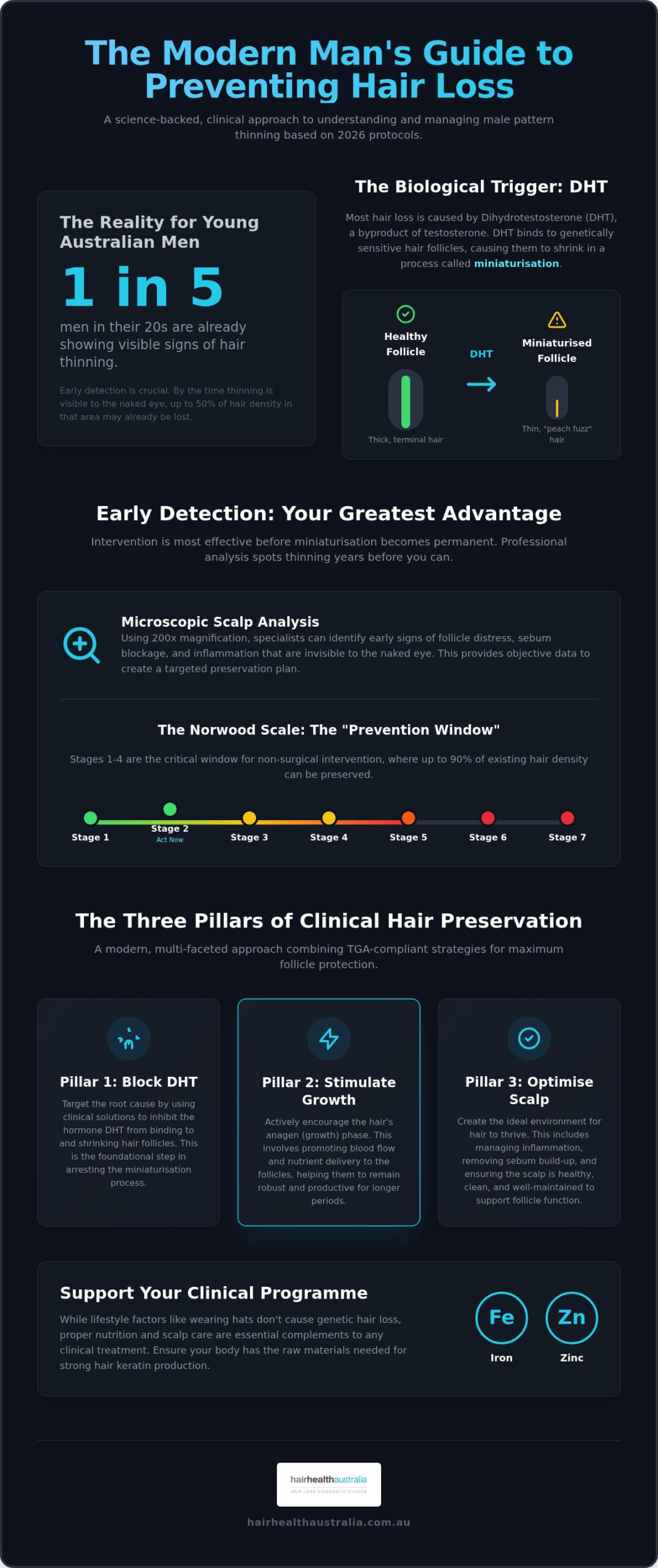
Did you know that one in five Australian men in their 20s are already showing visible signs of hair thinning? It’s a confronting moment when you first spot a receding hairline in the bathroom mirror, and it’s easy to feel overwhelmed by the sheer volume of products that don’t actually work. If you’re focused on preventing baldness in males, you’ve probably realised that supermarket shampoos aren’t the answer, yet the thought of invasive surgery feels just as daunting.

This guide offers a science-backed alternative. We’ll outline the 2026 clinical protocols designed to arrest male pattern thinning before it leads to permanent loss. You’ll learn about the latest TGA-compliant strategies, the role of microscopic scalp analysis, and how combination therapies are setting a new clinical standard for follicle preservation. This systematic approach replaces uncertainty with clarity, giving you a clear path to protect your hair with confidence.

Key Takeaways

  • Understand how Dihydrotestosterone (DHT) triggers follicle miniaturisation, which is the critical biological mechanism to address when preventing baldness in males.
  • Learn why professional microscopic scalp analysis is essential for detecting thinning in its earliest stages, long before a bald spot becomes visible in the mirror.
  • Discover the “Three Pillars” of clinical hair preservation: blocking DHT, stimulating active growth, and optimising the scalp environment for long-term health.
  • Identify the specific nutritional building blocks, including iron and zinc, required to support your clinical treatment and maintain hair keratin levels.
  • Recognise the importance of a personalised roadmap and expert monitoring to ensure your hair preservation programme remains effective and grounded in science.

Understanding the Biology: Why Do Males Lose Hair?

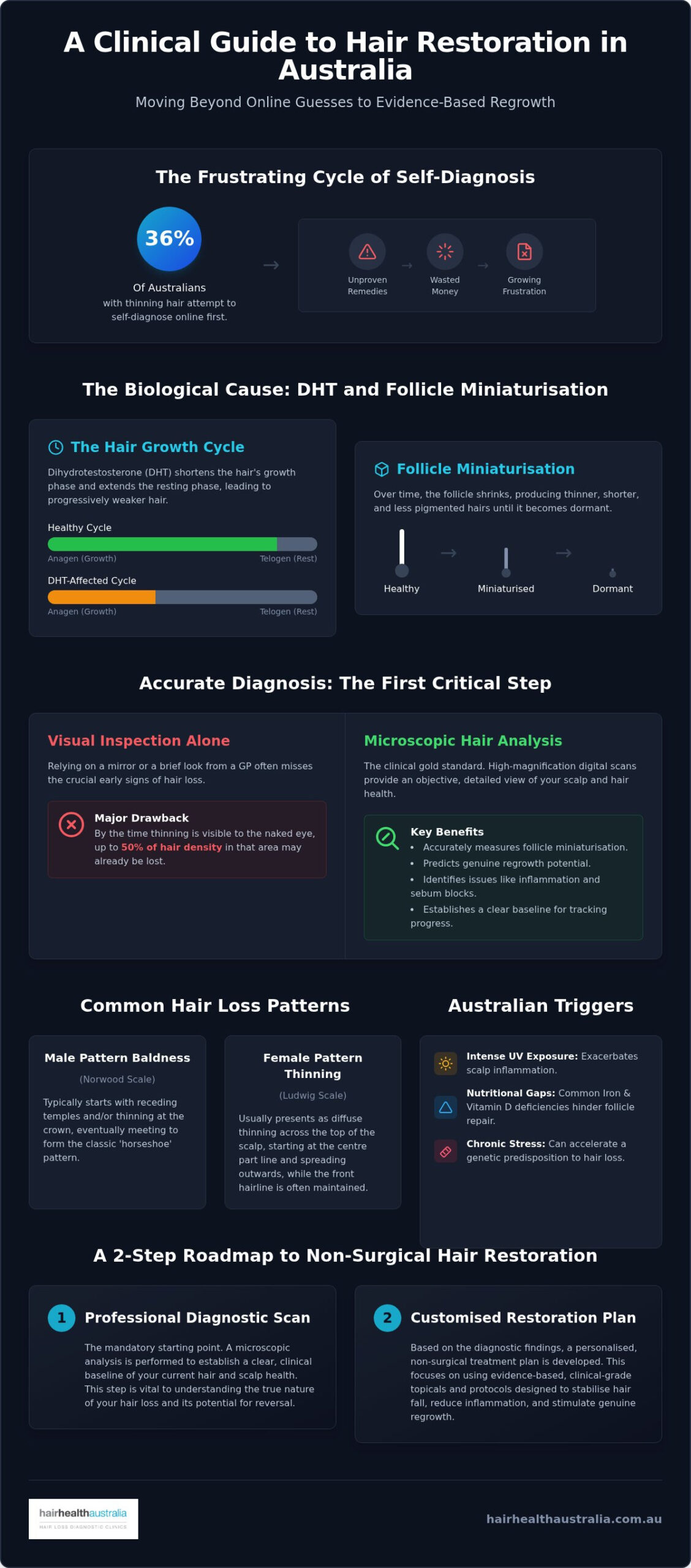
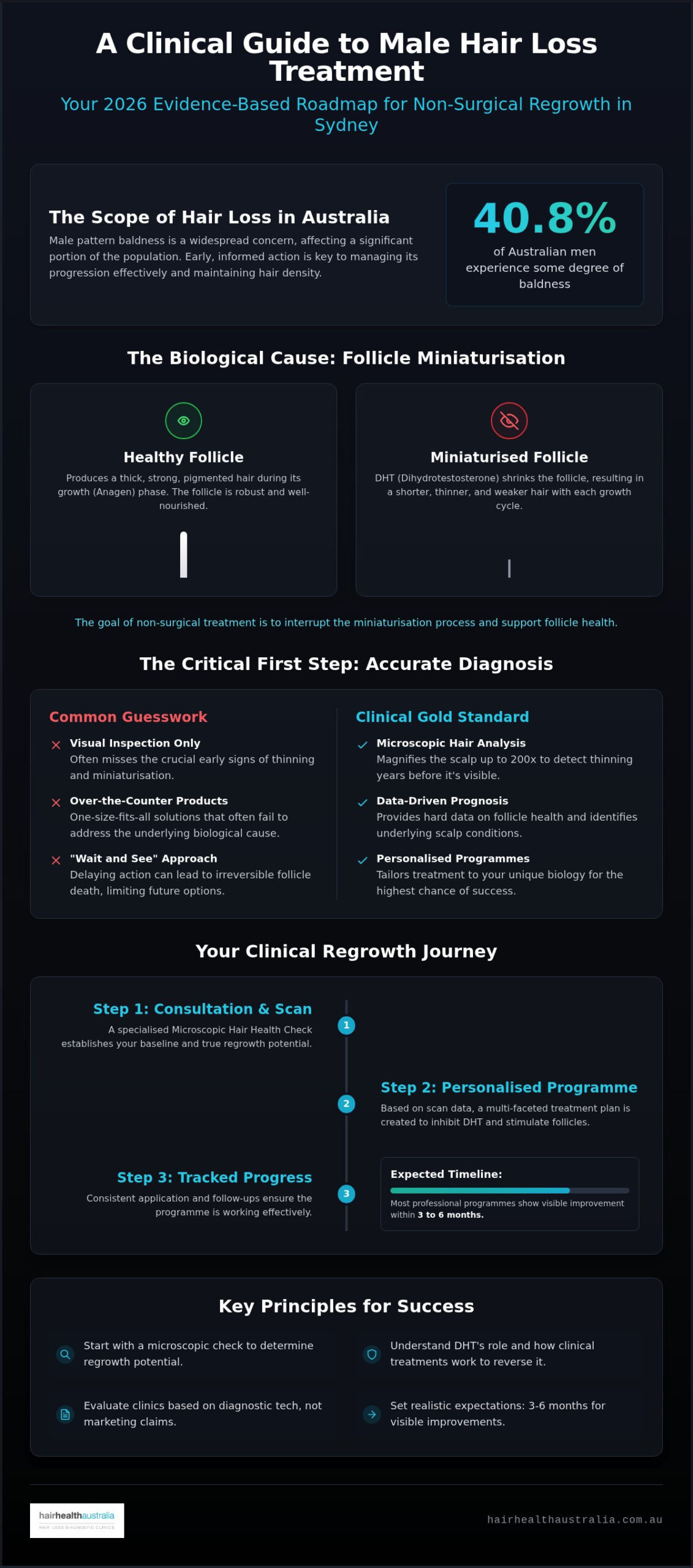
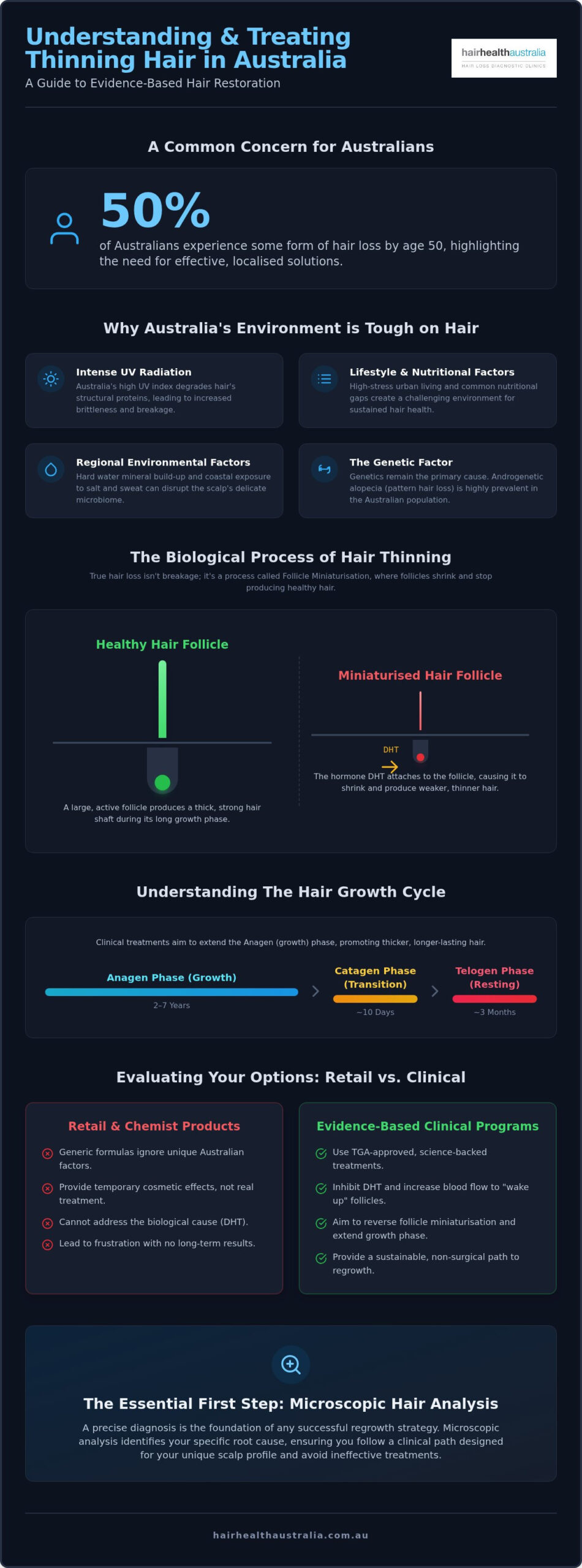
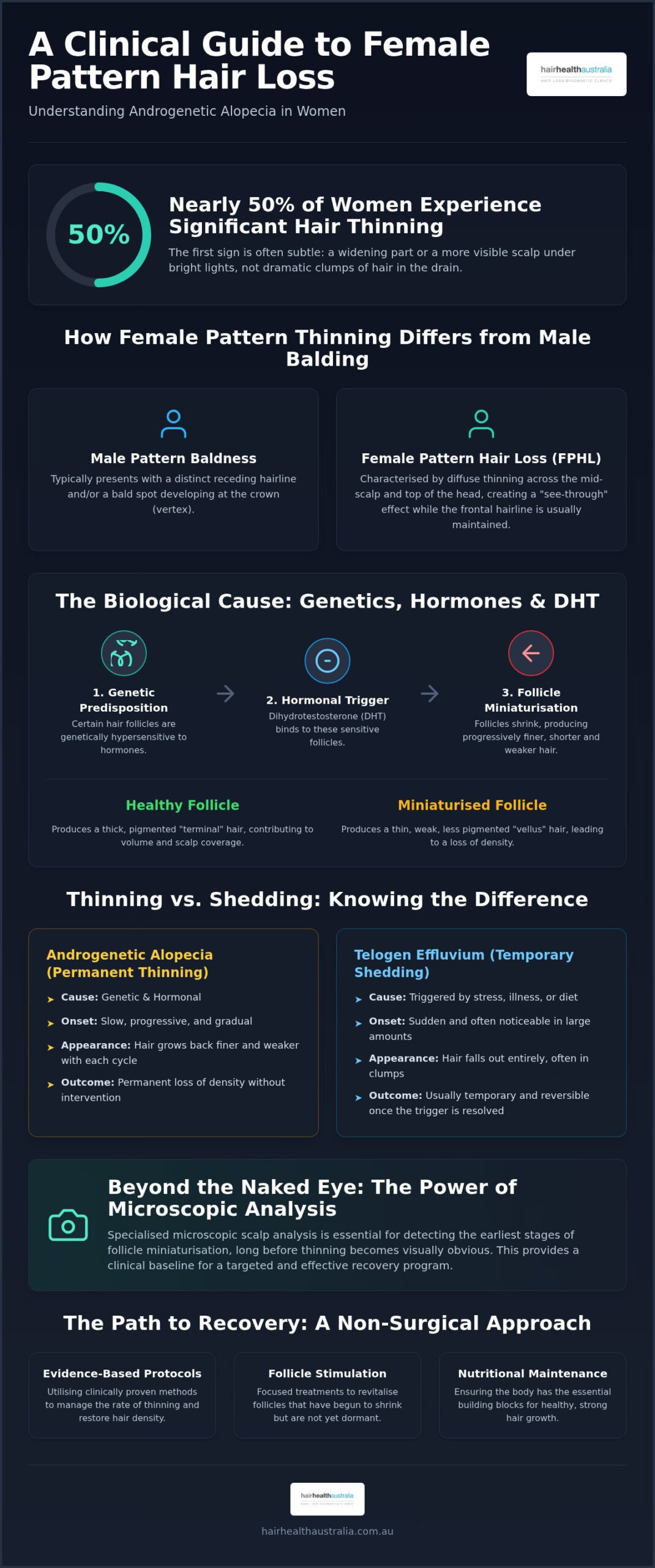
To succeed in preventing baldness in males, you must first understand the invisible biological process occurring beneath the surface of your scalp. Most hair loss is driven by Pattern hair loss, scientifically known as Androgenetic Alopecia. This condition is primarily triggered by Dihydrotestosterone (DHT), a potent byproduct of testosterone. When your follicles are genetically predisposed to be sensitive to DHT, the hormone binds to receptors in the scalp, causing the follicles to shrink over time.

This process is called miniaturisation. Over several growth cycles, a thick, healthy terminal hair gradually transforms into a thin, wispy strand often referred to as peach fuzz. Eventually, the follicle becomes so small that it stops producing visible hair altogether. This isn’t an overnight event. It’s a slow transition where the active growth phase, or anagen phase, gets shorter and shorter. Understanding this timeline is vital because clinical intervention is far more effective while the follicle is still active.

While your family history provides significant clues, genetics are a predictor rather than a definitive guarantee. You inherit a complex mix of genes from both parents, meaning your path may differ from your father’s. It’s also important to distinguish this permanent genetic thinning from temporary shedding, known as Telogen Effluvium. Temporary loss often follows major surgery, severe illness, or extreme stress, and usually resolves itself once the body recovers. Genetic thinning, however, requires a proactive strategy to manage.

The Role of DHT and Follicle Sensitivity

DHT doesn’t affect the entire scalp equally. Follicles at the temples and crown typically possess a higher density of androgen receptors, making them far more vulnerable than the hair at the back or sides of the head. This explains the classic horseshoe pattern of male thinning. Identifying this sensitivity early through a professional Hair Health Check allows for targeted intervention before the miniaturisation becomes irreversible. When you catch the process early, you have a much higher chance of preserving your natural density.

Genetics vs. Lifestyle: What Can You Control?

Your DNA provides the blueprint, but your lifestyle can influence the speed of the process. Chronic stress and poor scalp health can lead to inflammation, which may accelerate follicle damage. However, it’s time to retire the common myths. Wearing hats doesn’t suffocate your hair, and using styling gel won’t cause your follicles to die. These external factors don’t influence the internal DHT mechanism. Focus instead on clinical factors you can actually change to support the longevity of your hair follicles.

Early Detection: The Key to Preventing Baldness

Prevention is fundamentally a race against time. Many men wait until they can clearly see skin through their hair before seeking help, but the biological process of miniaturisation begins long before a bald spot appears. By the time thinning is visible to the naked eye, you may have already lost up to 50% of the hair density in that specific area. This is why self-diagnosis in the bathroom mirror is often unreliable; it only reveals the damage after it has become significant. Effectively preventing baldness in males requires identifying the subtle shifts in hair diameter that occur years before the follicle expires.

Relying on a professional clinical evaluation rather than guesswork is the only way to establish a baseline for your hair health. While understanding the various causes of hair loss is helpful for context, clinical data provides the certainty needed to act. A comprehensive hair health check serves as this essential first step. It moves the conversation from “I think I’m thinning” to “I know exactly what is happening to my follicles.” This objective data allows for a targeted preservation strategy rather than a reactive one.

The Norwood Scale: Where Do You Sit?

The Norwood Scale is the industry standard for categorising the stages of male pattern thinning. Stages 1 through 4 represent the “prevention window,” where the follicles are still active but under threat from DHT. Stage 2, which involves a slight recession at the temples, is the most critical time to consult a specialist. At this point, the process is manageable and highly responsive to non-surgical protocols. Early intervention during these initial stages can successfully preserve up to 90% of your existing hair density.

Microscopic Scalp Analysis: Seeing the Unseen

A clinical diagnosis goes beyond what the eye can see by utilising 200x magnification. This technology allows a specialist to examine individual follicles to identify sebum blockage, scalp inflammation, and varying hair diameters. We measure the exact hair density per square centimetre to track progress with mathematical precision. Utilising microscopic hair analysis Australia wide ensures that your treatment is based on your unique biological profile rather than a one-size-fits-all approach. If you’ve noticed more hair in the drain lately, booking a hair health check is the most effective way to gain clarity and take control of your future look.

Clinical Strategies for Preventing Hair Loss

Effective strategies for preventing baldness in males rely on a systematic, multi-faceted approach. We categorise these into the Three Pillars of preservation: blocking DHT, stimulating active growth, and optimising the scalp environment. Unlike invasive surgical options, non-surgical restoration aims to save the hair you still have while reviving follicles that are currently in the miniaturisation phase. This is a long-term commitment. You should view hair preservation as a marathon rather than a sprint; consistency is the only way to maintain your results over time.

When investigating your options, it’s vital to distinguish between marketing hype and medical reality. The most successful programmes incorporate FDA-approved treatments for male-pattern baldness that have been rigorously tested for efficacy. While over-the-counter solutions are available at any local chemist, they often lack the potency and personalisation required to address the specific biological drivers of your hair loss. A clinical approach ensures that every component of your treatment is working in synergy to protect your follicles.

Non-Surgical Regrowth Protocols

Modern clinical programmes utilise advanced technology to target the follicle at a cellular level. Low-level laser therapy (LLLT) is a key component, using specific light wavelengths to stimulate cellular activity and improve energy production within the hair bulb. We also employ topical vasodilators to increase blood flow, ensuring a steady delivery of oxygen and nutrients to the root. Additionally, specialised scalp cleansers are used to remove DHT-laden sebum and environmental pollutants. This creates a clean, healthy environment that allows other treatments to penetrate more effectively.

The Problem with ‘Miracle’ Cures

The hair loss industry is unfortunately saturated with unverified “miracle” oils and expensive supplements that lack any clinical backing. While natural ingredients might improve the hair’s surface texture, they cannot alter the genetic miniaturisation process occurring deep within the scalp. One-size-fits-all kits from the chemist often lead to disappointment because they don’t account for individual scalp health or the specific stage of thinning. Success requires a clinical hair treatment tailored to your unique diagnostic data. This personalised roadmap ensures you are using the right tools at the right time for your specific needs.

Preventing Baldness in Males: The 2026 Clinical Guide to Hair Preservation

Lifestyle and Scalp Health: Supporting Your Treatment

Clinical intervention is the foundation of any preservation strategy, but your daily habits create the environment where those treatments either thrive or struggle. It’s helpful to think of your scalp as the soil and your hair as the plant. Even the most advanced clinical protocols won’t reach their full potential if the soil is depleted or inflamed. When you’re focused on preventing baldness in males, you must address the external factors that can sabotage your biological progress.

Scalp inflammation, such as seborrhoeic dermatitis, is a common but overlooked accelerant of hair loss. This condition creates micro-inflammation around the follicle, which can exacerbate genetic thinning and hinder the absorption of topical treatments. Similarly, lifestyle choices like smoking significantly impact your results. Smoking constricts blood vessels and reduces the delivery of oxygen and nutrients to the scalp, effectively starving the follicles. By prioritising cardiovascular health and managing scalp hygiene, you ensure your clinical treatments have the best possible landscape to work with.

Nutrition for Hair Strength

Your hair is primarily made of a tough protein called keratin, and its production requires a specific set of biological building blocks. If your diet is deficient in iron, zinc, or protein, your body will divert these nutrients away from your hair to support vital organs. To maintain hair shaft integrity, consider the following nutritional focus:

  • Iron and Zinc: These minerals are essential for follicle cell division and repair.
  • Omega-3 Fatty Acids: Found in oily fish and flaxseeds, these help reduce scalp inflammation and support natural oils.
  • Biotin: A B-vitamin that plays a critical role in the keratin infrastructure.

Be wary of sudden crash dieting. A rapid drop in caloric intake can shock your system and trigger temporary shedding, which complicates your long-term preservation goals. Staying hydrated is also essential; it maintains scalp elasticity and ensures efficient nutrient transport to the root.

Daily Scalp Hygiene Practices

Finding the right balance in your washing routine is vital for maintaining a healthy scalp environment. You want to wash frequently enough to prevent the build-up of sebum, which can trap DHT and environmental pollutants, but not so often that you strip the scalp of its protective barrier. For most men, washing every second day with a clinical-grade cleanser is ideal. Avoid using high-heat styling tools, as extreme temperatures can damage the hair cuticle and lead to breakage. Instead, try a gentle scalp massage while washing. This simple habit encourages blood flow to the follicles and helps clear away dead skin cells. To see how your lifestyle and scalp health are currently impacting your density, booking a hair health check is the most effective way to receive a professional assessment.

Starting Your Prevention Journey in Sydney

Choosing a local Sydney clinic like Hair Health Australia provides a level of accountability and expert monitoring that online subscription services or generic chemists simply cannot match. When your goal is preventing baldness in males, having a specialist who can physically assess your progress ensures your treatment remains effective and safe. A local presence means you aren’t just a number in a database; you’re a patient with a documented history and a specialist who is personally invested in your results.

During your first consultation, we move beyond visual guesswork to establish a scientific baseline. This involves a detailed microscopic scan that reveals the current health of your follicles and the exact degree of miniaturisation occurring. From this data, we develop a personalised roadmap tailored to your specific hair health needs. This non-surgical path is often the superior choice for those in the early to mid-stages of loss, as it avoids the risks, scarring, and significant downtime associated with invasive hair transplant surgery. It’s about arresting the loss while your follicles are still viable and responsive.

Why a Specialist Clinic Trumps the GP

While GPs are essential for managing general health, hair loss is a highly specialised field that requires specific diagnostic equipment and expertise. A dedicated hair clinic utilises advanced scanning technology to identify issues that a standard physical examination might miss. Beyond the initial diagnosis, we provide ongoing support and make precise adjustments to your programme as your hair responds. This systematic oversight is what separates a successful preservation journey from a failed attempt at self-treatment.

Your Next Steps: The Hair Health Check

The best time to begin a preservation programme was when you first noticed a change in your hair’s density. The second best time is today. Every month of delay allows the DHT-driven miniaturisation process to continue, eventually reaching a point where the follicle can no longer produce hair. Booking a consultation in Sydney is a straightforward process that represents your first proactive step toward reclaiming control. Don’t wait until the thinning is irreversible. Book your Hair Health Check today to secure your hairline’s future.

Take Control of Your Hair Preservation

Successfully preventing baldness in males is no longer a matter of guesswork or trial and error. By understanding the biological role of DHT and the critical importance of early detection, you can move from a state of uncertainty to one of informed action. Clinical strategies that combine follicle stimulation with robust scalp hygiene offer a proven, non-surgical path to maintaining your natural hair density without the need for invasive surgery.

At Hair Health Australia, we bring over 15 years of clinical experience in Sydney to every consultation. Our approach relies on advanced microscopic diagnostic technology to identify thinning in its earliest stages, allowing us to build a personalised roadmap for your journey. These protocols are entirely non-surgical and pain-free, focusing on measurable results and long-term follicle health. You don’t have to wait for visible loss to take the lead. Starting today ensures your follicles remain healthy and resilient for years to come.

Secure your hair’s future with a professional Hair Health Check at our Sydney clinic.

Frequently Asked Questions

Can I really regrow hair on a completely bald spot?

No, you cannot typically regrow hair on a completely bald spot where the skin is smooth and shiny. This appearance suggests the follicles have reached a terminal state and have been replaced by scar tissue. Clinical strategies for preventing baldness in males are most effective when applied to active follicles that are merely miniaturising. Once a follicle is completely dormant, non-surgical treatments cannot revive it, making early intervention the only reliable way to maintain your coverage.

Is male pattern baldness purely down to my mother’s side of the family?

No, male pattern baldness is not inherited solely from your mother’s side of the family. This is a common myth; in reality, the condition involves multiple genes inherited from both parents. While a history of thinning on your maternal side is a strong indicator, your paternal lineage is equally significant. We recommend assessing both sides of your family tree to understand your genetic predisposition more accurately during a clinical consultation.

Do hair loss shampoos actually work for prevention?

Most over-the-counter hair loss shampoos provide very limited results for actual prevention. While they can improve the scalp environment by removing excess oils and dandruff, they rarely stay on the skin long enough to penetrate the follicle and block DHT. For effective results, these products should be used as a supportive tool alongside a clinical-grade programme rather than as a standalone solution for preventing baldness in males.

What are the first signs of balding I should look for in my 20s?

The first signs to monitor in your 20s include a slight recession at the temples and a loss of density at the crown. You might also notice that your hair feels softer or more difficult to style, which is a sign of miniaturisation. If you notice more hair in the drain than usual, or if your hairline is beginning to form a distinct “M” shape, it is time for a professional assessment.

How long does it take to see results from a clinical hair programme?

You should expect to see the first visible signs of improvement within four to six months of starting a clinical programme. Hair grows in cycles, and it takes time for miniaturised follicles to transition back into a healthy growth phase. Consistency is essential during this period. By the twelve-month mark, most patients can see a significant stabilising of their hair density and a reduction in active shedding.

Is stress a permanent cause of baldness in men?

Stress is usually a temporary cause of hair fall, but it can accelerate permanent genetic thinning. A high-stress event can trigger Telogen Effluvium, where a large number of hairs enter the shedding phase simultaneously. While this specific hair usually grows back, the systemic inflammation caused by chronic stress can speed up the timeline for those already predisposed to male pattern baldness, making the loss appear permanent.

What is the difference between hair shedding and hair thinning?

Shedding refers to the number of hairs falling out daily, whereas thinning refers to the decreasing diameter of individual hairs. It is normal to shed between 50 and 100 hairs a day. However, thinning is the process where the hair becomes finer and shorter over time. You can have significant thinning without noticing an increase in daily shedding, which is why microscopic analysis is vital for an accurate diagnosis.

Are there any side effects to non-surgical hair treatments?

Non-surgical hair treatments are generally pain-free and have a very low risk of side effects. Some patients may experience minor scalp irritation or dryness when beginning topical protocols, but these symptoms typically resolve as the skin adjusts. Unlike surgical transplants, these programmes involve no downtime or scarring. We monitor your progress closely to ensure your personalised roadmap remains comfortable and effective throughout the entire process.

Understanding the Hair Growth Cycle: A Clinical Guide to Restoration in 2026

Have you ever wondered if the handful of hair in your shower drain is a normal part of your biology or a warning sign of something more permanent? It’s incredibly unsettling to notice your part line widening or your crown thinning, especially when generic “miracle” shampoos fail to deliver anything but disappointment. You aren’t alone in this frustration, and it’s likely that what you’re seeing is a disruption in your natural hair growth cycle.

Understanding this biological rhythm is the essential first step in moving from uncertainty to a proven clinical strategy. This guide will help you master the science behind how your hair functions and explain how targeted clinical interventions can restart the growth phase to combat thinning effectively. We will examine the specific stages of hair loss and outline a professional, non-surgical path to restoring the density you deserve. By the end, you’ll have the clarity needed to take control of your hair health with confidence.

Key Takeaways

  • Learn why the hair growth cycle is the foundation of all restoration and how identifying its current phase determines your treatment success.
  • Discover the specific biological triggers, such as DHT or stress, that cause your hair follicles to enter a premature resting state.
  • Understand why a standard visual check isn’t enough and how microscopic analysis provides a precise map of your scalp health.
  • Explore how modern clinical therapies work to re-energise follicles and extend the active growth phase without the need for surgery.
  • Find out how a professional Hair Health Check in Sydney can move you from frustration to a personalised, evidence-based restoration plan.

The Four Phases of the Hair Growth Cycle Explained

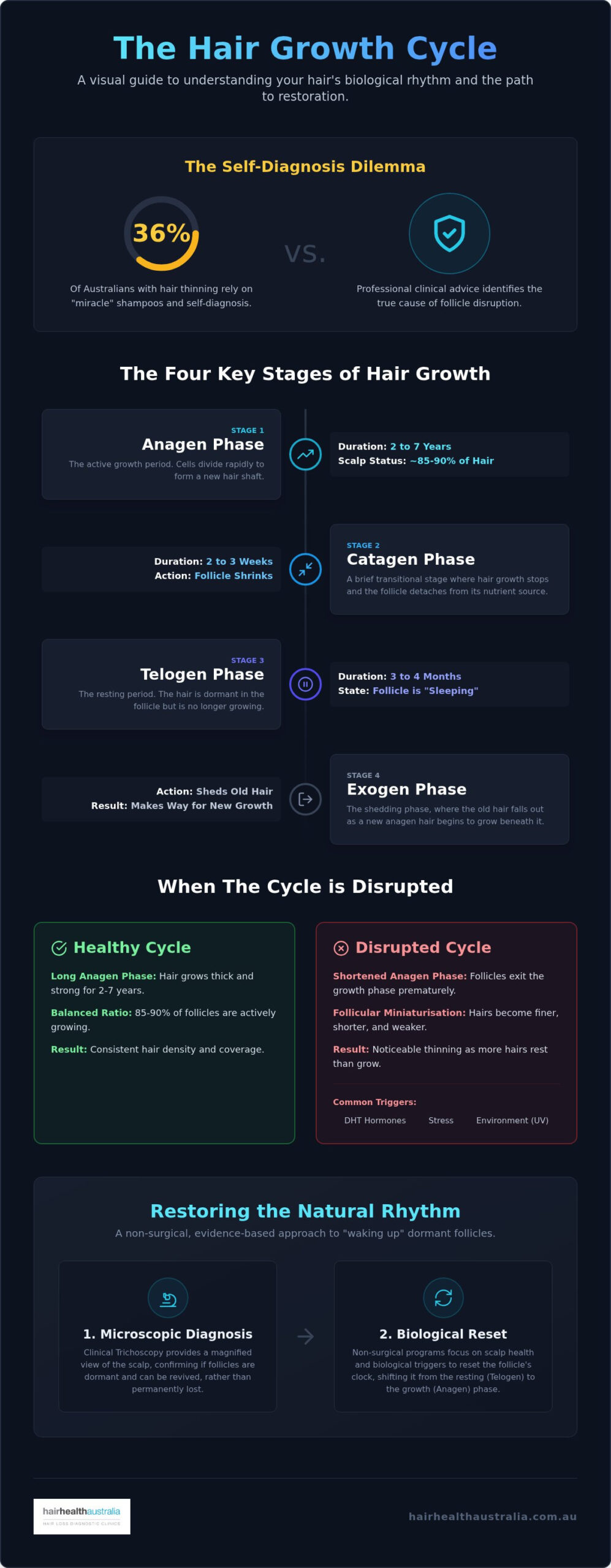
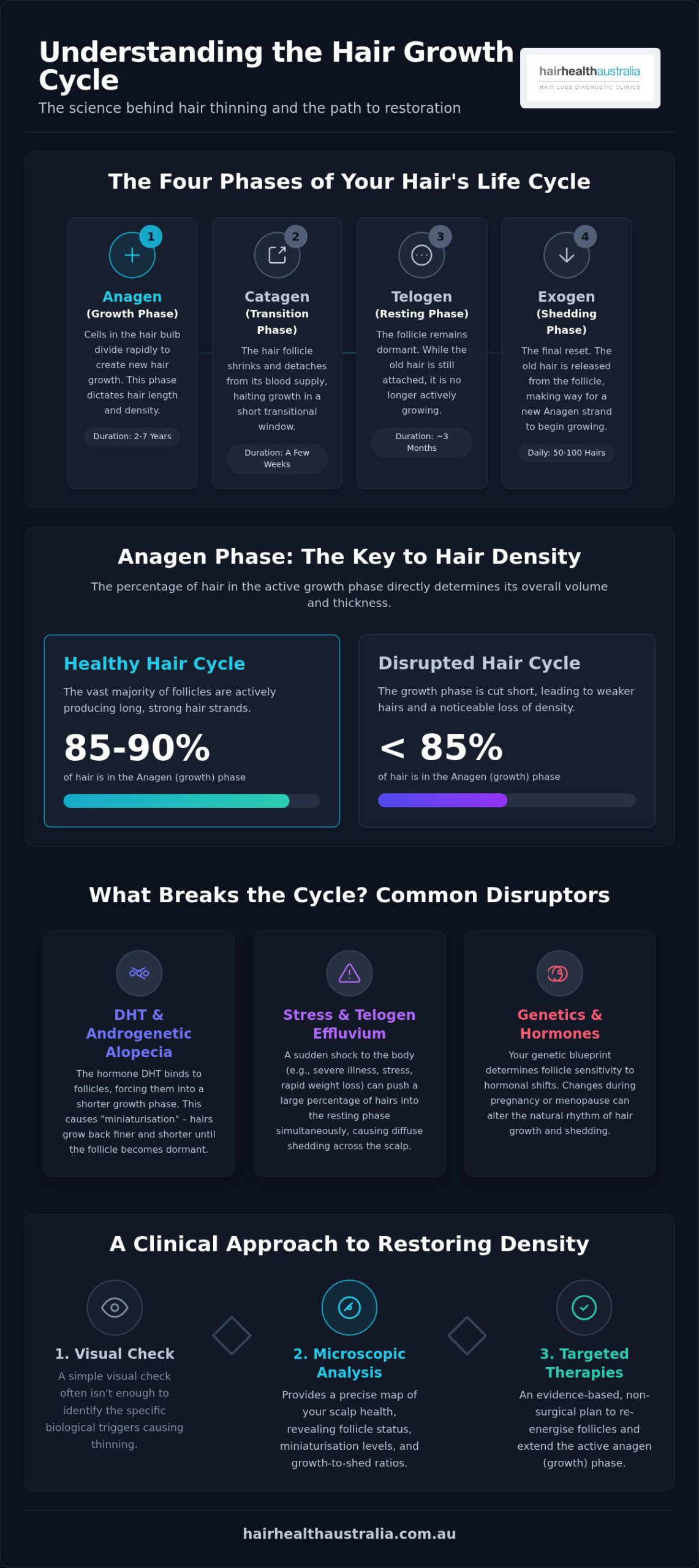
Your hair doesn’t grow in a continuous, endless stream. It operates on a sophisticated biological clock. Every individual follicle on your scalp functions independently, moving through a specific sequence that determines the length, strength, and density of your hair. Research confirms that the three stages of hair growth, consisting of the anagen, catagen, and telogen phases, along with the final exogen phase, create the foundation of your scalp’s health. Understanding this hair growth cycle is the first step in identifying why your hair might be thinning and how to fix it.

The cycle is broken down into four distinct stages:

  • Anagen (The Growth Phase): This is the most critical stage for volume. Cells in the hair bulb divide rapidly, creating new hair growth. A healthy scalp should have the vast majority of its follicles in this phase at any given time.
  • Catagen (The Transition Phase): This short window lasts only a few weeks. The hair follicle shrinks and detaches from the dermal papilla, which is the blood supply that fuels growth.
  • Telogen (The Resting Phase): The follicle remains dormant. While the hair stays attached, it is no longer actively growing. This phase typically lasts around three months.
  • Exogen (The Shedding Phase): This is the final reset. The old hair is released from the follicle to make way for a new anagen strand.

Why the Anagen Phase is the Key to Density

The duration of the anagen phase directly dictates how long and thick your hair can grow. For most people, this phase lasts between two and seven years. When your hair growth cycle is functioning optimally, roughly 85 to 90 per cent of your hair is in this active state. If this phase is cut short by genetics or health factors, the hair doesn’t have enough time to reach its full diameter. Over time, this leads to a noticeable loss of density as the “growing” population of hairs on your head begins to dwindle, leaving more follicles in the resting or shedding stages.

Normal Shedding vs. Clinical Hair Loss

It’s common to feel a sense of alarm when you see hair in the drain, but some loss is a sign of a healthy reset. The average Australian sheds between 50 and 100 hairs per day during the normal exogen phase. This is simply the body making room for new growth. Problems arise when the exogen phase occurs too rapidly or when the new hair pushing through is weaker than the one it replaced. This leads to miniaturisation; a process where the follicle physically shrinks, producing finer, shorter hair until it eventually stops producing a visible strand. If you suspect your shedding has moved beyond the norm, a professional Hair Health Check is the most reliable way to measure your current growth-to-shed ratio.

When the Cycle Breaks: Identifying Disruptions and Thinning

While the hair growth cycle is a robust biological system, it’s susceptible to specific disruptions that can trigger visible thinning. The most common culprit is Androgenetic Alopecia, which affects roughly 50 per cent of men by age 50 and up to 70 per cent of women post-menopause in Australia. This condition is driven by Dihydrotestosterone (DHT), a hormone that binds to follicles and forces them to spend less time in the anagen phase. As the growth phase shortens, the follicle undergoes miniaturisation. This is a physical process where the follicle produces hairs that are increasingly fine and short until it eventually becomes dormant.

Understanding the Physiology of Hair Growth reveals that even temporary disruptions, known as Telogen Effluvium, can cause significant distress. This occurs when a sudden shock to the body, such as severe illness, rapid weight loss, or chronic stress, pushes a large percentage of hairs into the resting phase simultaneously. Unlike pattern baldness, this usually results in diffuse shedding across the entire scalp rather than a receding line or thinning crown. Environmental factors also play a role; the harsh Australian sun and our outdoor lifestyle can lead to oxidative stress on the scalp, further compromising the health of the follicle bulb.

The Role of Genetics and Hormones

Your genetic blueprint determines how sensitive your hair follicles are to hormonal shifts. For women, the hair growth cycle is often influenced by fluctuations in oestrogen and progesterone, particularly during pregnancy or menopause. These changes can alter the rhythm of growth and shedding, making it difficult to distinguish between temporary thinning and permanent loss. Because these triggers are often internal, a visual inspection isn’t enough to determine the cause. Booking a professional hair health check is the most effective way to identify whether your thinning is driven by hormonal sensitivity or hereditary factors.

Lifestyle Factors Impacting Your Growth Rhythm

Living in Australia presents unique challenges for scalp health. Despite our climate, many Australians struggle with low Vitamin D levels, which is a critical component for follicle cycling. Iron deficiency is another common factor, especially for women, as iron is essential for carrying oxygen to the hair bulb to fuel cell division. Chronic stress also plays a role by keeping the body in a state of ‘fight or flight’, which deprioritises non-essential functions like hair production. It’s important to separate these clinical factors from common myths; wearing hats, frequent washing, or ‘clogged’ pores are rarely the true cause of thinning. If you’ve noticed unexplained shedding in the shower or a widening part, a thorough hair health check can provide the diagnostic data needed to plan a professional path forward.

Microscopic Hair Analysis: How Sydney Specialists Map Your Growth Cycle

While a quick glance in the mirror or a general GP visit might identify that thinning is occurring, it cannot tell you why. A visual inspection is often insufficient because it only identifies hair loss once it has reached a visible threshold. By the time you notice a widening part or a receding temple, you may have already lost up to 50 per cent of the hair density in that area. Microscopic hair analysis changes the diagnostic landscape by allowing specialists to see beneath the surface and map your hair growth cycle with mathematical precision.

This specialised scanning technology measures hair density per square centimetre and evaluates the diameter of individual strands. By calculating the exact ratio of hairs currently in the anagen phase versus those in the telogen phase, we can determine if your shedding is a temporary fluctuation or the start of permanent thinning. This data provides a clear clinical overview of the hair growth cycle as it pertains to your specific scalp, forming the essential foundation for any effective male hair loss treatment plan.

The Diagnostic Difference: Seeing Beneath the Surface

The primary advantage of microscopic analysis is the ability to detect follicular miniaturisation long before it becomes obvious to the naked eye. During a consultation at a specialised hair clinic, we examine the scalp environment for secondary issues like chronic inflammation or excessive sebum build-up. These factors can “choke” the follicle and disrupt the hair growth cycle, preventing new hairs from maturing. Identifying these obstacles early allows for a more targeted approach, ensuring that any subsequent restoration programme isn’t just a generic solution but one tailored to your scalp’s unique biological requirements.

Setting Realistic Expectations for Recovery

Data-driven diagnostics allow us to move away from guesswork and provide you with a straight-talking timeline for your results. It’s vital to understand that “instant” cures are a biological impossibility. Because the telogen (resting) phase typically lasts around three months, any clinical intervention designed to restart the anagen phase will require time to manifest physically. Most patients will begin to see a stabilisation of shedding within the first few months, with visible improvements in density following the natural rhythm of the follicle’s reset. At Hair Health Australia, we use the initial data from your Hair Health Check to track your progress objectively, ensuring your restoration journey is grounded in evidence rather than empty promises.

Understanding the Hair Growth Cycle: A Clinical Guide to Restoration in 2026

Clinical Strategies to Re-energise the Anagen (Growth) Phase

Many Australians rely on generic multivitamins to solve thinning, but clinical data suggests that nutrition alone cannot restart a stalled hair growth cycle. While general health is important, pattern baldness and chronic thinning are driven by complex hormonal and environmental factors that require targeted intervention. In Sydney, where high UV exposure and varied water mineral content can impact scalp health, a professional regrowth programme focuses on three essential pillars: inhibition, stimulation, and environment. Moving beyond surface-level solutions allows us to address the biological triggers that keep your hair stuck in the resting phase.

The Science of DHT Inhibition

Blocking Dihydrotestosterone (DHT) is the most effective way to protect the follicle from premature entry into the telogen phase. When DHT is allowed to bind to sensitive follicles, it forces them to shrink, effectively “switching off” the growth phase and leading to miniaturisation. Clinical strategies aim to inhibit this process, allowing the follicle to return to its natural rhythm. Early intervention is vital here. Once a follicle has spent years in a dormant state, it becomes significantly harder to reactivate. By acting while the follicle is still producing a visible strand, we can stabilise density and prevent further loss. For a deeper look at the specific protocols used to achieve this, see our best hair regrowth treatment Australia 2026 reference guide.

Advanced Clinical Growth Support

Restoring density also requires increasing the blood supply to the hair bulb. Non-surgical clinical therapies use biostimulation to deliver essential nutrients and oxygen directly to the source of growth. This is particularly effective for hair loss treatment for women, where hormonal shifts often cause a diffuse thinning that responds well to topical and light-based stimulation. Unlike invasive surgery, these programmes work with your body’s existing systems to strengthen the strands you still have while encouraging “sleeping” follicles to re-enter the anagen phase.

Optimising the scalp environment is also a priority. We address the damage caused by Australia’s harsh UV rays and provide professional-grade topical applications that clear away the oxidative stress and sebum build-up that generic shampoos miss. This comprehensive approach ensures that once the hair growth cycle is restarted, it has the ideal conditions to thrive long-term. If you’re ready to move beyond “miracle” products and start a science-based journey, the first step is booking your Hair Health Check to see which clinical path is right for your specific stage of thinning.

Restoring Your Hair Density with Hair Health Australia

Since our founding circa 2009, Hair Health Australia has focused on bridging the gap between scientific theory and visible results. We understand that every scalp is different, which is why our programmes are never one-size-fits-all. By using the data from your microscopic analysis, we can precisely target the stage where your hair growth cycle has stalled. This evidence-based approach ensures that you aren’t wasting time on generic solutions that ignore your specific biological needs.

Our commitment is to provide a modern, non-surgical alternative to invasive transplants. While some clinics suggest surgery as the only permanent option, we have found that many patients can achieve significant restoration through biostimulation and clinical management. It’s about restoring the health of the follicle itself rather than just moving hair from one place to another. This is particularly important in the Australian climate, where we must account for high UV indices and local water quality when designing your restoration plan.

Your First Step: The Professional Consultation

Moving from a state of anxiety to a position of control starts with accurate information. A Hair Health Check is more than just an appointment; it’s a diagnostic scan that provides a “straight-talking” assessment of your current density and growth potential. During this session at our Sydney centre, we’ll walk you through the results in real-time, explaining exactly what is happening beneath the surface. This clarity replaces the uncertainty of unexplained shedding with a clear, professional path forward. We believe in setting realistic expectations from day one, ensuring you understand the timeline and the science behind your recovery.

Long-Term Maintenance for Sustainable Results

Reclaiming your hair density is a journey that continues beyond the initial regrowth phase. Because the hair growth cycle is a dynamic process influenced by age, hormones, and environmental stressors, we prioritise ongoing monitoring. We track your progress through follow-up scans, adjusting your personalised programme as your follicles respond to treatment. This methodical approach ensures that the density you regain is maintained for the long term. Our team acts as your dedicated guide, combining clinical expertise with an empathetic understanding of the personal nature of hair loss. You don’t have to navigate this alone; a professional, science-rooted solution is ready when you are.

Take the Next Step Toward Lasting Hair Density

Understanding the hair growth cycle is the difference between falling for marketing hype and investing in a clinical solution that works. You’ve learned that thinning is often a result of a shortened growth phase and that microscopic analysis is the only way to detect these changes before they become permanent. By identifying the specific triggers behind your hair loss, you can move away from uncertainty and toward a personalised, science-backed recovery plan that prioritises your scalp’s long-term health.

At Hair Health Australia, our specialised Sydney-based hair loss experts have spent over 15 years perfecting clinically-backed non-surgical methods. We don’t believe in guesswork; we believe in data and dedicated care. Whether you’re dealing with early-stage thinning or more advanced loss, the right intervention can help restore your confidence. Don’t wait for more shedding to occur when a professional path is available right now.

Book Your Microscopic Hair Health Check in Sydney Today and discover exactly what your scalp needs to thrive. We look forward to guiding you through every stage of your restoration journey with clarity and expertise.

Frequently Asked Questions

How long does the typical hair growth cycle last?

The entire cycle for a single follicle typically spans between two and seven years. The vast majority of this time is spent in the anagen, or growth phase, which determines the maximum length of your hair. Once this phase concludes, the follicle moves through shorter transition and resting stages before shedding and resetting. Individual genetics and overall health play a major role in determining the specific duration of your personal cycle.

Can you actually restart a hair growth cycle that has stopped?

Yes, it is often possible to reactivate follicles that have become dormant, provided they haven’t reached a stage of complete scarring. Clinical interventions are specifically designed to re-energise follicles that are stuck in a prolonged resting state. By addressing hormonal triggers like DHT and increasing blood flow to the scalp, we can encourage these follicles to re-enter the active anagen phase and produce visible growth again.

Why is my hair shedding so much all of a sudden?

Sudden, heavy shedding is frequently a sign of Telogen Effluvium, a condition where a physical or emotional shock pushes a large percentage of follicles into the resting phase simultaneously. This can be triggered by severe illness, rapid weight loss, or significant hormonal shifts. While this type of shedding is often temporary, a diagnostic scan is necessary to ensure the hair growth cycle returns to its normal rhythm without intervention.

How many hairs is it normal to lose in a day in Australia?

It is perfectly normal for the average Australian to lose between 50 and 100 hairs per day. This daily shedding is simply the exogen phase of the hair growth cycle functioning as intended to make room for new, healthy strands. If you notice a consistent increase beyond this range, such as clumps in the shower or a widening part line, it may indicate an underlying disruption that requires professional assessment.

Does stress really affect the hair growth cycle?

Yes, chronic or acute stress can significantly disrupt your hair’s natural biological rhythm. High levels of cortisol can force follicles out of the active growth phase and into the resting phase prematurely. This disruption often results in diffuse thinning across the entire scalp. Because of the way the cycle works, this thinning usually becomes visible two to four months after the period of high stress has occurred.

What is the difference between thinning hair and a normal shedding phase?

Normal shedding involves losing older hairs that are immediately replaced by new strands of equal thickness. Thinning occurs when the replacement hair is finer, shorter, and less pigmented, a process known as miniaturisation. Unlike a normal shed, which is a healthy reset, thinning leads to a visible loss of scalp coverage and a reduction in overall volume that won’t resolve on its own without clinical support.

How long does it take for clinical treatments to show results?

Most patients begin to see a stabilisation of their hair loss within the first three to four months of a programme. Because the resting phase of the follicle lasts approximately 90 days, it takes time for newly stimulated hairs to emerge from the scalp. Significant improvements in hair density and quality are typically measured during follow-up scans at the six-to-twelve-month mark as the new growth matures.

Are non-surgical hair loss treatments permanent?

Non-surgical treatments require ongoing maintenance to sustain results, particularly when dealing with hereditary pattern baldness. Since the genetic triggers for thinning remain present in your DNA, stopping treatment allows those hormones to eventually resume their impact on the follicles. Consistency is the key to keeping your hair in the active growth phase and protecting your regained density from the progressive nature of hair loss.

Hair Thinning Treatment Sydney: The 2026 Clinical Guide to Non-Surgical Regrowth

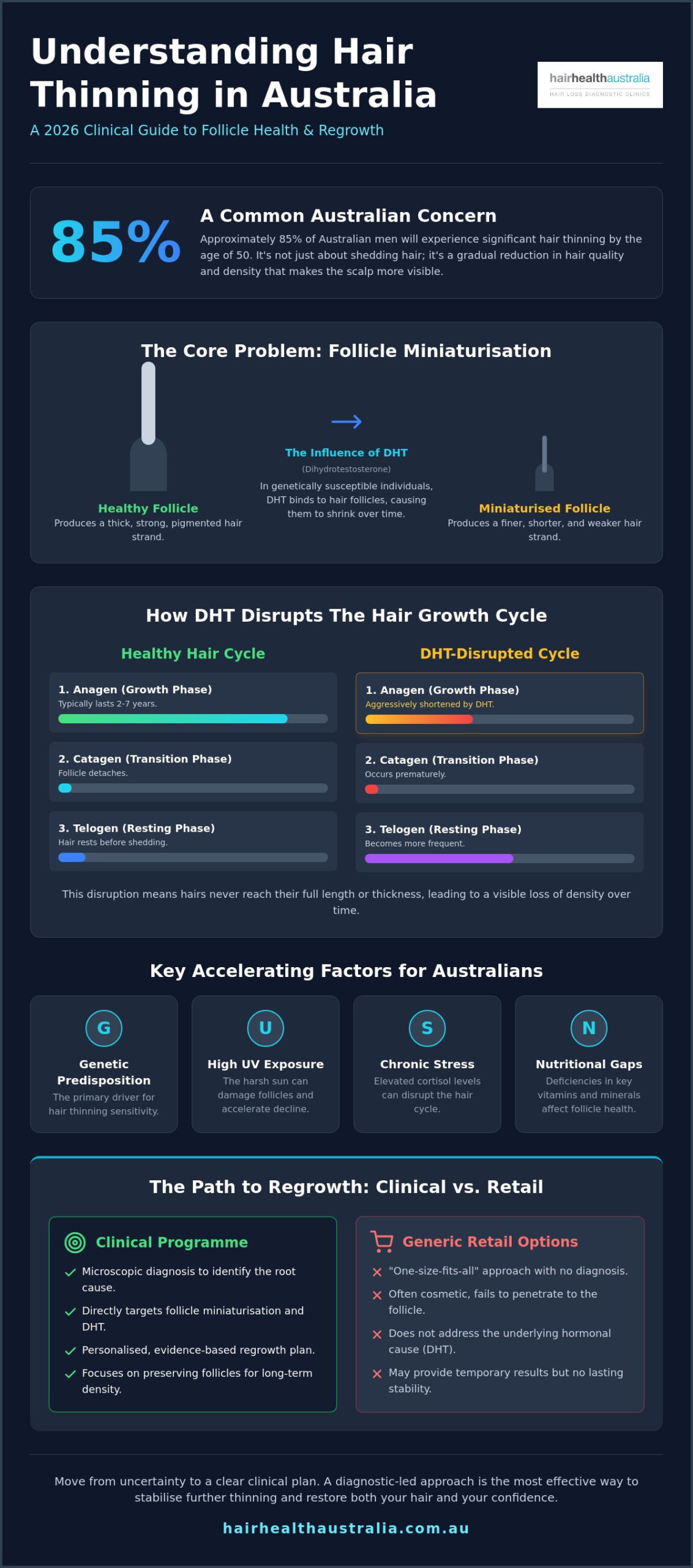
Approximately 85% of Australian men will experience significant hair thinning by the age of 50, a statistic that feels far more personal when you first notice your scalp under the bright midday sun. It’s common to feel a loss of confidence in social or professional settings when your hair begins to lose its volume. If you’ve been searching for an effective hair thinning treatment Sydney, you’ve likely felt overwhelmed by the amount of conflicting advice and retail products that promise much but explain very little.

You deserve to understand the scientific reality of why your hair is changing. This 2026 clinical guide explains the process of follicle miniaturisation and the proven, non-surgical pathways available to restore density without invasive procedures. We will outline how a diagnostic-led approach can stabilise further thinning and provide a structured, evidence-based route to regaining both your hair and your confidence. By focusing on follicle health rather than cosmetic cover-ups, you can move from uncertainty to a clear, clinical plan for regrowth.

Key Takeaways

  • Understand how follicle miniaturisation and DHT disrupt the hair cycle, leading to finer strands rather than just simple shedding.
  • Discover why microscopic diagnostic scanning is the essential first step for identifying the specific biological cause of your hair loss.
  • Explore the most effective pathways for hair thinning treatment Sydney, comparing the clinical results of non-surgical programmes against generic retail options.
  • Learn why surgical transplants don’t stop the progression of thinning in surrounding hair and how non-invasive protocols work to maintain long-term density.
  • Gain clarity on how an individualised clinical plan can stabilise your hair health and restore your confidence without invasive surgery.

Understanding Hair Thinning: More Than Just Shedding

Many Sydney residents mistake the natural daily loss of strands for the onset of permanent loss. However, clinical hair thinning is distinct from acute shedding. While shedding involves the temporary loss of hair from the root, thinning refers to a progressive decrease in the actual diameter of the hair shaft. This process reduces overall volume and makes the scalp more visible, even if you aren’t seeing clumps of hair in the shower. Seeking a professional hair thinning treatment Sydney starts with identifying whether you’re experiencing a temporary shed or a structural change in your hair’s density.

The hair growth cycle consists of three distinct phases: Anagen (growth), Catagen (transition), and Telogen (resting). In a healthy cycle, roughly 85% to 90% of your hair is in the Anagen phase at any given time. Thinning occurs when this rhythm is disrupted, typically by shortening the Anagen phase. This results in hairs that don’t reach their full length or thickness before falling out, leading to a noticeable loss of coverage over time. Early warning signs often include a “wiry” or finer texture, receding at the temples, or a wider part line.

Thinning vs. Balding: What is the Difference?

It’s helpful to view thinning as the functional precursor to Pattern hair loss. While balding suggests the total absence of hair in specific areas, thinning is a gradual decline in quality. For many men and women in Sydney, this manifests as diffuse thinning, where density drops across the entire scalp rather than in a concentrated patch. Miniaturisation is the biological process where follicles shrink until they stop producing terminal hair.

Common Causes for Australians in 2026

Genetic predisposition remains the primary driver for the majority of our clients. However, the unique Australian lifestyle plays a significant role in how quickly these changes occur. Factors such as high UV exposure, chronic stress, and nutritional gaps can accelerate the decline of follicle health. Hormonal shifts also trigger sudden density loss, making an early Hair Health Check the most effective way to stabilise the situation. Early intervention is superior because it focuses on preserving existing follicles before they reach a state of permanent inactivity.

Noticing your scalp under the harsh Australian sun or in bright bathroom lights can be deeply distressing. This loss of confidence often affects social interactions and professional presence. For established industrial entrepreneurs who value expert guidance—similar to the strategic support provided by Co-Advisor for business growth—taking a clinical approach to hair health is a logical step in maintaining a strong personal brand. Understanding the scientific cause of your loss is the first step toward regaining control. A structured hair thinning treatment Sydney doesn’t just address the aesthetic; it provides a clinical pathway to stabilise your hair health and prevent the progression toward permanent baldness.

The Biology of Follicle Miniaturisation and DHT

To understand why hair loses its density, we must look at the biological interaction between your hormones and the hair follicle. The primary culprit is Dihydrotestosterone (DHT), a byproduct of testosterone. In individuals with a genetic sensitivity, DHT binds to receptors in the scalp’s follicles, causing them to gradually shrink. This biological process, known as miniaturisation, is the core focus of any effective hair thinning treatment Sydney. As the follicle grows smaller, the hair it produces becomes finer, shorter, and eventually loses its natural pigment, appearing lighter in colour.

A common misconception is that thinning hair is dead hair. In reality, a miniaturised follicle is often still alive and functional, albeit at a fraction of its former capacity. While retail ‘anti-hair fall’ shampoos might improve the surface texture of the hair, they fail to penetrate the scalp to reach the follicle bulb where DHT damage occurs. Clinical science suggests that treatments for thinning hair are most successful when they address this hormonal binding directly at the source. Restoring density through a professional hair thinning treatment Sydney requires a methodical approach that prioritises follicle health over temporary cosmetic fixes.

How DHT Affects the Hair Growth Cycle

DHT fundamentally disrupts the rhythm of the hair cycle by aggressively shortening the Anagen (growth) phase. Instead of growing for several years, the hair is forced into the resting phase prematurely. This leads to several distinct changes:

  • The hair never reaches its full potential length.
  • The diameter of the hair shaft decreases significantly.
  • The resting phase (Telogen) becomes more frequent.

Over successive cycles, thick terminal hairs are replaced by thin, wispy vellus hair, often described as ‘peach fuzz’. Blocking this DHT bind is the essential foundation for restoring visible density.

Follicle Dormancy: Is it Too Late for Treatment?

There is a critical distinction between a miniaturised follicle and a scarred one. A miniaturised follicle is still active and can often be revitalised with the correct clinical stimulus. However, once a follicle has completely ceased production and the ostium (the opening) has closed, it is considered scarred or dead. At this ‘point of no return’, non-surgical intervention is no longer viable, and surgical transplants become the only option. Acting while follicles are still producing fine hair is vital for success. If you’re unsure where your follicles sit on this spectrum, a microscopic analysis can provide the clarity needed to determine the best path forward.

Why Diagnosis Trumps DIY: The Clinical Advantage

The human eye is a remarkably poor tool for assessing the early stages of follicle decline. By the time thinning becomes visible in the mirror, you may have already lost up to 50% of your hair density in that area. This is why a professional hair thinning treatment Sydney must begin with scientific verification rather than retail guesswork. While high-street brands encourage self-diagnosis based on hair texture or ‘feel’, clinical success relies on seeing what lies beneath the scalp surface. We treat the scalp as a biological environment that requires precise mapping before any intervention begins.

Microscopic hair analysis has become the gold standard for Australian clinical diagnosis. This technology allows us to identify specific markers that are invisible to the naked eye, such as localised scalp inflammation, sebum blockages, and the exact ratio of terminal to vellus hairs. Diagnosing hair loss through these objective metrics ensures that your treatment path is based on your unique biological profile rather than a generic assumption. Our Sydney centre acts as a hub for this scientific verification, replacing uncertainty with a clear, data-driven plan.

What Happens During a Professional Hair Health Check?

A comprehensive Hair Health Check follows a methodical, three-step process. First, we conduct a visual inspection to assess patterns of loss across the scalp. Second, we use high-magnification microscopic scanning to evaluate the health of individual follicles and the surrounding skin. Finally, we review your medical and lifestyle history to identify potential triggers. This allows us to distinguish between ‘clogged’ follicles caused by scalp debris and those undergoing the genetic miniaturisation discussed earlier. We also establish a precise baseline, allowing us to measure your regrowth success with mathematical accuracy over the following 3 to 6 months.

The Problem with ‘Trial and Error’ Chemist Solutions

Relying on ‘one size fits all’ bottles from the chemist is often a gamble with your remaining hair. Every month spent experimenting with the wrong product is a month where viable follicles may continue to drift toward permanent dormancy. A tailored programme eliminates this ‘trial and error’ phase, focusing resources on the specific stimulus your scalp requires. Professional guidance doesn’t just provide better products; it ensures higher patient compliance and more reliable long-term results through regular clinical monitoring. For your hair thinning treatment Sydney, precision is always more cost-effective than persistence with the wrong solution.

Hair Thinning Treatment Sydney: The 2026 Clinical Guide to Non-Surgical Regrowth

Comparing Hair Thinning Treatments: Clinical vs. Retail vs. Surgical

Choosing the right path for hair restoration involves weighing clinical efficacy against cost and commitment. Many people start with retail shampoos found in Sydney chemists, which often provide a cosmetic boost to the hair shaft but lack the potency to alter follicle biology. On the other end of the spectrum, hair transplant surgery is a reactive measure. It replaces hair in bald areas but does not address the ongoing thinning of the surrounding natural strands. In the Australian market, a transplant can cost between A$5,000 and A$25,000, making it a significant financial and physical investment.

A professional hair thinning treatment Sydney bridges this gap by focusing on preservation and regrowth. By utilising clinical-grade topicals and low-level laser therapy (LLLT), we can stimulate blood flow and inhibit DHT without the downtime associated with invasive procedures. Preserving your natural follicles is consistently more cost-effective than replacement. Surgery replaces hair. It doesn’t cure the cause. When you consider that surgical patients still require clinical maintenance to protect their remaining hair, the value of early non-surgical intervention becomes clear.

Non-Surgical Regrowth: The Clinical ‘Sweet Spot’

This multi-modal strategy represents the clinical ‘sweet spot’ for most clients. It involves a structured combination of blocking DHT, improving scalp health, and revitalising dormant follicles. For the majority of our Sydney clients, this non-invasive route is preferred because it fits into a daily routine without the risks of infection or scarring. Success in 2026 is measured by the stabilisation of loss within the first 90 days, followed by visible density improvements. While every individual responds differently, most see a measurable change in hair diameter between 6 to 12 months of consistent treatment.

When is Surgery Actually Necessary?

Surgery is designed for ‘filling gaps’ where follicles have already reached a state of permanent scarring. It isn’t a solution for active, progressive thinning. If you choose a transplant, you must understand that the genetic process affecting your non-transplanted hair will continue. This leads to a patchy appearance over time if the underlying thinning isn’t managed. Transplants also involve significant downtime and the risk of ‘shock loss’ in the recipient area. Even for those who proceed with surgery, a clinical maintenance programme is essential to protect the longevity of the results and the health of the surrounding hair.

If you’re unsure whether your follicles are still viable for non-surgical regrowth, the most logical first step is a professional hair health check to map your current density and follicle activity.

Personalised Regrowth: Your Clinical Path Forward in Sydney

Finding an effective hair thinning treatment Sydney relies on moving away from generalisations and toward individualised data. At Hair Health Australia, we don’t believe in universal solutions. Instead, we use the results of your microscopic diagnostic scan to build a programme tailored specifically to your follicle health. This non-surgical approach is rooted in clinically-backed Australian protocols that have been refined over 15 years of local experience. By focusing on the scientific reality of your scalp, we replace retail guesswork with a structured clinical pathway.

Our commitment to a non-invasive methodology means you can pursue regrowth without the risks or downtime of surgery. However, a clinical programme is a dynamic process. Your hair’s response is monitored closely by our specialists, allowing us to adjust the stimulus as your density improves. This ongoing verification ensures that your follicles receive the exact support they need at every stage of the regrowth cycle. The essential starting point for any successful journey is a professional Hair Health Check.

Customising the Programme for Men and Women

Men and women experience thinning through different biological mechanisms. Our female hair loss treatment protocols specifically address hormonal triggers and the diffuse thinning patterns common in women. Conversely, male-centric programmes focus on the aggressive DHT-driven loss typically seen at the crown and hairline. No two scalps are identical, necessitating bespoke clinical solutions that respect these physiological differences.

Starting Your Journey at the Sydney Clinic

Booking your initial consultation at our Sydney centre is the first step toward clarity. During your first 30 minutes in the clinic, we perform a comprehensive visual and microscopic assessment to determine the current state of your follicle activity. This is a diagnostic session designed to provide you with an honest, evidence-based outlook on what can be achieved. You don’t have to accept thinning as an inevitable part of ageing. With the right hair thinning treatment Sydney, you can take control of your hair health and restore the density you thought was lost.

Securing Your Hair Density for the Future

Restoring hair density is a methodical process that begins with understanding your specific biological triggers. By identifying follicle miniaturisation early, you can move away from the uncertainty of retail products and toward a structured, evidence-based plan. This clinical approach ensures that every step of your hair thinning treatment Sydney is guided by objective data rather than trial and error. The evidence shows how DHT impacts the growth cycle and why microscopic verification is the only way to accurately measure your progress.

With over 15 years of Australian clinical experience, our specialist team focuses on non-invasive protocols that prioritise long-term follicle health. Every successful journey starts with a microscopic diagnostic scan to verify your current hair density and scalp environment. Take the first step toward reclaiming your confidence and Book Your Clinical Hair Health Check in Sydney Today. You don’t have to navigate this journey alone. Professional, science-led support is available to help you stabilise your thinning and restore visible volume.

Frequently Asked Questions

Is hair thinning treatment permanent?

Clinical hair thinning treatment is not a one-off permanent fix if the underlying cause is genetic. Because androgenetic alopecia is a progressive condition, ongoing maintenance is usually required to keep the follicles active and prevent DHT from resuming its miniaturisation process. Once you achieve your desired density, we often transition to a less intensive maintenance phase to preserve those results and ensure the longevity of your hair health.

Can I regrow hair that has already fallen out?

Regrowth is possible as long as the follicle remains viable and hasn’t reached a state of permanent scarring. If you have fine, wispy hairs in a thinning area, those follicles are still alive and can often be revitalised with the correct clinical stimulus. However, once the scalp becomes completely smooth and shiny, the follicle has likely ceased production, making non-surgical regrowth much more difficult to achieve in those specific spots.

How long does it take to see results from clinical hair thinning treatment?

Most clients begin to see a stabilisation of hair loss within the first 90 days of a hair thinning treatment Sydney programme. Visible improvements in hair density and shaft diameter typically take between 6 to 12 months, as this aligns with the natural length of the hair growth cycle. We use microscopic scanning at regular intervals to track these incremental changes that aren’t yet visible to the naked eye in your bathroom mirror.

Are there side effects to non-surgical hair loss programmes?

Non-surgical programmes are generally well-tolerated with a very low risk of systemic side effects compared to surgical interventions. Some clients may experience minor localised scalp irritation or dryness depending on the specific topicals used in their individualised protocol. We monitor your scalp health closely during every review to ensure the treatment remains comfortable and effective, adjusting the concentration of active ingredients if any sensitivity occurs.

Does wearing a hat cause hair thinning?

Wearing a hat does not cause genetic hair thinning or follicle miniaturisation. While a very tight hat could theoretically cause traction alopecia or irritate the scalp surface, it doesn’t influence the hormonal DHT binding that drives common pattern loss. In fact, wearing a hat under the Australian sun is beneficial for protecting a thinning scalp from UV damage, which can further degrade the health of your skin and follicles.

Will my GP be able to help with my thinning hair?

Your GP is an excellent resource for ruling out underlying medical conditions, such as iron deficiencies or thyroid issues, that may contribute to temporary shedding. However, many general practitioners have limited experience with the specific diagnostic technology required to map follicle miniaturisation. A clinical specialist provides a more targeted approach, using microscopic scanning to create a dedicated hair thinning treatment Sydney plan based on your unique follicle density.

What is the best treatment for thinning hair at the temples?

The temples are often the first area to show signs of DHT sensitivity and can be more stubborn to treat than the crown. A multi-modal approach that combines DHT-blocking topicals with blood-flow stimulants like low-level laser therapy is typically the most effective strategy for this area. Early intervention is particularly critical for the hairline, as follicles here can miniaturise more rapidly than those on other parts of the scalp.

Is clinical hair treatment covered by Medicare or private health insurance?

In Australia, clinical hair regrowth programmes are generally considered elective or cosmetic procedures and are not covered by Medicare. Most private health insurance providers also exclude these treatments from their standard tables of cover. We recommend checking with your specific fund for any exceptions, though it’s standard practice for non-surgical clinical hair loss management to be an out-of-pocket expense for the patient.

The Science of Hair Growth and Clinical Support

Could the very supplements you’re using to save your hair actually be the reason you’re losing precious time? It’s a common frustration for many Australians who find themselves caught between aggressive marketing and a lack of visible results. You’ve likely spent significant sums on over-the-counter gummies or tablets, only to feel a growing sense of dread as your hair density continues to decline. When you’re seeking genuine hair growth support, the difference between a retail vitamin and a clinical intervention isn’t just a label; it’s the difference between biological change and expensive disappointment.

Many people assume that surgery is the only answer for significant hair loss. However, non-surgical clinical programmes offer a distinct advantage for those wanting to avoid the downtime, high costs, and potential scarring associated with invasive transplant procedures. For those who still wish to explore Hair Transplant Coordination and Surgical Procedures options, professional guidance can help clarify the most appropriate surgical path for long-term restoration.

We understand the fear that thinning might become permanent, but the science of follicle health offers a more hopeful path. You’ll discover how to distinguish between marketing hype and evidence-based clinical support to effectively address the root causes of hair loss. This guide explains the biological mechanisms of regrowth and provides a structured, professional plan to help you achieve thicker, more resilient hair without the need for invasive surgery. By focusing on systematic care and verified diagnostics, you can move away from guesswork and towards a clear, clinical solution for your specific hair concerns.

Key Takeaways

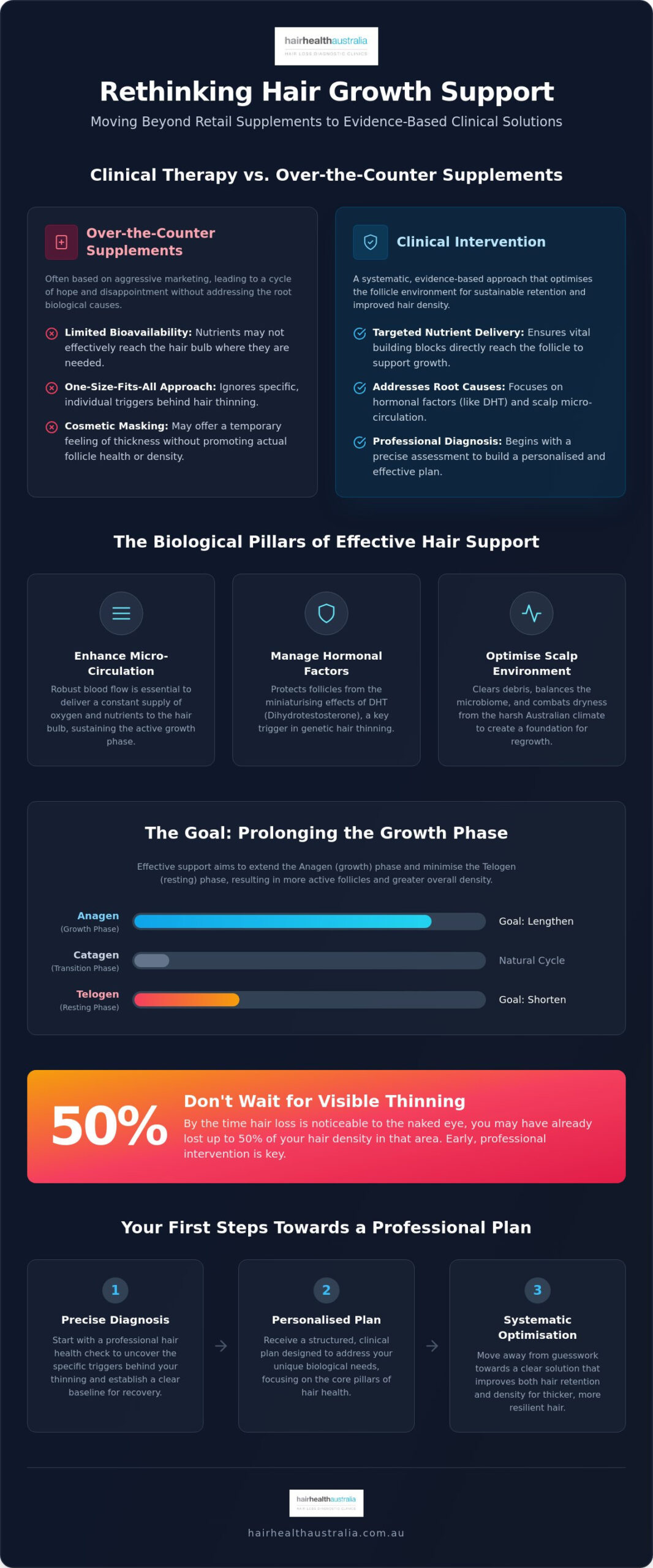
  • Understand that effective hair growth support involves more than just length; it requires systematic optimisation of the follicle environment to improve both retention and density.
  • Learn why addressing hormonal factors like DHT and enhancing scalp micro-circulation are the essential biological pillars for restoring thinning hair.
  • Discover the bioavailability limitations of over-the-counter supplements and how targeted clinical therapies provide more direct nutrient delivery to the hair bulb.
  • Identify the first steps in a professional regrowth plan, starting with a precise diagnosis to uncover the specific triggers behind your hair loss.
  • Explore how clearing scalp debris and balancing the microbiome creates the ideal foundation for non-surgical hair restoration treatments.

What is Hair Growth Support and Why Does It Matter?

Many people mistake hair growth support for a simple matter of taking a daily vitamin or switching to a “thickening” shampoo. In a clinical context, true support is the systematic optimisation of the follicle environment to ensure every strand has the biological resources it needs to thrive. It’s a proactive approach that moves beyond cosmetic masking. This process focuses on creating a sustainable ecosystem where follicles can function at their peak capacity.

Clinical hair growth support is a combination of nutrient delivery, scalp health, and follicle stimulation. While temporary support might suffice for short-term shedding caused by acute stress, long-term clinical management is required for progressive thinning. The goal is to shift the scalp from a state of depletion to one of abundance.

The Difference Between Growth and Maintenance

Stopping active hair fall is always the primary objective of any professional programme. You can’t improve density if you’re losing hair faster than it can be replaced. This is why maintenance is just as vital as growth. We look at hair density, which is the number of active follicles per square centimetre, rather than just the thickness of individual strands.

Understanding the hair growth cycle is essential here. Your hair moves through the Anagen (growth), Catagen (transition), and Telogen (resting) phases. Effective support aims to prolong the Anagen phase while minimising the time follicles spend in the Telogen phase. This ensures more hairs are growing at any given time, which naturally leads to a fuller, more resilient appearance.

Who Benefits Most from Professional Support?

Many Australians fall into the “wait and see” trap. They notice a few extra strands in the shower or a slightly wider part and assume it will resolve itself. Unfortunately, by the time thinning is visible to the naked eye, you may have already lost up to 50% of your hair density in that area. Professional support is most beneficial for those noticing early signs of miniaturisation, where hair strands become finer and less pigmented over time.

If your scalp is becoming more visible under bright lights or your ponytail feels thinner, it’s time to move beyond retail supplements. Identifying the specific triggers behind your thinning is the only way to build an effective response. You can begin this process with a professional hair health check to establish a clear baseline for your recovery.

The Biological Pillars of Effective Hair Support

To understand how hair growth support actually functions, we must look beneath the surface at the follicle’s metabolic requirements. The hair follicle is one of the most active structures in the human body. It demands a constant, high-volume supply of oxygen and nutrients to sustain the growth phase. This is why micro-circulation is the first essential pillar of success. Without robust blood flow to the scalp, the vital building blocks of hair remain stranded in the bloodstream rather than reaching the hair bulb where they are needed most.

Hormonal factors also play a decisive role in the thinning process. Dihydrotestosterone, or DHT, is a byproduct of testosterone that can bind to receptors in the scalp follicles. In those with a genetic predisposition, this binding triggers a process that eventually shuts down the follicle’s ability to produce healthy hair. Clinical support must address this hormonal interference to be effective. It is not enough to simply provide nutrients; we must also protect the follicle from the internal stressors that cause it to fail.

Our local environment further complicates this biological balance. The harsh Australian climate, characterised by intense UV radiation and low humidity, can rapidly deplete scalp hydration. A dry, inflamed scalp becomes constricted, which further limits the efficacy of nutrient delivery. Creating a stable, hydrated scalp environment is a fundamental step in any professional restoration programme. It ensures the “soil” is healthy enough to support the “seed.”

Follicle Health: The Engine Room of Growth

In cases of pattern thinning, follicles don’t vanish overnight. Instead, they undergo miniaturisation. Each growth cycle produces a hair that is shorter, finer, and less pigmented than the last. Clinical interventions focus on hair follicle regeneration to interrupt this decline. By reawakening these dormant structures through targeted stimulation, it’s possible to reverse the miniaturisation process. This success is deeply dependent on maintaining optimal scalp health for hair loss prevention, ensuring the follicle’s “engine room” has the right conditions to restart.

Nutrient Synergy: Beyond Biotin

While many over-the-counter products rely solely on Biotin, significant regrowth requires a complex synergy of elements. Amino acids provide the structural foundation for keratin, while Iron and Zinc are critical for cellular repair and protein synthesis. True hair growth support requires these nutrients to be present in the correct ratios and delivered with high bioavailability. If you’re concerned about your current hair density, a professional hair health check can identify exactly which biological pillars need reinforcing in your specific case.

Clinical Therapy vs. Over-the-Counter Supplements

Walk into any Australian chemist and you’ll find shelves lined with “miracle” hair gummies and tablets. While these products are easy to buy, they often lack the potency required for genuine hair growth support. The primary hurdle is bioavailability. When you ingest a supplement, it must survive the acidic environment of the stomach and the metabolic processing of the liver before it ever reaches the tiny capillaries feeding your hair follicles. By the time those nutrients arrive at the scalp, the concentration is often too low to trigger significant change.

Clinical programmes take a different approach by delivering active ingredients directly to the source of the problem. Various Hair loss treatments exist, but their efficacy depends entirely on the underlying cause of the shedding. For genetic thinning, a daily vitamin simply cannot compete with clinical-grade topical therapies and stimulation techniques. These professional methods bypass the digestive “tax,” ensuring the hair bulb receives the exact biological support it needs to stay in the growth phase for longer.

Consider the cost-to-benefit ratio over the long term. You might spend $50 a month on retail vitamins for five years, only to see your hair density continue to decline. That is an investment in disappointment. Professional care may involve a higher initial commitment, but it targets the actual mechanisms of hair loss. Results are measured in visible density and follicle health, rather than just hopeful marketing claims.

When Supplements Are Enough (And When They Aren’t)

Basic nutrient support can be useful for temporary thinning, such as Telogen Effluvium caused by a sudden illness or acute stress. In these cases, the follicle just needs a temporary boost to return to its normal cycle. However, Male and Female Pattern Thinning is a progressive, permanent condition. It is driven by genetics and hormones, not just a vitamin deficiency. If you are dealing with this type of loss, you will likely need to explore the hair regrowth treatment Australia offers through specialised clinics to see real results.

The Role of Professional Diagnostics

Guessing is expensive. Many people waste years switching between different over-the-counter brands without ever knowing why their hair is falling out. Professional diagnostics use microscopic analysis to see what is happening beneath the surface of the scalp. This allows us to identify follicle miniaturisation or scalp inflammation before it becomes irreversible. We recommend you book a Hair Health Check to establish an accurate baseline. Having a clear diagnostic map is the only way to ensure your hair growth support plan is actually working for your specific biology.

The Science of Hair Growth and Clinical Support

Designing Your Personalised Hair Growth Support Routine

Sustainable results require a methodical framework rather than a scattered collection of retail products. A clinical hair growth support routine is not a static list; it is a dynamic process that must evolve alongside your biological progress. To move beyond temporary fixes, you need a strategy that addresses both the internal and external factors affecting your follicles. This structured approach ensures every action you take contributes directly to restoring hair density.

Your professional regrowth journey follows five systematic stages:

  • Step 1: Professional Diagnosis. This identifies the specific triggers of your loss, allowing for a targeted rather than a generic approach.
  • Step 2: Scalp Optimisation. We focus on clearing debris and balancing the microbiome to create a receptive environment for clinical topicals.
  • Step 3: Targeted Stimulation. High-grade stimulants are introduced to re-energise miniaturising follicles and prolong the growth phase.
  • Step 4: Systematic Support. Bioavailable nutrients are integrated to provide the essential raw materials for keratin production.
  • Step 5: Ongoing Monitoring. Regular clinical reviews ensure the plan is adjusted as your hair health improves and your needs change.

Daily Habits that Support Clinical Results

Gentle cleansing is non-negotiable. Harsh sulphates found in many standard shampoos can strip the scalp of its natural oils, leading to inflammation that hinders growth. In the intense Australian sun, UV protection is equally vital. Just as you protect your skin, thinning areas of the scalp require shade or specialised barriers to prevent oxidative stress from damaging the hair bulb. Understanding how to improve hair density through these daily lifestyle adjustments ensures your clinical treatments aren’t fighting an uphill battle against environmental damage.

Avoiding the ‘Growth Support’ Scams

The hair restoration industry is unfortunately filled with “miracle” cures that lack scientific backing. Be wary of any product that promises total regrowth in weeks or uses “one size fits all” kits. These generic solutions rarely account for the complex biological factors discussed earlier. A straight-talking clinical approach values transparency over hype. It focuses on realistic timelines and evidence-based protocols that have been verified through professional diagnostics. If you are ready to stop the guesswork, you can book a comprehensive Hair Health Check today to build a hair growth support routine that actually works for your biology.

Professional Hair Growth Support at Hair Health Australia

At Hair Health Australia, we’ve refined the process of delivering clinical hair growth support through a range of specialised programmes. Our approach is designed for both men and women who want to address thinning without resorting to invasive measures. We don’t believe in generic, one-size-fits-all solutions. Instead, we focus on evidence-based methods that are tailored to your unique scalp biology. This ensures that every treatment stage is purposeful and grounded in your specific diagnostic data.

Our Sydney clinic provides a supportive, expert-led environment where your concerns are met with medical authority and empathetic understanding. We’re committed to transparency. This means we provide realistic expectations based on your specific diagnostic results rather than hyperbolic marketing promises. You’ll feel like you’re consulting with a trusted specialist who is dedicated to your long-term hair health and confidence. We prioritise honesty in every consultation, ensuring you understand the “why” behind every step of your restoration plan.

Our Non-Surgical Advantage

Many people assume that surgery is the only answer for significant hair loss. However, non-surgical clinical programmes offer a distinct advantage for those wanting to avoid the downtime, high costs, and potential scarring associated with invasive transplant procedures. We focus on restoring density by revitalising your existing follicles and optimising the scalp environment. This approach allows for a gradual, natural-looking improvement that doesn’t require time away from work or social activities.

We use modern diagnostic technology to track your progress at a microscopic level. This ensures we aren’t just guessing but are actively monitoring the restoration of your hair density. By focusing on the health of existing follicles, we help you achieve a more resilient head of hair through systematic, non-invasive care. Our focus is on biological resilience and the long-term longevity of your hair, moving beyond the superficial fixes offered by retail products.

Start Your Journey in Sydney Today

Taking the first step toward addressing hair loss can feel daunting, but you don’t have to navigate it alone. Our specialist team is here to act as your dedicated guide, replacing uncertainty with a clear, actionable path forward. We provide a steady and composed presence throughout your journey, ensuring you feel fully informed at every stage. Whether you’ve just noticed the first signs of thinning or have been struggling with hair loss for years, we offer a professional environment where your results are our primary focus.

Don’t let the fear of permanent loss dictate your future. By choosing a clinically-backed hair growth support programme, you are investing in a proven methodology that values precision and results above all else. Our straight-talking approach builds trust and ensures you are empowered with the knowledge to maintain your hair for years to come. We invite you to book your Hair Health Check at our Sydney clinic today and discover the difference that professional, personalised care can make.

Restore Your Hair Density with Clinical Precision

Achieving sustainable results requires moving beyond retail promises and embracing a systematic approach to follicle health. We’ve examined how genuine hair growth support relies on a synergy of scalp health, hormonal management, and targeted nutrient delivery. By replacing guesswork with evidence-based protocols, you can address the root causes of thinning rather than just masking the symptoms. Professional diagnostics ensure that your recovery plan is as unique as your biology.

Our expert Sydney-based team brings over 15 years of experience to every consultation, providing a steady and knowledgeable guide for your restoration journey. We utilise clinically-backed microscopic diagnostic technology to establish an accurate baseline and monitor your progress with complete transparency. Our specialised non-surgical regrowth programmes are designed to restore density and resilience without the complications of invasive surgery. It’s time to regain control over your hair health with a plan that prioritises science and long-term results.

Book Your Comprehensive Hair Health Check in Sydney today to take the first step toward a fuller, more confident future. We look forward to helping you achieve the hair density you deserve.

Frequently Asked Questions

How long does it take for hair growth support to show results?

Visible results typically manifest within a three to six month window. This timeframe aligns with the natural hair growth cycle, as follicles require several months to transition from the resting phase back into the active growth phase. While initial improvements in scalp health occur sooner, significant increases in hair density take time to become apparent to the naked eye.

Can I use hair growth support products if I have a sensitive scalp?

Yes, clinical-grade hair growth support is specifically formulated to be non-irritating and free from the harsh surfactants often found in retail shampoos. Our programmes prioritise scalp health, utilising gentle yet effective active ingredients that support the follicle without causing inflammation. A professional assessment ensures your regimen is tailored to your specific skin sensitivities.

Is hair growth support effective for men with receding hairlines?

Frontal thinning and receding hairlines can be effectively managed using targeted clinical options. While the hairline is often the most resistant area to treatment, systematic stimulation and hormonal management help stabilise the area and revitalise viable follicles. Early intervention is the most effective way to maintain the frontal boundary and prevent further recession.

Do I need a prescription for professional hair growth support in Australia?

You don’t always require a prescription to access professional hair growth support programmes. While certain pharmaceutical medications are restricted, many of our high-grade topical treatments and clinical stimulation therapies are available through specialised clinics. We focus on a holistic, non-surgical approach that combines multiple modalities to achieve results without the need for traditional pharmacy scripts.

Will my hair fall out again if I stop using growth support?

If you are managing a progressive condition like pattern thinning, stopping treatment will eventually allow the hair to return to its previous state of decline. Clinical management for genetic hair loss is an ongoing process of follicle protection. However, for temporary conditions such as stress-related thinning, you may not need long-term support once the follicles have successfully returned to their normal cycle.

Can stress-related hair loss be fixed with support programmes?

Telogen Effluvium, which is the clinical term for stress-related thinning, responds exceptionally well to structured support. These cases involve a large percentage of follicles entering the resting phase prematurely due to a physiological shock. Professional intervention helps shift these follicles back into the growth phase more efficiently, significantly shortening the overall recovery timeline.

What is the best way to support hair growth after pregnancy?

Postpartum thinning requires a gentle, female-specific approach that focuses on nutrient replenishment and scalp stabilisation. This type of loss is triggered by a rapid shift in hormone levels after birth, which can cause significant shedding. We offer non-invasive clinical options that are safe and effective for restoring hair density and resilience during the recovery period.

How does a ‘Hair Health Check’ differ from a normal hairdresser’s advice?

A Hair Health Check utilises advanced microscopic scanning to analyse the scalp at a diagnostic depth that a standard salon visit cannot provide. While a hairdresser focuses on the aesthetic of the hair shaft, we examine follicle miniaturisation, scalp inflammation, and the health of the hair bulb. This scientific data allows us to identify the specific cause of your loss and build a precise, results-driven plan.