
Did you know that as many as 90% of Australian mums experience significant hair shedding in the months following childbirth? It is a confronting experience to find your shower drain clogged or to notice visible thinning around your temples while you are already navigating the exhaustion of new parenthood. You might feel a lingering anxiety that your hair will never return to its former volume, especially when your daily routine leaves little room for complex self-care. We understand that you want clear, medical-grade answers on how to stop postpartum hair loss and restore your confidence without the guesswork.
While this process, known as telogen effluvium, is a natural biological response to shifting oestrogen levels, you don’t have to simply wait it out. This clinical guide explores the latest 2026 evidence-based strategies to support scalp health and accelerate the regrowth phase. We’ll help you distinguish between standard shedding and underlying issues like postpartum thyroiditis, ensuring you have a professional roadmap to recovery. From understanding your hair’s growth cycle to identifying TGA-compliant clinical treatments, you’ll discover how to transition from reactive concern to proactive, expert-led hair restoration.
Key Takeaways
- Understand the hormonal triggers behind telogen effluvium and why oestrogen fluctuations cause widespread shedding after childbirth.
- Discover clinical strategies for how to stop postpartum hair loss through targeted scalp hygiene and gentle handling techniques that protect fragile new growth.
- Learn how to optimise your nutritional foundations by prioritising the specific minerals and vitamins that fuel follicle recovery during the postpartum period.
- Identify the “timeline test” and physical patterns that signal when shedding requires a professional clinical assessment rather than just patience.
- Explore how microscopic hair analysis can provide a precise diagnosis and guide the development of a non-surgical regrowth program tailored to your recovery.
Understanding the Biology: Why Postpartum Hair Loss Happens
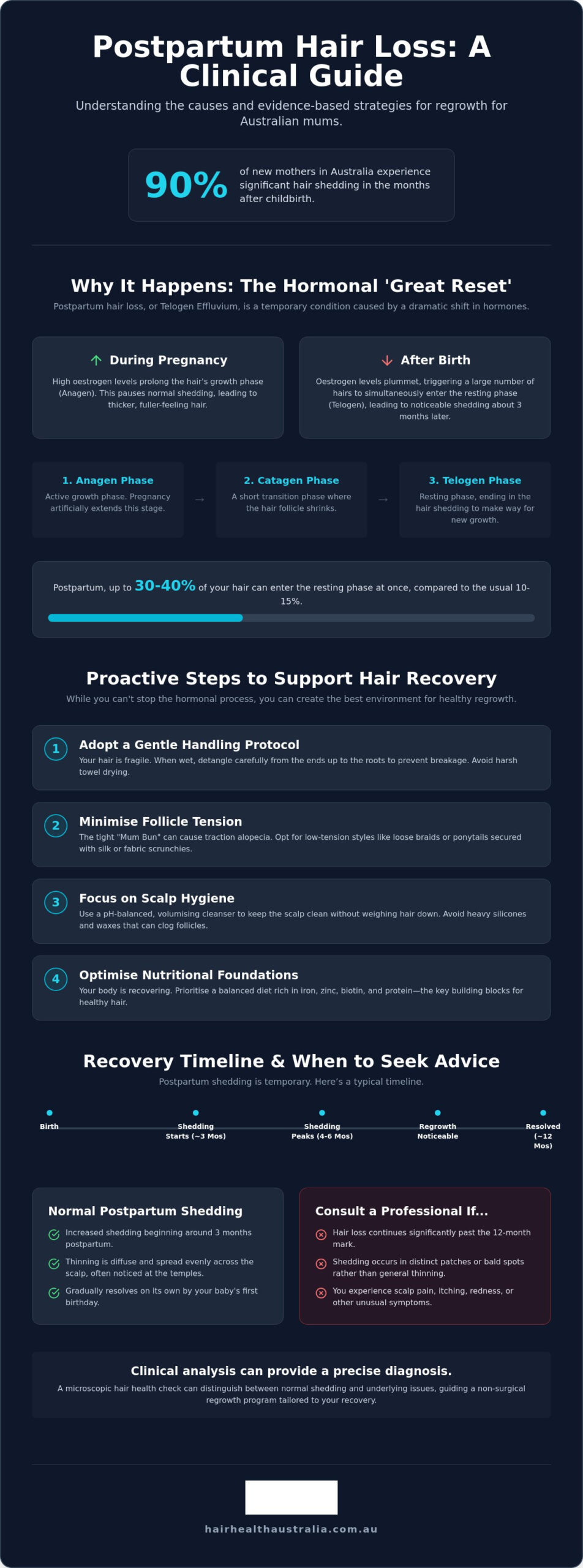
Pregnancy is often celebrated for the “glow” it brings to your skin and the sudden, enviable thickness of your hair. This isn’t just a myth; it’s the result of elevated oestrogen levels that effectively “freeze” your hair in its active growth phase. Under normal conditions, about 85 to 90 percent of your hair is growing at any one time, while the rest rests or sheds. During pregnancy, however, those high hormone levels prevent the usual shedding process. When you’re searching for how to stop postpartum hair loss, it’s vital to understand that what you’re seeing isn’t hair “falling out” in the traditional sense, but rather a delayed release of the hair you should have naturally lost over the previous nine months.
Once your bub arrives, your oestrogen levels plummet almost immediately. This sudden hormonal shift acts as a biological “reset” button for your scalp. It signals a large percentage of your follicles to stop growing and enter the resting phase simultaneously. This condition is medically known as telogen effluvium. Because the resting phase typically lasts about three months before the hair actually leaves the follicle, most mums don’t notice the first signs of thinning until their baby is roughly 90 days old. It is a delayed reaction that often catches new parents by surprise.
The Hair Growth Cycle Explained
Your hair naturally moves through three distinct stages: Anagen (growth), Catagen (transition), and Telogen (resting). Pregnancy artificially extends the Anagen phase, keeping hair that would normally shed firmly rooted. When birth occurs, this protection vanishes. The result is a “Great Reset” where up to 30 or 40 percent of your hair can enter the Telogen phase at once. Seeing clumps in the brush or a clogged drain can be distressing, but it represents a temporary shift in the cycle rather than a permanent loss of the follicle itself.
Hormonal Shifts and Scalp Health
Beyond oestrogen, fluctuations in progesterone also influence your scalp’s environment, particularly sebum production. A dry or overly oily scalp can make hair appear limp, highlighting visible thinning at the temples or part line. Additionally, the high cortisol levels associated with sleep deprivation and the physical stress of new parenthood can exacerbate follicle sensitivity. While this thinning is widespread, it differs from genetic balding because the follicles remain active. To determine the exact state of your scalp health, a professional hair health check can provide the clinical clarity needed to start a targeted recovery plan.
6 Practical Steps to Manage Shedding and Support Regrowth
Managing the daily reality of thinning hair requires a shift from aggressive styling to a protective, clinical approach. While you cannot immediately halt the hormonal reset discussed previously, you can certainly influence the environment in which your new hair grows. The first step involves auditing your shower routine. Many standard supermarket shampoos contain heavy silicones and waxes that coat the hair shaft, making it heavy and more prone to falling out under its own weight. Switching to a pH-balanced, volumising cleanser helps to keep the hair light and the scalp clear of debris. This creates an optimal foundation for how to stop postpartum hair loss from appearing more severe than it is.
Adopting a “Gentle Handling” protocol is equally critical during this fragile period. When your hair is wet, it is at its most vulnerable to stretching and snapping. Following dermatologist tips for postpartum hair loss, you should always detangle from the ends to the roots. This method prevents small knots from migrating downward and forming larger, tighter tangles that require excessive force to clear. It’s a simple change, but it significantly reduces the amount of hair you’ll see in the drain each morning.
Tension is another silent contributor to visible thinning. The iconic “Mum Bun” is a convenient solution for busy days, but the constant pull on the frontal hairline can lead to traction alopecia. This mechanical stress on the follicle can turn temporary shedding into more persistent thinning. Instead, opt for low-tension styles like loose braids or low ponytails secured with silk scrunchies. To further support the area, incorporate a two-minute scalp massage into your evening routine. Using the pads of your fingers to move the scalp in circular motions stimulates blood flow to the follicles, ensuring they receive the oxygen and nutrients needed for the next growth cycle.
Safe Styling for Thinning Hair
Your choice of tools can dictate the health of your regrowth. Wide-tooth combs and brushes with flexible bristles are essential for minimising mechanical damage. If you must use heat, always apply a lightweight protectant and use the lowest effective temperature. For those concerned about visible scalp at the temples, cosmetic hair fibres or changing your parting can offer an immediate confidence boost while you wait for your clinical treatments to take effect. If you’re unsure which products suit your specific scalp type, a professional hair health check can clarify your needs.
Scalp Care as a Foundation
Healthy hair cannot grow from a congested scalp. Regular, gentle exfoliation removes the buildup of dead skin cells and excess sebum that can physically block new, fine hairs from breaking through the surface. Avoid heavy, occlusive oils that might clog the follicles; instead, look for lightweight, water-based serums. Scalp hygiene is the fundamental prerequisite for healthy regrowth as it ensures the follicle remains unobstructed and capable of producing strong hair fibres.
Nutritional Foundations: What to Eat for Hair Health
While topical care addresses the surface, the true recovery of your hair volume begins internally. Your follicles are among the most metabolically active parts of your body, meaning they require a constant supply of specific nutrients to function. After childbirth, many Australian mums find their nutrient stores depleted. If you’re investigating how to stop postpartum hair loss, you must look at your diet as the primary fuel source for regrowth. Without the right building blocks, your body will prioritise vital organs over hair production, leading to a sluggish recovery phase.
Iron and ferritin (stored iron) are perhaps the most critical components for new mums. Iron helps red blood cells carry oxygen to your cells, including the follicles. Low ferritin levels are a frequent cause of prolonged shedding, yet this is often overlooked in general advice. Similarly, Zinc and Vitamin D play pivotal roles in regulating the hair growth cycle. Vitamin D, in particular, is essential for “waking up” follicles that have entered the resting phase. Since hair is primarily made of a protein called keratin, ensuring an adequate intake of amino acids is also non-negotiable for structural integrity.
Hydration is another factor that directly impacts the quality of your regrowth. Dehydration can lead to brittle strands and a dry scalp, which hinders the emergence of new “baby hairs.” Clinical research into temporary hair loss after pregnancy suggests that while shedding is hormonal, the speed and quality of regrowth are heavily influenced by your systemic health. By focusing on nutrient density, you provide your scalp with the resources it needs to move out of the shedding phase more efficiently.
Essential Micronutrients for Mums
Postpartum anaemia is a common driver of extended hair loss. If your shedding continues at a high volume, it may be linked to depleted iron stores from delivery. Biotin and B-vitamins are also vital as they support the keratin infrastructure of each strand. Many specialists recommend continuing your prenatal vitamins for several months after delivery to bridge the nutritional gap during the demanding early stages of motherhood.
The Australian Diet and Hair Health
We are fortunate in Australia to have access to high-quality, local produce that supports hair health. Consider these dietary additions:
- Omega-3 Fatty Acids: Sourced from local Barramundi or Salmon to maintain scalp moisture and reduce follicle inflammation.
- Plant-Based Proteins: Lentils, chickpeas, and quinoa provide essential amino acids for vegan or vegetarian mums.
- Iron-Rich Foods: Lean red meat or spinach paired with Vitamin C to enhance absorption.
Before starting high-dose supplements, it’s essential to consult your GP for a comprehensive blood test. This ensures you are addressing specific deficiencies rather than taking a generic approach that may not meet your body’s unique postpartum requirements.
When to Worry: Persistent Loss vs. Normal Postpartum Shedding
It’s common to hear well-meaning advice suggesting you should simply “wait it out” while your body recovers from childbirth. However, this dismissive approach often overlooks the psychological toll of seeing your scalp through thinning patches. While we’ve established that shedding is a normal biological reset, there is a point where the loss moves beyond the expected hormonal shift. If you are searching for how to stop postpartum hair loss because the shedding feels aggressive or unending, you need a clear set of clinical benchmarks to determine if an underlying issue is at play.
The most reliable indicator is the “timeline test.” Most Australian mums see their hair return to a normal growth cycle between 6 and 12 months after delivery. If you are still noticing heavy fall or a lack of new “baby hairs” after your child’s first birthday, it is no longer a standard case of telogen effluvium. At this stage, the follicles may be struggling with nutrient deficiencies or hormonal imbalances that require a more targeted intervention than just patience. Postpartum thyroiditis, for example, affects between 5% and 10% of women and can mimic the symptoms of standard shedding while actually requiring medical management.
You should also pay close attention to the physical sensations on your scalp. Normal postpartum thinning is typically painless and not accompanied by skin changes. If your hair fall is paired with persistent itching, redness, or scaling, you may be dealing with a scalp condition like seborrheic dermatitis, which can be exacerbated by the stress of new parenthood. These inflammatory conditions can hinder regrowth by creating an unhealthy environment for the emerging hair shaft.
Red Flags for New Mothers
While general thinning is expected, specific patterns of loss are not. Seek a professional opinion if you notice any of the following:
- Sudden loss of hair from the eyebrows or eyelashes.
- A widening part line that continues to expand after the 6-month mark.
- Shedding that occurs in distinct, smooth circular patches rather than a general thinning across the scalp.
- Persistent hair fall that shows no signs of slowing down as you approach six months postpartum.
The Importance of Professional Diagnosis
A simple visual inspection in the bathroom mirror isn’t enough to determine the long-term health of your follicles. To get a definitive answer, you can Book a microscopic hair health check to see exactly what is happening at the root level. This diagnostic tool allows us to see if the follicles are merely resting or if they are beginning to miniaturise. It is also the most effective way to distinguish temporary postpartum loss from the early signs of alopecia in women, ensuring you don’t waste time on ineffective treatments. If your hair hasn’t started to recover by the 12-month mark, a specialised consultation is the most direct path to restoring your volume and confidence.
Clinical Solutions: How Hair Health Australia Can Help
When standard home care and nutritional adjustments aren’t enough to restore your volume, moving to a clinical environment provides the precision needed to regain your hair’s density. Many women come to our Sydney centre asking how to stop postpartum hair loss once the initial shedding phase has passed but visible regrowth remains stagnant. At this stage, a professional intervention can bridge the gap between biological recovery and aesthetic restoration. We focus on evidence-based therapies that respect the delicate hormonal balance of the postpartum body while actively stimulating the scalp.
Our approach is grounded in diagnostic accuracy. We utilise advanced technology to move beyond the surface level, identifying the specific state of your follicles. This ensures that every treatment we recommend is necessary and targeted. By following the 2026-2027 TGA compliance principles for therapeutic goods, we provide a service that is both safe and regulated, giving you the confidence that your recovery is managed by specialists who value clinical integrity over marketing trends. We understand that as a new mum, your time is limited, so we prioritise efficient, high-impact protocols.
Our Non-Surgical Approach
We specialise in non-surgical Female Hair Loss Treatment designed to revitalise dormant follicles without the need for invasive procedures. These programmes are customised to your unique scalp profile, often combining topical clinical-grade stimulants with light-based therapies that increase cellular activity at the root. Our goal is to shorten the resting phase and move your hair back into the active growth stage as quickly as possible. You can explore our specific female hair regrowth treatment Sydney options to see how we tailor these solutions for local mothers. These plans are designed to be sustainable, fitting into the busy reality of life with a young child while delivering measurable results.
Why Choose a Sydney Specialist?
Choosing local, face-to-face clinical support allows for a level of diagnostic detail that telehealth or over-the-counter products cannot match. During your first consultation at our Sydney centre, we conduct a thorough assessment of your hair density and scalp health, taking the time to listen to your concerns and history. We believe in transparency and will provide realistic expectations about the timeline for your regrowth. Microscopic hair analysis is the gold standard for postpartum recovery because it allows clinicians to differentiate between follicles that are simply resting and those that require active stimulation to prevent long-term thinning. This level of detail ensures you aren’t just waiting for your hair to return; you are actively supporting its journey back to health.
Take the Next Step Towards Hair Recovery
Navigating the physical changes of the postpartum period is a significant journey, but you don’t have to manage the transition of your hair alone. By understanding the hormonal timeline and addressing critical nutritional gaps like iron and ferritin, you’ve already begun the process of restoration. While patience is part of the recovery, knowing how to stop postpartum hair loss from becoming a long-term concern involves moving from home care to clinical expertise. Professional diagnostics can provide the clarity you need to ensure your follicles are healthy and active.
Book Your Comprehensive Hair Health Check in Sydney Today and discover the most effective way to support your hair’s natural vitality. Your journey back to thick, healthy hair starts with a single, expert-led consultation.
Frequently Asked Questions
Is postpartum hair loss permanent?
Postpartum hair loss is not permanent. It is a temporary physiological condition known as telogen effluvium, where a large number of hair follicles enter the resting phase simultaneously. Once your hormone levels stabilise, your hair should return to its normal growth cycle. Most women see their previous volume return within a year of giving birth, provided there are no underlying nutritional deficiencies or secondary health issues.
Can I stop postpartum hair loss while breastfeeding?
You cannot stop the initial hormonal shedding while breastfeeding because the trigger is the rapid drop in oestrogen following birth. However, you can support the regrowth phase through clinical scalp care and targeted nutrition. It is essential to consult a specialist before using any medicated treatments, as certain active ingredients like Minoxidil are not recommended for use while breastfeeding or during pregnancy.
Does breastfeeding make hair loss worse?
Breastfeeding does not directly cause or worsen hair loss. While some mums believe the two are linked, the shedding is actually caused by the hormonal reset following delivery regardless of how you feed your bub. However, breastfeeding does increase your body’s demand for nutrients like iron and protein. If these aren’t adequately replaced, it can slow down the regrowth process and make thinning appear more prominent.
What vitamins are best for postpartum hair regrowth?
The most effective vitamins for supporting regrowth include Iron, Zinc, Vitamin D, and B-complex vitamins like Biotin. Iron is particularly vital for Australian mums, as low ferritin levels can stall the hair growth cycle and prolong the shedding phase. Continuing your prenatal vitamins after delivery is often recommended to ensure your body has the necessary building blocks to produce strong, healthy keratin fibres during recovery.
How long does postpartum hair loss actually last?
Postpartum hair loss typically begins two to four months after your baby is born and peaks around the four-month mark. For the majority of women, the excessive shedding resolves within six to twelve months. If you are still noticing high volumes of hair fall or a lack of new growth after your child’s first birthday, it is a sign that you should seek a professional clinical assessment to rule out other causes.
Can I dye my hair while experiencing postpartum shedding?
You can dye your hair, but it is wise to be cautious as your scalp may be more sensitive than usual during this period of hormonal flux. To avoid further stress on fragile strands, opt for ammonia-free dyes or highlights that do not sit directly on the scalp. Always inform your stylist about your shedding so they can use a gentler handling technique during the washing and detangling process.
Is there a specific shampoo that stops postpartum hair fall?
No shampoo can physically stop the hormonal shedding process because the trigger is internal rather than topical. However, using a pH-balanced, volumising shampoo can improve the appearance of thinning hair by adding lift and reducing the weight on the follicles. Avoid heavy, silicone-based products that can clog the scalp and make fine new regrowth appear limp or greasy during your recovery.
When should I see a trichologist about my hair loss?
You should consider seeing a specialist if your shedding persists beyond the 12-month mark or if you notice unusual patterns like circular patches. Seeking professional advice on how to stop postpartum hair loss from becoming a long-term issue is also recommended if you experience scalp redness or intense itching. A clinical diagnosis ensures that any underlying conditions, such as postpartum thyroiditis, are addressed with an expert-led plan.