
Postpartum Hair Loss Treatment: A Clinical Guide for Australian Mums

Up to 90% of new mothers in Australia experience significant hair shedding within months of giving birth. While it’s common to see clumps of hair in the shower or notice your temples looking thinner, the experience is often deeply distressing. It’s frustrating to feel dismissed when you’re told it’s just hormones, especially when you’re worried about whether your hair will ever return to its pre-pregnancy volume. If you’re searching for an effective postpartum hair loss treatment, you need more than just reassurance; you need clinical clarity on what’s actually happening to your follicles.

We understand that the line between normal physiological shedding and long-term thinning can feel blurred. This guide is designed to bridge that gap, providing a clear look at why this telogen effluvium occurs and when it might be masking a deeper issue like a nutritional deficiency or triggered genetic thinning. You’ll discover how a professional diagnosis can stop the cycle of anxiety and which clinical treatments are available to help you regain your hair density and confidence. We will walk you through the science of hair recovery so you can move forward with a plan grounded in evidence rather than guesswork.

Key Takeaways

  • Understand why hormonal shifts cause telogen effluvium, keeping hair in the growth phase during pregnancy before a sudden shift leads to shedding.
  • Learn the standard recovery timeline and why the “First Birthday Rule” is a critical benchmark for determining if your shedding is still within the normal range.
  • Differentiate between cosmetic products that simply coat the hair and a clinical postpartum hair loss treatment that targets the follicle to restore density.
  • Discover how microscopic hair analysis can identify follicle miniaturisation or underlying deficiencies before thinning becomes visible to the naked eye.
  • Identify when to seek a professional Hair Health Check to ensure temporary shedding isn’t masking a more permanent form of hair loss.

What is Postpartum Hair Loss? The Science of Telogen Effluvium

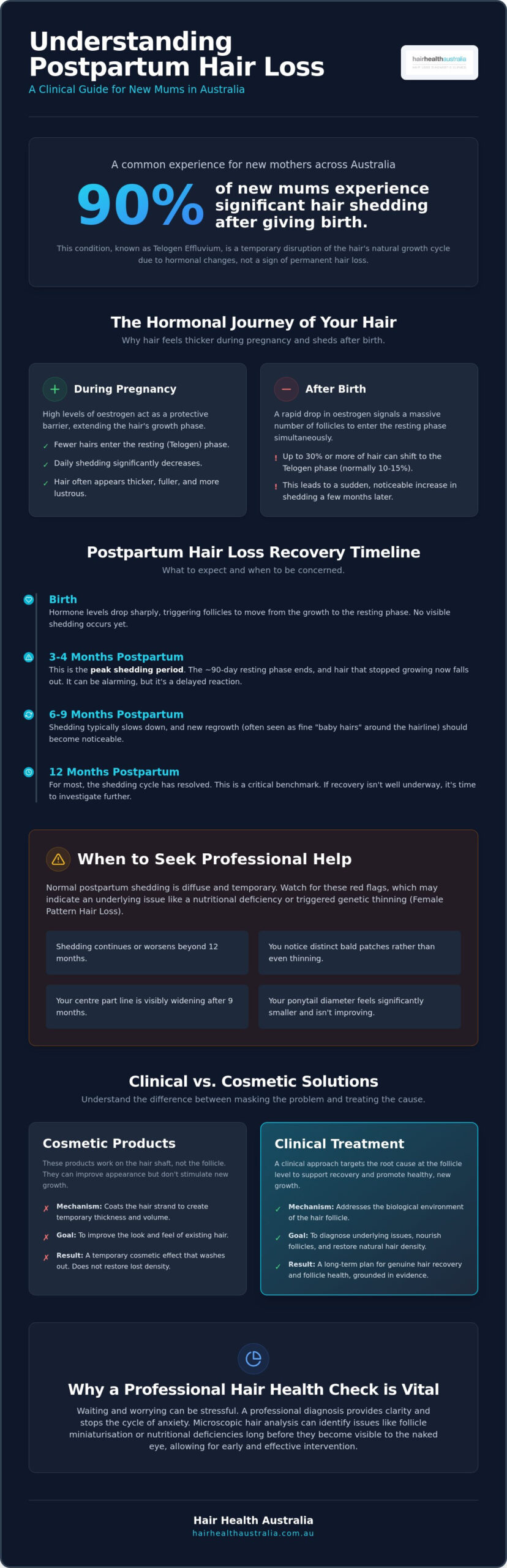
Postpartum hair loss is a physiological reaction to the significant hormonal shifts that occur after childbirth. Medically termed the science of telogen effluvium, this condition isn’t a form of permanent balding, but rather a temporary disruption of the natural hair growth cycle. It’s often shocking to see large amounts of hair in your hairbrush or the shower drain, yet understanding the biological mechanism behind this shedding is the first step toward finding an effective postpartum hair loss treatment.

During pregnancy, your body experiences a surge in oestrogen. These high levels act as a protective barrier for your hair follicles, keeping them in the active growth phase for much longer than usual. Many women notice their hair feels thicker and more lustrous during the second and third trimesters because the daily shedding that usually occurs simply stops. However, once the baby is born, oestrogen levels drop rapidly. This “hormonal crash” signals a massive number of follicles to exit the growth phase simultaneously and enter the resting phase. This is why experts classify the condition as “shedding” (effluvium) rather than “loss” (alopecia), as the follicle itself remains alive and capable of producing new hair.

The Three Phases of Hair Growth

To understand why this happens, we must look at the three distinct stages every hair follicle moves through. The first is the Anagen phase, where hair actively grows for several years. Next is the Catagen phase, a brief transitional period where the hair follicle shrinks and detaches from its blood supply. Finally, the Telogen phase is the resting period. Under normal conditions, about 10% to 15% of your hair is in this stage at any given time. Postpartum, this percentage can jump to 30% or higher, leading to the visible thinning many mums experience across their entire scalp.

Why the 3-Month Delay Happens

A common source of confusion for new parents is why the shedding doesn’t begin immediately after delivery. The biological reset requires a specific window of time. Once the follicle enters the telogen phase, the hair stays anchored in the scalp for approximately 90 days before it eventually falls out. This is why most women notice the peak of their shedding around the three to four-month mark. While finding handfuls of hair is distressing, it’s a delayed response to the hormonal changes that occurred months earlier. If the shedding persists beyond the expected recovery window, a professional Hair Health Check can determine if a more targeted postpartum hair loss treatment is required to support your recovery.

The Recovery Timeline: When Should You Be Concerned?

For most Australian mums, the peak of hair shedding occurs around four months after labour. While the process usually resolves within six to twelve months, current research on postpartum hair loss suggests that the recovery window isn’t the same for everyone. GPs often refer to the “First Birthday Rule,” suggesting you wait until your child is one year old before seeking clinical help. However, waiting a full year can be a missed opportunity if your shedding is actually masking a more complex issue. If you notice visible thinning at the crown or a widening part line, seeking a postpartum hair loss treatment early can prevent long-term density loss.

It’s important to monitor the pattern of your hair loss. Normal postpartum shedding is diffuse, meaning it happens evenly across the entire scalp. If you see specific “red flags,” such as patchy loss or a noticeable recession at the temples that doesn’t show signs of regrowth by the nine-month mark, it’s a signal that your follicles may need additional support. Identifying these issues early allows for a more targeted approach to restoration.

Postpartum Shedding vs. Female Pattern Hair Loss

Pregnancy can sometimes “unmask” genetic thinning that was already present but dormant. While telogen effluvium is temporary, the physiological stress of childbirth can trigger Female Pattern Hair Loss (FPHL). You might notice a widening part line or a significant reduction in your ponytail diameter that doesn’t improve after the nine-month mark. Distinguishing between these two conditions is vital. If your hair doesn’t start to fill back in by six months, a microscopic Hair Health Check can determine if your follicles are actually miniaturising or just resting.

Nutritional Triggers: Ferritin and Thyroid

Nutritional status is a primary driver of hair recovery. Pregnancy and breastfeeding often deplete iron stores, leading to low ferritin levels. In Australia, a “normal” ferritin result on a standard blood test might be as low as 30 ng/mL, but for optimal hair regrowth, clinical standards often require levels closer to 70 or 80 ng/mL. Without enough iron, the follicle lacks the energy to re-enter the growth phase. Additionally, postpartum thyroiditis affects between 5% and 10% of women in the first year after birth. This condition can alter hair texture and volume, making it difficult for a standard postpartum hair loss treatment to work effectively without first addressing the underlying hormonal imbalance.

Treating Postpartum Hair Loss: Clinical vs. Cosmetic Solutions

When searching for a postpartum hair loss treatment, it’s vital to distinguish between cosmetic management and clinical restoration. Many products marketed to new mums, such as volumising shampoos or thickening sprays, serve as a surface-level fix. These formulas typically utilise proteins or polymers to coat the hair shaft, creating the illusion of volume. While they provide an immediate boost to your confidence, they do not address the underlying biological slowdown of the follicle. A clinical approach focuses on the root itself, aiming to shorten the resting phase and stimulate the production of new, healthy keratin.

Safety is the primary concern for breastfeeding mothers. While many pharmaceutical options are restricted during this period, several non-surgical and non-invasive therapies are highly effective. Choosing a path that is both safe for your baby and potent enough to restore your hair density requires a professional understanding of how different ingredients and technologies interact with your physiology. We prioritise evidence-based methods that support your body’s natural recovery without introducing unnecessary risks.

Cosmetic Management for Immediate Confidence

While you wait for your follicles to re-enter the growth phase, tactical grooming can minimise the visibility of thinning. Many women find that a “postpartum fringe” or a shorter, layered haircut helps disguise recession at the temples. However, you must be cautious with styling habits. The common “mum bun” can be particularly damaging; constant tension from tight elastics can lead to traction alopecia, further thinning the hair around your hairline. To protect your recovering strands, we recommend:

  • Using wide-tooth combs to detangle hair while wet.
  • Switching to silk or satin scrunchies to reduce friction.
  • Lowering the heat settings on styling tools to prevent bridal hair breakage.

Clinical Interventions for Faster Recovery

For those seeking a more robust postpartum hair loss treatment, clinical interventions can significantly accelerate the regrowth process. Low-Level Laser Therapy (LLLT) is a popular non-invasive option that uses specific wavelengths of light to stimulate cellular activity and blood flow within the scalp. This increased energy helps dormant follicles return to the anagen phase more quickly. Additionally, targeted nutraceuticals can provide the specific building blocks, such as biotin and zinc, necessary for keratin synthesis. If your shedding appears to be transitioning into long-term thinning, a clinical-grade topical stimulant may be introduced to maintain follicle health. Identifying the right combination of these therapies often starts with a microscopic Hair Health Check to ensure the treatment matches your specific needs.
Postpartum Hair Loss Treatment: A Clinical Guide for Australian Mums

Why a Professional Hair Health Check is Vital for New Mums

For many new mothers, the most challenging part of postpartum shedding is the uncertainty. While a general practitioner might offer a cursory visual inspection and suggest waiting a full year for recovery, this approach often fails to identify underlying complications. A professional microscopic hair analysis is the gold standard for diagnosis because it allows us to see what the naked eye cannot. We can identify miniaturisation, which is the process where hair follicles physically shrink. This is a hallmark of genetic thinning rather than simple hormonal shedding. This distinction is vital for choosing the correct postpartum hair loss treatment.

Choosing a specialised hair clinic in Sydney provides you with access to diagnostic technology and expertise that goes far beyond general medical advice. Instead of a vague “wait and see” recommendation, you receive a definitive roadmap. This clarity replaces anxiety with an actionable plan. It ensures you aren’t wasting time on ineffective remedies while your hair density continues to decline. A clinical diagnosis provides the peace of mind that comes from knowing exactly what’s happening to your scalp.

What Happens During a Clinical Scan?

During a clinical scan, we use high-definition magnification to examine the scalp environment in detail. We look for follicle blockages, sebum build-up, or signs of inflammation that could be hindering new growth. By measuring hair density across different zones, such as comparing the stable occipital area at the back to the more vulnerable frontal region, we can accurately identify your specific loss pattern. This data creates a precise baseline. It allows us to track the success of your regrowth programme with objective evidence rather than subjective guesswork.

Personalised Care: Moving Beyond One-Size-Fits-All

It’s tempting to try the latest supplement your best friend recommends, but hair health is deeply individual. Your scalp chemistry, nutritional profile, and hormonal balance are unique to you. A one-size-fits-all approach rarely yields results because it doesn’t account for these variables. Our focus is on tailoring a programme to your lifestyle as a busy parent, ensuring treatments are non-invasive and manageable. For a deeper look at your options, our guide on hair loss treatment for women provides a comprehensive breakdown of clinical standards for restoration.

If you’re concerned about the rate of your shedding, the first step is obtaining an accurate diagnosis. You can book your Hair Health Check today to start your journey back to full hair density.

Regaining Your Confidence: The Path to Hair Restoration

While the physical act of shedding is a biological certainty for many, the emotional toll it takes shouldn’t be underestimated. It’s important to remember that most cases of thinning are manageable with the right expertise. If you’ve noticed that your hair density isn’t returning as expected, or if the shedding feels excessive, seeking a professional postpartum hair loss treatment is a proactive step toward recovery. Early intervention is particularly vital if you suspect your loss is atypical, as addressing the root cause early can significantly shorten your journey back to full volume.

Hair Health Australia is dedicated to supporting Sydney mums through this transition. Our approach is rooted in non-surgical, evidence-based care that respects the unique physiological state of a new parent. We don’t rely on guesswork; we use clinical data to build a restoration programme that works with your body. By moving beyond temporary cosmetic fixes, you can focus on long-term follicle health and the sustainable return of your pre-pregnancy density. Your recovery journey is about more than just aesthetics; it’s about restoring your sense of self.

The Emotional Impact of Hair Loss

For many women, hair is a core component of their identity. It’s often the final piece of the puzzle in “feeling like yourself” again after the profound changes of pregnancy and birth. We believe in reducing the stigma associated with seeking help for hair thinning. It isn’t “just a cosmetic issue” when it affects your self-esteem and daily confidence. Understanding the early signs of alopecia in women can help you distinguish between temporary shedding and conditions that require more intensive clinical support. Acknowledging these feelings is the first step toward a confident recovery.

Your Clinical Journey in Sydney

When you begin a postpartum hair loss treatment with us, the first 12 weeks are focused on stabilising the scalp environment and encouraging follicles to re-enter the growth phase. We understand that your time is limited, so our programmes are designed to be efficient and easily integrated into your life as a new mum. Consistency is key, and we provide the guidance needed to maintain your results even amidst the demands of motherhood. Taking the first step is often the most empowering part of the process. We invite you to Book your Hair Health Check today and let our specialists guide you back to the hair density you deserve.

Secure Your Hair’s Future with Clinical Clarity

Navigating the changes of motherhood is a significant transition, and your hair health shouldn’t be an additional burden. We’ve explored how hormonal shifts trigger telogen effluvium, but we’ve also identified that waiting for a natural recovery can sometimes overlook underlying issues like iron deficiency or genetic thinning. Recognising the difference between normal shedding and follicle miniaturisation is the key to protecting your long-term hair density and ensuring your follicles have the support they need to thrive.

When you’re ready to move beyond temporary volumising products, a targeted postpartum hair loss treatment offers a path grounded in science. Our Sydney clinic provides specialised care for female hair thinning patterns through clinically-backed, non-surgical regrowth programmes. By utilising expert microscopic diagnostic scanning, we provide an accurate diagnosis that moves you from uncertainty to an actionable recovery plan. This precision ensures you aren’t wasting time on ineffective remedies during this vital recovery window.

Don’t leave your hair density to chance. Book Your Comprehensive Hair Health Check at our Sydney Clinic today. Regaining your pre-pregnancy confidence is possible, and we’re here to support you with professional, empathetic guidance as you return to feeling like yourself again.

Frequently Asked Questions

How long does postpartum hair loss actually last?

Postpartum hair loss typically begins two to four months after childbirth and usually resolves within six to twelve months for most women. While the peak shedding occurs around the four-month mark, you should see a noticeable reduction in hair fall as your hormones stabilise. If the shedding persists beyond your child’s first birthday, it may indicate an underlying issue like iron deficiency or thyroid dysfunction that requires a professional assessment.

Can I take hair growth supplements while breastfeeding?

You can take specific hair growth supplements while breastfeeding, but it’s essential to choose clinical-grade products formulated for safety during lactation. Many “hair, skin, and nails” vitamins contain high levels of certain ingredients that may not be suitable. We recommend focusing on iron, zinc, and biotin, provided they align with your postnatal healthcare plan. Always consult with a specialist to ensure your chosen postpartum hair loss treatment is safe for both you and your baby.

Is it normal to see bald patches after having a baby?

It is not typical to see distinct, smooth bald patches after having a baby, as postpartum shedding is usually diffuse across the entire scalp. While you may notice significant thinning at the temples or a wider part line, circular or patchy loss often suggests a different condition, such as alopecia areata. If you discover localised bald spots, you should seek a clinical diagnosis immediately to rule out autoimmune triggers or scalp infections.

Does breastfeeding make hair loss worse?

Current research suggests a potential association between longer breastfeeding duration and a higher likelihood of reporting hair loss, but breastfeeding itself is not the primary cause. The metabolic demands of milk production can deplete your iron and nutrient stores, which are vital for follicle health. Maintaining a high-protein diet and monitoring your ferritin levels can help mitigate the impact on your hair volume while you continue to nurse and recover.

Will my hair ever be as thick as it was before pregnancy?

Most women return to their pre-pregnancy hair volume within a year, but for some, the hair may feel slightly different in texture or density. In cases where pregnancy has triggered underlying genetic thinning, the hair may not fully recover its previous thickness without clinical intervention. Using a microscopic scan to monitor follicle health can help determine if your hair is returning to its baseline or if further support is needed to restore volume.

What is the best shampoo for postpartum hair loss in Australia?

There is no single shampoo that stops shedding, as shampoos are cosmetic products that do not reach the follicle. However, Australian mums should look for pH-balanced, sulfate-free formulas that support scalp health without causing breakage. While volumising shampoos can temporarily coat the hair to make it look fuller, they should be used alongside a clinical postpartum hair loss treatment if you want to address the root cause of the thinning.

Can I prevent postpartum shedding during pregnancy?

You cannot prevent the physiological shift of telogen effluvium, as the drop in oestrogen after birth is a natural biological process. However, you can prepare your body by ensuring your iron and vitamin D levels are optimal before you give birth. Ensuring your follicles are in the best possible health during pregnancy can help your hair cycle reset more efficiently once the shedding phase begins a few months after your delivery.

When should I see a hair loss specialist in Sydney?

You should consider seeing a hair loss specialist in Sydney if your shedding persists beyond twelve months or if you notice your part line is widening significantly. Early intervention is also recommended if you experience scalp pain, itching, or if the loss occurs in distinct patches. A professional Hair Health Check provides the diagnostic clarity needed to distinguish between temporary shedding and permanent thinning, allowing you to start an effective recovery plan sooner.
How to Stop Postpartum Hair Loss: A Clinical Guide for Australian Mums in 2026

Did you know that as many as 90% of Australian mums experience significant hair shedding in the months following childbirth? It is a confronting experience to find your shower drain clogged or to notice visible thinning around your temples while you are already navigating the exhaustion of new parenthood. You might feel a lingering anxiety that your hair will never return to its former volume, especially when your daily routine leaves little room for complex self-care. We understand that you want clear, medical-grade answers on how to stop postpartum hair loss and restore your confidence without the guesswork.

While this process, known as telogen effluvium, is a natural biological response to shifting oestrogen levels, you don’t have to simply wait it out. This clinical guide explores the latest 2026 evidence-based strategies to support scalp health and accelerate the regrowth phase. We’ll help you distinguish between standard shedding and underlying issues like postpartum thyroiditis, ensuring you have a professional roadmap to recovery. From understanding your hair’s growth cycle to identifying TGA-compliant clinical treatments, you’ll discover how to transition from reactive concern to proactive, expert-led hair restoration.

Key Takeaways

  • Understand the hormonal triggers behind telogen effluvium and why oestrogen fluctuations cause widespread shedding after childbirth.
  • Discover clinical strategies for how to stop postpartum hair loss through targeted scalp hygiene and gentle handling techniques that protect fragile new growth.
  • Learn how to optimise your nutritional foundations by prioritising the specific minerals and vitamins that fuel follicle recovery during the postpartum period.
  • Identify the “timeline test” and physical patterns that signal when shedding requires a professional clinical assessment rather than just patience.
  • Explore how microscopic hair analysis can provide a precise diagnosis and guide the development of a non-surgical regrowth program tailored to your recovery.

Understanding the Biology: Why Postpartum Hair Loss Happens

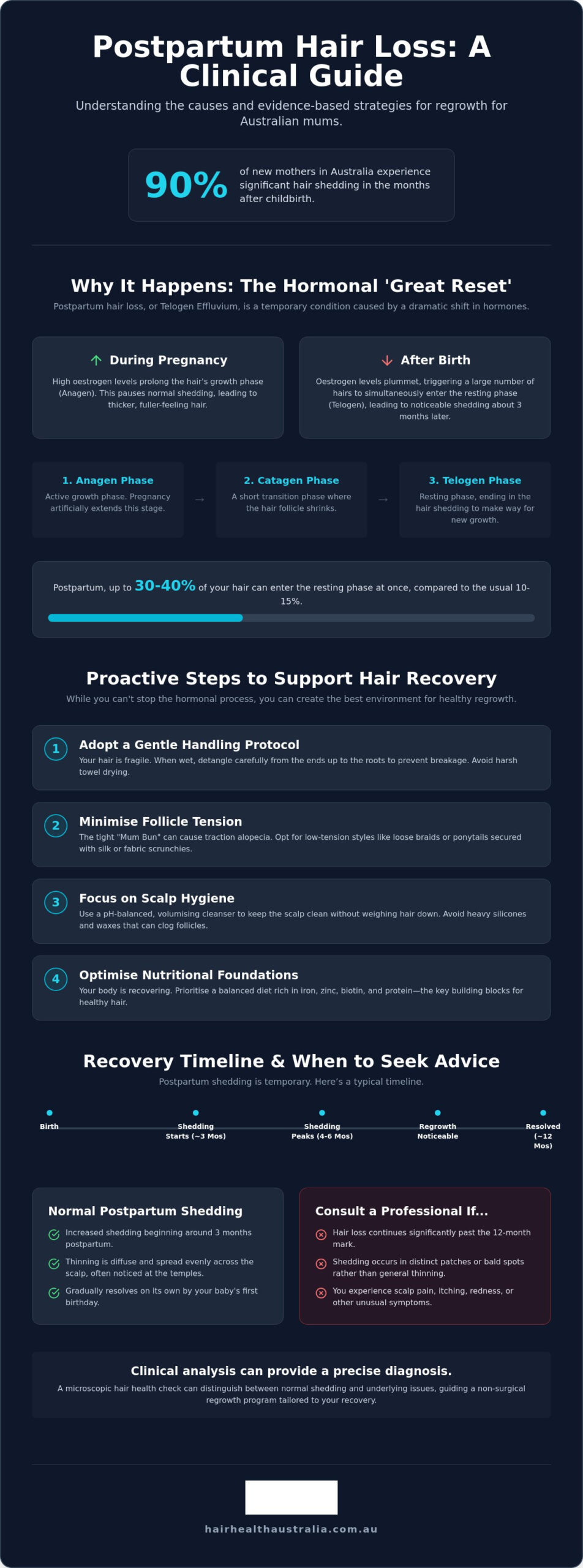
Pregnancy is often celebrated for the “glow” it brings to your skin and the sudden, enviable thickness of your hair. This isn’t just a myth; it’s the result of elevated oestrogen levels that effectively “freeze” your hair in its active growth phase. Under normal conditions, about 85 to 90 percent of your hair is growing at any one time, while the rest rests or sheds. During pregnancy, however, those high hormone levels prevent the usual shedding process. When you’re searching for how to stop postpartum hair loss, it’s vital to understand that what you’re seeing isn’t hair “falling out” in the traditional sense, but rather a delayed release of the hair you should have naturally lost over the previous nine months.

Once your bub arrives, your oestrogen levels plummet almost immediately. This sudden hormonal shift acts as a biological “reset” button for your scalp. It signals a large percentage of your follicles to stop growing and enter the resting phase simultaneously. This condition is medically known as telogen effluvium. Because the resting phase typically lasts about three months before the hair actually leaves the follicle, most mums don’t notice the first signs of thinning until their baby is roughly 90 days old. It is a delayed reaction that often catches new parents by surprise.

The Hair Growth Cycle Explained

Your hair naturally moves through three distinct stages: Anagen (growth), Catagen (transition), and Telogen (resting). Pregnancy artificially extends the Anagen phase, keeping hair that would normally shed firmly rooted. When birth occurs, this protection vanishes. The result is a “Great Reset” where up to 30 or 40 percent of your hair can enter the Telogen phase at once. Seeing clumps in the brush or a clogged drain can be distressing, but it represents a temporary shift in the cycle rather than a permanent loss of the follicle itself.

Hormonal Shifts and Scalp Health

Beyond oestrogen, fluctuations in progesterone also influence your scalp’s environment, particularly sebum production. A dry or overly oily scalp can make hair appear limp, highlighting visible thinning at the temples or part line. Additionally, the high cortisol levels associated with sleep deprivation and the physical stress of new parenthood can exacerbate follicle sensitivity. While this thinning is widespread, it differs from genetic balding because the follicles remain active. To determine the exact state of your scalp health, a professional hair health check can provide the clinical clarity needed to start a targeted recovery plan.

6 Practical Steps to Manage Shedding and Support Regrowth

Managing the daily reality of thinning hair requires a shift from aggressive styling to a protective, clinical approach. While you cannot immediately halt the hormonal reset discussed previously, you can certainly influence the environment in which your new hair grows. The first step involves auditing your shower routine. Many standard supermarket shampoos contain heavy silicones and waxes that coat the hair shaft, making it heavy and more prone to falling out under its own weight. Switching to a pH-balanced, volumising cleanser helps to keep the hair light and the scalp clear of debris. This creates an optimal foundation for how to stop postpartum hair loss from appearing more severe than it is.

Adopting a “Gentle Handling” protocol is equally critical during this fragile period. When your hair is wet, it is at its most vulnerable to stretching and snapping. Following dermatologist tips for postpartum hair loss, you should always detangle from the ends to the roots. This method prevents small knots from migrating downward and forming larger, tighter tangles that require excessive force to clear. It’s a simple change, but it significantly reduces the amount of hair you’ll see in the drain each morning.

Tension is another silent contributor to visible thinning. The iconic “Mum Bun” is a convenient solution for busy days, but the constant pull on the frontal hairline can lead to traction alopecia. This mechanical stress on the follicle can turn temporary shedding into more persistent thinning. Instead, opt for low-tension styles like loose braids or low ponytails secured with silk scrunchies. To further support the area, incorporate a two-minute scalp massage into your evening routine. Using the pads of your fingers to move the scalp in circular motions stimulates blood flow to the follicles, ensuring they receive the oxygen and nutrients needed for the next growth cycle.

Safe Styling for Thinning Hair

Your choice of tools can dictate the health of your regrowth. Wide-tooth combs and brushes with flexible bristles are essential for minimising mechanical damage. If you must use heat, always apply a lightweight protectant and use the lowest effective temperature. For those concerned about visible scalp at the temples, cosmetic hair fibres or changing your parting can offer an immediate confidence boost while you wait for your clinical treatments to take effect. If you’re unsure which products suit your specific scalp type, a professional hair health check can clarify your needs.

Scalp Care as a Foundation

Healthy hair cannot grow from a congested scalp. Regular, gentle exfoliation removes the buildup of dead skin cells and excess sebum that can physically block new, fine hairs from breaking through the surface. Avoid heavy, occlusive oils that might clog the follicles; instead, look for lightweight, water-based serums. Scalp hygiene is the fundamental prerequisite for healthy regrowth as it ensures the follicle remains unobstructed and capable of producing strong hair fibres.

Nutritional Foundations: What to Eat for Hair Health

While topical care addresses the surface, the true recovery of your hair volume begins internally. Your follicles are among the most metabolically active parts of your body, meaning they require a constant supply of specific nutrients to function. After childbirth, many Australian mums find their nutrient stores depleted. If you’re investigating how to stop postpartum hair loss, you must look at your diet as the primary fuel source for regrowth. Without the right building blocks, your body will prioritise vital organs over hair production, leading to a sluggish recovery phase.

Iron and ferritin (stored iron) are perhaps the most critical components for new mums. Iron helps red blood cells carry oxygen to your cells, including the follicles. Low ferritin levels are a frequent cause of prolonged shedding, yet this is often overlooked in general advice. Similarly, Zinc and Vitamin D play pivotal roles in regulating the hair growth cycle. Vitamin D, in particular, is essential for “waking up” follicles that have entered the resting phase. Since hair is primarily made of a protein called keratin, ensuring an adequate intake of amino acids is also non-negotiable for structural integrity.

Hydration is another factor that directly impacts the quality of your regrowth. Dehydration can lead to brittle strands and a dry scalp, which hinders the emergence of new “baby hairs.” Clinical research into temporary hair loss after pregnancy suggests that while shedding is hormonal, the speed and quality of regrowth are heavily influenced by your systemic health. By focusing on nutrient density, you provide your scalp with the resources it needs to move out of the shedding phase more efficiently.

Essential Micronutrients for Mums

Postpartum anaemia is a common driver of extended hair loss. If your shedding continues at a high volume, it may be linked to depleted iron stores from delivery. Biotin and B-vitamins are also vital as they support the keratin infrastructure of each strand. Many specialists recommend continuing your prenatal vitamins for several months after delivery to bridge the nutritional gap during the demanding early stages of motherhood.

The Australian Diet and Hair Health

We are fortunate in Australia to have access to high-quality, local produce that supports hair health. Consider these dietary additions:

  • Omega-3 Fatty Acids: Sourced from local Barramundi or Salmon to maintain scalp moisture and reduce follicle inflammation.
  • Plant-Based Proteins: Lentils, chickpeas, and quinoa provide essential amino acids for vegan or vegetarian mums.
  • Iron-Rich Foods: Lean red meat or spinach paired with Vitamin C to enhance absorption.

Before starting high-dose supplements, it’s essential to consult your GP for a comprehensive blood test. This ensures you are addressing specific deficiencies rather than taking a generic approach that may not meet your body’s unique postpartum requirements.

How to Stop Postpartum Hair Loss: A Clinical Guide for Australian Mums in 2026

When to Worry: Persistent Loss vs. Normal Postpartum Shedding

It’s common to hear well-meaning advice suggesting you should simply “wait it out” while your body recovers from childbirth. However, this dismissive approach often overlooks the psychological toll of seeing your scalp through thinning patches. While we’ve established that shedding is a normal biological reset, there is a point where the loss moves beyond the expected hormonal shift. If you are searching for how to stop postpartum hair loss because the shedding feels aggressive or unending, you need a clear set of clinical benchmarks to determine if an underlying issue is at play.

The most reliable indicator is the “timeline test.” Most Australian mums see their hair return to a normal growth cycle between 6 and 12 months after delivery. If you are still noticing heavy fall or a lack of new “baby hairs” after your child’s first birthday, it is no longer a standard case of telogen effluvium. At this stage, the follicles may be struggling with nutrient deficiencies or hormonal imbalances that require a more targeted intervention than just patience. Postpartum thyroiditis, for example, affects between 5% and 10% of women and can mimic the symptoms of standard shedding while actually requiring medical management.

You should also pay close attention to the physical sensations on your scalp. Normal postpartum thinning is typically painless and not accompanied by skin changes. If your hair fall is paired with persistent itching, redness, or scaling, you may be dealing with a scalp condition like seborrheic dermatitis, which can be exacerbated by the stress of new parenthood. These inflammatory conditions can hinder regrowth by creating an unhealthy environment for the emerging hair shaft.

Red Flags for New Mothers

While general thinning is expected, specific patterns of loss are not. Seek a professional opinion if you notice any of the following:

  • Sudden loss of hair from the eyebrows or eyelashes.
  • A widening part line that continues to expand after the 6-month mark.
  • Shedding that occurs in distinct, smooth circular patches rather than a general thinning across the scalp.
  • Persistent hair fall that shows no signs of slowing down as you approach six months postpartum.

The Importance of Professional Diagnosis

A simple visual inspection in the bathroom mirror isn’t enough to determine the long-term health of your follicles. To get a definitive answer, you can Book a microscopic hair health check to see exactly what is happening at the root level. This diagnostic tool allows us to see if the follicles are merely resting or if they are beginning to miniaturise. It is also the most effective way to distinguish temporary postpartum loss from the early signs of alopecia in women, ensuring you don’t waste time on ineffective treatments. If your hair hasn’t started to recover by the 12-month mark, a specialised consultation is the most direct path to restoring your volume and confidence.

Clinical Solutions: How Hair Health Australia Can Help

When standard home care and nutritional adjustments aren’t enough to restore your volume, moving to a clinical environment provides the precision needed to regain your hair’s density. Many women come to our Sydney centre asking how to stop postpartum hair loss once the initial shedding phase has passed but visible regrowth remains stagnant. At this stage, a professional intervention can bridge the gap between biological recovery and aesthetic restoration. We focus on evidence-based therapies that respect the delicate hormonal balance of the postpartum body while actively stimulating the scalp.

Our approach is grounded in diagnostic accuracy. We utilise advanced technology to move beyond the surface level, identifying the specific state of your follicles. This ensures that every treatment we recommend is necessary and targeted. By following the 2026-2027 TGA compliance principles for therapeutic goods, we provide a service that is both safe and regulated, giving you the confidence that your recovery is managed by specialists who value clinical integrity over marketing trends. We understand that as a new mum, your time is limited, so we prioritise efficient, high-impact protocols.

Our Non-Surgical Approach

We specialise in non-surgical Female Hair Loss Treatment designed to revitalise dormant follicles without the need for invasive procedures. These programmes are customised to your unique scalp profile, often combining topical clinical-grade stimulants with light-based therapies that increase cellular activity at the root. Our goal is to shorten the resting phase and move your hair back into the active growth stage as quickly as possible. You can explore our specific female hair regrowth treatment Sydney options to see how we tailor these solutions for local mothers. These plans are designed to be sustainable, fitting into the busy reality of life with a young child while delivering measurable results.

Why Choose a Sydney Specialist?

Choosing local, face-to-face clinical support allows for a level of diagnostic detail that telehealth or over-the-counter products cannot match. During your first consultation at our Sydney centre, we conduct a thorough assessment of your hair density and scalp health, taking the time to listen to your concerns and history. We believe in transparency and will provide realistic expectations about the timeline for your regrowth. Microscopic hair analysis is the gold standard for postpartum recovery because it allows clinicians to differentiate between follicles that are simply resting and those that require active stimulation to prevent long-term thinning. This level of detail ensures you aren’t just waiting for your hair to return; you are actively supporting its journey back to health.

Take the Next Step Towards Hair Recovery

Navigating the physical changes of the postpartum period is a significant journey, but you don’t have to manage the transition of your hair alone. By understanding the hormonal timeline and addressing critical nutritional gaps like iron and ferritin, you’ve already begun the process of restoration. While patience is part of the recovery, knowing how to stop postpartum hair loss from becoming a long-term concern involves moving from home care to clinical expertise. Professional diagnostics can provide the clarity you need to ensure your follicles are healthy and active.

Book Your Comprehensive Hair Health Check in Sydney Today and discover the most effective way to support your hair’s natural vitality. Your journey back to thick, healthy hair starts with a single, expert-led consultation.

Frequently Asked Questions

Is postpartum hair loss permanent?

Postpartum hair loss is not permanent. It is a temporary physiological condition known as telogen effluvium, where a large number of hair follicles enter the resting phase simultaneously. Once your hormone levels stabilise, your hair should return to its normal growth cycle. Most women see their previous volume return within a year of giving birth, provided there are no underlying nutritional deficiencies or secondary health issues.

Can I stop postpartum hair loss while breastfeeding?

You cannot stop the initial hormonal shedding while breastfeeding because the trigger is the rapid drop in oestrogen following birth. However, you can support the regrowth phase through clinical scalp care and targeted nutrition. It is essential to consult a specialist before using any medicated treatments, as certain active ingredients like Minoxidil are not recommended for use while breastfeeding or during pregnancy.

Does breastfeeding make hair loss worse?

Breastfeeding does not directly cause or worsen hair loss. While some mums believe the two are linked, the shedding is actually caused by the hormonal reset following delivery regardless of how you feed your bub. However, breastfeeding does increase your body’s demand for nutrients like iron and protein. If these aren’t adequately replaced, it can slow down the regrowth process and make thinning appear more prominent.

What vitamins are best for postpartum hair regrowth?

The most effective vitamins for supporting regrowth include Iron, Zinc, Vitamin D, and B-complex vitamins like Biotin. Iron is particularly vital for Australian mums, as low ferritin levels can stall the hair growth cycle and prolong the shedding phase. Continuing your prenatal vitamins after delivery is often recommended to ensure your body has the necessary building blocks to produce strong, healthy keratin fibres during recovery.

How long does postpartum hair loss actually last?

Postpartum hair loss typically begins two to four months after your baby is born and peaks around the four-month mark. For the majority of women, the excessive shedding resolves within six to twelve months. If you are still noticing high volumes of hair fall or a lack of new growth after your child’s first birthday, it is a sign that you should seek a professional clinical assessment to rule out other causes.

Can I dye my hair while experiencing postpartum shedding?

You can dye your hair, but it is wise to be cautious as your scalp may be more sensitive than usual during this period of hormonal flux. To avoid further stress on fragile strands, opt for ammonia-free dyes or highlights that do not sit directly on the scalp. Always inform your stylist about your shedding so they can use a gentler handling technique during the washing and detangling process.

Is there a specific shampoo that stops postpartum hair fall?

No shampoo can physically stop the hormonal shedding process because the trigger is internal rather than topical. However, using a pH-balanced, volumising shampoo can improve the appearance of thinning hair by adding lift and reducing the weight on the follicles. Avoid heavy, silicone-based products that can clog the scalp and make fine new regrowth appear limp or greasy during your recovery.

When should I see a trichologist about my hair loss?

You should consider seeing a specialist if your shedding persists beyond the 12-month mark or if you notice unusual patterns like circular patches. Seeking professional advice on how to stop postpartum hair loss from becoming a long-term issue is also recommended if you experience scalp redness or intense itching. A clinical diagnosis ensures that any underlying conditions, such as postpartum thyroiditis, are addressed with an expert-led plan.

What Causes Female Hair Loss in Your 30s? A Clinical Australian Guide

You’re standing in front of the bathroom mirror, preparing for a busy day, and you notice the parting in your hair looks slightly wider than it did just a few years ago. It’s a subtle shift, but for many Australian women, this moment triggers a deep sense of anxiety about their professional and social appearance. Understanding what causes female hair loss in 30s is the first step toward regaining control, especially as this decade often represents a biological “perfect storm” where hormonal changes, lifestyle stress, and latent genetics collide for the first time.

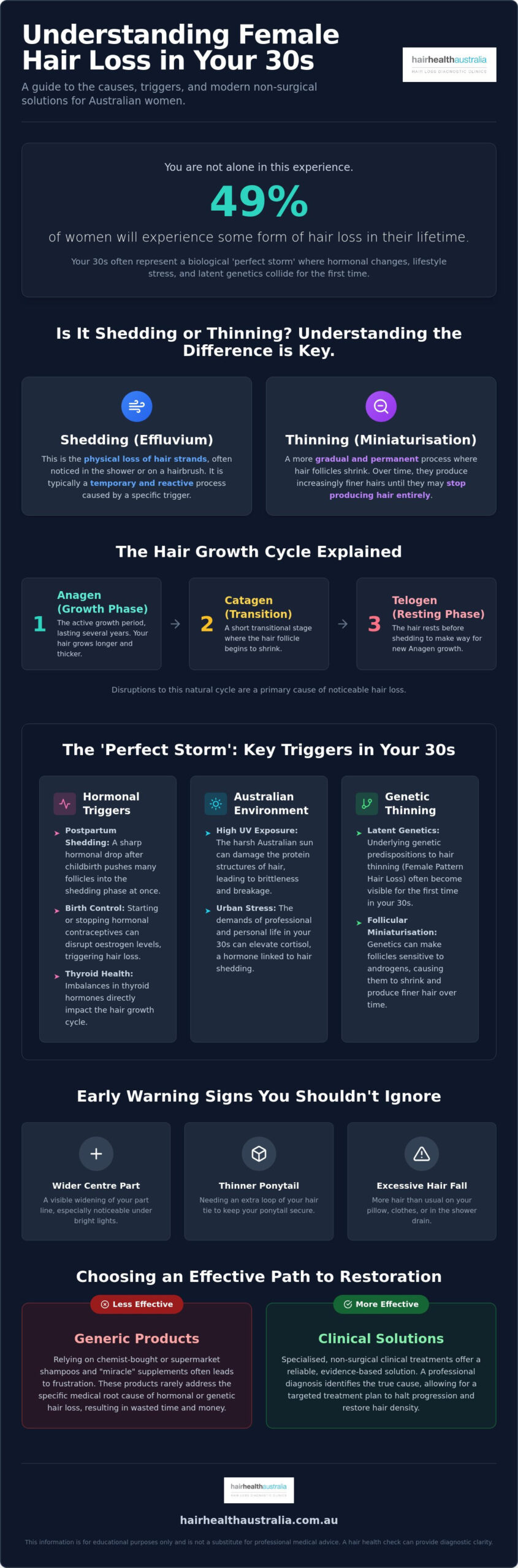
We understand the frustration of trial and error with ineffective chemist-bought shampoos and the confusion of distinguishing between temporary shedding and permanent thinning. Recent data suggests that about 49% of women will experience some form of hair loss in their lifetime, so you are certainly not alone in this experience. This clinical guide will provide a clear medical explanation for your thinning and show you how non-surgical, evidence-based treatments can restore your hair to its 20s density. We will examine the specific triggers affecting your scalp health and outline a systematic, non-invasive path to stop the shed and rebuild your confidence.

Key Takeaways

  • Gain a clear medical understanding of what causes female hair loss in 30s by distinguishing between temporary shedding and permanent follicular miniaturisation.
  • Identify how specific hormonal transitions, including starting or stopping oral contraceptives and the postpartum period, can disrupt your natural hair growth cycle.
  • Learn to differentiate between genetic thinning and reactive shedding to ensure you choose a treatment path that addresses the root cause of your hair loss.
  • Understand the impact of the unique Australian environment, from high UV exposure to urban stress, on your hair’s protein structures and overall density.
  • Discover why specialised, non-surgical clinical treatments offer a more reliable and evidence-based solution than generic supermarket or chemist-bought products.

The Reality of Female Hair Loss in Your 30s: It Is Not Just ‘Aging’

For many Australian women, the transition into their 30s is marked by significant professional and personal milestones. However, this decade is also the most frequent period for women to seek clinical intervention for changes in their scalp health. It is a common misconception that thinning is simply a byproduct of “getting older” or a natural part of the aging process. In reality, understanding what causes female hair loss in 30s requires looking at a complex “perfect storm” of biological shifts, hormonal fluctuations, and environmental stressors that often converge during this life stage.

To address the concern effectively, we must first distinguish between two distinct processes: shedding and thinning. Shedding, or effluvium, involves the physical loss of hair strands, often seen in the shower or on a hairbrush. Thinning, or miniaturisation, is a more gradual process where the hair follicles themselves change. Hair loss can be reactive or genetic, and identifying which path you are on is essential for a successful recovery.

When investigating what causes female hair loss in 30s, we must examine the hair’s natural three-phase cycle. The Anagen phase is the active growth period, which can last several years. This is followed by the Catagen phase, a short transitional stage where the follicle shrinks. Finally, the Telogen phase is a resting period where the hair eventually falls out to make room for new growth. When this cycle is disrupted, the balance between growth and loss shifts, leading to visible changes in density.

Why 30 is a Biological Turning Point

As you enter your third decade, your body undergoes a subtle but measurable shift in cellular turnover. This biological slowdown affects the scalp just as it affects the skin. The anagen phase can naturally begin to shorten, meaning hairs don’t grow as long or as thick as they once did. Hair miniaturisation is the process where follicles produce increasingly finer hairs until they eventually cease production entirely. Without clinical intervention, these follicles can become dormant, making early detection vital.

Signs You Should Not Ignore

Recognising the early indicators of a shift in your hair health allows for more effective, non-surgical restoration. You should monitor for:

  • A visible widening of your centre part line, especially under bright bathroom lights.
  • A “thinner” feel to your ponytail, perhaps requiring an extra loop of your hair tie to keep it secure.
  • Excessive hair left on your pillow or accumulated in the shower drain well beyond the typical postpartum recovery period.

If you notice these changes, a professional hair health check can provide the diagnostic clarity needed to stop the progression and begin the journey back to your original density.

Hormonal Triggers: Pregnancy, Birth Control, and Thyroid Health

Hormones act as the primary messengers for your hair follicles, dictating when they should grow and when they should rest. In your 30s, these chemical signals often undergo significant fluctuations due to life events like pregnancy or changes in contraceptive use. When people ask what causes female hair loss in 30s, the answer frequently lies in how these hormonal shifts disrupt the delicate balance of the scalp. For example, “The Pill” can have a profound impact on hair density. Starting or stopping hormonal contraceptives often triggers a temporary but distressing shedding event as the body adjusts to new oestrogen and progesterone levels. Some older formulations of birth control are higher in androgens, which may inadvertently accelerate thinning in women who are genetically predisposed to Female pattern hair loss.

The Postpartum ‘Crash’ and Recovery

During pregnancy, high levels of oestrogen essentially “lock” your hair into the anagen (growth) phase. This is why many women enjoy their thickest, most lustrous hair during these nine months. However, the period following childbirth involves a sharp hormonal decline. This sudden drop triggers a mass transition of follicles from the growth phase into the shedding phase, a condition known as Telogen Effluvium. This postpartum shed typically peaks three to four months after delivery. While often temporary, this event can sometimes unmask underlying genetic thinning that might have otherwise remained dormant for several more years. It is helpful to review the Early Signs of Alopecia in Women to determine if your postpartum shed is transitioning into a more permanent concern.

Thyroid and Iron: The Invisible Culprits

Beyond reproductive hormones, the thyroid gland plays a vital role in regulating the metabolism of hair follicle cells. An underactive thyroid, or hypothyroidism, can lead to hair that feels brittle, dry, and noticeably thinner across the entire scalp. This is often compounded by iron deficiency, which is particularly common among Australian women in their 30s. Clinical experience shows that having “normal” iron levels on a standard blood test is often insufficient for hair regrowth. Your Ferritin (stored iron) levels must be optimal, typically above 70 ug/L, to provide the necessary fuel for the follicles to produce healthy, pigmented hair.

Distinguishing between a temporary hormonal shed and the beginning of a genetic pattern requires a specialized eye. If you are concerned about your current rate of shedding, a professional hair health check can help identify whether these invisible culprits are affecting your density. Addressing these internal factors is a critical step in any clinical restoration program, ensuring your scalp has the biological resources it needs to thrive.

Lifestyle and the Australian Environment: Stress and UV Impact

Living in a fast-paced environment like Sydney or Melbourne often brings a unique set of pressures that manifest physically. When exploring what causes female hair loss in 30s, we must consider the physiological impact of chronic stress. A survey published in the Australian Journal of General Practice found that 64% of women with hair loss felt the condition caused career difficulties, creating a stressful cycle that can further impact hair density. High-pressure professional roles and the demands of city living elevate cortisol levels, which can disrupt the body’s natural regenerative processes and leave the scalp vulnerable.

The Australian climate also plays a significant role that is often overlooked in global health discussions. Our high UV index creates oxidative stress that damages the protein structures, specifically keratin, within the hair shaft. This makes the hair more prone to breakage and can lead to a visible loss of volume. Additionally, many women in their 30s fall into the “crash diet” trap while trying to balance fitness goals with busy schedules. Rapid weight loss or restrictive eating patterns can starve the hair follicle of essential amino acids and micronutrients, forcing the body to prioritise vital organs over hair growth. Physical stress on the scalp is another factor. Traction alopecia, caused by tight professional hairstyles or gym buns worn during high-intensity workouts, can lead to permanent follicle damage if the tension is not relieved.

Cortisol and the Hair Cycle

Stress hormones like cortisol act as a biological signal that can prematurely push follicles from the active growth phase into the resting phase. This often leads to a delayed reaction. It’s common to see a significant shed approximately three months after a particularly stressful life event occurred. Chronic stress creates a pro-inflammatory environment in the scalp that inhibits new growth. Understanding the full range of symptoms and causes is the first step in managing these lifestyle-induced triggers and protecting your density.

Environmental Protection for Hair

The harsh Australian sun affects more than just your skin. UV radiation strips the cuticle of its protective lipids, leading to a loss of internal moisture and making the hair shaft brittle. Maintaining scalp health in this climate requires a proactive approach that goes beyond generic topical conditioners. True hair health and beauty depend on protecting the scalp’s microbiome and ensuring the follicles aren’t compromised by environmental pollutants or solar damage. If you suspect lifestyle factors are what causes female hair loss in 30s for your specific case, a professional hair health check can help determine the best course of action to protect your hair from these external stressors.

What Causes Female Hair Loss in Your 30s? A Clinical Australian Guide

Genetic Thinning vs. Reactive Shedding: Knowing the Difference

Distinguishing between reactive shedding and genetic thinning is the most critical step in clinical diagnosis. While previous sections detailed hormonal and lifestyle triggers, we must address the fundamental difference between Telogen Effluvium (TE) and Female Pattern Hair Loss (FPHL). TE is typically a temporary “shock” to the system, causing a mass shed of hair that usually regrows once the underlying trigger is resolved. In contrast, FPHL involves the progressive, permanent thinning of the follicle. When identifying what causes female hair loss in 30s, it is vital to recognise that genetic predispositions can remain dormant until this decade. Androgen sensitivity can emerge for the first time in your 30s, even without a clear family history of thinning, as your body’s hormonal profile shifts and follicular receptors become more reactive.

The danger of self-diagnosis lies in the “waiting it out” approach. Many women assume their thinning is a temporary reaction to a busy year, only to find that their density does not return. This delay can lead to irreversible follicle loss. Once a follicle has completely miniaturised and ceased production for a significant period, non-surgical restoration becomes much more challenging. Early intervention is the only way to ensure follicles remain active and capable of producing thick, healthy terminal hairs.

Why a Visual Inspection Isn’t Enough

Looking in the mirror cannot provide the diagnostic depth required to save your hair. By the time a wider parting or a thinner ponytail becomes visible to the naked eye, you may have already lost up to 50% of the hair density in that specific area. A mirror cannot tell you if a follicle is merely in a resting phase or if it is actively dying. Microscopic scanning, or trichoscopy, identifies miniaturisation long before it is visible. This technology allows us to see the percentage of hairs in the telogen phase and the diameter of individual shafts. This is why a professional Hair Health Check is the essential first step for an accurate diagnosis and a personalised recovery plan.

The Hybrid Scenario

A significant factor in what causes female hair loss in 30s is the hybrid scenario, where two conditions occur simultaneously. A temporary shed, such as postpartum alopecia or intense “Sydney Stress,” can act as a catalyst that unmasks underlying genetic thinning. In these instances, treating the initial trigger is not enough to restore your original density. The reactive shed essentially “kickstarts” the genetic thinning process in susceptible women. If you suspect your hair is not bouncing back after a major life event, reviewing a clinical Hair Loss Treatment for Women can help you understand the non-surgical options available to stop this progression.

If you are concerned that your “temporary” shed is becoming a permanent change in density, booking a comprehensive scalp analysis is the only way to verify the health of your follicles and secure your hair’s future.

Clinical Restoration: Non-Surgical Solutions for Women in Sydney

Understanding what causes female hair loss in 30s is only half the battle; the second half is implementing a structured, evidence-based recovery plan. At Hair Health Australia, we specialise in non-surgical, clinically-backed regrowth programmes designed to address the specific biological triggers we’ve discussed. Unlike generic solutions, our approach focuses on the physiological health of the follicle, ensuring that every treatment step is grounded in medical science rather than marketing trends. Early intervention during this decade yields the highest success rates, as we’re often working with follicles that are dormant rather than permanently lost.

Generic supermarket shampoos and over-the-counter “miracle” oils often fail because they don’t contain the active ingredient concentrations required to penetrate the scalp and reach the hair bulb. Specialised clinical shampoos and topical stimulants are formulated with pharmaceutical-grade delivery systems. These products work to clear follicular debris, reduce scalp inflammation, and provide a direct metabolic boost to the hair root. By moving beyond basic hygiene to clinical scalp therapy, we create an environment where healthy hair can actually thrive.

Low-Level Laser Therapy (LLLT) is a cornerstone of our modern restoration protocols. This technology uses specific wavelengths of light to stimulate cellular activity within the follicle, essentially re-energising miniaturised hairs. It increases blood flow and oxygenation to the scalp, which is vital for reversing the “perfect storm” of what causes female hair loss in 30s. It is a painless, non-invasive way to extend the anagen growth phase and improve overall hair diameter.

The Non-Surgical Advantage

For most women in their 30s, the goal is to restore density without the downtime or invasive nature of surgery. Non-surgical methods prioritise the preservation of your existing hair while encouraging new growth through a personalised, multi-step protocol. There is no “magic pill” for hair restoration; instead, we utilise a combination of topical nutrients, light therapy, and scalp hygiene. These programmes are specifically designed to fit into a busy Sydney lifestyle, requiring no recovery time and allowing you to maintain your professional and social commitments while your hair regrows.

Next Steps: Your Clinical Consultation

A professional hair health check in our Sydney clinic is the first step toward clarity. During this consultation, we perform a microscopic scan of your scalp to assess the current state of your follicles. We don’t rely on guesswork. We use high-resolution digital imaging to track your progress over time, providing objective proof of your hair’s recovery. This data-driven approach ensures that we can adjust your protocol as your scalp health improves.

Taking control of your hair health now, before the hormonal transitions of your 40s begin, is the most effective way to secure your density for the long term. You don’t have to accept thinning as an inevitable part of your 30s. With the right clinical guidance, it’s possible to reverse the shed and rediscover the confidence that comes with a full, healthy head of hair.

Secure the Future of Your Hair Density

Navigating the intersection of hormonal shifts, lifestyle stress, and genetic predispositions is a common challenge for women in their third decade. Identifying what causes female hair loss in 30s is the first step toward reclaiming your confidence and stopping the progression of thinning. Whether your experience is a reactive shed or the unmasking of a genetic pattern, clinical clarity replaces anxiety with a structured path forward.

Our trusted Sydney-based specialists have been providing expert clinical analysis since 2009, utilising advanced microscopic scanning to detect miniaturisation before it’s visible to the naked eye. We offer specialised non-surgical regrowth programs that are grounded in science and tailored to your individual needs. You don’t have to navigate this journey alone or rely on ineffective supermarket solutions.

Book Your Comprehensive Hair Health Check at Our Sydney Clinic today to gain a definitive diagnosis. Your hair has the potential to return to its previous density, and we’re here to provide the clinical expertise to make that happen.

Frequently Asked Questions

Is it normal for a woman’s hair to thin in her 30s?

While density changes are common, thinning is typically a sign of underlying biological triggers rather than a standard part of the aging process. The 30s is the most frequent decade for women to first notice visible scalp changes, often due to the cumulative effects of hormonal shifts and lifestyle stress. While about 49% of women experience hair loss in their lifetime, early thinning should be viewed as a signal to investigate your follicular health.

Can stress in my 30s cause permanent hair loss?

Stress usually causes a temporary condition called Telogen Effluvium, but it can lead to permanent changes if it unmasks a genetic predisposition. Chronic high cortisol levels create a pro-inflammatory environment that can disrupt the growth cycle for extended periods. If the initial shed is not addressed, it can accelerate the miniaturisation of follicles, making it harder for hair to return to its original 20s density without clinical intervention.

What is the most common cause of hair loss for females in Australia?

Female Pattern Hair Loss, a genetic condition, is the most prevalent cause of long term thinning among Australian women. However, identifying what causes female hair loss in 30s often requires looking at a combination of genetics and reactive factors like iron deficiency or hormonal transitions. In the harsh Australian climate, environmental oxidative stress from high UV levels can also exacerbate these existing conditions by damaging the hair’s protein structure.

How can I tell if my hair loss is genetic or hormonal?

Determining the difference requires a clinical microscopic scan to identify specific patterns of follicular miniaturisation. Genetic loss often presents as a widening part line or thinning at the crown, while hormonal or reactive loss usually appears as a diffuse shed across the entire scalp. Because both can occur simultaneously, a professional scalp analysis is the only way to distinguish between a temporary hormonal shift and a permanent genetic trait.

Will my hair grow back after postpartum shedding?

Most women see their hair density return to normal within six to twelve months after the initial postpartum shed. However, this significant hormonal “crash” can sometimes act as a catalyst for permanent thinning in women who are genetically susceptible. If your hair has not recovered its volume by your child’s first birthday, it’s likely that the temporary shed has triggered a more persistent growth cycle disruption that requires treatment.

Are there non-surgical treatments that actually work for women?

Non-surgical protocols such as Low-Level Laser Therapy (LLLT) and pharmaceutical-grade topical stimulants are highly effective at re-energising dormant follicles. These treatments focus on extending the anagen growth phase and increasing the diameter of the hair shaft. When addressing what causes female hair loss in 30s, early intervention with these non-invasive clinical programs yields the highest success rates for restoring visible hair density without the need for surgery.

Should I see a trichologist or a GP for my thinning hair?

A GP is essential for ruling out systemic medical issues like thyroid dysfunction or anaemia through blood tests. However, a specialist hair clinic provides the microscopic diagnostics and trichoscopy needed to monitor follicular miniaturisation and scalp health. Ideally, these professionals work in tandem to ensure that both your internal health and your external scalp environment are optimised for hair regrowth and long term maintenance.

Can iron deficiency in my 30s cause my hair to fall out?

Low ferritin levels are a primary cause of diffuse shedding, as iron is a critical fuel source for the rapidly dividing cells in the hair follicle. Many Australian women have iron levels that are “medically normal” but too low to support healthy hair growth. For optimal regrowth, ferritin levels typically need to be above 70 ug/L. If your levels fall below this threshold, your body will prioritise vital organs over hair production.