
If you’ve noticed more scalp showing, a wider part or extra hair in your brush, it’s understandable to wonder whether the change is temporary or progressive. Knowing what to do when you first notice hair thinning starts with keeping a clear record of what has changed, rather than rushing to buy a treatment. A simple, consistent record can help you make sense of the change without letting conflicting online advice push you into trying products.
A change in hair density doesn’t, on its own, reveal what’s causing it. The pattern, timing and any other symptoms can help build a clearer picture. This guide covers how to observe and document changes, what details may be useful in a professional conversation, and when an individual assessment could help. Understanding the likely cause and your circumstances should come before choosing treatment. You don’t need to diagnose yourself or make a decision today. Start with what you can see, record it consistently, and use that information to choose a sensible next step.
Key Takeaways
- When you first notice hair thinning, record what has changed instead of assuming a cause.
- Note the pattern, timing, changes in shedding and any scalp symptoms to build a clearer picture.
- Keep your routine gentle. Don’t rely on shampoos or supplements to reverse thinning without understanding the cause.
- Seek professional advice if changes persist, progress or cause distress. Sudden patchy loss or scalp pain and marked irritation warrant prompt medical advice.
- An individual assessment can help guide next steps. Treatment options depend on the likely cause and your circumstances.
Hair Thinning: Start With What Has Changed
Noticing a change in your hair is a reason to observe it, not to assume a diagnosis. If you’re deciding what to do when you first notice hair thinning, follow a simple sequence: describe what looks different, record relevant context, avoid drastic self-treatment, then review the change consistently over time.
Hair naturally sheds, and the amount you see can vary from day to day. A handful of loose hairs after washing doesn’t, by itself, prove that you’re losing density. Gradual changes in coverage and a noticeable increase in shedding are different observations, and neither identifies the cause on its own. For an overview, read about common types of hair loss.
A noticed change is a signal to pay attention, not confirmation of what’s causing it.
Which early changes are worth noting?
Look for changes you can describe: a part that appears wider, less overall density, a hairline that seems to have changed shape, or more visible scalp. Note whether coverage appears to be changing gradually or whether you’re seeing more loose hairs than usual. These are different signs, not interchangeable descriptions.
Conditions can affect what you see. Bright overhead lighting, a different hairstyle or wet hair may make your scalp more visible. Compare your hair under similar conditions before deciding a change is sustained.
How to record changes without becoming preoccupied
Take occasional photos in similar lighting, from the same angle and with your hair styled consistently. Add a brief note about when you first noticed the change and whether it seems steady, fluctuating or sudden. You can also record relevant context, such as a change in your routine or general health, without trying to interpret it yourself.
Daily counting or repeated checking can increase worry without providing a more useful picture. Choose a reasonable interval for reviewing your notes and keep the record simple. If you’d like support understanding what you’ve observed, a hair health check at Hair Health Australia’s Sydney clinic can help you discuss next steps.
Possible reasons for hair thinning: why the pattern and timing matter
Hair thinning can have different explanations, and appearance alone can’t confirm which one applies. A gradual change in familiar areas, such as the temples or crown, may look different from more widespread shedding that becomes noticeable over a shorter period. These patterns are useful to describe, but they aren’t a way to diagnose yourself.
The same visible change can have different underlying causes, so its pattern is a clue, not a conclusion. Genetic pattern changes and temporary shedding are among the possibilities. Health changes, stress, diet and some medicines may also be relevant. MedlinePlus outlines a range of reasons for hair loss. Don’t stop or alter prescribed medication on your own. Instead, note any changes and discuss them with a health professional.
What the pattern and timeline may help describe
Think about where you first noticed a difference and how it has developed. Gradual changes in particular areas may differ from diffuse or sudden shedding across the scalp. Record when it began and whether it followed an illness, a stressful period, a medication change or another significant life change. These details provide context, but can’t establish the cause by themselves.
Women looking for more specific information about changes to watch for can read this guide to early signs of alopecia in women.
Why a symptom list can’t identify the cause
Different causes can produce overlapping changes. An online checklist may help you describe what you’ve noticed, but it can’t provide a personal diagnosis. A professional assessment may consider your health history, hair and scalp findings, timeline and other relevant circumstances together.
That’s why the answer to what to do when you first notice hair thinning isn’t to match one symptom to a treatment. Start with your observations, then seek an individual assessment if you want help making sense of them. A hair health check at Hair Health Australia can help you discuss your hair changes and consider options in light of your circumstances.
What to Do Now: A Practical Hair-Thinning Checklist
If you’re deciding what to do when you first notice hair thinning, keep your first steps simple. The aim is to create a useful record and care for your hair gently, not to diagnose the cause or start several remedies at once.
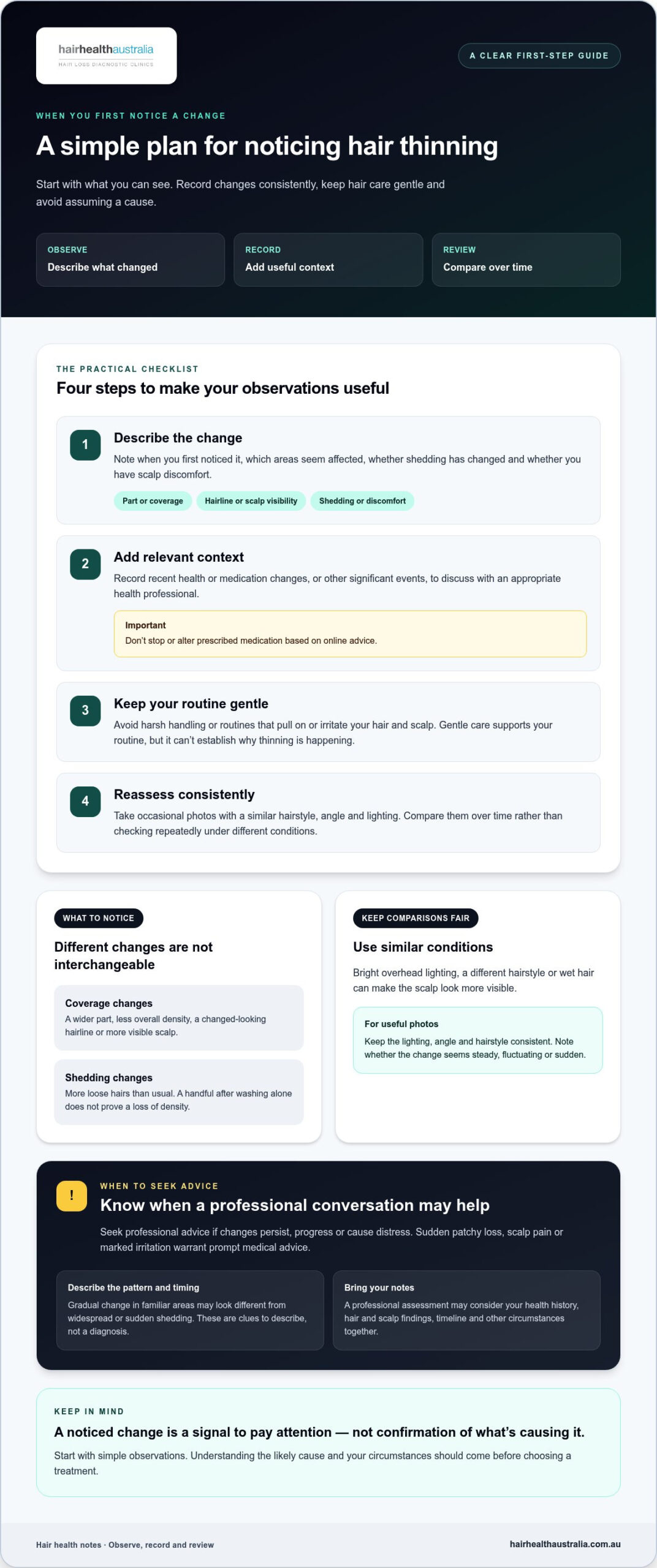
- Describe the change. Note when you first noticed it, which areas seem affected, whether shedding has changed and whether you have scalp discomfort.
- Add relevant context. Record recent health or medication changes, or other significant events, to discuss with an appropriate health professional. Don’t stop prescribed medication based on online advice.
- Keep your routine gentle. Avoid harsh handling or routines that pull on or irritate your hair and scalp. Gentle care supports your hair-care routine, but it can’t establish why thinning is happening.
- Reassess consistently. Take occasional photos with a similar hairstyle, angle and lighting. Compare them over time rather than checking repeatedly under different conditions.
Before a professional conversation, record what changed, when it began and what else was happening. Keep care gentle and review the change consistently.
Build a simple, useful record
Keep your notes brief and factual. For example: “Part looks wider than before; first noticed around this time; more shedding during washing; no scalp discomfort.” Add relevant health or medication changes without deciding whether they caused the thinning. A clear summary can help keep a future conversation focused. The American Academy of Dermatology explains how dermatologists diagnose hair loss, including the role of questions and examination.
Avoid rushed fixes and unsupported claims
Some cosmetic products can affect how your hair feels or looks, but that doesn’t identify the cause or show that thinning has been reversed. Be cautious about starting several products or supplements together. This can make changes harder to track, and a supplement or medicine may not be suitable for everyone. Discuss these decisions with a qualified health professional.
Avoid restrictive diets, harsh routines and repeated product changes based only on online advice. If you’d like help making sense of your observations, a hair health check at Hair Health Australia can be a considered next step.
When should you seek professional advice about thinning hair?
You don’t need to wait until hair thinning is pronounced before asking for help. Arrange an assessment if the change persists, appears to be progressing or is causing you distress. A GP or relevant clinician can consider whether health factors may be involved and guide appropriate next steps. A hair-focused assessment can also help you review the changes you’ve recorded and discuss options suited to your circumstances.
Sudden patchy hair loss, scalp pain, or marked irritation or inflammation are reasons to seek prompt medical advice rather than simply monitoring the change. These signs don’t confirm a particular cause, but they deserve timely attention. If symptoms are severe or you need emergency help in Australia, call 000.
What to prepare before an appointment
A short, organised record can make the conversation more useful. Bring your timeline, occasional photos taken in consistent conditions, relevant symptoms and a list of medicines and supplements. Note any health or medication changes you think may matter. You could also write down questions about possible causes, what an assessment involves, relevant options, risks and realistic expectations.
For Sydney readers, Hair Health Australia offers a hair health check to help you explore changes and discuss personalised next steps. To arrange one, book a Hair Health Check.
When a medical review should not be delayed
Routine observation may suit a mild, stable change, but don’t rely on monitoring alone if loss is sudden or accompanied by scalp pain, pronounced irritation or inflammation. Seek prompt advice from a GP or another appropriate medical professional. If you’re unsure how urgently to act, contact a health service for guidance. Severe symptoms or an emergency call for emergency care.
Knowing what to do when you first notice hair thinning includes recognising when a change needs individual attention. The right next step depends on the pattern, symptoms and your health context. Avoid choosing a treatment based only on a checklist or a guess about the cause.
Choosing your next step: understand the cause before considering treatment
A practical path is steady: notice what has changed, document the pattern and timing, seek an appropriate assessment, then consider options in light of the findings. This helps separate what you’ve observed from what may be causing it. It also takes the pressure off choosing a product or treatment before you have a clearer picture.
Recommendations depend on the individual and the likely cause. No plan can guarantee regrowth, and expectations should be discussed honestly before you decide how to proceed. For individuals seeking immediate coverage or cosmetic alternatives while navigating hair changes, services like Creative Wigs & Hair Replacement offer practical non-surgical options. If you’re asking what to do when you first notice hair thinning, remember that gathering information and asking questions are useful steps in their own right. Seeking advice doesn’t commit you to treatment.
Questions to ask before deciding on a treatment path
A helpful assessment should give you room to understand the findings and any uncertainty. Consider asking:
- What might explain the pattern I’ve noticed, and what remains uncertain?
- What are the available options for my circumstances, and what are their potential risks?
- What timeframe should I use to assess progress, and how will it be reviewed?
- What happens if I choose to monitor the change before deciding?
Understanding the reasoning, likely timeframes and follow-up plan can help you make an informed decision at your own pace.
How personalised, non-surgical care fits into the decision
Hair Health Australia provides personalised, non-surgical hair-loss programs for men and women. This care is best considered after your hair changes and individual circumstances have been assessed, rather than as a one-size-fits-all response. The focus is on discussing appropriate next steps without promising a particular result.
Before deciding, make sure you understand what a proposed plan involves and how it fits your needs. Assessment and clear information come first. Treatment is an option to consider once you have the relevant context.
If you’d like to explore your hair concerns in a personalised setting, you can arrange a Hair Health Check at Hair Health Australia’s Sydney clinic. It’s a considered next step for discussing what you’ve noticed and learning more before making a decision.
Take a considered next step
The first step isn’t to diagnose yourself or rush into a product. Notice what has changed, keep a simple record of the pattern and timing, and seek advice if thinning persists, progresses or concerns you. Sudden patchy loss or significant scalp symptoms warrant prompt medical advice.
Understanding what to do when you first notice hair thinning means giving the cause and your circumstances room to guide the next decision. Treatment recommendations are individual, and realistic expectations matter. Hair Health Australia’s Sydney clinic offers personalised, non-surgical hair-loss programs for men and women.
If you’d like support exploring your hair concerns before deciding what to do next, arrange a Hair Health Check. Take a considered first step towards understanding your options.
Frequently Asked Questions
Is hair thinning normal as you get older?
Hair may gradually become finer or less dense with age, but thinning isn’t inevitable, and age alone doesn’t explain every change. A gradual shift in coverage can have different causes, so consider the pattern and timeline rather than assuming it’s simply ageing. If the change is progressing, troubling you or accompanied by scalp symptoms, seek an individual assessment to discuss what may be contributing and whether any next steps are appropriate.
What should I do first when I notice my hair thinning?
Start by noting what has changed and when you first noticed it. Record which areas look different, whether shedding seems to have increased and whether you have scalp discomfort or other relevant changes. Occasional photos taken with a similar hairstyle, angle and lighting can help you compare fairly. Avoid rushing into several products or supplements at once. When you first notice hair thinning, focus on creating a calm, useful record.
Can stress cause hair thinning?
Stress may be associated with increased hair shedding for some people, but it isn’t the only possible explanation. Changes in health, medicines and other factors may also be relevant, and the timing of shedding can differ from when a trigger occurred. A stressful period alone can’t confirm the cause. Note the timing and any related changes, then discuss persistent or concerning shedding with a GP or other appropriate health professional.
How long should I wait before seeking advice about hair thinning?
There’s no set waiting period that suits everyone. You can seek advice if thinning persists, progresses or causes concern, rather than waiting for it to become pronounced. Sudden patchy loss, scalp pain or marked irritation and inflammation warrant prompt medical advice. If the change is mild and stable, you may choose to monitor it, but don’t delay seeking help if symptoms worsen or you’re unsure what to do.
Can shampoo or supplements stop hair thinning?
Shampoo may change how your hair feels or looks, but a cosmetic effect doesn’t establish the cause of thinning or show that it has been reversed. Supplements are not a universal solution, and taking them without considering your individual needs may be unhelpful. Before starting supplements or medication, discuss suitability with a qualified health professional. Avoid restrictive diets or stopping prescribed medicine based on online advice.
Should I see a GP or a hair loss clinic first?
A GP is a sensible first step if you have sudden or patchy loss, scalp symptoms, other health changes or questions about medicines. They can help assess general health factors and advise on appropriate next steps. For a focused discussion about thinning and personalised, non-surgical hair-loss programs for men and women, Hair Health Australia’s Sydney clinic offers a hair health check. The right starting point depends on your symptoms and concerns.