What if the most effective path to a fuller head of hair doesn’t require a scalpel, stitches, or a five-figure surgical bill? You’ve likely spent far too much time under harsh bathroom lights, feeling anxious about a widening part or a visible scalp, only to be met with confusing chemist-shelf ‘miracle’ cures that fail to deliver. Understanding how to thicken thinning hair without surgery is about moving past this marketing hype and into the realm of clinical reality. It’s a common frustration for many Australians, but it doesn’t have to be your permanent reality.
We agree that the fear of invasive procedures and the exhaustion of trial-and-error can make the journey feel overwhelming. This guide promises to clear that confusion by providing evidence-based, non-surgical methods to restore hair density alongside professional styling secrets for an immediate boost. We will examine the latest 2026 clinical protocols, the importance of microscopic hair analysis, and a clear, structured treatment plan designed to stop further loss and rebuild your confidence without ever entering an operating theatre.
Key Takeaways
- Understand why early clinical intervention is vital; waiting too long often turns a manageable thinning issue into a complex problem that’s much harder to treat.
- Explore the biological science of follicle rehabilitation, focusing on how cellular repair and improved scalp circulation can revitalise dormant hair roots.
- Discover the most effective methods for how to thicken thinning hair without surgery by comparing professional clinical treatments against standard chemist-shelf products.
- Learn to apply the ‘Fullness Framework’ to your daily routine, combining long-term health protocols with immediate styling techniques that minimise visible scalp.
- Identify why a personalised microscopic hair health check is the essential first step to creating a successful, non-invasive regrowth plan tailored to your needs.
Understanding Hair Thinning: Why Surgery Isn’t Your Only Option
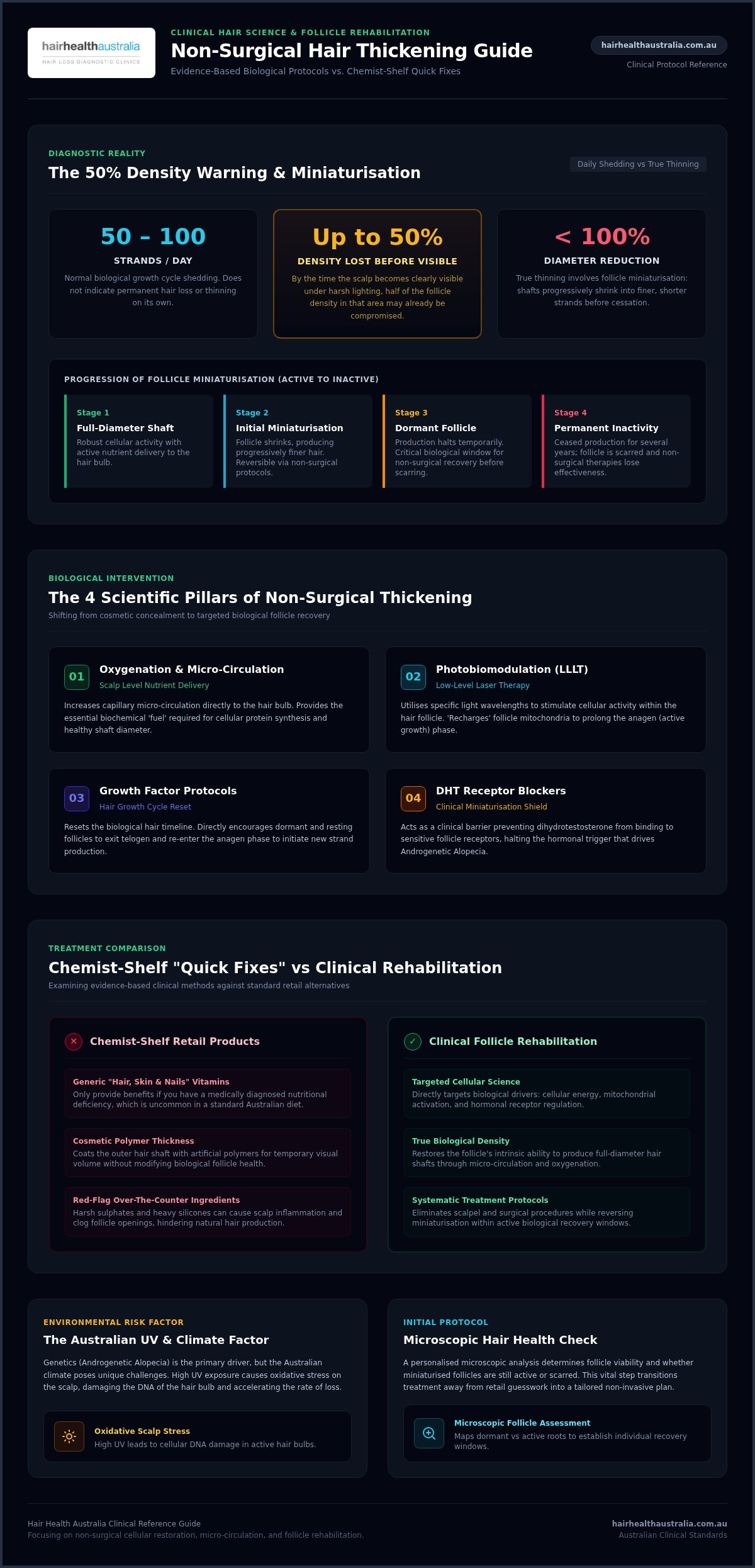
Many Australians mistake daily shedding for permanent loss, but there is a significant clinical distinction between the two. While losing 50 to 100 strands a day is a normal part of the biological growth cycle, true thinning involves a change in the hair’s diameter and overall quality. If you’re investigating hair thinning and loss, it’s vital to identify the underlying cause before the condition progresses. Adopting a “wait and see” approach is often a costly mistake; by the time the scalp is clearly visible, you may have already lost up to 50% of your hair density in that specific area. This delay is precisely what makes surgical intervention seem like the only remaining choice later on. Follicle miniaturisation is the core process of thinning where the hair follicle physically shrinks and produces increasingly finer, shorter strands until growth ceases entirely.
While genetics, specifically Androgenetic Alopecia, remain the primary driver for most men and women, environmental factors in Australia also play a significant role. Our climate and lifestyle can exacerbate the rate of loss, making it essential to understand how to thicken thinning hair without surgery through a targeted, clinical approach. By intervening while follicles are still active, we can often reverse the miniaturisation process and restore visible density without the need for invasive procedures.
The Myth of the “Quick Fix” Chemist Solution
Walking into a local chemist and picking up a generic “hair, skin, and nails” vitamin rarely addresses the complex biological triggers of thinning. These supplements only provide a benefit if you have a specific, diagnosed nutritional deficiency, which is relatively uncommon in a standard Australian diet. It’s important to distinguish between cosmetic thickness, which involves coating the hair shaft with polymers to create a temporary illusion, and true biological density. When researching how to thicken thinning hair without surgery, be wary of “red flag” ingredients in over-the-counter shampoos, such as harsh sulphates or heavy silicones. These can cause scalp inflammation and clog follicle openings, which may actually hinder healthy hair production rather than helping it.
Follicle Survival: The Window for Non-Surgical Recovery
There is a critical window of opportunity to revive dormant follicles before they become permanently inactive and scarred. Once a follicle has ceased production for several years, non-surgical options become significantly less effective. This is why a professional Hair Health Check is the most important step you can take. Sydney residents face unique challenges; high UV exposure can cause oxidative stress on the scalp, damaging the DNA of the hair bulb and accelerating the thinning process. A professional diagnosis moves you away from guesswork and into a systematic treatment plan that respects the biological timeline of your hair follicles.
The Science of Non-Surgical Thickening: Follicle Rehabilitation
Rehabilitating a thinning follicle requires a shift from cosmetic concealment to biological intervention. When exploring how to thicken thinning hair without surgery, the primary objective is to restore the follicle’s ability to produce a healthy, full-diameter hair shaft. This process begins with oxygenation. By increasing micro-circulation at the scalp level, we ensure that essential nutrients reach the hair bulb, providing the ‘fuel’ necessary for protein synthesis. This scientific foundation is supported by medically recognised causes and treatments for hair thinning, which highlight that consistent, evidence-based stimulation can often override genetic predispositions.
Low-Level Laser Therapy (LLLT) plays a pivotal role in this rehabilitative process through photobiomodulation. This technology uses specific wavelengths of light to stimulate cellular activity within the follicle, essentially ‘recharging’ the mitochondria to extend the growth phase of the hair cycle. When paired with growth factor protocols, we can effectively reset the hair growth cycle, encouraging dormant follicles to enter the anagen (growth) phase once more. DHT blockers act as a clinical shield by preventing dihydrotestosterone from binding to follicle receptors, which stops the chemical signal that triggers miniaturisation.
Advanced Clinical Therapies for Density
Professional-grade laser therapy systems utilised in a clinical setting offer significantly higher power and coverage compared to standard home-use devices. This increased intensity ensures deeper penetration into the scalp tissue, which is essential for consistent results. For many, finding the best hair regrowth treatment Australia 2026 requires a personalised approach that combines these clinical sessions with high-potency topical treatments. A synergy between technology and pharmacology creates a robust environment for density recovery that a single DIY product simply cannot replicate.
The Role of Scalp Health in Hair Diameter
A healthy hair shaft cannot emerge from a compromised scalp environment. Follicular blockages, often caused by a buildup of sebum, dead skin cells, and environmental pollutants, can physically constrict the hair as it grows, leading to a thinner appearance. In many parts of Australia, hard water containing high levels of minerals like calcium and magnesium can further degrade hair texture and lead to breakage. Managing the scalp’s microbiome and acidity is a fundamental step in how to thicken thinning hair without surgery. By clearing these obstructions and neutralising the effects of mineral buildup, we create a clear path for thicker, stronger hair to grow. If you’re unsure whether your scalp environment is hindering your progress, a professional microscopic analysis can provide the clarity you need.
Professional Non-Surgical Therapy vs. DIY Home Kits
Many individuals begin their journey by purchasing various lotions and potions from a local chemist, hoping for a simple solution. However, understanding how to thicken thinning hair without surgery requires a more sophisticated approach than mass-market products can offer. Clinical topical solutions differ significantly from DIY kits in both their concentration of active ingredients and their delivery mechanisms. While a standard over-the-counter product might sit on the surface of the scalp, professional formulations are often engineered with advanced delivery systems that ensure deep penetration into the follicular bulb where regrowth begins.
Choosing a non-surgical hair loss clinic Sydney provides a level of accountability that is impossible to achieve at home. Instead of guessing which product might work, you receive a protocol based on diagnostic evidence. The cost versus value argument is clear: while professional care involves a structured investment, it prevents the endless cycle of spending money on ineffective ‘miracle’ cures that waste both your budget and your remaining hair-recovery window. Professional intervention ensures that every dollar spent is directed toward a method that has been clinically validated for your specific type of thinning.
Why Home Lasers Often Underperform
Home-use laser caps and combs frequently fall short of clinical expectations due to limited diode strength and poor scalp coverage. Clinical systems utilise medical-grade laser diodes that provide a consistent, high-intensity energy output across the entire scalp, whereas home devices often rely on fewer diodes or cheaper LEDs that lack the necessary depth of penetration. Additionally, these devices cannot account for individual scalp thickness or existing hair density, which can lead to uneven results or even scalp irritation if used incorrectly. Without professional oversight, it is difficult to know if you are over-treating or under-treating the area.
Clinical Monitoring: The Key to Sustainable Growth
The most significant advantage of professional care is the ability to track progress at a microscopic level. Using high-resolution digital imaging, we can identify new ‘baby’ hairs and improvements in hair shaft diameter long before they are visible in your bathroom mirror. This objective data allows us to adjust your protocol based on your body’s response and external factors, such as the harsh UV and shifting humidity levels of the Australian climate. This methodical approach provides peace of mind, replacing the anxiety of uncertainty with clinical proof. Having a professional guide your recovery ensures you stay on the most efficient path toward visibly thicker hair.
How to Style Thinning Hair to Look Fuller: Instant Results
Clinical restoration is a journey that requires patience, but you don’t have to wait for biological regrowth to improve your appearance. Learning how to thicken thinning hair without surgery involves a dual approach: rehabilitating the follicle while mastering the “Fullness Framework.” This framework combines strategic grooming with clinical health to provide an immediate visual boost. The goal is to create an optical illusion of density while protecting the fragile strands you already have. Effective styling starts with product selection. You should avoid heavy waxes, clays, or oil-based pomades that weigh down fine strands and cause them to clump together, which inadvertently exposes more of the scalp.
A simple yet transformative technique involves the use of volumising mists. To achieve maximum lift, apply a lightweight volumising mist directly to the root area while the hair is damp; this creates a structural scaffold that supports the hair shaft once dry. When combined with a blow dryer on a low-to-medium heat setting, this technique lifts the hair away from the scalp, significantly reducing the visibility of thinning areas. While these styling techniques offer a visual fix, they work best when supported by a healthy scalp environment. Start by booking a microscopic hair health check to ensure your grooming efforts are built on a solid biological foundation.
Strategic Haircuts for Men and Women
The right cut can radically change how density is perceived. For women, a blunt cut is often superior to heavy layering. While layers are often suggested for volume, they can actually make thinning hair look wispy and translucent at the ends. A blunt perimeter creates a solid line that gives the appearance of thicker, healthier hair. To complement a great cut, you can discover Hairland for 100% natural hair extensions that offer a professional-grade solution for immediate thickness. For men, a high fade on the sides is a powerful tool. By keeping the hair very short on the sides and back, you draw the eye upward and away from a thinning crown or receding hairline, making the hair on top look fuller by comparison. Always be transparent with your stylist about your hair loss treatment goals. This allows them to cut in a way that accommodates future regrowth rather than just masking current loss.
Daily habits often dictate the rate of mechanical hair loss. One of the most effective changes you can make is the “Cool Rinse” technique. Finishing your hair wash with cool water helps to close the hair cuticle, which adds natural shine and makes the hair shaft more resilient. Perhaps the most common mistake is towel-drying too vigorously. Rubbing your head with a towel creates intense friction that can snap miniaturised hairs. Instead, gently pat the hair dry or use a microfibre wrap to absorb moisture. Finally, replace your standard brush with a wide-tooth comb. This reduces the tension placed on the follicle during detangling, ensuring you aren’t accidentally pulling out hairs that are still in their growth phase. Consistent care in these small areas supports the broader goal of how to thicken thinning hair without surgery.
Starting Your Journey: The Professional Hair Health Check
Embarking on a journey to reclaim your hair density requires more than just hope; it requires a precise diagnostic foundation. While many people search for how to thicken thinning hair without surgery, the most effective results are always achieved when the treatment plan is built on objective data rather than trial and error. At our specialised Sydney clinic, we believe that you cannot treat what you haven’t accurately measured. This is why every non-surgical program begins with a comprehensive microscopic hair health check, which serves as the essential first step in your recovery.
A clinical scan at our Sydney centre is a sophisticated diagnostic process. It allows us to identify the specific stage of your hair loss, which is crucial for setting realistic expectations and selecting the most potent interventions. By organising your hair health check, you move away from generic advice and toward a personalised roadmap designed specifically for your scalp’s unique biological profile. This data-driven approach ensures that your time and resources are focused on the therapies most likely to yield visible results.
What Microscopic Analysis Reveals
A medical-grade microscopic scan provides a level of detail that a standard visual consultation simply cannot match. We use high-resolution imaging to visualise follicle density and hair shaft diameter in real-time, allowing us to see exactly how many hairs are in the growth phase versus the resting phase. This analysis also detects underlying scalp conditions, such as dermatitis or excessive sebum production, which can create a hostile environment for new growth. Identifying these barriers early ensures that your treatment plan addresses both the symptoms and the root causes of thinning, providing a clear path for thicker hair to emerge.
Your Non-Surgical Roadmap
Once we have established your baseline, we create a structured roadmap with 3, 6, and 12-month milestones. Hair growth is a biological process that follows a specific cycle; therefore, having these clear checkpoints helps you stay committed to the protocol while we track your progress. Your plan will typically integrate targeted clinical visits with easy-to-follow at-home maintenance, ensuring that your follicles receive consistent stimulation throughout the year. This systematic approach is the most reliable way to achieve sustainable, long-term density. If you’re ready to stop the cycle of uncertainty, book your Hair Health Check today and take the first step toward a fuller head of hair.
Reclaiming Your Hair Density with Clinical Precision
The journey to restoring hair density doesn’t require a surgical theatre. By understanding how to thicken thinning hair without surgery, you’ve moved past ineffective chemist-shelf ‘miracles’ and toward evidence-based results. We’ve explored how clinical follicle rehabilitation, supported by advanced technologies like Low-Level Laser Therapy, can revive dormant roots before they become permanently inactive. This systematic approach, combined with strategic grooming and professional oversight, ensures every stage of your recovery is monitored and adjusted for the best possible outcome.
Precision diagnostics remain the most critical component of any successful plan. With over 15 years of clinical experience in Sydney, we utilise non-invasive microscopic diagnostic technology to create tailored regrowth programs for both men and women. This eliminates the guesswork, providing you with a clear, data-driven roadmap to a fuller head of hair. It’s time to replace uncertainty with a professional strategy that respects the biology of your scalp. Book Your Comprehensive Hair Health Check in Sydney and begin your personalised recovery today. Your path to visibly thicker hair is closer than you think.
Frequently Asked Questions
Can thinning hair actually grow back thicker without surgery?
Yes, it’s clinically possible to restore hair diameter if the follicles are still active and haven’t reached the scarring stage. Clinical treatments focus on reversing follicle miniaturisation by stimulating blood flow and delivering growth factors directly to the hair bulb. This process increases the physical width of the hair shaft and extends the growth phase. Understanding how to thicken thinning hair without surgery is essential for those who want to avoid the risks and lengthy recovery of invasive procedures.
How long does it take to see results from non-surgical hair thickening?
Most clients begin to notice changes in hair texture and a reduction in daily shedding within the first three to four months. However, visible regrowth and a significant increase in density typically require six to twelve months of consistent treatment. This timeline aligns with the natural biological hair growth cycle of your body. We use microscopic imaging at our Sydney clinic to track these subtle improvements before they are visible to your naked eye.
Is non-surgical hair treatment permanent?
Non-surgical treatments require ongoing maintenance to sustain the results achieved during the intensive phase of your program. Because hair loss is often driven by genetic factors like DHT sensitivity, the follicles need continued support to prevent them from returning to a miniaturised state. Once you reach your density goals, we transition you to a simplified maintenance routine. This ensures your hair remains thick and healthy without the need for frequent clinical visits or further intervention.
Will a clinical hair treatment work if I am already quite bald?
Clinical treatments are most effective in areas where hair is thinning rather than completely absent. If an area of the scalp has been completely bald for many years, the follicles may have permanently closed or scarred, making non-surgical regrowth unlikely. In such instances, high-quality human hair lace wigs from a-listlacehair.com can serve as a sophisticated, non-invasive alternative for achieving a full head of hair. A microscopic hair health check is vital in these cases; it allows us to see if active follicles still exist beneath the surface. We always provide an honest, clinical assessment of what can realistically be achieved.
A high fade or a short textured crop is often the most effective way to minimise the appearance of a thinning crown. By keeping the hair on the sides and back very short, you reduce the visual contrast between the thinning area and the thicker sections. This draws the eye upward and creates a more balanced, fuller look. Avoid long hair or comb-overs, as these often highlight the lack of density rather than concealing it effectively.
Are there any side effects to clinical non-surgical hair regrowth?
Most non-surgical clinical treatments have a very high safety profile with minimal risk of side effects. Some topical solutions may cause temporary scalp dryness or mild irritation in individuals with particularly sensitive skin. Low-Level Laser Therapy is completely non-invasive and painless, with no documented long-term side effects. During your initial consultation in Sydney, we review your medical history to ensure every component of your tailored program is safe and appropriate for your specific needs.
How much does a non-surgical hair loss program cost in Sydney?
The total investment for a hair loss program varies depending on the severity of your thinning and the specific therapies required for your recovery. Because we customise every plan based on a microscopic analysis, there isn’t a single fixed price for treatment. We focus on providing a structured, value-based approach that prevents the wasted expense of ineffective over-the-counter products. A detailed breakdown of your personalised program is provided following your initial clinical diagnostic session.
Can I use clinical hair treatments while pregnant or breastfeeding?
Certain clinical treatments must be paused or modified during pregnancy and breastfeeding to ensure the safety of both mother and child. While some light-based therapies are generally considered safe, many potent topical solutions and oral supplements are not recommended during this time. It’s essential to disclose your pregnancy status during your consultation. We can then design a safe, gentle maintenance plan to manage pregnancy-related shedding until it’s appropriate for you to resume a full clinical protocol.