
If you’ve spent months experimenting with thickening shampoos and expensive salon serums, have you ever stopped to ask if you’re treating a cosmetic preference or a clinical condition? Most Australians experiencing thinning feel a genuine sense of anxiety, often caught between the fear of permanent baldness and the dread of invasive surgery. It’s frustrating when the distinction between a retail stylist and a medical specialist feels blurred, leaving you unsure where to turn for real answers.
Finding a qualified hair doctor in Sydney is the first step toward replacing that uncertainty with a clear, evidence-based diagnosis. This guide explains how a clinical specialist uses microscopic scanning technology to identify the root cause of your thinning, rather than just masking the symptoms. You’ll discover how to access a non-surgical restoration plan tailored specifically for the harsh Australian climate and the science behind modern follicular regrowth. We’ll outline the exact diagnostic process that moves you from guesswork to a structured, clinical path toward restoring your hair’s natural density and health.
Key Takeaways
- Understand the specific role of a clinical hair doctor in diagnosing follicle biology and how they differ from general practitioners or salon stylists.
- Learn why a specialised microscopic hair analysis is the essential first step to distinguish between active and dormant follicles before starting any treatment.
- Compare the advantages of non-surgical restoration programmes, focusing on zero downtime and cost-effectiveness compared to invasive surgical options.
- Identify the key information you need to bring to your consultation, from dietary habits to stress levels, to ensure an accurate clinical assessment.
- Discover how to prepare for your diagnostic scan, including the importance of not washing your hair for 24 hours to ensure the most precise results.
What is a Hair Doctor and When Should You See One?
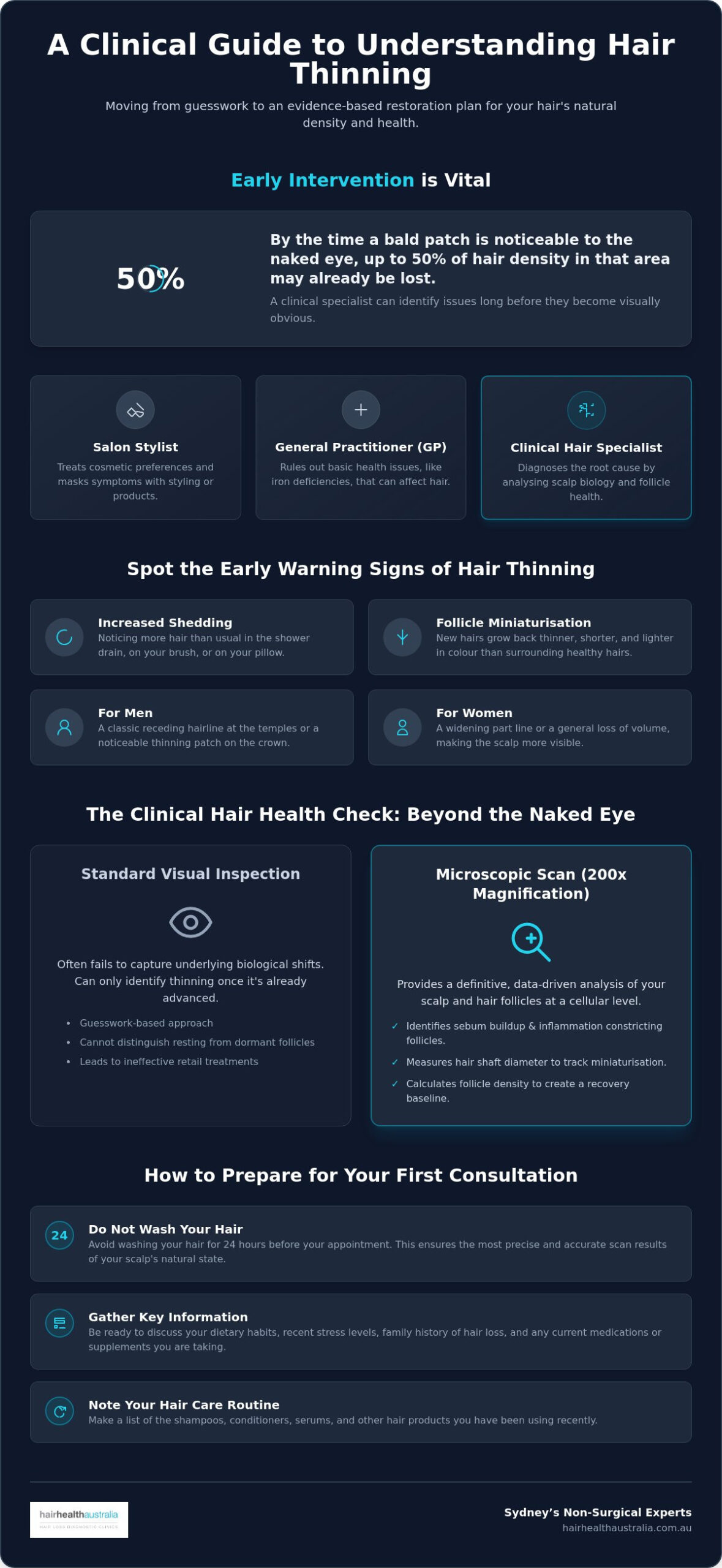
The term “hair doctor” is often used to describe any professional who treats thinning, but in a clinical setting, it refers to specialists who understand the intricate biology of the scalp and follicles. While a general practitioner (GP) can rule out basic iron deficiencies and a dermatologist treats complex skin diseases, a clinical hair specialist focuses specifically on the life cycle of the hair itself. A hair specialist is a professional who diagnoses the root cause of thinning through evidence-based analysis. Many people wait until they see a visible bald patch before seeking help, but this is a significant mistake for long-term recovery. By the time a patch is noticeable to the naked eye, you may have already lost up to 50% of the hair density in that specific area, making early intervention vital.
Trichologist vs. Dermatologist: Understanding the Roles
Trichologists focus on the clinical aspects of hair health, such as nutrition, lifestyle, and the physical state of the scalp. They are experts in identifying the various stages of a comprehensive overview of hair loss and how environmental factors in Sydney, like intense UV exposure, affect follicle health. Conversely, a dermatologist is a medical doctor who specialises in skin diseases and is necessary for treating autoimmune-related alopecia or scarring conditions. These professionals often collaborate to provide a comprehensive restoration plan. A clinical specialist might manage your non-surgical regrowth programme while a dermatologist handles specific medical prescriptions, ensuring every angle of your scalp health is covered.
The Red Flags: Symptoms That Require Professional Analysis
One of the most subtle signs of trouble is the “miniaturisation” process. This occurs when the hair follicle physically shrinks, producing a strand that is thinner, shorter, and lighter in colour than the surrounding hair. Over time, these follicles stop producing visible hair altogether. If you notice more hair in the shower drain than usual or find excessive strands on your pillow, your body is providing an early warning sign of telogen effluvium or early-stage pattern thinning.
For men, a receding hairline at the temples or a thinning crown is a classic indicator of genetic loss. Women typically experience a widening part line or a general loss of volume that makes the scalp more visible under bright lights. Identifying these shifts early through a professional Hair Health Check allows for a much more effective, non-invasive response before the follicles become permanently dormant. A hair doctor can determine if your shedding is a temporary reaction to stress or the beginning of a progressive condition that requires a structured restoration plan.
The Clinical Hair Health Check: Beyond the Naked Eye
A standard visual inspection by a GP or a hair stylist often fails to capture the underlying biological shifts occurring beneath the scalp’s surface. While they might notice general thinning, they cannot determine whether a follicle is simply resting or has reached a state of permanent dormancy. This is where a clinical hair doctor utilises advanced diagnostic tools to provide a definitive answer. By moving beyond what is visible to the naked eye, we can identify the specific symptoms and causes of hair loss that are unique to your physiology. Relying on guesswork often leads to wasted time on ineffective retail products, whereas cellular-level data allows us to build a customised treatment programme from day one.
Microscopic Scanning: What We See Under 200x Magnification
Using specialised microscopic scanning technology at 200x magnification allows us to observe the scalp environment in vivid detail. We frequently identify significant sebum buildup or chronic scalp inflammation that physically constricts the follicle, effectively suffocating healthy growth. This high-resolution view also lets us measure the hair shaft diameter across different zones of the head to track the precise progression of miniaturisation. Follicle density is calculated by counting the number of active hairs within a specific square centimetre, providing a mathematical baseline for your recovery. This level of detail ensures that your hair doctor isn’t just guessing about your progress but is instead tracking real, measurable improvements in hair health and density.
Environmental Factors in Sydney: UV and Scalp Health
Living in Sydney presents unique challenges for hair maintenance that are often overlooked in generic treatment plans. The intense Australian UV levels can lead to significant oxidative stress, which damages the protein structure of the hair and inflames the delicate scalp skin. Additionally, the specific mineral content in local water and our high coastal humidity levels often affect the hair cuticle’s integrity, making strands more prone to breakage and thinning. Sydney residents require specific scalp protection protocols within their regrowth plan to counteract these local environmental stressors. Understanding these external impacts is a core part of a professional Hair Health Check, ensuring your restoration path is grounded in the reality of the Australian climate. If you’ve noticed your hair feels different after a summer outdoors, a clinical assessment can help determine if environmental damage is accelerating your thinning.
Non-Surgical Restoration vs. Hair Transplant Surgery
Deciding between clinical restoration and surgical intervention is a pivotal moment for anyone facing thinning. While Follicular Unit Extraction (FUE) is a popular surgical method, it requires significant downtime and a substantial financial commitment. Surgical procedures often involve weeks of healing and potential scarring, whereas non-surgical clinical programmes offer zero downtime, allowing you to maintain your daily routine in Sydney without interruption. It’s essential to understand that surgery is fundamentally a relocation of hair follicles, not a cure for the biological triggers of loss. A hair doctor focuses on the underlying health of your scalp to ensure your follicles remain productive for years to come.
Cost-effectiveness is another major factor. Surgery carries a high upfront price tag, yet it does nothing to stop the progression of thinning in the surrounding areas. By choosing a non-surgical hair loss clinic in Sydney, you invest in a long-term strategy that preserves your existing natural hair while stimulating new growth at a fraction of the surgical cost. This proactive approach is often the most sustainable path for those in the early to mid-stages of thinning, where the goal is to stop loss before it requires more drastic measures.
How Non-Surgical Clinical Programmes Work
Our clinical protocols focus on revitalising the scalp environment to support healthy hair production. We utilise follicle stimulants designed to “wake up” dormant hairs that have entered a premature resting phase. These are combined with clinical-grade topicals that effectively block Dihydrotestosterone (DHT) at the scalp level, which is a primary driver of genetic thinning. This medical treatment for hair loss is further supported by nutritional guidance and strict scalp hygiene. We view the scalp as “fertile soil”; by removing sebum buildup and providing essential micronutrients, we create the optimal conditions for follicles to thrive naturally.
The Limitations of Surgery
Surgery is not a universal solution. It relies entirely on a healthy “donor area” at the back of the head. If your thinning is extensive, you may lack sufficient follicles to achieve a dense, natural look. There is also the distinct risk of a “patchy” appearance if your natural hair continues to thin around the transplanted grafts. This is why a hair doctor will often recommend clinical therapy even after a transplant. Without addressing the root biological cause, the newly moved hair may eventually stand alone as the surrounding original hair disappears. Maintaining the health of your scalp remains the most effective way to protect your appearance and ensure a seamless, high-density result.
Preparing for Your First Hair Specialist Consultation
Your initial appointment with a hair doctor is a comprehensive data-gathering mission designed to uncover the specific biological triggers behind your thinning. To get the most out of this session, you should arrive prepared to discuss your medical history in detail. This includes your dietary habits, recent stress levels, and family history of hair loss. It’s also vital to bring an organised list of any current medications or supplements you’re taking, as many common prescriptions can inadvertently influence the hair growth cycle. Unlike a standard medical check-up, this consultation focuses on connecting your internal health with the external physical state of your follicles.
The diagnostic process typically begins with a clinical intake before moving into a specialised microscopic analysis. One of the most important preparation steps is to avoid washing your hair for at least 24 hours prior to your scan. This allows your natural sebum levels and scalp environment to remain undisturbed, providing a more accurate baseline for the specialist to examine. If the scalp is too clean, we may miss subtle signs of inflammation or oil imbalances that are contributing to your loss. Once you’re in the clinic, the journey moves from a verbal history to a high-resolution microscopic scan, where we can observe the health of your scalp in real-time.
Questions to Ask Your Specialist
During your consultation, you should feel empowered to ask technical questions to gain clarity on your condition. Ask where you currently sit on the Norwood scale for men or the Ludwig scale for women, as this helps establish a clinical baseline. You should also ask if your follicles are merely dormant or if they have become permanently scarred, which determines the potential for regrowth. Finally, ask for a realistic timeline on when you can expect to see measurable changes in hair density. A transparent hair doctor will provide objective answers based on your specific diagnostic data rather than making vague promises.
Managing Expectations: The Reality of Hair Growth
Understanding the biological hair cycle is essential for maintaining your commitment to a restoration plan. Hair moves through three distinct phases: Anagen (growth), Catagen (transition), and Telogen (resting). Because of these natural cycles, most clinical results take between 3 to 6 months to become visible to the naked eye. Consistency in your clinical programme is the most significant factor for long-term success. It’s important to remember that “stabilisation,” where we stop the active shedding, is the first major win before any significant regrowth occurs. If you’re ready to move beyond guesswork and secure a clinical diagnosis, you can book a professional Hair Health Check to begin your restoration journey.
Hair Health Australia: Sydney’s Non-Surgical Experts
Choosing a clinic for restoration should feel like a medical consultation, not a retail transaction. Hair Health Australia has established itself as Sydney’s centre for non-surgical excellence, specialising in evidence-based protocols since 2009. If you’re looking for a hair doctor who prioritises long-term scalp health, much like how Bright Sight Eye Specialists prioritises ocular health, our team provides the clinical environment you need. We move away from the one-size-fits-all approach common in the industry, instead focusing on the unique biological markers identified during your initial assessment.
Our commitment to “straight-talking” honesty is the foundation of our patient relationships. We don’t use hyperbolic marketing or make promises that the biology cannot support. Instead, we provide realistic expectations based on the current state of your follicles and your specific hair loss type. This transparency builds a narrative of trust, ensuring you feel fully informed and confident in your restoration journey without the fear of invasive procedures.
Our Clinical Philosophy: Science Over Surgery
Our clinical philosophy focuses on the existing follicle network. We aim to revitalise and protect the hair you still have while stimulating dormant follicles to return to the growth phase. By using advanced diagnostic technology, we track your progress with mathematical precision, adjusting your programme as your scalp health improves. For a deeper look at the latest clinical standards, you may wish to review our Best Hair Regrowth Treatment Australia 2026 reference guide. This methodical approach ensures that every step we take is backed by data and tailored to the Australian climate.
Take the First Step Toward Recovery
Early intervention is the single most effective tool for both men and women facing thinning. The sooner a professional hair doctor can assess your scalp, the higher the likelihood of successfully stabilising loss and regrowing density. You can read more about our specific methodologies in our guide on Clinical Hair Treatment. When you’re ready to stop the guesswork and start a structured path to recovery, the first step is to book your Hair Health Check at our Sydney clinic. We’re here to act as your dedicated guide, replacing anxiety with a clear, scientific plan for your hair’s future.
Secure a Scientific Path to Regrowth
Restoring your hair density doesn’t have to involve the uncertainty of retail products or the invasive nature of surgery. By consulting a specialised hair doctor, you transition from guesswork to a structured clinical programme grounded in cellular data. We’ve explored how advanced microscopic scanning identifies the root cause of thinning and why non-surgical protocols offer a sustainable, zero-downtime alternative for Sydney residents. Early intervention remains the most powerful tool in your possession; it ensures that your follicles are protected before they reach a stage of permanent dormancy.
Our team at Hair Health Australia provides specialist care for men and women, utilising clinically-backed non-surgical protocols that have been refined since 2009. We invite you to move beyond temporary fixes and embrace a personalised restoration plan tailored to your unique biology and the local environment. Book your comprehensive Hair Health Check in Sydney today to receive a clear diagnosis and a professional roadmap for your recovery. You don’t have to face thinning alone. With the right clinical guidance and advanced diagnostic technology, you can regain both your hair density and your confidence.
Frequently Asked Questions
Is a hair doctor the same as a trichologist?
While the terms are often used interchangeably by the public, a trichologist is a specialist specifically trained in the science of the hair and scalp. A hair doctor can refer to a trichologist or a medical practitioner who has chosen to specialise in hair loss disorders. Trichologists focus on the biological health of the follicle and provide non-surgical restoration paths, whereas medical doctors may also handle surgical referrals or systemic health issues.
Can a hair doctor help with a receding hairline?
Yes, a specialist can identify whether a receding hairline is the result of genetic pattern thinning or a temporary reaction to environmental stressors. By using microscopic analysis, we can determine if the follicles along the hairline are still active or have begun the miniaturisation process. Once the cause is identified, a clinical plan can be implemented to stabilise the hairline and encourage new growth in the affected areas.
How much does a consultation with a hair specialist cost in Sydney?
Consultation fees in Sydney vary depending on the clinic and the complexity of the diagnostic tools used. Some medical centres may have an initial gap fee of approximately $50 for general appointments, while dedicated hair clinics typically have their own set rates for comprehensive microscopic scans and health checks. It is best to contact your chosen clinic directly to confirm their current pricing for a professional assessment.
Does Medicare cover hair loss consultations or treatments?
Medicare generally does not provide coverage for hair loss treatments as they are typically classified as cosmetic procedures. You may be able to claim a portion of the consultation fee if you see a GP or dermatologist for an underlying medical condition causing the loss. However, specialised non-surgical restoration programmes and diagnostic scans are almost always out-of-pocket expenses for the patient.
Can a hair doctor prescribe medication for hair regrowth?
Prescription capabilities depend on the specific qualifications of the professional you consult. A medical practitioner specialising in hair loss can provide prescriptions for TGA-approved medications. Clinical trichologists focus on high-strength, non-prescription topicals, nutritional support, and scalp hygiene protocols. Many patients achieve excellent results through these non-invasive methods, which focus on creating the optimal environment for natural regrowth without the need for systemic drugs.
How long does it take to see results after seeing a specialist?
It typically takes between 3 to 6 months to see measurable changes in hair density and coverage. This timeframe is necessary because of the natural biological hair growth cycle, which cannot be rushed. The first sign of success in a clinical programme is usually a significant reduction in active shedding, followed by the gradual appearance of finer new hairs as dormant follicles are revitalised.
Is hair loss treatment permanent or do I need to continue it?
Most treatments for progressive conditions, such as genetic thinning, require ongoing maintenance to preserve the results. If the underlying biological trigger for the loss remains, the follicles may eventually return to a thinning state if the treatment is stopped entirely. A hair doctor will work with you to transition from an intensive restoration phase to a sustainable long-term maintenance plan that fits your lifestyle.
What is the most successful non-surgical hair loss treatment?
The most successful treatment is always the one tailored to your specific diagnosis. Research shows that combination therapies involving topical medications and follicle stimulants have a proven 83% success rate in retaining existing hair. At our Sydney clinic, we find that a personalised approach combining microscopic scalp clearing with targeted follicle stimulation provides the most consistent and visible results for both men and women.