PRP vs Laser for Hair Loss in Sydney: Which is Best?

What if the choice between PRP and laser therapy isn’t about which one is better, but about which biological signal your hair follicles are failing to receive? If you’ve spent hours researching clinics across Sydney, you’ve likely felt the weight of indecision. It’s exhausting to weigh clinical claims while your hair density continues to decline. You want a solution that actually works without the invasive nature of surgery. When evaluating the merits of PRP vs laser therapy for hair loss Sydney residents often find themselves caught between two very different scientific approaches.

This guide will clarify that confusion by breaking down the cellular mechanics of both treatments. You’ll discover how Platelet-Rich Plasma uses your own growth factors to jumpstart follicles, while Low-Level Laser Therapy provides the mitochondrial energy needed to sustain that growth. We’ll examine the clinical outcomes, the time commitment required for a busy lifestyle, and why a professional hair health check is the essential first step in your restoration journey. By understanding the science behind these non-surgical protocols, you can move forward with a clear, evidence-based plan for thicker hair.

Key Takeaways

  • Understand how PRP acts as a biological catalyst, using your own platelets to signal dormant follicles to return to an active growth phase.
  • Learn how Low-Level Laser Therapy provides the necessary cellular fuel to sustain follicle health and increase hair diameter through photobiomodulation.
  • Evaluate the specific benefits of PRP vs laser therapy for hair loss Sydney specialists use to treat conditions like androgenetic alopecia and telogen effluvium.
  • Discover why a microscopic hair health check is the essential first step to distinguish between active thinning and permanent follicle loss.
  • Recognise how a structured, non-surgical approach provides a reliable alternative to invasive procedures for restoring hair density and confidence.

The Science of Regrowth: Understanding PRP and Laser Therapy

The Australian hair restoration market has moved toward more sophisticated, evidence-based methods. While surgical transplants were once the primary option for those facing significant thinning, the focus has shifted toward clinical, non-surgical interventions. For many individuals in New South Wales, the goal is to intervene early and preserve existing follicles before permanent loss occurs. When evaluating PRP vs laser therapy for hair loss Sydney residents often seek a balance between biological repair and technological stimulation. Both treatments represent the pinnacle of modern trichology, offering pathways to thicker hair without the significant recovery time or high costs associated with invasive surgery.

Leading international resources like The Hair Clinic emphasise that while non-surgical options are highly effective, a comprehensive approach often yields the most sustainable results for long-term hair density.

The Shift Toward Non-Surgical Clinical Care

The rise of clinical-grade treatments in Sydney marks a departure from the trial-and-error approach of the past. Generic “off-the-shelf” shampoos and over-the-counter supplements often fail because they don’t address the underlying biological causes of follicle miniaturisation. Professional protocols succeed because they are grounded in clinical oversight and diagnostic accuracy. This shift is driven by a desire for realistic outcomes and treatments that integrate seamlessly into a high-pressure professional life. A microscopic hair health check is often the essential starting point, allowing specialists to identify the specific stage of thinning before a single treatment begins.

Biological vs. Technological Stimulants

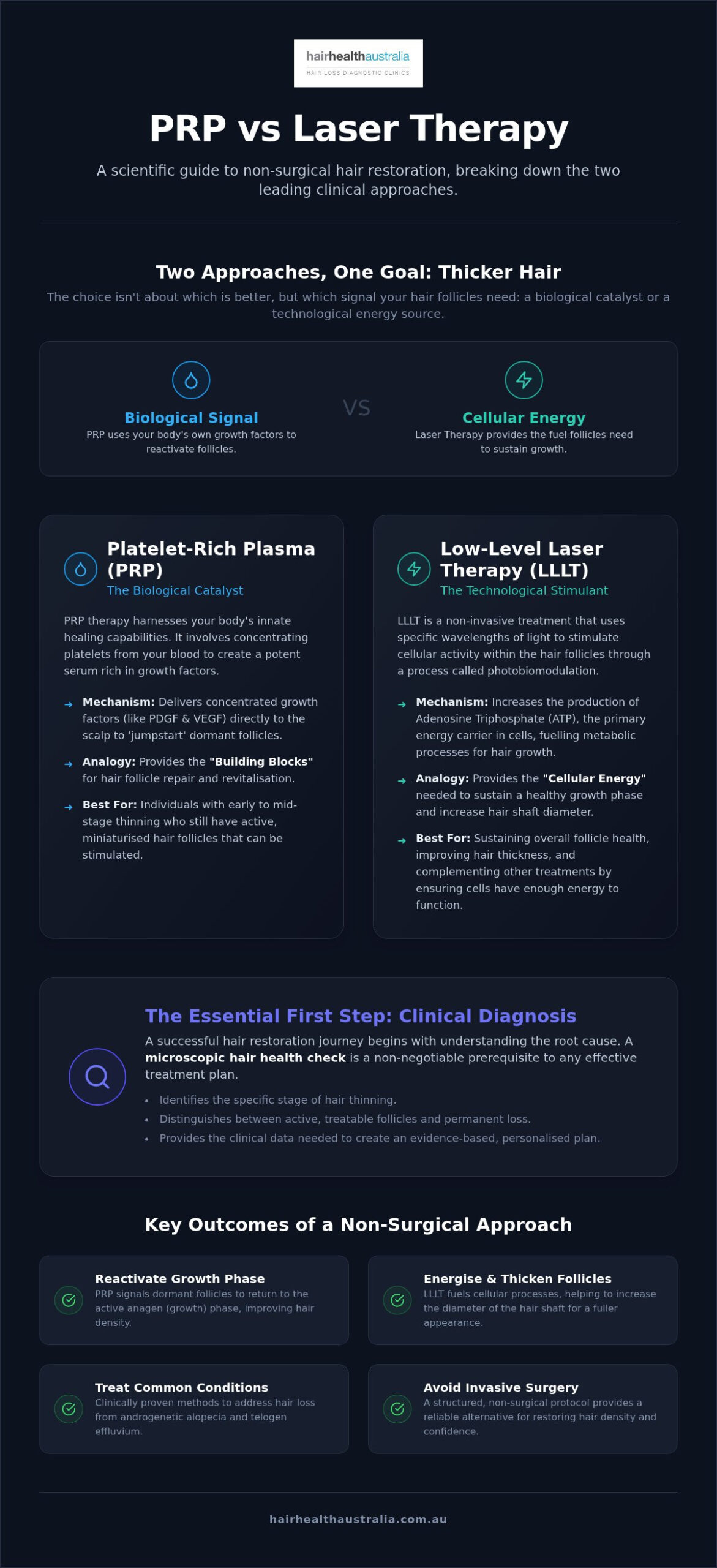
Understanding the core difference between these two modalities is crucial for managing expectations. Platelet-Rich Plasma (PRP) functions as a biological catalyst. The process involves concentrating the growth factors found in your own blood and delivering them directly to the scalp. These platelets signal stem cells to revitalise dormant follicles and improve the thickness of the hair shaft. It’s a targeted, organic message that encourages the body to repair itself from within.

In contrast, Low-Level Laser Therapy (LLLT) acts as a technological stimulant. It utilises specific wavelengths of light to trigger a process known as photobiomodulation. This interaction increases the production of Adenosine Triphosphate (ATP) within the cells. Think of ATP as the fuel your follicles need to function at their peak. While their mechanisms differ, their objective is identical: to extend the Anagen (growth) phase of the hair cycle and reverse the thinning process. Determining the best path between PRP vs laser therapy for hair loss Sydney specialists provide involves assessing whether your follicles require a biological boost or a consistent supply of cellular energy.

Platelet-Rich Plasma (PRP): The Biological Catalyst for Hair Density

Platelet-Rich Plasma (PRP) represents a sophisticated shift in how we approach hair restoration. Rather than relying on external chemicals, this protocol harnesses the regenerative power already present in your vascular system. The process involves extracting a small sample of your blood and concentrating the platelets to create a potent serum often described as ‘liquid gold’. These platelets contain essential growth factors, such as Platelet-Derived Growth Factor (PDGF) and Vascular Endothelial Growth Factor (VEGF), which act as biological messengers. When these messengers reach the hair bulge area, they signal dormant stem cells to revitalise, encouraging a transition from the resting phase back into active growth.

Ideal candidates for this biological intervention are typically those experiencing early to mid-stage thinning. It’s particularly effective for individuals who still have active, albeit miniaturised, follicles. When weighing the benefits of PRP vs laser therapy for hair loss Sydney residents should consider that PRP provides the ‘building blocks’ for repair, whereas laser provides the energy to use them. To determine if your follicles are in a receptive stage for this treatment, a professional diagnostic assessment is the most reliable starting point.

The PRP Treatment Experience

Success begins before you enter the clinic. We recommend increasing your water intake and focusing on nutrient-dense meals 24 hours prior to your session to ensure the highest quality plasma. Once at the clinic, the process is methodical. After your blood is collected, it’s placed in a high-speed centrifuge. This machine precisely separates the platelets from other blood components, ensuring a high concentration of growth factors. During the micro-injection phase, comfort is a priority. Specialists often use cooling devices or topical anaesthetics to ensure the process is manageable and efficient. The entire appointment typically fits within a standard lunch hour, making it a practical choice for those working in the Sydney CBD.

Recovery and Realistic Expectations

The recovery period is remarkably brief. You can return to your daily routine almost immediately, though we advise avoiding strenuous exercise or washing your hair for the first 24 hours. This allows the scalp to settle and the growth factors to begin their work undisturbed. Patience is vital in biological therapy. While some notice an improvement in hair texture early on, the most significant increases in density usually appear after three to four sessions, spaced roughly one month apart. This timeline allows the follicles to complete a full growth cycle. Standard Sydney clinical protocols often include a maintenance session every six to twelve months to sustain the revitalised density and protect against further thinning.

Low-Level Laser Therapy (LLLT): Energising Follicles at a Cellular Level

While PRP addresses the biological signals within the scalp, Low-Level Laser Therapy (LLLT) focuses on the bio-energetic environment of the follicle. It’s a sophisticated application of photobiomodulation. This process occurs when specific wavelengths of light penetrate the scalp to reach the base of the hair follicle. Once absorbed by the mitochondria, this light energy is converted into Adenosine Triphosphate (ATP). This increase in cellular fuel allows follicles to function more efficiently, extending the growth phase and improving hair diameter. For those comparing PRP vs laser therapy for hair loss Sydney clinics provide, LLLT stands out as a completely non-invasive, painless option that requires zero recovery time.

A common misconception is that home-use laser caps provide the same efficacy as medical-grade clinical equipment. Clinical-grade lasers utilise high-density diode panels or hoods that provide uniform coverage and consistent power output. These devices are calibrated to ensure the light penetrates deeply enough to reach the dermal papilla. Home devices often lack the necessary power density to achieve these clinical outcomes. Additionally, clinical LLLT improves local microcirculation through vasodilation. This ensures that oxygen and nutrients are effectively delivered to the hair roots while simultaneously reducing follicular inflammation.

Clinical Laser Protocols in Sydney

Success with light therapy depends on a structured, methodical schedule. In a professional Sydney clinical setting, we typically recommend two to three sessions per week. Each session lasts approximately 20 to 30 minutes, during which the patient sits comfortably under a medical-grade laser hood. This consistency is vital. The cumulative effect of the light energy is what sustains the follicle’s transition into the Anagen phase. Many patients find this time restorative, often using it to read or catch up on emails, as it fits easily into a busy professional routine.

Who Benefits Most from Light Therapy?

LLLT is particularly effective for treating diffuse thinning where hair is present but losing its vitality and diameter. It serves as an excellent preventative measure for those with a genetic predisposition to hair loss, helping to maintain existing density. We often integrate laser therapy with topical treatments to maximise results. The increased blood flow and cellular activity triggered by the laser can enhance the absorption and efficacy of clinical serums. When assessing the long-term benefits of PRP vs laser therapy for hair loss Sydney patients often find that LLLT provides the consistent energy needed to maintain results between biological treatments. This multi-faceted approach ensures that the follicle is supported from both a technological and nutritional standpoint, providing a comprehensive path toward hair restoration.
PRP vs Laser for Hair Loss in Sydney: Which is Best?

PRP vs Laser Therapy: A Comparative Analysis of Efficacy and Experience

When deciding between PRP vs laser therapy for hair loss Sydney residents must consider the fundamental difference in how these treatments interact with the scalp. PRP is an active biological intervention. It deliberately triggers a healing response by introducing a high concentration of growth factors directly into the tissue. This makes it an aggressive, effective choice for those seeing rapid thinning or those who want to jumpstart a stagnant growth cycle. In contrast, Low-Level Laser Therapy is a passive, supportive treatment. It doesn’t force a response but rather provides the ideal cellular environment for follicles to thrive. It’s gentle, consistent, and requires no recovery time, making it an excellent foundation for any long-term hair health programme.

The side effect profiles also differ significantly. Because PRP involves micro-injections, patients might experience mild tenderness, swelling, or occasional bruising at the injection sites for 24 to 48 hours. These are standard clinical responses and resolve quickly. Laser therapy carries virtually no risk of side effects. It’s a non-thermal light exposure that feels like nothing more than a slight warmth on the scalp. For individuals with sensitive skin or those who are needle-phobic, laser therapy offers a pathway to restoration without the anxiety of clinical procedures.

Choosing Based on Your Hair Loss Stage

Your specific stage of hair loss often dictates the best starting point. PRP is frequently the superior choice for rapid intervention in cases of Androgenetic Alopecia (male or female pattern baldness). It targets the miniaturisation process with biological intensity. Laser therapy, however, is often preferred for stabilising hair quality or assisting recovery from Telogen Effluvium (temporary shedding due to stress or illness). Many Sydney specialists now advocate for the ‘Synergy Effect’. By combining the biological trigger of PRP with the consistent cellular energy of laser therapy, you address hair loss from two different scientific angles simultaneously. This combination is often the most effective way to achieve significant, lasting density.

Lifestyle Considerations for Sydney Patients

Managing a restoration plan requires a realistic look at your weekly schedule. PRP involves fewer, more intensive sessions, typically requiring one visit per month. This suits those who can’t commit to a weekly clinic visit but can spare an hour once every few weeks. Clinical laser therapy requires more frequent visits, usually two to three times a week, but each session is brief and requires no ‘settling’ period afterward. You can walk straight from a laser session into a boardroom meeting in the CBD without anyone knowing you’ve had treatment.

It’s also vital to prepare for the ‘shedding’ phase. This is a normal part of the regrowth journey where weaker hairs are pushed out to make room for stronger, thicker shafts. Understanding these nuances is part of choosing a non-surgical hair loss clinic in Sydney that prioritises patient education. To ensure you select the modality that matches your biological needs and lifestyle, we recommend you book a microscopic hair health check to establish a professional baseline before beginning any protocol.

Visual inspection is often the first step people take at home, but it’s fundamentally limited. A mirror can’t reveal the diameter of individual hair shafts or the presence of underlying scalp inflammation. A professional diagnosis moves beyond what’s visible to the naked eye. It provides the empirical data necessary to decide between PRP vs laser therapy for hair loss Sydney clinics offer. Without this clarity, you risk investing in a protocol that may not align with your current stage of follicle miniaturisation. Identifying whether a follicle is simply dormant or has ceased function entirely is the difference between a successful regrowth journey and a wasted investment.

The Microscopic Hair Health Check

The diagnostic process at our clinic centres on a detailed microscopic analysis. We examine the scalp at high magnification to identify specific markers of hair health that dictate treatment success. We look for the ratio of terminal hairs to vellus hairs, which tells us exactly how far the thinning process has progressed. We also assess the scalp environment for signs of sebum build-up or inflammation that might hinder the efficacy of clinical serums. This data is invaluable. It allows us to predict with high accuracy whether your follicles are likely to respond better to the biological stimulus of PRP or the cellular energy of laser therapy. You can book your Hair Health Check in Sydney to gain this essential baseline before starting any treatment.

Your Path Forward at Hair Health Australia

At Hair Health Australia, we prioritise clinical honesty above all else. If our analysis shows that follicles have reached a stage of permanent scarring where non-surgical methods won’t be effective, we’ll tell you. Our goal isn’t to provide a one-size-fits-all package but to develop a bespoke restoration plan that offers a high probability of success. This partnership is built on transparency and evidence-based expectations. We understand the social self-consciousness that comes with declining hair density, and we aim to replace that uncertainty with a clear, scientific path forward.

The debate between PRP vs laser therapy for hair loss Sydney residents often find confusing becomes a simple clinical decision once your data is on the table. Whether you require the concentrated growth factors of PRP, the mitochondrial boost of medical-grade laser, or a synergistic combination of both, your plan will be uniquely yours. It’s time to stop guessing and start measuring. We invite you to start your personalised hair health journey today and regain confidence in your appearance through professional, non-surgical care.

Take Control of Your Hair Restoration Journey

Deciding between biological stimulus and technological energy is a significant step toward reclaiming your confidence. PRP revitalises follicles using your body’s own growth factors, while laser therapy ensures those follicles have the cellular fuel to thrive. Often, the most effective results come from a synergistic approach that combines both methods. However, the success of any protocol depends on an accurate starting point. When comparing PRP vs laser therapy for hair loss Sydney specialists emphasise that data-driven diagnosis is the only way to ensure you aren’t wasting time on ineffective treatments.

Since 2009, our clinic has provided specialised, non-surgical regrowth protocols tailored to the individual. By utilising clinical microscopic hair analysis, we identify the precise state of your scalp health before any treatment begins. This transparency ensures your plan is grounded in science rather than guesswork. You don’t have to navigate this process alone. Book Your Comprehensive Sydney Hair Health Check Today to receive a clear, expert-led roadmap for your hair health. We’re here to help you achieve the thicker, healthier hair you deserve.

Frequently Asked Questions

Is PRP or laser therapy better for receding hairlines?

PRP is generally more effective for targeted areas like a receding hairline because it delivers concentrated growth factors directly to the thinning site. Receding hairlines often involve aggressive follicle miniaturisation that requires a biological catalyst to reverse. While laser therapy is a valuable supportive tool, the active nature of PRP makes it the primary clinical choice for defined areas of loss where follicles need a potent signal to return to growth.

Can I combine PRP and laser therapy for faster results?

Combining these treatments is often the most effective strategy for Sydney patients seeking robust density. While PRP provides the biological building blocks for repair, laser therapy supplies the cellular energy required to utilise those blocks. This dual-action approach addresses hair loss from both nutritional and energetic perspectives. Many clinical protocols use this synergy to accelerate the transition of follicles from the resting phase back into the active growth phase.

How many PRP sessions will I need before I see new hair growth?

Most clinical protocols in Sydney recommend an initial course of three to four sessions spaced roughly four weeks apart. While some individuals notice improved hair texture within the first month, visible increases in density typically appear after the third session. This timeline aligns with the natural hair growth cycle, as follicles require several months to produce a new, thicker hair shaft that is visible to the naked eye.

Does laser therapy for hair loss actually work for everyone?

Laser therapy is only effective if the hair follicles are still active and capable of repair. It works by energising miniaturising follicles through photobiomodulation, but it cannot revive follicles that have permanently ceased function or been replaced by scar tissue. This is why a microscopic diagnosis is essential to determine if your specific type of hair loss is receptive to light-based stimulation before you begin a program.

Are there any side effects to PRP injections in the scalp?

Side effects are minimal because the treatment uses your own blood, eliminating the risk of allergic reactions. You might experience temporary tenderness, mild swelling, or slight bruising at the injection sites for 24 to 48 hours. These are standard clinical responses that resolve quickly without intervention. Most patients return to their normal professional routine in the Sydney CBD immediately after their appointment without any visible signs of treatment.

What happens if I stop laser therapy treatments?

Hair loss is often a progressive condition, so stopping treatment may lead to a gradual return to the previous thinning pattern over several months. Laser therapy provides a constant energy source to sustain follicle health and hair diameter. Without this ongoing support, the biological factors driving genetic hair loss may eventually overwhelm the follicle’s ability to maintain its growth phase, leading to a slow decline in hair density.

Is the treatment at a Sydney hair clinic covered by Medicare?

Non-surgical hair restoration treatments like PRP and laser therapy are generally considered elective cosmetic procedures and are not covered by Medicare. Some private health insurance extras might offer partial rebates depending on your specific policy and the clinical nature of the provider. We recommend checking with your insurer regarding coverage for clinical trichology services to see if you are eligible for any out-of-pocket cost reductions.

How do I know if my hair follicles are still active or permanently dead?

A microscopic hair health check is the only definitive way to assess follicle viability accurately. During this scan, a specialist identifies miniaturised hairs that are still active versus areas where follicles have closed and formed scar tissue. When choosing between PRP vs laser therapy for hair loss Sydney residents should rely on this data-driven approach to ensure they are viable candidates for non-surgical restoration before committing to a plan.
Menopausal Hair Loss Treatment: A Clinical Guide to Restoration in Sydney (2026)

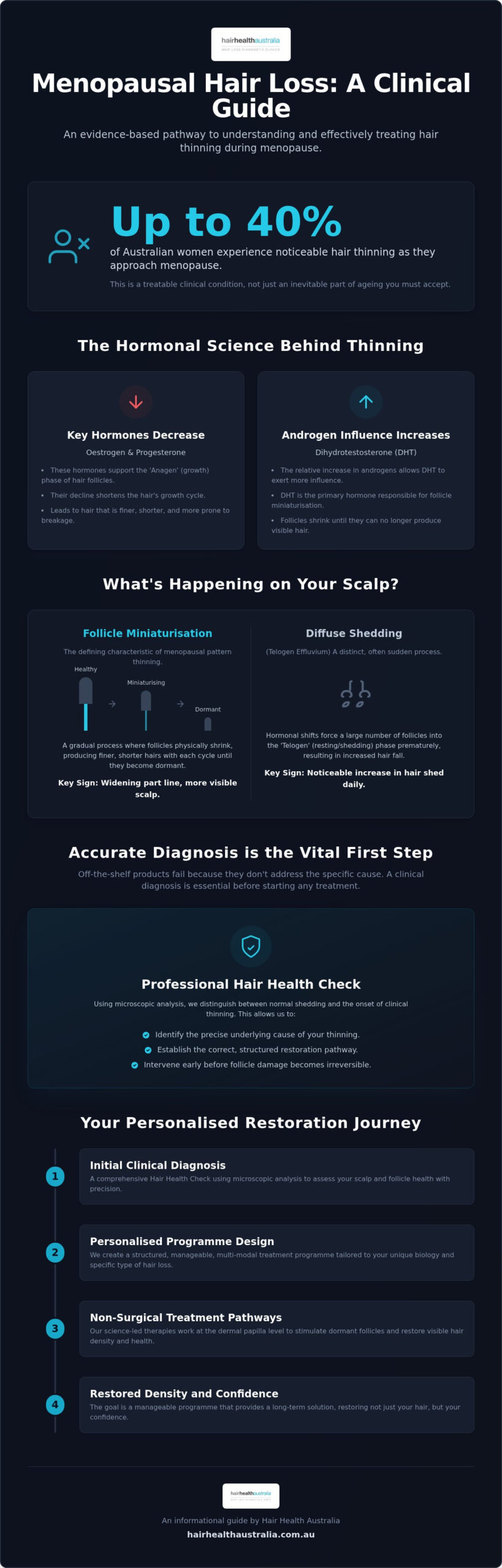
Did you know that up to 40% of Australian women experience noticeable hair thinning as they approach menopause? It’s a confronting transition that often leaves you feeling invisible, especially when your morning mirror reflection reveals more scalp than it used to. You’ve likely spent significant time and money on “miracle” shampoos or chemist-shelf serums, only to find they offer little more than a fragrant wash and no real change in density. It’s frustrating to feel caught between a GP who might dismiss it as a natural part of ageing and a beauty industry that over-promises results.

We believe you deserve more than a temporary fix; you need a clinical solution. This guide provides a clear, evidence-based pathway to effective menopausal hair loss treatment that replaces uncertainty with medical clarity. We’ll explore the specific hormonal shifts affecting your follicles and the non-surgical diagnostic tools we use at our Sydney centre. By identifying the precise underlying cause of your thinning, we can establish a structured, manageable programme designed to restore your hair density and your confidence.

Key Takeaways

  • Understand how the decline of oestrogen and progesterone during menopause directly impacts your hair growth cycle and leads to follicle miniaturisation.
  • Learn why a microscopic Hair Health Check is the essential first step to accurately diagnose the cause of thinning before starting any clinical programme.
  • Discover why a multi-modal menopausal hair loss treatment plan offers a more effective, science-led alternative to standard “miracle” shampoos and chemist-shelf serums.
  • Identify the specific non-surgical pathways available at our Sydney clinic to stimulate dormant follicles and restore visible hair density.
  • Gain clarity on the structured journey from your initial clinical diagnosis to a personalised, manageable regrowth programme tailored to your unique biology.

Understanding Menopausal Hair Loss: Why It Happens and What to Look For

Menopause is a complex biological transition that affects almost every system in the body, including the scalp. For many women, the most distressing symptom isn’t the hot flushes or mood shifts, but the progressive loss of hair density. This isn’t just a cosmetic concern; it’s a physiological response to the significant decline in oestrogen and progesterone levels. These hormones typically support the growth phase of your hair follicles, keeping them in the “anagen” or growing stage for longer. When these levels fall, the hair cycle shortens, leading to hair that is finer, shorter, and more prone to breakage.

The Oestrogen-Androgen Shift

As oestrogen levels decrease, the relative balance of androgens in the body increases. This shift allows dihydrotestosterone (DHT) to exert more influence on the scalp. DHT is the primary hormone responsible for follicle miniaturisation, a process where hair follicles gradually shrink until they can no longer produce a visible hair. This condition, often clinically referred to as Pattern hair loss, is frequently triggered or accelerated by the hormonal fluctuations of menopause. While every woman experiences these shifts, those with a genetic predisposition are often more vulnerable to these changes. This biological imbalance creates a scalp environment where follicles struggle to survive without a targeted menopausal hair loss treatment.

Early Detection: More Than Just ‘Ageing’

Spotting the early signs is vital for successful intervention. Unlike the sudden “clumps” seen in stress-related shedding, menopausal thinning is usually gradual. You might notice your part line widening, your scalp becoming more visible under bright lights, or your ponytail feeling significantly thinner than it did a few years ago. These changes often carry a heavy emotional weight, impacting self-esteem and making many women feel as though they are losing a part of their identity. It’s easy to dismiss these changes as a normal part of ageing, but this can be a costly mistake. Menopausal hair loss is a treatable clinical condition that responds well to early intervention rather than an inevitable symptom you must simply accept.

Waiting it out is rarely a successful strategy. When hair follicles remain in a miniaturised state for too long, they can eventually lose the ability to recover, leading to permanent inactivity. Before starting any menopausal hair loss treatment, we recommend a professional Hair Health Check at our Sydney centre. This allows us to use microscopic analysis to distinguish between normal daily shedding and the onset of clinical thinning, ensuring you begin the correct restoration pathway before the damage becomes irreversible.

The Science of Thinning: Follicle Miniaturisation vs. Shedding

Understanding the biological mechanics of your scalp is the first step toward effective restoration. Every hair on your head follows a specific lifecycle: the Anagen (growth) phase, the Catagen (transition) phase, and the Telogen (resting) phase. Under normal conditions, about 90% of your hair is in the growth phase at any given time. However, the hormonal shifts of menopause often force follicles into the resting phase prematurely. This can result in sudden, diffuse shedding known as Telogen Effluvium, which is quite distinct from the gradual process of miniaturisation.

Miniaturisation is the defining characteristic of pattern thinning. In this process, the follicle itself physically shrinks. With each successive growth cycle, the hair produced is finer, shorter, and less pigmented until the follicle eventually stops producing visible hair altogether. Reaching this “point of no return” means the follicle has become dormant and potentially scarred. This makes early intervention with a clinical menopausal hair loss treatment essential to revive these structures before they lose the capacity for regrowth.

The Mechanism of Miniaturisation

This shrinking process occurs because the hair bulb’s access to vital blood flow and nutrients is restricted. As the follicle diminishes, the hair shaft loses its structural integrity. This is why many off-the-shelf topical solutions fail; they often lack the delivery systems required to penetrate the scalp and address the root cause at the dermal papilla level. Treating female pattern hair loss requires a more sophisticated approach that stimulates these deeper layers to reverse the miniaturisation trend and support thicker hair production.

Temporary vs. Permanent Loss

It’s vital to determine whether your hair is simply in a resting state or if the follicles are actually dying. While hormonal changes drive most menopausal thinning, nutritional deficiencies in Iron, Zinc, and Vitamin D can exacerbate the problem, turning a manageable issue into a significant loss of density. You can learn more about identifying these physical changes in our guide to early signs of alopecia in women. If you’re unsure which category your thinning falls into, a clinical Hair Health Check provides the diagnostic data needed to tailor a menopausal hair loss treatment to your specific biological needs.

Clinical Diagnostics: Why a Professional Hair Health Check is Vital

You might assume that a quick look in the mirror or a chat with your hairdresser is enough to understand why your hair is thinning. However, visual inspection is fundamentally limited because it only identifies hair loss once approximately 50% of your density is already gone. A professional clinical diagnosis goes beneath the surface to examine the scalp environment and follicle function in real-time. This diagnostic precision is the cornerstone of any successful menopausal hair loss treatment, as it allows us to differentiate between simple shedding and the more complex process of miniaturisation discussed in earlier sections.

Without clinical data, you are essentially guessing. Many women waste years on “miracle” products that don’t address their specific scalp needs. A professional assessment identifies the presence of scalp inflammation, sebum buildup, or fungal activity that might be stifling your follicles. By identifying these issues early, we can clear the path for regrowth and ensure that any subsequent treatment has the best possible chance of success. We don’t just look for hair loss; we look for the biological reasons behind it.

The Microscopic Advantage

At our Sydney centre, we use specialised digital trichoscopy to view your scalp at 200x magnification. This technology reveals miniaturised hairs that are completely invisible to the naked eye, allowing us to catch thinning long before it becomes obvious to others. This level of detail is vital for mapping out your follicle density and determining which areas of the scalp are most responsive to intervention. By conducting a comprehensive hair health check, we establish a clear biological baseline. This data is essential for measuring your success over the coming 6 to 12 months, ensuring your programme is delivering measurable improvements in hair diameter and count.

Essential Testing and Labs

Clinical diagnostics also involve looking at your internal health. For menopausal women, we focus on the “Big Three”: Ferritin (iron stores), thyroid function, and hormonal panels. It’s a common frustration to hear from a GP that your blood results are “normal” while you continue to lose hair. There is a significant difference between a range that is medically “normal” and one that is “optimal” for hair regrowth. For example, your Ferritin levels might be within the standard range for general health but well below the threshold required to sustain a healthy hair growth cycle.

We often collaborate with your local Sydney GP to ensure your internal health supports your external restoration efforts. This holistic approach ensures that your menopausal hair loss treatment isn’t just a surface-level fix. It’s a scientifically backed restoration plan that addresses both the hormonal shifts of menopause and any underlying nutritional gaps that could be hindering your results.

Menopausal Hair Loss Treatment: A Clinical Guide to Restoration in Sydney (2026)

Non-Surgical Treatment Pathways for Menopausal Thinning

Once a clinical diagnosis identifies the specific stage of your thinning, the focus shifts to a systematic restoration plan. Effective menopausal hair loss treatment rarely relies on a single “hero” ingredient. Instead, we advocate for a multi-modal approach that combines different clinical therapies to address the problem from multiple biological angles. By pairing clinical-strength topical protocols with advanced stimulation techniques, we can target the follicle miniaturisation process more aggressively than any off-the-shelf chemist brand could achieve alone.

A key component of our Sydney-based programmes is Low-Level Laser Therapy (LLLT). This non-invasive technology uses specific wavelengths of light to stimulate cellular repair and increase blood flow to the hair bulb. This process, known as photobiomodulation, encourages dormant follicles to move back into the growth phase. When supported by nutritional supplements tailored for the menopausal body, such as targeted doses of biotin, zinc, and iron, the scalp environment becomes far more receptive to regrowth.

Clinical Regrowth Protocols

Consistency is the most critical factor in any clinical programme. We often discuss “The 4-Month Rule” with our clients. This is the minimum timeframe required to see visible changes because of the natural biological rhythm of the hair growth cycle. It takes time for miniaturised follicles to reset and begin producing thicker, healthier shafts. For a deeper look at the most effective clinical options available today, you can explore our best hair regrowth treatment Australia guide. These protocols are designed to wake up follicles that have slowed down due to hormonal shifts, providing a structured pathway back to hair density.

Lifestyle and Scalp Maintenance

While clinical treatments do the heavy lifting, your daily habits play a supporting role. Managing cortisol levels is vital; chronic stress can push more hair into the shedding phase, compounding the effects of menopause. We also work with clients to improve professional scalp hygiene. There is a common myth that frequent washing causes more hair loss. In reality, avoiding the shower often leads to sebum and debris buildup, which can cause inflammation and stifle growth. Keeping the scalp clean and clear is essential for the success of any menopausal hair loss treatment.

Because every woman’s hormonal profile is unique, your restoration plan must be equally specific. To move beyond generic advice and start a programme backed by clinical data, we recommend you book a professional Hair Health Check at our Sydney centre to determine which treatment pathway is right for you.

Personalised Hair Restoration at Our Sydney Clinic

Choosing to address thinning hair is a deeply personal decision that requires both clinical expertise and empathetic care. At our Sydney CBD centre, we’ve designed an experience that prioritises medical accuracy over high-pressure sales. When you visit us, you aren’t just buying a product; you’re entering a structured medical pathway. Your journey begins with a comprehensive diagnostic phase where we move beyond surface-level observations to understand your unique hormonal and scalp profile. This ensures that every menopausal hair loss treatment we recommend is grounded in your specific biological data.

We focus exclusively on non-surgical alternatives to hair restoration. While surgical transplants are often discussed in the media, they are an invasive and frequently unnecessary step for menopausal thinning, which is often diffuse rather than localised. Our approach focuses on reviving your existing follicles and stabilising the scalp environment. By using clinically-backed, non-invasive methods, we help you achieve visible density without the downtime or risks associated with surgery. It’s about working with your body’s natural rhythms to produce sustainable, long-term results.

The Sydney Clinical Experience

Our commitment to you is built on transparency and honesty. We don’t promise “overnight miracles” because biology doesn’t work that way. Instead, our Sydney specialists provide realistic expectations based on the current state of your follicles. We use regular follow-up microscopic scans to monitor your progress, allowing us to adjust your programme as your hair health improves. This data-driven approach ensures you’re never left wondering if your treatment is working. Before you decide on a provider, it’s helpful to understand what a professional environment should offer. You can read our non-surgical hair loss clinic Sydney checklist to ensure you’re receiving the highest standard of clinical care.

Success Beyond the Mirror

The true measure of a successful menopausal hair loss treatment isn’t just a thicker part line; it’s the restoration of your confidence. Many Sydney women we’ve treated report a profound sense of relief once they have a clear plan in place. Reclaiming your hair often means reclaiming your identity and feeling like yourself again. Beyond the initial regrowth phase, we focus on the long-term maintenance of your scalp health post-menopause. This ensures that the results you achieve are protected as your body continues to change over time.

You don’t have to navigate this transition alone or settle for temporary fixes that fail to deliver. The first step toward restoration is gaining clarity on the health of your follicles. To move forward with confidence and start your personalised journey back to hair density, organise your clinical consultation today at our Sydney centre.

Reclaiming Your Hair Density and Confidence

Menopause marks a significant physiological shift, but the thinning that often accompanies it doesn’t have to be permanent. By moving away from over-the-counter “miracle” fixes and toward a structured, science-led approach, you can effectively address the hormonal causes of follicle miniaturisation. We’ve seen throughout this guide that success relies on accurate clinical diagnostics and a commitment to a personalised, multi-modal menopausal hair loss treatment.

At our Sydney centre, we’ve spent over 15 years providing specialised non-surgical restoration for women across Australia. We use advanced microscopic diagnostic scanning to identify exactly what your scalp needs, ensuring your plan is as unique as your biology. Taking action early is the most effective way to protect your existing hair and stimulate new growth before follicles become permanently dormant.

If you’re ready to replace uncertainty with a clear, clinical pathway, we are here to guide you. You can Book Your Comprehensive Hair Health Check in Sydney to begin your journey back to visible hair density. You deserve to feel like yourself again, and we have the clinical expertise to help you get there.

Frequently Asked Questions

Is menopausal hair loss permanent if I don’t treat it immediately?

Menopausal thinning isn’t always permanent, but it can become irreversible if the follicles are left to miniaturise for too long. Once a follicle becomes dormant and scarred, it loses the ability to produce a new hair shaft. Early intervention with a clinical menopausal hair loss treatment is the most effective way to revive these structures before they reach a point where regrowth is no longer biologically possible.

Can HRT (Hormone Replacement Therapy) stop my hair from thinning?

Hormone Replacement Therapy (HRT) may help stabilise the hair growth cycle by addressing the underlying oestrogen deficiency, but it’s rarely a complete solution for hair restoration. While HRT supports your internal hormonal balance, it doesn’t always provide the targeted stimulation required to reverse existing follicle miniaturisation. We often work alongside your GP to ensure your clinical hair programme complements your broader hormonal management.

How long does it take to see results from a menopausal hair loss treatment?

You should expect to see the first visible signs of improvement after approximately four months of consistent, daily treatment. This timeframe aligns with the natural biological rhythm of the hair growth cycle. Significant changes in hair density and diameter typically become more apparent between the six and twelve-month marks, which is why we use microscopic scans to track your progress throughout the first year.

Are there any side effects to non-surgical hair regrowth programmes?

Our non-surgical hair regrowth programmes are designed to be minimally invasive with very few reported side effects. Because we focus on topical protocols and light-based therapies like Low-Level Laser Therapy, most clients experience no discomfort or downtime. During your initial consultation, we’ll review your medical history to ensure your personalised menopausal hair loss treatment is both safe and effective for your specific scalp health.

Why is my hair thinning specifically at the part and temples?

Thinning at the part line and temples occurs because the hair follicles in these specific regions are often more sensitive to androgenic shifts. As oestrogen levels fall, these follicles are more vulnerable to the shrinking effects of dihydrotestosterone (DHT). This pattern is a classic sign of hormonal thinning and is one of the primary indicators we look for during a clinical scalp examination at our Sydney centre.

Does biotin or other hair vitamins actually work for menopause?

Biotin and hair vitamins only work if your thinning is caused by a specific nutritional deficiency. While supplements can support the building blocks of the hair shaft, they don’t address the hormonal miniaturisation that defines menopausal hair loss. A clinical treatment focuses on the root cause at the follicle level, using vitamins only as a supporting element rather than a primary solution for regrowth.

Can stress from menopause symptoms make my hair loss worse?

Yes, the physiological and emotional stress of menopause symptoms can trigger a secondary condition called Telogen Effluvium. This causes a larger number of hairs to enter the resting phase simultaneously, leading to sudden, diffuse shedding. Managing cortisol levels through lifestyle adjustments is an important part of a holistic restoration strategy to prevent stress from compounding your hormonal hair loss and slowing your progress.

What is the difference between female pattern baldness and menopausal thinning?

Female pattern baldness is the clinical condition, while menopausal thinning is the specific life stage that often triggers or accelerates it. The underlying mechanism of follicle miniaturisation is the same in both cases. However, menopausal thinning is specifically linked to the rapid decline of protective hormones like oestrogen, requiring a diagnostic approach that accounts for these unique biological changes.

The 7 Stages of Male Pattern Baldness: A Clinical Guide to the Norwood Scale

Approximately 40.8% of Australian men experience some degree of hair loss, and for one in five, visible thinning begins as early as their 20s. If you have spent your mornings scrutinising the bathroom mirror, you aren’t alone in feeling a sense of premature aging or frustration over the conflicting “miracle” cures promoted online. It is natural to feel overwhelmed by the different stages of male pattern baldness, especially when you aren’t sure if your receding hairline is a minor shift or the start of a more significant progression.

We understand that the fear of invasive surgery often leads many men to delay seeking help, yet the key to effective restoration lies in early, clinical intervention. This guide provides a clear roadmap to help you identify your current position on the Norwood Scale and understand the biological role of DHT in follicle miniaturisation. You will discover that a transplant is not your only option. By using microscopic scalp analysis, we can move beyond guesswork to create a targeted, non-surgical regrowth programme. We will explore the seven stages of hair loss and the evidence-based paths available right here in Sydney to help you regain control over your appearance.

Key Takeaways

  • Understand how specialists use the Norwood Scale to categorise the progression of hair loss from a subtle receding hairline to significant thinning.
  • Learn how identifying the specific stages of male pattern baldness allows for a more targeted approach to blocking DHT and protecting your existing follicles.
  • Discover why a visual check in the bathroom mirror often misses early signs of miniaturisation and why microscopic scalp analysis is essential for an accurate diagnosis.
  • Explore clinically-proven, non-surgical alternatives to hair transplants that focus on stabilisation and regrowth without the need for invasive surgery.
  • Find out how a professional Hair Health Check in Sydney provides the clinical data needed to customise a treatment programme for your unique hair profile.

What is Male Pattern Baldness? Understanding Androgenetic Alopecia

Male pattern baldness, or androgenetic alopecia, is often misunderstood as a simple byproduct of ageing. In reality, it’s a specific genetic condition where hair follicles are predisposed to a sensitivity to dihydrotestosterone (DHT). This hormone is a derivative of testosterone. While it’s essential for various biological functions, it can be destructive to the scalp of a genetically susceptible man. Recent data indicates that approximately 40.8% of Australian men experience some degree of hair loss, making it one of the most common clinical concerns across the country. Understanding the different Norwood Scale stages of male pattern baldness is the first step toward effective stabilisation.

While the condition is rooted in your DNA, the rate at which you lose hair is not set in stone. Many men assume that because their father or grandfather lost their hair, they are destined for the same outcome. This is a misconception. Modern clinical treatments allow us to manage the progression of thinning and, in many cases, reverse the early signs of miniaturisation. The goal is to move away from guesswork and toward a methodical, evidence-based approach to hair health.

The Role of DHT: The ‘Why’ Behind the Thinning

DHT acts by binding to receptors in the hair follicles, particularly those on the crown and hairline. Once bound, it begins a process called miniaturisation. This isn’t an overnight disappearance. Instead, the follicle’s growth phase (anagen) shortens, and the resting phase (telogen) lengthens. With each cycle, the hair produced is finer, shorter, and less pigmented. Eventually, the follicle may become dormant. It’s vital to distinguish between a dormant follicle and one that has completely atrophied. Dormant follicles can often be revitalised with the right clinical intervention, whereas dead follicles usually require more invasive measures. Interestingly, the follicles at the back and sides of the head often lack these DHT receptors, which explains why these areas typically remain thick even as the top thins.

Why Early Detection in Sydney is Critical

Living in Sydney presents unique challenges for scalp health. Our high UV index and harsh coastal environment can cause oxidative stress, which may exacerbate existing thinning. When you wait to see visible patches in the mirror, you might have already lost up to 50% of your hair density in those areas. Proactive monitoring is the most effective way to protect your hair. We recommend a professional Hair Health Check as a baseline diagnostic tool. This allows us to see exactly what is happening beneath the surface before the follicles reach a point of no return. Early intervention isn’t just about appearance; it’s about clinical preservation. The sooner you identify your stage, the more options you have for non-surgical recovery.

The 7 Stages of the Norwood Scale: Where Do You Sit?

The Norwood Scale serves as the global benchmark for diagnosing this common form of hair loss. It allows specialists and patients to speak the same clinical language, transforming a subjective worry into a measurable data point. By categorising the stages of male pattern baldness, we can determine the most effective treatment protocol based on your current follicular health rather than relying on generic, one-size-fits-all solutions. Understanding your position on this scale is the first step toward moving from uncertainty to a clear, actionable plan.

Stages 1 to 3: The ‘Prevention’ Phase

In the earliest phases, changes are often so subtle they go unnoticed by friends and family. Stage 1 represents a “control” state with no visible recession. While it may seem unnecessary to seek advice here, establishing a baseline is invaluable for future comparison. Stage 2 involves a slight shift at the temples. Many men dismiss this as a “maturing” hairline, but it is often the first indicator of DHT sensitivity. By Stage 3, the recession becomes clinically significant, often forming a distinct ‘M’ or ‘V’ shape. This is the optimal window for non-surgical intervention. Follicles at this stage are typically still active and highly responsive to stabilisation therapies, making it easier to maintain your current density.

Stages 4 to 7: The ‘Restoration’ Phase

As the condition progresses, the focus shifts from pure prevention to active restoration. Stage 4 is characterised by a deepening of the temple recession alongside noticeable thinning at the vertex, or the crown of the head. A band of hair still separates these two areas, but it begins to narrow in Stage 5. By the time a man reaches Stage 6, this bridge of hair has largely disappeared, leaving a large area of exposed scalp. Stage 7 is the most advanced of the stages of male pattern baldness, where only a thin horseshoe-shaped band of hair remains around the sides and back. Even at these later stages, clinical management can help maintain existing hair and improve the overall scalp environment.

Identifying your specific stage is a critical step, but visual self-mapping only tells part of the story. Because density loss occurs beneath the surface long before it becomes visible to the naked eye, a professional Hair Health Check is recommended to assess the health of your remaining follicles. This diagnostic approach ensures you aren’t just guessing your stage but are instead making decisions based on microscopic evidence. It is about knowing exactly where you stand so you can choose the most effective path forward.

Beyond the Mirror: Why Visual Stages Can Be Deceiving

The bathroom mirror is often the first place men notice changes, but it’s a remarkably poor tool for early diagnosis. By the time you can physically see scalp through your hair, you may have already lost up to 50% of your hair density in that specific area. This lag occurs because this genetically predetermined disorder progresses follicle by follicle, with individual hairs thinning at different rates. Two men might both appear to be at Stage 3 on the Norwood Scale, yet their underlying follicular health could be vastly different. One may have a high percentage of hairs currently in the miniaturisation phase, while the other might have stable coverage. This is why self-mapping the stages of male pattern baldness is often inaccurate and can lead to delayed or ineffective treatment.

The Power of Microscopic Hair Analysis

Clinical diagnostics move beyond what the naked eye can perceive. Using high-magnification scanning, we can identify hairs that are in the process of miniaturising before they disappear entirely. We measure the specific ratio of terminal hairs, which are thick and healthy, to vellus hairs, which are the fine, translucent strands that indicate a shortening growth cycle. By identifying these vellus hairs early, we can intervene before they reach the point of total loss. Microscopic hair analysis is the gold standard for non-surgical planning. This data allows us to predict the future progression of your hair loss with far greater accuracy than a simple visual inspection.

Identifying ‘Dormant’ vs. ‘Dead’ Follicles

A common fear is that once a patch of scalp is visible, the hair is gone forever. However, a “bald” patch often contains hundreds of dormant follicles that are still technically alive but are producing hairs too fine to see. Clinical regrowth programmes are specifically designed to target these dormant bulbs, providing the necessary stimulus to encourage them back into an active growth phase. The distinction between a dormant follicle and one that has completely atrophied (dead) determines if you are a candidate for non-surgical therapy. If the follicle has atrophied, regrowth is no longer possible through topical or systemic treatments. This makes early clinical identification vital for anyone hoping to avoid invasive procedures.

To get a true understanding of your scalp health, you need more than a reflection. A professional Hair Health Check provides a high-definition scan of your follicles, offering the clinical clarity needed to choose the right treatment path. Making an informed decision today can prevent the irreversible atrophy of your follicles tomorrow.

Non-Surgical Treatments for Every Norwood Stage

Many men mistakenly believe that once they reach the mid-to-late stages of male pattern baldness, surgery is their only remaining path. This perspective overlooks the efficacy of modern, multi-therapy clinical programmes. A single-product approach, such as using only a DHT-blocking shampoo or a generic supplement, rarely addresses the complex biological factors at play. Instead, a combined protocol that targets DHT stabilisation, scalp health, and follicle stimulation simultaneously offers the best chance for significant regrowth. By using clinical-grade topicals and professional supervision, we can customise a plan that evolves as your hair health improves.

For those in the early phases (Norwood 1 to 3), the primary objective is stabilisation. At this point, the follicles are often still robust, but the growth cycle is beginning to shorten. Treatment focuses on blocking DHT locally to prevent further miniaturisation and maintaining existing density. In the mid-to-late phases (Norwood 4 to 6), the strategy shifts toward intensive stimulation. We aim to “wake up” dormant follicles that have stopped producing visible hair but have not yet completely atrophied. This requires a more disciplined, high-potency approach to ensure the scalp environment is perfectly primed for recovery.

DHT Blockers and Growth Stimulants

The core of any successful non-surgical programme involves a two-pronged attack. First, local DHT blockers work to protect the follicle from the hormone sensitivity that causes thinning. By applying these treatments directly to the affected areas, we can manage the condition with a focus on safety and precision. Second, growth stimulants are utilised to increase blood flow to the scalp. This enhanced circulation delivers vital nutrients and oxygen to the hair bulb, essentially “feeding” the hair to encourage a longer, thicker growth phase. Professional oversight is essential here to ensure the concentrations are optimised for your specific stage while minimising the risk of side effects.

Scalp Health and Maintenance

Think of your scalp as the “soil” in which your hair grows. If the environment is hindered by inflammation, excessive sebum buildup, or poor hygiene, even the most advanced growth stimulants will struggle to be effective. Clinical-grade cleansers and specialised treatments are used to clear the follicles and reduce scalp tension. This creates an ideal foundation for regrowth and ensures that topical applications can penetrate deeply enough to reach the hair root. For a more comprehensive look at these professional protocols, you can read our guide to clinical hair treatment.

Consistency is the final, most important component of any non-surgical journey. Results do not happen overnight; they are the product of a methodical, daily commitment to your hair’s health. To determine which specific combination of therapies is right for your current stage, a professional Hair Health Check is the most reliable starting point. This diagnostic step ensures your programme is built on data rather than guesswork, giving you the clearest path to restoration.

Taking Control: Your Path to Hair Restoration in Sydney

Your current position within the stages of male pattern baldness serves as a clinical starting point, not a final verdict on your future hair density. At Hair Health Australia, we specialise in non-surgical recovery because we believe that science-backed stabilisation is often more effective and less invasive than surgery. Our Sydney-based specialists are dedicated to replacing the anxiety of hair loss with the clarity of a professional diagnosis. We don’t rely on generic products or “miracle” cures found online. Instead, we offer a straight-talking approach rooted in clinical standards and realistic expectations. Our goal is to empower you with the knowledge needed to make informed decisions about your hair health.

The transition from noticing thinning to taking action can be daunting, but it is the most critical step you can take. We move beyond the one-size-fits-all model by focusing on the unique biological profile of your scalp. By addressing the root causes of follicle miniaturisation, we can often achieve significant results without the need for surgical grafts. This methodical, evidence-based progression ensures that you are not just masking a problem, but actively managing a clinical condition with precision and care.

What to Expect at Your Sydney Consultation

The diagnostic process at our clinic is designed to be thorough and transparent. We utilise advanced microscopic scanning technology to look beneath the surface of the scalp. This allows us to assess follicle health in real-time, identifying areas where hair is dormant rather than lost. During your consultation, we walk you through several key steps:

  • A detailed analysis of your specific Norwood stage to establish a clinical baseline.
  • High-magnification scans to measure terminal versus vellus hair ratios.
  • An evaluation of scalp health, looking for inflammation or sebum issues that hinder growth.
  • A discussion about your lifestyle and goals to ensure your programme is sustainable.

Our Sydney clinic provides a reassuring and empathetic environment where your concerns are heard and addressed by experts. We act as your dedicated guide, ensuring you feel fully informed at every stage of the restoration journey. This personalised focus ensures that your treatment plan is as unique as your hair profile.

The First Step: Booking Your Hair Health Check

It is time to stop guessing about your hair loss and start measuring it with clinical accuracy. Relying on visual self-mapping in the mirror often leads to delayed treatment and missed opportunities for stabilisation. By booking a professional assessment, you gain access to the data needed to stop the progression of thinning in its tracks. Our Sydney team is ready to help you navigate the stages of male pattern baldness with confidence and clinical expertise.

Book your Hair Health Check at our Sydney clinic today to begin your personalised journey toward regrowth.

Successful hair restoration begins with a professional diagnosis, not a generic product.

Moving Beyond Guesswork to Secure Your Hair Health

Understanding where you sit on the Norwood Scale is a vital diagnostic step, but it is only the beginning of your restoration journey. We have explored how the biological process of thinning often precedes visible loss and why relying on the mirror alone can lead to missed opportunities for stabilisation. By identifying the specific stages of male pattern baldness through clinical data rather than visual estimation, you can move away from the uncertainty of unverified cures and toward a scientifically validated path.

Our trusted Sydney specialists utilise personalised microscopic analysis to assess the health of your follicles at a level the naked eye cannot reach. This non-surgical clinical expertise allows us to create a roadmap for regrowth that is tailored specifically to your scalp’s requirements. You don’t have to navigate this alone or resort to invasive surgery as your first option. Taking a proactive stance today ensures that you are protecting your hair for the years to come. Clarity is the most powerful tool you have against thinning.

Book Your Comprehensive Hair Health Check in Sydney to gain the clinical clarity you deserve and start your personalised regrowth programme. Your hair health is a long-term investment, and we are here to guide you through every step with honesty and precision.

Frequently Asked Questions

Is male pattern baldness reversible at Stage 4?

Stabilisation and partial regrowth are achievable at Stage 4 through clinical intervention targeting dormant follicles. While a total return to a teenage hairline is unlikely without surgery, many men see significant density improvements with non-surgical programmes. The success of your treatment depends heavily on how many follicles have reached total atrophy versus those that are merely dormant. Early clinical intervention remains the most effective way to protect your remaining coverage and improve hair thickness.

How fast does male pattern baldness progress through the stages?

The progression through the stages of male pattern baldness is highly individual and depends largely on your genetic sensitivity to DHT. Some men experience a slow shift over several decades, while others may see noticeable changes within just a few years. Environmental factors and scalp health can also influence this timeline. Regular monitoring through microscopic analysis is the only reliable way to accurately track your specific rate of loss and adjust your treatment plan accordingly.

Can I jump from Stage 2 to Stage 4 quickly?

You won’t technically skip a stage, but hair loss can appear to accelerate once density drops below a critical threshold. Because you can lose up to 50% of your hair before thinning becomes visible to the naked eye, the transition can seem sudden. This gives the illusion of a “jump” from a maturing hairline to a visible bald patch at the crown. Clinical scans are essential because they detect this underlying thinning long before it manifests as a visible gap.

What is the difference between a maturing hairline and Stage 2 balding?

A maturing hairline is a natural, slight shift that affects most men as they transition out of their teens, usually involving a small, even lift across the entire hairline. Stage 2 balding is characterised by deeper, often asymmetrical recession specifically at the temples. If your hairline begins to form a distinct “M” shape or continues to move backward past the forehead creases, it is likely the beginning of androgenetic alopecia rather than a simple maturing process.

Does a receding hairline always mean I will go fully bald?

A receding hairline does not guarantee you will reach the advanced stages of male pattern baldness, as every man’s genetic destination is unique. Some individuals may stabilise at Stage 3 for the rest of their lives, while others might progress toward the “horseshoe” pattern of Stage 7. Without a professional diagnosis, it’s impossible to predict where your hair loss will naturally stop. Stabilisation treatments are designed to halt this recession regardless of your genetic predisposition.

Are non-surgical treatments effective for Stage 5 or 6?

Non-surgical treatments remain effective at Stages 5 and 6 for stabilising remaining hair and revitalising follicles that haven’t yet atrophied. While these advanced stages require more intensive therapy, a multi-modal clinical programme can still improve scalp health and overall hair diameter. The goal at this level is to maximise your existing density and prevent the total loss of the remaining bridge of hair. Many men find this a viable alternative to the invasive nature of surgery.

How do I know if my hair follicles are dead or just dormant?

You cannot determine if a follicle is dead or dormant simply by looking at your reflection. A patch of scalp that appears bald often contains hundreds of miniaturised, “vellus” hairs that are too fine to be seen without magnification. Microscopic scalp analysis is the clinical standard for identifying these dormant bulbs. If the scalp surface is completely smooth and lacks follicular openings under high magnification, the follicle has likely atrophied and will no longer respond to non-surgical regrowth therapies.

Hair Doctor: A Clinical Guide to Hair Loss Specialists in Sydney

If you’ve spent months experimenting with thickening shampoos and expensive salon serums, have you ever stopped to ask if you’re treating a cosmetic preference or a clinical condition? Most Australians experiencing thinning feel a genuine sense of anxiety, often caught between the fear of permanent baldness and the dread of invasive surgery. It’s frustrating when the distinction between a retail stylist and a medical specialist feels blurred, leaving you unsure where to turn for real answers.

Finding a qualified hair doctor in Sydney is the first step toward replacing that uncertainty with a clear, evidence-based diagnosis. This guide explains how a clinical specialist uses microscopic scanning technology to identify the root cause of your thinning, rather than just masking the symptoms. You’ll discover how to access a non-surgical restoration plan tailored specifically for the harsh Australian climate and the science behind modern follicular regrowth. We’ll outline the exact diagnostic process that moves you from guesswork to a structured, clinical path toward restoring your hair’s natural density and health.

Key Takeaways

  • Understand the specific role of a clinical hair doctor in diagnosing follicle biology and how they differ from general practitioners or salon stylists.
  • Learn why a specialised microscopic hair analysis is the essential first step to distinguish between active and dormant follicles before starting any treatment.
  • Compare the advantages of non-surgical restoration programmes, focusing on zero downtime and cost-effectiveness compared to invasive surgical options.
  • Identify the key information you need to bring to your consultation, from dietary habits to stress levels, to ensure an accurate clinical assessment.
  • Discover how to prepare for your diagnostic scan, including the importance of not washing your hair for 24 hours to ensure the most precise results.

What is a Hair Doctor and When Should You See One?

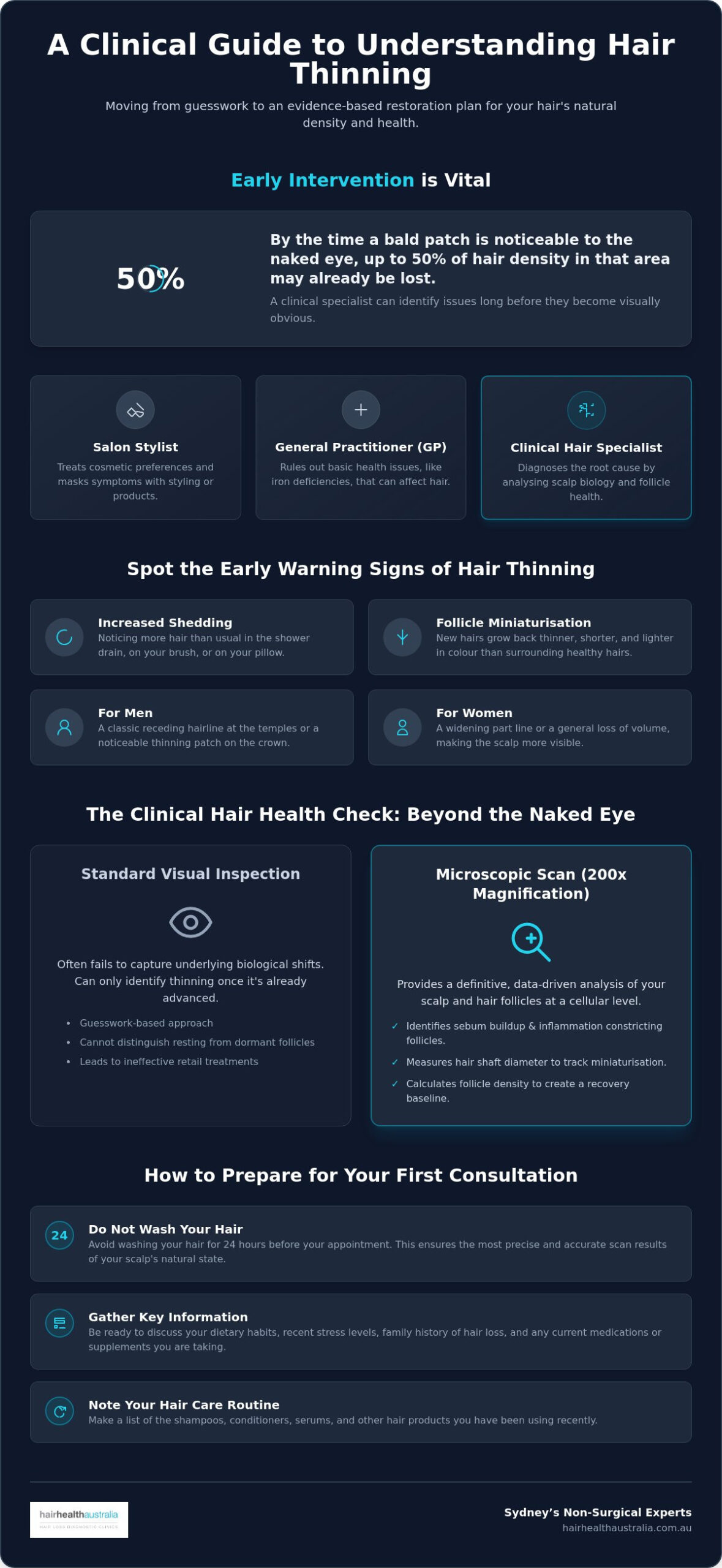
The term “hair doctor” is often used to describe any professional who treats thinning, but in a clinical setting, it refers to specialists who understand the intricate biology of the scalp and follicles. While a general practitioner (GP) can rule out basic iron deficiencies and a dermatologist treats complex skin diseases, a clinical hair specialist focuses specifically on the life cycle of the hair itself. A hair specialist is a professional who diagnoses the root cause of thinning through evidence-based analysis. Many people wait until they see a visible bald patch before seeking help, but this is a significant mistake for long-term recovery. By the time a patch is noticeable to the naked eye, you may have already lost up to 50% of the hair density in that specific area, making early intervention vital.

Trichologist vs. Dermatologist: Understanding the Roles

Trichologists focus on the clinical aspects of hair health, such as nutrition, lifestyle, and the physical state of the scalp. They are experts in identifying the various stages of a comprehensive overview of hair loss and how environmental factors in Sydney, like intense UV exposure, affect follicle health. Conversely, a dermatologist is a medical doctor who specialises in skin diseases and is necessary for treating autoimmune-related alopecia or scarring conditions. These professionals often collaborate to provide a comprehensive restoration plan. A clinical specialist might manage your non-surgical regrowth programme while a dermatologist handles specific medical prescriptions, ensuring every angle of your scalp health is covered.

The Red Flags: Symptoms That Require Professional Analysis

One of the most subtle signs of trouble is the “miniaturisation” process. This occurs when the hair follicle physically shrinks, producing a strand that is thinner, shorter, and lighter in colour than the surrounding hair. Over time, these follicles stop producing visible hair altogether. If you notice more hair in the shower drain than usual or find excessive strands on your pillow, your body is providing an early warning sign of telogen effluvium or early-stage pattern thinning.

For men, a receding hairline at the temples or a thinning crown is a classic indicator of genetic loss. Women typically experience a widening part line or a general loss of volume that makes the scalp more visible under bright lights. Identifying these shifts early through a professional Hair Health Check allows for a much more effective, non-invasive response before the follicles become permanently dormant. A hair doctor can determine if your shedding is a temporary reaction to stress or the beginning of a progressive condition that requires a structured restoration plan.

The Clinical Hair Health Check: Beyond the Naked Eye

A standard visual inspection by a GP or a hair stylist often fails to capture the underlying biological shifts occurring beneath the scalp’s surface. While they might notice general thinning, they cannot determine whether a follicle is simply resting or has reached a state of permanent dormancy. This is where a clinical hair doctor utilises advanced diagnostic tools to provide a definitive answer. By moving beyond what is visible to the naked eye, we can identify the specific symptoms and causes of hair loss that are unique to your physiology. Relying on guesswork often leads to wasted time on ineffective retail products, whereas cellular-level data allows us to build a customised treatment programme from day one.

Microscopic Scanning: What We See Under 200x Magnification

Using specialised microscopic scanning technology at 200x magnification allows us to observe the scalp environment in vivid detail. We frequently identify significant sebum buildup or chronic scalp inflammation that physically constricts the follicle, effectively suffocating healthy growth. This high-resolution view also lets us measure the hair shaft diameter across different zones of the head to track the precise progression of miniaturisation. Follicle density is calculated by counting the number of active hairs within a specific square centimetre, providing a mathematical baseline for your recovery. This level of detail ensures that your hair doctor isn’t just guessing about your progress but is instead tracking real, measurable improvements in hair health and density.

Environmental Factors in Sydney: UV and Scalp Health

Living in Sydney presents unique challenges for hair maintenance that are often overlooked in generic treatment plans. The intense Australian UV levels can lead to significant oxidative stress, which damages the protein structure of the hair and inflames the delicate scalp skin. Additionally, the specific mineral content in local water and our high coastal humidity levels often affect the hair cuticle’s integrity, making strands more prone to breakage and thinning. Sydney residents require specific scalp protection protocols within their regrowth plan to counteract these local environmental stressors. Understanding these external impacts is a core part of a professional Hair Health Check, ensuring your restoration path is grounded in the reality of the Australian climate. If you’ve noticed your hair feels different after a summer outdoors, a clinical assessment can help determine if environmental damage is accelerating your thinning.

Non-Surgical Restoration vs. Hair Transplant Surgery

Deciding between clinical restoration and surgical intervention is a pivotal moment for anyone facing thinning. While Follicular Unit Extraction (FUE) is a popular surgical method, it requires significant downtime and a substantial financial commitment. Surgical procedures often involve weeks of healing and potential scarring, whereas non-surgical clinical programmes offer zero downtime, allowing you to maintain your daily routine in Sydney without interruption. It’s essential to understand that surgery is fundamentally a relocation of hair follicles, not a cure for the biological triggers of loss. A hair doctor focuses on the underlying health of your scalp to ensure your follicles remain productive for years to come.

Cost-effectiveness is another major factor. Surgery carries a high upfront price tag, yet it does nothing to stop the progression of thinning in the surrounding areas. By choosing a non-surgical hair loss clinic in Sydney, you invest in a long-term strategy that preserves your existing natural hair while stimulating new growth at a fraction of the surgical cost. This proactive approach is often the most sustainable path for those in the early to mid-stages of thinning, where the goal is to stop loss before it requires more drastic measures.

How Non-Surgical Clinical Programmes Work

Our clinical protocols focus on revitalising the scalp environment to support healthy hair production. We utilise follicle stimulants designed to “wake up” dormant hairs that have entered a premature resting phase. These are combined with clinical-grade topicals that effectively block Dihydrotestosterone (DHT) at the scalp level, which is a primary driver of genetic thinning. This medical treatment for hair loss is further supported by nutritional guidance and strict scalp hygiene. We view the scalp as “fertile soil”; by removing sebum buildup and providing essential micronutrients, we create the optimal conditions for follicles to thrive naturally.

The Limitations of Surgery

Surgery is not a universal solution. It relies entirely on a healthy “donor area” at the back of the head. If your thinning is extensive, you may lack sufficient follicles to achieve a dense, natural look. There is also the distinct risk of a “patchy” appearance if your natural hair continues to thin around the transplanted grafts. This is why a hair doctor will often recommend clinical therapy even after a transplant. Without addressing the root biological cause, the newly moved hair may eventually stand alone as the surrounding original hair disappears. Maintaining the health of your scalp remains the most effective way to protect your appearance and ensure a seamless, high-density result.

Hair Doctor: A Clinical Guide to Hair Loss Specialists in Sydney

Preparing for Your First Hair Specialist Consultation

Your initial appointment with a hair doctor is a comprehensive data-gathering mission designed to uncover the specific biological triggers behind your thinning. To get the most out of this session, you should arrive prepared to discuss your medical history in detail. This includes your dietary habits, recent stress levels, and family history of hair loss. It’s also vital to bring an organised list of any current medications or supplements you’re taking, as many common prescriptions can inadvertently influence the hair growth cycle. Unlike a standard medical check-up, this consultation focuses on connecting your internal health with the external physical state of your follicles.

The diagnostic process typically begins with a clinical intake before moving into a specialised microscopic analysis. One of the most important preparation steps is to avoid washing your hair for at least 24 hours prior to your scan. This allows your natural sebum levels and scalp environment to remain undisturbed, providing a more accurate baseline for the specialist to examine. If the scalp is too clean, we may miss subtle signs of inflammation or oil imbalances that are contributing to your loss. Once you’re in the clinic, the journey moves from a verbal history to a high-resolution microscopic scan, where we can observe the health of your scalp in real-time.

Questions to Ask Your Specialist

During your consultation, you should feel empowered to ask technical questions to gain clarity on your condition. Ask where you currently sit on the Norwood scale for men or the Ludwig scale for women, as this helps establish a clinical baseline. You should also ask if your follicles are merely dormant or if they have become permanently scarred, which determines the potential for regrowth. Finally, ask for a realistic timeline on when you can expect to see measurable changes in hair density. A transparent hair doctor will provide objective answers based on your specific diagnostic data rather than making vague promises.

Managing Expectations: The Reality of Hair Growth

Understanding the biological hair cycle is essential for maintaining your commitment to a restoration plan. Hair moves through three distinct phases: Anagen (growth), Catagen (transition), and Telogen (resting). Because of these natural cycles, most clinical results take between 3 to 6 months to become visible to the naked eye. Consistency in your clinical programme is the most significant factor for long-term success. It’s important to remember that “stabilisation,” where we stop the active shedding, is the first major win before any significant regrowth occurs. If you’re ready to move beyond guesswork and secure a clinical diagnosis, you can book a professional Hair Health Check to begin your restoration journey.

Hair Health Australia: Sydney’s Non-Surgical Experts

Choosing a clinic for restoration should feel like a medical consultation, not a retail transaction. Hair Health Australia has established itself as Sydney’s centre for non-surgical excellence, specialising in evidence-based protocols since 2009. If you’re looking for a hair doctor who prioritises long-term scalp health, much like how Bright Sight Eye Specialists prioritises ocular health, our team provides the clinical environment you need. We move away from the one-size-fits-all approach common in the industry, instead focusing on the unique biological markers identified during your initial assessment.

Our commitment to “straight-talking” honesty is the foundation of our patient relationships. We don’t use hyperbolic marketing or make promises that the biology cannot support. Instead, we provide realistic expectations based on the current state of your follicles and your specific hair loss type. This transparency builds a narrative of trust, ensuring you feel fully informed and confident in your restoration journey without the fear of invasive procedures.

Our Clinical Philosophy: Science Over Surgery

Our clinical philosophy focuses on the existing follicle network. We aim to revitalise and protect the hair you still have while stimulating dormant follicles to return to the growth phase. By using advanced diagnostic technology, we track your progress with mathematical precision, adjusting your programme as your scalp health improves. For a deeper look at the latest clinical standards, you may wish to review our Best Hair Regrowth Treatment Australia 2026 reference guide. This methodical approach ensures that every step we take is backed by data and tailored to the Australian climate.

Take the First Step Toward Recovery

Early intervention is the single most effective tool for both men and women facing thinning. The sooner a professional hair doctor can assess your scalp, the higher the likelihood of successfully stabilising loss and regrowing density. You can read more about our specific methodologies in our guide on Clinical Hair Treatment. When you’re ready to stop the guesswork and start a structured path to recovery, the first step is to book your Hair Health Check at our Sydney clinic. We’re here to act as your dedicated guide, replacing anxiety with a clear, scientific plan for your hair’s future.

Secure a Scientific Path to Regrowth

Restoring your hair density doesn’t have to involve the uncertainty of retail products or the invasive nature of surgery. By consulting a specialised hair doctor, you transition from guesswork to a structured clinical programme grounded in cellular data. We’ve explored how advanced microscopic scanning identifies the root cause of thinning and why non-surgical protocols offer a sustainable, zero-downtime alternative for Sydney residents. Early intervention remains the most powerful tool in your possession; it ensures that your follicles are protected before they reach a stage of permanent dormancy.

Our team at Hair Health Australia provides specialist care for men and women, utilising clinically-backed non-surgical protocols that have been refined since 2009. We invite you to move beyond temporary fixes and embrace a personalised restoration plan tailored to your unique biology and the local environment. Book your comprehensive Hair Health Check in Sydney today to receive a clear diagnosis and a professional roadmap for your recovery. You don’t have to face thinning alone. With the right clinical guidance and advanced diagnostic technology, you can regain both your hair density and your confidence.

Frequently Asked Questions

Is a hair doctor the same as a trichologist?

While the terms are often used interchangeably by the public, a trichologist is a specialist specifically trained in the science of the hair and scalp. A hair doctor can refer to a trichologist or a medical practitioner who has chosen to specialise in hair loss disorders. Trichologists focus on the biological health of the follicle and provide non-surgical restoration paths, whereas medical doctors may also handle surgical referrals or systemic health issues.

Can a hair doctor help with a receding hairline?

Yes, a specialist can identify whether a receding hairline is the result of genetic pattern thinning or a temporary reaction to environmental stressors. By using microscopic analysis, we can determine if the follicles along the hairline are still active or have begun the miniaturisation process. Once the cause is identified, a clinical plan can be implemented to stabilise the hairline and encourage new growth in the affected areas.

How much does a consultation with a hair specialist cost in Sydney?

Consultation fees in Sydney vary depending on the clinic and the complexity of the diagnostic tools used. Some medical centres may have an initial gap fee of approximately $50 for general appointments, while dedicated hair clinics typically have their own set rates for comprehensive microscopic scans and health checks. It is best to contact your chosen clinic directly to confirm their current pricing for a professional assessment.

Does Medicare cover hair loss consultations or treatments?

Medicare generally does not provide coverage for hair loss treatments as they are typically classified as cosmetic procedures. You may be able to claim a portion of the consultation fee if you see a GP or dermatologist for an underlying medical condition causing the loss. However, specialised non-surgical restoration programmes and diagnostic scans are almost always out-of-pocket expenses for the patient.

Can a hair doctor prescribe medication for hair regrowth?

Prescription capabilities depend on the specific qualifications of the professional you consult. A medical practitioner specialising in hair loss can provide prescriptions for TGA-approved medications. Clinical trichologists focus on high-strength, non-prescription topicals, nutritional support, and scalp hygiene protocols. Many patients achieve excellent results through these non-invasive methods, which focus on creating the optimal environment for natural regrowth without the need for systemic drugs.

How long does it take to see results after seeing a specialist?

It typically takes between 3 to 6 months to see measurable changes in hair density and coverage. This timeframe is necessary because of the natural biological hair growth cycle, which cannot be rushed. The first sign of success in a clinical programme is usually a significant reduction in active shedding, followed by the gradual appearance of finer new hairs as dormant follicles are revitalised.

Is hair loss treatment permanent or do I need to continue it?

Most treatments for progressive conditions, such as genetic thinning, require ongoing maintenance to preserve the results. If the underlying biological trigger for the loss remains, the follicles may eventually return to a thinning state if the treatment is stopped entirely. A hair doctor will work with you to transition from an intensive restoration phase to a sustainable long-term maintenance plan that fits your lifestyle.

What is the most successful non-surgical hair loss treatment?

The most successful treatment is always the one tailored to your specific diagnosis. Research shows that combination therapies involving topical medications and follicle stimulants have a proven 83% success rate in retaining existing hair. At our Sydney clinic, we find that a personalised approach combining microscopic scalp clearing with targeted follicle stimulation provides the most consistent and visible results for both men and women.