What if the thinning you notice in the bathroom mirror isn’t an inevitable sign of ageing, but a clinical puzzle that modern science can solve without a single day of downtime? For many, the first sign of a widening part or a receding hairline brings a wave of anxiety that’s hard to shake in a professional environment. You’ve likely spent hours searching for a reliable hair loss treatment for professional women Sydney, only to be met with conflicting online advice or the fear that invasive surgery is the only path forward.
We understand that your time is your most valuable asset and your professional image is paramount. You shouldn’t have to choose between painful procedures and losing your confidence. This guide explores how you can restore visible hair density through non-surgical, clinically-backed programmes that prioritise a scientific diagnosis over guesswork. You’ll discover the role of advanced Trichoscopy in identifying root causes and learn about the latest evidence-based protocols designed to deliver results without interrupting your career. From understanding TGA-approved options to the benefits of personalised microscopic analysis, we provide the clarity you need to take control of your hair health with total certainty.
Key Takeaways
- Learn why microscopic hair analysis (Trichoscopy) is the only way to accurately distinguish between active and dormant follicles, ensuring your treatment is based on data rather than guesswork.
- Understand how high-pressure careers and cortisol levels impact hair health, and why a specific hair loss treatment for professional women Sydney must be tailored to these unique environmental factors.
- Compare the benefits of non-surgical regrowth programmes against invasive surgery, focusing on protocols that stimulate your existing hair without requiring lengthy recovery periods.
- Discover how to integrate clinical hair restoration into a busy work week with discreet services and flexible scheduling designed for the Sydney CBD professional.
- Identify the logical first step in your restoration journey by accessing a no-obligation Hair Health Check to establish a clear, scientific baseline for your recovery.
Understanding Hair Loss in the Sydney Professional Context
Sydney’s corporate culture is notoriously demanding. For women in leadership or high-stakes roles, the physical manifestation of stress often appears in the form of thinning hair. This isn’t merely a cosmetic concern; it’s a physiological response to a high-pressure environment. We’re seeing an increasing number of women seek a hair loss treatment for professional women Sydney because the competitive nature of our city leaves little room for the loss of confidence that accompanies hair thinning. In a professional setting, your image often reflects your vitality and command, making hair density a silent but significant factor in how you present yourself to the world.
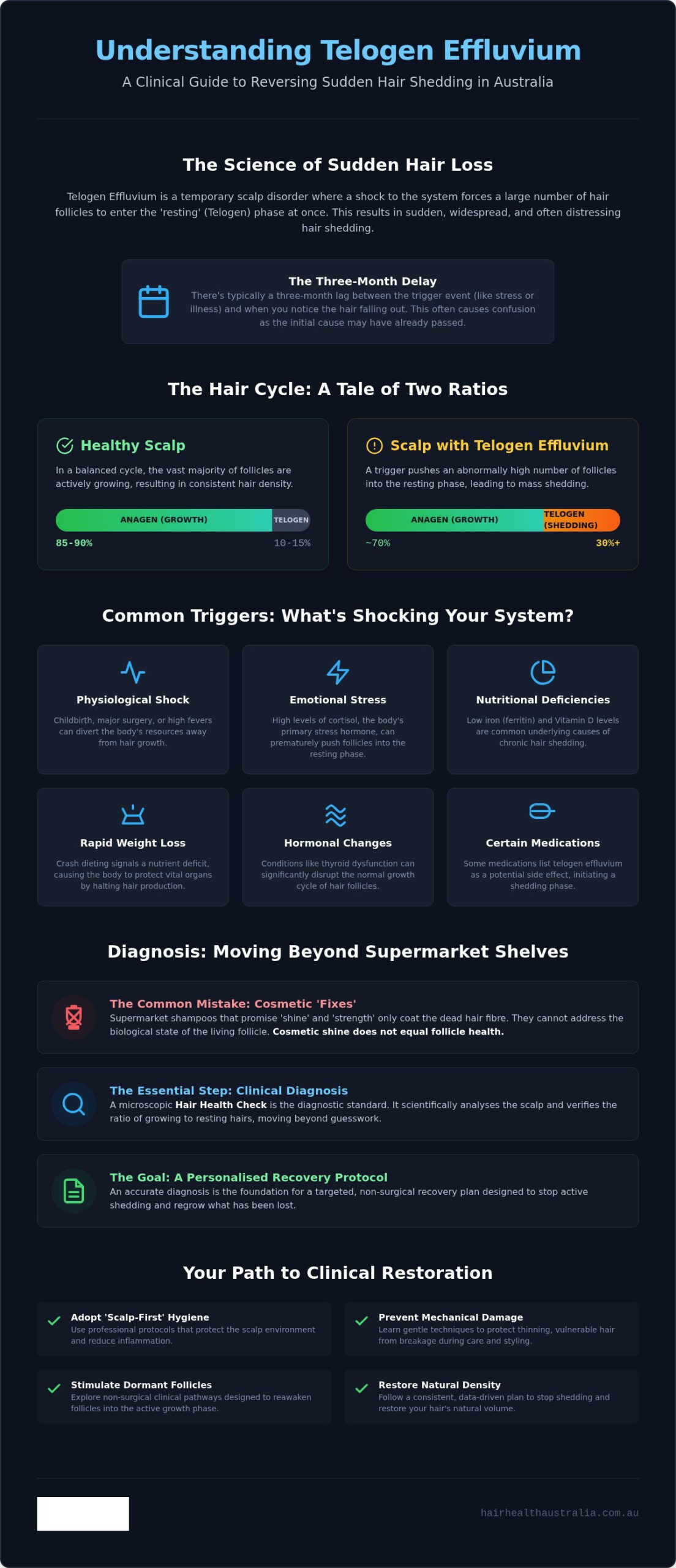
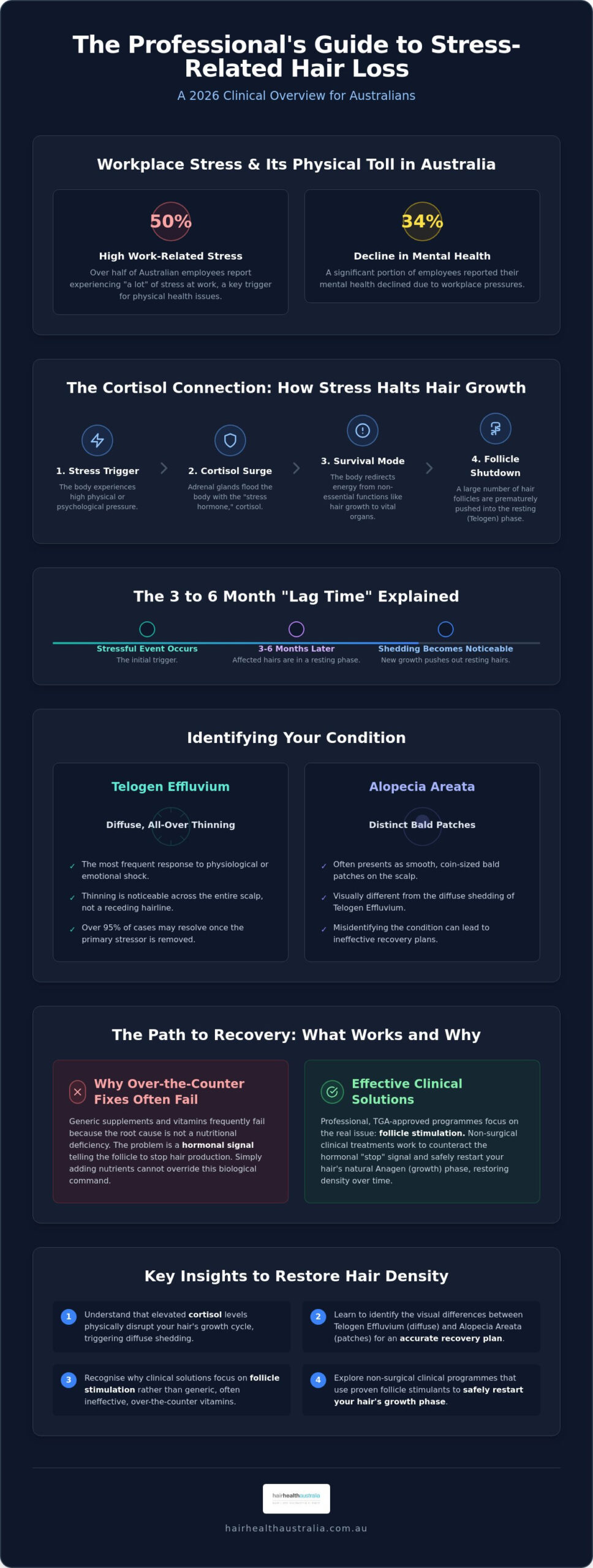
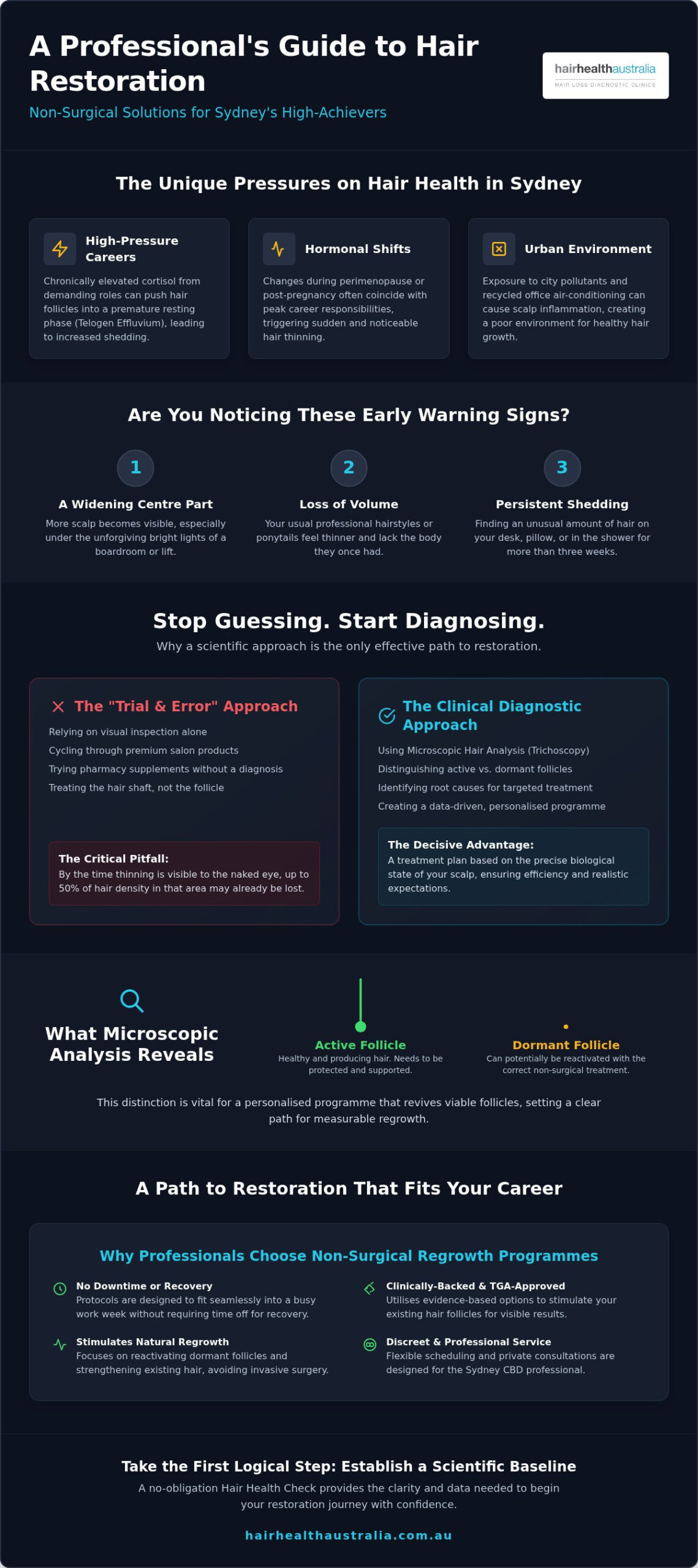
High-performance careers often lead to chronically elevated cortisol levels. This hormone, while necessary for the “fight or flight” response, can be detrimental to hair follicles when sustained over long periods. It can push follicles into a resting phase prematurely, leading to a condition called Telogen Effluvium. While this type of shedding is often temporary, it can sometimes mask or exacerbate Pattern hair loss, which is a progressive genetic condition. Differentiating between a temporary reaction to a stressful project and a long-term clinical issue requires a specialized approach. The psychological toll of this uncertainty shouldn’t be underestimated. Many women report feeling a sense of “imposter syndrome” or a loss of professional edge when they no longer feel they look their best.
Common Triggers: Stress, Hormones, and Environment
“Sydney stress” is a tangible factor in hair health. Between the intense deadlines in the CBD and the daily commute, the body’s endocrine system is frequently under fire. Hormonal shifts often coincide with peak professional responsibility, such as during perimenopause or following a pregnancy. These biological changes can trigger thinning that feels sudden and overwhelming. Furthermore, the urban Sydney environment plays a role. Constant exposure to recycled office air-conditioning and city pollutants can lead to scalp inflammation. This creates a poor environment for hair growth, making it harder for follicles to thrive even if your genetics are on your side.
Signs You Should Seek a Clinical Diagnosis
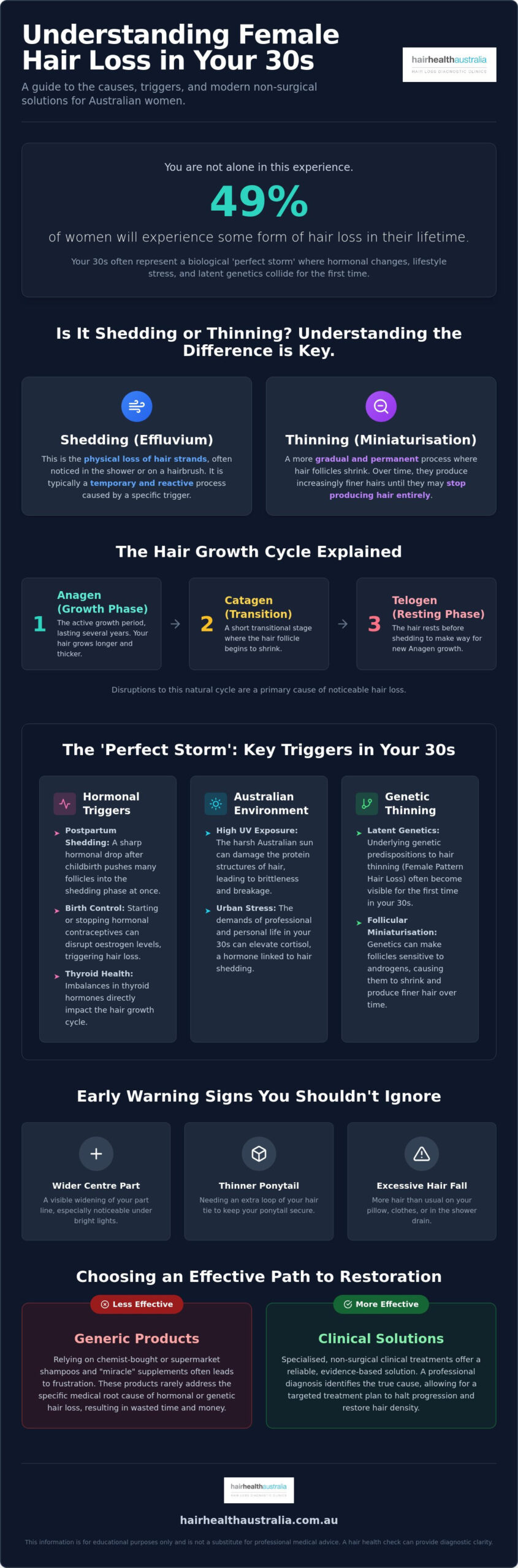
Identifying the problem early is essential for effective restoration. You don’t need to wait until the thinning is obvious to others before taking action. Look for these specific indicators during your morning routine:
- A widening centre part: You might notice more scalp becoming visible, particularly under the bright, unforgiving lights of a boardroom or lift.
- Loss of volume: Your usual professional styles or ponytails feel thinner, or your hair lacks the “body” it once had.
- Persistent shedding: Finding an unusual amount of hair on your desk, pillow, or in the shower for more than three consecutive weeks.
If these signs sound familiar, the most effective path forward is to stop guessing. A professional Hair Health Check provides the scientific baseline needed to understand your scalp’s current state. This diagnostic step ensures that any subsequent treatment is targeted, efficient, and appropriate for your specific hair profile.
The Science of Diagnosis: Microscopic Hair Analysis
Many professional women spend months cycling through premium salon products or pharmacy supplements without seeing a measurable change in their hair density. The limitation of these “trial and error” methods is that they treat the hair shaft as a cosmetic feature rather than the follicle as a biological organ. Relying on a standard visual inspection is often insufficient because by the time thinning is visible to the naked eye, you may have already lost up to 50% of your hair density in that area. To find an effective hair loss treatment for professional women Sydney, we must look beneath the surface to understand the specific health of your scalp environment.
Trichoscopy, or microscopic hair analysis, allows us to see what the naked eye cannot. It provides a high-magnification view of the follicles, allowing us to distinguish between those that are permanently lost and those that are merely dormant. This distinction is vital for setting realistic expectations. If a follicle is dormant or miniaturised, there is often significant potential for regrowth. As noted in clinical discussions regarding Treating female pattern hair loss, early and accurate diagnosis is the most influential factor in the success of non-surgical restoration. By identifying the specific stage of the hair growth cycle your follicles are in, we can move away from generic advice and towards a targeted, scientific protocol.
What Happens During a Microscopic Hair Health Check?
The diagnostic process is entirely non-invasive and efficient, designed to fit into a busy professional schedule. We use a specialised microscopic camera to capture high-resolution images of the scalp across different zones. During this session, we examine the hair bulb’s health, the diameter of individual hair shafts, and the condition of the scalp skin. We look for signs of inflammation, sebum blockage, or follicle miniaturisation that might be hindering your growth. This data-driven session is a structured way to learn more about our comprehensive hair health check and establish exactly what is happening at a cellular level.
The Data-Driven Approach to Restoration
Transparency is a cornerstone of our clinical process. By establishing a digital baseline during your first visit, we can measure your progress with mathematical precision. You don’t have to rely on a subjective “feeling” that your hair is thicker; you can see the objective increase in shaft diameter and follicle activation in follow-up scans. For women in analytical or data-heavy professions, this evidence-based approach replaces uncertainty with clarity. We use these results to customise your hair loss treatment for professional women Sydney, ensuring the programme targets your specific triggers. If you’re ready to move past the uncertainty of over-the-counter products, booking a no-obligation Hair Health Check is the most efficient way to start your restoration journey.
Non-Surgical Treatment Protocols vs. Invasive Options
Choosing the right hair loss treatment for professional women Sydney involves weighing the immediate appeal of surgical intervention against the long-term stability of clinical restoration. While hair transplants are often marketed as a permanent fix, they’re increasingly viewed as a secondary option for women. The primary goal for most professionals is to restore density across the entire scalp rather than simply relocating hair from one area to another. Non-surgical protocols focus on revitalising your existing follicles, which preserves the natural flow and distribution of your hair without the clinical risks associated with theatre-based procedures.
For a woman managing a demanding career in the CBD or North Sydney, discretion is often as important as the results themselves. Non-surgical programmes are designed to be entirely seamless, requiring zero downtime and leaving no visible signs of clinical intervention. This allows you to maintain your professional commitments and social calendar without the need for extended leave or the awkwardness of post-operative healing. By choosing a path that stimulates biological regrowth, you’re investing in a solution that works with your body’s natural cycles.
The Problem with “Quick Fix” Surgical Solutions
Invasive hair transplant surgery carries inherent risks that many professionals find unacceptable, including potential scarring, infection, and the unpredictable nature of graft uptake. A significant drawback often overlooked is that surgery doesn’t address the underlying biological causes of thinning. If the hormonal or environmental triggers aren’t managed, the non-transplanted hair will continue to thin around the surgical sites, often leading to patchy results over time. Furthermore, the recovery period for a transplant can span several weeks, involving swelling and visible scabbing that simply doesn’t suit a high-performance work schedule. Surgery is a reactive measure; it doesn’t stop the progression of hair loss, it only attempts to mask the symptoms.
Clinical Non-Surgical Restoration: How it Works
Our non-surgical approach is rooted in the science of follicle revitalisation. By using targeted clinical-grade topicals and advanced light therapies, we work to reverse the miniaturisation process that causes hair to become fine and brittle. This process is backed by an extensive clinical and pathophysiological review of how follicles respond to cellular stimulation. The objective is to move dormant follicles back into the active growth phase, increasing both the number of hairs and the diameter of each individual strand.
Consistency is the foundation of any successful hair loss treatment for professional women Sydney. Unlike a one-off surgery, a clinical programme is a structured journey that requires regular, manageable appointments to sustain hair density. To help you navigate the various options available in the current market, we recommend reading our buying guide for female hair loss treatment. This resource provides a transparent breakdown of what to look for in a clinical provider, ensuring you choose a programme grounded in evidence rather than marketing hype.
Integrating Treatment into a High-Performance Lifestyle
Sydney professionals often find that their biggest barrier to starting a hair loss treatment for professional women Sydney is the perceived time commitment. Between back-to-back meetings and the daily commute, finding space for clinical care requires a partner who understands the value of efficiency. We’ve structured our services to ensure that restoration doesn’t become another source of stress. Unlike generic online subscription kits that provide one-size-fits-all solutions via the post, a local Sydney specialist offers the precision of face-to-face diagnostics. This ensures your programme is adjusted in real-time based on your scalp’s actual response, not a set of predetermined algorithms.
Maintaining your hair health routine while travelling for business is another common concern. Our clinical programmes are designed with portability in mind. We provide structured guidance on how to manage your topical applications or light therapies while you’re interstate or overseas, ensuring that a trip to Melbourne or an international flight doesn’t derail your progress. Having a dedicated specialist to consult means your routine remains consistent regardless of your itinerary.
The Convenience of the Redfern Clinic
Our location in Redfern provides strategic accessibility for those working in the Sydney CBD, Surry Hills, or the Inner South. We understand that your day is governed by a strict schedule, so we prioritise punctuality and efficient appointment structures. You can easily transition from a morning briefing to your session and be back in the office for your next commitment. If you’re ready to see how easily this fits into your week, you can book your Sydney hair clinic appointment online.
Discretion and Professionalism
For women in high-profile roles, reputation management is a primary consideration. A high-street salon can often feel too public and lacks the clinical privacy required for a medical concern. Our clinic provides a professional, objective environment where your privacy is the priority. This isn’t a cosmetic indulgence; it’s a systematic clinical process. Ensuring you feel comfortable during both the diagnostic and treatment phases is essential for long-term success. It’s about replacing the “salon gossip” atmosphere with the quiet confidence of a specialist consultation.
When you’re evaluating your options, it’s helpful to use a checklist for choosing a Sydney clinic to ensure the provider meets your standards for professionalism and evidence-based care. The right hair loss treatment for professional women Sydney should feel like a partnership with a specialist who respects your time as much as your results. To take the first step toward a denser, healthier head of hair, we invite you to book a no-obligation Hair Health Check today.
Why Professional Women Choose Hair Health Australia
Professional women in Sydney require a level of clinical precision that matches the standards they maintain in their own careers. When you’re looking for an effective hair loss treatment for professional women Sydney, you deserve a provider that values evidence over hyperbole. At Hair Health Australia, we’ve built our reputation on a “straight-talking” philosophy that prioritises transparency and scientific verification. We understand that thinning hair can be a source of significant uncertainty, and our role is to replace that doubt with a clear, actionable path forward. Our commitment to evidence-based restoration means we don’t offer “miracle” cures; instead, we provide systematic, non-surgical protocols that are proven to work at a cellular level.
A personalised approach isn’t just a preference; it’s a clinical necessity for female hair loss. Unlike male pattern baldness, which often follows a predictable path, female thinning is frequently influenced by a complex interplay of hormonal shifts, nutritional status, and the high-cortisol environment of the Sydney corporate world. We treat every client as an individual, using our diagnostic data to tailor a programme that addresses your specific triggers. This results-oriented focus ensures that your time and energy are invested in treatments that have the highest probability of success for your particular scalp condition.
Real Results for Sydney Professionals
Success in our clinic is measured through objective clinical density improvements rather than subjective observations. By establishing a digital baseline during your initial consultation, we can track the progress of your follicles with mathematical accuracy. One of the most reassuring aspects of our process is the “potential for regrowth” assessment. Through microscopic scanning, we can determine exactly which follicles are dormant and capable of being revitalised, giving you total confidence in the viability of your restoration programme. Our clinical approach represents the gold standard for non-surgical hair restoration services within the New South Wales professional community.
Your Path Forward: The Free Hair Health Check
The most significant step you can take toward restoring your hair density is moving from uncertainty to diagnosis. You can book your session at our Redfern clinic directly without the need for a referral from a GP. This initial consultation is designed to be comprehensive and educational, providing you with a high-magnification view of your own scalp health. You’ll walk away from this session with a definitive diagnosis of the root cause of your thinning and a realistic, structured plan for restoration. This is a no-obligation opportunity to consult with a specialist who is dedicated to your long-term hair health. To begin your journey with a scientific baseline, Book your free Hair Health Check in Sydney today.
Restoring Your Confidence Through Clinical Precision
You don’t have to accept thinning hair as a permanent trade-off for a high-performance career. By prioritising a scientific diagnosis through clinically-backed Trichoscopy diagnostics, you can distinguish between temporary shedding and progressive loss with total clarity. This data-driven approach ensures that your hair loss treatment for professional women Sydney is targeted specifically to your biological needs. Choosing non-surgical protocols means you can achieve visible regrowth and increased density without the risks or lengthy recovery periods of invasive surgery.
Our specialist clinic in Redfern is dedicated to providing evidence-based solutions in a discreet, professional environment that respects your time. It’s time to stop the guesswork and start a programme that integrates seamlessly into your life with zero downtime. Reclaiming your hair density starts with understanding the root cause, and we’re here to provide the expertise you need to move forward with certainty. Take control of your hair health today by accessing the diagnostic data your scalp deserves.
Book Your Free Hair Health Check in Sydney to discover a realistic plan for your restoration. We’re ready to partner with you on a journey toward lasting hair health and renewed professional confidence.
Frequently Asked Questions
Is hair loss treatment for women covered by private health insurance in Australia?
Most private health insurance providers in Australia do not cover hair loss treatment for women, as it is typically classified as a cosmetic or elective procedure. This includes Medicare, which does not provide rebates for non-surgical restoration or diagnostic scanning. We recommend contacting your specific fund to verify if your extras cover includes any dermatological or clinical scalp assessments, though most clients find these services are an out-of-pocket investment in their professional image.
How long does it take to see results from a non-surgical regrowth programme?
Visible results from a non-surgical regrowth programme generally become apparent within three to six months of consistent treatment. This timeline aligns with the natural biological hair growth cycle, where follicles require time to transition from a dormant phase to an active growth phase. We use periodic microscopic scans to track your progress objectively. You’ll often see an increase in hair shaft diameter and scalp health before the overall increase in density becomes visible.
Can I continue to colour or style my hair during clinical treatment?
You can certainly continue to colour and style your hair while undergoing a clinical programme. We understand that maintaining your professional appearance is a priority. However, we may recommend specific adjustments to your routine, such as using sulphate-free products or avoiding excessive heat, to ensure your scalp environment remains optimal for regrowth. Our specialists provide guidance on how to integrate your styling habits without compromising the efficacy of your hair loss treatment for professional women Sydney.
Is the microscopic hair analysis painful or invasive?
Microscopic hair analysis, known as Trichoscopy, is entirely non-invasive and painless. It involves using a specialised high-resolution digital camera that rests gently against the scalp to capture detailed images of your follicles and hair bulbs. There are no needles, skin scrapings, or discomfort involved. Most professional women find the process fascinating, as it provides a clear, real-time view of their scalp health on a screen, allowing for a transparent and scientific diagnosis of the root cause.
What happens if the scan shows my follicles are no longer active?
If the scan reveals that certain follicles are no longer active or have undergone permanent fibrosis, we will be completely transparent about the expected outcomes. Non-surgical protocols are most effective for revitalising dormant or miniaturised follicles. If our analysis shows that regrowth is not biologically possible in a specific area, we will help you manage your expectations and focus on preserving and thickening the surrounding hair. Our goal is to provide a realistic, evidence-based plan rather than false promises.
How much does hair loss treatment typically cost for women in Sydney?
The cost for a hair loss treatment for professional women Sydney varies based on the specific protocol required and the duration of the programme. In the wider Sydney market, non-surgical clinical sessions often range from $300 to $800 each, with multi-session packages being a common way to manage the investment. Because every scalp condition is unique, we provide a detailed cost breakdown only after your initial Hair Health Check, ensuring your plan is tailored to your specific clinical needs.
Do I need a GP referral to visit a hair loss specialist in Sydney?
You do not need a GP referral to visit our specialist clinic in Redfern. We operate as a direct-access clinical service, allowing professional women to book their Hair Health Check at a time that suits their schedule. This streamlined process removes the need for multiple appointments elsewhere and allows you to begin your diagnostic journey immediately. Simply contact us to arrange your session, and we will provide a comprehensive assessment of your hair and scalp health during your first visit.