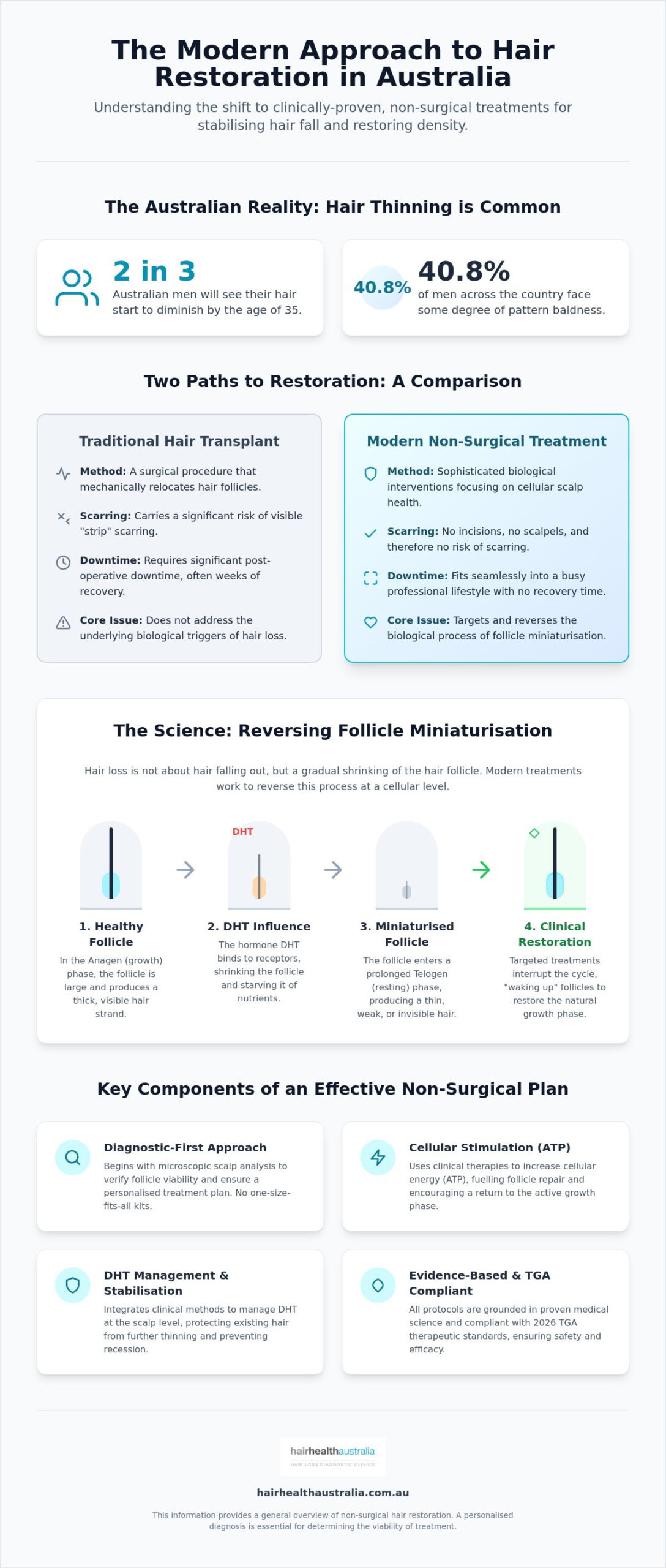
Did you know that nearly 40% of Australian women experience visible hair thinning during their menopausal transition? It’s a deeply personal shift that often feels like losing a piece of your identity; it leaves you caught between conflicting advice about hormone replacement therapy and a fear of invasive surgical options. We understand that the search for a reliable menopausal hair loss treatment Australia can feel overwhelming when you’re faced with “miracle” products that fail to deliver.
You deserve a clear, science-backed path to restoring your hair density and confidence without the need for surgery. This 2026 clinical guide explores the latest advancements in follicle restoration, focusing on precise microscopic diagnostics and specialised non-surgical protocols tailored for the Australian climate. We’ll break down the biological reasons why your hair is changing and provide a manageable, step-by-step routine to achieve visible scalp coverage. By the end of this guide, you’ll have the honest answers and modern tools needed to take control of your hair health with total certainty and professional support.
Key Takeaways
- Understand why clinical microscopic analysis is essential for identifying follicle health years before permanent hair loss occurs.
- Discover how specialised menopausal hair loss treatment Australia protocols provide a science-backed, non-surgical alternative to generic over-the-counter options.
- Learn the specific nutritional and daily care habits that protect thinning hair and support follicle stimulation for improved density.
- Identify the advantages of a personalised clinical programme that offers face-to-face monitoring and transparent, honest guidance throughout your regrowth journey.
The Science of Menopausal Hair Thinning in Australian Women
Menopause is a transformative biological phase that often triggers a sudden acceleration in female pattern hair loss, medically known as androgenetic alopecia. While thinning can occur at any age, the hormonal shifts associated with the menopausal transition frequently act as a catalyst; they transform subtle shedding into more pronounced scalp visibility. For many Australian women, this change is not merely cosmetic. It carries a heavy psychological burden that impacts self-esteem and feminine identity. Choosing to seek a menopausal hair loss treatment Australia early is a proactive health decision that allows you to manage these changes before follicles become dormant.
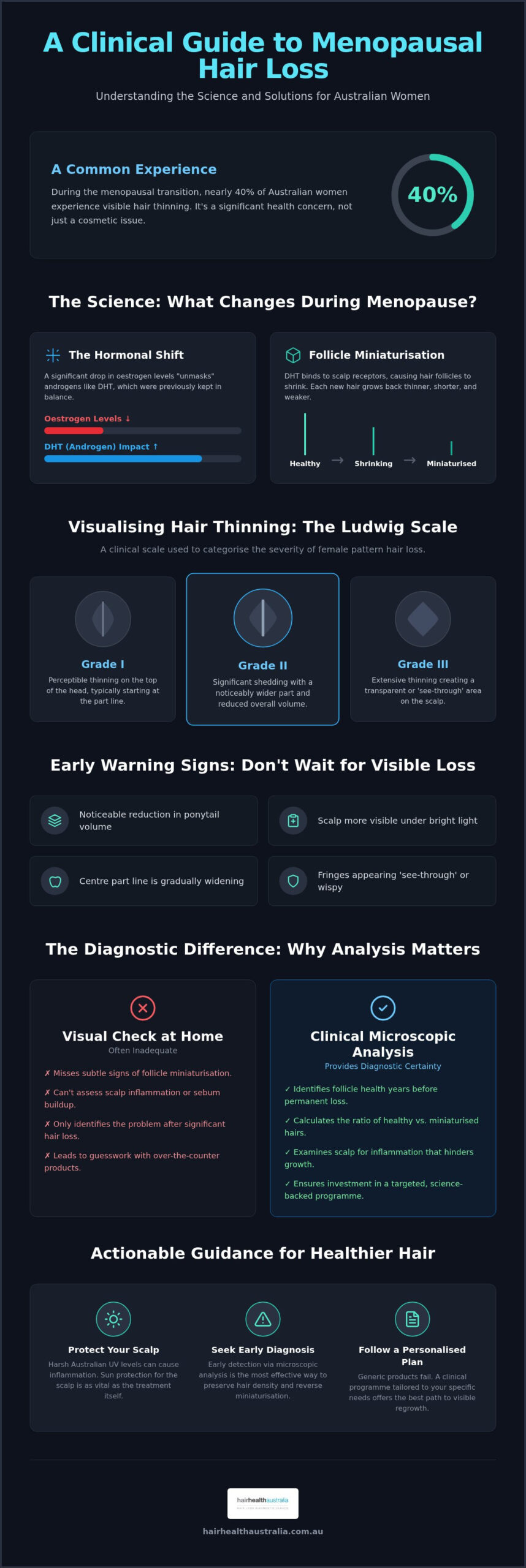
Clinicians often use the Ludwig Scale to categorise the severity of thinning in a way that is easy to visualise. Grade I involves perceptible thinning on the top of the head, usually starting at the part line. Grade II shows more significant shedding and a wider part, while Grade III indicates a transparent scalp area. In Australia, our harsh UV levels add another layer of complexity. High sun exposure can damage an already compromised scalp environment, causing inflammation and oxidative stress that further hinders healthy hair growth. Protecting the scalp from the sun is as vital as the treatment itself.
Hormonal Shifts and the Oestrogen-Androgen Balance
During menopause, your oestrogen levels drop significantly. This decline “unmasks” androgens, such as dihydrotestosterone (DHT), which were previously kept in check. DHT binds to receptors in the scalp and causes hair follicles to shrink. Interestingly, while these hormones lead to thinning on the head, they can simultaneously stimulate coarser hairs or “peach fuzz” on the face. This biological irony is a clear indicator that your internal hormonal balance has shifted, requiring a specialised approach to stabilise the follicle environment.
Identifying the Early Warning Signs of Menopausal Loss
Early detection is the most effective way to preserve your hair density. You might notice your centre part line widening or your scalp becoming more visible under bright bathroom lights. Other signs include a noticeable reduction in ponytail volume or fringes that appear “see-through” compared to previous years. Miniaturisation is the specific process where hair follicles produce progressively thinner, shorter, and more brittle hairs with each growth cycle until they eventually stop producing hair altogether. If you are concerned about these changes, a professional hair health check can provide the diagnostic clarity needed to start an effective, non-surgical programme.
The Diagnostic Difference: Why Microscopic Hair Analysis Matters
A standard visual inspection is often inadequate for identifying the specific needs of a thinning scalp. While a mirror shows you the current state of your hair, clinical microscopic analysis reveals the future of it. This diagnostic precision is what separates a generic approach from a truly effective menopausal hair loss treatment Australia. By using modern scanning technology, we can identify declining follicle health years before the hair is permanently lost; this provides a critical window of opportunity for intervention. A visual check often misses the subtle signs of miniaturisation until you’ve already lost a significant percentage of your hair density, making early clinical detection vital.
Many women spend hundreds of dollars on “chemist-shelf” treatments or viral supplements before they have a clear answer. Without a professional hair health check, you’re essentially guessing which biological pathway needs support. A correct diagnosis ensures you’re investing in a clinical programme that actually targets your specific type of Female pattern hair loss rather than wasting time on products that aren’t designed for menopausal changes. This straight-talking approach focuses on medical facts rather than marketing promises.
What We Look for Under the Microscope
The microscopic view allows us to calculate the exact ratio of terminal (thick, healthy) hairs to vellus (thin, miniaturised) hairs. This data tells us if your follicles are merely resting or if they are actively shrinking. We also examine the scalp for signs of inflammation or sebum buildup that can hinder the anagen (growth) phase. Distinguishing between active miniaturisation and follicle scarring is vital; the former is often reversible with the right stimulation, while the latter requires a different management strategy focused on preservation. This level of detail is impossible to achieve with the naked eye.
The Role of Blood Tests and Medical History
Diagnostics don’t stop at the scalp surface. We look at the whole picture by correlating your microscopic data with your medical history and specific blood markers. In Australian women, we frequently see low levels of ferritin, thyroid irregularities, or Vitamin D deficiencies that exacerbate menopausal thinning. Understanding how these internal factors interact with your hormonal shifts allows for a more personalised care plan. For a deeper look at identifying these changes early, you can review our guide on the Early Signs of Alopecia in Women. This systematic approach replaces uncertainty with a clear, evidence-based path forward for your menopausal hair loss treatment Australia.
Clinical Non-Surgical Hair Loss Treatment for Women
While standard pharmacy options like 5% Minoxidil are a common starting point for many, they often provide only a partial solution for the complex hormonal environment of menopause. A comprehensive menopausal hair loss treatment Australia requires shifting from passive maintenance to active follicle stimulation. This transition involves using clinical-grade protocols that address both the internal hormonal triggers and the external scalp health. According to the Royal Australian College of General Practitioners, understanding evidence-based Female Pattern Hair Loss treatment options is the first step in moving beyond ineffective cosmetic remedies and towards genuine restoration.
We believe in straight-talking clinical honesty. It’s vital to understand that hair regrowth is a biological marathon, not a sprint. You won’t see results overnight because the hair growth cycle operates on a timeline of several months. However, by moving from simply “stopping the loss” to actively “promoting new growth” through systematic stimulation, we can help you achieve visible improvements in density and scalp coverage that generic products simply cannot match.
Multi-Modal Therapeutic Strategies
Modern clinical delivery systems ensure that active ingredients reach the follicle root more effectively than standard over-the-counter foams or liquids. For women, topical formulations and DHT blockers must be carefully specialised to suit the post-menopausal profile, ensuring they work in harmony with your changing biology. Professional oversight is a non-negotiable part of this process. We monitor your progress at every stage, allowing us to adjust your programme based on how your follicles respond to the treatment, ensuring the highest level of accuracy and care.
Advanced Clinical Growth Therapies
Low-Level Laser Therapy (LLLT) is a cornerstone of our non-surgical approach. This TGA-regulated technology works by stimulating cellular ATP production, essentially “recharging” the energy levels of miniaturised follicles to push them back into the active anagen growth phase. When combined with professional scalp hygiene protocols and direct nutrient delivery to the root, the results are significantly more robust. A customised best hair regrowth treatment Australia always outperforms a one-size-fits-all product because it’s built on your unique diagnostic data and microscopic analysis, rather than a generic guess.
Actionable Guidance: Managing Thinning Hair in Daily Life
While clinical intervention provides the foundation for regrowth, your daily habits play a significant role in preserving follicle health and preventing unnecessary breakage. Managing thinning hair requires a dual approach; you must support the internal biological environment while protecting the external hair shaft. Choosing the right products is a vital part of your menopausal hair loss treatment Australia, as supermarket shampoos often contain harsh sulphates that strip the scalp of essential oils. Professional-grade formulations, conversely, use gentler surfactants and active nutrients designed to support a fragile growth environment.
Nutrition for the Australian menopausal woman should focus on specific building blocks that support keratin production. Ensure your daily intake includes:
- Lean Proteins: Essential for the structural integrity of the hair shaft.
- Iron and Ferritin: Found in leafy greens and lean meats to support oxygen delivery to the root.
- Zinc and Vitamin D: Critical for follicle recovery and immune regulation.
Stress also creates a physiological cycle that can exacerbate thinning. High cortisol levels can prematurely push hair follicles from the growth phase into the shedding phase. Breaking this cycle involves a combination of lifestyle management and clinical stimulation to keep follicles active. If you’re unsure where to start with your routine, you can book a clinical hair health check to receive a personalised plan.
Scalp Health as the Foundation for Growth
Think of your scalp as the soil and your hair as the seed; a neglected environment cannot sustain healthy growth. Many women rely heavily on dry shampoo to add volume, but excessive use can lead to product buildup and follicle occlusion. This congestion causes inflammation that hinders the anagen growth phase. Maintaining a clean, balanced scalp is a non-negotiable step in any Clinical Hair Treatment Guide. Regular, gentle cleansing ensures that clinical topicals can penetrate the skin effectively without being blocked by debris.
Styling Tips for Immediate Confidence
Creating the illusion of thickness can provide an immediate boost to your self-esteem while you wait for clinical results. Blunt cuts, such as a structured bob, often make the hair appear denser than long, layered styles that can look “stringy” at the ends. If you use keratin fibres to camouflage visible scalp areas, ensure you wash them out thoroughly to avoid clogging active follicles. It’s also vital to avoid high-heat tools. Excessive heat can cause “bubble hair,” a condition where moisture inside the shaft turns to steam and creates permanent fractures, leading to irreversible breakage and further loss of volume.
Why a Sydney Hair Loss Clinic is Your Best Path Forward
While telehealth and online prescriptions offer a level of convenience, they lack the diagnostic depth required for a successful menopausal hair loss treatment Australia. A digital consultation simply cannot perform the microscopic scans or physical scalp assessments necessary to track cellular-level changes in your follicles. By visiting a local Sydney centre, you benefit from face-to-face clinical monitoring that ensures your programme is working exactly as intended. Hair Health Australia provides a supportive, non-surgical environment where women can discuss their concerns with specialists who understand the emotional and biological complexities of the menopausal transition.
During your initial consultation, we focus on transparency and realistic expectations. We’ll perform a comprehensive microscopic analysis to establish a baseline for your hair density and scalp health. This data-driven approach allows us to provide a clear, honest answer about your regrowth potential. You’ll leave with a defined path forward, knowing that your progress will be monitored through regular check-ups to ensure every stage of your recovery is verified by science. This systematic care ensures that you aren’t just another number, but a partner in a professional clinical process.
Personalised Programmes vs. Generic Pharmacy Solutions
Every woman’s journey through menopause is unique, and your hair loss treatment should reflect your specific hormonal profile and biology. Generic pharmacy products often fail because they don’t account for individual scalp responses or the varying stages of follicle miniaturisation. Choosing a non-surgical hair loss clinic Sydney means your protocol isn’t static; it’s a living programme. We adjust clinical delivery systems and nutrient concentrations based on how your scalp responds in real-time, ensuring you aren’t wasting time on methods that don’t yield results.
Commitment to Long-Term Density
It’s important to remember that restoring hair density is a marathon, not a sprint. The biological timeline of a hair follicle means that visible changes take months to manifest, particularly when navigating the hormonal shifts of menopause. Our commitment to your journey extends beyond the initial regrowth phase. We prioritise long-term maintenance to ensure your new density is preserved for years to come, providing a steady and composed presence as your dedicated guides. You don’t have to navigate menopausal thinning alone; professional, local support is available to help you regain your confidence. To take the first step, you can book a hair health check today.
Empowering Your Hair Restoration Journey
Navigating the hormonal shifts of menopause is a significant transition, but your hair health shouldn’t remain a source of uncertainty. We’ve established that an effective menopausal hair loss treatment Australia relies on more than just topical products; it requires a precise understanding of your unique follicle biology through advanced microscopic diagnostic technology. By moving away from generic pharmacy solutions and embracing non-surgical, evidence-based regrowth protocols, you can actively restore density and scalp coverage with total confidence.
With over 15 years of specialised Australian clinical expertise, our Sydney-based team provides the straight-talking honesty and personalised care you need to see real results. You don’t have to accept thinning as an inevitable part of ageing. Taking a proactive step today ensures your follicles receive the clinical stimulation required to thrive. We are here to act as your dedicated guides, replacing confusion with a clear, science-backed path forward.
Book Your Comprehensive Hair Health Check in Sydney Today
You deserve to feel like yourself again, and we are ready to help you achieve that goal.
Frequently Asked Questions
Is menopausal hair loss permanent, or can it grow back?
Menopausal hair loss is not always permanent, provided the follicles have not yet reached a state of complete scarring. While hormonal shifts cause hair to thin, many follicles remain active but produce miniaturised shafts that are barely visible. By implementing a targeted menopausal hair loss treatment Australia, you can revitalise these shrinking follicles and push them back into the active growth phase. Early intervention is the primary factor in determining how much density can be restored.
How does microscopic hair analysis differ from a regular scalp check?
A regular scalp check is limited to what can be seen with the naked eye, whereas microscopic hair analysis uses high-magnification scanning to assess follicle health beneath the surface. This technology identifies the exact ratio of healthy to thinning hairs and detects early signs of miniaturisation years before they become visible. It also reveals scalp inflammation and sebum blockages that a standard visual inspection would simply miss, allowing for a far more accurate clinical diagnosis.
Can HRT help with hair regrowth, or do I need a specific hair treatment?
Hormone Replacement Therapy (HRT) can help stabilise the systemic hormonal environment, but it is rarely a standalone solution for hair regrowth. While it addresses declining oestrogen, you often require a specific clinical hair treatment to directly stimulate the follicles and block local DHT activity on the scalp. A multi-modal approach that combines systemic support with targeted clinical growth therapies typically yields the most significant and sustainable improvements in hair density and scalp coverage.
How long does it take to see results from a clinical regrowth programme?
Results from a clinical regrowth programme usually become visible within four to six months of consistent treatment. This timeline is dictated by the natural hair growth cycle, which requires time for miniaturised follicles to transition back into the active anagen phase. You might notice reduced shedding within the first few weeks; however, significant improvements in scalp coverage and hair thickness require sustained stimulation over several growth cycles to manifest fully and clearly.
Are there any side effects to clinical hair loss treatments for women?
Clinical non-surgical treatments for women are generally well-tolerated and have a high safety profile. Some individuals might experience minor scalp irritation or dryness when beginning a new topical protocol, but these effects are typically temporary and manageable. Because we prioritise a non-invasive approach, the systemic risks associated with surgical procedures are avoided. We monitor your scalp’s response throughout the programme to ensure the treatment remains comfortable, effective, and suited to your biology.
What is the most effective hair loss treatment for women in Australia for 2026?
The most effective menopausal hair loss treatment Australia in 2026 is a multi-modal programme tailored to your specific diagnostic data. Rather than relying on a single product, the best results come from combining TGA-regulated Low-Level Laser Therapy (LLLT) with clinical-grade topical stimulants and professional scalp hygiene. This comprehensive strategy addresses follicle shrinkage from multiple angles, ensuring that every biological pathway involved in hair growth is supported and revitalised simultaneously through proven clinical standards.
Can stress from menopause make my hair loss worse?
Stress can significantly exacerbate menopausal hair loss by increasing cortisol levels, which can prematurely push hair follicles into the shedding phase. This condition, known as telogen effluvium, often occurs alongside the hormonal thinning of menopause, leading to a more rapid loss of density. Managing lifestyle stress is important, but clinical intervention is often necessary to break the biological cycle and provide the follicles with the nutrients and stimulation they need to recover effectively.
Is it possible to regrow hair on a visible part line without surgery?
It is absolutely possible to regrow hair on a visible part line without resorting to invasive surgery. If microscopic analysis confirms that your follicles are miniaturised rather than scarred, non-surgical clinical treatments can effectively increase hair diameter and density in that area. By using concentrated growth factors and cellular stimulation, we can help close a widening part and improve overall scalp coverage, provided the treatment is started before the follicles become dormant.