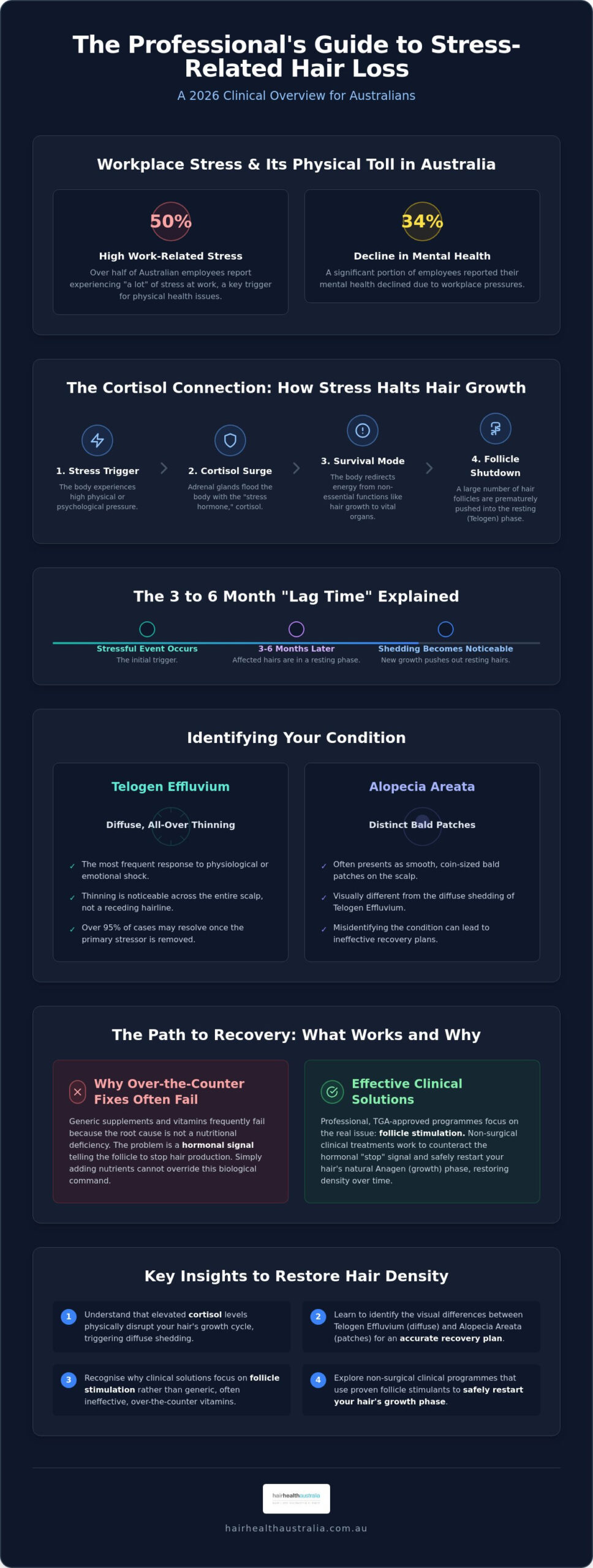
Did you know that over 50 per cent of Australian employees reported experiencing “a lot” of stress at work in recent surveys? While we often focus on the mental toll of a high pressure career, the physical impact frequently manifests in the shower drain or on your hairbrush. If you’ve noticed your hair thinning during a demanding period, you aren’t alone in your search for effective stress related hair loss solutions Australia wide. It’s a confusing experience that often leaves professionals wondering if they’re facing permanent balding or a temporary reaction to life’s pressures.
We understand that losing your hair can feel like losing your professional edge, but the science suggests this is often a biological “pause” rather than a permanent end to growth. This 2026 clinical guide promises to bridge the gap between your concerns and proven recovery pathways. You’ll discover the specific biological triggers behind Telogen Effluvium, explore TGA approved treatments, and learn how to navigate the diagnostic process at a local clinic to stop the shedding and restore your natural hair density.
Key Takeaways
- Understand how elevated cortisol levels physically disrupt your hair growth cycle and trigger sudden, diffuse shedding.
- Learn to identify the visual differences between Telogen Effluvium and Alopecia Areata to ensure your recovery plan is clinically accurate.
- Discover why professional stress related hair loss solutions Australia wide focus on follicle stimulation rather than generic over-the-counter vitamins.
- Explore non-surgical clinical programmes that utilise follicle stimulants to safely restart your hair’s natural growth phase.
- Gain clarity on how a personalised, data-driven assessment can restore your hair density and professional confidence.
Understanding the Link Between Stress and Hair Loss in Australia
In 2026, many Australians are navigating a unique set of physical and psychological pressures. Between the rising cost of living and the intense demands of modern workplaces, our bodies often exist in a state of high alert. A 2025-2026 survey indicated that 34 per cent of Australian employees reported a decline in their mental health due to workplace stress, and this tension isn’t just a mental burden. It has a direct, biological impact on our physical health. When the body undergoes a significant period of strain, it triggers a protective “shock” response. This response can prematurely push a large percentage of hair follicles into a resting phase, a condition clinically known as Telogen Effluvium. For those seeking stress related hair loss solutions Australia based clinics often observe that this sudden shedding is the body’s way of redirecting resources where they are needed most.
The Cortisol Connection: How Your Body Prioritises Survival Over Hair
Cortisol is frequently called the “stress hormone” for a reason. In times of crisis, your adrenal glands flood the system with cortisol to prepare for a “fight or flight” scenario. While this is helpful in short bursts, chronic elevation tells your body to prioritise survival over non-essential functions. Unfortunately, your scalp is one of the first areas to lose out. The hair growth cycle is exquisitely sensitive to the hormonal shifts triggered by prolonged systemic stress. During these periods, the energy usually reserved for building keratin and maintaining the Anagen (growth) phase is diverted to vital organs. This systemic shutdown is why generic hair supplements often fail. The issue isn’t a lack of nutrients, but a hormonal signal telling the follicle to stop producing.
In addition to hair thinning, high cortisol levels can take a toll on your complexion; for those interested in broader aesthetic care, Cosmetic Wellness provides advanced non-surgical skin rejuvenation to help counteract the physical effects of stress.
Identifying the ‘Lag Time’ in Stress-Induced Thinning
One of the most confusing aspects of this condition is the delay. You won’t typically see clumps of hair in the drain the day after a stressful event. Instead, there is a distinct lag time, usually spanning three to six months. This happens because the hair follicles enter the resting phase immediately, but the actual shedding occurs only when the new growth cycle begins to push the old hair out. Tracking your hair health history against major life events is a vital step in a professional hair health check. By mapping out significant stressors from the previous quarter, you can often identify the specific trigger that led to your current thinning. Understanding this timeline is essential when evaluating stress related hair loss solutions Australia wide, as it helps distinguish temporary shedding from permanent genetic balding.
Telogen Effluvium vs. Alopecia Areata: Identifying Your Condition
Distinguishing between different types of shedding is the first step toward effective recovery. Not all stress-induced loss looks the same, and misidentifying the cause can lead to months of wasted effort on ineffective treatments. For some, it is a sudden increase in hair falling out during a morning routine; for others, it is the discovery of a smooth, coin-sized patch. Understanding these visual cues helps in selecting the most appropriate stress related hair loss solutions Australia offers for your specific situation.
The psychological toll of these conditions is significant. Australian men and women often report a sharp decline in confidence, particularly in corporate or client-facing environments where professional appearance feels tied to competence. This emotional weight can create a detrimental feedback loop where the stress of losing hair actually exacerbates the physiological shedding. Recognising the Early Signs of Alopecia in Women or men is critical to breaking this cycle and initiating a clinical recovery plan before the thinning becomes more pronounced.
Telogen Effluvium: The Most Common Stress Response
Telogen Effluvium is the most frequent response to a physiological or emotional shock. Unlike pattern balding, you will notice diffuse thinning across the entire scalp rather than a receding hairline. Common triggers include high fevers, childbirth, or chronic work-related pressure. While research suggests over 95 per cent of cases resolve once the primary stressor is removed, the recovery process can be painfully slow. In roughly 33 per cent of cases, a specific cause is never identified, making professional diagnosis essential to rule out underlying health issues and fast-track regrowth through clinical support.
Alopecia Areata and Trichotillomania
Alopecia Areata is a more complex autoimmune reaction. In this scenario, intense stress prompts the body’s immune system to attack the hair follicles, resulting in distinct, smooth, circular patches of loss. Conversely, Trichotillomania involves a compulsive urge to pull out hair as a subconscious way to manage anxiety. Both conditions are deeply linked to the nervous system and rarely respond to “hair vitamins” or basic home remedies. They require specialised clinical intervention to manage the inflammatory response and protect the follicles from permanent damage.
When exploring various hair loss treatments in Australia, it is important to remember that a one-size-fits-all approach is often ineffective for stress-induced conditions. A precise diagnosis ensures you aren’t wasting time on treatments that don’t address your specific biological needs. If you’re unsure which category your shedding falls into, a professional hair health check can provide the clarity and data-driven evidence you need to move forward with confidence.
Why Over-the-Counter Fixes Often Fail for Stress-Induced Thinning
When you first notice your hair thinning, it’s tempting to head to the local chemist for a quick fix. Many Australians instinctively reach for “hair, skin, and nails” supplements at the first sign of shedding, hoping a vitamin boost will solve the problem. While these products are widely available, they rarely address the complex hormonal triggers discussed in our previous sections on Understanding the Link Between Stress and Hair Loss. Relying on visual inspection by a non-specialist often leads to a cycle of trial and error that does little to stop the actual cause of the loss. It’s a frustrating process that frequently results in lost time and further emotional distress.
The Myth of the ‘Magic Pill’ for Stress Loss
Generalised supplements assume the problem is a nutritional deficit. However, stress-related thinning is usually a systemic “pause” caused by cortisol, not a lack of biotin or zinc. When you spend months waiting for a pill to work, you risk allowing the hair follicles to remain in a dormant state for too long. This delay can lead to follicle miniaturisation, where the hair produced becomes progressively finer and weaker over time. Effectively navigating stress related hair loss solutions Australia requires moving beyond the chemist shelf and toward a targeted, clinical approach that addresses the biological shutdown directly.
The Necessity of Microscopic Hair Analysis
Seeing what is happening below the scalp’s surface is the only way to build a reliable recovery plan. A professional Hair Health Check utilises high-definition microscopic scanning to differentiate between active, dormant, and empty follicles. This data is vital for creating a customised strategy. In 2026, advanced diagnostic technology can accurately predict regrowth potential by measuring the health of the follicular bulb and the level of sebum or inflammation present at the root. This level of precision allows us to identify exactly which follicles are capable of being “restarted” and which require more intensive support.
Clinical data beats a “wait and see” approach every time. Without a microscopic view, it’s impossible to know if your shedding is a temporary reaction or if it’s masking the onset of permanent pattern loss. Accurate diagnostics ensure that you aren’t using the wrong topical treatments, which can sometimes irritate a sensitive scalp already under stress. By choosing evidence-based stress related hair loss solutions Australia, you replace guesswork with a systematic, verifiable path to restoration. We focus on providing realistic expectations based on your specific scalp data, ensuring your journey back to hair density is grounded in science rather than marketing hype.
Clinical Solutions and Regrowth Strategies in Australia
Managing the source of your stress is a critical first step for your overall wellbeing, but it rarely addresses the follicles that have already entered a dormant state. For individuals managing recovery-related pressures, the personalised one-on-one support from a Sober Coach can help address the root causes of systemic stress. Once the biological signal to stop growing has been sent, the hair often requires a physical intervention to restart its natural cycle. For those seeking stress related hair loss solutions Australia offers several evidence-based, non-surgical pathways designed to transition follicles back into the Anagen (growth) phase. These strategies move beyond simple stress management by treating the scalp environment as a clinical priority.
Effective recovery involves more than just waiting for the shedding to stop. It requires a proactive approach that includes clinical scalp hygiene and targeted follicle stimulants. These treatments work by increasing blood flow to the follicular bulb and clearing away any inflammatory debris that might hinder new growth. When evaluating the Best Hair Regrowth Treatment Australia 2026, it’s clear that the most successful outcomes come from a combination of in-clinic therapies and structured at-home care.
Non-Surgical Regrowth Protocols
Modern clinical programmes focus on stimulating dormant follicles without the need for invasive surgery. At our Sydney centre, we utilise a customised methodology that accounts for your specific hair density and the duration of your shedding. A typical treatment session involves a methodical process of scalp preparation followed by the application of clinical-grade stimulants. This systematic care ensures that the follicles receive the necessary signals to begin producing keratin again. Because every individual’s response to cortisol is different, these protocols are never one-size-fits-all. They are precisely calibrated to your unique diagnostic data.
Combining Clinical Care with Lifestyle Management
While the clinical treatments do the heavy lifting of restarting growth, your lifestyle choices provide the building blocks for that new hair. A diet rich in specific amino acids and minerals supports the production of hair keratin, ensuring that the new growth is strong and resilient. It’s also vital to set realistic expectations for your recovery timeline. Since hair grows at an average rate of one centimetre per month, you won’t see a full restoration overnight. Most patients notice a significant reduction in shedding within the first few weeks, with visible density improvements appearing over the following three to six months.
The synergy between professional treatment and stress-reduction techniques creates the ideal environment for long-term hair health. If you’re ready to move from uncertainty to a clear, actionable recovery plan, the best first step is to book a clinical hair health check. This assessment provides the data needed to select the right stress related hair loss solutions Australia for your specific needs, ensuring you don’t waste another month on ineffective treatments.
Restoring Your Confidence with Hair Health Australia
Restoring your hair density is about more than just aesthetics; it’s about reclaiming the confidence that allows you to excel in your personal and professional life. At Hair Health Australia, we combine clinical expertise with an empathetic understanding of the unique pressures facing Australians in 2026. Our Redfern clinic has become a trusted hub for those seeking stress related hair loss solutions Australia wide because we prioritise data over guesswork. We don’t rely on vague promises. Instead, we use microscopic evidence to build a realistic picture of your recovery potential. This objective approach replaces the uncertainty of shedding with a clear, logical path forward.
The Hair Health Australia Difference
With over 15 years of experience in non-surgical hair restoration, we’ve developed a systematic approach that addresses the root cause of follicle dormancy. Every journey begins with a microscopic Hair Health Check, which we provide without any cost or obligation. This diagnostic phase is crucial for identifying whether you require a male-specific protocol or a specialised Hair Loss Treatment for Women Guide to recovery. Our “straight-talking” promise means we will always be honest about what can be achieved. We believe in providing realistic expectations through evidence-based information, ensuring your treatment plan is both clinically-backed and affordable for the long term. This commitment to transparency is what defines our approach to stress related hair loss solutions Australia.
Your Path to Recovery Starts Here
Starting your recovery journey is a straightforward process designed to reduce, rather than add to, your current stress levels. You can book your initial consultation at our Sydney centre through our online portal or by calling our team directly. When you arrive for your appointment, it’s helpful to have a brief timeline of your stress history from the past six months. This information, combined with our high-definition microscopic scanning, allows our specialists to pinpoint the exact moment your hair cycle was disrupted. By identifying the trigger and the current state of your follicles, we can organise a recovery programme that starts working to stimulate growth immediately. We are here to act as your dedicated guide, moving you from the diagnostic phase to visible results with composure and precision.
Don’t let another month of shedding pass without getting the answers you need. Clarity is the first step toward confidence. Book your free Hair Health Check and start your regrowth journey today.
Taking the Next Step Toward Hair Recovery
Reclaiming your hair density starts with moving beyond the uncertainty of shedding and toward a verified clinical strategy. You now understand that stress-induced thinning is often a biological pause triggered by cortisol, rather than a permanent loss of follicles. By prioritising precise diagnostics over generic supplements, you ensure your recovery is based on your scalp’s actual needs. Our non-invasive, non-surgical regrowth protocols are designed to restart the growth cycle safely and effectively. When you’re searching for stress related hair loss solutions Australia wide, the most reliable path involves data-driven care and realistic expectations.
With over 15 years of clinical experience, Hair Health Australia is dedicated to helping you navigate this journey with clarity and confidence. We provide free microscopic diagnostic scanning to see exactly what is happening beneath the surface before any treatment begins. This allows us to create a personalised plan that fits your lifestyle and goals. You don’t have to wait for the shedding to stop on its own. Book Your Free Microscopic Hair Health Check in Sydney today and take control of your hair health. We’re here to help you restore not just your hair, but your professional edge and peace of mind.
Frequently Asked Questions
Can hair lost due to stress grow back naturally?
Yes, in over 95 per cent of cases, stress-induced hair loss is temporary and will resolve on its own once the underlying stressor is removed. This condition, known as Telogen Effluvium, occurs when the body redirects energy away from hair growth during a crisis. While natural recovery is common, the process is often slow and inconsistent. Clinical support can help organise a more efficient regrowth phase by ensuring the scalp environment is healthy and the follicles receive the necessary signals to restart production.
How can I tell if my hair loss is from stress or genetics?
Stress-related shedding typically appears as diffuse thinning across the entire scalp, whereas genetic loss follows a predictable pattern such as a receding hairline or a thinning crown. You might notice a sudden increase in hair on your pillow or in the shower drain approximately three months after a stressful event. Because these symptoms can overlap with other conditions, a microscopic hair analysis is the only way to definitively identify if the follicles are dormant due to stress or miniaturising due to genetics.
What is the best treatment for stress-related hair loss in Australia?
The most effective stress related hair loss solutions Australia offers involve a dual approach of managing the primary stressor and using clinical follicle stimulants. TGA-approved medications like Minoxidil are often recommended to prolong the growth phase and increase blood flow to the scalp. In a clinical setting, these are frequently combined with non-surgical therapies that clear scalp inflammation and provide a data-driven path to restoring hair density without invasive procedures.
How long does it take for hair to grow back after a stressful period?
You can generally expect to see the first signs of regrowth within three to six months after the stressful period has ended. Hair grows at an average rate of about one centimetre per month, so achieving your original length and density is a long-term process. It’s common for the shedding to continue for several weeks even after you’ve started a treatment programme, as the older, resting hairs must be pushed out by the new growth beneath them.
Does cortisol directly cause baldness?
Cortisol does not cause permanent baldness, but it acts as a biological signal that disrupts the natural hair growth cycle. High levels of this stress hormone can prematurely force follicles out of the Anagen (growth) phase and into the Telogen (resting) phase. While this results in noticeable thinning and shedding, the follicles themselves remain alive. With the right clinical intervention and stress management, these follicles can be “reawakened” to produce healthy hair again.
Is stress-related hair loss more common in women than men?
Telogen Effluvium is reported more frequently in women, often because they experience additional physiological stressors such as pregnancy, childbirth, and significant hormonal shifts. In about 33 per cent of these cases, a specific trigger is never identified, which can make the experience particularly distressing. While men certainly experience stress-induced shedding, it is often masked by or occurs alongside traditional male pattern baldness, making a professional diagnosis essential for both genders.
When should I see a hair loss specialist about my thinning hair?
You should consider a professional consultation if your shedding persists for longer than six months or if you notice distinct, circular patches of loss. Rapid thinning accompanied by scalp itching, pain, or redness is also a sign that you need a clinical assessment. Early intervention is the best way to prevent temporary shedding from becoming a more complex, long-term issue. A specialist can provide the clarity needed to distinguish between a temporary reaction and the onset of permanent thinning.
Are there non-surgical solutions for sudden hair shedding in Sydney?
Sydney residents have access to various non-invasive stress related hair loss solutions Australia wide, ranging from clinical scalp hygiene to Low-Level Laser Therapy (LLLT). These programmes focus on stimulating the follicular bulb and improving scalp health without the need for surgery or downtime. At our Redfern clinic, we use microscopic scanning to monitor your progress, ensuring that your non-surgical recovery plan is delivering the results you expect based on real-time data.