Telogen Effluvium Treatment Australia: The 2026 Clinical Recovery Guide

Finding a handful of hair in the shower drain isn’t just a morning inconvenience; for many Australians, it’s a physiological alarm bell that feels impossible to silence. It’s incredibly distressing to watch your hair density vanish in weeks, especially when supermarket ‘miracle’ shampoos fail to deliver anything but further frustration. You’re likely wondering if this sudden shedding is a temporary glitch or the start of permanent balding. Accessing a clinical telogen effluvium treatment Australia wide requires moving past retail gimmicks and into the realm of scientific verification.

We understand that seeing your scalp through thinning strands creates a unique kind of anxiety that demands more than just a generic solution. You’ll understand the biological triggers forcing your follicles into a premature resting phase and discover the non-surgical, clinical pathways used in Sydney to restore your hair’s natural volume. This 2026 guide breaks down the essential diagnostic process, starting with a comprehensive Hair Health Check using specialised microscopic scanning to develop personalised recovery protocols designed to stop active shedding and regrow what you’ve lost.

Key Takeaways

  • Understand how disruptions to the anagen and telogen phases trigger sudden shedding and why identifying these biological shifts is the first step to recovery.
  • Identify common physiological and environmental triggers, from nutritional deficiencies to high cortisol levels, that signal your follicles to enter a premature resting state.
  • Learn why a microscopic Hair Health Check is the essential diagnostic standard for accessing the right telogen effluvium treatment Australia, helping to rule out permanent pattern loss.
  • Discover ‘scalp-first’ hygiene protocols and professional care techniques that protect thinning hair from mechanical damage and breakage during the shedding phase.
  • Explore non-surgical, clinical pathways designed to stimulate dormant follicles back into the active growth phase and restore your natural hair density.

The Science of Telogen Effluvium: Why Your Hair Cycle Has Shifted

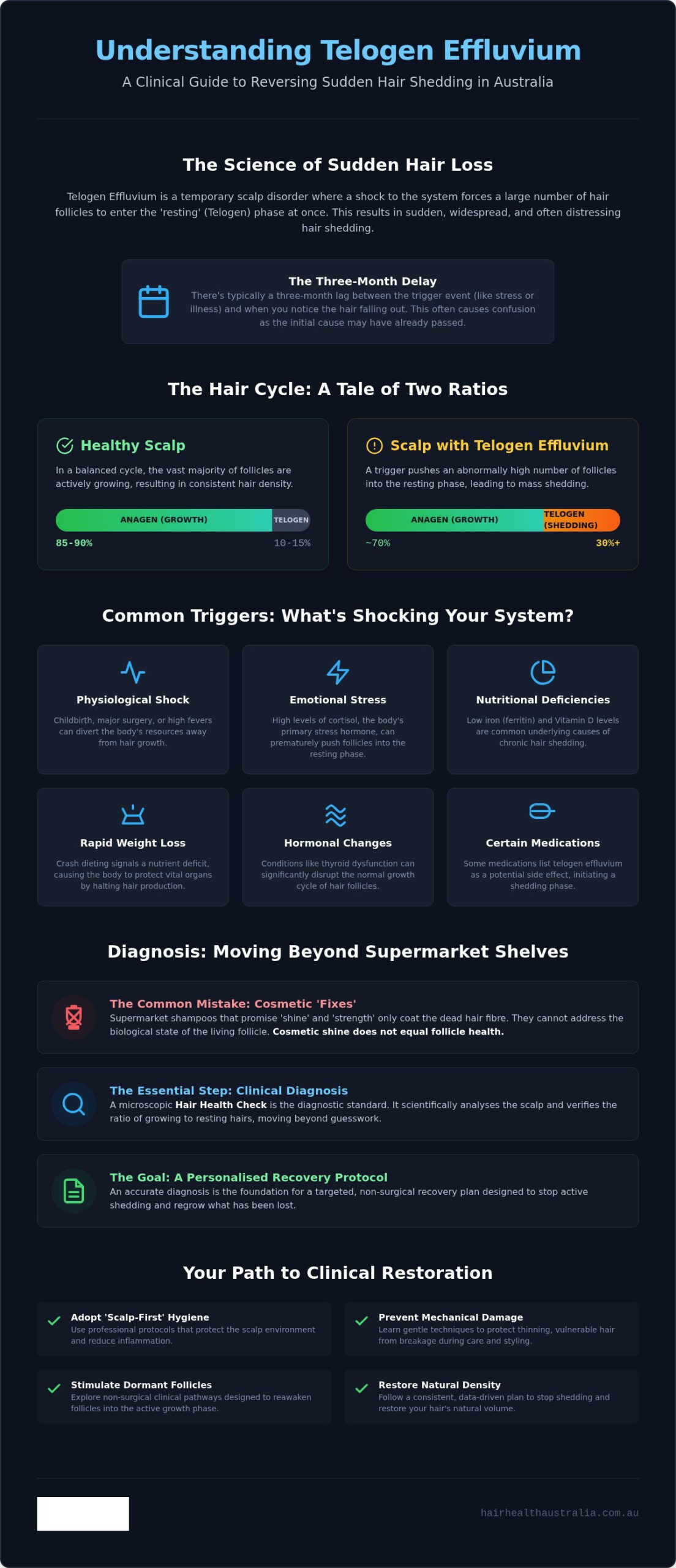
Telogen effluvium is a temporary but highly distressing scalp disorder characterised by a sudden, profuse shedding of hair. To understand The Science of Telogen Effluvium, we must look at the biological clock governing every follicle on your head. Hair doesn’t grow indefinitely; it moves through a precise three-stage cycle. Anagen is the active growth phase, Catagen is a brief transition, and Telogen is the resting phase where the hair eventually sheds to make room for new growth. In a balanced system, these phases happen in a staggered fashion, ensuring your hair density remains consistent.

When a significant physiological or emotional ‘trigger’ occurs, it shocks the system and disrupts this delicate timing. This disruption forces a disproportionate number of follicles to abandon the growth phase and enter the resting phase simultaneously. While the visible hair falls away, it’s vital to remember the follicle remains alive and intact. It hasn’t died or permanently miniaturised; it’s simply dormant, waiting for the correct signals to resume its work. This distinction is critical when seeking telogen effluvium treatment Australia wide, as clinical intervention focuses on reawakening these resting follicles rather than surgical replacement.

Anagen vs. Telogen: Understanding the Ratio

In a healthy, stable scalp, approximately 85% to 90% of your hair is in the Anagen phase at any given time. This high ratio maintains your visible hair density and ensures that daily shedding is barely noticeable. However, telogen effluvium can shift this balance dramatically, pushing 30% or more of your hair into the shedding phase. Because the transition from the growth phase to the resting phase takes time, you won’t notice the loss immediately. There’s typically a three-month delay between the initial trigger event and the moment you see clumps of hair in the drain. This lag often causes confusion, as the original stressor may have already passed by the time the shedding begins.

Why ‘Shine’ Doesn’t Equal Hair Health

Many people attempt to resolve thinning with supermarket shampoos that promise ‘shine’ or ‘strength’. These products only address the dead hair fibre, masking the internal biological state of the follicle with silicones and coatings. If you’re looking for effective telogen effluvium treatment Australia, you must look beneath the surface. Cosmetic shine doesn’t reflect the health of the scalp environment or the activity of the hair bulb. A professional Hair Health Check is essential to move beyond guesswork. By using microscopic scanning, we can verify the actual ratio of growing to resting hairs and ensure your recovery plan is based on clinical data rather than retail marketing.

Identifying the Triggers: Stress, Health, and the Australian Environment

Telogen effluvium is rarely a random occurrence. It’s a biological response to a systemic shock. Common physiological triggers include childbirth, high fevers, or significant surgery. These events force the body to redirect its resources away from “non-essential” functions like hair growth to focus on recovery. Significant nutritional deficiencies, particularly low iron (ferritin) or vitamin D, often play a central role in chronic shedding. Identifying these underlying causes is the foundation of any effective telogen effluvium treatment Australia based specialists provide.

Emotional stress is another primary driver. High levels of cortisol, the body’s primary stress hormone, can prematurely push follicles into the telogen phase. This is why many patients seeking Managing Hair Care and Breakage advice find that their shedding peak coincides with periods of extreme professional or personal pressure. Rapid weight loss or ‘crash dieting’ is a frequent culprit. When the body perceives a sudden caloric or nutrient deficit, it protects vital organs by shutting down the hair production cycle. Certain medications or hormonal changes associated with thyroid dysfunction can also trigger this shift. Understanding these complexities is essential when seeking telogen effluvium treatment Australia wide.

The Australian Sun and Scalp Inflammation

Sydney’s high UV index presents a unique challenge for those experiencing thinning. Intense UV exposure can lead to scalp photo-damage, causing chronic micro-inflammation around the hair follicles. This inflammation can exacerbate existing shedding conditions by further disrupting the follicle’s signals. To protect your scalp during the harsh Australian summer, we recommend wearing UV-protective headwear or using specialised scalp sunscreens. Reducing thermal stress on the scalp is a simple but vital step in maintaining a healthy growth environment.

Sydney Water Quality and Hair Integrity

Mineral build-up from Sydney mains water can also affect the physical integrity of your hair. While hard water minerals like calcium and magnesium primarily cause external breakage and a ‘straw-like’ texture, they can complicate the appearance of telogen effluvium. It’s important to distinguish between external breakage and internal shedding from the bulb. While water filtration can support hair texture, it cannot cure clinical loss caused by internal triggers. To find out exactly what is causing your hair to thin, a comprehensive Hair Health Check is the most reliable way to differentiate between environmental damage and biological shedding.

Clinical Diagnosis: Why a Microscopic Hair Health Check is Essential

Visual inspection is the most common way people try to diagnose their hair loss, but it’s often insufficient. Peering into a bathroom mirror doesn’t reveal the biological health of the follicle or the precise ratio of growing to resting hairs. To access effective telogen effluvium treatment Australia based patients need a more forensic approach. Microscopic hair analysis is the gold standard because it allows us to see what the naked eye cannot: the state of the scalp environment and the physical characteristics of individual strands at the root.

One of the most critical aspects of a clinical diagnosis is detecting miniaturisation. This is the process where hair follicles slowly shrink, producing thinner and shorter hairs until they eventually stop growing altogether. While telogen effluvium is characterised by a sudden shift in the shedding cycle, the presence of miniaturisation suggests a more permanent form of loss, such as androgenetic alopecia. Identifying these subtle differences early is vital to prevent permanent density depletion and ensure the chosen recovery protocol matches the actual cause of the thinning.

What Happens During a Clinical Hair Scan?

During a clinical scan, we use high-magnification technology to examine the scalp surface and the base of the hair follicles. We measure hair density, specifically the number of hairs per square centimetre, and follicle diameter across different zones of the head. This data provides a baseline of your current hair health. Seeing this live ‘before’ data is incredibly valuable; it removes the guesswork and allows us to track your restoration progress with scientific accuracy as you move through your personalised treatment protocol.

Differentiating Shedding from Pattern Balding

Confusion often arises because shedding and balding can look similar in the early stages. Telogen effluvium is usually diffuse, meaning you’ll notice a general thinning across the entire scalp rather than in one specific spot. In contrast, pattern thinning typically targets the crown or the hairline first. Because these conditions require different clinical approaches, resolving diagnostic uncertainty is the first step toward recovery. We encourage you to book a Hair Health Check to receive a definitive diagnosis and ensure you’re on the correct path for telogen effluvium treatment Australia.
Telogen Effluvium Treatment Australia: The 2026 Clinical Recovery Guide

Professional Standards: Managing Hair Care and Breakage

Managing hair loss effectively requires a shift in perspective from cosmetic styling to clinical scalp hygiene. Establishing a ‘scalp-first’ routine is essential for maintaining an optimal growth environment. While many supermarket brands rely on harsh sulphates and silicones to create a temporary illusion of health, professional-grade, pH-balanced cleansers focus on the biological needs of the scalp. These specialised formulations ensure the acid mantle remains intact, preventing the micro-inflammation that can hinder recovery during telogen effluvium treatment Australia.

Mechanical damage is a significant, yet often overlooked, risk for those with thinning hair. Towel-rubbing your hair dry might seem harmless, but the friction can cause weakened strands to snap or dislodge prematurely. We recommend blotting the hair gently with a microfibre towel instead. Additionally, professional conditioners play a vital role beyond mere detangling. They reinforce the hair cuticle, providing the structural integrity needed to prevent mid-strand snaps. For those seeking global inspiration on maintaining hair health through precision styling, the high-end techniques at Ross Adams Hair & Beauty offer a standard for how to handle delicate hair professionally. This distinction is vital; you don’t want to lose hair to avoidable breakage while your follicles are already struggling with a shedding cycle.

A common mistake we see in our Sydney clinic is the fear of washing. Many patients believe that skipping a wash will ‘save’ their hair. In reality, the hairs you see in the drain have usually been detached for weeks; the act of washing simply clears them away. Avoiding the shower leads to sebum build-up and malassezia yeast overgrowth, which can cause scalp inflammation and further stress the follicles. Use a gentle, circular massaging motion with your fingertips to cleanse the scalp without tugging on weakened strands. Aim for a frequency that keeps the scalp clear and breathable, typically every two to three days depending on your skin type.

Avoiding the ‘Supplement Trap’

It’s tempting to reach for generic ‘hair, skin, and nails’ vitamins, but this ‘supplement trap’ can be counterproductive. Taking high doses of random nutrients without a confirmed deficiency can sometimes interfere with other vital minerals or mask underlying health issues. Targeted nutrition, specifically addressing clinical deficiencies in Iron, Zinc, or Vitamin D, is the only evidence-based way to support regrowth. Understanding the Best Hair Regrowth Treatment Australia 2026 standards involves looking at the whole biological picture, not just popping a pill. To ensure your hair care routine is supported by accurate data, we recommend starting with a comprehensive Hair Health Check to identify exactly what your scalp requires.

Clinical Restoration: The Path to Regrowing Thicker Hair

While many sources suggest that “waiting it out” is the only option for shedding, our clinical philosophy focuses on active support for the follicle. At Hair Health Australia, we specialise in non-surgical restoration that moves beyond aesthetic camouflage. Effective telogen effluvium treatment Australia based protocols involve using clinical-strength actives that target the follicle’s biological signals. These actives work to shorten the resting phase and stimulate dormant bulbs back into the anagen (growth) phase. By providing the right stimulus at the right time, we help your scalp recover its density faster than it would on its own.

It’s reassuring to know that because telogen effluvium is a cycle-based disorder, surgical options like hair transplants are entirely unnecessary. The follicles are still present and capable of producing hair; they simply need the correct clinical environment to resume their natural function. A personalised treatment plan is vital because no two cases of shedding are identical. Whether your trigger was a nutritional shift or a period of intense stress, your recovery protocol must be tailored to your specific diagnostic data to ensure lasting results and a return to your original hair density.

Non-Surgical Regrowth Protocols in Sydney

Our methodology in Sydney centres on evidence-based therapies that accelerate the transition from shedding to regrowth. We don’t just provide a protocol and leave you to it; ongoing monitoring is a cornerstone of our care. We use microscopic scanning to track how your follicles are responding to the treatment, making adjustments as needed to ensure progress stays on track. Choosing a Non-Surgical Hair Loss Clinic in Sydney requires looking for this level of systematic, clinical oversight. Without forensic tracking, it’s impossible to know if your regrowth is reaching its full potential or if the underlying triggers have been fully resolved.

Taking Control: Your Sydney Consultation

The most effective way to manage hair loss is to stop the guesswork. While retail serums might offer a temporary boost in “look,” they can’t address the underlying biological shift that caused the shedding in the first place. Early intervention is the best tool we have to prevent acute shedding from becoming a chronic, long-term issue. By seeking a professional diagnosis now, you can replace uncertainty with a clear, actionable path toward restoration. We invite you to take the first step in your recovery and book your clinical Hair Health Check at our Sydney clinic today.

Your Path to Clinical Hair Recovery

Watching your hair density change can be overwhelming, but understanding the biological shift in your growth cycle is the first step toward regaining control. We’ve explored how identifying specific triggers and using specialised scalp hygiene can protect your follicles during active shedding. Finding effective telogen effluvium treatment Australia based clinics offer requires a transition from retail guesswork to forensic science. By moving past supermarket ‘miracle’ cures, you can focus on evidence-based restoration that addresses the root cause of your thinning.

Since 2009, our non-surgical regrowth specialists have utilised clinical microscopic scanning technology to develop personalised Australian-made protocols for both men and women. These systematic programs are designed to reawaken dormant follicles and accelerate your journey back to full density. You don’t have to navigate this uncertainty alone. Take the definitive next step and Book Your Comprehensive Hair Health Check in Sydney today. Your hair follicles are remarkably resilient, and with the right clinical guidance, your path to recovery is clear and achievable.

Frequently Asked Questions

How can I tell if my hair is healthy or just looks shiny?

Shine is often a result of topical coatings like silicones that smooth the hair cuticle, whereas true health is determined by follicle activity and scalp condition. You can’t assess the biological state of your hair simply by looking in a mirror. A microscopic scan identifies if your follicles are miniaturising or if the growth-to-resting ratio has shifted. Understanding this distinction is vital before starting any telogen effluvium treatment Australia wide to ensure you’re treating the source, not just the surface.

Can diet alone fix telogen effluvium or do I need clinical help?

While correcting nutritional deficiencies is a crucial step in removing the trigger for shedding, diet alone often isn’t enough to restart a stalled growth cycle quickly. Clinical intervention provides the targeted stimulus required to push dormant follicles back into the anagen phase. Professional guidance ensures you aren’t just ‘waiting it out’ while density continues to drop. Combining a balanced internal environment with clinical-strength topical actives offers the most reliable pathway to restoring your hair’s original volume.

Is it possible to regrow hair without having a transplant?

Yes, telogen effluvium is a temporary disruption of the hair cycle where the follicles remain alive and capable of production, making surgical transplants unnecessary. Unlike permanent pattern baldness, the follicles haven’t died; they’ve simply entered a resting phase. Non-surgical clinical protocols are specifically designed to retrigger growth in these dormant bulbs. By using evidence-based restoration techniques, you can achieve visible density improvements without the invasive nature or significant costs associated with surgical procedures.

How often should I wash my hair to maintain optimal scalp health?

You should aim to wash your hair every two to three days to prevent sebum build-up and scalp inflammation. Many people fear washing during active shedding, but the hairs you see in the drain have already detached from the bulb weeks ago. Leaving oil and debris on the scalp can create an unhealthy environment that further stresses the follicles. Using a gentle, pH-balanced cleanser ensures the scalp remains clear and breathable without causing mechanical damage.

Does the Australian sun actually damage my hair follicles?

Intense UV exposure from the Australian sun can cause micro-inflammation on the scalp, which negatively impacts the follicle’s ability to maintain a healthy growth cycle. This photo-damage can exacerbate existing shedding conditions and weaken the hair’s structural integrity. Protecting your scalp with headwear or specialised UV-protective products is essential during the summer months. Reducing this environmental stress helps maintain a stable environment, which is a key component of effective telogen effluvium treatment Australia.

What is the best way to stop hair breakage in the shower?

Stopping breakage begins with eliminating aggressive mechanical habits like vigorous towel-rubbing or brushing while hair is soaking wet. Instead, gently blot your hair with a microfibre towel to remove excess moisture without creating friction. Using professional-grade conditioners is also essential as they reinforce the hair cuticle and provide the necessary slip to prevent mid-strand snaps. These small changes in your hygiene routine protect the hair you have while you wait for new growth to emerge.

How long does it take to see results from a clinical hair health program?

Visible results from a clinical restoration program typically appear within three to six months, aligning with the natural timing of the hair growth cycle. Because the transition from the resting phase back to the active growth phase takes time, patience is required. You’ll usually notice a decrease in active shedding first, followed by the appearance of fine new hairs at the scalp. Regular microscopic monitoring allows us to track these subtle changes before they become obvious to the naked eye.

Are hair health supplements worth the money for Australians?

Generic hair supplements are rarely worth the investment unless they are addressing a specific, clinically verified deficiency. Taking high doses of vitamins like biotin without a deficiency won’t stop telogen shedding and can sometimes cause other imbalances. Australians should focus on targeted nutrition based on blood results, specifically checking levels of ferritin, zinc, and vitamin D. A professional diagnosis ensures you’re investing in nutrients your body actually needs to support healthy hair regrowth.
Hair Clinic Sydney: The 2026 Guide to Non-Surgical Hair Restoration

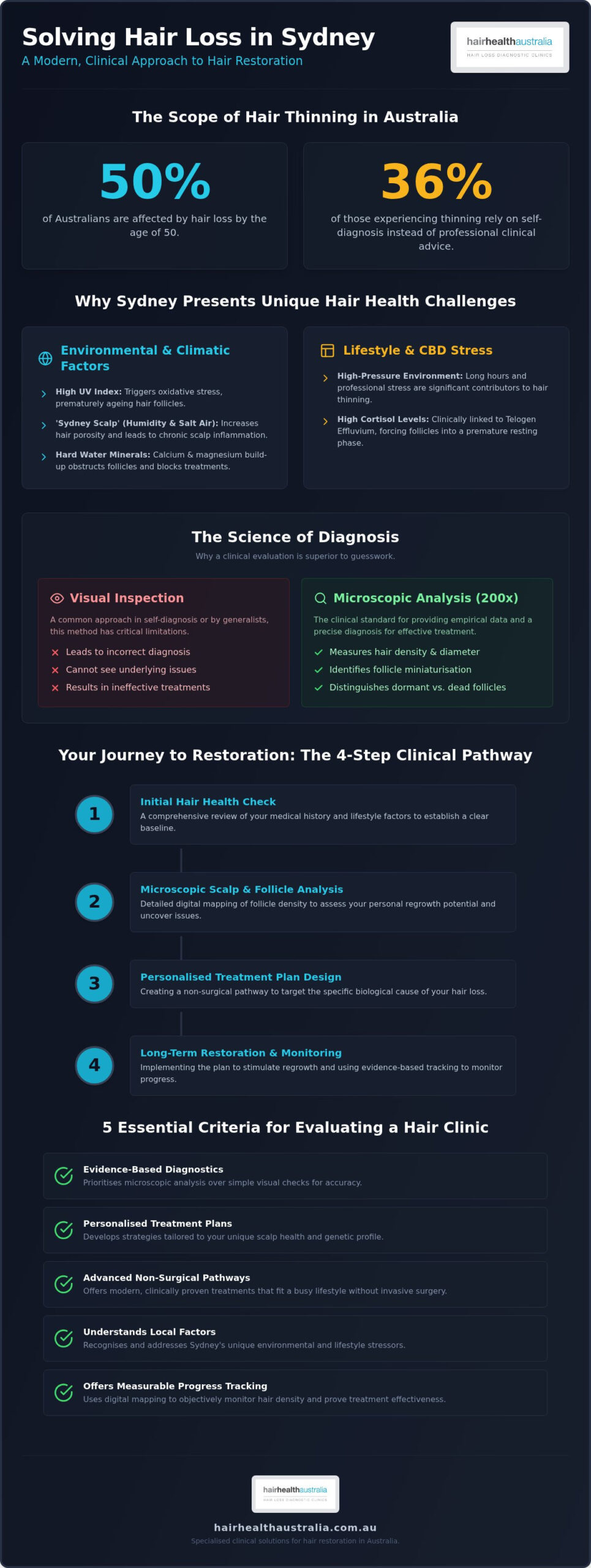
Approximately 50% of Australians are affected by hair loss by the age of 50, yet nearly 36% of those experiencing active thinning still rely on self-diagnosis rather than seeking professional clinical advice. It’s understandable to feel frustrated when over-the-counter products fail to deliver, or to feel anxious about the social stigma of balding in a fast-paced Sydney professional environment. You might fear that the only permanent solution is a painful, invasive surgery that looks unnatural, but that is no longer the case in 2026.

We promise to show you a more sophisticated, evidence-based path to restoration. This guide explains how visiting a dedicated hair clinic Sydney can provide you with a precise microscopic diagnosis to uncover the specific biological cause of your hair loss. We will preview the latest non-surgical treatments that fit seamlessly into a busy lifestyle, ensuring you achieve thicker, healthier hair through a plan tailored to your unique scalp health. By moving from uncertainty to a structured clinical strategy, you can restore both your hair density and your confidence without ever stepping into an operating theatre.

Key Takeaways

  • Understand how Sydney’s specific environmental factors, including high UV levels and hard water minerals, can compromise scalp health and accelerate follicle ageing.
  • Learn why a reputable hair clinic Sydney prioritises microscopic scalp analysis over simple visual checks to accurately distinguish between active and dormant follicles.
  • Explore the 2026 multi-modal clinical pathways designed to stimulate natural regrowth and restore hair density without the need for invasive surgery.
  • Identify the five essential criteria for evaluating a specialist provider, ensuring they offer evidence-based diagnostics and personalised treatment plans.
  • Preview the Hair Health Check process, from initial medical history reviews to detailed follicle density mapping and long-term restoration strategies.

Why Sydney Locals Face Unique Hair Health Challenges

Living in the Harbour City offers an enviable lifestyle, but the local climate and urban environment present specific obstacles for maintaining hair density. Many residents visiting a hair clinic Sydney often report thinning that seems to accelerate during the warmer months or after moving into certain suburbs. This isn’t a coincidence. Sydney’s high UV index does more than just damage skin; it triggers oxidative stress within the scalp, which can prematurely age hair follicles and disrupt the natural growth cycle.

Environmental Factors in the Harbour City

The combination of high humidity and salt air, particularly for those spending time in coastal areas like Bondi or Manly, creates what we call the ‘Sydney Scalp.’ This environment can alter hair texture, making it more porous and prone to breakage, while also leading to chronic scalp inflammation if not managed correctly. Additionally, Pattern hair loss can be exacerbated by these environmental stressors that weaken the hair shaft over time. Sydney’s water mineral content, which varies across the metropolitan area, often leads to calcium and magnesium build-up that physically obstructs the hair protein structure and prevents topical treatments from absorbing effectively. Seasonal shifts in New South Wales also play a role, as the body often reacts to temperature changes by increasing shedding during autumn and spring, a process that can be alarming without a professional diagnosis.

Lifestyle and Stress in the CBD

Beyond the climate, the high-pressure corporate environment of the Sydney CBD is a significant contributor to hair health issues. Professionals often face long hours and high cortisol levels, which are clinically linked to Telogen Effluvium, a condition where stress pushes hair follicles into a resting phase prematurely. While many people try ‘quick fix’ shampoos or supplements to counter this, these retail products rarely address the underlying biological triggers or the specific ways stress impacts the scalp’s micro-circulation. A professional hair clinic Sydney provides a structured, multi-modal approach that integrates with a daily routine, moving beyond surface-level fixes to provide long-term stability.

Effective restoration starts with understanding these local variables and how they interact with your genetics. Rather than guessing which product might work, we recommend a Hair Health Check to get a clear, scientific baseline of your current follicle activity. This clinical entry point ensures your treatment plan accounts for both your biology and your Sydney lifestyle, providing the clarity needed to stop thinning in its tracks.

The Science of Diagnosis: Microscopic Hair Analysis vs. Visual Inspection

A visual inspection by a generalist often leads to an incorrect diagnosis because many conditions look identical to the naked eye. At a specialised hair clinic Sydney, we move beyond surface-level observations using microscopic hair analysis. This non-invasive scan allows us to view the scalp and follicles in high definition, providing the empirical data needed to create a bespoke restoration plan. By using digital tracking, we can objectively measure hair diameter and density, ensuring that every stage of your progress is backed by clinical evidence rather than guesswork.

What Your Follicles Are Telling Us

Under 200x magnification, we can observe the miniaturisation process where the hair shaft becomes progressively thinner and shorter due to hormonal or environmental factors. This level of detail is vital for identifying sebum blockages or chronic scalp inflammation that might be stifling growth. Digital mapping helps us distinguish between dormant follicles, which have the potential to be ‘woken up’ through targeted stimulation, and dead follicles, where regrowth is no longer biologically possible. You can learn more about the Hair Health Check process to understand how we map your specific follicle health to determine your personal regrowth potential.

The Limitations of Self-Diagnosis

Many people attempt to self-treat using ‘growth’ shampoos or DHT blockers without a clinical confirmation of genetic thinning. This approach is often ineffective because hair loss isn’t a single condition; it’s a complex symptom of various underlying issues, ranging from nutritional deficiencies to autoimmune responses. Relying on a dermatologist’s guide to hair loss treatments clarifies that a medical-grade assessment is the essential first step toward effective intervention. Consulting a specialist at a hair clinic Sydney ensures you don’t waste months on treatments that aren’t compatible with your specific biology. A microscopic scan is the only way to distinguish between temporary shedding and permanent genetic thinning.

If you’ve noticed increased shedding or a loss of volume, the most reliable next step is to secure an objective baseline. Booking a Hair Health Check allows you to see exactly what is happening beneath the surface, providing the clarity you need to choose a treatment programme that actually works.

Non-Surgical Hair Loss Treatment: Proven Clinical Pathways for 2026

The evolution of hair restoration has moved firmly away from invasive procedures toward sophisticated, non-surgical pathways. Most people who visit a hair clinic Sydney have already tried various over-the-counter shampoos or ‘miracle’ serums with little success. This is because these products rarely address the complex biological triggers of thinning. A professional clinical approach is multi-modal, meaning it combines several evidence-based treatments to work synergistically. Utilising clinical-grade technology to stimulate dormant roots alongside topical protocols allows us to effectively restart the growth cycle in follicles that haven’t yet reached the permanent scarring stage.

Halting the progression of thinning is just as vital as encouraging new growth. For those experiencing genetic hair loss, the role of DHT inhibitors is fundamental. Dihydrotestosterone (DHT) is a hormone that binds to receptors in the scalp, causing follicles to shrink until they eventually stop producing hair. Integrating targeted inhibitors into a daily routine helps block this process and preserve the hair you still have. This foundation of protection allows our stimulation technologies to work more effectively, ensuring that the new hair produced is thicker, stronger, and more resilient to environmental stressors.

Male Hair Loss Treatment Strategies

Men typically face challenges with receding hairlines and thinning at the crown, which are the most common signs of androgenetic alopecia. Rather than jumping straight to surgery, many find success through structured, non-invasive programmes. These Male Hair Loss Treatment Programs in Sydney focus on reviving miniaturised follicles before they become inactive. By increasing blood flow to the scalp and providing high-potency nutrients directly to the root, we can maintain your natural hairline while significantly improving overall density. It’s a methodical process that prioritises long-term hair health over temporary cosmetic fixes.

Female Hair Regrowth Solutions

For women, hair loss often presents as diffuse thinning or a widening part, which can be deeply distressing. These patterns are frequently linked to internal factors like iron deficiency, thyroid function, or hormonal shifts during different life stages. Our Hair Loss Treatment for Women: The 2026 Australian Clinical Buying Guide explains why a tailored approach is necessary. We focus on balancing the scalp environment and ensuring the body has the biological building blocks required for hair production. When internal health is aligned with professional topical therapy, the results are both natural-looking and sustainable, fitting easily into a modern lifestyle.

Hair Clinic Sydney: The 2026 Guide to Non-Surgical Hair Restoration

Evaluating a Hair Clinic in Sydney: 5 Essential Criteria

Selecting a hair clinic Sydney is a decision that requires careful scrutiny. Not all providers operate with the same clinical rigour, and the quality of your diagnosis will directly dictate the success of your restoration. To ensure you receive a treatment plan that is both safe and effective, you should evaluate potential clinics against five essential criteria: diagnostic depth, specialisation, treatment range, transparency, and local reputation. A clinic that relies on a quick glance instead of microscopic scanning is likely to miss the subtle biological markers that distinguish temporary shedding from permanent thinning.

Specialisation is equally critical. A general cosmetic clinic might offer hair treatments as a side service, but they often lack the deep trichological expertise found in a dedicated facility. You should also look for transparency regarding expected outcomes. A reputable provider won’t promise overnight transformations; instead, they will provide a realistic timeline based on your specific follicle density and growth cycles. Finally, consider their local standing. Just as Sydney residents look for the enduring reputation of local institutions like Hill & Blume when seeking professional certainty, a clinic with a long-standing presence in the community, backed by over 15 years of clinical experience, demonstrates a level of reliability that newer franchises often cannot match.

Why a Specialist Hair Clinic Beats a Generalist

A dedicated trichological approach differs significantly from a standard medispa environment. While a medispa focuses on broad aesthetic improvements, a specialist hair clinic focuses exclusively on the complex biology of the scalp and follicle health. We use specialised equipment to monitor your progress at a cellular level, allowing for precise treatment adjustments as your hair density improves over time. This level of accuracy is the primary reason many residents choose to book your microscopic scan at our Sydney centre before committing to a long-term programme. It ensures your plan is based on data, not just generalisations.

Avoiding the ‘Sales Pitch’ Environment

Be wary of high-pressure sales tactics often found in corporate-driven Sydney clinics. If a consultant pushes a specific surgical procedure before conducting a thorough scalp analysis, it’s a significant red flag. While many providers offer a free consultation, this should never be a mere sales meeting; it must include a detailed diagnostic element to be of any clinical value. The Standard of Care in Australian hair loss clinics dictates that all recommendations must be evidence-based and tailored to the patient’s verified diagnostic data. If you feel rushed or pressured into a “one-day-only” deal, the clinic is likely prioritising quotas over your hair health.

If you’re ready for an honest, clinical assessment of your hair health without the high-pressure sales pitch, secure a professional Hair Health Check today.

Your Journey to Restoration: What to Expect at Your Hair Health Check

Your first visit to a specialist hair clinic Sydney is designed to replace uncertainty with a clear, scientific roadmap. This methodical process begins with a comprehensive review of your medical history and lifestyle factors. Because hair thinning is often a symptom of internal imbalances, we look at everything from your diet and stress levels to your genetic predispositions. This isn’t a generic chat; it’s a diagnostic deep-dive to ensure we address the root cause of your concern before any treatment begins.

The second step involves the microscopic scalp scan. During this phase, we map your follicle density across different zones of the scalp to identify where follicles are actively producing hair, where they are miniaturising, and where they have become dormant. Analysing this collected data is where we bridge the gap between observation and action. We compare the density of your stable zones with the thinning areas to calculate your exact percentage of loss. This precision allows us to move to the final step: developing a customised, non-surgical regrowth plan. Whether your situation requires nutritional support, topical clinical-grade formulas, or advanced follicle stimulation technology, the plan is built around what your scalp actually needs to thrive.

Preparing for Your Visit

To get the most accurate diagnostic scan, we recommend washing your hair 24 hours before your appointment. You should avoid using heavy styling products, fibres, or concealers on the day, as these can obscure the scalp surface under the microscope. It’s also helpful to bring a list of any current medications and a brief history of any previous treatments you’ve tried. When you visit a hair clinic Sydney, a standard Hair Health Check typically takes approximately 45 to 60 minutes, providing ample time for both the scan and a detailed explanation of the findings.

The Path to Visible Results

Restoring hair density is a biological process that requires patience and consistency. While it’s natural to want immediate results, the human hair growth cycle means that visible changes typically appear within a 3 to 6 month window. This is why follow-up ‘check-in’ scans are a vital part of our clinical programme. These scans allow us to objectively verify that your follicles are responding to the treatment, making data-driven adjustments whenever necessary to keep you on the path to thicker, healthier hair. By tracking your progress at a microscopic level, we ensure that your restoration journey remains transparent and results-oriented.

Start your journey with a professional Hair Health Check today and take the first step toward evidence-based hair restoration.

Take the First Step Toward Scientific Hair Restoration

Restoring your hair density in 2026 is no longer a matter of guesswork or invasive surgery. By understanding the unique environmental stressors in the Harbour City and prioritising a microscopic diagnosis, you can address thinning at its biological source. As a dedicated hair clinic Sydney, we have specialised in non-surgical regrowth programs and clinical hair analysis since 2009. Our approach replaces the uncertainty of retail products with personalised regrowth protocols that are grounded in transparency and clinical precision.

Moving from awareness to action requires an objective understanding of your follicle health. Whether you are facing genetic thinning or stress-related shedding, a structured clinical plan provides the most reliable path to thicker, natural-looking hair. You don’t have to navigate these changes alone. Our seasoned specialists act as your dedicated guide, ensuring every stage of your recovery is monitored with scientific accuracy. It is time to replace anxiety with a clear, clinical strategy for your future hair health.

Secure your clinical Hair Health Check in Sydney today to uncover your true regrowth potential and start your journey with confidence.

Frequently Asked Questions

Is a hair clinic in Sydney better than buying products online?

A specialist hair clinic Sydney offers a significant advantage over online retailers because it provides a precise clinical diagnosis. Online ‘growth’ products are generic and don’t account for your specific scalp biology or the underlying cause of your thinning. By using microscopic scanning, a clinic identifies whether your follicles are dormant or miniaturising, allowing for a targeted treatment plan that avoids the wasted expense of ineffective, one-size-fits-all solutions.

Can a hair clinic help if I’m already quite bald?

Clinical intervention can be effective if there are still active or dormant follicles present. Once a follicle has completely scarred over and died, non-surgical regrowth is no longer biologically possible. This is why the diagnostic phase is so critical; we use high-definition imaging to map your scalp and determine exactly where regrowth can be achieved. If you have significant loss, we focus on reviving the remaining dormant roots to improve overall density.

How much does a typical hair loss treatment programme cost in Sydney?

In Australia, the cost of hair restoration varies depending on the technology used. For example, Platelet-Rich Plasma (PRP) treatments typically range between A$300 and A$700 per session, while more intensive non-surgical procedures can cost upwards of A$6,000. It’s important to verify the specific inclusions of any programme during your consultation, as reputable clinics will provide a transparent breakdown based on your personalised diagnostic results rather than a generic price list.

Are non-surgical treatments at a Sydney clinic permanent?

Non-surgical treatments for genetic conditions like androgenetic alopecia generally require ongoing maintenance to sustain results. While these clinical pathways effectively halt thinning and stimulate new growth, they don’t change your underlying genetics. If you stop the programme entirely, the hormone Dihydrotestosterone (DHT) will eventually resume its impact on the follicles. Consistency is the key to maintaining a thicker, healthier head of hair over the long term.

What is the difference between a hair clinic and a hair transplant centre?

Does Medicare or private health insurance cover hair clinic visits in Australia?

Most hair loss treatments in Australia are classified as cosmetic and are not covered by Medicare or private health insurance. However, if your hair loss is a symptom of an underlying medical condition, a GP referral for specific pathology tests may be bulk-billed. You should check with your individual insurance provider to see if they offer any rebates for clinical consultations, though this is relatively uncommon in the private sector.

Can stress from a Sydney commute actually cause my hair to fall out?

Chronic stress from a demanding Sydney lifestyle can indeed trigger a condition called Telogen Effluvium. This occurs when high cortisol levels push a large number of hair follicles into a resting phase simultaneously, leading to noticeable shedding a few months after the stressful period. While this type of loss is often temporary, a clinical assessment ensures that the stress hasn’t exacerbated an underlying genetic thinning pattern that requires more structured intervention.

How often do I need to visit the clinic during my treatment?

The frequency of visits depends on the specific protocol designed for your scalp health. Initially, some programmes require fortnightly or monthly in-clinic sessions to stimulate the follicles and monitor early progress. Once your hair enters a stable regrowth phase, visits typically become less frequent, focusing on quarterly ‘check-in’ scans to track density changes. We design these schedules to be efficient, ensuring they fit into the busy routines of Sydney professionals.

Hair Loss Treatment Success Rate: Australian Clinical Guide 2026

A high hair loss treatment success rate doesn’t guarantee a single new strand of hair on your head unless your follicles are still clinically viable. It’s a frustrating reality for many Australians who spend thousands on generic serums, only to see no change in the mirror. You’ve likely felt that familiar anxiety when looking at conflicting statistics. You might wonder if you’re simply destined for total baldness or if there’s a genuine path to restoration. We understand that the fear of wasting money on ineffective treatments is just as taxing as the hair loss itself.

This guide clarifies the clinical reality of 2026. We move past marketing hype to examine what the data actually says about stopping loss versus achieving visible regrowth. You’ll discover how to accurately predict your own potential for success by understanding the biological markers that specialists look for during a professional assessment. We’ll explore the latest non-surgical advancements and explain how a targeted Hair Health Check at our Sydney clinic can provide the clarity you need to move forward with confidence.

Key Takeaways

  • Understand the distinction between clinical maintenance and cosmetic regrowth to set realistic milestones for your restoration journey.
  • Learn how microscopic scalp analysis identifies viable follicles and helps you avoid spending money on areas with permanent fibrosis.
  • Discover why the hair loss treatment success rate of clinical-grade protocols often exceeds that of standard over-the-counter chemist products.
  • Identify the essential nutritional foundations and consistency habits required to maximise the efficacy of non-surgical restoration programs.
  • Find out how a professional Hair Health Check in Sydney provides a data-driven roadmap tailored to your specific biological needs.

Defining Hair Loss Treatment Success Rates: Beyond the Marketing Hype

When you search for a hair loss treatment success rate, you’re often met with glossy photos and broad percentages that seem too good to be true. In a clinical setting, success isn’t just a subjective feeling about how you look in the mirror; it’s a measurable biological shift. Clinical success is often achieved long before you see a visible change in your hairline. For many, the first victory is simply “stopping the shed.” If a program successfully halts the progression of androgenic alopecia, it has already achieved its primary clinical objective. Without first stabilising the loss, any attempt at regrowth is built on a failing foundation.

Clinicians define a “responder” as an individual who shows either a stabilisation of hair loss or a statistically significant increase in hair density over a set period. To track this, we use microscopic scans to measure the number of terminal hairs per square centimetre. This objective data is far more reliable than a standard selfie. When exploring various hair loss treatment options, it’s vital to distinguish between maintaining the hair you currently have and the more intensive process of stimulating new growth from dormant follicles.

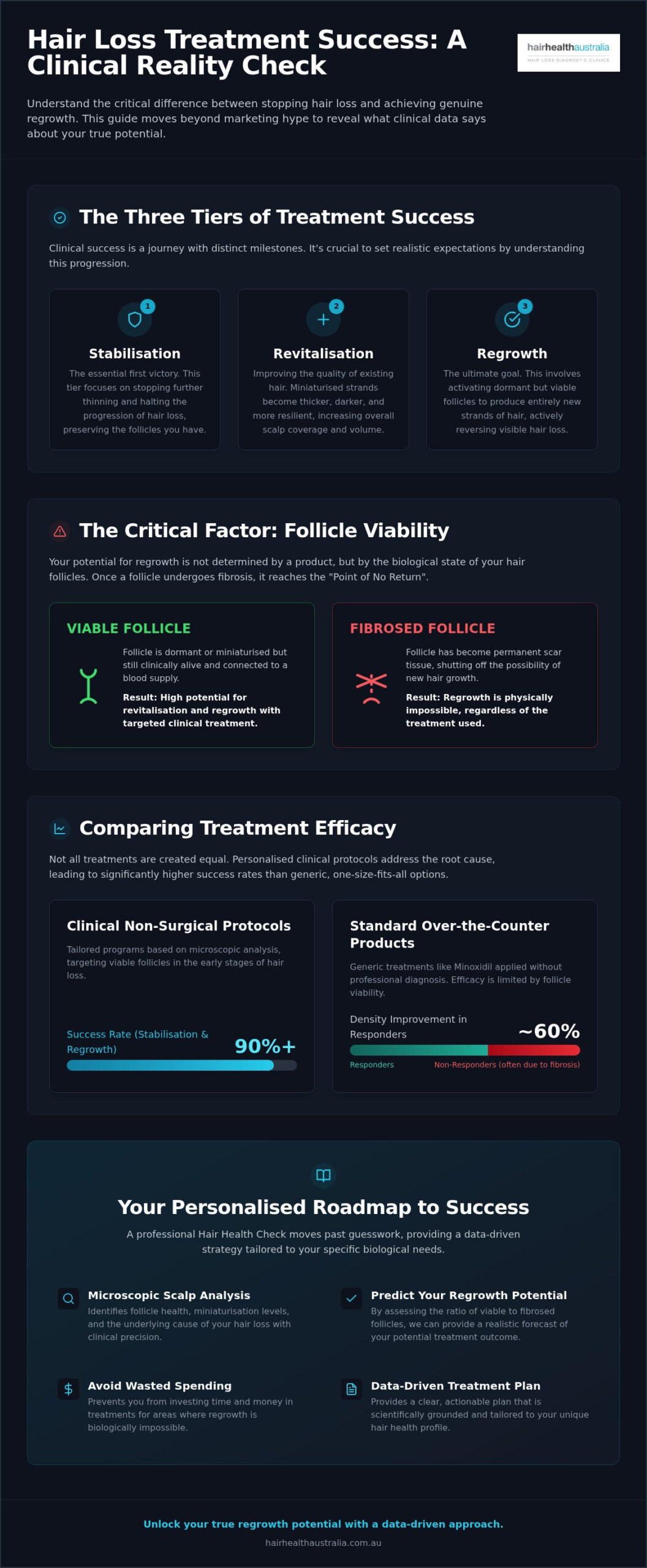
The Three Tiers of Treatment Success

We categorise success into three distinct levels to help patients manage their expectations and track their progress accurately.

  • Tier 1: Stabilisation. This is the essential first milestone. We focus on stopping further thinning and ensuring the follicles you currently have remain healthy and active.
  • Tier 2: Revitalisation. At this stage, we improve the quality of existing hair. Thin, “miniaturised” strands become thicker, darker, and more resilient, which increases overall scalp coverage and volume.
  • Tier 3: Regrowth. The most sought-after outcome. This involves activating dormant follicles that haven’t yet reached the point of permanent scarring or fibrosis, allowing new hairs to emerge.

Why Generic Statistics Can Be Misleading

Broad statistics often fail to account for individual variables. For instance, a 20-year-old with early-stage thinning will naturally have a higher hair loss treatment success rate than a 60-year-old who has experienced significant loss for decades. The duration of your hair loss is perhaps the most critical predictor of your outcome. Once a follicle has been inactive for several years, it may undergo fibrosis, making regrowth physically impossible regardless of the treatment used.

Underlying health conditions, such as iron deficiencies or thyroid imbalances, can also dampen your results. This is why a personalised Hair Health Check is essential. It moves beyond the generic “before and after” photos, which are easily manipulated by lighting or hair styling, and focuses on the clinical reality of your scalp’s health. By identifying these factors early, we can provide a realistic forecast of your potential regrowth rather than relying on industry averages.

The Biological Predictors of Success: Follicles, Phases, and Scans

Generic statistics often claim a high hair loss treatment success rate, but these numbers mean very little without biological context. The reality is that your physical “starting point” dictates your ultimate result. While medications like Minoxidil show density improvements in roughly 60% of users, the remaining 40% often fail to respond because their follicles have passed what we call the “Point of No Return.” This occurs when a follicle undergoes permanent fibrosis, essentially becoming scar tissue. Once this stage is reached, no amount of stimulation can force a hair to grow. This is why early intervention is the single most important factor. Treating thinning hair while follicles are still active leads to a success rate of 90% or higher in many clinical settings.

Your regrowth ceiling is also limited by the duration of your Anagen, or growth, phase. As hair loss progresses, this phase shortens, leading to thinner, shorter strands. To get a clear picture of your potential, a professional dermatologist’s guide to hair loss can provide foundational context, but nothing replaces a physical examination of the scalp. We use microscopic hair analysis to look beneath the surface. This diagnostic tool allows us to see exactly how many follicles are still viable and which ones have permanently closed, providing an honest forecast of your recovery potential.

Follicular Viability: Can the Hair Actually Return?

Distinguishing between a dormant follicle and a dead one is the core of our diagnostic process. Through microscopic scans, we identify the process of follicular miniaturisation. This is where the hair shaft becomes progressively thinner and shallower until it eventually disappears. If we catch this process in the middle stages, we can often reverse the trend. Scans reveal thinning patterns that are invisible to the naked eye, allowing us to intervene before the follicle reaches that irreversible fibrotic state. Understanding this biological reality is the first step toward a successful outcome. If you’re concerned about your current rate of thinning, booking a Hair Health Check is the most effective way to determine your own hair loss treatment success rate before committing to a long-term plan.

Diagnostic Clues That Signal High Success Potential

When we examine a scalp, we look for specific indicators of regrowth potential. The presence of “vellus” hairs, those fine, light-coloured peach fuzz strands, is often a positive sign. It suggests that follicles are still active, even if they aren’t currently producing thick terminal hairs. We also assess scalp health, looking for inflammation or poor circulation that might hinder treatment absorption. While genetic markers play a significant role, lifestyle-induced thinning, such as stress or nutritional deficiencies, often responds more rapidly to clinical intervention. By identifying these clues early, we can customise a program that targets your specific biological hurdles.

Comparing Efficacy: Clinical Non-Surgical Protocols vs. Over-the-Counter Options

Many Australians start their journey at the local chemist, picking up standard topical solutions. While these products have their place, they often lack the concentration and delivery mechanisms required for significant change. A generic hair loss treatment success rate is often based on standalone medication use, which ignores the power of a combined approach. Clinical-grade protocols utilise higher concentrations and specialised delivery systems that penetrate the scalp more effectively than off-the-shelf alternatives. By moving beyond a single-product mindset, we can address the multiple biological pathways responsible for thinning.

Multi-modal therapy is the gold standard for non-surgical restoration. This involves combining follicular stimulation with DHT suppression and nutritional support. When these elements work together, the results are often far superior to using any single product in isolation. Clinical data from 2026 suggests that Finasteride can halt hair loss in 80-90% of men, but when integrated into a supervised program, the quality of that retained hair often improves significantly. We focus on creating a synergistic environment where each component of the treatment enhances the others.

Managing expectations is a vital part of our consultation process. While we aim for the highest possible outcomes, “100% success” is a rare clinical claim. In reality, success is about reaching your individual biological ceiling. For some, this means total regrowth; for others, it means successfully stopping the shed and thickening existing strands to provide better coverage. Transparency about these outcomes is what builds trust between a specialist and a patient.

Standalone Medications vs. Integrated Clinical Programs

The primary limitation of “one-size-fits-all” solutions is their lack of adaptability. Your scalp is a living ecosystem with unique requirements. Clinical supervision ensures that your program is adjusted based on real-time progress. This oversight also dramatically increases compliance. Many people abandon chemist products because they don’t see immediate results or experience minor irritation. In a clinical setting, we manage these hurdles, ensuring you stay on track to reach your regrowth milestones. Incorporating DHT blockers is often essential for long-term maintenance, as they protect follicles from the hormonal triggers of miniaturisation.

Non-Surgical Success vs. Surgical Outcomes

Surgery is frequently viewed as a “quick fix,” yet it carries risks that non-invasive paths do not. While a hair transplant can move follicles from one area to another, it does nothing to stop the underlying progression of hair loss. Without ongoing clinical therapy, patients often continue to lose their original hair around the transplanted grafts, leading to an unnatural appearance over time. A cost-benefit analysis of non-surgical restoration in Sydney often reveals it to be a more sustainable first step. It allows you to maximise your natural density and stabilise loss before ever considering more invasive surgical options. Achieving a high hair loss treatment success rate is about choosing the most effective, least risky path for your specific stage of thinning.

Hair Loss Treatment Success Rate: Australian Clinical Guide 2026

How to Optimise Your Regrowth: A Patient’s Practical Roadmap

Achieving a high hair loss treatment success rate is a partnership between clinical expertise and patient discipline. While the biological foundations discussed in previous sections are vital, your daily habits determine whether your follicles reach their full potential. The “Consistency Rule” is the most critical factor here. Hair follicles operate on a strict biological clock. When you skip a day of treatment, you disrupt the steady signal required to keep the follicle in the Anagen (growth) phase. Consistency isn’t just about memory; it’s about maintaining the therapeutic threshold necessary to counteract the effects of DHT.

Your results also rely on nutritional foundations. Hair is a non-essential tissue in the eyes of your body, meaning it’s the first to lose out when nutrients are scarce. Ensuring adequate levels of ferritin (iron), vitamin D, and protein provides the raw materials needed for keratin production. Beyond nutrition, you must eliminate “regrowth disruptors” such as high-stress levels or smoking, which restrict blood flow to the scalp and can dampen your overall hair loss treatment success rate.

Progress follows a predictable clinical timeline. At month 3, the primary goal is stabilisation; you should notice a significant decrease in daily shedding. By month 6, early revitalisation begins as miniaturised hairs start to thicken. By month 12, clinical data, such as the 48-week benchmarks for topical minoxidil which show density improvements in 60% of users, suggests you will see your peak cosmetic results. Understanding this timeline prevents the premature abandonment of a program that is actually working beneath the surface.

Maximising Absorption and Follicle Stimulation

Proper application technique is just as important as the medication itself. Clinical topicals must reach the scalp, not just the hair shafts. We recommend a clean, dry scalp to ensure maximum penetration. Excessive sebum or product buildup acts as a physical barrier, reducing the efficacy of your protocol. Regular scalp hygiene and professional monitoring allow us to adjust your concentrations based on how your skin responds, ensuring you never plateau. To ensure your scalp is primed for these clinical protocols, we recommend starting with a Hair Health Check to assess your current follicular environment.

The Mental Game: Staying Patient During the “Shedding Phase”

One of the most challenging hurdles is the temporary “shedding phase” that often occurs in the first 4 to 8 weeks. This is actually a sign of success. It indicates that the treatment is pushing out old, weak hairs to make room for new, stronger terminal hairs. Tracking your progress through objective microscopic scans rather than obsessing over the bathroom mirror helps maintain perspective. If you feel your progress has stalled, consult your specialist rather than self-adjusting your dose. A structured, data-driven approach is the only way to replace anxiety with confidence.

Personalised Success at Hair Health Australia: Sydney’s Non-Surgical Experts

We pride ourselves on a straight-talking, clinical approach that replaces marketing hype with hard data. At our Sydney clinic, we recognise that every patient’s journey is unique. A generic hair loss treatment success rate doesn’t account for your specific follicular health, hormonal profile, or genetic history. Our commitment is to provide a realistic, evidence-based path to restoration. We focus on high-efficacy follicular stimulation rather than invasive surgery, ensuring that our patients achieve sustainable density that looks and feels natural. By prioritising the biological health of your scalp, we move past temporary fixes to provide long-term solutions.

The foundation of our success is the Hair Health Check. This isn’t a standard consultation; it’s a precision diagnostic tool used to calculate your individual potential for regrowth. By using microscopic analysis, we see exactly what is happening beneath the scalp surface. This allows us to move away from guesswork and provide you with a clear, data-driven forecast of your expected results. We believe that an informed patient is a confident patient. Our role is to act as your dedicated guide, providing the clarity you need to make decisions about your hair health without the fear of wasting money on ineffective options.

The Hair Health Australia Diagnostic Process

During your microscopic scan in Sydney, we examine the scalp for specific markers of hair health. We look at hair diameter, scalp hydration, and the ratio of terminal to vellus hairs across different zones of the head. This information allows us to build a customised protocol specifically designed for your hair loss pattern, whether you require Male Hair Loss Treatment or Female Hair Loss Treatment. We maintain a strict policy of clinical transparency. If our analysis shows that your follicles have reached a state of permanent fibrosis, we’ll tell you honestly. We only initiate treatment programs for candidates who have a genuine biological potential for improvement.

Start Your Journey with Confidence

We align our protocols with the best hair regrowth treatment Australia 2026 standards, ensuring you receive the most advanced non-surgical care available. Booking your initial consultation is the first step toward reclaiming your hair density. When you visit our Sydney centre, feel free to bring any previous blood test results or details of past treatments you’ve tried. This helps us refine your roadmap from day one. You’ll be joining thousands of Australians who have successfully restored their hair density through our systematic, clinical care. It’s time to stop the cycle of uncertainty and start a journey backed by proven science and professional oversight.

Take Control of Your Hair Restoration Journey

Achieving a high hair loss treatment success rate is about moving past generic promises and focusing on your unique biological profile. We’ve established that the most effective results come from early intervention and precision diagnostics that identify viable follicles before they reach the point of no return. By choosing clinically-backed non-surgical methods over generic chemist products, you ensure your scalp receives the exact stimulation it needs to thrive.

Since 2009, our team of trusted Sydney hair loss specialists has helped thousands of Australians navigate this process with honesty and clarity. Our expert microscopic diagnosis removes the guesswork, providing a transparent look at your regrowth potential. You don’t have to settle for uncertainty or worry about wasting resources on ineffective solutions; just as True North Lifestyle offers clear guidance for your financial future, a professional assessment provides the roadmap you need to stop the shed and revitalise your hair density for the long term.

Book Your Microscopic Hair Health Check in Sydney Today. We’re here to help you move forward with confidence and clinical certainty. Your path to restoration starts with a single, data-driven step.

Frequently Asked Questions

What is the average success rate for non-surgical hair loss treatments?

Success rates depend heavily on the specific medication and the patient’s stage of thinning. Clinical data from 2026 indicates that Finasteride can halt hair loss in 80% to 90% of men, while topical minoxidil shows visible density improvements in approximately 60% of users. A high hair loss treatment success rate is most achievable when multiple clinical-grade therapies are combined and tailored to an individual’s biological needs.

How long does it take to see measurable results from a clinical program?

Most patients observe the first clinical milestone, which is the stabilisation of shedding, within 3 to 4 months of consistent treatment. Visible revitalisation and thickening of existing strands typically occur between months 6 and 9. It’s important to remember that hair grows in cycles, so reaching peak cosmetic density generally requires a full 12 months of adherence to your prescribed protocol.

Can I regrow hair on a completely bald spot without surgery?

Regrowth is only possible if the hair follicles are still alive and active beneath the surface. If a bald spot has become smooth and shiny, it often indicates permanent follicular fibrosis or scarring. In these cases, non-surgical stimulation cannot revive the follicle. However, if the area still contains fine vellus hairs, there is a biological chance for revitalisation through intensive clinical protocols.

Does the success rate of hair loss treatment decrease as I get older?

Age is less of a factor than the duration of the hair loss itself. While older patients may have a slightly slower cellular response, someone in their 50s who has only recently started thinning often has a better prognosis than a 25-year-old who has ignored aggressive loss for five years. The key is intervention before the follicles undergo permanent miniaturisation, regardless of your age.

What happens if I stop the treatment after achieving success?

Your hair will gradually return to its original genetic thinning pattern if treatment is discontinued. Because androgenic alopecia is a progressive hormonal condition, clinical treatments work by managing the symptoms rather than providing a permanent cure. Most patients transition to a simplified maintenance phase once they reach their desired density to ensure they keep their results long-term.

Are there any side effects that could impact the success of my treatment?

Minor side effects like scalp dryness or temporary shedding are common but don’t usually hinder the overall success of the program. In fact, an initial shed often indicates that the follicles are responding to the treatment by pushing out weak hairs to make room for stronger ones. Clinical supervision allows us to adjust your concentrations to minimise irritation while maintaining high efficacy.

How does a microscopic hair health check improve my chances of success?

A microscopic scan removes the guesswork by identifying exactly which follicles are viable and which are beyond repair. By focusing resources only on treatable areas, we can ensure a much higher hair loss treatment success rate for our patients. This diagnostic precision allows us to build a customised roadmap that targets your specific thinning pattern with clinical accuracy.

Is hair loss treatment covered by Medicare or private health insurance in Australia?

Hair restoration is generally classified as a cosmetic service in Australia, meaning it isn’t covered by Medicare. Most private health insurance providers also do not offer rebates for these programs. While this means the cost is typically an out-of-pocket expense, many patients find the long-term value of non-surgical restoration to be a more sustainable investment than the high cost of surgical alternatives.

Male Pattern Baldness Treatment Sydney: The 2026 Clinical Guide to Non-Surgical Regrowth

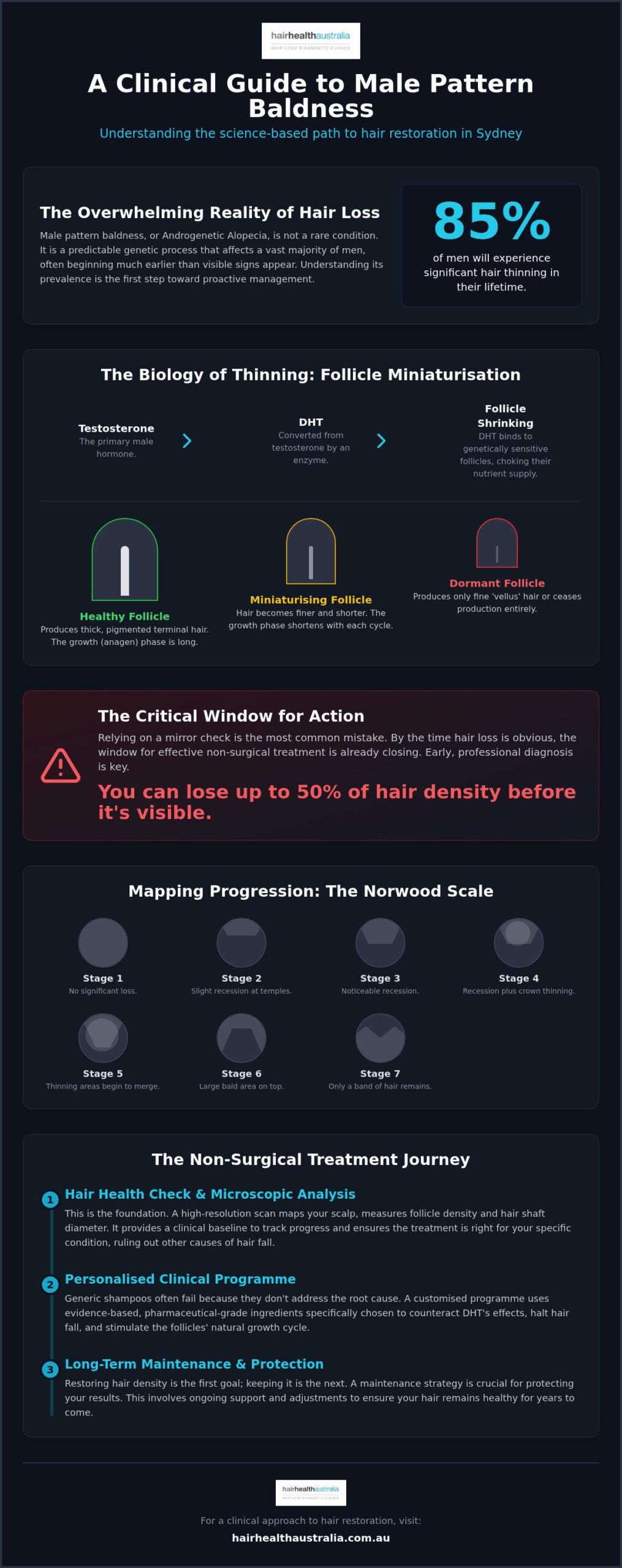
Did you know that up to 85% of men will experience significant hair loss in their lifetime, often starting long before thinning becomes obvious to the naked eye? It is common to feel overwhelmed by conflicting online advice or the fear that a painful, invasive hair transplant is the only way to restore your profile. You likely want a solution that is evidence-based and avoids the uncertainty of “miracle” cures that fail to deliver on their promises. This guide explains how professional male pattern baldness treatment Sydney can halt hair fall and restore density through a structured, non-surgical approach.

We’ll show you how advanced microscopic diagnostics identify the precise state of your follicles to create a personalised clinical programme tailored to your unique biological needs. This 2026 update covers everything from understanding the root cause of thinning to implementing modern, non-invasive protocols that prioritise natural-looking results. By the end of this article, you’ll have a clear, actionable path toward regaining your hair density and your confidence through proven clinical standards. It’s time to replace uncertainty with a methodical plan for your hair health.

Key Takeaways

  • Understand the biological process of follicle miniaturisation and why microscopic scanning is essential for an accurate diagnosis before starting any programme.
  • Explore how a customised male pattern baldness treatment Sydney uses evidence-based protocols to halt hair fall and stimulate regrowth without the need for surgery.
  • Learn why generic “miracle” shampoos often fail and how to identify the specific clinical ingredients that actually address DHT sensitivity.
  • Discover the importance of the initial Hair Health Check in mapping out a realistic timeline for restoring your hair density and confidence.
  • Gain insights into the long-term maintenance strategies required to protect your results and ensure sustainable hair health for years to come.

Understanding the Biology of Male Pattern Baldness (Androgenetic Alopecia)

Male pattern baldness, known clinically as androgenetic alopecia, is not a simple case of hair falling out. It is a progressive, genetically determined condition driven by a sensitivity to dihydrotestosterone (DHT). For men seeking male pattern baldness treatment Sydney, understanding this biological foundation is the first step toward effective restoration. Understanding Androgenetic Alopecia involves recognising that the hair follicle itself is under attack, undergoing a process known as miniaturisation. This is not an overnight event but a slow decline that can span years before the scalp becomes visible.

During miniaturisation, the follicle’s growth phase (anagen) shortens while the resting phase (telogen) lengthens. With each subsequent cycle, the hair produced is finer, shorter, and less pigmented. Eventually, the once-robust terminal hair transforms into peach-fuzz (vellus hair) before the follicle ceases production entirely. This is why early intervention is so critical. Once a follicle has reached a state of total dormancy or fibrosis, non-surgical clinical programmes can no longer stimulate regrowth. Identifying the shift from healthy density to fine, wispy strands is the key to preserving your natural profile.

The Role of DHT in Male Hair Thinning

DHT is an androgen produced as a byproduct of testosterone through the enzyme 5-alpha reductase. In genetically predisposed individuals, DHT binds to androgen receptors at the base of the hair follicle, effectively “choking” its ability to receive nutrients and oxygen. It’s vital to distinguish between temporary shedding, which is often triggered by stress or diet, and permanent genetic thinning. Clinically speaking, DHT-induced thinning follows a predictable, systematic reduction in the follicle’s diameter and lifespan that requires a targeted, pharmaceutical-grade response to disrupt.

Identifying the Stages of the Norwood Scale

The Norwood Scale is the clinical standard for measuring the progression of male hair loss across seven distinct stages. It typically begins with a slight recession at the temples (Stage 2) and progresses toward thinning at the crown (Stage 4) before the two areas eventually meet. However, many men experience “invisible thinning” where they lose up to 50% of their hair density before any change is visible in the bathroom mirror. Recognising these early shifts allows for more successful outcomes when implementing the Best Hair Regrowth Treatment Australia 2026. By the time a bald spot is obvious, the window for non-invasive male pattern baldness treatment Sydney is often closing. Proactive diagnostic checks remain the most effective way to catch miniaturisation in its reversible stages.

Microscopic Hair Analysis: The Foundation of Treatment in Sydney

Most men begin their journey by scrutinising their reflection in a bathroom mirror. While visible thinning or a receding hairline are clear indicators that something is wrong, a visual inspection is fundamentally insufficient for a professional diagnosis. By the time you notice a change in the mirror, you may have already lost up to 50% of your hair density in that area. Effective male pattern baldness treatment Sydney must begin with a deeper look at the scalp’s surface to understand exactly what is happening beneath it. Relying on guesswork often leads to wasted time on ineffective over-the-counter products that do not address your specific biological needs.

Microscopic hair analysis utilises high-resolution scanning technology to provide a detailed map of your scalp health. This process allows specialists to measure follicle density and hair shaft diameter with clinical precision. It is also essential for differentiating between genetic thinning and other conditions, such as Alopecia Areata or telogen effluvium, which require entirely different clinical approaches. While medical treatments for male pattern baldness are well-documented, their success depends entirely on an accurate initial assessment. Establishing this clinical baseline is the only way to objectively track the success of your programme over time; it replaces subjective “feeling” with verifiable data.

What Happens During a Professional Hair Health Check?

A professional Hair Health Check is a non-invasive diagnostic session used in specialised Sydney clinics to assess the viability of your follicles. During the scan, we use polarised light and magnification to identify “dormant” follicles that still have the potential for regrowth versus “dead” follicles that have reached a state of permanent fibrosis. This distinction is vital because it determines the realistic outcomes of your treatment. If you are concerned about recent changes in your hair density, you can book a comprehensive Sydney Hair Health Check to get a clear, scientific understanding of your current status.

Analysing Scalp Health and Sebum Levels

A healthy scalp environment is the “soil” required for follicles to respond to any clinical stimulus. Our microscopic analysis looks closely at sebum (oil) levels and potential scalp inflammation that may be hindering hair regrowth. Excess sebum can crystallise around the hair bulb, while chronic inflammation can accelerate the miniaturisation process. Identifying these blockages allows us to prepare the scalp properly before introducing growth stimulants. Microscopic data is the foundation of any successful programme because it ensures we are treating the root cause rather than just the symptoms of male pattern baldness treatment Sydney.

Comparing Non-Surgical Treatment Pathways: What Actually Works?

Selecting the right male pattern baldness treatment Sydney requires a shift away from “miracle” marketing toward clinical reality. Most over-the-counter shampoos fail because they only clean the scalp surface without addressing the genetics of androgenetic alopecia. To achieve genuine regrowth, a “Big Three” approach is typically required: disrupting DHT production, stimulating the hair follicle’s blood supply, and providing clinical-grade cellular therapy. By combining these three pathways, we address the biological cause while simultaneously creating the optimal environment for new growth.

Modern hair restoration has moved toward multi-modal programmes that bridge the gap between simple home-use products and intensive in-clinic procedures. While surgical hair transplants in Australia can cost anywhere from $5,000 to over $25,000, they carry inherent risks of scarring and unnatural-looking results if the underlying thinning isn’t managed. Non-surgical clinical protocols offer a safer, more sustainable alternative that focuses on preserving your existing hair while thickening areas of visible recession. It’s a systematic process that prioritises long-term density over a quick, invasive fix.

Clinical Regrowth Programmes vs. Generic Pharmacy Meds

A “one-size-fits-all” pill from a local pharmacy often lacks the precision needed for complex cases. Every man’s sensitivity to DHT is different, which is why a tailored clinical protocol is superior to generic alternatives. Supervised treatment allows a specialist to monitor your progress through microscopic scans and adjust frequencies as your follicles respond. This level of oversight ensures you aren’t just taking a supplement, but following a Clinical Hair Treatment: A Professional Guide that evolves with your results. It’s about moving from guesswork to a controlled, clinical environment.

The Role of Low-Level Laser Therapy (LLLT)

Low-Level Laser Therapy is a cornerstone of modern non-surgical male pattern baldness treatment Sydney. It works by delivering specific wavelengths of light to the scalp, which stimulates mitochondria within the hair follicle cells to produce more energy. It’s vital to use medical-grade equipment rather than low-powered consumer laser combs, as the latter often lacks the necessary energy density to reach the follicle bulb. Clinical data shows that when supervised correctly, LLLT is a painless method to extend the hair’s growth phase and increase shaft diameter. It’s not a myth; it’s cellular biology in action.

Male Pattern Baldness Treatment Sydney: The 2026 Clinical Guide to Non-Surgical Regrowth

Your Journey at a Sydney Hair Loss Clinic: What to Expect

Entering a specialised clinic for male pattern baldness treatment Sydney is a significant step toward reclaiming your confidence. Unlike general dermatology practices that manage a broad range of skin conditions, a dedicated hair restoration centre provides a focused, clinical environment. This specialisation ensures you receive the latest evidence-based protocols without the long wait times often associated with general medical facilities. Our Redfern-based clinic operates on a model of transparency, where every stage of your progress is documented and verified through objective data.

Success in hair restoration is built on a structured timeline. We categorise this journey into three distinct phases: Stop, Stabilise, and Regrow. It is a methodical approach that respects the biological cycles of your hair follicles. You cannot expect immediate density if the underlying shedding hasn’t been addressed first. By setting realistic expectations from the outset, we replace the anxiety of “waiting for results” with the confidence of a supervised clinical process.

Phase 1: The Diagnostic Consultation

Your first visit is centred on data collection. We perform a microscopic scan to assess follicle viability and review your family and medical history to identify any complicating factors. This isn’t a sales pitch; it’s a diagnostic session designed to create a customised roadmap for your specific thinning pattern. We’ll determine if you’re a suitable candidate for non-surgical therapy or if your follicles have reached a stage where other options are necessary. For a deeper look at what to seek in a provider, explore our guide on Choosing a Non-Surgical Hair Loss Clinic in Sydney.

Phase 2 & 3: Stabilisation and Growth

The first three months of your programme are dedicated to stabilisation. During this phase, we focus on stopping active hair fall and revitalising the scalp’s ecosystem. While visible regrowth takes time, microscopic analysis during this period often reveals an increase in hair shaft diameter and a reduction in inflammation. It is the critical foundation for the density that follows.

Between months four and nine, you’ll begin to observe the emergence of new terminal hairs. This is when the cumulative effect of growth stimulants and clinical therapy becomes visible to the naked eye. Consistency is the most vital factor during these months. Follicles require a steady, uninterrupted signal to remain in the growth phase. To ensure you’re starting on the right path for male pattern baldness treatment Sydney, we recommend you book your initial Hair Health Check to establish your clinical baseline.

Maintaining Your Results: Long-Term Hair Health in Australia

Achieving visible regrowth is a significant milestone, but maintaining that density requires a shift in perspective. Successful male pattern baldness treatment Sydney is a marathon, not a sprint. Once the follicles have been revitalised, they still require a consistent environment to thrive and resist the ongoing pressure of DHT. This is why a clinical programme doesn’t simply end once you see results; it evolves into a maintenance phase that integrates clinical-grade hair care into your daily routine. Periodic “top-up” clinical checks at our Redfern centre allow us to monitor your progress microscopically, ensuring that any subtle changes in hair diameter are caught long before they become visible in the mirror again.

Your lifestyle also plays a supporting role in the longevity of your results. While genetics drive the primary process of thinning, factors such as nutrition, stress management, and sleep quality can influence the rate of hair fall. A diet rich in essential vitamins and minerals provides the building blocks for keratin production, while managing chronic stress helps maintain a healthy hair growth cycle. It’s about creating a holistic environment where your clinical treatments can perform at their peak.

Australian Environmental Factors and Hair Health

Sydney’s climate presents unique challenges that can affect the texture and health of your hair. High UV exposure can weaken the hair shaft’s protein structure, leading to brittleness and breakage that mimics thinning. Additionally, the mineral content in certain local water supplies may lead to scalp buildup, which can hinder the absorption of topical treatments. Choosing clinical-grade shampoos that maintain the scalp’s natural pH and sebum balance is essential for those undergoing male pattern baldness treatment Sydney. Protecting the scalp from the harsh Australian sun is vital to prevent inflammation that can trigger premature shedding.

Your Next Steps: Moving from Anxiety to Action

The transition from feeling anxious about thinning to taking control of your hair health begins with a professional assessment. It is easy to feel overwhelmed by conflicting online advice, but self-diagnosing often leads to wasted time and resources on the wrong treatment path. Preparing for your first visit is straightforward: gather your family hair loss history and any details regarding recent health changes or medications you are taking. This information helps us tailor your programme with clinical precision.

The most important thing to remember is that you don’t have to navigate this journey alone. As long as there is active follicle activity detected during a scan, it is rarely too late to save the hair you still have and improve your overall density. To begin your journey toward a fuller head of hair, you can book a comprehensive Hair Health Check today. Taking action now is the most effective way to ensure your hair health remains a priority for years to come.

Take Control of Your Hair Density Today

Reclaiming your profile is a journey that begins with clinical precision rather than guesswork. We have explored how microscopic diagnostics identify follicle viability and why a multi-modal, non-surgical approach provides a sustainable path to regrowth. By moving away from generic products and toward science-led protocols, you can address the root cause of thinning while preserving your natural appearance. This methodical approach replaces uncertainty with a clear, evidence-based strategy for long-term hair health.

With over 15 years of clinical excellence in Sydney, our team focuses on personalised programmes built on verifiable microscopic data. This systematic approach ensures that your male pattern baldness treatment Sydney is tailored to your specific biological needs and lifestyle goals. It’s time to replace the anxiety of thinning with a professional roadmap that prioritises results and transparency. You don’t have to navigate hair loss alone when a dedicated specialist can guide you through every stage of restoration.

Book Your Comprehensive Sydney Hair Health Check Today

It’s rarely too late to intervene, and the sooner you begin, the more density you can protect for the future. Take the first step toward a more confident you by securing a professional assessment of your hair health today.

Frequently Asked Questions

Is male hair loss treatment permanent, or do I have to continue the programme forever?

Treatment for male pattern baldness is an ongoing management strategy rather than a permanent cure. Because the genetic sensitivity to DHT remains throughout your life, stopping a programme usually results in the gradual return of thinning within six to twelve months. Most men move into a reduced maintenance phase once they reach their desired density. This ensures the follicles remain protected from miniaturisation without the intensity of the initial regrowth stage.

What is the most effective non-surgical treatment for a receding hairline in 2026?

The most effective non-surgical approach in 2026 is a multi-modal clinical programme. This combines pharmaceutical-grade DHT blockers with medical-grade growth stimulants and Low-Level Laser Therapy (LLLT). For a receding hairline, male pattern baldness treatment Sydney specialists often use targeted topical formulations that deliver higher concentrations of active ingredients directly to the temple area. This synergy addresses both the hormonal cause and the need for increased blood flow.

Can a Sydney hair clinic help if I am already significantly bald?

A clinical assessment is necessary to determine if treatment can still be effective. If your scalp has become completely smooth and shiny, it often indicates that the follicles have reached a state of permanent fibrosis. However, many men who appear “significantly bald” still have thousands of miniaturised vellus hairs that can be revitalised. A microscopic scan is the only way to verify if viable follicles remain before starting any programme.

Are there any side effects to clinical hair regrowth programmes?

Most clinical hair regrowth programmes are well-tolerated, though some individuals may experience minor scalp irritation or dryness. Because our programmes are clinically supervised, we can adjust the concentrations of active ingredients to suit your scalp’s sensitivity. It’s important to discuss your medical history during your initial consultation so we can tailor a protocol that minimises risks while maximising your regrowth potential.

How long does it take to see visible results from male hair loss treatment?

You should expect to see the first signs of stabilisation within the first three months of your programme. Visible regrowth typically becomes apparent between months four and six, as fine “baby” hairs begin to mature into thicker terminal strands. Significant improvements in overall density and coverage usually require twelve months of consistent treatment. This timeline respects the natural biological rhythm of the hair growth cycle.

Is microscopic hair analysis covered by Medicare in Australia?

Microscopic hair analysis and non-surgical hair loss treatments are generally not covered by Medicare in Australia. These are considered private clinical services. However, some patients find that the long-term cost of a successful non-surgical male pattern baldness treatment Sydney is more manageable than the significant upfront expense of a surgical hair transplant. We provide transparent costings during your initial Hair Health Check to help you plan accordingly.

How does a clinical programme differ from buying Minoxidil at the local chemist?

Clinical programmes provide personalised formulations and professional oversight that generic pharmacy products lack. While a chemist-bought lotion offers a standard concentration, a clinical protocol uses data from your microscopic scan to determine the precise strength your follicles require. Additionally, we integrate clinical-grade technology like LLLT and provide regular progress monitoring to ensure your treatment is actually working as intended.

Can stress cause male pattern baldness to accelerate in younger men?

While stress doesn’t cause genetic baldness, it can certainly accelerate the visible thinning process. High levels of cortisol can trigger telogen effluvium, a condition where more hairs enter the shedding phase simultaneously. In younger men already predisposed to androgenetic alopecia, this extra shedding makes the underlying pattern baldness appear much more aggressive. Managing stress is a vital component of a holistic hair health strategy.