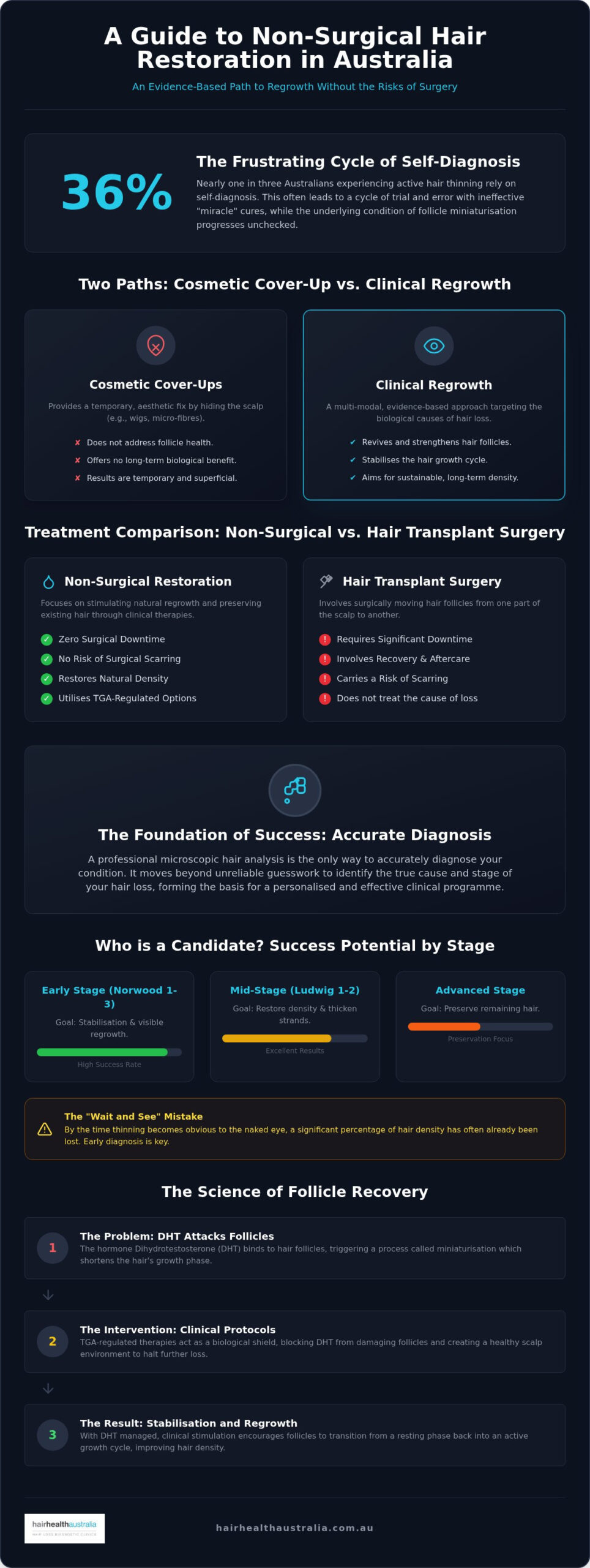
Nearly 36% of Australians experiencing active thinning still rely on self-diagnosis rather than seeking professional clinical advice. It’s a frustrating cycle of trial and error, often fuelled by “miracle” cures that promise much but deliver very little. You’ve likely felt the anxiety of watching your hairline recede while wondering if non-surgical baldness treatment Australia can actually deliver results without the risks of invasive surgery. It’s perfectly natural to fear surgical scarring or the significant downtime that comes with a transplant.
We understand that you want visible results without the risks of the operating theatre. This guide provides a clear, evidence-based path to hair restoration, focusing on modern clinical protocols that prioritise follicle health and density. By moving away from one-size-fits-all products, you can finally stabilise your hair loss and begin the journey toward genuine regrowth. We’ll explore the latest 2026 TGA-regulated options, the importance of microscopic diagnostics, and how a personalised clinical programme can restore your confidence without a single incision.
Key Takeaways
- Understand the critical biological distinction between temporary cosmetic cover-ups and evidence-based clinical regrowth that targets follicle miniaturisation.
- Discover why non-surgical baldness treatment Australia provides a sustainable, risk-free alternative to invasive procedures by stabilising the hair growth cycle.
- Compare the benefits of natural density restoration and zero surgical downtime against the recovery requirements and scarring risks of hair transplant surgery.
- Learn why a professional microscopic hair analysis is the only way to accurately diagnose your condition and move beyond unreliable self-diagnosis.
- Prepare for your restoration journey by understanding the milestones and results you can realistically expect within the first 90 days of a personalised clinical programme.
Defining Non-Surgical Baldness Treatment in the Australian Clinical Landscape
Non-surgical restoration in Australia has evolved into a structured, multi-modal clinical approach that targets the biological mechanisms of hair loss. While cosmetic cover-ups like wigs or micro-fibres provide an immediate aesthetic fix, they do nothing to address the underlying health of the follicle. In contrast, non-surgical baldness treatment Australia focuses on biological regrowth and the stabilisation of existing hair. It’s about reviving the follicle, not just hiding the scalp.
The Therapeutic Goods Administration (TGA) plays a vital role in this professional landscape. By 2026, strict regulations ensure that medical devices and therapeutic medications used in clinical settings meet rigorous safety and efficacy standards. This regulatory oversight protects you from ineffective “miracle” solutions and ensures your treatment plan is grounded in verified science. Current standards now prioritise long-term follicle health and scalp vitality over the quick, often temporary, fixes of the past.
The Shift Towards Non-Invasive Restoration
More Australians are opting for clinical programmes over invasive surgery. This shift is driven by a desire for natural-looking density without the risks of surgical scarring or significant downtime. We believe in straight-talking honesty; non-surgical therapy is a highly effective way to manage Pattern hair loss (androgenetic alopecia), but it requires a methodical commitment. Seeking professional advice early helps remove the stigma of thinning hair, turning a private concern into a proactive health journey.
Who is a Candidate for Non-Surgical Therapy?
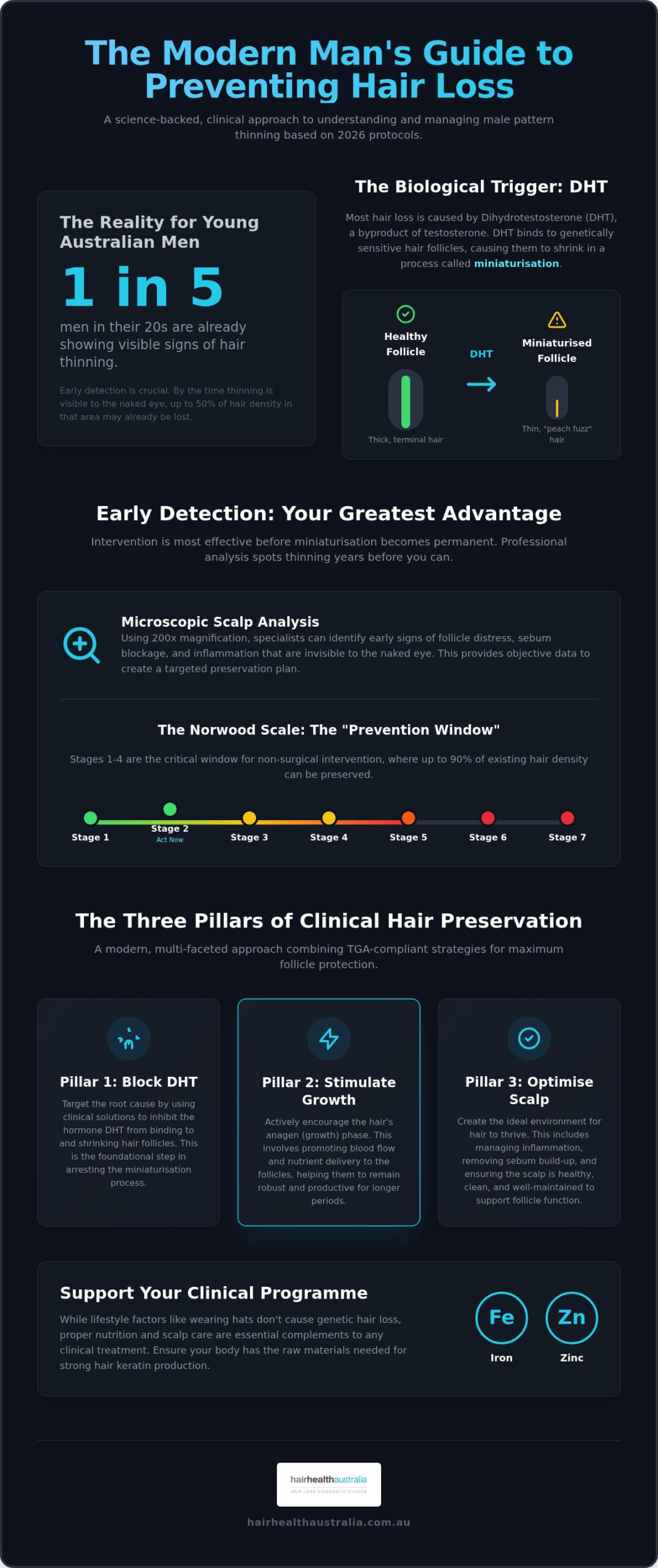
The success of any clinical programme depends heavily on timing. Identifying the early signs of follicle miniaturisation, such as a widening part or receding temples, is the essential first step. Success rates vary based on your current stage:
- Early Stage (Norwood 1-3): High success rates for visible regrowth and stabilisation.
- Mid-Stage (Ludwig 1-2): Excellent results in restoring density and thickening existing strands.
- Advanced Stage: The focus shifts toward preserving remaining hair and improving overall scalp health.
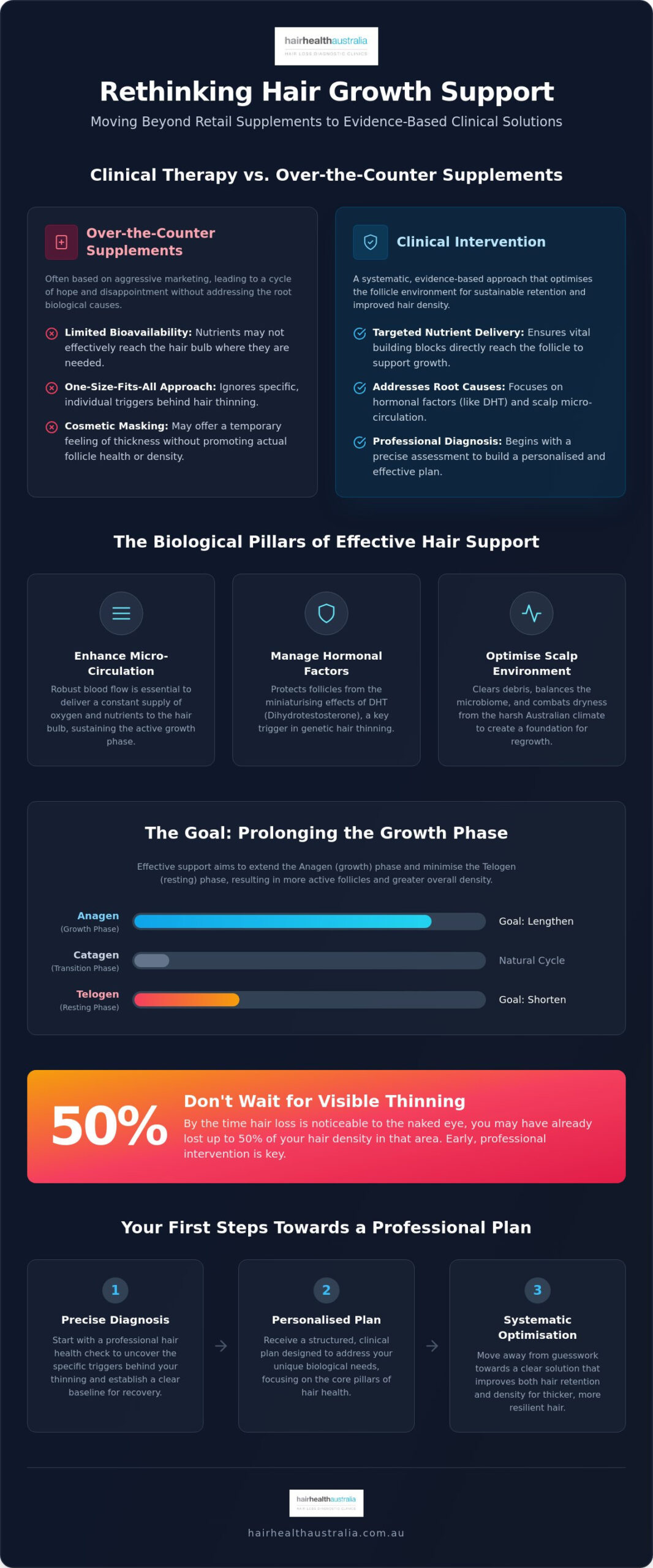
The most common mistake people make is the “wait and see” approach. By the time thinning is visible to the naked eye, you’ve likely already lost a significant percentage of your active hair density. Starting with a Hair Health Check provides a precise diagnostic baseline, allowing for a customised plan before follicles become permanently dormant.
The Science of Follicle Recovery: How Clinical Protocols Reverse Thinning
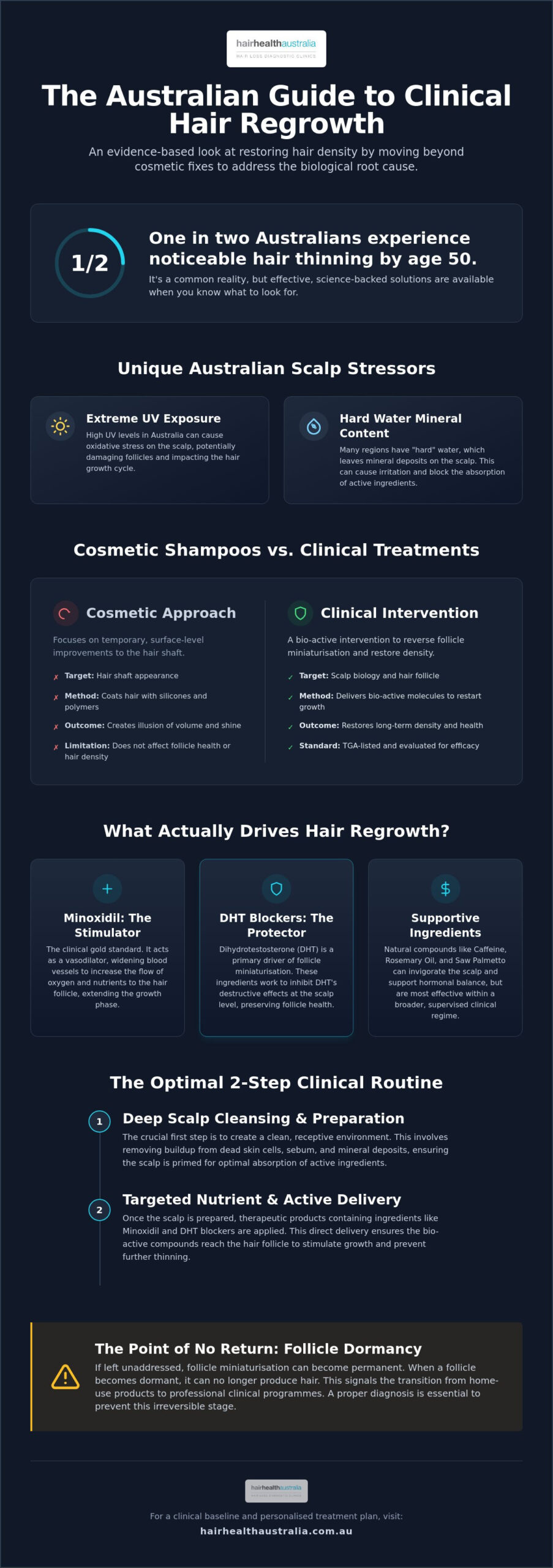
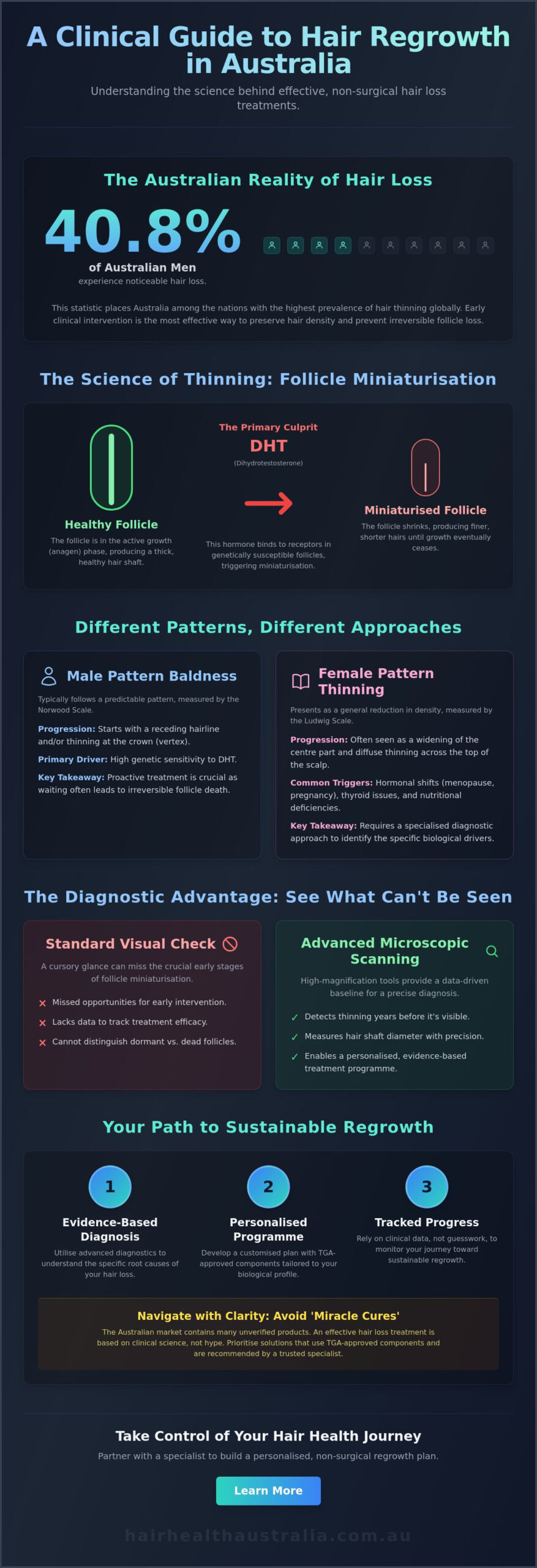
Understanding the biological mechanics of hair loss is the first step toward effective management. Most thinning is caused by Dihydrotestosterone (DHT), a hormone that triggers follicle miniaturisation by shortening the hair’s growth phase. Within the framework of non-surgical baldness treatment Australia, the goal is to interrupt this process before the follicle becomes completely dormant. Clinical protocols utilise a combination of therapies to both block DHT and stimulate the dermal papilla, the base of the hair follicle where growth begins.
A healthy scalp environment is the foundation for this growth. Without addressing inflammation or oil imbalances, even the most advanced therapies may struggle to penetrate and perform. Australian government health advice confirms that certain medications are effective in managing these hormonal impacts, providing a scientifically verified alternative to invasive surgery. By targeting the root cause of thinning, we can transition follicles from a resting phase back into an active growth cycle.
The Role of DHT Blockers in Stabilisation
DHT blockers serve as a critical biological shield by preventing the hormone from binding to follicles and causing further miniaturisation. In the 2026 clinical landscape, these blockers are utilised as a primary stabilisation tool to secure existing hair density before regrowth efforts begin. Clinical evidence consistently shows that long-term stabilisation is achievable for the majority of men when these blockers are integrated into a supervised programme. This provides a stable foundation, ensuring that new growth isn’t undermined by ongoing hormonal sensitivity.
Stimulating Growth: Beyond Simple Shampoos
While retail “growth” shampoos often lack the concentration or delivery mechanisms to reach the follicle, clinical-grade topicals are engineered for deep penetration. These treatments work by increasing blood flow to the dermal papilla, ensuring that essential nutrients and oxygen reach the hair root. We use microscopic monitoring to track these changes at a cellular level, allowing us to see progress, such as increased hair shaft diameter, long before it becomes visible in the mirror. It’s a methodical way to ensure the non-surgical baldness treatment Australia protocol is working as intended.
To see exactly how your follicles are responding to thinning, a comprehensive diagnostic check is the most reliable starting point.
Non-Surgical Restoration vs. Hair Transplant Surgery: A 2026 Comparison
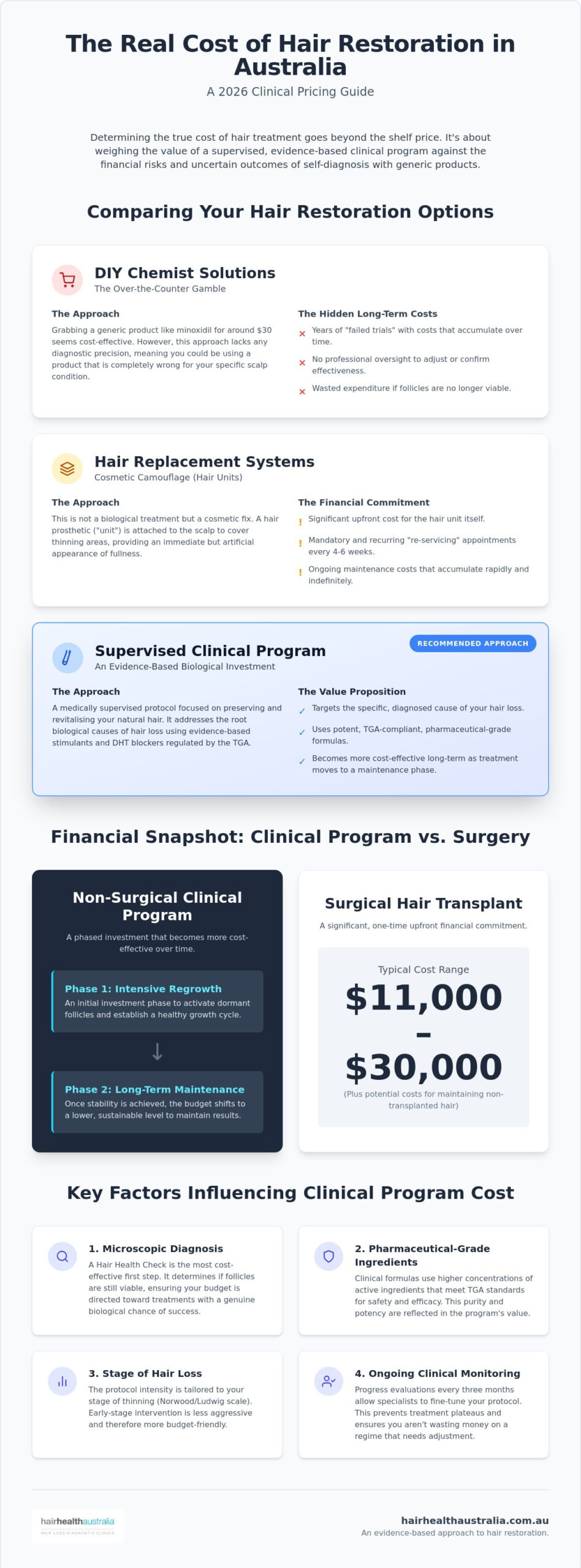
Many Australians view hair transplant surgery as a final, one-time solution for thinning. However, this perspective often overlooks the biological reality that surgery merely relocates hair follicles from one area to another; it does not address the underlying hormonal causes of hair loss. Choosing a non-surgical baldness treatment Australia allows for the restoration of natural biological density across the entire scalp. While surgery can create a “filled” look, clinical regrowth programmes focus on thickening your existing hair, resulting in a more seamless and authentic appearance that evolves naturally over time.
Downtime is another significant differentiator. Post-operative recovery for FUE or FUT procedures typically involves weeks of visible scabbing, swelling, and strict activity restrictions. Clinical restoration protocols allow for an immediate return to professional and social life. From a financial perspective, non-surgical programmes often prove more cost-effective over a five-year horizon. Rather than a large upfront capital outlay for a procedure that may require future “top-ups”, a clinical programme provides consistent, ongoing protection for your hair health.
Risks and Considerations of Invasive Procedures
Invasive surgeries carry inherent risks that are often understated in marketing materials. Follicular Unit Extraction (FUE) and Strip Harvesting (FUT) can lead to permanent scarring and the depletion of the “donor area” at the back of the head. If hair loss continues behind the transplanted area, the result can look unnatural, often requiring further surgery to correct. For younger men in particular, clinical protocols are the safer first-line defence. Establishing a stable foundation through non-surgical means prevents the premature “spending” of donor hair that may be needed later in life.
The Synergy of Maintenance and Restoration
A hidden truth in the industry is that even surgical patients must eventually adopt a non-surgical maintenance routine. Surgery does nothing to stop the thinning of the non-transplanted hair surrounding the new grafts. This is why a professional Clinical Hair Treatment: A Professional Guide is essential for anyone serious about long-term results. By prioritising the health of every follicle, you protect your remaining natural hair from future thinning. This holistic approach ensures that your restoration journey is sustainable, avoiding the patchy or “isolated” look that occurs when surgery is performed without a supporting clinical framework.
The first step in determining which path is right for your specific stage of loss is a professional diagnostic assessment.
The Diagnostic Foundation: Why Microscopic Hair Analysis is Essential
A quick glance in the mirror or a general assessment by a GP often fails to capture the biological complexity of hair loss. While a visual check might identify that thinning is occurring, it cannot determine the current health or future potential of individual follicles. For a successful non-surgical baldness treatment Australia, we must look beneath the surface. Microscopic scalp and follicle scanning technology allows us to see what the naked eye cannot. High-definition imaging helps us differentiate between follicles that are actively miniaturising and those that have become permanently dormant. This distinction is vital because it determines whether a follicle can be revived or if the area has reached a point where stabilisation is the primary goal.
Data-driven diagnostics remove the guesswork from hair restoration. By identifying the specific patterns of loss and the health of the scalp environment, we can build a personalised treatment plan that targets your unique biology. This scientific approach ensures that every step of your programme is designed to yield the maximum possible density restoration based on your actual follicle count rather than general assumptions.
What Happens During a Clinical Hair Health Check?
This diagnostic process is a systematic evaluation of your scalp and follicle vitality. During your appointment, we perform a detailed scan to establish an objective baseline for your restoration journey. This isn’t a simple “look and see” session; it’s a technical measurement of your hair’s current state. We focus on several key metrics:
- High-Resolution Scanning: We capture images of the scalp at multiple magnification levels to assess the health of the skin and pore openings.
- Density Measurement: We calculate the number of hairs per square centimetre in both thinning and stable areas to track progress over time.
- Diameter Analysis: We measure the thickness of individual hair shafts to identify the percentage of hairs currently undergoing miniaturisation.
This objective data ensures your plan is grounded in reality. You can Book your Hair Health Check to establish your own diagnostic baseline.
Predicting Your Personal Success Rate
Using diagnostic data allows us to set realistic regrowth expectations from the outset. Many people waste months on “one-size-fits-all” kits from the chemist, but these products ignore your specific biology. If a follicle has been dormant for several years and has completely scarred over, non-surgical intervention will not revive it. However, if follicles are merely miniaturised, the potential for density restoration is significantly higher. We provide a straight-talking assessment of your likely results based on these findings. Ongoing monitoring then allows us to adjust your protocol as your scalp health improves, ensuring your treatment remains efficient as you progress.
Before committing to any programme, it’s vital to understand the current state of your hair follicles through a comprehensive Hair Health Check.
Personalised Regrowth: Starting Your Non-Surgical Journey in Sydney
For the busy Sydney professional, integrating a restoration programme into a high-pressure lifestyle must be seamless. Unlike surgical options that require significant time away from the office, a clinical approach fits into your existing routine without disruption. Choosing a non-surgical baldness treatment Australia means you don’t have to sacrifice your career momentum for your hair health. It’s a methodical process that prioritises efficiency and long-term results over the inconvenience of post-operative recovery.
The first 90 days of a clinical programme are the most critical. During the initial 30 days, the focus is on stabilising the scalp environment and halting active thinning. By day 60, we typically see an optimisation of scalp health, with inflammation reduced and follicles beginning to receive better nutrient flow. As you reach the 90-day mark, microscopic analysis often reveals the first signs of diameter increase in miniaturised hairs. Consistency is the key to these early wins; having professional clinical support ensures you stay on track through every phase of the biological cycle.
Hair Health Australia has been the trusted choice for Sydney residents since 2009. We don’t believe in one-size-fits-all products. Instead, we provide a structured environment where your progress is monitored and your protocol is adjusted based on real-world data. This dedicated guidance turns a confusing journey into a clear, manageable path toward density restoration.
Tailored Solutions for Men and Women
Hair loss doesn’t discriminate, but the biological drivers often differ between the sexes. Women in the 2020s face unique challenges, with thinning often exacerbated by stress, hormonal shifts, and environmental factors. Our protocols for women focus on gentle yet effective stabilisation to restore volume. For men, the focus remains on aggressive DHT management to protect the hairline and crown. You can learn more about these specific approaches in our Hair Loss Treatment for Women Guide.
Securing Your Future Hair Density
Taking control of your hair health provides significant psychological benefits. Moving from a state of passive concern to active, evidence-based management replaces anxiety with confidence. By the time you notice thinning, you’ve already lost a substantial amount of density, so the best time to act is now. Moving from research to a professional consultation is the only way to secure your future hair density. We invite you to take the next step and Contact Hair Health Australia for a Professional Assessment to begin your journey toward visible regrowth.
Your Path to Sustainable Hair Restoration
Achieving visible regrowth requires moving beyond retail products and embracing a structured, clinical approach. We’ve explored how non-surgical baldness treatment Australia has transitioned into a precise science, focusing on follicle health and hormonal stabilisation rather than invasive surgery. By prioritising microscopic diagnostics, you ensure your restoration plan is built on an objective understanding of your unique biology. This data-driven foundation is what allows for genuine density restoration without the risks of scarring or surgical downtime.
With over 15 years of clinical hair restoration experience, our Sydney-based specialists are dedicated to providing evidence-based, 100% non-surgical care. We don’t believe in one-size-fits-all solutions; we believe in personalised programmes that evolve with your progress. The first step in taking control of your hair health is establishing a professional baseline. You can Book Your Comprehensive Hair Health Check in Sydney Today to discover exactly what’s possible for your hair. It’s time to replace uncertainty with a proven clinical path forward. We look forward to guiding you toward a fuller, more confident future.
Frequently Asked Questions
Is non-surgical baldness treatment permanent?
Non-surgical baldness treatment Australia isn’t a permanent “cure” because the underlying biological triggers, like DHT, remain active in your body. Instead, it’s a long-term management strategy designed to stabilise loss and promote regrowth. If you stop the treatment, the follicles will eventually return to their previous state of miniaturisation. Think of it like a fitness programme; consistent maintenance is essential to keep the density and scalp health you’ve achieved through clinical intervention.
How long does it take to see results from non-surgical hair treatment?
Visible results generally appear within three to six months of starting a clinical programme. The biological hair growth cycle is slow, so patience is required during the initial phase. You’ll likely notice a reduction in shedding and improved scalp health within the first 90 days. Actual increases in hair diameter and visible density follow as the revived follicles move through their natural growth stages. Regular microscopic monitoring helps track these cellular changes before they’re visible.
Are there any side effects to non-surgical hair restoration?
Most clinical-grade treatments are well-tolerated, though some individuals may experience minor local effects. These can include temporary scalp irritation, dryness, or a short period of increased shedding as new, stronger hairs push out older, dormant ones. Because we use TGA-regulated protocols and personalised plans, we can adjust your treatment to minimise any discomfort. It’s important to have professional supervision to ensure your scalp remains healthy and responsive throughout the entire restoration process.
Can non-surgical treatment regrow hair on a completely bald spot?
Regrowth potential depends entirely on whether the hair follicles are miniaturised or permanently dormant. If a “bald spot” is completely smooth and shiny, it often indicates that the follicles have scarred over, making regrowth unlikely. However, if microscopic analysis reveals fine, vellus hairs, there’s a strong chance of reviving those follicles. This is why a professional diagnostic check is essential to determine which areas of your scalp can still respond to clinical stimulation.
How much does non-surgical hair loss treatment cost in Australia?
The investment for a non-surgical baldness treatment Australia depends on the specific requirements of your personalised programme. Because every individual’s hair loss stage and biological response are different, costs are determined after a thorough diagnostic assessment. Factors such as the duration of the programme and the combination of clinical therapies used will influence the total. We prioritise transparency and will provide a clear breakdown of your recommended path forward during your initial consultation.
Is non-surgical treatment better than a hair transplant?
Non-surgical treatment is often considered the superior first-line defence because it addresses the biological cause of thinning across the entire scalp. Unlike a hair transplant, it involves no surgical downtime, no scarring, and no risk of a “pluggy” appearance. Even if you eventually choose surgery, you’ll still need non-surgical protocols to protect your remaining natural hair. For many, clinical regrowth provides a more sustainable and natural-looking result over the long term.
Do I need a referral to visit a hair loss clinic in Sydney?
You don’t need a referral from your GP to visit our Sydney clinic for a consultation or a Hair Health Check. Many of our clients book directly to begin their diagnostic journey and move away from the confusion of self-diagnosis. Our specialists provide a dedicated environment for hair restoration, though we’re happy to coordinate with your regular doctor if your personalised programme involves specific prescription elements that require integrated medical oversight.
Can women use the same non-surgical treatments as men?
While some clinical stimulators are effective for both sexes, female protocols are specifically customised to address different biological drivers. Women often experience diffuse thinning rather than the receding hairlines common in men, requiring a different approach to stabilisation. Hormonal management also differs significantly between male and female programmes. We ensure that every treatment is tailored to the individual’s specific type of hair loss, providing a safe and effective path to restoration for everyone.