
The most useful hair restoration consultation may be the one that doesn’t rush you towards treatment. If you’re booking a hair restoration consultation Sydney appointment, it’s reasonable to want clear answers about what may be causing your hair changes and whether the advice is right for you. A considered discussion starts with your concerns and circumstances, not a one-size-fits-all recommendation.
It’s understandable to feel unsure about what happens during an appointment, what information to bring or how to compare providers. You should have time to explain what you’ve noticed, ask questions and understand the limits of the assessment, without feeling pressured to decide on the spot.
This guide explains what a consultation may cover, how to prepare and what to look for in an individualised assessment. You’ll also find questions to ask about possible next steps, so you can leave with a clearer picture of your options and take time to decide what suits you.
Key Takeaways
- A hair restoration consultation Sydney appointment should begin with your hair or scalp concerns, not a rushed recommendation.
- Learn what a consultation may involve and which details about your hair-loss timeline can help guide the discussion.
- Compare providers by how clearly they explain their assessment, uncertainty, follow-up and time for questions.
- Use a short pre-appointment checklist to organise your concerns without trying to diagnose the cause yourself.
- Before deciding on next steps, clarify the goals, expected timeframes, limitations and review points relevant to you.
Hair restoration consultation in Sydney: when is an assessment worth considering?
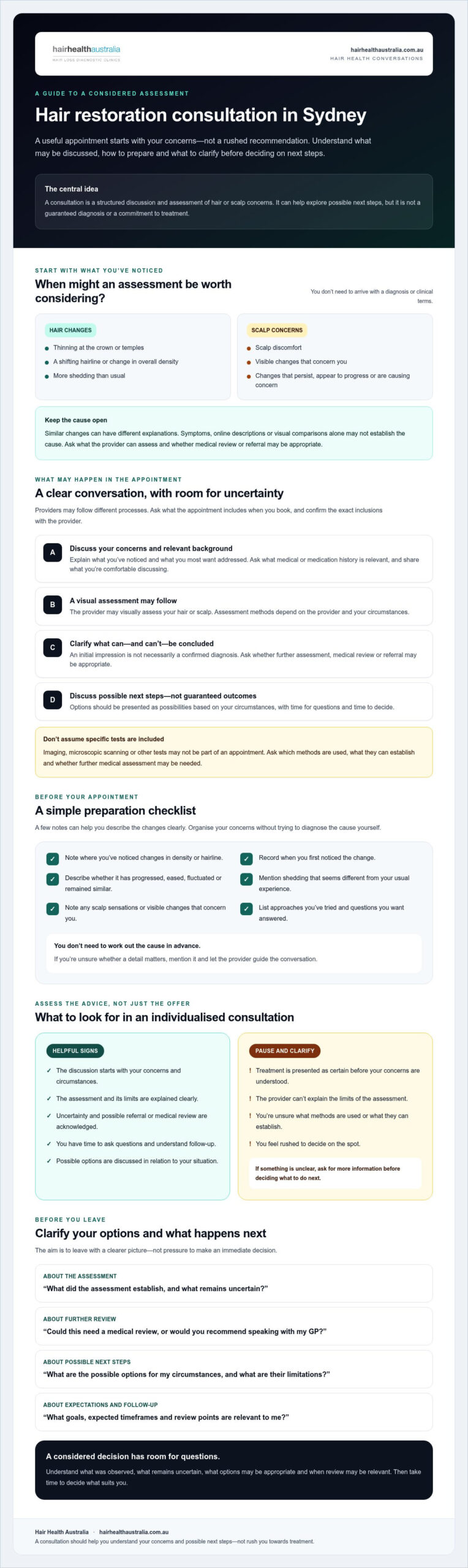
Hair changes can happen gradually, making it difficult to tell whether you’re seeing normal variation or a change worth discussing. You might notice thinning at the crown or temples, more shedding than usual, a shifting hairline or a change in overall density. Scalp discomfort or visible changes are also worth mentioning.
A hair restoration consultation is a structured discussion and assessment of your hair or scalp concerns. It can help explore possible next steps, but it isn’t a guaranteed diagnosis or a commitment to treatment.
That distinction matters. A hair restoration consultation Sydney appointment should first make space to understand what you’ve noticed. Similar changes can have different explanations, and symptoms alone may not establish the cause. For example, gradual changes can be associated with Pattern hair loss, but an online description or visual comparison can’t confirm that this is what’s happening in your case.
What concerns can you raise at a hair restoration consultation?
Describe the change in your own words. You don’t need clinical terms or a theory about what’s causing it. These details can help make the discussion more specific:
- Where you’ve noticed a change in density or hairline
- Whether shedding seems different from your usual experience
- When you first noticed the change, and whether it has progressed, eased or fluctuated
- Any scalp sensations or visible changes that concern you
The assessment should take your circumstances into account rather than assume one cause. Hair Health Australia’s hair health check offers a way to discuss concerns and possible next steps. What may be suitable depends on the individual assessment.
When should you seek advice rather than self-diagnose?
Consider seeking advice if hair changes persist, appear to progress or are causing concern. You don’t need to wait until the change feels severe, and you don’t need to arrive with a diagnosis. Ask what the provider can assess and whether your situation may call for medical review or referral.
You could ask, “Could this need a medical review, or would you recommend speaking with my GP?” This helps clarify the limits of the assessment. If a provider can’t explain those limits or presents treatment as certain before understanding your concerns, pause and ask for more information before deciding what to do next.
What should happen during a Sydney hair restoration consultation?
Providers don’t all follow the same process, so ask what your appointment includes when you book. A consultation may start with a discussion of your concerns and relevant background, followed by a visual assessment of your hair or scalp. The aim is to understand what you’ve noticed, explain what can and can’t be assessed, and consider whether any next steps are appropriate.
Assessment methods depend on the provider and your circumstances. Don’t assume imaging, microscopic scanning or specific tests are included. Mayo Clinic’s overview of diagnosing hair loss describes how a doctor may use different approaches to investigate hair loss. Ask which methods your provider uses, what they can establish and whether further medical assessment may be needed.
If you’d like to discuss your concerns and possible next steps, you can explore the hair health check. Confirm the appointment’s exact inclusions and process with the provider.
What information should you bring to the appointment?
A few notes can help you describe the changes clearly. Record when you first noticed them and how they’ve developed, including whether thinning has remained similar or become more noticeable. Bring your questions, note any approaches you’ve tried and identify the concerns you most want addressed.
You don’t need to work out the cause in advance. Ask what medical or medication history is relevant to the assessment, and share what you’re comfortable discussing. If you’re unsure whether a detail matters, mention it and let the provider guide the conversation.
How should findings and possible next steps be explained?
Clear advice distinguishes what was observed from what remains uncertain. An initial impression isn’t necessarily a confirmed diagnosis. The provider should explain whether the assessment is enough to discuss options or whether further assessment, medical review or referral may be appropriate.
Treatment options should be presented as possibilities based on your circumstances, not as guaranteed outcomes. Before you leave, make sure you understand:
- What the assessment did and didn’t establish
- Why a particular next step may be relevant to you
- What further review may be needed before deciding
- Who to contact if questions come up afterwards
A hair restoration consultation Sydney appointment should leave you better informed, not obliged to commit. Take time to consider the explanation and ask for clarification if anything is unclear.
How to compare hair restoration consultations and assess the advice
A useful comparison goes beyond the treatment proposed. Consider how the provider reaches a recommendation, explains uncertainty and gives you room to make a considered decision. A thorough hair restoration consultation Sydney experience should help you understand the reasoning, rather than leave you relying on broad claims.
| What to compare | A considered approach | A reason to pause |
|---|---|---|
| Assessment | The provider explains what they’ll assess and how it relates to your concerns. | A recommendation is made without a clear explanation of its basis. |
| Uncertainty | Observations, limitations and any need for further review are discussed openly. | Vague claims are presented as certain findings. |
| Follow-up | You’re told what follow-up may involve and who to contact with questions. | It’s unclear what happens after the appointment or who is responsible. |
| Questions | You have time to ask questions and consider the answers. | You’re hurried or pressed to decide immediately. |
Check who will assess you, their qualifications and their role. If the person is a registered health practitioner, you can check their details and registration type on the Australian Health Practitioner Regulation Agency (AHPRA) public register. Ask whether the assessment is within their scope and whether another type of practitioner or medical review may be appropriate.
Questions to ask before choosing a consultation
Before booking, ask who will conduct the assessment and what it includes. Find out whether additional steps may be suggested, how findings will be explained, and what costs or follow-up may apply before you decide on treatment. The American Society of Plastic Surgeons outlines considerations for a hair transplant surgery consultation. This information relates to surgical care and shouldn’t be taken as a description of services offered by every provider.
For broader provider-selection criteria, you can also read Choosing a Non-Surgical Hair Loss Clinic in Sydney. Compare the advice you receive with your concerns and the clarity of the explanation, not just how confident the wording sounds.
What are warning signs of a poor consultation experience?
Guaranteed outcomes, pressure to commit straight away and unclear explanations are reasons to pause. Ask what a recommendation is based on and what it can realistically establish. If you’re still uncertain, take time to consider the advice or seek a second opinion before proceeding.
How to prepare for a hair restoration consultation in Sydney
A little preparation can help you make good use of your appointment. You don’t need to diagnose the cause or prepare a detailed medical history. Focus on describing what you’ve noticed and the questions you need answered. Before a hair restoration consultation Sydney appointment, contact the clinic to confirm its current Sydney location, accessibility, appointment format and what, if anything, you should bring.
Useful preparation is simple: note your main concern, when it began, how it has changed, what you’ve tried and the questions you want answered.
- Write down the change you’re concerned about, such as thinning in a particular area or increased shedding.
- Note when you first noticed it and whether it has stayed the same, progressed or fluctuated.
- List previous approaches you’ve tried and the questions or concerns you want to raise.
- Check the appointment details with the clinic, including where to go, access arrangements, format and what to bring.
If you’re ready to discuss your concerns and explore possible next steps, arrange a hair health check. Confirm the appointment process and inclusions with the clinic before attending.
Questions to take into the appointment
Written questions can help keep the discussion focused, especially if it covers unfamiliar information. Consider asking:
- What can this assessment establish, and what can’t it determine?
- Which options might suit the findings, and what limitations or uncertainties should I understand?
- Will I receive information about the findings or proposed next steps in writing?
- When should I expect follow-up information, and who can I contact if I have more questions?
You can also ask which medical or medication history is relevant. Share information that seems connected, and let the provider guide you on what’s needed for their assessment.
How to make a considered decision afterwards
You don’t have to agree to a plan during the appointment. Take time to review any written information, note what remains unclear and consider whether the proposed next step addresses your concerns. Ask for clarification before proceeding if you need it.
If you’re comparing providers, look beyond promotional claims. Consider whether each explanation is clear, individualised and honest about uncertainty, and whether the follow-up arrangements make sense. Base your decision on the assessment and your priorities, not a sense of urgency.
Your next steps after a Sydney hair restoration consultation
An appointment doesn’t have to end with a treatment decision. Depending on what was discussed, a reasonable next step could be further assessment, a proposed programme, medical review or referral, or taking time to monitor your concern. It may also be appropriate to make no immediate change if there isn’t enough information to recommend one.
Before proceeding, make sure you understand the purpose of the recommendation and how it relates to your assessment. Ask what outcome the proposed approach aims to support, what limitations or uncertainties apply, how progress would be reviewed and when that review would happen. Check any relevant costs and what follow-up is included rather than making assumptions.
What should a clear treatment recommendation include?
A useful recommendation explains its reasoning in plain language. You should be able to connect the proposed next step to what was observed and understand what it can realistically address. Ask how progress would be reviewed and what might prompt a change in plan. Hair Health Australia provides personalised, non-surgical hair loss treatment programmes for men and women. Suitability and recommendations depend on individual assessment. Confirm the hair health check’s inclusions and appointment process directly with the clinic.
When might another opinion or medical review be useful?
Unanswered questions are a reasonable reason to seek clarification before deciding. If the explanation still doesn’t make sense, or you’re unsure whether the recommendation fits your circumstances, you can consider another opinion. You might also ask whether your hair changes or other symptoms warrant review by a GP or another health professional. This doesn’t mean every hair concern needs specialist referral. The appropriate next step depends on the situation.
A hair restoration consultation Sydney appointment should leave you understanding your options, not feeling pressured to act. Take the time you need to weigh the advice and decide whether the next step feels appropriate for you.
If you’d like to discuss your concerns and explore possible next steps, take the first step with a hair health check.
Take your next step with clarity
A hair restoration consultation Sydney appointment is a chance to understand your concerns and discuss suitable next steps, not an obligation to begin treatment. Look for an individual assessment, clear explanations of what’s known and uncertain, and realistic expectations. Before deciding, make sure you understand the proposed goals, limitations and how progress would be reviewed.
Preparing a brief timeline and a few questions can help you use the appointment well. You’re entitled to take time afterwards, ask for clarification or seek another opinion if you’re unsure.
Hair Health Australia offers tailored hair loss programmes for men and women, with a focus on personalised, non-surgical care. Any recommendation depends on individual assessment, so confirm what the hair health check includes and which next steps may be appropriate for you.
Book or enquire about a hair health check to start a considered conversation about your concerns. You can move forward at your own pace, with clearer information to guide your decision.
Frequently Asked Questions
What happens at a hair restoration consultation in Sydney?
A hair restoration consultation Sydney appointment typically involves discussing your concerns and relevant background, followed by an assessment of your hair or scalp and a conversation about possible next steps. The process varies between providers, so ask what the appointment includes before booking. An assessment may help explore your concerns, but it doesn’t guarantee a diagnosis or treatment outcome. You should have time to ask questions and understand any recommended follow-up.
How do I prepare for a hair restoration consultation?
Note your main concern, when you first noticed the change and how it has developed. Write down your questions, previous approaches you’ve tried and any details you’re unsure are relevant. You don’t need to diagnose yourself. Before attending in Sydney, confirm the appointment location, format, accessibility and what to bring with the provider. You can also ask which medical or medication history may be useful to discuss.
Can a consultation identify the cause of my hair loss?
A consultation may help explore possible causes, but an initial assessment may not confirm what’s behind your hair changes. Different causes can look similar, and assessment methods vary between providers. Ask what the findings establish, what remains uncertain and whether further assessment or medical review may be appropriate. Don’t treat an initial impression as a confirmed diagnosis, particularly if the provider hasn’t explained how they reached it.
How do I know whether a hair restoration clinic is trustworthy?
Look for clear, individualised explanations, realistic expectations and time to consider advice without pressure. Ask who will assess you, their qualifications and role, what the assessment involves and how follow-up works. If the person is a registered health practitioner, you can check their details on the Australian Health Practitioner Regulation Agency public register. Guaranteed outcomes, vague claims or pressure to decide immediately are reasons to pause and seek clarification.
Do I need a referral for a hair restoration consultation in Sydney?
Referral requirements depend on the provider and type of appointment, so check directly before booking. Ask whether you can book an assessment yourself or need a referral from your GP, and whether that changes if medical review is recommended. If your GP is already involved in your care, ask whether they think a referral or further medical assessment is suitable for your circumstances.
Will a hair restoration consultation commit me to treatment?
No. Attending a consultation doesn’t mean you have to accept a recommendation or begin treatment. The appointment is an opportunity to discuss your concerns, understand what the assessment suggests and ask about possible next steps. Take time to review any information afterwards. If the recommendation, expected outcomes or limitations aren’t clear, ask questions before deciding. You can also seek another opinion if you remain unsure.
What should I ask about the cost of a hair consultation?
Ask whether there’s a consultation fee and what it covers before booking. Check whether additional assessment, tests, written information or follow-up could involve separate costs, and when those would be discussed. If a treatment programme is proposed, request a clear explanation of its costs before agreeing to proceed. Fees and inclusions vary between providers, so confirm the current details directly rather than relying on assumptions.