
A scalp check can reveal more than visible flakes. A scalp health check in Sydney can assess the scalp and hair for signs of inflammation, product buildup, dandruff, excess oil and other changes. It may also help identify possible contributors to hair loss, such as scalp conditions, hormones or genetics, and provide a clearer baseline for monitoring changes over time.
It’s understandable to focus on what you can see or feel, such as itching, irritation or a change in hair texture. A structured analysis looks more closely, and may involve visual or microscopic examination alongside questions about your health and lifestyle. This article explains what the process can assess, how periodic checks may help track changes, and what the findings can and can’t tell you.
You’ll also learn how to interpret signs of buildup and irritation, what happens during a hair-loss assessment, and when thinning may warrant further attention. The aim is practical clarity, so you can understand which next steps suit your situation.
Key Takeaways
- A hair and scalp assessment can examine density, thickness and scalp condition to build a clearer picture of changes.
- Visual and microscopic checks, together with your health and lifestyle history, can help identify possible causes of irritation or hair loss.
- Comparing periodic assessments may help track changes and show how a treatment plan is progressing.
- Flaking, itchiness and excess oil can have different causes, so note when symptoms occur and what products you use.
- Understanding what an assessment can reveal helps you choose a practical next step for ongoing thinning or scalp concerns.
What is the benefit of having a hair and scalp analysis?
A hair and scalp analysis assesses density, thickness and scalp condition alongside your reported symptoms. For a scalp health check in Sydney, the findings can help identify possible causes and establish a reference point for monitoring changes.
Hair density and thickness assessment
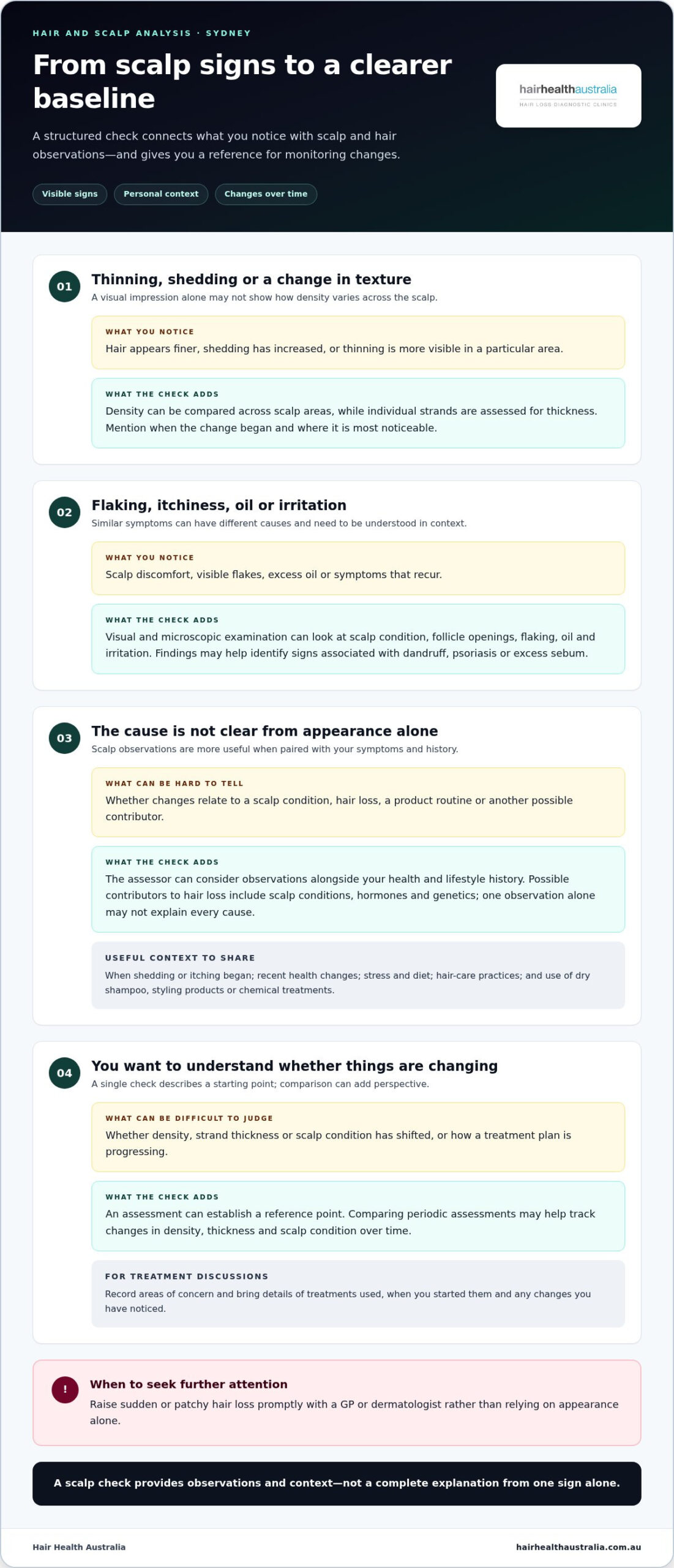
An assessor examines how closely hairs grow across different scalp areas and whether individual strands appear fine or thick. They may compare areas where you’ve noticed thinning with nearby areas that seem unchanged. This can help describe differences in density and the pattern of thinning. Mention when you first noticed the change and where it is most visible.
Scalp condition and follicle examination
Visual and microscopic examination can show details that are difficult to judge in a mirror, including the condition of the scalp and hair follicles. The assessor may look for flaking, excess oil, irritation or changes around follicle openings. These observations provide useful context, but they need to be considered alongside your symptoms and history rather than viewed in isolation.
Your medical history and daily routine add context to the examination. Be ready to describe when shedding or itching began, any recent health changes, stress, diet and hair-care practices. For example, explain how often you use dry shampoo, styling products or chemical treatments. A hair and scalp health check can bring these observations together for a more complete assessment.
Hair loss and scalp concerns can have different contributors, including genetics, hormones and scalp conditions. Changes in texture, excessive shedding, itching or irritation may also signal that further investigation is useful. A structured assessment can help identify patterns and clarify the type of hair loss, though one observation alone may not explain every cause.
For treatment discussions, record the areas of concern and compare them with your initial assessment. Changes in density, strand thickness or scalp condition can help explain how your hair is changing. Bring details of treatments you’ve already used, including when you started and any changes you’ve noticed in hair growth.
Medicare rebates and private health benefits aren’t automatic for every scalp analysis. Whether a benefit applies depends on the service, provider and your policy, so check the relevant coverage details before relying on a rebate.
To prepare, note your symptoms, when they began and any products or treatments you use. Bring relevant medical history and arrive ready to describe changes, such as increased shedding after a new hair-care routine.
An assessment may identify signs associated with dandruff, psoriasis or excess sebum, as well as visible irritation and flaking. Those findings help clarify what needs attention and whether the concern relates mainly to scalp condition, hair loss or both.
Hair and scalp analysis as a diagnostic procedure
A diagnostic consultation brings together scalp observations, hair measurements and your account of symptoms. In Sydney, this can help clarify whether changes such as thinning, irritation or shedding need further assessment.
Sydney analysis and diagnostic process
A hair analysis may combine a visual inspection with microscopic examination and questions about your health and lifestyle. The assessor records areas of concern, such as widening part lines, visible flakes or increased oiliness. This structured approach helps connect what can be seen on the scalp with changes you’ve noticed at home.
In Sydney, ask what the assessment examines and how the findings will be explained. A useful consultation should distinguish observations from possible causes, then outline relevant next steps. For example, a scan can assess active follicles and help diagnose hair-loss type, giving you more specific information than visual inspection alone.
People who may benefit
An analysis can be useful if you’ve noticed persistent shedding, gradual thinning, a change in hair texture or recurring scalp irritation. It can also help people who are unsure whether flakes reflect product residue, dandruff or another scalp concern. Bring a clear example, such as where thinning is most visible or when itching tends to occur.
People considering hair-loss treatment can use the findings to discuss their concerns in context. A record of when thinning began, previous treatments and relevant health changes gives the consultation more detail. Sudden or patchy hair loss is also worth raising promptly with a GP or dermatologist, rather than relying on appearance alone.
Hair density and follicle analysis
Hair density assessment compares how much hair is visible across different scalp areas. Microscopic inspection can examine follicles and individual strands more closely, helping identify variations that a mirror may not reveal. Note whether thinning is concentrated at the crown, temples or part line, as location helps describe the pattern accurately.
A follicle assessment can help clarify potential for natural regrowth. Hair Health Australia uses Trichoscopy to assess active hair follicles before treatment begins, giving you more specific information than judging a single photograph. Lighting, styling and hair length can all change how full an area appears.
Scalp analysis before treatment
Before treatment, an analysis documents the starting condition of the scalp and hair. This creates a reference for reviewing later changes in density, texture or irritation. Share the names of products and treatments you currently use, including topical serums or medicated products, so the assessment reflects your actual routine.
After a scan, a diagnostic report can be reviewed alongside your history and goals. Possible next steps depend on the findings, including whether the priority is scalp condition, hair loss or both. Comparing later observations with the initial record helps make treatment discussions more specific.
See a GP or dermatologist if scalp symptoms persist, worsen, become painful, or involve sores or sudden patchy hair loss. These changes need medical assessment, particularly if they affect your general wellbeing.
To prepare, note when symptoms started and bring a list of products or treatments you use. A hair health check can provide a structured starting point for discussing hair and scalp concerns.
Periodic checks for early detection
A repeat hair and scalp assessment can reveal changes that a single appointment cannot show. Comparing records over time helps identify emerging concerns, track shedding and review whether a treatment plan is progressing. The value comes from observing a pattern, not treating one day’s findings as the whole picture.
At a clinic, an assessment can record the same scalp areas and features each time. For example, notes might compare hair density at the crown, visible irritation near the hairline, or flaking around the part. Keeping the assessment consistent makes differences easier to interpret. It also gives you a specific record to discuss if symptoms change between visits.
Periodic checks can help bring attention to possible scalp conditions, such as dandruff or psoriasis, and changes in sebum production. They can also document inflammation, texture changes or areas where hair appears thinner. These observations are useful clues, but they don’t establish every underlying cause. A diagnosis draws on the examination alongside your symptoms and relevant history.
There isn’t a useful check interval for everyone. The timing depends on what is being monitored, whether your concerns are changing and whether you’re following a treatment plan. For instance, someone tracking gradual thinning may need comparisons suited to that plan, while someone with new irritation may need medical assessment sooner. Record when a change appears, where it occurs and whether it persists.
- Note when shedding increases or seems concentrated in a particular area.
- Record changes in itching, flakes, redness or oiliness.
- Keep a list of hair products and treatments, including any recent changes.
- Use consistent photos, lighting and part placement to document visible changes.
These records make a follow-up discussion more precise. A change after introducing a styling product, for example, gives the assessor a useful point to consider. Likewise, continued thinning during a treatment plan can prompt a review of the findings and next steps. Don’t rely on photos alone: lighting, hair length and styling can alter how density appears.
Across Australia, periodic checks are most useful when they answer a defined question, such as whether scalp irritation is settling or hair density is changing. The assessment can then compare current observations with earlier records. If a finding suggests a medical concern, discuss it with a GP or dermatologist for further evaluation. A clear timeline of symptoms helps explain what has changed and when.
Scalp inflammation and product buildup
Itching, redness, flakes and excess oil can have different explanations. A scalp assessment examines where these signs appear and whether they occur alongside thinning, increased shedding or product residue. For example, flakes across the hairline may prompt questions about washing and styling habits, while persistent irritation needs closer attention. The pattern helps guide the next step, but a visible sign alone doesn’t identify its cause.
Product buildup can follow repeated use of dry shampoo, styling creams, oils or sprays. Residue may leave hair feeling coated or make the scalp look oily, particularly around the part or hairline. Note which products you use and when your concerns started. An assessor can consider those details alongside the scalp’s appearance, rather than assuming every flake is dandruff or every itchy patch is caused by a product.
Inflammation describes an irritated or reactive scalp, which may appear red, feel itchy or become uncomfortable. Dandruff, psoriasis and excess sebum are among the concerns a hair and scalp analysis may examine. These conditions can look similar, so describe specific changes: whether flakes are dry or oily, whether redness is localised, and whether discomfort followed a new product.
- Record the product names and any recent changes to your routine.
- Note where itching, redness or flaking appears, such as the crown or hairline.
- Describe whether symptoms ease or worsen after washing or styling.
- Keep track of any thinning or increased shedding alongside scalp changes.
These observations make an assessment more useful. If residue is suspected, your product routine can be considered alongside visible scalp findings. If irritation persists, spreads or occurs with other changes, that context helps guide whether medical assessment is appropriate. Avoid treating appearance alone as a diagnosis or adding multiple new products before you understand the pattern.
Scalp condition also matters when discussing hair restoration. A clinician considers the scalp and hair together when assessing thinning and possible treatment options. For example, irritation may need attention as part of the overall plan, rather than focusing only on hair density. A transplant is a separate surgical procedure, and scalp findings are only one factor in determining whether it is suitable.
Bring your product list and notes about hair changes to a scalp assessment in Sydney. Explain previous hair-loss treatments, changes in shedding and any scalp concerns. A microscopic scan can assess active follicles and help diagnose hair-loss type, giving you a clearer picture to support informed decisions about what to address next.
How do I book a scalp health check in Sydney, and do I need a referral?
You can book a scalp assessment directly with a clinic offering hair and scalp analysis. A referral isn’t required to make that appointment. If your symptoms need medical diagnosis or specialist care, book with a GP, who can assess the concern and arrange a referral when appropriate.
Before booking, clarify what you want the appointment to address. Hair Health Australia’s Free Hair Health Check uses Trichoscopy to assess active follicles and diagnose hair-loss type. The findings are explained by specialists, who also provide education about your hair-loss type and how recommended treatment works. This makes the appointment relevant when thinning or hair loss is your concern.
When arranging a scalp health check in Sydney, explain the main change you’ve noticed. For example, mention persistent itching, visible flakes, increased shedding or thinning around your part. Describe when it began and whether it has changed. This gives the assessor useful context and helps distinguish a scalp concern from a hair-loss concern.
Prepare a short record before your appointment. Include your concerns, previous hair-loss treatments, relevant health changes and the hair products you use. If thinning seemed to begin after a particular change, note when it started. Bring photographs only as supporting context, since lighting, parting and hairstyle can affect how density appears.
- Write down where symptoms occur, such as the hairline, crown or part.
- List products and treatments you currently use.
- Note changes in shedding, texture, itching or flaking.
- Bring relevant medical history and questions about the assessment.
Choose the right pathway for the concern. A clinic-based analysis can document scalp and hair findings, while a GP assesses medical symptoms and can guide further care. Seek medical advice for persistent or worsening irritation, painful areas, sores or sudden patchy hair loss. These details matter more than trying a succession of products without understanding the cause.
At the appointment, explain what you want to understand, such as whether flakes may relate to buildup or whether thinning needs closer assessment. Ask how the findings relate to your symptoms and what the suggested next step addresses. A clear explanation should connect observations, such as redness or density changes, with your concerns without treating one sign as a complete diagnosis.
For a structured starting point, explore the hair health check and consider whether an assessment matches your concern. Bring your symptom notes and product list so the appointment can focus on relevant changes.
Hair Health Australia: Male Hair Loss Treatment
Hair Health Australia provides Male Hair Loss Treatment for men concerned about ongoing thinning or pattern baldness. Its non-surgical regrowth programmes use clinically backed methods to address hair loss and support scalp health. If an assessment has identified thinning as your main concern, treatment may be a relevant next step. The approach is focused on hair loss, rather than general hairdressing or transplant surgery.
Women experiencing similar concerns can explore Female Hair Loss Treatment. Discuss your assessment findings, the pattern of thinning and any changes you’ve noticed, so treatment discussions can focus on your circumstances and goals. Hair loss has different possible causes, so an assessment can help put your concern in context before you consider a tailored treatment plan.
For more information, visit hairhealthaustralia.com.au.
Take the next step with a clearer picture
Not every change needs the same response. A scalp health check in Sydney can help you understand ongoing thinning or hair loss. Keep a brief record of what you’ve noticed and the questions you want answered. That gives your next conversation a practical starting point.
If hair loss is your main concern, Hair Health Australia offers Male Hair Loss Treatment and Female Hair Loss Treatment. Explore the available hair health information and consider whether a treatment discussion suits your concern. For details about the next step, contact Hair Health Australia about a hair health check.
A considered next step can turn uncertainty into a clearer plan. Start with the concern that matters most to you.
Frequently Asked Questions
Is the AI Hair Analysis scan painful or invasive?
The AI Hair & Scalp Analysis is non-invasive and doesn’t require hair clipping or scalp preparation. It doesn’t involve needles or skin penetration. The scan examines visible hair and scalp features, so it’s different from a procedure that takes a sample. If you have a sore or sensitive area, mention it before the assessment so it can be considered during the examination.
What Happens During a Hair and Scalp Consultation?
A consultation usually starts with questions about your symptoms, health history and hair-care routine. The practitioner then visually examines your hair and scalp, and may use microscopic assessment. You can describe a specific concern, such as a widening part or recurring flakes, and explain when it began. The discussion helps place examination findings in context and identify what the next step should address.
What happens after the scan?
After the scan, the team reviews the diagnostic report and explains what the recorded features may indicate. Findings can inform a discussion about suitable next steps, including whether hair loss treatment is relevant or further assessment is needed. The report is not a treatment by itself. Ask how the observations relate to your concern, such as thinning at the crown or changes in visible follicle activity.
What does a Sydney scalp health check include?
The scope depends on the type of assessment. A general hair and scalp check may include questions about your concerns, visual inspection and microscopic examination. Hair Health Australia’s Free Hair Health Check uses Trichoscopy to assess active hair follicles and provide a clinical diagnosis of hair-loss type. It focuses on hair-loss concerns, rather than serving as a general medical examination for every scalp condition.
Where can I get a scalp health check in Sydney?
Hair Health Australia provides a Hair Health Check at its Redfern clinic for people concerned about hair loss or thinning. The check is free, includes a microscopic Trichoscopy scan and clinical diagnosis, and takes ONLY 30 MINS. It assesses active follicles and hair loss type. This service is designed for hair-loss concerns, so persistent pain, sores or other medical symptoms need appropriate medical attention.
Do Sydney dermatologists or trichologists offer scalp examinations?
Yes, scalp examinations may be part of a dermatology consultation or a hair-analysis appointment in Sydney. The focus differs: a dermatologist assesses medical skin concerns, while a hair-analysis consultation may examine hair density, follicles and visible scalp changes. Choose the appointment according to your concern. For example, ongoing painful irritation needs medical assessment, while gradual thinning may prompt a hair-loss-focused analysis.
What happens during a scalp and hair assessment?
The practitioner gathers details about what you’ve noticed, then examines the scalp and hair using visual or microscopic methods. You may be asked to point out areas that feel itchy or look thinner. For a hair-loss assessment, Trichoscopy can help document follicle activity. Sharing when changes began and any relevant hair treatments gives the practitioner useful context for interpreting the observations.
How do I compare scalp clinics and practitioners in Sydney?
Compare the purpose of the assessment, the examination method and the findings provided. Hair Health Australia’s free Hair Health Check uses Trichoscopy to assess active follicles and diagnose hair-loss type, with treatment customised to diagnostic results. Its focus is hair loss and thinning. This makes it a relevant option when those concerns are your priority, rather than when you need a general medical assessment of scalp symptoms.