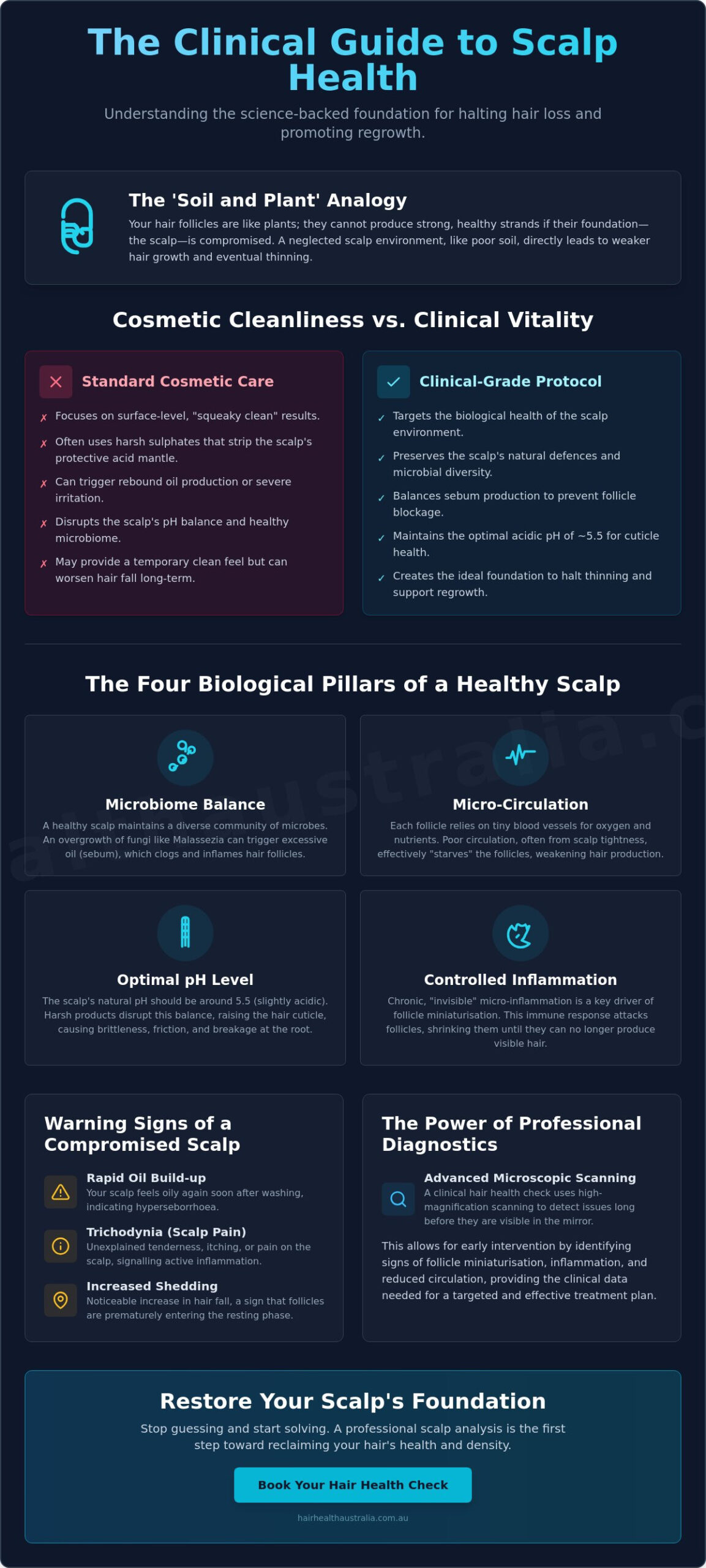
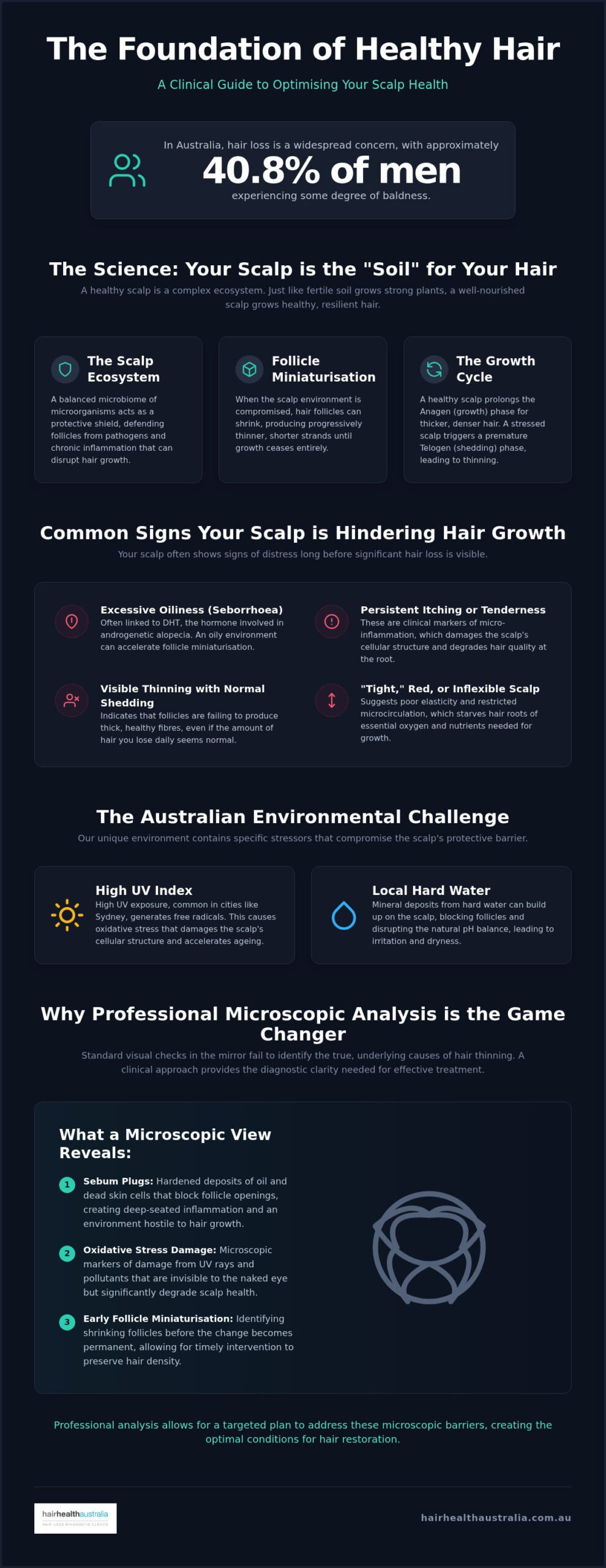
Australia currently ranks among the countries with the highest prevalence of hair loss globally, with approximately 40.8% of men experiencing some degree of baldness. If you have spent years cycling through generic shampoos from the chemist or feeling anxious about visible thinning, you are certainly not alone in your search for a professional solution. It’s frustrating to navigate conflicting DIY advice while your scalp remains irritated and your hair density continues to decline.
This clinical guide provides the clarity you need by explaining exactly how to improve scalp health for hair growth through evidence-based protocols. We’ll move past marketing hype to examine the microscopic environment of your follicles and the impact of the harsh Australian UV index on scalp inflammation. You’ll discover a structured, non-surgical path to optimising your scalp biology and restoring your confidence with a methodical, personalised approach to hair restoration.
Key Takeaways
- Understand why your scalp is a complex biological ecosystem where nutrient delivery at the root level is essential for long-term hair quality.
- Learn how to improve scalp health for hair growth by identifying clinical signs of micro-inflammation and excessive oiliness that may signal follicle miniaturisation.
- Discover how the unique Australian environment, including the high Sydney UV index and local hard water, can compromise your scalp’s protective barrier.
- Establish a personalised care routine that balances correct cleansing frequencies with scalp massage techniques to enhance microcirculation and follicle health.
- Recognise how professional microscopic hair analysis provides the diagnostic clarity needed to address thinning before it becomes a permanent issue.
The Science of Scalp Health: Why Your Follicles Depend on the “Soil”
The scalp is far more than a simple layer of skin; it’s a highly specialised biological ecosystem. When we discuss how to improve scalp health for hair growth, we must view the scalp as the “soil” in which your hair grows. Just as nutrient-depleted soil produces weak, brittle plants, a compromised scalp environment fails to support the complex structure of the hair follicle. This biological foundation determines whether your hair thrives or enters a state of decline.
A critical component of this ecosystem is the scalp microbiome. This delicate balance of microorganisms acts as a protective shield, defending against pathogens and chronic inflammation. When this balance is disrupted by harsh chemicals or environmental stressors, it can lead to follicular miniaturisation. This is a process where the hair follicle physically shrinks, producing increasingly thinner and shorter strands until growth ceases entirely. A hostile scalp environment significantly accelerates this decline, turning a manageable concern into a permanent one.
The Scalp-Hair Growth Cycle Connection
Your hair’s lifecycle is divided into distinct stages, primarily the Anagen (growth) and Telogen (shedding) phases. The health of your scalp directly dictates the duration of the Anagen phase. A healthy, well-nourished scalp keeps follicles in the growth phase for longer, which results in greater hair length and overall density. It’s the difference between a robust hair cycle and one that’s constantly interrupted.
Conversely, a congested scalp can trigger a premature transition into the Telogen phase. When follicles are “choked” by debris or lack sufficient blood circulation, they enter a resting state too early. Enhancing microcirculation is vital because it ensures that oxygen and essential proteins reach the root. This nutrient delivery directly influences the diameter and strength of the hair fibre, ensuring each strand reaches its full genetic potential.
Microscopic Markers of an Unhealthy Scalp
To truly understand how to improve scalp health for hair growth, we must look beneath what’s visible in the bathroom mirror. Standard visual inspections often fail to identify the real issues. At a microscopic level, we frequently observe sebum plugs. These hardened deposits of oil and dead skin cells block the follicle opening, creating an anaerobic environment that fosters deep-seated inflammation.
Oxidative stress also plays a major role in scalp degradation. Environmental pollutants and high UV exposure generate free radicals that damage the scalp’s cellular structure. Because these markers are often invisible to the naked eye, a professional Hair Health Check is the most effective way to gain clarity. This diagnostic approach allows us to identify these microscopic barriers and create a targeted plan before follicle miniaturisation becomes irreversible.
Common Signs Your Scalp Health is Hindering Hair Growth
Identifying the warning signals early is crucial for understanding how to improve scalp health for hair growth. Often, the scalp communicates distress long before significant hair loss becomes obvious. Seborrhoea, or excessive oil production, isn’t just a cosmetic issue. It’s frequently linked to androgenetic alopecia, where high levels of DHT stimulate sebaceous glands. This creates an oily environment that can exacerbate follicle miniaturisation and hinder the production of healthy strands.
Don’t ignore persistent itching or scalp tenderness. These are clinical markers of micro-inflammation. While you might not see redness with the naked eye, this underlying irritation damages the scalp’s cellular environment. Research into how oxidative stress affects hair follicles shows that chronic inflammation can degrade the quality of the hair shaft before it even emerges from the skin. It’s a silent decline that requires professional attention.
Many people assume hair loss always involves clumps in the drain. However, visible thinning despite normal daily shedding often indicates that the scalp environment is preventing follicles from producing thick, healthy fibres. If your scalp feels “tight” or appears red, it may suggest poor elasticity or restricted microcirculation. This lack of blood flow starves the roots of essential nutrients. A comprehensive Hair Health Check can help identify these subtle signs before they lead to permanent density loss.
Dandruff vs. Scalp Inflammation: Knowing the Difference
Visible flakes are often dismissed as simple dandruff, but they can signal deeper inflammatory issues. While dry scalp is caused by a lack of moisture, fungal overgrowth or seborrheic dermatitis requires a clinical approach. If ignored, chronic inflammatory conditions can lead to more severe outcomes, such as cicatricial alopecia, where the follicle is permanently replaced by scar tissue. Distinguishing between these conditions is the first step toward effective treatment.
The Impact of Product Build-up
Modern styling products, particularly dry shampoos and heavy silicones, can create a suffocating barrier on the scalp surface. This build-up prevents essential “respiration” and traps sebum, bacteria, and environmental pollutants against the skin. Over time, this waxy residue chokes the follicle opening. If your scalp feels perpetually congested or has a distinct waxy texture, it’s a sign that standard shampoos aren’t sufficient and a clinical-grade cleansing protocol is required to restore follicle health.
Australian Environmental Factors Affecting Your Scalp
The Australian climate presents unique challenges for those researching how to improve scalp health for hair growth. In cities like Sydney, the UV index frequently reaches extreme levels, which directly impacts the scalp’s protective lipid barrier. This intense sun exposure does more than cause surface discomfort; it creates deep-seated oxidative stress that can damage the DNA within your hair follicles. When the scalp’s integrity is compromised by UV radiation, the follicles struggle to maintain a robust growth cycle, often leading to a noticeable decline in hair quality.
Beyond the sun, urban factors such as hard water and pollution play a significant role in follicle health. Many Australian metropolitan areas have water with high mineral content. These minerals can crystallise on the scalp surface, reducing skin flexibility and blocking the absorption of essential topical treatments. In urban centres, microscopic pollutants also settle on the scalp, triggering a pro-inflammatory response. Understanding these external pressures is a vital part of any clinical strategy for hair restoration, as it allows for a more targeted approach to environmental protection.
Sun Protection for Your Scalp
Sydney summers are synonymous with high humidity, which significantly alters the scalp microbiome. Sweat and excess sebum often combine to form a dense “plug” within the follicle. This blockage creates a breeding ground for fungal overgrowth, leading to persistent itching and inflammation. After outdoor exercise or a day at the beach, it’s essential to use a clinical clarifying protocol to remove salt, sand, and sweat. Maintaining a stable pH balance during these humid months prevents the micro-inflammation that hinders your hair’s full growth potential. For a precise assessment of how the environment has impacted your scalp, a Hair Health Check is a logical starting point for your journey.
Clinical and Home Care Strategies to Optimise Scalp Health
Establishing a personalised cleansing frequency is the cornerstone of any plan regarding how to improve scalp health for hair growth. While generic advice often suggests washing only twice a week, this can be detrimental for those with oily seborrhoea. If your scalp produces excess sebum, daily washing with a clinical-grade cleanser is necessary to prevent the formation of follicle-choking plugs. Conversely, those with a dry, sensitive scalp must avoid over-cleansing to maintain the lipid barrier. Moving away from generic chemist brands is essential. These mass-market products often contain harsh detergents that strip the scalp, whereas clinical formulations focus on maintaining a stable pH and supporting the microbiome.
Nutritional foundations also play a vital role in supporting the “soil” of your scalp. Within the Australian context, ensuring adequate levels of Zinc, Biotin, and Iron is crucial for follicle function. Iron deficiency is particularly common and can lead to a diffuse thinning of the hair. By combining internal nutritional support with targeted topical care, you create a dual-action approach that addresses both the biological requirements and the physical environment of your hair roots; for instance, you can explore Primary Healthcare and Medical Examinations to ensure your systemic health is fully supporting your growth goals.
Effective Scalp Massage Techniques
Clinical-style scalp massage is a powerful tool for increasing microcirculation. To perform this effectively, use the pads of your fingers to apply firm, circular pressure, moving the scalp over the underlying bone rather than just sliding your fingers over the hair. This technique helps to physically loosen the scalp tissues and encourages nutrient-rich blood to reach the dermal papilla. Using specialised scalp serums during this process can enhance the results, as the increased warmth and blood flow improve ingredient absorption. Scalp tension is a contributor to restricted blood flow to the crown.
Ingredients to Look For (and Avoid)
When selecting topicals, look for Salicylic Acid to gently exfoliate dead skin cells and Peppermint oil to provide a natural stimulatory effect. These ingredients help keep the follicle opening clear and active. You should avoid products containing heavy silicones, which can coat the scalp and prevent respiration, or harsh sulphates that cause chronic micro-inflammation. For a deeper look at professional options, consult our Best Hair Regrowth Treatment Australia 2026 clinical guide. To determine which specific ingredients your scalp requires, the most effective step is to book a professional scalp assessment to identify your unique biological needs.
Why Professional Microscopic Analysis is the Game Changer
While establishing a consistent home care routine is a vital foundation, understanding how to improve scalp health for hair growth often requires a level of precision that cannot be achieved through a bathroom mirror. Many people spend years in a cycle of trial and error, testing various retail products without knowing the actual biological state of their follicles. Microscopic analysis removes this uncertainty. By examining the scalp at high magnification, we can identify specific barriers to growth, such as deep-seated inflammation, sebum plugs, or early-stage miniaturisation, before these issues lead to permanent hair loss.
There is a distinct difference between a standard hairdresser consultation and a clinical diagnostic check. A hairdresser is primarily concerned with the aesthetic quality of the hair shaft, whereas our Sydney clinic focuses on the health of the follicle itself. This data-driven approach allows us to create a regrowth program that is uniquely tailored to your results. Instead of a one-size-fits-all solution, you receive a protocol based on the actual density and health of your scalp ecosystem, ensuring every action taken is targeted and effective.
What Happens During a Hair Health Check?
A professional assessment begins with a non-invasive scanning process using a specialised microscopic camera. This technology allows us to view the scalp surface and follicle openings at up to 200x magnification. During this analysis, we measure hair density, identify the percentage of hairs in the growth versus shedding phases, and look for signs of oxidative stress or barrier damage. This level of detail is essential for a successful Clinical Hair Treatment: A Professional Guide to restoration. Once we have quantified your scalp’s current status, we can track your progress with objective data over time.
Taking the First Step Toward Regrowth
Early intervention is the most critical factor in successful hair restoration. Follicles that have completely miniaturised and been replaced by scar tissue cannot be revived, which is why identifying the root cause of thinning early is so important. Moving away from “trial and error” and toward a professional clinical protocol provides the best chance of maintaining and improving your hair density. It’s about replacing anxiety with a clear, actionable plan. To gain a complete understanding of your scalp’s potential, Book your comprehensive Hair Health Check today and begin your journey toward a healthier, denser head of hair.
Restoring Your Follicular Foundation
Optimising your scalp environment is the most critical step toward sustainable hair restoration. By viewing your scalp as a biological ecosystem rather than just skin, you can address the root causes of thinning, such as micro-inflammation and follicular miniaturisation. Understanding how to improve scalp health for hair growth requires a move away from generic products and toward evidence-based, clinical protocols that account for the unique challenges of the Australian climate. This systematic approach ensures your follicles have the ideal “soil” required to thrive.
With over 15 years of specialised experience in hair restoration, our Sydney clinic provides the diagnostic precision needed to unlock your hair’s full potential. We utilise advanced microscopic technology to move beyond guesswork, creating non-surgical regrowth programs tailored to your specific results. It’s time to replace uncertainty with a proven, data-driven approach to hair density. Secure your clinical Hair Health Check in Sydney today and take a proactive step toward a healthier, more confident future. You don’t have to navigate this journey alone; expert guidance is ready to help you achieve lasting results through systematic care and clinical excellence.
Frequently Asked Questions
Can an unhealthy scalp actually cause permanent hair loss?
Yes, chronic micro-inflammation can lead to permanent hair loss if it results in scarring. When the scalp remains in a pro-inflammatory state for extended periods, the hair follicle can eventually be replaced by scar tissue, a condition known as cicatricial alopecia. Once scarring occurs, the follicle can no longer produce hair. This is why professional microscopic scanning is essential to detect underlying inflammation before it causes irreversible damage to your hair density.
How often should I wash my hair to improve scalp health for growth?
Your washing frequency should be determined by your specific scalp type rather than a generic rule. If you have an oily scalp, washing daily with a clinical-grade cleanser is often necessary to prevent sebum from clogging the follicles. This is a primary step in how to improve scalp health for hair growth. Those with drier scalps may only need to wash two or three times a week to avoid stripping the protective lipid barrier.
Does scalp massage really help with hair regrowth?
Scalp massage is an effective supplemental technique because it physically stimulates microcirculation in the skin. By increasing blood flow to the dermal papilla, you ensure that essential nutrients and oxygen are delivered directly to the hair root. While massage alone cannot reverse genetic thinning, it significantly improves the scalp environment and can enhance the absorption of professional topical treatments, making it a valuable component of a broader clinical regrowth program.
What is the best scalp treatment for thinning hair in Australia?
The most effective scalp treatments in Australia focus on non-surgical, clinically-backed protocols that address the individual’s biological needs. In our Sydney clinic, we find that a personalised approach based on microscopic diagnostic technology yields the best results. These treatments typically combine clinical-grade topicals with professional procedures designed to reduce inflammation and stimulate follicle activity without the need for invasive surgery or hair transplant procedures.
Can I improve my scalp health through my diet alone?
While a balanced diet provides the nutritional foundations for hair growth, it is rarely sufficient to resolve complex scalp issues on its own. Essential nutrients like Zinc, Iron, and Biotin support the hair cycle, but they cannot always overcome environmental damage or genetic miniaturisation. A holistic approach that combines nutritional support with professional clinical treatments and proper home care is the most reliable way to achieve significant improvements in hair density.
Is it better to see a trichologist or a dermatologist for scalp issues?
The choice depends on the nature of your concern. A dermatologist is a medical doctor specialising in skin diseases and may be necessary for severe medical conditions. However, for those experiencing thinning or pattern baldness, a hair restoration specialist provides a more targeted focus on the hair follicle ecosystem. Our Sydney clinic specialises in non-surgical regrowth protocols, offering dedicated care that bridges the gap between general skin health and specific hair density goals.
How long does it take to see results after improving scalp health?
Visible changes in hair density usually require three to six months of consistent clinical care. This timeline is dictated by the natural hair growth cycle, as it takes time for revitalised follicles to produce new, thicker strands that emerge above the scalp surface. However, microscopic improvements in scalp inflammation and follicle health can often be detected much sooner during a follow-up Hair Health Check, providing objective proof that your protocol is working.
What are the most common signs of a “suffocated” hair follicle?
A “suffocated” hair follicle often presents with microscopic sebum plugs that block the follicle opening. Common signs include persistent scalp oiliness, a waxy texture at the roots, and localised redness or tenderness. You might also notice that individual hair strands are becoming thinner and shorter, a process known as miniaturisation. Identifying these signs early through microscopic analysis is vital for implementing a successful strategy for how to improve scalp health for hair growth.