
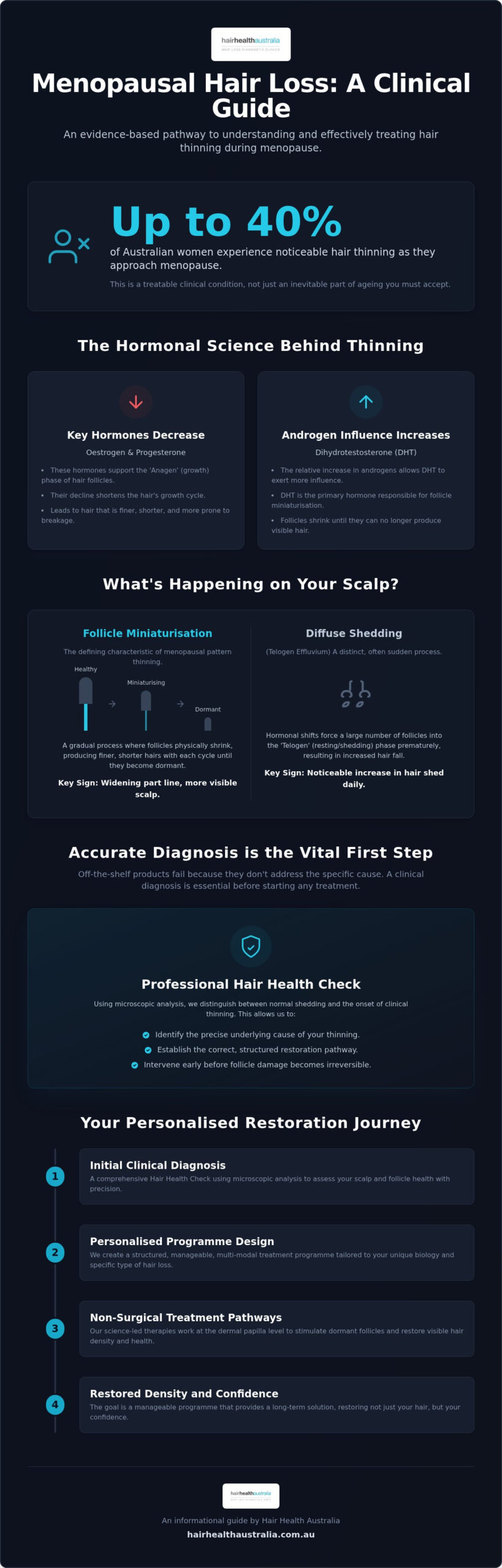
Did you know that up to 40% of Australian women experience noticeable hair thinning as they approach menopause? It’s a confronting transition that often leaves you feeling invisible, especially when your morning mirror reflection reveals more scalp than it used to. You’ve likely spent significant time and money on “miracle” shampoos or chemist-shelf serums, only to find they offer little more than a fragrant wash and no real change in density. It’s frustrating to feel caught between a GP who might dismiss it as a natural part of ageing and a beauty industry that over-promises results.
We believe you deserve more than a temporary fix; you need a clinical solution. This guide provides a clear, evidence-based pathway to effective menopausal hair loss treatment that replaces uncertainty with medical clarity. We’ll explore the specific hormonal shifts affecting your follicles and the non-surgical diagnostic tools we use at our Sydney centre. By identifying the precise underlying cause of your thinning, we can establish a structured, manageable programme designed to restore your hair density and your confidence.
Key Takeaways
- Understand how the decline of oestrogen and progesterone during menopause directly impacts your hair growth cycle and leads to follicle miniaturisation.
- Learn why a microscopic Hair Health Check is the essential first step to accurately diagnose the cause of thinning before starting any clinical programme.
- Discover why a multi-modal menopausal hair loss treatment plan offers a more effective, science-led alternative to standard “miracle” shampoos and chemist-shelf serums.
- Identify the specific non-surgical pathways available at our Sydney clinic to stimulate dormant follicles and restore visible hair density.
- Gain clarity on the structured journey from your initial clinical diagnosis to a personalised, manageable regrowth programme tailored to your unique biology.
Understanding Menopausal Hair Loss: Why It Happens and What to Look For
Menopause is a complex biological transition that affects almost every system in the body, including the scalp. For many women, the most distressing symptom isn’t the hot flushes or mood shifts, but the progressive loss of hair density. This isn’t just a cosmetic concern; it’s a physiological response to the significant decline in oestrogen and progesterone levels. These hormones typically support the growth phase of your hair follicles, keeping them in the “anagen” or growing stage for longer. When these levels fall, the hair cycle shortens, leading to hair that is finer, shorter, and more prone to breakage.
The Oestrogen-Androgen Shift
As oestrogen levels decrease, the relative balance of androgens in the body increases. This shift allows dihydrotestosterone (DHT) to exert more influence on the scalp. DHT is the primary hormone responsible for follicle miniaturisation, a process where hair follicles gradually shrink until they can no longer produce a visible hair. This condition, often clinically referred to as Pattern hair loss, is frequently triggered or accelerated by the hormonal fluctuations of menopause. While every woman experiences these shifts, those with a genetic predisposition are often more vulnerable to these changes. This biological imbalance creates a scalp environment where follicles struggle to survive without a targeted menopausal hair loss treatment.
Early Detection: More Than Just ‘Ageing’
Spotting the early signs is vital for successful intervention. Unlike the sudden “clumps” seen in stress-related shedding, menopausal thinning is usually gradual. You might notice your part line widening, your scalp becoming more visible under bright lights, or your ponytail feeling significantly thinner than it did a few years ago. These changes often carry a heavy emotional weight, impacting self-esteem and making many women feel as though they are losing a part of their identity. It’s easy to dismiss these changes as a normal part of ageing, but this can be a costly mistake. Menopausal hair loss is a treatable clinical condition that responds well to early intervention rather than an inevitable symptom you must simply accept.
Waiting it out is rarely a successful strategy. When hair follicles remain in a miniaturised state for too long, they can eventually lose the ability to recover, leading to permanent inactivity. Before starting any menopausal hair loss treatment, we recommend a professional Hair Health Check at our Sydney centre. This allows us to use microscopic analysis to distinguish between normal daily shedding and the onset of clinical thinning, ensuring you begin the correct restoration pathway before the damage becomes irreversible.
The Science of Thinning: Follicle Miniaturisation vs. Shedding
Understanding the biological mechanics of your scalp is the first step toward effective restoration. Every hair on your head follows a specific lifecycle: the Anagen (growth) phase, the Catagen (transition) phase, and the Telogen (resting) phase. Under normal conditions, about 90% of your hair is in the growth phase at any given time. However, the hormonal shifts of menopause often force follicles into the resting phase prematurely. This can result in sudden, diffuse shedding known as Telogen Effluvium, which is quite distinct from the gradual process of miniaturisation.
Miniaturisation is the defining characteristic of pattern thinning. In this process, the follicle itself physically shrinks. With each successive growth cycle, the hair produced is finer, shorter, and less pigmented until the follicle eventually stops producing visible hair altogether. Reaching this “point of no return” means the follicle has become dormant and potentially scarred. This makes early intervention with a clinical menopausal hair loss treatment essential to revive these structures before they lose the capacity for regrowth.
The Mechanism of Miniaturisation
This shrinking process occurs because the hair bulb’s access to vital blood flow and nutrients is restricted. As the follicle diminishes, the hair shaft loses its structural integrity. This is why many off-the-shelf topical solutions fail; they often lack the delivery systems required to penetrate the scalp and address the root cause at the dermal papilla level. Treating female pattern hair loss requires a more sophisticated approach that stimulates these deeper layers to reverse the miniaturisation trend and support thicker hair production.
Temporary vs. Permanent Loss
It’s vital to determine whether your hair is simply in a resting state or if the follicles are actually dying. While hormonal changes drive most menopausal thinning, nutritional deficiencies in Iron, Zinc, and Vitamin D can exacerbate the problem, turning a manageable issue into a significant loss of density. You can learn more about identifying these physical changes in our guide to early signs of alopecia in women. If you’re unsure which category your thinning falls into, a clinical Hair Health Check provides the diagnostic data needed to tailor a menopausal hair loss treatment to your specific biological needs.
Clinical Diagnostics: Why a Professional Hair Health Check is Vital
You might assume that a quick look in the mirror or a chat with your hairdresser is enough to understand why your hair is thinning. However, visual inspection is fundamentally limited because it only identifies hair loss once approximately 50% of your density is already gone. A professional clinical diagnosis goes beneath the surface to examine the scalp environment and follicle function in real-time. This diagnostic precision is the cornerstone of any successful menopausal hair loss treatment, as it allows us to differentiate between simple shedding and the more complex process of miniaturisation discussed in earlier sections.
Without clinical data, you are essentially guessing. Many women waste years on “miracle” products that don’t address their specific scalp needs. A professional assessment identifies the presence of scalp inflammation, sebum buildup, or fungal activity that might be stifling your follicles. By identifying these issues early, we can clear the path for regrowth and ensure that any subsequent treatment has the best possible chance of success. We don’t just look for hair loss; we look for the biological reasons behind it.
The Microscopic Advantage
At our Sydney centre, we use specialised digital trichoscopy to view your scalp at 200x magnification. This technology reveals miniaturised hairs that are completely invisible to the naked eye, allowing us to catch thinning long before it becomes obvious to others. This level of detail is vital for mapping out your follicle density and determining which areas of the scalp are most responsive to intervention. By conducting a comprehensive hair health check, we establish a clear biological baseline. This data is essential for measuring your success over the coming 6 to 12 months, ensuring your programme is delivering measurable improvements in hair diameter and count.
Essential Testing and Labs
Clinical diagnostics also involve looking at your internal health. For menopausal women, we focus on the “Big Three”: Ferritin (iron stores), thyroid function, and hormonal panels. It’s a common frustration to hear from a GP that your blood results are “normal” while you continue to lose hair. There is a significant difference between a range that is medically “normal” and one that is “optimal” for hair regrowth. For example, your Ferritin levels might be within the standard range for general health but well below the threshold required to sustain a healthy hair growth cycle.
We often collaborate with your local Sydney GP to ensure your internal health supports your external restoration efforts. This holistic approach ensures that your menopausal hair loss treatment isn’t just a surface-level fix. It’s a scientifically backed restoration plan that addresses both the hormonal shifts of menopause and any underlying nutritional gaps that could be hindering your results.
Non-Surgical Treatment Pathways for Menopausal Thinning
Once a clinical diagnosis identifies the specific stage of your thinning, the focus shifts to a systematic restoration plan. Effective menopausal hair loss treatment rarely relies on a single “hero” ingredient. Instead, we advocate for a multi-modal approach that combines different clinical therapies to address the problem from multiple biological angles. By pairing clinical-strength topical protocols with advanced stimulation techniques, we can target the follicle miniaturisation process more aggressively than any off-the-shelf chemist brand could achieve alone.
A key component of our Sydney-based programmes is Low-Level Laser Therapy (LLLT). This non-invasive technology uses specific wavelengths of light to stimulate cellular repair and increase blood flow to the hair bulb. This process, known as photobiomodulation, encourages dormant follicles to move back into the growth phase. When supported by nutritional supplements tailored for the menopausal body, such as targeted doses of biotin, zinc, and iron, the scalp environment becomes far more receptive to regrowth.
Clinical Regrowth Protocols
Consistency is the most critical factor in any clinical programme. We often discuss “The 4-Month Rule” with our clients. This is the minimum timeframe required to see visible changes because of the natural biological rhythm of the hair growth cycle. It takes time for miniaturised follicles to reset and begin producing thicker, healthier shafts. For a deeper look at the most effective clinical options available today, you can explore our best hair regrowth treatment Australia guide. These protocols are designed to wake up follicles that have slowed down due to hormonal shifts, providing a structured pathway back to hair density.
Lifestyle and Scalp Maintenance
While clinical treatments do the heavy lifting, your daily habits play a supporting role. Managing cortisol levels is vital; chronic stress can push more hair into the shedding phase, compounding the effects of menopause. We also work with clients to improve professional scalp hygiene. There is a common myth that frequent washing causes more hair loss. In reality, avoiding the shower often leads to sebum and debris buildup, which can cause inflammation and stifle growth. Keeping the scalp clean and clear is essential for the success of any menopausal hair loss treatment.
Because every woman’s hormonal profile is unique, your restoration plan must be equally specific. To move beyond generic advice and start a programme backed by clinical data, we recommend you book a professional Hair Health Check at our Sydney centre to determine which treatment pathway is right for you.
Personalised Hair Restoration at Our Sydney Clinic
Choosing to address thinning hair is a deeply personal decision that requires both clinical expertise and empathetic care. At our Sydney CBD centre, we’ve designed an experience that prioritises medical accuracy over high-pressure sales. When you visit us, you aren’t just buying a product; you’re entering a structured medical pathway. Your journey begins with a comprehensive diagnostic phase where we move beyond surface-level observations to understand your unique hormonal and scalp profile. This ensures that every menopausal hair loss treatment we recommend is grounded in your specific biological data.
We focus exclusively on non-surgical alternatives to hair restoration. While surgical transplants are often discussed in the media, they are an invasive and frequently unnecessary step for menopausal thinning, which is often diffuse rather than localised. Our approach focuses on reviving your existing follicles and stabilising the scalp environment. By using clinically-backed, non-invasive methods, we help you achieve visible density without the downtime or risks associated with surgery. It’s about working with your body’s natural rhythms to produce sustainable, long-term results.
The Sydney Clinical Experience
Our commitment to you is built on transparency and honesty. We don’t promise “overnight miracles” because biology doesn’t work that way. Instead, our Sydney specialists provide realistic expectations based on the current state of your follicles. We use regular follow-up microscopic scans to monitor your progress, allowing us to adjust your programme as your hair health improves. This data-driven approach ensures you’re never left wondering if your treatment is working. Before you decide on a provider, it’s helpful to understand what a professional environment should offer. You can read our non-surgical hair loss clinic Sydney checklist to ensure you’re receiving the highest standard of clinical care.
Success Beyond the Mirror
The true measure of a successful menopausal hair loss treatment isn’t just a thicker part line; it’s the restoration of your confidence. Many Sydney women we’ve treated report a profound sense of relief once they have a clear plan in place. Reclaiming your hair often means reclaiming your identity and feeling like yourself again. Beyond the initial regrowth phase, we focus on the long-term maintenance of your scalp health post-menopause. This ensures that the results you achieve are protected as your body continues to change over time.
You don’t have to navigate this transition alone or settle for temporary fixes that fail to deliver. The first step toward restoration is gaining clarity on the health of your follicles. To move forward with confidence and start your personalised journey back to hair density, organise your clinical consultation today at our Sydney centre.
Reclaiming Your Hair Density and Confidence
Menopause marks a significant physiological shift, but the thinning that often accompanies it doesn’t have to be permanent. By moving away from over-the-counter “miracle” fixes and toward a structured, science-led approach, you can effectively address the hormonal causes of follicle miniaturisation. We’ve seen throughout this guide that success relies on accurate clinical diagnostics and a commitment to a personalised, multi-modal menopausal hair loss treatment.
At our Sydney centre, we’ve spent over 15 years providing specialised non-surgical restoration for women across Australia. We use advanced microscopic diagnostic scanning to identify exactly what your scalp needs, ensuring your plan is as unique as your biology. Taking action early is the most effective way to protect your existing hair and stimulate new growth before follicles become permanently dormant.
If you’re ready to replace uncertainty with a clear, clinical pathway, we are here to guide you. You can Book Your Comprehensive Hair Health Check in Sydney to begin your journey back to visible hair density. You deserve to feel like yourself again, and we have the clinical expertise to help you get there.
Frequently Asked Questions
Is menopausal hair loss permanent if I don’t treat it immediately?
Menopausal thinning isn’t always permanent, but it can become irreversible if the follicles are left to miniaturise for too long. Once a follicle becomes dormant and scarred, it loses the ability to produce a new hair shaft. Early intervention with a clinical menopausal hair loss treatment is the most effective way to revive these structures before they reach a point where regrowth is no longer biologically possible.
Can HRT (Hormone Replacement Therapy) stop my hair from thinning?
Hormone Replacement Therapy (HRT) may help stabilise the hair growth cycle by addressing the underlying oestrogen deficiency, but it’s rarely a complete solution for hair restoration. While HRT supports your internal hormonal balance, it doesn’t always provide the targeted stimulation required to reverse existing follicle miniaturisation. We often work alongside your GP to ensure your clinical hair programme complements your broader hormonal management.
How long does it take to see results from a menopausal hair loss treatment?
You should expect to see the first visible signs of improvement after approximately four months of consistent, daily treatment. This timeframe aligns with the natural biological rhythm of the hair growth cycle. Significant changes in hair density and diameter typically become more apparent between the six and twelve-month marks, which is why we use microscopic scans to track your progress throughout the first year.
Are there any side effects to non-surgical hair regrowth programmes?
Our non-surgical hair regrowth programmes are designed to be minimally invasive with very few reported side effects. Because we focus on topical protocols and light-based therapies like Low-Level Laser Therapy, most clients experience no discomfort or downtime. During your initial consultation, we’ll review your medical history to ensure your personalised menopausal hair loss treatment is both safe and effective for your specific scalp health.
Why is my hair thinning specifically at the part and temples?
Thinning at the part line and temples occurs because the hair follicles in these specific regions are often more sensitive to androgenic shifts. As oestrogen levels fall, these follicles are more vulnerable to the shrinking effects of dihydrotestosterone (DHT). This pattern is a classic sign of hormonal thinning and is one of the primary indicators we look for during a clinical scalp examination at our Sydney centre.
Does biotin or other hair vitamins actually work for menopause?
Biotin and hair vitamins only work if your thinning is caused by a specific nutritional deficiency. While supplements can support the building blocks of the hair shaft, they don’t address the hormonal miniaturisation that defines menopausal hair loss. A clinical treatment focuses on the root cause at the follicle level, using vitamins only as a supporting element rather than a primary solution for regrowth.
Can stress from menopause symptoms make my hair loss worse?
Yes, the physiological and emotional stress of menopause symptoms can trigger a secondary condition called Telogen Effluvium. This causes a larger number of hairs to enter the resting phase simultaneously, leading to sudden, diffuse shedding. Managing cortisol levels through lifestyle adjustments is an important part of a holistic restoration strategy to prevent stress from compounding your hormonal hair loss and slowing your progress.
What is the difference between female pattern baldness and menopausal thinning?
Female pattern baldness is the clinical condition, while menopausal thinning is the specific life stage that often triggers or accelerates it. The underlying mechanism of follicle miniaturisation is the same in both cases. However, menopausal thinning is specifically linked to the rapid decline of protective hormones like oestrogen, requiring a diagnostic approach that accounts for these unique biological changes.