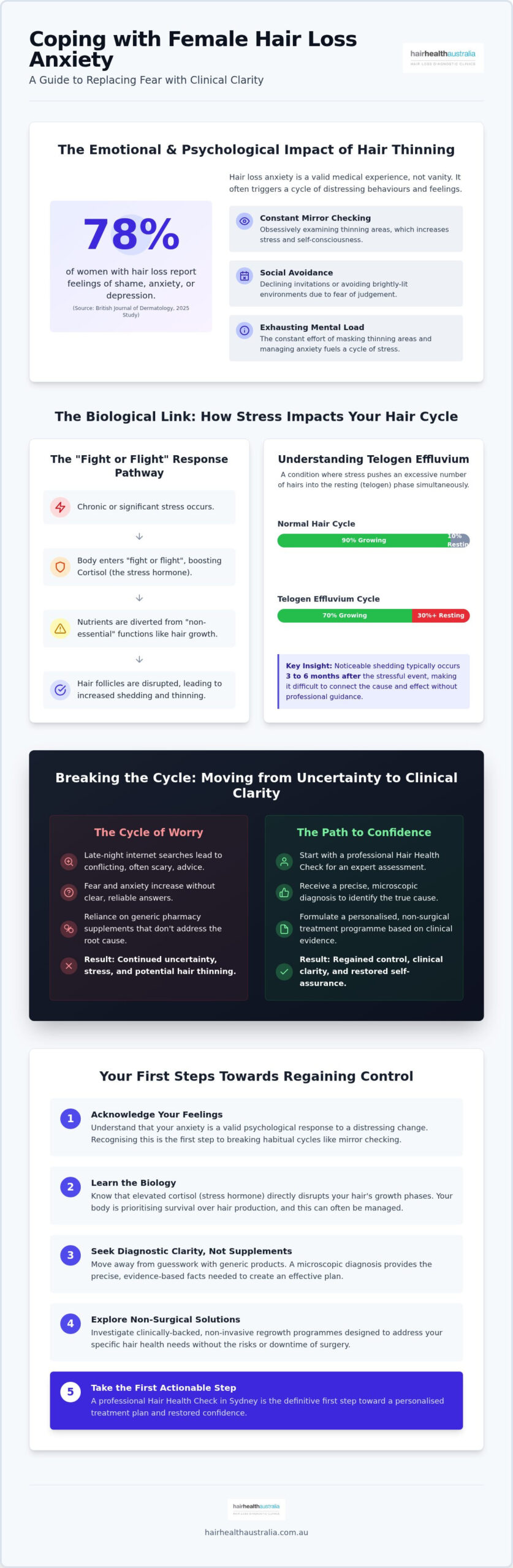
Did you know that a 2025 study published in the British Journal of Dermatology found that 78% of women experiencing hair loss also struggle with feelings of shame, anxiety, and depression? It’s a heavy burden to carry, particularly when you feel as though your identity is thinning away alongside your hair. You aren’t just concerned about the physical change; you’re likely feeling the weight of social judgement and the exhaustion of sorting through conflicting online advice.
We understand that this uncertainty is often more painful than the hair loss itself. This guide is designed to help you start coping with female hair loss anxiety by replacing fear with clinical clarity. You’ll learn how to break the cycle of stress induced thinning and regain your confidence through professional support and a clear, evidence based path forward. We will examine the biological connection between cortisol and your scalp, explain the importance of a microscopic diagnosis, and provide a structured, non-surgical plan to help you feel heard and supported by experts who prioritise your results.
Key Takeaways
- Understand why social avoidance and constant mirror checking are common psychological responses to thinning and how to break these habitual cycles.
- Learn how the body’s “fight or flight” response elevates cortisol levels, which can directly disrupt your natural hair growth phases and lead to further thinning.
- Discover how to start coping with female hair loss anxiety by moving away from generic pharmacy supplements toward precise, microscopic diagnostic clarity.
- Explore non-surgical, clinically-backed regrowth programs designed to address your specific hair health needs without the risks or downtime of invasive surgery.
- Find out how a professional Hair Health Check in Sydney serves as the first step toward a personalised treatment plan and restored self-assurance.
The Emotional Impact: Why Hair Loss Anxiety is a Valid Experience
In Australia, our culture often links hair health to vitality and personal confidence. Whether it’s the relaxed beach lifestyle or the high-pressure corporate environments in Sydney, your hair is frequently a core part of your self-expression. When thinning begins, the emotional response is rarely just about vanity; it’s a visceral sense of losing a piece of your identity. You might find yourself obsessively counting strands on your hairbrush or checking the bathroom floor every morning. These actions aren’t “vain”. They are natural responses to a perceived threat. Acknowledging that this distress is valid is a vital component of coping with female hair loss anxiety.
This emotional weight often triggers a cycle of social avoidance and “mirror checking”. You might find yourself avoiding bright outdoor events or opting out of social gatherings because you’re worried about how your scalp looks under certain lights. This withdrawal doesn’t just affect your social life; it can erode your professional confidence and strain personal relationships. Seeking help isn’t a cause for embarrassment or a sign of weakness. Instead, it’s a sign of strength and a proactive step toward regaining control. It’s about moving from a state of passive worry to one of informed, clinical action.
Recognising the Signs of Hair-Related Stress
The stress of thinning hair often shows up physically before you realise you’re anxious. You might experience tension headaches, shoulder tightness, or a racing heart during your morning grooming routine. Socially, this often leads to “hiding” behaviours, such as wearing hats or constantly adjusting your style to mask thinning areas. This mental load of maintaining an appearance can be exhausting, further fueling the cycle of stress and potential hair shedding.
The “Unknown” Factor: Why Not Knowing is the Hardest Part
Much of the panic surrounding Pattern hair loss stems from a lack of clear answers. Late-night internet searches often result in conflicting advice that increases your fear. Obtaining a professional diagnosis through a Hair Health Check provides the clinical clarity needed to stop the cycle of “Google-doctoring”. Taking this step is the most effective way of coping with female hair loss anxiety because it replaces uncertainty with evidence-based facts.
The Biological Link: How Stress and Cortisol Affect Your Hair Cycle
The human body is designed to prioritise survival over aesthetics. When you experience significant or prolonged stress, your system enters a “fight or flight” state, redirecting nutrients and energy toward vital organs like the heart and lungs. This physiological shift means that non-essential functions, such as hair production, are deprioritised. For many women, coping with female hair loss anxiety involves understanding that their thinning is not a random failure of the body, but a biological response to a perceived threat.
The primary driver of this process is cortisol, often referred to as the stress hormone. High levels of cortisol can disrupt the delicate communication between your nervous system and your hair follicles. Clinical research from the National Institutes of Health has demonstrated that stress can lead to hair loss by impacting the stem cells that govern the hair growth cycle. When these stem cells are inhibited, the follicles cannot effectively transition from the resting phase back into the growth phase, resulting in visible thinning over time.
What is Telogen Effluvium?
Telogen Effluvium is a temporary but distressing shedding condition where a high percentage of hair follicles are prematurely pushed into the resting (telogen) phase. Under normal conditions, only about 10% of your hair is in this phase at any given time. However, a major stressful event can force up to 30% or more of your follicles to stop growing simultaneously. Because the telogen phase lasts several months, the actual hair fall typically occurs three to six months after the initial stressor. This delay can make coping with female hair loss anxiety particularly challenging, as the trigger may have already passed by the time the shedding begins. The positive news is that this condition is often reversible once the underlying trigger is addressed and a specialised clinical programme is implemented.
Cortisol: The “Hair Growth Inhibitor”
Chronic stress keeps cortisol levels elevated, which can constrict blood vessels in the scalp and restrict the delivery of essential oxygen and nutrients to the hair bulb. Over time, this nutrient starvation weakens the follicle structure. Identifying these hormonal and biological pathways is a critical step when exploring Female Hair Loss Treatment Sydney Solutions. Rather than relying on generic products, a targeted approach addresses the root cause of the disruption. If you are concerned that stress is impacting your scalp health, a professional Hair Health Check can provide the diagnostic evidence needed to create a personalised recovery plan.
Breaking the Cycle: Moving from Uncertainty to Clinical Clarity
While a visit to a hairdresser can offer temporary cosmetic relief, it rarely addresses the underlying physiological triggers of thinning. Many women spend significant amounts on “one-size-fits-all” pharmacy supplements or salon-grade shampoos without seeing measurable results. This trial-and-error approach often deepens the emotional toll because it fails to provide a definitive answer. A more effective strategy for coping with female hair loss anxiety involves transitioning from guesswork to clinical data. By establishing a professional baseline, you move from a state of panic into a structured, manageable recovery process.
The power of data cannot be understated. Seeing your follicles under high-definition magnification changes your perspective immediately. It shifts the narrative from a vague fear of “going bald” to a specific understanding of your scalp’s current health. As established in clinical research regarding How Stress Causes Hair Loss, the biological impact on follicles is real and observable. Identifying these changes early allows for a more effective intervention before significant density is lost.
The Role of Microscopic Hair Analysis
This is where a professional Hair Health Check becomes invaluable. Using specialised microscopic scanning, experts can examine follicle density and identify signs of miniaturisation that are invisible to the naked eye. This precision allows for an accurate distinction between temporary shedding and progressive thinning. Knowing exactly what is happening beneath the surface provides immediate psychological relief. It transforms an abstract fear into a concrete clinical problem with a specific, actionable solution.
Clinical vs. Surgical: Choosing the Non-Invasive Path
Many women feel wary of invasive surgical procedures, which involve significant downtime and high costs. Modern clinical protocols offer a non-invasive alternative that focuses on stimulating dormant follicles and improving the scalp environment. These programmes represent what many consider the Best Hair Regrowth Treatment Australia 2026 has to offer for those seeking density without surgery. By following a systematic, non-surgical path, you can track tangible progress through follow-up scans. This methodical progression is central to coping with female hair loss anxiety, as it replaces uncertainty with measurable results and professional support.
Practical Coping Strategies for Navigating Thinning Hair
While clinical intervention provides the roadmap for regrowth, your daily routine acts as the essential maintenance that preserves your existing hair density. Managing the physical aspects of thinning requires a shift in how you handle your hair and scalp. By adopting a gentle approach, you can reduce mechanical breakage and create an environment where new growth can thrive. This proactive management is a powerful tool for coping with female hair loss anxiety, as it moves you from a state of worry into a state of intentional care.
Setting realistic expectations is equally vital. Hair grows at an average rate of only one centimetre per month, meaning visible results from any clinical programme take time to manifest. Patience is a clinical requirement, not just a virtue. Understanding this timeline helps prevent the frustration that often fuels the anxiety cycle. By focusing on the incremental improvements in scalp health, you can maintain the motivation needed for long-term success.
Daily Habits for Scalp Health
Emotional Resilience Techniques
The psychological side of coping with female hair loss anxiety involves managing the cortisol spikes that disrupt the hair growth cycle. Mindfulness and controlled breathing exercises have been clinically shown to lower systemic stress levels, protecting your follicles from further hormonal disruption. It’s also helpful to connect with a support network or professional counsellor who understands the specific challenges of thinning hair. Sharing your experience reduces the sense of isolation and provides a space for mutual encouragement. Focusing on what you can control, such as your clinical treatment plan and daily health habits, helps shift your mindset from fear to empowerment. If you’re ready to start a structured recovery, the first step is to book a Hair Health Check to assess your current scalp condition and follicular viability.
Restoring Confidence with a Hair Health Check in Sydney
Taking the final step toward recovery involves moving beyond self-diagnosis and into a professional clinical environment. For many women, the most challenging part of coping with female hair loss anxiety is the feeling of being stuck in a cycle of observation without intervention. Our Sydney clinic is designed to bridge this gap, providing a space where medical authority meets empathetic care. We focus on providing you with a definitive understanding of your scalp health, which serves as the foundation for all future progress.
A Hair Health Check is not a standard salon consultation; it is a systematic diagnostic process. We use advanced microscopic hair analysis to look past the visible thinning and examine the health of your follicles at a cellular level. This allows us to determine if your hair loss is related to stress, genetics, or nutritional deficiencies. Early intervention is statistically proven to yield better results, as it is far more effective to preserve and strengthen existing follicles than to wait until they have reached an advanced state of miniaturisation.
Your Journey at Hair Health Australia
Your experience begins in a private, welcoming environment where your concerns are heard and validated. The process is methodical and transparent, ensuring you understand every stage of your recovery. Our journey includes several key milestones:
- A thorough review of your health history and current lifestyle stressors.
- A microscopic scalp analysis to assess hair density and follicle viability.
- The development of a bespoke, non-surgical regrowth protocol tailored to your specific needs.
- Ongoing monitoring and support to track your progress and adjust the treatment as your hair health improves.
This structured approach ensures you are never left wondering if your treatment is working. We provide the data and visual evidence to prove your progress, which is essential for maintaining peace of mind.
Book Your Clinical Assessment Today
Prioritising your hair health today is the most effective way to secure your confidence for the future. Our non-surgical programs are designed for long-term density and scalp resilience, allowing you to avoid the risks and recovery time associated with invasive surgery. If you are ready to stop the cycle of worry and start your recovery, we invite you to Book your comprehensive Hair Health Check in Sydney today. Taking this clinical step is the ultimate strategy for coping with female hair loss anxiety because it replaces fear with a clear, professional path forward.
Regain Confidence Through Clinical Clarity
The path toward coping with female hair loss anxiety begins by moving from the unknown into a state of evidence-based understanding. We have explored how the biological impact of cortisol can disrupt your growth cycle and why a professional diagnosis is far more effective than generic pharmacy solutions. By identifying the root cause of your thinning, you replace fear with a structured, actionable recovery protocol.
As Sydney-based non-surgical regrowth specialists, we provide the precision needed to restore both your hair density and your peace of mind. Our personalised microscopic scalp analysis offers a clear view of your follicular health, ensuring your treatment plan is tailored specifically to your biology. You don’t have to navigate this journey alone or rely on guesswork. We invite you to Book your professional Hair Health Check at our Sydney clinic today. Taking this first clinical step is the most powerful way to reclaim your identity and look forward to a future of healthy, resilient hair. You deserve to feel heard, supported, and confident in your results.
Frequently Asked Questions
Can anxiety actually cause my hair to fall out?
Yes, high levels of systemic stress can directly trigger a condition called Telogen Effluvium. When you experience prolonged anxiety, your body releases cortisol, which can prematurely push hair follicles into a resting phase. This biological shift results in noticeable shedding approximately three months after the stressful period. Understanding this connection is a vital part of coping with female hair loss anxiety, as it confirms that the physical symptoms have a clear, identifiable cause.
Is stress-related hair loss in women permanent?
Stress-induced hair loss is typically temporary and reversible once the underlying trigger is managed. Conditions like Telogen Effluvium usually resolve within six to nine months as the follicles return to their active growth phase. However, if chronic stress is left unaddressed, it can accelerate existing conditions like androgenetic alopecia. Seeking a professional clinical assessment early ensures that your hair density is preserved while your body recovers from the physiological impact of stress.
How do I tell the difference between normal shedding and anxiety-related loss?
Normal shedding typically involves losing between 50 and 100 strands per day as part of the natural hair cycle. Anxiety-related loss is often more abrupt, with hair coming out in larger clumps during brushing or washing. You might also notice a diffuse thinning across the entire scalp rather than in one specific area. If you’re concerned about the volume of hair fall, a microscopic analysis can provide a definitive comparison against healthy density levels.
What is the best treatment for female hair loss caused by stress?
The most effective approach involves a combination of stress management and targeted clinical therapy. Non-surgical regrowth programs focus on revitalising dormant follicles and improving scalp health through evidence-based protocols. Addressing nutritional deficiencies and using clinical-grade topical treatments can also accelerate the recovery process. By focusing on a structured plan, you can start coping with female hair loss anxiety through the confidence that comes from taking proactive, measurable steps toward regrowth.
Should I see a doctor or a trichologist for my hair loss anxiety?
It’s often beneficial to consult both for a comprehensive overview. A GP can rule out underlying medical issues like iron deficiency or thyroid imbalances through blood tests. A trichologist or hair loss specialist provides the diagnostic precision needed to assess follicle viability and scalp health. At our Sydney clinic, we focus on non-surgical regrowth programs that complement medical advice, providing a dedicated path for those specifically concerned with hair density and scalp recovery.
How long does it take for hair to grow back after a stressful period?
You can generally expect to see initial stability within three to four months after the stressor has been addressed. Because hair grows at a rate of approximately one centimetre per month, significant changes in density usually take six to twelve months to become visible. This timeline requires patience and consistent adherence to your clinical protocol. Tracking your progress through professional microscopic scans helps maintain motivation by showing incremental improvements that aren’t yet visible to the naked eye.
Are there non-surgical options for female hair thinning in Sydney?
Sydney offers several advanced non-surgical options for women, ranging from clinical-grade topical therapies to specialised regrowth programs. These treatments focus on stimulating the scalp and follicles without the need for invasive surgery or long recovery times. At Hair Health Australia, we specialise in these non-invasive protocols, providing Sydney residents with access to microscopic diagnostics and personalised care plans. These options are designed to be discreet, effective, and easily integrated into your existing daily routine.
Can microscopic hair analysis help with my anxiety?
Diagnostic clarity is one of the most effective tools for reducing the panic associated with thinning hair. Microscopic analysis allows you to see the actual state of your follicles and scalp health in high definition, removing the “guesswork” that fuels uncertainty. When you have a clear clinical picture of your condition, the abstract fear of hair loss is replaced by a concrete understanding of the problem. This clarity is a cornerstone of a successful recovery journey.