PCOS Hair Loss Treatment Australia: The 2026 Clinical Recovery Guide

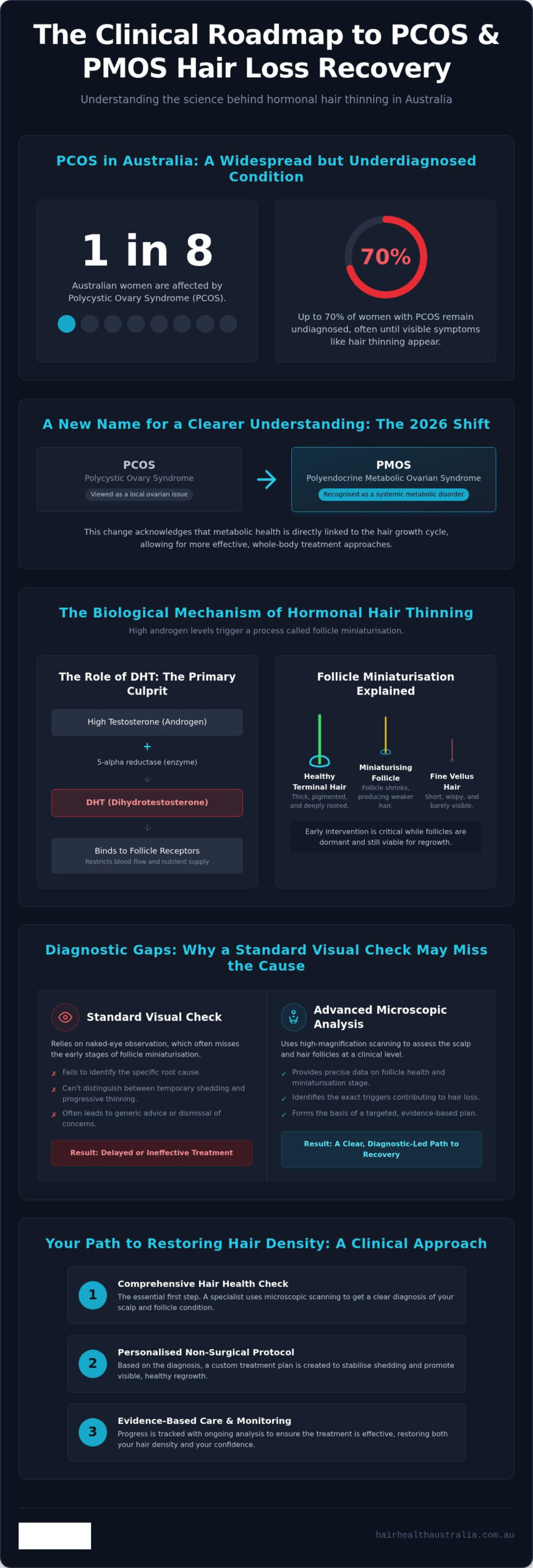
Did you know that while approximately one in eight women in Australia are affected by PCOS, up to 70% remain undiagnosed until symptoms like scalp thinning become impossible to ignore? It’s deeply frustrating when clinical visits focus entirely on fertility, leaving you to manage the emotional weight of a widening part and “unfeminine” hair loss on your own. You’ve likely noticed the 2026 shift toward renaming the condition Polyendocrine Metabolic Ovarian Syndrome (PMOS), a change that finally acknowledges the complex, whole-body nature of your experience.

If you’re seeking a dedicated PCOS hair loss treatment Australia pathway, it’s important to know that follicle miniaturisation doesn’t have to be a permanent fate. We agree that you deserve more than generic advice; you need a strategy grounded in science. This guide provides a clinical recovery roadmap, explaining how specialised non-surgical protocols use advanced microscopic scanning to identify the root cause of thinning. You’ll learn how to stabilise shedding and achieve visible regrowth through evidence-based care that restores both your hair density and your confidence.

Key Takeaways

  • Learn why the 2026 shift to Polyendocrine Metabolic Ovarian Syndrome (PMOS) provides a more accurate clinical framework for addressing hormonal hair thinning.
  • Understand the biological role of DHT in follicle miniaturisation and why high androgens can cause both hirsutism and scalp hair loss.
  • Discover the limitations of standard visual checks and why microscopic analysis is essential for identifying the root cause of your thinning.
  • Identify effective, non-surgical PCOS hair loss treatment Australia protocols that stabilise shedding and promote visible regrowth without invasive surgery.
  • Learn how a comprehensive Hair Health Check at a specialised Sydney centre can provide a clear, diagnostic-led path toward restoring your hair density.

Understanding PCOS and PMOS Hair Loss in the Australian Context

Approximately one in eight Australian women live with the hormonal complexities of Polycystic Ovary Syndrome. While much of the medical conversation typically focuses on insulin resistance or fertility, the visible thinning of the scalp often causes the most significant emotional distress. This isn’t just “hair fall” or a temporary shedding phase; it’s a clinical process where follicles gradually shrink, leading to a loss of overall density. Feeling “unfeminine” due to these changes is a common and valid response, especially when you feel your concerns aren’t being prioritised by general health practitioners.

The 2026 Shift: From PCOS to PMOS

In May 2026, Australian researchers spearheaded a move to rename the condition Polyendocrine metabolic ovarian syndrome (PMOS). This shift acknowledges that the syndrome is a systemic metabolic disorder rather than a local ovarian issue. For those seeking PCOS hair loss treatment Australia, this change is vital because it highlights how metabolic health directly influences hair growth cycles. PMOS-related hair loss is a progressive androgenetic condition. By viewing it through this clinical lens, we can move beyond surface-level remedies and address the specific hormonal triggers that cause follicles to miniaturise over time.

The Sydney Lifestyle and Your Hair

Living in Sydney introduces unique environmental stressors that can complicate hormonal thinning. High UV levels can damage the scalp’s protective barrier, while the mineral content and chlorine in local water supplies often leave hair brittle and prone to breakage. When you combine these factors with the high-pressure environments of the CBD or North Sydney corporate sectors, cortisol levels often spike, further disrupting your hormonal balance and exacerbating shedding.

Many women find that their local GP focuses primarily on blood sugar or cycles, often dismissing hair thinning as a secondary concern. However, waiting too long can allow follicle miniaturisation to advance to a point where regrowth is more difficult. If you’ve noticed a widening part or a smaller ponytail, it’s time to move beyond the pharmacy aisle. A specialised Hair Health Check at our Sydney centre provides the microscopic evidence needed to distinguish between temporary shedding and permanent loss. This ensures your PCOS hair loss treatment Australia is based on precise data rather than guesswork.

The Biological Mechanism: How Androgens Trigger Follicle Miniaturisation

Many women experience a confusing biological contradiction: they notice excess hair growth on the face or body while simultaneously losing volume on the scalp. This is known as the Androgen Paradox. In the context of Polyendocrine Metabolic Ovarian Syndrome, the body produces elevated levels of androgens like testosterone. While these hormones stimulate follicles on the body, they have the opposite effect on the scalp. This leads to scalp hair thinning that can feel rapid and difficult to control without clinical intervention.

The primary driver of this thinning is Dihydrotestosterone (DHT). An enzyme called 5-alpha reductase converts testosterone into DHT, which then binds to receptors in the hair follicles. This binding action effectively chokes the follicle, reducing its blood supply and nutrient intake. Over time, the follicle loses its ability to produce thick, healthy hair, leading to the characteristic thinning seen in hormonal conditions.

Follicle Miniaturisation Explained

Miniaturisation describes the technical transition of your hair from “terminal” hairs, which are thick and deeply rooted, to “vellus” hairs. Vellus hairs are short, wispy, and lack the pigment of your original hair. A widening part line or a visible scalp under bright lights is often the first clinical sign that this process is underway. Follicles can remain in a dormant state for several years, during which they are still viable for regrowth. However, once a follicle has been inactive for too long, it can close permanently and be replaced by scar tissue, making any PCOS hair loss treatment Australia protocol significantly less effective.

Hormonal Triggers Beyond Genetics

Insulin resistance, a hallmark of PMOS, significantly accelerates hair loss by lowering Sex Hormone Binding Globulin (SHBG). When SHBG levels are low, more “free” testosterone circulates in the blood, providing more fuel for DHT conversion. Chronic inflammation further complicates this by stressing the scalp environment and disrupting the natural growth cycle. Blood tests often show ‘normal’ hormone levels despite active scalp thinning. This occurs because your follicles may be hypersensitive to androgens even if your systemic hormone levels fall within a standard laboratory range.

Identifying these hidden triggers is essential for stopping the progression of thinning. To move beyond guesswork and see the actual state of your follicles, a professional Hair Health Check is the most reliable way to determine if your follicles are dormant or permanently closed.

Diagnostic Gaps: Why a Standard Visual Check May Miss the Root Cause

GP visits for hormonal concerns often focus on the Rotterdam criteria, which prioritise ovulation patterns and androgen levels. While these are vital for your general health, this diagnostic path rarely includes a detailed assessment of scalp health. A visual check by a doctor or hairdresser might confirm that thinning is present, but it cannot determine the specific rate of follicle miniaturisation. This is a critical gap for anyone seeking PCOS hair loss treatment Australia, as surface-level observations don’t distinguish between temporary lifestyle-related shedding and androgen-driven follicle death.

Blood tests also present a common hurdle for many women. You might be told your hormone levels are “within the normal range,” yet you’re still losing significant volume. This occurs because follicles can be hypersensitive to even low levels of DHT, a factor a standard pathology report doesn’t measure. Without deeper data, you’re left guessing while your hair density continues to decline. Clinical data is the only way to move beyond these limitations and establish exactly why your hair is thinning.

The Value of Microscopic Hair Analysis

Clinical microscopic analysis bridges the gap between general symptoms and a specific diagnosis. By examining the scalp at 200x magnification, we can see precisely what’s happening at the follicle level. This technology allows us to identify sebum blockages, scalp inflammation, and the percentage of hairs currently in the telogen phase. Detecting early-stage miniaturisation before it’s visible to the naked eye is the only way to intervene effectively. If you’re ready for a scientific assessment of your scalp, you should Book your Hair Health Check to get a clear, data-driven picture of your hair health.

Standardised Clinical Baseline

Establishing a clinical baseline is essential for a successful recovery. We use follicle mapping and high-resolution clinical photography to track your progress objectively over time. Unlike a sales-led consultation that might push generic products, a diagnostic report focuses on verifiable data. This microscopic information allows us to customise your PCOS hair loss treatment Australia protocol, ensuring we target the specific triggers identified during your scan. By comparing follow-up scans against your baseline, we can verify that shedding has stabilised and regrowth is occurring. This methodical approach replaces uncertainty with evidence-based results.
PCOS Hair Loss Treatment Australia: The 2026 Clinical Recovery Guide

Clinical Non-Surgical Protocols for Restoring Hair Density

Many women start their recovery journey with “anti-hair-loss” shampoos or serums from the local chemist. While these products might improve the external texture of the hair, they rarely provide a genuine PCOS hair loss treatment Australia solution because they don’t address the underlying hormonal triggers. Minoxidil is another common recommendation, but as a standalone stimulant, it acts merely as a vasodilator. It increases blood flow to the follicle but does nothing to block the DHT binding that causes miniaturisation. To achieve lasting results, you need a protocol that targets the biological root cause while simultaneously stimulating the growth cycle.

Effective clinical recovery requires a multi-modal approach. This involves combining high-strength stimulants with specialised protocols designed to optimise scalp health and reduce follicular inflammation. By treating the scalp environment and the follicle simultaneously, we can achieve significant density restoration. This non-surgical approach is particularly beneficial for women with PMOS, as it provides a sustainable way to manage a chronic hormonal condition without the risks or downtime associated with invasive procedures.

Clinical Stimulants vs. DIY Vitamins

While Biotin and Zinc are often marketed as miracle cures, they are merely support players in a clinical recovery plan. They provide the raw materials for hair growth but cannot restart a dormant follicle on their own. In a controlled clinical environment, we use specialised delivery systems to ensure active ingredients reach the follicle base where they are needed most. This precision is what differentiates a clinical programme from a generic supplement routine. For a deeper look at contemporary options, you can consult our Best Hair Regrowth Treatment Australia 2026 reference guide.

Timeline for Regrowth

Consistency is the most critical factor when managing a metabolic condition like PMOS. During the first 90 days of a clinical programme, the primary goal is to stabilise excessive shedding and improve the quality of the existing hair. You might not see significant new length immediately, but microscopic analysis often reveals the emergence of stronger, pigmented hairs during this phase. We monitor these changes closely, adjusting your PCOS hair loss treatment Australia protocol based on how your follicles respond to stimulation. This ensures your recovery remains on track as your hormonal balance stabilises.

If you’re ready to move beyond DIY supplements and start a scientifically-backed recovery, your first step is to schedule a Hair Health Check to assess your current regrowth potential.

Personalised Recovery at Our Sydney Clinic: The Hair Health Check

Your path to regrowth starts with a structured, four-step clinical pathway at our Sydney centre. We don’t believe in a one-size-fits-all approach because your hormonal profile and lifestyle are unique. The first step is our comprehensive Hair Health Check, which uses high-resolution microscopic scanning to provide the data we need to move forward. We then move into a detailed analysis of your hormonal history, looking at how PMOS and specific lifestyle stressors like Sydney’s high-pressure corporate environments or environmental factors are impacting your hair density.

Once we’ve gathered this data, we develop a tailored, non-invasive regrowth roadmap. This plan is designed to target the specific triggers we’ve identified, using multi-modal therapies to stabilise shedding and stimulate dormant follicles. Recovery isn’t a one-off event; it’s a process. That’s why the final step involves ongoing clinical support and progress monitoring. We use follow-up scans to verify that your PCOS hair loss treatment Australia protocol is working, making adjustments as your scalp health improves and your follicles respond to the stimulation.

Why Sydney Women Choose Hair Health Australia

Women across Sydney trust our clinic because we provide a straight-talking, clinical environment where results are prioritised over marketing hype. We understand that hormonal thinning can make you feel vulnerable, so we focus on providing evidence-based information that builds confidence. Our non-surgical environment is dedicated to long-term health, ensuring you have a sustainable way to manage your hair density without the need for invasive surgery. For those wanting to compare clinical options, our Hair Loss Treatment for Women: The 2026 Australian Clinical Buying Guide offers an essential reference for making an informed decision.

Take Control of Your Hair Journey Today

Early clinical intervention is the single most important factor in successfully managing PMOS-related thinning. The longer you wait, the more follicles may transition from a dormant state to permanent closure. By organising an initial diagnostic consultation in Sydney, you’re taking the first step toward reclaiming your density. We’re here to guide you through every stage of the process with transparency and expertise. Remember, thinning hair doesn’t have to be your permanent reality; with the right PCOS hair loss treatment Australia plan, you can restore both your hair and your sense of self.

Reclaiming Your Hair Density and Confidence

Stabilising the effects of Polyendocrine Metabolic Ovarian Syndrome (PMOS) requires a shift from cosmetic guesswork to clinical precision. You’ve seen how androgen-driven follicle miniaturisation works and why standard visual checks often fail to provide the full picture. By choosing a diagnostic-led path, you can address the root cause of thinning before follicles close permanently. Our Sydney-based team brings over 15 years of experience to every consultation, utilising advanced microscopic scanning technology to create a personalised roadmap for your recovery.

Finding the right PCOS hair loss treatment Australia is about replacing frustration with a clear, scientific plan. You don’t have to navigate this journey alone or settle for generic advice that ignores the complexities of your hormonal health. Take the first step toward visible regrowth by identifying the current state of your scalp health with a specialised non-surgical regrowth specialist who understands the unique challenges of female pattern thinning.

Book Your Comprehensive Hair Health Check in Sydney Today

Your hair health is a vital part of your overall wellbeing, and with the right clinical support, a fuller, healthier head of hair is a realistic and achievable goal.

Frequently Asked Questions

Can PCOS hair loss be reversed completely with clinical treatment?

Reversing hair thinning is possible if the follicles are in a dormant state rather than permanently closed. Success depends heavily on the stage of miniaturisation at the time of diagnosis. While we can’t “cure” the underlying hormonal condition, a specialised PCOS hair loss treatment Australia protocol can stabilise shedding and restore visible density. The key is early intervention to ensure we’re working with viable follicles before they transition into permanent scar tissue.

What is the difference between PCOS and PMOS in 2026?

The 2026 transition to Polyendocrine Metabolic Ovarian Syndrome (PMOS) reflects a more accurate understanding of the condition as a systemic metabolic disorder. While PCOS focused on the ovaries, PMOS acknowledges the complex interplay between insulin resistance and androgen levels that affects the whole body. For your hair, this means we must look beyond local scalp treatments and consider how your metabolic health is driving the miniaturisation of your hair follicles.

How much does a professional PCOS hair loss treatment cost in Sydney?

The investment required for recovery is highly individualised, as it depends on the extent of follicle miniaturisation and the specific therapies required for your scalp. Because each protocol is tailored to your unique hormonal profile, we don’t offer fixed pricing packages. The most effective way to understand your requirements is through an initial diagnostic scan. This allows us to provide a transparent overview of the clinical steps needed for your specific recovery.

Is minoxidil safe for women with hormonal thinning?

Minoxidil is TGA-approved and safe for many women, but it’s rarely effective as a standalone solution for hormonal thinning. It acts as a vasodilator to increase blood flow, yet it fails to address the DHT that causes follicles to shrink. In a clinical environment, we often use it as one component of a larger multi-modal strategy. This ensures we’re stimulating the growth cycle while simultaneously managing the hormonal triggers at the follicle level.

How do I know if my hair loss is caused by PCOS or just stress?

Stress typically causes a temporary shedding phase known as telogen effluvium, where hair falls out in large amounts but eventually returns. In contrast, PCOS-related loss is progressive and involves the gradual thinning of individual strands. A professional PCOS hair loss treatment Australia assessment uses microscopic analysis to identify miniaturised hairs. This data allows us to distinguish between a temporary reaction to stress and the permanent follicle changes associated with hormonal imbalances.

Will my hair grow back if I manage my insulin resistance?

Improving insulin sensitivity is a vital foundation for recovery because it helps lower the “free” testosterone that converts into DHT. However, while metabolic management stops further damage, it rarely restarts growth in follicles that have already begun to miniaturise. To see visible regrowth, you typically need clinical stimulation to push follicles back into the growth phase while your improved metabolic health provides a stable environment for those new hairs to thrive.

Are non-surgical clinical treatments for hair loss painful?

Non-surgical clinical treatments are entirely non-invasive and generally described as comfortable or even relaxing. We prioritise protocols that avoid the pain, risks, and lengthy recovery times associated with surgical procedures. Our therapies focus on topical stimulants, scalp health optimisation, and advanced light-based technology. Most women find they can return to their daily Sydney routine immediately after a session, making it a sustainable way to manage hair density over the long term.

How long does a Hair Health Check take at the Sydney clinic?

A thorough Hair Health Check at our Sydney centre generally takes between 45 and 60 minutes to complete. This timeframe ensures we can perform a detailed microscopic analysis of your scalp and map your follicle density accurately. We also use this time to review your hormonal history and explain the findings of your scan. You’ll receive a clear, evidence-based report that outlines the exact state of your follicles and your potential for regrowth.
PCOS Hair Loss Treatment Sydney:

What if the “hormone balance” supplements you’ve been taking are only addressing half of your symptoms? While managing internal health is vital, finding an effective PCOS hair loss treatment Sydney specialists provide requires looking beyond generic advice and focusing on the clinical health of the hair follicle itself. It’s deeply frustrating to be told to “just wait” for your hormones to level out while you watch your part line widen or notice visible thinning at the crown. We recognise that the anxiety of hair loss is often the most distressing part of the PCOS journey, and you deserve more than a standard recommendation.

We understand the frustration of trying every supplement on the shelf without seeing a change in your hair density. This guide provides a clear clinical path to identify whether you’re experiencing temporary shedding or permanent follicle miniaturisation. You’ll discover how non-surgical, evidence-based protocols can be integrated into a busy Sydney lifestyle to stop thinning and encourage regrowth. We’ll move through the diagnostic process and into the specific treatments that help you regain visible thickness and long-term scalp health.

Key Takeaways

  • Identify the specific biological triggers, such as DHT, that cause hair follicle miniaturisation and shorten the natural growth cycle.
  • Learn why a microscopic hair analysis is the clinical gold standard for distinguishing between temporary shedding and permanent thinning.
  • Discover how a non-invasive PCOS hair loss treatment Sydney programme focuses on direct follicle rehabilitation to restore visible hair density.
  • Understand the benefits of a customised, medical-grade plan that integrates seamlessly into a busy lifestyle without the need for surgery.

Understanding PCOS Hair Loss in Sydney: Why Thinning Occurs

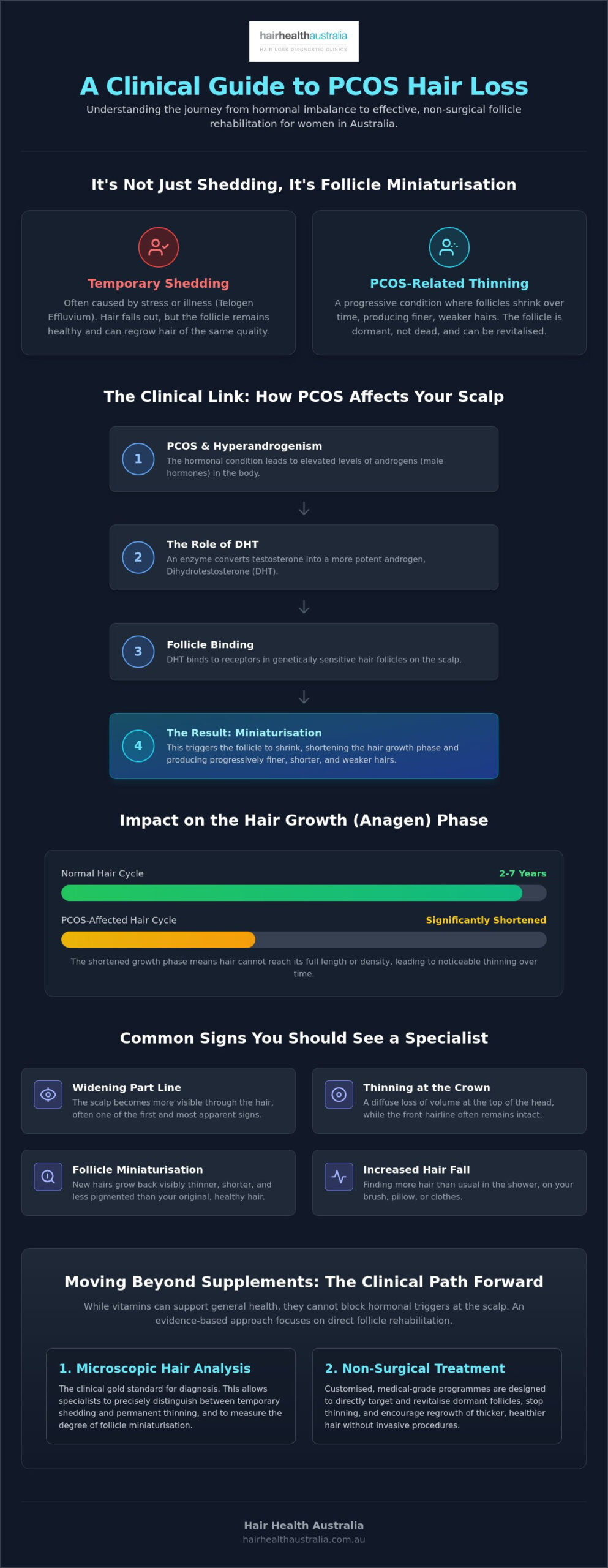
Polycystic Ovary Syndrome is a complex hormonal condition that affects many women across Australia. While symptoms like irregular cycles or acne are frequently discussed, the impact on hair density is often the most distressing. Clinically, this is referred to as female pattern hair loss or androgenetic alopecia. For those seeking a PCOS hair loss treatment Sydney clinic, it’s essential to understand that this isn’t a simple case of temporary shedding. Instead, it’s a progressive condition where elevated androgens, specifically dihydrotestosterone (DHT), cause hair follicles to gradually shrink.

Many women first notice an increase in “shedding”—the literal falling out of hair strands in the shower or on a hairbrush. While a certain amount of daily loss is normal, PCOS triggers a shift in the hair growth cycle. Unlike temporary telogen effluvium, which might follow a stressful event or illness, PCOS-related thinning is persistent. The good news for patients is that this form of hair loss is non-scarring. This means the hair follicles remain intact and alive; they’ve simply become dormant or produce much finer, “vellus” hairs. Because the follicles aren’t permanently damaged, they can often be revitalised with the right clinical intervention.

The Emotional Impact of PCOS Thinning

Understanding Polycystic Ovary Syndrome (PCOS) involves recognising that the physical symptoms carry a heavy emotional weight. Losing hair can feel like losing a part of your identity, often leading to a significant drop in self-confidence. We believe in normalising the conversation around female hormonal thinning. It’s not something you have to “just live with.” Early intervention at a specialised centre is vital because the sooner we address follicle miniaturisation, the more successful we are at restoring visible density and stopping the progression.

Common Signs You Should See a Specialist

Identifying the early markers of hormonal thinning allows for a more effective treatment plan. You should consider a professional assessment if you notice:

  • Widening of the part line: This is often the most visible early sign as the scalp becomes more apparent through the hair.
  • Thinning at the crown: While the front hairline usually stays intact, the top of the head may show a diffuse loss of volume.
  • Follicle Miniaturisation: You might notice that new hairs growing back are thinner, shorter, and lack the pigment of your original hair.
  • Increased hair fall: Finding more hair than usual on your clothes, pillow, or in the bathroom sink.

If these signs sound familiar, seeking a dedicated PCOS hair loss treatment Sydney specialist can provide the clarity you need to move forward with confidence.

The biological mechanism behind thinning in women with Polycystic Ovary Syndrome is primarily driven by hyperandrogenism. While high levels of circulating androgens are a hallmark of the condition, it’s the conversion of testosterone into dihydrotestosterone (DHT) that directly impacts the scalp. DHT binds to receptors in the hair follicles, triggering a process known as miniaturisation. In plain terms, the follicle begins to shrink. Each subsequent hair produced is finer, shorter, and less deeply rooted than the last. Eventually, the follicle becomes so small it produces only barely visible “peach fuzz” or stops producing hair altogether.

This process significantly disrupts the “anagen” or growth phase of the hair cycle. Normally, a hair grows for several years before resting and falling out. Under the influence of excess androgens, this growth window is drastically shortened. This is why many women seeking PCOS hair loss treatment Sydney specialists provide notice that their hair simply doesn’t seem to grow past a certain length anymore. If you’ve noticed your ponytail feels thinner or your scalp is becoming more visible, it’s likely that this cycle disruption is already underway.

Many patients initially try over-the-counter hair vitamins or general supplements. While these may support hair health if you have a deficiency, they lack the clinical strength to block the hormonal triggers at the scalp level. Managing the internal environment is only half the battle; the follicles themselves require direct, targeted intervention to reverse the effects of androgen sensitivity. A professional hair health check can help determine exactly how much miniaturisation has occurred and what steps are needed to stop it.

To complement clinical treatments by addressing internal health, you can find out more about ah! fertility nutrition and their approach to supporting the body through nutritional detox and hormonal support.

Androgenetic Alopecia vs. Telogen Effluvium

It’s vital to distinguish between permanent hormonal thinning and temporary shedding. Androgenetic alopecia is the progressive miniaturisation described above. However, the physical and emotional stress of managing Understanding PCOS and Hair Loss can often trigger telogen effluvium, which is a sudden, widespread shedding. PCOS often involves a combination of both, where hormonal triggers and systemic stress work against your hair density. You can read our guide on Telogen Effluvium for more on temporary loss.

Why a GP Diagnosis is Only the First Step

A GP is essential for diagnosing the underlying condition and managing systemic health, but their focus is rarely on the aesthetics of hair regrowth. While they manage your internal hormones, a specialist focusing on PCOS hair loss treatment Sydney provides manages the rehabilitation of the follicle itself. A multi-factored approach ensures you’re treating both the cause and the visible symptom—a strategy supported by health screening services like Bewell that offer diagnostic pathogen testing to monitor internal health. DHT miniaturisation is a slow process of follicle starvation, but as long as the follicle is still producing hair, it remains viable for clinical recovery.

Beyond Blood Tests: The Role of Microscopic Hair Analysis

While a GP’s blood panel is essential for confirming systemic hormonal levels, it doesn’t provide a direct visual of the physiological damage occurring at the scalp. A microscopic hair analysis is the clinical gold standard for women seeking PCOS hair loss treatment Sydney services, as it allows us to see what is happening beneath the surface. This diagnostic tool moves beyond guesswork, providing concrete data on the health of your follicles. It’s the difference between assuming your hair is thinning and knowing exactly how many follicles have been impacted by androgen sensitivity.

Unlike a standard visual inspection by a hair stylist, which relies on subjective observation, microscopic scanning uses high-magnification technology to measure follicle density and hair shaft diameter with mathematical precision. This data is critical because clinical research into PCOS and female pattern hair loss shows that intervention is most effective when we can identify miniaturisation before it becomes visible to the naked eye. The Hair Health Check serves as the foundation for any successful regrowth plan in our Sydney clinic, ensuring we address the specific needs of your scalp environment.

What We Look For During Your Sydney Consultation

During your analysis, we focus on identifying the percentage of follicles currently in the telogen (resting) phase. In a healthy scalp, about 10 to 15 percent of hair is resting; however, PCOS can push this number much higher. We also detect early signs of miniaturisation, where the hair bulb begins to produce thinner, weaker strands. Additionally, we assess the scalp for inflammation or sebum buildup, which are common secondary issues for women with hormonal imbalances that can further hinder healthy growth.

Predicting Your Regrowth Potential

One of the most reassuring aspects of a microscopic scan is its ability to reveal if a follicle is still active or has become dormant. If the follicle is still producing even a very fine hair, there is a high clinical probability that we can revitalise it. We believe in a straight-talking approach to results. By using clinical data rather than guesswork, we can set realistic expectations for what non-surgical treatment can achieve for your specific hair density. This evidence-based starting point ensures your personalised PCOS hair loss treatment Sydney plan is built on a foundation of transparency and scientific accuracy.

PCOS Hair Loss Treatment Sydney:

Non-Surgical PCOS Hair Loss Treatment Protocols

Once the microscopic analysis has mapped the current state of your scalp, the focus shifts to a structured, clinical intervention. The most effective PCOS hair loss treatment Sydney specialists provide involves a multimodal approach that targets the follicle from multiple angles. We don’t rely on a single miracle ingredient. Instead, we implement a regrowth programme that combines clinical-grade topical stimulants with precise follicle rehabilitation. This process is designed to block the local effects of DHT while providing the nutrients required for the hair bulb to produce a thicker, healthier shaft.

These programmes aren’t just about stopping the shed; they’re about actively waking up dormant hairs. When a follicle has been miniaturised by androgens, it often enters an extended resting phase. Clinical stimulation works to trigger the transition back into the anagen, or growth, phase. Consistency is the cornerstone of any successful regrowth programme. Because hair follicles operate on a multi-month cycle, clinical topicals must be applied with disciplined regularity to maintain the biochemical environment necessary for new growth. This methodical approach ensures that the improvements we see under the microscope eventually translate into visible density at the crown and part line.

Customised Clinical Solutions for Women

Retail products found in pharmacies or supermarkets rarely work for complex PCOS cases because they lack the concentration of active ingredients needed to bypass the scalp barrier. It’s also a reality that surgical options like hair transplants are often unsuitable for the diffuse thinning typical of hormonal loss. Our non-invasive therapies focus on restoring your natural hair density by improving both the quantity and quality of the hair. You’ll often notice an improvement in the texture and colour of the new growth as the follicles receive the support they’ve been lacking. If you’re ready to move beyond trial and error, you can book a clinical hair health check to begin your customised protocol.

Maintaining Your Results Long-Term

Sustaining your regrowth requires integrating hair health into your broader PCOS management routine. This isn’t a one and done fix, but rather a commitment to scalp health. Using professional shampoos that maintain a healthy pH balance and clear excess sebum is essential, as hormonal imbalances often lead to increased scalp oiliness. For a deeper look at the clinical options available, our Hair Loss Treatment for Women guide provides detailed insights into the latest evidence-based products. By combining professional clinic-based treatments with the right home-care routine, you can protect your results and enjoy lasting hair confidence.

Personalised Hair Regrowth for Women at Our Sydney Clinic

Our clinic in Redfern serves as a specialised centre for women navigating the complexities of hormonal thinning. We recognise that searching for an effective PCOS hair loss treatment Sydney provider can be an overwhelming process, especially when you’ve been met with generic advice in the past. Our commitment is rooted in providing non-surgical, clinically-backed regrowth protocols within a supportive and empathetic environment. We believe that every woman deserves a clear, scientific explanation for her hair loss, which is why our consultations focus on objective data rather than guesswork.

When you visit our Sydney clinic, you’re entering a space designed for clarity and confidence. We understand the unique challenges PCOS presents, from the metabolic shifts to the emotional toll of visible thinning. Our specialists act as dedicated guides, helping you understand the “why” behind your hair changes before moving into the “how” of your recovery. This methodical approach ensures that you feel fully informed at every stage of your journey. We maintain a high standard of transparency, providing realistic expectations based on the current health of your follicles as seen during your diagnostic scan.

Why Sydney Women Choose Hair Health Australia

Local women choose our Redfern clinic because we prioritise clinical precision and transparent results above all else. Our location is conveniently situated for regular check-ups, making it easy to integrate your hair health into a busy Sydney lifestyle. We’ve helped many women successfully manage the progression of PCOS-related thinning by focusing on follicle rehabilitation. Many of our patients report that finally having a professional, microscopic view of their scalp provided the peace of mind they couldn’t find through online research or general health consultations. Our “no-obligation” diagnostic scans mean you can access this clinical expertise without any immediate pressure, allowing you to make an informed decision about your care.

Your Path to Recovery Starts Here

The journey from noticing a wider part line to seeing visible regrowth is a structured process. It begins with a precise diagnosis to confirm the level of miniaturisation and ends with a customised protocol that fits your specific hormonal profile. While the biological triggers of PCOS are persistent, your hair loss doesn’t have to be. By taking a proactive, evidence-based approach, you can stop the cycle of thinning and begin the process of restoring your hair’s natural density. Taking the first step is often the hardest part, but it’s also the most vital for long-term follicle survival. We invite you to see the difference that a specialised, clinical perspective can make for your hair health.

Book your free Hair Health Check at our Sydney clinic today.

Take Control of Your Hair Health Today

Recognising that PCOS-related thinning is a manageable clinical condition rather than a permanent loss of follicles is the first step toward recovery. By utilising state-of-the-art microscopic diagnostic technology, we move beyond the uncertainty of generic advice to identify exactly how to rehabilitate your hair density. Our specialised PCOS hair loss treatment Sydney protocols are built on over 15 years of clinical experience in Sydney, focusing on non-surgical, evidence-based methods that target the follicle at its source. We prioritise transparency and clinical precision, ensuring you have a clear, data-driven understanding of your regrowth potential before you start any programme.

You don’t have to navigate the complexities of hormonal hair loss alone. With clinically-backed non-surgical regrowth protocols and a dedicated team of specialists, achieving visible improvement in hair density is a realistic outcome. We’re committed to providing a supportive environment where your concerns are addressed with medical authority and empathetic care. Taking action early is the most effective way to protect your follicles and encourage long-term scalp health.

Book Your Free PCOS Hair Health Check in Sydney

We look forward to helping you regain your confidence and restore your hair’s natural strength through systematic, professional care.

Frequently Asked Questions

Can hair lost due to PCOS grow back?

Yes, hair regrowth is often possible because PCOS-related thinning is typically non-scarring. This means the follicles are not dead; they have simply miniaturised and entered a dormant phase due to androgen sensitivity. By using a targeted PCOS hair loss treatment Sydney specialists provide, you can revitalise these follicles. Success depends on the stage of thinning, so identifying miniaturisation early through clinical scanning is vital for restoring visible density.

How is PCOS hair loss different from male pattern baldness?

The primary difference lies in the pattern and progression of the thinning. Men usually experience a receding hairline or a distinct bald spot at the crown. In contrast, women with PCOS typically notice diffuse thinning across the top of the scalp and a widening part line, while the front hairline often remains intact. Both conditions involve DHT, but the female experience is rarely total baldness, making it highly responsive to non-surgical intervention.

Do I need a referral from my Sydney GP to visit your clinic?

No, you do not require a referral from a GP or specialist to book a consultation at our Redfern centre. While we often coordinate with medical professionals to ensure your systemic hormones are managed, you can access our diagnostic tools and treatment protocols directly. We focus specifically on the health of the hair follicle, providing a specialised service that complements the general medical care provided by your regular doctor.

How long does it take to see results from PCOS hair treatment?

Most patients observe a stabilisation of hair shedding within the first three months of a consistent protocol. Visible regrowth and an increase in hair density typically take between six and twelve months to become apparent. This timeline is dictated by the natural hair growth cycle, as it takes time for revitalised follicles to produce new, thicker shafts that are long enough to contribute to your overall hair volume.

Are non-surgical treatments safe for women with PCOS?

Yes, our non-surgical regrowth protocols are safe and designed to work in harmony with your body. These treatments focus on topical follicle stimulation and improving the scalp environment rather than systemic hormonal manipulation. Because we customise every plan to the individual, we ensure your specific hair health requirements are met without interfering with any existing PCOS management strategies or medications you may be using for other symptoms.

Is the microscopic hair analysis painful or invasive?

The analysis is entirely painless and non-invasive. We use a specialised high-magnification lens that gently rests on the surface of your scalp to capture real-time images of your follicles. There are no needles or skin samples required. You’ll be able to see the live results on a monitor, allowing us to explain the health of your hair shafts and the status of your follicles with complete clinical transparency.

Can I treat PCOS hair loss if I am also taking hormonal medication?

Yes, our clinical protocols are frequently used alongside hormonal treatments such as the contraceptive pill or anti-androgens. While those medications work to balance your internal environment, our treatments focus on the local health of the hair follicle. Addressing the issue from both a systemic and a topical level often provides a more comprehensive solution for women seeking a PCOS hair loss treatment Sydney programme that delivers results.

What happens if I ignore the early signs of thinning?

Ignoring the early signs of thinning allows the process of follicle miniaturisation to continue unchecked. Over time, the follicles produce increasingly finer hairs until they eventually become dormant. While we can often revitalise dormant follicles, the process is more straightforward when intervention begins while the hair is still in the early stages of thinning. Early clinical action is the most effective way to protect your existing hair density.