Hair Loss & Baldness: 2026 Clinical Guide for Australians

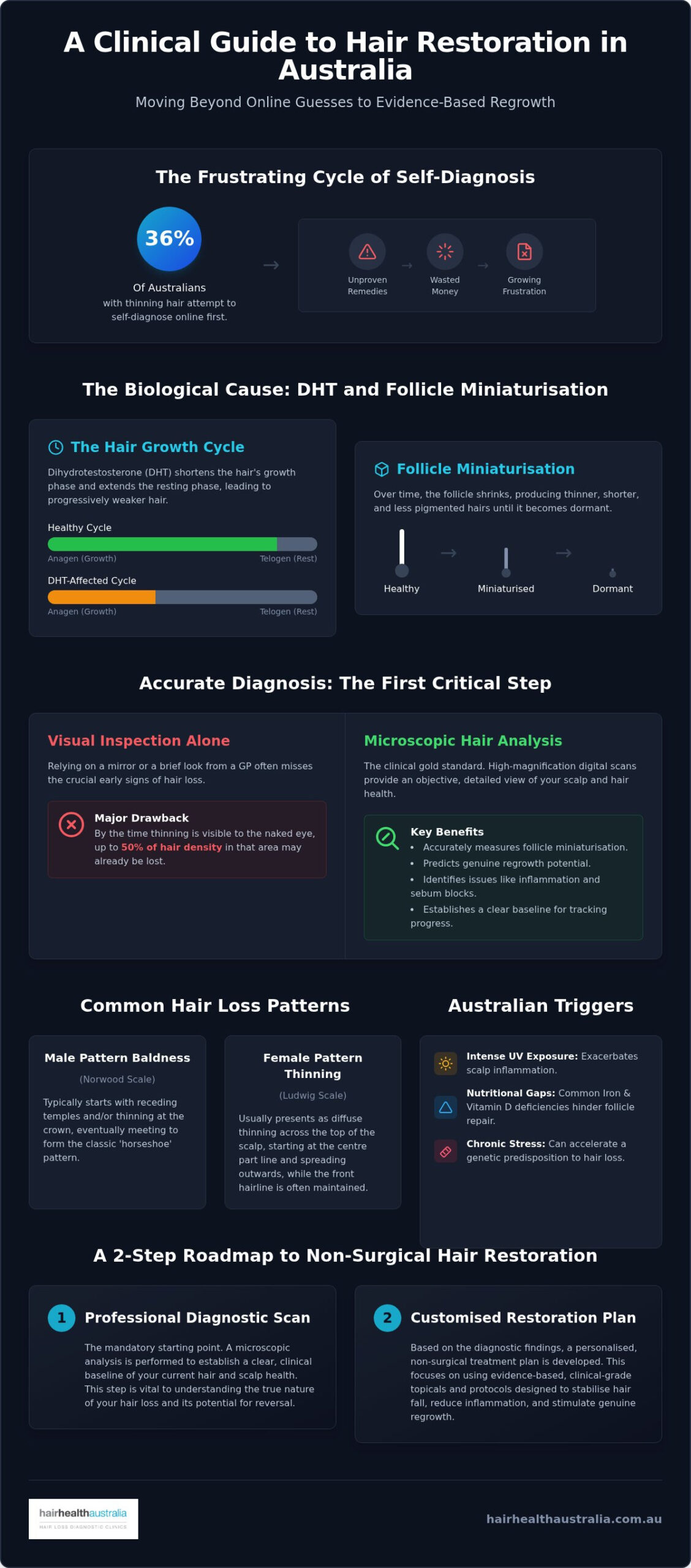
Did you know that roughly 36% of Australians struggling with thinning hair attempt to self-diagnose using online reviews before ever speaking to a professional? It’s a frustrating cycle that often leads to wasted money on unproven remedies and a growing fear that your hair loss might be permanent. If you’ve felt overwhelmed by the sheer volume of conflicting advice, you aren’t alone. Finding an effective hair loss treatment Australia requires moving past the marketing hype and focusing on the biological health of your individual follicles.

This 2026 clinical guide provides the clarity you need to stop thinning and begin a genuine journey toward regrowth. We’ll outline the latest evidence-based treatments and diagnostic techniques that offer a medical-grade alternative to invasive surgery. You’ll discover how a structured restoration plan, supported by a Sydney specialist, can transform your hair density and restore your self-confidence. We’ll examine the most effective non-surgical protocols currently available, ensuring you have the knowledge to make an informed, clinical decision for your long-term hair health.

Key Takeaways

  • Learn why microscopic analysis is the only way to accurately assess follicle health and predict your hair’s genuine regrowth potential.
  • Understand how DHT affects your growth cycle and why a customised hair loss treatment Australia plan is more effective than generic pharmacy options.
  • Discover the critical differences between over-the-counter solutions and clinical-grade topicals designed to stabilise hair fall and reduce inflammation.
  • Identify the two essential steps of a non-surgical restoration roadmap, beginning with a professional diagnostic scan to establish a clear baseline.
  • Recognise the red flags when selecting a Sydney specialist and why transparent, evidence-based care is vital for achieving realistic, long-term results.

Understanding the Biological Mechanisms of Hair Loss and Baldness

The primary driver of thinning for the majority of Australians is Pattern hair loss (androgenetic alopecia). This condition isn’t an overnight occurrence but a progressive biological shift. It’s driven largely by Dihydrotestosterone (DHT), a byproduct of testosterone that binds to receptors in the scalp. When DHT interacts with susceptible follicles, it shortens the growth (anagen) phase and lengthens the resting (telogen) phase. Over time, the follicle undergoes miniaturisation. It produces thinner, shorter, and less pigmented hair until the follicle eventually stops producing visible hair altogether. This process is the core reason why most people eventually seek a professional hair loss treatment Australia.

It’s vital to distinguish this genetic process from temporary shedding, known as Telogen Effluvium. While temporary shedding can look alarming, it’s often a reaction to a specific trigger like illness, extreme weight loss, or surgery. Conversely, permanent thinning requires a structured clinical approach. Many people assume baldness means the follicle is dead. In reality, most cases involve follicles that are dormant or severely miniaturised. This means there is still a window for intervention before the scalp becomes completely smooth and the follicle reaches a point of no return.

Male Pattern Baldness vs. Female Thinning

Men and women experience thinning in distinct ways, often classified by specific medical scales. For men, we use the Norwood Scale to track receding temples and thinning at the crown. Women typically follow the Ludwig Scale, which describes diffuse thinning that begins at the centre part line and spreads outwards while maintaining the front hairline. Regardless of the pattern, early intervention is the most effective way to preserve existing density. To determine where you sit on these scales, a Hair Health Check is the definitive starting point for establishing a clinical baseline. Once a follicle has been inactive for several years, the chance of significant regrowth diminishes.

Environmental and Lifestyle Triggers in Australia

The Australian climate introduces unique challenges for scalp health. Intense UV exposure can damage the scalp’s protective barrier and exacerbate inflammation, which accelerates the thinning process. During clinical consultations in Sydney, we also frequently identify nutritional gaps that hinder hair health. Deficiencies in iron and Vitamin D are common and can prevent the follicle from repairing itself efficiently. Additionally, chronic stress acts as a catalyst. It doesn’t cause genetic hair loss on its own, but it can certainly speed up your genetic predisposition. Addressing these external factors is a cornerstone of any comprehensive hair loss treatment Australia program.

Microscopic Hair Analysis: Why Clinical Diagnosis is Essential

Many Australians begin their journey with a simple visual check in the bathroom mirror. However, by the time thinning is visible to the naked eye, you may have already lost up to 50% of your hair density in that area. Microscopic hair analysis is the gold standard for non-invasive hair loss diagnosis. This diagnostic approach uses high-magnification digital scans to examine the scalp at a level of detail that is impossible to achieve during a standard physical exam. By measuring follicle diameter and hair shaft health, we can accurately predict your genuine regrowth potential before you invest in any specific program.

This level of precision is also critical for identifying secondary issues like sebum crystallisation and scalp inflammation. While there are many common causes of hair loss, these local scalp conditions often act as physical barriers, hindering the absorption of topical clinical solutions. If these barriers aren’t addressed first, even the most advanced hair loss treatment Australia may fail to deliver the expected results. A clinical diagnosis ensures we’re treating the root cause rather than just the symptoms.

Visual Inspection vs. Digital Scanning

A standard GP visit often relies on a brief visual inspection, which can easily miss the early signs of miniaturisation. Digital scanning allows us to compare the thinning areas with your “donor area” at the back of the head, where follicles are typically more resilient. This comparison provides a clear baseline of what your healthy hair density should look like. Because these scans are saved digitally, they allow for objective tracking of your progress over months and years, replacing guesswork with hard data.

The Hair Health Check Process

During a professional Hair Health Check in our Sydney clinic, we perform a comprehensive analysis of your scalp’s current state. We calculate the exact percentage of hairs in the growth (anagen) phase versus the resting (telogen) phase. A healthy scalp usually has about 85% to 90% of hairs in the growth phase. If your data shows a significant shift toward the resting phase, it indicates that your follicles are under stress or DHT influence. This data is then used to create a customised hair loss treatment Australia roadmap for every client. If you’re ready to move past the confusion of online reviews, a professional Hair Health Check is the most reliable way to begin your restoration journey.

Comparing Clinical Hair Loss Treatments vs. Pharmacy Solutions

Many Australians begin their restoration journey at the local chemist, reaching for over-the-counter (OTC) minoxidil. While this is a recognised starting point, using it without professional clinical supervision often leads to disappointing results. Generic pharmacy solutions are frequently mass-produced to a standard concentration. They don’t account for individual scalp sensitivity or the specific stage of your condition. Clinical-grade topicals and DHT blockers, however, are often formulated with advanced penetration enhancers and higher concentrations of active ingredients, allowing them to significantly outperform generic brands.

A comprehensive hair loss treatment Australia relies on more than just a single medication. Clinical programs typically integrate Low-Level Laser Therapy (LLLT) to stimulate cellular repair at the mitochondrial level. LLLT increases the production of adenosine triphosphate (ATP), which provides the energy needed for follicles to transition from the resting phase back into the active growth phase. By combining multiple growth signals, such as LLLT, medical-grade topicals, and nutritional support, clinical programs create a synergistic effect that generic DIY solutions cannot replicate. This is the difference in a professional hair loss treatment Australia.

The Problem with DIY Hair Restoration

The most common reason DIY attempts fail is a lack of scalp preparation. If the scalp is covered in sebum buildup or inflammation, topical treatments cannot reach the follicle effectively. Many Australians also fall into the “shedding phase trap.” This occurs when the treatment begins to work, pushing out old, weak hairs to make room for new, stronger ones. Without clinical guidance, many people interpret this temporary shedding as a sign of failure and quit their program too early. As noted in the MedlinePlus guide to alopecia, understanding the specific type of thinning you are experiencing is vital before starting any regimen. A one-size-fits-all approach inevitably fails to address the unique hormonal profiles and lifestyle triggers that drive individual hair loss.

Non-Surgical Clinical Programs: The Evidence-Based Alternative

Personalised regrowth programs differ significantly from standard medication-only approaches by focusing on the entire follicle environment. This includes professional scalp hygiene treatments designed to remove crystallised sebum and improve the absorption of clinical topicals. These programs are not just about applying a product; they are about a systematic, data-driven restoration journey. For a deeper dive into the latest clinical standards, you may find the Best Hair Regrowth Treatment Australia 2026: A Clinical Reference Guide helpful. By choosing a structured clinical path, you replace the uncertainty of pharmacy trials with a clear, medical-grade plan tailored to your specific needs.
Hair Loss & Baldness: 2026 Clinical Guide for Australians

A Roadmap to Non-Surgical Hair Restoration

Success in hair restoration isn’t accidental. It’s the result of a deliberate, phased approach that addresses the biological environment of the scalp before attempting to force new growth. A professional hair loss treatment Australia follows a logical progression to ensure that every clinical intervention has the highest chance of success. By moving through these stages, we replace the uncertainty of unproven cures with a predictable, medical-grade framework.

  • Step 1: Diagnostic Baseline. We use a high-magnification scan to establish a baseline of follicle health, identifying exactly how many follicles are active, miniaturised, or dormant.
  • Step 2: Stabilisation Phase. The primary goal here is to stop further hair fall. We focus on reducing scalp inflammation and neutralising the impact of DHT on the follicle.
  • Step 3: Stimulation Phase. Once the scalp environment is stable, we re-activate dormant follicles. This involves clinical protocols like LLLT and medical-grade topicals to restart the growth cycle.
  • Step 4: Maintenance and Monitoring. Hair health is dynamic. We adjust your programme based on microscopic progress, ensuring your results are maintained for the long term.

Managing Expectations: The Regrowth Timeline

Understanding the biological timeline of hair growth is essential for staying committed to your programme. During months 1 to 3, the focus is entirely on stabilisation. You might notice a decrease in daily hair fall and a reduction in scalp oiliness or irritation. Between months 4 and 6, the first signs of visible density improvement typically appear as miniaturised hairs begin to thicken. Long-term results depend on consistency. Because hair grows in cycles, maintaining your new density requires ongoing care and periodic clinical reviews to ensure the follicles remain in the active growth phase.

Scalp Health: The Foundation of Growth

An unhealthy scalp environment is one of the most common barriers to effective treatment. Issues like dandruff, excessive oiliness, or seborrheic dermatitis create a physical layer that blocks clinical topicals from reaching the follicle. This is why we emphasise the use of clinical-grade cleansers and exfoliants as part of your daily routine. For a deeper understanding of these protocols, refer to our guide on Clinical Hair Treatment: A Professional Guide to Non-Surgical Restoration. If you’re ready to stop the guesswork and start a structured journey, the best first step is to book your initial Hair Health Check to establish your clinical baseline.

Choosing the Right Hair Loss Clinic in Sydney

Selecting a provider is the most significant decision you’ll make on your restoration journey. In a market often saturated with bold marketing claims, you should prioritise clinics that offer clinical experience and transparent pricing. A reliable hair loss treatment Australia should be grounded in science, not high-pressure sales. Hair Health Australia has been operating in Sydney since 2009, providing over 15 years of specialised non-surgical expertise. This longevity is a testament to our commitment to evidence-based care and realistic outcomes for our clients.

Be wary of clinics that offer “guaranteed” results. Biological responses vary, and an ethical specialist will always manage your expectations based on your specific clinical data. Another red flag is a provider that pushes invasive surgery as the only viable path. For many Australians, a non-surgical approach is more than sufficient to restore density if the follicles are still active. Having a local Sydney clinic allows for regular, face-to-face progress checks. These visits are vital for maintaining treatment compliance and adjusting your plan as your scalp health evolves over time.

The Importance of Personalised Care

Your restoration programme must be as unique as your DNA. It should be tailored specifically to your microscopic scan results, addressing the exact levels of DHT sensitivity and inflammation identified during your diagnosis. Ongoing support plays a critical role in your success. Our specialists act as partners in your journey, helping you navigate the initial stabilisation phase and the transition to visible regrowth. For a comprehensive list of what to evaluate when picking a provider, see our guide on Choosing a Non-Surgical Hair Loss Clinic in Sydney: The 2026 Essential Checklist.

Your Next Steps to Thicker Hair

Taking the first step can feel daunting, but it’s the only way to replace uncertainty with a clear medical-grade plan. When you book your initial consultation at our Sydney centre, you don’t need to bring anything other than a history of any previous treatments you’ve tried. We’ll perform your first digital scalp scan to establish your baseline and identify your regrowth potential. This data-driven approach ensures your hair loss treatment Australia starts on a foundation of accuracy. If you’re ready to regain control of your hair density and identity, book your Hair Health Check at our Sydney clinic today.

Secure Your Hair Restoration Future Today

Regaining your hair density isn’t a matter of luck or miracle cures. It’s the result of a systematic, clinical approach that prioritises the biological health of your follicles. By moving away from over-the-counter guesswork and embracing advanced digital microscopic analysis, you can finally establish a clear path toward regrowth. We’ve explored how identifying the root cause of thinning and following a structured, non-surgical roadmap can deliver visible results without the need for invasive procedures.

A successful hair loss treatment Australia journey requires both precision and patience. With over 15 years of clinical experience in Sydney, our team is dedicated to providing the specialised non-surgical regrowth protocols you need to restore your confidence. Don’t let another day pass in uncertainty while your follicles remain in a dormant state. Your restoration begins with data, not promises. It’s time to take control of your hair health and identity with a plan built specifically for you.

Book Your Comprehensive Hair Health Check in Sydney to start your clinical restoration journey today.

Frequently Asked Questions

Is hair loss treatment permanent, or do I have to continue it forever?

Genetic hair loss requires ongoing maintenance to preserve your results. Because conditions like androgenetic alopecia are driven by your biology, stopping a hair loss treatment Australia program usually means the follicles will return to their previous state of miniaturisation. Think of it like dental hygiene; you must continue the routine to maintain the health of your hair. Once you reach your density goals, we often transition you to a simplified maintenance phase to keep your results stable.

Can I regrow hair on a completely bald patch without surgery?

Regrowth depends entirely on the viability of the underlying follicles. If a patch is completely smooth with no visible downy hair, the follicles may have reached a stage of total inactivity where surgery is the only restorative option. However, many areas that appear bald to the naked eye actually contain miniaturised follicles. Clinical microscopic analysis can determine if these follicles are still alive and capable of responding to non-surgical stimulation protocols before you commit to a plan.

How much does a typical clinical hair loss treatment programme cost in Sydney?

The investment for a clinical program varies based on the complexity of your condition and the specific technologies required for restoration. While pharmacy-based medications can range from $10 to $100 per month, comprehensive clinical programs involving professional diagnostics and advanced therapies are structured differently. At our Sydney clinic, we focus on providing a transparent breakdown of your roadmap during the initial consultation, ensuring you understand the clinical steps and value involved before commencing any program.

Are there any side effects to non-surgical hair restoration methods?

Most non-surgical methods carry a very low risk of side effects compared to invasive procedures. Topical clinical solutions may occasionally cause mild scalp irritation or dryness in individuals with sensitive skin. During your program, we monitor your scalp health closely to adjust concentrations if necessary. Low-Level Laser Therapy is non-invasive and has no reported side effects, making it a safe option for the majority of Australians seeking to improve their hair density without systemic medication concerns.

How is male pattern baldness different from alopecia areata?

Male pattern baldness is a genetic, progressive thinning caused by DHT sensitivity, typically following a predictable pattern on the Norwood Scale. Alopecia areata is an autoimmune condition where the body’s immune system attacks healthy follicles, usually causing sudden, circular patches of total hair loss. While pattern thinning is predictable and permanent without intervention, alopecia areata can be unpredictable. Each condition requires a distinct clinical approach, which is why a professional microscopic diagnosis is the essential first step.

Does wearing a hat or using hair gel cause baldness?

No, wearing a hat or using hair gel does not cause genetic baldness. This is a common myth that often causes unnecessary concern. However, extremely tight headwear or hairstyles can lead to traction alopecia, which is hair loss caused by physical tension. Similarly, while gel doesn’t cause thinning, poor scalp hygiene and product buildup can lead to inflammation. Maintaining a clean scalp environment is vital for ensuring your hair loss treatment Australia remains effective and your follicles stay healthy.

Can stress-related hair loss be reversed with clinical treatment?

Stress-related hair loss, or Telogen Effluvium, is often reversible once the underlying trigger is addressed. Unlike genetic thinning, this type of shedding is usually temporary. Clinical treatments can help accelerate the recovery process by providing the follicles with the necessary growth signals and nutrients to return to the anagen phase sooner. If stress is accelerating a genetic predisposition, a combined approach is often required to stabilise the hair fall and restore lost density through a structured clinical roadmap.

How do I know if my hair follicles are still active or if they are dead?

You cannot determine follicle viability with the naked eye. Follicles that appear dead may simply be in a state of advanced miniaturisation, producing hairs too fine to see without high magnification. We use digital microscopic analysis to examine the scalp at a cellular level. This allows us to identify active follicles, measure their diameter, and establish whether they have the potential to respond to stimulation or if they have reached a point of permanent inactivity.
Clinical Hair Loss and Baldness Treatment: The 2026 Australian Guide

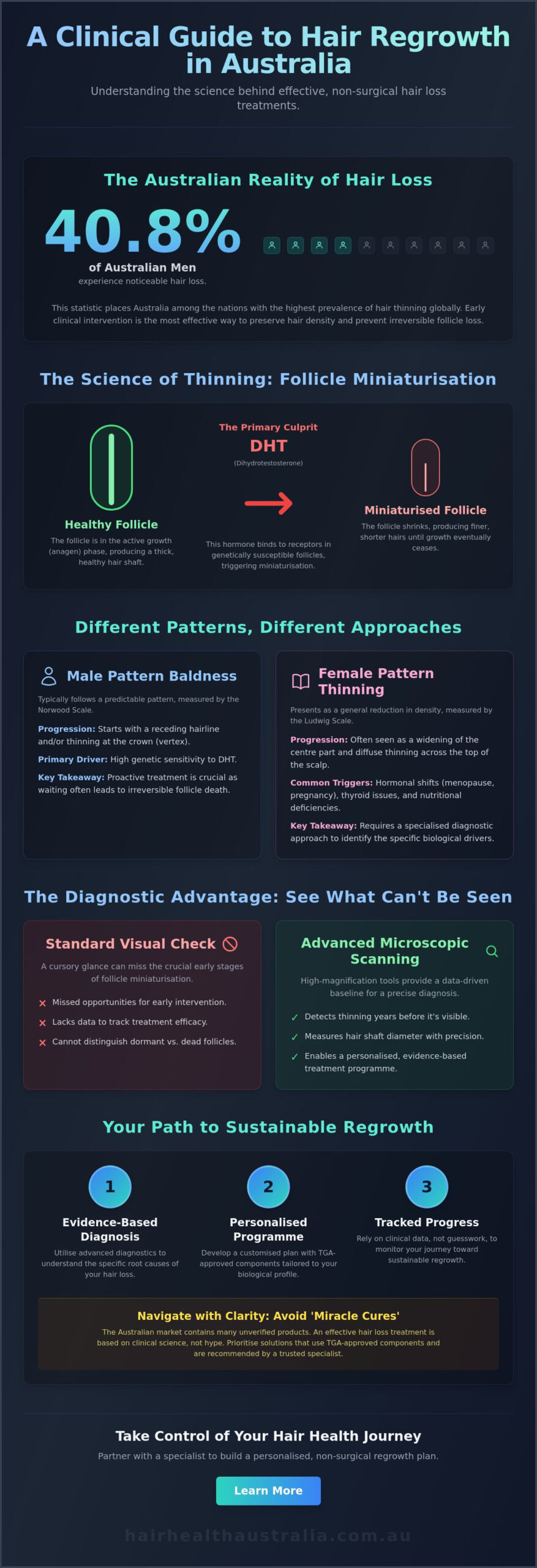
Approximately 40.8% of Australian men experience some degree of baldness, a statistic that places Australia among the highest prevalence rates in the world. For many, this realisation leads to a confusing search for a reliable hair loss baldness treatment, often resulting in more questions than answers. It’s completely natural to feel overwhelmed by conflicting online advice or to fear that invasive surgery is your only path forward. We believe that your journey toward regrowth should be grounded in science and transparency, not uncertainty or hype.

This 2026 guide is designed to replace that confusion with clinical clarity. You’ll discover the biological science behind hair regrowth and learn how to identify the most effective non-surgical treatments currently available across Australia. We’ll walk you through the process of understanding the specific root causes of your thinning hair, providing you with a clear, evidence-based roadmap to restoration. By the end of this article, you’ll have the knowledge required to partner with a trusted specialist and choose a customised treatment plan that prioritises both results and your peace of mind.

For those interested in how these clinical standards are applied in world-class facilities, you can check out Terra Medical to see how a doctor-led clinic specialising in hair restoration manages complex scalp conditions.

Key Takeaways

  • Learn how biological triggers like DHT lead to follicle miniaturisation and why early clinical intervention is the most effective way to preserve hair density.
  • Discover how to navigate the Australian market to find a hair loss baldness treatment that utilises TGA-approved components rather than unverified “miracle cure” alternatives.
  • Understand the diagnostic process used by specialists to identify the specific causes of thinning, ensuring your treatment is tailored to your unique biological profile.
  • Explore the advantages of a non-surgical, clinical approach that integrates advanced technology and evidence-based topicals to support sustainable hair regrowth.

Understanding Hair Loss vs. Baldness: More Than Just Aesthetics

Australia currently ranks among the nations with the highest prevalence of hair thinning globally. Data suggests that approximately 40.8% of Australian men experience noticeable hair loss, a figure that highlights how common this experience is within our community. Despite its frequency, the emotional impact is often profound, leading to a significant loss of self-confidence. Many people struggle with conflicting advice found online, which only adds to the uncertainty. Understanding the difference between temporary shedding and permanent loss is the first step toward finding an effective hair loss baldness treatment.

Most permanent thinning is caused by androgenetic alopecia. This condition involves the gradual miniaturisation of hair follicles due to genetic and hormonal factors. Unlike Telogen Effluvium, which is a temporary reaction to stress, nutritional deficiencies, or medication, pattern thinning will not resolve on its own. Hair loss is a progressive biological condition requiring systematic management. Early clinical intervention is vital because once a follicle has completely ceased activity, non-surgical restoration becomes significantly more difficult.

Male Pattern Baldness: The Genetic Timeline

For men, the progression of thinning usually follows a predictable pattern tracked by the Norwood Scale. This clinical tool helps specialists identify stages ranging from a slightly receding hairline to extensive loss across the vertex or crown. Family history is a powerful predictor here, as genetics dictate how sensitive your follicles are to hormonal changes. Many men choose to “wait and see” if their hair will stabilise; however, this delay often allows for irreversible follicle death. Understanding your specific men hair loss pattern early allows for a more proactive and successful clinical path forward. Sydney men who are concerned about progression can benefit from learning how to stop male hair thinning Sydney specialists recommend through evidence-based, non-surgical protocols.

Female Hair Thinning: A Different Clinical Challenge

Women experience hair loss differently, typically seeing a general reduction in density rather than a sharply receding hairline. This is measured using the Ludwig Scale, which focuses on the widening of the part line and thinning across the top of the scalp. Hormonal shifts during menopause, pregnancy, or issues with thyroid health are common triggers that require a specialised diagnostic approach. The emotional toll on women is often intensified by societal expectations, making a compassionate and evidence-based hair loss baldness treatment essential. Acknowledging these unique biological drivers ensures that the management plan is both accurate and supportive.

The Science of Thinning: Follicles, DHT, and Clinical Diagnostics

Your hair follicles operate on a continuous biological clock; they alternate between phases of active growth (anagen) and rest (telogen). In a healthy scalp, the vast majority of follicles are growing at any given time. However, for those seeking a hair loss baldness treatment, this ratio often shifts. The primary culprit is Dihydrotestosterone (DHT), a hormone that binds to receptors in the scalp. This binding causes miniaturisation, a process where the follicle shrinks and produces increasingly finer, shorter hairs until the growth phase ceases entirely. Many people assume thinning is just a part of ageing, but it’s actually a specific hormonal interaction that can be managed with the right clinical approach.

Relying on a standard visual inspection during a GP visit often results in missed opportunities for early intervention. While a general practitioner provides excellent broad care, they may lack the high-powered tools needed to see changes occurring beneath the surface. Comprehensive Hair loss diagnosis and treatment protocols require more than a cursory glance; they demand a systematic evaluation of the scalp environment. With the TGA increasing scrutiny on therapeutic goods in 2026, it’s more important than ever to rely on verified clinical standards. Healthy regrowth is impossible if the scalp is inflamed or if the follicles are deprived of the necessary biological support.

Microscopic Scanning: Why Your Diagnosis Might Be Wrong

Advanced high-magnification scanning allows us to see what the naked eye cannot. We can distinguish between follicles that are simply dormant and those that have reached a stage of permanent fibrosis. By measuring hair shaft diameter at a microscopic level, we detect thinning years before it becomes visible in the mirror. This data-driven approach creates a precise baseline, allowing us to track the efficacy of your specialised programme with clinical accuracy and objective proof. It removes the guesswork and ensures we aren’t treating temporary shedding as permanent pattern loss.

Identifying Nutritional and Lifestyle Triggers

Biology is rarely isolated to a single factor. In Australia, deficiencies in iron, zinc, and Vitamin D are surprisingly common and can significantly disrupt the hair cycle. Chronic stress also plays a role, as elevated cortisol levels can prematurely push follicles into the resting phase. A correctly identified hair loss baldness treatment must account for these internal triggers to be truly effective. Choosing a professional clinical assessment ensures these lifestyle factors are addressed alongside topical therapies. A holistic view is far superior to over-the-counter vitamins, as it targets the specific deficiencies impacting your unique growth cycle.

Evaluating Hair Loss Treatment Options: Meds, PRP, and Non-Surgical Paths

Once a precise diagnosis is established, the focus shifts to selecting a hair loss baldness treatment that aligns with your specific biological needs. While pharmacy shelves are lined with generic options, clinical-grade programmes offer a higher level of potency and oversight. TGA-approved medications play a foundational role in stabilising hair loss by inhibiting the hormonal triggers discussed previously. These treatments are most effective when they’re part of a managed strategy rather than a solo effort. It’s essential to understand that no single treatment works for everyone, necessitating a bespoke approach that addresses your unique rate of thinning and scalp health.

Many Australians are increasingly moving away from invasive options like hair transplant surgery in favour of non-surgical paths. Surgery involves significant downtime, potential scarring, and a high entry cost, whereas clinical therapies focus on revitalising your existing follicles. This shift is supported by a dermatologist-led diagnosis, which ensures that the chosen therapy targets the underlying cause rather than just the symptoms. By prioritising non-invasive methods, we can often achieve significant density improvements without the risks associated with surgical procedures.

PRP and Growth Factor Therapies

Platelet-Rich Plasma (PRP) has become a cornerstone of modern hair restoration. This process involves using the concentrated growth factors from your own blood to stimulate dormant follicles and encourage them back into the anagen, or growth, phase. During a clinical session, the scalp is treated with these refined platelets to trigger cellular repair and increase blood flow to the hair bulb. Most clients find the process straightforward and manageable, with sessions typically lasting less than an hour. The ideal candidate is someone experiencing early-to-mid-stage thinning where follicles are still active but underperforming.

Low-Level Laser Therapy (LLLT) and Scalp Health

Low-Level Laser Therapy utilise specific wavelengths of light to increase cellular metabolism within the hair follicles. This light energy stimulates the mitochondria in the hair bulb, providing the “fuel” needed for more robust hair production. LLLT is rarely used in isolation; instead, it acts as a powerful catalyst when combined with topical clinical treatments. This synergy ensures that the active ingredients in your topical programme are better absorbed and utilised by the scalp. Long-term density retention depends on consistent maintenance protocols, ensuring the scalp environment remains primed for healthy, sustained growth.

Clinical Hair Loss and Baldness Treatment: The 2026 Australian Guide

The Australian market for hair restoration is currently saturated with bold claims and “miracle” products. Distinguishing between genuine clinical evidence and “snake oil” marketing is essential for anyone seeking a legitimate hair loss baldness treatment. Since January 2026, the Therapeutic Goods Administration (TGA) has placed a priority focus on the advertising and promotion of therapeutic goods used in cosmetic procedures. This increased scrutiny means clinics must be more transparent, yet consumers still need to remain vigilant. Legitimate clinical claims are always backed by verified data and realistic timelines. Biological regrowth is a slow process; any promise of “overnight results” is a biological impossibility and a clear red flag.

While supermarket shelves and social media ads often offer cheap, generic solutions, these frequently lead to wasted expenditure and frustration. Investing in a clinical-grade programme provides superior long-term value because it addresses the specific cause of your loss rather than applying a blanket solution. It’s the difference between simply buying a retail product and investing in a professionally managed outcome. Accuracy in the early stages of treatment prevents the financial and emotional cost of failed attempts later on.

The Problem with Generic Online Prescriptions

The rise of telehealth has made access to medication easier, but it has also led to a decline in physical diagnostic standards. Receiving a prescription without a thorough, high-magnification scalp analysis is a significant missed opportunity. You run the risk of treating the wrong condition or missing underlying scalp health issues that topical medications alone cannot fix. Ordering unverified medications from overseas carries even greater risks, including inconsistent dosing or contaminated ingredients. Having a local Sydney specialist to monitor your progress ensures that your treatment remains safe, effective, and responsive to your scalp’s changing needs.

Questions to Ask Your Hair Loss Specialist

Empowerment comes through asking the right questions during your consultation. A reputable specialist will be transparent about their methods and the limitations of modern technology. Consider asking these specific questions during your next appointment:

  • What specific diagnostic tools do you use to track my follicular progress over time?
  • Based on my current Norwood or Ludwig stage, what are the realistic outcomes I can expect to see?
  • Do you offer a non-surgical regrowth treatment for hair that is tailored to my biological baseline?

Choosing a partner in your hair health journey requires trust and clinical verification. If you are ready to move beyond generic products and start a managed programme, book a clinical assessment with our team today.

The Clinical Advantage: Personalised Regrowth Programs in Sydney

Finding a hair loss baldness treatment that actually yields results requires a move away from the “off-the-shelf” mentality. At Hair Health Australia, we bridge the clinical gap between general medicine and specialised trichology. Our 2026 approach doesn’t just hand you a generic product; it integrates advanced technology, targeted nutrition, and clinical topicals based on your specific biological needs. This level of customisation is simply not possible with a one-size-fits-all pharmacy solution, which lacks the diagnostic depth required to understand why your hair is thinning in the first place. For men specifically, our structured clinical protocols address the exact hormonal and genetic factors involved, providing a clear answer to those searching for how to stop male hair thinning Sydney residents can trust.

For Sydney residents, the benefit of an in-person consultation is significant. We use high-resolution imaging to create a detailed baseline of your scalp health. This physical assessment allows us to see exactly how your follicles are responding to treatment, something a telehealth prescription cannot replicate. By having a local specialist monitor your progress, we can adjust your programme in real-time to ensure you’re always on the most effective path toward density restoration.

What Happens During Your First Consultation?

Your journey begins with a structured 3-step process designed to provide absolute clarity. First, we review your medical history and lifestyle factors to identify potential triggers. Next, we conduct a microscopic analysis to build your unique “follicle map”. This map reveals which areas have the highest regrowth potential and which require more intensive support. Finally, you receive a treatment roadmap with no-nonsense advice. We tell you exactly what is achievable for your specific stage of loss, ensuring you don’t waste time or resources on therapies that won’t work for you.

Commitment to Long-Term Hair Health

Maintaining hair density is an ongoing process that evolves as you age. Your hair cycle changes over time, meaning a programme that worked at thirty might need adjustments by forty-five. Regular reviews allow us to refine your clinical topicals and nutritional support to maintain peak scalp vitality. We’re committed to being your long-term partner in this process, providing the expertise needed to navigate every stage of your hair health journey. Taking action early is the most effective way to preserve your natural hair. You can Book a consultation with Hair Health Australia to begin your clinical path toward restoration.

Secure Your Hair Health with Clinical Precision

We have explored how understanding the biological triggers of thinning is the essential first step toward restoration. Moving beyond generic retail products and identifying the specific stage of your loss through microscopic analysis ensures your efforts are both targeted and effective. By choosing evidence-based clinical therapies over invasive surgical procedures, you can achieve sustainable density while maintaining your peace of mind. A managed approach replaces the stress of uncertainty with a structured, scientific roadmap.

Selecting a legitimate hair loss baldness treatment requires a partnership with experts who prioritise transparency and scientific accuracy. Since 2009, Hair Health Australia has provided established Australian expertise through specialised non-surgical regrowth programs tailored to individual biological needs. Our diagnostic process begins with a comprehensive clinical microscopic hair analysis to create a precise baseline for your journey. Book Your Clinical Hair Assessment in Sydney today to replace confusion with a proven, professional plan. You don’t have to navigate the challenges of thinning alone; a clear, clinical path to regrowth is within your reach.

Frequently Asked Questions

Is hair loss baldness treatment permanent?

Most non-surgical hair loss baldness treatment options require an ongoing commitment to maintain results. Because androgenetic alopecia is a progressive condition driven by genetics and hormones, stopping treatment allows the miniaturisation process to resume. Think of it as a management strategy rather than a one-time fix. Regular reviews ensure your programme remains effective as your biology changes over time.

Can women use the same hair loss treatments as men?

While some therapies like Low-Level Laser Therapy are suitable for everyone, medical treatments often differ significantly between men and women. Certain oral medications used in male hair loss baldness treatment are not recommended for women due to hormonal interactions and safety concerns. A specialised diagnostic approach ensures that the chosen therapy is safe and effective for your specific biological profile.

How long does it take to see results from clinical hair treatment?

You should expect to see the first visible signs of improvement within three to six months of starting a clinical programme. This timeline aligns with the natural hair growth cycle, as it takes time for dormant follicles to enter the anagen phase and produce new shafts. Full results usually become apparent around the twelve-month mark. Consistency is the most critical factor during this initial period.

Is PRP hair treatment painful?

Most clients describe Platelet-Rich Plasma (PRP) therapy as a manageable experience involving mild discomfort rather than significant pain. The sensation is often compared to a series of small pinpricks across the scalp. We prioritise your comfort during the session and the process is typically completed in under an hour. There is no downtime required, meaning you can return to your daily routine immediately after the procedure.

How much does a typical hair loss treatment program cost in Australia?

The cost of a programme varies based on the complexity of your condition and the specific therapies required to achieve your goals. While some initial diagnostic assessments with a doctor may be covered by Medicare, the treatment programmes themselves are generally private expenses. Some private health insurance funds may offer coverage depending on your specific policy. It’s best to check with your provider regarding their stance on clinical hair restoration.

Can stress really cause my hair to fall out in patches?

High levels of physiological or emotional stress can indeed trigger sudden shedding or patchy loss. Conditions like Telogen Effluvium push a large number of follicles into the resting phase simultaneously, leading to noticeable thinning. Patchy loss may also indicate Alopecia Areata, an autoimmune response often exacerbated by stress. A clinical microscopic analysis is essential to distinguish these temporary conditions from permanent pattern baldness.

Do I need a referral to visit a hair loss clinic in Sydney?

You don’t typically need a formal referral from a GP to book an assessment at a specialised hair loss clinic. Many people choose to visit a specialist directly to access advanced diagnostic tools like high-magnification scalp scanning. However, if you have underlying medical conditions, bringing your recent blood test results can be very helpful. This information allows our specialists to build a more comprehensive view of your internal hair health.

What happens if I stop my hair regrowth treatment?

If you discontinue your programme, your hair will likely return to its pre-treatment state over several months. Without the active ingredients or therapies supporting the follicles, the underlying miniaturisation process will resume its natural course. Most people notice a gradual return of thinning rather than an immediate loss. We recommend discussing a maintenance plan if you wish to reduce the frequency of your clinical sessions.