
Will non-surgical hair loss treatment mean taking time off work? The answer depends on your individual treatment plan, so non-surgical hair loss treatment downtime shouldn’t be assumed to mean either a full recovery period or no disruption at all. Before arranging appointments around your workday, it helps to understand what the plan involves and what you may need to allow for.
Downtime, appointment frequency and duration, and any treatment-related effects can vary. Clarify your recommended plan and whether you may need to adjust your usual activities. This makes it easier to organise appointments realistically and decide how much, if anything, you want to share at work. If you need time away, you can focus on the scheduling details without disclosing personal information you’d rather keep private.
This article explains what downtime can mean, how to plan around work and what to discuss before treatment begins. Hair Health Australia provides personalised, non-surgical hair loss treatment programs for men and women. An individual assessment helps you understand your hair and scalp concerns and discuss practical next steps. A Hair Health Check is a useful starting point.
Key Takeaways
- Non-surgical hair loss treatment downtime can mean more than recovery. Allow for appointment time, travel and any effects on your usual activities.
- Your treatment plan and personal circumstances shape what to expect, so a generic downtime estimate may not suit your situation.
- Compare non-surgical treatment and hair transplant recovery as different planning considerations, not clinically equivalent approaches.
- Once you understand the schedule, you can plan work commitments and decide how much, if anything, you want to share with your employer.
- A Hair Health Check can help clarify your hair and scalp concerns, treatment expectations and practical next steps.
What does downtime mean for non-surgical hair loss treatment?
Appointment time is the time set aside for a visit. Treatment-related recovery is any time you may need afterwards to return to your usual activities. Separating the two makes planning easier. Non-surgical hair loss treatment downtime isn’t a fixed number of hours. It depends on the programme recommended for you and what your work and daily routine involve.
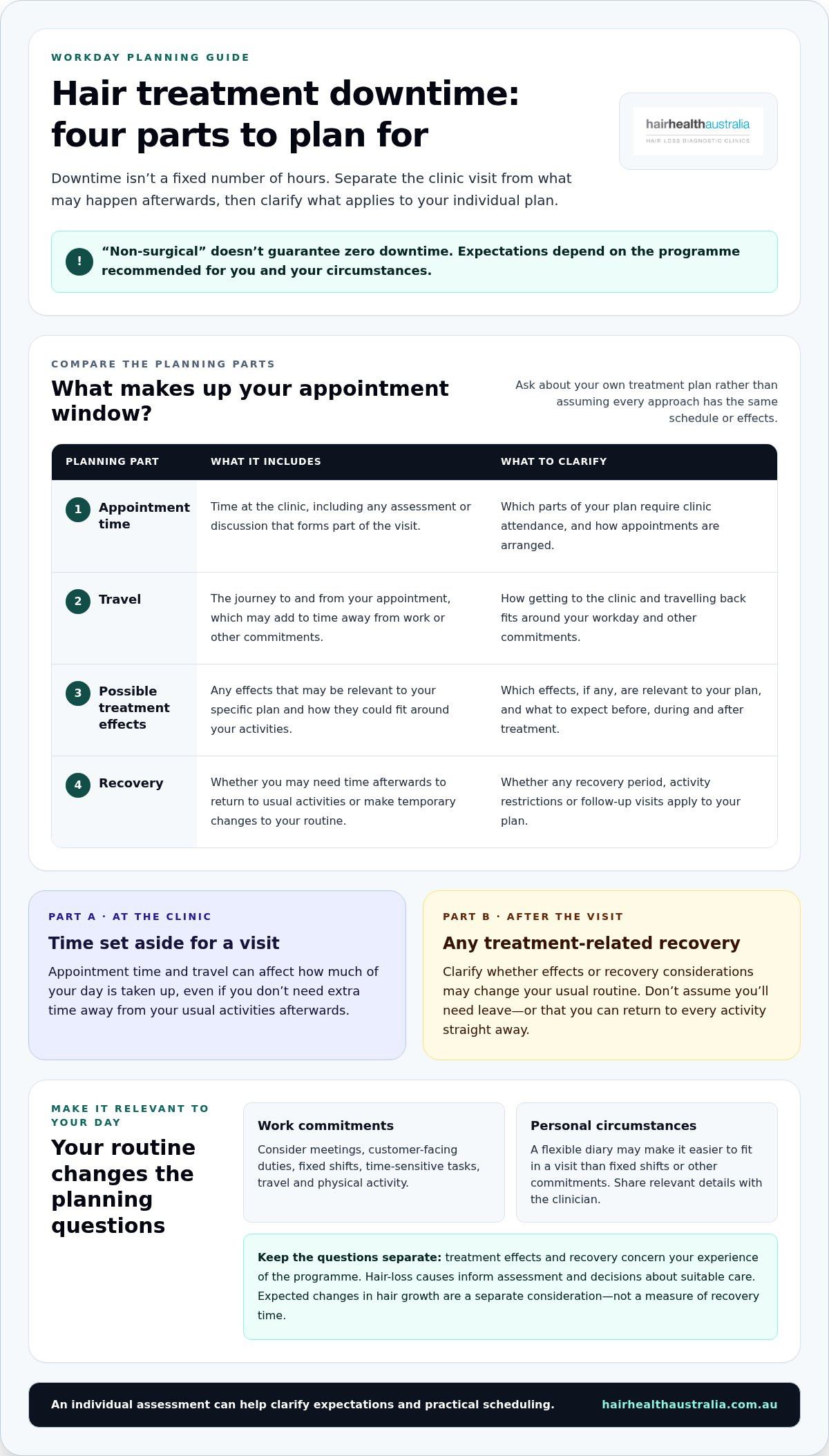
Think about four separate parts:
- Appointment time: Time at the clinic, including any assessment or discussion that forms part of the visit.
- Travel: The journey to and from your appointment, which may add to time away from work or other commitments.
- Possible treatment effects: Ask which effects, if any, are relevant to your specific plan and how they might fit around your activities.
- Recovery: Clarify whether the treatment involves any recovery period or temporary changes to your usual routine.
These are different planning questions. A visit may take time without requiring further time away from usual activities, while a treatment-related effect could matter after you leave the clinic. Ask about your individual programme rather than assuming every non-surgical approach is downtime-free.
Does non-surgical hair treatment involve recovery time?
“Non-surgical” describes the broad approach; it doesn’t guarantee zero downtime. Expectations depend on the specific programme and your circumstances, so don’t assume that discomfort, visible effects or return-to-work timing will be the same for everyone. Before you begin, ask the clinician to explain any treatment-specific effects or recovery considerations for your plan.
Hair-loss approaches vary. A general overview of hair loss treatments and their effectiveness can provide background on the range of options, but it won’t establish what your own treatment experience will be. That depends on the approach selected and the clinical guidance relevant to you.
Why can downtime mean different things to different people?
A scheduled appointment is only one part of the day. Travel, work duties and personal preferences can affect how much disruption you experience. Someone with a flexible diary may find it easier to fit in a visit than someone working fixed shifts or managing time-sensitive tasks. Raise these details when discussing your individual plan.
To make that conversation useful, describe the activities you need to plan around, such as meetings, customer-facing duties or your commute. Ask what to expect before, during and after treatment, including whether any restrictions or follow-up visits apply. You can then organise your calendar without presuming you’ll need leave or that you can return to every activity straight away.
An individual assessment gives treatment expectations a more relevant basis than a generic downtime estimate. Hair Health Australia’s Hair Health Check helps inform a discussion about your hair and scalp concerns, treatment options and practical scheduling.
What factors can affect hair-loss treatment downtime?
There isn’t one reliable downtime estimate for everyone. The non-surgical hair loss treatment downtime relevant to you depends on the recommended approach, how appointments are arranged and your circumstances outside the clinic. A personalised plan is more useful than a generic estimate because it connects clinical expectations with the practical demands of your routine.
It also helps to separate two questions: what might happen around treatment, and what may be contributing to hair loss. Possible treatment-related effects concern your experience of the programme. Hair-loss causes inform assessment and decisions about suitable care. Expected changes in hair growth are another consideration. They shouldn’t be confused with recovery time or used to predict whether you can work immediately after an appointment.
How the treatment plan shapes appointment and recovery expectations
The treatment approach and planned appointments can differ between individuals. Discuss appointment arrangements, any treatment-related effects and the need for follow-up in relation to your own plan, rather than relying on someone else’s experience. General information about hair treatments can provide context, but it can’t replace individual guidance about scheduling or recovery.
Ask which parts of your plan require clinic attendance, whether appointments are expected to recur and what practical considerations apply before or after each visit. These questions help you understand what to plan for without assuming a particular procedure, appointment length or recovery period.
Hair Health Australia’s personalised approach considers hair and scalp health as part of understanding individual concerns. A Hair Health Check can help inform a discussion about treatment expectations and practical scheduling.
How work duties and personal circumstances affect planning
Your workday matters, but no job title automatically dictates a recovery period. Someone in a flexible desk-based role might have more control over when they attend an appointment. A role involving travel, physical activity, fixed shifts or customer-facing duties may raise different scheduling questions. Share those details with the clinician rather than assuming they mean a particular treatment effect.
Consider the whole appointment window: getting to the clinic, attending, travelling back and fitting the visit around your commitments. An appointment near the start of a workday may affect your schedule differently from one arranged during a flexible period. If you’re travelling across Sydney or coordinating public transport, include the journey in your plans.
Personal preferences matter, too. You may want to keep appointments private, avoid a busy work period or understand whether any temporary effects could be noticeable to you or others. Explain the practical constraints that matter and ask which expectations are relevant to your programme. You don’t need to disclose more about your personal circumstances than is useful for planning care.
An individual assessment turns a broad estimate into a realistic scheduling conversation. It gives you a basis for discussing the treatment plan, likely appointment arrangements and questions that matter to your work and daily life.
How does treatment downtime compare with hair transplant recovery?
Hair transplant surgery and non-surgical hair-loss programmes are distinct options, not interchangeable treatments. They involve different approaches, so their appointment and recovery questions need to be considered separately. A comparison can help you identify what to discuss, but it can’t establish which option is suitable or predict a personal recovery timeline.
For non-surgical care, non-surgical hair loss treatment downtime depends on the tailored programme and the clinical guidance for it. Surgical recovery considerations relate to a procedure and should be discussed with the clinician responsible for that care. Neither category follows one universal schedule. Use the table as a prompt for an individual conversation, not as a forecast.
| Approach | Appointment planning | Recovery questions | Suitability for assessment |
|---|---|---|---|
| Non-surgical programme | Discuss what visits involve and how they fit the plan. | Ask about effects or aftercare relevant to the proposed programme. | Individual hair and scalp assessment can inform a tailored plan. |
| Hair transplant surgery | Discuss procedure-related visits and how they fit your schedule. | Ask the treating clinician about recovery guidance and any activity adjustments. | Suitability requires assessment by the clinician providing surgical care. |
What is different about planning for surgery and non-surgical care?
Surgery is a separate option and may involve recovery considerations that differ from those for a non-surgical programme. The relevant questions depend on the procedure and the person receiving care. Non-surgical treatment is not one uniform plan either: assessment informs the approach, appointment arrangements and expectations. Avoid using one person’s experience to predict another person’s schedule or recovery.
For a broader overview of non-surgical restoration options, use relevant general information alongside a personalised clinical discussion. Background reading can help you understand the options, but it won’t replace advice about a specific plan. Hair Health Australia’s Hair Health Check can help clarify individual hair and scalp concerns as you consider next steps.
Which questions help compare options realistically?
Bring practical questions to the discussion. Ask what appointments involve, how they fit into the plan and whether normal work activities may need to be adjusted. For any proposed treatment, clarify which effects, if any, are relevant and what aftercare instructions apply. If considering surgery, direct procedure-specific recovery questions to the clinician responsible for that care.
Describe your usual routine, including fixed shifts, travel, physical tasks or commitments that are difficult to move. You can then discuss how relevant appointments and instructions might fit around those demands. Keep the comparison focused on your priorities and clinical circumstances, not on a general promise about downtime. A clear assessment supports realistic planning while keeping the distinction between surgical and non-surgical care clear.
How to plan treatment time off and speak with your boss
Before requesting time away from work, get a clear picture of the appointment and treatment expectations from the clinical team. The non-surgical hair loss treatment downtime for your plan may involve appointment attendance, travel and treatment-specific guidance. Don’t assume you’ll need a full day off, or that you can return to every task straight afterwards. Use information about your plan to decide what scheduling adjustment, if any, makes sense.
A simple plan before requesting time away from work
Work through the practical details first. This helps you make a specific request without having to explain personal health information before you know what time you need.
- Clarify the appointment: Confirm its timing and what it involves, including whether follow-up appointments are part of the plan.
- Allow for travel: Factor in your journey to and from the clinic, as well as transport or work commitments that could affect the schedule.
- Understand relevant instructions: Ask the clinical team what treatment-specific effects or aftercare guidance apply, and whether usual activities may need adjusting.
- Review work options: Consider whether flexible hours, existing leave arrangements or a time outside core work hours could fit. Check your workplace policy for the process that applies to appointments and time away.
Once you have these details, map the appointment against your work calendar. A flexible start or finish may be enough for one person; another may prefer to arrange cover for a fixed shift or move a meeting. These are planning options, not a guarantee that a particular arrangement will be available. Workplace processes differ, so follow the policy that applies to you rather than relying on assumptions about leave or entitlements.
How to discuss an appointment while protecting your privacy
You can keep a workplace conversation focused on scheduling. You don’t have to volunteer a diagnosis simply to explain that you need time for an appointment. Share only what you’re comfortable disclosing, while providing any information your workplace process reasonably asks you to provide.
A neutral request could sound like this: “I have a health appointment on [day] and expect to be away from [time] to [time]. Could we arrange [a schedule adjustment or leave, if applicable]? I’ll make sure my work is covered.” This gives your manager the practical details without naming the treatment. Adapt the wording to suit your role and workplace, and check the relevant policy if you’re unsure how to submit the request.
If you’re considering treatment, an individual assessment can help you understand the plan before making work arrangements. Arrange a Hair Health Check to discuss your hair and scalp concerns and clarify practical next steps.
How a Hair Health Check can clarify your next steps
A Hair Health Check can help bring your individual hair and scalp concerns into focus before you consider a treatment plan. A general estimate of non-surgical hair loss treatment downtime can’t account for your circumstances or the details of a programme tailored to you. An assessment gives you a chance to explain what you’ve noticed and discuss practical questions alongside treatment expectations.
It isn’t a promise of a particular treatment recommendation or outcome. Rather, it supports an informed conversation about your concerns, possible next steps and the questions that matter to you. You can raise scheduling early, so work and other commitments become part of the discussion instead of an afterthought.
What to prepare for an individual hair health assessment
A little preparation can help you make good use of the conversation. You don’t need to arrive with a diagnosis or decide what treatment you want. Start with the changes you’ve observed and the practical information you need to plan confidently.
- Note when you first noticed a change: A rough timeline can help you describe your concern clearly.
- Describe what you’ve observed: Make a note of the hair or scalp changes you want to discuss, including where you’ve noticed them.
- Bring your practical questions: Write down what you’d like to understand about appointment planning, possible treatment-specific effects and guidance for your daily routine.
- Consider work commitments: Think about fixed shifts, travel, meetings or other activities that could affect when you can attend.
Share the hair and scalp concerns that feel relevant to you, and mention any questions you’d prefer to discuss privately. This keeps the assessment centred on your experience without assuming what is causing the change or which approach will be recommended. The conversation can then clarify what information is relevant to your next steps.
Turning assessment information into a realistic work plan
After discussing your concerns, use the guidance about your individual plan to consider appointment timing and any treatment-specific instructions. Ask which details are relevant to your proposed programme, including whether appointments are planned and whether you may need to adjust usual activities. Compare that guidance with your work calendar and travel arrangements before deciding whether to request time away.
Keep expectations personal. Another person’s schedule or experience won’t necessarily match yours, and an assessment doesn’t guarantee a particular treatment pathway. Clear, tailored information can still make planning less uncertain by giving you a better basis for deciding what to ask next and how to organise your commitments.
If you’re comparing clinical care, consider whether the discussion addresses your individual hair and scalp concerns, explains the basis for recommendations and gives you a clear opportunity to raise practical questions. A careful assessment should help you understand the reasoning behind next steps rather than leave you relying on a generic estimate of recovery or appointment needs.
Ready to discuss your concerns and practical questions? Book a Hair Health Check as a considered first step towards understanding your options.
Take your next step with clearer expectations
Rather than planning around a generic estimate, identify the details that matter most to you. Your non-surgical hair loss treatment downtime is a personal planning question, and an individual assessment is a useful way to discuss your concerns and priorities. Bring practical questions about how a proposed plan could fit your routine.
You don’t need to have every decision made before taking that step. Start with what you’ve noticed, what you’d like to understand and any work commitments you’re weighing up. Clearer information can help you consider your options at your own pace, without making assumptions about treatment or time away.
Book a Hair Health Check to begin a personalised discussion about your hair and scalp concerns and possible next steps.
Frequently Asked Questions
Does non-surgical hair loss treatment require time off work?
It may, depending on the proposed programme and your circumstances. Someone with a tightly scheduled shift may need to arrange cover even if the appointment itself is manageable. Before deciding, get the clinical team’s guidance for your plan and compare it with your work calendar. If you’re travelling to an appointment in Sydney, include the journey rather than planning around the clinic visit alone.
Can I go back to work after a non-surgical hair treatment appointment?
Possibly, but don’t assume every appointment has the same implications for your workday. Ask whether the proposed visit or any related guidance could affect tasks you’re expected to do that day. If your role involves customer meetings, physical activity or driving between sites, mention that when discussing the plan. This can help you decide whether to book a less demanding workday without presuming a recovery period.
How much time should I request off for hair-loss treatment?
There’s no universal amount of time to request. First, work out whether you need time for the appointment only, travel as well or any additional period advised for your individual plan. Then consider your roster, deadlines and whether a shorter schedule adjustment could work. Moving a meeting, for example, may be more practical than requesting a full day. Follow your workplace’s usual process and avoid relying on generic estimates.
Do I have to tell my boss that I am having hair-loss treatment?
You can keep the conversation focused on a health appointment if you prefer not to discuss hair loss. For example, you might say, “I have an appointment on Thursday and need to adjust my hours.” Your workplace’s process and circumstances may affect what information is requested, so check its policy rather than assuming a rule applies. Share only what you’re comfortable disclosing while following the process relevant to your request.
Is downtime the same for every non-surgical hair-loss treatment?
No. The phrase non-surgical hair loss treatment downtime can refer to different practical considerations, and one person’s experience may not apply to another programme. Before making plans, ask for information tied to the specific approach being discussed, including any guidance that could affect your routine. If you’re comparing options, note the questions each plan raises. This makes it easier to compare practical demands without treating broad estimates as promises.
What should I ask before arranging treatment around work?
Ask what the appointment involves, whether further visits are planned and whether the clinical team has guidance relevant to your usual duties. Be specific about constraints, such as a roster set weeks ahead or a job that requires travel between sites. You can also ask for appointment details in a form you can refer to while organising your calendar. Check your employer’s process separately if you need to request a schedule change.
Can a Hair Health Check help me understand treatment downtime?
A Hair Health Check gives you an opportunity to discuss your hair and scalp concerns and ask how a potential plan may fit your routine. It can’t establish a guaranteed treatment pathway or predict exactly how you’ll respond. Prepare questions about appointment arrangements and work-related considerations so the conversation is useful. If you’re in Sydney and considering personalised hair-loss care, book a Hair Health Check to discuss your next steps.