
Could everyday habits support healthier hair, or are you trying to solve a deeper concern with a better routine? If you’re considering lifestyle changes to support hair health, it’s reasonable to wonder whether diet, stress, sleep and hair-care habits can make a genuine difference. They can support general hair and scalp health, but they can’t explain or address every cause of thinning or shedding.
A balanced diet, manageable stress, consistent sleep and gentler styling are practical places to start. But supplements aren’t a universal fix, and changing your routine won’t reverse every type of hair loss. The right next step depends on what’s happening and why.
This evidence-based checklist separates useful everyday habits from quick fixes that overpromise. You’ll learn what lifestyle changes may support your hair, what they can’t change, and when persistent or concerning changes warrant professional advice. If you’re unsure what’s behind a change, a hair health check can help clarify your concerns and inform a considered next step.
Key Takeaways
- Use a varied, nourishing diet as a foundation. Avoid guessing at deficiencies or starting supplements without appropriate advice.
- Reduce avoidable strain by handling hair gently and being mindful of repeated pulling, heat styling and chemical processing.
- Build a manageable routine around comfortable scalp care, balanced meals, sleep and stress support. Adapt lifestyle changes to your needs.
- Notice whether changes are persistent, sudden or accompanied by scalp concerns, and seek an assessment if they worry you.
- A personalised hair health check can help clarify your concerns and guide a considered next step.
Lifestyle changes for hair health: what can habits do?
Lifestyle support means everyday habits that contribute to general wellbeing and a comfortable scalp. A varied diet, manageable stress routines and gentle hair care can help you look after your hair and reduce avoidable damage. They can’t guarantee faster growth or regrowth, though, and they won’t address every cause of hair thinning or shedding.
Hair changes can have different explanations, including inherited patterns, health conditions, hormonal changes, medication or nutritional deficiencies. A change in routine may happen around the same time as increased shedding, but that alone doesn’t show what caused it. Lifestyle changes can support general wellbeing and reduce avoidable strain on hair, but they can’t diagnose or treat every cause of hair loss.
How hair growth and the hair follicle respond to the body
Hair grows from follicles in a repeating cycle: a strand grows, enters a resting phase, then sheds as a new cycle begins. The follicles on your scalp aren’t all in the same phase at once, so some shedding is part of normal renewal. Changes in health or routine can occur alongside a shift in shedding, sometimes with a delay. That timing alone can’t identify the cause.
For example, stress is a recognised trigger for temporary shedding called telogen effluvium, which may become noticeable a few months after a stressful event. But not every period of shedding is stress-related. If a change is persistent, sudden or concerning, an individual assessment is more useful than assuming a lifestyle factor is responsible.
Hair health versus treating hair loss
Hair-shaft care and follicle health aren’t the same thing. Gentle handling may help limit breakage along the strand, while comfortable scalp care can support a healthy scalp environment. General hair care habits include washing and styling practices, but caring for the hair you can see doesn’t necessarily treat a condition affecting the follicle.
Causes and outcomes vary between people. Habits may form a helpful foundation, but they aren’t a universal hair-loss treatment or a substitute for understanding persistent changes. If you’re concerned, a personalised hair health check can help clarify your concerns and guide appropriate next steps.
Nutrition, sleep and stress: lifestyle factors that may support hair health
Food, sleep and stress management are reasonable parts of a hair-health routine, but they’re not quick fixes. Aim for habits you can sustain rather than a strict diet or demanding routine that adds pressure. If you’re making lifestyle changes to support hair health, focus on overall nourishment and wellbeing, not promises of rapid growth.
Build a balanced eating pattern without chasing hair-growth foods
Choose a varied mix of foods you enjoy, such as eggs, fish, beans or tofu for protein, alongside vegetables, fruit, wholegrains, nuts and seeds. Hair contains keratin, a protein, but no single food can prevent hair loss or guarantee thicker growth. Balanced nutrition supports general health; supplements are best considered when there’s a known need, not as a substitute for finding one.
Iron, zinc, vitamin D and some B vitamins are among the nutrients associated with hair health. However, shedding alone can’t tell you whether you’re deficient. A health professional can assess suspected deficiencies and advise whether testing or supplements are appropriate. Avoid starting high-dose supplements based on online advice: excessive intake of some nutrients, including vitamin A, can contribute to hair loss.
Make sleep and stress care realistic and sustainable
Regular sleep and manageable ways to unwind can support general wellbeing. Try keeping a consistent bedtime, taking a short walk, or making space for an activity that helps you decompress. Stress can be associated with temporary shedding, but reducing stress alone won’t necessarily reverse a hair-loss condition. If shedding is persistent, sudden or concerning, a checklist isn’t a substitute for individual assessment.
Keep the routine practical. You might plan nourishing meals, protect time for sleep and choose one achievable stress-management habit. For day-to-day care, the American Academy of Dermatology also shares dermatologist tips for healthy hair, including gentle handling to help limit avoidable damage.
If changes continue or you’re unsure what may be contributing, a personalised hair health check can be a considered next step towards understanding your concerns and exploring appropriate care.
Hair-care habits that reduce avoidable strain and scalp irritation
Everyday styling can affect the hair shaft and scalp comfort. Gentle handling won’t treat every cause of thinning, but it can help limit avoidable breakage and repeated tension. These practical steps can form part of lifestyle changes to support hair health without turning hair care into a complicated set of rules.
Reduce traction, rough handling and unnecessary heat
If a ponytail, bun, braid or other style feels tight or causes discomfort, loosen it or wear your hair down more often. Repeated pulling can contribute to traction alopecia, a type of hair loss associated with tension on the hair. Be patient when detangling, especially when hair is wet, and avoid forceful brushing or rough towel-drying. Use heat styling less often where practical, and avoid repeatedly applying high heat to the same sections.
Colouring, relaxing and other chemical processes can affect the hair shaft, particularly if hair is already fragile or treatments are repeated. That isn’t the same as proving a follicle condition. Adjusting your styling may reduce strand damage, but it can’t diagnose or resolve every reason for thinning.
Keep scalp care simple and responsive
There’s no single washing schedule that suits everyone. Set a routine around your hair type, activity and scalp comfort, rather than following a universal rule. Shampoo the scalp gently, and use conditioner on the lengths if it helps reduce tangles. If your scalp feels irritated after using a product, consider whether the product or routine may be contributing, but don’t assume you know the cause.
Notice changes such as ongoing itch, scaling, soreness or discomfort. Trying to cover up persistent symptoms or repeatedly switching products may delay working out what’s behind them. A clinician can assess concerning scalp changes; symptoms alone aren’t enough to diagnose a condition.
Stress can also be associated with changes in shedding, but it doesn’t explain every hair concern. The National Institutes of Health outlines how stress impacts hair. This is one reason to consider the wider picture if shedding continues, rather than relying on styling changes alone.
Keep the routine comfortable and sustainable. If hair or scalp changes persist or cause concern, a personalised assessment can help clarify what may be happening and guide appropriate next steps.
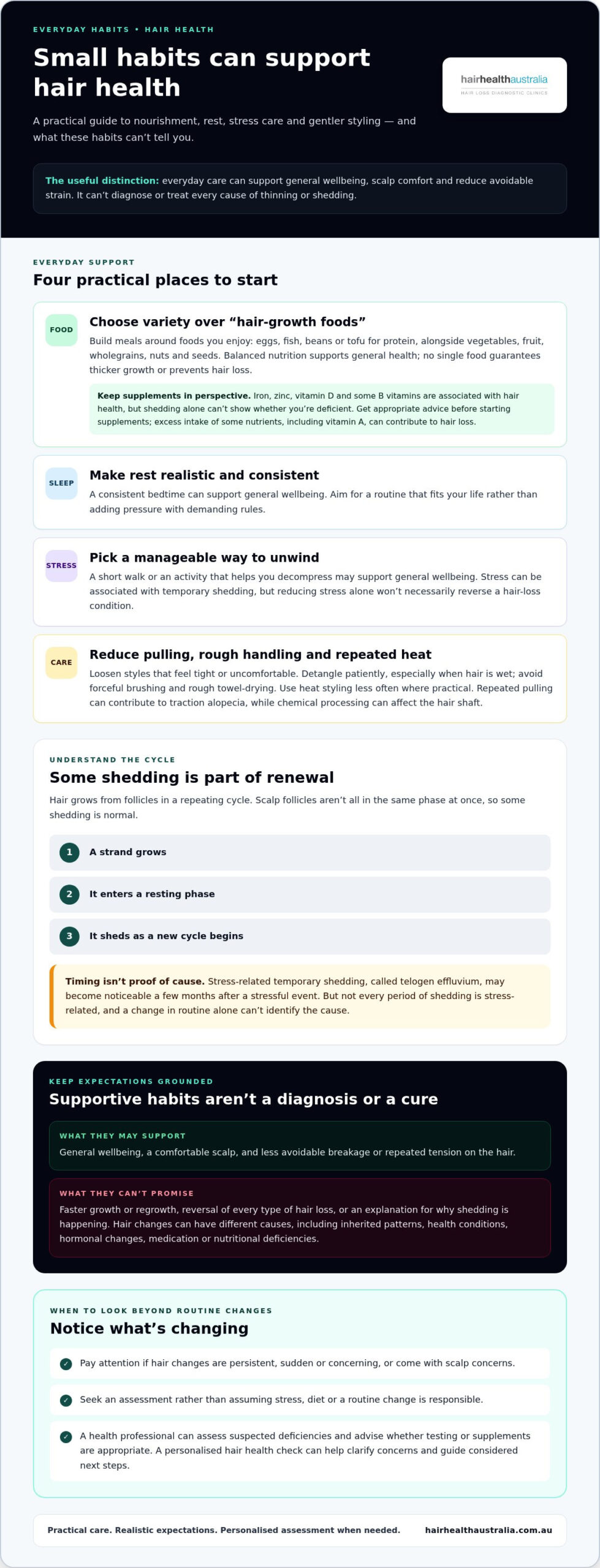
A practical weekly checklist for lifestyle changes that support hair health
A useful routine should fit your life, not add another source of pressure. Pick one or two habits to focus on first, then review how they’re working rather than trying to change everything at once. This checklist is a flexible starting point, not a set of rules or a promise of visible hair changes by a particular date.
Start with a manageable daily and weekly routine
Choose actions that feel achievable. For example, plan a few nourishing meals, loosen styles that pull, or set a regular wind-down time before bed. Once a week, take a brief moment to note what you’ve managed and whether your scalp feels comfortable. If you’ve noticed a change in your hair, record what you observed and any relevant routine changes, without checking or counting hairs every day.
- Meals: Aim for variety and enough food to meet your needs, rather than relying on a single “hair-growth” food.
- Styling: Handle hair gently, and reduce repeated pulling or heat where practical.
- Scalp comfort: Keep a wash routine that suits your hair and scalp; note ongoing irritation or discomfort.
- Sleep and stress: Choose one sustainable habit, such as a consistent bedtime or a regular activity that helps you unwind.
- Review: Jot down persistent or concerning changes to discuss during an assessment.
Avoid common shortcuts that can create confusion
More isn’t always better. Restrictive diets may make balanced nourishment harder, while supplements and viral remedies can distract from the reason hair has changed. Don’t start supplements based only on online advice, and don’t stop prescribed treatment without discussing it with the health professional who manages your care. A simple routine you can maintain is more useful than a long list of products or strict rules.
If you want to learn more about treatment options, Clinical Hair Treatment: A Professional Guide to Non-Surgical Restoration can provide broader context alongside these everyday habits. Lifestyle steps can support general wellbeing, but they can’t identify or address every cause of hair loss. If changes persist or concern you, a personalised hair health check can help clarify your concerns and guide appropriate care.
When lifestyle changes are not enough: getting a personalised hair health check
Everyday habits can support general wellbeing, but they can’t explain every change in your hair or scalp. If your concern persists despite adjustments, or you’re unsure what you’re noticing, it’s reasonable to seek an individual assessment. You don’t need to assume the cause is serious, and you don’t need to wait until you’ve tried every lifestyle change to support hair health.
Signs that call for individual advice
Consider seeking advice if you notice ongoing or sudden shedding, visible thinning, patchy changes, or scalp symptoms that persist. A change can have many possible explanations, so these signs alone don’t identify a cause. If hair or scalp changes come with other health changes, or symptoms are worrying, seek appropriate medical advice rather than relying on a lifestyle checklist.
What a hair health check can help clarify
A hair health check offers an opportunity to explain what you’ve noticed, discuss relevant personal factors and consider suitable next steps. You can note when the change began, whether it’s continued, and any recent changes to your health or routine. This context can help make the discussion more individualised, without assuming that one habit or factor explains everything.
Depending on your concerns, tailored non-surgical care may be considered as a possible next step. Hair Health Australia provides personalised, non-surgical hair-loss programmes for men and women. The right approach varies between individuals, and a check doesn’t promise a particular result. Its value is in helping you understand your concerns and make a more informed decision about what to do next.
If hair changes are persistent or causing concern, arrange a hair health check with Hair Health Australia in Sydney to discuss your individual situation and consider an appropriate path forward.
Take a considered next step for your hair health
Everyday habits can support general wellbeing, scalp comfort and healthier hair-care routines, but they can’t explain or address every cause of hair thinning or shedding. A varied diet, sustainable sleep and stress routines, and gentle styling are useful foundations. They’re not guaranteed regrowth methods, and persistent or sudden changes deserve individual attention.
The most realistic lifestyle changes to support hair health are the ones you can maintain without guesswork or unnecessary pressure. Be cautious with restrictive diets, unverified supplements and quick fixes. If your hair or scalp changes are continuing or concerning you, understanding your individual situation can help you decide what to do next.
Hair Health Australia provides personalised, non-surgical hair-loss programmes for men and women in Sydney, with care tailored to individual concerns. Arrange a hair health check to discuss a considered next step. Small, sustainable habits can still make a worthwhile difference to your overall routine, and you don’t have to work out the cause of hair changes on your own.
Frequently Asked Questions
Can lifestyle changes improve hair health?
Yes, healthy routines can support general wellbeing and reduce avoidable strain on your hair, but they can’t guarantee regrowth. Useful lifestyle changes to support hair health may include balanced nourishment, gentle hair care and sustainable daily habits. Hair changes can have different causes, and lifestyle adjustments may not address an underlying condition. If changes persist or concern you, an individual assessment can help clarify possible next steps.
What should I eat to support healthy hair?
Aim for a varied eating pattern that provides adequate nourishment rather than relying on one so-called hair-growth food. Protein and other nutrients support normal body functions, but individual dietary needs differ. If you follow a restrictive diet or suspect a deficiency, discuss it with an appropriate health professional. Avoid starting supplements simply because your hair is thinning. More isn’t automatically better, and supplements may not be useful without a clear reason.
Can stress cause hair loss?
Stress and hair changes can occur together, but that doesn’t prove stress is the cause for you. Shedding may have several possible contributors, and the timing can be difficult to interpret. Managing stress is worthwhile for general wellbeing, but relaxation alone can’t be relied on to restore hair or treat a hair-loss condition. If shedding is sudden, persistent or worrying, seek individual advice rather than relying only on stress-management habits.
Do hair supplements help hair grow?
Hair supplements aren’t a universal solution for thinning or shedding. Whether one may be useful depends on your circumstances, including whether you have a nutrient deficiency. Taking supplements without a clear reason may be unnecessary and can make it harder to understand what’s affecting your hair. Seek appropriate advice before starting them, particularly if you take medicines, have a health condition or follow a restricted diet. Don’t stop prescribed treatment without discussing it with your health professional.
How often should I wash my hair to keep it healthy?
There’s no single washing schedule that suits everyone. Your hair type, scalp comfort, activity and personal routine can all influence what feels right. Choose a gentle routine that keeps your scalp comfortable, rather than assuming that washing less always improves hair health. Avoid harsh scrubbing, and pay attention to how your scalp responds. If irritation, scaling or discomfort persists, seek advice instead of trying to manage it only by changing wash frequency.
When should I get professional advice about hair changes?
Consider seeking advice if shedding continues, thinning becomes noticeable, changes appear suddenly, or your scalp remains uncomfortable. A professional assessment can explore your concerns and the individual factors that may be relevant; these changes don’t automatically mean there’s a serious condition. If hair changes occur alongside other concerning health symptoms, seek appropriate medical advice. In Sydney, Hair Health Australia offers a hair health check and personalised, non-surgical hair-loss programmes for men and women.