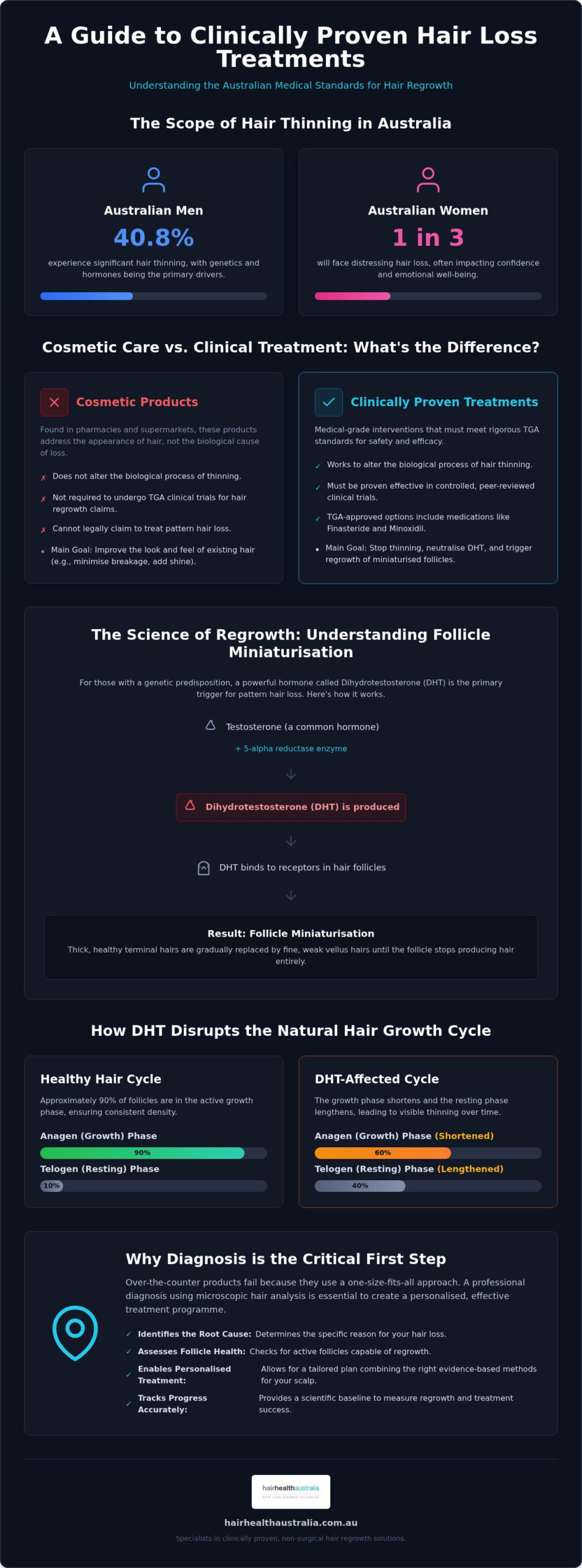
Approximately 40.8% of Australian men and one in three women will experience the distress of thinning hair, yet many find that the solutions on pharmacy shelves offer little more than empty promises. If you have spent years trial-and-erroring over-the-counter products only to see more hair in the drain, you aren’t alone in your frustration. It is exhausting to navigate a sea of conflicting online advice while feeling the mounting pressure of time. This guide is designed to replace that uncertainty with medical clarity by highlighting clinically proven hair loss treatments that are backed by rigorous Australian science and expert diagnostic standards.
You will discover how medical-grade, non-surgical interventions can stop thinning and trigger visible regrowth without the risks associated with invasive surgery. We will break down the 2026 TGA regulations for medications like Finasteride and Minoxidil, the emergence of JAK inhibitors for alopecia areata, and the latest evidence regarding Platelet-Rich Plasma. This article provides a clear overview of the current clinical landscape, explaining why a professional diagnosis is the essential first step to a personalised treatment plan that restores both your hair density and your peace of mind.
Key Takeaways
- Learn to distinguish between over-the-counter cosmetic products and TGA-approved medical interventions that meet rigorous Australian clinical standards.
- Understand the biological mechanisms of thinning and how clinically proven hair loss treatments work to neutralise DHT and revitalise miniaturised follicles.
- Discover why microscopic hair analysis is the essential diagnostic tool for identifying active follicles and developing a personalised treatment strategy.
- Compare the efficacy of various non-surgical options, from pharmaceutical solutions to the advanced technology of Low-Level Laser Therapy.
- Find out how to access a professional, no-obligation consultation at a specialised Sydney clinic focused on long-term scalp health and density.
What Defines ‘Clinically Proven’ Hair Loss Treatments in Australia?
In Australia, the term “clinically proven” isn’t just a marketing buzzword; it’s a specific legal and medical benchmark. Many supermarket shelves are lined with shampoos and tonics that claim to “support hair health” or “minimise breakage”. These are cosmetic-grade products. While they might improve the appearance of the hair you already have, they don’t have the TGA authorisation to claim they can regrow hair or treat Pattern hair loss. Real clinically proven hair loss treatments must undergo rigorous, peer-reviewed testing to demonstrate they can alter the biological process of thinning.
The TGA and Australian Clinical Standards
The Therapeutic Goods Administration (TGA) serves as the gatekeeper for medical treatments in Australia. For a treatment to be classified as “proven”, it must show a statistically significant improvement over a placebo in controlled trials. You’ll often see “clinically backed” on labels, which usually means a small, private study was conducted by the manufacturer. This is a red flag. True clinical proof requires standardised metrics: an increase in terminal hair count, improved density per square centimetre, and measurable increases in follicle shaft diameter over a 12 to 24-month period. Medications such as Finasteride and topical Minoxidil remain the benchmark here because they’ve met these exacting standards for decades.
The Role of Evidence-Based Medicine in Trichology
Evidence-based trichology moves past anecdotal “before and after” photos, which can be easily manipulated with lighting or styling. Instead, it relies on scientific data sets. In a clinical setting, we look for the “Active vs. Placebo” delta. This ensures that the regrowth isn’t just a result of seasonal changes or temporary lifestyle shifts. Because every scalp is different, effective clinical programmes often combine several clinically proven hair loss treatments to create a synergistic effect. For example, while one medication might block the hormones causing thinning, another might use technology like Low-Level Laser Therapy to stimulate cellular energy. This multi-angled approach is why a comprehensive Hair Health Check is vital. It allows a specialist to identify which specific evidence-based methods will work for your unique scalp chemistry rather than following a one-size-fits-all retail model.
The Science of Regrowth: Understanding Follicle Health and DHT
Understanding hair loss requires a shift from viewing hair as a static feature to seeing it as a dynamic biological system. Every hair on your scalp operates on a specific cycle consisting of four distinct phases. The Anagen (growth) phase can last several years, followed by the Catagen (transition) and Telogen (resting) phases, before finally reaching the Exogen (shedding) stage. In a healthy scalp, approximately 90% of follicles are in the growth phase at any given time. However, when pattern thinning begins, this rhythm is disrupted. The growth phase shortens, and the resting phase lengthens, leading to a visible reduction in hair volume and coverage.
The primary driver of this disruption is Dihydrotestosterone (DHT), a potent androgen derived from testosterone. In individuals with a genetic predisposition, DHT binds to receptors in the hair follicles, particularly at the crown and hairline. This interaction triggers a process known as miniaturisation. DHT binds to receptors in the scalp, triggering follicle miniaturisation where thick terminal hairs are gradually replaced by fine, translucent vellus hairs until the follicle ceases production entirely. According to the Better Health Channel, this hormonal sensitivity is the most common cause of hair thinning in both men and women across Australia.
DHT Blockers and Follicle Protection
Effective clinical intervention focuses on stopping this hormonal attack before the follicle becomes permanently dormant. Most clinically proven hair loss treatments work by inhibiting the 5-alpha reductase enzyme, which is responsible for converting testosterone into DHT. By lowering the levels of this hormone at the scalp level, we can protect the hair bulb and maintain the diameter of the hair shaft. It is a protective strategy. If you can shield the follicle from DHT, you allow it to return to a healthier, longer growth cycle. This is why early intervention is so critical; it’s far easier to save a miniaturising follicle than it is to reactivate one that has been inactive for years.
Stimulating the Anagen (Growth) Phase
While blocking DHT provides the necessary protection, stimulating the follicle provides the “fuel” for regrowth. This is achieved by increasing blood flow and nutrient delivery to the scalp. Enhanced microcirculation ensures that the hair bulb receives the oxygen and proteins required for robust protein synthesis. Modern clinical programmes often incorporate methods that boost cellular energy, specifically Adenosine Triphosphate (ATP), to prolong the Anagen phase. Because hair grows at a rate of roughly one centimetre per month, consistency is vital. You must align your treatment with these natural rhythms to see meaningful change. Identifying where your follicles sit in this cycle through a professional Hair Health Check is the most reliable way to determine if your resting follicles are still viable for reactivation.
Comparing Top Clinically Proven Non-Surgical Treatments
While many people assume surgery is the only definitive answer to thinning, the reality of modern trichology is far more sophisticated. Clinical programmes now utilise a multi-modal approach that targets hair loss from several biological angles simultaneously. By combining pharmaceutical intervention with advanced technology and nutritional support, patients can often achieve density improvements that were previously thought impossible without a transplant. The science of hair regrowth demonstrates that when multiple pathways are addressed, the success rate for visible regrowth increases significantly. This “combination therapy” is the cornerstone of any effective medical-grade programme.
The Big Two: Minoxidil and Finasteride
Minoxidil and Finasteride remain the foundation of most clinically proven hair loss treatments. They work in complementary ways to achieve a common goal. Minoxidil acts as a vasodilator, widening blood vessels to improve nutrient flow directly to the follicle. Finasteride, conversely, addresses the hormonal cause by inhibiting the 5-alpha reductase enzyme mentioned earlier. It’s vital to understand the clinical timeline. Hair growth is a slow physiological process. You won’t see visible changes for at least 3 to 4 months. In fact, some patients experience a temporary “shedding” phase in the first few weeks. This shouldn’t cause alarm. It indicates that the treatment is pushing out old, thin hairs to make room for new, stronger terminal hairs.
Advanced Clinical Therapies and LLLT
Moving beyond basic pharmacy options, medical-grade Low-Level Laser Therapy (LLLT) has become a vital component of non-surgical care. This technology uses specific wavelengths of light to stimulate the mitochondria within hair cells, a process known as photobiomodulation. This boost in cellular energy helps “wake up” dormant follicles and extends the growth phase. Professional-strength topicals also offer a distinct advantage over chemist-bought alternatives. They are often compounded with specific penetration enhancers to ensure the active ingredients actually reach the hair bulb rather than sitting on the scalp surface. Selecting the best hair regrowth treatment Australia 2026 requires a plan tailored to your specific follicle health rather than a generic product.
The most successful results come from treating the scalp as an ecosystem. Nutritional protocols that address iron, zinc, and vitamin D levels provide the raw materials the body needs to build new hair. When these are paired with medical treatments, the results are synergistic. One method protects the follicle, another feeds it, and a third stimulates its growth cycle. This comprehensive approach is what differentiates a clinical programme from a simple product purchase.
Beyond the Bottle: Why Diagnosis via Microscopic Analysis is Critical
Starting a treatment without a diagnosis is like beginning a journey without a map. While a GP or a hair stylist might provide a cursory visual inspection, they often lack the specialised tools to see what is happening beneath the scalp surface. A standard visual check cannot distinguish between a follicle that is permanently dormant and one that is merely miniaturised and capable of being revived. This is where microscopic analysis becomes the defining factor in the success of clinically proven hair loss treatments. By using high-definition digital scanning, we can measure the Hair Mass Index (HMI) and assess follicle spacing with mathematical precision. This data allows us to predict future thinning patterns before they become visible to the naked eye.
What Happens During a Professional Hair Health Check?
The hair health check is a systematic diagnostic process designed to uncover the root cause of your thinning. It is not a quick glance; it is a deep dive into your scalp’s ecosystem. During the consultation, we look for several key indicators:
- Scalp Environment: Identifying micro-inflammation or sebum blockages that can stifle the hair bulb.
- Miniaturisation Levels: Determining the percentage of hairs that have transitioned from terminal to vellus status.
- Follicle Density: Mapping the number of active follicles per square centimetre to establish a clinical baseline.
This high-magnification imagery allows us to identify the specific pattern and stage of hair loss with total clarity. It ensures that every step of your programme is based on your biological reality rather than guesswork.
Personalising Your Clinical Programme
Generic subscription boxes have become popular across Australia, but they often fail because they ignore individual scalp chemistry. A one-size-fits-all approach cannot account for varying levels of hormonal sensitivity or the specific rate of your follicle miniaturisation. In a clinical setting, your programme is a living document. We adjust treatment concentrations and frequencies based on your microscopic progress reports. Having a dedicated specialist in Sydney to monitor your journey provides a level of accountability and precision that a mail-order service simply cannot match. Digital tracking proves your treatment is working by showing real-time increases in hair shaft diameter and density. To move beyond guesswork and secure a data-driven path to regrowth, you should book a comprehensive hair health check today.
Starting Your Regrowth Journey at a Sydney Hair Loss Clinic
Deciding to address thinning is a significant step, and finding a non-surgical hair loss clinic in Sydney is the most effective way to ensure your efforts are grounded in science. A local clinic provides more than just access to clinically proven hair loss treatments; it offers a controlled, professional environment where your progress is measured with clinical precision. When you walk into your first consultation, you’ll find a calm, medical atmosphere rather than a high-pressure sales environment. A true clinical treatment plan is built on the diagnostic data from your scalp analysis, not a pre-packaged sales pitch. This distinction is vital for anyone seeking realistic, sustainable results.
Practical logistics are designed to be manageable for the modern Australian lifestyle. While your programme will include home-use components to maintain daily follicle stimulation, periodic clinic visits allow for professional-strength treatments and progress tracking. This hybrid approach ensures that the most intensive aspects of your care are handled by specialists, while the daily maintenance fits naturally into your morning or evening routine. By choosing a local Sydney clinic, you benefit from consistent face-to-face support and the ability to adjust your plan in real-time as your hair responds to therapy.
The Non-Surgical Advantage
Many Sydney-siders are now choosing clinical regrowth over hair transplant surgery. The reasons are often practical. Surgical options involve significant downtime, potential scarring, and the inherent risks of invasive procedures. In contrast, non-surgical clinical programmes require no recovery period, so you can maintain your work and social commitments without interruption. Clinical intervention is also far more cost-effective than late-stage restoration. By utilising clinically proven hair loss treatments to revitalise your existing follicles now, you avoid the much higher costs associated with surgical graft sessions later in life.
Commitment to Long-Term Hair Health
Achieving visible regrowth is a marathon, not a sprint. It requires a sustainable routine that respects the natural growth cycles of your follicles. Taking a proactive, science-backed approach often brings a profound sense of relief. Instead of worrying about the permanence of thinning, you’re empowered with a clear, diagnostic-led path forward. This transition from uncertainty to a structured plan is often the most rewarding part of the journey. If you’re ready to move past over-the-counter guesswork and start a professional programme, the first step is simple. Book your Hair Health Check at our Sydney clinic today.
Secure Your Hair’s Future with Clinical Precision
Navigating hair thinning doesn’t have to be a journey defined by uncertainty or wasted investment. You now understand that the most effective path involves moving beyond generic pharmacy products and embracing a diagnostic-led approach. By focusing on the biological causes of thinning and utilising clinically proven hair loss treatments, it’s possible to stop miniaturisation and revitalise dormant follicles without the need for invasive surgery. The combination of medical-grade topicals, oral interventions, and advanced technology like LLLT offers a synergistic solution that simple retail products cannot match.
At Hair Health Australia, we’ve spent over 15 years helping Sydney-siders restore their hair density through specialised non-surgical regrowth programmes. Our advanced microscopic diagnostic technology ensures that every plan is built on data, not assumptions. This professional oversight is the difference between a temporary fix and long-term scalp health. It’s time to take control of your regrowth journey with a partner who values scientific accuracy as much as you value your results. Book Your Comprehensive Hair Health Check in Sydney today and gain the clarity you need to move forward. You don’t have to accept hair loss as permanent; a science-backed solution is within your reach.
Frequently Asked Questions
Are hair loss treatments safe for long-term use?
Yes, the most widely recognised clinically proven hair loss treatments are designed for sustained maintenance. Because pattern thinning is a progressive condition, treatment usually continues for as long as you wish to retain your results. TGA-approved medications and medical-grade devices have undergone extensive safety trials; however, a specialist should monitor your progress to manage any potential side effects or adjust concentrations as your scalp health evolves over time.
How long does it take to see results from clinically proven treatments?
Visible results typically manifest between three and six months after beginning a consistent programme. This timeline is dictated by the natural hair growth cycle, as follicles need time to transition from the resting phase back into the active growth phase. While some patients notice reduced shedding within the first few weeks, significant improvements in density and hair shaft diameter require several months of continuous cellular stimulation to become apparent.
Can I regrow hair if I am already completely bald in some areas?
Regrowth is possible if the hair follicles are miniaturised but still active. If an area has been completely smooth for many years, the follicles may have become dormant and replaced by scar tissue, making non-surgical regrowth in that specific spot less likely. A microscopic scan is the only way to determine if viable follicles remain under the surface. If active bulbs are detected, a clinical programme can often revitalise them.
Do I need a prescription for the most effective hair loss treatments in Australia?
Potent medical treatments often require a prescription from a qualified professional. In Australia, medications like oral Finasteride or oral Minoxidil are Schedule 4 substances and cannot be purchased over the counter. While topical Minoxidil is available as a pharmacy medicine, clinical-strength compounded versions often require a script. This ensures the treatment is appropriate for your medical history and that your progress is professionally supervised for the best outcome.
What happens if I stop using a clinically proven hair loss treatment?
If you discontinue a treatment programme, your hair will gradually return to its original thinning pattern. The benefits of clinically proven hair loss treatments last as long as the follicles are being supported. Once the DHT-blocking or growth-stimulating agents are removed, the miniaturisation process will eventually resume. Usually, any hair gained or maintained during the treatment period will slowly thin out over a period of six to twelve months.
Can women use the same hair loss treatments as men?
Women can use many of the same technologies as men, but the pharmaceutical approach often differs significantly. While topical Minoxidil and Low-Level Laser Therapy are effective for both sexes, certain DHT blockers used by men are often contraindicated for women, particularly those of childbearing age. Female pattern hair loss often requires a more nuanced assessment of hormonal health, which is why a personalised diagnostic check is essential before starting any medical programme.
How much do clinical hair loss programmes typically cost in Sydney?
The cost of a clinical programme in Sydney varies depending on the severity of thinning and the specific combination of therapies required. A comprehensive plan often includes a mix of in-clinic sessions, such as laser therapy, and prescribed home-use components. Rather than a one-off fee, these programmes are usually structured around the duration of the hair growth cycle. A professional consultation provides a clear, transparent breakdown of the necessary steps for your specific condition.
Is microscopic hair analysis painful or invasive?
Microscopic hair analysis is a completely painless and non-invasive procedure. It involves using a high-definition digital sensor to scan the scalp surface and follicles at high magnification. There are no needles or biopsies involved. The process allows you to see your own follicles on a screen in real-time, providing a clear visual baseline that is used to track your progress and verify that your treatment plan is working effectively.