Hair Transplant Alternatives in Australia: The 2026 Clinical Guide

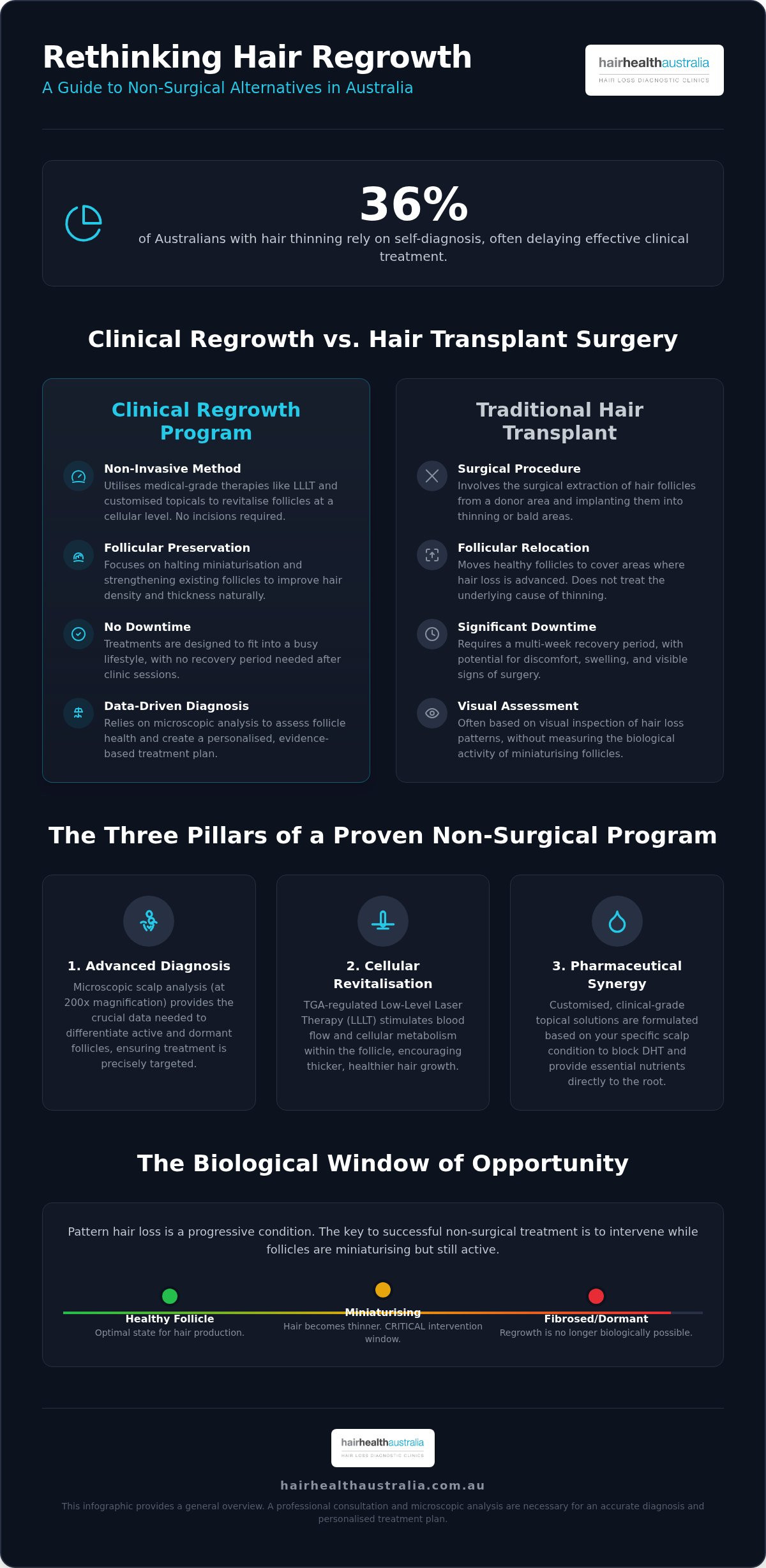
Approximately 36% of Australians experiencing hair thinning rely on self-diagnosis rather than seeking professional clinical advice, often spending years on “miracle” products that fail to deliver. While the high cost and surgical risks of a hair transplant might feel like the only definitive answer, the reality is that many individuals can achieve significant regrowth without ever entering an operating theatre. It’s understandable to feel overwhelmed by conflicting online claims and the anxiety of potential scarring. You’re looking for clarity, not another marketing gimmick, and you deserve a path that is both scientifically sound and transparent.

This guide introduces the evidence-based hair transplant alternatives Australia provides in 2026, prioritising non-invasive clinical protocols that target follicular miniaturisation at its source. We’ll outline how microscopic scalp analysis and TGA-regulated treatments, such as medical-grade laser therapy and customised topical solutions, can halt active shedding and improve visible density. You’ll discover a structured, scientific approach to regrowth that replaces surgical uncertainty with a personalised plan grounded in Australian clinical standards, ensuring your journey to hair health is both safe and effective.

Key Takeaways

  • Understand why Australian patients are shifting toward non-invasive protocols that offer clinical results without the downtime or surgical risks associated with traditional procedures.
  • Learn how advanced microscopic analysis differentiates between active and dormant follicles to ensure your treatment plan is based on biological data rather than guesswork.
  • Compare the financial and physical investment of surgical procedures against the proven hair transplant alternatives Australia provides in 2026.
  • Discover the “three pillars” of hair regrowth, focusing on how Low-Level Laser Therapy (LLLT) and pharmaceutical synergy revitalise thinning hair at a cellular level.
  • Identify the critical questions to ask a Sydney-based specialist to verify the clinical validity and TGA compliance of their non-surgical programs.

The Rise of Non-Surgical Hair Transplant Alternatives in Australia

The landscape of hair restoration in Australia has undergone a significant transformation. More individuals are now prioritising non-invasive methods over surgical intervention, driven by a desire for low-downtime solutions that fit a busy lifestyle. In 2026, clinical hair transplant alternatives Australia offer a pathway to density without the scalpel. These protocols are distinct from cosmetic “hair systems” or hairpieces, which merely mask thinning. Biological regrowth therapies focus on revitalising the scalp’s natural ecosystem to produce thicker, healthier strands. Central to this approach is follicular preservation. It’s far more effective to save a weakened follicle than to attempt to replace it later through surgery.

TGA Standards and Clinical Validity

Australian patients benefit from some of the strictest medical regulations in the world. The Therapeutic Goods Administration (TGA) oversees the devices and medications used in reputable clinics, ensuring they meet rigorous safety benchmarks. This oversight is why clinical-grade concentrations often outperform standard pharmacy-grade options found on supermarket shelves. While “hair tourism” in overseas markets might seem cost-effective initially, it lacks the systematic care and verified standards found locally. Choosing an Australian clinic means accessing protocols that are monitored for quality and consistency, providing a level of security that surgery abroad cannot match.

The Biological Window of Opportunity

Understanding Pattern hair loss is essential for anyone considering alternatives to surgery. This condition involves follicular miniaturisation, where hair strands become progressively thinner until the follicle stops producing hair altogether. Timing is everything in this process. Once a hair follicle has completely fibrosed and the scalp surface becomes smooth, biological regrowth is no longer a viable option. Therefore, the primary clinical objective of any successful programme is to halt active hair fall immediately. By intervening while follicles are still active, you can reverse thinning and avoid the need for invasive procedures. A Hair Health Check is the most reliable way to determine if you are still within this critical window and to establish a baseline for your recovery.

Why Accurate Diagnosis is the Foundation of Regrowth

Relying on a mirror for a diagnosis is a common mistake that leads many Australians to believe surgery is their only option. A standard visual inspection is subjective and fails to account for the biological activity beneath the skin. While you might see thinning, you can’t see the health of the follicle itself. Accurate data is the only way to determine if hair transplant alternatives Australia provides are right for your specific situation. Without this, you risk investing in treatments that aren’t suited to your biological needs.

The Power of Microscopic Hair Analysis

Microscopic scanning allows us to measure hair shaft diameter with clinical precision. This is vital for detecting early genetic thinning long before it’s noticeable to the naked eye. By booking a professional Hair Health Check, you can view your scalp at 200x magnification. This level of detail helps us distinguish between permanent genetic loss and temporary conditions like telogen effluvium, which is often triggered by stress or illness. Identifying active vs. dormant follicles ensures we don’t waste time on areas that can no longer be revived.

A healthy scalp environment is the prerequisite for any regrowth protocol. Excess sebum or chronic inflammation can block follicles and hinder the absorption of growth stimulants. Understanding Patterned hair loss treatments in Australia requires looking at the scalp as a whole ecosystem. We use baseline data from your initial scan to track every micron of progress, allowing us to adjust your clinical protocol as your scalp health improves.

Personalised Protocols vs. Generic Products

Generic products from a local chemist often fail because they follow a “one-size-fits-all” model. They don’t account for the varying degrees of DHT sensitivity or the specific stage of male or female pattern baldness you’re experiencing. Clinical data allows for the precise customisation of DHT blockers and growth stimulants. This tailored approach ensures you’re receiving the right concentration of active ingredients for your specific thinning pattern. It’s about moving away from guesswork and toward a systematic, evidence-based plan.

When exploring the most effective hair transplant alternatives Australia offers, a personalised clinical roadmap is always the most reliable path to success. If you’re ready for a clearer picture of your options, it’s time to book a professional Hair Health Check to begin your diagnostic journey.

Comparing Clinical Regrowth vs. Hair Transplant Surgery

When weighing up the hair transplant alternatives Australia offers, the comparison often begins with the financial commitment. While a surgical procedure in an Australian clinic typically ranges from A$11,000 to over A$30,000, clinical regrowth programs represent a more manageable and scalable investment. Beyond the initial price tag, the recovery profiles are vastly different. A clinical approach allows for an immediate return to professional and social activities; surgery, however, requires significant healing time, often involving visible scabbing and swelling that can last for weeks.

A common misconception is that a transplant serves as a final solution. Surgery merely redistributes existing hair. It doesn’t address the underlying cause of thinning in the non-transplanted areas. This is why Diagnosing hair loss through a clinical lens is so important. Without a structured regrowth plan, the surrounding natural hair continues to fall, often leaving the transplanted grafts looking isolated and unnatural over time. Clinical protocols ensure that your existing hair is protected alongside any new growth.

The Financial and Lifestyle ROI

Many Australians choose clinical therapy to avoid the aesthetic risks associated with invasive surgery. Older methods often resulted in an unnatural “pluggy” appearance or linear scarring. Modern Best Hair Regrowth Treatment Australia 2026 protocols focus on maintaining your natural hairline and density. By prioritising the health of your existing follicles, you preserve a natural hair exit angle that surgery often struggles to replicate. This approach offers a higher lifestyle ROI, as you don’t have to explain a sudden, drastic change in your appearance or hide away during a long recovery period.

Biological Impact: Saving Your Natural Follicles

Clinical therapy focuses on strengthening your natural hair rather than just moving it around. This is particularly important for younger patients who may not have a stable donor area yet. By addressing follicular miniaturisation early, you maintain a consistent density across the whole scalp. This non-invasive route eliminates the risks of surgical complications such as infection, nerve damage, or poor graft uptake. For most individuals, effective hair transplant alternatives Australia provides are the preferred starting point, allowing you to exhaust biological regrowth options before ever considering a scalpel.
Hair Transplant Alternatives in Australia: The 2026 Clinical Guide

The Three Pillars of a Proven Non-Surgical Program

A successful non-surgical protocol is never a matter of luck. It’s the result of a coordinated clinical effort that addresses the biological causes of hair loss from multiple angles. For those seeking hair transplant alternatives Australia, the most effective programmes are built on a foundation of synergy. By combining targeted pharmaceutical intervention with cellular stimulants and professional scalp care, we create an environment where natural hair can thrive. This multi-faceted approach ensures that every stage of the hair’s growth cycle receives the support it needs to function at its peak.

Cellular Stimulation and Laser Therapy

Medical-grade Low-Level Laser Therapy (LLLT) is a cornerstone of modern hair restoration. Unlike low-powered laser combs or consumer caps found online, clinical-strength LLLT devices provide the specific wavelength and power density required to reach the follicle base. This stimulation is designed to extend the Anagen (growth) phase of the hair cycle, preventing the premature shedding associated with genetic thinning. Light energy absorbed by the hair follicle triggers a biochemical reaction that increases ATP production, providing the cellular energy required to transition follicles from a dormant state back into the active growth phase. This process effectively re-energises the mitochondria to promote thicker and more resilient strands.

DHT Blockers and Scalp Nutrition

The second and third pillars involve managing the chemical environment of the scalp. Dihydrotestosterone (DHT) is the primary hormone responsible for shrinking hair follicles in pattern loss. Clinical protocols focus on neutralising DHT at the site of the follicle without the systemic side effects often associated with oral medications. This is paired with professional scalp cleansing to remove hardened sebum and environmental debris that can physically block new growth. A clean, nutrient-rich scalp ensures that topical growth activators can penetrate deeply to increase localised blood flow and deliver essential minerals. To understand how these elements work together, you can refer to our Clinical Hair Treatment: A Professional Guide for a deeper dive into non-surgical restoration.

Sustainable results require consistency and regular clinical monitoring. Hair growth is a slow biological process; therefore, adjusting the protocol based on microscopic data is vital for long-term success. We track your progress every step of the way to ensure your plan remains optimised for your evolving needs. If you’re ready to see how these three pillars can be applied to your situation, the first step is to arrange a clinical Hair Health Check to assess your current scalp condition.

Choosing a Specialist Hair Loss Clinic in Sydney

Selecting the right partner for your hair restoration journey is as critical as the treatment itself. In Sydney, a dedicated non-surgical clinic offers a level of focus that high-volume surgical centres often lack. These specialists prioritise the long-term biological health of your hair rather than surgical throughput. It feels like a consultation with a trusted specialist who is both knowledgeable and approachable, replacing uncertainty with a clear, actionable roadmap. This individual-centric approach ensures your plan is designed for your specific scalp environment.

When evaluating hair transplant alternatives Australia, you must ensure the clinic adheres to rigorous clinical standards. Ask if they provide microscopic evidence of regrowth at every stage. Inquire if their protocols are TGA-compliant and if they offer personalised formulations tailored to your specific diagnostic data. Data drives every decision. A reliable Sydney specialist will provide a steady and composed presence, guiding you through the science of your regrowth with complete honesty and transparency.

Clinical Care vs. Pharmacy “DIY”

Self-treating with over-the-counter products is often a gamble that results in lost time and further thinning. Without a professional microscopic diagnosis, you’re essentially guessing which biological pathway needs support. Guesswork is the enemy of results. Specialist clinics provide access to high-potency formulations and medical-grade technology that generic pharmacy products cannot match. Regular monitoring allows your specialist to adjust your programme in real-time, ensuring that as your scalp health improves, your treatment remains optimised for maximum density.

Taking the First Step Toward Regrowth

The “wait and see” approach is the most common reason hair loss becomes permanent. Once a follicle has reached the point of no return due to advanced follicular miniaturisation, the window for non-surgical intervention closes. A diagnostic scan at our Sydney centre removes the guesswork, providing the clarity required to stop active hair fall and begin the regrowth process. At Hair Health Australia, we’ve been dedicated to evidence-based regrowth since 2009, helping Australians achieve visible results without the need for a scalpel.

Your journey to thicker hair begins with a single, data-driven step. Organise your personalised Hair Health Check at our Sydney clinic today.

Your Path to Sustainable Hair Restoration

The journey to restoring hair density doesn’t have to involve a scalpel or significant surgical downtime. By prioritising a diagnosis-led approach, you can move away from the uncertainty of generic products and toward a plan that respects your unique biology. The synergy of medical-grade laser therapy, targeted DHT management, and professional scalp care creates the optimal environment for natural regrowth. These hair transplant alternatives Australia provides in 2026 are grounded in clinical validity and Australian standards, offering a viable route for those who intervene before thinning becomes permanent.

Since 2009, Hair Health Australia has specialised in non-invasive protocols that target the root cause of thinning. Our process utilises advanced microscopic diagnostic technology to ensure your treatment is based on objective data. If you’re ready to gain clarity and take control of your hair health, the next step is a professional consultation. Book Your Clinical Hair Health Check in Sydney to receive a personalised protocol tailored to Australian standards. Taking action today is the most effective way to preserve your natural follicles and secure a future of thicker hair.

Frequently Asked Questions

Are non-surgical hair transplant alternatives as effective as surgery?

Clinical alternatives are highly effective for halting hair fall and increasing density in areas where follicles remain active. While surgery provides a physical redistribution of hair, it doesn’t address the underlying biological causes of thinning. For many, the hair transplant alternatives Australia offers are a superior first step because they preserve natural follicles and avoid surgical risks. The effectiveness is measured by the stabilisation of loss and the revitalisation of miniaturised hairs at a cellular level.

How long does a clinical regrowth program take to show results?

Visible results typically emerge between three to six months, aligning with the natural biological hair growth cycle. The first phase of any clinical programme focuses on halting active shedding, which often occurs within the first few weeks. Significant density improvements require patience as miniaturised follicles transition back into the Anagen growth phase. We use microscopic tracking during your follow-up appointments to verify progress before changes are visible to the naked eye.

What is the best hair transplant alternative for women in Australia?

The most effective approach for women involves a combination of medical-grade Low-Level Laser Therapy (LLLT) and customised topical growth activators. Since female hair loss is often diffuse rather than concentrated in one area, non-surgical protocols are ideal for improving overall volume and scalp health. These treatments target the hormonal and nutritional factors specific to female pattern thinning. A personalised clinical plan ensures that the concentration of active ingredients is optimised for your specific diagnostic results.

Are there any side effects to clinical hair loss treatments?

Clinical protocols are designed to be non-invasive with a high safety profile. Unlike some oral medications that can have systemic effects, our topical and light-based therapies focus on localised scalp health. Some clients may experience minor, temporary scalp sensitivity or dryness as the skin adjusts to new growth stimulants. Because our protocols are tailored to your specific diagnostic data, we can adjust the concentration of active ingredients to minimise any discomfort while maintaining clinical efficacy throughout your programme.

Can I use non-surgical treatments if I have already had a hair transplant?

Clinical support is essential for protecting the natural hair surrounding your transplanted grafts. A transplant does not stop the progression of genetic thinning in non-treated areas; therefore, ongoing maintenance is required to prevent a “patchy” appearance over time. Integrating hair transplant alternatives Australia provides can help strengthen your existing follicles and improve the overall density of your scalp. This ensures your surgical results remain aesthetically pleasing and natural-looking for the long term.

Is microscopic hair analysis necessary for a hair loss diagnosis?

Microscopic analysis is the only way to accurately assess follicular viability and measure hair shaft diameter. A visual check cannot distinguish between a dormant follicle and one that has completely fibrosed. By viewing the scalp at 200x magnification, we can identify the specific pattern of loss and rule out temporary conditions. This data is the foundation of a successful programme, as it allows us to target treatments precisely where they will be most effective.

Are these treatments covered by private health insurance in Australia?

Most hair loss treatments are classified as cosmetic procedures by Australian private health insurers and are not typically covered by standard policies. Similarly, these clinical protocols are not eligible for Medicare rebates. However, many clients find the long-term investment in a non-surgical programme more manageable than the high upfront costs of surgery. We recommend checking with your specific provider to see if any aspects of your diagnostic consultations might be eligible for a claim under specialised extras.

What happens to my hair if I stop the clinical treatment program?

If you cease treatment, the underlying biological factors driving genetic thinning will eventually resume their natural course. Since pattern loss is a progressive condition, the follicles will slowly begin the miniaturisation process again without the support of growth stimulants and DHT blockers. The hair you have preserved or regrown during the programme won’t fall out overnight. We focus on establishing a sustainable maintenance phase to help you keep your results with minimal ongoing effort.
PRP vs Laser for Hair Loss in Sydney: Which is Best?

What if the choice between PRP and laser therapy isn’t about which one is better, but about which biological signal your hair follicles are failing to receive? If you’ve spent hours researching clinics across Sydney, you’ve likely felt the weight of indecision. It’s exhausting to weigh clinical claims while your hair density continues to decline. You want a solution that actually works without the invasive nature of surgery. When evaluating the merits of PRP vs laser therapy for hair loss Sydney residents often find themselves caught between two very different scientific approaches.

This guide will clarify that confusion by breaking down the cellular mechanics of both treatments. You’ll discover how Platelet-Rich Plasma uses your own growth factors to jumpstart follicles, while Low-Level Laser Therapy provides the mitochondrial energy needed to sustain that growth. We’ll examine the clinical outcomes, the time commitment required for a busy lifestyle, and why a professional hair health check is the essential first step in your restoration journey. By understanding the science behind these non-surgical protocols, you can move forward with a clear, evidence-based plan for thicker hair.

Key Takeaways

  • Understand how PRP acts as a biological catalyst, using your own platelets to signal dormant follicles to return to an active growth phase.
  • Learn how Low-Level Laser Therapy provides the necessary cellular fuel to sustain follicle health and increase hair diameter through photobiomodulation.
  • Evaluate the specific benefits of PRP vs laser therapy for hair loss Sydney specialists use to treat conditions like androgenetic alopecia and telogen effluvium.
  • Discover why a microscopic hair health check is the essential first step to distinguish between active thinning and permanent follicle loss.
  • Recognise how a structured, non-surgical approach provides a reliable alternative to invasive procedures for restoring hair density and confidence.

The Science of Regrowth: Understanding PRP and Laser Therapy

The Australian hair restoration market has moved toward more sophisticated, evidence-based methods. While surgical transplants were once the primary option for those facing significant thinning, the focus has shifted toward clinical, non-surgical interventions. For many individuals in New South Wales, the goal is to intervene early and preserve existing follicles before permanent loss occurs. When evaluating PRP vs laser therapy for hair loss Sydney residents often seek a balance between biological repair and technological stimulation. Both treatments represent the pinnacle of modern trichology, offering pathways to thicker hair without the significant recovery time or high costs associated with invasive surgery.

Leading international resources like The Hair Clinic emphasise that while non-surgical options are highly effective, a comprehensive approach often yields the most sustainable results for long-term hair density.

The Shift Toward Non-Surgical Clinical Care

The rise of clinical-grade treatments in Sydney marks a departure from the trial-and-error approach of the past. Generic “off-the-shelf” shampoos and over-the-counter supplements often fail because they don’t address the underlying biological causes of follicle miniaturisation. Professional protocols succeed because they are grounded in clinical oversight and diagnostic accuracy. This shift is driven by a desire for realistic outcomes and treatments that integrate seamlessly into a high-pressure professional life. A microscopic hair health check is often the essential starting point, allowing specialists to identify the specific stage of thinning before a single treatment begins.

Biological vs. Technological Stimulants

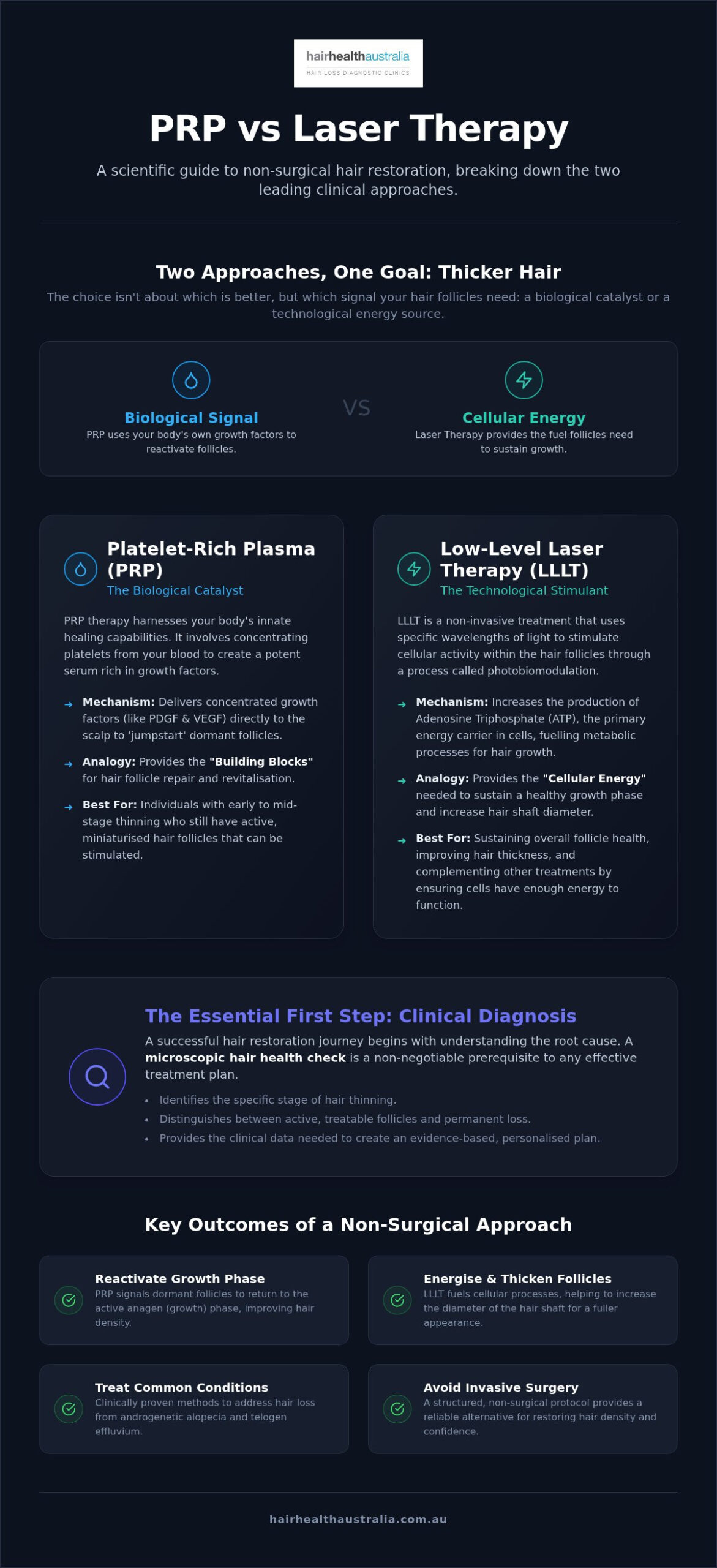
Understanding the core difference between these two modalities is crucial for managing expectations. Platelet-Rich Plasma (PRP) functions as a biological catalyst. The process involves concentrating the growth factors found in your own blood and delivering them directly to the scalp. These platelets signal stem cells to revitalise dormant follicles and improve the thickness of the hair shaft. It’s a targeted, organic message that encourages the body to repair itself from within.

In contrast, Low-Level Laser Therapy (LLLT) acts as a technological stimulant. It utilises specific wavelengths of light to trigger a process known as photobiomodulation. This interaction increases the production of Adenosine Triphosphate (ATP) within the cells. Think of ATP as the fuel your follicles need to function at their peak. While their mechanisms differ, their objective is identical: to extend the Anagen (growth) phase of the hair cycle and reverse the thinning process. Determining the best path between PRP vs laser therapy for hair loss Sydney specialists provide involves assessing whether your follicles require a biological boost or a consistent supply of cellular energy.

Platelet-Rich Plasma (PRP): The Biological Catalyst for Hair Density

Platelet-Rich Plasma (PRP) represents a sophisticated shift in how we approach hair restoration. Rather than relying on external chemicals, this protocol harnesses the regenerative power already present in your vascular system. The process involves extracting a small sample of your blood and concentrating the platelets to create a potent serum often described as ‘liquid gold’. These platelets contain essential growth factors, such as Platelet-Derived Growth Factor (PDGF) and Vascular Endothelial Growth Factor (VEGF), which act as biological messengers. When these messengers reach the hair bulge area, they signal dormant stem cells to revitalise, encouraging a transition from the resting phase back into active growth.

Ideal candidates for this biological intervention are typically those experiencing early to mid-stage thinning. It’s particularly effective for individuals who still have active, albeit miniaturised, follicles. When weighing the benefits of PRP vs laser therapy for hair loss Sydney residents should consider that PRP provides the ‘building blocks’ for repair, whereas laser provides the energy to use them. To determine if your follicles are in a receptive stage for this treatment, a professional diagnostic assessment is the most reliable starting point.

The PRP Treatment Experience

Success begins before you enter the clinic. We recommend increasing your water intake and focusing on nutrient-dense meals 24 hours prior to your session to ensure the highest quality plasma. Once at the clinic, the process is methodical. After your blood is collected, it’s placed in a high-speed centrifuge. This machine precisely separates the platelets from other blood components, ensuring a high concentration of growth factors. During the micro-injection phase, comfort is a priority. Specialists often use cooling devices or topical anaesthetics to ensure the process is manageable and efficient. The entire appointment typically fits within a standard lunch hour, making it a practical choice for those working in the Sydney CBD.

Recovery and Realistic Expectations

The recovery period is remarkably brief. You can return to your daily routine almost immediately, though we advise avoiding strenuous exercise or washing your hair for the first 24 hours. This allows the scalp to settle and the growth factors to begin their work undisturbed. Patience is vital in biological therapy. While some notice an improvement in hair texture early on, the most significant increases in density usually appear after three to four sessions, spaced roughly one month apart. This timeline allows the follicles to complete a full growth cycle. Standard Sydney clinical protocols often include a maintenance session every six to twelve months to sustain the revitalised density and protect against further thinning.

Low-Level Laser Therapy (LLLT): Energising Follicles at a Cellular Level

While PRP addresses the biological signals within the scalp, Low-Level Laser Therapy (LLLT) focuses on the bio-energetic environment of the follicle. It’s a sophisticated application of photobiomodulation. This process occurs when specific wavelengths of light penetrate the scalp to reach the base of the hair follicle. Once absorbed by the mitochondria, this light energy is converted into Adenosine Triphosphate (ATP). This increase in cellular fuel allows follicles to function more efficiently, extending the growth phase and improving hair diameter. For those comparing PRP vs laser therapy for hair loss Sydney clinics provide, LLLT stands out as a completely non-invasive, painless option that requires zero recovery time.

A common misconception is that home-use laser caps provide the same efficacy as medical-grade clinical equipment. Clinical-grade lasers utilise high-density diode panels or hoods that provide uniform coverage and consistent power output. These devices are calibrated to ensure the light penetrates deeply enough to reach the dermal papilla. Home devices often lack the necessary power density to achieve these clinical outcomes. Additionally, clinical LLLT improves local microcirculation through vasodilation. This ensures that oxygen and nutrients are effectively delivered to the hair roots while simultaneously reducing follicular inflammation.

Clinical Laser Protocols in Sydney

Success with light therapy depends on a structured, methodical schedule. In a professional Sydney clinical setting, we typically recommend two to three sessions per week. Each session lasts approximately 20 to 30 minutes, during which the patient sits comfortably under a medical-grade laser hood. This consistency is vital. The cumulative effect of the light energy is what sustains the follicle’s transition into the Anagen phase. Many patients find this time restorative, often using it to read or catch up on emails, as it fits easily into a busy professional routine.

Who Benefits Most from Light Therapy?

LLLT is particularly effective for treating diffuse thinning where hair is present but losing its vitality and diameter. It serves as an excellent preventative measure for those with a genetic predisposition to hair loss, helping to maintain existing density. We often integrate laser therapy with topical treatments to maximise results. The increased blood flow and cellular activity triggered by the laser can enhance the absorption and efficacy of clinical serums. When assessing the long-term benefits of PRP vs laser therapy for hair loss Sydney patients often find that LLLT provides the consistent energy needed to maintain results between biological treatments. This multi-faceted approach ensures that the follicle is supported from both a technological and nutritional standpoint, providing a comprehensive path toward hair restoration.

PRP vs Laser for Hair Loss in Sydney: Which is Best?

PRP vs Laser Therapy: A Comparative Analysis of Efficacy and Experience

When deciding between PRP vs laser therapy for hair loss Sydney residents must consider the fundamental difference in how these treatments interact with the scalp. PRP is an active biological intervention. It deliberately triggers a healing response by introducing a high concentration of growth factors directly into the tissue. This makes it an aggressive, effective choice for those seeing rapid thinning or those who want to jumpstart a stagnant growth cycle. In contrast, Low-Level Laser Therapy is a passive, supportive treatment. It doesn’t force a response but rather provides the ideal cellular environment for follicles to thrive. It’s gentle, consistent, and requires no recovery time, making it an excellent foundation for any long-term hair health programme.

The side effect profiles also differ significantly. Because PRP involves micro-injections, patients might experience mild tenderness, swelling, or occasional bruising at the injection sites for 24 to 48 hours. These are standard clinical responses and resolve quickly. Laser therapy carries virtually no risk of side effects. It’s a non-thermal light exposure that feels like nothing more than a slight warmth on the scalp. For individuals with sensitive skin or those who are needle-phobic, laser therapy offers a pathway to restoration without the anxiety of clinical procedures.

Choosing Based on Your Hair Loss Stage

Your specific stage of hair loss often dictates the best starting point. PRP is frequently the superior choice for rapid intervention in cases of Androgenetic Alopecia (male or female pattern baldness). It targets the miniaturisation process with biological intensity. Laser therapy, however, is often preferred for stabilising hair quality or assisting recovery from Telogen Effluvium (temporary shedding due to stress or illness). Many Sydney specialists now advocate for the ‘Synergy Effect’. By combining the biological trigger of PRP with the consistent cellular energy of laser therapy, you address hair loss from two different scientific angles simultaneously. This combination is often the most effective way to achieve significant, lasting density.

Lifestyle Considerations for Sydney Patients

Managing a restoration plan requires a realistic look at your weekly schedule. PRP involves fewer, more intensive sessions, typically requiring one visit per month. This suits those who can’t commit to a weekly clinic visit but can spare an hour once every few weeks. Clinical laser therapy requires more frequent visits, usually two to three times a week, but each session is brief and requires no ‘settling’ period afterward. You can walk straight from a laser session into a boardroom meeting in the CBD without anyone knowing you’ve had treatment.

It’s also vital to prepare for the ‘shedding’ phase. This is a normal part of the regrowth journey where weaker hairs are pushed out to make room for stronger, thicker shafts. Understanding these nuances is part of choosing a non-surgical hair loss clinic in Sydney that prioritises patient education. To ensure you select the modality that matches your biological needs and lifestyle, we recommend you book a microscopic hair health check to establish a professional baseline before beginning any protocol.

Visual inspection is often the first step people take at home, but it’s fundamentally limited. A mirror can’t reveal the diameter of individual hair shafts or the presence of underlying scalp inflammation. A professional diagnosis moves beyond what’s visible to the naked eye. It provides the empirical data necessary to decide between PRP vs laser therapy for hair loss Sydney clinics offer. Without this clarity, you risk investing in a protocol that may not align with your current stage of follicle miniaturisation. Identifying whether a follicle is simply dormant or has ceased function entirely is the difference between a successful regrowth journey and a wasted investment.

The Microscopic Hair Health Check

The diagnostic process at our clinic centres on a detailed microscopic analysis. We examine the scalp at high magnification to identify specific markers of hair health that dictate treatment success. We look for the ratio of terminal hairs to vellus hairs, which tells us exactly how far the thinning process has progressed. We also assess the scalp environment for signs of sebum build-up or inflammation that might hinder the efficacy of clinical serums. This data is invaluable. It allows us to predict with high accuracy whether your follicles are likely to respond better to the biological stimulus of PRP or the cellular energy of laser therapy. You can book your Hair Health Check in Sydney to gain this essential baseline before starting any treatment.

Your Path Forward at Hair Health Australia

At Hair Health Australia, we prioritise clinical honesty above all else. If our analysis shows that follicles have reached a stage of permanent scarring where non-surgical methods won’t be effective, we’ll tell you. Our goal isn’t to provide a one-size-fits-all package but to develop a bespoke restoration plan that offers a high probability of success. This partnership is built on transparency and evidence-based expectations. We understand the social self-consciousness that comes with declining hair density, and we aim to replace that uncertainty with a clear, scientific path forward.

The debate between PRP vs laser therapy for hair loss Sydney residents often find confusing becomes a simple clinical decision once your data is on the table. Whether you require the concentrated growth factors of PRP, the mitochondrial boost of medical-grade laser, or a synergistic combination of both, your plan will be uniquely yours. It’s time to stop guessing and start measuring. We invite you to start your personalised hair health journey today and regain confidence in your appearance through professional, non-surgical care.

Take Control of Your Hair Restoration Journey

Deciding between biological stimulus and technological energy is a significant step toward reclaiming your confidence. PRP revitalises follicles using your body’s own growth factors, while laser therapy ensures those follicles have the cellular fuel to thrive. Often, the most effective results come from a synergistic approach that combines both methods. However, the success of any protocol depends on an accurate starting point. When comparing PRP vs laser therapy for hair loss Sydney specialists emphasise that data-driven diagnosis is the only way to ensure you aren’t wasting time on ineffective treatments.

Since 2009, our clinic has provided specialised, non-surgical regrowth protocols tailored to the individual. By utilising clinical microscopic hair analysis, we identify the precise state of your scalp health before any treatment begins. This transparency ensures your plan is grounded in science rather than guesswork. You don’t have to navigate this process alone. Book Your Comprehensive Sydney Hair Health Check Today to receive a clear, expert-led roadmap for your hair health. We’re here to help you achieve the thicker, healthier hair you deserve.

Frequently Asked Questions

Is PRP or laser therapy better for receding hairlines?

PRP is generally more effective for targeted areas like a receding hairline because it delivers concentrated growth factors directly to the thinning site. Receding hairlines often involve aggressive follicle miniaturisation that requires a biological catalyst to reverse. While laser therapy is a valuable supportive tool, the active nature of PRP makes it the primary clinical choice for defined areas of loss where follicles need a potent signal to return to growth.

Can I combine PRP and laser therapy for faster results?

Combining these treatments is often the most effective strategy for Sydney patients seeking robust density. While PRP provides the biological building blocks for repair, laser therapy supplies the cellular energy required to utilise those blocks. This dual-action approach addresses hair loss from both nutritional and energetic perspectives. Many clinical protocols use this synergy to accelerate the transition of follicles from the resting phase back into the active growth phase.

How many PRP sessions will I need before I see new hair growth?

Most clinical protocols in Sydney recommend an initial course of three to four sessions spaced roughly four weeks apart. While some individuals notice improved hair texture within the first month, visible increases in density typically appear after the third session. This timeline aligns with the natural hair growth cycle, as follicles require several months to produce a new, thicker hair shaft that is visible to the naked eye.

Does laser therapy for hair loss actually work for everyone?

Laser therapy is only effective if the hair follicles are still active and capable of repair. It works by energising miniaturising follicles through photobiomodulation, but it cannot revive follicles that have permanently ceased function or been replaced by scar tissue. This is why a microscopic diagnosis is essential to determine if your specific type of hair loss is receptive to light-based stimulation before you begin a program.

Are there any side effects to PRP injections in the scalp?

Side effects are minimal because the treatment uses your own blood, eliminating the risk of allergic reactions. You might experience temporary tenderness, mild swelling, or slight bruising at the injection sites for 24 to 48 hours. These are standard clinical responses that resolve quickly without intervention. Most patients return to their normal professional routine in the Sydney CBD immediately after their appointment without any visible signs of treatment.

What happens if I stop laser therapy treatments?

Hair loss is often a progressive condition, so stopping treatment may lead to a gradual return to the previous thinning pattern over several months. Laser therapy provides a constant energy source to sustain follicle health and hair diameter. Without this ongoing support, the biological factors driving genetic hair loss may eventually overwhelm the follicle’s ability to maintain its growth phase, leading to a slow decline in hair density.

Is the treatment at a Sydney hair clinic covered by Medicare?

Non-surgical hair restoration treatments like PRP and laser therapy are generally considered elective cosmetic procedures and are not covered by Medicare. Some private health insurance extras might offer partial rebates depending on your specific policy and the clinical nature of the provider. We recommend checking with your insurer regarding coverage for clinical trichology services to see if you are eligible for any out-of-pocket cost reductions.

How do I know if my hair follicles are still active or permanently dead?

A microscopic hair health check is the only definitive way to assess follicle viability accurately. During this scan, a specialist identifies miniaturised hairs that are still active versus areas where follicles have closed and formed scar tissue. When choosing between PRP vs laser therapy for hair loss Sydney residents should rely on this data-driven approach to ensure they are viable candidates for non-surgical restoration before committing to a plan.