Female Hair Loss Cure: Effective Solutions for Women in 2026

What if the reason you haven’t found a female hair loss cure yet isn’t a lack of options, but a lack of the right, personalised approach? For many women, that distinction makes all the difference.

If you’ve spent months feeling frustrated by thinning hair, cycling through products that promise results and deliver disappointment, you’re not alone. Hair loss affects women of all ages, and the emotional weight it carries, from knocks to self-confidence to uncertainty about the future, is very real. The confusion around which treatments actually work only adds to that burden.

The good news is that effective solutions do exist, and the science behind them is stronger than ever. This article cuts through the noise to give you a clear, honest overview of the most clinically supported treatments available to women in 2026. You’ll learn what drives female hair loss, which non-invasive approaches are showing genuine results, and why working with a specialised clinic, rather than going it alone, can be the turning point in your hair health journey.

Key Takeaways

  • Female hair loss has multiple underlying causes, and understanding which type you have — from androgenetic alopecia to other conditions — is the essential first step toward effective treatment.
  • Clinically supported options such as minoxidil, finasteride, low-level laser therapy, and PRP treatments are delivering real results for Australian women in 2026, with non-invasive approaches leading the way.
  • Finding a genuine female hair loss cure is rarely about trying more products — it’s about receiving a personalised treatment plan tailored to your specific hair loss pattern and health profile.
  • Real women have experienced meaningful improvements in both hair density and confidence through specialised, non-surgical care — and their stories offer a roadmap for what’s possible.
  • Booking a hair health check with a specialised clinic like Hair Health Australia is a straightforward, low-pressure way to get clarity on your options and take the first step toward lasting results.

Understanding Female Hair Loss: What You Need to Know

Hair loss in women is far more common than most people realise. It’s not a niche concern or a condition that only affects a small minority. Research consistently shows that a significant proportion of women will experience noticeable hair thinning at some point in their lives, with many cases beginning as early as the twenties or thirties. Despite this prevalence, the conversation around female hair loss remains underserved, leaving many women without clear answers or a reliable path forward.

The emotional toll is real and shouldn’t be minimised. Hair is deeply tied to identity, femininity, and self-expression for many women. Watching it thin or shed in greater quantities can trigger anxiety, social withdrawal, and a loss of confidence that affects daily life in ways that go well beyond appearance. Understanding what’s actually happening, biologically and medically, is the first step toward regaining control.

Different Types of Female Hair Loss

Not all hair loss is the same, and distinguishing between types is essential before exploring any female hair loss cure. The two most common presentations are:

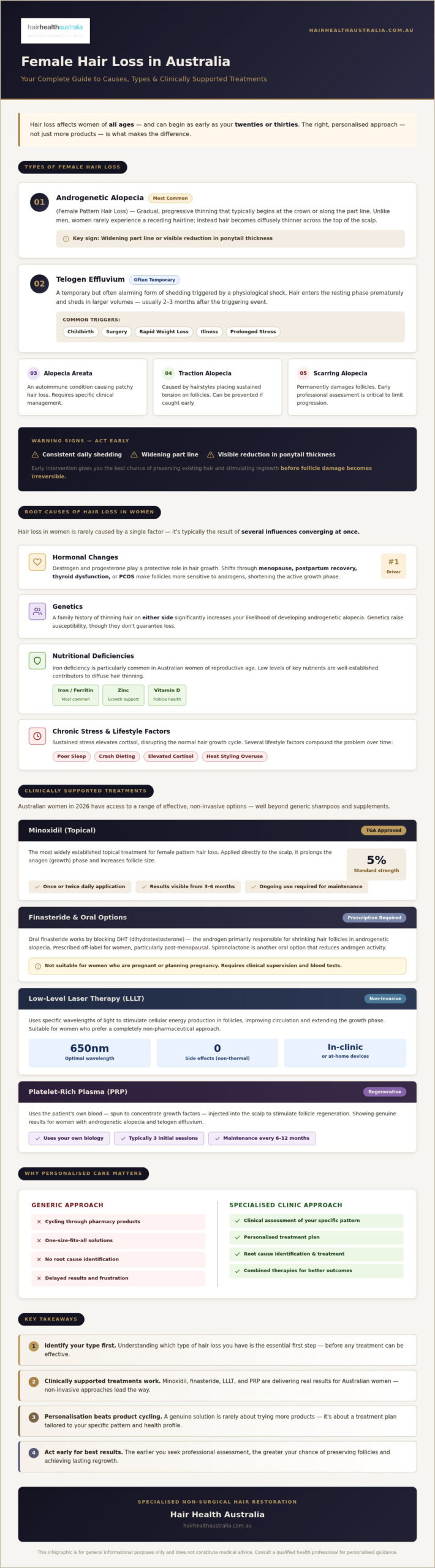
  • Androgenetic alopecia (female pattern hair loss): A gradual, progressive thinning that typically begins at the crown or along the part line. Unlike male pattern baldness, women rarely experience a receding hairline. Instead, the hair becomes diffusely thinner across the top of the scalp while the frontal hairline is largely preserved.
  • Telogen effluvium: A temporary but often alarming form of shedding triggered by a physiological shock to the body. This can follow childbirth, surgery, rapid weight loss, illness, or prolonged stress. Hair enters the resting phase prematurely and sheds in larger volumes, usually two to three months after the triggering event.

Other less common types include alopecia areata (an autoimmune condition causing patchy loss), traction alopecia (caused by hairstyles that place sustained tension on follicles), and scarring alopecias that permanently damage follicles. Each requires a different clinical approach, which is precisely why professional assessment matters.

If you’re noticing consistent shedding, a widening part, or a visible reduction in ponytail thickness, those are signs worth taking seriously. Seeking professional help early gives you the best chance of preserving existing hair and stimulating regrowth before follicle damage becomes irreversible.

Understanding the Causes of Hair Loss

Hair loss in women is rarely caused by a single factor. It’s typically the result of several influences converging at once:

  • Hormonal changes: Oestrogen and progesterone play a protective role in hair growth. When levels shift, whether through menopause, postpartum recovery, thyroid dysfunction, or polycystic ovarian syndrome (PCOS), follicles can become more sensitive to androgens, shortening the active growth phase.
  • Genetics: A family history of thinning hair on either side significantly increases your likelihood of developing androgenetic alopecia. The genetic component doesn’t guarantee hair loss, but it does raise susceptibility.
  • Nutritional deficiencies: Iron deficiency is particularly common in Australian women of reproductive age and is a well-established contributor to diffuse hair thinning. Low levels of ferritin, zinc, and vitamin D have also been associated with increased shedding.
  • Chronic stress and lifestyle factors: Sustained psychological stress elevates cortisol, which can disrupt the normal hair growth cycle. Poor sleep, crash dieting, and overuse of heat styling tools compound the problem over time.

Because these causes overlap and interact, a one-size-fits-all approach simply doesn’t work. Identifying the specific drivers behind your hair loss, through proper clinical assessment rather than guesswork, is what separates ineffective product cycling from a treatment plan that actually delivers results.

Effective Treatments for Female Hair Loss in Australia

Once you understand what’s driving your hair loss, the next question becomes practical: what actually works? The landscape of clinically supported treatments has advanced considerably, and Australian women today have access to a range of options that go well beyond the generic shampoos and supplements lining pharmacy shelves. Finding the right female hair loss cure isn’t about trying everything at once; it’s about selecting the treatments most suited to your specific pattern, cause, and stage of loss.

Medications for Female Hair Loss

Two pharmaceutical options have the strongest clinical backing for women with androgenetic alopecia and related conditions.

Minoxidil remains the most widely used topical treatment for female hair loss. Applied directly to the scalp, it works by prolonging the anagen (active growth) phase of the hair cycle and widening blood vessels around follicles to improve nutrient delivery. It’s available in Australia in both two percent and five percent formulations. The five percent concentration has demonstrated stronger results in clinical studies, though it’s worth discussing the appropriate strength with a clinician, as individual responses vary. Consistency is essential: minoxidil requires ongoing use to maintain results, and many women begin noticing improvements after three to six months of regular application.

Finasteride is prescribed less frequently for women than for men, and it’s generally not recommended for women who are pregnant or planning pregnancy due to the risk of foetal harm. In post-menopausal women, however, low-dose finasteride has shown promising results for androgenetic alopecia in clinical settings. This is a conversation to have with a qualified clinician who can weigh the benefits against your individual health profile.

Nutritional support plays a complementary role. Iron deficiency is particularly prevalent among Australian women of reproductive age, and correcting a documented ferritin deficiency can meaningfully reduce shedding. Zinc, vitamin D, and biotin are also commonly assessed, though supplementation is most effective when there’s a confirmed deficiency rather than as a general preventive measure.

Innovative Non-Invasive Treatments

Non-invasive therapies have become a cornerstone of modern female hair loss treatment, and for good reason. They carry minimal side effect profiles and can be used alongside pharmaceutical options for a compounded effect.

  • Low-level laser therapy (LLLT): This technology uses specific wavelengths of red light to stimulate cellular activity within follicles, increasing energy production and encouraging hair to shift from the resting phase back into active growth. It’s a well-tolerated, painless treatment that suits women at various stages of thinning.
  • Platelet-rich plasma (PRP): PRP involves drawing a small amount of the patient’s own blood, concentrating the growth-factor-rich plasma through centrifugation, and injecting it into areas of thinning. The growth factors work to reactivate dormant follicles and support a healthier scalp environment. Multiple sessions are typically required, with maintenance treatments recommended thereafter.
  • Emerging technologies: Scalp microneedling combined with topical actives, and advanced nutraceutical protocols tailored to specific deficiency profiles, are gaining traction in specialised clinical settings as part of comprehensive treatment plans.

What separates genuinely effective care from the noise is personalisation. A treatment protocol built around your specific diagnosis, lifestyle, and health history will consistently outperform any off-the-shelf approach. If you’re ready to move beyond guesswork, booking a hair health check with Hair Health Australia is a straightforward way to get a clear picture of where you stand and which treatments are most likely to deliver results for you.

Non-Surgical Solutions: Personalised Care for Hair Restoration

Choosing a non-surgical path for hair restoration isn’t settling for second best. For the vast majority of women experiencing thinning or shedding, non-invasive treatments represent the most clinically appropriate, sustainable, and well-tolerated route available. Unlike surgical interventions, they work with your body’s existing biology rather than around it, and they carry a significantly lower risk profile while still delivering meaningful, measurable results.

The real advantage of non-surgical care, however, isn’t any single treatment. It’s the framework around it. A personalised clinical approach, one that accounts for your specific diagnosis, health history, lifestyle, and stage of loss, is what separates genuine progress from the frustrating cycle of trying products that weren’t designed with your situation in mind. That distinction is central to finding a real female hair loss cure rather than a temporary fix.

What to Expect from Non-Surgical Treatments

The process begins with a thorough assessment. A specialist consultation typically involves a detailed review of your hair loss history, scalp examination, and discussion of relevant health factors such as hormonal shifts, nutritional status, and family history. This foundation is what makes subsequent treatment decisions purposeful rather than speculative.

From there, a structured treatment plan is developed around your specific presentation. Progress is monitored through regular check-ins, which serve a dual purpose: they allow your clinician to assess how your follicles are responding and to make timely adjustments if a particular approach needs refinement. Hair restoration is rarely linear, and having a specialist who can interpret changes and recalibrate your plan accordingly makes a significant practical difference.

Women who’ve gone through this process at specialised clinics in Sydney consistently describe the same turning point: the shift from feeling overwhelmed and reactive to feeling genuinely informed and in control. That clarity, grounded in professional guidance rather than guesswork, is often as valuable as the treatments themselves.

Combining Treatments for Best Results

No single therapy works in isolation as effectively as a well-integrated combination. A clinician might pair low-level laser therapy with topical minoxidil to simultaneously stimulate follicle activity and extend the active growth phase. PRP sessions might be scheduled alongside nutritional correction to support the scalp environment from both inside and out. The sequencing and timing of these combinations matters, which is why specialist oversight is essential rather than optional.

Lifestyle factors also play a meaningful supporting role. Consistent sleep, stress management, and a nutrient-dense diet don’t replace clinical treatment, but they do create conditions in which that treatment can work more effectively. A good specialist will discuss these elements as part of a holistic plan rather than treating them as an afterthought.

If you’re ready to move from uncertainty to a structured, evidence-based approach, booking a hair health check with Hair Health Australia is the practical next step. It’s a straightforward way to get a clear clinical picture and understand exactly which combination of non-invasive therapies is best suited to your hair loss pattern and goals.
Female Hair Loss Cure: Effective Solutions for Women in 2026

Real-Life Success Stories: Women Who Found Their Cure

Reading about treatments is one thing. Hearing from women who’ve actually been through the process, who’ve sat where you’re sitting now, feeling uncertain and frustrated, and come out the other side with measurably thicker, healthier hair, is something else entirely. These accounts matter because they ground the clinical picture in lived experience.

Case Studies from Hair Health Australia

The women who come to Hair Health Australia arrive at different stages and with different stories, but a common thread runs through nearly all of them: they’ve already tried the over-the-counter route and found it wanting. What changes the outcome isn’t trying harder with the same approach. It’s finally receiving a clinical assessment that identifies what’s actually driving the loss.

One patient in her early forties had been experiencing diffuse thinning across her crown for nearly three years before her first consultation. Previous attempts with pharmacy-bought treatments had produced no meaningful change. Following a thorough assessment that identified a combination of androgenetic alopecia and a documented ferritin deficiency, she was placed on a structured programme combining topical minoxidil, low-level laser therapy sessions, and targeted nutritional correction. Within six months, she reported a visible improvement in density along her part line, and her follow-up scalp assessment confirmed measurable regrowth in previously dormant areas.

Another patient, a woman in her mid-thirties who had experienced significant shedding following a difficult pregnancy, came in convinced her hair would never fully recover. Her diagnosis pointed clearly to telogen effluvium with a hormonal component. Her personalised plan focused on PRP treatments to reactivate follicles, alongside lifestyle and nutritional guidance. The recovery wasn’t overnight, but it was steady and clinically trackable. That visibility, knowing exactly what was improving and why, was something she described as transformative in itself.

What these cases illustrate is that finding a genuine female hair loss cure isn’t about stumbling across the right product. It’s about having a specialist interpret your specific presentation and build a plan around it.

Advice and Tips from Women Who Regrew Their Hair

Women who’ve navigated this journey successfully tend to share a few consistent reflections:

  • Start sooner than feels necessary. Hair loss responds better to treatment when follicles are still active. Waiting until thinning becomes severe limits what’s recoverable.
  • Trust the process, not the timeline. Hair growth cycles are slow. Expecting visible change within weeks sets you up for unnecessary disappointment. Three to six months is a more realistic window for initial results.
  • Don’t self-diagnose. The type of loss matters enormously for treatment selection. What works for androgenetic alopecia won’t necessarily help telogen effluvium, and vice versa.
  • Consistency is non-negotiable. Skipping treatments or abandoning a plan before it has time to work is the single most common reason progress stalls.
  • Lean on your clinical team. Regular check-ins aren’t just administrative. They’re where your plan gets refined based on how your hair is actually responding.

The emotional dimension of this journey deserves acknowledgement too. Many women describe the process of finally receiving a clear diagnosis as its own form of relief, separate from any physical improvement. Uncertainty is exhausting. Having a specialist explain exactly what’s happening, and exactly what can be done about it, changes the experience entirely.

If you’re ready to move from guesswork to a structured, evidence-based plan, book a hair health check with Hair Health Australia and get the clarity your situation deserves.

Taking the First Step: Book Your Hair Health Check Today

Everything covered in this article, the types of hair loss, the clinical treatments, the real-world outcomes, points toward a single practical conclusion: the most important thing you can do right now is get a proper assessment. Not another product. Not more research. A conversation with a specialist who can look at your specific situation and tell you exactly what’s happening and what can be done about it.

Booking a hair health check with Hair Health Australia is straightforward. You don’t need a referral, and the process is designed to be low-pressure from the start. It’s simply a clinical conversation, structured around understanding your hair loss history, your health, and your goals.

Why a Hair Health Check is Essential

Early intervention is one of the most consistently supported principles in hair loss treatment. Follicles that are thinning but still active respond far better to treatment than those that have been dormant for years. Waiting until loss becomes severe narrows your options considerably, which is why acting sooner, even if you’re unsure whether your concern is “serious enough”, is always the right call.

A professional assessment does something no product or online quiz can: it distinguishes between hair loss types, identifies contributing factors, and rules out underlying health conditions that may need addressing. That diagnostic clarity is the foundation of any genuine female hair loss cure. Without it, you’re selecting treatments based on guesswork rather than evidence.

During your hair health check, you can expect:

  • A detailed review of your hair loss history, including when it started and how it’s progressed
  • A thorough scalp examination to assess follicle health and loss patterns
  • Discussion of relevant health factors, including hormonal history, nutritional status, and family background
  • A clear explanation of what’s driving your specific presentation
  • An outline of the treatment options most suited to your situation

Next Steps After Your Consultation

Leaving your consultation with a personalised treatment plan in hand changes the experience entirely. Instead of uncertainty, you have direction. Instead of trial and error, you have a structured programme with a clear clinical rationale behind each component.

From there, your progress is tracked through scheduled follow-up appointments. These aren’t just check-ins; they’re where your plan gets refined. Hair restoration isn’t always linear, and having a specialist monitor your response and adjust your protocol accordingly is what keeps results on track over time. Ongoing support is built into the process, not bolted on as an afterthought.

The women who see the strongest outcomes are those who commit to the plan, stay consistent, and lean on their clinical team when questions arise. That partnership, between patient and specialist, is what transforms a treatment plan into lasting results.

If you’re ready to stop guessing and start making genuine progress, book your hair health check with Hair Health Australia today. It’s the clearest, most direct path toward understanding your hair loss and doing something meaningful about it.

Your Path to Healthier, Fuller Hair Starts Here

Finding a genuine female hair loss cure isn’t about trying more products. It’s about getting the right clinical picture and a personalised plan built around your specific needs. That’s the thread running through everything covered in this article, from understanding what’s driving your loss to choosing the treatments most likely to work for your situation.

Three things matter most on this journey: acting early before follicle damage becomes harder to reverse, committing to a structured programme rather than guessing your way through options, and working with specialists who focus exclusively on non-invasive hair restoration for women.

Hair Health Australia offers exactly that, with personalised treatment plans designed for women, expert consultations centred on individual needs, and proven non-invasive solutions that deliver measurable results over time.

You don’t have to keep navigating this alone. Start your journey to healthier hair with a Hair Health Check today and take the first clear, confident step toward the results you deserve.

Frequently Asked Questions About Female Hair Loss

What are the most common causes of female hair loss?

Female hair loss most commonly stems from androgenetic alopecia (genetic predisposition), hormonal fluctuations, nutritional deficiencies, and chronic stress. Iron deficiency is particularly prevalent among Australian women of reproductive age and is a well-documented contributor to diffuse thinning. Thyroid dysfunction, polycystic ovarian syndrome, and postpartum hormonal shifts are also frequent underlying factors. Because these causes often overlap, identifying the specific drivers requires professional clinical assessment rather than self-diagnosis.

How effective are non-surgical treatments for hair regrowth?

Non-surgical treatments can deliver genuine, measurable results when they’re matched to the correct diagnosis and applied consistently. Options like low-level laser therapy, platelet-rich plasma, and topical minoxidil have strong clinical backing for women with androgenetic alopecia and related conditions. Effectiveness improves significantly when treatments are combined strategically under specialist supervision rather than used in isolation. The key variable isn’t the treatment itself; it’s whether the treatment suits your specific hair loss pattern and stage.

What role do hormones play in female hair loss?

Hormones are central to how hair grows and sheds. Oestrogen and progesterone support the active growth phase of the hair cycle, so when levels decline, such as during menopause or postpartum recovery, follicles can become more sensitive to androgens. This sensitivity shortens the growth phase and produces progressively finer, shorter strands over time. Conditions like PCOS and thyroid dysfunction compound this effect, which is why a hormonal assessment is often a valuable part of any female hair loss cure evaluation.

Can stress cause hair loss in women?

Yes, sustained psychological stress is a recognised trigger for telogen effluvium, a condition where hair prematurely enters the resting phase and sheds in higher volumes. The shedding typically occurs two to three months after the stressful event rather than immediately, which can make the connection difficult to identify without clinical guidance. While stress-related hair loss is generally temporary, it can become prolonged if the underlying stress isn’t addressed or if it coincides with other contributing factors like nutritional deficiencies.

How long does it take to see results from hair loss treatments?

Most women begin to notice meaningful improvement between three and six months into a consistent treatment programme. This timeline reflects the natural pace of the hair growth cycle rather than any limitation of the treatments themselves. Some women observe a reduction in shedding earlier, which is often the first sign that a treatment is working, before visible density improvements appear. Patience and consistency are non-negotiable; abandoning a plan before it has adequate time to work is the most common reason progress stalls.

Are there any side effects of hair loss medications?

Minoxidil is generally well-tolerated, though some women experience initial scalp irritation or a temporary increase in shedding during the first few weeks of use, which typically resolves as the hair cycle adjusts. Finasteride carries more significant considerations for women, particularly those who are pregnant or planning pregnancy, due to the risk of foetal harm; it’s only considered in specific clinical contexts such as post-menopausal women under specialist supervision. A qualified clinician will assess your individual health profile before recommending any pharmaceutical option.

What should I do if I notice thinning hair?

The most important step is to seek a professional assessment sooner rather than later. Follicles that are thinning but still active respond far better to treatment than those that have been dormant for an extended period. Don’t rely on pharmacy products or online symptom checkers to guide your decisions; the type of hair loss matters enormously for treatment selection, and an incorrect approach can delay real progress. Booking a hair health check with a specialised clinic gives you a clear clinical picture and a structured path forward based on your specific situation.
Non-Surgical Hair Loss Treatment Cost Australia: 2026 Clinical Guide

The most expensive hair loss treatment you will ever buy isn’t the one with the highest price tag; it’s the one that was never going to work for your specific scalp biology. Many Australians have already spent hundreds on “miracle” shampoos or generic chemist serums that fail to address the root cause of thinning. When you are stuck between ineffective DIY products and the daunting $11,000 price tag of a hair transplant, understanding the non surgical hair loss treatment cost australia becomes essential for making an informed, clinical decision.

You deserve a clear path to restoration that doesn’t involve guesswork or invasive surgery. We promise to help you understand the true investment required for professional regrowth and why a diagnostic-led approach is the most cost-effective strategy in 2026. By prioritising science over marketing hype, you can avoid the subscription trap of online pharmacies and focus your budget on treatments that actually deliver results.

This guide provides a detailed breakdown of clinical pricing for non-surgical options. We will explore how microscopic analysis identifies viable follicles, compare the long-term value of customised programmes, and show you how to achieve visible density without the risks of the operating theatre.

Key Takeaways

  • Distinguish between ineffective retail products and evidence-based clinical programmes that address the biological causes of thinning.
  • Learn how factors like the degree of hair loss and scalp pH levels impact the total non surgical hair loss treatment cost australia for a tailored approach.
  • Compare the long-term investment of non-surgical restoration against the high upfront costs of surgical transplants, which can range from A$11,000 to A$30,000.
  • See how microscopic hair analysis prevents wasted expenditure by confirming follicle viability before your programme begins.
  • Understand the typical budgeting requirements for a six-month intensive regrowth phase at a professional Sydney hair loss clinic.

Analysing the Cost of Non-Surgical Hair Loss Treatment in Australia

Non-surgical hair restoration isn’t a simple commodity you buy off a shelf; it’s a clinical protocol designed for biological recovery. Unlike a haircut or a cosmetic fix, these treatments focus on the cellular health of the follicle to reverse thinning without invasive surgery. When you evaluate the non surgical hair loss treatment cost australia, it’s vital to look at the “Total Cost of Ownership” rather than just the monthly bill. A successful programme requires a balance of high-purity active ingredients, precise diagnostics, and professional oversight to ensure the treatment adapts as your hair cycles change.

The Australian market is often flooded with “budget” options that promise much but deliver little. True clinical programmes are distinguished by their medical-grade formulations and the systematic way they address the underlying causes of Pattern hair loss. Investing in a professional programme means you’re paying for a solution that is verified by science and monitored by specialists who understand the complexities of scalp health.

Clinical Programmes vs. Chemist Shelf Solutions

A A$30 bottle of “regrowth” shampoo from the local chemist might seem like a low-risk investment, but it’s often the most expensive mistake a person can make. These retail products frequently contain diluted active ingredients that cannot penetrate the scalp barrier effectively. In contrast, clinical programmes utilise pharmaceutical-grade concentrations tailored to your specific needs. The price of a clinical programme includes the cost of these potent compounds and the essential monitoring that ensures your protocol is working. Without this oversight, you might spend years paying for a generic product that your body has already habituated to, leading to further hair loss and wasted funds.

The Australian Regulatory Impact on Pricing

Australia’s Therapeutic Goods Administration (TGA) sets some of the highest standards in the world for hair loss medications. In 2026, strict regulations around compounded formulas ensure that every milligram of active ingredient is verified for safety and efficacy. This regulatory environment is why locally compounded clinical formulas often cost more than generic imports from overseas. While online subscription pharmacies have become popular, they often lack the diagnostic depth required for long-term success. Many patients experience “treatment fatigue” after months of paying for a one-size-fits-all pill that doesn’t address their unique biological triggers. A diagnostic-led approach, starting with a Hair Health Check, acts as a financial safeguard. It ensures that every dollar you spend is directed toward follicles that are still active and capable of producing visible density.

Variables That Influence Your Clinical Programme Investment

Calculating the non surgical hair loss treatment cost australia requires a deep dive into your scalp’s current biological status. It’s not a flat fee because every head of hair responds differently to clinical stimulants. A range of variables dictates the final investment, from the specific concentrations of active ingredients to the frequency of professional monitoring required to track your progress. While a generic subscription might seem affordable initially, it often fails to account for the unique environment of your scalp, such as pH levels or skin sensitivity.

Early intervention remains the most reliable way to keep costs manageable. When you address thinning at the first sign of recession, the goal is often stabilisation, which requires less intensive intervention. If you wait until the scalp is visible, the programme must shift toward aggressive regrowth. This transition involves higher concentrations of pharmaceutical-grade compounds and more frequent clinical check-ups to ensure the follicles are responding as expected. Determining these variables early through a Hair Health Check ensures your budget is allocated effectively from day one.

The Stage of Hair Loss and Treatment Intensity

The total investment varies significantly between those seeking to maintain their current density and those needing to rescue dormant follicles. Stabilisation phases focus on blocking the hormones responsible for thinning, which is generally a more straightforward and less costly process. Aggressive regrowth phases require a multi-faceted approach, often incorporating advanced technologies like low-level laser therapy to increase cellular energy within the scalp. Follicle miniaturisation acts as a biological countdown; the more advanced the shrinkage, the higher the concentration of active stimulants required to reverse the process. This increased intensity naturally reflects in the programme’s overall cost.

Compounded Formulas and Ingredient Synergy

Professional clinical programmes often utilise compounded formulas that combine multiple active agents into a single application. While these bespoke solutions carry a higher upfront price than mass-produced alternatives, the return on investment is superior. For instance, combining DHT blockers with growth stimulants and clinical-grade additives like retinoic acid improves the absorption and efficacy of the treatment. Patterned hair loss treatments in Australia that use these synergistic blends often achieve results faster, reducing the long-term duration of the intensive treatment phase. This customised approach also allows your specialist to manage potential side effects by adjusting the formula to suit your scalp’s tolerance, ensuring the programme remains sustainable and effective over many years.

Non-Surgical vs. Hair Transplant: A Comparative Financial Breakdown

Choosing between clinical restoration and surgical intervention is often the most significant financial decision a person will make regarding their hair. In Australia, the upfront investment for a Follicular Unit Extraction (FUE) hair transplant typically ranges from A$11,000 to over A$30,000 depending on the number of grafts required. While this is often marketed as a “permanent” solution, the reality of the non surgical hair loss treatment cost australia involves a more nuanced look at long-term maintenance. Surgery simply moves hair from one location to another; it does not stop the underlying biological process of thinning in your existing, non-transplanted hair.

The “hidden” costs of surgery frequently surprise patients. To protect the investment of a transplant, most surgeons require patients to remain on clinical-grade medications indefinitely. Without this ongoing support, the hair surrounding the transplant continues to thin, often leading to a “patchy” appearance that requires expensive revision surgeries. Clinical programmes avoid these surgical risks and the associated “social downtime.” Recovery from a transplant involves visible scabbing and swelling that can keep you away from work and social engagements for weeks, a hidden productivity cost that non-surgical paths simply don’t have.

Long-Term Financial Planning for Hair Restoration

When you look at a five-year horizon, the financial profile of a clinical programme offers significantly more flexibility than surgery. A transplant requires a massive, immediate capital outlay with no guarantee of 100% graft survival. Conversely, non-surgical paths allow for a “pay-as-you-go” model. This approach lets you scale your investment based on the visible results you achieve. There is also immense psychological value in a progressive transformation. Rather than the sudden, obvious change of a surgical procedure, clinical regrowth allows for a natural increase in density that remains private and stress-free.

Suitability: When Surgery is a Wasted Expense

Surgical intervention is a wasted expense if the scalp environment isn’t clinically stable. If DHT levels are not managed, the transplanted follicles may survive, but the native hair will continue to fall out, leaving you with a depleted result. Surgical pricing is also heavily dictated by donor hair density. If your donor area is weak, the cost per graft increases while the likelihood of a dense result decreases. Many patients find that starting with a clinical programme is a vital first step. It can “prep” the scalp by revitalising thinning follicles and improving overall hair health. This often reduces the total number of grafts needed later or, in many cases, achieves enough density to make surgery entirely unnecessary. Ensuring your scalp is ready for any treatment starts with a professional Hair Health Check to verify your biological suitability.

The Diagnostic Advantage: Why Microscopy Prevents Wasted Expenditure

The most significant financial risk in hair restoration is paying for a treatment that your scalp is biologically unable to use. Many Australians spend years purchasing topical solutions for areas where the follicles have already reached a state of permanent senescence, or “death.” When evaluating the non surgical hair loss treatment cost australia, the diagnostic phase is your most powerful tool for capital preservation. By utilising advanced microscopic analysis at 200x magnification, we can distinguish between follicles that are simply “sleeping” (miniaturised) and those that are no longer viable. This clinical clarity ensures you never spend a cent on a programme that cannot produce a result.

This level of precision is the foundation of our “straight-talking” approach. A professional consultation shouldn’t be a sales pitch; it should be a data-driven assessment of your regrowth potential. If the microscopy reveals that your hair loss has progressed beyond the reach of non-surgical intervention, we will tell you. This honesty makes the Hair Health Check an essential financial safeguard. It prevents the common cycle of “hope-buying,” where individuals continue to invest in expensive clinical serums for areas that require surgical grafting or are beyond restoration.

Precision Budgeting Through Data

Microscopic data allows a specialist to prescribe the exact strength of active stimulants your scalp requires, rather than relying on a generic, high-strength formula that may be unnecessary. This avoids the “over-prescribing” trap, where patients pay a premium for concentrations their body doesn’t need. A microscopic scan reveals the exact percentage of follicles currently in the telogen phase, providing a definitive metric to determine the specific concentration of growth stimulants required to shift those follicles back into the active anagen phase. By matching the treatment intensity to the biological data, your budget is utilised with maximum efficiency.

Avoiding the Trial-and-Error Trap

The cumulative cost of “trying” various chemist brands over several years often exceeds the price of a single, successful clinical programme. These DIY attempts lack a roadmap, leading to a fragmented approach that rarely addresses the hormonal and nutritional drivers of thinning. A clinical scan provides a 12-month strategic plan, moving you away from guesswork and toward a systematic recovery. For a deeper understanding of how these clinical paths compare to retail options, consult our Best Hair Regrowth Treatment Australia 2026 guide. If you are ready to stop the cycle of wasted expenditure and see the true state of your hair, your first step is to book a comprehensive Hair Health Check today.

Budgeting for Success at a Sydney Hair Loss Clinic

Successful hair restoration is a marathon, not a sprint. Budgeting for a professional programme at a Sydney centre involves understanding the two distinct phases of clinical care: the intensive regrowth phase and the long-term maintenance phase. When planning for the non surgical hair loss treatment cost australia, it’s helpful to view the first six months as the foundation of your results. This initial period is when the most significant biological changes occur, requiring the highest concentration of active stimulants and the most frequent clinical oversight to ensure your scalp is responding optimally.

Once you achieve visible density and the follicles have stabilised, the programme typically transitions into a maintenance phase. This shift is designed to be more cost-effective. During this stage, the frequency of clinical check-ups often decreases, and your specialist may adjust your formula to a lower-strength “preservation” concentration. This ongoing support ensures your results don’t plateau. Having a dedicated specialist to adjust your protocol based on seasonal changes or hormonal shifts provides a level of security that generic, one-size-fits-all subscriptions simply cannot match.

Your First Step: The Sydney Hair Health Check

The journey begins with a comprehensive Hair Health Check at our Sydney clinic. This diagnostic session is the most important investment you will make because it replaces guesswork with data. During the consultation, we perform high-magnification microscopic scans to map your follicle density and identify the specific stage of miniaturisation. To get the most value from this session, we recommend bringing a list of any previous treatments or supplements you’ve used. This information allows our specialists to build a more accurate biological profile and design a roadmap that avoids the mistakes of the past.

Flexible Pathways to Regrowth

Clinical programmes are not rigid. We understand that every individual has different goals and financial considerations. By choosing a clinic that specialises exclusively in non-surgical outcomes, you’re investing in a team that prioritises biological recovery over surgical grafts. Our programme structures are designed to be transparent, focusing on the quality of ingredients and the precision of the results. This specialised focus ensures your budget is directed toward the most effective stimulants available in 2026. Ready to see the science? Book your Sydney consultation today and take the first step toward a data-driven restoration plan.

Securing Your Hair Restoration Investment in 2026

Achieving a denser, healthier head of hair shouldn’t be a financial gamble. By prioritising clinical diagnostics over chemist shelf promises, you ensure every dollar is directed toward follicles capable of recovery. We have helped Australians navigate the non surgical hair loss treatment cost australia since 2009, using advanced microscopic scanning to provide honest, evidence-based results. This diagnostic precision identifies exactly which follicles are viable, protecting you from the high upfront costs of surgery and the cycle of wasted spend on ineffective retail products.

Our personalised programmes are specifically tailored to Australian conditions and your unique scalp biology. This systematic approach allows you to transition from intensive regrowth to affordable maintenance with confidence. You don’t have to settle for thinning or the uncertainty of generic online subscriptions. If you’re ready to gain a clear, data-driven understanding of your regrowth potential, a professional assessment is the most cost-effective path forward.

Book Your Comprehensive Hair Health Check in Sydney today to receive a customised roadmap based on science, not marketing. We look forward to helping you restore both your hair and your confidence with a plan that actually delivers visible results.

Frequently Asked Questions

Is the cost of non-surgical hair treatment covered by Medicare or private health insurance?

Medicare and private health insurance providers in Australia typically do not cover non-surgical hair loss treatments because they are classified as cosmetic procedures. However, if your specialist requires specific pathology tests or a GP referral to rule out underlying medical conditions, those specific medical consultations or tests might be bulk-billed or partially covered for valid Medicare card holders. It is always best to check with your provider regarding their specific policy on clinical diagnostics.

How much does a microscopic hair analysis cost in Sydney?

The cost of a microscopic hair analysis in Sydney varies depending on the depth of the diagnostic session and the technology used. This session is an essential first step that serves as a financial safeguard, ensuring you don’t spend money on follicles that are no longer viable. While we don’t provide a flat fee here, this initial investment is designed to create a data-driven roadmap that prevents wasted expenditure on ineffective treatments later.

Will I save money by buying hair loss medication from an online pharmacy?

While online pharmacies may offer lower upfront prices for generic medications, they often lack the diagnostic oversight needed for long-term success. Without microscopic monitoring, you may continue paying for a subscription that isn’t addressing your specific hair loss drivers. The true non surgical hair loss treatment cost australia involves more than just the product; it includes the clinical expertise required to adjust your formula as your scalp’s needs change over time.

What is the average monthly cost of a clinical hair regrowth programme?

Monthly costs for a clinical programme are influenced by the severity of your thinning and the concentration of active ingredients required. Early intervention is generally more cost-effective as it focuses on stabilisation rather than aggressive regrowth. Because every programme is customised to the individual’s scalp pH and follicle health, a specific monthly figure can only be determined after a thorough clinical assessment of your biological needs.

Do I have to pay for the entire hair loss treatment programme upfront?

Clinical programme structures often offer flexibility rather than requiring a single, large upfront payment for the entire duration. Many centres provide options to pay in stages or monthly instalments, allowing you to manage your investment as you see visible results. This progressive approach ensures that your treatment remains sustainable and aligns with the six-month intensive regrowth phase typically required to see significant changes in hair density.

Is a hair transplant cheaper than long-term clinical treatment over 10 years?

A hair transplant has a high upfront cost, often between A$11,000 and A$30,000, but it still requires ongoing clinical treatment to protect your remaining native hair. Over a 10-year period, the cumulative cost of a non-surgical programme may be comparable to or less than surgery when you factor in the potential for revision procedures and the mandatory maintenance medications needed to keep a surgical result looking natural.

What happens to the cost if I only need to maintain my current hair density?

Transitioning to a maintenance programme usually results in a lower monthly investment compared to the initial intensive regrowth phase. Once you achieve your desired density, the focus shifts to preservation, which often requires lower concentrations of active stimulants and less frequent clinical check-ups. This long-term strategy is designed to keep your results stable while ensuring the programme remains financially sustainable over many years.

Are there any hidden costs in non-surgical hair restoration?

The most common hidden cost in hair restoration is the expenditure on generic products that fail to work for your specific condition. Other practical costs to consider include specialised scalp cleansers, travel to a Sydney clinic for progress scans, or the occasional need for updated pathology tests. A transparent clinical programme will outline these requirements early on, ensuring you have a clear understanding of the total investment needed for success.

Non-Surgical Hair Thinning Treatment for Women: The 2026 Clinical Guide

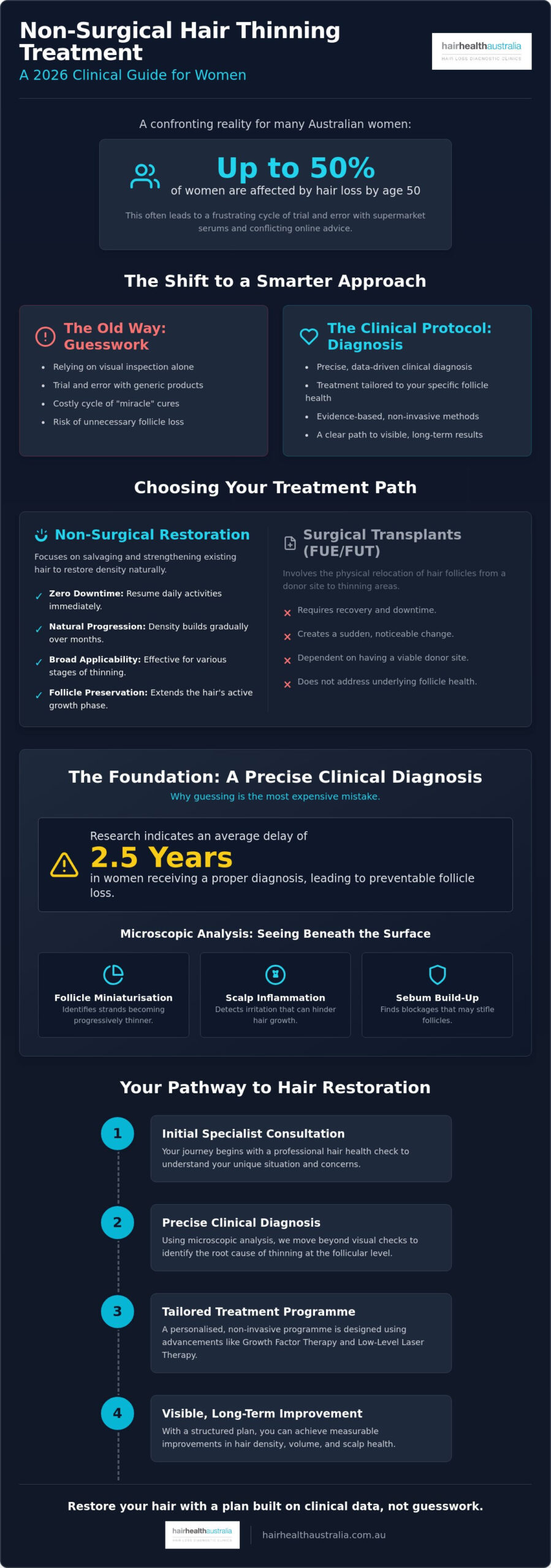
Did you know that up to 50% of women are affected by hair loss by the time they reach age 50? It’s a confronting reality that often leads to a frustrating cycle of trial and error with supermarket serums and conflicting online advice. If you’re searching for an effective non surgical hair thinning treatment for women, you’ve likely encountered significant confusion regarding which options actually work. It’s completely understandable to feel overwhelmed or fear that your loss of volume is an inevitable, permanent part of the ageing process.

The good news is that clinical hair restoration has evolved. Restoring your hair is no longer about guesswork; it’s about following a diagnostic-led protocol tailored to your specific follicle health. In this 2026 clinical guide, we’ll explore evidence-based, non-invasive methods to restore your hair density and scalp health. We’ll examine the latest combination therapies and medical advancements that provide a clear, manageable path toward visible volume and renewed confidence.

Key Takeaways

  • Distinguish between invasive surgical procedures and modern, clinical-grade non-surgical protocols designed to preserve and restore hair density.
  • Understand why a precise clinical diagnosis is essential for identifying the specific cause of your thinning rather than relying on visual inspection alone.
  • Explore the latest 2026 advancements in Growth Factor Therapy and Low-Level Laser Therapy for active follicle stimulation and improved scalp health.
  • Learn why professional non surgical hair thinning treatment for women offers superior potency and results compared to generic over-the-counter chemist products.
  • Discover the structured pathway to recovery, moving from your initial specialist consultation to achieving visible, long-term improvements in hair volume.

What is Non-Surgical Hair Thinning Treatment for Women?

Choosing a non surgical hair thinning treatment for women is often the first step toward reclaiming both hair volume and personal confidence. These treatments are not merely cosmetic cover-ups; they are clinical-grade, non-invasive procedures that target the underlying biological mechanisms of hair loss. While surgical options such as FUE or FUT transplants involve the physical relocation of follicles, non-surgical restoration focuses on salvaging and strengthening the hair you already have. The goal is to extend the anagen phase, which is the active growth period of the hair follicle, while re-energising those that have become dormant. In 2026, these protocols are firmly established as the gold standard for women experiencing early-to-mid stage thinning.

The Shift from Surgery to Clinical Restoration

There’s a noticeable shift among Australian women away from invasive surgery in favour of medical-grade clinical paths. This preference stems from several practical benefits that better suit a modern lifestyle. Firstly, non-surgical methods require zero downtime, allowing patients to return to their daily routines immediately. Secondly, the results develop gradually, providing a natural-looking improvement in density that avoids the “sudden change” often associated with transplants. We often encounter the myth that surgery is the only “real” solution for hair loss. However, for many women, preserving the health of existing follicles through a structured clinical programme is a more effective and sustainable strategy. Key advantages include:

  • Zero downtime: Patients can return to work or social activities immediately after a session.
  • Natural progression: Density builds over several months, mirroring the natural hair growth cycle.
  • Broad applicability: Effective for various stages of thinning without the need for a donor site.

Who is a Candidate for Non-Surgical Therapy?

The success of any non surgical hair thinning treatment for women depends heavily on timing. The ideal window for intervention is when follicles are thinning but still biologically active. If a follicle has completely miniaturised and the scalp has become smooth, non-surgical methods may be less effective. This is why early intervention is critical for long-term density maintenance. Common candidates include those experiencing Pattern hair loss, as well as thinning triggered by hormonal shifts, chronic stress, or genetic predisposition. To determine your specific candidacy and the current state of your follicle health, we recommend a professional hair health check. This diagnostic approach ensures that your treatment plan is built on clinical data rather than guesswork.

The Importance of a Precise Clinical Diagnosis

Visual assessment alone is rarely enough to build a successful recovery plan. While you might notice more hair in the brush or a widening part, these symptoms don’t tell the full story of why the loss is occurring. Without clinical data, choosing a non surgical hair thinning treatment for women becomes a game of chance. Accurate identification is the only way to distinguish between temporary shedding, such as Telogen Effluvium, and permanent thinning caused by Androgenetic Alopecia. By pinpointing the exact cause, we eliminate the costly cycle of trial and error often associated with over-the-counter “miracle” cures. Research indicates that women face an average delay of 2.5 years in receiving a proper diagnosis, a timeframe that can lead to unnecessary follicle loss.

At our Sydney clinic, we treat the diagnostic phase as the foundation of your journey. This isn’t a quick glance; it’s a systematic review of your scalp health and hair growth patterns. Understanding the nuances of female pattern hair loss diagnosis and treatment allows us to align your protocol with proven medical standards. We move logically from identifying the issue to implementing a solution, ensuring you feel informed at every stage.

Microscopic Hair Analysis: Seeing Beneath the Surface

Microscopic scanning allows us to observe what is happening at the follicular level. We look for follicle miniaturisation, where hair strands become progressively thinner and shorter until they stop growing entirely. This technology also identifies scalp health issues like inflammation or sebum build-up that could hinder growth. By establishing baseline data, we can track your progress with precision during follow-up scans. This objective evidence ensures your non surgical hair thinning treatment for women is working as intended. Local Sydney residents can begin this process by booking a comprehensive Hair Health Check to gain immediate clarity on their condition.

Trichologist vs. General Practitioner

A GP is an essential partner for your general health, but a dedicated hair specialist offers a more targeted focus. We look specifically at the hair growth cycle and the complex scalp environment. A specialist understands how subtle hormonal shifts or nutritional deficiencies manifest in the hair. We ensure your personalised plan aligns with your medical history while focusing purely on restoration. This level of specialisation provides the targeted insights needed to manage complex cases effectively. If you’re tired of conflicting advice, it’s often best to consult with a specialist who focuses solely on hair restoration.

Evidence-Based Clinical Protocols for 2026

By 2026, the landscape of non surgical hair thinning treatment for women has moved beyond single-ingredient solutions. We now rely on multi-modal protocols that address follicle health from several biological angles simultaneously. This “combination therapy” approach is why modern clinical results often surpass what was possible just a few years ago. It’s about creating a synergistic effect where each treatment phase enhances the next. Because these methods are non-invasive, they maintain an exceptional safety profile. You won’t have to worry about the systemic side effects sometimes associated with aggressive pharmaceutical interventions or the surgical risks of a transplant.

Moving from a single product to a clinical programme is a deliberate shift toward precision. We focus on the environment of the scalp as much as the hair itself. By improving the health of the “soil,” we ensure the “seed”, your hair follicle, has the best possible chance to thrive. This methodical progression ensures that every action taken is supported by clinical evidence and tailored to your unique biology. It replaces the uncertainty of home-based experiments with a structured, professional path forward.

Stimulating Growth with Advanced Clinical Methods

Growth Factor Therapy represents a significant evolution in follicle stimulation. These treatments work by delivering concentrated biological signals directly to the scalp. During a typical clinical session, which usually lasts around 30 to 45 minutes, you’ll receive a series of targeted applications designed to nourish the hair at its source. Most patients describe the sensation as a mild, cooling pressure with no discomfort. Unlike the “miracle” cures often sold through late-night television or unverified online stores, these methods are grounded in rigorous clinical standards. They focus on the actual biology of the growth cycle rather than just the temporary appearance of the hair shaft.

The Role of Low-Level Laser Therapy (LLLT)

Light-based therapy, specifically LLLT, is a cornerstone of modern restoration. It uses specific light wavelengths to trigger the production of Adenosine Triphosphate (ATP) within the follicle cells. Think of ATP as the fuel that powers cellular repair and growth. This increase in energy improves blood circulation and oxygen delivery, effectively “waking up” sluggish or miniaturised follicles. Clinical evidence consistently shows an increase in both hair diameter and overall density when using professional-grade equipment. It’s vital to distinguish between high-output clinical lasers and low-power home devices. The professional equipment used in a clinical setting provides the therapeutic intensity required for a successful non surgical hair thinning treatment for women.

Non-Surgical Hair Thinning Treatment for Women: The 2026 Clinical Guide

Comparing Clinical Treatment vs. Over-the-Counter Options

Choosing a non surgical hair thinning treatment for women often involves a choice between a trip to the local chemist and a professional clinical consultation. While supermarket shelves are lined with shampoos and serums promising rapid regrowth, these products rarely contain the therapeutic concentrations required to reverse follicle miniaturisation. Clinical-grade applications are formulated with higher potencies and advanced delivery systems that reach the follicle’s base. In contrast, over-the-counter (OTC) options are designed for the “average” user, often resulting in a one-size-fits-all approach that fails to address your specific hair loss triggers.

Oral supplements are another common point of confusion. We view vitamins and minerals as supportive elements rather than primary treatments. While a deficiency can certainly exacerbate thinning, a supplement alone is unlikely to restart a stalled growth cycle in the presence of genetic or hormonal factors. Professional care provides a more economical path long-term. Instead of spending years on ineffective “trial and error” purchases, a clinical intervention targets the root cause immediately, protecting your existing hair density before further loss occurs.

Why Pharmacy Solutions Often Fall Short

The primary issue with pharmacy-bought solutions is the lack of professional monitoring. Without a specialist to track your progress and adjust concentrations, it’s difficult to know if a product is actually working. Many OTC brands rely on surface-level ingredients that improve the hair’s texture without impacting the scalp’s internal biology. Because thinning is often an internal process, it requires more than just a superficial wash. Consistent application is also a hurdle; without a structured clinical programme, many women find it difficult to maintain the rigorous daily routine required for even modest OTC results.

The Synergy of Clinical Care and Home Maintenance

We don’t view home care and clinical treatment as mutually exclusive. Instead, professional sessions “prime” the scalp, increasing its receptivity to maintenance products. This synergy creates a sustainable, long-term routine that protects your investment in regrowth. By following a plan that combines in-clinic technology with high-quality home kits, you ensure your follicles remain in the anagen phase for as long as possible. For a deeper look at the specific protocols available this year, you can explore the Best Hair Regrowth Treatment Australia 2026. If you are ready to move beyond generic pharmacy brands, book a clinical assessment to determine the right intervention for your hair type.

Your Pathway to Recovery at Hair Health Australia

At Hair Health Australia, we understand that hair loss is a deeply personal experience that requires more than just a medical prescription. Our Sydney-based team is dedicated to providing a non surgical hair thinning treatment for women that is as empathetic as it is scientifically rigorous. We focus exclusively on evidence-based, non-invasive restoration protocols that prioritise the health of your existing follicles. By choosing a clinical path, you’re moving away from the uncertainty of “miracle” products and toward a structured, professional journey. The most critical factor in this journey is timing. Taking action while your follicles remain viable is the key to achieving the density and volume you desire.

Our commitment to transparency means we provide realistic expectations from the very first day. We don’t promise overnight transformations; instead, we offer a steady, methodical progression toward scalp health and hair regrowth. This process is built on trust and clinical verification, ensuring you feel supported at every stage of your recovery. We aim to replace your uncertainty with a clear, actionable path forward.

A Personalised Programme for Every Woman

We reject the “cookie-cutter” approach common in the hair restoration industry. Every woman’s hair loss journey is unique, which is why your protocol is tailored specifically to your microscopic hair scan results. During your time at our specialised Sydney clinic, we create a supportive environment where your concerns are heard and addressed with clinical precision. We establish clear, realistic milestones for your regrowth journey. Typically, we look for improvements in scalp health within the first few months, followed by visible changes in hair diameter and density. This individual-centric approach ensures that your treatment plan evolves as your hair health improves.

Taking the First Step: Booking Your Consultation

Your recovery begins with a comprehensive 1-on-1 session with our specialists. To prepare for your first microscopic hair analysis, we recommend arriving with clean hair, free from heavy styling products or concealers. During this initial session, we use high-definition scanning technology to examine your scalp and follicles in detail. This diagnostic data allows us to identify the specific nature of your thinning and determine your candidacy for our protocols. It’s a straight-talking, honest assessment designed to empower you with knowledge and understanding. If you’re ready to stop the cycle of uncertainty, we invite you to organise your clinical hair health check today and take control of your hair’s future.

Take Control of Your Hair Restoration Journey

The path to thicker, healthier hair doesn’t require invasive surgery or the uncertainty of generic pharmacy brands. By prioritising a precise clinical diagnosis through specialised microscopic hair analysis, you can identify the exact cause of your thinning and address it with a targeted protocol. We’ve seen that the most successful outcomes for a non surgical hair thinning treatment for women rely on multi-modal, evidence-based care that re-energises dormant follicles while they’re still viable.

With over 15 years of experience in Australian hair restoration, our team provides the medical authority and empathetic guidance needed to navigate this process with confidence. It’s time to replace trial and error with a systematic, professional plan tailored to your unique scalp environment. If you’re ready to see visible improvements in hair volume and density, the first step is gaining clinical clarity through a structured assessment.

Book Your Comprehensive Hair Health Check in Sydney today to begin your recovery. You don’t have to face hair thinning alone; professional support is available to help you restore both your hair and your confidence.

Frequently Asked Questions

Is non-surgical hair thinning treatment permanent?

Non-surgical restoration is a management strategy rather than a one-time permanent fix. Because conditions like androgenetic alopecia are progressive, ongoing maintenance is usually required to sustain your results. These treatments work to keep follicles in the active growth phase, but if therapy stops, the hair will eventually return to its natural thinning pattern. We focus on building a sustainable long-term plan to preserve your density and scalp health.

How long does it take to see results from clinical hair treatments?

Most patients begin to see a visible improvement in hair volume and quality within three to six months of starting their protocol. Hair grows in cycles, so it takes time for newly stimulated follicles to produce visible strands. We typically conduct a follow-up microscopic analysis at the four-month mark to objectively measure your progress against your baseline data and adjust your plan if necessary.

Are there any side effects to non-surgical hair restoration for women?

Clinical non surgical hair thinning treatment for women is favoured for its high safety profile and lack of systemic side effects. Unlike some aggressive medications, non-invasive therapies like LLLT or growth factor applications don’t cause hormonal disruptions. Some patients might experience very mild, temporary scalp sensitivity or redness immediately after a session, but these symptoms usually resolve within a few hours.

Can these treatments help with thinning caused by menopause?

Yes, these protocols are highly effective for addressing thinning triggered by the hormonal shifts of menopause. Research indicates that up to two-thirds of women experience thinning or loss post-menopause. By targeting the follicles with growth factors and improved circulation, we can help counteract the effects of declining oestrogen levels. Early intervention is particularly beneficial during this life stage to maintain existing hair density.

What is the difference between clinical growth factors and PRP?

Platelet-Rich Plasma (PRP) uses a concentration of your own blood platelets to trigger healing, while modern clinical growth factor therapy often uses lab-refined, bio-identical proteins. Both aim to stimulate the follicle, but growth factor treatments are sometimes preferred by those who wish to avoid blood draws. During your consultation, we’ll determine which biological stimulant is best suited to your specific scalp health and recovery goals.

How many sessions will I need to see a visible change in my hair density?

A standard clinical programme typically consists of an initial intensive phase of 10 to 12 sessions, followed by less frequent maintenance visits. The exact number depends on the severity of your thinning and how your follicles respond to the stimulation. We provide a personalised schedule after your microscopic analysis, ensuring your treatment frequency aligns with your specific hair growth cycle and desired outcome.

Is the treatment painful or does it require downtime?

These procedures are designed to be comfortable and require absolutely no downtime. You can return to your workplace or social commitments immediately after your appointment. Most patients describe the sessions as relaxing, involving a cooling sensation or a gentle tingling on the scalp. It’s a convenient alternative for busy women who want professional results without the recovery period associated with surgical transplants.

Can I continue to colour my hair while undergoing clinical treatment?

You can certainly continue to colour your hair, though we recommend waiting 48 hours after a clinical session before applying chemical dyes. Maintaining your aesthetic routine is important for your confidence, and our treatments won’t interfere with your regular hairdressing appointments. We simply ask that you coordinate your salon visits with your clinical schedule to ensure your scalp is calm and receptive to the restoration protocol.